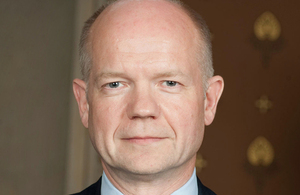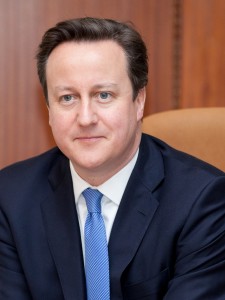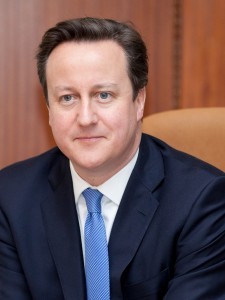
Below is the text of the speech made by David Cameron, the then Leader of the Opposition, at the 2008 Conservative Party Conference.
It’s great to be here in the Symphony Hall.
But it’s even better to know that in this party, everyone: the Shadow Cabinet, the Members of Parliament, the council leaders and all our candidates and colleagues…
Everyone is playing the same tune.
Today the financial crisis means that all eyes are on the economy and the financial markets and that is absolutely right.
As I said yesterday, on this issue, we must put aside our differences and work together with the government in the short-term to ensure financial stability.
I am pleased that our proposal to increase the protection for depositors to £50,000 has been taken up.
I’m pleased that the European regulators are looking at our proposal to bring stability to the banking system.
I repeat: we will not allow what happened in America to happen here, we will work with the government in the short term in order to protect our economy.
But as I also said yesterday, that must not stop us telling the truth about the mistakes that have been made.
It is our political duty…
…and if we had a written constitution I would say constitutional duty…
…to hold the government to account, to explain where they went wrong, and how we would do things differently to rebuild our economy for the long-term.
So we must not hold back from being critical of the decisions that over ten years have led us to this point.
We need to learn the lessons, and to offer the British people a clear choice
It is our responsibility to make sense of this crisis for them, and to show them the right way out of it.
We started to do that in Birmingham this week.
We’ve had a good conference this week, an optimistic conference – but a sober one.
We understand the gravity of the situation our country is in.
And our response is measured, proportionate and responsible.
The test of a political party is whether it can rise to the challenge of what the country requires and what the times demand.
I believe we have passed that test this week and I want to thank George Osborne, William Hague, all my team in the Shadow Cabinet and all of you for making this conference a success.
The reality of government is that difficulties come not in neat and predictable order, one by one and at regular intervals.
Difficulties come at you from all sides, one on top of the other, and you’ve got to be able to handle them all.
So amidst this financial crisis let us not forget that we are also a nation at war.
In Afghanistan today, our armed forces are defending our freedom and our way of life as surely and as bravely as any soldiers in our nation’s history.
Let us be clear about why they are there: if we fail in our mission, the Taliban will come back.
And if the Taliban come back, the terrorist training camps come back…
That would mean more terrorists, more bombs and more slaughter on our streets.
That is why we back our troops’ mission in Afghanistan one hundred per cent.
I’ve been to visit them every year since I’ve been doing this job.
Earlier this month, up the Helmand River in Sangin I met a soldier in the Royal Irish Regiment, Ranger Blaine Miller.
He’d just turned eighteen years old.
He was the youngest soldier there.
He’s not much more than a boy and he’s there in the forty-five degree heat, fighting a ferocious enemy on the other side of the world.
I told him that what he was doing was exceptional.
He told me he was just doing his job.
Every politician says it’s the first duty of government is to protect our country, and of course that’s right.
But today we are not protecting the people, like Blaine, who protect us – and that is wrong.
In Afghanistan, the number of our troops has almost doubled but the number of helicopters has hardly increased at all.
American soldiers start their rest and recuperation the day they arrive back home, our troops have to count the days they spend getting home.
We’ve got troops’ families living in sub-standard homes; we’ve got soldiers going into harm’s way without the equipment they need…
…we’ve got businesses in our country that instead of welcoming people in military uniform and honouring their service choose to turn them away and refuse them service.
That is all wrong and we are going to put it right.
We are going to stop sending young men to war without the equipment they need, we’re going to stop treating our soldiers like second class citizens…
…we will do all it takes to keep our country safe and we will do all it takes to protect the heroes who risk everything for us.
And today there are a particular group of heroes that I have in mind.
They fought for us in the slit trenches of Burma…the jungles of Malaya…and the freezing cold of the Falklands.
Yesterday the courts ruled that gurkhas who want to come and live in Britain should be able to.
They risked their lives for us and now we must not turn our backs on them.
I say to the government: I know there are difficult questions about pensions and housing but let’s find a way to make it work…
Do not appeal this ruling.
…let’s give those brave gurkha soldiers who defended us the right to come and live in our country.
These are times of great anxiety.
The financial crisis.
The economic downturn.
The cost of living.
Big social problems.
I know how worried people are.
They want to know whether our politics, and let’s be frank, whether our politicians – are up to it.
In the end, that’s not really about your policies and your plans.
Of course your plans are important…
…but it’s the unexpected and unpredicted events that can dominate a government.
So people want to know what values you bring to big situations and big decisions that can crop up on your watch.
And people want to know about your character: the way you make decisions; the way that you operate.
My values are Conservative values.
Many people wrongly believe that the Conservative Party is all about freedom.
Of course we care passionately about freedom from oppression and state control.
That’s why we stood up for Georgia and wasn’t it great to have the Georgian Prime Minister with us here, speaking today?
But freedom can too easily turn into the idea that we all have the right to do whatever we want, regardless of the effect on others.
That is libertarian, not Conservative – and it is certainly not me.
For me, the most important word is responsibility.
Personal responsibility.
Professional responsibility.
Civic responsibility.
Corporate responsibility.
Our responsibility to our family, to our neighbourhood, our country.
Our responsibility to behave in a decent and civilised way.
To help others.
That is what this Party is all about.
Every big decision; every big judgment I make: I ask myself some simple questions.
Does this encourage responsibility and discourage irresponsibility?
Does this make us a more or less responsible society?
Social responsibility, not state control.
Because we know that we will only be a strong society if we are a responsible society.
But when it comes to handling a crisis….
…when it comes to really making a difference on the big issues…
…it’s not just about your values.
There’s something else people want to know.
When people ask: “will you make a difference?” they’re often asking will you – i.e. me – will you make a difference?
You can’t prove you’re ready to be Prime Minister – and it would be arrogant to pretend you can.
The best you can do is tell people who you are and the way you work; how you make decisions and then live with them.
I’m a forty-one year old father of three who thinks that family is the most important thing there is.
For me.
For my country.
I am deeply patriotic about this country and believe we have both a remarkable history and an incredible future.
I believe in the Union of England, Scotland, Wales and Northern Ireland, and I will never do anything to put it at risk.
I have a simple view that public service is a good way to channel your energy and try to make a difference.
I am not an ideologue.
I know that my party can get things wrong, and that other parties sometimes get things right.
I hold to some simple principles.
That strong defence, the rule of law and sound money are the foundations of good government.
But I am also a child of my time.
I want a clean environment as well as a safe one.
I believe that quality of life matters as much as quantity of money.
I recognise that we’ll never be truly rich while so much of the world is so poor.
I believe in building a strong team – and really trusting them.
Their success is to be celebrated – not seen as some kind of threat.
Thinking before deciding is good.
Not deciding because you don’t like the consequences of a decision is bad.
Trust your principles, your judgment and your colleagues.
Go with your conviction, not calculation.
The popular thing may look good for a while.
The right thing will be right all the time.
Tony Blair used to justify endless short-term initiatives by saying “we live in a 24 hour media world.”
But this is a country not a television station.
A good government thinks for the long term.
If we win we will inherit a huge deficit and an economy in a mess.
We will need to do difficult and unpopular things for the long term good of the country.
I know that.
I’m ready for that.
And there is a big argument I want to make – about the financial crisis and the economic downturn, yes…
…but about the other issues facing the country too.
It’s an argument about experience.
To do difficult things for the long-term…
…or even to get us through the financial crisis in the short term…
…what matters more than experience is character and judgment, and what you really believe needs to happen to make things right.
I believe that to rebuild our economy, it’s not more of the same we need, but change.
To repair our broken society, it’s not more of the same we need, but change.
Experience is the excuse of the incumbent over the ages.
Experience is what they always say when they try to stop change.
In 1979, James Callaghan had been Home Secretary, Foreign Secretary and Chancellor before he became Prime Minister.
He had plenty of experience.
But thank god we changed him for Margaret Thatcher.
Just think about it: if we listened to this argument about experience, we’d never change a government, ever.
We’d have Gordon Brown as Prime Minister – for ever.
Gordon Brown talks about his economic experience.
The problem is, we have actually experienced his experience.
We’ve experienced the massive increase in debt.
We have experienced the huge rise in taxes.
We experienced the folly of pretending that boom and bust could be ended.
This is the argument we will make when the election comes.
The risk is not in making a change.
The risk is sticking with what you’ve got and expecting a different result.
There is a simple truth for times like this.
When you’ve taken the wrong road, you don’t just keep going.
You change direction – and that is what we need to do.
So let’s look at how we got here – and how we’re going to get out.
At the heart of the financial crisis is a simple fact.
The tap marked ‘borrowing’ was turned on – and it was left running for too long.
The debts we built up were too high. Far too high.
The authorities – on both sides of the Atlantic – thought it could go on for ever.
They thought the days of low inflation and low interest rates could go on for ever.
They thought the asset price bubble didn’t matter.
But it’s not just the authorities who were at fault.
Many bankers in the City were quite simply irresponsible.
They paid themselves vast rewards when it was all going well…
…and the minute it went wrong, they came running to us to bail them out.
There will be a day of reckoning but today is not that day.
Today we have to understand the long-term policy mistakes that were made.
In this country, Gordon Brown made two big mistakes.
His first big mistake – and his worst decision, sowing the seeds of the present financial crisis…
…was actually contained within his best decision: to make the Bank of England independent.
Let me explain.
At the same time as giving the Bank of England the power to set interest rates…
…he took away the Bank of England’s power to regulate financial markets.
…and he took away the Bank of England’s power to blow the whistle on the total amount of debt in the economy.
He changed the rules of the game, but he took the referee off the pitch.
Eddie George, who was the Bank of England Governor at the time, was only given a few hours notice of this massive decision.
He feared it would end in tears – and it has.
Gordon Brown’s second big mistake was on government borrowing.
After a prudent start, when he stuck for two years to Conservative spending totals, he turned into a spendaholic.
His spending splurge left the government borrowing money in the good times when it should have been saving money.
So now that the bad times have hit, there’s no money to help.
The cupboard is bare.
So the question is, how are we going to get through this crisis?
How are we going to rebuild our economy for the long term?
Now I’ve studied economics at a great university.
I’ve worked in business alongside great entrepreneurs.
And as Gordon Brown never stops reminding people, I’ve been inside the Treasury during a crisis.
But when it comes to handling the situation we’re in, none of that matters as much as some simple things I believe to be true.
First of all, I believe that government’s main economic duty is to ensure sound money and low taxes.
Sound money means controlling inflation, keeping spending under control and getting debt down.
So we will rein in private borrowing by correcting that big mistake made by Gordon Brown, and restoring the Bank of England’s power to limit debt in the economy.
That will help give our economy the financial responsibility it needs.
But we need fiscal responsibility too.
So we will rein in government borrowing.
You know what that means.
The country needs to know what that means.
And it has a lot clearer idea now, thanks to that fantastic speech by George Osborne on Monday, one of the finest speeches made by any Shadow Chancellor.
Sound money means saving in the good years so we can borrow in the bad.
It means ending Labour’s spendaholic culture…
…it means clamping down on government waste…
…and it means destroying all those useless quangos and initiatives.
So I will be asking all my shadow ministers to review all over again every spending programme to see if it is really necessary, really justifiable in these new economic circumstances.
But even that will not be enough.
The really big savings will come from reforming inefficient public services, and dealing with the long-term social problems that cause government spending to rise.
To help us stick to the right course, we’ll have an independent Office of Budget Responsibility.
There will be no hiding place, no fiddling the figures – for all governments, forever.
It’s not experience that will bring about these long-term changes.
Experience means you’re implicated in the old system that’s failed.
You can’t admit that change is needed, because that would mean admitting you’d got it wrong.
We propose a major shake-up in the way the public finances are run…
…and we have the character and the judgment to scrap the discredited fiscal rules and make this vital long-term change.
It’s a change that will help us get taxes down.
I believe in low taxes – and today, working people are crying out for relief.
Like the young couple I met in York three weeks ago, who both work seven days a week and still struggle to make enough to pay the mortgage.
But I am a fiscal conservative.
So is George Osborne.
We do not believe in tax cuts paid for by reckless borrowing.
So let me say this to the call centre worker whose mortgage has gone up by four hundred quid a month but his salary’s gone down.
To the hairdresser who’s a single mum doing another job on the side to try and make ends meet and pay for childcare.
To the electrician whose fuel bill, rent bill and food bill have all gone up and he’s trying to work out which one to pay when the tax bill’s gone up too.
I know it’s your money.
I know you want some of it back.
And I want to give it to you.
It’s one of the reasons I’m doing this job.
But we will only cut taxes once it’s responsible to do so…
…once we’ve made government live within its means.
The test of whether we’re ready for government is not whether we can come up with exciting shadow budgets.
It is whether we have the grit and determination to impose discipline on government spending, keep our nerve and say “no” – even in the teeth of hostility and protest.
That is the responsible party we are and that is the responsible government I will lead.
Sound money; low taxes.
Simple beliefs with profound implications.
And here’s something else I believe about the economy.
I believe that people create jobs, not governments.
I understand enterprise.
I admire entrepreneurs.
I should do – I go to bed with one every night.
And today, Labour’s taxes and regulations are making life impossible for our entrepreneurs.
Just this week, the exodus of business from Labour’s Britain continued as WPP announced it was moving to Ireland.
A man called Steven Ellis Cooper emailed me at the end of last month.
You know him, this conference heard his story on Sunday.
He’s from Worcestershire – and with his wife and two daughters he’s been running his business for nearly twenty years.
He saw it grow into something he described as “magical”, employing five people and contributing to the economy.
And then along came Labour .
Now he’s down to his last employee and he says “I am sat at my desk now in tears as I’m so sad that what I have spent such a long time trying to build up is being so systematically smashed into the floor and the Labour Government are to blame.”
What an outrageous way for a government to treat someone who’s trying to do their best, trying to make a living for their family, trying to create opportunity for others.
So here’s what we’re going to do.
We’ll start by dealing with the nightmare complexity of our business taxes.
We’ll get rid of those complex reliefs and allowances and use the savings to cut corporation tax by three pence.
But I don’t believe that the government’s role in the economy is just about tax and spend and sound money and finance.
I have never believed in just laissez-faire.
I believe the government should play an active part in helping business and industry.
So when our economy is overheating in the south east but still needs more investment in the north…
…the right thing to do is not go ahead with a third runway at Heathrow but instead build a new high speed rail network…
…linking Birmingham, Manchester, London, Leeds…
…let’s help rebalance Britain’s economy.
But the problems this country faces go far beyond financial crisis and economic downturn.
In the end I want to be judged not just on how well we handle crises, but on two things…
…how we improve the public institution in this country I care about most, the NHS…
…and how we fulfil what will be the long-term mission of the next Conservative government: to repair our broken society.
Now there is a dangerous argument doing the rounds about how we do that.
You may have heard it.
I have to tell you, Labour are clutching at it as some sort of intellectual lifeline.
It goes like this.
In these times of difficulty, we need a bigger state.
Not just in a financial and economic sense, but in a social sense too.
A Labour minister said something really extraordinary last week.
It revealed a huge amount about them.
David Miliband said that “unless government is on your side you end up on your own.”
“On your own” – without the government.
I thought it was one of the most arrogant things I’ve heard a politician say.
For Labour there is only the state and the individual, nothing in between.
No family to rely on, no friend to depend on, no community to call on.
No neighbourhood to grow in, no faith to share in, no charities to work in.
No-one but the Minister, nowhere but Whitehall, no such thing as society – just them, and their laws, and their rules, and their arrogance.
You cannot run our country like this.
It is why, when we look at what’s happening to our country, we can see that the problem is not the leader; it’s Labour.
They end up treating people like children, with a total lack of trust in people’s common sense and decency.
This attitude, this whole health and safety, human rights act culture, has infected every part of our life.
If you’re a police officer you now cannot pursue an armed criminal without first filling out a risk assessment form.
Teachers can’t put a plaster on a child’s grazed knee without calling a first aid officer.
Even foreign exchanges for students…you can’t host a school exchange any more without parents going through an Enhanced Criminal Record Bureau Check.
No, when times are tough, it’s not a bigger state we need: it’s better, more efficient government.
But even more than that we need a stronger society.
That means trusting people.
And sharing responsibility.
But no-one will ever take lectures from politicians about responsibility unless we put our own house in order.
That means sorting out our broken politics.
People are sick of it.
Sick of the sleaze, sick of the cynicism.
Copper-bottomed pensions.
Plasma screen TVs on the taxpayer.
Expenses and allowances that wouldn’t stand for one second in the private sector.
This isn’t a Conservative problem, a Labour problem or a Liberal Democrat problem.
It is a Westminster problem, and we’ve all got to sort it out.
In the end, this is about the judgment to see how important this issue is for the credibility of politics and politicians.
And it’s about having the character to take on vested interests inside your own party.
That’s what I have done.
The first to say: MPs voting on their pay, open-ended final salary pension schemes, the John Lewis list – they have all got to go.
And it’s no different in Europe.
We’ve drawn up a hard-hitting code of conduct for our MEPs.
With European elections next year, the message to them is simple:
If you don’t sign, you won’t stand.
And while we’re on this subject, there’s one other thing that destroys trust in politics.
And that’s parties putting things in their manifesto and then doing the complete opposite.
Next year in those European elections we will campaign with all our energy for that referendum on the European constitution that Labour promised but never delivered.
Taking responsibility is how we will mend our broken politics.
And sharing responsibility and giving it back to professionals is how we will improve our public services.
Let’s be straight about what’s happened to our NHS.
Money has been poured in but maternity wards and A&E departments are closing.
Productivity is down.
The nurses and doctors are disillusioned, frustrated, angry and demoralised.
I know from personal experience just how brilliant and dedicated the people who work in the NHS are.
But they have been terribly, terribly let down.
Instead of a serious long-term reform plan for the NHS…
…working out how we can deliver a free national health service in an age of rising expectations and rising healthcare costs…
…never mind the rocketing costs of social care…
…we’ve had eleven years of superficial, short-term tinkering.
Top-down target after top-down target, with another thirty seven targets added last year.
Endless bureaucratic re-organisations, some of them contradictory, others abandoned after just a few months.
Labour have taken our most treasured national institution, ripped out its soul and replaced it with targets, directives, management consultants and computers.
In August, I got a letter from one of my constituents, John Woods.
His wife was taken to hospital.
She caught MRSA and she died.
Some of the incidents described are so dreadful, and so degrading, that I can’t read you most of the letter.
He says the treatment his wife received “was like something out of a 17th century asylum not a 21st century £90 billion health service.”
And then, as his wife’s life was coming to end, he remembers her “sitting on the edge of her bed in distress and saying ‘I never thought it would be like this’.”
I sent the letter to Alan Johnson, the Health Secretary.
This was his reply.
“A complaints procedure has been established for the NHS to resolve concerns…
“Each hospital and Primary Care Trust has a Patient Advice and Liaison Service to support people who wish to make a complaint…
“There is also an Independent Complaints Advocacy Service…
“If, when Mr Woods has received a response, he remains dissatisfied, it is open to him to approach the Healthcare Commission and seek an independent review of his complaint and local organisation’s response…
“Once the Health Care Commission has investigated the case he can approach the Health Service Ombudsman if he remains dissatisfied….”
A Healthcare Commission.
A Health Service Ombudsman.
A Patient Advice and Liaison Service.
An Independent Complaints Advocacy Service.
Four ways to make a complaint…
…but not one way for my constituent’s wife to die with dignity.
We need to change all that.
But here is the plain truth.
We will not bring about long-term change if we think that all we have to do is stick with what Labour leave us and just pump some more money in.
Instead of those targets and directives that interfere with clinical judgments we’ll publish the information about what actually happens in the NHS.
We’ll give patients an informed choice about where to go for their care…
…so doctors stop answering to Whitehall, and start answering to patients.
This way, the health service can at last become exactly that: a service…
…not a take it or leave it bureaucracy.
I’m afraid Labour have had their chance to show they can be trusted with the NHS, and they have failed.
We are the party of the NHS in Britain today and under my leadership that is how it’s going to stay.
But if you want to know what I really hope we will achieve in government.
If you want to know where the change will be greatest from what has gone before.
It is our plan for social reform.
The central task I have set myself and this Party is to be as radical in social reform as Margaret Thatcher was in economic reform.
That’s how we plan to repair our broken society.
I know this is a controversial argument.
Some say our society isn’t broken.
I wonder what world they live in.
Leave aside that almost two million children are brought up in households where no one works.
Or that there are housing estates in Britain where people have a lower life expectancy than in the Gaza Strip.
Just consider the senseless, barbaric violence on our streets.
Children killing children.
Twenty-seven kids murdered on the streets of London this year.
A gun crime every hour.
A serious knife crime every half hour.
A million victims from alcohol related-attacks.
But it’s not just the crime; not even the anti-social behaviour.
It’s the angry, harsh culture of incivility that seems to be all around us.
When in one generation we seem to have abandoned the habits of all human history…
…that in a civilised society, adults have a proper role – a responsibility – to uphold rules and order in the public realm…
… not just for their own children but for other people’s too.
Helen Newlove spoke to us yesterday.
I can’t tell you how much I’ve been moved by working with Helen over the past year.
This woman, whose husband Gary was brutally kicked to death on her own doorstep…
This woman, who had to explain to her beautiful children that their father was not coming home from the hospital, not ever, because he had dared to be a good, responsible citizen.
Helen Newlove knows our society is broken.
But she believes we can repair it – and so do I.
The big question is how.
And here is where we need some very plain speaking.
There are those who say – and there are many in this hall – that what is required is tough punishment, longer sentences and more prison places.
And to a degree, they’re right.
We’ll never mend the broken society without a clear barrier between right and wrong, and harsh penalties when you cross the line.
But let’s recognise, once and for all, that such an approach only deals with the symptoms, picking up the pieces of failure that has gone before.
Come with me to Wandsworth prison and meet the inmates.
Yes you meet the mugger, the robber and the burglar.
But you also meet the boy who can’t read and never could.
The teenager hooked on heroin.
The young man who never knew the love of a father.
The middle aged failure where no-one in the family has known what it’s like to go out and work for two generations or maybe more.
Miss the context, miss the cause, miss the background…
…and you’ll never get the true picture of why crime is so high in our country.
There are those who say that all of this – mending the broken society – will require state action, state programmes and state money.
And to a degree, they are right too.
We are not an anti-state party.
In the twentieth century, state-run social programmes had real success in fighting poverty and making our society stronger.
Pensions, sickness benefits, state education: I honour those men and women of all parties and none who created these safety nets and springboards.
But today, the returns from endless big state intervention are not just diminishing, they are disappearing.
That’s because too often, state intervention deals with the symptoms of the problem.
I want us to be different: to deal with the long-term causes.
That will be the test of our character and judgment.
First, families.
If we sincerely care about children’s futures, then all families, however organised, need our help and support.
So I don’t have some idealised, rose-tinted view of the family.
I know families can be imperfect.
I get the modern world.
But I think that in our modern world, in these times of stress and anxiety…
…the family is the best welfare system there is.
That’s why I want to scrap Labour’s plans for a new army of untrained outreach workers…
…so we can have over 4,000 extra health visitors and guarantees of family visits before and after your child is born.
To those who say this is some sort of nanny state I say: nonsense.
Remember what it was like the first few nights after your first child is born, the worry, the uncertainly, the questions.
Health visitors are a lifeline – and I want more of them.
It’s because I want to strengthen families that I support flexible working.
To those who say this is some intolerable burden on business, I say “wrong”.
Business pays the costs of family breakdown in taxes – and isn’t it right that everyone, including business, should play their part in making Britain a more family-friendly country?
Do you know what, if we don’t change these antiquated business practices then women…
…half the talent of the country…
…are just put off from joining the workforce.
We will also back marriage in the tax system.
To those who say…why pick out marriage …
…why do you persist in aggravating people who for whatever reason choose not to get married…
….I say I don’t want to aggravate anyone, but I believe in commitment and many of us, me included, will always remember that moment when you say, up there in front of others, it’s not just me anymore, it’s us, together, and that helps to take you through the tough times…
…and that’s something we should cherish as a society.
When families fail, school is the way we can give children a second chance.
My passion about this is both political and personal.
After the 2005 election, shadow education secretary was the job I asked for in the Shadow Cabinet and Michael Howard kindly let me have it.
I’m not sure my reshuffles work quite like that, but there we are.
He’s a very kind man and was a great leader of our party.
But it’s personal because I’m the father of three young children – and I worry about finding good schools for them more than anything else.
There’s nothing quite like that feeling when you watch your children wandering across the playground, school bag in one hand, packed lunch in the other, knowing they’re safe, they’re happy, they’ve got a great teacher in a good school.
But the straightforward truth is that there aren’t enough good schools, particularly secondary schools, particularly in some of our bigger towns and cities.
Any government I lead will not go on excusing this failure.
That’s why Michael Gove has such radical plans to establish 1,000 New Academies, with real freedoms, like grant maintained schools used to have.
And that’s why, together, we will break open the state monopoly and allow new schools to be set up.
And to those who say we cannot wait for structural reform and competition to raise standards I say – yes, you’re right, and we will not wait.
The election of a Conservative government will bring – and I mean this almost literally – a declaration of war against those parts of the educational establishment who still cling to the cruelty of the “all must win prizes” philosophy…
…and the dangerous practice of dumbing down.
Listen to this.
It’s the President of the Spelling Society.
He said, and I quote, “people should be able to use whichever spelling they prefer.”
He’s the President of the Spelling Society.
Well, he’s wrong. And by the way, that’s spelt with a ‘W.’
And then there’s the Qualifications and Curriculum Authority.
These are the people who are officially supposed to maintain standards in our school system.
You pay their wages.
And do you know what you get in return?
They let a child get marks for writing “F off” as an answer in an exam.
As Prime Minister I’d have my own two words for people like that, and yes, one of them does begin with an ‘F’.
You’re fired.
If strengthening families is the first line of defence against social breakdown, and school reform is the second – then welfare reform is the full, pitched battle.
This problem goes very deep – and dealing with it will be very tough.
There are almost five million people in Britain of working age who are out of work and on benefits.
That’s bad for them. It’s bad for our society. And it’s bad for our economy.
Decades ago, when we had a universal collective culture of respect for work, a system of unconditional benefits was good and right and effective.
But if we’re going to talk straight we’ve got to admit something.
That culture doesn’t exist any more.
In fact, worse than that, the benefit system itself encourages a benefit culture, and sends some pretty perverse messages.
It’s not even that it’s picking up the pieces and treating the symptoms, rather than providing a cure.
Today, it is actively making the problem worse.
So we will end the something for nothing culture.
If you don’t take a reasonable offer of a job, you lose benefits.
Go on doing it, you’ll keep losing benefits.
Stay on benefits and you’ll have to work for them.
I spent some time recently sitting with a benefit officer in a Job Centre plus.
In came a young couple. She was pregnant. He was the dad.
They were out of work and trying to get somewhere to live.
The benefit officer didn’t really have much choice but to explain that they would be better off if she lived on her own.
What on earth are we doing with a system like that?
With the money we save by ending the something for nothing welfare culture we will say to that couple in that benefit office:
Stay together, bring up your kid, build your family, we’re on your side and we will end that couple penalty.
In all these ways, and with the inspiring help of Iain Duncan Smith, we have made the modern Conservative Party the party of social justice.
The party that says yes: we can build a society where anyone can rise from the bottom to the top with nothing in their way…
…but only if we put in place radical Conservative school reform to do it.
Yes: we can build a society where we end the scandal of child poverty and give every child the decent start they deserve…
…but only if we have radical Conservative welfare reform to achieve it.
This is the big argument in British politics today, an argument through which we show that in this century…
…as we have shown in the centuries that went before…
…with Peel, with Shaftesbury, with Disraeli…
…when the call comes for a politics of dignity and aspiration for the poor and the marginalised, for the people whom David Davis so vividly described as the victims of state failure…
…when the call comes to expand hope and broaden horizons…
…it is this Party, the Conservative Party…
…it is our means, Conservative means…
…that will achieve those great and noble progressive ends of fighting poverty, extending opportunity, and repairing our broken society.
Progressive ends; Conservative means.
That is a big argument about the future.
That is a big change.
And it is because we had the courage to change that we are able to make it.
We changed because knew we had to make ourselves relevant to the twenty-first century.
You didn’t pick more women candidates to try and look good…
…you did it so we wouldn’t lock out talent and fail to come up with the policies that modern families need.
You didn’t champion green politics as greenwash…
…but because climate change is devastating our environment…
…because the energy gap is a real and growing threat to our security…
…and because $100-a-barrel oil is hitting families every time they fill up their car and pay their heating bills.
You didn’t take international development seriously because it was fashionable…
…but because it is a true reflection of the country we live in, a Britain that is outward-looking, internationalist and generous…
…and because this Party …
… that has always believed in one nation …
…must in this century be a Party of one world.
This is who we are today and those who say the Tories haven’t changed totally underestimate the capacity this Party has always had to pick itself up, turn itself around and make itself relevant to the challenges of the hour.
Those who say we haven’t changed just show how little they have changed.
We are a changed party and we are a united party.
We are making progress in the north in the south in the east and in the west.
The first Conservative by-election gain from Labour in thirty years.
The first Conservative metropolitan council in the North East in thirty four years.
And the first Conservative Mayor of London, Boris Johnson.
We are a united party, united in spirit and united in purpose.
And we know that our task is to take people with us.
Rebuilding our battered economy.
Renewing our bureaucratised NHS.
Repairing our broken society.
That is our plan for change.
But in these difficult times we promise no new dawns, no overnight transformations.
I’m a man with a plan, not a miracle cure.
These difficult times need leadership, yes.
They need character and judgment.
The leadership to unite your party and build a strong team.
The character to stick to your guns and not bottle it when times get tough.
The judgment to understand the mistakes that have been made and to offer the country change.
Leadership, character, judgment.
That’s what Britain needs at a time like this and that’s what this party now offers.
I know we are living in difficult times but I am still optimistic because I have faith in human nature…
…in our remarkable capacity to innovate, to experiment, to overcome obstacles and to find a way through difficulties…
…whether those problems are created by man or nature.
We can and will come through.
We always do.
Not because of our government.
But because of the people of Britain.
Because of what you do – because of the work you do, the families you raise, the jobs you create…
…because of your attitude, your confidence and your determination.
So because we are united…
Because we have had the courage to change…
Because we have the fresh answers to the challenges of our age.
I believe we now have the opportunity, and more than that the responsibility, to bring our country together.
Together in the face of this financial crisis.
Together in determination that we will come through it.
Together in the hope, the belief that better times will lie ahead.