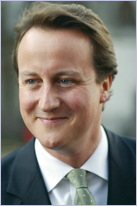
Tag: 2007

  • David Cameron – 2007 Speech on Music

    davidcameronold

    Below is the text of the speech made by David Cameron, the then Leader of the Opposition, on 6 July 2007.

    Introduction

    It’s a great pleasure to be here.

    Let me start by congratulating Geoff Taylor, who was recently made Chief Executive of the BPI, and thanking him for inviting me here to speak today.

    I am sure he did so with some trepidation.

    After all, politicians and music rarely mix well.

    I had a reminder of that the first time I went to the BRIT Awards.
    It was the year when Chumbawamba threw a bucket of water over John Prescott.

    Music Industry Today

    A flourishing music scene plays a huge role in bolstering the vibrancy of our culture and the strength of our identity.

    It plays a huge part in most peoples’ lives.

    This was brought home to me when I went on Desert Island Discs…

    And the agony of trying to condense your love of music into just eight tracks.

    We are a nation of music lovers, buying more music per head than any other country.

    Take any time in recent history, and the music of that period has come to define a generation.

    Punk in the ’70s.

    New Romantics in the early ’80s.

    Britpop in the ’90s.

    Today, British music is undergoing another renaissance.

    Last year, six out of every ten albums bought in this country were by UK artists.

    That’s the best result since 1997.

    And let’s not forget that a flourishing music scene also helps extend our identity and culture abroad.

    We should be proud of the international success newer artists like Amy Winehouse and Lily Allen are having, carrying on the global traditions set by the likes of The Rolling Stones and Elton John.

    Indeed, the UK now accounts for one in every twelve albums sold in the United States.

    When you look at the – albeit rain-sodden – success of Glastonbury, with so many British artists performing to hundreds of thousands of fans in the flesh and more than a million people watching back home….

    ….it goes to show that when it comes to fostering national self-confidence and a sense of belonging, not much compares to music.

    But the music industry deserves its seat at the top table of our national life for another important reason too.

    It’s the reason why I am here today.

    The music industry is a serious and pioneering business.

    It generates billions of pounds for our economy and nurtures some of the most creative talent in our country.

    The facts speak for themselves.

    There are nearly 100,000 people working in the music industry today.

    Retail spending on music was around £1.8 billion in 2006.

    And at a time of technological revolution, you have adapted to changes in consumer behaviour with great ingenuity, launching online and mobile services.

    Matching business acumen with creative instinct, you have shown you have the dynamism necessary to succeed in the 21st century.

    But just as this new world offers exciting new opportunities…

    It also presents incredible challenges.

    And it is two of those challenges that I want to speak about today.

    First, how do we prevent the massive fraud that is carried out against your industry every day through copyright theft.

    And second, how do we protect your investments in the long-term by looking at the issue of copyright extension in the digital age.

    The British music industry is one of the best in the world.

    I want to address these issues to make sure it continues to be so.

    But I also want to talk about a bigger challenge that we all face together.

    That of the broken society of crime, of guns and knives, of broken families, of entrenched poverty…

    And how I expect the music industry, like everyone else, to recognise their responsibility in helping to fix it.

    Anti-Piracy

    Very few people would go into a shop, lift a CD from the shelves and just walk out with it.

    But for some reason, many are happy to buy pirate CDs or illegally download music.

    Look at the figures:

    Around seven percent of the population buys pirate CDs.

    And each year, an estimated 20 billion – that’s right, 20 billion – music files are downloaded illegally.

    This alone has cost the music industry as much as £1.1 billion in lost retail sales since 2004.

    We wouldn’t tolerate fraud on such a massive scale in any other industry….

    ….. so why is there such little will on the part of government, businesses and individuals to confront it in the music industry?

    Copyright matters because it is the way artists are rewarded and businesses makes its money and invests in the future.

    So copyright theft has to be treated like other theft.

    If you cannot get protection from illegal activity, where is the incentive to continue innovating?

    So what should be done?

    The right approach means understanding that like any other crime, this will only be beaten if we all realise the part we have to play.
    By that I mean government, industry leaders like yourselves, businesses, internet service providers and the general public.

    I think government has three important responsibilities.

    First, to establish a more robust intellectual property framework.

    The Gowers Review into the UK Intellectual Property Framework rightly disappointed many in the creative industries by failing to do much more than suggest tinkering at the edges.

    Changes at the margins will not be good enough.

    If we are serious about protecting intellectual property, we need to build a framework that is both flexible and accessible.

    It has to be flexible so it reflects the changing way in which people listen to their music for personal use.

    That means decriminalising the millions of people in this country for copying their CDs onto music players for personal use, and focusing all our attention on the genuine fraudsters.

    And it has to be accessible so smaller companies, who currently find it so expensive to register their intellectual property, have the resources to do so.

    That means working at a Europe-wide level to end the need to translate all documents and applications into all the EU languages.

    The second thing the government should do to fight copyright theft is vigorously bringing offenders to book.

    There have been some recent progress here that we should welcome.

    As a result of the Gowers Review, Trading Standards Officers will now have the power to seize pirate and bootleg CDs that breach copyright law, even if they do not bear infringing trademarks.

    The key is now to make sure we actively find the perpetrators and prosecute them.

    This is a vital step towards the third thing the government should be doing in the fight against copyright theft…

    ….. and that is confronting the blasé attitude that many people have towards piracy and illegal downloading.

    Too many people think it is a victimless crime.

    But they conveniently ignore the links between CD piracy and serious and organised crime.

    I strongly believe that if people really knew the kind of criminality they were funding, sales of pirate CDs in this country would plummet.

    I want to work with figures in the music industry to get the message out that piracy and illegal file-sharing is wrong.

    I know that you already go into schools and educate young kids about this.

    This is something I wholly support.

    So when it comes to combating copyright theft, there are three things that the Conservatives will do:

    Establish a proper framework of intellectual property rights

    Enforce laws more strongly so perpetrators are brought to book.

    And work in partnership with industry leaders to get the message out there that buying pirate CDs and illegal downloading of music is wrong.

    But when in government, we alone cannot do everything.

    We need you in the music industry itself to continue to innovate and make the sort of technological progress that makes pirating CDs more and more difficult.

    We need businesses and individuals to report the sale of pirate CDs or the existence of illegal file-sharing websites whenever they see them.

    Let me also speak about one final responsibility too: that of Internet Service Providers.

    They are the gatekeepers of the internet.

    Some ISPs claim there is nothing they can do to stop illegal downloading of music.

    But last month alone, there were eight sites that hosted more than 25,000 illegal downloads.

    That is clear and visible internet traffic.

    You should know.

    In 2006, the BPI took down 60,000 illegal files from some 720 websites.

    Since 2004, you have brought 139 actions against peer-to-peer filesharing.

    But we cannot expect you to do all the work.

    ISPs can block access and indeed close down offending file-sharing sites.

    They have already established the Internet Watch Foundation to monitor child abuse and incitement to racial hatred on the internet.

    They should be doing the same when it comes to digital piracy.

    Copyright Extension

    So there is much that we could all be doing in terms of taking the fight to copyright theft.

    The second challenge I want to talk today is how we can protect your investments in the long-term.

    In the digital age, whole back catalogues from any decade are available at the click of a button.

    Previously, if you wanted to buy an old album, you would have to trawl through any number of record shops, before, in all likelihood, giving up.

    Now, there is no shop floor.

    The music industry has done so much in making all manner of music from any decade available to everyone.

    And if we expect you to keep investing, keep innovating, keep creating….

    … it is only right that you are given greater protection on your investments by the extension of copyright term.

    After all, PWC found that extending copyright term could boost the music industry by £3.3 billion over the next fifty years.

    But extending copyright term is good for musicians and consumers too.

    It’s good for musicians because it would reduce the disparity between the length given to composers and that granted to producers and performers.

    That’s only fair.

    In the UK alone, over 7000 musicians will lose rights to their recordings over the next ten years.

    Most people think these are all multi-millionaires living in some penthouse flat.

    The reality is that many of these are low-earning session musicians who will be losing a vital pension.

    And extending copyright term will also be good for consumers.

    If we increase the copyright term, so the incentive is there for you working in the industry to digitise both older and niche repertoire which more people can enjoy at no extra cost.

    That’s why, as we move on forward into the new digital age of the 21st century, I am pleased to announce today that it is Conservative Party policy to support the extension of the copyright term for sound recordings from 50 to 70 years.

    A Conservative Government will argue for this in Europe for this change to happen in order to protect investment in the future of the industry, reward our creative artists and generate more choice for consumers.

    Social Responsibility

    So I want to give you real help in the future.

    In the fight against copyright theft.

    By extending copyright term.

    But in return, you’ve got to help me too.

    The single biggest challenge facing this country today is that of the broken society.

    A few months ago, UNICEF released a report on the material, educational and emotional state of childhood in 21 developed nations.

    Britain came bottom.

    It was a wake-up call to us all.

    Take any indicator on childhood welfare, and Britain is among the worst in the developed world:

    Family breakdown…

    Rates of teenage pregnancy…

    Rates of substance abuse….

    Rates of criminal activity.

    How did we get into this mess?

    And more importantly, how will we get out?

    I believe that there has been a failure of leadership at every level.

    Put simply, we all helped break our society…

    …Now we’ve all got to help fix it.

    Of course, that must mean politicians.

    Government can’t bring up children.

    But government decisions have an influence on how children are brought up.

    For too long governments have neglected families, who do so much to bring up children with the right values and with the opportunities that everyone deserves in life.

    That’s why, in Government, we will do all we can to put families first, to back them, and give them the support they need.

    But our broken society is not just about government and politics.

    It’s about our culture too.

    Popular culture is a massive influence on our children.

    A culture, in which of course, music plays an important part.

    That’s why I need your help if we’re going to fix our broken society.

    Many of you sitting here today already do so much to use the power of music to give young kids the opportunity to fulfil their dreams and feel a part of something.

    The BRIT School is a great example of what can be achieved.

    There are other examples across the industry too.

    One is the Nordoff-Robbins Trust, which does great work in providing music therapy for children with disabilities.

    Last year, I made some remarks about rap music.

    I got a letter from one of SongBMG’s artists, Rhymefest.

    He wrote to me saying that not all rappers were responsible for negative messages – some, like him, understood their responsibilities.

    So we met for a cup of tea and what turned out to be a very positive chat.

    An idea called ‘Music for Good’ was born, and it’s already providing opportunities for kids to forge a career in the music industry.

    The simple truth is that music and musicians can influence young people much more than politicians can.

    Our message does not resonate half as much as the messages they hear from their.

    Music is what kids listen to, understand and draw inspiration from.
    So let’s ask ourselves, honestly, what inspiration are they getting from some music today?

    I don’t just mean hip hop and I don’t just mean lyrics.

    Music culture today extends beyond what people listen to on the radio to what they see online, on their televisions and in magazines.

    And in these places, we can often see the celebration of macho-materialism, a hedonistic lifestyle and the portrayal of women as nothing but sex objects.

    We’ve got a real cultural problem in our country; and it’s affecting the way young people grow up.

    It’s an anti-learning culture where it’s cool to bunk off, it’s cool to be bad, and it’s cool not to try.

    This affects what’s happening on our streets and with our kids.

    Educational achievement and aspiration is pushed aside by the dream of instant material gain.

    Now I know this is difficult territory for a politician.

    People could argue that music is just a portrayal of life today, not a cause of the way we live.

    And they argue that other, perhaps older, genres of music are also provocative, including ones that I personally have said I am a fan of.

    After all, it’s not as if Morrissey, Bob Dylan and Johnny Cash have ever shied away from violence in their lyrics.

    And there are those that will go on to say, yes, music can be violent and overtly sexual, but so are movies, video games and television.

    Of course, there is some truth in these arguments.

    But let’s ask ourselves some simple questions:

    Does music help create, rather than just reflect, a culture?

    Yes.

    Is some music, are some lyrics, are some videos and are some artists, helping to create a culture in which an anti-learning culture, truancy, promiscuousness, knifes, violence, guns, misogyny are glorified?

    Yes.

    Can we see the effects of this on our young people, in our schools and on our streets?

    Yes.

    Do we think we can combat this culture by government policies, policing and criminal justice alone?

    No.

    If change in our culture is necessary…and it is.

    If we are all responsible…. and we are….

    Then we all need to take our responsibilities seriously.

    Put simply, we have to acknowledge that all of us – as politicians, as teachers, as parents, as television producers, video game manufacturers and yes, as record industry executives – need to understand our specific responsibility in not promoting a culture of low academic aspiration or violence but instead to inspire young kids with a positive vision of how to lead their life.

    That’s why I am not calling for censorship, legislation or the banning of content.

    I am calling on you to show leadership, exercise your power responsibly and to use your judgement.

    I know music plays a small part in all this.

    But I also know, unless we all fulfil our responsibilities, however small, we cannot hope to confront the challenge of our broken society.

    Already, schemes like rhyme4respect, which encourages positive lyrics in music, is leading the way, showing that the music industry recognises its responsibility and takes this issue seriously…

    I really do welcome that…

    … but I think we all know we need more.

    So when it comes to helping fix our broken society, it is not enough for the music industry to sponsor community projects….

    You can make a difference by providing positive role models for young kids to look up to, draw inspiration from and aspire to be.

    Let me put it another way.

    Would it make any sense to say to media companies that you can simply meet your obligations for social responsibility – to be a responsible corporate citizen – through community projects which had nothing to do with your actual product?

    I know such projects are vital and companies like those here today do so much to channel your charitable energy towards giving opportunities to the young.

    But imagine if we took this approach with McDonalds or a mining company.

    Is it really enough to say that you can put anything you like in your burgers, or do anything you want to the environment when digging for precious metals…. “That’s ok, as long as you are doing some other charitable things at the same time” ?

    Of course not.

    Social responsibility is not just about community projects where you use your profits to do good, it’s about how you make those profits in the first place too.

    Conclusion

    I began by showing what I wanted to do to help make sure that the music industry in this country continues to be one of the world’s greatest.

    That’s why I want to work with you to combat piracy and illegal downloading.

    That’s why I want to extend the copyright term to 70 years.

    But in return, I want to see more from you….

    … using the influence you have over young children to help fix our broken society.

    Britain’s music scene has had an incredibly proud past.

    Together, we can ensure it has an even brighter future.

  • David Cameron – 2007 Speech on Security

    davidcameronold

    Below is the text of the speech made by David Cameron, the then Leader of the Opposition, in Tooting on 18 June 2007.

    Very soon, the real battle in British politics will begin.

    Tony’s going, and the phoney war will be over.

    The British people will have a clear choice.

    A choice between two different visions of society.

    A choice between two different approaches to running the country.

    And a choice between the old and the new politics.

    Us against Gordon Brown.

    That’s the choice at the next election, and today I want to spell out exactly what it means.

    BUILDING OUR HOUSE TOGETHER

    At our party conference last year I said that getting ready for the responsibility of government is like building a house together.

    First you prepare the ground.

    Then you lay the foundations.

    And then, brick by brick, you build your house.

    That is the plan I laid out when I became leader of this Party and that is exactly the plan we’ve been following.

    CENTRE GROUND

    We started by preparing the ground.

    We stopped fooling ourselves that we played the same old tunes we’d somehow get a different result.

    We remembered the importance of rebuilding that broad Conservative coalition without which we’ve never won in the past.

    And we moved this Party back to the ground on which our success has always been built, the centre ground of British politics.

    That meant addressing the issues that matter to people today…

    …so we became the party of the environment and well-being as well as the nation state.

    It meant understanding the real priorities of people today…

    …so we put economic stability before up-front tax cuts.

    And, vitally, it meant standing up for all of the people all of the time, not just some of the people some of the time…

    …so we pledged to improve public services for everyone, not give opt-outs to a chosen few.

    Today we’re back in the mainstream of political debate, we’re setting the agenda, we’re winning the arguments – and we’re winning elections.

    Nine hundred more councillors this year.

    Breaking through in the north of England.

    A forty per cent Party once again.

    Our party is once again a force that can change our country.

    THE FOUNDATIONS – SOCIAL RESPONSIBILITY

    The second stage in building our house was laying the foundations.

    As I said at our conference last year, that’s not about detailed policies.

    It’s about the idea on which all our policies will be built.

    Policies without intellectual foundations don’t stand the test of time.

    We’ve had ten years of short-term initiatives announced to get headlines in the papers.

    People have had enough of Labour’s fast-food politics: they want something more serious and more substantial.

    That’s why we’ve spent the last few months setting out, patiently and consistently, the big idea on which we’ll build our plan for government.

    That idea is social responsibility.

    It’s the idea that there is such a thing as society, it’s just not the same thing as the state.

    Social responsibility means that every time we see a problem, we don’t just ask what government can do.

    We ask what people can do, what society can do.

    That’s the big difference between us and Gordon Brown.

    His answer to crime, his answer to education, his answer to everything – is a top-down government scheme.

    Whatever the issue, whatever the challenge, whatever the circumstances… it’s always the same.

    Under Gordon Brown all we’ll get is “he knows best” politics, as he sits as his desk expecting a grateful nation to wait with bated breath for the latest master-plan to emerge.

    He won’t even commit to giving the British people a say over the EU constitution.

    I profoundly believe that it’s wrong to change the way in which we are governed without giving people the right to say “yes” or “no”.

    Gordon, the top-down days are over.

    It’s the twenty-first century.

    It’s the age of “people know best.”

    Parents know best what works for their kids.

    Doctors and nurses know best how to improve the NHS and give patients great healthcare.

    Residents know best how to make their neighbourhoods better places to live.

    We’re living in an age where people want to control their government, not have their government control them.

    Every day in countless ways, people are getting together to work out new solutions to old problems.

    They’re getting together online, in community groups, in their workplaces, as friends and neighbours and collaborators.

    They want and need a government that’s on their side, that trusts them, that positively wants to put power and control in their hands.

    That’s the big difference between us and Gordon Brown.

    We get the modern world, he doesn’t.

    We trust people, he’s suspicious of them.

    We believe in social responsibility, he believes in state control.

    VISION FOR BRITAIN: SECURITY AND OPPORTUNITY

    So we’ve prepared the ground by moving to the centre.

    We’ve laid the foundations with our big idea, social responsibility.

    And now, with our Policy Groups set to publish their reports, we can move forward to the next stage – showing what we will build for Britain.

    This is my vision.

    A Britain that combines collective security with individual opportunity.

    A Britain that achieves these things through social responsibility, not state control.

    And a Britain where a strong society gives everyone the chance to shape their own life, making the most of all that this amazing country, in this amazing century, has to offer.

    Our Society. Your Life.

    Collective security and individual opportunity.

    That’s the combination that’s right for our times and right for the future.

    And it’s a combination that only we in this Party can offer.

    First, because we understand that social responsibility, not state control, is the best way to provide security and opportunity.

    And second because we understand the deep and important connection between them.

    SECURITY

    This Party has always understood the importance of security, including a strong role for the state where it has a duty to protect its citizens.

    Social responsibility means a strong society where possible; a strong state where necessary.

    Today we need strong defences to protect our country – from threats old and new.

    That’s why we’re committed to setting up a national border police, with Lord Stevens leading a task force to produce a plan for making it happen.

    In the months ahead, our Security Policy Group, led by Pauline Neville-Jones and Tom King, will publish their recommendations.

    They will advise us on the steps we must take to protect our country from terrorism, and from the new risks of an increasingly unstable world.

    We also understand the need for a strong response to the everyday threat to people’s security that comes from crime and anti-social behaviour.

    I believe that Tony Blair’s pledge to be tough on crime and tough on the causes of crime is his biggest broken promise.

    Being tough on crime is not about soundbites and headlines.

    It’s about serious long-term thinking: analysing what’s gone wrong with our criminal justice system, and developing serious plans to put it right.

    That’s why I’ve placed such emphasis on the need for police reform.

    David Davis and his team have produced a detailed and impressive set of proposals.

    We’re working on them with the police, trusting in their professionalism…

    …asking them to make the changes that are necessary in return for tearing up the pointless targets and paperwork and giving them the freedom to do the job they desperately want to do.

    Security is vital in the economy too.

    Conservatives instinctively understand the importance of sound money and sensible economic management.

    That’s why it is the absolute expression of our traditions, not the denial of them, when we say that we will put economic stability first.

    And that’s why we feel so strongly about the way Gordon Brown has wrecked our pensions system, destroying millions of people’s economic security without a word of apology or remorse.

    But our collective security is not just about the economy, or crime, or terrorism.

    It is also about the fabric of our society. About wanting people to feel a real sense of belonging.

    We believe in building a cohesive society, where Britishness means inspiring people with a love of country…

    …not bullying them with instructions to integrate, or insulting them with cheap ‘flags-on-the-lawn’ gimmicks.

    And above all, our collective security is about the one institution in our society which matters to me more than any other.

    That is the family.

    Why do I focus on the family?

    Why am I so proud of the magnificent work that Iain Duncan Smith is leading in our Social Justice Policy Group, with his final report soon to be published?

    Because I believe, as I said in my speech to our Spring Forum in March, that the greatest challenge this country faces today is reversing the social breakdown we see all around us.

    And strengthening families is the best way to do it.

    Let’s be clear about this.

    It is simply no use talking about opportunity for all unless we give every child in our country the secure start in life that comes from a stable, loving home.

    We are far from that position in Britain today, and turning it around will be the greatest challenge – and I hope the greatest achievement – of the next Conservative government.

    That’s because ensuring our collective security – whether protecting people from physical harm, providing economic stability, or giving children emotional stability – is not just an end in itself.

    It is about creating the platform for the great driving force of Conservatism through the ages – the promotion of individual opportunity.

    But I will not allow this Party, or this country, to overlook the connection between security and opportunity.

    Only by meeting our collective obligations to each other, and building a strong society, will we create the conditions for every individual to enjoy real opportunity.

    Our Society. Your Life.

    OPPORTUNITY

    And what a life it can be if we enable people to make the most of the modern world.

    I suppose every generation thinks their time is the most exciting there’s been.

    But truly, no generation has ever faced such an extraordinary range of possibilities as we do today.

    Of course we can look at the future negatively – the threats of new weapons, of new and dangerous ideologies; the looming catastrophe of climate change; the fracturing of traditional communities and the growing sense of atomisation.

    But I am a determined optimist.

    I want us to look at the future positively.

    Every year we get closer to curing the great diseases.

    There are technologies that will give us the energy to power the world without wrecking the planet.

    We have communications which overcome every obstacle not just of distance but of culture – making one world.

    We see the potential of the future in places like South Korea.

    Britain took four hundred years to move from an agricultural to a high-tech economy – Korea has done it in just forty.

    There’s no reason why similar miracles can’t happen elsewhere in Asia – and in Africa.

    Peter Lilley’s Policy Group on Globalisation and Global Poverty will have many recommendations for what needs to be done to make that a reality.

    The task for this Party is to match our determination to build a strong and secure society with a policy programme that extends opportunity ever more widely…

    …with no-one excluded from the possibilities of the modern world.

    Here’s how we’ll go about it.

    If we in Britain want to be in the fast lane of global progress, we need to improve our own dynamism, our own competitiveness.

    That’s the thinking behind Michael Heseltine’s radical proposals for devolving power from Whitehall, so our great cities can get the strong leadership they need to compete on the world stage.

    In our economy, we must lead the world in innovation, and stimulate the creation of new businesses and new jobs.

    That’s the thinking behind the work of John Redwood’s Economic Competitiveness Policy Group.

    But above all, extending opportunity means liberating the potential of our young people, with world-class education at every level.

    That’s why we’re developing a robust and radical plan for reforming state schools, addressing both standards and structures.

    Bringing rigour to the curriculum and testing.

    More setting and streaming, with a ‘grammar stream’ in every subject in every school, so bright pupils are stretched and all pupils are taught at the right level.

    Tackling disruptive behaviour by giving head teachers control over discipline.

    And making it easier to set up new schools so we get genuine diversity and parents have a real choice.

    Stephen Dorrell and Pauline Perry will show in their Public Services report how in schools, just as in the NHS…

    …we will replace Labour’s culture of top-down targets and centralisation…

    …with a relationship of trust and accountability between those who use public services and the professionals who provide them.

    Last week we unveiled proposals to transform young people’s skills…

    … not trusting in the bureaucracy of the Learning and Skills Council, but with new professional apprenticeships that engage employers and match the future needs of the economy.

    Next week David Davis will launch a taskforce to examine the recent fall in social mobility – and find ways to reverse it.

    For us, expanding opportunity means not the backward-looking plans of Labour’s Deputy Leadership candidates – who only see a future for more state-owned and run housing – but helping young people onto the housing ladder through a massive extension of shared ownership and the right to buy.

    Expanding opportunity means not leaving up to thirty per cent of men in some of our towns and cities languishing on Incapacity Benefit, as has happened under Labour …

    … but our plans to harness the expertise of the voluntary sector in helping people off welfare and into work.

    And expanding opportunity means not wasting the proceeds of growth as Gordon Brown has done, but sharing the proceeds of economic growth between better public services and lower taxes.

    In all these ways, we will show how we are the Party with the new ideas – the serious ideas – to expand individual opportunity in our country.

    And we will show we understand that individual opportunity is not something that can or should be defined by politicians in Westminster.

    Your life is just that – yours, not mine.

    For many people today, opportunity is not just about more money, it’s about more time with the kids.

    It’s about the journey to work, the food the family eats, the state of the neighbourhood.

    This is the new politics, a world away from the preoccupations of old Westminster and the political elite.

    We’re making this new politics our own, just as we’re setting the agenda on the environment and climate change.

    And soon the report of our Quality of Life Policy Group will make another significant contribution to that whole debate.

    STAND UP, SPEAK UP

    Right across the range of issues, our policy debate is about to start in earnest.

    We will soon be launching Stand Up, Speak Up – a chance for everyone in this country to get involved in shaping the next Conservative manifesto.

    We hear a lot about political apathy these days.

    Well I want all of you here and all our Conservative friends around the country to stand up and lead the way in getting people involved in a massive grass-roots debate on the future of our country.

    Let’s show the cynics some energy, not apathy.

    CONCLUSION

    So as we start this great policy debate, we can be clear about the shape of the house we’re building.

    It’s designed to deliver collective security, as the platform for individual opportunity.

    Security for our society; opportunity in your life.

    Not copying New Labour, but learning from its mistakes.

    Not abandoning Conservative principles, but applying them in new ways to new challenges.

    And in the process making this Party the true force for progressive politics in Britain today.

    Our foundations are strong, while Gordon Brown’s are shaky.

    Our vision is built on the truth that no politician, no bureaucrat, no government official, can ever achieve as much as a strong society working together.

    Social responsibility, not state control.

    That’s what we believe, and that’s why we’ll win.

  • David Cameron – 2007 Speech on Islam and Muslims

    davidcameronold

    Below is the text of the speech made by David Cameron, the then Leader of the Opposition, on 5 June 2007.

    I was unable to attend yesterday, but Sayeeda Warsi, Dominic Grieve and the chair of one of my policy group’s, Pauline Neville-Jones, were, and have relayed to me some the key issues that were raised.

    The need to define our common values.

    The impact of modernity on traditional Islamic societies.

    And the need to build greater understanding of Islam by others – and of Western society and culture by Muslims.

    These are questions that fall under the wide-ranging disciplines of political science, theology, and sociology, but what underpins them all is a question as old as humanity itself: how do we live together?

    In this country, there have been times when this question has been uppermost.

    While conflict between Catholics and Protestant in Britain was bloody, we were spared the worst excesses witnessed on the continent.

    The Glorious Revolution and the two Jacobite rebellions were periods of crisis for the coherence of our country.

    Subsequent Catholic emancipation was a long and slow process, but ultimately successful.

    The incorporation of East European Jewish immigrants, particularly a 100 years ago, and the Ugandan Asians 30 years ago can also be regarded as successes in integration into a British identity.

    Each time, Britain has been able to rise to the challenge and sustain our coherence and unity.

    We have done so through a combination of a steadfast faith in our institutions and values, such as freedom under the rule of law, pluralism and tolerance….

    ……and because society – not only the majority community but the minority community too – were prepared to stand together as one.

    There is no reason to think we cannot do the same today.

    Security Threat

    The evil terrorist campaign we have witnessed in recent years has revealed the existence of a murderous ideology which distorts Islam and plays on a range of grievances to turn a small number of young men into revolutionaries.

    As the Grand Mufti of Egypt said yesterday, “there is nothing in Islam that could ever justify these blatant acts of aggression”.

    Confronting the false basis of this perversion of Islam is one part of what needs to be done.

    Ensuring an appropriate security response is another.

    But today I want to talk about the third element: community cohesion.

    Promoting community cohesion should indeed be part of our response to terrorism.

    But cohesion is not just about terrorism and it is certainly not just about Muslims.

    Promoting integration will help protect our security.

    But too mechanistic a connection between these objectives will make it harder to achieve both, by giving the impression that the state considers all Muslims to be a security risk.

    After all, it is a tiny minority of British Muslims who support terrorism.

    And fewer still who are likely to plan or commit terrorist atrocities.

    Cultural Separation

    That’s why, in discussing community cohesion today, I want to focus on another significant trend: cultural separation.

    There has been a rise in what the French scholar Olivier Roy calls ‘religiosity’ among second or third generation Muslims of immigrant origin.

    Of course we should welcome, not condemn, people who choose in a free society to express their religious belief.

    But what should most definitely concern us is when heightened religious observation is accompanied by a rise in cultural separatism.

    As the Grand Mufti said yesterday, “Islam calls on Muslims to be productive members of whatever society they find themselves in. Islam embodies a flexibility that allows Muslims to do so without any internal or external conflict.”

    Therefore, cultural separatism is something we must all work hard to resist and reverse.

    Again, not just because it relates to our security concerns.

    Although all terrorists are cultural separatists, not all cultural separatists are terrorists.

    But though cultural separatists eschew violence, many find it hard to accept what has happened with 7/7 and other plots. In short, they seem to be in denial.

    I recently visited a mosque in Birmingham and got some depressing questions about who was really responsible for 9/11 and even 7/7.

    That it was a CIA plot.

    That Jews had been told to leave the twin towers.

    When it comes to 7/7, there was real scepticism about the suicide bomber videos being fake or not.

    Indeed, the poll by Channel 4 news out today suggests that one in four Muslims in this country think Government agents staged the July 7th bombings.

    This is a real problem which we have all got to get to grips with.

    And some recent opinion polls have suggested that we may have a growing problem of cultural separatism: in other words, the next generation of British Muslims are more separate from mainstream opinion than their parents.

    For example, in a recent survey of 16-24 year old Muslims in this country, 36 percent believed if someone converts from Islam they should be punished by death.

    Now, in a free society, we are all allowed our own opinions.

    What’s more, as individuals, we can legitimately challenge the status quo as long as it is done within the rule of law.

    But I think we should be able to say confidently, and without wanting to cause offence, that some of these views are contrary to the principles of freedom and equality that we hold dear in this country.

    In that respect, they must be challenged.

    And I do not want to shy away from my responsibility of making this clear.

    But perhaps a much more telling statistic, and alarming indictment on the cultural separation in our society, is that 31% of all Muslims in this country feel they have more in common with Muslims in other countries than they do with non-Muslims in Britain.

    This cannot be explained simply in terms of the bonds of kinship which anyone will feel to the homeland of their ancestors.

    There is something much deeper at work here:

    A feeling of alienation.

    A disillusionment with life in this country.

    And an ambiguity over what it is to be both Muslim and British.

    It is now absolutely vital that we address this trend.

    After all, we should acknowledge that those who feel simply disillusioned and disaffected today can turn to something much more sinister, and much more subversive, tomorrow.

    Indeed, as Peter Clarke, Deputy Assistant Commissioner of the Metropolitan Police recently said, “one of the most worrying” things he has come across in his job “has been the speed and apparent ease with which young men can be turned into suicidal terrorists, prepared to kill themselves and hundreds of others.”

    What’s more, it is these people who are the first line of defence in the battle against those extremists who are actually planning attacks.

    They are their cousins, brothers and sisters, and it will harder for them not only to apply the social pressure, but also indeed to recognise particularly radical philosophies contrary to the British way of life, if they themselves remain divorced from life here.

    In a moment, I will explain how I think we can reverse this trend.

    But first, I want to explain why I think it has happened.

    Politics of Identity

    Of course, there are many factors that need to be taken into consideration.

    First, and not least, the impact that poverty and poor life chances have on someone’s sense of isolation and belonging.

    Second, racism and bigotry has done much to harm community relations.

    You can’t even start to talk about a truly integrated society while people are suffering racist insults and abuse, as many still are in our country on a daily basis.

    Third, we have to recognise that for some young Muslims, their sense of belonging to a global Muslim community is heightened by the perception that Islam, around the world, is under attack.

    They see the conflicts in Afghanistan and Iraq.

    And the continued failure to settle the Palestinian question.

    We have to explain patiently and carefully that in Iraq and Afghanistan we are supporting democratically elected Muslim leaders.

    And that in a democracy, disagreement with foreign policy can never justify violence or terrorism.

    We must explain that in the Middle East we are pushing hard to get the peace process restarted.

    At the same time, we must be careful not to link these issues together.

    Some of the rhetoric about the ‘War on Terror’ has helped to give this impression.

    As I’ve said before, this can play into the hands of those – like al-Qaeda – who want to divide the world in two.

    The reality is that we should disaggregate these issues and deal with them one by one, with the humility and patience.

    And a fourth factor which has helped foster this lack of belonging for many young Muslims in the UK today is the influence of a number of Muslim preachers that actively encourage cultural separatism.

    One such preacher is Yusuf al’Qaradawi, who though he encourages Muslim participation in political life in the UK, says he wants to create an ‘Islamic Movement’ which he defined as “the organised, collective work undertaken by all the people to restore Islam to the leadership of society and the helm of life [in] all walks of life”.

    What’s more, there are some Muslim organisations that advocate complete non-participation, especially in political life, as part of being a good Muslim.

    Such encouragement is nothing short of passive resistance to our values deliberately designed to keep the Muslim community detached and separate- as outsiders in their own country.

    This is helpful to no one.

    It helps serve as a recruiting sergeant for the BNP, who can play up to the politics of fear by demonising an ‘other’ which refuses to play its part in wider society.

    And those Muslim communities that choose to hold themselves apart will struggle to prosper and thrive in this country.

    This was a point raised by Mufti H.E. Mustafa Ceric yesterday : the need for Muslims and the host nation to go forward on a shared, not independent, basis.

    So poverty, racism, the perception that Islam is under attack and the influence of preachers that encourage separation all have a part to play in explaining why some Muslims hold views contrary to values we hold dear in this country and seem so disillusioned with life in Britain.

    But I want to focus on a fifth reason in particular: the question of identity.

    There are two, mutually reinforcing, factors at work here.

    First, what we are witnessing is a rise in Muslim identity and consciousness.

    Olivier Roy explains that this is a result of Islam becoming ‘de-territorialised’ – that is, established beyond its customary geographical and social backdrop.

    In traditional Muslim societies, one’s identity is everywhere: local schools, music, arts, family, and the legal system.

    But as Roy goes on to say, once Muslims leave these traditional societies through emigration, their identity is no longer supported by society at large.

    Within this framework, many first generation immigrants happily fit in with the norms and customs of their new homeland.

    But they do so while not making a full break with their place of birth, bringing with them traditional habits and beliefs.

    But it is their children who can feel more rootless: unable to identify fully with neither the traditional practices of their home life nor the cultural norms of modern Britain.

    It is their search for an identity which makes them associate more readily with the global ummah – the worldwide Islamic community.

    It is this which can lead to a depressing sense of isolation from their country of birth.

    At its very worst, it can lead to extremism and violence.

    This process of rising Muslim consciousness has been accelerated by the creed of multiculturalism, which despite intending to allow diversity flourish under a common banner of unity, has instead fostered difference by treating faith communities as monolithic blocks rather than individual citizens.

    The result has been what Amartya Sen calls ‘plural monoculturalism’: a system in which people are constantly herded into different pens, with respective grievances and rights.

    As a result, Bangladeshis, who have their own distinctive language and culture, are now grouped together with people from Iran to Indonesia….

    ….. reinforcing their sense of separateness on strength of their religious belief alone.

    This rise in Muslim consciousness has been reinforced by a second, parallel, factor at work: the deliberate weakening of our collective identity in Britain.

    Again, multiculturalism has its part to play.

    By concentrating on defining the various cultures that have come to call Britain home, we have forgotten to define the most important one: our own.

    We hear it more and more: what does it mean to be British?

    We are less sure how to articulate an answer to that question than we ever have been in history.

    Just recently, I stayed for a couple of nights with Abdullah and Shahida Rehman in Birmingham.

    I spent a lot of time talking to them and their family, and also the wider Muslim community in the area.

    Time after time I heard people talk about the uncivilised behaviour and values they see all around them.

    Drugs, crime, incivility are – we have to admit – an all too common part of life in modern Britain.

    We have to understand that integration is a two-way street. It is about more than immigrant communities, ‘their’ responsibilities and ‘their’ duties.

    It has to be about the majority population too- the quality of life we offer, our society and our values.

    Building a Positive Society

    The challenge now is to create a positive vision of a British society that really stands for something and makes people want to be a part of it.

    A society in which we are held together by a strong sense of shared identity and common values.

    A society which encourages active citizenship, not a passive standing on the sidelines.

    A society which people are not bullied to join, but are actively inspired to join.

    It is about creating a framework of values in which people – all people – in our country feel they are part of a shared national endeavour, a positive purpose.

    And I believe there are two key priorities in making this happen.

    First, we need a clear sense of our British identity and ensure it is open to everyone.

    Second, we need to build a society where people really feel they have the power to shape their own destiny.

    Building Identity

    Let me take each in turn.

    First, a society that has the ability to inspire its citizens is one with a strong sense of history and values.

    That’s because history and values together shape our identity.

    History revolves around institutions, buildings, symbols; a sense of where you have come from and where you are going to.

    Think of America.

    Of course America is not perfect.

    But it does succeed in creating, to an extent far more evident that we have achieved here, a real sense of common identity – about what it means to be an American.

    Freedom. Family. Opportunity and community.

    Now, this is not to say we in Britain have neither history nor values. We have plenty of the former and a keen sense of the latter.

    The difference is that in America, this identity is positively and actively embraced by nearly everyone, regardless of his or her ethnic background and religious affiliation.

    You can see it in daily rituals like the Pledge of Allegiance.

    In the strong sense of emotional attachment and reverence towards Mount Rushmore and Arlington Cemetery.

    And you can see it in America’s coming together on Independence Day and Thanksgiving.

    It is this strong sense of inclusive identity that has helped make so many people feel part of American society.

    In Britain, we have to be honest: we have failed to do the same.

    We have not opened up our sense of citizenship to all those that have come to live here.

    Of course the vast majority of families of recent immigrant origin do feel a strong sense of citizenship and what it is to be British.

    Indeed, my time in Birmingham with the Rehmans showed that if we want to remind ourselves of British values – hospitality, tolerance and generosity to name just three – there are plenty of British Muslims ready to show us what those things really mean.

    The problem is some do not.

    That’s because much of this transmission of our identity is unspoken and instinctive.

    ‘Unspoken’ English, as it were, can be the most difficult language to learn if you come from elsewhere.

    Now this does not mean we have to adopt flag-raising ceremonies or ritualistic pledges of allegiance to the monarchy.

    But we can start by ensuring history is taught properly in schools.

    This does not mean we have to gloss over all the things we are not entirely proud of, but we should at least celebrate the many positive things Britain has achieved both at home and abroad.

    After all, you do not earn respect by constantly denigrating and repudiating your own culture

    This must include teaching our children about concepts like the rule of law, free speech, freedom of the individual and parliamentary democracy.

    We can also help foster a shared sense of identity by making sure immigrants can speak English.

    Today, we have communities where people from different ethnic origins never meet, never talk, never go into each others’ homes.

    Ultimately, it is an emotional connection that binds a country together. It is by contact that we overcome our differences – and realise that though our origins and our cultures may vary, we all share common values.

    The most basic contact comes from talking to each other: and if people cannot speak the English this becomes near-impossibe.

    And let’s be clear: when we say a common citizenship must be open to everyone in this country, we must mean everyone.

    That must include women.

    Now, I know there’s a myth in this country about Muslim women.

    The idea that somehow all Muslim women are subservient observers of, rather than active participants in, British society.

    Many are well educated and many play a vital role at the heart of their communities.

    But we must not be naïve.

    In certain sections of the community women are being denied access to education, work, and involvement in the political process.

    These are all vital aspects of being a British citizen.

    I’m told time and time again by women that the denial of these opportunities is not because of their Islamic faith but because of current cultural interpretations in Britain.

    We must therefore be bold, and not hide behind the screen of cultural sensitivity…

    …to say publicly that no woman should be denied rights which their country support, and, as we have learned from some speaker over the past couple of days, that some interpretations of Islam support too.

    Empowering State

    So bolstering our sense of identity and extending it to everyone is the first thing we need to do if we are to inspire people to feel British.

    The second thing we have to do is build a society in which people really – and I mean really – have the power to shape their destinies.

    These two things are mutually re-enforcing.

    After all, common values, common identity and a common purpose can never be derived from the state alone.

    They come from within society.

    It’s a question of social responsibility: the attitudes, decisions and daily actions of every single person and every single organisation in society.

    After all, it will be the many millions of individual acts between human beings that will determine the success of community cohesion.

    And more people will assume their social responsibility and feel part of their community if they feel real control over its future.

    Look at the Gallup World Poll.

    It showed that what they dub as ‘involved’ citizens – that is, people who have donated money or volunteered time to an organisation, helped a stranger or voiced an opinion to a public official – are much more likely to think that people from minority ethnic groups enrich cultural life in Britain than those that are not involved.

    The problem in Britain today is that the avenues and channels by which people are able to take control of their life and shape their own destiny have been eroded.

    This is not just the case for minority ethnic populations. It is as true for the majority population too.

    Britain is now one of the most centralised states in the developed world. People no longer feel they have the means or ability to change things.

    When it comes to our schools, our health service, our neighbourhoods, people feel powerless to do anything.

    Again, America can teach us a lesson.

    It is one of the most decentralised countries in the world.

    As a result, there exists a real sense of civic responsibility and engagement, as people look to their own community, not to central government, for solutions to the problems they face.

    Just as importantly, they have a belief that no matter who they are or where they come from, if they work hard enough they can achieve their goals.

    Afshin Ellian, an Iranian teaching Law in the Dutch town of Leiden, summed up the difference between this approach, and the one exercised in Europe:

    “Five years ago, my Afghan sister-in-law emigrated to the United States, where she now works, pays taxes and takes part in public life. If she had turned up in Europe, she would still be undergoing treatment for her trauma – and she still wouldn’t have got a job or won acceptance as a citizen”.

    What he is saying is obvious enough: a society that gives people the chance to get on in life, to fulfil their ambitions and feel that their contribution is part of a national effort is one that will inspire affection and loyalty.

    So before we can offer real hope of changing society, we have to change the way we think and do politics in this country.

    We need a radical re-distribution of power in our society from the centre to the local, so we can empower people and build the responsible society we all want to see.

    The power to shape their communities.

    The power to shape their public services.

    The power to shape their futures.

    In short, more power to the people.

    I want to give everyone in our country, particularly in our great cities where immigrant communities are most concentrated, much greater control over what happens in their lives, with meaningful local participation, engagement and civic responsibility.

    I know what you’ll say: Muslim communities already have a sense of civic responsibility that puts the rest of us to shame…

    …and so the onus should be on the host population to step up to the plate and assume their responsibilities, by actively getting involved and reaching out to minority ethnic communities.

    I agree with both sentiments entirely.

    But the onus also lies with Muslim community and faith leaders, many of which are here today and whose work is an inspiration, to actively lead the communities they represent in the direction of involvement with the wider local community.

    By that I mean extending their sense of civic responsibility and social work beyond places of worship or local community centres to people from other faith groups and backgrounds.

    So let me be clear: we will not build a cohesive society if people do not assume their responsibilities.

    And people will not assume their responsibilities if they do not have the power to control their lives.

    “Power to the people” is one of the most deeply held Conservative ideas and in the weeks ahead we will start to show how we plan to extend it.

    I began by saying that through a steadfast faith in our values and because society wanted to stand together as one, Britain has managed to answer the question of how we live together before.

    And I said I believe we can do so again today.

    It will require us to strengthen our identity and make it inspiring to many more people than is the case at the moment.

    And it will require us to build the sort of responsible society that will make people want to play their part and stand together.

    I am optimistic about our chances of doing this, because deep down, I believe the majority of us want the same.

    A Britain proud of its past, and confident in its future.

    A Britain built on a strong cultural identity but with the freedom to allow communities to practice their traditions.

    And a Britain where if you want to play your part, there’s a place for you.

  • David Cameron – 2007 Speech on the Union

    davidcameronold

    Below is the text of the speech made by David Cameron, the then Leader of the Opposition, on 19 April 2007.

    United we are Safer

    I support the union not only for what it has achieved in the past but for what it can achieve in the future. The labour party’s approach is to cow and bully Scotland into remaining part of the union. I believe this is the wrong approach – instead of threatening the people of Scotland we must inspire them.

    Over the centuries, Scots have made an outstanding contribution to the UK’s military successes, from Waterloo to D-Day, from the Falklands to Afghanistan. Scotland punches above its weight in Britain’s Armed Forces and Britain punches above its weight in the world because of the expertise and bravery of those Armed Forces.

    Scotland benefits from the expertise of the Metropolitan Police and MI5 in fighting both terrorism and organised crime.

    United we are Stronger

    Britain is one of only five permanent members of the United Nations Security Council. We have a seat at the top table and are listened to in a way that other countries can only dream of.

    Our ability to influence the European Union derives from our size within it. Smaller countries frequently complain that the EU is dominated by the bigger countries. Certainly, the UK would never have achieved its rebate without the institutional muscle that comes from a population of 60 million people.

    United we are Richer

    Britain has the fourth largest economy in the world. The City of London is overtaking New York as a global powerhouse. Edinburgh’s role as a major financial centre is built on the expertise of its workforce and underpinned by its position in the UK.

    United we are Fairer

    The NHS is one of the greatest institutions created in 20th century Europe. It is the best of British, created by a Welshman and benefiting enormously from the skill of doctors trained in Scotland’s great medical schools, Edinburgh, Glasgow and Aberdeen.

    For all the talk of how we’re becoming a more selfish society, the principle of solidarity and the sense that we’re all in this together still burns brightly among the British people, and nowhere more so than in Scotland.

    United we are More Civilized

    Another institution we can all be proud of is the BBC. The British Broadcasting Corporation was founded by a Scotsman and is the most prestigious broadcaster on earth. People around the world tune into the BBC for news they can trust. The BBC also reminds us of our common culture. Programmes like Doctor Who and Mastermind aren’t English or Scottish – they’re British.

    The English language is possibly the greatest export that Britain has ever produced. It was spoken here in the borders and in Edinburgh before it reached many parts of England. Thanks to the Empire it spread around the globe – in no small measure due the endeavour of Scots – and is now the world’s lingua franca.

  • David Cameron – 2007 Speech on Liberal Consensus

    davidcameronold

    Below is the text of the speech made by David Cameron, the then Leader of the Opposition, in Bath on 22 March 2007.

    Politics is a trust.

    In a representative democracy, politicians hold power in trust from the people.

    It is not our power but yours that we exercise.

    We exercise it on your behalf – and we are accountable to you for how we use it.

    Accountability means more than standing for re-election once every five years.

    It means transparency during your term of office too – the obligation to explain what you are doing openly and honestly.

    When politicians betray the trust they have received from the public, the public loses trust in them.

    And who can deny this has happened in recent years?

    I believe that more than any other politicians, Tony Blair and Gordon Brown are responsible for the breakdown in trust in our politics today.

    I don’t need to rehearse the mistakes of Mr Blair.

    Today I want to make it clear that I regard Gordon Brown to be the natural heir to Blair in the art of spin.

    This week’s Budget proved why.

    Now that the dust has settled, it is becoming clear that the Chancellor has not – as he claimed – delivered a tax cutting budget.

    It was a tax con, not a tax cut.

    He has simply shifted the burden of taxation in order to make a headline-grabbing reduction in the basic rate of income tax.

    Elsewhere, his taxes have increased.

    And like the Liberal Democrats, I am worried that the cuts are being funded by tax rises for the poorest people in society.

    This is the latest in a long line of deceptions from the Treasury.

    Gordon Brown has massaged figures, changed the economic cycle, redefined public borrowing, announced and re-announced spending, concealed his tax rises… all in order to confuse the public about what he is actually doing.

    Well, this has to stop.

    If we are to restore trust in politics, we have to take serious steps to improve the way Government does business.

    Let me outline what we will do to ensure better accountability in the Treasury, part of our ongoing work to restore trust in politics.

    First, we will ensure Government statistics are independently audited.

    The Government have moved in this direction but not far enough – as the head of the Office of National Statistics has argued.

    Second, we will introduce independent scrutiny of the Treasury’s fiscal rules, to stop the sleight of hand we have become used to from this Government.

    No more redefining the economic cycle to stay within the rules.

    Third, with the help of the former Chancellor Geoffrey Howe, we will introduce reforms to make the Budget itself more open and accountable.

    No longer will it be possible for important changes – like Brown’s £5 billion raid on pension funds – to be sneaked out in the small print of an appendix.

    With a Conservative Chancellor, the Budget speech will be an honest reflection of the measures in the Budget itself.

    Fourth, we will strengthen the independence of the Bank of England.

    Appointments to the Monetary Policy Committee will be made transparently and openly, and members will serve for fixed terms without the chance of reappointment.

    And fifth, we will ensure openness about Government spending.

    People will be able to track online the uses to which their tax money is put – giving the public direct scrutiny of what the Treasury does.

    This is all part of our work to restore trust in politics.

    Ken Clarke will shortly be presenting a report of his Democracy Task Force, with proposals which will make the government more accountable to Parliament and the public.

    For me, this week’s events have convinced me of one thing.

    You can’t trust Gordon Brown.

    And today I am calling for all like-minded people – and especially those who have supported the Liberal Democrats in the past – to join me in a campaign to restore trustworthy government in Britain.

    Liberal Conservatism

    But the need for change goes beyond trust – it goes to the heart of what government does.

    There is a big division opening up in our politics.

    At the next election the decision people will have to ask themselves is this: do we want state control or social responsibility?

    Labour – and Gordon Brown especially – want state control.

    Conservatives and many Liberals want social responsibility.

    So let me make a straightforward argument.

    Gordon Brown, and the philosophy which drives him, will only be defeated if Liberal and Conservative supporters rally together behind an alternative government-in-waiting.

    I am determined that the Conservative Party will provide the country with such an alternative government.

    I believe that we need a new liberal Conservative consensus on our country.

    Let me begin by explaining what I mean by this.

    Then I will get into the specifics of what a Government I lead would do.

    I am a liberal Conservative.

    Liberal, because I believe in the freedom of individuals to pursue their own happiness, with the minimum of interference from government.

    Sceptical of the state, trusting people to make the most of their lives, confident about the possibilities of the future – this is liberalism.

    And Conservative, because I believe that we’re all in this together – that there is a historical understanding between past, present and future generations, and that we have a social responsibility to play an active part in the community we live in.

    Conservatives believe in continuity and belonging; we believe in the traditions of our country which are embedded in our institutions.

    Liberal and Conservative.

    Individual freedom and social responsibility.

    Gladstone, who reduced the tax burden and promoted the freedom of religious conscience.

    And Disraeli, who legalised trade unions and empowered local government to organise civic action.

    Liberalism and Conservatism – like Gladstone and Disraeli – are often in conflict.

    But at a deeper level they depend on each other.

    Without the Conservative stress on communal obligations and institutions, liberalism can become hollow individualism, a philosophy of selfishness which denies our loyalties to neighbourhood and nation.

    And without the liberal stress on individual freedom, Conservatism can become mere conformity, limiting creativity and progress.

    On many of the key issues, it is this balance which we need – not state control, but greater freedom and greater social responsibility.

    Let me touch on four in particular – four crucial areas of policy where, I believe, the Conservative Party and Liberal Democrat supporters can find agreement.

    ID cards

    Perhaps most of all, we agree on the value of liberty itself.

    I believe that, as a nation and as individuals, we have to stand together against unnecessary attempts by the Government to control us and number us.

    Adam Curtis’s recent TV series The Trap powerfully showed how a limited, suspicious and cynical understanding of human nature has created a vast state bureaucracy which seeks more and more power over our lives.

    One example is the restriction of jury trials.

    Here, surely, there is common ground between liberalism and Conservatism.

    Liberalism very properly objects to the curtailment of liberty.

    Conservatism objects to the abolition of an ancient institution.

    The latest threat to liberty is the proposed scheme for ID cards and the National ID Register.

    The words “can I see your papers please?” are going to be heard in Britain for the first time since the second world war.

    You can argue for ever about the potential utility of ID cards – though I remain to be convinced.

    When the Government admits it has handed out over 10,000 passports on fraudulent applications, some of them to terrorists, you know the system won’t work.

    The real issue, however, is that the scheme would only work if carrying a card was compulsory and enforceable by arrest.

    That is a step that Conservatives and, I am sure, most Liberals would not want to take.

    ID cards are presented as methods to control crime, terrorism and illegal immigration.

    In fact, they are an expensive distraction from the real task of fighting these problems.

    There are no shortcuts here.

    We need proper community policing and real controls at our borders – there is no plastic alternative to these.

    Public services

    The second area where I hope that Lib Dem supporters will agree with the Conservatives is the public services.

    I have said that we will make the NHS our top priority.

    This doesn’t just mean pouring more money into an unreformed system as Gordon Brown has done, with a thousand targets and performance indicators attached.

    I think the remarks by Lord Turnbull this week neatly illustrate Gordon’s attitude to the public sector.

    He treats his colleagues in government with contempt – that means public employees further down the hierarchy are beneath contempt.

    He simply hands them a Public Service Agreement and tells them to get on with it.

    Our approach is different.

    Social responsibility means trusting the front-line professionals who deliver the care.

    It means freeing hospitals and GP clinics from Labour’s top-down targets.

    And it means putting power in the hands of patients themselves – a truly liberal NHS, freed from Whitehall and accountable to the people it serves.

    In education, we also need a liberation of professionals.

    The job of government is to get the structures right, including the allocation of money and the basics of the curriculum and the exam system.

    But education is about more than structures.

    Everything that really matters, happens in the classroom – not in Whitehall.

    The success or failure of a school is the hands of the men and women who work there, and the parents and the community it serves.

    That is why I want to see a flowering of innovation and creativity in our schools system.

    Of course schools must be held to account.

    But they should principally be held to account by parents and the local community, not by Whitehall.

    Environment

    The third area where we agree is on the environment.

    I believe in three elements to a responsible environment policy: government leadership, tax-based incentives, and market solutions.

    That is social responsibility – the liberal Conservative approach.

    It is not the Gordon Brown approach.

    In the Budget this week he flunked this challenge again.

    Of course, it is because of Conservative and Liberal Democrat efforts in Parliament that Gordon has now agreed to a climate change bill.

    I welcome his change of heart – but I have profound worries about the sort of law he wants to introduce.

    Rather than a vague and flexible aspiration to reduce carbon emissions, we need binding annual targets which will hold the government to account.

    Only then will we reach our Kyoto target of an eight per cent reduction by 2012.

    And rather than treating the environment as an opportunity for stealth taxation, as Gordon Brown does, we need to use the tax system to encourage the good and discourage the bad.

    I have said that any green taxes should be replacement taxes, not additional ones.

    Any tax rises we impose on pollution, we will balanced by tax cuts on positive behaviour, like business creation or stable families.

    To me, climate change should not merely be a national priority.

    It should be a corporate, social, local and personal responsibility too.

    Localism

    This leads me to the last area I want to look at.

    Conservatives and Liberal Democrat voters surely agree on the need for more power to local communities.

    Conservatives have always believed in the vital importance of innovation and freedom.

    And usually this has translated into support for local government.

    It was Disraeli who empowered town councils to clear the slums.

    It was Lord Salisbury who created our modern system of local government.

    But more recently we have not had such a good record.

    I still regret Edward Heath’s redesign of the local authority structure in the 1970s which abolished some of the ancient counties.

    I also regret that – provoked by crazy Leftwing local politicians in the 1980s – the Conservative government had to increase the levers of central control.

    The modern Conservative Party is getting back to its roots.

    We are determined to lead a renaissance of local autonomy and local activism.

    We are developing proposals to free councils from Whitehall control.

    We have introduced to Parliament the Sustainable Communities Bill, which will give councils the power to control more of the money that central government spends in their area.

    But we don’t stop there.

    Social responsibility means more than devolution to the council.

    We need to devolve power further, to community groups and to individuals and families themselves.

    To me, independent voluntary action is the best manifestation of social responsibility.

    Some of the most ground-breaking and effective social projects in the country are run by social entrepreneurs – local people, like Dick Atkinson in Balsall Heath in Birmingham, who gave up waiting for the council to sort things out and did it themselves.

    Of course, what makes a community is the individuals and families within it.

    One of the great benefits of the right-to-buy revolution in the 1980s was the improvement that it made to housing estates: when people have a stake in their neighbourhood, they tend to respect it more.

    That’s why I want to more home ownership, especially in deprived areas – and we are doing the policy work to ensure we can deliver this.

    Conclusion

    Let me conclude by delving into psychology.

    Labour used to have a rather partisan explanation for why people vote the way they do.

    They said that people vote Labour in hope, Conservative in fear, and Lib Dem in protest.

    Labour when they feel good about the country, Conservative when they are worried about the country, and Lib Dem when they want a plague on both the other houses.

    My leadership has been dedicated to abolishing that explanation.

    We’ve had some help, of course.

    Who now can vote Labour in hope?

    Who regards Gordon Brown as a symbol of sunny optimism?

    As his own former chief civil servant said this week, he has ‘a cynical view of human nature’.

    Second, I don’t believe that Liberal Democrat voters simply want to protest anymore.

    I believe – I hope – that they want to get stuck in, to contribute directly to electing the party of government.

    But their leadership is split – some, the so-called Orange Book Liberals, want to protest against Labour, but others want to join Gordon Brown in government.

    For our part, I want people to vote Conservative not out of fear, but out of optimism.

    Unlike Gordon Brown I have a positive view of human nature.

    But unlike Tony Blair, I base my optimism on conviction.

    I know that we must take the tough decisions that are necessary for our country.

    On climate change.

    On the public services.

    On foreign policy and security.

    So there is a question mark over the future direction of Labour, though most people are understandably glum about the prospect of Gordon Brown.

    There is a question mark over the future direction of the Lib Dems, between the Orange Book Liberals and what we might call the Brown Book Liberals – those who look forward to a coalition government with Gordon.

    But there is no question mark over the future direction of the Conservative Party.

    When I first said that my party would be more green, more local, more family-friendly, some didn’t believe it.

    I hope we have shown that we meant it.

    When I outlined a liberal Conservative approach to foreign policy, some thought I would retract it.

    But we have held to it, and started to broaden and deepen in.

    When I said we would be hardnosed defenders of freedom, some doubted it.

    But we have stood up for our liberties, most recently by defeating the government over their plans to restrict trial by jury.

    There is no doubt about where this party is going.

    We are optimists.

    We have the conviction to take the tough choices – as we have shown on multiculturalism, on family policy and on green policy.

    We have a philosophy – liberal Conservatism – which has the answers to the great questions our country faces.

    For anyone who believes in this philosophy, there is a home waiting for them in the modern, moderate Conservative Party.

    Together, let us work to build a new consensus to restore trust in politics.

  • David Cameron – 2007 Speech on Slavery

    davidcameronold

    Below is the text of the speech made by David Cameron, the then Leader of the Opposition, on 21 March 2007.

    This is the year to acknowledge the pain and devastation which slavery has caused, and which the legacy of slavery still causes, to Africans and to people of African origin across the world.

    In the history of humankind, the slave trade stands out as one of the greatest crimes ever committed by man against his brother. The reduction of a human being to the status of an economic unit, to be bought and sold for his utility to another man, represents an absolute denial of the dignity of each individual, and of our equality.

    So let me acknowledge the pain and the legacy of slavery today in the words that William Wilberforce himself used, in his first speech moving the abolition of slavery in 1789:

    “I mean not to accuse anyone but to take the shame upon myself, in common indeed with the whole Parliament of Great Britain, for having [allowed] this horrid trade to be carried on under their authority.”

    The responsibility of this generation is to remember the disgrace of the slave trade – but also to remember the achievement of abolition. In the second half of the 19th century one of the primary tasks of the Royal Navy was to stamp out slavery on the high seas. As John Stuart Mill put it at the time,

    “for the last half-century [the British] have spent annual sums equal to the revenue of a small kingdom in blockading the Africa coast, for a cause in which we not only had no interest, but which was contrary to our pecuniary interest.”

    William Wilberforce was the leader of the Parliamentary campaign – but beside him stood some dozens of activists and campaigners. As he wrote to the Prime Minister when the Abolition Act was passed in 1807, “I am only one among many fellow labourers”.

    These fellow labourers were not all British, they were not all men, and they were not all white. I want the campaigners for abolition to be the role models for young black people in our country today. The best legacy of this anniversary would be for today’s black children to say in the future: “The anniversary changed things. That was the time my mother or my father decided to stand for election.”

    So don’t think of politics as someone else’s business. Think of it as your business. Think about standing. Thing about taking part. Think about making your voice heard in the councils of our nation.

    Today we are not only remembering the slavery of the past. We bring to mind the many thousands of people who are still trapped in slavery, trafficked as labourers, sex workers and soldiers – whether in the developing world or here in the West. The dedication of William Wilberforce and his colleagues is still needed today, and I salute the efforts of modern campaigners to stamp out this vicious abuse of human rights.

    We must also address the state of Africa today. I am pleased that there is a political consensus in Britain on the need for debt relief and foreign aid. And I want my party to lead the debate on how we can help Africa beyond this.

    Wilberforce himself, in that first speech in 1789, said this:

    “Let us make reparation to Africa, so far as we can, by establishing trade upon true commercial principles”.

    We should be doing all we can to promote indigenous economic development. This means reducing trade tariffs and helping African nations develop the institutions of economic growth.

    There is a golden thread that links property rights, free markets, free trade, the rule of law, honest government, sound finances, economic progress and social advance.

    I want that to be the great project of this century, comparable to the role Britain played in stopping slavery 150 years ago.

  • David Cameron – 2007 Speech to Conservative Spring Forum

    davidcameronold

    Below is the text of the speech made by David Cameron, the then Leader of the Opposition, to the Conservative Spring Forum held on 19 March 2007.

    This has been a great Spring Forum.

    We’ve seen the progress we’re making in our Policy Review.

    We’ve shown our commitment to community campaigning and making a real difference locally, in every part of the country.

    We’ve focused on our new priorities – public services, the environment, improving everyone’s quality of life.

    And today I want to explain why I’m optimistic – for our Party and our country.

    I want to set out what we’re doing and where we’re going.

    Why we’re making progress.

    The new priorities we’re focusing on.

    And how we’re going to win the big argument in British politics today.

    PARTY CHANGE

    This Party is changing – and we’re doing it together.

    People said we’d never get more women candidates without compulsion.

    But you selected them.

    Over a third of our candidates are women – up from just nine per cent in Parliament today.

    And you’ve selected six black and minority ethnic candidates in winnable seats – three times more than we have in Parliament today and six more than the Liberal Democrats who don’t have any.

    But let’s be honest.

    It’s not nearly enough.

    I’ll tell you why this is so important.

    We believe in opportunity and aspiration, and in bringing our country together.

    That means making sure that in every part of our national life – the army, the media, business, the City, Parliament…

    …there are role models that young people in every community can look to and say yes, they made it so I can make it, I can go for it, I can do it too.

    We’re changing our approach to politics too.

    People are fed up with politicians who disagree just for the sake of it.

    They want us to work together for the good of the country.

    We did it last year when we put parents and pupils before party politics and backed the Education Bill.

    We did it again last week.

    This Party has always believed that strong defence is vital.

    So when I saw a big rebellion in the Labour Party, I knew it was right to line up our forces and march them through the division lobby in support of replacing Trident.

    And we can be proud that it’s thanks to this Party that Britain’s future defences are secure.

    It’s not just in Parliament that we’re changing the way we do politics.

    Look at what our candidates are doing, leading social action projects in their communities, getting things done instead of just talking about it.

    Those social action projects aren’t just an add-on extra.

    They’re at the heart of what our Party needs to be.

    BROWN SPIN

    What a contrast with Gordon Brown.

    His idea of social action is dinner with Kylie Minogue.

    Now he says he wants to end the culture of spin.

    We should be so lucky.

    Do you think we’ve forgotten you announcing the same spending over and over and over again?

    Do you think we’ve forgotten the budgets when the big changes – the clobbering of the self-employed and the hammering of pensions – haven’t even been mentioned by you in the budget speech itself?

    Don’t worry, we’ll be looking out for it next week

    And do you think we’ve forgotten the stealth taxes and council tax rises that are hammering every home in Britain?

    Gordon, you are not the answer to spin.

    You are spin – and we won’t let people forget it.

    REAL SUBSTANCE

    But our progress will depend not on what he does, but on what we do.

    And if last year was all about change, then this year is more about grit.

    The gritty determination to say where we stand on the big issues.

    To stick to our guns.

    To take tough decisions.

    And when the right thing to say is unpopular, to say it anyway – because it’s right.

    Take the environment.

    Anyone can say they’re green.

    It’s easy to do the softer things like ride your bike, visit glaciers and rebuild your house to make it green.

    But it’s only clear you mean it when you do the tough things as well.

    Like telling the truth about climate change.

    The truth is that you can’t be serious about climate change unless you’re serious about aviation.

    Everybody knows that.

    There’s a price for progress, and leadership is about making that clear.

    We don’t have to stop people flying.

    But we do have to take action on emissions.

    So yes we will curb the growth of carbon emissions from aviation.

    Yes we’ll find ways of doing it that are fair and reasonable.

    But no, we will not use green taxes as a stealth tax, because with a Conservative Government green taxes will be replacement taxes, not extra taxes.

    Every penny we raise in taxes on bad things like pollution will be used to cut taxes on good things like enterprise and families.

    Look at the difference between our approach to the environment and Gordon Brown’s.

    He says he’s against green taxes.

    He’s telling people what they want to hear – that you can go green without paying the price.

    That’s not leadership.

    That’s not substance.

    It’s the same on the family.

    Anyone can say they’re family-friendly.

    It’s easy to do the softer things, like talk about how much your family means to you.

    But it’s only when you do the tough things that people know you’re serious.

    That’s why we’ve said that business and the public sector need to do more to help parents with flexible working.

    I’ve also said clearly that this Party backs marriage and will support it in the tax system.

    Many people don’t agree with it.

    But I think it’s vital, and that’s why I say it.

    It’s another challenge ducked by Gordon Brown.

    He knows that family breakdown is at the heart of the social breakdown we see around us.

    Kids without qualifications.

    Teenage pregnancy.

    Rising crime.

    But Gordon Brown won’t do anything about family breakdown.

    We’ve got a tax system that doesn’t recognise marriage.

    And a benefits system which does recognise marriage – but penalises it.

    In fact it penalises any form of commitment between two people.

    What sort of system is it that pays people to live apart?

    It’s got to change.

    We’re leading political debate in this country for the first time in many years.

    On strengthening families, while Tony Blair pretends there’s no problem and papers over the cracks…

    …we’re the ones making the substantial arguments about family breakdown and its effects.

    On protecting the environment, it is only because we made the case for annual targets on carbon emissions that we saw the Climate Change Bill published last week.

    And on the NHS, while Labour has been closing Accident and Emergency units …

    …we’re the ones campaigning against NHS cuts..

    …developing the serious ideas to improve our health service by putting power in the hands of patients and professionals.

    LABOUR AND THE NHS

    It used to be said that Labour were the party of the NHS.

    Not any more.

    Labour are the party that is undermining the NHS.

    There’s a simple reason why.

    It’s not deliberate.

    It’s not that they don’t care.

    But it is because of their values and their philosophy.

    Labour’s mania for controlling and directing things from the centre.

    Labour’s pessimism about human nature.

    Their belief that if you don’t tell people what to do, they’ll do the wrong thing.

    Labour just don’t trust people.

    And the NHS is all about people – the nurses, the doctors, the cleaners, the therapists, the porters, the many thousands of people who are motivated by one thing above all else: to give patients the best possible care.

    Labour don’t trust them.

    Instead they’re spending six hundred million pounds a year on management consultants in the health service.

    They’ve turned the NHS into a vast, inhuman machine, a pen-pusher’s paradise at the mercy of the management consultants’ latest wheeze…

    …dreamt up, rolled out, cut back – then finally written off when the next ludicrous ‘strategy’ appears.

    Labour have ripped the heart out of our NHS and replaced it with a computer.

    Targets.

    Reorganisations.

    Endlessly asking people to reapply for their own jobs.

    Mind-blowing waste in the name of modernisation and efficiency.

    But they don’t count the human cost.

    I think of the pensioners raising money through the league of friends for their local hospital, just to see it close.

    I think of the emergency nurse practitioner in Surrey, still in his overalls, telling me that closing A&E means an hour long drive to hospital for some people, and potentially lives lost.

    I think of the young mums told their maternity unit could be closing when they’ve always wanted to have their children in the hospital they love, near their home.

    And look what Labour are doing to people who choose a medical career, who have made the decision to give the best part of their lives to looking after us.

    Junior doctors who have already spent years working in the NHS, having to apply for their jobs by computer…

    They’re not allowed to say what areas of medicine they’re passionate about.

    They’re not allowed to describe any voluntary work they’ve done.

    They’re not even allowed to send in their CV.

    They have to fill in forms on the internet, describing ethical dilemmas in a hundred and fifty words, treated like cogs in a machine.

    I don’t think ministers have the slightest idea how angry these doctors are.

    Their applications lost as the computer system crashes.

    Their future at risk from chaotic central planning.

    Their dedication questioned and their morale undermined by the latest mechanical, impersonal, inhuman Labour scheme.

    Why are we treating people like this?

    Yesterday I met a doctor who after six years of training in the NHS wants to be a surgeon in London.

    Instead they’re telling her to be a psychiatrist in Edinburgh.

    Why can’t Labour see the harm they are doing?

    They have no idea how ridiculous they now look.

    We now have the grotesque spectacle of Labour MPs, including the chairman of the Labour Party, protesting pathetically outside their own local hospitals, against their own party’s health policy.

    They used to say they would save the NHS.

    Now they’re trying to save it from themselves.

    What a way to run a health service.

    What an absolute and shameful disgrace.

    CONSERVATIVES AND THE NHS

    So let me tell you how we would be different.

    There are three things I want you to remember – three steps on our journey towards being the trusted custodians of our National Health Service.

    First, today’s Conservative Party backs the NHS, heart and soul.

    We will do all we can to protect and improve it.

    No ifs, no buts, no opt-outs.

    The NHS is our priority.

    Second, we will not repeat Labour’s mistakes.

    They came to power and destructively scrapped all the reforms that had gone before.

    It wasted time, wasted money, wasted goodwill.

    So we will put an end to the pointless reorganisations.

    We will wave goodbye to the armies of management consultants with their morale-destroying blueprints.

    The next Conservative Government will build on and improve the NHS we inherit.

    Foundation hospitals won’t go, they’ll stay – and we’ll improve them.

    Commissioning by GPs is right – and we’ll make it really mean something.

    Patient choice is essential – and we’ll make it actually work.

    The third step on our journey is perhaps the most important.

    We will put people back at the heart of the NHS.

    We will trust the professionals.

    We will get rid of the top-down, centralising, interfering, insulting targets that drive our doctors and nurses mad.

    Progressively, patiently, carefully, we will usher in a new era of quality and care.

    Where money is allocated on the basis of clinical need, not political priority.

    Where hospitals succeed because people want to use them; where they’re not closed by the stroke of a bureaucrat’s pen.

    That is our goal: an independent NHS, where we get politicians out of the day to day running of the health service we all cherish.

    The NHS is my passion.

    Our priority.

    We’ll back it.

    Build it.

    Improve it for everyone.

    SOCIAL RESPONSIBILITY AND PUBLIC SERVICES

    That is what we mean when we talk about social responsibility.

    We understand that government doesn’t have all the answers.

    We’re optimistic about human nature.

    We believe that if you trust people, they’ll do the right thing.

    That’s how we will improve the NHS and schools and social care – trusting the professionals and giving them responsibility.

    Delivering first class public services is one of the great tests of modern government.

    I believe that this Party is now ready to pass that test.

    We have the right approach – social responsibility.

    And we have the right priorities – like the NHS, schools, families, crime, transport, the environment.

    CLEARING UP AFTER LABOUR

    They are the battleground on which the next election will be fought, and it’s vital we understand that.

    Last month, I had the honour of standing with Margaret Thatcher after her new statue was unveiled in the House of Commons.

    She didn’t spend her time in office like Tony Blair, fretting about her legacy.

    Do you know something – she achieved more for this country in ten weeks than Tony Blair has achieved in ten years.

    She spent her time as Leader of the Opposition developing a clear analysis of what the country needed.

    She knew what the battleground was and she knew how to win the war.

    In the 1970s Britain faced economic breakdown.

    Businesses that couldn’t deliver the goods.

    Rampant inflation.

    Irresponsible trades unions.

    An over-taxed and over-regulated economy that was the sick man of Europe.

    Margaret Thatcher focused on these challenges, applied Conservative ideas and values, and engineered Britain’s great economic revival.

    The result was something we can all be proud of.

    A free enterprise economy – the envy of Europe and the world.

    Today, our country does not face economic breakdown.

    Yes, Labour have undermined our competitiveness.

    Yes, the economy is over-taxed and over-regulated.

    Yes, the next Conservative government must act to promote enterprise and wealth creation.

    And yes, we must rebuild the pensions system broken by Gordon Brown.

    We instinctively understand these things, and unlike Labour we know how to deliver them.

    But the big argument in British politics today is not about the free enterprise economy.

    It’s about our society.

    Because it’s not economic breakdown that Britain now faces, but social breakdown.

    Not businesses that aren’t delivering, but public services.

    Not rampant inflation but rampant crime, disorder and anti-social behaviour.

    Not irresponsible unions – it’s irresponsible parents.

    And as a recent report from UNICEF showed – a report which put Britain at the bottom of the international league table for the well-being of children…

    …it’s not that Britain is the sick man of Europe.

    We’re becoming the sick family of Europe.

    So my focus today, and the mission of the modern Conservative Party, could not be clearer.

    It is to bring about Britain’s social revival.

    To improve the quality of life for everyone in our country, increasing our well-being, not just our wealth.

    Yes it means changes for this Party.

    And I will not shy away from the changes that need to be made.

    But what we are doing is reconnecting with values that inspire us all as Conservatives.

    That there is more to life than money.

    That there is a we in politics, as well as a me.

    And that we are all in this together.

    This is a Party committed not just to helping people get on in life, but to helping those who get left behind.

    In this Party we admire not just Adam Smith and free markets, but Wilberforce who freed the slaves; Chamberlain who cleared the slums; Disraeli who extended suffrage.

    So we must speak once again for the people of Britain who are sick and tired of living in a country that is economically rich but socially so poor.

    Quality of life – that is the modern mission of the Conservative Party.

    Just as we helped clear up the economic mess that Labour left in 1979, so the next Conservative government will have to clear up the mess that these Labour politicians have made of our society.

    So as the Labour Party loses touch with the people of this country and moves away from the centre ground…

    …divided on defence…

    …dependent on the unions…

    …distant from the daily struggle of paying the soaring council tax bills.

    As they forget how hard it is to find a GP who’ll see you out of hours…

    …to find someone to look after the kids…

    …to get back from work in time for you to actually see the kids…

    Let us be the party that speaks for the working people of Britain and says to them:

    We’re as fed up as you are with paying a lot more tax and getting little in return.

    We’re as fed up as you are with ministers who spin and twist but never get anything done.

    We’re as fed up as you are with this government of dashed hopes and disappointment.

    But now we can offer not just anger, but hope.

    Hope because we have made this Party a contender once again.

    Hope because we can lead this country in a new direction.

    The pace is getting quicker.

    In a matter of months, Blair will be gone and Brown will be here.

    Our Policy Groups will complete their reports.

    In October we’ll debate them.

    Next year we’ll shape them into a programme for government.

    By the next election there’ll be a new President in the White House.

    A new President in the Elysee Palace.

    And then Britain too will have the chance to vote for change.

    Let us be ready for that moment.

    Let us have faith that this time we’ll do it.

    And let each and every one of us in this great Party…

    …here in this hall and out in the country…

    …resolve today to fight with passion and pride for a better tomorrow.

  • David Cameron – 2007 Speech on Climate Change

    davidcameronold

    Below is the text of the speech made by David Cameron, the then Leader of the Opposition, to the Green Economy Conference on 12 March 2007.

    For the past year, we have been pressing the Government to go further and faster on climate change – both domestically and through leadership at the international level.

    Our efforts are bearing fruit.

    This afternoon, the House of Commons will hear from the Prime Minister about last week’s EU agreement to cut carbon emissions by 20% by 2020.

    Tomorrow we see the publication of the Government’s Climate Change Bill.

    These are welcome steps in the right direction.

    But let’s not celebrate too soon.

    We’ve had announcements like this before and they haven’t worked.

    We must make sure that the measures announced by the Government have real bite – that they’re not just greenwash.

    That means passing five tests.

    First, at the EU level we need a proper Emissions Trading Scheme.

    The current scheme is not working: the EU 15 promised to cut emissions by eight per cent on 1990 levels by 2012, but so far, we have only managed a one per cent cut.

    One reason is that some member states are granting more carbon permits than are needed or sustainable.

    So I hope Tony Blair will today set out plans to make the Emissions Trading Scheme more open, transparent and accountable and more capable of generating long-term incentives for business to invest in green technology.

    Above all we need to tighten the limits on the number of permits that are issued, so that other member states match Britain’s good record.

    One way of achieving this would be more open auctioning of permits, rather than allocating them by backroom negotiations.

    The second test for government is to ensure a long-term price for carbon in our economy.

    That means setting out the shape of the third stage of the EU Emissions Trading Scheme, for the period from 2012 to 2020.

    We must align the ETS with the 20% emissions reduction target and agree the carbon caps that will deliver the target.

    And in Britain, we should convert the Climate Change Levy into a proper carbon tax, as the Conservative Party has proposed.

    These measures will enable a forward price for carbon to emerge, giving investors the clarity and the confidence they need.

    The effect of a long-term price for carbon should be to make products and activities that produce high levels of carbon more expensive.

    This will spur innovation and the creation of new technologies that give people what they want – from travel to household appliances and energy at an affordable price and with less damage to the environment.

    Accurate carbon pricing will enable a proper market to work.

    A European market already exists – but the price of carbon is still far too low to support what leading businesses want to do.

    So we need to ensure that the regulatory caps and allowances which drive the system are properly set.

    The third test is to set annual targets for the rate of carbon reduction.

    Look what’s happened over the past few years with targets that are set ten, twenty, fifty years ahead.

    They haven’t been delivered.

    The Government has put its 2010 target in every one of its last three manifestos.

    But there is now no chance that it will be met.

    So it is not a matter of debate that long and medium term targets alone don’t work – it is a matter of fact.

    And yet the Climate Change Bill is expected to include five year targets for carbon reduction – without any annual targets for the rate of carbon reduction.

    Well it’s easy for Tony Blair, or Gordon Brown, or even David Miliband to talk about five year targets.

    They won’t be in their current jobs five years from now.

    Indeed if you believe some of the press speculation, they won’t be in their current jobs five months from now.

    Imagine running a business like this.

    The only sales targets you have – the only targets – are five years ahead.

    There’d be no accountability, no pressure to deliver.

    Many of you in this room publicly report on a quarterly basis.

    Do any of you believe that if your reporting requirement were removed to once every five years, that wouldn’t have an effect on your corporate performance?

    Business understands the effect that the rigour and discipline imposed by accountability and reporting can have on delivering a successful strategy.

    We need that same rigour in the public sector.

    We need politicians to be properly accountable for fighting climate change – in the here and now, not the next Parliament.

    Without annual rate of change targets, it’s too easy for the timetable to slip.

    And once it has slipped, it’s much harder to make up the difference later.

    Climate change is our debt to future generations.

    Everyone knows you’re more likely to pay off a debt if you commit to regular instalments.

    That’s why it’s vital that we have annual targets for the rate of carbon reduction.

    The fourth test for the Government is to agree to independent setting and monitoring of the rate of carbon reduction.

    The long-term nature of the climate change challenge demands a framework and disciplines that no government, of any political colour, will ever be able to fudge.

    That is why we have proposed, in our draft Climate Change Bill, an independent Climate Change Commission.

    With a Conservative Government, independent experts, not partisan government ministers, would set Britain’s targets for the rate of carbon reduction monitor whether they have been met take account of specific circumstances – such as an unusually cold winter causing higher energy use and advise the Government on the steps it should take to make sure the rate of carbon reduction is consistently maintained.

    An annual carbon budget report would set out progress and hold government to account for consistent carbon reduction.

    In economic policy, everyone can see that independence for the Bank of England has worked – not least because its inflation target is a rate of change target.

    We now need Gordon Brown to understand the need for a ‘Bank of England moment’ when it comes to climate change.

    And his fifth test will be to take the right sector-specific action to ensure that every part of our economy is making its proper contribution to the green revolution we need.

    This will require a combination of government action and social responsibility.

    In every area, we need to understand the proper role for regulatory and tax changes, and the proper role for business leadership and innovation.

    For example, moving towards carbon neutral new homes will require changes in our whole approach to building regulation.

    Encouraging biomass electricity generation will require new power transmission infrastructure, and a new attitude to decentralised energy within the electricity supply market.

    And encouraging biofuels may require further tax changes.

    But no government can match the creativity and impact of business innovation.

    So how do we encourage that?

    It’s partly a question of culture – and I’m conscious of my responsibility as a politician to help change the culture.

    But it’s also a question of hard realities.

    When it comes to the environment, I believe that the structure of our economy – the framework laid down by law and regulation – is faulty.

    The current Government is continually letting down the businesses that want to marry their obligations to the environment with their obligations to shareholders.

    We have a system in which it still pays to pollute.

    I want Britain, and the City of London, to lead a low-carbon global economic boom.

    That cannot be done by government pressure alone, but government must play its part by providing the right framework and the right incentives.

    We are determined to create the conditions for British business to lead, and benefit from, environmental progress.

    And as our consultation paper on aviation taxes shows, we are determined to put in place a policy framework that is serious, long-term and substantial.

    In aviation, we are directly taking on the most difficult challenges.

    Carbon emissions from aircraft are taxed less than virtually any other form of carbon, yet because they are released high into the atmosphere, they can do most damage.

    How do we tax the carbon emissions of planes when aircraft can just refuel abroad?

    How do we tackle this challenge when air travel is governed by long-standing international conventions?

    These are complex questions with no easy answers.

    But too often from this Government we see initiatives that are just superficial, short-term spin.

    We have had ten years of rising emissions and wasted opportunities.

    The Climate Change Bill needs teeth and we will do all we can to improve the Bill as it goes through Parliament.

    GREEN TAXES

    And we intend to lead the way on green taxation, as our policy work on a new carbon tax and a new approach to aviation taxation both demonstrate.

    Governments can incentivise behaviour through the tax system by taxing the bad and rewarding the good.

    But this Government doesn’t seem to see the distinction – it wants to tax everything.

    As a result, the Chancellor is giving green taxes a bad name.

    Air Passenger Duty is not directly linked to carbon emissions, and provides no incentives for airlines to use more fuel-efficient aircraft.

    Gordon Brown’s increase in Air Passenger Duty was not matched with any alleviation of the tax burden elsewhere.

    So it was simply taxation by stealth.

    Our approach will be different.

    We have made clear that any green taxes introduced by the next Conservative Government will be replacement taxes, not new taxes.

    Any rises in green taxation will be compensated by reductions elsewhere – for example in taxation on families.

    We want to use the tax system to encourage greener behaviour, not to bleed taxpayers dry.

    And we also understand that you can only encourage greener behaviour if there are alternatives available, so people can make green choices.

    Today, a walk-on return ticket on a plane between London and Manchester will cost at most £179, compared to £219 for a standard open return by rail.

    Coupled with the fact that train carriages are often full to bursting, it’s obvious why passengers would avoid the greener option.

    Our policy review is currently examining ways in which we can change this perversity of incentives – in transport and in other areas.

    BEYOND CLIMATE CHANGE

    But today I want to put down another marker.

    My vision of a greener future may start with the vital need to tackle climate change but it certainly doesn’t end there.

    We need to open up a second front in the green revolution.

    Over the past few years, the world has woken up to the threat of climate change and the need to reduce carbon emissions to our atmosphere.

    Greener skies are firmly on the political agenda, and I’m proud of the part we have played in that process.

    But we need a greener earth as well as greener skies.

    Obviously, these things are connected.

    But they are not the same thing.

    Greener living for families and communities, and better protection for our natural environment – on land and sea – will be crucial priorities for the government I lead.

    Land use and landfill.

    Pollution of land and rivers.

    Farming practices.

    The recycling of building materials.

    Our environmental priorities go well beyond climate change.

    So, whilst our aim is to give you in business the freedom you need to create wealth and to realise the huge and unfolding potential of responsible, sustainable economic growth we will not be afraid to take action to ensure that, as a society, we respect the earth’s natural limits.

    To say that we are just a part of nature is, on one level, to state the blindingly obvious.

    But perhaps it is because this is such an obvious fact that, in the daily decisions we take both at home and at work, we find it so easy to overlook.

    We need to think harder about the consequences of the choices we make.

    Whether those choices are about the cars we buy or about where we invest.

    For example, human activity is causing a dramatic loss in the variety of species with which, for better or worse, we share the same increasingly over-crowded space.

    We all like elbow room, and none of us enjoys the crush on the Tube in rush hour.

    But we somehow cope without chucking our fellow passengers onto the tracks.

    What we are doing now to the natural world is elbowing other species out of existence.

    That must stop.

    Of course, species have come and gone during the evolution of life on earth.

    But scientists now agree that since the Industrial Revolution the extinction rate has risen by at least 100%.

    That’s not an unexplained accident.

    It is our doing.

    It’s not just charismatic creatures like the polar bear or the white rhino that are facing extinction, it’s small, uncharismatic creatures, too.

    In fact, some 15,590 different species are known by scientists to be threatened with extinction today.

    One quarter of all mammals as well as one in eight of every bird species is judged to be at high risk of dying out forever over the next few years because of mankind’s relentless grab for the finite resources of our shared home.

    As with climate change, this unconsidered cull of our natural inheritance has implications which reach well beyond our generation.

    Losing biodiversity is about closing down options.

    Options not just about the pleasure we take from the natural environment, but options – many perhaps yet to be discovered – about health, scientific discovery, medicine, food security and social well-being.

    The interests of the economy and of the environment are indivisible.

    This is a simple truth which will inform all that we think, say and do.

    Last year, the Shadow Environment Secretary Peter Ainsworth set up a working group which is studying the whole question of biodiversity, in Britain and internationally, and it will report within the next few months.

    Our policy review process is also consulting with NGOs, business, farmers and rural communities to find new ways to protect and invest in the future of a bio-diverse countryside.

    A key tool in striking a better balance between development and conservation is our planning system.

    Time and time again, I hear from business that it is inefficient, slow, badly run and a barrier to a more sustainable economy.

    New developments must pay more regard to the energy, water and transport needs of the communities who will populate them.

    It must be made easier for new sunrise renewable industries in the UK to put their energy infrastructure in place.

    But in creating a more efficient planning process we must not lose the vital democratic link between local communities, their landscape and their built environment.

    Greener skies and a greener earth.

    Over the past year, my Party has set the pace on climate change – on the greener skies agenda – and our lead has prompted the Government to act.

    We will keep up the pressure on climate change, but we will add to it by setting a lead on the greener earth agenda – those other green priorities which deserve as high a profile as climate change now has.

    We have obligations to hand on to our children and grandchildren the natural beauty and diversity of the world that we inherited from previous generations.

    These are obligations which cannot always be met by the market, and they are obligations which the next Conservative government will be determined to meet.

  • David Cameron – 2007 Speech on the European Union

    davidcameronold

    Below is the text of the speech made by David Cameron, the then Leader of the Opposition, to the European Reform Conference held in Brussels on 6 March 2007.

    This year marks the fiftieth anniversary of the Treaty of Rome. In 1957, Europe was emerging from war – ruined economically and divided politically. An Iron Curtain kept apart nations that were free from those that were not. That was the unpromising background to the Treaty of Rome. A more united Europe took root in the face of adversity.

    Our continent today looks a very different place. On its fiftieth birthday, the European Union – alongside its older partner, NATO – is entitled to take its share of the credit for the changes that have happened. The historic reconciliation between France and Germany. The economic rebuilding of our continent. The consolidation of democracy not just across central and Eastern Europe, but on our southern periphery too – in Spain, in Portugal and in Greece.

    Fifty years on, it is right to celebrate those successes. But we must also look to the future.

    That is the purpose of our conference in Brussels today. We are a new generation, and we too want to build a Europe of which we and our children can be proud. But we know that the first step is to be honest about the new challenges we face.

    These are no less daunting than those which confronted our forebears. For them, East-West relations meant the Soviet Union and a real threat of invasion. For us, East-West relations mean the economic and strategic rise of China and India.

    Those who will succeed in the 21st century will be those who can adapt, who can respond quickly, who can innovate. The modern world places a premium on diversity over uniformity. It forces a focus on results over procedures. The European Union needs to change if it is to be fit for the challenges of the new century, not stuck haggling over the debris of the last.

    My approach

    The Czech Prime Minister and I come from different countries and different political traditions. But we are united in our optimism – in our belief that Europe can and will succeed, if it is ready to make the changes needed to do so. That approach will be at the heart of the new group we will establish together in the European Parliament immediately after the 2009 elections.

    We know, from political developments in all our countries, that many millions of our fellow citizens agree with us. We welcome to our conference today many other leaders, academics, and business people of Europe. We have had an exciting programme involving many of the most innovative thinkers and practitioners in the EU.

    I am especially pleased to welcome Petar Stoyanov, the former President of Bulgaria, whose party the UDF is joining the Movement for European Reform today. And I am delighted to have heard Donna Esperanza Aguirre speaking just before me.

    So let me set out my approach.

    There are two ways that a British politician can speak in Europe. One way is to posture for the TV cameras back home and boast of your determination to stand up for the national interest. And then, later – inevitably – to agree to whatever proposal is on the table.

    Let me give an example – our negotiations over the EU Constitution. At the beginning of the process, Tony Blair and Gordon Brown called for the EU to listen to the people of Europe, and to reform. They spoke of the ‘red lines’ which the government would not, under any circumstances, cross. But in the event, they gave their total assent to the text.

    This government’s record on the EU Constitution is a study in how not to make progress within the European Union. First, they were against the Constitution. Then they were for it. Then they signed it. Then they refused a referendum on it. Then they agreed a referendum. Now they’re briefing against a new Constitution but they don’t have the courage to oppose it in public. And they’re in favour of a referendum but they don’t really want one.

    They’ve had seven different positions. I’ve only ever had one. I’m against a European Constitution and I’m in favour of a referendum if one is ever proposed.

    My approach to European negotiations will be different. I believe that the best way to pursue your national interest, is not to posture – but to persuade. I will be polite, but solid and consistent. I will work to create a flexible Europe by building alliances with those who share our interests and our ideas.

    That is why we have formed the Movement for European Reform. To act together with others – some, like Mirek Topolanek, already in Government – to respond to the feeling of so many of our fellow Europeans that it is time to chart a new course, to focus on the things that matter

    The 3G Europe

    There are many grave challenges that face our world. Perhaps the most pressing of all is the threat of global terrorism and insecurity. I believe the EU has a role to play in confronting this threat.

    It should be working with other institutions – notably the United Nations and NATO – to articulate the values and defend the interests of the West. It should be applying pressure on national governments to bear their proper share of the task – not least by maintaining adequate defence and security spending. And where there are clear common positions among member states – for instance over Iran or nuclear proliferation – we should aim to exert influence together.

    But international security is ultimately a task for states, and for bodies such as NATO which have military resources at their command. I do not believe that the EU should acquire additional powers to control policy in this area. I have a different sense of what Europe’s priorities should be.

    Imagine an intelligent visitor from Mars came to witness the signing of the Berlin Declaration later this month. This Martian knows nothing of the history of the EU. He simply looks around him at today’s Europe and today’s world, and he asks, what should the EU be focusing its energies on now?

    I think that that intelligent Martian would decide the EU should be focusing on three things.

    First, the economic challenge of globalisation. Second, the environmental challenge of climate change. And third, the moral and security challenge of global poverty.

    What needs doing?

    Globalisation. Global warming. Global poverty. I think of these as the priorities of a 3G Europe. So how should we pursue them? Today’s conference has been discussing this question in detail. Let me give you my thoughts in brief.

    On globalisation, we need to deliver the unfulfilled ambition of the Lisbon Agenda – to make Europe the most competitive and dynamic continent in the world, the best place to do business. That means using our collective weight to get a deal at the World Trade talks, rather than putting up obstacles to a deal. It means continuing to reform the Common Agricultural Policy so that it rewards European farmers fairly – and gives a fair deal to farmers in the developing world. It means putting more muscle behind Mr Barroso’s attempts to get real deregulation underway. It means getting behind Chancellor Merkel’s efforts to create a transatlantic common market.

    On the environment, we need to step up our collective commitment to reducing climate change. That means reforming the Emissions Trading Scheme so that it is more transparent, and capable of generating long term incentives for business to invest in green technology.

    And thirdly, on poverty, we need to make a reality of the EU’s rhetoric that Africa is now one of its top priorities. Yes – that means keeping our commitment to the Millennium Development Goals, including the promise to devote point seven per cent of GDP to international development. But far more important in the long term, it means giving developing nations market access and helping them to build the legal and financial infrastructure they need to grow their economies.

    The case for flexibility

    Action on competitiveness… on the environment… on the developing world. All this amounts to an ambitious and exciting programme of reform and renewal for the EU.

    But instead of looking outwards to the world, the EU is looking inwards, at itself. Seeking new ‘competences’. Creating new posts. Attempting to breathe new life into a Constitution which was rejected by French and Dutch voters, and for which there is scant enthusiasm among the people of Europe.

    What is confusing is that politicians who argue for closer political union do so on the same grounds that I argue against closer union.

    I believe they are profoundly wrong. In the globalised age, we need more flexibility, not more centralisation. For example, flexibility is vital in the area of worker protection, where there is such labour market diversity and demographic difference across the EU. That’s why I do not believe it is appropriate for social and employment legislation to be dealt with at the European level. It will be a top priority for the next Conservative Government to restore social and employment legislation to national control.

    Enlargement

    Nor will centralisation enable the EU to move forward with the great project of enlargement. With 27 member states there is no way the EU can make progress if we continue to insist that all members take part in every project. The one-size-fits-all approach just won’t work in a Union that is so diverse.

    The British Conservative Party has long championed EU enlargement. Over the years, successive expansions have helped democracy and free economies take root right across the continent. In recent years, the transition from Soviet totalitarianism took place more smoothly than many imagined possible, thanks to the prospect – now fulfilled – of EU membership for the countries of Central and Eastern Europe.

    But the work is not yet done. The hope of becoming – one day – a member of the EU is encouraging economic and political reform in the post-war Balkans. The prospect of eventual Turkish membership is hugely important – not just for Turkey itself, but to demonstrate to the Muslim world that the EU is not an exclusive Christian club.

    We cannot and must not allow the prospect of further enlargement to disappear. We must hold out a real prospect of membership to the Western Balkans, to Turkey and Ukraine.

    Only a decentralised political system will be able to hold Ireland and Turkey, Italy and Estonia in any sort of community.

    Institutional reform

    Some people say that because we are ‘widening’ Europe we need to ‘deepen’ it too. But that doesn’t make sense. Yes – of course we need a new framework to make a bigger EU work. But there is no case for the Constitution, or a Constitution-lite.

    If the EU is to adapt for the age of enlargement and globalisation, any institutional change must not be designed to protect the EU from these new forces. Rather, change should open the EU up, so that it can prosper in the new world that is being created.

    That means putting an end to the sense that Brussels is a ratchet, accruing more and more powers to itself at the expense of national or local governments.

    In 2001 EU Heads of Government signed the Laeken Declaration. This asserted that “The Union needs to become more democratic, more transparent and more efficient.” In particular, the Declaration said that reform should include “restoring tasks to the Member States”.

    Nothing has been done to act on this commitment, though there is growing pressure for it across Europe. Two years ago Bernard Bot, who has just stood down as Foreign Minister of the Netherlands, suggested a range of policies which nation states should resume control over, including social policy and parts of the CAP. The principle of flexibility is gaining ground.

    Mirek Topolanek and I are today setting up the European Reform Commission. This will be an independent body which will review all the competences as well as the institutional structures of the EU, so that the Union may best address the three priorities I have outlined: globalisation, global warming and global poverty.

    As a part of this work, I hope that the Commission will look closely at the question of how to deliver on the unfulfilled commitment of the Laeken Declaration. In particular, it should look at whether, and how, the body of EU law known as the acquis communitaire could be made reversible, as the EU Heads of State and Government proposed at Laeken. Just as member states have in the past agreed to transfer competences to the EU, so it should be possible to move in the opposite direction. As the Laeken Declaration suggests, the acquis must no longer be a one-way street.

    So these are the questions for the European Reform Commission. How can we enshrine the principle that powers can be returned to member states – not as a vague aspiration, but as a central element of the legal architecture of the Union? What are the tasks that we can return to national or local governments? How can we ensure flexibility within the EU, without endangering the achievements of the single market, or other core Community competences? How can we preserve both diversity and unity?

    I hope that Europeans who have an interest in the future of our continent will contribute to the Reform Commission’s work, by following its progress and contributing to the discussions.

    Conclusion

    I want to end by quoting Roman Herzog, the former President of Germany and a supporter of the EU. He recently said this:

    “[People in Europe] have an ever increasing feeling that something is going wrong, that an untransparent, complex, intricate, mammoth institution has evolved… grabbing ever greater competences and areas of power; that the democratic control mechanisms are failing: in brief, that it cannot go on like this.”

    I agree with him. If the nations of Europe are to live up to their responsibilities in the face of globalisation, global warming and global poverty, we have to change the way we operate.

    I believe that today we are starting that change. For a new spirit is awake in Europe. The spirit of the 21st century: fresh, dynamic, flexible and outward looking. The MER represents this spirit – and I call on the people and the leaders of Europe to join us in making it reality.

  • David Cameron – 2007 Speech at Welsh Conservative Party Conference

    davidcameronold

    Below is the text of the speech made by David Cameron, the then Leader of the Opposition, to the Welsh Conservative Party Conference on 4 March 2007.

    It’s great to be in Wales again. And it’s great to be speaking to a Conservative conference again.

    This is a great country with a great future. Businesses are investing here. The Millennium Stadium is a symbol of Welsh pride and self-belief.

    This seems to be the only part of the UK where major building projects can be delivered on time and on budget. Perhaps we should move the Olympics here.

    And after the elections on May 3rd, let’s hope there will be more Conservative Members in the Assembly, fighting for a better future for all the Welsh people.

    So today I want to thank you for the hard work you do.

    Our Assembly members, led by Nick Bourne, who do such a great job holding Rhodri Morgan and his failing administration to account.

    Our councillors who do so much, day in, day out, for their communities.

    And all our activists and members who have kept faith with this great Party and whose loyalty and commitment I will never ever take for granted.

    To them and to the people of this country who are crying out for change, we can say proudly today: we’re strong in our convictions. Clear in our direction. And preparing to lead our country again. This Party is on the way up.

    But in politics, before you get the chance to lead your country, you have to lead the argument.

    You don’t just win because the pendulum swings, because you fight a good campaign, or because it’s time for a change.

    You win because you show, through the power of your arguments, your ideas and your values, that your approach is right for the times and right for the future.

    And to achieve anything of lasting value in politics, you have to go deeper than all those things that make up so much of our political debate: slogans, personalities – even policies.

    These things are not enough. You must have an analysis – a deep and serious analysis – of what the country needs. And then you must show how your ideas and your values are the answer to those needs.

    The right analysis. The right ideas. The right values. These are the foundations of lasting achievement.

    Without them, you end up like Tony Blair, casting around for a legacy in the dying days of his regime. Well I’m afraid he’s left it a bit late.

    He should have thought about that when he and Gordon Brown created New Labour.

    The truth is, they’ve built a house with no foundations.

    They’ve got slogans.

    They’ve got personalities – perhaps not the most attractive ones, but they’ve got them.

    And they’ve certainly got policies.

    Sometimes it feels as if they’ve got a policy for every news bulletin.

    But what they don’t have, and have never really had, is a serious analysis of what our country needs, combined with the right ideas and the right values to meet those needs.

    That’s why so much of what we hear from Tony Blair and Gordon Brown is shallow, short-term, and superficial.

    Endless contradictory changes imposed on our public services. We’re undergoing the ninth reorganisation of the National Health Service in a decade. Countless summits, crackdowns and initiatives.

    The latest one on gun crime was the fourth gun and street crime summit in five years.

    They keep announcing pointless gimmicks that barely survive beyond the day they’re launched.

    Remember marching yobs to the cashpoints, night courts, and even ASBOs for unborn children? It’s no way to earn people’s trust and it’s no way to run a country.

    Today’s Conservative Party is different. Serious. Long-term. Substantial. That is why we are on the rise again.

    We are leading political debate in this country for the first time in many years.

    On strengthening families, while Tony Blair pretends there’s no problem and tries to paper over the cracks, we’re the ones making the substantial arguments about family breakdown and its effects.

    On improving the NHS. while Patricia Hewitt says the NHS is having its best year ever, we’re the ones campaigning against NHS cuts and developing the ideas to make our health service more independent.

    And on protecting the environment, it is only because we made the case for annual targets on carbon emissions that there was a Climate Change Bill in the Queen’s Speech.

    Our success is not because we’ve published a blizzard of policies.

    It’s because we are setting out a deep and serious analysis of what our country needs.

    And we are showing that we have the right ideas and the right values to meet those needs.

    That’s what I want to talk about today. To show how our approach is right for our times and right for the future.

    I want to start by going back.

    Just over a week ago, I had the honour of standing with Margaret Thatcher after her new statue was unveiled in the House of Commons.

    Do you think for one moment that she spent her time in office fretting about her legacy?

    Do you know something – she achieved more for this country in ten weeks than Tony Blair has achieved in ten years.

    That’s because she spent her time as Leader of the Opposition developing a clear analysis of what the country needed, and applying Conservative ideas and Conservative values to those needs.

    In the 1970s Britain faced economic breakdown.

    Rampant inflation.

    Irresponsible trades unions.

    An over-taxed and over-regulated economy that was the sick man of Europe.

    Margaret Thatcher focused on these economic challenges like a laser beam. With courage and determination she set about engineering Britain’s economic revival.

    She did it by applying Conservative ideas and Conservative values.

    Rolling back the frontiers of the state to create an enterprise economy – the envy of Europe and the world.

    Today, our country does not face economic breakdown.

    Yes, Labour have undermined our competitiveness.

    Yes, our economy is over-taxed and over-regulated.

    Yes, the next Conservative government must act to promote enterprise and wealth creation.

    We instinctively understand these things, and unlike Labour we know how to deliver them.

    But let us be honest with ourselves and the people of this country.

    The big argument in British politics today is not about the economy. We’ve won the economic argument.

    Tony Blair and Gordon Brown, who opposed everything Margaret Thatcher did in the 1980s, now admit they were wrong.

    We should have the grace to welcome their conversion, and move on to the next great battle instead of fighting yesterday’s war.

    You know, and I know, and everyone out there knows, that the big argument in British politics today is about our society.

    Because it’s not economic breakdown that Britain faces today, but social breakdown.

    Rampant crime, disorder and anti-social behaviour. Irresponsible parents.

    And as a recent report from UNICEF showed – a report which put Britain at the bottom of the international league table for the wellbeing of children – Britain is turning into the sick family of Europe.

    So my focus today, and the mission of the modern Conservative Party, could not be clearer.

    It is to bring about Britain’s social revival – to improve the quality of life for everyone in our country, increasing our wellbeing, not just our wealth.

    Yes it means changes for this Party.

    And I will not shy away from the changes that need to be made.

    But what we are doing is reconnecting with values that inspire us all as Conservatives.

    That there is more to life than money.

    That there is a we in politics, as well as a me.

    That we are committed not just to helping people get on in life, but to helping those who get left behind.

    We must speak for the people of Britain who are sick and tired of living in a country that is economically rich but socially so poor.

    So let us be clear about what we’re fighting for.

    We’re fighting to improve our National Health Service, which makes such a difference to the quality of so many people’s lives.

    We’re fighting for a cleaner, greener environment: locally and globally – for this generation and those that will follow.

    We’re fighting to support our families: with childcare, with more flexible career opportunities, with a commitment to marriage as the essential institution of a strong society.

    We’re fighting to tackle the causes of poverty as well as its symptoms, and we’re fighting for better schools so every child has the chance to fulfil their potential.

    We’re fighting for better public transport so it’s not such a hassle to get around.

    And we’re fighting to cut the crime that wrecks the quality of life in so many of our neighbourhoods.

    These are the priorities of the modern Conservative Party.

    Just as once we transformed Britain’s economy by applying Conservative ideas and Conservative values, so today we can transform our society in just the same way.

    That is the second stage of our argument. We are clear about what we want to do: we want to improve the quality of life for everyone in our country.

    And we are equally clear about how we will do it. Not through Labour’s idea of state control. But through our idea: social responsibility.

    Social responsibility is at the heart of what we believe as Conservatives.

    We believe that there is such a thing as society; it’s just not the same thing as the state.

    We believe that we’re all in this together – that we can’t just pass off our responsibilities to the state, and that you can’t pass laws to make people good.

    And we understand that if we are to bring about the social revival that is our aim, if we are to deliver those lasting improvements to people’s quality of life, everyone will have to play their part.

    Government, of course. But also individuals, families, businesses, communities, charities and social enterprises.

    Everyone has their part to play. We need a revolution in responsibility, and we need it in every area where we want to make a difference. Nowhere is this more important than in family life.

    Two weeks ago, I said that the recent spate of shootings in our cities – of children, by children – and that UNICEF report, should mark a turning point in our national life. I meant it.

    I think it’s time we recognised that family breakdown is the central factor in the social breakdown we see in our country today.

    Take crime. Seventy per cent of young offenders come from lone-parent families, and levels of all anti-social behaviour and delinquency are higher in children from separated families than in those from intact families.

    Take school. Children who have suffered family breakdown are seventy five per cent more likely to suffer educational failure.

    This is not about saying that single parents do a bad job. They do the hardest job in the world. It is simply saying that kids do best when mum and dad are both there for them. And we should not ignore that one compelling fact. Nearly one in two cohabiting parents split up before their child’s fifth birthday, compared to one in twelve married parents. That is why we support marriage.

    Some people say it’s wrong to single out marriage in this way. I don’t care.

    Some people say that politicians shouldn’t get into this area because their own families can break down. Yes of course that can happen. We’re human, and our relationships can go wrong just like anyone else’s.

    But that can’t be a reason for ignoring what is a vital national issue. Anyone who came into politics thinking it’s about easy answers to easy questions is in the wrong business.

    But at the same time, let’s not pretend that politicians have all the answers.

    Or that changing the tax system to recognise marriage will make all the difference. Of course it won’t.

    We need to change our culture too, so we value families more.

    We need parents themselves – all parents – to understand and accept the responsibilities they have, because responsibility starts at home.

    We need businesses to do more to help parents balance their work and family lives. And each and every one of us must help create a culture change in favour of families.

    In particular we need to create the right social pressures, applying the full force of shame to fathers who run away from their responsibilities.

    Building a family-friendly society is the first step in fighting crime, in fighting poverty, and in improving our quality of life.

    It is not something that can be delivered by government. It is a personal responsibility, and a social responsibility.

    We need a revolution in responsibility in other areas too.

    In the NHS, we need to move away from the idea that top-down targets and centralisation are the way to improve patient care.

    That is why our Policy Review is developing plans to trust in the professional responsibility of those who work in our health service; it is why we have published our NHS Independence Bill.

    And in our communities, we need to give more power to local councils, neighbourhoods and voluntary organisations.

    This is still one of the most centralised countries in the world. That is why we will unleash a new spirit of civic responsibility that will revitalise and regenerate our towns and cities, as we pass more power down to local government and build a bonfire of regulations, audits, inspections and ring-fencing.

    I’ll tell you something else that’s going on the bonfire. ID cards.

    In all these ways, a Conservative Government will be the direct opposite of what we have seen from Labour these last ten years.

    They believe that politicians have all the answers. We place our trust in people. They think they can do it all by pulling a lever in London.

    We know that lasting change will only come from the bottom up. They believe in state control. We believe in social responsibility.

    So these are the arguments that make us the champions of change in British politics today.

    We are clear about our destination: social revival and improving the quality of life.

    We are clear about how to get there: social responsibility and trust in human nature.

    But there is another party today trying to debate where it’s going. The trouble is, they have the wrong starting point. Gordon Brown.

    He wouldn’t recognise the idea of social responsibility if it hit him with a clunking fist.

    His one big idea – Britishness – has already collapsed in a heap of laughable gimmicks, like telling people to put flags on their lawn, forcing immigrants to do community service, and pretending to support the England football team.

    I’m beginning to wonder whether the reason he’s saying nothing about his plans for government is because he actually has nothing to say.

    Labour’s failure gives us a heavy responsibility.

    People are looking to us today as a Government-in-waiting. We have to act like one.

    That means not just developing a clear programme for government, based on our Conservative belief in social responsibility.

    It means developing a costed programme for government, based on our Conservative belief in sound money.

    That is why George Osborne has set out three key tests that will inform everything we do.

    First, the Stability Test.

    We will put economic stability before tax cuts. We will not cut taxes if that would put at risk the low interest rates and low inflation that families and businesses depend on.

    Second, the Sharing the Proceeds Test. Over time and only when the country can afford it, we will move in the direction of lower taxes. We will do this by sharing the proceeds of economic growth between lower taxes and well-funded public services.

    And third, the Manifesto Test. No policy proposals with implications for public spending will become Conservative Party policy until they have been approved by George Osborne and me, have been passed by the Shadow Cabinet, and appear in our draft manifesto.

    These tests are absolutely vital. They show that we will be a strong Government running a strong economy. That is the essential foundation for a better quality of life.

    We have a great opportunity now within our grasp.

    To transform our society just as we transformed our economy.

    To give Britain the change that it so desperately needs.

    And to improve the quality of life for everyone.

    We can start right here in Wales, with a great result in the Assembly elections. We must go out there with all our passion and all our energy, and show people that this modern, dynamic Conservative Party is the voice of the future, with a message of hope.

    A winning team once again.