Tag: 2005

  • David Davis – 2005 Speech on Crime

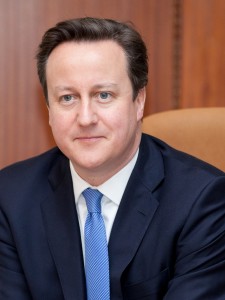
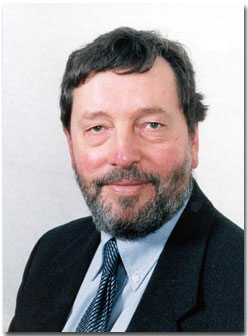
    Below is the text of the speech made by the then Shadow Home Affairs Spokesman, David Davis, at Conservative Central Office on 22nd April 2005.

    Yesterday the Home Office announced that violent crime rose by 9 per cent. That’s not just a statistic, as everyone can see from today’s newspapers.

    Mr Blair’s complacent response to the rise in violent crime is to say crime is falling and his Home Secretary even believes violent crime is falling.

    That attitude is absolutely typical of Mr Blair’s behaviour over the last eight years. Try and manage the issue off the front pages with a blizzard of misleading denials.

    Imagine five more years of it. Five more years of a prime minister who says crime is a figment of people’s imaginations, whose answer in his manifesto is to create a national victim network and dream up ‘eye catching initiatives.’

    Imagine what our streets will be like five years time, with violent crime rising year after year.

    The violence and lawlessness of some of Britain’s inner cities is already spreading to suburbs and market towns across the country. Bookham, Surrey. Staffordshire, Wiltshire, Gloucestershire, Yorkshire.

    Let me tell Mr Blair straight. Life in Britain today is very different outside your security bubble.

    Don’t let Mr Blair mislead you with his use of statistics. Burglaries have fallen as more people take steps to protect their property.

    But people can’t physically protect themselves in the way they can protect their property and their cars with burglar alarms and immobilisers. A person cannot be immobilised except by locking themselves in their home – and turning the streets over to yobs, drugs dealers and muggers.

    Violent crime is rising and Mr Blair has had eight years to stop it.

    I would like to hang a placard around his neck with those words that everyone remembers and which propelled him to the leadership of the Labour party – ‘tough on crime, tough on the causes of crime.’ Because for Mr Blair, it’s all about what he says, not what he delivers.

    Yesterday Mr Blair brushed aside the views of a policeman who asked him, ‘Why do you continually make my job harder by telling the general public that there are more police officers than there has ever been, when for every police officer you have put in the rank and file on the street, you have probably put another four in offices.’

    No wonder the figures we are announcing today show the number of police resignations has more than doubled.

    It was Charles Clarke who said that ‘the number of people leaving [the police service] may be taken as an indicator of morale’. I agree,

    I’ve heard first-hand from police officers whose squads have had their ‘morale sapped’ by the burden of paperwork and who feel that they are ‘tied up in paperwork’.

    But then, it is no wonder that they feel like that when you consider that the Home Office is second guessing them at every step, and flooding their working day with paperwork.

    The seven minute stop form will take up, if the Home Office’s figures are correct, the equivalent of an astonishing 3,000 man years per annum.

    To people who fear walking down their own streets, this is absurd.

    They want police on the beat catching criminals, not filling out forms.

    Local communities will have control of how their policing works, so that the police pursue the priorities of the local community.

    The police need to be accountable to their local communities, not a bureaucracy in Whitehall.

    The decline of individual responsibility, the proliferation of so-called “human rights” and this Government’s failure to draw a clear distinction between right and wrong have left Britain powerless in the face of rising crime and disorder.

    Drink and drugs are fuelling crime. What has Mr Blair done?

    Over the last eight years consumption of alcohol has climbed by 16 per cent, much of that increase driven by the heavy drinking culture.

    The number of people cautioned or found guilty for drunkenness has fallen by more than 15 per cent under Labour – down by 10,000 a year.

    Labour have failed to deal with binge drinking, and now they want to make it even easier to get drunk 24 hours day.

    They have already effectively decriminalised underage drinking.

    Over 80 per cent fewer people are dealt with by the police for buying alcohol under the age of 18.

    So after eight years, what grand new plans have did they announce yesterday to deal with this problem?

    None. Earlier this week we launched our action plan to deal with binge drinking, setting out clearly what I think the solutions are.

    They did not include CSOs, although I do think that they have a role to play, they are not the solution.

    And they did not include Anti Social Behaviour Orders, which whilst they play a role, are not the solution.

    As Theresa has explained drugs are at the root of most crime, and that is something that must be dealt with effectively.

    Mr Blair has lost the war on drugs because he doesn’t believe drugs cause crime.

    I will fight the war on drugs. That will actually mean something, compared to a Home Secretary who has managed to pledge that he has five top priorities in just five short months in the job.

    We have a plan to tackle these problems head on.

    First, the key to cutting crime is more police. And that is why when I become Home Secretary I will recruit an extra 5,000 police officers each year.

    And once I’ve done that, instead of telling the police how to do their jobs, I’ll let them get on with it.

    Second, we’ll cut paperwork. The stop form will go. Police need to be on the streets, not filling forms. That means we can put 3,000 more police on the streets at no extra cost to the taxpayer.

    Third, we will make police accountable to their local communities and free them from central government bureaucracy, plans and targets.

    Fourth, I will end the system that sees criminals being let out of prison before they have served even half of their sentence, criminals that have committed a further 4,500 crimes whilst on the scheme.

    A Conservative Government will send a powerful signal that crime does not pay and criminals will be punished.

    When people do commit crime then they need to be given a sentence that fits their crime.

    Judges will set out minimum and maximum sentences, so that victims know where they stand and criminals will serve their proper sentences.

    Fifth, we will build 20,000 more prison places, so that we can take 20,000 more criminals off the streets and stop them committing crime.

    All of these measures are tough, but I don’t want to just talk tough.

    I will be tough. I won’t forget about the victims of crime as soon as the headlines go away and the dust has settled.

    Instead of pursuing headlines, I will relentlessly pursue those members of society who make peoples lives a misery.

    A million violent crimes a year is a million too many.

    Mr Blair has had eight years. As people watch the news today, they’re entitled to ask: ‘Isn’t that enough time to get a grip on crime?’

    If you’ve had enough of Mr Blair’s undelivered promises, his gimmicks and talk, and you are sick of the number of crimes in our communities, then the time has come to say, enough is enough.

    On May the 5th you have the chance to send Mr Blair a clear message. You can vote for a Conservative Party that will strike hard at the roots of violent crime and will beat it.

  • Tim Collins – 2005 Speech on Literacy

    Below is the text of the speech made by Tim Collins, the then Shadow Education Secretary, on literacy on 14th April 2005.

    When Mr Blair was first elected he told us that education was his ‘number one priority’ . The following year he said ‘there is no greater injustice to inflict upon a child than a poor education’ . But after eight years, four Education Secretaries and now three manifestos, all we have had is more talk, while across the country thousands of children are being failed by just such a poor education.

    The ability to read and write is at the foundation of all learning. Without those basic skills, the whole field of education is a closed door. But for too many pupils, that door has remained firmly shut.

    One in three pupils leave primary school unable to write properly, and 44,000 leave secondary school without a single GCSE. Employers complain that many school leavers lack basic literacy and numeracy, meaning they have to invest in remedial training to bring them up to scratch. . As Digby Jones of the CBI puts it, employers ‘pick up the pieces and the bill’ for the failures in our education system .

    Even Mr Blair himself, in a rare moment of candour, has admitted the number of pupils unable to meet basic standards is a ‘scandal’ .

    And who is worst hit? Evidence shows it is the most underprivileged who suffer most. Children from underachieving, underprivileged backgrounds. Children whose parents do not or cannot teach them the basics themselves, and, as Michael has said, children of immigrants whose first language is not English.

    When one in five children – and arguably one in three – do not achieve the standard of reading and writing expected of their age, it is clear the current approach isn’t working. The Labour-dominated Education Select Committee last week called this figure ‘unacceptably high’, and I wholeheartedly agree with them.

    Mr Blair said in his manifesto yesterday that ‘we want to see every pupil achieving the basics’ – but we have heard it all before. After eight years, the number of children failed by his policies on literacy stands at over a million .

    We need more than just talk, and I am announcing today the decisive action that the next Conservative Government will take.

    We will focus on what works. And what works in the teaching of reading is the proven, traditional method of phonics. In particular, what experts call ‘synthetic phonics’, which has been shown to improve pupils’ reading scores dramatically in Scotland. Children are taught letter sounds and how they blend into words, before being taught letter combinations and to work from sounds to letters.

    It’s not rocket science, but it is not what Labour’s much-heralded National Literacy Strategy has delivered. The Education Secretary claimed last month that the strategy was ‘almost entirely based on synthetic phonics’ , but reading experts have specifically rejected her claim, saying ‘this is not the case’, and that Labour’s approach puts ‘considerable emphasis’ on other, less effective methods .

    As the Reading Reform Foundation has argued, this fudged strategy ‘dilutes the effectiveness’ of the guidance, and means teachers ‘continue to be confused by the increasing amount of contradictory phonics advice’ .

    This cannot continue. As Education Secretary I will not allow any more of our children to become the unfortunate victims of failed educational experiments. And I will not allow teachers to be put in the impossible situation of being asked to deliver mutually contradictory approaches.

    So the next Conservative Government will replace the present National Literacy Strategy with new guidance based wholly and exclusively on synthetic phonics. We will not waste time commissioning yet more reports and pilot projects. The evidence is there, and it is clear. We will act on it.

    Doing this will particularly help those pupils for whom English is a second language, giving them the extra support they need to make the most of the educational opportunities available to them. It cannot be right that such children are allowed to continue to struggle, and that divisions in our society risk being entrenched as a result.

    As Michael rightly says, it is in all our interests that people who choose to make their home here are helped to learn the language of our nation. And a return to traditional teaching methods will help to achieve that. As the Select Committee found, synthetic phonics are ‘of particular benefit to children at risk of reading difficulties’.

    Mr Blair has had eight years to deliver on his promises, and has failed. Where Labour offer more talk, we will take firm action.

  • Ken Clarke – 2005 Conservative Party Conference Speech

    kenclarke

    Below is the speech made by Ken Clarke at the 2005 Conservative Party Conference on 4th October 2005.

    I do not know about you, but I am fed up with our party losing elections.

    We used to be members of a party that won elections. In fact, we won so many that we were able to change the political and economic landscape of this country

    hugely for the better. In the 21st century, we can and we must do this again.

    If you are sometimes fed up and angry with our plight – as I am – you have a choice. You can give up, bail out, and call it a day. Or you can get stuck in, decide to fight, and give it your all. That is what I intend to do – and I know it is what you intend to do.

    So we come here today as a party with a purpose. It is to begin a great endeavour – nothing less than to make our Conservative Party once again the natural party of government in this country.

    In winning power, the economy will always be at the heart of the debate, and rightly so.

    You can have marvellous policies on every other subject, but if you do not win the argument on the economy, you are sunk. You are left with a political doughnut with an enormous hole in the middle.

    I do not have to prove my economic competence to the British public. I won my reputation over four years as Chancellor.

    Remember the strong economy which Labour inherited from us in 1997: low inflation; steady growth; falling debt. We were creating a modern enterprise economy.

    We worked for it. We achieved it. Labour has profited from it.

    Up until now, Gordon Brown has had a good run, on the back of the tough decisions which we took a decade ago.

    But today the British economy is at risk. At risk from big spending, from high taxes and from too much debt.

    He’s already spending tomorrow’s taxes today. He is keeping the economy afloat on a sea of debt.

    Growth is slowing rapidly and unemployment is on the rise. Families across the country find themselves burdened with a trillion pounds of household debt.

    Consumers are cutting their spending and our retailers are feeling the pain.

    Initially Mr Brown was in denial. Now even he has finally admitted that his forecasts for economic growth were wildly optimistic – as every expert said.

    His “golden rule” turned out to be fool’s gold.

    He even had to change the starting date of the economic cycle to include the two years of surplus that he only achieved by sticking to my spending figures when

    Labour came to power. I suppose you might call it a compliment.

    The tragedy is that Gordon Brown could have done great things with our inheritance. But he’s blown it. He has turned out to be just another tax and spend Labour Chancellor, but on a lucky streak.

    No wonder he is anxious to move next door!

    In fact, I have never seen a man more impatient to leave his job. His office is all packed up. The good-bye drinks are in the diary. He knows where he wants to hang his pictures in Number 10.

    The only problem is – the boss won’t budge. But even if he does, there’s no escape. Brown’s legacy will haunt him; we’ll make sure of that.

    The fact is that the Labour Party has never really understood how a modern, successful market economy works. They just don’t get it.

    Where our instinct, as Tories, is to set the people free, theirs is to organise, regulate and control. It is in their very blood-stream.

    I say this: Let us never, ever allow the achievements of the Thatcher years to be thrown away. To be salami sliced – Labour slice, by Labour slice – until there is nothing left.

    The corner-stone of our prosperity, and the key aim of our years in power, has to be the rebuilding of an enterprise culture in Britain.

    We have to fight and win a new battle of ideas in favour of better but smaller government in the 21st century. That is the best way of making Britain prosperous and free.

    When we left power, we had almost succeeded in getting public expenditure down to 40 per cent of our economy. I cut the share of national income spent by government by 2.5 per cent. It may not sound a lot, but it’s a huge amount of money.

    This 40 per cent target – the key to stopping the remorseless growth of government in the modern world – should once again be our goal. If the Government takes 40 per cent, the rest is available for our entrepreneurs to create wealth and jobs.

    Since we left power, taxes in Britain have risen and become far too complicated. Of course a Conservative government will aim to reduce and simplify our taxes.

    But this will not be easy. When it comes to tax, like many things, it is better to under-promise and over-perform. But the direction we want to move in should be clear – and we should stick to it.

    I am the only person in today’s House of Commons ever to have made real reductions in income tax: I cut 2p off the basic rate.

    When Gordon Brown shaved a penny off, he quickly slapped it back on National Insurance. His reduction was cosmetic; my cuts were for real. That’s the difference between Conservative and Labour.

    Anyone in this hall who does not believe in a low-tax economy has come to the wrong party conference. In government, there will be work to be done to achieve that.

    Low taxation will be the prize but only if we first reduce debt and control spending. We demonstrate all over again that it is possible to have modern public services and still keep growth of public spending below the growth of the real economy. That is the art of good government in the modern world. It is the art all good Conservatives have mastered.

    The economic management of the fourth largest economy in the world is an enormous responsibility which the Conservative Party wants to take up again.

    When we take over, we will find that the books have been cooked by New Labour.

    We will have to produce the first honest public accounts that Britain has had for many years before we discover the true extent of the problems we face.

    We must prove that we have the competence and the courage to deliver economic success. Labour has always left economic failure behind them. They are going to do it again. It will fall to us to once again to pick up the pieces and enable Britain to remain a strong economic power in the modern world.

    This is the third party conference in three weeks with a leadership contest.

    Charles Kennedy just hung on – that is good news.

    Labour’s two big beasts yet again locked horns over when one should hand over the baton to the other. I would not put those two in a relay team!

    We Conservatives now have to choose an even bigger beast than either of them – to push Labour out of office at the next general election and return us to government.

    I do not just want us to win the next general election so we can set Britain on the right economic road again. I want us to win because of the damage that I believe Tony Blair and New Labour are doing to the way we are governed.

    I believe that New Labour has undermined the health of our democracy.

    They have abandoned the proper processes of Cabinet government.

    They have turned the great Secretaries of State into the lackeys of Downing Street.

    They have doubled the number of political advisers.

    They have changed the rules so that those advisers can now invent policies and bully civil servants about.

    They have treated Parliament with a mixture of indifference and contempt.

    They have sidelined local government and created a proliferation of quangos.

    Their obsession with press headlines and media moments has taken over our political system.

    Much of our problem as a party is that people do not trust us. It is not that they do not trust us because we are Conservatives. They do not trust us because we are politicians.

    We must show that we are different politicians who believe in Cabinet Government, accountability to Parliament, an independent civil service and who aspire to be the servants of the people and not their masters nor their deceivers.

    Mr Brown is now putting it about that things will be different if he makes it to No. 10.

    Fat chance! A Brown government will be control-freakery elevated into a principle of Government. There is no Minister more obsessed with personal control of every corner of government than Mr Brown. There is no Minister who has been more dismissive of his colleagues and his officials. There is no Minister who worries more about what the headline will be in tomorrow’s papers.

    I would not dare say that Gordon Brown is “psychologically flawed”. I leave that sort of thing to No. 10. I do say that Mr Brown is a team player – who believes in a team of one.

    He will seek to run every part of government with the same compulsion to intervene he has shown as Chancellor. And when it all goes wrong, he will simply try to blame someone else.

    With Mr Blair we have had a president; with Mr Brown we are going to have an emperor. We must make sure that this would-be Napoleon meets his Waterloo.

    As Conservatives, we have a strong set of values in which we deeply believe: strong defence, low taxation, smarter and honest government, market economics, law and order, the family.

    Our philosophy is rooted in the tolerant instincts of the British people. It places its faith in the individualism and civic energy of our citizens.

    These are my values and always have been and they are our values as a party. I believe they are values shared by a clear majority of our fellow citizens.

    Tony Blair has tried to steal some of our principles and our policies – against the instincts of his own party. He has been a huge political cuckoo sitting right in the middle of our nest.

    Gordon Brown told the Labour Conference that they were going to dominate the centre ground. Oh no, they are not! The time has come to take back the political ground that should be ours. It’s time to start winning again.

    David Willetts keeps telling us that we will all need to work harder and retire later. I am determined to do my bit.

    I have put in a job application for a new, rather demanding job this December.

    That job will be to lead this party back to power and to lead this country into a better, more confident future.

    I may not be everyone’s cup of tea, but I promise you this. If you give me the chance to lead this party, I will lead it unspun. I will say what I think, and try to do what I say, as I have always done in politics.

    The question we have to answer is: do we really want to win?

    When I ask myself why do I fight to get re-elected to Parliament again, why do I hurl myself upon the spears of yet another leadership election, why do I tangle daily with the media and still feel the same tingle of excitement that I did when I first started my political career? It is because I want Conservative values to win again and, with you, to return to our task of making this country an even better place to live in.

    Fellow Conservatives, let us win together.

  • Alistair Carmichael – 2005 Speech to Liberal Democrat Conference

    alistaircarmichael

    Below is the text of the speech made by Alistair Carmichael in civil liberties to the Liberal Democrat Party Conference on 22nd September 2005.

    If there is one issue which defines us as a party then surely it is liberty. For us to defend the right of the individual to live his or her life without undue interference from the state is as instinctive as it for Messrs Blair, Blunkett and Clarke to attack it.

    Let us be clear. Being in favour of civil liberties is not about being “soft” on anyone. It is not about being soft on terrorism any more than it is about being “soft” on the anti-social behaviour that blights the lives of so many people in city centres and housing estates the length and breadth of our country. As Jim Wallace who was a formidable justice minister for four years in Scotland made clear yesterday, the liberty to bully abuse and intimidate your neighbour is not a civil liberty and those who do so will get no comfort or succour from this party.

    To be fair, the New Labour government started well. The passing of the Human Rights Act incorporating the European Convention on Human Rights into our laws was a major advance in protecting our freedoms. We supported that when they did it and we continue to support it today. What has become clear since, however, is that they had no idea what they were doing at the time. Since New Labour passed the Human Rights Act they have had little to say on the subject apart from lambasting and abusing the judiciary every time they implement it.

    It is already clear when we return to Westminster in three weeks time we shall face another onslaught from a government determined to take control of every aspect of our lives. In the aftermath of the London bombings on 7th July the Prime Minister and the Home Secretary sought to establish a consensus on the measures that were needed to be taken. They were right to do so. Just as Mark Oaten and Charles Kennedy were right to respond positively as they did.  As ever, however, New Labour’s authoritarian instincts are kicking in. They now seek to push the boundaries of that consensus. Let me promise you this, conference, if a consensus ever emerges at Westminster that supports three months detention of suspects or the creation of new offences as vague and problematic as the glorification then that will be a consensus that will emerge without us. We shall not be part of it.

    I have no doubt that we shall be misrepresented.  I have no doubt that we shall be abused. I have no doubt that we shall be accused of all manner of things. And do you know what?   I really don’t care. If we can not defend liberties as fundamental as these then what is the point of being in parliament? This is what I was elected by the people of Orkney and Shetland to do. Just as they elected Jim Wallace before me and Jo Grimond before him.

    If civil liberties and human rights are important then they are important for everyone, regardless of nationality, race or religion. Just because someone has come here as an asylum seeker or has been brought here by a people trafficker to work in the sex trade or some other part of the black economy does not diminish their entitlement to fair and dignified  treatment by the state. That is why the government must now ratify without further delay the European Convention on the Trafficking of Human Beings. Even before that, however, there are changes that can and must be made now.

    The recent publicity in Scotland surrounding the practice of dawn raids being made on the homes of families of failed asylum seekers  has shocked all right thinking people. The children’s Commissioner in Scotland has been unambiguous and absolute in her condemnation of it and she was absolutely right to do so. I wonder how many of those people who voted Labour in 1997 or again in 2001 or 2005 did so because they wanted to elect a government that would send immigration officials into a family home early in the morning to take children from their beds. It traumatises children. It demeans us all because it is done in our name by our government. It is barbaric and it has got to stop now.

    Conference, we are to be asked to delete the part of this motion that asks us to deplore the planned introduction of compulsory identity cards and a national identity register.  I do not yet know why and I shall leave those who urge us to do so to explain their reasoning. I have to tell you, however, conference that I had the honour of leading for this party on the standing committee examining the ID Cards Bill. We went over that bill line by line and clause by clause. I have learned more about computerised identity databases and biometric information since May than I would ever have believed possible, let alone desirable. If I didn’t deplore the introduction of identity cards and the national identity register before I started that process then I certainly did by the time I finished it.

    Conference, be quite clear. The introduction of identity cards is about a lot more than the issue of a piece of plastic to help us get access to our public services. It is in fact a fundamental rewriting of the relationship between the citizen and the state. The bill which is currently going through parliament places massive amounts power in the hands of the government to obtain hold and share information not just about who we are but also about where we have been and what we have done.

    No doubt we shall be told that if we have nothing to hide then we have nothing to fear but those who hold that view fail to understand the nature of the relationship between the citizen and the state. It seems to assume that it is for the government to ask the citizen whether he or she has something to hide and that the citizen is somehow  answerable to the government. In a liberal society it is the other way round. The government is answerable to the citizen. The citizen should only have to justify themselves to the state if they are shown to have done something wrong.

    The only saving grace about the government’s plans to introduce ID Cards is that you just know they are not going to work. The government is going to buy a computer system that will hold three pieces of biometric information about every citizen in the country, install card readers in every public office in the country, retain records of when and when that service is used. Aye right. I’ll believe it when I see it. This is the government that after years of trying has still not been able to buy a computer for the Child Support Agency that will work out 15% of an absent parent’s salary. Something most of us would call a calculator. The operation of identity cards is going to be a massive but as yet unquantified cost to the tax payer – or more likely the people who are to be compelled to have them. The LSE calculated that the cost to the individual required to pay for an identity card could be as much as three times the government estimates of £93. The best part of £300 for the privilege of having the government keep tabs on you. Conference if we do not deplore the erosion of our civil liberties then surely waste of public and private funds on this scale is something to be deplored.

    History will record that this New Labour Government tried to rob us of some our most valuable freedoms. Let history also record that it was the Liberal Democrats who resisted and stopped them.

  • David Cameron – 2005 Speech in Hereford

    davidcameron

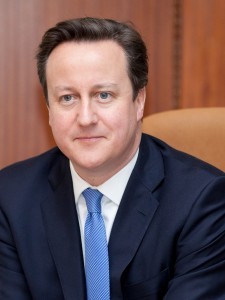
    Below is the text of the speech made by the then Leader of the Opposition, David Cameron, in Hereford on 16th December 2005.

    This is an exciting time in British politics.

    Things are changing.

    MODERN COMPASSIONATE CONSERVATISM

    Two weeks ago, the Conservative Party voted for change.

    It voted for a modern, compassionate Conservatism.

    It voted to become a new, inclusive organisation, reflecting today’s Britain.

    So I’ve taken decisive steps to change the face of the Conservative Party.

    To end the scandal of women’s under-representation, and to increase the number of MPs from black and minority ethnic backgrounds and with disabilities.

    We will reflect the country we aspire to govern, and the sound of modern Britain is a complex harmony, not a male voice choir.

    Two weeks ago, the Conservative Party voted for positive politics.

    So I’ve shown how we will be a consistent and constructive opposition.

    We will back the Government when they do the right thing, and take a long-term approach to the challenges faced by Britain and the world.

    We will focus on the future, and engage people – young, old, those who are committed to politics and those who have given up on it- in the task of meeting the challenges faced by our country and our world.

    I believe that there are six big challenges we face, and that we must address them in an open-minded, creative and thoughtful way.

    These challenges are complex and interconnected. They can’t be dealt with under neat headings or in simple boxes.

    They require serious long-term thinking. They will never be tackled by “coming up with” policies to make newspaper headlines.

    We need to develop policies on the basis of hard work and hard thinking, drawing on the best and most creative ideas, wherever they come from.

    And so to investigate each of these six big challenges, and to develop the ideas that will form the basis of the next Conservative Manifesto…

    …I will be appointing Policy Groups, not stuffed with politicians but led by the best thinkers, with a passion for change and a desire to get to grips with these difficult challenges.

    I’ve already announced two of them.

    To address the Social Justice Challenge, Iain Duncan Smith and Debbie Scott, one of Britain’s leading social entrepreneurs…

    …will lead a Policy Group looking at how we empower individuals, communities and voluntary organisations and social enterprises…

    …to tackle entrenched problems like persistent poverty, family breakdown, lack of aspiration and drug addiction.

    To address the Quality of Life Challenge, John Gummer and Zac Goldsmith will lead a Policy Group looking at how to achieve strong but sustainable economic growth…

    …they will think radically about issues like transport, energy, housing and the urban environment.

    Over the next few weeks, I will be appointing similarly talented people to lead our work on meeting the challenges of…

    …Globalisation and Global Poverty…

    …National and International Security…

    ….Economic Competitiveness…

    …and Public Service Improvement.

    This is our agenda for the next four years.

    I want everyone who believes in positive politics and who has a passion for change to get involved in the work of these Policy Groups.

    I want our Policy Groups to be the national focus for debate, discussion and free thinking about these vital issues for the future of our country and our world.

    It’s essential for their success that their reach goes beyond the world of Westminster policy wonks.

    How can we begin to address the issues of social justice without hearing the voices of the black and minority ethnic communities…

    …who live, disproportionately, within the inner cities where these problems are greatest?

    How could a review of public services have any credibility without the input of the women who, in many cases, are at the front end of dealing with their children’s education, or their health?

    The processes of transforming the face and the agenda of our party go hand in hand.

    We will be drawing on the brightest and the best, men and women, within and without the Party, to help us understand the fundamental challenges facing Britain and to develop creative and radical solutions.

    We’re going to take our time to get things right, and to enable everyone’s voice to be heard.

    We’re going to be totally open and transparent. Everything the Policy Groups do will be published online.

    If good ideas are generated along the way…

    …that the Government, business, or anyone else wants to put into practice, that’s fantastic.

    We will have made positive change happen, which is our only aim.

    You can get involved today in the Policy Groups that have already been launched…

    …go to socialjusticechallenge.com or qualityoflifechallenge.com.

    The Policy Groups will report in eighteen months. I want those eighteen months to be the most exciting and creative eighteen months of political discussion this country has ever seen.

    VALUES

    Everything we do will be guided by the two core values at the heart of my kind of Conservatism: trusting people, and sharing responsibility.

    I believe that the more you trust people, the more power and responsibility you give them, the stronger they and society become.

    And I believe passionately that we’re all in this together – individuals, families, government, business, voluntary organisations.

    We have a shared responsibility for our shared future.

    Trusting people, and sharing responsibility.

    These are the values we need to meet the challenges of the modern world

    LABOUR HAVE FAILED 

    I believe these values reach far beyond the Conservative Party. Many Liberal Democrats share these values.

    And many Liberal Democrats share with us a clear analysis of why Labour have failed to live up to their promise.

    It’s because this Labour Government doesn’t live by the values we need to succeed in the twenty-first century.

    Instead of trusting people, Labour tell people what to do.

    Instead of sharing responsibility, Labour take responsibility away from people.

    You can see it in so many areas.

    They’ve over-regulated the economy, making it harder for employers to create jobs, wealth and opportunity.

    Their investment in public services has not been matched by nearly enough reform.

    So the professionals who deliver healthcare and education are held back by a top-down, centralised system run from Whitehall.

    Labour’s style of government shows how little they trust people, and how reluctant they are to share responsibility.

    The spinning, the centralising, the partisan point-scoring, the desire to control and bully. All this is anathema to liberals everywhere.

    As is Labour’s cavalier attitude to our most basic British values and democratic rights, like freedom of speech and due process of law.

    Labour are casual about civil liberties at a time when it’s vital they’re upheld, to show strength and resolution against those who threaten our way of life.

    And Labour have failed to deliver on one of the most important issues facing our country and the world: the environment and our quality of life.

    How can Britain show real international leadership on issues like climate change if our own record is poor?

    Our performance in recent years has fallen far short of the Government’s rhetorical commitments. Britain’s carbon emissions rose in five of the seven years from 1997 to 2004.

    WE CAN CHANGE THINGS TOGETHER

    There is a huge desire in this country to change all this.

    I can feel the longing for a Government with the right priorities and the right attitude.

    A modern, moderate, reasonable Government that takes a forward-looking, open-minded, long-term approach to the big challenges we face.

    That attractive option is now a real political prospect.

    If there was an election tomorrow, my Party would need to win a hundred and twenty six seats to win an overall majority.

    Of those seats, twenty are held by the Liberal Democrats, with the Conservatives second in every one.

    And in all but four of the rest – that’s a hundred and three seats – the Lib Dem vote is larger than the Labour majority.

    There is a new home for Liberal Democrat voters – and so a real prospect of a change of Government – because today we have a Conservative Party that:

    …believes passionately in green politics…

    …that is committed to decentralisation and localism…

    …that supports open markets and

    …that is prepared to stand up for civil liberties and the rule of law…

    …and which wants Britain to be a positive participant in the EU, as a champion of liberal values.

    COME AND JOIN US

    So I believe it’s time for Liberal Democrat voters, councillors and MPs that share these values and this agenda to come and join the new Conservative Party.

    If you join us, we can together build a modern, progressive, liberal, mainstream opposition to Labour.

    Improving public services by giving power to people, professionals and local communities.

    Improving the environment and our quality of life by turning green words into action.

    Strengthening our economy by freeing the creators of wealth, especially small businesses, to create the jobs and prosperity we need.

    And improving the way our country is run by respecting civil liberties and our basic democratic rights.

    NOW, MORE THAN EVER

    We can build this modern mainstream movement now, more than ever, because the obstacles that once stood in its way are no longer there.

    Issues that once divided Conservatives from Liberal Democrats are now issues where we both agree.

    Our attitude to devolution and the localisation of power. Liberal Democrats have always been passionate about the importance of local decision-making…

    …while Conservatives in the past seemed to stand for the centralisation of power.

    In the 1980s, Mrs Thatcher had to take tough action to rein in local authorities like Liverpool and Lambeth whose political extremism was wrecking people’s lives.

    Sometimes, this even tipped over into hostility – or the very least, a perceived hostility – towards local government in general.

    But those days are behind us now.

    So I say to Liberal Democrats everywhere: we, like you, are on the side of the local community, and want to give local people more power and control…

    …over how their services are run…

    …their neighbourhoods are policed…

    …and their priorities are delivered.

    Conservatives are now the largest party in local government.

    We control the Local Government Association.

    Conservative councils topped the Audit Commission’s league table this week.

    Our support for localism, borne of experience and strengthened by our values – trusting people and sharing responsibility – is sincere and lasting.

    The one piece of the devolution jigsaw that Conservatives don’t support and that Liberals still do is regional assemblies.

    But the idea is now discredited and unpopular – not least among liberal voters.

    Another dividing line has been the Iraq war.

    My Party and the Liberal Democrats were on different sides of that argument.

    But I say to Liberal Democrats everywhere: we’re on the same side now.

    We want to see the same things happen as quickly as possible:

    …democracy established…

    …security guaranteed…

    …and our troops coming home, as quickly as possible.

    And finally, the issue where Conservatives and Liberal Democrats are united as ever before: the environment.

    Chris Patten, John Gummer and Michael Howard were ground-breaking Conservative Environment Secretaries.

    But, during our years in opposition, the environment has never been given star billing.

    And too often, we’ve allowed the impression to develop that we Conservatives are supporters of economic growth at all costs…

    The impression that we put the needs of big business before the future of the planet…

    Or the impression that we always think in terms of four wheels good, anything else bad.

    Well as someone who regularly uses both four wheels and two…

    …and who believes in wealth creation but also that business has vital social and environmental responsibilities…

    …I say to Liberal Democrats everywhere: join me in my mission to put green politics at the top of the national and international agenda.

    CONCLUSION

    It’s an incredible honour and privilege to lead the Conservative Party…

    …and to have been given, through the result of the leadership contest, the authority to change the party so it reflects Britain today.

    Reaching out to people of all ages and in all parties – those who are committed to politics and those who’ve given up on it.

    And let me make one thing clear. I’m a liberal Conservative.

    I’m determined to tackle the challenges faced by our country and our world in a moderate, forward-looking, progressive way.

    And I hope, over the next weeks, months and years, that many Liberal Democrats will want to join us…

    …to build a modern, compassionate Conservative Party…

    …to help address the big challenges our society faces…

    …and to be a growing voice for change, optimism and hope.

  • David Cameron – 2005 Speech to Conservative National Education Society

    davidcameron

    Below is the text of the speech made by David Cameron to the Conservative National Education Society on 16th June 2005.

    Five years ago this Government decided to spend thousands of pounds of public money on an advertising campaign.

    I loved it.

    The ads had a simple message – and a true one.

    They reminded us that “No-one forgets a good teacher”. Of all the influences on our lives, few are as profound as the inspiration of a good teacher.

    Teaching is more than a profession, it is a vocation. It’s a calling to make the world a better place by working with the young to enrich their minds.

    And there are few more important jobs than teaching.

    Why?

    Because there is no more important subject than education.

    Importance of education

    And it’s with the importance of education for the most disadvantaged in our society that I’d like to start.

    A decent education is the best start in life that any child can have. It is the ladder up which all can climb. The chance for everyone – whatever their background – to better themselves.

    If we want to create a genuine opportunity society, if we are determined to unlock human potential, if we believe – as I do, passionately – that every life is precious and no-one should have their chance to contribute written off, then we have to reform our education system.

    For many children in state schools, especially those born with the fewest advantages in life, there has been a persistent failure to believe in their right to the best. They have been held back by what George Bush senior called the “soft bigotry of low expectations”.

    We still have not built an education system which genuinely meets the needs of the disadvantaged.

    In some ways, we’ve actually made it worse.

    The goal of an opportunity society is receding from our grasp. 30 years ago, the percentage of children from state schools attending Oxford and Cambridge was two thirds. Today it is just one half.

    The importance of education goes much further than ensuring social mobility.

    Our failure to build a state education system which leaves no child behind has contributed to a society in which young lives are unnecessarily blighted.

    Take the vital issue of teenage pregnancy. Young mothers, and their children, risk being consigned to a life of dependency and poverty.

    Of course we can’t expect schools to have all the answers.

    Parents, families, teachers, politicians – we’re all in this together. We have a shared responsibility to our children and to society.

    But education has a crucial part to play. Would so many teenage girls get pregnant if they had been inspired at school, taught to be ambitious for themselves and equipped with the right skills to go out and get a job?

    Would so many young men turn away from a life of responsibility, and towards anti-social behaviour if they were taught to read properly so that they could see the point of education rather than view it as something between a waste of time and a source of embarrassment?

    After all, the connection between illiteracy and crime is evident: almost 70 per cent of our now record prison population cannot read or write properly.

    There’s a link between a poverty of expectation, poverty in society and the reality of thousands of scarred lives.

    We all know it.

    Tackling the roots of these social problems depends on getting what happens in our schools right.

    And if all our young people are to be given hope, rather than being allowed to drift to society’s margins, then we need to reform education to equip future generations for an ever more competitive world.

    In the age of globalization the future is bleaker than ever for those without skills, but opportunities are richer than ever for those with them. In the twenty-first century there is no more important national resource than our human capital.

    So: getting education right is vital if we are to have a socially mobile Britain, a socially cohesive Britain and an internationally competitive Britain which equips its citizens for the future.

    But it also matters crucially for a fourth reason. It’s one that, strangely, politicians don’t talk about often enough.

    Happiness.

    I believe that education is one of the keys to happiness.

    Education that stimulates, that inspires and that instills a love of books, of knowledge and of learning is one route to a happy and fulfilling life. You don’t have to take Mill’s side against Bentham in arguing that there are “higher forms of pleasure” to believe that loving learning is one way of loving life.

    The economist Richard Layard has recently made a powerful case that public policy should not be oriented towards maximizing wealth, but rather towards increasing happiness. The relevance to education is clear.

    Of course, we want to equip our children to compete effectively in the modern world. But education should be about so much more than that.

    Good teaching should open our minds to the best that has been thought and written.

    We should want our children to be inspired by history, learning of our country’s role in the expansion of freedom, enjoying the story of mankind’s progress through time.

    We should demand that our children be allowed access to the arts, exploring the worlds of imagination that literature can open up, appreciating the beauty of what great talents have produced.

    And we should recognize that in drama, music and sport – including competitive sport – the opportunity for self-expression, growth and achievement can be nurtured.

    So, there is no more important issue for the country than education – and no greater challenge for us to get right.

    Where there is political consensus, we should celebrate it. There is no point in parties bickering about matters on which we fundamentally agree.

    The Government wants a diversity of schools. I agree. The Government is talking about devolving greater power to heads and governors. I have always shared this goal. Where these things actually happen, we will applaud and support them.

    But where things are still going wrong, where the Government is failing to give the right lead, or where it fails to deliver on promises – and there are plenty of such areas – I will take a stand and try to build a new consensus.

    In opposition – every bit as much as in government – politicians need to set out what they believe in, what their goals are, and what their compass will be. If you don’t – and if you don’t stick to them – you will get buffeted from one issue to another.

    The principles I want to follow are clear.

    That a good education is a birth right for all: a pledge that everyone mouths, but one that means nothing unless we are determined to confront under-achievement amongst the poorest in society.

    That discipline is the first requirement for every school

    That the basics of reading, writing and numeracy are the vital building blocks for every child.

    That a good education should provide both the skills for life and a love of learning for its own sake.

    That every child is different – and that not every school should be the same.

    That a good education should mean challenging the sharpest minds and helping those who fall behind.

    That all schools – state, church, voluntary, private – should celebrate their independence and autonomy.

    That parents have rights to choice and to involvement – but that they also have clear responsibilities to the schools to which they send their children.

    That these responsibilities include making sure their children turn up on time, are properly fed and appropriately turned out, and – above all – that they behave properly.

    That the poor behaviour of a minority of children should never be allowed to wreck the proper education of the majority.

    That teaching and learning vocational skills is every bit as worthwhile as teaching and learning knowledge.

    That universities should be centres of excellence, independent from Government, with access based on merit.

    The new Conservative agenda

    In recent times party political debate has often been in danger of missing the big point in education.

    The Labour Party has talked primarily about “resources”, talking about spending per pupil, per school and as a share of our national wealth.

    The Conservative Party has talked more about “structures”, giving parents greater choices between different sorts of schools.

    Both are important – but there is a danger of missing the absolutely vital bit in the middle: what actually happens in our state schools.

    Will our children learn to read, write and add up properly? Will they be safe in class? Will they be stretched to the best of their abilities? Will they be taught the skills they need to have a successful career when they leave? Will our local school do the best for our child?

    These are the questions parents ask themselves – the issues we stress about when considering our children’s education.

    That’s why my focus is going to be simple and straightforward – on the basics.

    Discipline. Standards. Promoting teaching methods that work. Scrapping those that don’t. Building on tests, league tables and exam standards that genuinely measure success, failure and progress. Exposing and demolishing those that dumb down, promote an “all must have prizes mentality” or simply waste time.

    It is only once we have established what constitutes a good education that we should go on to ask: what stands in its way? How can we clear the obstacles in its path?

    The big issues in education

    There are five vital areas of weakness where we will question the Government, call them to account, seek and publish the clearest possible information – and take a stand on what needs to be done.

    Literacy in primary schools.

    Discipline in secondary schools.

    Special Educational Needs.

    The fact that bright children are being left out and non academic children are left behind.

    And a system for testing and examining that – put simply – is currently not fit for purpose.

    Literacy in primary schools

    Firstly: in spite of progress made and the national literacy strategy, around one in five children leaves primary school unable to read properly, and one in three leaves without being able to write properly.

    If you can’t read, you can’t learn. These children are lost to education. The waste – for them, for our country – is nothing short of a scandal.

    The evidence that traditional teaching methods – particular synthetic phonics – are the best way of teaching children the basic building blocks of reading and writing is now absolutely clear.

    We welcome the Government review of the National Literacy Strategy, but we are clear about the stand that should be taken and the battles that will have to be fought.

    Phonics works. Tip toeing gently around this subject gets us nowhere. Another review – and another cohort of children will pass into secondary school unable to read and unprepared to learn.

    The Government has got to say what works clearly, make the change and actually follow it through to the end.

    Discipline in secondary schools

    Second, discipline. If children don’t learnt to respect authority at school how can we expect them to respect others when they grow up?

    We all know that lack of discipline is an issue that affects most schools, and cripples the learning process in many. The figures bear this out.

    A teacher is assaulted every seven minutes of the school day. 17,000 pupils were expelled in a single term recently for violent behaviour. The scale of the problem was shown by an undercover documentary which showed a supply teacher’s battle with scenes of chaos in a variety of schools.

    The Government has decided to hold another review. This is fine, as long as something comes of it. But everyone knows that often with this Government, calling for a review is seen as the end of the process.

    We want to see the following clear and decisive action.

    The unambiguous right for heads to expel unruly pupils – so it is clear where authority lies.

    The abolition of appeals panels – so that heads cannot be undermined by having their decisions publicly reversed and disruptive children returned to the classroom.

    The right to make home/school contracts binding, by letting heads refuse to accept children if parents don’t sign them.

    On discipline, schools – all schools – should have autonomy. They are – and should be seen clearly as – places where children go to be taught and to learn, not reception centres for all children irrespective of how they behave.

    As well as this change in approach to the autonomy of schools – and as well as the changes to the law I have set out – we need something else.

    A change in culture. As I’ve said, with so many of these problems we’re all in it together. Government. Opposition. Parents. Teachers. Governors. Heads. Children.

    Listen to children threatened with punishment who say “I know my rights” and listen to teachers to frightened to deal robustly with poor behaviour. And it is clear what is happening.

    We are starting to treat teachers like children, and children like adults. That is wrong – and we should say so.

    SEN

    The system for dealing with special educational needs in this country is based on good intentions. The desire to see all children treated with equal love and care and attention is one we all share.

    But the system is now badly in need of reform.

    In some ways we are in danger of getting the worst of all worlds.

    At one end, children who are finding it difficult to keep up are being dragged into the SEN bracket, when what they really need is rigorous teaching methods.

    At the other end, children with profound needs are being starved of resources and inappropriately placed in mainstream schools.

    The move towards inclusion was right for many children. No one – least of all me – wants to turn the clock back to saying that some children are “ineducable”.

    But the pendulum has simply swung too far. The ideological obsession with holding all children in the same building for school hours, as if mere proximity connotes something profound or productive, has destroyed the education of many of society’s most vulnerable citizens.

    It is foolish to pretend that some of the most challenged and challenging children in Britain can study alongside their mainstream peers with a few hours of extra assistance here and there, or the part time aid of a teaching assistant now and then.

    They need constant attention from experts in facilities dedicated to their needs. It is expensive and it is painstaking but it is right.

    Similarly, it is wrong to close schools for those with moderate disabilities, whose needs fall in the ground between that of the mainstream and those with severe conditions.

    Forced into mainstream schools in which they are inevitably left behind, or alternatively into Severe Learning Disabilities schools in which they are never truly pushed to achieve, the plight of children with moderate learning disabilities is extremely troubling.

    Children with learning difficulties or disabilities deserve better than to have their real needs waved away because of their totemic status as representatives of social inclusion. These are our children, not guinea pigs in some giant social experiment.

    In the name of this inclusion agenda, centres of excellence are being torn down. When the expertise is dispersed, it is so difficult to bring it back together.

    I have set out some very clear steps for the Government to take. They’re having an “audit” of special schools. This audit must:

    Take account of parents’ views, as they are so often ignored

    Look at the law, which restricts choice and is biased against special schools

    Cover all special schools, in every part of the country

    And as I have said, that there should be a moratorium on closing special schools at least until the audit is completed.

    Instead, the government has announced that the audit will only look at schools for those with the profoundest needs and disabilities. Yet it is the schools for those with moderate needs that are being closed.

    We must make a stand on this issue. We must make a difference on this issue. There are parents up and down this country willing us on. They know what is happening is wrong. They know it can and must be changed. And through the force of our argument we will help make that change.

    Challenging bright children, helping those that have fallen behind

    One of the things that made people sit up and listen to Labour in 1997 was their promise in the introduction to their Manifesto to set children by ability.

    Tony Blair knew that putting that pledge up front would send parents a message – that New Labour was different. That they wouldn’t let egalitarian dogma get in the way of raising school standards.

    Tony Blair was right. The trouble is that he’s done nothing about it. Recent research by the academic David Jesson has shown what we already knew – that able students do better when they study together.

    The brightest need to be set with their peers, so they can soar.

    The struggling need smaller classes with the best teachers so that the difficulty they’re having can be properly addressed.

    The government never stops talking about ‘stretch’ – but nothing actually happens.

    As well as stretching the brightest and helping those that fall behind, we need to keep children switched on to learning.

    One the reasons some young people switch off is that they are bored. At 14 and 15 they would like to learn more skills, but that’s not what is on offer.

    This is not just a personal waste – it’s a national waste.

    Just 28 per cent of young people in the UK are qualified to apprentice, skilled craft and technician level, compared with 51 per cent in France and 65 per cent in Germany.

    If France and Germany are getting vocational education right, why can’t we?

    The answer which the Government and much of the educational establishment has come up with is the diploma scheme.

    But it seems to me that there is a fundamental flaw at its heart – it entails the death, in any meaningful sense, of the A level.

    You should never try to improve something that is weak – vocational education – by scrapping something that is fundamentally strong – like the A level.

    If we want to improve vocational education …

    ….if we want to end the snobbery that has surrounded it …

    … if we want to keep these young people switched on to learning …

    … and I want to do all of these things …

    … then we must take some bold steps.

    Surely these must include the following:

    Funding vocational courses from 14.

    Funding vocational centres that match the best available anywhere in the world.

    And establishing a simple set of vocational qualifications that businesses don’t just buy into, but actually design.

    The examination system

    The fifth and final area is the examination system.

    Each August GCSE and A level results come out – and the same thing happens.

    The debate between the ‘best results ever’ and “the easiest exams ever” begins.

    To avoid this demoralizing slanging match, we need to restore faith in our examinations system. There are real problems.

    Students that failed maths A level in 1991 would now get a B. For one exam board last year, you could get an A in Maths GCSE with 45% – get more than half the questions wrong and you still get an A.

    There is a simple principle that must be applied. Exams and their results should differentiate clearly between those pupils who excel, those who do well, those who pass and those who fail.

    There are various ways to achieve this revaluation. For example, A grades could be reserved for a fixed proportion of students, or marks could be published as well as grades, or both. But I am clear – a revaluation so that parents, employers and students themselves can have confidence in the system must take place.

    An overarching principle

    So those are the five challenges I believe need urgent attention. But beyond the specifics, there lies a more general problem at the heart of British education.

    I don’t yet have a word for it. The best I can do to describe it is to say that it’s a lack of purpose.

    Students being told the questions to their exams four weeks before they sit them.

    A history curriculum that asks students to wonder how a soldier felt, rather than teaches them about the battles he fought.

    An A level paper today found to be almost identical to a CSE paper thirty years ago.

    You don’t have to believe every example you read about to know that all too often where there should be clarity, there is fog, where we need rigour, there is fudge.

    It is difficult to find a better example than the Professor of continuing education who said the following:

    “The great challenge facing education in the 21st Century is the pursuit of a holistic problematised pedagogy.”

    Would anyone like me to read that out again?

    We should be frank about this.

    There has been a deep division in the educational establishment for fifty years – between those that think education is about imparting knowledge, and those that think it is about encouraging children to learn for themselves.

    Of course, schools should inspire as well as instill. But when it comes to the basics, we should be blunt: teaching is right, and ‘discussion facilitation’ is wrong.

    It is common sense that, especially when very young, children shouldn’t be left to blunder around in the dark.

    Rather, they need to be told some basic, essential things.

    Discipline, respect for others, responsibility – children aren’t born with restraint: they need to be taught it.

    Times tables don’t leap unbidden into a child’s mind: they must be learned, and once learned, as everyone knows, they’re learned for life.

    Acquiring knowledge and exploring creatively are linked. But creativity, exploration and self-expression can only come after a child has acquired confidence in using the basic tools of communication, language and number.

    It is a special type of cruelty that denies children access to the keys to learning for fear of stifling their creativity. It is only through a thorough grounding in literacy, being taught to read, that children are given the chance to communicate on terms of equality with others.

    The ‘learn for yourself’ attitude has been indulged far too much, and that has been to the detriment of the education and lives of children for half a century.

    It’s wrong to pretend that children are adults – that they always know what’s best for them. Children won’t necessarily all want to learn to read or to spell – just as when they’re given a choice between chips and pizza or healthy, nutritious food they’re more likely to choose what they like, not what’s good for them.

    At its heart, education must be about giving children what is good for them.

    Conclusion

    I hope that much of what I’ve said tonight is proven to be unnecessary. I hope that in the course of this Parliament, the Government addresses the challenges I’ve identified.

    And if they do, we’ll support them every step of the way. The important thing is that it’s done, not who does it.

    Because the quality of Britain’s education system today will determine our success as a society tomorrow.

    The irony is that many of the problems we face in our education system today have arisen because those responsible for it dislike confrontation.

    Fear of confrontation has turned modern education upside down.

    We treat children like adults, and teachers like children.

    We leave young children to ‘discover things for themselves’ when they need to be taught the basics.

    And we spoon feed teenagers, softening the requirements of their exams, when what they need is to be challenged and inspired.

    Our education system doesn’t like to say no, and doesn’t like to tell someone that they’ve failed. In the false economy of British education at the start of the twenty first century, the system seems to underestimate the cost of getting things wrong early on.

    Well I do understand the importance of teaching all children the basics, of stretching pupils to the best of their abilities, of encouraging ambition and rewarding hard work.

    And I want our educational system to deliver all of these things.

    It’s common sense.

    And like millions of parents across our country, the Conservative Party must stand for it – because we want every child to have the best start in life. We want youngsters to make a success of their careers. And we want to help build a stronger, better Britain.
  • David Cameron – 2005 Speech to Launch Leadership Bid

    davidcameron

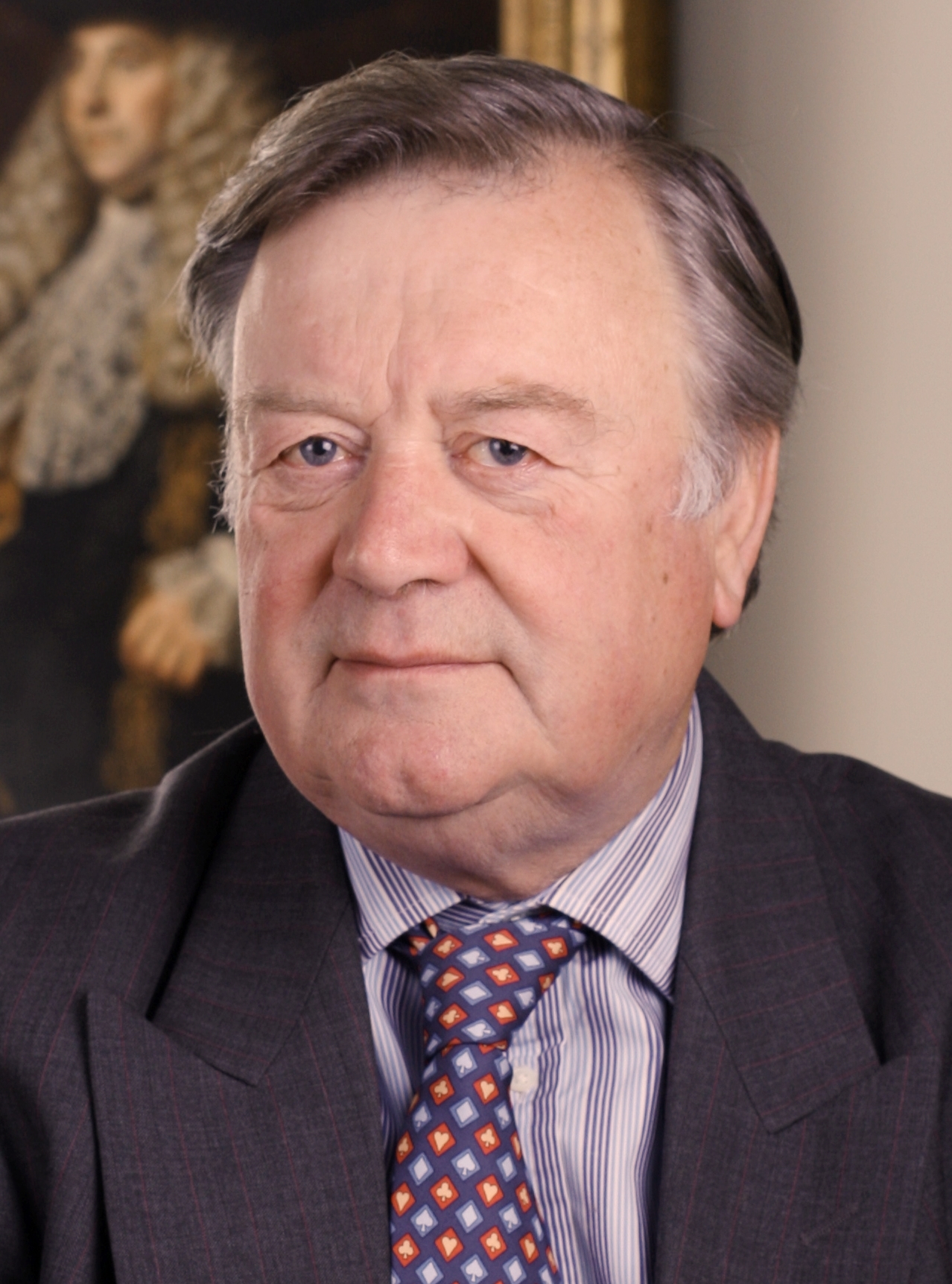
    Below is the text of the speech made by David Cameron on 29th September 2005 to launch his leadership bid.

    I’m standing here today because I want to lead the Conservative Party and I want to lead it to victory at the next General Election. Now there are some who say I’m a bit too young. Some who say I’ve just been in Parliament for five years, maybe I don’t have the experience to do the job. And in some ways they’re right. I am only 38 years old, I have only been in Parliament for five years. But I believe that if you’ve got the right ideas in your head and the right passion in your heart, and if you know what this Party needs to do change, then you should go for it.

    And that’s why I’m doing it.

    There are people who say that the Labour Party under Gordon Brown will move to the left, that the economy’s going to hit the rocks, that all we’ve got to do is wait and just give it one more heave. I think that is rubbish. And I think it would be a pathetic way for a great Party like this to behave.

    There are some people who say that we’ve just got to attack the Government with a bit more vigour, we’ve just got to pull them apart a little bit more.

    I say that’s wrong. We’ve already called Tony Blair a liar.

    The problem at the last election was not that people trusted the Labour Party – they didn’t. They got the lowest level of support for a Government in our political lifetime. The problem was that people don’t yet trust the Conservative Party, and it’s we who have got to change.

    There are some people who say it’s just about coming up with more radical policies and putting them forward with more passion and with more vigour. Of course we’ve got to have the right policies, but that alone won’t do it.

    At the last election we had lots of good policies. Yesterday, the Government introduced our food policy for schools. Three days ago, they introduced our policy to scrap the revaluation of the council tax. The very day after the election, the Prime Minister stood on the steps of Downing Street, and spoke about respect and virtually introduced our school discipline policy.

    It’s not policies alone that are going to do it.

    It’s not even, dare I say it, having a young, energetic and vigorous party leader, although come to think of it that wouldn’t be such a bad idea.

    It’s not just organisation, it’s not just presentation, it is something much more fundamental.

    We have to explain to people what it means to be a Conservative in 2005. We’ve had, frankly, a leadership election that I think has sent half the country to sleep – including some of the people who’ve been taking part in it. We’ve made interesting speeches, we’ve come up with interesting policy ideas, we’ve trotted out that mantra of things that we believe in.

    But we’ve got to say what those principles mean in 2005 and how they’ll make a difference to this country in the future.

    We talk about personal responsibility. We talk about support for the family. For lower taxes. For limited government. For national sovereignty. But what we have to do is make the change in the culture and identity of the Conservative Party and say what those things mean today, and that’s what I want to do.

    Personal responsibility. I believe passionately that people should be free to run their own lives and to choose. But personal responsibility must not mean selfish individualism. There is a we in politics as well as a me.

    And when we look at an increasingly atomised society, in which people don’t talk to each other, in our inner cities we have different races living separate lives, we need a shared responsibility – a sense that we’re all in this together. That not just individuals and families have responsibilities, but also government and business.

    And that’s why one of the things I’ve put forward is the idea of a School Leaver Programme. To say to people, to say to voluntary bodies and to business and to the Armed Forces – think of a great four month programme that you can put young people through, so that they can do something together, whatever their class, their background, their colour or whatever part of the country they come from.

    Lower Taxes. I believe passionately that we should leave people with more of their own money to spend as they choose. But lower taxes cannot mean coming up to an election time with a small bunch of personal tax cuts that just undermine our credibility and make people think that we’re out there to bribe them to vote for us.

    Our belief in lower taxes has got to be about making this economy competitive and dynamic and the best place in the world to have jobs and invest and have businesses. We’ve got to have a sense in the Conservative Party, that we want to share – an important word – share the proceeds of growth between better public services on the one hand and lower taxes on the other hand.

    Limited Government. I desperately want the State to be our servant and not our master. But rolling back the state must never mean that the weak and defenceless are left behind. That’s why I’ve spoken about a whole new compact with the voluntary sector and social enterprises, to deal with the most difficult problems in our inner cities – with drug dependency, family breakdown, persistent unemployment, poor public space.

    In the 1980’s we said to businesses – go to that part of the country where the economy is broken, pay no tax, pay no rates and bring wealth to those areas.

    Today we ought to be saying the same to social entrepreneurs – go to that part of the country where society is broken and solve those deep-seated problems that government has consistently failed to solve.

    National Sovereignty. I do believe that this country does best when we govern ourselves and we’re proud of our institutions. But national sovereignty must never mean isolation or xenophobia. This is an incredible country with its best days ahead of it.

    We should be proud of the fact that we are a leading member of the European Union, of NATO, that we’re on the UN Security Council, that we’re a leading member of the Commonwealth.

    And what we must do is show how we can engage ethically and enthusiastically with the rest of the world.

    And when the Conservative Party talks about international affairs, it can’t just be Gibraltar and Zimbabwe – we’ve got to show as much passion about Darfur and the millions of people living on less that a dollar a day in sub-Saharan Africa who are getting poorer while we are getting richer.

    If we have the courage to explain what each and every one of the Conservative principles that make us Conservatives mean today, then, we can win.

    But it is a change of culture and identity. There is no Clause 4, there is no magic wand, there is no one thing that we can do to show that this party thinks Britain’s best days ahead.

    It is a change right across the board.

    This party has got to look and feel and talk and sound like a completely different organisation.

    It’s got to be positive. I want no more by-election campaigns or General Election campaigns when our message is overwhelmingly negative and when we just attack our components.

    I want us to be optimistic, talking to peoples’ hopes and not their fears.

    And I want us to be a consistent Conservative Party. There are times in this quite new politics we have when Tony Blair sits in the middle of the British political spectrum, when he says or even does Conservative things.

    Tuition fees. Foundation hospitals. City academies.

    When he does these things, I want a Conservative Party that says yes, that is a good idea, let me show you how to make it even better. Not one that seeks a way of opposing him and just looks opportunistic and insincere.

    And we’ve got to change every part of our party, including how we select candidates. Having more women standing for Parliament is not political correctness, it is political effectiveness. If the conversation we have within our own party doesn’t reflect the conversation we’re having with the general public, we won’t win, and we won’t deserve to win.

    These are the changes we have to make, and I’m passionate about making them. Because I am fed up of sitting on well-leathered green benches in the House of Commons, and I don’t want to wait another four years of opposition while we make the same mistakes again. I say why put off what has to be done.

    I’m fed up with people coming to my surgeries – young mums, who say, I can’t handle this complicated tax credits and benefits system and I can’t get the help I need, what I want is to be floated free, to keep more of my own money as I choose to.

    I’m fed up of listening to businessmen, who find the combination of tax and regulation mean it’s not worth investing and growing and giving people jobs.

    I don’t want to have to go on hearing from pensioners who can’t pay the council tax and when they see there’s so much waste in government, they know what their hard-earned money is going towards.

    This is a practical party – Conservatives are not ideologues but we are idealists.

    We do have a dream. A dream of a country where the brightest kid from the poorest household can go to the best university. A dream where it’s the easiest country to set up a business, to employ people, to make money, to invest and to put it back. A dream where we have a stable society in which families who do the right thing, who actually try and work hard and do the right thing for their children are rewarded rather than punished.

    But all the dreams in the world won’t come true unless we have the courage to change.

    That’s what this leadership election is about. Everyone is now saying we need a modern, compassionate Conservatism. I absolutely believe that is the case, and the choice for the Party has got to be, who do you think really believes it, who will really stick to it? When the going gets tough and the press attacks you after a couple of years and say this isn’t distinctive enough, it isn’t attacking enough, who will dig into their core and say, well that’s what I believe.

    I’m not changing just to win, I’m changing because I think it’s right for the country, it’s right for our times, it’s right for a whole generation of people who feel so switched off politics.

    So that is the choice we’ve got to make. We can win, we can make this country better, but we can only win if we change. That’s the question I’m asking the Conservative Party. Don’t put it off for four years, go for someone who believes it to the core of their being.

    Change to win – and we will win.

  • Des Browne – 2005 Speech to OGC Efficiency Conference

    desbrown

    Below is the text of the speech made by the then Chief Secretary to the Treasury, Des Browne, on 11th November 2005.

    Opening Comments

    1. Good morning ladies and gentleman. It’s my pleasure to be here this morning – let me thank John for that kind introduction, and OGC for inviting me to say a few words.

    2. Firstly, I recognise and applaud the work each of you is doing to help deliver on efficiency.

    3. From analysis and partnership at the centre, to frontline implementation on the ground – this is a common endeavour for common gain. Thank you.

    4. Today, I want to acknowledge some of the successes of efficiency – and to think about the next steps down this road. And to put this in context, I want to start with the global challenge that makes efficiency matter now more than it ever mattered.

    Five Global Challenges

    5. Before I talk about efficiency and effectiveness, let me set out the context and the challenge that motivates this government.

    6. Economics and energy – terrorism, technology and demography. Globalisation has posed and is posing tough questions, and our answers must be up to scratch.

    7. These are worldwide challenges that raise the bar for government, and for each of us. Not since the new frontier of the 1960s have we faced so much threat and so much opportunity.

    8. Strong economic relations are our first challenge. Just this week Britain hosted a state visit by President Hu Jintao of China, the largest nation on Earth. A country with economic growth running at around an astounding 9% each year – and which offers our businesses and our economy huge opportunities.

    9. China has already achieved tremendous success – lifting a generation out of poverty in just 20 years. Transforming and renewing the economy – and now reaching out, opening up to the world economy.

    10. The second challenge is our environment – and the energy we use. Over several decades the price of oil has trebled – and this country has moved from importing to exporting to importing the commodity. As our industry and economy develops, so too our technology has deepened, our skills improved.

    11. But can we do better? I believe so. On climate change, on energy efficiency, with international co-operation – these are critical issues for each and every nation. Issues that pose grave questions for security too – something Gordon Brown has been focusing on this week, with our allies in the Middle East.

    12. Which brings us on to our third challenge of globalisation – terrorism. This too is a defining feature of our 21st century landscape – inescapably so. And while we may well differ on how to deal with it, we will unite in denying the terrorists victory.

    13. After the July attacks here in London, brought back to mind the tragic blasts in Jordan two days ago, it is clearer than ever that this is a threat that we cannot ignore.

    14. The fourth challenge is demographics. From pensions and our ageing population through to the role of migration and the engagement of women in our workforce. Demography is hugely important – a policy issue we must get right.

    15. Underlying all of these is the pace of change of technology – the fifth challenge – and the impact it too has had on this agenda is tremendous. Reaching outwards, sending a scientific mission to Venus. Reaching inwards, combating viral infections, developing cutting edge medicine.

    Facing the Challenge with CSR’07

    16. That’s a snapshot of some issues from this week alone. But it is also a vision of the next decade and beyond – an environment of permanent change that we must embrace.

    17. We don’t normally associate these trends and these events with efficiency. But I say to you all today that we should. It is our duty as public servants to be realistic and to modernise and to improve and to innovate to succeed.

    18. And to do that, we must have government as efficient as possible. A public sector that exemplifies best practice – where an average solution is no solution. And where there is no excuse for not maximising our opportunities.

    19. That’s why we have announced a new Comprehensive Spending Review process which will culminate in 2007. This review – the CSR – is the next fundamental examination of what the public sector does, why it does it, and how it does it.

    20. It is about how this Government prepares for those global challenges. And it goes beyond the scope of the last spending reviews – it will set the tone and direction of our public spending for the next decade.

    21. We must look at energy, at the environment, at security, at pensions, at the changing global economic landscape. And we must equip ourselves well and do the best we can with the resources available.

    22. Our duty is to succeed. And one part of that will be locking-in those commitments we’ve already begun to realize – about buying better, transacting cheaper, regulating smarter and releasing both money and professional time for the frontline.

    23. These changes will have fundamental and far-reaching implications for public services. They demand innovative policy responses, and they need co-ordination across departmental boundaries.

    24. Building on the long-term framework this Government has put in place, it is also right that periodically we re-examine public spending allocations – and in fundamental ways.

    25. It is right that we examine what the investment and reform to date have delivered – and it is right that we decide now what further steps must be taken to ensure Britain is fully equipped to meet the challenges of the decade ahead.

    26. That’s why the CSR will take a zero based approach in assessing departmental spending, delivery and effectiveness.

    27. We will examine the key long-term trends and challenges that will shape the next decade – and we will assess how public services need to respond. This process will be informed by the work of long-term reviews already underway for the future of transport, for skills, for pensions and for local services.

    28. And we will look at how the public expenditure framework can best embed and extend efficiency improvements – supporting long-term and sustainable investment.

    Efficiency & Better Public Services

    29. Efficiency. Everyone wants it. Few  want to talk about it. It can be technocratic, riddled with abbreviations that need explanation, and long lists of numbers and possible outcomes. It is an ambiguous word. You’d think it perfect material for an MP.

    30. But when I was first thinking about this speech – and deciding what I wanted to say today – I was reminded by exactly how much efficiency and effectiveness go hand in hand.

    31. Indeed, my constituents often talk to me about local issues that really matter to them – whether the school is any good, what the new doctor’s like, how well their job is going and so on. If I’m lucky, about “Strictly Come Dancing” and the football too.

    32. And those local issues – from the school run to having your tonsils out – behind those issues are frontline public services that rely on the solid investment that we’ve put in place. That rely on us being both efficient and effective.

    33. For my constituents and everyone that relies on us in Whitehall and more importantly on the ground with you – that means we must make sure investment isn’t wasted and that it isn’t frittered away.

    34. But let’s be honest about it – efficiency is also about trust, and it is about delivering on our promises to realise 21st century, effective services. It’s why we were re-elected, and it’s what I, like you, am focusing on.

    Progress So Far

    35. Make no mistake – delivering efficient public services is not the same as reducing the size of government – but it is about seeing ever better government. It is about investing funds where they make the biggest difference. And it is about running a better, more effective, smarter government.

    36. So I can stand up here at the Queen Elizabeth conference centre, and genuinely say to you all that we’ve had an all round reasonable start, to date. We’ve realised £2 billion in annual efficiency gains – delivered last April.

    37. And for that I want to thank you all for your considerable efforts so far.

    38. We’ve had the first 12,500 reductions in civil service posts, on target, alongside 4,300 relocations. And since April, progress has been steady. We are on target. We are delivering what we said we would deliver.

    39. Look behind the figures, and you’ll all see a real transformation afoot, with success across departments and public sector organisations that is worth celebrating.

    40. The Home Office, where I used to work, has saved £21 million per year through reducing the cost of desktop IT systems.

    41. DWP, another former department of mine, has saved even more – £180 million per year, through re-aligning contracts with EDS.

    42. And over at the Department of Health, renegotiation of a drugs contract alone resulted in an overall 10% cut in price – releasing around £950 million each year from this year on.

    43. These three alone will combine to save taxpayers over £1.1 billion each year – serious money to channel back into frontline work.

    Excellence, Not Adequacy

    44. Clearly, each pound saved is a pound for better public services – for frontline implementation, worthy of the name ‘public service’.

    45. But earlier you may have noticed that I described our efforts to date as ‘reasonable’, not ‘extraordinary’. That’s because there is still much to achieve and much to do.

    46. The first months following the last Spending Review were a time for proper planning and preparation.

    47. But we are now six months into the efficiency programme, and working through the early stages of real delivery.

    48. This is where things really kick in, and where, inevitably with a large and complex programme, success depends on hard work and personal commitment.

    49. I know some of the efficiency gains later on in the programme may well be hard to realise. It’s likely that what is easier to deliver today, will be delivered today – leaving the hardest to the end.

    50. But we must – and we will – prepare and expect to see this thing through. We have to ask whether more is needed – whether more can be achieved. I believe it can.

    51. That’s not me thinking aloud, that’s based on our experience with areas like government procurement. For example, most of us who work in offices have computer screens on our desks – they’re pretty much standard these days.

    52. Yet I understand research undertaken by OGC shows public sector organisations paying wildly different prices for this same standard product. Some are paying as little as £159 per monitor, yet others as much as £269. For the same equipment.

    53. If there were more sharing of the best deals across the public sector, then I believe considerable additional efficiencies could be realised.

    54. That’s why I wholeheartedly welcome OGC’s intention actively to promote the best deals. Given that, let me stress right now – bad practice is simply not an option for the public sector. So I expect OGC to challenge organisations to justify why they’re not taking up the best deals.

    55. By seeking real collaboration in our procurement, we can ensure a better deal – and hopefully the days of choosing not to improve will be long gone.

    56. This – alongside work to identify better provision of common services from HR to finance – represents a strengthening of OGC’s role in delivering efficiency. And that is to be welcomed.

    57. But this reinforcement is to collaborate more, not to control more. And that is doubly the case for the wider public sector beyond civil service departments.

    58. Afterall, we can only lock-in that culture of efficiency if people believe this is right – if you all seek efficiency because of what it offers, not because we simply tell you to.

    Making Efficiency Work

    59. Now, as the Minister with responsibility for the Efficiency Programme, I want to do more to make this work – to support all of your efforts at OGC, in government, and across the wider public sector.

    60. And rest assured, the Efficiency Programme is a key part of my work programme.

    61. That’s why I am introducing ‘efficiency stocktakes’ with departments, a proper chance for a joint review of progress with Ministers in each department.

    62. For those of you familiar with it, they’ll be similar to the stocktakes on delivery that the Prime Minister holds with departments and his Delivery Unit – an opportunity to focus on performance and progress.

    63. With this in mind, I’m also establishing a network of Ministerial efficiency champions across government, to share progress and the hard lessons learned – and to take a vested interest in this agenda.

    64. Afterall, efficiency can only be about effectiveness if there is leadership on this from the top, as well as out front amongst the grass roots.

    65. We will make sure that leadership continues.

    Closing Remarks

    66. True efficiency cannot simply exist in isolation – we must always judge it by what it allows – by the improvements in our healthcare, across our schools and throughout the frontline services that everyone wants.

    67. It is part and parcel of this country being fit for the purpose of meeting the five global challenges I talked about before.

    68. A more efficient public sector delivers more and better for the same or less – it is as simple as that. And for every 21st century government looking to deliver real results, efficiency must mean effectiveness.

    69. Thank you.

  • David Blunkett – 2005 Speech at National Association of Pension Funds Conference

    davidblunkett

    Below is the text of the speech made by David Blunkett, the then Work and Pensions Secretary, to the National Association of Pension Funds conference on 12th May 2005.

    Well firstly my thanks for the invitation, and particularly for returning, having had your AGM and the exhibition. I count it as a deep honour that you have bothered to come back afterwards at this time of the day when you could be enjoying the sunshine. I was very worried for a moment, Christine. I thought you were going to say that I had the hide of Churchill and the nose of a rhinoceros, but maybe I will have after perhaps more than 14 months in the job.

    I mean let’s not beat about the bush. All of you in this room know more about income in retirement and the issues around pensions than I do, so we might as well start off as I mean to go on – which is that I have got some overview thoughts and I am very happy at the end of them to take questions and comment, but above all, I am prepared to work with you, those who are members of the NAPF, and those associated and working in the industry more broadly, to actually listen and learn and to work with you alongside the Commission, chaired by Adair Turner, to be able to come up with a lasting solution which will take us through the decades ahead and will give certainty and stability on which you can build, and on which the British people can invest their hard earned resources in ensuring that they have a happy and fruitful retirement.

    I always find myself, not so much lying, as rushing along with a bed of nails pursuing me. Each job I take on seems to be the unsolvable issue of the moment, and it is just as true in terms of not just the challenge on income in retirement, but also the revisions of the welfare state.

    Because the settlement at the time of the post-war era was very much in a different economic, social and cultural environment – and it was presumed that if women did go to work they would work part-time – people were encouraged therefore, if they were female, to opt out of the full national insurance system.

    If you go back to the beginning of the pensions system, and you know that better than I do, there were 10 people in work for every 1 in retirement. Now we are down to 4 in 1, and within the next 50 years we will be down to 2 to 1 if we don’t actually change the nature of the working life, the presumptions that people make about that, and the way in which we deal with it.

    It is not simply, incidentally, the challenges that Adair laid down with his four pillars, or principles, but actually also whether we are prepared to consider other aspects as well, like the issue – dare I say it after the general election plumbed the depths on this question – of encouraging managed legal immigration into our country, to fill vacancies, to be able to ensure productivity, but also to contribute to the wider delivery of services and the build-up of capital for the generation that will be retiring.

    It is also about the issue of ensuring that we get more people into work who are of working age – the 80% aim that we have set ourselves, having reached just a month ago the 75% of the working age population in work. This was something that I laid down when I was last Employment Secretary, because on this bit I have been recycled, it helps to know a bit of the brief anyway when you come into it, and I had 4 years as Employment Secretary, so I was aware of the challenge.

    But of course that takes us into other aspects of the reform of the welfare state, such as the way in which we need to get those who have considered themselves to be likely to be unemployable, into employment, and that includes people with disabilities, and that is why the reform of Incapacity Benefit is important, and also getting housing benefit reform right so that it isn’t a discouragement to people taking a job.

    Gordon Brown has done an enormous amount in terms of making work pay and taking on the challenge of overcoming poverty, including poverty in retirement. We now have almost 2 million people who would have been considered to be in poverty in retirement who have been aided by the programmes that have been brought in. 2.7 million households, of course, have become entitled to the Pension Credit, and just over 2 million – 2.1 million – to the income guarantee, raising the basic income they were receiving from £69 to just over £109 for a single person.

    It is an unsung achievement, although I did meet one or two people in retirement who had the decency during the General Election to shake my hand and say that they were better off than they had ever been.

    Of course where they are receiving free accommodation through housing as well, that actually adds to their well-being, but it is often not counted as part of the income, when of course it is. And I think we need to look at – not just now, but in terms of finding solutions for the future – the total income coming into a household where both people are retired, or where there is a single retired person.

    And that will in the future mean taking a look at the assets that those people have in other directions, not just other forms of saving, but actually also the passing on from one older generation to a slightly less, but elder generation – the income from ownership of homes where the parent, or the aunt and uncle, in their late 80s or 90s die and pass on to those in their 60s or early 70s a substantial asset, like winning the lottery or the pools. We need to take those into account because otherwise we will delude ourselves. We will become more pessimistic to begin with, but we will also discount what is a substantial additional income for those individuals and we need to bear that in mind.

    But take it for granted – and you know this as well as we do – that we have the largest home ownership in Europe, certainly in the developed world, other than North America, and the consequence of that is that we need to take into account what that means vis-a-vis pension requirements across the continent.

    You may have noticed that I am desperately trying not to use the term “pensioner”. I have never been politically correct in my life, In fact I have often run into trouble by refusing to be, so this is a kind of reverse political correctness on my part. What really gets me is when people come into my advice surgery and they say: “You see, Mr Blunkett, I am a pensioner”, and they define themselves by the nature of their income.

    Well I won’t ask you to put your hands up if you would really like to be defined when you have retired as a pensioner, because I will be able to count the results, even if you get it wrong, not like our postal vote system, but a bit more like Robert Mugabe’s system.

    We know that what we have got to do is to stop defining people by their income in retirement and we have got to break down the barriers between our working time and our retirement time, so that with employers we can start developing schemes that allow people to retire and come back.

    I think Gordon Brown, and Alan Johnson, and Andrew Smith before him, did a really good job in encouraging people to be prepared to stay on – to stay on full or part-time – and to be able to defer taking their basic pension, and therefore get an incentive and a reward for it. I mean after 5 years of deferral, to be able to get between £20,000 and £30,000 in my view is a real promise.

    The idea of people being able to take their occupational pension and continue working seems to me to be common sense, and we need to examine how we provide incentives to people who are not in those positions, but want to do a little part-time job when they have retired, and how we can make sure that there is not a disincentive.

    I will share something with you, because I think this is really important to see where I am coming from. When my father was killed in a works accident, when I was 12, my mother received part of his superannuation – his deferred gratification, his deferred earnings – but it was just enough to push her at that time into having to pay some income tax, and just enough to push her out of being entitled to other related passport benefits.

    She was a generous woman and would have given her last crust – and sometimes we were on our last crust – to anyone else, but she really resented that trap. And if, after whatever time I get in the job, I have been able to work with Gordon Brown in finding a way to increase the tapers and to encourage, not just savings, but the ability to take advantage of them so that we incentivise other people to want to save, to want to be self-reliant, to want to be part of the solution themselves, then I will have been very proud to have been the Secretary of State for Work and Pensions.

    This is crucial, alongside elevating people out of poverty in retirement, which Gordon has said is an absolutely key parameter and has done so much to achieve with the Pension Credit, with the winter fuel allowance, which of course has the advantage that my mother would have welcomed, as not disqualifying you from other benefits and not being taxed, with the TV licence for the over-75s, with the help we gave for this year’s council tax – all of those things are helping.

    In the end we have got to ensure that people know that this isn’t an issue for government or for the industry, this is an issue for every single one of us.

    So I don’t want, whether it is in reforming the welfare state more broadly, or in reforming pensions and retirement income, I don’t want a safety net any longer, I want an escalator, or even a trampoline where people can jump out of the situation of dependence. I want to feel that people know that yes we will support, facilitate with you in the industry, we will help people be able to gain confidence, that there will be support and assistance in getting it right, but that they are also crucially the solution.

    So that from the moment that someone takes on a job, they start thinking about their lifetime income, just as they think about their lifetime aspiration for promotion, for re-skilling, for taking on a global economy where we will change jobs again and again in our lifetime. I mean I have had three in government alone, and look how old I am. Well I didn’t used to look old, but one or two things have sort of greyed my beard, not least being the Home Secretary, which is why most people in Cabinet shave their beards off, by the way, it sort of avoids them being labelled as ageing. But when you have a grey beard, the Prime Minister is inclined to think that your mind will be concentrated on your pension. So here I am.

    I think that we have a number of challenges. If we are to develop certainty and security, then we need to welcome what the NAPF and the ABI have been doing in social responsibility in investment, and that means government, so that we do not have in the future the need for the FAS to actually dig people out of a situation where they have been so badly and scurrilously let down. We don’t want in future the need to have the fall-back of the PPF, but we have got it for the time being, and we will make it work, in order to ensure that we can provide for the future. But what we do want is the kind of work you have been doing on ensuring that people can have confidence.

    But we also need to reach out to people and give them, as Adair Turner’s Commission is doing, a very clear picture of what has happened. Not just as I described, the change in the ratio of the working to the non-working, but also the great gains of longevity, of actually being able to enjoy our life for longer and in a better condition for longer. Actually challenge people to say but you can’t have the same results without facing the challenges in circumstances where over the last 50 years life expectancy when we have left work has risen from 10 to 20 years, and is rising exponentially all the time.

    We can’t have circumstances where people wanted to retire early, or in the case of incentives to get out of a job at times of very high unemployment – and that was the case in the ‘80s, people found themselves on incapacity benefit or on very attractive early retirement packages – and therefore create an environment where people thought they were going to retire earlier, they were going to live longer, and someone else would provide them with an income. And all those challenges across the country, we are all involved in.

    I am going to take the Ministerial team, and senior officials, out across the country, into the regions and to the localities. Not just because we learnt, if we didn’t know it before, during the general election, that we needed to listen, to be close to people, to actually share the challenges with people of the future – but because actually I want to hear what those in the industry, those with expertise, those who think they have got an answer, can offer us.

    I also want to hear from the public what they really think in terms of their understanding of their responsibilities. In other words, the new welfare state is about responsibilities and not just rights, it is about creating a sense of independence, but underpinned by mutuality and the recognition that we are in this together. It is about, in other words, a different sort of view of the relationship between government and people, between the industry and government, and between the big blocs of the CBI and the TUC and the solutions we can come to.

    And so I have spoken personally, as well as on the radio, to Malcolm Rifkind today, and I will speak to whoever might be reshuffled – I haven’t heard the news tonight – in Steve Webb’s job in the Liberal Democrats. I want a consensus with my colleagues in Parliament. I want a consensus with the industry, trade unions and business; I want a consensus across the country; but I want a consensus with the major political parties, because if we are going to have that security and stability and we are going to address the issues of the future openly, as long term questions, not short term fixes, then we will need the political parties to come together.

    OK, we will knock bells out of each other about what happened in the past, as we get near to a general election they will be flaking off at the edges, but we do have a couple of years now, with a secure majority, to actually be able to challenge all those involved in wanting to be part of the solution, in having to own being part of the solution, to come up with answers that will be lasting. And I am prepared to do that, if my political opponents are prepared to do it as well.

    And not all of us will be satisfied with the outcome. But in June we will hold a joint seminar with Adair Turner’s Commission and Ministers, opening that up so that we can present by the end of June, at least a sense of the direction in which we are going; so that when Adair’s final Commission Report comes out in the late autumn, there will be at least some feel of what the issues have been about, and people can have responded to it already and give us a bit of a steer as to what is acceptable. I think that will help Adair Turner in being able to come out with something that at least has the momentum behind it; the tide running for it.

    Because what we don’t want in the late autumn is something coming out of the blue, and then everybody sniping because they haven’t got everything they want, picking pieces out of it, without having had to be made to think before it emerges, what their reaction will be. And then we can challenge people, not to be against, but to work out which bit they can be in favour of, how they can come together to create that sense of momentum. And if we can get it right, then it will be possible, despite differences (of course there will be) to actually face the challenge of the future together.

    The facts will speak for themselves, the demographics, the change in health and longevity, the challenge of people who want a better life when they are retired, who want to do more and want to go on the world tours that only the very rich went on in the 19th Century. They will want to be able to drink a decent glass of burgundy – at least I will, I will need to by then – they will want to be able also to pass on to their sons and daughters and their grandchildren something that they have been able to save, rather than having to dispose of it all. But in the end it will be down to them, and not just to all of us in this room tonight to determine whether that is possible.

    So the challenge of an enjoyable retirement, of an ever ageing, lengthening population, of a challenge of a nation that will want to believe the quality of life is something for all of us to aspire to, will also have to face the question, and it is a very simple one really: Who pays, and how, on the one side; And at what point are you eligible on the other? If we get that right, which encapsulates the questions that Adair Turner laid down, and the principles that Alan Johnson set out in February in the document, then we can do it together.

    I haven’t got the answers yet, but at some point while I am the Secretary of State for Work and Pensions, I am going to have to espouse one, and I hope that that answer will gain sufficient consensus to be lasting for the next 100 years. If we can manage it together, you will have something to be proud of because you will have been part of it, and I will be able to drink my burgundy with at least some sense of satisfaction that, although I won’t have actually come out of this with halos round my head – there isn’t a newspaper in Britain that at one point or another hasn’t really enjoyed chipping blocks off me – At least in my heart of hearts, I will have known that I did my best.

    Thank you for inviting me.

  • David Blunkett – 2005 Speech at Remploy Conference

    davidblunkett

    Below is the text of the speech made by David Blunkett, the then Work and Pensions Secretary, at the Remploy Conference on 14th June 2005.

    Thank you Peter, and thank you to all of you for being here, and for Remploy and Radar for organising today’s sessions which I hope will be both useful to you, and will actually be very informative and helpful to us as we develop what in effect will be, over the next couple of years, the reform of the welfare state for the 21st century. Bearing in mind that most of what we now take for granted has been kind of added to and cobbled together over the last 60 years, it is appropriate to be celebrating the 60th anniversary of Remploy because of course it does mirror the beginning of the post-war settlement. It is that that we are addressing, and you are addressing, and that I will need to get a grip of in the months and years ahead.

    A very warm welcome to training providers, to those employers who are attending, and the organisations with, for and on behalf of disabled people. Together with fellow Ministers – and we are all new to the department as it stands at the moment – I think my task will be to listen, to reach out, to hear what people are saying, and to make sure that where we don’t agree, people understand why and that they have been heard.

    I am a retread, as you probably know – not a rubber tyre, but a genuine retread – because between 1997 and 2001 I was – as well as being Education – the Employment Minister and I was the Secretary of State with overall responsibility for equality issues in relation to disability, and as it happens the EOC as well. And as Home Secretary I had responsibility for the CRE, so I have covered the field really over the last 8 years. And as a retread I am amazed at some of the things that have moved on over the last four years, and I am also amazed at some of the things that haven’t. So it is interesting coming back into a department and finding what has happened in those particular areas and what hasn’t.

    Of course I was the Secretary of State when we established the Disability Rights Commission, when we extended the original Disability Discrimination Act, when we put in place the New Deal for Disabled People, when we extended substantially access to work provision, and when we worked with Remploy and those employed through Remploy on trying to reshape the direction that Peter has already referred to.

    And it is interesting again to see how further additions have been made over the last four years. I was looking, as part of coming here today, at the further spread of the obligations under the DDA for smaller employers, the access duties that came into force last October, and incidentally the recognition of sign languages.

    And of course the way in which all of you have been involved in trying to make sure that what in theory actually is put in place, happens in practice. And I just want to say this morning that I think one of the big challenges that we have as a society in changing attitudes and culture is still the issue around mental health. Nearly 40% of those who are on incapacity benefit have some form of mental health challenge. Sometimes it is depression, sometimes it is for clinical illness, but the challenge is not simply about how we work to get people off incapacity benefit – which I will come back to in a moment – the issue is how we stop people falling out of work in the first place because of the stresses and strains and because of mental health issues that can sometimes arise out of the conditions of the workplace and the pressures, and sometimes arise when people are worried in relation to the changes that are taking place around them.

    And I intend, with Ministers, over the next few months to take a long hard look at occupational health for the nation as a whole, because we now have in the department responsibility for the Health and Safety Commission, but I want us to work much more closely with employers, with the TUC, with the CBI, on the whole issue of how we deal with preventing people becoming ill, preventing people dropping out of work, as well as the broader issues of how we get people back into work.

    The Strategy Unit report, the vision for the next 20 years, touched on something that is very close to my heart, and that is about the transitions that we have to face in different parts of our life. It seems to me – and Peter and I went through it and many of you who have been through specialist schooling or training will know – that some of the transitions can be extremely painful. So, if we could, as part of the support that Peter has mentioned, actually help people through those occasions in life, we can make a big difference. It is usually – and this is true of changes of schooling, of change from school through adolescence into training, or the attempt to get work, or changes in employment, or retirement – it is at those critical moments that things go badly wrong and people’s confidence is knocked, and people’s ability to be able to cope is challenged. So I think we ought to be looking very clearly at those points of change and helping people through them.

    I think that means that we have got to work, not just with employers, not just with supporting services, but actually also look at the broader community and the strengths that exist in the community – including not for profit organisations and of course those who are campaigning groups as well – to look at how we can work on this.

    And I wanted to just say this morning that if we want real equality of opportunity, if we want some meaningful choice, we have got to start examining where we are coming from, obviously in a practical way, but from the point of view of the individual, rather than from the point of view of the provider or even, dare I say it, of a government department. And instead take a look at what people expect for themselves, what they would logically and rationally expect other people to be able to do to support them domestically, socially and in living independently, and why we are not at the moment meeting those expectations. And if we can coalesce around that so that we look not just at what is, but what might be, and how we could put together better the things that exist, then we might get somewhere.

    I mean for every single person I have come across and talked to, not just now but over the many years that I have been involved in public life, I have not met anyone who doesn’t agree that actually people being independent, earning their living, being able to fend for themselves is a positively good thing. For some people who have a very severe disability or long term illness, it is not possible for them to actually take up full time work. And I want to just refute something I read in a Guardian article a week ago, which is the idea that I am going to say to people that because I can do something, I expect them to. Peter was quite right, we are all individuals. I am never ever going to say that to people, other than I have said it to my own sons because they needed a kick up the rump! They are not disabled and they don’t have long term sickness – thank God – but when they were teenagers they had what I called sleeping sickness, which is not getting up in the morning and not getting on with it. Well they have got over that very strongly now and I am very proud of them, but the point I am making is that we are individuals and therefore we should tailor what we do to meet the requirements and the point in time that individuals find themselves in.

    Pathways to Work has been successful primarily because it has addressed the particular needs of individuals, it is built on the progress we made in developing the New Deal by having the special advisor service, it is built on the idea of a broker who can not only provide that personal advice, but actually broker the delivery of services that make it possible to progress. It is also about working closely with employers and ensuring that people know what can be expected, what the challenges are as well as the possibilities.

    I mean nothing in life is entirely rosy and it will take time, too long very often, to sort out support mechanisms, including access to work. I also want to just put on record this morning that we won’t be reducing the budget of access to work, because there were some rumours when I came in that we might be doing that, and there is no way I am going to cut back on access to work – I just want it to work more effectively and efficiently and I would like it to be much more tailored to what is useful for the individual, including how you can passport what individuals have been provided with from one circumstance to another, which I think would be quite a helpful development given that new technology has changed the kind of help that people wanted. I still use a Perkins brailer because I am a luddite, but I have been encouraged over the last weeks and months to use much more up to date equipment, not least when I didn’t have the kind of support services that you have when you are a Cabinet Minister.

    So we need to do that, but also – and I want to make a big feature of this in the months ahead – we need to work with the Department of Health. It is absolutely clear to Patricia Hewitt and myself – and I have talked to Patricia about this – that unless we change the speed, the relevance, the actual provision that is available for people, we can’t expect to bridge the gap when people find themselves in a situation where they need immediate help, but more importantly, we can’t expect people to have the confidence to go forward if the people who are advising them don’t understand the potential and the possibilities, and don’t understand the dangers of what they say.

    Let me be blunt. Too many GPs actually tell people that they will never work again. Too many GPs write prescriptions which are effectively please go home and atrophy, rather than please can we help you to get into meaningful activity, whether it is volunteering, or whether it is living skills, and subsequently work. And the best prescription you can give anybody would actually be to be able to write: I believe this individual, with the right kind of support, can do a really good job of work, even if it is only part-time, and please will you find them a job, rather than simply saying take these pills and please go away.

    So Patricia Hewitt and I are going to work with the Royal College of General Practitioners, with the BMA and others to actually see if we can change the barriers that exist to returning to work, and the barriers to preventing people falling out of work, whether it is from an occupational health policy or whether it is the response you get when you approach a professional. And as a fellow MP was saying to me earlier this morning, it is amazing how people believe professionals, how they presume that people know what they are talking about, when they may have received an hour’s training on the particular issue a very long time ago.

    So change is necessary and change will have to come, but it must come with the interests of the individual at heart. So let me just say one quick word about this welfare reform agenda. It is a promise, not a threat. It is really saying to people if you don’t write yourself off, we as a society won’t write you off, and if we as a society don’t write you off, don’t allow anyone else around you to do so either. And if we can provide a virtuous circle where reform isn’t seen as a threat but as a promise, where individuals who have already benefited from improvements can speak out for themselves, can be the evangelist, the advocates for further change; if people who have had bad experiences can be encouraged not simply to say how bad they were, but to help us shape the systems around us to work better, to be tailored better to their needs; if we can get into rehabilitation as well as medical treatment, if we can actually ensure that the benefits system is joined up so that one form of benefit actually encourages you, rather than discourages you from being able to move forward; if we can build on the ideas that Andrew Smith and I put together when I was last in Employment, and which Andrew then was involved in implementing, that actually allowed people to retain benefits rather than immediately lose them, to give people the opportunity of avoiding fear when they take up challenges, when they take the next step, but actually being able to know that things will still be there if everything goes wrong; if we can actually listen to and respond to what people need themselves, we can get it right. So it is a much broader inclusive agenda of ensuring that we can get it right for the future.

    Peter has referred to the joint survey that was published yesterday. People do want choice, but they want a choice that allows them at different stages of their life to be able to move from one opportunity to another. None of us any more, disabled or not, will ever have a particular job for life, or even for more than 5 or 10 years. The world has changed from one job for life, to 5,6, 7, 10 jobs in life. Most people don’t want to be on the job that they started with in their 20s, they want to develop in the job, they want to use lifelong learning, they want to retrain, they want to have new opportunities as their own skills and confidence develops. Many people want a different kind of job to the one that their parents had. So welfare reform isn’t simply about the benefits system, in fact it isn’t about the benefits system, it is about avoiding the benefits system being a safety net and creating it as a ladder of opportunity, and giving people the common sense approach to being able to do what is right for themselves at a particular moment in time. It is right for all of us, because we need for people in work to pay for people in retirement; we need people in work to be able to pay for the development of the services; we need a thriving economy which builds on productivity and on growth by having more people of working age in work than ever before – 75% at the moment, with an aim of 80%, which is the highest in the whole of the developed world. But we have a long way to go before we really have an inclusive open society in this country, when so many disabled people are excluded from the same opportunity and choice that other people take for granted. And that is the agenda, it is not one of punishment or of looking at ways of cutting budgets, it is one of liberating people to be able to have the same life chances that other people literally believe is their birthright.

    And with Remploy – and we will maintain Remploy’s budget over the next three years – I want to see even more movement into open employment. The agreements we will be reaching will again be based on people’s individual opportunity, on training, on rehabilitation and on supporting them, Peter, when they are actually in work. And it is that latter part that I want to see emphasis on as well, because there is no point in people moving into open employment, no point in persuading employers, unless we support both the individual and the employer through the transition periods through the way in which the uncertainties can be overcome and fears can be reduced.

    So if there are apprehensions about where we are going, I would like to allay them, I would like to indicate that we want to try and get this right and we want to do so by working with the grain of what people know is already working. And if we can achieve that, then instead of people constantly hearing what is on offer and immediately thinking what must be wrong with it, let’s try and think together about how we can get it right so that in 5, 10, 15 years time we can look back and see that the reform agenda really did make a difference on the ground, not in theory but in the lives of every single individual. And that is why this morning I came to make quite a low key speech, to say we are in it together and if anybody has got some really bright ideas, I am up for them.

    Thank you very much.