
Tag: 2005

  • John Hutton – 2005 Speech to IPPR

    johnhutton

    Below is the text of the speech made by John Hutton, the then Secretary of State for Work and Pensions, to the IPPR Conference on 24th November 2005.

    I’m very grateful to Peter and the IPPR for kindly hosting this event – to Gordon, Stephanie and to all of you for joining us this morning.

    It is clear to me that we have reached an important point in the debate about the impact of the demographic and cultural changes facing Britain. And as a nation we need to understand how the impact of these challenges can be managed in ways that support security and dignity for everyone in old age. This is without doubt, one of the most important public policy challenges facing the country.

    Indeed, developed economies around the world are confronted by the same challenge: to design and deliver a modern welfare and pension system that is in touch with and responsive to these changes in society and the aspirations of its people.

    Our response to the challenges and opportunities posed by rapid social, economic and demographic change will influence the future shape of our society for decades to come. And we need to be clear: the forces of change are accelerating not diminishing.

    When our grandparents reached 65 they could expect to live another 11 years. Today, we can expect to live another 19 years beyond 65 and our children another 24 years. In 1950 we spent 18% of our adult life in retirement. We now spend 30%. And if current working patterns continue this figure will rise even further for our children and grandchildren.

    In the face of these statistics we should of course first pause to reflect that this is first and foremost good news, not bad!

    The fact that we can now look forward to longer and healthier lives is a tribute to the great advances that were made during the 20th century in science, technology, health and of course, welfare. And as we look now towards the 21st century, we can anticipate an acceleration of those advances.

    But this tremendous opportunity also brings tremendous challenges. This new world is one in which people can have ten jobs in career rather than one and maybe even several careers; where many more people are self-employed or work part-time; and critically, it poses questions over how we cope in a consumer led world that rationalises consumption today above saving for the long term.

    Part of our response must lie in the workplace. As a society we can not afford to be denied the skills and contributions of all those who can and want to work. That’s why our aspiration of an 80% employment rate is so important and so relevant to the pension reform debate.

    We already spend £5 billion less each year on unemployment benefits compared with 1997. And our demand-led approach to Jobcentre Plus, combined with the skills strategy and our Pathways to Work pilots are making a real and tangible difference in helping people to realise their own aspirations of getting back to work.

    Our welfare reforms will be focused on renewing the welfare state, balancing rights with responsibilities and providing people with the right support to lift themselves out of dependency and move from inactivity to employment.

    Maximising the contribution of all those able and willing to work is an integral part of the way we prepare to meet the challenge of an ageing society. So too, must be the support people receive about savings decisions they make.

    We live in a world which has seen a revolution in consumerism and the ownership of assets. Since 1997 household net wealth has grown by around 50% in real terms – with total household assets, including savings, pensions, life insurance and housing, standing at over £6 trillion.

    We need therefore to agree on a long-term sustainable pensions settlement that can deliver the outcomes people want for their future retirement with clarity.

    We are, of course, not starting from scratch. We have come a long way in laying the foundations for this new settlement.

    Our immediate priority in 1997 was to tackle the legacy of pensioner poverty where, as a result of the short term decisions of the previous Government, the poorest pensioners were expected to live on a mere £69 per week.

    We took decisive action to address this failure. Through the Winter Fuel Payment, free TV licenses and a 7% real terms increase in the Basic State Pension, we’ve helped all pensioners. And by targeting resources through the Minimum Income Guarantee and then the Pension Credit, we have ensured help for the poorest pensioners, lifting nearly 2 million out of abject poverty.

    Now the average pensioner household is £1400 a year better off than under the 1997 system – with the poorest third on average £1900 better off. We have started to change what it means to be old in our society – and figures from the Institute for Fiscal Studies show that we are now in an unprecedented position where pensioners are no more likely to be poor than any other group in society.

    In our second phase of reform we acted to tackle the loss of confidence in the private pensions market. This included dealing with the pensions mis-selling scandal and the impact of the falling stock-market on occupational pension schemes.

    In 1997, less than 2 per cent of pension mis-selling cases had been satisfactorily resolved. By the end of 2002, over 99 per cent of consumers with mis-selling claims had been compensated – with total compensation reaching £11 billion.

    The Pension Protection Fund – working together with the new Pensions Regulator – will improve the security of occupational pension saving for some 10 million members of defined benefit schemes. And the Financial Assistance Scheme offers the prospect of help for those who have lost the most in the past.

    Having put these reforms in place, we must act now to build on this and to lay the foundations for a long-term pensions settlement. Adair Turner was very clear in his first report last year that there is not a pensions crisis today. I agree with him. But the Pension Commission identified 9.6 million people who were not saving enough for their retirement. They agued that the failure to respond to this challenge would lead to a crisis in 25 years time.

    Some have suggested that this crisis will be averted by the growth in housing assets. It is indeed likely to be the case that some people will be able to boost their pensions through accessing housing equity. However, it is at best a partial solution. You would need to release £100K to generate £100 per week pension. Not easy when the average house price is now over £180K. And of course, you still need to live somewhere in retirement.

    Future Governments must not be left to face the kind of problems we had to face on coming into Government. And rather like the individual who can’t put off saving for retirement until tomorrow – we as a society can not afford to put off laying the foundations for the future retirement security that we wish to enjoy.

    There will be no magic wand solution for this pension’s settlement. We will need to piece together a coherent package that builds on our progress in tackling poverty and restoring confidence in private and occupational pensions.

    We will need to build on the steps we have already taken through our programme of informed choice to help people get the information they need to plan for their retirement; to facilitate and regulate low cost private savings tools such as the Sandler suite and the stakeholder pension; and to increase the rewards for people choosing to work for longer – with State Pension Deferral.

    And we will need to consider the proposals Adair makes, together with everything we have learnt from our past experience and from the National Pensions Debate to forge a long-term approach for our collective future and the future of our children and grandchildren.

    If we are to achieve a lasting pensions settlement for the 21st century, I believe that ultimately our long-term package of measures has got to meet five key tests.

    First, does it promote personal responsibility?

    Second, is it fair?

    Third, is it affordable?

    Fourth, is it simple?

    And fifth, is it sustainable?

    Let me spend a moment on each of these in turn.

    Firstly – does it promote personal responsibility? As my predecessors have made clear, the primary responsibility for security in old age has to rest with the individual and their families. An active welfare state must provide a floor below which no-one should be allowed to fall but its primary role must be to enable people to provide for themselves, giving everyone the opportunity to build a decent retirement income that meets their needs and expectations.

    Secondly – is it fair? The system must protect the poorest so that we never again see the pensioner poverty that blighted the lives of millions of pensioners at the end of the last century. It must be fair to women and carers correcting past inequalities and reflecting their changing role in today’s society. And it must be fair to those who have saved – rewarding those who have contributed and incentivising those who can save to do so.

    Thirdly – is it affordable? Clearly any system needs to be affordable to taxpayers and the economy as a whole. As the country ages we will face pressures to spend more on pensions. Already since 1997 we are spending £11 billion a year more on pensioners. We have an obligation to continue to manage public expenditure prudently and responsibly. As Gordon Brown will say this evening, in his speech to the Institute of Directors, there will be no relaxation in our fiscal discipline. We will not put the long term stability of public finances at risk. And we should assess how re-prioritising welfare spending can make a contribution to supporting pension reform.

    Fourthly – is it simple? There needs to be a clear deal between citizens and the state. People need to know what the Government will do for them and they need to be clear about what is expected of themselves.

    Finally – is it sustainable? Any package of reform must form the basis of an enduring national consensus – and one on which people can make decisions about their retirement planning with confidence that it won’t be pulled apart by successive Governments fiddling with the system.

    Our task now is to lay the foundations for a lasting pensions settlement. This means new arrangements that stand the test of time; that won’t be uprooted by successive Governments; that will allow people to plan ahead and make decisions with confidence – whilst being sufficiently flexible to allow it to adapt to unknown challenges in the future and the changing needs of tomorrow’s society.

    Following the publication of the Pensions Commission report next week, I will launch the next stage of the National Pensions Debate. We will continue to talk with people of all ages, in all parts of the country and across all political parties; continue to listen to everyone’s views so that we create ownership of the challenges and the possible solutions.

    But this next stage of the National Pensions Debate will also be very different. Before, we were focusing on diagnosis of the problem and generating ideas. Now we must debate and test these ideas, both those of the Pensions Commission and our own, against the criteria and objectives that will deliver this lasting settlement.

    That is why I have set out my five tests today.

    We must be committed to bringing about this long-term change – but that doesn’t mean rushing to judgement. Nothing ruled in. Nothing ruled out.

    Previous generations of progressive politicians have risen to the challenge of ensuring that the State provides a foundation for security in old age. Lloyd George introduced the Old Age Pension Act in 1908 which provided a guaranteed means tested income for everyone over 70 years old. Atlee, through the 1946 National Insurance Act introduced a contributory State Pension for all. And Barbara Castle in 1975 created the Social Security State Pension Act, which set up the State Earnings Related Pension Scheme.

    These crucial decisions, taken by politicians who see the benefits of long term reform, laid the foundations for our pension system in the 20th Century.

    I believe it is now our turn. To see the scale and depth of the challenge in the way that previous generations of progressive politicians have seen those challenges. This should be our benchmark. To lay the foundations for reform in the 21st Century. To step up to the plate of long term reform in a way that can provide a viable and sustainable set of reforms.

    We, the government, cannot solve the pensions challenge on our own. This requires all of us to work together to build a lasting settlement. So I urge you to work with us as we take the National Pensions Debate forwards and work towards the White Paper in the Spring of next year. Proposals which will pass the tests of personal responsibility, fairness, affordability, simplicity and sustainability. And – with your input and support – pass the most important test of all – securing our future with a lasting pensions settlement.
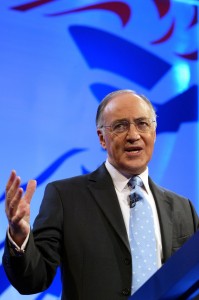
  • Michael Howard – 2005 Speech to the CBI

    michaelhoward2

    Below is the text of the speech made by Michael Howard, the then Leader of the Opposition, to the CBI Conference on 1st March 2005.

    As a politician, it’s easy enough for me to travel round Britain, talking about all the things I want to do for our country.

    I can talk till I’m blue in the face. But without you, I can’t do anything.

    I can’t deliver my priorities for government: lower taxes, more police, cleaner hospitals, controlled immigration and school discipline – unless we have a strong and competitive economy.

    And a strong and competitive economy is not built by government; it’s built by people – the British people.

    What you achieve for Britain creates the opportunity for everything that any politician may ever want to do. You generate the prosperity that enables people to look to the future with optimism. You create the jobs we all depend on. Without you – no safety net for the least fortunate, no care for the sick, no pensions in old age.

    It is your hard work and your skill that makes Britain what she is today – a country with a proud past and an exciting future.

    So I want to praise the profit-makers, because too often in our country, profit is used as a dirty word. There is a dangerous ignorance in Britain today about the role of business in society. It is astonishing how little the connection between your profits and our public services is understood.

    This year, Corporation Tax alone is forecast to raise almost £33 billion – enough to pay for half our education. Yet a common response to the world-beating performance of our greatest companies is a sneering retort about “excess profits”, when its those very profits that pay for the quality of life we all demand.

    I’m crystal clear about government’s role in all this. It’s to create the conditions for your success – to set the framework in which business can best thrive.

    You live and compete in the global economy. Marginal advantages in prices, delivery dates or quality decide which firms win the orders and create the jobs. That’s why it’s so important government sets the right framework. And I do not believe that ever higher taxes, ever higher public spending and ever higher regulation constitute the right framework.

    Gordon Brown’s always going on about the need to make the European economy more like America’s. The great irony, of course, is that he’s actually making Britain’s economy more and more like those of continental Europe. For British business, Europe is a market, not an economic model.

    We are all paying the price as Labour turns the British model into the European one. Britain is the slowest growing of the English-speaking economies. And our income per head is now – for the first time – lower than Ireland’s.

    The truth is Britain’s heading in the wrong direction and we need to change track.

    First, we need fiscal discipline to provide the macroeconomic stability on which sustained growth depends.

    Second, we need to reform the microeconomic framework so that competitiveness and productivity rise not fall.

    And third, we need to take urgent action to raise standards in our schools – because tomorrow’s economic performance is dependent on the quality of today’s education.

    A Conservative Government will get a grip on spending. Britain cannot carry on spending more than she is earning without higher taxes or higher interest rates. Government must once again start to live within its means.

    There are two Britains today. Private sector Britain, where people are working harder just to stand still, struggling just to make ends meet. And bureaucratic Britain, where money is no object, you spend what you like and employ who you like. For every job the private sector lost last year, the public sector took on almost two jobs.

    Rarely in the history of politics has a government spent so much, taxed so much and achieved so little: children still unable to read or write when they leave school; waiting times longer not shorter; crime up not down – and all of this in the world’s fourth richest country. We’ve all come to realise there’s no such thing as a free lunch. But with Mr Blair you pay for lunch … and it never comes!

    You know a country is living on borrowed time when government is the fastest growing industry in town. So we appointed an independent team of business experts to undertake a detailed, line by line review of government expenditure.

    In January it presented its conclusions. Its recommendations mean we can cut waste and bureaucracy, strengthen the frontline, pay off debt and lower taxes.

    Under a Conservative Government 168 quangos will disappear; 235,000 bureaucratic posts will go; there’ll be no more Regional Assemblies; the Supreme Court will go; there will be no Small Business Service; the New Deal will be scrapped.

    These decisions are tough – but they are the right decisions because by cutting waste and by doing less a Conservative Government will be able to invest more in our priorities and lower taxes.

    I am a Conservative because I believe that families and business are better at spending or investing their own money than politicians. People work hard for their cash and they deserve to keep more of it. And as we all know low tax economies are the most successful economies. They generate more wealth and create more jobs. That is why a Conservative Government will cut taxes.

    Next, microeconomic reform. You all know the problem. British business is over regulated. It’s eroding your margins. And it’s damaging your ability to compete.

    Fewer regulators and fewer bureaucrats will mean fewer regulations. We’ll introduce sunset clauses into regulations – so they don’t live on for ever but wither on the vine. And we’ll impose regulatory budgets on every government department which we will lower year on year. That way we’ll cut the regulatory burden you all face.

    This morning I set out Conservative proposals for work permits. Migration in both directions is part of any dynamic, competitive economy.

    But immigration has to be controlled. Scale matters because while immigration adds to the economy it also adds to our population. This has consequences for public services and community relations. Immigration has trebled in the last eight years. As the Government’s own Community Cohesion Panel has said “the ‘pace of change’ is simply too great at present.”

    So, a Conservative Government will set an annual limit to immigration in the light of our economic needs, our moral obligation to refugees and our ability to absorb newcomers. We will introduce an Australian-style points system for work permits – so we give priority to people with the skills Britain really needs.

    But I want to make one thing clear today. Britain has reached a turning point. We need to limit and reduce immigration to our country – including work related immigration – so that we can maintain good community relations and effectively manage our public services.

    EU enlargement has massively expanded the pool of labour – both skilled and unskilled available to British employers. And our points system will ensure that immigration from outside the EU is limited and prioritised.

    Everything a Conservative Government does will be a means to one goal – and that goal is opportunity. I want everyone to have the opportunity to make a success of their life.

    I came from an ordinary family with no special privileges. But my State school education taught me that there’s no barrier to success – it is possible to give everyone, whatever their background, real opportunity.

    We were all taught the basics. Our teachers encouraged ambition, excellence and hard work. It was the best start any child could have in life.

    But too many children in Britain today don’t get that start. Lack of discipline is a real and growing problem in our schools. Many children still leave school unable to read, write or add up properly, while a pass grade for a Maths GCSE is now just over 15 per cent.

    This isn’t just a personal tragedy for the children concerned – it’s a national tragedy.

    If children don’t learn respect for authority in class, they’re less likely to respect others when they grow up. If youngsters aren’t taught to read or write properly at school, they’ll find it tougher to get a job. And if British companies can’t recruit employees with the right skills, they’ll find it much harder to compete.

    We need to change direction. We need to restore discipline in school. That is why a Conservative Government will give head teachers control over their schools – they’ll have the final say on expulsions. Mr Blair’s policy of inclusion at all costs is wrong. I will not allow a disruptive minority to ruin the education of the majority.

    I want to live in a society where every child is taught the basics. There is overwhelming evidence to show that traditional teaching methods – phonics, times table, arithmetic – are the best way to teach children to read, write and add-up.

    Parents understand that – and a Conservative Government will give them the power to choose schools that use traditional teaching methods. As you know better than most, choice and competition drive up standards in every field of human endeavour.

    Schools should challenge and stretch the brightest – rewarding excellence and ambition. The “all must have prizes” mentality has undermined education standards.

    A Conservative Government will get rid of the targets that fuel grade inflation. We will keep external examinations at 16. And A Levels will remain the gold standard that universities and employers need them to be. “A” grades will only be awarded to a fixed percentage of pupils each year. And students won’t be able to retake modules again and again.

    Of course not all children are academic. And so we should value youngsters with a technical or practical qualification just as much as students with a degree.

    That’s why we’ve been working with the CBI to develop plans for a high quality vocational education system. Then everyone will know that a youngster who has chosen a vocational route and come out of it with flying colours is skilled and proficient.

    A Conservative Government will establish a network of super colleges – paid for by abolishing the Learning and Skills Council. And we will let 14 and 15 year olds start down the vocational path at school, by attending specialist courses at FE colleges.

    Governments don’t have all the answers. But if they govern with the right values they can make a real difference. Trusting free enterprise; rewarding hard work; encouraging ambition; admiring excellence in whatever field. These are the right values.

    After I left university I spent a year in America. I admire many aspects of American life – particularly their enthusiasm for success. In America, they talk about the American Dream – about the ability of someone born in a log cabin to make it to the White House. As it happens, in America this is the exception, not the rule.

    In Britain it actually does happen. As many of you in this room demonstrate, there are countless examples of people from humble beginnings who make it to the top in Britain: people who live the British Dream.

    We should talk about it. We should embrace it. We should celebrate it. I want everyone to have the opportunity to live the British Dream.

    That’s why we need a government that values discipline in schools and excellence in education. A government that lets people keep more of the money they earn by cutting taxes. And a government that champions British business and sets our great companies, and our entrepreneurs free to do what they do best: win orders, generate wealth and create jobs.

    That’s what a Conservative Government will deliver. That’s why I believe Britain needs a Conservative Government. And that’s why I will pull out all the stops for a Conservative victory at the next election.

  • Michael Howard – 2005 Speech on Council Tax

    michaelhoward2

    Below is the text of the speech made by Michael Howard, the then Leader of the Opposition, on council tax on 21st February 2005.

    I believe that families know best how to spend their cash. They’ve worked hard for it and they deserve to keep more of it.

    Some people say that’s selfish. It’s not. It’s about what’s right and what’s fair.

    It is right to encourage people to take responsibility for themselves and their families. It is fair to reward people who work hard and save for their old age.

    Low tax economies are the most successful economies. And when people pay less tax you have a more cohesive society – because we all do more not just for ourselves but for our communities.

    Mr Blair promised that he had “no plans to increase taxes at all”. But he has put up taxes 66 times – often by stealth.

    Hard working families have been clobbered to the tune of £5,000. Virtually every independent expert agrees that if Mr Blair were to win again – taxes will go up again.

    Under Labour the Council Tax, the most painful of all Mr Blair’s stealth taxes, will hit £2,000 for a typical family.

    It will be particularly hard for the older generation, people who live on fixed incomes.

    Many of them served our country at her greatest hour of need, preserving liberty, freedom and Britain’s independence for future generations.

    Those who have given so much must surely be given their due. The older generations have been air-brushed out of Mr Blair’s Britain, but I will stand up for them. I will increase the value of the basic state pension in line with earnings, making pensioners up to £11 a week better off.

    And today I can announce that the next Conservative Government will take action to relieve the Council Tax burden for millions of pensioners.

    I will give every home where the adults are sixty five and over a fifty per cent Council Tax discount up to a maximum of £500. This will ensure that five million pensioners have their Council Tax bills cut.

    All our plans have been fully costed and are fully funded so that Britain’s economy will be secure for the next generation.

    People deserve to be treated with dignity and respect in their old age. Because I believe that the true test of a society is the way it treats its senior citizens.

    People will face a clear choice at the election: Conservatives who will increase the state pension and cut pensioners’ Council Tax or Mr Blair, who will forget them and raise their Council Tax.

  • Michael Howard – 2005 Speech on Education

    michaelhoward2

    Below is the text of the speech made by the then Leader of the Opposition, Michael Howard, on 14th April 2005.

    My driving ambition is to give people real opportunity – the opportunity to make a success of their life. And education is the key to all opportunity. I know.

    I come from an ordinary family. My parents ran a clothes shop in Llanelli.

    If the teenage Michael Howard were applying to Cambridge today, Gordon Brown would love me. My socio-economic background ticks every one of his politically correct boxes: the child of immigrants; from a small town in Wales; a family with modest means; educated in a State school. And of course, Gordon Brown would hate Tony Blair.

    We didn’t have any special privileges. But we were lucky enough to live in a town with a first class state school. At Llanelli Grammar School, discipline was at a premium. Teachers were respected. We all learnt the basics. Ambition, excellence and hard work were encouraged.

    It was the best start any child could have in life. Fifty years on, I want everyone to have that quality of education. And my goodness we really do have a long way to go.

    Of course we know that in some schools, thanks to the commitment of inspired heads and dedicated, hardworking teachers, standards are rising. But despite all the millions of pounds that have been spent, one in three children still leave primary school unable to write properly.

    Lack of discipline is a real and growing problem. And the whole system lacks ambition. A pass grade for a Maths GCSE is now as low as 16 per cent. You get four out of five questions wrong and you still pass.

    When I travel round the country, perhaps the most heartbreaking sight I see is the children who’ve dropped out of school. Youngsters going off the rails – each of them a story of lost opportunity, but also a warning of the kind of country Britain will become if we don’t change direction.

    Let’s be clear – the quality of Britain’s education system today, will determine our success as a society tomorrow.

    Conservatives will give youngsters the opportunity that comes from learning in well-disciplined schools – where the minority isn’t able to ruin the education of the majority.

    I read stories of ill discipline in our schools with horror. I remember my teachers as people I respected.

    If children don’t learn respect for authority in class they’re much less likely to respect others when they grow up.

    So a Conservative Government will give head teachers back control over their schools.

    They will have the power to expel disruptive pupils. I will not allow the minority to ruin the education of the majority.

    Of course, a child’s future is far too precious simply to be written off if they are expelled from school. Today, too many expelled children simply fall out of education altogether, wasting their potential and, quite possibly, getting into crime.

    So a Conservative government will invest heavily in these schools giving troubled youngsters get the help they deserve: learning the basics; a practical skill so that they can get a job when they leave; drug treatment if they need it.

    School standards and behaviour in the classroom are closely linked. Bad behaviour is often born of frustration.

    If a child leaves primary school unable to read or write or add up properly, how can we expect them to participate in class at secondary school?

    If bright pupils are not intellectually challenged in the classroom, is it any wonder that they get bored and cause trouble?

    And what about those youngsters who know they are not going to make it to university, but just want to learn a practical craft so they can get on in life? How depressing is it for them to have to stick to an inflexible academic curriculum?

    There is overwhelming evidence to demonstrate that traditional teaching methods – phonics, arithmetic, times tables – are the most effective means of teaching children to read, write and add up.

    So a Conservative Government will ensure that teachers are trained in traditional, proven teaching methods like phonics.

    Phonics is the best way to teach children how to read and write. This is important for all children – but it is particularly important for those whose first language is not English.

    A common language is the most obvious binding element in any society. Without it, it is much harder for people to be active members of the community.

    It’s important that people who make their home here learn the language of our nation. Of course people may choose to carry on speaking their family tongue at home – that must be a matter for them. But they do need to learn English properly too.

    Schools should challenge and stretch the brightest – rewarding excellence and ambition. The “all must have prizes” mentality has undermined education standards.

    A Conservative Government will, in its first month, start a top to bottom review of the national curriculum.

    We’ll slim it down so teachers don’t have so much paperwork.

    We’ll review tests, GCSEs and A Levels to restore public confidence in our education system.

    And we’ll root out political correctness, replacing it with the building blocks of knowledge that are essential to give every child their birthright: a decent education.

    That review will be carried out by Chris Woodhead – that indefatigable champion of higher standards and less political correctness.

    People will face a clear choice at the next election: schools with good discipline and high standards with the Conservatives or schools with poor discipline and falling standards under Mr. Blair or the Liberal Democrats.

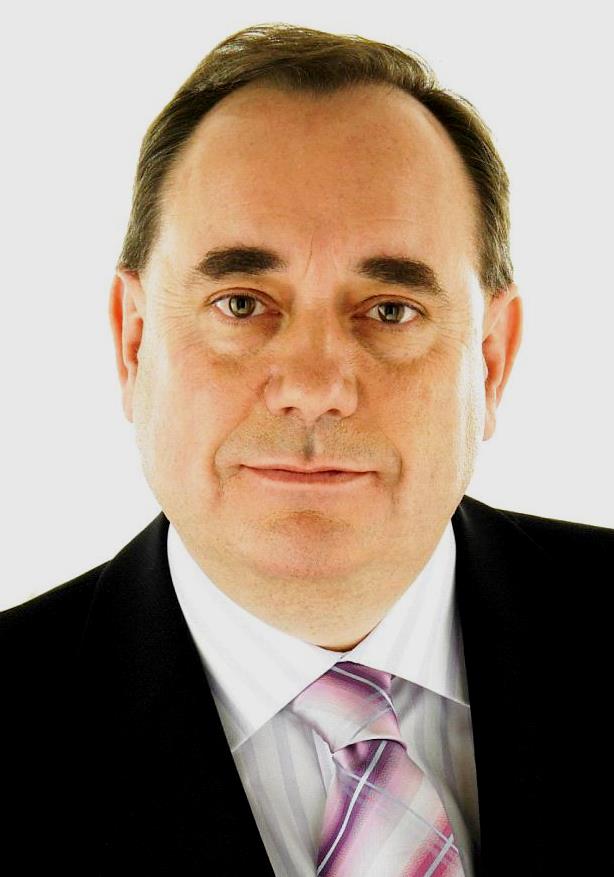
  • Alex Salmond – 2005 SNP Conference Speech

    alexsalmond

    Below is the text of the speech made by the leader of the SNP, Alex Salmond, to the 2005 SNP Conference.

    Delegates, There are many reasons why I am going to miss having Winnie as our Party President but one of them is her introductions to my speeches at Conference. I never know quite what she is going to say. No, I never know at all what she is going to say. However, I am delighted that she is in the Chair today because it gives me the opportunity to pay tribute to the outstanding Scottish politician of her generation.

    Let us consider just two of the phrases which Winnie has carved into the lexicon of Scottish politics “Stop the world Scotland wants to get on” and “this Parliament adjourned in 1707 is hereby reconvened.” Winnie you changed Scotland’s world in 1967. And without you, there never would have been any Parliament of any kind to be reconvened.

    At this Conference, we pay you tribute and you have the thanks not just of every single delegate but of ever single person who cares about Scotland. And what does Winnie intend to do in her retirement? Well I happen to know that her first plans for her well earned relaxation – are a few days campaigning in Cathcart and Livingston. And I will be proud and happy to be campaigning along with her as I know every single one of us in this hall will do.

    Delegates the cat is out of the bag. I have been reading “A Spin Doctors Diary” by Lance Price. It lifts the veil on behind the scenes at Downing Street. It should have been called “Confessions of a Spin Doctor” – just like a blue movie. Some of it is absurd – sex on the sofa at No 10. Come on.

    However, apparently even the air turns blue in Downing Street. Our great Prime Minister re-acts to the prospect of defeat in Wales by swearing at the Welsh nation – just think what he might be saying about us come next Friday. It gives a blow-by-blow account of the backbiting, the tantrums and the squabbles at the heart of the Blair nexus.

    He is depicted not just at swearing at Wales but about Scotland’s late Cardinal, Thomas Winning – someone whose boots Mr Blair was not fit to lace, not to mention insulting Donald Dewar. The Prime Minister emerges from the account as a posturing popinjay – totally unfit for office.

    But let us take just one matter arising, which illustrates how dirty the game is played in Blair’s Britain. Lord Birt is now a personal special adviser to the Prime Minister – responsible would you believe for “Blue Sky Thinking.” These diaries reveal that when Director General of the BBC he plotted with Downing Street to stop the Scottish 6, to stop Scotland getting its own full-scale news bulletin.

    We know this to be true since Lord Birt was arrogant enough to put in his own memoirs. Therefore, the Director General of the BBC – that independent impartial national broadcaster – conspired with the Prime Minister’s office in an essentially political campaign. After which he gets ennobled and is now a special adviser to Mr Blair.

    Lord Birt should be pleased about his peerage. In Blair’s Britain, many other people have had to pay big money. Every single donor who has given Labour more than a million pounds has been given a knighthood or a peerage. 80p out of every pound donated by individuals to Labour comes from people who have been honoured.

    And this is the Government of the regular sort of guy who wanted to clean up politics?

    Now I know what Lord Birt’s successor thought about the story of the Scottish 6 because I asked him. Gregg Dyke told me he was “shocked” by this revelation. He went on to assure me that political manipulation of the public broadcaster would not happen in his term of office. I believe that to be true. That is why Greg Dyke is now an ex-Director General. The message is clear.

    In Blair’s Britain if you defend your journalists right to tell the truth about the war in Iraq then, you end up having to resign but if behave like Lord Birt then you get a peerage and a title as special adviser.

    There is something rotten in the state of Blair’s Britain. And can I just say how glad I am that this party will not be nominating any Scottish patriot to set on the ermine benches between Lord Archer and Lord Watson.

    However, the Lance Price book gives an insight into an even more important matter. Price claims that Blair “relished” sending forces into war. Or at least he did before No 10 censors forced him to amend that passage. We are eight years and five military actions into Blair’s premiership. The present action in Iraq has resulted in carnage – 95 British soldiers, 1907 American soldiers, tens of thousands of Iraqis and no end in sight.

    It is a war built on lies, which has fanned the flames of international terrorism. The consequences for this country have been murder and atrocity on the streets of London, essential liberties under serious threat and community relations under real pressure. Every member of the Government, Blair , Brown and the rest, every Member of Parliament who voted us into this sequence of disasters should hang their heads in shame.

    Bush and Blair should now be on their knees to the United Nations asking for a security force to be drawn from Islamic countries to replace American and British forces. What we need – and we need it right now – is a strategy and a timetable for withdrawal not more years of Blair’s blood price.

    Of course, the tales about Blair’s sofa style of Government are not the only revelations of late. Let’s talk about Scotland’s oil. We have released secret papers from the 1970s demonstrating the level of deceit from Tory and Labour administrations about the true nature of Scotland’s oil wealth. Gavin McCrone was the Scottish Office economic adviser. He wrote a paper on North Sea oil and the difference it could make to Scottish economy. No wonder they kept in secret.

    Labour say they did not lie. Really! Let’s make a few comparisons between what McCrone said to Labour and what Labour told Scotland. McCrone said that an independent Scotland would have title to 99 per cent of the oil revenues and that the only thing wrong with SNP estimates is that they were too low.

    Labour told Scots our figures were wildly exaggerated. McCrone compared Scotland’s economic prospects to Switzerland. Labour to Bangladesh. McCrone said that oil had overturned the economic arguments against Scottish nationalism. Labour said Scotland couldn’t manage. McCrone praised how Norway had dealt with the international companies and said that Britain had failed.

    Labour said that Scotland would be too small to deal with big oil. McCrone said that Scotland would be a welcome and influential member of the European Community. Labour said that we would be out in the cold.

    Every bottom of every political barrel was scraped to keep London’s grip on Scotland’s oil. And they are still at it today. This week Gordon Brown said that the price of oil was volatile – that you cannot rely on a single resource. The sub text is that it’s not really worth all that much. That is the myth. What is the reality?

    This Chancellor is getting £1 billion a month from Scotland’s wealth. Right now, it is the black black oil, which is filling Brown’s black hole. Gordon says that we cannot depend on one natural asset. Strange that his former adviser Ed Balls MP says that bulging North Sea revenues are “the main good news on the economic front ,” and remember when Balls speaks its Brown speaks its Balls.

    After 25 years of wasted opportunity, we don’t need lectures from any London Chancellor on how to handle our natural resources. We only have to look across the North Sea to see how to husband a capital asset. The Norwegian fund for future generations has now topped £100 billion and the interest and earnings from it are as great as this year’s Norwegian oil revenues. Norway celebrating 100 years of independence is also celebrating 25 years of oil.

    People ask, how long will oil last? For Scotland, the answer is between 30 and 50 years.

    For Norway, the answer is for all time. Why? Because the economic impact of their fund will last for all time.

    In contrast, thus far Scotland’s oil has disappeared down the gullet of the London Treasury. Therefore, what is the importance of these 30-year revelations for today and tomorrow? Firstly for the present. If Tory and Labour politicians were prepared to lie and cheat Scotland in the 1970s why should anyone believe a word they have to say about Scotland in 2005 or in 2007? Then for the future.

    There is as much oil and gas in the waters around Scotland as has been exploited thus far. – Another 30 plus billion barrels of oil, another £200 billion of revenues. We have a second chance to transform our economic prospects and we must seize it with both hands. Of course, I can understand London politicians who deprecate the ability of Scots to fully govern themselves.

    It is a tactic employed by Westminster towards many countries for generations, for centuries. However, how do we excuse the politicians from Scotland to whom it seems second nature to run down the ability and potential of their own country? The truth is out there because we have published it. Now we must never let them forget it – not now, not ever.

    It is still Scotland’s oil.

    As McCrone predicted and as Stewart Hosie has demonstrated this week the extent of oil and gas revenues would propel the Scottish economy into chronic surplus. We are launching an economic offensive. Our opponents are discredited – their past has caught up with them. The present demonstrates a strong financial platform for independence.

    But what really matters is the future. What matters is moving the Scottish economy onto a strong growth plane. The failure to grow the economy over these last 25 wasted British years. It is why we are loosing population. It is why we have not just blighted streets but blighted lives in Scotland.

    Off our East coast is independent Norway with oil growing at 3 per cent a year. Off our West coast is independent Ireland growing at 5 per cent a year. If we had grown at the rate of independent Norway over the last 20 years we would be £5,000 a head richer. If we had matched the growth rate of independent Ireland we would be £20,000 a head richer.

    What we need is the economic strategy to unlock that potential, to be among the most competitive countries in the world, to match the growth of the other small independent European nations. If we were to do that, it would mean an independence bonus of an additional 19 billion in the economy by 2015, or £4,000 per Scot.

    When Nicola and I stood for election a year ago, we put forward a proposal to reduce business rates to below the levels of England. I know it was influential. How do we know?

    Well one of Mr McConnell’s henchmen left his comments on our manifesto on a Scottish Parliament photocopier. “Should we pre-empt this?” the note said. Of course when he finally got round to doing something Mr McConnell’s main concern was to brief that this initiative was nothing whatsoever to do with his Liberal Deputy who was told nothing about it. Now Mr Stephen says it was all down to him.

    That’s their story and who needs Ballymory when we have McConnell and Stephen – the Scottish Executive? Actually it was nothing to do with either of them. Lacking ideas of their own the were just pinching SNP policy.

    Listen guys you don’t have to talk to each other. I don’t blame you. I wouldn’t want to talk you either. Just keep reading Nicola’s lips to get your ideas.

    In the General Election we published a plan to Let Scotland Flourish -how to give our economy a competitive edge in the modern world. It has seven key policies to lift the Scottish growth rate. We intend to develop that further over the next year and make it a centre piece of the campaign for 2007.

    One of our proposals is to give Scotland an edge not just in business rates but in corporate tax – to reverse the long process of loosing headquarters and decision making centres from Scotland.

    More than 20 years ago, I was a young economist working for the Royal Bank of Scotland. There were takeover bids for the Bank from Standard Charter and Hong Kong Shanghai. They were kicked into touch by the Monopolies Commission as being against the Scottish public interest.

    Last week I attended the opening of the new world headquarters of the Royal Bank now the 5th largest Bank on face of the planet. It will provide opportunities in Scotland for thousands of young people to pursue careers to the very top of their chosen profession, and yet if it had not been for that decision of 20 year ago, there would have been nothing to celebrate. Gogerburn would be but an empty field.

    In the next few weeks, bids will emerge for Scottish Power our largest industrial company headquartered in Scotland. If it disappears into the maw of a company, which already owns Power Gen south of the border, then its headquarters functions will also disappear.

    No one argues that it is possible in the modern world to protect every business from takeover. However, no normal country allows its key strategic companies to disappear without considering the public and competition interest. The Germans do not allow it and neither do the French. For Scotland, this is our biggest industrial company. Energy is our strategic resource.

    The Scottish Executive sit on their hands – helpless, hopeless and hapless – with as much control over things that really matter to Scotland as King Canute had over the tide. Scotland has now just a handful of world reach companies headquartered in Scotland.

    We pledge at this conference to fight them until we have the economic edge of independence which will bring many more to join them.

    In the general election, we gained our first seats from the Labour Party at a Westminster election since 1974. This year we have started to win by elections at local level across Scotland. Our aim for 2007 is to win seats across Scotland from Labour, the Liberals and the Tories. Some people say it can’t be done. I say yes it can.

    We have to gain 20 seats first passed the post and then others from the list. What we do will be determined by our own efforts. Mind you we will be greatly helped by our political opponents. Labour once had the longest suicide note in political history. Michael Howard is engaged in the longest resignation note in political history.

    Charles Kennedy wants to turn his party into a Tory Party although the delegates – in best tradition of the Liberals – are not sure. I have the solution for both parties. It is not too late for another entry into the Tory leadership contest. Kennedy is the remedy for the Tories.

    And we don’t even need a crystal ball to say what a Liberal / Tory coalition look like. Just ask the thousands of Council workers in Aberdeen who were sent letters telling them that their wages were to be cut by a Liberal/Tory Council.

    Delegates to win in 2007 we have to have confidence in three things – ourselves, our programme and our country. Firstly, in ourselves. This year we have rediscovered the will to win. Stewart Hosie in Dundee, Angus Brendan in the Western Isles, local government seats the length and breadth of the country. Remember there are more people in Scotland who would vote for this Party than any other. All we have to do is to demonstrate that we are worthy of that support.

    Secondly, confidence in our programme. We are a social democratic party. That means we match and marry economic efficiency with a social programme, which shapes the public purpose. Our economy can be the new Celtic tiger not the Caledonian pussycat. Our public services can be made to work efficiently and our ideas to do that are flowing through this Conference agenda.

    Our belief in social and international justice can find expression through our political institutions. We judge the temper of our people correctly – Scotland wants a party which uses both the head and the heart.

    Thirdly and most importantly importantly confidence in our country. Unionism depends on the notion that somehow our nation of Scotland is incapable of making the big decisions. – war and peace, taxation, international aid – issues like Iraq, tax credits, the betrayals since the G8.

    What exactly is it about Westminster’s handling of these issues that we are meant to admire? The truth is that Scotland is good enough, big enough, and talented enough to be independent.

    We are not going to allow our potential as a people to be measured by the mediocrity of the Scottish Executive. We are not going to allow our nation to be traduced and misrepresented by the mendacity of Westminster. And we are not going to allow our country to be a dumping ground for nuclear waste of the next generation of nuclear missiles.

    Our political strategy is clear – clear as crystal. We intend to win the elections of 2007. We intend to demonstrate to Scotland that we have the competence and credibility to run Scotland and run it well. We intend to offer the people of this country – within the first term of office – the opportunity to move forward to independence.

    We need the freedom for our country to match the generous heart of our people – the generous heart we saw after the Tsunami. We need the power to capture the opportunities of renewable energy power and the hydrogen economy. We need the ambition not just to march to make poverty history but to have a Government, which lives that dream.

    In the summer I paraded with the Sir William Wallace Free Colliers to the Wallacetown monument -they have marched every year since 1861. Back then when the miners were looking for a hero to symbolise their struggle for freedom from the serfdom of the coal owners they chose Wallace and they chose wisely. 700 years ago Scotland’s greatest hero gave his life for that freedom.

    We are not required to make that sacrifice – only invest our votes, our hopes and our time. But we are not an ordinary political party nor is our mission the ordinary stuff of politics. Our immediate aim is to rescue the politics of this country from the mediocrity of an Executive with – as someone said recently – the attention span of a goldfish.

    But our objective is to break the grip of the London parties over Scotland – not just the political grip but their unionist mindset of defeatism , can’t do and second best. Forget the old excuses about lack of confidence. We aspire to lead into a new age of responsibility for Scotland.

    Scotland needs Independence, self determination and self respect. And right now Scotland needs the SNP.

  • Stephen Timms – 2005 Speech at IPPR Report Launch

    stephentimms

    Below is the text of the speech made by Stephen Timms, the then Minister of State for Pension Reform, made at the Institute of Materials on 25th July 2005.

    Thank you for inviting me here today. I’m very pleased to have the opportunity to respond to Peter this morning and to engage in a discussion with you all on this central issue in the pensions debate. And we see raising the effective age of retirement as not just about pensions, but also as addressing the wider welfare reform challenge which confronts us. We want to create an inclusive society where we can all benefit from the skills and contributions of people who want to work but who are currently excluded from the labour market, whether their exclusion is because of their age, their lack of skills, or for any other reason.

    Age and retirement

    As the report points out, developing active labour market policies and tackling age discrimination are crucial. With over a third of men outside the labour market by the age of 60, for many the debate is not about working beyond 65, but actually about having the opportunity to work as long as age 65. We’ve made some progress on this, thanks in part to initiatives such as New Deal 50 plus. Employment rates for those aged 50 to State Pension Age have now increased by 8% in the last 10 years. There is much further to go, but there’s no dispute that we should try and get there. There is, as the report says, a clear consensus on tackling economic inactivity and breaking down the barriers facing older workers; and success among older workers will be crucial if we are to achieve our ambition of an 80% employment rate overall.

    With the introduction next year of the age component of the EU Directive on Equal Treatment, we are setting in place a legislative framework which ensures that people can not be barred from employment on the basis of age. Mandatory retirement ages below 65 will be prohibited other than in very exceptional cases. And we have been running the “Age Positive” campaign, drawing employers’ attention to the business benefits of an age diverse workforce. We have issued 130,000 copies of the Age Positive Code of Good Practice, which sets the standard for non-ageist approaches to recruitment, training, promotion, redundancy and retirement.

    There is no consensus, however, around the desirability of raising the state pension age. There is a growing recognition that working longer is going to have to be part of the solution, and we have seen in recent years an increase in the average age of leaving the workforce, after a long period when that age was falling. But many who would agree that we should be removing the barriers to working longer would strongly oppose steps to compel people to work longer, and who can blame them?

    What I think is particularly powerful about today’s report, is the way that it considers public attitudes alongside the reality of the challenges we face. The idea of having to work longer is an emotive subject – we’ve all seen the scare stories and the national newspaper headlines. The Pensions Minister who announces that “we’re going to make you work longer”, and does so without having first built a political and wider national consensus, is likely to be one person whose working life does not end up being extended!

    We need to work with people to understand the reality of the challenges that we face – and contribute to a sense of ownership of the problems and the possible solutions. That’s why David Blunkett and I are engaged in a National Debate in which we are going around the country meeting people of all ages and backgrounds – sharing the problems and listening to their views. We’ve already held events in London and Manchester and we’re in Bristol tomorrow – part of a programme that will run up to and beyond the Pensions Commission report later this year. We want to include as wide a cross-section of views as possible, including academics, trade unions and industry representatives; and we are looking for a ground-breaking political consensus from across the parties.

    Incentives to work longer

    One of the things that has been particularly striking in the early National Debate events, is the extent to which people don’t know about state pension deferral. As a result of last year’s Pensions Act, someone can choose to delay taking their state pension, and be rewarded with a higher state pension – increased by a full 10% for each year of deferral – or a lump sum of, on average after a five year deferral, £20,000 to £30,000.

    You don’t have to defer for five years to obtain a significant reward. A 65-year-old single man entitled to an average state pension of £107.45 who defers for two years would be entitled to an increased pension of over £129 a week, or a lump sum of nearly £12,000.

    People are hostile to the idea of being compelled to do something – but when it is a choice and there are clear incentives to do something, attitudes begin to change. But Peter is right to sound a cautionary note that we don’t yet know how effective these incentives will be. I was in Washington discussing pensions with policy makers in the US last week, and there it is possible to draw your state pension early, at the age of 62 rather than 65 at which the full benefit is payable, at the price of suffering an actuarially fair reduction in the pension you receive. It is striking, as Peter points out, that over half of US retirees choose to start to draw their state pension at 62 rather than waiting for the full rate which they can receive at 65.

    The choices we face

    There is no escaping the tough choices we face as a society. In 1951, just after Beveridge introduced our present pensions system, the typical man reaching 65 could expect to live only a further 11 years. In 2005 this has risen to over 19 years. Life expectancy of a 65 year old has risen by two to three months every year for the past twenty years, and there is no sign of the trend slackening off. It is a wonderful transformation, but the pensions system needs to be adjusted to reflect the new realities rather than the old ones.

    This improvement in mortality has been contrasted by a fall in birth rates over the same period. By 2052 one in four of our population will be over 65. And this is a global phenomenon, and in the UK we are better placed than in many other countries. In China, for example, between 2000 and 2050, the number of people aged 60 or over is set to increase by 250%.

    Adair Turner’s first report offered us four options. Leaving aside the option of pensioners having lower incomes, Adair left us with what’s been called an “iron triangle of choices”. We either save more and/or we increase our taxes and/or we work longer.

    But a key part of the challenge is to build a lasting solution that will work in a changing world – not just for today and tomorrow. We can’t consider these practical choices in isolation from people’s attitudes, nor without thinking about the society and the culture we are trying to build for the future.

    We want the welfare state for the 21st Century to be driven by a something-for-something ethic. Making the most of the opportunity of longer, healthier living means enabling people to contribute to society throughout their lives – not only through the workplace, but through the wider community. It’s why our “Opportunity Age” consultation launched in March, and other cross-Government initiatives, are designed to tackle the fear of isolation by encouraging and supporting older people to contribute to their communities. Only a quarter of over-60s today feel that they can influence local decisions.

    And, of course, the proportion of older people who live alone is likely to increase in the next 20 years. So encouraging older people to build alternative networks of support and interest, and tackling this sense of exclusion are crucial if we are to make the most of the opportunities for our society of increasing age.

    An asset state

    Much of what the Government has done to date has focused on tackling pensioner poverty. To prevent future poverty, the support we provide to enable people to build assets – both at an individual and a community level – will be absolutely crucial. As David argued at an IPPR seminar earlier this month, we face a new equality challenge and increasingly people’s assets are going to be as, if not more, important than people’s income.

    We need attitudes to change towards savings. There is a great need for information that people can trust. It demands that Government and the financial services industry work together with individuals, families and communities themselves to unlock the potential of an asset state.

    The Child Trust Fund, providing a Government contribution to open an account for every child born in the UK after September 2002, offers a first stepping stone to self-reliance, and a stake in the world for those without inherited assets or substantial family income. Savings vehicles like the Savings Gateway, where Government matches the saving contributions of people on low incomes for whom tax incentives for saving offer little attraction, will also play an important role in encouraging saving on the part of future generations.

    Informed choice

    Financial literacy and access to mainstream financial services have previously too often been restricted for many people on low incomes. Last December as Financial Secretary to the Treasury I reached an agreement with the banks that we would work together towards the goal of halving the number of adults in households without a bank account – and to demonstrate significant progress in that direction within 2 years.

    The quality of information that people have, and the extent to which they trust it, will be key. Whether we are talking about pensions forecasts or life expectancy statistics – if people don’t trust this information they won’t use it to change their behaviours. What more we can do to build trust is a key question for Government. But it’s not a question for Government alone. It’s a fundamental question for our communities – for our business ethics – and for the society that we build for tomorrow.

    Tomorrow’s attitudes

    We already know that tomorrow’s attitudes will be shaped by the reality that people are more likely to have ten jobs in a career than one – and they are going to demand ever greater flexibility in how and where they live and work. With increased mobility and an ever greater ability to communicate across the world, our sense of community will not just be about the geographical area where we live, but also about people and friends with whom we share interests, and aspirations for the future.

    And that’s important for the question of increasing the effective retirement age and the State Pension Age. Today’s report argues that the State Pension Age can act as a signal – impacting on the normal retirement ages set by employers and the expected retirement ages of individuals. That is undoubtedly true.

    But the report also points out the deep hostility that people have to the idea of being made to work longer. Far better, one would think, that any future increase in the State Pension Age should be underpinned by a broad consensus that reflects a change in people’s attitudes and understanding; and that any such change, if there is to be one, should be seen less as an imposition that forces people to change their behaviour than as a reflection of the new expectations of individuals and communities in a changing society.

    The State Pension Age is a very blunt tool for changing effective retirement ages. The report recognises the concerns that many of us hold over the potential inequity of raising the State Pension Age when people from less well off backgrounds often have lower life expectancy. Even in a future world where there may be fewer people doing manual work and where general improvements in quality of life could narrow this distribution of life expectancy, it’s difficult to get away from the objection that an increase in the State Pension Age would hit the poorest hardest.

    We need to be quite creative in thinking about this. If we did ultimately increase the State Pension Age, could we take steps at the same time to protect the least well off from losing out? We heard evidence in Washington last week that the Pension Credit and Winter Fuel Payments have extended lives. Do we need to think beyond the traditional concept of a State Pension Age? Could we achieve an increase in the effective retirement age by building on and extending our State Pension Deferral policy?

    Measures in last year’s Finance Act will now give people the option to work for the same employer whilst drawing an occupational pension. This will give employees greater flexibility to plan a gradual move from full time work to retirement. Could we support this with an extension of State Pension Deferral which allowed people the option of deferring some of their State Pension rather than all of it? Could we extend this concept to the State Pension Age – moving from a single date to a series of options where people are incentivised to take some or all of their State Pension later, but where the least well off are not left behind without adequate support? Are there other things we might do within the State Pension to send out the right signals and address people’s concerns about fairness?

    These are the issues we are reflecting on as the Turner Commission finished its work. I’d be interested in your views in the discussion that follows about what more we can do as a society to help people understand the challenges that we face – to show people that we have not made up or imagined the trend in rising life expectancy but we do need to address it. And crucially how we can do more to build trust – not just in Government – or even in statistics and information on life expectancy – but actually across the financial services and within communities themselves.

    And I’d be interested to know what people think about how we prepare for and shape a society that makes the most of longer and healthier lives; that enables older people to contribute fully to their communities and supports them to enjoy the independence and opportunity that we are all entitled to expect in a modern Britain.

    Increasing the effective retirement age needs to work against this background of flexibility and fairness; of community support and financial asset-building; of trust and choice. It can’t be considered in isolation from public attitudes or from the society we are trying to build for the future. But the reality of the challenges we face must shape these attitudes. I welcome this chance for a discussion and I look forward to exploring these ideas further in the coming months of our National Pensions Debate.

    Thank you.

  • Stephen Timms – 2005 Speech to NAPF Conference

    stephentimms

    Below is the text of the speech made by Stephen Timms, the then Minister of State for Pension Reform, to the NAPF Conference in Eastbourne on 17th November 2005.

    I’m grateful to Robin and Christine for the opportunity to be here this morning. I last spoke at an NAPF Conference in a rainstorm in Eastbourne, about six years ago, so I am delighted to be here on a beautiful autmunal morning today. And I’m grateful to the NAPF for all its contributions to the National Pensions Debate, on top of all the vital work it has been undertaking for over eighty years in guiding and supporting occupational pensions. We have been very appreciative of all the support and the creative generosity we have received from this Association – and from the industry more generally – in our preparation for pensions reform over the past months. And nobody who has seen the newspapers this morning will be surprised that its my view that we are going to need a good deal more support and advice in the months ahead.

    Somebody told me a story from the 1950s at one of the recent National Pensions Debate events. William was over 80. He had started work on the farm at age 10. He’d wintered it and summered it, man and boy. And one day the young farmer said to him:

    “William, you started on this farm with my grandfather, then you worked for my father, and now it’s me. 70 years faithful service. You have your State Pension I know – but I have decided to give you a few shillings a week, so that you can retire. How would you like that?”

    “All right,” William replied, “if you want me to give up, I will. But mind you, if I’d known this job wasn’t permanent – I wouldn’t have started it!”

    Actually, I haven’t found many people during the National Pensions Debate with that approach to work – my job as Pensions Minister would I suppose be a good deal easier if I had. But I do welcome the NAPF guide “Extending Working Lives: Adapting Pensions for an Older Workforce” to help trustees and managers through the age discrimination legislation and to attract a more age-diverse workforce. It’s a good example of this association supporting and encouraging the good quality occupational pensions which have put Britain in a position today where retirement incomes are better relative to everybody else than has been the case in the past, even though earnings have been rising so fast over the past few years.

    Pensions Reform

    The challenge of pension reform is one of the biggest we face in the months ahead. It is a challenge we relish, and I’m looking forward immensely to working hard with everybody here to get the key judgments right over these next few months. How to ensure we achieve a long-term approach balancing adequacy with affordability; continuing our successful drive to reduce pensioner poverty; making the system more understandable but also correcting historic unfairness, such as the way women have lost out because of a 1940s view of women as being dependent on their husbands.

    Our aim is a ground-breaking political consensus, and we hope the National Pensions Debate will help us achieve it, working with MPs from all parties, not because we want to avoid a row, but because only a consensus can deliver the confidence – that we see as vital – that we are introducing a framework which will endure. We want to engage with insiders, experts in this association and elsewhere, and also with those who have never thought about pensions in their lives before but are increasingly realising how important it is for their future that we get these judgments right.

    I am very enthusiastic about the task ahead, so that we can come forward with the Government’s response to the Pensions Commission report by about the Spring of next year. And I am looking forward to actually reading the Pensions Commission report – published in just under two weeks time – and comparing the real thing with the newspaper reports which have appeared today!

    And once the report has appeared, we need to step up the debate in which with its proposals for a citizens’ pension this association has played such a creative part.

    Occupational provision

    Whatever the form of the state underpin which is adopted, it will for most people be the savings they make on top which will determine whether they achieve the income in retirement which they are aiming for. This has been the rationale for all our informed choice measures designed to inform people and make it possible for them to take control of their retirement planning.

    As we embrace social and economic change; as people find themselves doing ten jobs in a career instead of one – or even having several careers – the support people require to stay in employment and to build their retirement income must also adapt to reflect fundamental changes in our society.

    That’s why we are renewing the welfare state – with welfare reform proposals in the New Year that will go further in tailoring the support we provide to meet the new demands of individuals in the 21st century. And it’s why concepts such as portability and risk-sharing are becoming increasingly important for the success of private pension provision.

    But two truths remain. First – work is the best pensions policy. We can’t tackle inequality of outcome in retirement without also tackling inequality of outcome during working life. And the workplace is the key. That’s why our aspiration of an 80% employment rate is so important. And we’re making progress – yesterday’s employment statistics showed the national employment rate back up to within a whisker of 75% – with 123,000 more people in work this quarter and over 330,000 more than last year.

    The shape of the welfare state is crucial in the way we support people to prepare for retirement. To meet the challenges of supporting an ever healthier – but ever older population – we can’t afford to be denied the skills and contributions of all those who can and want to work. Our welfare reforms will be designed to capture this potential. The reforms will develop active support to help people contribute; they will be underpinned by the values of inclusiveness; they will balance rights and responsibilities. Respect for the individual will be matched by respect by the individual for society; and the need to help people lift leave dependency behind while continuing to provide support for those who simply can not work.

    In all of this, nothing can be allowed to detract from the paramount importance of employer-sponsored pension provision. Employers are key and will continue to be the key to successful long-term pensions reform. It is impossible to envisage a successful future pension system which does not have a central role for employers at its heart.

    The evidence speaks for itself. In 2004, nearly 80% of funded pension contributions came from employers. An employer contribution adds value to the pensions saving of an individual – and it acts as a catalyst for action from the employee too.

    Research published earlier this month shows that with little or no employer contribution, the provision of information and advice alone in the workplace had very little impact on savings behaviour, on pensions knowledge or on attitudes towards pensions. It is very striking that the average take-up of a stakeholder pension where there is an employer contribution is around 70%. Where there isn’t a contribution it’s 13%.

    Today’s NAPF survey again shows that participation rates are higher where employers operate auto-enrolment. Our own case study research has also shown auto-enrolment to be effective for increasing pension scheme membership, reducing administrative burdens for employers and pension providers and also making the whole process simpler for employees.

    So I’m grateful to NAPF for vital pro-active work in supporting occupational pensions and in offering guidance to schemes to help them understand – and sometimes benefit from – new legislation. The new NAPF guidance on clearance is a good example. And all that work is going to be just as vital to our success in the future as it has been in the past.

    Better Regulation

    The contribution of the new Pensions Regulator is making sure that pension liabilities are being treated with a new seriousness today, and that is very welcome, but it isn’t blocking corporate re-structures. The case of Marconi is particularly encouraging – the takeover has gone ahead in a way that promises opportunities for employees; the shareholders are satisfied; and the trustees, who took independent advice, are also satisfied there will be appropriate protection for members’ benefits.

    The Pensions Regulator will continue to examine each case individually, to find solutions to enable corporate activity to go ahead, while ensuring that scheme members benefits are protected. And that balance of economic dynamism with protection of members’ benefits is a key one.

    The introduction of the Pension Protection Fund has provided a new and vital security for pension scheme members, helping build a renewed confidence for the future. I know that the board of the Fund understands very well how important their decisions about the Fund levy will be for all the schemes represented here, following the recent consultation.

    Your survey today shows that the regulatory burden is one of the main concerns that schemes have over the next few years. We are determined to remove unnecessary regulation and simplify regulatory burdens wherever we can. We have set out one of the most radical programmes of regulatory reform anywhere in the world.

    Over the next three or four years, this will deliver year on year reductions in administrative burdens. We will set targets for reducing the burdens arising from requirements for businesses to provide information. A rolling plan of simplification will focus on removing or merging regulation into a more manageable form; resolving overlap and inconsistency; and wider deregulatory measures too.

    We can’t do this on our own – and we don’t want to try to. We can only get this balance right with your support. That is why I’ve established a Better Regulation Stakeholder Group with representatives of the pensions, insurance, and financial services industries. I’m pleased that Joanne Segars is a member of it and has volunteered to sit on the sub-group looking at the measurement of information burdens. We need all the help we can get to deliver the simplification that all of us want to see. So I will welcome from anybody here thoughtful, practical proposals for removing and simplifying regulatory burdens.

    Setting up the new Trustee panel is another example of our seeking to keep under review the balance between regulation and member protection. Most recently our discussions of the draft Member-Nominated Trustee regulations really brought home to me the panel’s value. The members of the panel see issues from a more direct and personal perspective which is of great benefit to me and my officials. It gives me the opportunity of a reality check on some key issues of the moment. And its their view about what is important – I don’t set the agenda, it is very much their forum.

    Socially Responsible Investment

    That previous NAPF conference I spoke at was at the point where the Disclosure Regulations on Socially Responsible Investment were about to come into force. In my Ministerial roles across government since then I have maintain my interest in socially responsible investment and corporate social responsibility, and now back at DWP I am keen to see how the disclosure measure has worked in practice and what we can do to move things forward again.

    Conclusion

    So I am looking forward immensely to working with everybody here to strengthen and renew workplace pension provision, and to strike the right balance between regulation and protection.

    We need the NAPF to be banging the drum for occupational pensions in the coming months – and I know I can count on you to deliver. In supporting employees who choose to work longer; through a renewed welfare state that enables people to lift themselves out of dependency; through contributing to and supporting employees in building their retirement savings – in all these respects, the workplace holds the key to the challenges of an ageing society.

    If together we can harness the potential of the workplace:

    – we can give people the support they need to escape long-term dependency

    – we can empower people to take control of building an income for their retirement

    – and we can look forward with confidence to the benefits and opportunities of longer and healthier lives.

    We can build a new framework for pensions in the UK which will endure for the long term. I’m up for it. I know you are too. Let’s work together.

    Thank you.

  • Stephen Timms – 2005 Speech to Employers Forum

    stephentimms

    Below is the text of the speech made by Stephen Timms, the then Minister of State for Pension Reform, on 22nd November 2005.

    I am pleased to be here this afternoon and let me begin by expressing on behalf of my department by expressing the high value we place on the help and support we have received from the Employers Forum on Age over a number of years – and express our thanks for the partnership which we look forward to continuing for many years to come.

    Life expectancy has been going up by two or three months every year for 25 years or more – and there is no sign of that trend flattening off. It is a wonderful transformation which means better life chances for all of us – and it is arguably the greatest achievement of our civilisation. But to make the most of the trend, we need to ensure that older people can continue to contribute for longer to our national life – for their benefit, and also because the economy is going to need them.

    The Office for National Statistics has today published its new report “Focus on Older People”. It looks at demography, family and living arrangements, housing, employment, health, lifestyles, income and expenditure and it contains a wealth of fascinating detail. It’s accessible on the ONS website. The rising proportion of older people is very important as a backdrop to the activities of many parts of Government – the report points out that there are 20 million people aged 50 and over today – and John Hutton as Secretary of State will be the chair next month at a dedicated Cabinet Sub-Committee for older people which is going to be leading the Government’s response to the challenge.

    I want to set out today our strategy to increase the opportunities for working longer; how we are taking it forward through three separate strands or work. It is a key issue not only for business success but also – as we were reminded last week – for pensions reform.

    Opportunity Age

    We published our cross Government strategy for older people, ‘Opportunity Age’, for consultation earlier this year, looking 10 to 15 years ahead. In his introduction, the Prime Minister made the point:

    “the reality is that, as older people become an ever more significant proportion of the population, society will increasingly depend upon the contribution they can make.”

    The question is how can we realise that potential?

    Demographics

    People are now living longer than ever before. And leading healthier lives. They are also spending longer in retirement. In the 1920s when the retirement age of 65, was introduced, the average life expectancy of a man was about 58. Now on average a person reaching the age of 65 can expect a healthy life to the age of 76, with average life expectancy higher still.

    Extending working life first objective

    The first strand is to remove the barriers to employment for older people and create more opportunities for them to work and save for longer. It has been striking in the National Pensions Debate over these past few months that everyone agrees that barriers to working longer should be removed.

    The employment rate for over 50s has risen significantly since 1997. 71% of those aged 50 to state pension age were in employment in Spring this year – and, in addition, over 1 million more people aged over state pension age are in work, many of them part time or self-employed. But we still have a big challenge of over two and a half million people aged 50 to state pension age who are out of work, and we need to be doing better.

    Many are out of the labour market for health reasons. Through our Pathways to Work pilots we’re testing better ways of helping people who claim sickness benefits to re-enter the labour market more quickly – and we have seen some dramatic improvements in the pilot areas. The more active approach we have been developing is clearly part of the solution.

    We have been looking at how to bring together support from the health service with employment help. One of the Dragon Awards presented each year by the Lord Mayor of London was made last month to a GP practice in Camden which has an employment adviser based in the GP surgery. One of the GPs at the practice commented that the initiative had – and I quote – saved:

    “an average of five consultations for every patient that wants to explore the possibility of getting back to work, or wants education and training advice. It has had a significant effect on the mental and physical well-being of patients, … lowered the amount of drugs, largely antidepressants, prescribed to patients [and] helped many people, who have been unwell but are willing to work, to change their lives.”

    These types of new partnership are going to be part of the answer.

    We know that, as well as the opportunity to work, older people need appropriate skills to work. We’re working closely with the Department for Education and Skills. For example, the New Deal for Skills, particularly skills coaching for people out of work and the Employer Training Pilots for those in work, will enable us to test new ways of improving availability of training needed by individuals and businesses, for the benefit of older people among others.

    Extending working life second objective

    The second strand is to create a culture change around retirement age and working longer, to tackle discrimination and to encourage positive attitudes to older workers.

    Our Age Positive campaign has been tackling age discrimination in employment since 1999.

    But more recently the announcement of age legislation prompted a growing call from employers – especially small employers – for more practical information and help. So we invited leading business organisations to work with us on guidance for the coming legislation, and to contribute to a short burst, high profile awareness and guidance campaign, to help employers adopt non-ageist practices in the run up to next October. The Be Ready campaign as it is called aims to change employers’ attitudes to age by challenging traditional views on subjects like occupational health, training, recruitment and retention, and encourage more flexible employment and retirement opportunities.

    The Be Ready materials, launched last May, include best practice examples, case studies and research that we’ve developed with many employers to help bust the myths around age. They also contain more in depth guidance on the workforce management practices of Age Positive employer champions and the business benefits they experience. The materials are proving popular and the feedback has been very positive.

    In the Spring, we’ll be updating the guidance with more information on flexible working and phased retirement opportunities, together with information about the legislation. Employer Forum on Age is contributing to the guidance with research with employers on their flexible retirement practices and procedures, to take advantage of changes in the pension tax rules from April and in preparation to comply with the new legislation from next October.

    EWL and pensions (EWL third objective)

    So the first two strands are removing the barriers to over 50s employment and promoting culture change. The third strand to extending working life is providing the incentive, and this we are primarily tackling through changes to the pensions system.

    Our State Pension deferral policy has, from April of this year, increased the rewards for people choosing to work whilst deferring their state pension. So if you defer now for a year, then the state pension – that is basic state pension plus SERPS or State Second Pension – are increased by 10%. If you defer for another year, its another 10%. All the research shows that is a pretty attractive package for quite a lot of people – and for the first time there’s the option of taking a lump sum payment instead. We will be working to make those options better known over the next few months.

    The tax simplification measures from April next year will mean that, for the first time, where scheme rules allow it, it will be possible to carry on working for the same employer whilst drawing from the employer’s occupational pension scheme. We’ve amended legislation to raise the minimum age at which personal pensions can be drawn from 50 to 55 years by 2010.

    Pensions reform

    In all these areas and across pension reform, our aim in pension reform is to engage in a national debate and to build consensus for a long-term pension settlement. That is not because we want to avoid a row, but because we think that consensus will be tremendously helpful in building the new confidence that we need around pension saving, that we are putting in place a new framework which will endure. We set out our principles for pension reform in February, for a system that tackles poverty effectively and provides opportunity for all to build an adequate retirement income.

    The debate will no doubt reach a new and higher level when the Pensions Commission report is published a week tomorrow, and I welcome the wide interest there already is in what the Pension Commission is going to say. We will then want to analyse the evidence and consider the options and recommendations made by the Commission, drawing on the views expressed in the National Pensions Debate and the response which will be made to the Commission report, and respond next year with proposals for reform which I hope will command as broad consent as possible.

    Conclusion

    To improve radically the retention rates of older workers we need employers to increase the availability of flexible work and retirement opportunities, and so to help retain those at greatest risk of leaving prematurely and enable others to stay on beyond State Pension Age. A combination of active labour market strategies, removal of structural financial barriers and the greater availability of flexible work and retirement patterns will make it possible for a lot of people to stay in work longer and potentially to save for longer.

    We recognise there is a need for help in how to retain older workers. I have commended to you the products of our Be Ready campaign. I hope companies will include older workers in all employment practices. Ensure they benefit from the training and promotion opportunities offered to younger staff. Make sure you have policies to manage poor performance and health issues. And be flexible and communicate with your employees. Make them aware that as an employer you value the diversity created by a mixed age workforce and offer alternatives to that cliff edge of retirement.

    There are some key steps here to unlocking substantial gains for individuals, for businesses and for the economy as a whole. I hope we can work together as we learn how to make the most of these opportunities over the months ahead.

    Thank you.

  • Stephen Timms – 2005 Speech to ABI Saver Summit

    stephentimms

    Below is the text of the speech made by Stephen Timms, the then Minister of State for Pension Reform, to the ABI Saver Summit on 5th December 2005.

    I’m very pleased to be able to join you this morning at what is unquestionably a crucial point for pensions reform. And I want to acknowledge the way in which the Saver Summit has established itself as a central forum for the pensions industry to come together and focus on the challenge of helping people save adequately for retirement. Following publication of the Pensions Commission report last week, the importance of pensions reform has perhaps never been higher on the public policy agenda.

    Building on progress so far

    Our 2002 Green Paper first highlighted the need for people to save more or work longer to achieve the retirement income they want and expect. It established the Pensions Commission to review long-term progress. And last year, in its initial report, the Pensions Commission calculated that nearly 10 million people are not saving enough for their retirement. I’ll be interested to see the findings of your annual State of the Nation’s Savings report when the results are published later today.

    But the scale of the challenge we face is clear. I don’t intend to focus on that this morning – except to make two important points.

    Firstly that we have made significant progress over the past eight years. It was right to focus on the short-term crisis of pensioner poverty that we faced when in 1997. In lifting nearly 2 million pensioners out of absolute poverty; in spending £11 billion extra each year on pensioners with almost half of the extra going to the least well-off third; in virtually eradicating abject pensioner poverty; in making all those improvements we have built a foundation on which to encourage people to save. Pension Credit has been instrumental in achieving this progress, and it also means that, for the first time, people with modest private savings could be rewarded rather than penalised pound for pound for the savings that they had made.

    Our focus today on encouraging people to save more would have made no sense in a world where large numbers of single pensioners were living on £69 a week, and all of them faced the disincentive to saving of pound-for-pound withdrawal.

    Progress in boosting confidence in private pensions has also been crucial in building a foundation for long-term change. Last year’s Pensions Act – establishing the Pension Protection Fund, the Pensions Regulator and the Financial Assistance Scheme – addressed directly the problems in defined benefit occupational pensions, boosting confidence and security for pension scheme members. And the introduction of the Sandler Suite and the Stakeholder Pension has also been an important step in facilitating low cost private savings.

    These are the measures which have provided the platform on which now we can build a pensions settlement that will endure for the long-term and provide security in retirement for generations to come.

    But my second point is perhaps a more important one. That is, that a great deal of the progress we have made so far, especially in terms of private saving, is a result of the partnership between Government and the industry.

    The ABI has been a very important partner for us – in advancing the informed choice programme; leading the consortium on the Pensions Information Pack; working with the Association of Independent Financial Advisers on the new fact sheet on contracting out; supporting the Financial Services Authority in its strategy for financial capability; and responding to our consultations.

    I want to express thanks to the ABI and to the industry as a whole for continued support in our work on pensions reform. We need the voice of industry to be at the heart of our response on the report of the Pensions Commission. The success of long-term pension reform will hinge on Government and the pensions industry working together with employers and employees. We are appreciative of the support so far – and we are going to need a great deal more support in the months ahead.

    The Pensions Commission report

    By now, everyone will have had the chance to at least take a first glance at what the Pension Commission recommended last week. The Commission – a former CBI Director General, a former TUC President and a distinguished Professor at the London School of Economics – produced an impressive unanimous report. I would characterise it as comprising essentially four bold ideas:

    1. Auto-enrolment into a national system of personal accounts;

    2. Mandatory matching employer contributions amounting to 3% of salary;

    3. Basic state pension linked from 2010 to earnings rather than prices;

    4. A gradual increase in state pension age in line with rising life expectancy, starting with a rise to 66 during the 2020s.

    The Commission has done a very impressive job. They have sifted a lot of evidence; they have weighed a great variety of opinions; and they have carried out a lot of impressive analysis of their own. They have produced a set of recommendations which address the concerns people have been raising and which hang together in a coherent way.

    We welcome the broad framework of the Commission’s proposals and options – and we believe they are the right basis for the debate to come. There is much to be discussed and decided on the detail of that framework and our response must meet the five tests we have set out – that is that our overall package of reforms must promote personal responsibility; must be fair, affordable, simple and sustainable.

    We are now going to be studying the recommendations very carefully. I hope that everyone else will study them carefully as well, and let us know what they think.

    The next steps

    The Pensions Commission has called for a national debate about the right way forward and that it should start as soon as possible. We are going to be stepping up the National Pensions Debate – talking to people of all ages and in every section of our community. And our intention is to come forward in the Spring with Government proposals for reform, which I hope will be on the basis of as broad a consensus as possible.

    The Pensions Commission were very clear in their first report that there is not a pensions’ crisis now. But the pensions of tomorrow depend on the decisions people make to save today. They argued that the failure to respond to this challenge would lead to a crisis in 20 years time. If we do nothing, future pensioners will be 30% worse off relative those in employment, than they are today.

    So we need to study the Commission’s recommendations in care rather than in haste – but we can’t afford to put off our response to the challenges they have laid out. We need to build on what has been achieved and ensure now that people can plan with confidence decades ahead for retirement.

    A challenge to ABI

    Each of the bold ideas proposed by the Commission raises a host of questions which will need to be answered over these coming weeks. The ABI – together with the NAPF and others – have welcomed the principle of personal accounts, but questioned the particular form described by the Commission as the National Pensions Saving Scheme. The Association takes the view that – given a level playing field – it can put together an industry-led model which will do the job better.

    Today, I want to issue a challenge. To the ABI, and all those in the industry who take the view that they can produce a better model for personal accounts. I want to challenge you to work up the details of your alternative approach by February in the new year. Then as part of the National Pensions Debate I’m going to ask the ABI to host a joint-event with Government for you to present your alternative model.

    There are two principle criteria that any alternative model must meet. Firstly, it must achieve a radical extension of coverage – to include many who have lost out before, such as lower and moderate earners, the self-employed and those working for small employers. And secondly, it requires a radical reduction in cost – in terms both of low management charges and of reduced administration costs for business.

    To achieve a major expansion of workplace savings, the model also needs to reflect changes in the workplace. So portability, reliability and speed of delivery will also be important.

    But if you can present a detailed, workable model that meets these criteria and can match the Turner version for a comparable level of charging, then that will be very attractive to us in Government. The decision when we make it will be a pragmatic one. We are serious about building consensus, and we are in no doubt as to the potential attraction of an industry-led model.

    We also mean what we say about getting on with reform. The choice is over how we act – not whether or when. With our aim of a White Paper in the Spring, we need to move quite quickly to develop the elements of a reform package which can be widely supported. So I am asking you to come forward with the model in February.

    I hope you will work with my officials at the earliest point in building up the detail of your ideas. The prize here is not for any one individual or group, but for society as whole – when we deliver a radically new savings product extending to everyone the opportunity to save affordably for a pension.

    Conclusion

    I hope you will also engage with us as we debate the other elements of a long-term settlement – and as we assess the right balance of State pension support to underpin a rapid expansion of private saving. We need a solution which is affordable to the public finances. The next few months are going to be crucial for everyone who wants a long-term, sustainable pensions settlement. There is a big prize available and its one we are determined to win.

    So my appeal is that we should be working together over these critical next few months –the financial services industry, Government, employers large and small and trade unions. A long term settlement represents a great opportunity for all of us. Let’s make sure we achieve it.

    Thank you.

  • Timothy Kirkhope – 2005 Speech on the Treaty of Lisbon

    Below is the text of the speech made by Timothy Kirkhope to the Spring European Council in Strasbourg on 13th April 2005.

    Mr President,

    The March Summit was supposed to be about relaunching the Lisbon agenda. Sadly, it will go down in history as a ‘fudged’ summit. An apparent assault on liberal economics by the French President and others was not an edifying sight. He was quoted as calling the liberalisation of Europe’s economies as “the new communism of our age”. If true, this was an extraordinary remark. Any attempt to undermine our Services Directive is sadly a clear sign that the anti-reform forces in Europe remain active and disruptive.

    Mr Barroso said recently: “Some people think the European Commission is there to protect the 15 against the new 10 – it is not”. He is absolutely right. The Services Directive is a fundamental building block of a successful, dynamic economy. Those who seek to undermine the progress of the Internal Market in this way do no service to the millions of unemployed in their countries. On the contrary, as the new Member States have demonstrated so clearly in recent years, liberalising economies are the successful job-creating economies. The so-called “European Social Model” has assumed such a significance among some nations in Europe that it seems almost impossible to undertake reform.

    I am afraid that this model, whatever merits it may have had in former times, is now the “Achilles heel” of Europe’s economy. It has perpetuated high unemployment – 19 million unemployed at the last count – fostered an anti-enterprise culture and every day that it remains unreformed, the competitiveness of China, the USA and India increases to our disadvantage.

    As I have told him, I believe that Mr Barroso is sincere in his drive to get the reforms required, but he has been badly let down by the Heads of Government, including the British Prime Minister, whose “short-termism” has made it more difficult for the President of the Commission to make progress.

    There were some items in the conclusions we can welcome, in particular, the commitment to sustainable development and the Kyoto Protocol. However, the heavy-handed tactics of some leaders trying to put a brake on economic reform and playing games with an increasingly discredited stability and growth pact serves as a timely reminder to the peoples of Europe that their interests are being sacrificed to the short-term political interests of a few recalcitrant governments.