Tag: 2005

  • David Blunkett – 2005 Speech at Pensions Commission Seminar

    davidblunkett

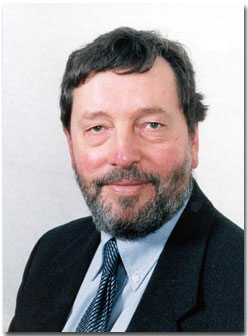
    Below is the text of the speech made by David Blunkett, the then Work and Pensions Secretary, on 21st June 2005.

    I would like to offer my thanks to Adair, to Jeannie and to John for the tremendous hardwork that they’ve undertaken and thanks to all of you for participating today, including my own Ministerial colleagues and the opposition spokespeople.

    When I came in this morning I discovered that the heaters were pumping out heat rather than air conditioning, and I hope therefore we can avoid the hot-air syndrome that we get in the House of Commons – inevitably adversarial. I think today is one of these rare opportunities where we can get people to actually share thoughts rather than have to counter-pose them and to share the problem with a genuine endeavour to gain a consensus.

    If I promise not to posture will you all promise not to posture? If you all promise not to simplify things down to the lowest common denominator I’ll promise not to do that as well.

    It’s partly not arriving here today with past policies in the back pocket or with a reminder card of everything that anybody’s ever said before or thought of and trying to work out how, with very different perspectives, we can genuinely come together and identify those things which we do agree on and to work out whether there are methods of persuading each other there is a way forward in the future.

    I wanted this morning just to differentiate between past and present and the future because if we’re not very careful we end up in an argument about what we’ve got now rather than having to accept where we are now – from whatever political or professional perspective – and then look at the world in 25, 30 years time and where we would like people to be and what the genuine challenges are that Adair and colleagues have been engaged in.

    A dialogue therefore, about the challenges. An understanding of the potential solutions and an ability to build a consensus that is more than just all of us in this room or between political parties, that which actually draws in the population as a whole.

    Of course including interested groups and those with professional expertise but actually drawing in people across the country. I’ve certainly found in my six weeks (and it isn’t a very long time, that I’ve been in the job, and it’s true of Malcolm and David as well) that people are up for this – they are genuinely engaged.

    If you talk as I did on Friday morning in Manchester, to young people they do actually want information.

    They may not be inspired with the idea that they’ve got to think what it will be like when they are 70 when they are just entering their 20s, but they are when you put it to them, really exercised by the nature of the challenge for them and not just for the rest of us in terms of how they get there.

    So obviously the first factor is about looking at potential solutions and where we are going.

    The second is how do we deal with the challenge of knowing that by the time any solution we put in place is fully operable the longevity that we’ve seen extended over the last 60 years since the end of the Second World War will once again have taken off.

    There is a disagreement between people about whether these things are predictable. Alan Walker from the University of Sheffield, who I think is here this morning, actually tells me that it is predictable and that we can track the trends and therefore we have a better idea than we’ve ever had before of just what the challenge will be.

    As I said in the Commons yesterday people actually want to live longer, they want live better and more healthily, they want to retire earlier and they want someone else to pay for it.

    So we’ve got to actually try and get round that conundrum of getting people to actually see that whilst it’s a promise to live longer, whilst it’s a joy to have a healthier life, whilst every single one of us wants to ensure that we can contribute not just to our families but to the wider community in our older age – and whilst we want to travel and we want to have the ability to be able to use the assets that we have accumulated over the years – it is a simple fact that in enjoying and seeing the prospect of old age people are not fully aware of the challenges that we are discussing today.

    I think the major one is to get people, Adair, to actually think about what they want for themselves, what is the income they think they can live on?

    It takes us beyond the issue the people will want to debate, and we in the political arena have to debate, which is the issue of what the basic pension offers and who actually gets to a full basic pension and of course that is part of the foundation. But it takes us way beyond that, because even in their wildest dreams people who want a Citizens’ basic flat rate pension know that people will not want – and certainly the people who are advocating it – will not want to live on that basic pension.

    They will want something a lot better for themselves and their family.

    So the genuine National Debate has to be simply more than what Government or business are doing. It’s about how we change a culture and change the attitudes towards it.

    So very briefly I just want to say where I think that we from the Government side, are coming from in terms of the debate.

    We know that compulsion for many people but not all, exists anyway through the State Pension, but 3 million people aren’t engaged even with the actual basic pension entitlement. The second state pension, what was once SERPS, has because of the historic nature of it, 8 million people outside it but it is accepted a compulsory pension requirement with the £11 billion that we pay in relation to the rebate for the personal pensions.

    I do want people during the day to describe to me once again how they think they can use the same money twice, because I still haven’t got it after six weeks, as to how you can take money out of one pot and use it in another and still have it in the same pot, and I have read all five of the Harry Potter books so far and I’m looking forward to learning how we can magic that out of the air.

    People then get angry with me and say that people are not presenting the facts correctly, well that’s fine lets hear them, lets have a debate on how we can, whether it’s DC or DB, actually sustain and maintain occupational pensions and how we can persuade the 4 million people who are currently in an occupational pension scheme but not making a contribution – to make a contribution themselves. That is why Adair, I think all of us, there may be some exceptions, are really interested in the issue of opt-out as opposed to opt-in – “auto-enrolment” as some call it.

    And can I ask that we all set our mind to de-mystifying some of the terminology because it’s very clever for us all to use terms that bamboozle the world outside and make everyone look really clever in the industries and the interest groups, but actually it doesn’t do any good whatsoever for people. So if we can, simplify the language in relation to pensions.

    I mean one of the complaints of the young people I met was that when they were presented with material it was so voluminous it had so many pseudo-choices that it confused them rather than clarified things.

    So if we can do that so much the better.

    And how do we move from something like the stakeholder pension to something that simplifies and codifies without undermining the commitment that people have made, the 2 million in the case of stakeholder pensions, to what they’ve signed up to.

    In other words the security and certainty that people seek.

    And just one other plea – simplicity – that I don’t think anyone can argue with. But simplicity and equity rarely go together and therefore we do need to work out how in simplifying, codifying, pulling things together so we don’t just have further sticking plasters we actually accept that there will be in many instances, a real debate about the equity of what we are doing.

    I promise just one word about assets. The point I was making and Nick Timmins was part of the interview so he knows it’s true, is that we are going to see an even bigger divide in terms of assets than we see in terms of income in the future.

    People will inherit from parents, grandparents, aunts and uncles in some parts of the country and some of the socio-economic groupings very substantial assets and they will need to take that into account and we will need to work out how we assist people who do not have assets. Traditionally they have rented their property, there has been a generational disadvantage, how do we help those people to build an asset in the way we’ve tried to do with the Child Trust Fund.

    And whether people agree with the Child Trust Fund or not, I think it is unarguable if we are going to break future poverty as opposed to ameliorating it, we need to ensure that asset divide is overcome and I’m going to carry on speaking about it as long as the Prime Minister keeps me in this job because I think the consequences of ducking it are that we deal with the immediate issue of the disposable income of individuals rather than the growing asset divide.

    My final point is just on that – we’ve actually built a system at the moment to deal with the immediate aftermath of the historic failings.

    The failings to recognise the social change from the post-Second World War era which disadvantaged, grossly, women. Adair if we do nothing else in the months ahead we’ve got to address the disparity that’s existed in terms of the past policies that persuaded women to pay the lower National Insurance contribution and for many women who have been carers not just of children, but often later in life carers of relatives who otherwise who would have been even more dependent on the state and we need to avoid that syndrome in the future by taking that into account.

    We need to be aware that despite the Pension Credit – again people have been critical of it, but it has lifted 2.7 million households out of immediate poverty -despite the Pension Credit, despite the changes that have been brought in the Fuel Allowance, despite the Council Tax provision that was announced by the Chancellor, despite Council Tax Benefit and Housing Benefit that are rarely debated in relation to the impact this has on the income that people can draw on or the income that is foregone in retirement, despite all that, we know that what we’ve done now can not be repeated in 30 or 40 years time because if it were we wouldn’t have overcome poverty in retirement, we would have simply maintained a system of ameliorating it.

    So if we’re going to join with individuals, with business who have an interest not only in recruitment and retention but in the equity and the social responsibility in society, with the Government in terms of finding solutions, it will be, regrettably, having to face up to extremely complex questions of how we get from where we are now to where we want to be and how yes, sometimes, we have to set aside the knockabout in order to achieve it.

    I appeal through those who are here this morning to persuade their colleagues in the media that we might just have, just for once, a few months of sensible debate and if we make choices and others think we’ve got it wrong they’ll knock bells out of us – and I’ll be very happy to go on and have bells knocked out of me – but just for the moment it would be really sensible if we were able to have that dialogue in a sense that drew together the facts, the information, the potential ways forward and we shared them together and I’m very grateful for all of you being prepared to do that this morning.

    Thank you.

  • David Blunkett – 2005 Speech on the Asset State

    davidblunkett

    Below is the text of the speech made by David Blunkett, the then Secretary of State for Work and Pensions, on the Asset State on 5th July 2005.

    Today the UK has the highest employment rate of any of the G8 countries. Unemployment is at a 30 year low and there are more people in jobs than ever before. A foundation of economic stability combined with investment in the New Deal and Jobcentre Plus has made this possible – beginning to tailor support to the individual and to break down barriers to work for many who had previously been written off.

    In 1997, one in five families had no-one in work and one in three children were growing up in poverty. By supporting people in work and providing financial security for those who can’t work, we have now lifted over 2 million children and nearly 2 million pensioners out of abject poverty. Already we have taken major steps in tackling poverty and in building assets and social capital.

    But in a world where longer healthier lives mean that the ratio of people in work for every person in retirement is set to halve in the next 50 years, we simply can not afford to be denied the skills and contributions of all those who can and want to work. The nature of the working life must change – as must the presumptions people make about that and the way in which we deal with it.

    For too long the welfare state has been a safety net into which people fell and remained. I want it to become a ladder – supporting and enabling people to lift themselves up – to realise their potential and fulfil their ambitions.

    We need to go further in breaking down barriers to work and tackling poverty. We need to address the modern world of the 21st Century where people can have 10 jobs in a career rather than 1; and where increasingly people’s assets are going to be as, if not more, important than people’s income – something that’s crucial for following generations as well as for current quality of life.

    If we are to prevent future poverty as opposed to ameliorating it, the support we provide to enable people to build assets – both at an individual and a community level – will be absolutely crucial. If we duck this issue – we deal only with the immediate issue of an individual’s disposable income rather than the growing asset divide.

    Recent years have seen an ownership revolution – from business and share ownership to homes.

    Since 1997, household net wealth has grown by around 50% in real terms – with total household assets, including savings, pensions, life insurance and housing, standing at over £6 trillion.

    The growth in home ownership has been particularly striking. In the 1950s, only 30% of British people owned their own homes; 70% rented. Today 70% own their own homes and 30% are renting. There are 18 million owner occupied houses, with a million new homeowners since 1997. This amounts to a 9 per cent rise in the numbers of homes owned and, encouragingly, the increase has been greatest in the least prosperous regions.

    While 70% is comparable to many other English-speaking countries and significantly higher than the owner-occupation rates in European countries such as France (56%) and Germany (41%) – it is well below that of several Eastern and Southern European countries such as Portugal, Greece, Slovenia and Hungary, all of which have ownership rates above 75%.

    When in April, Gordon Brown announced a new shared equity offer for thousands of new homebuyers, he said that it was time to see Britain as a wealth-owning democracy and a beacon for the world.

    The Deputy Prime Minister’s Five Year Plan “Homes for All” set out the Government’s intention to assist at least 80,000 households into home ownership by 2010 as well as providing opportunity for up to 300,000 social housing tenants to buy a stake in their home. The Government has now confirmed that it hopes to increase the former by a further 20-30,000 following negotiations with private lenders, making it up to 110,000 in all.

    Assets policies can offer unparalleled opportunity in the fight to prevent future poverty – stopping people falling into poverty when circumstances change and by enabling families to build inter-generational stepping stones out of poverty. Rather than merely being forced to depend on income support and other passive social policies that ameliorate poverty, assets provide a break to poverty in the future.

    Just imagine the change in the next thirty years when Grandparents, aunts and uncles pass on their assets to the next generation in a way that was never possible before.

    But as well as opportunity there is also danger. For those who are asset-poor will become ever entrenched in their poverty and ever further from the asset-rich.

    We face a new equality challenge. There are still major issues of income inequality – but physical assets and financial holdings, share and bank balances, all provide the backcloth to the divide of the future.

    As do non-material assets such as education and social capital. This can range from family and friends to the kind of communities people live in – both geographically and in terms of shared interests, concerns and aspirations.

    There is also evidence that assets change behaviour with people thinking and acting differently when they are owning or accumulating assets.

    Longitudinal studies show the value of holding assets. Research by John Bynner at the Institute of Education, using the National Child Development Study, found that holding assets in early adulthood led to better health outcomes, superior labour market performance and greater marital stability.

    Assets and wealth ownership can provide security for people during times of change as well as significant positive psychological effects which can lead to improved life outcomes.

    As Michael Sharraden said “Incomes feed people’s stomachs, assets change their minds.” My take on this is that income equals decency as a society but assets equal expectancy and self-determination in society.

    Assets help the individual determine his or her own route out of poverty – as with, for example, individual development accounts in the US helping people to build resources to start a business or buy a car.

    In this country the Child Trust Fund offers a first stepping stone to self-reliance and a stake in the world for those without inherited assets or substantial family income.

    As early as 20th May, nearly half a million Child Trust Fund accounts had been opened out of 1.7 million vouchers sent out. We need to explore and exploit the potential of the Child Trust Fund to promote financial awareness and asset-building from a very young age.

    The introduction of the Savings Gateway was also explicitly aimed at helping individuals and families build assets. In the initial Saving Gateway pilot, established in 2002, the Government matched individual’s savings pound-for-pound up to a limit and provided tailored financial advice and education to participants. The final evaluation report confirmed that matching can encourage genuinely new savers and new saving. The evidence showed that participants doubled their saving with minimal substitution from existing savings.

    A new, larger £15 million pilot was announced in last year’s Pre-Budget Report. The accounts will run for 18 months and the first are already open. Halifax bank is providing banking facilities in six areas and the pilot will test alternative matching rates, different monthly contribution limits, the effect of an initial endowment and the support of a wider range of community financial education bodies. It will also be made available to a wider range of income groups than the first pilot and will inform the development of matching as a central pillar in the Government’s strategy for promoting saving and asset ownership.

    We are committed to ensuring that the benefit system encourages households to save appropriately – and particularly for those on lower incomes. From April 2006, the threshold above which savings begin to reduce eligibility for Income Support, Jobseekers’ Allowance, Housing Benefit and Council Tax Benefit will be raised from £3000 to £6000. And the upper capital thresholds for Income Support and Jobseekers’ Allowance will increase from £8,000 to £16,000.

    But access to mainstream financial services is restricted for many people on low incomes, imposing costs on those who can least afford them and preventing people from getting started on the savings ladder.

    The scale of the challenge that faces us is highlighted by the fact that currently someone in a poor area is eight times less likely to start-up a business than someone from a wealthy area.

    The Government’s strategy for promoting financial inclusion established a Financial Inclusion Fund of £120 million over three years to support access to banking, affordable credit and money advice.

    In December 2004, the banks and Government agreed to work together towards the goal of halving the number of adults in households without a bank account – and to demonstrating significant progress in that direction within 2 years.

    Together we need to look at further steps to build individual and family assets – but we also need to build assets for neighbourhoods and communities.

    Futurebuilders is an innovative programme to assist front line voluntary and community organisations to build their capacity to increase the scale and scope of their public service delivery.

    The fund – which has been allocated £125 million for the first three years and now a further £90 million for the subsequent two years – focuses on those services where either the private sector has shown little interest or the public sector has had difficulty in delivering effective services, but where the voluntary and community sector has the potential to bring added value.

    Run by Futurebuilders England, a not for profit organisation located outside Government, Futurebuilders will invest in a minimum of 225 exemplar schemes and work towards creating a step-change in community sector service delivery, leading to greater self-sustainability for organisations and providing a longer term source of investment finance for service delivery for the sector.

    The Adventure Capital Fund also plays an important role in helping to build assets held by community rooted and accountable organisations, as part of a wider asset building agenda.

    ABL is a development trust in Bradford and the only building, in the worst affected area, not to be burned down in the riots of 2001. With an investment from the Adventure Capital Fund coupled with a commercial mortgage and pressure on the local authority, ABL has gone from having virtually no assets to having a managed workspace – incubating and supporting hundreds of businesses, worth £3.5m. The building produces revenues of £40,000 which are distributed as small grants to build social capital at a local level and heal the divisions of the past.

    The Adventure Capital Fund has also invested in some credit unions, which play a key role in the wider agenda of building financial assets amongst the very poorest.

    In Speke, Liverpool – the second poorest ward in the UK – the Riverside credit union received a grant and loan not only to build a more professional service, but also to increase its ability to attract wealthier savers. For example, a local GP was so impressed by the health benefits for his patients that he and his partners decided to bank with the credit unions, injecting capital that almost matched the initial investment.

    It’s also important to see commercial financial institutions playing their role in the community. For example in Sheffield, Barclays have provided the core funding for the development of a community finance organisation called “Financial Inclusion Services Yorkshire.” The project involves a Community Development Finance Institution (CDFI), and a local credit union working in partnership and is being led by a former member of Barclays staff as part of their community placement programme.

    Voluntary and Community organisations make a significant contribution to communities both through the direct services they deliver but also through their contribution to building social capital. The “ChangeUp” programme is funding the development of the support services for these frontline voluntary and community sector organisations so that they can successfully achieve their objectives for communities.

    It’s incumbent on us all to work across and outside Government – including considering the concept of a community audit of investment in an area and how people can shape or control these resources for long term gain rather than immediate service delivery.

    I’m also keen to look at how we can develop the social fund. In the short term, changes to the budgeting loan scheme from next April, supported by additional funding of £210 million over 3 years will give greater consistency and transparency in access to budgeting loans and will strengthen the contribution that the Social Fund can make to affordable credit.

    In the longer term, we can not stop there, but must look more widely at whether the fund should be operated by Government or whether there is scope for greater partnership arrangements with third sector lenders. Social Fund reform could also link to the Savings Gateway and the wider financial inclusion agenda – so people build assets, become more financially confident and do not need to rely on emergency payments from the State in the future. Crucially this would entail looking at how to assist people with planning for the depreciation of the household goods and essential equipment purchased through the loans.

    But even taking all this into account, the divide between a smaller number of have nots and a larger number of those sharing in prosperity, poses a real challenge. It isn’t the Galbraith 30-30-40 but it could well be the 10-75-15 – with as high as 15% excluded from society and prosperity. A dangerous potential persistent excluded minority – where generational disadvantage is passed not only from generation to generation – but through the community itself.

    Those who can, leave; those who can find an alternative place for their child’s education do so; those who can’t – sink into ever greater despair. That is the reality for some neighbourhoods. Our task now is to snap open the trap: Through Surestart; through decent high quality education; through the immediate amelioration of poverty and our Welfare to Work programmes; and through fundamental regeneration programmes to provide a lasting legacy rather than an ephemeral pick-me-up where professionals arrive to do good but leave on the first tram as the programmes come to an end over the next two years.

    We haven’t finished demolishing the evils that Beveridge identified in 1942 – namely want, idleness, ignorance, squalor and disease – which a new welfare state had to confront.

    But it’s a different form of cliff-edge that we are talking about now. It’s a cliff-edge of taking individuals out of dependence on amelioration and into greater self-determination; taking communities out of the dilemma of time-limited funding and establishing an asset-base for the future.

    I want the reform of the Welfare State to be a crucial element in both addressing this central issue and in focussing minds on a different role for the state than has been necessary over the last 60 years.

    Reform of Incapacity Benefit and Housing Benefit require active welfare policies to help people on the road to greater self-determination. At the heart of pension reform has to be giving everyone the opportunity to build assets for the future.

    Welfare policy needs to get much better at preparing people for difficult times or transitions in their lives.

    Collectively we must examine how we face the asset and aspiration gap at home – just as we are concentrating rightly at the G8 on the much bigger, much more difficult and more dangerous gap worldwide.

    Together we must work to bridge the gap between the asset-rich and the asset-less. Together, Government and the financial services industry must work with individuals, families and communities to unlock the potential of an asset state and build a future of welfare that does our part here in the UK to make poverty history.

  • David Blunkett – 2005 Speech at Brookings Institution

    davidblunkett

    Below is the text of the speech made by David Blunkett, the then Secretary of State for Work and Pensions, at the Brookings Institution on 12th September 2005.

    Work is the best road out of poverty and dependence. The Welfare State is the glue that holds society together. The welfare system should therefore be geared to assisting people of working age out of the necessity to rely on continuing support, as well as being geared to provide security and decency for those who we would all accept require substantial ongoing personal care.

    The challenge is how the provision of financial benefits can be turned from a safety net or crutch into a ladder or escalator, assisting people through through rapid change and insecurity, and geared to their return to independence.

    What we need is to reinforce the glue of self help underpinned by mutual help. If individuals or families sink into long-term hoplesness and dependency, we all experience the consequences: not just in picking up the pieces but in the behaviour of society and the disintegration of our communities.

    People talk of the broken windows theory of neighbourhood policing. But what of the broken spirit theory of neighbourhood disintegration? What of the disappearance of social capital?

    The role of government is something which in the 21 st Century we need to constantly reappraise; to ensure appropriate provision to help people through the life cycle at times of transition, but underpinned by the concept of something for something, receiving but responding.

    In a modern world where people can have ten jobs in a career rather than 1; where growing dependency ratios may mean longer working and where international market forces will impact on the very nature of the work people do; these transitions are ever more acute and the changes for society ever more dramatic.

    Across the EU over the next 25 years the total working age population will fall by 7%, while those over 65 will rise by 51%.

    In Europe we are taking advantage of new opportunities and debating how best to combine an approach to increased globalisation with policies for greater social inclusion, so that the have nots do not once again lose out in the face of rapid economic and social change.

    As part of the UK’s Presidency of the EU we are seeking to build on the best traditions of solidarity and consensus that have built Europe’s success, to deliver our shared social justice goals, but also to recognise the challenges of a new globalised economy and the perils of hiding people from the realities of global trade and rapid development.

    With almost one in three people in Europe deemed economically inactive, the future success of welfare provision will depend on tackling unemployment and building the right support to enable people to reconnect with the workplace.

    We have ambitious targets to raise employment levels, providing not just more but better jobs; providing not just benfits but opportunites for people. As we look to build a consensus in Europe on how best to deliver our shared social justice goals, we need to provide active inclusion.

    We have never advocated taking on the US social and welfare model, we have different culture and history, but we are also learning from one another. That is why the debate in Europe matters.

    The best security we can offer to the people of Britain and Europe in a global economic and free trade environment is to take on the challenge of the world of tomorrow, to help people overcome their fear of change, support them throughout the life-cycle and ensure that they are equipped to be able to deal with the rapid developments that are taking place around us.

    In 2003 China was responsible for a third of the world’s growth, and although China only has 7% of world trade at the moment, in 40 years, it is estimated to have the largest economy in the world. These dramatic changes in the world represent opportunities as well as challenges – which is why Tony Blair’s recent visit to China and India was so important.

    Five years ago, the EU agreed in Lisbon, Portugal to drastically raise the employment rate across Europe. Here in the UK, we’ve recently set an ambition of getting 80% of the working age population in work.

    The first phase of our reforms was back in 1998, when we introduced the New Deal. This has been a bedrock of our progress to date. The New Deal for Lone Parents has helped nearly 320 thousand lone parents into work and the lone parent employment rate has increased by 10 percentage points since 1997. The older worker employment rate is now 56.2% with a growth rate about 2.5 times that for the working age population as a whole. By contrast, in the EU as a whole, only about 40% of over 55s work.

    The second phase is to go further – and in particular tackle inactivity. So far we have managed to halt the increase in those claiming Incapacity Benefits, (which has grown more than three-fold over the 1980s and 1990s) with new claims down 30% and the first fall for a generation in the numbers claiming. But with 2.8 million on Incapacity Benefit this remains our biggest challenge – although, importantly, this is very different from Disability Living Allowance or measures in place for carers.

    I’m about to publish a policy paper which will set out a new approach to tackling this problem. It will address the structure of benefits, and be underpinned by a something for something agenda that helps people through rapid change and fear of the unknown with stability and security – but on the basis that they are prepared to engage.

    But this will not be enough on its own. We need to be innovative in involving all those who can help to develop programmes and initiatives that will help people fulfil their potential in contributing to society. And I am keen to learn from others in this.

    Later in my visit, I shall be looking at a number of US projects – including the Ready4Work programme in Chicago which brings together Government, employers and community and faith-based organisations in partnership to provide training support and jobs for ex-offenders, with the aim of reducing re-offending through the positive experience of work.

    If we are to address the needs of our people and economy for the 21 st century, building assets and social capital will be crucial for those who don’t have inherited wealth, highly paid jobs or other forms of capital.

    We accept, as you do, that this is not a job for Government alone. Corporate Social Responsibility is highly developed in the US. We’re interested in pursuing this approach in the UK – not through protection of the old style employer – but by highlighting the self-interest of retaining workers, encouraging employers to take on those who are economically inactive and to ensure that we don’t write off anyone who is willing to do their bit – by helping themselves on the road to work.

    Helping our communities adapt for the future is not about ameliorating poverty, but actually overcoming intergenerational disadvantage in order to root out poverty and exclusion. That is the challenge for the future.

    To conclude, no system can afford to stand still – but we must adapt from where we are. It’s not where we’ve come from that matters, but where we want to go. We have to balance rapid change with support for people through the State and together with civil society. The welfare state can no longer be seen as a crutch or a mere safety net on which to fall – but must be a ladder by which people can escape poverty and not fall back.

    With the right support in place, we can raise employment, skills and productivity and improve social inclusion and cohesion, at a time when the integration of communities worldwide has never been more important.


  • David Blunkett – 2005 Speech at Center for American Progress

    davidblunkett

    Below is the text of the speech made by David Blunkett, the then Secretary of State for Work and Pensions, at the Center for American Progress on 13th September 2005.

    At The Brookings Institution yesterday, I described the Welfare State as the glue that holds society together and that the key challenge for Government is to help people cope with both the fear and the reality of rapid economic and social change. This pre-supposes that the role of Government is to support the individual at times of transitions or in planning for the future. A different philosophy to the “Social Darwinism” of Herbert Spencer which led President Cleveland in the late 19th Century to pronounce that whilst the individual should support the Government, the Government had no obligation to support the individual – the view epitomised since as “the best form of Government is no Government at all”. So my proposition pre-supposes active if not big Government. But I also believe Governments can not do it alone – individuals and communities as a whole also have a key role to play in fostering greater integration and in supporting all citizens to contribute to society.

    The same is true of retirement security. The challenges of globalisation and demographic, social and economic change pose difficult questions for the future of pensions systems across the world – and for Governments, individuals and communities who must find long term solutions to build retirement security in an ever changing climate.

    The debates in the UK and US are of a slightly different nature but they are about the same fundamental challenges: Establishing the role of the State in delivering affordable and sustainable social security; finding the best way to protect employer based pensions; and supporting individuals themselves in planning and building both income and assets to support their future.

    In the US there is an increasingly urgent question over the affordability of social security with projected social security outlays implied by the current benefit formula rising from 4.3% of GDP in 2004 to 6.4% in 2079. In the UK, the emphasis has been more about the adequacy of state provision with forecast expenditure relatively stable between 5 and 6 per cent of GDP. But the underlying issue is the same – what should be the role of the State in a world where the number of workers per Social Security benefit recipient in the US will have declined from 3.3 to 2 by 2025 – and where the UK dependency ratio will halve from 4 to 2 between now and 2050?

    The EU as a whole faces the staggering statistic that while the total working age population is set to fall by 7% over the next 25 years, the population over 65 is set to increase by over 50%.

    In our own UK National Pensions Debate we have set out the particular challenges we face on our side of the Atlantic and my Ministerial team and I are travelling the country, sharing these challenges and listening to people’s views. These are emotive issues and it is only by learning from each other and building consensus that we can deliver long-term change.

    Neither the State nor the individual can secure the future alone. The Government must have an interest in lifting dependency – the individual and family want and aspire to a higher standard of living than basic entitlement – and the employer must have an interest in attracting and retaining, as well as socially caring for, the workforce.

    The security of employer-based pensions is an area where the US and the UK are rightly learning from each other. We learnt from the US Pension Benefit Guaranty Corporation (PBGC) in building our Pension Protection Fund – a central component of last year’s Pensions Act that brings real security and peace of mind to over 10 million members of defined benefit schemes in the UK. Yesterday I met Bradley Belt, Executive Director of the PGBC – and the PPF and PGBC will continue working closely and learning from each other.

    What is certain is that income in retirement relates to the world of work. As I was reflecting on issues of the welfare state yesterday, so with retirement we have to take account of multiple changes in our working lives, in not just the number, but also the nature of the jobs people do. This is a much talked about element and a real challenge in terms of providing the security in later years which is fundamental to a civilised and independent society.

    The issue is how to retain the responsibility of employers and not just the individual, and of course to account for self-employment, especially at the lower income end of the spectrum.

    Increasingly people need to be able to choose to work longer and they’ll need the flexibility to switch between jobs and even careers – not just to build their own retirement security but for the benefit of society as a whole.

    Those aged 50 and over are a particularly important group to support. While they are much more likely to stay in their jobs than younger workers, if displaced they are much more likely to remain jobless. In the US, of all displaced workers during 2001-03, only 58% of workers aged 50-64 were employed in January 2004, compared with 70% for workers aged 25-49.

    Encouragingly older worker retention rates in the US and the UK are higher than in other major OECD countries. For example, based on analysis of data for the period 1998-2002, the probability that a male worker aged 55-59 will still be working for the same employer four years later is 54% in the US, 58% in the UK – but only 45% in Germany and Italy, and only 24% in France.

    But we must go further in supporting people approaching traditional retirement – and in giving them the opportunity to choose to work longer if they wish. Of course, the US already benefits from not having a compulsory retirement age – and from next April in the UK it will no longer be possible for anyone under 65 to face compulsory retirement.

    One of the things that has been particularly striking in the early UK National Debate events, is the extent to which people don’t know about state pension deferral. As a result of last year’s Pensions Act, someone can now choose to delay taking their state pension, and be rewarded with a higher state pension – increased by a full 10% for each year of deferral – or a lump sum of, on average, up to £30,000 after a five year deferral.

    And measures in the 2004 Finance Act will now give people the option to work for the same employer whilst drawing an occupational pension. This will give employees greater flexibility to plan a gradual move from full time work to retirement.

    As well as flexibility over when to retire, flexibility over how to save – and the portability of individuals’ savings is an important part of how savings vehicles can adapt to meet the demands of a modern world – where people can have ten jobs in a career instead of 1. This, of course, is where the DC pot can have advantages for the employee over the DB plan – and I have been interested to hear about propsals to extend “auto-rollover.”

    I’ve also been interested to learn more about your 401(k) plans where the auto-enrolement, auto-escalation and auto-rollover debates are all key parts of wider question of how individuals can be helped to overcome inertia in building their retirement savings.

    In the UK, we are looking closely at the possibility of auto-enrolement – though, of course, we also have a debate about compulsion and whether employers (and perhaps employees) should be mandated make contributions to pension schemes. This is an issue which the independent Pensions Commission will address when it reports later this year.

    As well as helping tomorrow’s retirees, the UK Government has already done much since 1997 to improve the situation for people already in retirement – not least by the introduction of Pension Credit which has lifted nearly 2 million people in retirement out of absolute poverty. Indeed, figures from the Institute of Fiscal Studies show that the UK is now in an unprecedented position where those in retirement are no more likely to be poor than any other group in society.

    But despite this, there are still sections of society where much more needs to be done. Women in particular have found themselves the victims of a pensions system largely based on a 1940s view of society, when their roles were very different and based on dependence on their husbands. This has led to many not having been able to build up enough national insurance credits for a full state pension. I have already announced that a special report will be produced to look solely at this issue, and we will also be holding a specific National Pensions Debate event to discuss its conclusions.

    But meeting the ageing challenge and achieving security in retirement is wider than purely financial issues. I am particularly interested in asset-based forms of security. Tackling the growing assets divide is crucial to ensure future generations are removed from, rather than managed in, poverty. If we are to prevent future poverty as opposed to ameliorating it, the support we provide to enable people to build assets – both at an individual level and a community level – will be absolutely crucial.

    Asset policies can offer unparalleled opportunity in the fight to prevent future disadvantage, stopping people falling into dependence when circumstances change, and by enabling families to build intergenerational stepping stones out of poverty.

    In this way we can explode the myth that ageing is a barrier to a positive contribution to the economy or society as a whole – moving beyond traditional debates about how to manage dependence and looking to a new world of enabling independence.

    Ultimately security, well-being and quality of life is about more than income. It is about health, environment, a sense of belonging, worth, about community and enablement. It is about the glue which holds society together – so moving forward on retirement security is about social capital, not just cash.

  • David Blunkett – 2005 Speech on Disability

    davidblunkett

    Below is the text of the speech made by David Blunkett, the then Secretary of State for Work and Pensions, in Canada on 16th September 2005.

    I’m very pleased to be with you in British Columbia today – to have the opportunity to share experiences with you and learn from you – as we work together in the fight to end disability discrimination – the last great emancipation of our time.

    The UK and Canada have a lot in common – and we are learning from each other – for example with your Human Rights Commission and Office for Disability Issues and our New Deal and Pathways to Work.

    Western Canada has gone much further than we have in achieving greater accessibility but not as far as we have in other areas which I will come back to. Yesterday I was in Vancouver. With more than 14,000 side-walk ramps, Vancouver is one of the most wheelchair accessible cities in the world. Half of the buses and all but the Granville Street SkyTrain station are wheelchair accessible and the HandyDART is a bus service designed for wheelchair users.

    In the UK we have, of course, got our Disability Discrimination Act which we’ve updated twice over the last five years and the Disability Rights Commission. We’ve also set about implementing the most profound extension of disability civil rights our country has ever seen.

    Last October saw protection against discrimination given to an additional 600,000 disabled workers. And it saw a further 7 million jobs and 1 million employers brought within the scope of the employment provisions of the 1995 Disability Discrimination Act.

    This year’s Disability Discrimination Act takes us even further. As different clauses come into force over the next 18 months, the Act will extend the coverage of the DDA to at least another 235,000 people – by extending the existing definition of disability to those with HIV infection, cancer and multiple sclerosis effectively from diagnosis rather than from the point at which the condition has some adverse effect. We are also going to treat people with mental illnesses on a par with people with any other impairment by removing the requirement that mental illnesses must be “clinically well recognised.”

    The Act will end the anomaly of transport not counting as a service under the DDA and allows us to set an end-date of 2020 for all rail vehicles to be made accessible to people with disabilities, including wheelchair users.

    It also places a duty on public authorities to promote equality of opportunity for people with disabilities. And this is a vital step in helping to eliminate the institutional disadvantage that many people with disabilities still face.

    For the first time, people with disabilities can have confidence that their needs will be at the forefront rather than being considered as an afterthought.

    For example, local authorities won’t be able to consider closing facilities like libraries or leisure services without thinking first about how people with disabilities in the area would be affected.

    However, the primary task is to bring about comprehensive change in the way in which those planning or delivering services think about the implications before rather than after they are implemented. We all know this is true of architects and planners but it needs to be equally true of those organising education or social services and, above all, those providing information and advice.

    This promotion of equality is central to our vision of a truly fair society offering opportunities for all. And it underlies much of our efforts to empower people with disabilities to realise their ambitions in the workplace as well as in society as a whole.

    In Canada in a 2001 survey, 43.7% of people with disabilities had a job – less than two thirds the rate of those without disabilities. The UK rate is just under 50% and just under 75% respectively. So although we have seen a significant increase in the employment rate of disabled adults since 1998 – up by about 9 percentage points – we still have much further to go.

    In Canada, working age adults with disabilities are at higher risk of having a low income and, in 1998, nearly half of them relied on Government programmes as their primary source of income compared with 11% for those without disabilities.

    We’ve been committed to developing employment programmes to help all people realise their potential and achieve in the workplace. 225,000 people with disabilities have already benefited from our package of New Deal programmes. (The New Deal has a range of strands targeting particular areas of unemployment and offering with conditionality, substantial support.) And we have good and growing partnerships with civil society so that Government alone is not responsible for delivery.

    One example of employers, Government and the medical profession working in Partnership is with the Pathways to Work. This is available not just to people with disabilities but is a key part of our programme to reduce the numbers claiming Incapacity Benefit.

    The latest Pathways statistics show that the number of recorded job entries for people with a health condition or disability has almost doubled compared with the same period last year. On a national basis this early success would be equivalent to over 100,000 IB claimants being helped into work each year. However, this even when available nationwide is not ambitious enough to challenge the failure of the last 25 years which has led to a quadrupling of the number drawing IB at a time when medical and other forms of intervention have improved dramatically. That is why I shall be bringing forward comprehensive package of reform for wide consultation over the months ahead.

    The consultation will begin next month with a policy paper which will set out the next stage of reform to ensure that we can transform the welfare state from a crutch or a mere safety net – to ladder that can help everyone capable of doing so to climb out of dependence. It’s not about paternalism – it’s about something for something – helping people who are prepared to help themselves.

    There is a very important distinction which I want to emphasise – and that is between our reforms of Incapacity Benefit and our provision of Disability Living Allowance. The latter in providing non-means-tested support towards offering equality – the former being financial compensation for the inability to earn. Many people with a disability or who are taking long-term medication do not turn to IB but instead to the world of work and self-determination. We believe that work is the best route out of welfare and provides the means to break intergenerational disadvantage and exclusion from the norms of social as well as employment interaction. Active inclusion means overcoming barriers to normal living rather than simply accepting and then compensating for, exclusion from what others take for granted.

    But achieving full equality and opportunity in society is about much more than benefits. Ultimately, no Government action, legislative or employment support programme will be sufficient unless it is accompanied by a step-change in public attitudes.

    In a 2004 survey, just under half of Canadians pointed to prejudice on the part of individuals and society-at-large as the most significant barrier to inclusion facing people with disabilities – a view shared by citizens with and without disabilities. Only 29% pointed to physical barriers.

    The UK Prime Minister’s Strategy Unit Report in January this year called “Improving the Life Chances of Disabled People” set out an ambitious 20-year strategy to improve the life chances of people with disabilities by promoting independent living supported by individualised service delivery.

    It recommended new ways of ensuring more co-ordinated policy making across Government, specifically through a new Office for Disability Issues, and it sought to enable people with disabilities to participate in policy design and service delivery.

    The UK Government is taking forward all the recommendations – including the creation of this new Office for Disability Issues – where, as part of our consultation which ended yesterday, we have been looking at your model here in Canada. I’m especially interested in the Social Development Partnership Program’s work with the non-profit and voluntary sector, and the Opportunities Fund’s work to encourage employers to hire workers with disabilities, and help individuals start their own business.

    And through another recommendation we are committed to piloting individual budgets and a new Independent Living Task Force to look at the practicalities of such budgets. This is another idea that has routes in British Columbia where in the 1970s the Woodlands Parents Group had formed to advocate the best possible community based resources for their children. They realised that in setting up programmes and services they could not guarantee that people with disabilities would be able to participate fully in the community – and they worried that establishing specialised services might relegate their children to an institutionalised community life. Therefore from the provision for early years education and childcare through the years of schooling and into the skills and avenues into employment, we need to ensure that integration with support, is available at every stage.

    Rather than people fitting into services – services need to fit to people with every person with a disability able to choose the supports and services they need from a wide range of possibilities that exist within a given community. Let me give the example of blind and partially sighted men and women. The provision of information is crucial but it needs to be available in a range of formats including Braille, large print and on CD. But this means a range of agencies taking responsibility for ensuring this happens rather than passing over the task to in your case the CNIB and in our case, in the UK, the RNIB.

    Although the goal of the 1970s Woodlands Parents Group was not realised at the time, their vision has struck a chord – the idea that individualised funding could open the door to self-determination.

    Today, this concept of individualisation is now becoming global. The idea of a menu of choices – focused on the individual – but supported by the community is really both powerful and inspirational. Earlier this week I was in Washington discussing employment programmes with the US Government and yesterday I visited SUCCESS in Vancouver – which last year provided no fewer than 886,000 client services through the support of a dedicated network of 20 board members, over 350 professional staff and 9000 volunteers. In both cases we are seeing the effects of giving people options with which to support themselves out of disadvantage. And when you combine that with a sense of with building assets and social capital – and with volunteering and community engagement – it really does bring hope the future of our society.

    Ultimately we are talking about what sort of society we want for ourselves; inclusive and supportive but not paternalistic and confining. We want to liberate people, not patronise them. We want to create independence, but with mutual help – something for something – which is not about abandoning those of working age facing illness or disability but helping them to overcome the additional barriers to a full life.

    Where people simply can not, we have obligations which spring from decency and morality – but where people can gain independence we have an obligation – and so do they – to take up in this modern technological era the opportunity to become a full player in life.

    If you don’t write yourself off nor will we – is a phrase close to my heart. But I am not saying if I can do it you can – we’re all different.

    The coming months will be crucial for both our countries – with both Governments looking to make major changes to their welfare systems. But both Governments must look further in working to change attitudes and embedding the social capital which is central to successful integration and cohesion of our societies.

    Helping our communities adapt for the future is not about ameliorating poverty, but actually overcoming intergenerational disadvantage in order to root out poverty and exclusion. That is the challenge for the future.