Tag: 2003

  • Queen Elizabeth II – 2003 Speech at CHOGM Opening

    queenelizabethii

    Below is the text of the speech made by HM Queen Elizabeth II at the opening of the Commonwealth Heads of Government Meeting on 3rd December 2003.

    Mr. President, Ladies and Gentlemen,

    Thank you for your invitation to visit Nigeria and for your kind words of welcome. Prince Philip and I have many vivid memories of our visit here in 1956. Although much has changed since then, the warmth of the Nigerian welcome remains a constant and we have again been touched by the generous reception we have been given.

    Mr. President, my visit is a demonstration of the value Britain attaches to its relations with Nigeria and a recognition of the role this country plays on the international stage. The links between our two countries of course have deep historical roots, but it is also a living and expanding relationship.

    Thousands of Nigerians visit the United Kingdom every year for business and pleasure. Many are enrolled in British universities, colleges and schools. And British citizens of Nigerian descent continue to make a valuable contribution in many areas of British life at national and local level.

    The United Kingdom is well represented in Nigeria. British investment in the economy is worth billions of pounds and more than four thousand British citizens live and work here. The British Council is this year celebrating sixty years of helping to spread knowledge of modern British life across your country and the BBC World Service reaches many Nigerians in their homes. My government also provides significant development support for Nigerian programmes in areas as varied as universal basic education, access to justice and the fight against HIV/AIDS.

    Nigeria has much to be proud of. Your natural wealth has made it the world’s sixth largest oil exporter. You have writers and artists, international laureates, celebrated sports and music stars, and heads of international organisations. You have built this fine new capital which this year has so successfully hosted the All Africa Games. Abroad, you play an important role in the region and in the continent as a whole. And, as Africa’s most populous nation, Nigeria has an important voice on global issues. My country particularly applauds the leading part the Nigerian Government and people are playing in the New Partnership for Africa’s Development and the international community’s efforts to bring peace and stability to Liberia, Sierra Leone and other nations wracked by conflict in West Africa. It is fitting that Nigeria should host the Commonwealth Heads of Government Meeting this year.

    You will know better than I that Nigeria has also suffered adversity and reverses. So Britain and the wider international community rejoiced at Nigeria’s return to democratic rule in 1999. We also recognised the importance of the elections held earlier this year and the civilian transition that followed. We welcome your government’s plans for much-needed political, economic and judicial reform, poverty alleviation and the fight against corruption.

    These are huge challenges. I am told that a Nigerian proverb runs: “never start a journey if you have no plan to finish it”. Mr. President, it matters to the United Kingdom and to the other countries of the Commonwealth that Nigeria does not falter on the journey of development and democracy. Without prosperity – and democracy – in Nigeria, there will be no lasting prosperity in Africa; and without that prosperity in Africa, there cannot be lasting prosperity, with good conscience, in our world.

  • Rosie Winterton – 2003 Speech on Mental Health

    Below is the text of the speech made by Rosie Winterton on mental health on 28th October 2003.

    I am delighted to have the opportunity to address this fifth annual mental health forum organised by the SCMH. It is a good moment to take stock, and to set out the direction for the future in this time of transition for mental health care.

    As most of you know when this government came into office, mental health was set as a priority for reform alongside cancer and CHD. Why? Because we inherited a legacy of under-investment in mental health services; a host of damaging inquiries into service failures, and a de-moralised under-supported workforce. Community services were in a sorry state.

    There are no short term solutions to what needs to be done. This is a challenging time for mental health services.  It needs investment to build capacity – in new services and in the workforce, but it also needs reform in the way that those services are provided and that workforce cares for and treats people – modernised in-patient facilities, services that reach out into the community, making a reality of user involvement and recognising the key role that primary care needs to play in mental health services that treat people when and where it is most appropriate to do so.

    This is why we have set out on a radical programme of modernisation so that the NHS and social services can improve access to effective treatment and care, reduce unfair variation, raise standards, and provide quicker and more convenient services.  We produced clear and comprehensive plans for improving mental health services that present the best opportunity and the biggest investment to improve the lives of a large and neglected group of people.

    Thus underlining the importance of developing modern mental health and social care services for the one in six people, at any one time, who suffer from a mental health problem.

    Our National Service Framework for Mental Health, developed in partnership with service users, professionals and stakeholders set out the action that was needed. It was the first NSF to be published and set out standards across the full spectrum of care from stigma and self care, to the action needed to prevent suicide amongst those with the most severe conditions.

    But in publishing the NSF we knew the service faced a legacy of under-investment and a de-moralised workforce. This is why, though I am pleased we are making progress, I know that progress will not be easy or quick. I want to set out some of the steps that we have taken.

    Over £300m new investment has been allocated for mental health services to ‘fast forward’ the national service framework  – over and above the 2001/02 baseline.

    Second, we are directing it towards new teams and services for the most vulnerable: at Crisis Resolution and Home Treatment Teams, and Assertive Outreach teams; at services for people with severe personality disorder, and to improve mental health services in prisons.

    We have also prioritised recruiting new staff, new ways of working and we are taking action to reduce stigma and strengthen primary care. Why? Because this is what service users and carers and other expert stakeholders said was most important.

    I want to address directly the criticisms made of this ambitious plan. It is said that new money has not gone where it was supposed to go.  However, the Autumn assessment of mental health services shows absolutely unequivocal evidence of very significant increases in spend in the last financial year. For example, we know that £262 million went in to modernising mental health services in 2002-03. We are continuing to monitor this carefully.

    With a number of major NHS Plan targets deadlines looming and resource pressures hitting hard, services in many areas are finding it hard to keep up. It is said that progress is slow on meeting targets. But there are now over 100 crisis resolution teams and over 200 assertive outreach teams in place, and targets for early intervention teams, and new staff and new ways of working are progressing. Mental health trusts have taken some very significant steps towards providing alternatives to inpatient care, where this is appropriate and safe. And I know that most people prefer treatment and care provided in this way. Home treatment, where possible and safe, helps avoid the stigma associated with hospitalisation and ensures people can stay in touch with their families and social networks.

    It is said that workforce issues represent a risk to the programme – and I agree that this is a major challenge. But I am pleased to say that the number of consultant psychiatrists has risen by over 20% since 1997; the number of nurses by over 25% and the number of psychologists by over 50%. Work with the Royal College of Psychiatrists and the NHS Leadership Centre is progressing well. I am also very encouraged by plans being developed to employ new kinds of workers and by the establishment of 12 new training schemes to support primary care mental health.

    We are now beginning to see Graduate mental health workers being employed to provide talking therapies and Gateway workers helping people access the full range of services they need. Early intervention in psychosis services are making a real breakthrough – we are now able to reach out to young people experiencing a first episode of psychosis faster and improve their treatment outcomes. And where they operate, Home Treatment services are giving people real choice in where they get the help and treatment they need.

    It is said that commissioners and managers fail to give mental health the priority afforded to other areas; that Shifting the Balance of Power diverted attention away. But we shifted the balance of power so that resources could be more closely matched to the needs of local people; so that PCTs and their partner organisations could take full account of strengths or gaps in their area. Mental health is a priority and I believe we are starting to see some of the benefits. But local support is vital.

    This is why we are putting in more effective systems– such as better information systems – and we are supporting growth in capacity through the National Institute for Mental Health in England.  We are doing this: –

    – Through careful deliberation of Local Delivery Plans

    – Through quarterly meetings with mental health leads in all SHAs

    – Through support for Local Implementation Teams to make effective partnerships between health and social care

    – Through action to promote engagement amongst people with mental health problems from black and minority ethnic (BME) communities (and not forgetting the BME implementation document I launched last week)

    – Through the promotion of self-management of illness via NIMHE’s expert by experience programme

    And when things go wrong – as they sometimes do – we will intervene. By the end of this month there will be an NHS Improvement Programme in every zero, one and two star NHS organisation that sets out how sustainable improvements in performance will be achieved. The Department has established a Recovery and Support Unit which can, in partnership with the Strategic Health Authority, help zero star trusts to:

    – set up staff exchanges to bring additional support and help introduce new ways of working

    – bring in expert providers from within or outside the NHS to advise on and implement improved systems and management practices

    – and, as a last resort, to introduce new senior managers

    But what about the future? We have to ‘mainstream’ health and social care services; to prevent problems developing, and promote healthier lives, and this goes much wider than the Department of Health. We have taken action to tackle poverty and low incomes; we are breaking down the barriers preventing people on Incapacity Benefit from getting back to work and the Supporting People programme is giving local authorities greater flexibility to support vulnerable people, including people with mental health problems, to retain tenancies and stay in their own homes.

    So I am particularly pleased that the Prime Minister and Deputy Prime Minister asked the Social Exclusion Unit to consider what more can be done to reduce social exclusion amongst adults with mental health problems. This will help us think about how to improve rates of employment, social participation, and better access to services – of central importance to mental health service users and carers.

    I would also like to mention the Choice Consultation being undertaken this autumn to listen to the concerns of service users and carers and to explore the scope to make services more responsive and more fair. I am personally very excited by the opportunities that both the Social Exclusion Unit Project and the Choice consultation provide. In working closely with service users and carers, they will help us understand what makes a real difference to people with mental health problems – a model for how I think we should be working in the future and I look forward to working with you to make that difference.

    Finally, I’d like to come on to the draft Mental Health Bill. It is important that we get a Bill that more accurately reflects and supports modern health services, not only as they are today, but as they will be in the future.

    We want to see a modern legislative framework for mental health service initiatives and investment to reflect modern patterns of care and treatment and human rights law. I want to see significant improvements to patient safeguards. But also to protect public safety by enabling patients to get the right treatment at the right time.

    I would like to spend a moment to highlight some of the new safeguards which were set out in the draft Bill.

    For the first time, all compulsion beyond 28 days will be authorised independently by the new Mental Health Tribunal.

    For the first time, wherever possible the patient’s own choice of a nominated person can help and represent them.

    For the first time, patients will have access to new specialist mental health advocacy to support them and their nominated person.

    Under the changes there would be a requirement for every patient to have an individual written care plan.  And tribunals and courts will be independently advised by experts drawn from a new expert panel.

    These are significant steps forward in ensuring a transparent system and support for people with a mental disorder.

    I am aware that there has been a long silence following the consultation last year, and I appreciate the frustrations that many of you have felt.  We have been evaluating your response to consultation very carefully, and will be publishing our response before the Bill is introduced.  However, the dialogue with key stakeholder groups has continued over the last few months.

    Before joining the Department of Health, as part of my work in the Department of Constitutional Affairs, I was responsible for bringing in the draft Mental Incapacity Bill. During this process, I met with as many stakeholders as possible to obtain their views.

    However, there is some overlap, and work is continuing to ensure that there is consistency between the Mental Incapacity Bill and both the Mental Health Act and the new Mental Health Bill.

    In my new job, I have made it a priority to meet with people concerned with the Mental Health Bill.

    In recent months I have been participating in a series of meetings with stakeholders to road-test issues in some detail – issues such as how the Bill’s powers will work in the community and improving patient safeguards.

    These meetings have been highly focussed, and have brought together service users, clinicians, managers and other interested parties.

    Real progress is being made in these meetings – sometimes giving solutions and at other times just a much clearer idea of the problems!

    I have found the meetings incredibly helpful, and have been impressed with the commitment of participants- many of whom feel strongly about the Bill- to look for practical solutions that will benefit service users.  This work is still ongoing.

    While we may not always agree on the difficult issues that are involved in reforming the Mental Health Act, we must work together. Many of you in this room will have already influenced the Government’s plans for the better.

    Of course there will be differences, but my suggestion to you today is that we build on the positive work that has already been done and keep looking for those practical solutions together.

  • David Willetts – 2003 Speech on Pensions

    davidwilletts

    Below is the text of the speech made by David Willetts to the Annual Conference of the National Association of Pensions Funds. The speech was made on 23rd May 2003.

    To be speaking to you this morning in the slot reserved for the Secretary of State is a great pleasure for me and I suspect a great surprise for you. Last week there was a media flurry when my friend Oliver Letwin said at a speech to the Police Federation that it would be a miracle if he were the Home Secretary after the General Election. A week later the National Association of Pension Funds has almost achieved this miracle for me.

    And I will seize with both hands this opportunity to set out the approach my Party would take if I were, shall we say by some great good fortune, to serve as the Secretary of State for Work and Pensions.

    But I would just like to take a moment to say how much I appreciate the advice and expertise of the National Association of Pension Funds. Peter Thompson has been a marvellous Chairman. He richly deserved to win the title of Pensions Personality of the Year – how much competition there was is not for me to say! And I very much look forward to working with his successor Terry Faulkner. He has already spoken up with great passion and conviction on, for example, the absence of any pension shortfall insurance in this country.

    Then you have of course your formidable new Director General Christine Farnish. A couple of months ago I ran into Christine on the Eurostar to Brussels when we were both going to a conference on European Pensions. As well as that, in the gaps between the conference sessions, she was going off to the Commission to set them right on some of the worst mistakes in their draft Pensions Directive and Christine achieved just about everything she set out to do – as I knew she would.

    We are all here at this conference because we care about the future of our nation’s pensions and the prosperity of our pensioners. Everybody that I talk to in the world of pensions tells me the same thing. It is vitally important to have long-term stability. We need an environment in which people can plan and save with confidence. I can assure you that message is received and understood. There’s quite enough uncertainty in the world already without politicians adding to it. Everything which my Party proposes on pensions is part of a long term vision for better funded pensions. But that sense of responsibility does not mean we will not hold the Government to account for their mistakes or press for the action that is so obviously needed and is so obviously lacking.

    We have had a lot of consultation about pensions policy. In fact I recently put down a Parliamentary Question asking the Minister how many consultation exercises on pensions they have carried since 1997. The reply was there have been so many that the answer could only be obtained at disproportionate cost. If it would have been a disproportionate cost for officials to count them all up, think what a disproportionate cost it has been for you to respond to all of them. In fact I think the reason we don’t have a Minister for Pensions yet is that they must be carrying out another one of those consultation exercises. And then the decision will go to an expert committee. I think it should comprise Ron Sandler, Paul Myners, Alan Pickering and Adair Turner. We’ll end up with an appointment that is catmarked, unbundled, with no bells and whistles, and compulsory.

    We face a crisis of funding pensions in our country. How we got here is a long and complicated story. As you may know, I have compared it to the film The Perfect Storm. You only get something as big as the crisis affecting our occupational pension schemes today if a host of different factors all come together. Many of them are not under government control – improvements in longevity or a shift to a much less paternalist model of employment. But that makes it all the more important that the things which are under the government’s control it gets right. And sadly the removal of the Dividend Tax Credit has made a bad situation worse. It has taken £5 billion out of our pension schemes every year. That makes £30 billion already. When it’s capitalized that’s around £100 billion.

    In addition the contracted out rebate is no longer set at an actuarially adequate level. That is another £1.5 billion a year taken from our pension funds. It adds up to an enormous extra burden for them at a time when they are particularly vulnerable anyway.

    I have been trying to get accurate figures about the amount that we save in our pension funds and the value of the assets in them. Last year I was shocked to discover the Office of National Statistics and Ministers putting out figures that frankly could not possibly be credible. They were saying we saved £86 billion a year in our pensions in 2001. Ian McCartney said “These figures suggest that the stable economy has created the right conditions to save and that our policies to encourage higher levels of private saving are having a positive effect.” On reflection, perhaps it is better that he is Chairman of the Labour Party rather than Minister for Pensions.

    I wasn’t very confident in the figures for our pension fund assets either. They were all over the place. In fact without any comment at all they retrospectively reduced their figure for the value of the assets in our pension schemes in 1999 by £104 billion. They managed to lose an amount more than the entire GDP of Portugal – knocked off our pension funds overnight by the stroke of a statistician’s pen. So I have been working hard trying to get more accurate figures. Andrew Smith, to his credit, accepted my criticisms, apologized for the mistakes that were made publicly, withdrew his figures and allowed the ONS to engage in a dialogue with me about their calculations. My own estimate, drawn from ONS figures, is that we weren’t actually saving £86 billion in 2001. I can tell you today the true figure is around £32 billion of contributions into pension schemes – and that includes contracted out rebates.

    These figures are devastating. What they show is that we are saving perhaps a third of what Ministers were claiming only a year ago. The figure is going up a bit because contribution holidays are coming to an end and companies are having to put more money into their pension schemes. But the extra amount that is going in barely compensates for the amount going out with the loss of the Dividend Tax Credit. Businesses are having to run very hard just to stand still.

    These figures have enormous implications. We just aren’t saving enough to enjoy a decent pension when we retire. The combination of a low level of savings and a modest state pension is unsustainable. We have to rebuild our pensions savings. And if we don’t, people will retire with such low funded pensions that they will claim higher state benefits instead.

    There is something here which has puzzled me and perhaps you for a long time. Just about every official forecast you ever see of British public spending on pensions shows it running at about 5% of GDP from now until Kingdom come or at least 2050, which for a politician, if not an actuary, amounts to the same thing. And that’s despite the number of pensioners rising by 50%. How do they manage it? The answer is that every possible assumption, is being tweaked to get to that magic 5%. For example, they assume that the income that pensioners get from funded savings grow in line with earnings. But the levels of pension contributions I have just described couldn’t possibly sustain that. If you use a more pessimistic, dare I say more credible assumption that income from funded saving grows in line with prices not earnings then that adds 1% of our entire national income or £20 billion in today’s prices – to expenditure on the Pension Credit in 2050. That shows that means-testing benefits doesn’t reduce public spending if funded savings aren’t there. Many of the forecasts also leave out disability benefits, Housing Benefit or Council Tax Benefit. The welfare payments are a much more important part of benefit expenditure for pensioners in the UK than on the Continent. In fact, in a speech at the Institute of Economic Affairs this week, I estimated that the total benefit spending on pensioners in 2050 could well be more like 10% of GDP than 5%.

    We are heading for a society with low levels of funded pensions and high levels of dependence on means tested benefits. That’s not the direction in which I want us to go. And to be fair to them, it’s not the Government’s stated objective either. In their Pensions Green Paper, that’s the first one in December 1998, they said the aim was to reverse the balance of pension income so that instead of 40% from private savings and 60% from the state, it shifted to 60% from private savings and 40% from the state. Indeed this is one of the DWP published targets from 1998. The DWP annual report, published last week, includes a ‘summary of progress’. It says ‘the measures that are being introduced to encourage people to save for their retirement will take time to alter the balance between State and private sector provision.’ You can say that again! We were happy to support the Government when they announced that as their goal. But it is five years since they set their target and I don’t think they have made any progress at all. And in the rest of this speech I want to explain how I think we could get back on track.

    First, we have to recognize the State’s responsibility to provide benefits that offer pensioners dignity and independence and provide a solid base so that people know their saving is worthwhile. I am a realist and I know that there is always going to be some means testing in the British social security system. But we are heading in the wrong direction. In 1997, 37% of pensioner units were on means tested benefits. By this autumn when the pension credit comes in that could rise to 59%. The IFS have projected that the proportion of pensioners on means-tested benefits will grow to 73% by 2025 and 82% by 2050.

    Means testing has increased, is increasing, and ought to be diminished. Means testing undermines the dignity of our pensioners. It also undermines your ability to advise people confidently that they will be better off if they saved. It seems to me that one of the flaws in Ron Sandler’s Report for example, was to assume that if he introduced a basic stakeholder savings product, kite marked and low cost, then he didn’t need to worry about suitability. But however simple this product, be it a stakeholder savings scheme or a stakeholder pension, it is not suitable for people who are going to find themselves losing benefit as a result of having saved. The $64,000 question is: How big a capital sum do you need to yield an income that will float you off means tested benefits. Ministers will never give a straight answer to this question, and that’s because the answer is a lot more than $64,000.

    Frank Field knows as much about the benefits system as anyone and he has this week published his own estimate of the cost of an annuity to keep someone clear of means-testing throughout retirement – £85,000. Even that may be too low an estimate, because I don’t belive he has allowed for the growth of means-testing with the MIG growing with earnings when the basic state pension only grows with prices. My own estimate is £142,000 as the sum a newly retired pensioner couple would need to keep clear of means-testing throughout retirement. Only after that do you receive a full return on your savings. It is a staggering sum.

    So let me make it clear to you today. I recognise that any serious agenda for reviving our savings culture has to include reversing the spread of means-testing. And I can tell you today that my Party is therefore committed to reform of the system so pensioners are less dependent on means-tested benefits. There are a variety of ways for achieving this. We can’t promise that it will all be achieved in one simple step. But we are committed to tackling this problem.

    In fact we have already shown how serious we are about this. When the legislation for the Pension Credit came before the House of Commons, I was happy to work with Steve Webb of the Liberal Democrats and with Frank Field to put forward an alternative to more means testing. We said that money should instead have gone into a higher pension for older pensioners. We were serious then when we proposed and voted for that alternative approach and we are serious now as we look at how best to reform benefits for pensioners.

    The state has a second responsibility too. It is not just a matter of the interaction of savings and means tested benefits. There is another very important interaction between the State and private funded pensions – rebates for schemes that are contracted out of the State Second Pension. Contracting out has been one of the great British success stories. The decision by John Boyd-Carpenter to allow people to contract out from the modest Graduated Retirement Pension was a crucial moment in the history of occupational pensions in this country. We could have gone down the route of the Germans who at that very time abandoned funded occupational pensions in favour of more generous State provision. Instead contracting out created a distinctive British mixture of funded pensions and State benefits. It has served us well for 40 years. But I detect increasing evidence that people are unhappy with how the contracting out regime is working. It is partly because, as I said earlier, the rebates simply aren’t set at an adequate level anymore. We can’t indefinitely impose this hidden tax on companies whose occupational pensions are contracted out. Then there are the administrative costs as well because of the sheer complexity of the contracting out regime now. And then with the arrival of S2P and the prospect that it could go flat rate, the relationship between rebate and the State Second Pension gets even more obscure. It is no surprise that the Association of Consulting Actuaries have said that contracting out “on its current terms survives by inertia only. It should be abolished. At present it simply adds to bureaucracy and confusion without offering – what it was supposed to do – a meaningful incentive to save privately to reduce forward State commitments.”

    Mentioning actuaries gives me the chance to applaud the work that they do. Everyone has their own favourite actuary joke, and we all know how well paid they are, but I am sure I speak for many in the room when I say that I know they do a difficult job which is getting no easier. With the benefit of hindsight I am sure there are few professionals who would not change some advice they have given at some stage in their career – I certainly would. But neither I nor my Party attribute the woes of the pension industry to the activities of the actuarial profession.

    Already companies are voting with their feet. When firms close their final salary schemes to new members what they also do is contract these new employees back in to the State Second Pension. What we are seeing is the first wave of an incoming tide of people contracting back into the State system. A survey by Mercers has shown that only 6 per cent of newly-established employer defined contribution schemes are contracted out. And, in addition, we know that only a small minority of stakeholder schemes are contracted out. In the short run this is a good deal for the Government because more revenues come in. But the shift comes at a very high price – much higher state pension liabilities in the future.

    So the second policy pledge I can give to you today is that we recognise that the system of contracted out rebates cannot continue in its current form. We are looking at a range of options for reforming it or replacing it. My Party is no longer committed to keeping contracted out rebates if we can find a better way of rewarding companies that are offering funded pensions for their employees.

    One approach, and it is in the NAPF’s own report Pensions Plain and Simple, is to abolish contracted out rebates to finance a big increase in the value of the Basic State Pension. There is a major prize here as you float a lot of people off means-tested benefits. But we can’t go down this route unless we are absolutely clear that we are putting in place new incentives for companies that are operating funded pensions. The NAPF report recognizes this. But you can’t spend the same money twice. You can’t put all the money into higher benefits for pensioners and then also say there need to be new incentives for companies to save. If we are to replace contracted out rebates in a way that is fair to British business, we need your views on what is the best regime to put in its place. Of the £11 billion currently estimated to be paid in National Insurance Rebates, £3.5 million goes to personal pensions and other DC arrangements. About £3 billion of the remaining £7.5 billion is paid to private sector employers. If contracting out is to end, we must ensure that incentives of a similar magnitude are provided in some other way. The challenge is for you to put forward ideas on the best ways of providing those alternative incentives for companies and individuals to put money into pensions. We might conclude that all that is needed is some reform of the existing system for contracted out rebates. But we will also want to consider far more radical options. My Party is keen to take a leading role in this debate.

    So far I have set out our commitment to reforming benefits and to better incentives for funded savings. There may well be people in this conference hall who think we need a third step as well – compulsion. I appreciate that people who propose compulsion do so from the highest motives – they, like me, want to tackle the problem of our inadequate saving. But I have to say that I am far from persuaded of the case for it.

    My first objection is one of principle. I am just uncomfortable with trying to solve yet another public policy problem by forcing other people to do what we want. At this rate our country is going to end up like Switzerland of which it was said that: in Switzerland everything which isn’t forbidden, is compulsory.

    That’s not the sort of country I want to live in.

    There’s a second problem too. What if we end up forcing people to do something which no IFA would recommend as being in their best interest? Can we really take a someone earning, say, £12,000 a year and with a credit card debt, and tell him that he is obliged to put more money into his pension, when it might not be the best thing for him to do in the circumstances.

    Even if compulsion does increase gross saving, it doesn’t necessarily increase net saving. People might borrow more, or save less in other ways. In Australia compulsion hasn’t increased the net amount that is being saved at all.

    There’s another problem as well. In the past, any list of approved pension savings schemes in which people were compelled to save would be bound to have included Equitable Life. What if people who had been forced to save had put their pensions there? Wouldn’t they have come back to the Government and said that it had a liability for having forced them to put their money into Equitable Life? Wouldn’t their demands for compensation be just about irresistible?

    These objections to compulsion are, well, compelling. It is most unlikely that any Government of any political persuasion would end up with some of the more ambitious versions of compulsion. I am afraid I’m rather cynical about the compulsion debate. There are quite a few businesses, maybe represented in this hall today, who are sticking with loss making products like stakeholder pensions because they think that they might be compulsory in the future. You take a loss now in the hope that compulsion might be round the corner. It is very convenient for Ministers for you to believe that, but I think it’s a tease. I don’t think anyone should stick with a product just because they believe that it might become compulsory in the future.

    There are however, practical things which we might be able to do to shift the balance towards saving without going to full blown compulsion. We particularly need to help employers who wish to make contributions into an individual’s pension scheme. It was the previous Conservative Government which removed the power for employers to require their employees to join a company pension scheme. The world has moved on since then – it is much less paternalist. I doubt if many companies would wish to make membership of their scheme compulsory even if they could. But when we recognised in 1986 that compulsory membership was no longer appropriate, we made two mistakes. Firstly, if we had permitted concurrent membership of a personal pension and a DB plan, it would have avoided most of the horrors of misselling. It was Conservative Peers in the Lords who showed we had learnt from that mistake when they forced the Government to allow concurrency with stakeholder pensions. Secondly, we should have allowed companies to presume someone is a member of a pension scheme unless they opt out. And that is what I propose today.

    We have created too many regulatory obstacles for companies who wish to put money into an employee’s pension scheme. The presumption is that they should be members unless they specify to the contrary.

    As the Work and Pensions Committee of the House of Commons said in their recent report that presumption “would have the advantage of ensuring that those who, perhaps through inertia, did nothing, would build up a private fund. But unlike compulsion, it would also allow those who did not want to make these savings to choose not to do so.”

    They go on, “Evidence from the United States suggests that changing the default option in this way does indeed increase the number of individuals who are saving, particularly lower earners, women and ethnic minorities, but it also reduces the savings of some of those who would have saved more than the default amount.”

    The same goes for stakeholder pensions. I was horrified when one of the largest stakeholder pension schemes described the hurdles that they had to clear in order for an employer to put money into an individual’s stakeholder pension. Even if it was simply a employer contribution with no strings attached, they had to write to the employee to ask for permission to set up a stakeholder pension and put money into it. If the employee did not send back the signed consent form, then they couldn’t pay in the money. 80% of the workers in their industry did not return the forms. The company did not have a legal basis for putting the money into the stakeholder pension. And if an employee did return the form, there was then a requirement for the company to send out a second letter within seven days advising that they could change their mind if they wished. Some of the people who signed the first letter would sign any letter and signed the second one as well. At the end of all this, fewer than 10% of the workers in the industry were going through the necessary legal hoops to enable the employer just to put money in their stakeholder pension. This was absurd. I am pleased to report that the first of these problems has been solved by a dispensation from the FSA. They are still waiting for the problem of the seven day rule to be solved. Moreover prospective members still have to receive 30 pages of key features and decision trees which help a few people, but put off many more.

    We do not need to set such legal barriers in the way of companies that just want to pay money to their employees’ pensions. In these circumstances the ‘do nothing option’ should be that the pension is set up. It should require a conscious decision to opt out. Although I object to harnessing compulsion to force people to save, I have no objection to using inertia instead.

    This is all very relevant to Adair Turner’s investigation of pensions. I admire Adair and am sure that his report will be worth the wait. When his committee was set up it was implied that if he judged that the current voluntary arrangements were not working, then the alternative would be compulsion. But, even if the current arrangements aren’t working, it doesn’t follow that the only alternative is compulsion. There are many other alternatives, including a wide range of reforms to our current system so that we improve the incentives for people to save rather than having to compel them. I hope and believe that Adair will feel able to range more widely over all these possible alternatives.

    So far I have tried to outline some features of the Conservative agenda for pension reform. Reforming the structure of state benefits so that we reverse the trend to more means testing. Reforming contracting out so that the money that currently goes into rebates instead goes into the best possible form of incentives for companies and individuals to save. Harnessing people’s inertia to encourage saving, rather than discourage it.

    But there are other practical things which can be done urgently to try to halt or even reverse this trend for companies to close their final salary pension schemes. Accoring to the NAPF’s latest survey 19% of final salary schemes are now open to new members – a devastating figure that nobody would have forecast even five years ago. The next step will be for more companies to close their schemes to existing members as well. Some have already started to do it. Unless we take significant policy measures, we are going to see nothing less than the disappearance of the occupational pension as we know it.

    So today I can announce three specific measures to which I can commit my Party. All of them reflect the advice of many people in the industry, not least from our Pensions and Savings Advisory Group. Each proposal is aimed at strengthening Britain’s occupational pension movement while there is still time. We do at least still have the infrastructure of occupational pension schemes in place. We must act before it is too late.

    First, we should remember that the final salary scheme is just one form of defined benefit pension. There are others. Many businesses have concluded that they can’t any longer afford to offer new employees the old final salary scheme on the 60ths formula.

    Incidentally it’s a great pity that we in the Commons have moved not just down to 50ths but to an accrual rate of 40ths, so much better than can be found in the rest of Britain. I could not in all conscience have been the pensions spokesman for my Party meeting so many people with real worries about their pensions if I had just voted an accrual rate of 40ths for myself. So I did not vote for this proposal and I am not taking the new higher accrual rate. The only trouble is I haven’t yet explained to my wife what I have done, but I hope my secret’s safe with you.

    At the moment the regulations for companies that want to change the terms of their pension schemes are very onerous indeed. In fact it is easier for a company to close its pension scheme to new members than to change its terms. Although well-intentioned, this protection for the terms of schemes is now having the perverse effect of encouraging companies to close their schemes altogether because they just can’t face the hassle of changing them. We need to tackle this problem. We support the relaxation of Section 67 which has caused so many difficulties over the last 5 years. And we would favour going further than the 5% the Green Paper proposes.

    Secondly, all the evidence is that employees look to their employer for information about the pension scheme. It’s no good just giving them bald figures without any context or explanation around them. In order for the new initiatives for information about the value of people’s pensions to have a real effect, they have to be put into some sort of context by someone who understands them. And the fact is that, sadly, many individuals can’t afford or don’t want to pay for an IFA. But a company ought to be able to explain the merits of its own pension scheme. Ever since we passed the Financial Services Act of 1986, companies and their advisers have felt anxious about this, as they knew that providing Investment Advice without authorisation is a Criminal offence, carrying the possibility of imprisonment. They have worried that if they go beyond the barest bones of factual information, they will be trespassing onto financial advisory work for which they will need to get separate registration with the FSA. But most employers don’t necessarily want to become a financial adviser as well. So we will change the law to make it even easier for companies to offer information to individuals about their company pension scheme. I hope and believe that this will encourage people to value what they get from their company pension and to stick with it. One of the reasons why the crisis has got so bad as it has is the asymmetry between the costs for employers of providing the pension and the understanding by employees of how much it is worth. We can’t ask employers to provide benefits which are expensive for them, but which are not valued highly by their employees. At the moment it is difficult for employers to show how much their pension might be worth.

    I have one more proposal that I can announce today. Last December, the Chancellor proposed limiting an individual’s pension fund to £1.4 million. This sounds like a lot of money, but the proposal is fundamentally flawed and it won’t work.

    There are three big problems with it. First, the proposed limit is in practice lower than the current earnings cap and would affect far more than the 5,000 people claimed by ministers. One independent estimate was as high as 600,000.

    The Prime Minister and the Lord Chancellor are to be exempt from the £1.4 million limit. We can’t have one rule for them and a different one for everyone else.

    Secondly, the proposal to up-rate the limit only in line with prices will cause all sorts of problems. Ever greater numbers of people could be caught in the trap and planning ahead will be impossible as no-one can predict the future value of their fund.

    Thirdly, the new rule imposes massive new administration costs. Every scheme would be obliged to report every year on the fund value of every member and the Revenue would have to collate all this information. That’s a nightmare.

    The Chancellor is tackling the wrong problem. The challenge is not to limit the amount of money people can have in their pension schemes. The challenge is the opposite – to encourage more people to put more money in to their pensions. Today I want to set out a different approach – a fair deal on pensions for everyone.

    In the United States, tax relief for occupational pensions is based on one simple condition – that every member of a firm is allowed to join the pension scheme. That’s a much better approach than in Britain.

    I am therefore proposing that the lifetime savings cap should be abandoned, but subject to this very important condition. The limit goes if all the company’s employees – from the highest paid to those on the minimum wage – are given access to the scheme on the same terms. We would also still need to keep some limit on the value of the tax-free lump sum.

    We now have two nations in pensions. It’s back to the bad old days of managers versus workers. That’s not the sort of society we want. Our proposal will once more create one nation in pensions. Nobody held back. Nobody left behind.

    I have set out for you this morning a six-point plan for pensions. First, we are committed to the reform of State benefits. Secondly, we will look at better ways of providing incentives to people to save, other than the traditional contracted out rebate. Third, although we don’t believe in compulsion, we are willing to look at ways in which we can harness the power of inertia to make it far easier for employers to put money into schemes and for employees to stay within the company pension schemes. Fourth, we will make it easier for companies to change the terms of their pension schemes instead of closing them. Fifth, we will tackle once and for all the doubts in the employer’s mind about whether they are able to give proper information to their employees about the merits of the company pension scheme. Sixth, and finally, we will move to a new inclusive approach to tax relief so that there are no upper limits on the tax relief provided that everyone can join the same scheme.

    I believe that this is a positive and constructive way forward to tackle one of the biggest crises facing Britain today.

    We are all at this conference today because we care about pensions. That’s what the NAPF is all about. And I admire the work you do. You work in this industry because you want to see people enjoy a prosperous retirement based on a well-funded pension.

    I get a lot of information about pensions over my desk every day. And do you know what’s the most depressing? It’s the increasing flow of invitations to conferences with titles like ‘Closing Pension Schemes for Solvent and Insolvent Employers’ or ‘Effectively Winding Up Pension Schemes’. Does anyone join a great industry like this in order to close it down? It would betray millions of people who rely on a funded pension for a decent retirement if we saw one of Britain’s great post-war successes disappear before our eyes. It’s not too late to rescue our funded pensions. What it needs is a new approach, a fresh determination, a clear strategy. We’ve had enough of consultations and Green Papers. The time has come to act.

  • David Blunkett – 2003 Speech to Labour Party Conference

    davidblunkett

    Below is the text of the speech made by the then Home Secretary, to the 2003 Labour Party Conference in Bournemouth on 2nd October 2003.

    Thanks to all of you, thanks to those who are here and those who have worked across the country over the last year to make it possible for us to be where we are and thanks to my Parliamentary colleagues and of course to my own advisers and hard working officials. Thanks most of all to my own ministers, 5 women and one gallant man, Paul Goggins, who holds his own very well, and 2 of whom are on government business today, Fiona Mactaggart and Caroline Flint.

    I thought I’d start off today by saying I’d give you a few well chosen thoughts – things that have occurred to me over the last year – but my advisers have managed to persuade me not to, and to make a normal speech instead. So, here goes.

    20 years ago to the day, today I was elected to the National Executive of this party. It was in Brighton. We had 209 labour MPs, just half the number that were elected under Tony’s leadership in 1997. We had fire in our bellies and Margaret Thatcher in Downing Street. We had made self indulgence an art form.

    I was so proud to have been elected to the NEC. It was like being in an inner world; it was almost like having won the election. I was walking down the sea front and I heard some people coming towards me, and they were saying “It can’t be. It is! It must be!…. it’s a curly coat retriever! “.  I have played second fiddle to the dog ever since.

    This week’s also a bit special this year for me because I’ve been in the party for 40 years,  – not a year too long –  and I have been reflecting that when I joined the party at 16 all those of my age had spent the whole of their schooling under a Tory government.

    I had been reflecting that so many of our young people voting for the first time at the last election had spent the whole of their schooling under a Tory government.

    But now, thanks to the leadership of the Prime Minister, many many more children in the future will have the benefit of having been educated under a Labour Government.

    And yes they will have had the advantage of hundreds of millions of pounds poured into the Connexions service, yes they will have had the advantage of 370 million pounds through the youth justice board, yes they will have had the diversionary summer programmes started across government – led this year by Tessa Jowell – in order to ensure that youngsters weren’t on the street causing a nuisance but were engaged positively often helping with their community.

    But I also reflected that 40 years ago we had similar challenges to today , a time of enormous change, of technological advancement, of the beginnings of globalisation.

    There was questioning of Britain’s place in the world, the role of government, and today we have even greater challenges. More rapid change, bigger uncertainties for people around us.

    Providing greater security at home and abroad, linking with that that trust and confidence needed so that the progressive agenda that Tony talked about on Tuesday can be espoused by everyone, rather than just the committed.

    Stability through economic policy and competence, by choice and not by accident. Led by the Chancellor, Gordon Brown – I nearly called him Lord Gordon Brown!

    And I was not trying to predict the decision on the new leader of the House of Lords!

    Security in having a job and for the family is a crucial, absolutely crucial foundation, as has been Sure Start. As has been universal nursery education. As has been children being able to read and write at 11 rather than written off. And of course security and stability through our internationalism is crucial to our success.

    And doubters, please listen today to what is actually going to be said about what has been found in Iraq.

    But conference, security and freedom from fear in our neighbourhoods and communities is vital to winning people over to the progressive cause that we espouse.

    Removing the blight on the lives of our people, giving men and women their space back, their parks back, their children’s play grounds back. That’s about equality, that’s about our values.

    So is facing unknown threats from new forms of non-negotiable terror, that brings new challenges and it also demands new solutions.  For the most fundamental responsibility of government any government is to protect its people. To give them the understanding that we will be working for them on their side . And where throughout history they have failed to provide that certainty, governments of the left and centre have been swept aside.

    So today I just want to say a word of thanks to our security services, to thank the men and women in and out of uniform of our policing services, including those who have worked here at conference, for going the extra mile and doing the job for us.

    For as Tony said on Tuesday in the post cold war era the challenges are very different to the past, but no less worrying. I know and you knew that we cannot win the support for the drive for equality and fairness if people cannot hear our message because what is happening in their own lives is so frightening,  is so uncertain that they turn away from the more progressive messages .

    Today conference our hearts go out to the family and friends of Marion Bates, gunned down in her shop in Nottinghamshire.

    The community of Arnold has been and must be again a peaceful place in which to work and live and communities across the country must be restored to their people, protected from the organised gangs and the gun runners. That is why as delegates have said this morning we are legislating now.

    Yes, perhaps years too late, but it is this Labour Government to provide the sentences, the signal, to exclude the replica and adapted weaponry, to ensure that people aren’t frightened by replica guns .

    That is why we are funding the disarm trust, working with communities that are determined to rid themselves of the threat that comes from the gun pushers and the gun runners.

    That is why we are spreading the message of what works from the trident project in London and in greater Manchester to other police forces, that is why we’re getting communities to link together as I saw in Haringey in north London last week when I visited the peace  forum, a community that has worked with the police to dramatically reduce gun crime and deaths from guns by 30 per cent over the last year.

    That is why we will give support to the police, to be able to do the job better and that is why I’ve recruited the head of the Boston police in the United States, Paul Evans, whose force reduced gun crime by 40 per cent over 6 years to head our standards unit in the Home Office.

    To bring experience,  to spread best practice, to ensure that we get the message across that the reality of the moment may well be the challenge of guns, but it will not be the reality of tomorrow if this Labour Government succeeds in getting a third term in office to carry forward our agenda.

    And yes there are new and not so new giants, disease, ignorance, want – some of the 5 giants that we tackled after the second world war have not gone away across the world or even in some parts of our country.

    But new giants have taken their place.

    And that is why we cannot afford to consolidate, that is why we have to take the lead, that is why we have to be ahead of the game in thinking what the issue of tomorrow will be.

    There is no equality, there is no true freedom, there is no self fulfilment .

    If you can’t live or walk safely down your street, if you live next door to the family from hell if your child is face with infected needles in the playground, those are the realities for too many of our communities.

    If you can’t use the park or playground freely, if Mums can’t walk safely to the shops.

    That is what our Labour Government are seeking to tackle.

    Yes, to empower the police, to empower environmental health officers, to empower housing officers to take action on anti social behaviour.

    Because there are rogue landlords who take our money, your money, with no responsibility whatsoever for what their tenants do.

    There are gangs led by opinion formers, who at the moment cannot be dispersed.

    There are parents who despite enormous support, and we will give more support through parenting orders, still will not take responsibility for the actions of their children.

    And if they need help we will give it them.

    But I promise you this, if parents couldn’t give a damn about what their children are doing we can.

    Not because we own our brother or sister but because their actions will destroy our lives and our communities.

    And that is why transforming as Charlie says the criminal justice system is not about knocking judges, it is not an attack on civil liberties, it is about the civil liberties of those who’s lives are ruined and blighted by what goes on round them.

    And the actions of those who live next door to them.

    I want human rights, I want to help rebuild respect within the family and outwards into the community, I want rights and duties to go hand in hand.

    I don’t want anybody to believe that under this government enhancing the rights of victims actually diminishes the rights of the accused because it doesn’t.

    New approaches to everything we’re doing will balance what we need to do to get tough with those who abuse the system, who treat the criminal justice system and those in it with contempt whilst providing the necessary support and understanding.

    We’re doing so with new sentencing policies, intensive community sir supervision, reducing reoffending through prolific offender programmes , tough community action, but balanced by common sense in terms of those crimes which warrant the kind of response which I think men and women across the country are crying out for.

    Is there anybody in this room that seriously believes that someone who has committed multiple child murder and rape – and I’ve seen the cases over the 2 and a half years I have been Home Secretary – should not get the sentence that is being challenged in the House of Lords in the next 2 weeks?

    A sentence that really does mean that if you committed that crime life should mean life. So putting victims and witnesses first, putting the needs of victims and communities first is at the heart of our agenda it is just good common sense.

    New community justice centres, mentioned already this morning which will actually ensure that the prosecutors, the judges, and the probation service.  Funny what you pick up at party conference.

    The community justice centre will engage the community with justice and justice with the community, and believe me I have seen it work.

    This is about civil renewal and citizenship.

    The balance we can see in what we’ve done, updating the outdated,  the arcane sex offences laws has taken almost a century, strengthening the sex offender’s laws including protecting children from the Internet has also taken far too long.

    That is the balanced approach of this Labour Government, of this Home Office team, protecting women and yes girls against gross abuse through trafficing for sexual exploitation with a new 14 year sentence.

    That is a common sense agenda, that is at the heart of a Labour Government. Radical action to prevent and stamp out domestic violence, that is our agenda, a labour agenda for a Labour Government. and just fancy, all this from a Home Secretary who is supposed to be authoritarian.

    But conference, one of the greatest challenges, and it’s been mentioned today, one of the greatest challenges not for government but for our nation is the scourge of hard drugs. It destroys families, it kills individuals, it debilitates communities.

    I met a father of a 19 year old earlier this year from south Wales, a young man who had been involved in sport, who been fun loving, whose family didn’t believe there was a problem, until one day they found that he’d been hooked because people are hooked by other human beings on to heroin.

    He died in squalor in the toilets of the bus station.

    Died without anyone near him to care for him and love him.

    I want us in the resources that we’re putting in, the powers we’re giving in the clamp down we’re making, in the reallocation of priorities to get a grip of the organised criminals who kill those young men and women, who destroy our communities, who undermine family life and of course who engineer the committing of further crime to feed the habit.

    And that is why I challenge the Conservative and Liberal party in the House of Commons over their stance in relation to organised jury intimidation and jury fixing.

    Many of these gangs across the country, and we know it, are organising now to ensure that they go free.

    By frightening to death the men and women who come forward for jury service.

    And if those intimidated juries have to be replaced by a judge sitting alone it will not be an act of sabotage on civil liberties it will be providing liberty and freedom for all of the rest of us who have to put up with the actions of those gangs day in and day out.

    And yes gradually we’re succeeding. The reality is that crime has fallen, fallen by a quarter since 1997.

    Not enough, not yet felt to be enough, but progress.

    Fewer victims, fewer victims are because of the street crime initiative over the last 18 months, 17,000 fewer men, women and youngsters robbed and mugged over the last year alone.

    And yet again the matter of fairness and equality comes in.

    You are less likely now under this Labour Government to be burgled. 39 per cent less likely.

    But you are still more likely to be burgled in our most disadvantaged areas than in the leafy suburbs, that’s just a simple fact.

    And yes as it’s been said this morning, too often in the past we gave up this agenda to our opponents.

    Now it is our opponents who are giving up the agenda to us. Look at the less than dynamic duo, Ollie and Simon.

    Oliver follows his name sake from Dickens, wherever Simon leads he goes.

    Both of them say one thing and do another. Every step we take they try to under mine.

    But how do you dislike someone who is so nice to you? So much the anxious friend on the Today programme to give me a helping hand.

    It is a bit like Paul Keating the former Prime Minister of Australia who described an attack on him like being flogged by a warm lettuce.

    In my case it is more like a brussel sprout. But Oliver has a little army, Oliver’s army. Not elected, many of them hereditary, for the time being.

    Campaigning against the powers we want to give to the police.

    Against the powers we want to give to environmental health officers, to local authorities to be able to do the job.

    Against the powers to tackle those organised criminals I was talking about. Trying to water down everything that we do in the House of Lords. Against, against, against, but on the doorstep, for, for, for.

    Actions denounced as centralist, seeking consistency denounced as interference.

    But when things go wrong, when blame is to be apportioned who do they seek to blame? Us of course. Total hypocrites.

    For, conference, it is not the carrying through of responsibility by us but the question we need to ask them : if you don’t believe in carrying the responsibility of government , should you really be standing for election at all?

    If you don’t believe in what you are doing, why follow it through?

    And of course Oliver is a bit like Dickens in the sense he cries for more, more, he bangs his spoon on the table, you give him gruel, he wants cake, he’s a properly little Marie Antoinette, but when he comes to finding the a money he will do another of those disappearing acts like he did in the last General Election.

    They want fewer ministers and they want a home land Tsar. Less government but more demands on government.

    And if I were Oliver I’d disappear and spend more time on how difficult it is to be a shadow Home Secretary, struggling with the burdens of finding something to criticise.

    But regrettably Simon Hughes never disappears. Ever present, ever speaking, ever so boring.

    As Churchill once said of Montgomery: ‘in defeat unbeatable, in victory unbearable.’

    But even by their standards of duplicity the stance on anti-social behaviour is breath taking.

    When they know they will be held to account and will lose their seats they are in favour of it as they are in Scotland signing up to exactly the legislation that the hypocrites have voted against in the House of Commons and will vote against in the House of Lords.

    These are the people on the streets of Brent who told people they wanted to clamp down on crime, they were in favour of greater powers, and ten when they get in the commons they vote against it.

    Do you know the jungle book has got absolutely nothing on them. You remember Ka, the snake, “Trust in me”. Well, in the political jungle they take some beating, but beating we will give them.

    We did it in Sheffield and in Oldham and elsewhere and we’ll do it. And on crime they know just where they stand. For square behind the human rights of the perpetrater.

    On criminal justice they know just where they stand, full square behind the nearest lawyer.

    On nationality and asylum they know where they stand, facing in every direction at once depending on which audience they happen to be talking to. What a bunch.

    And, yes, one of the delegates said they under mine confidence in democratic politics and they do, because it takes time, the reality is it takes time to turn an oil tanker, to put in place the powers, to change the operation of policing to spread best practice.

    It takes time to get community support officers, street and neighbourhood wardens to expand the civilian support service, to make more use of technology and of forensic science.

    Yes, and to reform as Charlie was spelling out this morning the criminal justice system.

    That is the reality. It is the reality we have to face in government and it’s the reality that we will carry forward.

    For at last year’s conference I promised more policing. I promised actually a target of 132 and a half thousand policemen and women by next March. March of 2004. Conference, that promise has not only been kept it has been massively exceeded.

    Three years ago we had 124,000 policemen and women, 53,000 police support staff. No CSOs, no national programme of street and neighbourhood wardens.

    The investment we have made is now on our streets, not paved with gold but paced more and more by crime fighters, more than ever before.

    Because today I can announce that the new figures to the end of August since the beginning of this year we have recruited a staggering record total of an additional 4,118 policemen and women. A total since 2000 of 12,200, and we have got now a total across the country of 136,000 , 386 the largest number this country has ever known.

    With just under an extra 10,000 support staff and with the new community support officers coming on to our streets we now have over 200,000 crime fighters for the first time in British history.

    And with John Prescott’s neighbourhood renewal fund and the investment in street more dens and the work that’s going on for local authorities we’re building new partnerships.

    With community safety partnerships, through local government, with local people.

    We’re making it happen on the ground and in cutting bureaucracy.

    We are freeing people up to leave the station.

    With increased visibility and availability and accessibility people will feel and understand that it is happening, that we’re fighting crime and at the same time we’re not making crime pay, because our proceeds of crime act is now gaining us a million pounds a week from those who have robbed and distorted other people’s lives.

    Today we’re announcing the first tranche of that money, 15 and a half million into front line experience to make the most of the new powers, 7 million into the community projects including the adventure capital fund, all of it going back into fight crime and to enable civilian as well as uniform staff do their job.

    And it is all about civil renewal, it’s all about citizenship, it’s all about an agenda of engaging with and mobilising people in their own lives to change the criminal justice system, to change what’s happening on the ground in their communities, to be part of the solution, to feel that they identify and they belong , pride in community, pride in being part of what is taking place, and at the end of the nineteenth and beginning of the 20th century municipal enterprise rose to the challenge about bringing about change in the twentieth century the great strides of the Welfare State.

    And now in the twenty-first state mobilising people in a very different world, a future world where their aspiration, their needs, their wants will have to be met in new ways.

    A future with fairness, reducing fear and fear of crime but also refuting and putting aside fear of difference and fear of change.

    Conference, the British people have always been warm and welcoming to others across the world, our history is full as has been said this morning of embracing those at greatest risk, of ensuring that people could seek sanctuary, and under this Labour Government that will continue, must continue, to be the case.

    But where there is misunderstanding, there will be fear. Where there is uncertainty there will inevitably be doubt. And that is why we seek to reassure, that is why we seek to put in place confidence, that is why we ensure that the voices of racists can be drowned by telling the truth, that is why I’ve had to put border controls into France for the first time, that is why we closed the Sangatte centre, that is why we secured the freight depots and the channel tunnel.

    That is why we have also opened up new asylum routes with the United Nations so that no longer will people have to pay if they can afford to pay the traffickers, the organised criminals, to smuggle them across the world.

    So from next month we will begin the programme of United Nations nominated victims of torture and threat of death across the world to be able to come to our country and we will set that alongside the development of our work permit system, the largest now in the world, 200,000 this year alone to allow people to come and work openly, legally, legitimately in our country, to make a contribution, economically and culturally to our country, to dramatically change the balance and to change the balance in the message we send, because I believe that men and women of this country will welcome those from across the the world if they know that what we’re doing is trusted, they can be confident in its administration, they know that we’re seeing off organised criminals and on that basis we can demand of them that they join with us in seeing off the BNP and the racist who destroy our community.

    So this balanced policy is simply about getting it right .

    It is about the confidence we need , and it is about the values we espouse.

    Values that I have held since I entered the party all those years ago, and a part of the values I believed in was that rights and responsibilities had to go hand in hand.

    Our party grew from the community and from the trade unions, to come together, all of us together, in common cause .

    Today we must take people with us as never before, working with people alongside people, speaking to and acting with people in their own communities.

    Hope rests not just on legislation but on changing the culture of society round us .

    Its what drew me into the party, I suspect it is what drew you into the party. Embracing those for whom a change of government would make little if no difference . But also inspiring those and winning those for whom a change of government would spell disaster.

    That is what we’re about at this conference today, 2 terms in office is not enough, not enough to prepare Britain for the century ahead. Not enough to devolve power to people and influence into communities.

    Conference, yes, we are best when we’re bold, we’re best when we’re united , we’re best, truly best when we’re labour but we’re best of all when we’re in touch with providing aspiration to , speaking the language of the people we seek to serve , their views, their voice, our voice in unison, our voice, their voice is in the challenge of the years ahead and from this conference our voice and their voice will be united in common cause to ensure that that third term is ours.

  • David Blunkett – 2003 Speech on Airport Security

    davidblunkett

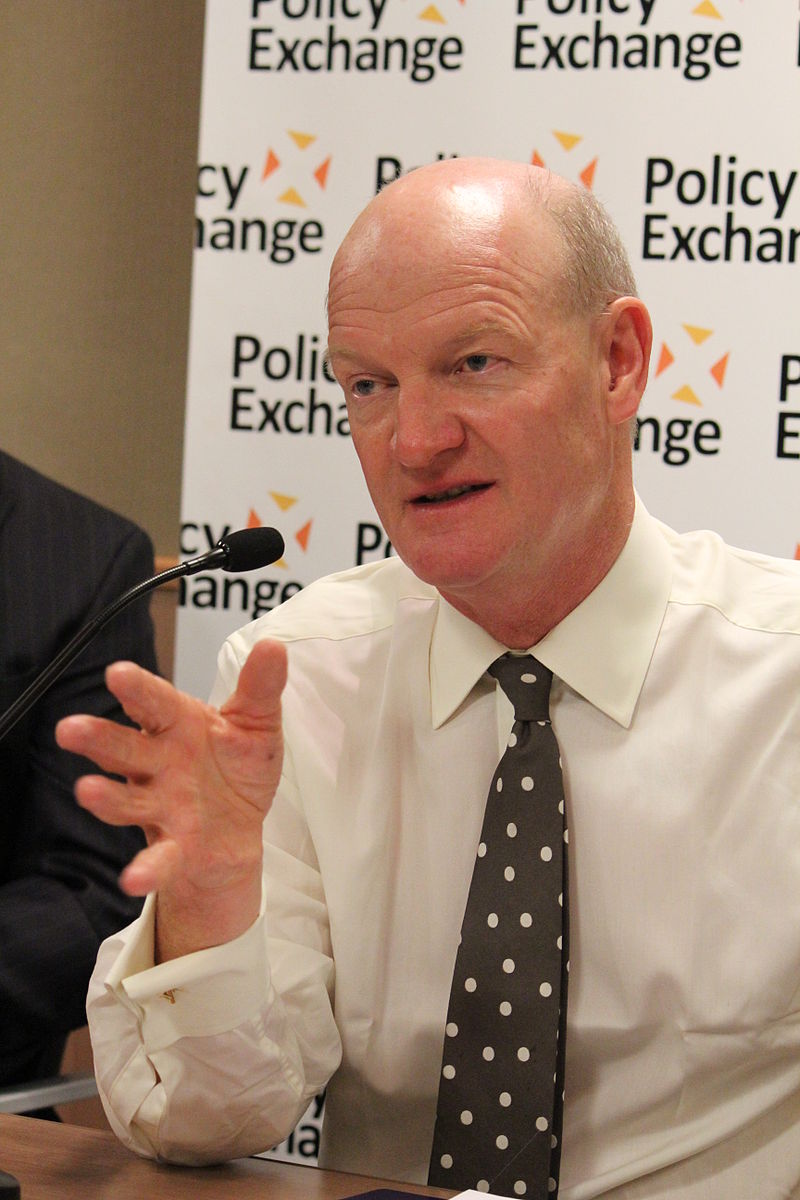
    Below is the text of the speech made in the House of Commons by the then Home Secretary, David Blunkett, on 13th February 2003 on airport security.

    Since Tuesday, there has been an enhanced level of security throughout the capital. As the Metropolitan police said in its statement, which was made on behalf of all those engaged in the operation, this was likely to be most visible at Heathrow airport. At the request of the operational services, it was agreed that, as in the past, the armed services could be called on for preventive and protective measures.

    It may help the House if I set the events of this week in the context of what was said in my statement of 7 November, and if I recall key points. As I made clear, we face a real and serious threat. We know that al-Qaeda will try to inflict loss of human life and damage upon the United Kingdom. That is why we have explicitly pointed to some of the most obvious risks, such as to transport infrastructure, and why the Government have taken a range of measures to improve public protection. In doing so, we have been mindful of the importance both of keeping the House informed, and of keeping continuity of operational policing and security measures.

    The House will forgive me if I quote the most relevant passages of the statement of 7 November. I said:

    “Aviation security measures remain at an enhanced level following the attacks on September 11th and the government keeps these measures under constant review. From time to time additional protective steps are being taken, and will continue to be taken as the situation demands.”

    The statement continued:

    “Where threats are specific, we seek to thwart them. Where they are general, we seek to analyse them, and take whatever responses we believe to be necessary to ensure the protection of the public.”

    This is precisely what we have done this week, and will need to do from time to time in the future. If the situation were to change, I would inform the House. If there are specific incidents-as tragically occurred in January, with the death of Detective Constable Oake-I will come back to the House. However, I do not believe that it is responsible to provide a running public commentary from the Dispatch Box on every end and turn-any more than previous Governments did during the past 30 years, when facing the threat from Irish terrorism. As with those Governments, our view is that we must do nothing to undermine the work of the police and the security services. We have to make fine judgments, which must ensure the safety of sources of information. The terrorists must not be able to assess what we know and how we know it.

    We must give the public the information that they need to protect themselves and others. We did precisely that with the statement last Tuesday morning. However, we must also avoid frightening people unnecessarily or causing the sort of economic and social damage that does the work of the terrorists for them. The public must be alert but not alarmed. That is why I have consistently-and again this week-facilitated confidential briefings for the shadow Home Secretary and the Liberal Democrat spokesman.

    Finally, I again pay tribute to the work of our police, security and armed services. We owe them our deepest gratitude for the continuing vigilance, courage and professionalism that they have shown.