Tag: 2001

  • Queen Elizabeth II – 2001 Christmas Broadcast

    Queen Elizabeth II – 2001 Christmas Broadcast

    The Christmas Broadcast made by HM Queen Elizabeth II on 25 December 2001.

    The year 2001 saw large-scale terrorist attacks on New York and Washington, killing around 3,000 people, the outbreak of foot-and-mouth disease in the UK’s farming community, and famine in Sudan. The Queen’s Christmas Broadcast for that year stressed the importance of communities working to respond to problems and disasters together.

    For many people all over the world, the year 2001 seems to have brought them more than their fair share of trials and disasters.

    There have been storms and droughts as well as epidemics and famine. And this country has not been spared, with the floods this time last year, and Foot and Mouth, which has had such devastating consequences for our farmers and rural communities.

    They and others whose livelihoods have been affected continue to suffer hardship and anxiety long after the newspaper headlines have moved on.

    But whilst many of these events were of natural origin, it was the human conflicts and the wanton acts of crime and terror against fellow human beings which have so appalled us all.

    The terrorist outrages in the United States last September brought home to us the pain and grief of ordinary people the world over who find themselves innocently caught up in such evil.

    During the following days we struggled to find ways of expressing our horror at what had happened. As so often in our lives at times of tragedy – just as on occasions of celebration and thanksgiving – we look to the Church to bring us together as a nation or as a community in commemoration and tribute.

    It is to the Church that we turn to give meaning to these moments of intense human experience through prayer, symbol and ceremony.

    In these circumstances so many of us, whatever our religion, need our faith more than ever to sustain and guide us. Every one of us needs to believe in the value of all that is good and honest; we need to let this belief drive and influence our actions.

    All the major faiths tell us to give support and hope to others in distress. We in this country have tried to bring comfort to all those who were bereaved, or who suffered loss or injury in September’s tragic events through those moving services at St Paul’s and more recently at Westminster Abbey.

    On these occasions and during the countless other acts of worship during this past year, we came together as a community – of relations, friends and neighbours – to draw strength in troubled times from those around us.

    I believe that strong and open communities matter both in good times as well as bad. Certainly they provide a way of helping one another. I would like to pay tribute to so many of you who work selflessly for others in your neighbourhood needing care and support.

    Communities also give us an important sense of belonging, which is a compelling need in all of us. We all enjoy moments of great happiness and suffer times of profound sadness; the happiness is heightened, the sadness softened when it is shared.

    But there is more than that. A sense of belonging to a group, which has in common the same desire for a fair and ordered society, helps to overcome differences and misunderstanding by reducing prejudice, ignorance and fear.

    We all have something to learn from one another, whatever our faith – be it Christian or Jewish, Muslim, Buddhist, Hindu or Sikh – whatever our background, whether we be young or old, from town or countryside.

    This is an important lesson for us all during this festive season. For Christmas marks a moment to pause, to reflect and believe in the possibilities of rebirth and renewal.

    Christ’s birth in Bethlehem so long ago remains a powerful symbol of hope for a better future. After all the tribulations of this year, this is surely more relevant than ever.

    As we come together amongst family and friends and look forward to the coming year, I hope that in the months to come we shall be able to find ways of strengthening our own communities as a sure support and comfort to us all – whatever may lie ahead.

    May I, in this my fiftieth Christmas message to you, once again wish every one of you a very happy Christmas.

  • PRESS RELEASE : Brussels rebukes booming Ireland (2001)

    PRESS RELEASE : Brussels rebukes booming Ireland (2001)

    The press release issued by the Conservative Party on 13 February 2001.

    Brussels rebukes booming Ireland

    Irish rebuke by the European Commission gives valuable ammunition to British opponents of the euro

    OPPONENTS of British membership of the euro were given valuable ammunition yesterday when Ireland was “reprimanded” by the European Commission for not doing enough to control inflation and Gordon Brown was ticked off for allowing the British economy to move into the deficit.

    The Chancellor made plain that he would take no notice of the Commission’s strictures and continue to increase public investment, while the Irish Finance Minister, Charlie McCreevy, voiced anger at being told to change his plans for the booming Irish economy to prevent it overheating.

    Mr Brown called for a “sensible interpretation” of the growth and stability pact that lays down the rules for eurozone countries to keep their budgets broadly in balance.

    Countries inside the euro face sanctions if they allow their budget deficits to go beyond 3 per cent of GDP. Those outside can be mildly rebuked.

    Francis Maude, the Shadow Foreign Secretary, said the more that was learnt about the euro, the more the reasons to keep the pound mounted up. The Commission should not have the right to tell the Britain what levels of borrowing it should undertake, he said.

  • PRESS RELEASE : Byers – UK Fine Without Euro (2001)

    PRESS RELEASE : Byers – UK Fine Without Euro (2001)

    The press release issued by the Conservative Party on 19 February 2001.

    BYERS: UK FINE WITHOUT EURO

    Cabinet member concedes that Britain is thriving outside the single currency

    TRADE supremo Stephen Byers yesterday performed an incredible U-turn on the single currency.

    Mr Byers – the Cabinet’s euro cheerleader – admitted it will be virtually impossible to persuade voters to ditch the Pound because it would jeopardise the economy.

    And for the first time, the Trade Secretary declared there is no end in sight to the record number of foreign firms rushing to set up shop in Britain.

    His change of heart shows the massive doubts at the highest level of government over the crucial issue of signing up to the euro.

    And it is a bitter blow to pro-euro campaigners but a clear sign Tony Blair wants to kill off discussion about the Pound’s future in the run-up to the election.

    Mr Byers had warned that £51billion-a-year of foreign investment in Britain would dry up and millions of jobs would be at risk unless we scrapped the Pound.

    But yesterday Mr Byers said: “It is a great irony that in terms of convincing the British people to join the single currency, one of the problems is the success of our economy.

    “Because people will say we are the fourth biggest economy in the world, inflation is down at 1.8 per cent, interest rates are coming down, unemployment is down to the lowest it has been for 25 years. And people will say, ‘Are you going to put all that at risk by joining the single currency?’”

    He added: “I think it will be a hard campaign – if there is a campaign – when the tests are met, to persuade people joining the single currency is going to be in the long-term interests of our country.

    “I genuinely can’t see any sign of inward investment dropping off because of Britain not being in the euro. How long that will last for, I don’t know.”

  • Tony Blair – 2001 Press Conference with President George W Bush

    Tony Blair – 2001 Press Conference with President George W Bush

    The press conference between Tony Blair and George W Bush at RAF Halton on 19 July 2001.

    PRIME MINISTER BLAIR:

    Good evening, everyone. First of all, can I say how delighted I am to have President Bush here — not just here in Britain, but also here staying with us, and Laura, tonight at Chequers. And we’re looking very much forward to hosting them. And I think it is yet another example of the strength of the relationship between our two countries. It is a very strong relationship, a very special one.

    And I know in the discussions we’ve had we’ve ranged over many issues. Obviously, we started with the discussion of the upcoming G-7/G-8 Summit where we agreed how important it is that we get across the strong message to people, the summit is important because it allows us to discuss issues of real importance to people. I have no doubt that we’ll be with people there who will be making their protest, but I hope they do so peacefully, because some of the things we’re discussing at this summit in terms of global trade, in terms of the developing world, are things that are of huge importance not just to the most prosperous countries of the world, but also to some of the poorest countries of the world.

    We touched then on many other issues in the course of our discussion, including, obviously, missile defense, the issue of climate change, and a good discussion on Macedonia, Northern Ireland, the Middle East process, and of course, the state of the world economy.

    And I’m sure you want to ask some questions about those things. But, once again, can I say, George, how much I welcome you and Laura here, how delighted we are to see you. And I know and hope very much this will be a good evening for you, and set you up in the right frame of mind for the summit ahead. (Laughter.)

    PRESIDENT BUSH:

    Thank you. At Camp David, Tony told me that Chequers was a beautiful place, and he was telling the truth. And we’re glad — Laura and I are glad to be here. I appreciate so very much your hospitality and your friendship. America and Great Britain have got a special relationship. We both have pledged to keep the relationship as special as possible, and I’m convinced it will continue to be.

    I, too, look forward to going to Genoa. You know, I am — I can’t wait to make the case, along with Tony Blair, about the need for the world trade in freedom. And for those who want to shut down trade, I say this to them as clearly as I can: You’re hurting poor countries. For those who kind of use this opportunity to say the world should become isolationist, they’re condemning those who are poor to poverty. And we don’t accept it. We don’t accept it.

    We’ve got a lot in common between our countries, most of which are values. We value freedom. We value political dialogue. We value freedom of religion — freedom of the press, for that matter. But we also value the fact that we’re responsible nations, and that we realize there are some who are less fortunate than the great land Tony is the leader of, and our great land, as well.

    So at the summit, we’ll be talking about how best to help the continent of Africa deal with HIV/AIDS, how best to make sure our aid and loans work well, and how best to encourage the habits of freedom, starting with good education.

    So I’m looking forward to it, and I want to thank you for having Laura and me here. It’s a great joy to be in your beautiful country.

    PRIME MINISTER BLAIR:

    Right. We’ll take some questions. We’ll bring you a mike, I think.

    QUESTION:

    Could I ask you both about what you’ve been saying to each other about Northern Ireland, and particularly in view of the President’s comments, whether you feel it’s still possible that the package that Britain and Ireland are going to produce can be even-handed in the continued absence of the commissioning?President reviews the guard
    during his visit to Buckingham Palace July 19, 2001. White House photo
    by Paul Morse.

    And can I also ask you, Prime Minister Blair, about your thoughts on Jeffrey Archer, the former Deputy Chairman of the Tory Party and Conservative MP, starting a four-year sentence tonight for perjury and perverting the course of justice?

    PRIME MINISTER BLAIR:

    I’m afraid, Adam, on the second part, I’ve really got nothing to say on that.

    In respect to the first part, the package that we put to the parties will be balanced because it will deal with all the outstanding issues. It will deal with the issues of the stability of the institutions, how we get a normalized situation — we’ve reduced troop movements and the numbers of troops in Northern Ireland dramatically, but we want to do more — how we make sure, too, that we get a police service that all parts of the community in Northern Ireland can support.

    And then also there is the issue of the decommissioning, the putting beyond use of paramilitary weapons. And obviously there’s got to be action on all those fronts. And so we hope very much the people will respond positively. Because, as I often say to people, you only have to look at the situation in the Middle East to realize what happens when negotiation breaks down, when parties move apart from each other, and how quickly a situation that looked optimistic can become unstable and dangerous.

    And this — this Good Friday agreement, this peace process is the only hope for people in Northern Ireland. And the package has been put forward by ourselves and the Irish government together. And I hope people respond positively and realize that the future of generations of people in Northern Ireland depend on that positive response.

    PRESIDENT BUSH:

    We did spend a fair amount of time talking about Northern Ireland. I’ve reiterated to the Prime Minister that I stood ready to help in any way — a simple phone call away; if there’s anything I can do to help bring peace to the region, I will do so. And make no mistake about it, people shouldn’t have any doubt as to where my government stands. We stand strongly, side-by-side, with Britain when it comes to decommissioning in Northern Ireland.

    RON:

    Q A question for each of you, please. Mr. Prime Minister, does Saturday’s successful test of a antimissile system in the U.S. affect your opinion at all of President Bush’s plans to deploy a missile shield and scrap the ABM Treaty?

    And to you, Mr. President, as we speak, environmentalist ministers are meeting in Germany, trying to find a way to salvage the Kyoto global warming treaty. If the rest of the world proceeds without you, doesn’t it isolate your policies and your country?

    PRESIDENT BUSH:

    Ron’s very good about taking one question and converting it to two. (Laughter.)

    PRIME MINISTER BLAIR:

    Well, first of all, on the subject of missile defense, obviously, we await a specific proposal from the U.S. administration. But I want to say this and say it clearly, that I think President Bush is right to raise the issue of the proliferation of weapons of mass destruction and say that that needs new and imaginative solutions, because it’s a huge threat facing the whole of the world.

    Secondly, I think that that has got to, as I said at Camp David, has got to encompass defensive systems and offensive systems. And I think it’s again sensible and right that we sit down and work our way through that.

    And the third thing is that we welcome very much the approach that President Bush and the administration have taken to consulting allies, and also making it clear that they wish to have a dialogue and a partnership with Russia about this issue.

    And I think that in combination those things are bringing about a situation in which we can have a sensible and rational debate about an issue that is of fundamental importance facing the world. So I hope that in that spirit, you know, we will carry forward the dialogue that we have achieved so far.

    PRESIDENT BUSH:

    Let me comment on that, and then I’ll comment on your other question. The thing I appreciate about the Prime Minister is that he’s willing to think anew as we head into the future. It’s hard for any country to commit to vague notions. But there are some leaders who just out of hand reject any willingness to think differently about security. And Prime Minister Blair is not that way. He’s been very forthcoming. He’s had great questions. He’s been more than willing to listen to the philosophy behind moving beyond a treaty that has codified a relationship that no longer exists.

    ABM Treaty codified a relationship between enemies. Russia is not our enemy. And as we head into the 21st century, we must think about new ways to keep the peace. And the Prime Minister has been very positive. You know, some people just reject new thought out of hand. And that’s certainly not the case. And as time develops, I will stay in touch — as our plans develop, I’ll stay in touch with Tony as to what’s going on. He’s been a great person with whom to consult on this issue.

    The United States is concerned about the emission of CO2. We share the goal of reduction of greenhouse gases. We will be, and are in the process — we’ll be presenting a strategy that may have different means than Kyoto of achieving the same goal. And we’re in the process of developing the strategy.

    People shouldn’t, just because I gave an honest assessment of Kyoto’s chances in the United States Senate and what it would mean to our economy, should not think that we don’t share the same goal. We do. We want to reduce greenhouse gases. Ours is a large economy, generating — we used to generate more wealth than we are today, and as a result, we do contribute greenhouse gases to the atmosphere. And so we’re concerned about it.

    But first things first, as far as I’m concerned. Our strategy must make sure working people in America aren’t thrown out of work. My job is to represent my country. And I’m going to do so in a way that keeps in mind the ability for people to find work and for our nation to be prosperous. And I believe economic growth and sound environmental policy can go hand in hand.

    Mr. Prime Minister, as I assured you, I will come to you with a strategy that conforms to the goals of Kyoto and one that is — that I hope people understand makes sense for our country.

    QUESTION:

    Mr. President, given the very strong relationship which you say exists between yourself and Tony Blair, between Britain and the United States, are you endangering that special, unique, close relationship because Mr. Blair wants to be a bridge between Europe and the United States, and yet, you don’t seem to be offering very much to help narrow the gulf which seems to be opening up between Europe and the United States on key issues?

    PRESIDENT BUSH:

    I will let Tony Blair speak to how he feels my relationship with Europe — I’m not going to — you’ll say my answer is not very objective, but, frankly, after my last trip here, I think the European leaders got to know me and realize that our country will be engaged with Europe in all aspects.

    In the Balkans, I made it clear, we came in together and we’re going to leave together. When it comes to trade, I made it clear that we’re a strong trading partner, and we’ve got to work hard to reduce barriers that prevent us from trading freely. When it comes to defenses within NATO, we’re more than willing to do our commitment.

    And I appreciate Tony’s friendship. I think people will find out that I’m plenty capable of conducting foreign policy for the United States in a way that reflects positively on my nation. And I’m glad to be back in Europe. I look forward to a frank discussion in Genoa. And I’m confident that we’ll find areas to work together on. When we disagree, we’ll do so in a respectful way.

    PRIME MINISTER BLAIR:

    Well, I would just like to add a word on that, if I could, James. First of all, I think that the way the President came to Europe and to Gothenburg and made his presentation impressed everybody who was there. I thought it was a highly successful visit.

    And, of course, there may be differences of the minute, for example, over Kyoto — though, again, I think it is helpful that the United States is saying, look, this is not what we can agree to, but nonetheless, we agree with the aim, we agree with the objectives, and there are proposals that we will make as to how we can get there. Now, you know, we’ve had a very strong position in favor of Kyoto. That is our position, obviously. But the fact is that dialogue there is extremely important.

    But, you know, on a whole range of issues, Europe and America and Britain and America stand together. We’re doing so in the Balkans. We’re doing so trying to sort out the problems of Macedonia. We’re doing so on the issue of world trade. We’re going to do so again on issues like Africa and global health and debt. And where we’re trying to go to the G-7/G-8, and present to the world an agenda for better and more free trade, for help for the poorest nations of the world, for stability in the world economy, which is of dramatic importance not just to our countries, not just to Europe and America, but to the whole of the world.

    This is a passionate belief I have that I held in theory when I was an opposition leader, and has strengthened in practice over the last few years that I’ve been Prime Minister. And that is not merely, is the relationship between Britain and America key — and we are and always will be key allies — but when Europe and America stand together, and when they approach problems in a sensible and serious way and realize that what unites them is infinitely more important than what divides them, then the world is a better, more stable, more prosperous place. When we fall out and diverge, and when people try and put obstacles in the way of that partnership, then the only people rejoicing are the bad guys.

    That is my basic view after these years. And just to make one other point. Since this administration has come to power, on the issue of trade, in particular, we have seen big steps forward in the relationship between Europe and America. These are the important things, as well. There’s a whole range of issues that I was dealing with a couple of years ago which were tough issues here that we’ve got resolved. So I think it’s against that background that we make these judgments.

    QUESTION:

    Mr. President, will you be urging your G-7 partners to do more to bring major economies out of the doldrums? And will you heed the call of U.S. business and labor groups who urge you to discuss negative effects of the strong U.S. dollar in Genoa?

    And, Prime Minister Blair, I’d like your views also on whether Europe is doing all it can to stimulate the global economy.

    PRESIDENT BUSH:

    Well, one of the things I’ll do, Randy, is to share with my colleagues the successes we’ve had at cutting taxes, as well as holding the line on spending. Let me say this — successes we’ve had so far in holding the line on spending. The President is given a veto for a reason, Mr. Prime Minister, and that’s to hold the line on spending. As well as to assure them that our Fed is going to continue to watch our economy very carefully.

    The Federal Reserve is independent from our government, but nevertheless, Mr. Greenspan is sending signals that he’s concerned about the state of our economy. In other words, we’re doing everything we can to, within our own borders, to deal with an economic slowdown. As for the dollar, the market needs to determine the price of the dollar.

    There’s all kinds of folks in our country insisting the dollar be this way or the dollar be that way. The best way to determine the price of the dollar is to let the market determine that price. And that’s my message to business, labor, anybody else who wants our government to intercede in the market.

    PRIME MINISTER BLAIR:

    Well, just shortly on the question of the European economy, obviously, we want to see the European economy strengthen. I think the — quite apart from the impact of the world economy, particularly the U.S. economy, on Europe is the whole issue of economic reform in Europe.

    We now — one of the big changes in the direction of European economic policy over the past couple of years has been that every year now — and next year it will be in Barcelona in March — we hold an annual summit specifically on the issue of economic reform, in order that Europe should be not a fortress Europe, but should be a Europe that is open, competitive, not just within Europe, with the rest of the world.

    Now, I think we’ve still got a lot of structural change to get through in Europe. And certainly we will be raising this obviously in the G-7/G-8, but within the European Union, as well. It’s important that we make big steps forward on that reform agenda, since whatever the state of the world economy, some of the rigidities we still have within our own economies have to be eliminated.

    QUESTION

    Prime Minister, could you tell us whether you support President Bush’s wish to set aside or get rid of the ABM Treaty? And for President Bush, could you tell us whether it is likely that you’ll want to upgrade U.S. radar stations in the north of England for your missile defenses?

    PRIME MINISTER BLAIR:

    Well, in respect to the first part, as I said a moment or two ago, we welcome very much the approach the U.S. administration has taken, which is to say, look, the world has moved on; let us look at what is the right framework for today, and let us do that in close consultation and dialogue with Russia, since it’s a treaty between these two countries. And I think that is the right approach to take.

    PRESIDENT BUSH:

    I’m absolutely convinced we need to move beyond the ABM Treaty, and will continue my dialogue with President Putin in a couple days time. It is important for him to know, once again, to hear me say once again, Russia is not the enemy of the United States. There is no need for us to live under a treaty that codified a period of time in which the world was divided into armed camps. It’s time to work together to address the new security threats that we all face.

    And those threats just aren’t missiles, or weapons of mass destruction in the hands of untrustworthy countries. Cyberterrorism is a threat, and we need to work on that together. There are all kinds of threats that freedom-loving people will face in the near future. And I look forward to discussing all those threats with President Putin, as I have with Tony Blair.

    It’s premature to determine how best to track missiles under a new strategic framework. So, to answer your question about upgrading radars in Britain or in America or anywhere else, it is too early to determine. The problem we face under the current system is that it’s impossible to do enough research and development to determine what will work. Therein lies part of the dilemma for the Prime Minister. He said, what do you want me to support? What are you proposing? And what I’m first proposing to Mr. Putin is that we move beyond the treaty so that we can figure out what does work.

    And I want to remind you all that he was the leader early on who said that the new threats of the 21st century will require theater-based systems that will be able to intercept missiles on launch. Mr. Putin said that. Of course, that’s what I was saying in the course of the campaign, which led me to believe that there was some common ground. And that’s the common ground on which we’re exploring moving beyond the ABM Treaty. And I look forward to reporting back how the conversations go here pretty soon to my friend Tony Blair.

    JOHN ROBERTS

    Q I have a three-part question for you, Mr. President, and a one-part question for you, Prime Minister Blair.

    PRESIDENT BUSH:

    Wait a minute, that’s four questions.

    Q Well, no, it’s essentially one question

    PRESIDENT BUSH:

    Okay, good.

    Q — in three parts. (Laughter.) I’m wondering, sir, how it is that’s it’s taking you so long to make a decision on whether or not to continue embryonic stem cell research. What is the basis of the this compromise that we’ve heard about? And now that Senator Frist has joined Senator Hatch and former Reaganites in supporting a continuation of funding for embryonic stem cell research, do you believe you now have enough political cover on the right to make a decision in the affirmative?

    And, Prime Minister Blair, as some U.S. laboratories, in anticipation of a negative decision, have started the process to move to Great Britain, I’d like to know your position on embryonic stem cell research in the context of the global advancement of science.

    PRESIDENT BUSH:

    I’ll start.

    PRIME MINISTER BLAIR:

    You’re welcome. (Laughter.)

    PRESIDENT BUSH:

    John, this is a very serious issue that has got a lot of ramifications to it, and I’m going to take my time because I want to hear all sides. I want to fully understand the opportunities and to fully think through the dilemmas.

    And so I will make an announcement in due course, when I’m ready. And it doesn’t matter who is on what side, as far as I’m concerned. This is a decision I’ll make. And somehow to imply that this is a political decision is — I guess either doesn’t understand how I — somebody doesn’t understand how I think, or doesn’t understand the full consequence of the issue. This is way beyond politics.

    This is an issue that speaks to morality and science, and the juxtaposition of the both. And the American people deserve a President who will listen to people and to make a serious, thoughtful judgment on this complex issue. And that’s precisely how I’m going to handle it.

    PRIME MINISTER BLAIR:

    If you’ll forgive me, John, I’m not going to get into any of the debates that are happening in your country. We have made our decision here, as you know and as your question implied. The only thing I would say to you about this issue is that it is an extraordinarily difficult and sensitive question for people. And I think, certainly, the best way of resolving it is for people on whatever side of the argument they are to realize that the people on the opposite side aren’t necessarily badly intentioned or badly motivated. They’re just in an immensely difficult situation, taking a different perspective.

    I think if people approach the question with that type of goodwill even towards people with whom they profoundly disagree, then I think the answers are, if not easier to find, then they’re easier to explain. But, as I say, we took opposition here, but your decision is for the President and people in the United States.

    PRESIDENT BUSH:

    I was wondering if anybody has got an extra Pepsodent? (Laughter.) Get it?

    PRIME MINISTER BLAIR:

    Okay. Thanks a lot.
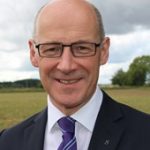
  • John Swinney – 2001 Speech for Election as First Minister

    John Swinney – 2001 Speech for Election as First Minister

    The speech made by John Swinney in the Scottish Parliament on 22 November 2001.

    We meet this afternoon to elect a new first Minister, for the third time in the short life of this Parliament.

    The first occasion was a credit to Scotland – an exchange of ideas that resulted, perhaps in the expected – but which also enhanced our fledgling democracy.

    The second occasion was a result of a tragedy – the untimely death of Donald Dewar – who, with others from his party, from ours, from the Liberal Democrats and from wider Scottish life, had worked to establish this Parliament and give our nation a fresh start.

    This third occasion is the result of a farce – a farce inflicted upon Scotland and its Parliament by the Labour party and by nobody else – the party that now, without any democratic process, seeks to foist its unelected leader upon our country. The party that promotes its own, by making cronyism a way of life, and which always lets Scotland down.

    This afternoon that farce may be carried to its illogical conclusion. The Liberal Democrats, in their usual Pavlovian response to their Labour masters, apparently intend to dutifully bring into office a Labour machine politician who represents everything the Liberals claim not to represent.

    Labour has failed the democratic test. The Scottish Parliament must now do what Labour has failed to do.

    This Parliament must exercise democratic scrutiny – and I am proud to set out my candidacy on behalf of a party committed to a democratic, fair and prosperous Scotland.

    A party that always puts the interests of the Scottish people first.

    A party that can comfortably shelter those who are disgusted by the institutional cronyism of the Labour Party and ashamed at what it has become.

    And I am proud to represent a party that recognises that if we want to create that democratic, fair and prosperous Scotland we must have the normal powers of a normal Independent Parliament.

    Presiding Officer, this Parliament is a stepping stone to freedom. And this party will help our nation cross over the murky swamp of Labour Scotland, into the bright and clear air of an independent Scotland.

    There is a job of work to be done to start that process. Let me tell this chamber how I will go about doing that job.

    Scotland needs reform of its public services as well as reform of its public servants.

    Those two reforms are clearly linked. We must reform the whole system of public appointments, and the bill brought forward by my colleague Alex Neil is the key that will unlock the door to openness and accountability. I challenge each candidate for the post of First Minister to echo my support for that bill. Whilst reducing the power of Labour’s quango state we will also improve the calibre of those that serve the public. These appointments should be made on behalf of the public by a Scottish government – not appointments made on behalf of Labour, by Labour.

    And I also challenge each candidate to echo my party’s support for root and branch reform of local government.

    The present state of local government in Scotland is a monument to Labour institutional cronyism. Any system that rewards a party with less than half the vote with 90% of the seats – and all of the power – is a system whose time has passed in this democratic age. To defend it is to defend the indefensible, but Labour members here and at Westminster are lining up to defend it.

    We could change that system today. My election as First Minster would usher in immediate legislation to ensure that the local elections in 2003 were held under a new system. That legislation is already being drafted in the name of my colleague Tricia Marwick. All it needs now is the votes of this chamber.

    That promise should attract Liberal votes – but of course the Liberals have deserted the principle of fair votes in favour of the patronage exercised by means of unfair elections. No wonder they do not even have the courage to put up a candidate today.

    They are no longer a party in this parliament – they are a wholly owned subsidiary of whoever can give them the most jobs and the best promises.

    But I warn the Liberals today – you need a long spoon to sup with New Labour. You are in for a disappointing journey to PR in local government: a long, tortuous journey in which meetings to arrange timetables to arrange meetings will be the order of the day!

    We need reform of our public servants. And with it we need reform of our public services.

    Delivering public services and building public trust: those are my priorities.

    A society shorn of cronyism will be a society that can focus on the real needs of Scotland.

    It will be a society in which we can prioritise public investment in our struggling health and education services. We will do so by using not for profit trusts. We reject the discredited and expensive Tory-inspired Private Finance Initiative that puts money from our classrooms and hospitals into the pockets of private financiers.

    We shall do so by a radical programme of reform in Education, reducing class sizes and freeing up teachers to teach.

    We shall do so by investing in health so that our cancer services are the best in the world, not the worst in Europe.

    We shall do so by protecting our environment by never, ever allowing a London government to foist nuclear power stations on Scotland.

    And we shall do so by giving this Parliament the financial independence it needs to deliver the quality public services the people of Scotland rightfully expect.

    We cannot allow free personal care for Scotland’s elderly people to be held-up because of a backroom rammy over cash between Labour ministers in London and Labour ministers in Edinburgh.

    Presiding Officer,

    If the Chamber today selects the Labour nominee for this post, then those who vote in that way will be condoning massive abuses of power over generations. They will be wiping from their memories the images of Monklands, of Glasgow City Council, of Govan, of Paisley and Renfrew, of scandal after scandal and deceit after deceit. They will be accepting that the leadership of our nation is something to be traded behind closed doors within a party bloated with arrogance and power and forgetful of where it has come from.

    It is time for this Parliament to assert itself.

    It is time for Scotland to assert itself. To look to its future – a future that demands a government and a First Minister standing up for Scotland, not fighting for themselves.

    I ask the Chamber today to support my nomination.

    But more importantly, Presiding Officer, I ask Scotland to support a vision of bright dreams for the future, not the old nightmares of the past.

  • Tony Blair – 2001 Doorstep Interview During Visit of President Musharraf

    Tony Blair – 2001 Doorstep Interview During Visit of President Musharraf

    The doorstep interview at Downing Street with Tony Blair, the then Prime Minister, during the visit of President Musharraf on 9 November 2001.

    PRIME MINISTER

    First of all, can I welcome President Musharraf here in Downing Street, and say how pleased we are to see you here, and to thank you once again for your strong and courageous support of the coalition against international terrorism, and to say how much we admire the stand that Pakistan has taken and to say, I think in particular, that we understand the difficulties that that has posed for you, and you can be assured of our complete and total support in the development of Pakistan in the future. And as you know there have been both initiatives taken both at a bilateral level between Britain and Pakistan, but also at a European level, and at an international level as well. We also know that the humanitarian problems have caused you difficulties as well, and as I said when we met before in Pakistan, and I will repeat to you again, Mr President, that we will do everything we can to help in those as well.

    The purpose of the campaign in Afghanistan, as we know, is to close down that terrorist network there, to make sure that the extremists can no longer use Afghanistan as a training ground for exporting extremism around the world, and we are acutely aware of the fact that any successor regime, to the regime headed by Mullah Omar at the moment, has to be a broad-based regime, it has to include the Pushtun element, it has to be one representative, in other words, of all the different groupings, it has to take account of the need for stability in the region, and it has to be able, in concert with the international community, of providing for the reconstruction of Afghanistan for the future. And the aim which I am sure we share, and the vision which I am sure we would both endorse, is of an Afghanistan that is a stable partner in the region, that is a government representative of all the different people and groupings within Afghanistan, and of an Afghanistan that as a country dependent on the resources and intelligence and creativity of its people for its prosperity, rather than the drugs trade or the various factional in-fighting that has characterised the government of Afghanistan over these past years, and in all those endeavours we need Pakistan as a strong partner. We appreciate well that this cannot be achieved without it.

    So, Sir, thank you very much for your support and your help and once again let me repeat our very warm welcome to you here.

    PRESIDENT MUSHARRAF

    Thank you very much. Let me say it is a great pleasure for me to have received the Prime Minister in Pakistan some days back and then for me to come here now and to have interacted with the Prime Minister. It was a special pleasure and satisfaction to see that we have total unanimity of views as far as the issue of addressing terrorism and addressing the situation in Afghanistan is concerned.

    We discussed the situation in its entirety, we discussed that there is a requirement of addressing the triple issue of the military aspect, and then the political aspects in a futuristic way, about the political dispensation that is required in Afghanistan and also the United Nations, UNHCR humanitarian and rehabilitation effort required in Afghanistan.

    It gives me a lot of satisfaction also to see that there is a concern and understanding of the realities and the difficulties that Pakistan faces. I am extremely grateful to the Prime Minister for showing concern towards Pakistan and Pakistan’s problems. I am sure that with the co-operation that we are showing with each other, being part of the coalition fighting against terrorism, I am sure we will keep moving forward. I will take this opportunity also of stating that Pakistan has taken a very deliberate, considered decision to be a part of the coalition. And let me say with total conviction that we will remain a part of the coalition till the attainment of the strategic objectives that we have set for ourselves. And within this I have been saying that we are for a short and targeted military campaign. One does understand that the duration of the campaign is very much relative to the attainment of strategic objectives. But however one hopes that these strategic objectives are achieved as fast as possible.

    I would also like to touch on one issue and that is a domestic issue. Pakistan is a moderate Islamic country. The opposition to the decision that we have taken in Pakistan is by a very small minority. And may I also add that the Pakistani community in Britain also is a moderate Islamic community. I am very sure that they understand that Pakistan’s interest and the rationale behind Pakistan’s participation in the coalition in its fight against terrorism and in the action in Afghanistan. I am very sure that the community will understand the realities on the ground and they are supportive of the world unity and also the UN Security Council decision and decisions in support of fighting terrorism. Thank you very much.

    QUESTION

    A question for you, Prime Minister. As much as the President of Pakistan says that the action is going to be short, swift and targeted, but it is an extended one, and the economic difficulties which Pakistan is facing right now, were they discussed in your meeting? And of course, keeping in view the President’s position, the continued bombing of the coalition during the month of Ramadan, the chances are that the backlash will fall on the President from the extremist Islamic elements and of course possibly the Islamic bloc.

    PRIME MINISTER

    Well, first of course the economic difficulties of Pakistan were discussed, although I think there is a very great sense in the international community, quite apart, incidentally, from the support that Pakistan has given to the coalition against international terrorism, there is a great sense that Pakistan is making moves forward on the economic front now. The completion of the first phase of the IMF Programme was immensely important, and it is for that reason that I think the international community can respond, quite apart from the interests of the coalition, can respond positively to Pakistan. And in respect of the campaign itself, I would entirely agree with what the President has just said. We want this campaign brought to a conclusion as swiftly as possible, but it has to be to a successful conclusion, in other words with the attainment of our objectives. And of course we have to be aware of the sensitivities of Ramadan, and are aware of the sensitivities of Ramadan, though of course the Taliban will continue to fight during that time. And we must therefore take account, as we pursue our campaign, of those sensitivities. But in the end I think everyone understands that the campaign has to continue, ultimately, until the objectives are secured, but it is our desire to work as closely as possible with everyone, including strategic partners like Pakistan, to make sure that that campaign is successful and as swift as possible.

    QUESTION

    You are taking [measures] to cut terrorism in Afghanistan but what steps do you want to take for targeting terrorism in occupied Kashmir where 70,000 have been killed in the last 10-12 years.

    PRIME MINISTER

    I think as I said when I was asked similar questions in Pakistan, we understand the huge concern there is over Kashmir. We want to do everything we possibly can to reduce the tension there. And I think that is the obligation on everyone, whether it is the international community, or India or Pakistan, and I am sure that we will.

    QUESTION

    Mr President, do you think it will be real mistake if the coalition continues with bombing through Ramadan as indeed it now appears that they will do?

    PRESIDENT MUSHARRAF

    One would certainly hope that the military operation comes to an end as fast as possible as the Prime Minister has said as swiftly as possible before the month of Ramadan. But beyond that I would just like to say that the sensitivities of the month of Ramadan have to be considered in the decision of the military campaign.

    QUESTION

    General Musharraf, you are military man. You know Afghanistan well. You say you want this campaign to be short and targeted. Have you seen any evidence to suggest that it can be, or will be? Do you see any evidence to suggest that there is military progress being made in Afghanistan? And if I could also ask the Prime Minister. You say you are pleased to see General Musharraf, but it is true to say that 2-3 months ago he wouldn’t have been here. He is now our friend, but he was certainly not regarded as such before, and some people see that as a sign of a kind of cynicism in the campaign. What do you say to them?

    PRIME MINISTER

    He gets two questions.

    PRESIDENT MUSHARRAF

    The first part regarding the campaign being short, whether I am seeing any indications of that. Frankly, from a military point of view, when we think of the strategic objectives, the strategic objective in magnitude is not such that it will take a long time to achieve. What is missing is accurate intelligence which is delaying the issue. With an accurate availability of accurate intelligence the physical attainment of the objective could be done in a very short time. So therefore the moment that accurate intelligence is available, I am sure that the operation can be curtailed to the minimum.

    PRIME MINISTER

    I agree very much with that, and that is exactly what we are working on. But if I could just say to you about our relationship with Pakistan. I think it is worth pointing out that even before the 11th of September, the first district elections had been held, the process of the road map to democracy had been outlined by President Musharraf and there is a real sense in which people, as I say, quite apart from the coalition and the terrible events of the 11th of September, recognise the strides that Pakistan is making at the moment. Now it is of course the case that the aftermath of 11th September has brought us together in a different way. But I think you would be wrong in suggesting that nothing was moving in our relationship before that time.

  • Tony Blair – 2001 Speech at Lord Mayor’s Banquet

    Tony Blair – 2001 Speech at Lord Mayor’s Banquet

    The speech made by Tony Blair, the then Prime Minister, on 12 November 2001.

    First let us offer our deep condolences and sympathy yet again to the people of New York and to the families of the victims of the latest air tragedy. Our hearts go out to the brave people there who have been through so much and with such dignity and courage.

    Meanwhile, following the outrage of 11 September, we pursue those responsible for it in Afghanistan. It is clear the Taliban are unravelling. But they are not beaten yet or Al Qaida yet hunted down. We must continue until they are. We must use the territory gained in and around Mazar-e-Sharif to get supplies and food to refugees and the starving inside Afghanistan. Let us show we are as committed to alleviating human suffering as the Taliban are to creating it.

    After the conflict, we must make good our promise to help bring in a broad-based Afghan government, representative of all peoples, including the Pushtoon and enable the reconstruction of that sorry land to take place.

    This mission is important in all its aspects, military, humanitarian and diplomatic.

    The terrible events of 11 September have made the case for engagement not isolationism as the only serious foreign policy on offer.

    The atrocities in New York and Washington were the work of evil men. Men who distorted and dishonoured the message of one of the world’s great religions and civilisations. Their aim was to stimulate militant fundamentalism; to separate the United States from its allies; and to bring our way of life and our economies to their knees.

    In those objectives they have already failed.

    But one illusion has been shattered on 11 September: that we can have the good life of the West irrespective of the state of the rest of the world.

    Once chaos and strife have got a grip on a region or a country trouble will soon be exported.

    Out of such regions and countries come humanitarian tragedies; centres for trafficking in weapons, drugs and people; havens for criminal organisations; and sanctuaries for terrorists.

    After all it was a dismal camp in the foothills of Afghanistan that gave birth to the murderous assault on the sparkling heart of New York’s financial centre.

    The war against terrorism is not just a police action to root out the networks and those who protect them, although it is certainly that. It needs to be a series of political actions designed to remove the conditions under which such acts of evil can flourish and be tolerated. The dragon’s teeth are planted in the fertile soil of wrongs unrighted, of disputes left to fester for years or even decades, of failed states, of poverty and deprivation.

    In April 1999, at the height of the Kosovo crisis, I spoke in Chicago about a doctrine or idea of international community, where we took a more active and interventionist role in solving the world’s problems.

    I elaborated on this idea in my Leader’s speech this year in Brighton.

    Some say it’s Utopian; others that it is dangerous to think that we can resolve all these problems by ourselves.

    But the point I was making was simply that self-interest for a nation and the interests of the broader community are no longer in conflict. There are few problems from which we remain immune. In the war against terrorism the moralists and the realists are partners, not antagonists. The fact we can’t solve everything doesn’t mean we try to solve nothing.

    What is clear is that 11 September has not just given impetus and urgency to such solutions, it has opened the world up. Countries are revising their relations with others, pondering the opportunities for re-alignment. New alliances or deeper alliances are being fashioned, new world views formed. And it is all happening fast. There is a shortcut through normal diplomacy. So we should grasp the moment and move, not let our world slip back into rigidity. We need boldness, grip and follow through.

    The starting point is to make a leap of imagination from this grand hall and splendid banquet to the streets of the Arab world where bright, angry, disaffected young men – by no means always from poor families, but still with neither work nor prospects – seek outlets for their feelings of betrayal and frustration. They fall for dogmas that tell them to blame their troubles on a distant Satan, and gives their lives meaning by committing themselves to relentless struggle.

    We can add to that an extremist and perverted version of Islam which seeks to shoulder aside or overthrow moderate counsels; a failed state in Afghanistan pulled down by poverty and desperation, whose rulers have made common cause with mass murderers; accusations from the Arab world of double standards in the Middle East peace process; in Africa, grinding poverty, pandemic disease, a rash of failed states, where problems seldom leave their stain on one nation but spread to whole regions.

    More broadly we should work to develop inter-faith understanding. Already much is being done to bring the faiths together, like George Carey’s initiative on the World Faiths Development Dialogue. And who can forget the poignant scenes of reconciliation when the Pope went to pray at the Grand Omayyad Mosque in Damascus? Soon George and I hope to convene a seminar of scholars on furthering Christian/Muslim dialogue.

    Systematically in each case we should seek redress.

    The Middle East Peace Process must be re-started. We should contrive the first steps in mutual confidence and security on both sides, one of which would be action by the Palestinian Authority against suspected terrorists and Israel withdrawing fully from Area A. Then after those critical steps, we should reconvene proper negotiations based on two fixed principles: a viable Palestinian state; and the state of Israel accepted fully by its Arab neighbours. If Israel is to recognise that the Palestinians will have their own state, it is only right that the Arab world explicitly and clearly recognises Israel’s right to exist secure within its own borders. Everything else is negotiation and the sooner it starts, the better.

    On Iraq, the time has come for a new UN resolution to provide for the arms inspectors to return and for the Saddam-induced suffering of the Iraqi people to be ended.

    We should offer Syria, Iran and other nations in the same position a new relationship if they will work with us to end violence and promote a solution that is just for both Palestinians and Israelis and if they will join the international consensus on weapons of mass destruction. There can be a new beginning to their relations with the West. The opening is there now; I hope they will take it.

    These countries all have an interest, too, in fighting religious extremism. It is quite extraordinary that Usama Bin Laden should claim over the weekend that Afghanistan is the only Islamic nation in the world. His aim is clear: to Talibanize all Islamic countries around the world. The time has come for the voices of mainstream Islam to take on the extremists. This is not a battle we in the West can fight. We cannot impose our own models on very different societies. But we can help and we can offer support for the vast majority of decent Muslims in that battle. It needs to be made clear again and again that our quarrel is not with Islam but with extremism and fanaticism, whether it be Christian, Jewish, Hindu or Islam.

    In respect of Russia, we should mark the fact that in Afghanistan we have worked together; in the war against international terrorism, we stand together; and that both Russia and the US and EU have much to gain from us being partners. Central to that new relationship should be a change in Russia/NATO relations.

    In Africa, I hope that in the New Year we can put forward a new initiative to tackle emerging conflicts before they develop, and offer the help needed to develop their economies and allow them to provide good governance and democracy for their people; and that a plan for Africa will be agreed at the G7/8 Summit in Canada.

    Success in the talks to launch a new WTO round in Doha is vital. Seattle was a lost opportunity. The negotiations will be tough and with the Conference ending tomorrow, time is now running short. But at this time of economic uncertainty it is essential we agree on the agenda for a new trade round. Success means increased trade flows and rising living standards around the world. Failure would mean a retreat into protectionism and isolationism. All parties should show the necessary flexibility to achieve this.

    Closing down the terrorist network in Afghanistan will not be the end of terrorism. We need to find a way of dealing with weapons of mass destruction to prevent their proliferation both to states and to terrorist organisations. We, in the EU, should offer advice, training and equipment to the countries of central Asia to help them introduce the strongest possible controls on sensitive exports and we should consider increasing our present programmes of support for safe storage and secure destruction of sensitive nuclear and chemical materials.

    We are working hard to find a global solution to the problem of climate change and the agreement in Marrakesh shows that we can come together to tackle one of the most significant environmental challenges of today. We need to continue to improve international co-operation on poverty and the environment in the run up to the World Summit on Sustainable Development in Johannesburg next year.

    And if we are going to have a doctrine of international community we need to strengthen the UN as the body that helps put it into practice.

    In the UN we are lucky to have the leadership of a highly talented and reforming Secretary-General on the threshold of a new term of office. We need to back him in his reforms and give him the practical support he needs. For example, bringing to a close the long drawn out negotiations on UN Security Council reform so that it becomes truly representative and truly effective in its operation.

    In the aftermath of the disasters of the 1930s and the Second World War our predecessors took a number of fundamental courageous and far-reaching decisions. Above all they decided to find collective responses to the scourges of war and economic slump which individual national actions had done more to foment than to resolve. And they established a number of international structures and organisations to provide these collective responses – the UN, NATO, the IMF and the World Bank – that have lasted to this day.

    After the Cold War, despite the talk of a new world order, we failed to renew these institutions or create new ones. Perhaps the euphoria that accompanied the crumbling of the Soviet bloc reduced the incentive to take a hard and radical look at the conduct of international affairs. Now it is time to do so.

    As for Britain, we have much to offer and much to gain, in the changing world taking shape around us. Once again the vital role in foreign policy that our Armed Forces play has been demonstrated. They give us a standing which few can match and we should be very proud of them.

    I hope, too, we have buried the myth that Britain has to choose between being strong in Europe or strong with the United States. Afghanistan has shown vividly how the relationships reinforce each other; and that both the United States and our European partners value our role with the other. So let us play our full part in Europe not retreat to its margins; and let us proclaim our closeness to the United States and use it to bring Europe closer to America.

    The solidarity of our European partners in this present crisis has been total. It will remain so; and that is a real cause for hope.

    Let us in Britain use the strengths of our history – our place in Europe, our alliance with the United States, our traditional ties with the Arab world, India, China or the Commonwealth – to build a solid future of influence for our nation. As I found in South America earlier this year, people respect Britain and want us engaged. We should not disappoint them.

    Above all, I know the British people recognise the link between what happens in the outside world and what happens on our own streets in Britain. The 11 September was an attack on us all. Defeating those responsible is essential to our security; to economic confidence, so badly hit by terrorism; to the stability of our society, from the reduction of external threats down to the drugs trade – 90 per cent of the heroin in Britain originating in Afghanistan.

    Our jobs and living standards depend on confidence in our way of life. Today world events can lift or shatter that confidence. We have much to do at home. But now, more than ever before what we do abroad can affect our homeland. For years, you in the City know the impact of global markets. Now we see the impact of global politics. So let us seize the chance in this time, to make a difference. Future generations will thank us if we do; and not forgive us if we fail.

  • Tony Blair – 2001 Speech on Afghanistan

    Tony Blair – 2001 Speech on Afghanistan

    The speech made by Tony Blair, the then Prime Minister, on 13 November 2001.

    Good afternoon everyone. The military strategy aimed at defeating the Taliban is clearly succeeding. They are in disarray and retreat. However our job is not yet done by any means. We need urgently to put in place the next political and humanitarian moves that the changing military situation now permits. The speed of the Taliban retreat is a tribute to the skill and the professionalism of the coalition forces who have been engaged both in bombing from the air and in supporting and guiding the Northern Alliance on the ground. This has been a US-led operation and I would like to pay tribute to the leadership that President Bush has given. I would also, if I may, offer personal thanks to the British forces who have been engaged in this action.

    But whilst the military strategy is vindicated, and whilst we join of course in the celebrations of the people of Kabul and the other towns and villages from which the Taliban have fled, our forces know, and I know, that this is only setting the conditions in place for our objectives to be achieved. Osama bin Laden remains at large, so do his closest associates. The Taliban regime are not yet fully dislodged from oppressing the people of Afghanistan and shielding Al-Qu’eda. However that task will now be eased by the scale of defections taking place, the ground being gained, and the intelligence being gathered.

    In addition, however, two crucial things. First we need to step up now the humanitarian effort. The World Food Programme objective of 1,700 tons a day is being met. In fact at the present time it is being exceeded, but we need urgently to ensure that with Mazar-e-Sharif secured, we can get the food and aid to those that really need it. I have just spoken to Kofi Annan, the UN Secretary-General, on this issue. I told him that he would have Britain’s full support, practical and logistical, in ensuring that the humanitarian effort succeeds, but we both agreed of the urgent need to make sure that that food aid is actually delivered in with the shelter that people need.

    Secondly, of course, I have spoken to him about the requirement to push on with Mr Brahimi’s efforts to establish a broad-based government and successor to the Taliban regime, and that of course must include all the various elements in Afghanistan, including the Pushtun. That process is well advanced. It is only now, with the military direction so clear, that I think that we are in the right position to be able to bring together the various ethnic and other factions likely to be involved in the formation of any successor government. I believe that we can, therefore, make real progress towards the filling of the current power vacuum in Kabul, but we need a UN presence there as soon as possible, and we need obviously to make sure that we are making as quick progress as we possibly can on assembling all the different elements that need to go to make up that broad-based successor regime.

    And finally, I would simply say to the people of Afghanistan today, that this time we will not walk away from you. We have given commitments. We will honour those commitments, both on the humanitarian side and in terms of rebuilding Afghanistan. We are with you for the long term. You, the people, must agree your own government, and your own future, but we the coalition must give you the help and support that you need as you seek to rebuild your troubled country, and that support will be forthcoming.

    QUESTION

    Do you now believe that the Taliban are beaten, or do you believe that there is a regrouping going on in the South and that there is a lot more to be done on the ground before you can say that.

    PRIME MINISTER

    Well, they are clearly in retreat, and indeed in some places in a state of collapse, but it is too early to say that the objectives have been met. And that is why we need to press on, we need to make sure that we are engaging with any resistance that we find and at the present time, because it is changing literally on an hour by hour basis, the short answer is that we simply can’t be sure, but there is no doubt at all that there has been a fundamental change in the position of the Taliban regime, and you can see by the attitude and rejoicing, frankly, of the Afghan people, that this has been welcomed widely in many parts of Afghanistan.

    QUESTION

    Prime Minister, you and President Bush made it quite clear that you did not want the Northern Alliance to take Kabul. They appear to have ignored that. How confident are you that they will be prepared to play a minority role in a new broad-based government in Afghanistan.

    PRIME MINISTER

    Well, it is not that they ignored that. The situation in Kabul obviously changed when the Taliban left and there was no authority there in Kabul at all, but we have always made it clear, and we make it clear again, that the successor regime to the Taliban regime, led by Mullah Omar, has to be a broad-based regime. It has to include all the various ethnic groupings in Afghanistan, and that obviously must include the Pushtun element, so I think that is very clear and that indeed I believe is accepted by the Northern Alliance. Now of course it is the United Nations that has the authority to take this process forward and I think you will find from the next steps which are taken by Mr Brahimi, who is the UN envoy given the task of assembling people in order to discuss the post-Taliban government of Afghanistan, I think you will find that that is clearly understood.

    QUESTION

    Mr Blair, what more can you tell us about the involvement of British troops? What sort of scale that involvement was, perhaps. And also do you anticipate that British forces will be involved in any interim policing presence which may be necessary, or will that be Moslem nations such as Turkey.

    PRIME MINISTER

    We obviously have been intimately involved with the contact of the coalition campaign, and we certainly stand ready to help in any way that we can in the future. But I face the difficulty, I always do, in discussing what troops we might deploy and where. There are reasons of security, and there are also reasons of diplomacy why these things should be discussed with others first. But I can certainly tell you that the British forces, as you would expect, have acquitted themselves brilliantly in this, and in any other capacity that they may be used, I am sure they will do the same. But I simply can’t speculate on the details of that at the present time.

    QUESTION

    The reports from Kabul, apparently, that 2,000 people from the Northern Alliance have moved in to Kabul and that they say that they don’t want any interference from outside, and there are also reports from other sources of people within Kabul being massacred. Doesn’t this suggest that the military is now out of step with the diplomatic.

    PRIME MINISTER

    No, and I think you need to treat all these reports, frankly at the moment, with some caution. Of course it is a very difficult situation there, and it is changing, as I was saying a moment or two ago, literally hour by hour. But I think the broad outlines of the point the coalition has been making throughout are very, very clear, that we need to make sure that any successor government to the Taliban regime is broad-based. The UN obviously are going to be closely involved, and the other thing that I would say to you is that for us, and for the coalition, our objectives of course were to close down the entire terrorist network in Afghanistan. And those objectives, although they have been partially successful so far, although we have succeeded in them partially, we have not yet completed that task, and we need to make sure that we can. So there will be all sorts of reports coming out of Afghanistan at the moment, and I would wait until they are confirmed to see exactly what the situation.

    QUESTION

    What sanctions do we have over the Northern Alliance?

    PRIME MINISTER

    None.

    QUESTION

    Are you sure that if the Northern Alliance does indeed partake in this broad-based coalition allow you to have a say when they are clearly in Kabul, and there are people evidently saying that we won’t take orders from foreigners.

    PRIME MINISTER

    Well I think that throughout, the Northern Alliance have realised that their success, because after all this is a military situation that hasn’t started with the 11th of September, it was going on for many, many months, even years before then. It has changed dramatically in the last two months or so. Now that is because there has been a combination of the Northern Alliance forces, supported both by people on the ground from the coalition, and by bombing from the air. The basis on which that support was given was very clear, and that remains the case. And I think you will find as the situation progresses over these next few days, that everybody understands that the successor regime in Afghanistan has to be broad-based to be successful because there are large numbers of Pushtun people, particularly in the South of the country who have to be involved in any successor regime. And it is necessary also to make sure that any successor regime is a stable partner for the surrounding countries in the region. Now I believe that that is very clearly understood.

    QUESTION

    Prime Minister, are you still convinced that Osama bin Laden is in Afghanistan. And also, in light of the speed and surprising progress you have made, that you have a greater chance of either catching him or killing him.

    PRIME MINISTER

    We believe that he is still in Afghanistan, yes. And as for our ability to catch up with him, that has obviously increased as the power and authority of the Taliban regime that was shielding him is destroyed, but I can’t really say any more than that at this stage. Obviously, one of the reasons why as we said ? if you go back to the objectives we set right at the beginning. We set as our objectives, closing down the Al-Qu’eda terrorist network, indeed the entire terrorist network in Afghanistan, and bringing bin Laden and his associates to justice. We gave the Taliban a choice: you either help us in that, which the entire world community wants you to do, or you are treated as an enemy. They refused to yield up bin Laden, or the al-Qu’eda network ? Indeed they came closer together with them ? and that Taliban regime has now disintegrated. Obviously, therefore, we have a better chance with a different regime in place, of pursuing that primary objective, but it still remains to be achieved, and that is why I say to you that there is a new dimension now, and a new urgency given to the political and humanitarian moves. But the military campaign is not yet over until the objectives are fully secured.

  • Ann Widdecombe – 2001 Speech on Policing

    Below is the text of the speech made by Ann Widdecombe, the then Shadow Home Secretary, on 15 February 2001.

    Police officers tell me that they cannot do their job effectively. They joined the police to fight crime and catch criminals – and that is what the public want them to do. Instead, they spend hour upon hour filling in forms – and judging from letters to Police Review and surveys of individual forces, the police believe that most of the bureaucracy is unnecessary. The result is rock bottom morale, which the Chairman of the Police Federation says is the worst he has ever seen.

    The public want the police to police. So do we. The police must police.

    Forces up and down the country complain of being overwhelmed by the bureaucracy of the Best Value system introduced by this Government. To give you an idea of the order of magnitude, the Chief Constable of Lincolnshire has estimated that it costs £400,000, and in Norfolk £200,000. Today, I can announce that we will review Best Value with the aim of radically reforming, or, if necessary, abolishing the current exercise. No wonder a Chief Constable claims that forces are ‘sinking under a sea of targets and measures’. There are dozens of performance indicators from Best Value alone, before any others are taken into account. Surely we can create a more focused system.

    We agree with the police and the public that the police officers should be able to do their job. That’s why today we are putting forward proposals to let the police get on with policing.

    It is because of bureaucracy that child curfew orders and anti-social behaviour orders have been so unworkable and have failed.

    I have lost count of the number of times police have told me that they can spend up to five hours or more processing a single shoplifter through custody. That is a patent nonsense, and where that happens, the custody function must be reformed or removed.

    We will have a completely different approach to that of the present Government. We will put more police on the beat and make sure that the public have the reassurance of more visible policing. For example, our ‘Cops in Shops’ proposals mean that officers will be able to spend time doing their paperwork in the community – for example at special posts in local businesses – providing an increased police presence.

    We will also, in co-operation with the police, hold a root and branch review of police functions with a view to taking away non-essential work. The obvious example is escorting wide loads up motorways. But it isn’t just a question of what they need not do – it is also a question of making more efficient what they must do. For example, why should police officers waste hours and hours at courts without actually giving evidence?

    The police can only police if we set them free to do it, and if we really listen when they tell us that they have insufficient powers. Last year, we put forward proposals to strengthen the law against sex offenders which were first suggested by serving police officers. Some of these became law. Some did not. Conservatives will be tabling amendments to this year’s Criminal Justice Bill to give police powers that they have told us they need – on paedophiles who prey on children in internet chatrooms, and ensuring that the laws against opium dens also apply to crack houses.

    Cutting back on bureaucracy. Reversing Labour’s cuts in police numbers and getting more officers back out on the streets. Letting the police get on with policing and giving them the powers they need to do it. That’s common sense.

  • Michael Portillo – 2001 Speech on Taking 1 Million Pensioners Out of Taxation

    Below is the text of the speech made by Michael Portillo, the the Shadow Chancellor of the Exchequer, on 12 February 2001.

    Last week, we announced that the next Conservative Government would implement the most radical reform of the taxation on savings in a generation. Our proposals have since been widely welcomed. Those proposals help pensioners and we welcome that. But there are approximately 17 million savers, and about 4 million pensioners who pay tax, so actually the largest number of gainers from our savings tax change are younger people.

    Today I will explain an important measure to be implemented by the next Conservative Government directed particularly at pensioners that will ensure that they pay less tax than under Labour.

    Many of the reasons for reducing tax on pensioners spring from the same ideas which inspire our proposals on savings. We want to simplify the system. We want to give pensioners back their dignity. And we want to encourage people to do the right thing during their working lives, and to feel when they retire that they were rewarded for doing the right thing.

    We think it is better if pensioners are left with more of their own money to spend as they wish, rather than rely on Gordon Brown’s complicated means-tested benefits and credits which are paid for by the stealth taxes he’s imposed on the poorest in society.

    We want to make it worth people’s while to save and build up a pension fund during their working lives, because they can be confident that they won’t be penalised for doing so when they retire.

    We have already proposed to reform the rules governing the purchase of pension annuities, following the recommendations in the Oonagh McDonald Report. Once someone reaches 75, they currently have to use all of the money in their pension fund to purchase an annuity. For many pensioners, that represents a bad deal. So we think, instead, that they should just have to ensure that they have sufficient income to keep themselves independent of the state. They would be free to use the balance in their pension fund as they choose.

    But we also want to make the tax system simpler and fairer for older people by taking hundreds of thousands of the poorest taxpaying pensioners out of tax altogether.

    So today I can confirm that the next Conservative Government, at a cost of £350 million, will by 2003-04 take approximately 400,000 pensioners over the age of 75 out of tax, by increasing the Age-Related Personal Allowance by £2000. Pensioners who are over 75 and who have incomes between £9,570 and £17,000 will gain £440 a year from the plans.

    No-one will lose out from these proposals, but because the Additional Age Allowance is gradually tapered away as you move up the income scale, over-75s with an income in excess of £24,330 will not gain.

    Helping the over-75s is a good start. But we want to go further than that. So today I can announce that the next Conservative Government will increase personal allowances for the over 65s by £2,000 as well. This measure will take a further 600,000 pensioners out of tax completely at an additional cost of £600 million.

    In summary, therefore, we are proposing to take 1 million pensioners out of tax altogether at a cost of up to £ 950 million. Many more pensioners earning up to £24,000 will gain as much as £440 a year under our plans and pay about £8.50 a week less tax.

    Last week we announced that the vast majority of the 17 million households with savings income will be taken out of tax on their savings. This week, we announce the release of a million people from income tax altogether. These measures will generate enormous savings in the cost of government.

    As with our proposals for the changes to savings tax, these measures will be implemented by the financial year 2003-04 and paid for out of the £8 billion of public expenditure savings compared to Labour’s plans which we have already identified. We have now spelt out tax cuts amounting to £4 billion of the £8 billion total.

    As I pointed out last week, in the short term Gordon Brown may have money to give away as tax cuts in the forthcoming budget. If he does have money to cut taxes, he should do so. But even so he would be giving back only a tiny part of what he has already taken in extra taxes. Our £8bn of tax cuts by 2003-04 is in addition to anything Labour can offer in the next few weeks. That is because we have created extra room by making £8bn of savings to Labour’s plans. That is scope for tax cutting above and beyond whatever can be afforded in the short term in the coming budget.

    At present a million pensioners have to pay tax on small amounts of earnings. Their earnings do not justify Income Tax, considering that they are approaching the end of their opportunities to work and earn. Collecting these amounts involves pensioners and civil servants in pointless administration. It discourages savings and draws people into means testing quite unnecessarily.

    There is a better way. Let people keep more of what is theirs. With the Conservatives people will keep more of their own money.