Tag: 2000

  • William Hague – 2000 Speech to the Police Federation

    williamhague

    Below is the text of the speech made by the then Leader of the Opposition, William Hague, to the Police Federation Conference on 18th May 2000.

    Mr Chairman, policemen and policewomen, thank you for inviting me to address you. One message comes out loud and clear from your Conference this week. You desperately want to be able to get on and do your job. You want to be free of red tape and political interference. You want to be free to fight crime and catch criminals.

    That is not the case now. As you, Mr Chairman, put it yesterday, the police service are ‘facing a crisis of no confidence, a crisis of no cash and a crisis of no colleagues’. You said that there is ‘a sense of disorder and anarchy’ in some urban areas and that many rural communities are ‘unable to rely on the police’.

    You know, and I know, that this crisis is not your fault. Each day you go out on to the streets and do your job to the very best of your professional ability. And what a job it is. When I was preparing this speech, I looked at the list of officers who had won Police Bravery Awards. In many cases, what is striking is how a routine incident like stopping a car or responding to a 999 call turned suddenly and without warning into an occasion where the officer has to put his or her life on the line.

    It is not just the acts of outstanding bravery that deserve our thanks. Day in, day out, you are the people who are first on the scene at a road accident, who deal with missing children and distraught mothers, who have to tell families that their loved ones are dead or seriously injured.

    That is why you command an 80 per cent public approval rating. With an approval rating like that you could be elected to run the Home Office. Come to think of it, that might not be a bad idea.

    Politicians of all parties have not always taken the right decisions about the police, and I am the first to acknowledge that your problems did not begin on 1st May 1997. But they have got quite a lot worse since then.

    Police numbers are falling, down by over 2,300 in three years. Police stations are being closed at the rate of 90 a year, leaving too many communities exposed and vulnerable. And the police service has become fair game to every pressure group competing to produce the latest sensational charge of corruption, abuse or discrimination.

    It is time we politicians remembered that your job is to fight crime and that our job is to help you.

    So let me start by utterly rejecting the defeatist nonsense that says crime is just a function of economic and social trends. For that is the constant excuse of a complacent establishment. They talk of crime as an abstract, dismiss victims as mere statistics on a page of a sociology thesis, and are always looking for someone other than criminals to blame for crime.

    This liberal thinking on crime, which has pervaded our criminal justice system for forty years, has comprehensively failed Britain. Over that period the murder rate has doubled, violent crime has risen from 24,000 cases a year to 664,000, and burglaries have gone up from 75,000 to nearly one million. The only period when crime fell consistently was at the end of the last Government when Michael Howard was Home Secretary.

    I’m not claiming that everything was perfect in some long-forgotten age. We now know that sexual crimes against women and children used to be scandalously under-reported. We also know that rising crime figures are also a measure of increased detection and better policing methods.

    But we shall only turn the tide of rising disorder and lawlessness if we stop treating crime as an abstract problem and criminals as the victims of society. As every police officer who has ever had to confront an armed robber, or help a weeping victim of a mugging, knows – crime isn’t an abstract problem. Crime is something people choose to do to other people.

    And criminals are not victims. It is the innocent people who they steal from and they beat up who are the real victims. Of course, there are incentives and influences, and the fight against crime is also a war on drugs, poverty and ignorance, on family breakdown and social dislocation. But criminals are not moral zombies sliding down a trend line on a graph. They make their choices and we should make them pay for those choices.

    Those English and Turkish Thugs who caused the shameful display of violence in Copenhagen last night were not poor victims of society, they travelled to Denmark and booked hotel rooms with the specific purpose of committing crime. It is too soon for snap judgments but we need to see if the law is adequate and if it isn`t we should look to see how it might be changed.

    I want criminals to be fearful of getting caught, and fearful of punishment, so they will choose not to commit crimes. I want to make convicted criminals unwilling to commit more crimes, or at least keep them under lock and key so they can’t. I want the victims of crime to feel that they have had justice. I want the law-abiding millions in our country to feel free from fear in their homes and on the streets. I want a police force that gets the backing and resources from politicians it deserves. I also want a police force that is trusted across our society.

    You know that long before the Macpherson Report ever existed, the police and the Federation have been reaching out to Britain’s ethnic minority communities, building bridges of trust and working with local community leaders.

    I, like you, want to see many more black or asian police officers, just as I want to see more black and asian Members of Parliament – particularly Conservative Members of Parliament! I hope and expect that within my lifetime we will see a British black or British asian Chief Constable or Chairman of the Police Federation or, indeed, Home Secretary.

    And because I know that so many of you share that hope and expectation too, I well understand your resentment at the charge of ‘institutional racism’. No one, and I suspect least of all you, would deny that there are many things we need to improve in our police service, and many things we need to improve in society at large – but the slogan of ‘institutional racism’ has been lifted out of context from the Macpherson Report and used by some to brand tens of thousands of decent, unprejudiced police officers as racists.

    That is a travesty of the truth. It is also wrong to allow a genuine concern about the treatment of ethnic minorities to lead to yet more unnecessary bureaucracy and regulation.

    You are already hamstrung from doing your job properly by form filling, and target setting, and endless paperwork. If all the officials in Whitehall had sat down and thought of the best way to tie our police in knots, then they couldn’t have come up with a better system than the one inadvertently created in recent years.

    We need to set the police free to do your job. We need to give you the political support by defeating the liberal nonsense that says the war against crime can’t be won. We need more police officers and less political correctness. In other words, we need more PCs and less PC.

    We know the war against crime can be won because of what’s happened in parts of America. Anyone who says permanently rising crime is inevitable should visit New York. It used to be the Murder Capital of the United States; now it’s among the safest large cities in the world. I admire what Mayor Guiliani, with the help of his police chief, has achieved in New York. I believe we have a lot to learn from them. In Britain we’ve heard endless talk of zero tolerance, but no one has really begun to try it – not yet.

    In this country, we have to set out with the confidence and ambition to win the war against crime; and we need to give you the tools and the manpower to go out and win it.

    We have to begin by increasing the number of police officers.

    You must be heartily sick of politicians coming here and calling for more bobbies on the beat, or more action against drugs, without promising you the extra police officers these things require.

    We don’t make that mistake. We promise now that when we return to office we shall, as a minimum, restore the police cuts of the last three years.

    Of course, both numbers and quality depend critically on recruitment and retention. I understand your deep-felt concerns. What I can promise is that whatever was done before by the previous Government, we will come to the difficult issues of pay, allowances and conditions with a fresh and open mind.

    However, I must be candid with you. I simply cannot write you a blank cheque now in opposition. And if I did, you probably wouldn’t believe me. But nor will I mislead you with promises which, when you look at the small print, turn out to deliver far less than you thought.

    We also need to get policemen and policewomen out from behind their desks and onto the streets fighting crime. I’ve seen some reports which suggest many police forces spend three-quarters of their time on administration and bureaucracy, and only a quarter on catching criminals.

    That is a crazy waste of talent and resources. We are going to have a bonfire of police red tape and regulation, setting you free to do the job you were trained to do.

    We are also going to make street patrols a priority. For the uniformed PC is still the building block of an effective police force. Street patrols may not be suitable for all areas, but they can dramatically reduce public fear of crime and trust in the local police by providing a very visible police presence in the community.

    Good policing is no good without an effective criminal justice system. For what is the point of devoting a huge amount of time and effort to catching a criminal one day, only for them to be released by the court with a flimsy penalty the next day?

    I regret to say that public confidence in our courts system is on the verge of collapse, and no wonder. Look at the examples we’ve had just in the last few days.

    There was the sixteen year old boy finally put behind bars after terrorising his local community for more than four years. In that time he attacked women, old people, he assaulted police officers, stole cars, damaged property, committed burglary and blackmail yet was repeatedly given both bail and a conditional discharge.

    Then there was the ruling by the European Court of Human Rights that the taxpayer should shell out £11,500 to compensate a convicted drug trafficker who argued that a police listening device had infringed his right to privacy.

    And, of course, there was Tony Martin. The details of the particular case are best left to the courts, but politicians and the police have a duty to understand why it generated such an explosive public reaction.

    The fact is that the law-abiding majority are fed up with a system that allowed the three burglars who broke into Mr Martin’s home to collect 114 convictions between them without any of them serving more than a few months in prison and a couple of dozen hours community service.

    We believe its time to overhaul the law in this area so that we are on the side of the person defending their home and their family against the criminal, and not the other way around.

    Nothing dismays victims more or brings the entire criminal justice system into greater disrepute than the fact that criminals almost never serve the actual sentence handed down in court. It affects your job too. As the Chief Constable of the West Midlands said recently, ‘until we see the full tariff of penalties being used by the courts on professional criminals, my officers will have to run faster than ever to stand still’.

    So the next Conservative Government will introduce honesty in sentencing. We will abolish automatic early release on licence. We will make criminals serve the full term ordered by the judge in open court. Discounts from a sentence will only be earned by good behaviour in prison.

    I’m all for sensible efforts to rehabilitate offenders, but sometimes we deal with criminals who have spat in the face of the law, who have rejected every chance to go straight. A career in crime shouldn’t be an option for these parasites on society. A lifetime in prison should.

    When we were last in office, my Party introduced mandatory minimum sentences for serious sexual and violent offenders and for persistent burglars. We now propose tough minimum sentences for those who peddle hard drugs to children and for people convicted more than once of sexual offences against children.

    We will also stop the early release of serious criminals from prison. Last November the Home Secretary made an explicit pledge. He said that they had ‘no plans or intention whatsoever to provide for … the early release of serious or sexual offenders. Let me make that clear, with a full stop – none whatever’.

    Yet he is releasing 2,600 convicted drug dealers, 2,300 thugs convicted of wounding, 1,700 burglars, 19 sex offenders, 22 people convicted of cruelty to children and 5 serving sentences for attempted murder.

    Of even greater concern is the fact that over 600 criminals released early have broken their curfew and 200 have committed crimes, including 31 assaults, 67 burglaries and 2 rapes.

    Either Jack Straw is the only person in Britain who regards none of these convictions as of a serious or sexual nature, or his promise not to release them early full stop was, like his promise of 5,000 extra police, worth nothing.

    Now the Home Secretary is planning to keep criminals in prison during the day and release them at night. Great thinking. This means they can’t work, but they can burgle homes and mug people at night. I say instead of prison from 9 to 5, criminals should be locked up from 12 to 12, day and night.

    Some of the fiercest public criticism of the criminal justice system arises from the manifest failure to enforce probation orders and other non-custodial punishments effectively. When a criminal learns that he can defy the courts and that nothing much will happen to him, he is more likely to commit crime again.

    So if we are to start winning the war against crime then we have to enforce the sentence of the court. Here’s what we are going to do:

    First, if someone on probation breaches their probation order just once then the court will be informed and it will have to take action.

    Second, the same principle applies to the Conditional Discharge. What’s the point of a Conditional Discharge if the conditions aren’t enforced? We will make sure that a breach of Conditional Discharge leads automatically to sentencing for the original offence.

    Third, we will take persistent young offenders off the streets. That means more Secure Training Centres. And we will make young criminals sent to these Centres subject to a new Flexible Detention Order that links their release date to specific achievements tailored to each inmate. It might be a recognised qualification or even the basics like learning to read and write. Inmates would serve at least six months and the exact time of release would depend on the progress they had made.

    This proposal will punish, deter and rehabilitate younger offenders and protect the public from their crimes.

    And there is one further change to sentencing which I want to propose today. Back in 1988, we introduced for the first time in English legal history the right to appeal against an over-lenient sentence. At the time, many denounced this as a dangerous innovation. That is liberal establishment speak for straight-forward common sense.

    But the right of appeal applies only to a limited list of the most serious offences. Many crimes which spark real anger and fear amongst the public- GBH, ABH, burglary, racially aggravated offences – carry no such right to appeal. So we will extend the right to appeal against an over-lenient sentence to all so-called ‘either-way’ offences tried at the Crown Court.

    And we should apply the same, common sense approach to the out-moded rule that no-one may be tried twice for the same offence.

    By allowing a retrial in cases of jury or witness nobbling, we have already accepted that the double jeopardy rule is not sacrosanct. We should now go further.

    We believe that where new and compelling evidence of guilt comes to light – evidence which could not reasonably have been uncovered during the original investigation – the prosecution should be able to ask the Court of Appeal to order a second trial. It is just as much a miscarriage of justice when a guilty man escapes justice as when an innocent man goes to jail.

    Honest Sentences. Enforcing probation orders and conditional discharges. Ending early release for serious crimes. Extending Secure Training Centres and the right of appeal against lenient sentences. Reforming the double jeopardy rule. Putting victims first.

    These are Conservative policies which will go a long way to restoring public confidence in our criminal justice system. They go hand in hand with our commitment to a larger, better supported, more motivated police force that is free to do its job.

    For we can’t win that war without your help. I commit the Conservative Party here today to ensuring that you have all the political backing you need to be the strongest, most professional and best respected police force in the world. And I want you to know that you will be backed up with a criminal justice system that scares the hell out of criminals, and deserves the trust of the people it protects.

    We can cut crime. We can make people feel safer in their homes and on the streets. Provided you are allowed to do your job and we give you the unequivocal, unapologetic, unstinting support you so richly deserve.

  • William Hague – 2000 Speech on the NHS

    williamhague

    Below is the text of the speech made by the then Leader of the Opposition, William Hague, on 25th July 2000.

    Today, I set out how the Conservative Party will transform a National Health Service that is now in a permanent state of crisis into a health service that is the envy of the world. And I am delighted to do so under the auspices of the Centre for Policy Studies, which has thrived with the determined leadership of Tessa Keswick and her team.

    The health service is in the news again. On Thursday, the Prime Minister will set out the latest in a stream of Government plans. It is called the Four Year NHS National Plan. It comes after the Ten Year Transport Plan and the Three Year Spending Plan announced by the Chancellor last week. It won’t be long before we have the Five Year Economic Plan and the annual tractor production figures.

    Like the Plans produced by the Soviets, I suspect the NHS National Plan will be more about fantasy than fact. For when the Prime Minister announced back in March that he was drawing up the Plan he spoke of an NHS where there had been ‘substantial improvement in recent years’, where waiting lists are falling, where ‘nurses are returning’ and where patients are receiving ‘better care’.

    This picture of the National Health Service today is not one recognised by the hundreds of thousands of health service professionals who work incredibly hard in it, or the ten of millions of patients who rely upon it. What they see is an NHS that is now in permanent crisis and which is badly letting patients down.

    Among the seven largest advanced industrial countries in the world, Britain has the highest mortality rates for respiratory system diseases, cancer and heart disease and the second highest mortality rate for circulatory diseases.

    In France, there are 36 heart disease deaths for every 100,000 population. In the UK, the equivalent number is 70. In other words, British people are twice as likely to die from heart disease as our neighbours across the Channel.

    If you live in England or Scotland, the chance of surviving lung cancer after diagnosis for more than five years is only six and a half per cent – in Germany it is 13 percent, double our rate.

    Then there are what one might call quality of patient life issues. Thousands of male and female patients still endure the indignity of mixed sex wards, and the lack of privacy that comes from shared accommodation, bathrooms and lavatories. In too many cases, food for hospital patients is still of an unacceptable standard.

    I am not going to pretend that the problems of high mortality rates or mixed sex wards or long waiting lists began on 1st May 1997. As I have said many times before, some of these problems have been endemic in the health service for years.

    But nor can the Prime Minister pretend that there has been a substantial improvement since 1st May 1997. For everyone can see that the problems in the NHS have got worse under this Labour Government.

    Thanks to recent newspaper reports, we know that even the Prime Minister’s own chief adviser is aware that ‘TB has not delivered. He said that he would improve the NHS and public services, he said he would change Britain, but instead things have got worse.’

    He is right. The waiting list to see a hospital consultant has risen by 154,000. Last week, 79 out of the 99 Health Authorities in England and Wales reported that they have more patients waiting over a year for treatment than at the time of the last election.

    Instead of tackling this problem, the Government’s Waiting List Initiative has created a web of bureaucratic devices and perverse incentives that mean clinical need has taken a back seat to political priorities. We all remember from earlier this year the tragic case of Mavis Skeet, the grandmother with throat cancer whose operation was cancelled four times until it became inoperable and she died. The real scandal is that while the operations of Mrs Skeet and others were being cancelled, hospitals were continuing to carry out other minor operations.

    Let me read to you from a letter which our Shadow Health Secretary received earlier this year from a senior orthopaedic surgeon at Guy’s Hospital, Dr David Nunn:

    ‘Dear Dr Fox, I heard on the radio this morning that the Government is about to yet again announce vast amounts of money to attempt to hit their own political targets of reducing waiting lists. Setting targets of numbers is totally contrary to the practice of medicine based on clinical need. I am now in a situation where I have so many patients on my waiting list who have been waiting so long, that I have to admit patients for albeit painful conditions on the basis of how long they had been waiting not on the basis of clinical severity’

    The use of taxpayers’ money in this way is both contrary to clinical priority and a blatant waste of money. The money will be much better spent on better resources within the National Health Service in terms of beds and nursing staff, which are the two main reasons which reduce our capacity to service waiting times.’

    Dr Nunn indicates that the current crisis in the health service is not down to the Waiting List Initiative alone. Hospital bed shortage, once a feature of the winter, is now an all year round occurrence. The nursing profession is facing its worse recruitment problems for 25 years, with 14,000 fewer nurses now than there were three years ago.

    The truth the Prime Minister cannot escape from is that it is his chronic mismanagement, his waste of resources, his distortion of clinical priorities, his political interference, his crony appointments, his gimmicks and targets and taskforces and plans that have created the permanent crisis in the National Health Service.

    The NHS National Plan is a blunt and shocking acknowledgement by Labour, three years after the election, that it has failed on health. But how can we rely on a Government that has so far got so much wrong, to get it right in the future?

    We will wait to see all the details of the Government’s National Plan before we deliver a final verdict on it. However, there is one part of it which we unambiguously welcome, and that is the new money for the NHS.

    There should be nothing surprising in that. Conservative Governments always delivered year on year real increases in spending. Now the Chancellor of the Exchequer is doing the same by increasing the NHS budget from £54 billion now to £68 billion by 2004.

    We have pledged to match Labour’s spending because we believe that the NHS is badly under-funded. By doing so I hope we can end the sterile party political game of ‘I’ll spend more than you’ and move the debate away from the overall size of the health budget to the equally important issue of how that money is spent.

    Judging by what the Government has already leaked to the newspapers, it looks like Labour has not learnt its lesson.

    We are told that the Plan will have four themes – information, intervention, inspection and incentives – what are being called the four ‘i’s. We are told that ‘Patient Power’ is going to be the new buzzword, although there is precious little evidence to suggest that the Plan will deliver anything other than a cosmetic improvement in the ability of patients to make choices about their health care. In other words, like everything else this Government does, their NHS National Plan will be more about presentation than substance.

    When are Labour going to learn that you cannot solve the crisis in the NHS with new slogans, and that what we need is more doctors not more spindoctors?

    We are also told that the Plan will involve the Secretary of State for Health using a host of targets, initiatives, incentives and Whitehall-set bureaucratic controls in the doomed belief, in the face of all experience to the contrary, that more and not less central control can solve the problem of unequal performance by different health authorities and trusts across Britain.

    Of course we should be concerned that breast cancer survival rates are twenty percent higher in Surrey than in Staffordshire, or that 30 per cent more patients in North Derbyshire see a consultant within 13 weeks than in Portsmouth. These are serious disparities and show what substantial room for improvement there is within the system itself.

    But when are Labour going to learn that what the health service needs is not more interference from Whitehall, not more political initiatives and abstract targets, but less interference and fewer eye-catching political gimmicks?

    Dr Hamish Meldrum, the Deputy Chairman of the General Practitioners Committee who negotiates directly with the Government on behalf of GPs, spoke for many health professionals this week when he said: ‘all we seem to be getting is lots of daily leaks about a little scheme here or a little scheme there which is not actually going to make a fundamental difference to the overall NHS. It seems again that we are falling into the trap of what I thought this exercise was meant to avoid.’ ( Pulse, 22 July 2000)

    My fear is that Labour has learnt no lessons from their absolute failure on health of the last three years, and that this National Plan is just another gimmick that will condemn the NHS to more years of bureaucracy, failure and crisis, and condemn the British people to more years of second class health care.

    We need to get more money in the NHS; but we also need to spend that money far better if we are to create the first class health service that Britain deserves. So let me set out what we Conservatives believe should be in the NHS National Plan this week.

    First, the National Plan should provide for a wholly new approach to the treatment of patients that puts clinical priorities before political priorities. In other words, treating people with the most serious illnesses first.

    That means scrapping the Waiting List Initiative introduced by Labour Ministers who, in the words of the Chairman of the BMA Consultative Committee, have tested ‘the tolerance of patients who are waiting even longer for treatment, and the goodwill of health service staff by persisting with an initiative that distorts clinical priorities and denies care to people in more acute medical need’.

    It also means introducing a Patient’s Guarantee that gives NHS patients, starting in defined clinical areas, a maximum waiting time based exclusively on their medical need. To guarantee the waiting time given to a patient, the health authority should be required either to treat the patient itself within that waiting time, or to arrange for the patient to be treated in another health authority, or to pay for treatment in the private sector.

    The patient’s waiting time will be determined by their consultant on the basis of their own medical needs, rather than on the arbitrary judgment of politicians. Good medicine is about seeing patients as individuals not as averages.

    As I made clear to the Royal College of Nursing’s Congress in April, we will begin by applying the Patients Guarantee to patients with the most serious conditions. The clinical areas which we have already identified are cardiology and cancer care, areas where the record of this Government has been particularly poor.

    The Society of Cardio-Thoracic Surgeons recently announced that the number of cardiac by-pass operations fell by 500 last year, the first such fall in 25 years. The result was graphically spelt out by the Bristol heart consultant Peter Wilde when he confronted Tony Blair on television with the fact that in his hospital ‘twenty five people have died waiting for cardiac surgery in the past six months’. He said that ‘we are doing our utmost to treat people as quickly as possible but we have to acknowledge that they are waiting much longer than we would like’.

    The situation with cancer treatment is equally shocking. One fifth of people diagnosed with curable lung cancer are inoperable by the time the treatment begins.

    How can it be that we have the World’s fourth largest economy and an outstanding record in medical research, but that we are unable to take proper care of those suffering from cancer or cardiac problems?

    Conservative policy would revolutionise treatment for cancer and cardiac patients. Our Patients Guarantee would ensure that the NHS treats these very sick people first, instead of being preoccupied with the Government’s election slogans on waiting lists. It would give desperately anxious patients the reassurance of a certain date for treatment.

    When we set out our Patient’s Guarantee, the then Health Secretary called it: ‘a guarantee of private profiteering at the NHS`s expense’. Now, surprise surprise, we read in our newspaper that the National Plan will include a ‘guarantee’ for patients. When an operation is cancelled on the day, hospitals will either have to offer another date within 28 days or – wait for it – pay for the operation to take place in a private hospital.

    I have always said the Conservative Party would support the Government when it does the right thing. So if the newspaper reports are correct that the Government will work with the private sector to carry out cancelled NHS operations, I welcome this little outbreak of common sense.

    But now they have conceded the principle, why not go the whole hog and embrace our Patient’s Guarantee in its entirety? Why not give NHS patients a guarantee that not only protects them against administrative failures and surgery cancellations, but also gives those with the most serious illnesses the commitment that they will be treated first on the basis of clinical need – and that their waiting time will be backed up by the guarantee that if the NHS cannot treat them, then it will pay the private sector?

    The Patient’s Guarantee should be the first part of any National Plan for the NHS, and if this Labour Government refuses to introduce it then the next Conservative Government will.

    The Second part of any National Plan should be to give NHS patients real choice.

    We live in a country in which people expect to choose what car they buy, what holiday they go on, and what food they eat. They do not expect to go into a travel agent and be told that there is only one place they can go on holiday, and that there is an eighteen-month queue for next available flight.

    Yet that is exactly the equivalent of what happens in today’s NHS, and it is unacceptable. Tony Blair and Alan Milburn now talk of Patient Power, but it was this Government’s abolition last year of extra-contractual referrals, that means that you and your GP can no longer choose which hospital to send you to. The choice is made for you by the local health bureaucracy. So you cannot choose to go to a hospital with a shorter waiting time than the one that the health bureaucrats have selected. You cannot choose a hospital with a better success rate in performing the treatment you need, or even a hospital that is more convenient for your family to visit. As the Director of the College of Health said: ‘patients have less choice than ever in the NHS’s history’ (Health Service Journal, February 1999).

    The consequences for patients of this lack of choice can be devastating. Take the case of a brave young woman called Helen Smith, who wrote to Peter Lilley explaining why ‘choice is absolutely necessary’ when he was preparing his recent and very impressive Demos pamphlet on this subject.

    As a result of a terrible illness called meningococcal septicaemia, Helen needed four artificial limbs. The limbs provided by her local hospital led to horrible blistering, damage and infection. She found an orthopaedic unit in Dorset that could fit her with the better artificial limbs that would stop this, but the East Anglia health authority refused to transfer the funds to Dorset.

    Such a tale is a scandalous indictment of the way the NHS is now run. It must change; there must be real choice for patients. For, in the words of Helen herself, ‘the only way to improve the health service is to allow patients to choose where they want to be treated’.

    I absolutely agree. Patient’s choice should be at the heart of the National Plan. The right of GPs to refer patients to the hospital of their choice should be restored in practice and not just in theory. This was in effect abolished by the Labour Government last year, a decision which the President of the Royal College of Surgeons described as ‘not right for the highest standards of patient care’. To ensure GPs and patients can make an informed choice, they should have free access to information on things like waiting times and treatment success rates in different hospitals. And, crucially, hospitals would then be paid for the operations they carry out. For that is the way that patients choice will drive up standards across the National Health Service. Good hospitals will then attract more patients and more funding, while bad hospitals will have a real incentive to improve their services. Extending choice will be good for patients and good for the NHS, and that is why, alongside the Patient’s Guarantee, it should be the second part of the Government’s National Plan.

    The Third part of the Plan should be the creation of special dedicated surgical units to treat patients with more routine conditions.

    Patients who need relatively routine operations such as a hip replacement or a cataract removal may not be in danger of losing their life – but they are often in pain and their quality of life can be greatly diminished. They must not be ignored. As part of the National Plan, we should set up special stand alone surgical units that would only deal with routine operations like hip replacements. There is no reason why these stand-alone surgeries should not be operated by the private sector, within the umbrella of the NHS. For us, what matters is not where patients are treated, but when they are treated and the quality of treatment they receive. We should also look at whether routine procedures currently carried out by surgeons might not be performed by trained GPs.

    We cannot promise that this would lead to dramatically shorter waiting times, as the Patient’s Guarantee means that resources would still be focused where they were needed most – on the sickest patients. But special surgical units would give patients requiring operations like hip replacements much greater certainty about waiting times. And they would go some way to tackling the distress which is caused to patients and their families when operations are endlessly cancelled, many of them on the day itself – as 57,000 operations were last year alone.

    Special surgical units are a classic example of how the next Conservative Government would spend the same money currently going into the NHS better. Scrapping the Government’s ludicrous National Handover Plan to prepare the NHS for joining the euro is another. The Government refuse to say how much this is costing the NHS. But one average sized health trust told us recently that they were spending £200,000 a year preparing to join the euro. “Given there are 375 trusts and 99 health authorities, it is reasonable to assume that Labour is forcing the NHS to spend £200 million on the euro preparations. That would pay for 20,000 hip operations, and that is how we would spend the money – at the frontline, on operations like hips and heart bypasses, not on pet political projects that no one supports.

    The Fourth part of any National Plan should be an Exceptional Medicines Fund so that we end the scandal of post code rationing. It cannot be right in a truly national health service that the treatment a patient receives for certain life-threatening conditions is determined by where they happen to live rather than whether it might actually help cure them. But it happens all the time now in the NHS.

    For example, there was the case I read about of a woman in Avon who was refused the Docetaxol she needed to treat her breast cancer but was told that if she lived two miles down the road in Somerset, she would receive it.

    Wiltshire refuses to fund the paclitaxel drug for ovarian cancer, even though there are on average 55 cases of ovarian cancer in Wiltshire every year.

    Beta interferon is not available to multiple sclerosis sufferers who happen to live in Cambridgeshire, Nottinghamshire, Buckinghamshire and Oxfordshire.

    Our proposed Exceptional Medicines Fund would end this post code lottery.

    Health Authorities would no longer need to provide the money to fund these exceptional treatments. Instead, they will be financed directly from the central Health budget, through the ExceptionalMedicinesFund.

    The Secretary of State would determine the size of the Fund’s budget each year.

    The Fund’s Committee, made up of independent senior clinicians and academics, would then be responsible for deciding on which medicines the fund will be spent and on what clinical criteria would have to be met before a doctor could prescribe them.

    The job of the Government’s National Institute for Clinical Excellence (NICE) would be to assess the cost-effectiveness and clinical effectiveness of medicines and procedures, and inform the Committee of its findings. Its job would not be to provide a shield for politicians by trying to make judgments about the affordability of treatments, as the Government now requires it to do. Because we do not believe NICE should be making judgments about affordability, the next Conservative Government will review its decisions.

    If the NHS can no longer afford to give beta interferon to anybody, as may now be proposed, then that should be a decision taken by politicians whose job it is to manage overall budget levels and who are answerable to the electorate for their decisions, instead of forcing NICE to do Ministers’ dirty work for them.

    The Fifth part of any National Plan should involve taking the party politics out of management of NHS trusts and health authorities.

    Earlier this year, the Commissioner for Public Appointments, Dame Rennie Fritchie, uncovered systematic politicisation by this Government of appointments to trusts and health authorities.

    Her Report revealed that since 1997, 343 people with connections to political parties have been appointed to help run the NHS. 83 per cent of them were connected to the Labour Party. Prior to 1997, the Report says, there were fewer political appointments, and those that were made were far more equally balanced between the two major parties.

    According to Commissioner Fritchie, in the present management of the NHS ‘candidates who declare political activity on behalf of the Labour Party have a better chance of being appointed than other candidates. Less successful candidates have been brought forward to replace those identified on merit’.

    That is worth repeating: ‘less successful candidates have been brought forward to replace those identified on merit’. No wonder New Labour have so mismanaged the NHS; they have put their cronies in charge.

    It is time we took the politics out of NHS management. The National Plan should propose an urgent and independent review of all aspects of the appointments process to NHS boards, in line with the Commissioner’s recommendations. And we should enshrine in that appointments process the principle that people are selected on the basis of merit and merit alone, and because of the skills and expertise they will bring to the NHS, and not on the basis of who they happen to know in their local Constituency Labour Party.

    The Sixth part of any National Plan for the National Health Service must be to trust the professionals who work on it, rather than directing their every action and second-guessing their every decision from Whitehall.

    The Prime Minister talks about a partnership with doctors and nurses and NHS managers, but then treats them as little more than clerks following the orders of the Secretary of State. His Statement on Thursday promises more micro-management from the top, more arbitrary targets, more political interference.

    Of course, we must have a system in place that identify and deal quickly with health service personnel who are abusing the trust that is placed in them and mistreating their patients. But proper accountability and culture of openness need not get in the way of devolving real power to frontline NHS staff.

    The National Plan should take Health Ministers out of the day to day management of the NHS.

    The job of the Secretary of State should be to set the overall strategic direction of health care, negotiate the budget settlement with the Treasury and allocate funding to different parts of the health care system, and then set and police minimum standards of care throughout the service.

    The job of the doctor should be to treat their patients and run their practice with the minimum of interference from Whitehall.

    The last thing the NHS needs is another wholesale re-organisation of primary care. With that in mind, we should not look for a one-size-fits-all system. We should work with the primary care groups we inherit from Labour, while giving doctors the choice of moving to Primary Care Trusts – if that is what is right for them and their patients.

    We should also encourage a much greater specialization in general practice, so that we break down artificial barriers between primary and secondary care.

    With the advances of modern medicine, no GP these days can be expected to know about everything. GPs within a Primary Care Trust should be able to specialise, so that patients without serious conditions could be referred to another GP who has the special knowledge required to deal with their complaint. This would help ease the pressure on consultants and out patient waiting lists.

    Any National Plan should also let nurses get on with their job of looking after their patients. That means tackling the chronic shortage of nurses that puts those working in the NHS under enormous pressure.

    We should ensure the maximum number of people are encouraged to enter nursing; vocational skills are at least as important as academic demands to a successful nursing career. We should also ensure that nurses feel sufficiently fulfilled in their work so that we stop 12,000 of them leaving the NHS every year. The NHS should be a much flexible employer, so that women can balance the demands of their career and their family, and we should give nurses much greater control of their working environment – so that they can do something about untidy wards or badly prepared patients’ food. These may seem like small things in the context of a National Plan, but they can make all the difference to the quality of care patients receive in the NHS.

    The Seventh and final part of any National Plan must be to encourage a larger private and independent health sector, not as an alternative to the NHS but as an addition to it.

    There used to be an assumption in politics that no Government could risk talking about a larger independent sector for fear of arousing the wrath of the public and of the health professions. Politicians should think again.

    In an NOP poll conducted this month, 74 per cent of people supported the use of private investment to help pay for the cost of building new hospitals and 69 per cent agreed that the NHS should pay private hospitals to perform operations when there is a long wait in local NHS hospitals.

    It is not only the public whose attitudes have changed. The General Secretary of the Royal College of Nursing told her Congress this year: `any vision for health in this country which denies the contribution of the independent sector is seriously flawed … The NHS and independent sector must find positive ways of working together`.

    The only group of people who remain dogmatically opposed to the independent health sector, the only group of people still waging the class war in our health service, are the Labour Party. The Health Secretary himself has said that ‘he would come down like a ton of bricks’ on anyone who had anything to do with the private sector.

    But there are now signs that, in the face of growing public anger, he has had to change his mind. I have already referred to the newspaper reports that the National Plan will include working with the private sector through a very pale imitation of our Patient’s Guarantee.

    If the reports are true, and the Government are going to take off the ideological blinkers and work with the private sector instead of against it, then we Conservatives unambiguously welcome that.

    Let us make it common ground between the political parties that a proper National Plan for a twenty first century NHS should encourage more personal provision on top of an expanded and comprehensive NHS – as a way of increasing still further the total resources available to health care in Britain.

    Let us make it common ground between the political parties that a proper National Plan for a twenty first century NHS would get the private and public sectors working together to increase the capacity of the National Health Service.

    These things are common sense. I hope that the Labour Government will make them happen. But if what we have read is just more spin, then it will be up to next Conservative Government to make them happen.

    We also need to take a close look at the way the tax system operates in relation to private medical care. The present Chancellor has positively discouraged personal provision when this April he imposed National Insurance Contributions on benefits in kind like private medical cover. This amounts to a £100 million stealth tax on employers who provide health insurance for their employees.

    It is a stupid, short-sighted act of spite that will put yet more pressure on the resources of the NHS. The next Conservative Government will work to end the punishment meted out by our taxation system to those individuals and companies who do seek to make their own health care provision for their families, their employees and themselves.

    In his first Budget, the Chancellor also removed the tax relief on private medical insurance for the over 60s. This was another shortsighted act of spite that hits pensioners who have saved all their lives and try to be independent of the state. We will have to look carefully at what we can do to help these people.

    However, let me clear up one pernicious myth. The Prime Minister says that the Tories will take a billion pounds out of the NHS to provide general tax relief on all private medical insurance. We have not announced our tax proposals for the next election, and we have made no commitment to introduce a general tax relief. Furthermore, even if we were to introduce such a general tax relief, then I can tell you now that it would not come at the expense of the National Health Service budget.

    Working with the private sector and encouraging more personal provision is not part of a secret agenda to privatise the NHS, as the Prime Minister has until now tried to claim.

    Anyone who knows me, who knows my family and my upbringing in South Yorkshire, knows that the idea that I want to privatise the NHS is complete and utter rubbish. The families I grew up with, the people who I went to school with, rely on the NHS; I have relied on the NHS, and I still use the NHS as Leader of the Opposition.

    I believe the NHS is an essential service to the great majority of the British people – and by the NHS I mean a comprehensive national health service providing a full range of treatments to everyone in the country, free at the point of delivery.

    But I also believe that the NHS should be a source of great British pride, once again the envy of the world.

    Sadly it is not so today. We have mortality rates for major diseases that are among the highest in the developed world; we have waiting lists for operations that are among the longest in Europe; we have drug rationing that amounts to a postcode lottery and denies treatment in a way which would be inconceivable to our European neighbours; we have political interference in management appointments that stinks of cronyism; we have doctors and nurses who are not free to do the things they have the talent and ability to do, and a Health Secretary micromanaging and mismanaging the largest employer in Europe; we have a Government that brought the NHS to its knees with gimmicks and spin and political priorities; and we have a Prime Minister who has put on the ideological blinkers and cannot see how the total sum of health care in this country can be improved.

    The crisis in our National Health Service will not be solved by more National Plans, more gimmicks, more spin and more interference. It will be solved by giving patients real choice and guaranteed waiting times; it will be solved by trusting health service professionals and taking the politicians out of the health service; it will be solved by working with the private sector and encouraging greater personal provision, as a supplement to an expanded and comprehensive National Health Service.

    Patient Choice. Trusting the NHS Professionals. Partnership with the Private Sector. Getting rid of political interference. That is what the National Plan should be all about. That is what the next Conservative Government will deliver.

    For we will deliver a standard of health care that people living in the fourth largest economy in the world have a right to expect. We will give our doctors and nurses the professional fulfillment and trust that they deserve. We will increase year after year the total resources available for the good health of our people.

    We will create the first class National Health Service that a twenty first century Britain deserves.

  • William Hague – 2000 Speech to Local Government Conference

    williamhague

    Below is the text of the speech made by the then Leader of the Opposition, William Hague, to the 2000 Local Government Association Conference on 29th July 2000.

    Common Sense Commitments to Local Government

    Thank you for inviting me again to address your Association today.

    Two years ago, I stood before you and I talked of the Conservative Party’s determination to make a fresh start, of our determination to establish ourselves once more as the Party of local democracy and local communities.

    I talked of the way we were going to listen to the British people – and indeed, one of the most important groups of people we spoke to were councillors.

    And I talked of the way we were going to learn from our experience in Government. I said that we accepted that there had been serious tensions between central and local government.

    Many in local Government felt that power had been too centralised. Interest by the electorate in local government had fallen. And many felt that we had spent too much time reorganising local government and valued its contribution too little.

    So I start this speech knowing that my own party didn’t always get things right.

    Two years later we have been listening and learning, and our commitment to local government has been reflected in the support we have achieved in recent local elections.

    Conservatives have long understood the tendency of the state to grow and for political intervention to increase. We have long committed ourselves to contain and then reverse this growth. Now I think we understand that the state is also chronically centralising. We have committed ourselves to contain and reverse this tendency too. Conservatives now understand that getting big government off the back of people requires that trusting local communities must be a central principle of a properly Conservative government.

    Yet despite the progress Conservatives have been making, the last two years have not been kind to local government in general. The last two years have seen one centralising measure after another, taking power away from local communities. It is a trend that has aroused anger and concern from members of all political parties.

    There has, for example, been the Local Government Bill that imposes change on councils. New structures should not be forced on local government. Councils should be able to choose the structures they prefer and if they wish to retain the Committee system, that should be an option. It is arrogant to suggest that Cabinets or Mayors are the only local government structures which work – and it is an insult to councillors who operate efficient and accountable Committee-based councils.

    There have been centralising changes in local government finance. Many centrally-controlled Specific Grants have increased by more than 50 per cent. This means less local discretion for local councils.

    At the same time, while the Government claims to have removed capping, eighty per cent of local authorities’ funding now comes from central government – which as a result, reduces the democratic accountability and relevance of councils in the eyes of local people.

    The right policy is not to use capping powers on local councils. It is to allow councils to set council tax at their discretion. I want to be able to trust local government to take serious decisions affecting local people without the risk of heavy-handed intervention from central government. It should be for local residents to use the ballot box to register their approval or dissent. That will be the policy of the next Conservative Government.

    There have been a host of centralising measures in education too. Over the past three years, the Government has sent out over 500 notices and circulars, introduced over 400 new regulations, issued more than 1,500 press releases and brought out seven new plans for local education authorities. This bureaucracy is taking up valuable teacher time and costs money that could be better spent in the classroom.

    The right policy is to set schools free from bureaucracy by cutting the number of government plans and drastically reducing the number of circulars, missives and diktats. Greater choice for parents and greater freedom for local schools is the way to raise standards. And that too, will be the policy of the next Conservative Government.

    I fear that there is more centralisation to come. The Government intends to press on with establishing regional assemblies. But regionalisation will not mean greater autonomy for local communities. Indeed the Government admits that the introduction of regional assemblies will entail the abolition of county councils and the ending of two-tier local government.

    I do not believe we need yet another local government reorganisation. In many cases, the last reorganisation pitted councillor against councillor. It does not need to be repeated.

    And I do not believe that local residents will identify with regional structures more than they do with their current structures.

    Who will the people of Cornwall relate to more – a talking shop of the region of South West, or their local county?

    Once again this is not a concern confined to Conservatives. As one Liberal Democrat MP remarked recently, ‘a regional chamber has been established, but this is merely a talking shop. Some are getting so carried away with this that they genuinely believe public torpor can be interpreted as enthusiasm to set up directly elected bodies with real decision making powers… Minor empire-builders and anoraks are behind this mindless nonsense.’

    In the South East, why should there be a unwieldy bureaucracy that covers an area as broad as Oxford to Folkestone? And in my own Yorkshire, while there is a sense of shared heritage – as typified by the Yorkshire County Cricket team – areas like Scarborough and Whitby in the north are very different from Sheffield and Rotherham in the south.

    Regional assemblies will come at a price as well. Based on the cost of the Greater London Authority, regional assemblies outside London could cost local taxpayers over £200 million per year in administrative costs alone, on top of the £70 million per year currently spent on Regional Development Agencies. This money would be better spent by local councils on their local communities, not on new red tape.

    For all these reasons Conservatives will scrap these moves towards regional government. We will give power back to local communities, strengthening local authorities, schools, voluntary groups and parish councils.

    For we believe that local government needs to be just that – local. Responsibilities should be devolved to the lowest appropriate level, so that local residents can clearly identify with the people making decisions and understand how those decisions come to be made.

    But greater responsibility works both ways: councils must have the ability, on occasion, to get it wrong – and the local electorate must have the ability to remove those councils who don’t get it right. This is why Conservatives will defend our current electoral system – it is the only system which maximises the ability of voters to kick out a government or ruling party that they do not like. This is democracy in action.

    One of the foundation stones of Conservatism has always been a belief in the importance of the local hospital, the local school, the local club and the local town council. Edmund Burke called them the little platoons and as Conservatives we see them as an essential bulwark against the over-weaning power of the central state.

    A Council’s strength comes from the fact that its power is local, that the people who sit on it and work in its administration are local, that its knowledge is local and that its accountability is to local people.

    Despite this, the last two years has seen one centralising measure after another, deeply disappointing the expectations raised by the Government when it was elected. There were many fine words, but few fine deeds.

    For this reason I don’t just want to offer you more words today. I want to talk of some firm plans to restore power to local communities.

    I would like to announce today new common sense proposals from the Conservatives to reform the planning system.

    In some ways it is the perfect example of the way in which Government is over centralised and how change can bring with it greater accountability and democracy as well as stronger local communities.

    It is frequently an emotive topic, generating a vast amount of correspondence for MPs and councillors alike.

    The current planning process, one built up over many years by governments of both persuasions, is weighted against local communities and residents. The system is centralised and bureaucratic, and often results in the Secretary of State overriding the wishes of local councils, forcing unwanted planning decisions on local communities.

    The process is often inaccessible, complex and unaffordable for local people. The results can be lamentable, leading to uniformity of architecture, the loss of local character and inconsistency between decisions. Indeed, councillors are even forced by council officers sometimes to accept a planning decision under the veiled threat of expensive legal appeals.

    The system is also detrimental to the environment. Since coming to power, the Government have given the green light to the destruction of greenfield sites and the Green Belt in areas such as Cambridge, Sutton Coldfield and Stevenage.

    Indeed, the Government have all but admitted that the Green Belt is worthless in their eyes. Nick Raynsford said last April, ‘where it is desirable in terms of urban extension and sustainability, there may be a case for reconsidering Green Belt boundaries’. This has the effect of encouraging more housebuilding on greenfields and fuelling a continued exodus of families and the highly-skilled away from our cities and from the North to the South.

    Why are we building new towns on the countryside when many of our existing towns and cities are in need of urban renewal? Why should resources be spent on building new schools, roads and infrastructure for these new towns on the Green Belt, rather than using those resources to make our inner-cities places where people want to live and work? A truly ‘joined up’ government would appreciate that protecting our rural heritage and regenerating our urban communities are part of the same challenge.

    To realise our pledges to promote both, under the next Conservative Government, I want to announce today our intention to undertake the biggest change in planning policy for fifty years.

    First, rigid national and regional planning targets for housebuilding should be abolished. We will allow local communities to decide how many houses to build.

    John Prescott is issuing diktats to local authorities to construct new houses in the form of Regional Planning Guidance. Despite the Government’s claims to have moved to a new ‘plan and monitor’ process, the system is highly centralised and politicised. It is based on an old fashioned system of national targets which are in effect cascaded down to local councils.

    Few things can create a greater sense of powerlessness than a community being told from on high how many houses it must build.

    So the decision on how many houses to build should be taken by local communities, not by the Secretary of State. Instead, local authorities will be responsible for building sufficient accommodation to meet local population projections.

    In other words, we will stop the current diktats that mean building houses in the wrong place for the wrong people. The Government’s housing targets will result in new towns being built rather than our existing towns being revived. These housing targets are bad for the countryside and bad for urban regeneration.

    The vast majority of current regional guidance merely replicates strands of national policy. We believe that regional planning guidance is an unnecessary level of interference in the decision-making processes of local communities. Instead, we will encourage planning coordination at a county level; we see little benefit in unwanted regional bureaucracy and interference from bureaucrats in Whitehall.

    Second, local councils will be given new powers to preserve the character of their communities. We will allow councils to specify design controls on new developments. Local communities should be able to maintain the character of their neighbourhoods and villages in the face of new building. Let us have an end to identikit, uniform homes, and let us give discretion to local authorities to ensure architecture and materials are in keeping with our local heritage.

    Third, we will remove unnecessary regulations and cut burdensome red tape. We will remove many excessively bureaucratic, statutory requirements from current development plans, and cut down on the 31 different plans that local councils have to submit. As the Chairman of Lend Lease Ltd has remarked, ‘in my experience, all development plans are either not ready or are out of date.’ For example, I can announce that local transport plans will cease to be compulsory – in Hampshire alone, its transport plan has cost over £100,000 to prepare.

    Finally, we will grant local communities rights of counter appeal. Currently, developers can appeal against refusal of a planning permission even if the proposed development clashes with a development plan, but local residents cannot. We propose that local residents should have a right of appeal when there is a breach of due process or a development disregards a development plan.

    We will also streamline the appeals system, reduce the role of the Secretary of State in planning decisions, and introduce a better system that ensures there is greater continuity, consistency and less politics in the approach adopted.

    I hope this illustrates our commitment to reducing the over-regulation and the plague of directives which is infecting local government. It will be a fairer system, so that councillors are not bullied from taking decisions to protect their local environment from large developers.

    We have other proposals to announce in the forthcoming weeks as part of the process of overhauling local planning – cutting red tape, protecting the environment, promoting urban renewal and giving greater discretion to local authorities.

    We want to work with councillors to find other ways of trimming unnecessary bureaucracy and inspectorates – tackling the huge number of consultations and plans, which waste time and cost money.

    However, the greater independence of councillors made possible by these sorts of measures and others, such as our capping policy, must be accompanied by greater openness and accountability.

    At present there is a danger of going in the opposite direction.

    Those who decide to have directly-elected Mayors and Cabinets need to ensure that they do not devalue the role of ordinary council members. Independent-minded councillors should not find themselves excluded from decision-making or have their role reduced to a mere rubber-stamping.

    And scrutiny should not just be limited to one committee of councillors. Councillors must accept that the press and public have a fundamental right to be informed of what actions their council is taking, and how their elected representatives came to their decisions.

    It is also vital that if councils wish to move towards Cabinet-style government, this does not result in more decision-making occurring in secret.

    This is not a new preoccupation for my Party. Conservatives have a long record in defending openness in local government. In 1960, Margaret Thatcher moved a Private Members Bill in Parliament to give the press and public the right to attend council meetings. And her Government passed an Act which gave the press and public the right to see papers from council meetings.

    We will not stand by and allow councils sidestep these Acts and have more meetings in secret. We are currently seeking to amend the Local Government Bill and we will stand by the rights and freedoms that the press and public have come to expect.

    In addition, we must ensure that councillors are representative of a wide range of backgrounds. Conservatives believe there must be a healthy mix of people who choose to become involved in local government. We recognise the fact that many women are already involved in local government and play a very important role in voluntary work and local issues. With this in mind, we have launched an awareness-raising campaign to provide practical advice and help to encourage more women to become involved in local government and public life.

    We want to ensure that men and women of ability and achievement are attracted to holding public office. It is vital that a good number of our elected representatives have everyday experience of the real world and of business. Whatever shape Councils take in future, and we want them to be of all shapes and sizes, we must not create a cabal of permanent politicians, out of touch with the world of work, amid a culture of secrecy. We want to ensure that councils represent a broad spectrum of public opinion from a variety of backgrounds.

    It may be the case that councils may wish to have more evening meetings and fewer day-time meetings – to encourage more people with outside, everyday interests to become politically active. We should make the most of the opportunities that the internet provides to improve the way we work and communicate with local people. It is up to you today to seize the opportunity in ensuring your eventual successors truly represent your community.

    We want to be sure Councillors are able to do the job for which they were elected and able to afford the huge sacrifices that have to be made to do the job properly. Yet we must look critically at attempts to give frontbench councillors five-figure salaries and pensions. Recently, in one council, the council leader was initially given a salary of almost £60,000 a year. After criticism from the local press, the council withdrew all job advertising from the local newspapers and launched their own council newspaper in an attempt to suppress dissent. By any reasonable standard, this was an unacceptable attempt to ignore and intimidate local newspapers’ genuine criticism.

    In another council, councillors’ allowances were increased by £240,000, and some councillors were running up expenses of up to £15,000 in taxi fares alone, while at the same time, the council was calling for savings of £130,000 by closing down local libraries.

    Such activities bring the reputation of all councillors into disrepute – at a time when politicians are often not held in high regard.

    In conclusion, it is no coincidence that increasing centralisation in local government has accompanied increasing disillusionment with politicians, with many people almost giving up on the political system.

    But restoring faith in politics means moving government closer to the people. Strengthening the role of local councils and local communities – not regional or central government – is the way to achieve this. Councils are not agencies of Whitehall.

    By giving greater fiscal autonomy and discretion to local authorities, the worst councils will no longer be able to treat residents with contempt by blaming rotten services and poor value for money on central government.

    Provided councils operate in an open and transparent environment, voters will be able to reward councillors who work hard and deliver on their manifesto promises, while punishing those via the ballot box who fail to deliver.

    I hope today I have outlined the Conservative Party’s common sense commitments to local government, local institutions and local democracy – restoring faith in local politics.

    We cannot have proper local government without truly local institutions; nor can local councils operate effectively without proper democracy, scrutiny and accountability.

    The last two years have seen the blooming of a new relationship between Conservatives and local government. But this is not a radical departure for the Conservatives – it’s more a coming home.

  • Donald Dewar – 2000 Speech to TUC Conference

    donalddewar

    Below is the text of the speech made by Donald Dewar to the 2000 TUC Conference.

    Thank you very much indeed. I am certainly feeling very well but I perhaps should just say to you that I have never claimed to be fit in my life and if I did, no one would believe me! I am just delighted to be here. I am delighted to welcome you to this great City of Glasgow. I feel very much among friends. You may remember that Ernie Bevin said that the Labour Party emerged from the bowels of the TUC and the trade union Movement. It is an interesting and eloquent vision, not one I necessarily endorse in all its particulars, but what I do know is that we have in this hall, and within the wider Movement and Party outside, a great deal in common for which we campaign and work.

    Glasgow was a great Victorian City, built upon skills, built upon talent, trade, industry and plain hard work. It is now transforming itself into a successful modern city and we are honoured to have the TUC here in Glasgow. There will be the warmest of welcomes, not just from the politicians but from the people.

    Your last visit, as you have just been reminded, was in 1991. Then we had high hopes which were to be cruelly disappointed, indeed shattered, in the 1992 elections. We all worked very hard in 1991 and 1992 but the record in the intervening years gave a special edge, a particular energy, to the big push in 1997.

    Let me recall very briefly some of the figures from 1991, the reforms we sought, the hopes we had. Glasgow in 1991 had over 42,000 people out of work and in the dole queues. Today the comparable claimant count is just over 20,000. In Scotland as a whole the figure is 113,000, the lowest for 24 years.

    There was a lady on the BBC this morning who told me that we were squeezing the life out of manufacturing industry, and I would be the first to recognise the problems of the euro and the pound, but can I just perhaps, as a corrective, remind you that when the Bank of Scotland’s monthly report came out recently for August they were recording the 18th month consecutively in which manufacturing output in Scotland had risen, and they recorded also that the pace was accelerating. In the service sector it was 22 months in a row.

    In 1991 we were hoping for and working for what we saw as essential – a statutory minimum wage, a right to recognition in the workplace, strengthened maternity rights, parental rights, the Social Chapter signed and honoured. Because of the disappointment of that 1992 election we had to wait six long years, but every one of these hopes has been realised.

    Argument will continue, argument about how we implement, how we build, but let us not forget the very real progress that has been made. We wanted a Government then that would create steady growth, control inflation and fight for ordinary working families, and that is why we now have the Working Families Tax Credit, the 10p tax band, the New Deal which has reduced youth unemployment in this City by nearly 70%, giving hope, creating opportunity for those who were forgotten in the Tory years.

    We wanted a Government determined to invest in the industries that reached out to the future and sustained those who have been traditionally with us. That is why, six years later, there are 300 software firms in this City of Glasgow. We needed, above all, a Government that was committed to public services and prepared to build the economic base which allowed progress that could be sustained.

    In the next three years the Scottish Executive will have, in broad terms, £ 1 billion, £ 2 billion and £ 3 billion added cumulatively to this year’s baseline. That will make a difference: it will make a difference to the unions, it will make a difference to their members and to those who depend on that vital service.

    I do not hide from you that there will be difficult choices even in that situation. I notice that over the last day or two the City Council here, very understandably, has been pressing for a very important extension of the motorway box in Glasgow – seven miles, £ 300 million. At the same time they are asking for a general lift in services; at the same time they are pointing understandably to the concern about pay. We understand these problems. We will have to take those hard choices but I can tell you that we will do it always with the interests of those who depend upon services, those who provide those services, very much in mind.

    We are not parties, for example, to pay negotiations but we are interested in the future. We want to look carefully at how we can help in the future and, of course, this expenditure round starts in the year 2001/2. We want to encourage stability. We want, in fact, to encourage it if we can, by introducing 3-year budgets, opportunities for planning ahead to the advantage of both the workforce who deliver the services and the Council who finance and plan them, and we want help with the modernisation of local government and its methods.

    Our wish will be to help support and expand essential services, choices again I say to be made, opportunities for children, working families. We have obviously to pay attention and to remember the pensioners. The minimum income guarantee has helped some of the poorest pensioners in this land, it has perhaps been undervalued, but there is a great deal more to be done. We need to support people in the community. We must give them the ability to keep in touch with family and friends, but I say to you that when we look at expenditure the test will be how we can raise the standard of service for those in care, how we can help across the range those in need of that help as a result of the advancing years.

    In 1991 we wanted, above all, a Scottish Parliament. Now it is in place, playing its part and strengthening democracy in this country. The unions here in Scotland, but also in the rest of the United Kingdom, argued and fought for that. I am grateful for that support. I am very conscious of the price that would be paid if we in any way distanced ourselves from the market that matters to the working people of Scotland, and that market is the rest of the United Kingdom where we sell more of our goods and services than we do to the rest of the world.

    Probably not all of you will be aware of the fact that the Nationalists, the SNP, are holding a leadership contest at the moment. There was an opinion poll this week which suggested a clear majority of Scots had no opinion, no view, as to who should win that particular contest. A majority of SNP voters expressed the view that they would not see an independent Scotland in their lifetime. It is, I tell you, a Party that is now based on opportunism, which will promise anything to anyone.

    In a short time – and I do not need to remind anyone in this hall – we will face another Westminster election, another challenge. I look forward to it. There will be fundamental issues, great questions to settle. The Tories, in a sense, have been honest. They have made it absolutely clear that they will cut back dramatically, given a chance, the programme announced by Gordon Brown for the next three years of public spending. You can argue on the edges over the figures, but it is certain now that the cuts outlined by Mr Hague would be deep, painful, damaging, job-destroying. Fortunately, I do not believe for a moment that he will have a chance to implement these. Some of you may remember, or have read at some point, of Austin Chamberlain. Austin Chamberlain is the only person to have led the Conservative Party in the House of Commons and never been Prime Minister. I can predict, I think with some confidence, that Mr Hague will deprive him of that particular distinction.

    Under the Tories, unemployment and interest rates were high, job creation and business confidence were at all-time lows, and our country was viewed around the world as facing a future of economic decline – pensioners and lone parents struggling and failing to keep pace with ever-mounting inflation, ever-rising prices, working families doing their best to make ends meet and finding it difficult, youngsters unable to secure work and trade unions under seige and treated as the enemy within Government. All of that is now changing and we must make sure that it continues to change as we build for a tolerant and successful community.

    There is still much to be done, the Party knows it – and so I suspect does everyone in this hall – but we must not forget what has been achieved, and achieved by standing together, working together in a common cause.

    As the Labour First Minister in a Labour-led administration, I welcome you to the City. I wish you every success this week and, equally important, every success in the future. As a Glaswegian I hope, and indeed know, that you will enjoy your time in this great City. Thank you.

  • Queen Elizabeth II – 2000 Speech at Berlin Embassy

    queenelizabethii

    Below is the text of the speech made by HM Queen Elizabeth II at the opening of the British Embassy in Berlin on 18th July 2000.

    Mr President, Mr Foreign Minister, Mr Governing Mayor, Ladies and Gentlemen.

    As Sir Paul Lever and his predecessors can testify, I have been asking British Ambassadors about this building project ever since I laid the foundation stone in 1992. I am pleased to be here today to open the new British Embassy in Berlin and to welcome you all to this ceremony.

    This is a British-German project. A British architect, Michael Wilford and Partners, won the competition to design the building. A German consortium, Arteos, won the competition to build it. Both have worked closely with the Foreign and Commonwealth Office who, for the first time, were charged with building a new Embassy in public/private partnership, and with the Berlin authorities. I congratulate all of those involved in it.

    As I look back at my previous four visits to Germany since 1965, it is gratifying to see how much has been achieved. Berlin and Germany are now one. But history has not, of course, come to an end. We have before us a further European task. That is to expand the European Union so that those countries who for over fifty years were artificially excluded from the mainstream of European life can soon rejoin it, so that Europe as a whole, like Germany, can be without division. Berlin will no longer be an outpost but a geographic centre of the continent. Where formerly West and East confronted each other, now they can come together here.

    This site in the Wilhelmstrasse is where the British Embassy stood between 1875 and 1939. During that period the name of the street, like that of Whitehall, was synonymous with the Government and the street is once again at the heart of Berlin and of Germany’s national political life.

    But relations between countries today, and certainly relations between member states of the European Union, are no longer the preserve of governments. It is contacts between people which matter; and contacts with all the various organisations, public and private, which represent people.

    This Embassy building is designed to reflect the challenges of this new diplomacy. It is of course the place where Embassy staff go about their business. But it is more than that: it is conceived as a showcase for Britain, and a meeting place with Germany; an instrument to reach a wider German public; a place where, we hope, many Berliners, and many from outside Berlin, will have occasion to visit. The design of the building is itself a statement of this intention: open, transparent, innovative.

    So, even if it is natural in the Wilhelmstrasse to think of the past, the accent today is on the future; the future of Berlin, Germany and Europe, and of German/British relations. I shall this afternoon at the British Council be meeting young Germans who have studied in Britain, and young Britons who have studied in Germany. They are, together, our common future.

    Knowledge of other countries and of other languages will be of increasing value as the world becomes more interdependent and as communication becomes a more important feature of the global economy. I therefore warmly welcome the work which is being done by so many organisations to promote youth and student exchanges between Britain and Germany. I am glad that, as a result of the new Internet Exchange Initiative, a new website is being developed for this purpose. In these ways the partnership between our two countries, which is of such vital importance, can deepen and widen. Ladies and Gentlemen, Just before this ceremony I had the pleasure of meeting some of the Embassy staff who will in the next few months be starting to work here. Their enthusiasm for their new building was plain to see. For them, and for all the many people who will use this Embassy in the years to come to build ever closer relations between the United Kingdom and Germany, I have great pleasure in declaring the building open.

  • Tim Yeo – 2000 Conservative Party Conference Speech

    timyeo

    Below is the text of the speech made by Tim Yeo at the Conservative Party Conference on 4th October 2000.

    This debate has shown which party is the true champion of the countryside.

    It’s shown that Labour’s claim that it represents rural Britain is utterly bogus.

    Last week John Prescott, the true voice of Labour, said supporters of the countryside had contorted faces.

    I suppose life looks different through the windows of two Jags.

    But John Prescott’ll soon find out that insults like that simply mean that rural Britain will make sure that after the next election he’ll be driving his own car and buying his own petrol.

    Maybe by then he’ll be backing Michael Portillo’s tax cuts.

    Let me introduce my team.

    Our spokesmen in both Houses. Jim Paice, Malcolm Moss and Hazel Byford.

    And our whips Geoffrey Clifton-Brown and Arthur Luke.

    Last year Tony Blair set out his vision of the countryside.

    A giant theme park, a rural version of Labour’s Millennium Dome.

    Where the past is forgotten, traditions mean nothing, and the future is bleak.

    By contrast we believe in a living and working countryside.

    A countryside for all the people.

    For us the survival of farming is part of Believing in Britain.

    Without farming the rural economy will decline.

    Without farming our green and pleasant land will fall into decay.

    We will never let that happen.

    When I finish I want you all to come with me to our Country Fair, just outside the Conference Hall.

    To demonstrate our support for the countryside.

    Our belief in a sustainable agricultural industry.

    Because sustainability is the key to the future.

    As the world’s population grows, as living standards rise, how do we leave our children and grandchildren a better planet than the one we inherited?

    How do we stop using resources selfishly for ourselves alone?

    These are the questions we must answer.

    The questions Labour is ignoring.

    But before we can achieve our long-term vision short term problems must be tackled.

    And as speakers have pointed out this morning these problems have not just been neglected by Labour.

    They have been made worse by Labour.

    When nice Nick Brown took over from Junket Jack Cunningham there was a sigh of relief.

    Nice Mr Brown went round appearing to listen to farmers.

    The trouble is that’s all he did.

    At last week’s Labour conference he talked about shipbuilding.

    About coal mining.

    About the steel industry.

    But he didn’t once mention dairy farmers, or pig farmers.

    That’s why he isn’t fit to be Minster of Agriculture.

    He’s not nice Nick any longer.

    He’s Nasty Nick.

    And if the Cabinet were in Big Brother.

    Nasty Nick would be thrown out first.

    Unless of course Chatshow Charlie Kennedy was one of the other contestants.

    For him, and for the rest of Chatshow Charlie’s barmy army, the ones who were here in Bournemouth two weeks ago, politics is just another chatshow where the audience is bored with getting the same answer to every question.

    Whatever the question, Charlie’s answer is a tax increase.

    More tax on income.

    More tax on petrol.

    You name it, they’ll tax it.

    But let’s give credit where it’s due.

    The Lib Dems say they want to help the countryside.

    And they’ve certainly thought up some new ideas.

    Like getting rid of the Queen.

    Like promoting gay marriages.

    Like setting up an asteroid task force.

    They’re really in touch.

    So closely in touch their agriculture spokesman says, “overall it would be churlish to say [Nick Brown] hasn’t been pretty successful.”

    The truth is Nick Brown has been disastrous.

    Disastrous for dairy farmers whose income under Labour has fallen by 70 per cent.

    Disastrous for cereal farmers whose income under Labour has fallen by 75 per cent.

    Disastrous for pig farmers whose income under Labour has disappeared altogether.

    Last year sixty people left farming every day.

    Gordon Brown boasts of ending boom and bust.

    But in the countryside he’s started bust and bust.

    And all Nasty Nick offers is a sticking plaster for an industry that’s bleeding to death.

    To make matters worse they’re strangling farmers and small businesses with red tape.

    Burying them under a mountain of paperwork.

    Forcing small abattoirs to close.

    Applying regulations more toughly here than elsewhere.

    Regulations like a Nitrates Directive which hardly any other country enforces.

    An Integrated Pollution Prevention and Control Directive, which was never intended to apply to farming at all.

    I give you this promise.

    When William Hague is Prime Minister and I am Minister of Agriculture we won’t enforce European rules any faster than France, than Spain, not even than Italy.

    And we’ll do our damnedest to stop any more needless regulation from being introduced in the first place.

    But it isn’t only Nick Brown’s actions which damage farmers, consumers and the countryside.

    It’s his inaction too.

    Take beef exports.

    Last year Labour claimed they’d ended the export ban.

    Even though they hadn’t ended their own ban on beef on the bone.

    France didn’t agree.

    They illegally blocked the export of safe British beef.

    In response Nick Brown did nothing.

    As the crisis got worse he stopped speaking to his French counterpart.

    At the Anglo French summit British beef wasn’t on the agenda or the menu.

    Instead of confronting France Nick Brown sat cringing in Whitehall.

    And today, fourteen months after Tony Blair boasted that the beef export ban was over, exports are less than one per cent of what they were.

    Is that what Tony means when he says, “by playing by the rules it is possible to win in Europe”?

    Sadly it isn’t only beef farmers Labour has betrayed.

    Pig farmers have also been condemned – often to bankruptcy.

    Pig farmers who rear their pigs more humanely than many farmers abroad; who pay for extra health measures because of BSE, a problem they did not cause.

    Labour doesn’t care how much bacon or ham or pork is imported from countries with lower health and animal welfare standards.

    Other farmers have suffered, too.

    Dairy farmers like Graham Bigwood, the Somerset tenant farmer, who is with us today.

    Two weeks ago I had a letter from Graham. He said:

    “We have now reached the sad stage of talking to the Crown Commissioners about our future. We are a year behind on our rent and our debts are steadily rising.

    “Yesterday I spoke to the Tenant Farmer’s Association who advised me to try and negotiate a package with the Crown to leave Binham Farm. For the last twenty five years I have worked for eighty plus hours a week in dairy and face financial ruin as a result of this crisis.”

    In March Graham invited me to his farm where I helped milk his cows at five in the morning.

    He invited Nick Brown, too.

    But Nick didn’t go.

    He didn’t want to talk about Tony Blair’s cave in last year on milk quotas or about how he smashed up Milk Marque.

    And Labour’s damaged other farmers too.

    Sheep farmers have been betrayed because Labour feeds the army South American mutton rather than good British lamb.

    Arable farmers, like those in Tony Blair’s own constituency, who I’m visiting next month, have been betrayed by Labour’s refusal to claim agri-monetary compensation.

    Hill farmers have been betrayed by Labour’s skewing of the rules to hurt the most vulnerable.

    Horticulture farmers are burdened with Labour’s bogus Energy Tax, which we will repeal.

    Fruit growers like one I visited in Kent who had to leave fields of fruit to rot because Labour won’t let him employ the people he needs to pick his crops.

    You’d think Tony Blair wants to put Britain’s farmers out of business.

    And if that’s the case Nasty Nick’s the right man for the job.

    It’s a scandal that Britain’s rural communities are being destroyed.

    And it’s a scandal that Labour is letting down consumers too.

    In March when Parliament debated a Conservative Bill requiring labels to say where food comes from and how it’s produced, a Labour Minister deliberately talked it out.

    Tony Blair is too scared of what Brussels might say if Britain stood up for honesty in food labelling even to let Parliament debate the subject.

    So consumers continue to buy food labelled British even if the ingredients were grown abroad.

    This is a fraud on consumers.

    A fraud which Labour refuse to stop.

    A fraud we will end.

    A fraud made worse because Nick Brown’s too weak to stop sub-standard food entering Britain.

    Like the poultry produced in the Far East using growth-promoting drugs banned in Europe on health grounds.

    Last year the European Commission found some French livestock was fed on human sewage.

    But when I demanded that British consumers should be protected Nick Brown did nothing.

    Is there a single person in this hall who believes that if it had been British farmers feeding their animals human sewage, Labour would not have cracked down?

    But when it’s a French farmer Nick Brown’s the farmer’s friend.

    The Minister who lets British consumers eat sub-standard food – as long as it’s produced abroad.

    The Minister who lets British farmers be destroyed by unfair competition.

    But it isn’t only farmers and consumers that Labour is betraying.

    It’s the environment, too.

    Labour’s shambolic handling of GM crop trials threatens the integrity of organic and conventional farmers alike.

    And they’re rushing ahead with commercial planting regardless of the effect on wildlife.

    In July I launched our policy document “A Fair Deal for Farmers”.

    At its heart is our belief that the job of farmers is producing high quality food for British consumers.

    As well as looking after our rural environment.

    “A Fair Deal for Farmers” is full of positive ideas.

    Common sense ideas.

    Deliverable ideas.

    A retirement scheme for tenant farmers, like those Philip Cochrane and I met two weeks ago in Stafford, the seat Philip will represent in the next Parliament.

    A common standard for organic food so consumers know that items labelled organic mean what they say wherever they come from.

    Planning guidance to make it easier to reuse old farm buildings for new small businesses.

    These policies will be introduced in the first months of the next Conservative government.

    Along with lower fuel taxes so country people can afford to use their cars.

    Honesty in labelling so mums and dads know what they’re giving the kids.

    Less red tape so farmers can get on with what they’re good at instead of filling in forms in triplicate.

    An end to substandard imports so we can trust all the food we eat.

    So competition is free and fair instead of being loaded against British producers.

    “A Fair Deal for Farmers” also sets out our commitment to sweeping reform of the Common Agricultural Policy, which has failed consumers, failed taxpayers, failed farmers, and failed the environment.

    Farm policy must move more towards the market.

    But it must also reflect the unique nature of the industry and its impact on the environment.

    If agriculture declines the fabric of our countryside is damaged, wildlife suffers, and the rural economy gets weaker.

    So I’ve got a message for Tony Blair.

    Instead of banning hunting he should be tackling the real issues.

    Instead of raising fuel taxes he should be helping rural business.

    Instead of building all over the green fields he should be protecting the environment.

    Instead of shutting down the post offices he should be breathing life into villages.

    Instead of stripping the countryside of policemen he should be tackling rural crime.

    Instead of introducing the right to roam he should be defending private property.

    But Labour have had their chance.

    And they’ve squandered it.

    And the last few weeks have shown voters know that too.

    The seeds of Tony Blair’s downfall have been sown in rural communities up and down the land.

    A winter crop which will yield a rich harvest.

    A harvest of new Conservative MPs.

    Who understand farming.

    Who care for the countryside.

    When the election comes rural Britain will deliver a damning verdict on Labour and its Liberal Democrat lackeys.

    Because they’re fed up with all the broken promises.

    Fed up with the arrogance and the lies and the spin.

    Fed up with a Government that says it’s listening but goes on lecturing.

    Fed up with Ministers who preach to us about the environment as they cruise in their chauffeur driven gas-guzzling limos.

    Fed up with the highest fuel taxes in Europe, with queues at the pumps and buses that are cancelled.

    Fed up with a Government that let’s terrorist murderers out of jail but wants to imprison people who go hunting.

    Fed up with the billions wasted on spin-doctors salaries and Dome bail outs while pennies are denied to disabled people and pensioners.

    Fed up with a Government that is soft on crime cuts the police force.

    Fed up with a Government that says taxes are going down when we all know they are going up.

    So whether it takes eighteen days, or eighteen weeks, or eighteen months.

    With your help this Conservative Opposition is going to drive Tony and his cronies out of Downing Street and save Britain’s countryside before it’s too late.

  • Nick Brown – 2000 Speech to the Ulster Farmers’ Union Conference

    nickbrown

    Below is the text of the speech made by the Agriculture Minister, Nick Brown to the Ulster Farmers’ Union Conference on 27th April 2000.

    There is a real crisis in parts of the farming industry. The crisis that has hit especially hard in Northern Ireland.

    The main causes of the decline in farm incomes are well known. The fall in international commodity prices, the collapse of Russian and Far East markets, the ongoing effects of complying with BSE controls and the effect of exchange rates between the pound and the euro.

    Today I want to set out how the Government sees the future of farming. I want explain the steps we are taking in partnership with the industry to move towards better times, in Northern Ireland and in the rest of the United Kingdom.

    Our long-term strategy is for a more competitive and sustainable farming industry with a stronger market orientation. Farming cannot remain reliant on subsidies based on levels of production. Public supports for agriculture must explicitly reflect the public benefits that farming can bring. The food chain needs to be joined up. It is my firm view that cooperation and collaboration in agriculture and the food industry can bring benefits to farmers and growers, processors, manufacturers, retailers and consumers.

    PM’s Summit

    At the Prime Minister’s summit on 30 March Ministers, farmers’ representatives and leaders of the food industry agreed that this was the only way forward. The summit rolled out a 62-point Action Plan for Farming, supported by just over £200 million in new Government expenditure. The Action Plan provides help to those sectors in most immediate need. More than this, it contains a range of measures to help farmers find new and better ways to improve their businesses by making them more market oriented and more responsive to changing circumstances.

    BSE – Low incidence status for Northern Ireland

    BSE is the source of many of the most burdensome regulations facing the livestock sector. This is necessary to protect the public, and to build confidence in UK beef. The measures now in place ensure our beef is as safe as any in Europe. Northern Ireland has a very low incidence of BSE, reflecting in part the long established cattle tracing system here. Achieving low incidence status would underpin confidence in Northern Ireland beef, and would be a big boost for exports.

    The objective case for placing Northern Ireland in the low incidence category is overwhelming. This has been my view from the outset. There are practical questions that need to be considered carefully. A change in Northern Ireland’s status has implications for trade between Northern Ireland and Great Britain, the nature of which will depend on the kind and extent of controls which have to be put in place. The crucial point is of course to get on with it – which is what we intend to do.

    The Government intends to hold a full consultation involving all interested parties on the issues and the implications. We are working closely with the European Commission on these issues, and I want to place on record my thanks to Commissioner Byrne and his colleagues in the Commission for the constructive and helpful approach they are taking over the case we are making for Northern Ireland. Just as it is important to get on with this, it is also important to get it right.

    In the meantime the lifting of the weight limit on the OTMS will provide some welcome relief to beef and dairy farmers throughout the UK.

    Pig industry

    In terms of the immediate aid to those sectors in greatest need I know farmers in Northern Ireland will welcome new help for the pig industry.

    The whole UK pig industry is under severe pressure. The most recent downturn in the pig cycle has been unusually harsh. The recent strengthening in market price is encouraging, but it remains true that substantial restructuring is required to secure a viable long-term future. The difficult trading conditions of the past 2 years have left the industry with a substantial debt burden. This makes investment in the future difficult to achieve unaided. I know that in Northern Ireland restructuring is underway, and that it has been painful.

    The Government intends to help the pig industry make the changes needed to secure its long-term future. We have decided to offer short-term assistance and, in close consultation with the National Pig Association, the MLC in Great Britain and other interests in Northern Ireland, will be introducing a restructuring scheme as soon as European Commission approval has been obtained.

    As presently envisaged, the scheme will have two main parts:

    An outgoers element, aimed at those who wish to leave pig farming; and

    An ongoers element, for those who wish to remain in the pig industry and want to restructure their business to make it viable in the longer term.

    The scheme is worth £26 million to pig producers in the first of three years. It will help pig producers reduce breeding capacity, remove costs, overcome competitive disadvantage and restore long-term viability. My intention is – if I can – to backdate the scheme to June 1998 to try to provide help for those who have already left the industry.

    The scheme offers the best way forward for the pig sector within the constraints of EU rules on state aids. Brid Rogers, Joyce Quin and I met with Commissioner Franz Fischler to discuss the possibility of compensation for the ban on the commercial use of pig meat and bone meal. It was not possible to come up with a scheme that met the legal requirements on state aids. A restructuring scheme was the only legal option.

    While we are still working on the details, I can tell you that for the outgoers element we will be inviting tenders for reducing capacity on a sealed bid system. The lowest cost bids will be awarded funds. Discussions with the industry suggest that payments will be in the region of £100-£200 per pig breeding place abolished, totalling between £15-20 million.

    We will continue to work in close consultation with the industry and your own union leaders in preparing the detail of the scheme over the next two months. Again, the important point is to get on with it.

    The pig industry will also benefit from our decision to postpone the implementation of the IPPC Directive from 2004 until 2007. Implementation for the poultry sector will also be postponed from 2003 to 2007.

    Rural Development Regulation

    While it is right that immediate help is being provided to sectors in real need, we cannot focus on short-term problems at the expense of the long-term direction for agriculture. The Rural Development Regulation – the second pillar of the Common Agricultural Policy – is going to be an increasingly important element of agricultural policy. In Northern Ireland the RDR is complemented by the opportunities offered through Objective 1 support.

    The purpose of these new policy instruments and the new money is to enable farmers to modernise, restructure, and diversify their businesses. They will encourage environmentally beneficial farming practices. And they will support off farm development and capture the economic benefits that this can bring to farmers.

    The Northern Ireland administration is responsible for developing and implementing policies to meet priorities in Northern Ireland. However let me say as someone who is trying to help that it is important to keep up the momentum for a forward thinking agriculture strategy that was started by the Northern Ireland Assembly.

    Support For Hill Farmers

    A central feature of the Rural Development Regulation is support for hill farming. The Government recognises the difficulties hill farmers are facing in all parts of the UK. We also recognise that hill farming underpins economic and social activity in remote rural areas, as well as providing valuable environmental stewardship. The Government has paid an extra £60 million to UK hill farmers in 1999 and 2000. This will be paid again in 2001, with about £10 million set aside for business advice to hill farmers. I intend to proceed with the annual UK review of hill farming to focus on detailed problems.

    Hill farmers will also benefit from the payment of extra agrimonetary compensation this year to beef and sheep producers.

    In line with the movement away from direct production subsidies and towards to support for social and environmental goods, the method of payment of the Less Favoured Area component of hill farm support is changing. Northern Ireland has its own proposals for hill farm support in the future and we expect that they will receive EC Commission approval in time for payments early in 2001.

    Red Tape

    The Government has a responsibility to help farmers compete in the marketplace. Bearing down on red tape helps to create the much sought-after level playing field for UK farmers. I am committed to reducing the burden of red tape on farmers and to the need for better regulation in all areas. The Government recently carried out a joint review with the industry in relation to IACS, intervention and the Meat Hygiene Service. The Government was able to accept 98 of the 107 recommendations. We are continuing to work with the industry to reduce the regulatory burden, while all the time ensuring that the public interest is protected.

    In relation to EU obligations, I will continue to work closely with my European colleagues to ensure that any new regulation is necessary and implemented in the simplest possible way. New regulations must not be over bureaucratic or unreasonably burdensome. For its part the UK Government will make sure that we do not gold plate EU requirements.

    Conclusions

    These are tough times for farming. The changes that are affecting the industry are remorseless. We cannot set our faces against change and hope that problems will go away. The way through is to approach each challenge rationally. We can face up to our difficulties together. As the UK Agriculture Minister I am committed to making sure that farming in Northern Ireland – with its many special and unique features – is fully recognised when decisions are made. I can assure you of the commitment of the whole UK Government to pressing Northern Ireland’s case for BSE low incidence status. We are in this together. And I will continue working with the farming communities and elected representatives of Northern Ireland to enable farmers here to get through to better times.

  • Gordon Brown – 2000 Speech to TUC Conference

    gordonbrown

    Below is the text of the speech made by Gordon Brown to the 2000 TUC Conference.

    Rita and friends, to be here in Glasgow, where I was born, on the second day of the first Congress this century, exactly 100 years from the date when trades unions came together in the Labour Representation Committee to create the Labour Party, allows me, first of all, to pay tribute to those who have given a lifetime of service to our Movement and those, in particular, on the General Council of the TUC who are retiring this year ‑ and I have worked with all of them. I want to thank Eddie Warrillow, Wendy Evans, Tony Cooper, Bob Purkiss, David Evans, Anne Gibson, Hector MacKenzie for all the work they have done as they have been members of the General Council.

    I want to congratulate Rita Donaghy, first of all, for giving me good advice and, secondly, for her new Chairmanship of ACAS. Your work on the Low Pay Commission and on the TUC General Council makes me absolutely sure you will be an excellent Chair of ACAS from October 6.

    This week, in particular, I want to mark also the retirement of two General Secretaries who have given years of dedicated service, whose contribution will be remembered in every part of the country ‑ everywhere where trades unions exist ‑ and whom I have the privilege to count as friends: Ken Cameron and Rodney Bickerstaffe. Perhaps people do not know ‑ and Ken, my very good friend, allows me to tell you this story ‑ but Ken Cameron first made his name not in trades union affairs but in journalism. It was not a Saturday afternoon post‑match celebration. It was a Saturday morning pre‑match celebration that forced Ken to move very quickly from sports journalism into other affairs. Ken will be able to tell you all the details of how he was filing the results from the Drumnadrochit Highland Games with less than the usual standards of journalistic accuracy. In fact, every result he sent round the newspapers he got wrong. All those who had won were said to have lost: all those who had lost were said to have won. You can imagine the confusion and consternation that Ken created. The result of this youthful indiscretion was journalism’s loss but it was the Fire Service’s gain.

    Ken, with this advance on your autobiography, can I congratulate you on your years of service. It has been a privilege for all of us to work with you. These are decades of distinguished service to the labour movement.

    I want, also, to congratulate Rodney Bickerstaffe, not only on his work but on his dedication. His career began with the inspiration of his mother. It was built on years of local activity and even as General Secretary you know he was willing to visit every local branch, no matter how small. When I recall those speeches he made in the dark days of the 1980s at our Conferences, I do thank you, Rodney, for keeping hope alive.

    I remember not only the passion of your speeches but also the humour ‑ what you said of Conservative Ministers at that time. Who was it of whom he said he had suffered from a charisma bypass? Who was not just a yes man; when Mrs Thatcher said no he said no, too? Of whom was it that you said he was, three years ago, unknown throughout Britain; now he was unknown throughout the whole world? Who was it of whom you said he lost the art of communication but not, alas, the gift of speech. That is what he said about the Tory Cabinet. I would not like to venture to think what he is saying about the Labour Cabinet. Rodney, you can retire in the knowledge that the causes of your life’s crusade are now being enshrined in the new laws of our land.

    Let me say this. The Minimum Wage Act of 1998, which was brought in after 100 years of labour movement agitation since Keir Hardie, was not won by politicians at Westminster or administrative action in Whitehall and it was not won just by a vote in Parliament. The minimum wage owes its origins to, and was won by hundreds of thousands of trades unionists like all of you represented here today, and none of them did more than Rodney Bickerstaffe.

    To speak to you here in Glasgow, with its great traditions, is, for me, a special privilege. As I said, Glasgow is where I was born. I was a son of a Church of Scotland minister who had come to Glasgow in the depression of the 1930s. His church overlooked the Govan shipyards and when I meet Govan workers later today I will say we all have a shared interest in working, as we will, to shape the shipbuilding industry of our country.

    My father’s predecessor in Govan was a friend of the Labour Clydesider MPs. He, in turn, had followed the first Church of Scotland minister to become a Labour Member of Parliament. It was here in Glasgow that trades unionists and ethical socialists came together for a great common cause. Their Statement of Shared Mission and Common Purpose, which was written 78 years ago, inspired a generation of socialists and inspires me now. They said they would strive without ceasing to end mass unemployment; they would bear in their hearts the sorrow of the aged, the widow and the poor; that their lives would not be without comfort; that they would have regard to the weak and those stricken by disease and who had fallen in the struggle for life, and they would fight for justice ‑ not just in our country but in every continent.

    These pioneers were idealists but they were not dreamers. They knew how much easier it was to tolerate the status quo than to reform it; easier to conserve than to change; easier to succumb to vested interests than take them on; easier to take your own share than to fight for everyone to have a fair share; easier to see progress as moving up on your own than ensuring everyone moves up together.

    But hard times did not teach them selfishness. It taught them solidarity. They rose above their hardships to insist that injustice should not just not happen to them; it should not happen to anyone. They had a vision. The trade union movement and the labour movement is built on that vision. It is a simple but fundamental and unshakeable set of beliefs that I know all in our movement share. It is that, in Britain, opportunity and security should be open not just to a privileged few; it should be open to everyone. That is what I come here to say today.

    It is because we believe in opportunity and security for all that I come here to affirm our commitment as a Government to the goal of eradicating child poverty in our generation; the cause of educational opportunity not for some but for all; a National Health Service built for the needs not of some but for everyone, to breaking the vicious cycle of world debt, poverty and injustice internationally. This is my theme today, to build, through growth and productivity, full employment for all in our generation.

    Friends, for 20 years all of us ‑ all of us here in this hall ‑ have marched for jobs; we have petitioned for jobs; we have demonstrated for jobs; we have rallied for jobs. For 20 years the TUC and every individual trades union here has rightly said, and we have all said to each other, unemployment is the great economic social, indeed, the moral cause of our time. For nearly 20 years we could only protest about unemployment. Twenty years ago, ten years ago, five years ago young people tried as hard then to find work. They were applying for jobs. They were training for jobs. Do not tell me that that generation of young people did not have talent or potential, could not learn or could not hold down a job. But what they needed was a Government on their side.

    If only one young person in this country had got a permanent job as a result of the New Deal that the trades unions and the Labour Government created together, then that would have been worthwhile in itself. But there are now, since 1997, 500,000 who are benefiting from the new deal and nearly 250,000 who are now in jobs. Every time a young person, denied a job under the Tories, gets a job now we should be proud of the new deal because that is what can happen when we all work together.

    I believe it was right, even under the fierce opposition of Tories, Liberals and the utilities to take the decision to tax the excess profits of the privatised utilities. We did it to the tune of £5.2 billion and we have now put that money in the poorest, highest unemployment areas and communities of this country. I hear what is said today about the pain of unemployment. I hear also about the needs of manufacturing, and we will respond.

    But I can report to you that, together, since 1997 we have created 1,035,000 jobs. Unemployment among men is now the lowest since 1980. Unemployment amongst women is now the lowest since 1976. Long term unemployment is now the lowest since the 1970s but as long as there is unemployment we will not be complacent.

    From April next year, I can tell you that there will be a new investment of £300 million. We are extending the new deal so that every one of Britain’s long term unemployed in all parts of the country can have new opportunities to work.

    Unemployment among young people is now the lowest since 1975, but as long as one young person is without a chance, there is more to do. With an extra £300 million from next April, concentrating on those people and places who have still been left behind ‑ those with literacy problems in particular ‑ we will now intensify the New Deal so that no teenager is without training or work.

    Unemployment among single parents is now falling for the first time ever. But that is not good enough.

    From April next year, with £400 million extra a year, our new programme of choices will offer training, jobs and, yes, at last, a national child care strategy to help all parents who want it and to help them work.

    Unemployment rates amongst the disabled are falling for the first time in decades. I want every person with disabilities empowered to use their abilities if that is their wish. So from April we are going to extend the New Deal so that disabled men and women can have the right to work too.

    Unemployment in Scotland, Wales, Northern Ireland and the regions, the North, the South West and others is the lowest for more than twenty years. But that is not good enough, as we have heard today. With 500 million more for regional development agencies our aim is full employment not just in one region of the country but in every region of this country.

    Unemployment among the over 50s has been rising for decades in our country. It was a scandal in the 1980s and 1990s that thousands of men over 50 and women over 50 were thrown on the employment scrapheap. Now since 1997 there are half-a-million more jobs for people over 50, but we want to do more and end the scandal of age discrimination in work. That is why we are introducing a guaranteed minimum income for unemployed men and women over 50 returning to work.

    Building from this starting point of a million more jobs and the strength to take the tough decisions to achieve stability, this is a moment not for complacency but it is a moment of challenge and opportunity for our country, and I believe the prize for all of us is great. It is not just full employment for a year or two that we seek but it is full employment for our generation.

    To achieve it, first we must entrench an anti-inflation culture of long-term stability, a tougher New Deal to strengthen full employment, higher productivity – far higher to sustain full employment – a new unionism and public services to underpin full employment, and new rights against discrimination and exclusion so that there is, for everyone, the chance of full employment.

    Our first task has been to escape from 18 years of boom and bust and never to go back. Let us not forget, despite all the difficulties, that when we had the Tory 15 per cent interest rates, one million homes were repossessed and one million jobs were destroyed in two years in manufacturing. It was not the Conservative Government but Britain’s hardworking people who bore the biggest burden.

    I remember a couple coming to see me, both in tears, who, having lost their jobs, knew that they would also lose their home and they had nowhere to go. I remember, too, the tragedy in my own constituency in Fife of the skilled craftsmen, the miners and the steelworkers in Lanarkshire, redundant in their forties who feared that having lost their jobs they would never work again.

    After three years we can reflect on where we are now and what we still have to do. Remember those who said that a Labour Government could not achieve economic stability and growth. Remember the Tory prediction, a downturn made in Downing Street. Let us just say that these forecasts have not aged well. Let me explain why. It is because we rejected Tory short-termist, take-what-you-can, irresponsibility – and it is because we put our faith in labour movement values of economic responsibility, planning for the long-term and building from strong foundations, that with the Bank of England independence and new fiscal rules, means we now in our country have inflation close to its lowest for 30 years. But we cannot take it for granted.

    It was not by accident but by taking action that we have steady sustainable growth and investment is rising. It is not by default but by design that we now have the lowest long term interest rates and are repaying our national debt. It is not by chance but choice that we now have 28 million fellow citizens in work. This is what happens when the British people and their Government work together.

    Remember all of those who opposed Bank of England independence and said our policies would mean a future of higher unemployment and lower public spending for the long term. Remember those who resisted our fiscal rules when we insisted on fiscal discipline and said we would never be able to spend on health, education and public investment. Unemployment is down, and because our prudence is not the barrier to spending but has been its pre-condition, spending on services is rising by 5 per cent in real terms for the next four years. Health Service spending is rising by 7 per cent in real terms this year, education spending by 10 per cent this year and public investment rising by 30 per cent this year.

    But our task is even bigger than creating stability for a year or two. It is – and this is the next and critical stage for us – to entrench for Britain a culture of long term stability so that people no longer expect, as they have in the past, that every period of growth will be followed by an inflationary wages spiral and then boom and bust recession. And every event tests our resolve to end that short-termism of the past and to steer a course of long-term stability, which is the real foundation for full employment.

    I understand the concerns about the exchange rate with the euro and we will continue to do more to support manufacturing. I understand the concerns that people have, too, about world oil prices and petrol prices, but we will not return to short termism in any respect and we will not put at risk our hard won stability. So there will be no short term lurches in spending policy or tax policy, no irresponsible spending increases or inflationary pay rises that put youth jobs at risk, there will be no quick fixes or soft options that would put long-term stability, then our public services and then our policy for full employment at risk. We are not going to return to the stop-go of the past.

    Governments have to deal with both national and international events and oil and petrol raises the issue of both. When we came to power in 1997 the deficit was £28 billion. Yes -we had to face up to that deficit and we dealt with that deficit immediately. So we retained and extended the fuel duty escalator that had been operated by the Conservatives in successive years every year since 1993, and there were good environmental reasons as Kyoto proved for doing so. But last November – immediately – I had cut the deficit and was able to put in place new environmental measures. I said we would end the escalator, and we froze, and for four million cars reduced, car licence fees in a March Budget that was welcomed by the motoring industry.

    Today, now that the deficit is down, let us note that the existing fuel revenues are not being wasted but are paying for what the public wants and needs – now paying for £10 billion of extra investment in schools and hospitals this year – a total of £18 billion extra invested in our public services, including roads and public transport, money well invested at the service of all the people. Yes, we have higher excise duties than in Europe but we also have just about the lowest tax rates on work, the lowest business tax rates, the lowest VAT rates and, unlike America, and we should be proud to say so, we fund from these revenues a truly National Health Service which is open to all the people.

    Governments are, of course, subject not just to national pressures but to global pressures too. In our three years in Government we have had to deal not just with debt and deficits in Britain but like other governments we have been tested by the financial crisis that has spread from Korea to Asia, then to Russia and a slowdown in the international financial system.

    We are being tested, too, by an oil price that first fell from $19 when we came to power to $11 and then has risen to above $30, trebling in 20 months. Of course, when the oil price shifts from $11 to over $30 every economy is affected, every country’s petrol price has risen, and I understand very acutely the pressures that manufacturers, hauliers, farmers and every day millions of consumers face. But it is precisely because there is volatility in oil prices that we should resist any lurches in policy and we should resist returning to the old short termism of the past. Instead, because of that volatility, we should insist on steering a long term course of stability.

    Our first duty is to ensure internationally, as we are pressing here in Britain, that oil flows from the wells to the refineries, to the petrol stations and then to the consumers, and this we will do, without interruption by barricades or blockades.

    Our second duty is to ensure that, with our international partners, we maintain a course of stability to ensure international economic growth to the benefit of us all, and this we will do.

    I tell you that this week, among every one of Europe’s 15 governments, as in America, in face of oil price volatility, it is not shifts in oil tax rates that are now being considered but it is pressure on the oil producing countries to raise their production and cut their price. When OPEC countries themselves have stated that their sustainable oil price rate is not the $34 that we have seen but $22-$28, none of us should relax in our representations until they ensure levels of oil production that bring the price at least to the levels that they themselves plan. Moreover, because cartels should not exercise such power anywhere, we will now look even more intently at how to diversify our energy supplies.

    The third lesson that I learn is this. It is precisely because of the volatility of these oil prices that we should refuse to lurch between budgets from one policy quick fix or soft option to another – lurches that would inevitably be based on uncertain prices and unknown revenues. Instead, we should steer a course of stability.

    Short termism is the old way and it brought us the stop-go, boom-bust economy, the ups and downs of the past, and this I will not endorse. Let me just tell members here that when the oil price was $10, experts came to us and they advised us that our Government should allow the closure of every coal mine in our country because the oil price was so low, and this, I and my colleagues refused to do. Instead, for the correct long term reasons, we sought a level playing field for coal, ended the discrimination against coal and invested £100 million extra in the future of the industry, a policy I believe that the British people support.

    It would be equally wrong and short termist to tie tax rates to what could be a temporary rise in oil prices as it would be wrong to lurch in the other direction between budgets and suddenly tie tax policies and other policies to a temporary oil price fall. In fact, in the last six months rising world oil prices have raised VAT revenues by only £20 million net, and over the last 12 months by £400 million. It would, therefore, be the worst of short-termism to make permanent shifts in fuel duties because of a one-off change in oil profits and, thus, oil revenues that might never be repeated. So we will listen but we will not fall for the quick fix and the irresponsible short termism of making tax policy this afternoon because of blockades this morning.

    We will continue to make policy as we have done in Budgets and at Budget time, and I believe that the British people want long-term stability and it does nothing for full employment or for growth in our economy to return to the short-termism of policy lurches that brought us boom and bust in the past.

    We will not change our European policy either – in principle our support for the single currency, in practice the five economic tests that have to be met. So we will continue to reject the Tory policy that panders to those who urge isolation and withdrawal, something that everybody here agrees would put jobs and stability at risk.

    In our country today we have created greater fiscal and monetary stability, and, yes, there are a million more jobs, but, yes, too, as John Monks said a few minutes ago, there is a productivity gap of 30 per cent with our competitors, and if we are to achieve full employment we must bridge that, too. When I listen to those who say that we can now relax our efforts, return to the old ways and ignore long-term challenges, we will not fall for that complacency either.

    Instead, from the platform that has been created, a new found stability and rising employment, I want today to challenge the whole of Britain – British industry, management, the unions, the public sector and the Government, all of us, to join together in seizing, not squandering, this hard won time of opportunity -never again to retreat back, as we have done in every previous economic cycle, into complacent short-termism, not to fight yesterday’s battles, but free of complacency to address tomorrow’s challenges and to use our new found stability and our growing strength in a national productivity drive to achieve a rise in productivity that will bring also a rise in prosperity that outpaces our competitors.

    To achieve this, we must, day by day, week by week, year by year, have the discipline to overcome the old British problems of short termism and under investment, low productivity and inadequate investment in skills, over-complacency in the boardroom, restrictive practices wherever and whenever they exist, and we should use this time of opportunity to remove all the old barriers to employment and to prosperity for all.

    I can tell you what the Government will do to contribute to this productivity drive. We will double public investment to £19 billion, with permanent capital allowances and R and D credits, we will be investing more in manufacturing industry in our country. One billion more pounds will be invested in science so that British inventions can lead to British manufacturing products and to British jobs. For the first time ensuring an employee share ownership plan that gives most benefit not just to a few employees on share options in a firm but benefit to all. We will make the biggest investment in education and skills in our country’s history – £10 billion more by 2004.

    But winning at work – this is the theme of the Congress – is not simply making promises about what a Government can do, but it is setting goals we can all meet together. In the old days management said it was all up to the unions. The unions said it was up to management and both said it was up to Government. I say it is now up to us all working together. So I am here not to make new pledges but to summon us to new challenges.

    All the evidence shows that when unions win at work on a productivity agenda, prosperity and employment increase. So we must, therefore, be honest with each other. Just as prosperity for all is undermined by the wrong kind of Government, so too in the past the wrong kind of management and the wrong kind of unionism have failed us as surely as the wrong kind of Government. When we know that in some plants our productivity is the best in the world and in other plants even in the same industry it is only half as good, our challenge together must be firm by firm, sector by sector, managers and union members, free from complacency, we address those barriers to productivity: the levels of our skills; the levels of investment; standards of management and industrial relations all round; barriers to the introduction of modern technology and questions of best practice and who does what in the workplace.

    Our challenge is to work together to ensure that the benefits go, not as in the past, to a few but as they should always have done, the benefits go to all who play their part.

    We, the Government, will accept our responsibilities in the public sector, inviting trades unions to work with us to improve both conditions of service and the condition of each service. In an environment of continuously low inflation, I ask unions across industry to consider seriously the benefits of moving from the annual cycle and extending multi-year pay deals.

    Friends, great historical changes are at work, even more dramatic than the changes a century ago when craft unionism transformed itself into new industrial unionism. Now, in this new century, old industrial unionism is transforming itself into a new industrial unionism: – our enduring values, justice and just rewards for all remain the same; our objectives bolder than before, defending our members against the threat of poverty, now about ensuring all our members have the chance to realise their potential to the full; – and the surest way, the great drive of 21st Century unionism, to meet that age old aim of enhancing the value of our labour, and this is done best directly through education and training that will enhance the value of each of our skills.

    So this Government will do everything in law, in financial support and in support, as you as trade unions, bargain on the issue of skills. Let me be clear about the scale of our ambitions: one million individual learning accounts, nearly a million able to benefit from adult literacy courses and the right to free or tax free computer learning from October 1. October 1 is the start of the new University for Industry – what, from the 1970s the Open University achieved for thousands in higher education through TV and distance learning as second chances, we are now ready to achieve for millions in lifelong learning through the University for Industry, using cable, satellite and interactive media so that people can learn direct in their workplace and direct in their home.

    For anyone who needs it, our aim is any course of study at any grade at any age. We will support trades unions as they push that skills agenda. No one should be left out, because we believe a fair society is essential to a productive economy. So we are ensuring new rights for working people. Never again do we want mothers or fathers refused time off to see their sick child through a hospital operation, the right to time off when a family member is ill. That is what a good family policy is all about; the right to four weeks holiday – we will work with you to publicise that benefit so that everyone knows that that benefit exists and can be enforced – the right to maternity pay now extended to all low paid workers; the right of recognition for trades unionists, and let us not forget that from May 4 1997, the right to be a member of a trades union, as at GCHQ, a right that no future Government should ever now dare take away. (Applause)

    We are now asking the Low Pay Commission to report next year on a further rise in the minimum wage, and no one should be excluded, because in no part of our society should there ever be institutionalised racism again. We will remove the barriers of prejudice, discrimination and racism that exist in our society.

    Having lifted the first million pensioners out of poverty, having cut VAT on fuel, introduced free television licences for all those over 75 and a £150 winter allowance for all, our next challenge, as Alistair Darling said yesterday, is to ensure that all pensioners who need it – our priority is those on modest occupational pensions and modest savings, who have lost out in the past – are helped not penalised for their savings and thrift. Our aim is to reward pensioners for their savings, to end pensioner poverty and to ensure that not some but all pensioners will gain from the rising prosperity of the nation.

    As we raise Health Service spending from £49 billion to £54, to £58, to £63 to £68 billion by 2003, we will demonstrate by our actions that the best Health Service for each of us is not a private one that favours the few, but a public service run in the public sector by dedicated public servants in the public interest for all.

    Friends, they say that in one term we could never simultaneously abolish 800 hereditary peers, introduce devolution to Scotland and Wales, ban hand guns, legislate new working rights, introduced a minimum wage and lead the world in starting to tackle the problem of poverty and debt relief, but under Tony Blair we have done that. Now they will say that we cannot achieve full employment, abolish child and pensioner poverty, build world class public services in health and education and meeting our productivity challenge. I tell you that we can and we will. The fruits and benefits of working together will not be just for some but for all.

    The test of our country’s advance will be judged not by the heights reached by a few individuals but by the benefits to all when everyone works together. The test of our country’s success will be judged not as the successes of a few but how success can be shared throughout the whole community.

    Our national progress, not a few people moving up on their own, but all of us moving forward together with the strong helping the weak and, as a result, making us all stronger. Not selfishness but sharing. That is the realisation of our enduring values. They are the same yesterday, today and tomorrow – an opportunity and prosperity that enriches not just a few but everyone.

    Friends, that is our vision, that is our task. Have confidence that by working together this also can be our achievement. Thank you.

  • Gordon Brown – 2000 Budget Speech

    gordonbrown

    Below is the text of the 2000 Budget Speech made by the then Chancellor of the Exchequer, Gordon Brown, on the 21st March 2000.

    A year ago the Government forecast the British economy would grow at 1-1.5 per cent.

    Today, I can report that in 1999, instead of the recession that many forecast, the British economy grew by 2 per cent.

    And Britain has been growing steadily while meeting our inflation target.

    Today inflation is 2.2 per cent.

    For the third year running inflation is in line with our target. And the target of 2.5 per cent – which I reaffirm – will be met this year, next year and the year after that.

    Because of the action we took in 1997 to stop inflation getting out of control, inflation in Britain has now been lower for longer than at any time since the 1960s.

    For almost thirty years, Britain’s long term interest rates were, on average, 3 per cent higher than Germany’s. Now British long term rates are down to the levels in Germany and today lower than in the USA.

    Amid the risks of an uncertain and often unstable global economy, we are determined to maintain our disciplined approach: determined not to make the old British mistakes of paying ourselves too much today at the cost of higher interest rates and fewer jobs tomorrow, determined not to make the old mistake of putting consumption before investment, the short term before the long term. Britain does not want a return to boom and bust.

    That is why the Bank of England has been right to take pre-emptive action on interest rates and to be vigilant on wage inflation.

    It is because the foundations on which we build are strong that the economy can meet our inflation target and achieve steady growth.

    Our forecast is that growth this year will rise to 2.75-3.25 per cent, and next year and the year after it is forecast to be 2.25 to 2.75 per cent – in line with our view of trend growth.

    Manufacturing is growing by 1.75 to 2.25 per cent this year and next.

    And business investment grew by 7.7 per cent last year to 14.5 per cent of national income, with Britain since 1998 for the first time investing more of our national income than our major European competitors, and more than America.

    This Budget is built on the realities of this new economy – that we will meet and master a new tide of unprecedented technological change by continuing to remove the old barriers to business investment and by continuing to expand employment opportunity for hard working families.

    I can report that unemployment today is at its lowest for 20 years, that there are 800,000 more people in work since 1997 and that there are one million vacancies on offer.

    Take-home pay is rising – by next year, for the typical family, a real terms rise in living standards of 10 per cent since 1997.

    Britain’s economic success depends not only on monetary stability but on fiscal stability.

    Today, I can report that because of tough decisions to cut the deficit in our first two years and lower long term interest rates, debt interest payments will be four billion pounds a year lower.

    Because of the Welfare to Work reforms that have cut unemployment, social security spending on economic failure this year is a total of 3 billions less than the plans we inherited.

    Today, Mr Deputy Speaker, the state of the public finances is sound.

    In 1997 we inherited a current deficit exceeding 20 billion pounds.

    A year ago I estimated that this year’s current surplus would be 2.5 billion pounds.

    I can report that we have not only balanced the current Budget but our current surplus this year is forecast to be 17 billion pounds.

    We have met and we will continue to meet, even on the most cautious of cases, our first rule of fiscal prudence, the golden rule.

    And we are also meeting our second rule, the sustainable investment rule.

    This year debt as a share of national income will fall well below the 44 per cent we inherited – to 37.1 per cent.

    Last year we forecast that the overall budget would be in deficit for this financial year – that public sector net borrowing would be 3 billion pounds.

    I can now report that due to the performance of the economy and to prudent management, the Budget is not in deficit by 3 billion but in surplus by 12 billion pounds.

    Mr Deputy Speaker, we inherited a deficit of 28 billion pounds in 1997. This year we will make a debt repayment of 12 billion pounds.

    Too often in the past, at the first sign of a cyclical surplus, governments have fallen back into imprudent ways.

    It is because we have learned from the mistakes of the last forty years that this Government will maintain its prudent and responsible approach. The figures I am announcing today show that we will meet our fiscal rules over the cycle. We will meet our fiscal rules even in the most cautious case, on the most cautious assumptions, including the most cautious view of trend growth at 2.25 per cent.

    And Mr Deputy Speaker, I can announce today that I have decided to lock in a greater fiscal tightening next year and the year after than we promised in last year’s Budget and Pre-Budget Report.

    After the measures I announce today our projection is for a current surplus next year of 14 billion pounds and for the years after, surpluses of plus 16, plus 13, plus 8 and plus 8.

    Debt to GDP, which was 44 per cent in 1997, will fall to 35 next year, then 34, and then 33 in each of the next three years.

    Net borrowing will be minus 6.5 billions next year, that is, we will make a debt repayment next year of 6.5 billion pounds.

    Then net borrowing in 2001-2 will be minus 5, a debt repayment of 5 billion pounds, with net borrowing for the years after 2002-3 of plus 3, plus 11, plus 13, well within our fiscal rules.

    So from this stable platform of sound finances I am able to set out today our prudent and responsible approach for future years. Having met all of our fiscal rules, paid off 18 billions of debt this year and next, and locked in a greater fiscal tightening, we are able both to set a new envelope for public spending and investment for the years from 2001 and to cut taxes for hard working families.

    I can report that our fiscal rules enable us to increase current public spending by 2.5 per cent a year in real terms for the 3 years from 2001 and double net public investment as a share of national income from 0.9 per cent next year to 1.8 per cent in 2004.

    Mr Deputy Speaker, I have always said that our prudence is for a purpose.

    And in this Budget, because of our continuing prudence, we can now take the next steps towards that purpose – a Britain of opportunity and security not just for a few but for all:

    – with stability locked in, and enterprise growing, we can meet our prosperity goal – closing the productivity gap;

    – with 800,000 more in jobs and the work ethic being restored, our full employment goal – employment opportunity for all;

    – with 50,000 more students and standards rising, our education goal – 50 per cent of young people in higher education;

    – with 800,000 children already lifted out of poverty and our civic society renewing itself, we can meet our anti-poverty goal – to halve child poverty by 2010 and end it by 2020.

    First, I announce major reforms today to reward enterprise and entrepreneurship; open up competition in banking; promote new and growing businesses and e-commerce – and balanced growth across all the regions and nations of the United Kingdom.

    To remove more of the old barriers to new investment, I have decided on radical reforms of capital gains tax – beyond the tax cuts I set out in the Pre-Budget Report.

    When we came into Government capital gains tax was fixed at 40 per cent and we cut the long term rate of capital gains tax for business assets held for ten years or more.

    I have now decided to radically cut rates.

    I am announcing that from 6th April this year the new capital gains rates for business assets will be cut from 40 per cent to 35 per cent after one year.

    To 30 per cent after two years.

    To 20 per cent after three years.

    And down to 10 per cent after four years.

    I will make further tax cuts to remove the barriers that hold small and growing businesses back. Today business investors who own between 5 per cent and 25 per cent of a new and growing business do not benefit from the 10p rate.

    I will now cut their rate to 10 per cent for all investments above 5 per cent held for four or more years.

    I will make a further radical change – this time for Britain’s unquoted companies. All investments held for four years will benefit from the 10 per cent rate.

    With both the lowest corporate tax rates for businesses ever and the lowest ever capital gains tax rates for long term investors, Britain is now the place for companies to start, to invest, to grow and to expand.

    I have a decision about one other tax on capital – inheritance tax.

    The threshold for inheritance tax is 231,000 pounds.

    I will next year raise it to 234,000 pounds. 96 per cent of people will be exempt from inheritance tax.

    I have one further cut in capital gains tax to be introduced from 6th April.

    So that millions more hard working people have a stake in the businesses whose wealth they create, we will remove the old barriers to a new share owning democracy.

    The all employee shareholding scheme which starts on 6th April has one defining requirement: that shareholding should be open to all employees.

    I can confirm that the 1.7 million people now in the ‘Save As You Earn’ scheme will continue to enjoy its benefits.

    I have also decided that high tech firms recruiting essential personnel will be able to offer share option incentives of 100,000 pounds for up to 15 employees.

    And the Financial Secretary will now consult on a technical solution to the tax treatment of share options in unapproved schemes.

    I can go further. In future all employee shareholders will secure all the benefits of the 10 per cent capital gains tax rate.

    Taken together, our measures are the biggest boost for employee shareholding our country has seen.

    The next step on our road to a wealth-owning democracy.

    Yesterday in response to the Cruickshank Report, my Rt Hon Friend the Secretary for Trade and I referred small business banking to the Competition Commission.

    Mr Cruickshank estimates that competition can reduce banking costs and charges by up to 10 per cent or 3 – 5 billion pounds a year.

    The money transmission system affects every cheque, every credit card and every debit transaction and reaches from every local cash dispenser to every corporate inter-bank transfer.

    Today I am announcing that we will legislate to ensure the UK payments system is open to new competition.

    The international competitiveness of the bond market in the City of London depends upon a level playing field.

    That is why today I am announcing the abolition from April 2001 of the withholding tax on the interest paid on international bonds. We will legislate so we can proceed on the basis of exchange of information nationally and internationally. This change should be widely welcomed in all parts of the house. There is no clearer indication of our determination to stand up for what is right for Britain.

    Since 1997 the number of small businesses in Britain has risen from 1.2 million to 1.3 million – a 100,000 increase.

    Today I continue to remove the old barriers to small business growth.

    Having already cut small business corporation tax from 23 per cent to 20 per cent and, for the first 10,000 pounds of their profits, to just 10 per cent, I am today making a further tax reduction. For all small and medium sized businesses the 40 per cent capital allowances – which I introduced in my 1997 Budget – will be made permanent.

    This will be of special help to manufacturing companies.

    Half manufacturing employment is in small and medium sized firms. So manufacturing will derive further benefit from the 150 million pounds I am allocating to our new research and development tax credit, introduced on 6th April, to finance 30 per cent of their R and D costs.

    I want to make Britain the best environment for e commerce and catch up with America as swiftly as possible.

    To encourage one million small companies to go on line, I will introduce a special tax reduction. For the next three years any small business buying computers, or investing in e commerce and new information technology, will be able to immediately write off against tax the full 100 per cent of the cost in the year of purchase.

    Side by side with this incentive, the small business service will offer consultancy, advice and planning to help small businesses get on line and become e companies, and with the additional resources the Secretary for Employment is providing the University for Industry, which starts this Autumn, will offer small business employees training on the Internet

    We are determined to lead in e-commerce and the Internet. Today we are introducing new rules for work permits in areas of highly skilled information technology where there is a global shortage.

    And to promote the use of the Internet we will legislate for other tax cuts – a 100 pounds tax cut for electronic filing of tax and VAT returns, and a further 50 pounds tax cut for electronic filing for those paying the working families tax credit.

    Tax cuts since 1997 are worth one billion pounds a year for small businesses alone.

    After today’s measures, Britain now has the lowest small business corporation taxes we have ever had, the lowest in the industrialised world: since 1997, for small companies an average tax cut of almost 25 per cent.

    And to encourage the next generation of entrepreneurs, we are forming a partnership with the CBI, the Institute of Directors and the Chambers of Commerce to encourage enterprise in all communities. Two new enterprise funds will target business loans and management scholarships to high unemployment areas.

    Stage by stage we are moving from the Britain where enterprise was a closed circle for the few, to a Britain where enterprise will be open to all.

    We must also remove the old barriers of under-investment and neglect that for too long have held our regions back.

    Working with the new Regional Development Agencies and the Small Business Service, our aim is balanced economic development across all the regions and nations of the United Kingdom – a modern regional policy supporting local innovation, more investment and improved infrastructure.

    To finance a network of regional venture capital investment funds, we are today announcing a partnership with the European Investment Bank and the private sector – with a target of one billion pounds for new economic development for our regions and nations.

    The regional targets will be 85 million for the South West, 120 million for the North West, 130 million for the North East and Yorkshire, 250 million for the Midlands and East, 250 million for London and the South East. Scotland, Wales and Northern Ireland will have their own funds.

    To further promote a modern regional policy, the Secretary for Industry will be announcing a regional innovation fund to facilitate the formation of local clusters in hi tech industries.

    For years Britain, as a whole, has lagged behind America in business access to venture capital investment. Here only half as much is invested per head.

    I am grateful to Mr Paul Myners, who has agreed to head a review of institutional investment, to report to me in time for the next Budget.

    Our goal for the whole of the United Kingdom is to remove the old barriers to full employment.

    We know that greater opportunity for all means greater prosperity for all.

    Since 1997 the number of unemployed on benefits has fallen by 30 per cent.

    Youth unemployment is down 70 per cent and nearly 200,000 more young people have now found jobs.

    Long term youth unemployment, which in the mid-eighties was at 500,000 and even in 1997 was as high as 200,000, is already down to 50,000.

    The New Deal demonstrates how false was the old choice between enterprise and fairness, between efficiency and equality. By delivering employment opportunity for all, we are making Britain both more enterprising and more fair, to the benefit not just of the high unemployment areas but the whole country.

    And because we have succeeded in this Parliament in removing the old barriers to employing the young, I can announce that starting from April next year we will extend the opportunities and the obligations of the New Deal to the long term adult unemployed – with four options of: work, work-based training, work experience including in the voluntary sector, self-employment. But no fifth option, no staying at home on benefit doing nothing.

    The relationship we are forging between rights and responsibilities is firmly rooted in both economic opportunity and individual responsibility.

    Instead of being left to draw benefit at a social security office, the unemployed who are able to work will sign up to seek work, with the long term unemployed offered the help of a personal employment adviser.

    To ease the transition back to work, the Government will introduce a new job grant for long term unemployed starting at 100 pounds and help with rent or mortgage.

    Instead of benefits paying more than work, work will now pay. And I can announce that we will extend the principle of the working families tax credit.

    As a first stage, from 1st April, all long term unemployed over 50 who want to return to work will be guaranteed a minimum income for their first year back – for wages up to 15,000 pounds a year, an extra payment of 60 pounds a week.

    And building on the forthcoming rise in the national minimum wage, I am today increasing the working families tax credit. It is already being paid to one million families in our country. And with today’s family tax cut, the minimum family income will rise next April – from 200 pounds a week by 7 per cent to 214 pounds a week.

    Full employment is not just about the right to work, but, where there are jobs, the responsibility and the requirement to work.

    We will implement the Report of Lord Grabiner QC.

    Starting in May, a confidential phone line will advise claimants on how to move from the hidden economy and end fraudulent benefit or tax claims; how to get work, register as a business, or become self employed. After six months, from 1 January, for those who fail to respond, tougher rules and penalties will be imposed.

    From October, in the 20 highest unemployment areas of Britain covering 127,000 unemployed, local special action teams will be set up to help local unemployed people into nearby vacancies.

    The number of lone parents on income support has fallen by almost 100,000 since 1997.

    But the employment rate among lone parents in Britain is still only 45 per cent, far below the 70-80 per cent rates of America, France and Scandinavia.

    In this Budget we remove old barriers to work and I can today announce an extension of the New Deal in a new way to half a million lone parents.

    Piloted from this Autumn, and starting nationally from next April, lone parents with children over five will be invited to work-focussed interviews – and encouraged to take up new choices:

    – the choice to train for work with a new cash payment of 15 pounds a week on top of benefits;

    – the choice of a few hours work a week, with the first 20 pounds of earnings allowed with no reduction in benefit;

    – the choice of part time work with a guaranteed 155 pounds for 16 hours or the choice of full time work on a guaranteed 214 pounds a week;

    – and on every rung of this ladder of opportunity, help with back-to-work costs and with child care.

    Just as we remove old barriers to lone parents working when their children go to school, so too we will help mothers who want to be at home in the first months of their child’s life.

    Today, too many children are born into poverty because the family income drops when the mother stops work. Yet this is the time when many mothers feel they need to be at home with their young child.

    The Secretary for Trade is announcing that he will review what improvements can be made in maternity pay and parental leave to improve family friendly employment.

    But today I can announce immediate decisions which recognise the extra costs families face when a child is born.

    For all low income mothers who meet the basic requirement of health check ups for their young child, we will increase the Sure-Start maternity grant from 200 to 300 pounds. Helping over 200,000 low income mothers.

    Mothers on paid maternity leave who would otherwise fall into income support will now stay on working families tax credit.

    Families receiving the credit where the mother wants to stay at home will no longer have to wait as long as six months for additional support after a child is born – this will be worth up to 30 pounds a week.

    I have examined the alternative put to me of a transferrable tax allowance for husbands and wives when mothers stay at home.

    Under this system, a family with two children on 15,000 pounds a year would receive 965 pounds a year. The working families tax credit is far better. With the improvements in it announced today the same couple will receive not 965 pounds a year but 2,200 pounds a year.

    The Prime Minister has set a national goal for our country – to abolish child poverty in 20 years, and to halve it by 2010.

    A Sure Start for all Britain’s children is not only right but the best anti-crime, the best anti-drugs, the best anti-unemployment and the best anti-dependency policy for this country’s future.

    And our strategy starts from the foundation of universal child benefit for all seven million families with children.

    When we came to office, child benefit was just 11 pounds five pence for the first child.

    Child benefit will be 15 pounds fifty pence from April 2001, 40 per cent more than in 1997.

    For young children in the poorest families, weekly support in 1997 was just 28 pounds.

    We have raised it in every Budget and today the Secretary for Social Security is announcing a further increase for the poorest children of four pounds 35 pence a week.

    So maximum support is up from the 28 pounds of 1997 to up to 50 pounds a week next year.

    As a result of all our measures, the poorest two child family on income support will now be 1,500 pounds a year better off than in 1997.

    And the low paid family with two children on a wage of 10,000 pounds a year will now be 2,700 pounds a year better off.

    This is what we mean by tackling child poverty while making work pay.

    I can now report that the numbers of children lifted out of poverty will this year rise beyond one million, and next year reach 1.2 million children – the greatest reduction in child poverty in 50 years, our country now at last fulfilling this generation’s obligations to the next.

    And as we move forward to take the second million children out of poverty, I can confirm today that the Secretary for Social Security and I have agreed on the next major reform.

    Over the next three years, building on the foundation of universal child benefit, we will create an integrated and seamless system of support for children paid to the mother.

    The war against child poverty needs more than finance and more than the efforts of government acting alone.

    The war against child poverty can only be won by the combined efforts of private, voluntary, charitable and public sectors working together.

    I can confirm that after consultation with charities and voluntary organisations we will proceed to set up, in every region of our country, and with new cash allocated in our spending review, not just one children’s fund but a network of local and regional children’s funds to support work by the voluntary sector in meeting the needs of children.

    A strong civic society is built not by rights alone but by rights and responsibilities and by the shared pursuit of the common good – which every year enlists the energies and realises the idealism of more than 22 million British citizens.

    It is time for Government to do more to encourage and extend this civic patriotism.

    All voluntary organisations and charities will benefit from the tax reforms I am announcing to make it easier to give money and time.

    From 6th April this year for every pound any taxpayer gives to charity, the Government will add an extra 28 pence.

    And to encourage payroll giving, for every pound contributed through the pay packet, the Government will add up to 50 pence worth of tax relief.

    Tax relief will be available not just for cash donations, but for gifts of shares.

    To encourage corporate giving, any company can, from 1st April, receive tax relief on the full amount of any donation.

    Within prescribed limits, I will go further in exempting ticket sales for charitable fund raising events from VAT, so that the contributions people make will go straight to the charities they support.

    Each of these measures will also help those charities and non-governmental organisations who, with the churches, have, for decades, led the crusade to combat Third World poverty and secure debt relief.

    With these reforms, this Government matches their commitment because it shares their cause – a virtuous circle of debt reduction, poverty relief and economic development for the poorest countries.

    A strong civic society takes seriously its obligations to our elderly:

    – to the very poor pensioners whom we must help out of poverty;

    – to those just above benefit levels whose lifetime savings should not – as in the past – be a barrier to securing a better retirement income;

    – to those who, while better off, are on fixed incomes.

    The Secretary for Social Security is to launch a consultation on how, for the next Parliament, we can develop a new pensioners credit – designed not only to lift the poorest out of poverty, but also to do more for those with modest occupational pensions and savings who should not be penalised for having worked hard all their lives and saved for their retirement.

    Under the framework on which we will consult, an older pensioner with income, for example, of less than 100 pounds a week, or a couple with less than 150 pounds a week, would qualify for a pension credit to raise their income.

    As we consult on this reform, we are making immediate changes.

    The pensioners tax allowance will be set this year at 5,790 pounds and for those over 75 at 6,050 pounds.

    Nearly 6 million pensioners will not pay any income tax at all.

    And with the new 10p rate on savings, 1.5 million pensioners will, for the first time, pay tax at half the rate of the past, at 10p not 20p.

    And I have decided to do more today for elderly citizens with modest savings whose very thrift has perversely and unfairly debarred them from receiving the income they need.

    For years any pensioner with savings over 3,000 pounds has lost out on income support.

    The last Government froze the limit at 3,000 pounds in 1988.

    I have decided from next April to double the limit – raising it from 3,000 pounds to 6,000 pounds.

    The cut off point for income support was frozen at 8,000 pounds of savings in 1990. We will raise that to 12,000 pounds.

    As a result, 500,000 elderly people – previously penalised for their thrift and savings – will be on average 250 pounds a year better off, many better off by 1,000 pounds a year.

    Fuel poverty scarred our country for too long. That is why in our first Budget we cut VAT on fuel; why in our second the winter allowance was introduced at 20 pounds and then in our third Budget raised to 100 pounds, available to all 8.5 million households with a resident over 60.

    Under this Government the winter allowance will be paid this year and paid every year.

    I have considered whether to raise the allowance in line with inflation, which would put it up to 103 pounds, or in line with earnings, which would raise it to 104 pounds fifty.

    But I have decided in this Budget not to raise it by 4 or even 5 pounds but to raise it by 50 pounds to 150 pounds.

    This winter allowance, at 150 pounds, will now cover up to four winter months of a hard pressed pensioner’s fuel bill.

    I can further announce that 600,000 of our elderly will benefit from the new ‘affordable warmth’ programme to install fuel efficient central heating in one million homes throughout Britain.

    Beginning on 1st November all pensioners over 75 will receive the free TV licence, worth 104 pounds. And I can announce today that any pensioner over 75 who has an unexpired licence which runs beyond 1st November will also be eligible for a refund for every unexpired month.

    Of all the measures to lift our poorest pensioners out of poverty, the minimum income guarantee is the most essential.

    We will raise the minimum income guarantee in line with earnings next year.

    For a single pensioner it will be worth 82 pounds a week, and for pensioners over the age of 80 it will be 90 pounds a week. For a couple it will be 127 pounds a week and for over-80s, 137 pounds a week.

    Taking these measures together – the winter allowance, the TV licence and the higher minimum guarantee – by April next year 1 million pensioners will be, compared with 1997, 20 pounds a week, or 1,000 pounds a year, better off.

    As we look to the future, I want all to be able to achieve the security of a wealth-owning democracy, with prosperity reaching the people and places the economy has too long forgotten.

    So we want to do more to help people start a bank account and start saving, more to help people invest in their pension, more to help people get on to the first rung of the savings ladder and make provision for their future.

    Today in Britain up to 3.5 million adults have no bank account. The Cruickshank Report has revealed that a basic affordable bank account for everyone would be profitable for the banks and that using banking facilities – and not the cash economy – just to pay gas and electricity bills could save families 50 pounds a year, or one pound a week.

    I am now inviting the banks to work with the Post Office to offer this basic banking service to all.

    And I want working families to be able to move seamlessly from starting an account to starting to save.

    I have already announced measures to reward pensioner savings.

    This year 6.5 million individual savings accounts have already been started. For the coming year, the ceiling was announced at 5,000 pounds of savings. Instead, for one more year I will keep the ceiling at 7,000 pounds.

    I said last November that I would, in future, make an annual Budget decision on real term rises in road fuel duties – the money to go to a new ring-fenced fund for roads and public transport.

    Since the Pre-Budget Report world oil prices have risen rapidly from 23 dollars to 30 dollars a barrel.

    So, in this Budget I have decided that, beyond the automatic inflation rise of two pence a litre, there will be no real terms increase in road fuel duties.

    And to encourage the use of ultra-low sulphur petrol, I will set fuel duty at 1p per litre below other petrol from 1st October.

    An extension to the new lower rate vehicle excise duty comes in on 1st March next year. Until that date I have decided – for all cars – to freeze vehicle excise duty.

    At present the lower rate – at 55 pounds below the standard rate – is available for 1.5 million cars.

    From next year I will extend the reduced rate of vehicle excise duty to cars at 1200 ccs or below.

    This will cut vehicle excise duty to 105 pounds for 2.2 million additional cars, the reduced rate will now cover almost 4 million cars.

    I am also introducing from 1st March next year, for newly purchased cars, a four band vehicle excise duty rewarding the most environmentally friendly vehicles.

    Under the rates I am publishing today, 95 per cent of new cars will pay less than they would under the current system, half of them at least 30 pounds less.

    We will also cut the vehicle excise duty for forty thousand 38 tonne and 41 tonne lorries by 500 pounds; the 40 tonne class lorries will have their rate cut by 1,800 pounds; for all other heavy lorries rates will be frozen.

    The environmental impact of these tax cuts – taken together with the revenue neutral proposals for company cars – will be a reduction in carbon emissions of one million tonnes by 2010.

    This is on top of the 5 million tonnes reduction in carbon emissions by 2010 as a result of the climate change levy which is also revenue neutral and on which the Financial Secretary is publishing further details today.

    To further cut pollution we will legislate the aggregates levy, which will again be made revenue neutral through a further 0.1 per cent cut in employers’ national insurance.

    These two measures will together cut employers’ national insurance contributions by 1.35 billion pounds.

    There is also a strong environmental case for reducing stamp duty for development of brown-field sites, as recommended by the Rogers Report. The Paymaster General will now consult in detail on the measure.

    For the property market, in addition to the previously announced withdrawal of mortgage interest tax relief, stamp duty on property sales will be raised for sales above 250,000 to 3 per cent and for sales above 500,000 to 4 per cent. But for properties below 250,000 I propose no change. And I also propose to freeze insurance tax.

    Last year I froze duties on all spirits.

    This year an inflation rise would push the price of whisky up by 22 pence a bottle.

    Because of the competitive position of the industry I will this year continue to freeze duty on all spirits.

    Beer will rise only by inflation – by 1 pence a pint- and wine only by inflation, by 4 pence a bottle.

    Now that the return-leg exemption for air fares has been found in breach of Single Market law, I am taking the opportunity to introduce a new, fairer and lower air passenger duty – at an overall cost to the Exchequer of 80 million pounds a year. The tax on economy flights within the UK will be the same or lower. For economy flights outside Europe the rate will remain at 20 pounds and there will be a new business class rate of 40 pounds.

    30 million economy passengers travelling to Europe will have air passenger duty cut in half – from 10 pounds to 5 pounds. And on flights from the Scottish Highlands and islands I will abolish air passenger duty altogether.

    On tobacco, the Paymaster General will tomorrow announce tough new measures to tackle smuggling.

    Cigarette taxes will rise by 5 per cent above inflation from tonight – by 25 pence a packet – with every penny of the extra revenue going – as I promised – to funding our hospitals and the National Health Service.

    And I am also commissioning a long term assessment of technological, demographic and medical trends over the next two decades that will affect the Health Service, to report to the Treasury in time for the start of the next spending review in 2002.

    I have a number of other fiscal decisions to make.

    Debt interest payments are down by 4 billion pounds a year. And because we have not spent and we will not spend more at the expense of being prudent, we have also made the tough decisions to tackle benefit fraud, to move people from welfare to work, and to control the social security budget.

    Compared to last year’s Budget forecast, social security spending is lower this year by 2 billion pounds and will be another 2 billions lower next year, a saving of 4 billions in all.

    Because we have cut borrowing and reformed the welfare state, cutting the costs of social and economic failure, and because we have been financially disciplined, extra resources are now available for our priorities.

    And, Mr Deputy Speaker, a Budget is about priorities.

    In my Pre-Budget consultations I have read carefully detailed Budget representations and examined proposals from all sides of the House.

    I have examined proposals for transferrable tax allowances at 4.25 billion, private health insurance tax reliefs at half a billion and for abolishing capital gains tax at 3.9 billion and top rate tax cuts at 690 million for every 1p. And I have established that, for these last two alone, 75 per cent of the tax cuts would go to the wealthiest five per cent of the population, leaving us nothing extra for public services like the NHS.

    And because the proposals are made irrespective of economic circumstances, they would risk a return to boom and bust.

    I have decided instead on a prudent and responsible approach that allows us to repay debt and lock in an even greater fiscal tightening, and that allows us even after meeting our fiscal rules, to target tax cuts on hard working families and to release for our public services in the coming year alone additional resources of four billion pounds.

    These extra resources are not at the expense of our prudence, they arise because of our prudence.

    I can announce an immediate new investment of 280 million pounds in transport, 250 million of it to a ring fenced fund for improving roads and public transport including transport in rural areas. The Deputy Prime Minister will be making a statement on individual allocations for the coming year later this week.

    I am able to announce an additional 285 million pounds to be spent from April for fighting crime. Later this week the Home Secretary will announce further details.

    And I am also announcing additional investment in UK education starting on 1st April of 1 billion pounds.

    Under the Secretary for Education and Employment’s leadership, class sizes for 5 -7 year olds in primary schools are being cut and significant improvements in reading, writing, and maths achieved.

    Last year he made a payment to every primary school for books of 2,000 pounds.

    Now this year more cash will go directly into the classroom.

    To support the Secretary of State’s drive for literacy and numeracy, every one of these 18,000 primary schools will from 1st April receive a new payment of 3,000 pounds for the smallest school and rising to 9,000 for the largest.

    The money will go straight to the head teacher.

    And schools offering special tuition to help the weakest pupils catch up will be able to draw on an extra 20 million pounds to boost pupil results.

    The Secretary of State is proposing to back up reforms in our secondary schools with new measures to boost the performance of those falling behind and to raise the performance of all pupils by the age of 14.

    To support these reforms in our secondary schools he will now make a payment to every head teacher for books, equipment and staffing.

    Last year he was able to make an extra payment for books and equipment of 2,000 pounds.

    This April every one of these 3,500 secondary schools will receive a minimum payment of 30,000 pounds and the largest schools will receive 50,000 pounds.

    A total of 300 million in new investment through these measures alone, money paid direct to the school and to the head teacher for use in the classroom.

    And to advance our goal of 50 per cent of young people in higher education, the Secretary for Education will also announce that three times as many 16 year olds will, from this Autumn, benefit from education maintenance allowances – worth up to 30 pounds a week and that next month he will launch a national campaign to raise staying on rates.

    Further announcements on the full allocation of additional money for education will be made by the Secretary of State on Thursday, and by the Scottish and Welsh Administrations and the Northern Ireland Secretary. I can announce today that for the year from 1st April the real terms rise in the UK education spending will be 8 per cent.

    After these new spending decisions, I have a decision to make on income tax. Our prudent approach allows us to repay debt, invest in public services, and cut taxes for hard working families. . I will proceed from 6th April with our one pence cut in the basic rate of income tax from 23 per cent to 22 per cent, the lowest basic tax rate for 70 years.

    I am also combining the cut in income tax with a further tax cut – this time for families.

    Next April for 5 million families with children, the new children’s tax credit will be increased from 416 pounds to 442 pounds a year. For these families this credit will now be worth twice as much as the old Married Couples Allowance it replaces. And it reduces the family tax bill from April next year by a total of 8.50 pounds a week, on top of the 60p rise in child benefit this April for every mother.

    Taken with the 10p income tax rate and the 22p basic rate, and the normal indexation of tax allowances and thresholds, next year’s tax burden for the working family will be the lowest since 1972 – a fall from the 21.5 per cent we inherited to 18.8 per cent.

    As I said a Budget is about priorities.

    A choice has been posed between investing in a National Health Service financed by public expenditure with access based on need, and privatised health care dependent on private insurance. This Government is committed to a publicly funded National Health Service true to the original principles of its founders.

    Securing the long term future of the NHS is one of the great challenges this country must and will meet.

    Tomorrow the Prime Minister will make a statement to this House on the work he and the Health Secretary will lead over the next 4 months to reform and modernise the Health Service.

    The Government’s plan, to be published in July alongside the detailed public spending allocations, will address long standing variations in efficiency performance and health outcomes, and the right balance between preventative, primary and hospital care.

    And now that the overall public spending total is set for the years until 2004, I have decided that I can back long term reform with long term resources for the Health Service by today announcing the NHS allocation not just for one year but for the next four years.

    Since its creation, National Health Service spending has risen by an average 3.3 per cent a year above inflation.

    Under the last Government it rose by 2.9 per cent.

    We have decided that in the years from now until 2004 the NHS will grow by twice as much – by 6.1 per cent a year over and above inflation, by far the largest sustained increase in NHS funding of any period in the 50 year history of the Health Service.

    Last year the equivalent of just over 1,850 pounds per household was spent on the NHS.

    By 2004 more than 2800 pounds per household will be spent on the NHS.

    Half as much money again for health care for every family in our country.

    In the UK there has been an increase of 4,000 in the number of nurses working in the Health Service. That was just a start. With today’s extra resources, and the reforms still to come, we can plan to recruit and train up to 10,000 more nurses.

    Let me emphasise that more resources must mean more reform and modernisation .

    The Prime Minister, in his statement to the House tomorrow, will set out how with the guarantee of sustained investment, the Government, the professions and the NHS can together rise to the challenge of delivering better health care for all.

    I can make one further announcement.

    In 10 days time at the beginning of the new financial year the NHS was scheduled to have a 2.9 billions addition on last year.

    I have decided to raise that figure with immediate effect by allocating not only the 300 million in tobacco revenues I promised last Autumn, but by adding to that to achieve in total an extra 2 billion pounds – making a rise next year of 4.9 billion pounds – extra money the NHS can start using from 1st April.

    So health spending will rise from last year’s 45.1 billion, and this year’s 49.3 billion to next year: 54.2 billions; the year after 58.6 billion; then 63.5 billion; and then from April 2003, 68.7 billion pounds – over these five years a cash increase of over 50 per cent, a real terms increase of 35 per cent.

    New money we can provide because we have made our choice: a Budget that unites the whole country, a Budget for all the people.

    We have been prudent for a purpose: a stronger fairer Britain. And I commend this Budget to the House.
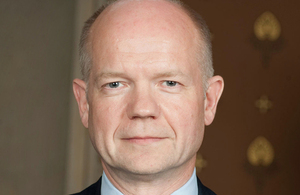
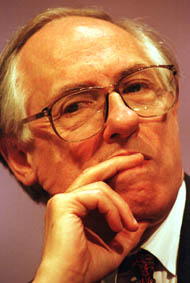
  • Tony Blair – 2000 Speech at EU/Balkan Summit

    tonyblair

    Below is the text of the speech made by Tony Blair, the then Prime Minister, at the EU/Balkan Summit in Zagreb on 24th November 2000.

    We Europeans – all of us gathered here today – have waited a long time to come together in this group and talk in good faith about the way forward. When the former Yugoslavia began to break up, the European Union argued for the politics of co-operation and compromise as the only responsible way forward. We got instead the politics of extremism and intolerance.

    The human cost has been horrific. Tens of thousands of our fellow Europeans killed, often in unspeakable massacres. Many people still missing. Hundreds of thousands made homeless – even now far too many people can still not return home and rebuild their lives. Piles of bodies in Bosnia unidentified to this day.

    These horrors have dishonoured all of us as Europeans. This Summit sends a strong, clear message. We can do better than this. There is only one way forward – the way adopted by the rest of Europe. What does that mean in practice? To quote President Kostunica, it means the rule of law.

    It means that the will of one man can never again triumph over the will of the people; that a whole country can never again become a presidential fiefdom. It means that borders are opportunities not problems; that they never again become military frontlines or barriers to trade and co-operation. It means that diversity is strength; and that societies root out ethnic, religious and racial discrimination wherever they find it.

    Above all, it means responsibility, and responsible politicians. As I look around today, I can only marvel at what a difference democracy makes. New hope. New faces. People for years consigned to the margins by intolerance and conflict. People who stood up to the dictatorships that were tearing their society apart. Today, the future belongs to them.

    I would like to take this opportunity to pay tribute to the people of Serbia. We all feared that Milosevic’s downfall would take place in a tragedy of bloodshed. And yet the BuIldozer Revolution succeeded not through violence, but through the dignified uprising of a whole people. Milosevic’s fall has paved the way for reconciliation, stability and prosperity throughout the whole region.

    When Prime Minister Racan of Croatia visited London earlier this year he talked of a new, critical mass for co-operation across the region. He was absolutely right, as subsequent events have so dramatically shown. This is why this Summit today is so important. It is our task, in the European Union, to hold out the hand of friendship and partnership to the new democracies of the former Yugoslavia. Each country must decide for itself how best to make progress. No country should be held back by slower neighbours.

    You are all European countries. We will judge you by the same European standards. That means settling disputes by negotiation. That means proper treatment for minorities and creating the conditions for the return of refugees. President Kostunica has made an impressive start. President Mesic and Prime Minister Racan have transformed Croatia through their courageous decisions. They have shown that there is a route to Europe. Others should make sure that they take it too.

    The British position in all this is clear. The political framework represented by the former Yugoslavia is finished. We have no interest in seeing it recreated. Our only interest is to see the new states that have emerged from the old framework working with each other and with us according to modern European standards.

    A lot is already happening. We have made major progress in breaking down the trade barriers between South East Europe and the European Union. But there’s a lot more to do. We want to see this Summit leading to concrete action. A region-wide approach to refugee return. Co-operation between all our countries in the common fight against organised crime, illegal immigration and drugs. A concerted offensive against corruption and discrimination.

    The European Union will help. But we are looking for further action from the countries of the region on economic reform. Trade liberalisation by the European Union should be matched by regional free trade agreements.

    During his campaign President Kostunica spoke movingly of the dignity of his people. There is an important message for all of us. None of us can promote the dignity of our own people by denying other people their dignity. All Europe’s citizens must feel safe and welcome in the country they live in.

    The threat we face is a retreat into narrow-minded nationalism which in the name of misguided patriotism takes our countries backward. When people attack the EU, they ask: what is the good of it? I say to them: look at this meeting and see the purpose and achievement of the EU.

    The 15 member states of the EU – countries that in the lifetime of my father were at war with one another – now working in union, with 50 years of peace and prosperity behind us. And now, holding out the prospect of bringing the same peace and prosperity to the Eastern and Central European nations and even to the Balkan Countries.

    The very word ‘Balkan’ has for centuries tragically been synonymous with destruction and racial conflict. Yet today, the vision of a united Europe, secure, free and prosperous, offers for the first time the chance of a new history for the region. Let no-one say nothing ever changes. Europe, the present EU and the EU of the future, is the standing example that the past need not repeat itself. All this is possible, provided an enlightened patriotism, which sees co-operation and partnership as strength not weakness, replaces the fear and prejudices of that narrow nationalism.

    This is the common goal we proclaim today: an historic commitment to enhancing and enlarging the European family. To achieve for the Balkans, the security and prosperity that the EU has brought to Western Europe. To build a new Europe that rejects discrimination and narrow﷓minded nationalism and bases itself instead on responsibility, dignity, and democracy.