Tag: 1997

  • Michael Spicer – 1997 Comments on William Hague

    Michael Spicer – 1997 Comments on William Hague

    This text is from the diaries of Michael Spicer, the then Conservative MP for West Worcestershire.

    Monday 5 May 1997

    Masses of phone calling. Twenty names pledge to Michael Howard. Arrive in London. Michael Howard calls at 7.30pm, “come round”. Reveals to me that William Hague will join us if he is to be chairman of the party. We have the makings of a dream ticket. Do we tell Francis Maude, Norman Lamont et al at dinner? No. I leave Howard’s home by pre-arrangement at 9.20pm. I go to a phone box and ask Howard if “all clear”. “Yes, come back”. Hague and I arrive at same time at the Government house. Deal consummated.

    Champagne flows. I return to Daniel Hannan’s flat in Marsham Court to drink more champagne and discuss details of volunteers.

    We are close to victory. Arrange to meet – all of us – at my house in Maunsel Street tomorrow. There are the makings of real stability and continuity at the top of the Conservative Party. Hague would be well placed to follow Michael Howard as leader.

    Tuesday 6 May 1997

    Michael Howard rings at 07.30am, disaster – possibly fatal. Ghastly mistake not to have issued a joint declaration at once. William Hague has rung Michael Howard to say he has changed his mind.

    In retrospect we should have issued a joint statement last night. At the time it was all so certain that the imperative was to achieve the maximum impact at the press conference today.

    It never occured to me that Hague would rat. Decision taken to let the press know. Michael Howard very hesitant about this and angry when it goes high profile in the news. This causes another Tory squabble – what a tragedy.

  • Tony Blair – 1997 Q&A in Amsterdam

    Tony Blair – 1997 Q&A in Amsterdam

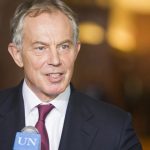
    The Q&A with Tony Blair, the then Prime Minister, on 17 June 1997.

    QUESTION:

    Prime Minister, can we ask you what has been decided now on this issue of defence?

    PRIME MINISTER:

    I think we have reached agreement on it, which is very satisfactory to us, because it makes it absolutely clear that our defence interests will continue to be looked at through NATO, whilst of course co-operating with other countries in defence, as it is in our interests to do so.

    QUESTION:

    And what was the key argument as far as you were concerned?

    PRIME MINISTER:

    The absolute essence of it is to make it clear that defence is such a big British interest that nothing must jeopardise NATO, that that is the foundation of our defence policy and there must be no question of us being forced into an integration of the various European defence institutions and that has been secured. So of course it is an agreement that I hope will be satisfactory to everyone, but it also protects Britain’s position.

    QUESTION:

    Who were the British allies?

    PRIME MINISTER:

    I think that there were a lot of the other countries who were very concerned of course to make sure that NATO and our alliance with the Americans should remain the cornerstone of our defence. So of course we want to co-operate with other countries, that is important to do, but it must be done on the basis that Britain’s defence remains with British interests and done in alliance with the United States.

    QUESTION:

    Are you confident you are going to get a treaty tonight?

    PRIME MINISTER:

    We are still negotiating and there are certain points that have to be gone through, but I think the negotiations are proceeding pretty well and we are satisfied with what we have done.

    QUESTION:

    What do you want people to believe that this treaty really represents in terms of a step forward for Europe?

    PRIME MINISTER:

    The absolute essence of what we have achieved here is that we have put jobs and employment right at the top of the agenda – that in respect of all the other things, quite apart from protecting Britain’s interest on frontier controls and all the rest of it, we have said that there are certain practical steps that Europe should take in the field of environment, of consumer protection. But what we haven’t done is try and construct some illusion about Europe that is totally at odds with the wishes of the people of Europe, and I think that practical British common sense has been very important.

    QUESTION:

    So what do you say to those who argue that you have given away too much, in erosion of the British veto for example?

    PRIME MINISTER:

    I don’t think it’s true to say that in relation to anything at all. We have actually protected all our bases in respect of that all the way through and there is not a single thing that we have yielded up that we have said we would not. So what is very important to recognise is that in all the areas – tax, immigration, defence – the British national interest, the British veto, is secured. But it is more than that. We didn’t just come here to say let’s stop everyone else doing something. We also came with the view of putting employment, economic reform, measures on the environment, right at the top of the agenda, and that we have achieved.

    So it is not merely that we have prevented other countries pushing us into things we didn’t want to be pushed into; we have exercised, I think, a constructive leadership role in shaping Europe differently for the future.

    QUESTION:

    Prime Minister, President Clinton has condemned outright, as one would expect, the murders in Northern Ireland. Would you like him to go further and break off publicly all contact with Sinn Fein?

    PRIME MINISTER:

    The reason why President Clinton is so angry, the reason why we are so angry, the reason why the European Union here took the unusual step of issuing a unanimous statement condemning utterly these atrocities yesterday, is because everybody knows, and people in Northern Ireland should know this, particularly from the Nationalist community, that we were trying to bring about a situation in which there could be a lasting political settlement. We were making every effort to be constructive, and this was a deliberate act to frustrate that process going forward. So it is not merely our repugnance at the killing and our deep sympathy for the families, it is that there is such a serious element of bad faith here and I think the Americans, as everybody else has been, have been really shocked by this.

    INTERVIEWER:

    If we could go back to the summit. Progress has been made, progress is ritually made at summits. One gets the impression though always that there is a certain amount of grandstanding going on, both so far as border controls are concerned and so far as the row over monetary union and job creation is concerned. Did you get that impression?

    PRIME MINISTER:

    Well sure, I mean all countries are looking after their own interests. But I think what has been important for us and very positive, though things have not been agreed yet finally – that has to happen later in the day – but what is positive for us is we have protected our own interests upon frontier controls. I think we will get a very good deal in relation to other parts of the treaty as well, but we are also starting to shape the agenda in Europe at the same time. Because all the emphasis economically has been on jobs, on economic reform, on education and skills, not old style state interventional regulation. Now this was a very positive and constructive step forward for Britain in Europe as well as protecting British interests.

    INTERVIEWER:

    One gets the impression that you are looking post-treaty now, you are much more interested in the post-treaty agenda than you are really in the detail of now?

    PRIME MINISTER:

    We have still got things to sort out and some of these issues are very tricky because we have got a number of very clear decisions on foreign policy, defence and other issues. But I think what is important is that we do try and look forward from Amsterdam now and that we make sure that in the Presidency conclusions there are all the things that we need on the single market, on bringing about more flexible labour markets, on trying to create the type of future for Europe in which job security, in an entirely different economic world today, is put right at the top of the agenda and we don’t get lost in a whole lot of institutional talk that frankly means very little to people either in Britain or in the rest of Europe.

    INTERVIEWER:

    What you specifically need surely is an agreement to help the fishing industry in Britain. What are you looking for specifically on that?

    PRIME MINISTER:

    Well we are obviously still in the process of negotiation, but I am confident that we will get a good agreement on that too. And I think what is important is that we get a deal that enables our fishing industry to go forward from the position that they are in at the present time, but this of course is one of the issues upon which we are going to be negotiating, along with a whole lot of other things. But as I say, at the moment it is going well.

    INTERVIEWER:

    During the election this was portrayed as the great test of whoever became the new Prime Minister. You have now been here, you have seen what it has been like, do you think that was exaggerated during the election and if it was a test, how well have you done?

    PRIME MINISTER:

    That is rather to judge how well we have done, but I think what is important is that we have shown that we can be engaged and constructive in Europe because it is in Britain’s interest economically and politically that we are a leading player in Europe. It is important for our standing in the world, it is important for our industry. We have shown we can be constructive at the same time as protecting British interests. Now as I say we haven’t negotiated the final deal yet so you know you can never be sure until it is there. But I think what has changed in the atmosphere here is that people are listening to an agenda we have, particularly the agenda on economic reform and jobs, and that is an important change in Britain’s relations with Europe.

    INTERVIEWER:

    Has it been testing though, has it been difficult for your?

    PRIME MINISTER:

    It is difficult because you have got a whole series of different countries and they have all got their own interests and across a whole range of issues. Of course people will have disagreements. But what is important is that we are fighting on the things that are important and we are not fighting on things that either don’t matter to Britain or occasionally are contrary to British interests to be fighting about. So for example the employment chapter in the new treaty that I think we will agree is going to give Britain the opportunity to play a constructive role in shaping the economic agenda in Europe. It means no additional burdens on British business at all, and yet had the Conservative Party been here they would have been fighting to the death to keep the whole thing out of the treaty which wouldn’t have been in Britain’s interest at all. So I think that the change in atmosphere is in part because people know that when we are putting forward arguments they are reasonable and rational arguments. And of course countries fight for their own interests – and I can tell you that other countries fight for their own interests every bit as hard as anybody else. That is part of the natural process. But nonetheless there are a lot of things that we have achieved in terms of not just protecting our own interest buts shaping Europe’s future.

    INTERVIEWER:

    So have you had to concede absolutely nothing in the give and take that these summits always bring?

    PRIME MINISTER:

    At the present time there are no strategic interests that we have conceded at all, and I don’t intend conceding any, because I think the positions, as I say, that we are putting forward are reasonable and we have got sufficient support for that.

    INTERVIEWER:

    Although it has not been formally on the agenda of this summit, people are very concerned about the timetable for economic and monetary union and speculation about whether it will go ahead. What is your impression from your talks behind the scenes here? Do you get the impression that the Euro will go ahead on 1 January 1999?

    PRIME MINISTER:

    I don’t think anyone can be completely sure about that and in any event each country will take its own position and Britain has reserved its option. We have got the option to join. If we do join, or want to join, there would be a referendum and so on. But I think what is important about yesterday is that, first, jobs and employment security were put right at the top of the economic agenda, whether monetary union goes ahead or it doesn’t. And secondly, there was no attempt to fudge or alter the criteria for monetary union. And I think both of those things were actually very very important gains not just for Britain but for Europe.

  • Tony Blair – 1997 Speech with President Clinton

    Tony Blair – 1997 Speech with President Clinton

    The speech made by Tony Blair, the then Prime Minister, with President Clinton, on 29 May 1997.

    PRIME MINISTER

    Mr President, we are absolutely delighted to have you here and it is a very great day for us for the President of the United States to come in and address our Cabinet.

    We know that you have been very busy over the past few days, we have been at some of the meetings together – the European Union and US Summit of course, and then the NATO/Russia agreement, which we congratulate you on formulating, the Founding Act, which will be very important in bringing peace to the world, and also of course the other meetings that have taken place commemorating the Marshall Plan. And we were particularly delighted, incidentally, that you mentioned yesterday, the contribution of Ernest Bevin to that plan, which was a very, very considerable achievement from an earlier Labour government.

    I would just like to say one or two words right at the very beginning. First of all to welcome you and say how delighted we are to have you here, and to say that I hope that this does usher in a new time of understanding and cooperation between our two countries that have such strong bonds of history and of heritage together.

    I think you, like me, have always believed that Britain does not have to choose between its strong relationship in Europe and its strong transatlantic relationship with the United States of America; strong in Europe and strong with the United States. I think the one strength deepens the other. And a Britain that is leading in Europe is a Britain capable of ever closer relations also with the United States of America. And we will obviously be wanting to discuss today many of the issues that concern Europe and the United States, the issues of enlargement and NATO. We will obviously be discussing Bosnia and Northern Ireland as well.

    But, in particular, I want to say how absolutely delighted I am, on a personal level, to welcome you here. Because we believe that the courage and strength and leadership that you have shown in the United States has brought enormous benefits, not just to your own country, but the world and we are delighted to see you here.

    PRESIDENT CLINTON:

    Thank you very much. Let me say that first I am very appreciative of the honour of meeting with the entire Cabinet. And I have watched with enormous interest the energy and vigour with which you have all taken office and begun work, and the optimism with which you pursue it. I saw you on television last night being optimistic about peace in Ireland, which is an article of faith in my life, so I like that.

    I agree that it is good for the United States to have a Britain that is strong in Europe and strong in its relations with the United States. These last couple of days, not only commemorating the Marshall Plan but asking the people of Europe to think about how we should organise the next 50 years, to try to fulfil the unfulfilled promise of the people who envisioned the Marshall Plan, and signing the agreement between NATO and Russia was part of the unfolding effort to create within Europe a continent that is democratic, undivided and at peace for the first time ever. Europe has been periodically at peace but never all democratic, and certainly never undivided. And I see that as a way of organising ourselves to meet the real challenges of the 21st century which will cross borders – terrorism, dealing with our racial and religious differences and trying to minimise the extremist hatred that is gripping so much of the world, and the proliferation of weapons of mass destruction and drug trafficking, and the common environmental threats that will become a bigger part of every government’s agenda for the next generation.

    So this is a very exciting time and I am glad to be here and I thank you.

    QUESTION:

    Mr President, you took office after 12 years of Republican rule in Washington. What advice do you have for these Labour Party members who have just taken office after so many years of a different party.

    PRESIDENT CLINTON:

    I think they are doing very well. I would like to have a 179 seat majority and I am not going to give any advice, I am going to sit here and take it as long as they will let me do it.

    PRIME MINISTER:

    And I would like to make sure that we have a second term of government, so I will be taking some advice too.

  • Tony Blair – 1997 Speech at the Royal Ulster Agricultural Show

    Tony Blair – 1997 Speech at the Royal Ulster Agricultural Show

    The speech made by Tony Blair, the then Prime Minister, on 16 May 1997.

    It is no accident that this is my first official visit outside London. I said before the election that Northern Ireland was every bit as important for me as for my predecessor. I will honour that pledge in full.

    In his more than six years as Prime Minister, John Major came to Northern Ireland many times and talked to countless people. I know the respect in which he was held here. After only a few days as Prime Minister, I also begin to appreciate fully the scale of his effort and of his devotion to peace and a political settlement. We offered him bi-partisan support in doing so, because it was the right thing to do. But if there is a new opportunity for progress now, it is in large part thanks to him.

    People often ask me if I am exhilarated by our election victory. Of course I am excited by it. But most of all I feel the most profound humility at the trust put in me; and with it, an equally profound sense of responsibility. I feel it, perhaps especially, about Northern Ireland. This is not a party political game or even a serious debate about serious run-of-the-mill issues. It is about life and death for people here. An end to violence and there are people, young men and women particularly, who will live and raise families and die in peace. Without it, they will die prematurely and in bloodshed.

    It is a responsibility that weights not just upon the mind, but the soul.

    We know the situation here is fragile and fraught. There may be only one chance given to a new government to offer a way forward. Our very newness gives possibilities. But governments are not new forever. There are times when to calculate the risks too greatly is to do nothing; there are times too when a political leader must follow his instinct about what is right and fair.

    Our destination is clear: to see in place a fair political settlement in Northern Ireland – one that lasts, because it is based on the will and consent of the people here.

    It is a long march, and every footstep has its pitfalls. But where there is not movement, hope falters and we are left surrounded by the ancient grievances returning to destroy us.

    I am convinced that the time is right finally to put the past behind us and meet the deep thirst of the people of Northern Ireland for peace, normality and prosperity.

    My message is simple. I am committed to Northern Ireland. I am committed to the principle of consent. And I am committed to peace. A settlement is to be negotiated between the parties based on consent. My agenda is not a united Ireland – and I wonder just how many see it as a realistic possibility in the foreseeable future. Northern Ireland will remain part of the United Kingdom as long as a majority here wish.

    What I want to see is a settlement which can command the support of nationalists and unionists. That is what the people of Northern Ireland rightly demand of me and of their political leaders.

    We should not forget there has been progress. Fair employment legislation and equality of opportunity have improved the lives of ordinary people. More change must come. But Northern Ireland in 1997 is not the same place as it was in 1969.

    The benefits of economic growth and investment have also begun to make themselves felt. During the last ten years, unemployment in Northern Ireland has fallen significantly. Though Northern Ireland still lags behind the rest of the UK in many ways, again the situation is better than for years.

    The quality of life has also improved immeasurably since the 1970s, particularly in the period after the IRA ceasefire of August 1994. The opening of the Waterfront Hall earlier this year symbolised a new determination to get on with living life as it should be.

    The prospects for Northern Ireland are excellent if we can get the politics right. If. I concede it is a big if.
    But confidence about the future is heavily masked by continuing divisions, and by feelings of great insecurity in both communities. People on each side fear for their identity. They still react instinctively, and retreat into the comforting certainties of tradition. We saw this in full measure after the dreadful and depressing events of Drumcree last year. Many have been tempted to conclude that the gulfs cannot be bridged, that one side or the other does not really want a settlement, or at least is not ready to make the compromises necessary to achieve one.

    It is a counsel of despair and I am not prepared to accept it. I believe the forces pushing us all towards a settlement are stronger than those that stand in our way. I aim to harness those forces more effectively than in the past. And I want to assure both communities that they have nothing to fear from a settlement and everything to gain.

    The Union

    Northern Ireland is part of the United Kingdom, alongside England, Scotland and Wales.

    The Union binds the four parts of the United Kingdom together. I believe in the United Kingdom. I value the Union.
    I want to see a Union which reflects and accommodates diversity. I am against a rigid, centralised approach. That is the surest way to weaken the Union. The proposals this government are making for Scotland and Wales, and for the English regions, are designed to bring Government closer to the people. That will renew and strengthen the Union.
    I support this approach for Northern Ireland too, with some form of devolution and cross-border arrangements which acknowledge the importance of relationships in the island of Ireland. This is what the negotiations are about. We must of course devise arrangements which match the particular circumstances of Northern Ireland. Domination by one tradition or another is unacceptable.

    But let me make one thing absolutely clear. Northern Ireland is part of the United Kingdom because that is the wish of a majority of the people who live here. It will remain part of the United Kingdom for as long as that remains the case. This principle of consent is and will be at the heart of my Government’s policies on Northern Ireland. It is the key principle.

    It means that there can be no possibility of a change in the status of Northern Ireland as a part of the United Kingdom without the clear and formal consent of a majority of the people of Northern Ireland. Any settlement must be negotiated not imposed; it must be endorsed by the people of Northern Ireland in a referendum; and it must be endorsed by the British Parliament.

    Of course, those who wish to see a united Ireland without coercion can argue for it not least in the talks. If they succeeded, we would certainly respect that. But none of us in this hall today, even the youngest, is likely to see Northern Ireland as anything but a part of the United Kingdom. That is the reality, because the consent principle is now almost universally accepted.

    All he constitutional parties, including the SDLP, are committed to it, which means a majority of the nationalist community in Northern Ireland is committed to it. The parties in the Irish Republic are committed to it. The one glaring exception is Sinn Fein and the republican movement. They too, I hope, will soon come to accept that vital principle.

    So fears of betrayal are simply misplaced. Unionists have nothing to fear from a new Labour government. A political settlement is not a slippery slope to a united Ireland. The government will not be persuaders for unity. Unionism should have more confidence in itself and its future. The wagons do not need to be drawn up in a circle. Instead, we offer reassurance and new hope that a settlement satisfactory to all can be reached.

    A Political Settlement

    This government is fully committed to the approach set out in the Downing Street Declaration. I believe the Joint Framework Document sets out a reasonable basis for future negotiation. We must create, through open discussion, new institutions which fairly represent the interests and aspirations of both communities.

    The challenge, simply put, is to arrive at an agreement with which all the people of Northern Ireland can feel comfortable, and to which they can all give lasting allegiance; one which reflects and celebrates diversity and the traditions and cultures of both communities; which can provide the opportunity for local politicians of both sides to take local decisions as they should.

    This is achievable. I know it is. And it can be combined with sensible arrangements for co-operation with the Republic of Ireland, practical and institutional, which will be significant not only on the ground, but also politically for the nationalist community.

    If such arrangements were really threatening to Unionists, we would not negotiate them. Any fears would of course be much reduced if the Irish Constitution were changed to reflect their Governments strong support for the consent principle. That must be part of a settlement, and would be a helpful confidence-building step in advance of it.

    Nor should nationalists fear for their future. Agreement to any settlement must be clear on both sides. There can be no question of their views being ridden over rough-shod. Their involvement must be complete and full-hearted.
    The British and Irish Governments have worked together in the past to make progress. This is a key relationship. I have every confidence we can work together closely in the future, whatever the result of the Irish elections.

    Democracy and Violence

    These political issues should be addressed in the talks which are due to resume in just over two weeks. Many will share my deep frustration that they have not already been addressed. Discussion has not progressed beyond questions of procedure and participation. The parties have been unable to agree on a way of dealing with decommissioning. We continue to support the parallel approach proposed by George Mitchell. But why has decommissioning been so difficult to tackle successfully?

    The truth is that there is no confidence on either side about the motives and intentions of the other. The procedural problems are a product of this deep distrust. Each part often seems utterly convinced of the duplicity of all the others. What gives these suspicions their uniquely corrosive character, on both sides, is the current prominence of violence in the equation.

    Violence has no place in a democratic society, whatever the motivation of those practising it. Terrorism, republican or so-called loyalist, is contemptible and unacceptable.

    The people here have stood up to terrorist violence for 25 years. They have not been destroyed by it. But the legacy of bitterness has made normal political give and take difficult, at times virtually impossible.

    In Britain too we have had our share of terrorist violence from the IRA.

    But what struck me about their attempts to disrupt the elections above all was the pathetic futility of these actions, real or hoax. These words are perhaps not new. But they more than ever accurately describe current terrorism in Northern Ireland: not just abhorrent, but pathetic and futile.

    What today is the aim of IRA violence:

    – Is it a united Ireland? Violence will not bring a united Ireland closer, because now all the parties in Northern Ireland, save Sinn Fein, and the parties in the Republic of Ireland agree consent is the basic principle.

    – Is it to defend the nationalist community? It is hard to see, to put it no higher, how killing people and damaging the Province’s economy and local services helps the nationalist community from any point of view.

    – Is it to force a way into talks? This is manifestly absurd, since the only obstacle to Sinn Fein joining the talks is the absence of a credible and lasting halt to the violence,

    – Do the hope a loyalist backlash or a security crackdown would justify their violence and lead to communal trouble where republican aims might have more chance of flourishing? Such an approach would be the height of cynicism. I hope the Loyalists will not fall for it. The Government certainly won’t.

    Any shred of justification terrorists might have claimed for violence has long since disappeared.

    Not only does this violence achieve nothing. There is nothing it can achieve, save death, destruction and the corruption of more young lives. Progress can only be made through genuine negotiation and agreement. Violence makes both more difficult and more distant.

    Since last June we have had multi-party talks in being – talks which Sinn Fein above all others pressed for, where all parties are treated equally, with a comprehensive agenda, and no predetermined outcome. But the IRA broke their ceasefire just at the point when the conditions for getting everyone round a table were coming together. That violence automatically excluded Sinn Fein from the talks.

    They could still have joined on 10 June by declaring a ceasefire. They did not do so. They have continued to miss every opportunity since then.

    I want the talks process to include Sinn Fein. The opportunity is still there to be taken, if there is an unequivocal IRA ceasefire. Works and deeds must match, and there must be no doubt of commitment to peaceful methods and the democratic process.

    I want the talks to take place in a climate of peace. If there is an opportunity to bring this about, I am ready to seize it. This Government will respond quickly to genuine moves to achieve peace.

    But we will be correspondingly tough on those who will not make this move. The IRA and Sinn Fein face a choice between negotiations and violence. Violence is the failed path of the past. I urge them to choose negotiations, once and for all.

    If they do not, the talks cannot wait for them but must and will move on. And meanwhile the police and armed forces will continue to bring their full weight to bear on the men of violence.

    I am ready to make one further effort to proceed with the inclusive talks process. My message to Sinn Fein is clear. The settlement train is leaving. I want you on that train. But it is leaving anyway, and I will not allow it to wait for you. You cannot hold the process to ransom any longer. So end the violence. Now.

    I want to hear Sinn Fein’s answer. And to make sure there is no danger of misunderstanding, I am prepared to allow officials to meet Sinn Fein, provided events on the ground, here and elsewhere, do not make that impossible.

    This is not about negotiating the terms of a ceasefire. We simply want to explain our position and to assess whether the republican movement genuinely is ready to give up violence and commit itself to politics alone. If they are, I will not be slow in my response. If they are not, they can expect no sympathy or understanding. I will be implacable in pursuit of terrorism.

    Loyalist terrorism is equally contemptible, equally unacceptable, just as futile and counter-productive. The Loyalist paramilitaries have so far maintained their ceasefire in formal terms. I welcome that signal of restraint, as far as it goes, and urge them and those with influence on them to hold fast to it. The Loyalist parties participation in the talks has been welcome and constructive.

    But let us have no illusions. Commitment to democracy means no violence or threat of violence. There can be and will be no double standards.

    The last few weeks have seen an appalling rush of killings, beatings, arson and intimidation. The vast majority are horrified by these dreadful acts. But they continue in your midst. They are crimes against humanity, which must be stamped out. The police have my full support in taking the firmest possible action against those responsible. And I appeal to the people of Northern Ireland to give their full-heated support too.

    Parades

    Lurking behind these terrible deeds is the shadow of this summer’s marching season. This is where the clash of identity and allegiance can so easily emerge most directly and most brutally; where the conflict of rights is hardest to resolve: the right to march and the right to live free of disruption and apparent intimidation; where the rule of law is most difficult to uphold, as it must be.

    Local agreements solve the vast majority of problems over marches. With minimal goodwill and flexibility, they could solve the rest too – as long as neither side insists on using a particular parade to make a broader political point. That is a dangerous game to play, as last summer showed only too clearly.

    The North Report recommended changes to the way marches are handled. We will implement those recommendations quickly, although the new arrangements cannot be in place this summer. The legislation will be able to take account of any lessons from this summer. But the key remains in the hands of the local people on both sides. No-one with any sense wants more Drumcrees. I call on all with any influence on the process to use it for reconciliation, not confrontation.

    Security Forces

    Those in the front line this summer are not only the marchers and local residents. The police and armed forces will be there to hold the line if necessary, to uphold rights, saves lives and protect property. They get precious little thanks from any quarter. All too often, their reward is to be vilified and attacked from all sides.

    So I thank them for their resolution and professionalism, and assure them of my support for the job they do. And I look forward to the day when Northern Ireland no longer needs troops and the police can focus exclusively on ordinary police work.

    The Future

    I have said Northern Ireland has a bright future if only we get the politics right and the gun out of the picture. You all know that to be true. Look at the advantages you have:

    – dynamic and enterprising businesses and businessmen
    – a record of success on inward investment, despite the violence
    – a workforce ready to take every opportunity
    – a potential quality of life second to none in the United Kingdom
    – huge tourist potential

    This Government will be building on that potential. The raising of education and training standards, and measures to put the unemployed back to work, will be particularly relevant here. We will be introducing further measures to promote equality of opportunity in the labour market.

    We are also determined to build trust and confidence in pubic institutions. Incorporation of the European Convention on Human Rights into United Kingdom law will help protect basic human rights. We want to increase public confidence in policing through measured reform based on the Hayes Report on the complaints system and last years consultation paper on structural change.

    All this will help to make Northern Ireland a more prosperous, more democratic part of Britain, where opportunities really are equal for all. Yet governments cannot deliver without the help of the people themselves.

    Overcoming violence and prejudice, and learning to compromise and live together, is your responsibility as much as it is ours. The politicians of Northern Ireland, who show great courage in accepting positions of prominence, will have to show leadership and vision. They need and deserve your support. The business community of Northern Ireland have a vital role to play. Some are already doing so. But too many hang back and blame the politicians rather than helping them find a way forward. It is no good just hoping peace will come. Everyone in a position of authority or influence will need to use that authority and influence in the direction of reconciliation and co-operation.

    Let me add a word on BSE, an issue bound to be of huge concern to many of those here today. I will not promise you progress I cannot deliver. It is a grim inheritance from the previous government.

    I am fully aware of the importance of the beef industry in Northern Ireland and the desperate need to get the export market re-opened. As you all know, Northern Ireland is better placed than other parts of the United Kingdom, because of your foresight and efficiency, to benefit from any relaxation of the export ban. The certified herds proposal before the Commission and our partners is one way forward which can bring early cheer to Northern Ireland. There may be others. We are looking at the options.

    What I can say is that I will leave no avenue unexplored. I know how vital this is.

    Conclusion

    Northern Ireland is safe in the hands of this Government.

    But I want to see it peaceful and prosperous as never before.

    You all remember the 17 months of the ceasefire, and the joy of calm and normality they brought. That is what I want to recreate, this time for good.

    I and my Government have five years ahead of us to do this. With your help, we can. The chance is there, for now. It will not be there forever.
  • George Turner – 1997 Maiden Speech in the House of Commons

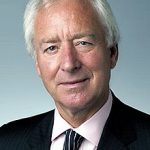
    Below is the text of the maiden speech made in the House of Commons by George Turner, the Conservative MP for North-West Norfolk, on 7 July 1997.

    I am grateful for the opportunity to make my maiden speech in the Budget debate. Budgets do much to determine the well-being of those who send us here and, rightly, strongly influence their judgment of us.

    Before addressing any Budget issues directly, I wish to express to the House my personal delight at being here at all. I am greatly honoured that the people of North-West Norfolk have elected me. I should also like to follow the traditions of the House by mentioning my predecessors and by providing a brief sketch of my constituency—it is, after all, 33 years since a Labour Member has been able to do so.

    Informed Members will know that, although somewhat camouflaged by a name change and minor boundary revisions, mine is one of the nation’s truly great historic constituencies. The name North-West Norfolk accurately describes the geography of the constituency, but King’s Lynn is indisputably the centre of it and gave the constituency its name for many years.

    Sir Robert Walpole, the nation’s first Prime Minister, represented King’s Lynn in this place, and his family long dominated the politics of west Norfolk. Happily, not all the political customs of that time have survived to this day. However, the Walpole family motto, “Say what you think”, has strongly influenced many of those sent to represent my part of Norfolk in Parliament. Saying what one thinks has not always won friends in political circles, but it clearly expresses an expectation of the people of Norfolk—and particularly of my constituents. When in doubt, I follow its guidance and, to date at least, I have come to no harm—nay, I have had not even a rebuke from Excalibur itself.

    I have known three of my immediate predecessors personally. At the beginning of my election campaign, I was particularly pleased to meet Derek Page—now in another place—who served from 1964 to 1970. He was the last Labour Member to represent the constituency—a fascinating man who became disillusioned with old Labour, but has now fully endorsed new Labour—and many in Norfolk recall his time with affection. When I met him, I felt that the baton had been handed to me to bring to this place and, for the first time, I felt that I would win the seat.

    Derek lost his seat in 1970 to an equally interesting politician, Christopher Brocklebank-Fowler, who won the seat as a Conservative. He not only said what he thought but, in a moment of high drama in this Chamber, crossed the Floor of the House to join the newly born Social Democratic party. He narrowly lost his seat at the next election and, despite his substantial personal following in Norfolk, never realised his ambition to return to the House. Notably, he, too, now supports new Labour.

    I hold out no hope for such conversion of my immediate predecessor, Mr. Henry Bellingham, who will be well known to Conservative Members as he served for 14 years on their Benches. They will know that he was, by word and by action, a most loyal supporter of the previous Government. Some say that his loyalty was penance for his ancestor John Bellingham who, just yards from where I stand, assassinated Prime Minister Spencer Perceval in 1812. In his maiden speech, Mr. Henry Bellingham declared an ambition to remove the blemish he felt that that dastardly act had attached to his family name. I hope that history will judge that he did so.

    I am certainly pleased to take this opportunity to pay public tribute to Mr. Bellingham. In Norfolk, he was widely recognised for the pains that he took in handling constituency work. He went to great lengths on behalf of constituents with problems—whether pursuing officials of government or quango at a national or most local level. His efforts earned him considerable respect and affection within the constituency, and were certainly a factor in limiting my majority at the election. Interestingly, some officials have sought to dampen my enthusiasm for following Mr. Bellingham’s example and pursuing them on constituency issues. However, after only modest exposure to my new role, I am certain that nothing less will do in my part of Norfolk.

    My constituency has many features worthy of note—not least the town of King’s Lynn, with its 1,000-year-old port and mediaeval, Elizabethan and Georgian architecture. Its port and fishing industries remain sources of employment, but they are surpassed today by the many small and medium-sized businesses to be found in the industrial estates that were mainly stimulated when the town had an overspill agreement with London.

    Many will know my constituency for the beauty of its countryside and coastal regions. To the north lie marshes and superb sand beaches which provide natural havens for wildlife and joy to the discriminating visitor. There are many pleasing coastal villages, and the town of Hunstanton remains popular with a variety of visitors and family holiday-makers. More recently, those northern towns and villages, like many others in Norfolk, have attracted people who come to Norfolk at the end of their working lives seeking quality of life for their retirement.

    A number of huge agricultural and sporting estates lie inland, and they are typical of those that were the very cradle of the agricultural revolution. There is also the royal residence on the beautiful Sandringham estate. Agriculture remains of considerable importance to Norfolk. Hon. Members may be interested to know that more than 200 years ago in the village of Heacham in my constituency agricultural workers gathered with their farming employers to petition Parliament for a minimum wage, which they wished to see linked to the price of corn.

    My constituency also contains a marshland area to the west, much of which was reclaimed from the sea by Dutch engineers in the 17th and 18th centuries. It has a unique landscape, provides fertile soil and is divided by waterways. It is home to some of the nation’s finest and most fiercely independent horticulturists, fruit growers and small farmers.

    My constituency has almost 100 towns, villages and hamlets. It has a rich variety of landscapes, activities and people. It is home to some of the richest and some of the poorest in our land. It is certainly one of the most rural constituencies in England to be represented by a Labour Member. The House will understand that it is a particular honour for me to be here tonight representing North-West Norfolk.

    However, let me not leave the House with the impression that I represent a rural idyll. Many important needs of my constituents have been much neglected for many years. I am glad that the Budget addresses many of those issues. Unemployment, including that of young people, remains at intolerable levels. Even in Lynn, where rationalisation has led to job losses, there are far too many low-skill, low-wage jobs. Many of our villages lack well-paid employment for people who historically looked to the land for work. In the 30 years that I have lived in Norfolk, there has been a dramatic decline in the numbers required to work large estates.

    As the previous chairman of the education committee, I know all too well that too many of Norfolk’s school buildings require major investment. The county has suffered from an historically low spend on education. The road network in Norfolk, particularly the A47 strategic link, still cries out for improvement and tightly constrains economic development. I have also recently had to inform Ministers that the plight of our fishing fleet requires urgent attention. Rural poverty is every bit as debilitating as its urban equivalent. It will be my priority to see that the urgent needs of my constituents are given proper regard in the deliberations of the House and in the decisions of Ministers.

    Hon. Members will gather that I am pleased to give a warm welcome to the Budget. Through the windfall tax, it addresses the need to help many people, especially the young in my constituency, to find work. It deals with the problems of our schools and of the health service. Importantly, it keeps the election promises that I made. After a weekend in Norfolk talking to my constituents, I politely warn Conservative Members that by asserting otherwise they will earn themselves a reputation for veracity in opposition no better than that which bedevilled their latter years in government.

    I bring a warm welcome for the Budget from Norfolk with but one caveat. The right hon. Member for South Norfolk (Mr. MacGregor) referred to the problem encountered in rural communities who need to use cars. People who live in villages where they count the number of buses per week rather than per hour view differently the stick of extra taxes, however green the purpose and however well intentioned the Chancellor imposing them. During the lifetime of this Parliament, it will be essential to use broader measures—both carrot and stick, not just stick—to ensure that the interests of rural people are properly reflected in Budget decisions. I look forward to Ministers providing that range of policies.

    I hope that I shall not be too controversial if I say a few words about advance corporation tax and pensions, a subject which seems to vex many Conservative Members. I have been a trustee of a pension fund and for many years I have repaid my mortgage through a personal equity plan. I have made it my business at least to try to understand some of the effects of advance corporation tax. If one is to judge the merits not of imposing a tax—which is how Conservative Members refer to it—but of removing a tax benefit, the question that one should ask is why one would introduce such a tax benefit if it did not exist. The answer is that one would not.

    If the Chancellor is to take money from people to give tax advantages for certain forms of behaviour, the correct way to do so is to give the tax incentive to the individual who will save the money. We should not try to do so through pension funding by reason of contortions in logic. That is too remote from the pressures that can be put on individuals to recognise the benefits of thrift and saving for their pensions.

    I carefully investigated the actions of the previous Government when they reduced the level of ACT from 25 to 20 per cent. At that time, I read in the newspapers—the same ones that I read this weekend—the dreadful predictions of how much more I would have to put into my PEP. Those predictions were wrong: my PEP has gone up by 35 per cent. whereas they referred to effects at 2 or 3 per cent. My PEP has gone up by 35 per cent. because what really matters to people is our country’s economic well-being, not jiggering around with pensions because of tax considerations. What matters is good, sound management and sound judgment of areas in which to invest both in this country and internationally.

    I believe that my right hon. Friend the Chancellor is right in trying to stoke the boiler of the train we are on so that we all move faster, while Conservative Members are in danger of having an academic argument about how we move up and down the corridors of the train: if one walks forward up the train, one may gain time, but really to gain time one must get the train to move faster. History will judge that my right hon. Friend the Chancellor has made a sound judgment in his Budget proposals.

  • Derek Twigg – 1997 Maiden Speech in the House of Commons

    Below is the text of the maiden speech made in the House of Commons by Derek Twigg, the then Labour MP for Halton, on 10 June 1997.

    Thank you, Mr. Deputy Speaker, for allowing me to make my maiden speech tonight. My hon. Friend the Member for Gedling (Mr. Coaker) and I have sat on the Government Benches for many hours of debate on the Bill over the last couple of weeks, and I congratulate my hon. Friend on his own excellent maiden speech.

    It is a privilege to have the opportunity to make my maiden speech. Like my predecessor, Gordon Oakes, who had a long and distinguished career in the House for more than 30 years, I was born and brought up in my constituency. Gordon Oakes became the Member for Halton when the seat was created in 1983, but was first elected to Parliament in 1964 as the Member for Bolton, West. He lost his seat in 1970, but won another at a by-election at Widnes in 1971.

    Gordon was an able Member of the House, and served as Parliamentary Secretary at both the Department of the Environment and the Department of Energy. He was promoted to Minister of State, Department of Education and Science in the previous Labour Government, and was made a Privy Councillor in 1979. He was also an excellent constituency Member of Parliament, and helped many thousands of people during his career. I wish him a long and happy retirement.

    It is right for me to mention, too, that the constituency produced another excellent Member of Parliament—Jack Ashley, now Lord Ashley, whose work on behalf of the disabled is well known.

    Halton is not a town in itself, but an area based on local government boundaries drawn up in 1974. It comprises the proud towns of Widnes and Runcorn and the beautiful village of Hale. Most of the original town of Runcorn is in my constituency, although most of its new town area is in the constituency of my hon. Friend the Member for Weaver Vale (Mr. Hall).

    Mine is a constituency of many waterways—the river Mersey, the Manchester ship canal, the Bridgewater canal and the St. Helen’s canal.

    The early pioneering chemical industry had its roots in my constituency, and that industry is still the largest local employer today. There are few household goods which do not contain components produced by the chemical industry in Halton.

    One of the legacies left by the chemical industry was massive land contamination, especially in Widnes. However, through the fantastic efforts of the borough council and the local community, that situation has been transformed by a large land reclamation programme over the past 20 years. Where once were the most polluted tracts of land in the country, we now have a superb shopping centre, a golf course, open spaces and parkland.

    With a much improved environment and excellent transport links, Halton is now a popular place to live. It is also the home of one of the most imaginative and interesting museums in the country—the national chemical industry museum, Catalyst.

    Our most famous landmark is the Runcorn-Widnes bridge, similar in design to the Sydney harbour bridge and dwarfing the Tyne bridge. It is a stunning sight when lit up at night. Unfortunately, the bridge has now reached capacity, and we face regular congestion and queuing to get over it. I feel sure that this Government will adopt a much more positive approach to working with Halton borough council and the Merseyside and Cheshire local authorities to come up with a solution for a second crossing, which is crucial to the economic and social development of the area.

    My constituency has a great sporting tradition, as the home of Runcorn football club and Widnes rugby league club, now known as Widnes Vikings. Widnes rugby league club is the second most successful club in the history of rugby league. Indeed, given the size of the town, it has done even better than Wigan.

    I mentioned earlier that the chemical industry is our largest employer. Over the past 20 or 30 years, it has shrunk significantly, and there is a need to continue to bring more diverse industries into the constituency. Our biggest challenge is high unemployment: real unemployment is running at 24 per cent. and youth unemployment is more than 40 per cent. A recent survey of local employers showed a 40 per cent. skills shortage—which explains why I wanted to speak in today’s debate.

    Education and training are crucial to my constituency. The Prime Minister was right to make education our No. 1 priority, and I know that the new Halton unitary authority, due to take over next April, will make education its top priority so as to help to regenerate the towns of Widnes and Runcorn by producing a skilled and flexible work force and improving the cultural and social lives of its citizens.

    We must get things right at the very beginning. Lifelong learning starts in the early years, and I am pleased by the commitment to extending early years provision. I welcome the Bill and the move to end the assisted places scheme and to use the money to cut class sizes for five, six and seven-year-olds. That is very important to primary schools in Halton, where there are 141 classes of 30 or more. That means 4,464 children, or 40 per cent. of the total. Our children deserve better individual attention from their teachers, and small classes can help to achieve that.

    Although this is only one component in the strategy to raise standards in education, it is a crucial one. In Halton, 54.6 per cent. of 11-year-olds fail to reach the required standard in maths, and 50.6 per cent. fail to reach it in English—hence the importance of this measure to my constituency.

    I also believe that the breadth of the curriculum that primary teachers have to deliver is onerous. It does not leave enough time to spend on teaching the basics: reading, writing and arithmetic. I welcome today’s announcement by the Minister in that regard.

    It is clear that the early years are a crucial part of a child’s education. An 11-year-old who is not properly equipped for secondary school will quickly fall behind, making the job doubly difficult for teachers in secondary schools. Many secondary school teachers have told me that they despair at the poor numeracy and literacy skills of some of their pupils. Those pupils then struggle throughout the rest of their time at school.

    I also welcome the Labour Government’s commitment to improved teaching standards. Most teachers do an excellent job and deserve the highest praise. Many have their jobs made much more difficult by the immense problems of social deprivation and poor parenting in some areas; but there are also teachers who are not up to the job, and they should not be anywhere near a classroom. Some schools are clearly failing their children. Although there may be poverty and poor discipline in some homes, that should not be used as an excuse for poor teaching and poor schools. There are plenty of examples of good teaching and good schools in similar circumstances. I therefore welcome the commitment to deal effectively with incompetent teachers, and the publication of the names of failing schools, as clear signs of our determination to raise standards.

    As a further element in improving standards, I hope that the Secretary of State will publish much more information about the performance of schools. The current league tables are flawed and do not accurately reflect the true achievements of many schools. Nor do they give parents enough information.

    Finally, I thank the people of Halton for electing me. It is a great privilege to sit in this House as their Member of Parliament. They are hard-working and generous people who have waited a long time for a Labour Government.

  • Archie Norman – 1997 Maiden Speech in the House of Commons

    Below is the text of the maiden speech made by Archie Norman, the then Conservative MP for Tunbridge Wells, in the House of Commons on 3 July 1997.

    Thank you, Mr. Deputy Speaker, for this opportunity to make my maiden speech on the important subject of the Budget. I congratulate Labour Members who have made their maiden speeches today and welcome their interest in the businesses in their constituencies, especially the highly profitable ones in Leamington Spa. I share their interest and that of the Chancellor in the business community, but perhaps in a more substantial way. I should declare that I am chairman of Asda—the largest private sector employer based in the north of England—a director of Railtrack and a former director of British Rail. That establishes my public sector credentials as well.
    I have tried to speak in the Chamber in previous debates, and I think this is about my 11th hour of taking assiduous notes. I have listened to many excellent maiden speeches and, as a result, my geography has been much improved. On this occasion, I do not intend to give the House a guided tour of my constituency, but I should like to speak about my predecessor, Sir Patrick Mayhew, who is now Lord Mayhew of Twysden.

    It is not difficult to pay tribute to Lord Mayhew. He was a distinguished Attorney-General and his contribution as Secretary of State for Northern Ireland was remarkable. He undertook the role with an open mind, great objectivity, integrity, enthusiasm and relish, and he brought the prospect of lasting peace in Northern Ireland closer than at any time in the previous two decades. In the constituency and in the House. Sir Patrick was, in all respects, larger than life. He succeeded in making a contribution which was in many ways beyond politics. His halo still shines brightly in Tunbridge Wells and, as I am constantly reminded, he leaves large shoes to fill.

    Mine is a delightful constituency, situated in Kent in the heart of England. Its focal point is Royal Tunbridge Wells, a spa town which was famous in the 18th century for its royal visitors who, I suspect, were able to get there rather more quickly than today’s commuters. It has two major public finance initiative projects which are important to the local community and which were supported by the Conservative Government. The first is the long-awaited dualling of the A21, which is the main arterial route from London to Hastings. The second is a desperately needed new hospital because the Kent and Sussex hospital is divided into two parts and has outdated facilities. A PFI project for a new hospital is at an advanced stage.

    Regrettably, both projects have been called in for one of the new Government’s ubiquitous reviews. That means that, within two months of the election, my constituents fear that they may have to pay a steep price for a Labour Government. I hope that those fears are unjustified. The people of Tunbridge Wells are famous, apart from anything else, for the forthright expression of their views in national newspapers. They are vigorous letter writers, as the Minister will find out before long if our transport and health projects are not approved.

    My warning may be a little too late for the Chancellor. He will hear from many home owners in Tunbridge Wells and especially from those whose incomes are less than £15,000 a year. The majority of those who benefit from MIRAS are in that income range, and their incomes have been cut as a result of the Chancellor’s action.

    Many of my constituents are retired or saving for retirement and their pension funds will be hit by the changes to advance corporation tax. The abolition of tax relief on private medical insurance affects many of my constituents who are in nursing homes and many people in the insurance industry. It is short-sighted, mean-spirited and economically insignificant and can only add to the pressure on the health service. It is greatly regretted by my constituents. My ambition is to rebrand my constituents “Contented from Tunbridge Wells”, but I fear that the Government have done little in their first few months to help me to achieve that aim.

    Two of the Chancellor’s main themes were business and employment. Unlike many Labour Members, I believe that experience in business, enterprise and industry is good for the Government and for the House. I am proud of my record in business and of the companies that I served. I welcome the Chancellor’s intention to be business-friendly, and I also welcome the promotion of people with business experience to the Government. The appointment of the Paymaster General and of David Simon, the former chairman of British Petroleum, are a welcome recognition of the contribution that business can make to the policy and process of government. I am glad to see that my friend Howard Davies has been given a leading role in the Securities and Investments Board. It is good to see a former McKinsey man in gainful employment in public services. Hopefully, he will not be the last.

    It was reported at the weekend in, I think, The Sunday Times that Martin Taylor had turned down a ministerial job. Of course, BP and Barclays are among Britain’s 10 largest companies: Asda is about the 50th. Perhaps as the Chancellor works his way down the list I will eventually receive a call. My badge from my shopkeeping days reads, “Happy to help”, which has always been my motto, but, of course, I cannot be certain that my help would be the sort that the Chancellor has in mind.

    It is not long since the Secretary of State for Health described people like me as stinking, thieving, lousy, incompetent scum. Even as I read the words I find them amazing. One of the great strengths of the House is that hon. Members are able to speak freely, and the right hon. Gentleman is entitled to his view, but I hope that there is a little truth in the last part of his epithet because my dictionary defines scum as matter which rises to the top in an otherwise murky liquid. The right hon. Gentleman’s words were, in the main, different from the more honeyed prose that we have heard from the Labour party in the past two years. Its business manifesto states that a Labour Government would create a dynamic and supportive environment in which business can prosper and thrive. We hope that they will succeed in that endeavour, although it will be hard to better the achievement of the Conservative Government in the past 18 years, during which period there has been a comprehensive managerial revolution in the way in which we manage and employ people, create success and invite investment into the United Kingdom. To date, the words from the Government have been friendly, but the substance, I fear, has been increasingly hostile.

    The Chancellor said that this is a Budget for investment and to secure our future. Business people are, in the main, practical, and we will wonder quite what he means. Our economy’s future depends on competitiveness and profit and, so far, the balance sheet does not look too good. To start with, business people will wonder whether it is logical for a Government, who make much of the need for investment in infrastructure, transport and the waterworks, to reduce the prospect of further investment with a windfall tax.

    The Chancellor said that the tax will not affect investment, employment or the cost of services. In fact, it clearly will. It takes investment cash from those companies, and it defies belief to suppose that obliging utilities to gear up and take on more debt will have no effect on investment. Surely we are all financially literate enough in this day and age to understand that taxing more means investing less. Stage two, we fear, may be regulation to force the investment, which the Government have made less attractive, by other means.

    Business people will wonder also where the logic is in Labour’s plans for the proceeds of the tax. They are to be used, apparently, to subsidise wages to create temporary jobs, but permanent jobs will be threatened as wage costs will be driven up with the introduction of a minimum wage. Those of us with experience of employing people and of being employed do not need to be the principal of the London business school to know that a minimum wage will mean fewer jobs. It will hit the most vulnerable people in society—in many respects, those whom the welfare-to-work programme is supposed to help, including the unskilled in particular, the handicapped, the young, the old and, yes, single mothers who work part time.

    There is a piece of hypocrisy floating around that the minimum wage is a form of competitiveness—that it will even up the competitive field between employers who exploit employees by paying less and those who do not. The reality is that big business will not be affected by the minimum wage, but small business will. The companies affected will not be large and profitable; they will be the corner shop, the local pub, the small hairdresser and those that we need to support most.

    Business people will wonder also how opting into the social chapter will help our competitiveness. I was curious and interested to hear the hon. Member for Warwick and Leamington (Mr. Plaskitt) say that businesses in Leamington Spa were not concerned. That is not my experience. Many small businesses throughout the UK are in favour of a free-trading Europe, but wholly opposed to further regulation in the form of the social chapter. New regulations in the form of works councils, supervisory boards and paternity requirements can bring us only closer to a European model of inflexibility and ossification.

    Business people will wonder also how taxing pension contributions by limiting tax relief on advance corporation tax can do other than raise the cost of employment. It is irrelevant for the Chancellor to justify that measure by claiming, as he did yesterday: Many pension funds are in substantial surplus”.—[Official Report, 2 July 1997; Vol. 297, c. 306.] If they are in surplus, that is a consequence of the funds that have been injected and of their investment performance. Those companies with surplus funds are taking advantage of that by improving their profits through a pension holiday. By definition, eliminating the scope for pension holidays means reducing those profits. It follows that, if those pension funds are in deficit in future, the money to fund them will have to come out of corporate profits. The £5.4 billion that this measure will raise has to come from somewhere. The cost of the Budget is in company profits and individual savings. That is corporation tax by another name for companies and a savings tax by another name for pensions.

    It would be churlish of me not to welcome the cut in corporation tax, particularly for small businesses, many of which will benefit in my constituency, but the balance sheet for businesses in the first eight weeks of this Government is in the red—a small cut in their tax bill for a large slice of their pensions and a large increase in pension contributions.

    After this Budget, business people will ask whether we have a Government who mean what they say about business, or a Government for whom business was simply a nice idea and who simply said what the electorate hoped they would. The Chancellor’s grand words about investment and long-termism belie a fundamental shift in Government tone and policy—a shift towards a belief that it is Governments who create jobs and shape the economy. The question that business people will be asking is whether new Labour means a new form of socialism—not the ownership socialism of the past, but the regulatory socialism of continental Europe.

    The assumption behind the Budget appears to be that the Government can engineer investment, whereas, in the business world, we know that subsidised investment is often the worst form of investment. The other assumption is that the Government can engineer and create jobs, whereas, in the business world, we know that subsidised jobs are often of the poorest quality and temporary.

    It is not my intention to be unreasonably contentious, The Chancellor’s aspiration to improve competitiveness and long-termism is, of course, one which we share. It is the means that we contest. This Budget is not a people’s Budget, as the people will have to pay more tax. It is not a Budget for competitiveness or for enterprise. It is a Budget of taxation to enable a Labour Government to pursue political policies that involve spending more of the “people’s money” on their well-meaning, but perhaps ill-judged, projects.

    It is not a good Budget for business, for middle Britain or for my constituents in Tunbridge Wells. The business world is pragmatic, not ideological. Most business men operate in their commercial interests and in those of their shareholders and employees. We judge people by what they deliver, not by what they say. As far as we can, we call a spade a spade. Substance triumphs over style, decisions over reviews, and we will hold the Chancellor to account for his promises. Today, the jury may still be out, but the first signs for business and enterprise are ominous—very ominous indeed.

  • Ann Widdecombe – 1997 Speech on Fox Hunting

    Below is the text of the speech made by Ann Widdecombe, the Conservative MP for Maidstone and the Weald, in the House of Commons on 28 November 1997.

    I congratulate the hon. Member for Worcester (Mr. Foster) on his choice of subject. I particularly congratulate him on his courage in introducing a controversial Bill so early in his time in the House.

    I also congratulate the hon. Member for Wansdyke (Dan Norris) on his maiden speech and on having the courage to make it in such a debate. His predecessor, Jack Aspinwall, was much respected on both sides of the House. I am grateful for the tribute paid to him.

    Having started on that friendly note, I should like to engage in one of my favourite sports–trying to flush out the Prime Minister. The hon. Member for Worcester told the House that the Prime Minister supported the Bill. I am pleased to hear that. Does that support extend to making parliamentary time available? I hope that I shall be assisted in the resolution of that query by the spokesman for the Opposition. I hope that he will help me to flush out the Prime Minister.

    Mr. Ivor Caplin (Hove): Spokesman for the Government.

    Miss Widdecombe: That is true. It takes a lot of getting used to, and it will not last long, anyway.

    On 15 April–hon. Members may recall that that was in the middle of the general election campaign–the current Prime Minister, in his then role of Leader of the Opposition, wrote to the current Minister for Sport, the hon. Member for West Ham (Mr. Banks). He said:

    “Our policy is to have a free vote in Parliament on whether hunting with hounds should be banned by legislation. If such a vote is passed, it will be a decision made by Parliament and parliamentary time will be made available for appropriate legislation to progress in the normal way.”

    I repeat:

    “parliamentary time will be made available”.

    If the House passes the Bill–or at least gives it a Second Reading, as it is unlikely to pass the Bill–I hope that the Prime Minister will honour his promise and will make time available, not for a measure on licensing or some other watered-down proposition, but for the measures in the Bill. We have heard a lot of talk about what the upper House will do. I want to know what the Prime Minister will do if Parliament votes–

    Mr. Peter Bradley: Will the right hon. Lady give way?

    Miss Widdecombe: No. The hon. Gentleman is not the Prime Minister.

    I have a couple of concessions to make about the Bill. It may not be the most perfectly drafted Bill in the world, but it is a pretty good attempt. If it is possible for a lawyer of the eminence of my right hon. and learned Friend the Member for North-East Bedfordshire (Sir N. Lyell) to interpret clause 5 in a different way from what was intended, we shall tidy that up in Committee. What is the Committee stage for? That is a common plea in private Members’ legislation, and one that I have often made–and Labour Members have not granted it. One does not need perfection the first time, because the Committee stage is designed, elementarily, to clear up such problems.

    Yes, the fox is exceptionally cruel. When it goes into a hen-house it is concerned not only with getting a good supper but with having a horrible time with the hens. Does that mean that we should take our standards from the fox? Is it proposed that, because a fox eats a couple of guinea pigs in a nasty way, the House should take its standards from the fox? I find that proposition amazing, as I have some of the other arguments advanced today.

    It is argued that if we abolish hunting we will abolish jobs. If we abolish crime, we will put all the police out of work. If we abolish ill health, we will put all the nurses and doctors out of work. Does anyone seriously suggest that we must preserve at all costs crime and ill health because they keep people in jobs?

    We are told that there must be consensus before we lock people up, that if there is a large body of opinion that says that something is okay, we must not lock up the practitioners. What about the legalisation of cannabis? A sizeable body of opinion, with which I am totally at odds, says that cannabis is all right. I defend to the hilt society’s right to lock up the purveyors of cannabis. I defend also to the hilt–although this will not be so acceptable to Labour Members–our right to lock up people who did not pay their poll tax when it was a lawfully levied tax.

    If this democratically elected House decides that hunting is against the law, it is our right to exact penalties against those who fight the law. We will be penalising not the fact that they like to hunt but the fact that they break the law. I do not believe that the sort of people who tell me that they want to carry on hunting are the sort who would wilfully break the law. There seems to be an underlying assumption that such people will go out breaking the law. Frankly, I doubt it. If Parliament changes the law, I believe that people will largely obey it and that we are entitled to take action against those who do not.

    It is important to ask ourselves a simple question. Is hunting so wrong that we wish to abolish it? If it is, all else flows from that. We do not need to be concerned about jobs or liberties to do wrong; we need only ask whether it is so wrong that it should be abolished.

    My problem with hunting is not that I contest the right of farmers to practise pesticide. Hunting is a most ineffective pesticide. Its supporters have tried to have it both ways by saying that they do not kill too many foxes but also that they kill so many that it is a good pesticide. In fact, nine tenths of fox control is done by shooting, not hunting.

    Hunting is not a pesticide, so we must ask what it is. It is cruelty. I am not against killing foxes or culling deer. I am against the chase, the cruelty involved in the prolonging the terror of a living, sentient being that is running for its life. They laugh at it, apparently. When the deer is running, can feel the hounds closing in and knows that its strength is not going to last, it is uproariously funny. If it is so funny, why do not those who favour hunting take a trip to Kenya and stand unprotected in a lion reserve and see if they enjoy the hunt? I admit that I might enjoy watching it. Prolongation of terror is wrong. Those who practise it when there are alternatives that are already widely practised do wrong. Yes, the scenes of a hunt are splendid, so splendid that they are all over my dining room curtains, but they are colourful scenes of olde England, and in olde England, not in modern Britain, they belong.

  • Theresa May – 1997 Maiden Speech in the House of Commons

    theresamay

    Below is the text of the speech made by Theresa May, the Conservative MP for Maidenhead, in the House of Commons on 2 June 1997.

    Thank you, Mr. Deputy Speaker, for the opportunity to make my maiden speech in this important debate.

    When I was preparing my speech, I looked at some of the maiden speeches that had been made by hon. Members in the weeks before the Whitsun recess. I noted that the hon. Member for Cumbernauld and Kilsyth (Ms McKenna) mentioned an incident in which a taxi driver had mistaken her for the wife of an Labour Member of Parliament. Sadly, mistaken identity is not confined to the Labour Benches.

    My own confusion was great when I was in the Members Lobby and the hon. Member for Dundee, West (Mr. Ross) rushed up to me, himself in a state of some confusion, and encouraged me to put my name on the list for the ballot for private Members’ Bills. He was astounded when I looked at him and said, “Why?” Obviously, he had mistaken me for one of the ladies on the other side. [HON. MEMBERS: “Surely not.”] I was told that a Member making a maiden speech was never intervened on or heckled. That clearly refers to the opposite party, but not to one’s own.

    Further confusion has ensued in my early days in the House. When I arrived, I had to take great pains to point out to my colleagues that I represented Maidenhead rather than Maidstone. That was particularly pertinent in the early days of this Parliament. Being a Conservative Member called Theresa adds a certain interest to my life in the House; I am thinking of acquiring a badge reading, “No, I am the other one.” To cap it all, on the morning when I moved into my new office, when the telephone rang for the first time I eagerly picked up the receiver to find out who the caller could be, only to discover that the person on the other end of the line wanted to speak to Edwina Currie.

    One of the pleasures of making a maiden speech—I suspect that it may be the only pleasure—is the opportunity that it gives the new Member to pay tribute to his or her predecessors. For most Members, that means referring to former Members of Parliament; but Maidenhead is a new constituency, created from two former constituencies, and I am pleased to say that both my predecessors—my hon. Friend the Member for Windsor (Mr. Trend) and my right hon. Friend the Member for Wokingham (Mr. Redwood)—are well and truly back in the House.

    I thank them for the kindness that they have shown me, and for the help and advice that they have given and continue to give me. I particularly thank them for giving up some rather good bits of their former constituencies to form mine. In the circumstances, I am very grateful for that. I also pay tribute to their diligence as constituency Members. Despite having had other onerous and time-consuming responsibilities at various times, both worked assiduously on behalf of their constituencies and their constituents, and in that respect they have left me with a great deal to live up to.

    It is a privilege to stand here as Member of Parliament for Maidenhead, especially because this is the first time that Maidenhead has had its own Member of Parliament. In view of the potential origin of the town’s name in the symbol of the maiden’s head, it is perhaps appropriate that it should now be represented by a maiden—although I must confess to using the term somewhat loosely.

    Although the name of the constituency is Maidenhead, it covers more than just the town of Maidenhead. It also includes some lovely tracts of Berkshire countryside, including what I would describe as some of the prettiest and most delightful villages in the country. Maidenhead is a thriving, dynamic town with a thriving local economy and many local businesses, ranging from small family firms that have been in the area for many years—indeed, for generations—to the European headquarters of multinational companies.

    The advantages for businesses in the area are many. Not only is it a pleasant and attractive place in which to live and work, but there is a high-quality labour force on which to draw. Maidenhead also has the advantage of proximity to the motorway network, to London and, of course, Heathrow. Those are advantages for business, although it must be said that they also create some problems for local people—night flights into Heathrow, noise from the A404(M), the need for another bridge across the River Thames, the threat of motorway service stations and the threat of development. I have been and will continue to be involved in all those issues, and I trust that they can be resolved in the interests of those living in the constituency.

    Although not much has been written about Maidenhead, it is a town steeped in history. I was reminded of that yesterday morning as I watched the mayor unveil a plaque in the town centre to commemorate the site of the 13th-century chapel that was the predecessor of the current borough church of St. Andrew and St. Mary Magdalene.

    Maidenhead owes its origins to the River Thames, and the river continues to play a significant role in the life of the constituency. Many people enjoy walking alongside the river in Maidenhead and watching the operation of Boulters lock. Further up the river is the delightful village of Cookham, where people can spend time looking at the works of the local artist Stanley Spencer in the Stanley Spencer gallery.

    The river in the Maidenhead constituency makes it host to one of this country’s major national summer sporting events, the Henley regatta. Although Henley is in Oxfordshire, the regatta meadows are firmly in Berkshire. The river adds charm to many other villages, including Sonning and Wargrave. Wargrave may be of particular interest to female Members, because in 1914 Wargrave parish church was burnt down by suffragettes. I am happy to say that getting votes for women in Wargrave these days does not require such drastic measures. I shall not name all the villages in the constituency, but it is a delightful part of the country, and I am very proud to represent it.

    Maidenhead is blessed with good schools in both the state sector and the private sector. I hope that we all agree that the aim is to provide the right education for every child. For some children, that will be an education that is firmly based in learning practical and vocational skills. For others, it will be an education based on academic excellence. The assisted places scheme enables bright children from less well-off families to take advantage of an education that would otherwise not be available to them. I totally refute the concept that underpins the Bill—that, if everybody cannot have it, nobody should have it.

    The advantage of the assisted places scheme is that it enables children from less privileged families to benefit from high-quality education. I want to focus on one aspect of the scheme, to which I trust the Government will pay some sympathetic attention. The assisted places scheme not only helps bright children, but is an important way of helping children from difficult family backgrounds or with particular social needs.

    A number of charitable foundations provide boarding school places for children whose family circumstances are such that they require to go boarding school: they may have troubled backgrounds or there may be a social need. Those places are provided through a mixture of funding: the boarding school element is funded by the charitable foundation and the education costs are covered by the assisted places scheme. Those children are genuinely in need, and if the assisted places scheme goes, the opportunity to provide boarding school places for children from difficult backgrounds will go with it. I know that the Minister has received representations on that issue, and I trust that the Government will find a way to ensure that genuinely needy children continue to be catered for as they have been in the past.

    I should also like to comment on the opposite side of the Bill, if I can call it that: I am referring to the reduction of class sizes. When I was the chairman of a local education authority, we had many interesting debates about the impact of class size on the quality of education. My concern about the Bill and the way in which it will operate is not only that it will abolish the assisted places scheme, but that the assumption behind it is that the prime determinant of the quality of education for our children is the size of class in which they are taught. It is not: the prime determinant of education quality is the quality of teaching, and that is a function of the quality of teachers and the way in which they teach.

    The evidence clearly shows a direct correlation between the method of teaching children and the quality of education that they receive. There is no clear correlation between quality of education and class size or the amount of money spent on children in any particular class. I urge the Government to reconsider the issue of quality and standards of education. It is important to examine the methods used by teachers, particularly in the primary sector. I have long questioned the concept of child-centred education. That may sound wonderful, but, as the Office for Standards in Education has said, we should seek more whole-class teaching in primary schools. The method of teaching is important, and the Government should not forget that in their attempt to grab the headlines on the issue of class sizes.

    The only other point that I want to make relates to parental choice. By putting an artificial cap on the size of primary school classes, the Government are reducing parental choice. When I was a chairman of education, I received a number of telephone calls from anguished parents who were concerned because their children could not get into the school of their choice. I am sure that any councillor involved in education will have received such calls.

    Those parents will now find that their choice is further restricted, because in the past they were able to take their case to appeals panels—my hon. Friend the Member for Aylesbury (Mr. Lidington) raised that issue. We all know that head teachers often found one or two extra places for children whose need to be in a particular school was great. The Government are to abandon that practice. They say, “No, it doesn’t matter if a school is popular, or that it is over-subscribed and parents are keen to get their children there. The parents don’t know best about where their children should be educated. The Government know best, and the Government will put an artificial limit on class size.” That will further reduce parental choice.

    The Bill will not improve academic excellence or the quality of education in our classrooms. It will take away opportunities from a large number of children, who would benefit from a quality of education that they would not receive without the assisted places scheme. Furthermore, it will reduce parental choice. The Government are saying to parents, “You don’t know best—we do.”

  • Queen Elizabeth II – 1997 Queen’s Speech

    queenelizabethii

    Below is the text of the speech made by HM Queen Elizabeth II in the House of Lords on 14 May 1997.

    My Lords and Members of the House of Commons,

    The Duke of Edinburgh and I look forward to receiving State Visits by His Excellency the President of Brazil in December and by Their Majesties the Emperor and Empress of Japan next year. We also look forward to our visit to Canada and to our State Visits to Pakistan and India.

    My Government intend to govern for the benefit of the whole nation.

    The education of young people will be my Government’s first priority. They will work to raise standards in schools, colleges and universities and to promote lifelong learning at the workplace. They will cut class sizes using money saved as a result of legislation phasing out the assisted places scheme. A further Bill will contain measures to raise educational standards, develop a new role for local education authorities and parents, establish a new framework for the decentralised and equitable organisation of schools, propose reforms to the teaching profession, and respond positively to recommendations from the National Committee of Inquiry into the future of higher education.

    The central economic objectives of my Government are high and stable levels of economic growth and employment, to be achieved by ensuring opportunity for all. The essential platform for achieving these objectives is economic stability.

    To that end a Bill will be introduced to give the Bank of England operational responsibility for setting interest rates, in order to deliver price stability and support the Government’s overall economic policy, within a framework of enhanced accountability. My Government will also ensure that public borrowing is controlled through tough fiscal rules and that the burden of public debt is kept at a stable and prudent level. They will aim to deliver high and sustainable levels of growth and employment by encouraging investment in industry, skills, infrastructure and new technologies; by reducing long-term unemployment, especially among young people; by promoting competition; and by helping to create successful and profitable business. These policies will enhance Britain’s position as a leading industrial nation.

    My Government have pledged to mount a fundamental attack upon youth and long-term unemployment and will take early steps to implement a welfare-to-work programme to tackle unemployment, financed by a levy on the excess profits of the privatised utilities which will be brought forward in an early Budget.

    A new partnership with business will be at the heart of my Government’s plans to build a modern and dynamic economy to improve the competitiveness of British industry. They will bring forward legislation to reform and strengthen competition law and introduce a statutory right to interest on late payment of debts. My Government are committed to fairness at work and will introduce a national minimum wage.

    Legislation will be brought forward to amend criminal law and to combat crime, including reform of the youth justice system and measures against anti-social behaviour. A Bill will be introduced to prohibit the private possession of handguns.

    My Government will improve the National Health Service as a service providing care on the basis of need to the whole population. They will bring forward new arrangements for decentralisation and co-operation within the service and for ending the internal market. Legislation will be introduced to clarify the existing powers of NHS trusts to enter into partnerships with the private sector. A White Paper will be published on measures to reduce tobacco consumption, including legislation to ban tobacco advertising.

    My Government will contribute to the achievement of high standards of food safety and protection of public health throughout the food chain; will ensure openness and transparency of information to consumers, and will consult widely on recommendations for a Food Standards Agency.

    A Bill will be introduced to ensure that as many people as possible have access to the benefits of the National Lottery including for health and education projects.

    Measures will be introduced to enable capital receipts from the sale of council houses to be invested in housebuilding and renovation as part of my Government’s determination to deal with homelessness and unemployment.

    The Government are committed to open and transparent government. They will introduce a Bill to strengthen data protection controls. They will enhance people’s aspirations for better, more accessible and accountable public services using information technology to the full. A White Paper will be published on proposals for a Freedom of Information Bill.

    A Bill will be introduced to incorporate into United Kingdom law the main provisions of the European Convention on Human Rights.

    Decentralisation is essential to my Government’s vision of a modern nation. Legislation will be introduced to allow the people of Scotland and Wales to vote in referendums on my Government’s proposals for a devolved Scottish Parliament and the establishment of a Welsh Assembly. If these proposals are approved in the referendums, my Government will bring forward legislation to implement them. Legislation will be introduced to provide for a referendum on a directly elected strategic authority and a directly elected mayor for London. A Bill will be brought forward to establish Regional Development Agencies in England outside London.

    In Northern Ireland my Government will seek reconciliation and a political settlement which has broad support, working in co-operation with the Irish Government. They will work to build trust and confidence in Northern Ireland by bringing forward legislation to deal with terrorism and to reduce tension over parades, and other measures to protect human rights, combat discrimination in the workplace, increase confidence in policing and foster economic development.

    Members of the House of Commons,

    Estimates for the public service will be laid before you.

    My Lords and Members of the House of Commons,

    In the European Union, my Government will take a leading role. They will seek to promote employment, improve competitiveness, complete the Single Market and opt into the Social Chapter. They will seek further reform of the Common Agricultural Policy to secure lower food prices for consumers and save money, support the rural economy and enhance the environment. They will seek changes to the Common Fisheries Policy to conserve fish stocks in the long-term interest of the UK fishing industry. They will play a full part in the debate about Economic and Monetary Union.

    My Government will work for the early and successful enlargement of the European Union. They will pursue an outcome to the Intergovernmental Conference and use their Presidency in the first half of 1998 to strengthen European co-operation while advancing the United Kingdom’s interests and to make the Union more open, democratic and efficient. A Bill will be introduced to amend the European Communities Act if necessary.

    My Government will ensure a strong defence based on the North Atlantic Treaty Organisation, and promote international peace and security. They will play a major role in decisions to shape NATO’s future, including enlargement, and to include Russia in a wider security framework. To ensure that the United Kingdom’s defence capabilities are matched to the changing strategic setting, my Government will reassess our essential security interests and defence needs.

    My Government will retain strong armed forces, including the nuclear deterrent. Preventing the proliferation of weapons of mass destruction will be a priority.

    My Government will work for reforms to make the United Nations more effective and for an early resolution of its funding crisis. My Government will continue to support peace in Bosnia and Herzegovina. They will work for a settlement in Cyprus. They will promote efforts for a durable peace in the Middle East.

    My Government will work on behalf of Hong Kong’s people to achieve a successful transition which preserves their way of life and promotes their continued stability and prosperity.

    Preparations will continue for the G7 Summit to be held in Birmingham and the second Asia-Europe Meeting in London in 1998. My Government will host the meeting of the Commonwealth Heads of Government in October 1997 and seize the opportunity to increase co-operation between the United Kingdom and other members of the Commonwealth.

    My Government have established a Department for International Development. They will publish a White Paper setting out how, through more coherent policies, they will tackle global poverty and promote sustainable development. They will rejoin the United Nations Educational, Scientific and Cultural Organisation.

    My Government will promote open markets around the world, while ensuring that the interests of developing countries and the global environment are fairly reflected.

    The promotion of human rights worldwide will be a priority, as will the fight against terrorism, organised crime, money laundering and drug misuse and trafficking at home and abroad.

    My Government will seek to restore confidence in the integrity of the nation’s political system by upholding the highest standards of honesty and propriety in public life. They will consider how the funding of political parties should be regulated and reformed.

    They will programme House of Commons business to ensure more effective scrutiny of Bills and better use of the time of Members of the House of Commons. During the course of the Session, my Government will also publish in draft for public consultation a number of Bills which they intend to introduce in subsequent Sessions of this Parliament. They will propose the establishment of a new Select Committee of the House of Commons to look at ways of making Parliamentary procedure more effective and efficient.

    Other measures will be laid before you.

    My Lords and Members of the House of Commons,

    I pray that the blessing of Almighty God may rest upon your counsels.