Tag: 1991

  • Michael Heseltine – 1991 Comments on the Environment and European Political Union

    Michael Heseltine – 1991 Comments on the Environment and European Political Union

    The comments made by Michael Heseltine, the then Secretary of State for the Environment, in the House of Commons on 7 March 1991.

    The United Kingdom has made two proposals designed to strengthen the link between the Community’s environmental policy and its other policies. First, we have proposed an amendment to article 2 of the treaty of Rome which sets out the Community’s fundamental objectives. Those objectives derive from an era when environmental considerations were not seen as a constraint on economic activity, and currently take no account of the subsequent development of EC environmental policy. We have therefore proposed adding a new objective of promoting throughout the Community sustainable growth which respects the environment.

    Secondly, we have called for an agreement that in future new proposals for Community legislation or action, in whatever field, should include a statement on the environmental effects of the proposed measures. This is intended to ensure that environmental requirements and implications are taken properly into account in the formulation of all areas of Community policy.

    In our White Paper “This Common Inheritance” we stressed the need to improve Community environment policies. We believe these ideas would be of important practical value in ensuring that different areas of Community policy do not act in conflict, and that environmental considerations are given the priority they require.

  • Michael Heseltine – 1991 Speech on the Community Charge (Poll Tax)

    Michael Heseltine – 1991 Speech on the Community Charge (Poll Tax)

    The speech made by Michael Heseltine, the then Secretary of State for the Environment, in the House of Commons on 19 February 1991.

    I beg to move, to leave out from “House” to the end of the Question and to add instead thereof: ‘welcomes the Government’s thorough review of the functions, structure and finance of local government; notes that the Government has provided for a substantial increase in Aggregate External Finance for 1991–92; and welcomes the introduction of the Community Charge Reduction Scheme which will provide £1.7 billion extra help in England for those former rate payers, the elderly and the disabled who have faced the biggest increases in their contributions to the cost of local services.’. Perhaps the House will understand that the first task that fell to me as Secretary of State in conducting the review with which the Prime Minister entrusted me was to look at the issues that could be immediately addressed in the context of the settlement for the next financial year. The House will be all too familiar with the constraints that the need for primary legislation to change the existing framework imposed on any review. There were bound to be specific sectors of concern and I shall say a word or two about a number of them, particularly the liability of service men in the Gulf, in the light of recent legal decisions.

    I know that many hon. Members are concerned about the service men and women in the Gulf and their treatment with regard to the community charge. In an earlier debate, I promised to provide further guidance on that subject. It is likely that last Thursday’s judgment in the Anderton case, dealing with the sole and main residence of a merchant seaman, has implications for the advice that we gave local authorities last November, and which we would have updated in the further guidance. We have yet to receive the final terms of the High Court judgment, and yet to consider the full implications.

    In our view, service personnel and associated civilians posted to the Gulf should not have to pay the personal community charge during the period of their posting. If detailed study of the judgment shows it to be necessary, we shall take appropriate steps to ensure that they do not have to do so, either by legislation or by other means. I am grateful that the Opposition have already made it clear that if we do take such legislation, we shall receive their support.

    Mr. Gould

    I happily confirm our earlier assurance. Will the Secretary of State make it clear that the dispensation he mentioned will apply to all service men and women, irrespective of where they are based in the Gulf and will extend, particularly, to merchant seamen? Will he also make it clear that the Government will recompense local authorities for any loss of revenue that they suffer as a result?

    Mr. Heseltine

    The assurances that I have given apply to all those involved in the military endeavours in the Gulf, and I announced on an earlier occasion that it applies to auxiliaries as well as to the professional services. However, it does not apply to those who are engaged in the normal pursuit of their careers as merchant seamen. We are dealing with people who are involved in the Gulf endeavour and I must carefully ring-fence that particular arrangement.

    Mr. Gould

    It is important that we should try to make this point clear, because many thousands of merchant seamen and their families will want to know the answer to this question. Is the Secretary of State excluding merchant seamen as a category, or does he accept that some merchant seamen will be present in the Gulf in a supporting role to the military effort and they will be included in the scheme?

    Mr. Heseltine

    Of course, if they have been involved in the Gulf as a consequence of Gulf activities, they will come within the assurances that we have given. In what I said earlier, I was referring specifically to merchant seamen pursuing their normal activities. They would not come within the context of the announcement that I have made.

    The second issue about which I am concerned—and this covers a point raised by the hon. Member for Dagenham (Mr. Gould)—relates to those local authorities where service men represent a significant proportion of their charge payers. Those authorities face a drop in their community charge income when troops are sent to the Gulf. My hon. Friend the Member for Aldershot (Mr. Critchley) has raised that issue with me extremely forcefully and he in particular made representations about the effect on the authority with which he is concerned. We have therefore announced this afternoon a scheme to provide grants for the authorities most affected to compensate them for loss of income. I know that that extra Government help will be warmly welcomed in the areas concerned.

    Mr. Gould

    I am sorry to bother the Secretary of State again on this point, but it is important that we get it as clear as possible. The phrase that the Secretary of State just used was a little opaque. He referred to grants to cover the authorities most affected. Is he not prepared to make it clear that, as a consequence of this scheme, he will recompense every authority for all loss of revenue suffered?

    Mr. Heseltine

    I do not believe that my statement was opaque. Some authorities have very limited numbers of service men within their areas and they would not be outwith normal movements that one would expect in normal circumstances. We have introduced a scheme to deal with authorities in which a significant number of local inhabitants have been moved as a result of troop dispositions. I have no doubt that once the details of the scheme have been examined, and in the light of consultation with the authorities concerned, the House will be satisfied that we have dealt with the matter effectively.

    Mr. Julian Critchley (Aldershot)

    My right hon. Friend will be aware of the sense of relief felt by service men who are serving in the Gulf and their families and by the electors in places like Rushmoor, which is Aldershot and Farnborough combined, who faced a notional additional charge of £14 a head. My right hon. Friend knows that he is always welcome in Aldershot and never more so than when he comes to speak to the local Tory party in May.

    Mr. Heseltine

    On that occasion I shall be able to explain to the electors in that constituency that, were it not for the persistent pleas of my hon. Friend, they might not have gained the benefits that I have announced this afternoon.

    I announced the details of the community charge reduction scheme some time ago and I am the first to recognise that, as it must take into account the level of the community charge that is set for next year, it is not possible in advance of that to be precise about the exact quantification of benefit that will flow to individual charge payers in each local authority. However, it is possible to identify the indications, and examples can be given in general terms.

    In gross terms, about £1.7 billion will go to more than 18 million people in England. When we turn that sum of money into individual cases, it will be clear to anyone who has made the calculations that a couple living in a previously averagely rated house in Lancaster, for example, could see a reduction of nearly £300 in their joint liability next April if their local authority sets its community charge at the same level as this year. We have a very important responsibility to bring home to large numbers of people precisely how much help will be available. I know that all my right hon. and hon. Friends will take it specifically on themselves to spell out locally exactly what that means.

    Mr. D. N. Campbell-Savours (Workington)

    Does the Secretary of State recognise that the nightmare of the poll tax has meant that hundreds of thousands of young people—some in my constituency—are refusing to pay? Does he recognise the implications of driving that number of young people into illegality? Should not some special concession be introduced? Are those people to remain in debt for many years to come? They form a sensitive age group.

    Mr. Heseltine

    The hon. Gentleman is fully aware that the provisions in legislation cover the age groups to which he has referred. There is no way in which they can be excluded in the absence of primary legislation to deal with the issue. All over the country, many young people recognise the force of the law and are paying their bills. Those who are not paying are, doubtless, fully aware that some Labour Members are encouraging others not to pay. There is no justification for individual hon. Members to assume that they are above the law of the land.

    Several Hon. Members rose—

    Mr. Heseltine

    You have asked us to make progress, Mr. Speaker. This is a short debate and many hon. Members wish to speak.

    Several Hon. Members rose—

    Mr. Speaker

    Order. I support what the right hon. Gentleman has said. Many hon. Members wish to participate. Some of them now seek to intervene. That will not help their chances to make speeches later.

    Mr. Heseltine

    The community charge reduction scheme does not, as I have said, apply only to many people in general. Specific additional relief has been give to those living in sheltered housing. That is additional to the scheme that we announced for poll tax payers generally. In addition, we were able to exclude certain people who were living in property that came within the definition of “charitable”. The scheme was the first response of the review. It is a comprehensive scheme which will bring significant benefits to many millions of people. It was, perhaps, in advance of the expectations of what we might do in such a short time. Perhaps the indignation of the hon. Member for Dagenham is a sign of his growing awareness of just how many people are likely to benefit from what we have already done.

    The hon. Member for Dagenham also questioned me about the review. It has been under way for only a few weeks and it would have been wholly unrealistic to assume that we would come to conclusions about so complex a matter in so short a time. We have made significant progress in a wide range of detailed examinations into function, structure and finance. We have now reached a point where we are able to begin to decide those options with which we may not wish to proceed. As I said recently to the House, I hoped that by April, I should be able to narrow the focus of attention—[Interruption.] I find it extraordinary that I am urged by the Opposition Front Bench to speed up the review, yet the moment I agree to do so there is a baying of indignation from Labour Members. They are obviously frightened that we might do just that and that they will not be pleased with our conclusions. The Opposition will not deter us from moving on with the expedition that the matter requires.

    Anyone who has the slightest doubt about the real views of the Opposition and about the timing involved in such a complex matter may have had the chance to listen to the hon. Member for Dagenham speaking on the “World This Weekend” last Sunday. When asked about the whole question of timing, he answered: what we propose is that we should deal with the problem in stages—that it’s futile to think that we can achieve all that is necessary overnight. However, when the hon. Gentleman comes to the House, he assumes that the Government can do precisely what he said could not be done. It is entrancing to note the speed with which the hon. Member for Dagenham has moved his position. I remind him of what he said about a year ago, when he was involved in this review—[Interruption.]

    Mr. Campbell-Savours

    What did the right hon. Gentleman say, at that time?

    Mr. Heseltine

    If the hon. Gentleman is not careful, I shall tell the House what Labour Members were saying a year earlier than that. That makes the position even more complicated. When the hon. Member for Dagenham was asked about this complex business, he said: we are making very good progress with the work that we have undertaken to prepare our alternative…We have every confidence that in the coming months we shall reach a conclusion that we shall be able to bring forward with confidence.”—[ Official Report, 18 January 1990; Vol. 165, c. 438–39.] Two months later he was asked who would pay under Labour’s new system, to which he replied: that’s the one issue we have yet to decide…We will reach a decision very shortly. He said that on 27 March 1990, but we still have no idea who will pay under Labour’s proposals.

    Mr. Gould

    The Secretary of State cannot be allowed to get away with that complete misstatement. I am disappointed—if it is the case, since the right hon. Gentleman has a reputation for not reading his papers—that, as we published a full statement of our proposals in a document entitled “Fair Rates,” which I passed across the Dispatch Box at the end of July, he has not yet read that statement. Not having read it, he will not necessarily have understood our proposals. I recommend him to read the paper because in it he will find the answers he seeks.

    Mr. Heseltine

    The hon. Gentleman is helpful in inviting me to go on giving what he must regard as uncomfortable quotations, for, although he tries to say what he would like us to believe, he gave a much clearer indication about a month after making the statement that I quoted last, when he said—

    Mr. Campbell-Savours

    What did the right hon. Gentleman say when he was on the Back Benches?

    Mr. Heseltine

    As the hon. Member for Dagenham interrupted me to say that I had misquoted him, I am surely in order in trying to put the record right. He said that people would be given plenty of information in good time so that they will have some idea of what the relative size of their bill will be. Labour’s “Fair Rates” document was published in July 1990. It outlined a range of proposals for a property tax, but it gave no indication of how much anybody would pay.

    What I found most revealing about the remarks of the hon. Member for Dagenham this afternoon was that he criticised the Liberal party for being prepared to talk to me, when he was frightened that his proposals would be put through the computer and that the facts might emerge. So now we know that at least the Liberals have a policy in which they have confidence, that the Scottish Nationalists and Welsh Nationalists have policies in which they have confidence, but that the Labour party has a policy in which it has no confidence—[Interruption.]—and that has been revealed all too clearly.

    Mr. Richard Tracey (Surbiton)

    My right hon. Friend’s proposals for relief for those who have been hit by the community charge will be most welcome. Does he agree that the most important question now for the occupants of the Labour Front Bench is whether they will condemn those in the community who are refusing to pay the community charge, in particular Labour Members who are law-breakers?

    Mr. Heseltine

    My hon. Friend is of course—

    Ms. Dawn Primarolo (Bristol, South)

    On a point of order, Mr. Speaker.

    Mr. Speaker

    I shall call the hon. Lady to raise a point of order in view of a misunderstanding that occurred earlier.

    Ms. Primarolo

    During Prime Minister’s Question Time, I asked a question—[Interruption.] I urge Conservative Members to listen for a moment. They should calm down. I asked a question about the extension to other deserving cases of the poll tax exemptions. In the baying and braying that goes on during Question Time, the Prime Minister said that I had not paid my poll tax. Unfortunately for the right hon. Gentleman, he was wrong in that statement. For the future, may I urge all right hon. and hon. Members who utter such comments in the Chamber to check their facts?

    Mr. Speaker

    I allowed the hon. Lady to make that point of order to put the record straight because I believe that most of those in the Chamber at the time took her nod to be a negative, but it was evidently a positive.

    Mr. Heseltine

    Let me say at once how much I admire the hon. Lady for having complied with the law. Although I am not saying that she feels exactly as indignant as I do about the fact that so many of her right hon. and hon. Friends have not paid their poll tax, I must advise her that the only effect that that can have is that her constituents will be likely to find their costs rising because others do not pay.

    I return to what has now been so clearly revealed about the difficulties of the Opposition in this matter. It should not be a great surprise to my hon. Friends because when the hon. Member for Birmingham, Perry Barr (Mr. Rooker) was responsible for the Labour party’s local government policies, he described his party’s dilemma with admirable clarity when he said: I’m saying to the NEC policy makers, I’m saying ‘Hang on a minute, what’s our policy on local government?…Putting it at its boldest, we haven’t got a policy, that’s the actual truth Time has marched on, but the policy making has not.

    Mr. Jeff Rooker (Birmingham, Perry Barr) rose—

    Mr. Heseltine

    The hon. Gentleman has popped up, so I shall give way to him.

    Mr. Rooker

    The Secretary of State should make it clear that he is quoting from an article in The Independent of September 1987, which was true because our consultation process and policy formulation on local government had been interrupted during the general election. The article then stated—the Secretary of State will not have the guts to read this out—that my party was being the more honest about local government by admitting that we were going back to square one to look for a better way of funding local government.

    Mr. Heseltine

    The hon. Gentleman has made my point. There is a gap, a ravine, between us, but this process takes time. The difference between the Government and the Opposition is that we shall reach conclusions that people will understand, but, three years on, the Opposition still have not done so.

    Mr. Campbell-Savours

    On a point of order, Mr. Speaker—[Interruption.]

    Mr. Speaker

    Order. What is the point of order?

    Mr. Campbell-Savours

    May I ask you, Mr. Speaker, to read the motion and the amendment that are on the Order Paper? Will you ensure, as you normally do, that right hon. and hon. Members keep to the motion and the amendment? The Secretary of State is debating a matter that is not on the Order Paper.

    Mr. Speaker

    The Secretary of State is addressing himself to the Government amendment.

    Mr. Heseltine

    By this time, I am sure that the House is beginning to share my acute anxiety for the hon. Member for Dagenham as he finds himself—

    Mr. Alistair Darling (Edinburgh, Central) rose—

    Mr. Heseltine

    No.

    The hon. Member for Dagenham is now facing increasing difficulties defending the position of Labour authorities which consistently overcharge at local level. As the House knows—because I have read it into the record previously—we now have the clearest indication that in all classes of local authority—the London authorities, the metropolitan districts, the shire districts, and in England as a whole—the fact is that, when stripped of the safety net, Labour authorities consistently set higher poll tax charges than all other political parties. The evidence is not only a matter of history—the evidence is there for the coming year. This week’s Municipal Journal gives the figures for the counties. Only three of the 22 counties that are controlled outright by the Conservatives or by the Conservatives in conjunction with other parties have set their budgets above their SSA, whereas all but three of the 13 authorities where the Labour party is in charge or in joint control have exceeded the level of their SSA. Again, it is the old, old story—

    Mr. Geoffrey Lofthouse (Pontefract and Castleford) rose—

    Mr. Heseltine

    No.

    The next difficulty for the hon. Member for Dagenham is that, in order to justify his talks, he has to talk in terms of cuts when all hon. Members are fully aware that there are no cuts. The Government have been responsible for injecting an additional £4.25 billion of central support to keep down the level of charges this year. If the Labour party claims to be fit to be the Government of this country, it ought to tell the people just how much above £4.25 billion it believes that a national economy can stand in any one year. But it cannot do that.

    The next argument with which we are all too familiar is that all the changes bring about dramatic cuts. There is an annual ritual of claiming that cuts will have to be made. Yet time and again the anticipated cuts that we hear about do not materialise when the budgets are set. Last year we were told that the Government’s proposals would have the most serious implications in many authorities; but charges broadly within acceptable levels were introduced and the cuts disappeared. Economies were found without great difficulties.

    The hon. Member for Dagenham has now taken to suggesting that the assumptions on which we based the community charge reduction scheme were ill founded. He suggests that we are working on some notional calculation, as opposed to the actual calculations on which the scheme is based. He managed to put out a document which suggested that 26 authorities are in significant excess of the figures that we estimated. My right hon. Friend the Member for Bath (Mr. Patten) said that if local authorities set their charge in line with the Government’s assessment of what they needed to spend, the charge would be £380. The list published by the hon. Member for Dagenham included 26 authorities, 13 of which had set their charges at £380 or, indeed, less. The hon. Gentleman reveals clearly that he has not understood the essence of our announcement.

    Dr. Lewis Moonie (Kirkcaldy)

    On a point of order, Mr. Speaker. As the Secretary of State is speaking, three of his hon. Friends have fallen asleep. Will you ask the Serjeant at Arms to check the ventilation in the House to find out whether it is detrimental to the health of us all?

    Mr. Speaker

    That is one of the common accusations made in this place. Sometimes when there is some noise, hon. Members lean their head sideways towards the amplifiers.

    Mr. Heseltine

    The hon. Member for Dagenham failed to understand that we took as the basis of our assumptions the actual community charges for the current year but that we had to adjust them to take account of the safety net. It is obvious that we would not have established a community charge reduction scheme in which the safety net was included. So we adjusted the figure for the actual charge, net of the safety net. In some cases that meant that we increased the assumption on which the benefits are provided. It is apparent to anyone who examines them that the figures produced by the hon. Gentleman show that our assumptions are largely accurate. The figures for the list of authorities support everything that we have said, even on the hon. Gentleman’s calculations.

    Mr. Kenneth Hind (Lancashire, West)

    Does my right hon. Friend agree that one fundamental thing which the British public understand is that any fool can spend money but that it takes a lot more ability to spend it well and that that is what local authorities should do? If he takes the opportunity in his busy day to examine Lancashire county council, which is Labour controlled, he will find that the authority commissioned a report from the consultants P and A, who advised it that its social services were expensive and badly delivered and recommended a series of alterations to the service. The authority totally neglected those recommendations and a poor service to the public is continuing as a result. That authority continues to increase its spending well above the rate of inflation. Perhaps not only my right hon. Friend but the voters of Ribble Valley will take note of that.

    Mr. Heseltine

    I have not the slightest doubt that my hon. Friend is right in saying that well-managed Conservative local government is much more likely to give value for money to its electors and will continue to do so.

    The last area of increasing embarrassment is the failure of the hon. Member for Dagenham to take part in the consultation process to which we have invited him. Undoubtedly there was a chance there for the Labour party to measure up to the responsibilities of a national party genuinely interested in a constructive debate. I could not have asked for greater evidence of its reasons for doubt than the speech by the hon. Member for Dagenham who said that he did not take part in consultations because he was frightened that we would put his figures through the computer. That is the greatest giveaway of all time. He will not put his figures through the computer because he does not know the implications of the scheme on which he is campaigning.

    The hon. Gentleman blames us for taking our time in a thorough review to get these matters right. We will take what time is necessary for that comprehensive review and will come forward with policies which we believe are right and on which we can secure the support of the British people. We will not fall into the Labour party. trap of producing words without facts to underline them. It is quite apparent that the Opposition are more interested in raising the anxieties of the British people than in contributing to a constructive debate. That is why my right hon. and hon. Friends will vote against the motion.

  • Michael Heseltine – 1991 Statement on Energy Efficiency at the Department for the Environment

    Michael Heseltine – 1991 Statement on Energy Efficiency at the Department for the Environment

    The statement made by Michael Heseltine, the then Secretary of State for the Environment, in the House of Commons on 30 January 1991.

    Since 1985, energy efficiency in my Department has been promoted by monitoring its fuel and utilities consumption, the establishment of energy conservation targets, the implementation of energy saving schemes, including the installation of more energy efficient lighting and improved computerised building management control systems, and the promotion of staff awareness relating to their energy usage and role in its conservation.

    Further measures include the proposed replacement of the building research establishment heating system and the installation of lighting controls and low-energy-consuming luminaries in headquarters buildings in London and Bristol.

    Over the four-year period ending March 1990, the energy bill for my Department’s office estate (excluding the Property Services Agency and Property Holdings) was reduced by approximately 30 per cent. Whilst figures for the current financial year will not be available until May 1991, my Department expects to achieve further savings of 3 per cent. over 1989–90.

  • Michael Heseltine – 1991 Speech on Oil Pollution in the Gulf

    Michael Heseltine – 1991 Speech on Oil Pollution in the Gulf

    The statement made by Michael Heseltine, the then Secretary of State for the Environment, in the House of Commons on 28 January 1991.

    Mr. Speaker, with permission I will make a statement about the United Kingdom response to the environmental damage taking place in the Gulf.

    The oil spill in the Gulf appears to be the largest ever. It is 35 miles long by 10 miles wide. It appears to contain some 8 million barrels of oil and it is moving down the Gulf at 15 to 20 miles per day. Words are inadequate to condemn the callousness and irresponsibility of the action of Saddam Hussein in deliberately unleashing this environmental catastrophe.

    There is a threat to desalination plants and fresh water supplies, to birds and other wildlife, to fish, sea mammals and shellfish, and to local communities dependent for their livelihoods on the sea.

    With our allies, the United Kingdom is playing a full part in the world’s response to this abomination.

    First, we must stem the flow of oil. The United States has already acted on this decisively and, we believe and hope, effectively.

    Secondly, we must assess the way in which the oil may flow so that we can assess likely consequences. Action is in hand in the Gulf itself to do that. To supplement it, United Kingdom scientific resources are already being mobilised. Existing computer models at the Meteorological Office and Proudman oceanographic laboratory are being urgently adapted to help give the best possible predictions of the likely behaviour of the slick in the Gulf.

    Thirdly, we need to assess possible effects on marine life. The United States is already sending experts. The Natural Environment Research Council is co-ordinating urgent work to bring together here in the United Kingdom information that we have on marine life and effects that could be useful in the Gulf.

    Fourthly, in common with other countries, the United Kingdom is taking practical steps to help to protect desalination plants and sensitive coastal areas and inlets. The airlift of an initial 70 tonnes of equipment from the stores maintained by the oil industry will go ahead today, with a further flight tomorrow. Further material will be available if needed. My right hon. and learned Friend the Secretary of State for Transport is looking sympathetically at requests that we have received from the Saudi Government for the loan of small numbers of skilled pollution control experts and advisers. We anticipate being able to respond later today. The Department of Transport will meet European Community colleagues tomorrow to consider whether the Community should send in its standing task force of national experts on oil pollution response. We shall be urging strongly that it should do so.

    For the longer term, the United Kingdom is considering now how it will be able to help with the clean-up and restoration of the habitats and human settlements affected once it is safe to do so. We are making arrangements to assess and bring together the contribution that United Kingdom bodies outside Government, whether public, private or voluntary, can make.

    The first responsibility for dealing with the environmental problems facing the Gulf lies with the Gulf states themselves. We do not yet know what final form the arrangements for co-ordinating their efforts will take: matters are still developing fast. But, whatever they may be, the United Kingdom stands ready to play its full and immediate part. We shall be in touch later today with Saudi Arabia and the other states most closely involved with a first indication of the help that we can offer.

    Meanwhile, the United Nations Environment Programme is today announcing its intention to take a lead on improving environmental communications and co-ordinating technical expertise. I have been in touch with UNEP to establish what we can offer by way of expert staff or other help.

    On Wednesday, the Environment Ministers of the Organisation for Economic Co-operation and Development meet in Paris. I shall be calling then for all OECD members to respond to this disaster and to take action according to their experience, equipment and skills to offer help to the Gulf states likely to be affected. But there is a wider issue. It is not only war that creates risks. It seems important to recognise the ongoing dangers of environmental calamity which arise from time to time which go way beyond national frontiers.

    I mean to raise with OECD colleagues the proposal that we should set up a working party to recommend what more effective preparations we could undertake to cope with these disasters. I have in mind that there should be a register setting out available expertise and available facilities on which affected nations could draw in times of crisis. In this context, we shall be pressing for an early conclusion to the work already in hand in the International Maritime Organisation to put into effect a full-scale international convention on preparedness and response in relation to oil pollution and to set up regional centres to pool resources.

    The whole House will be appalled at the environmental damage threatening the Gulf. The Government are determined to do all they reasonably can to assist those faced with the consequences of this outrage. We also intend to inject a new urgency into consideration of the wider issues raised by environmental threats that require co-ordination above the national level.

  • Michael Heseltine – 1991 Statement on the Local Government Finance Settlement

    Michael Heseltine – 1991 Statement on the Local Government Finance Settlement

    The statement made by Michael Heseltine, the then Secretary of State for Environment, in the House of Commons on 17 January 1991.

    With permission, Mr. Speaker, 1 should like to make a statement about the local government finance settlement for 1991–92.
    On 31 October, my right hon. Friend the Member for Bath (Mr. Patten) announced the Government’s proposals for next year’s finance settlement. As the House will know, since then I announced that the Government are undertaking a fundamental review of the structure and finance of local government. We are looking both at longer-term changes and at changes that we might implement in the short term. My statement today deals with the changes that we can make for next year, but announces first our decisions following consultation on the finance settlement for 1991–92.

    I have considered carefully all the representations that we received on the proposed finance settlement from the associations and from individual authorities. My hon. Friends the Minister for Local Government and Inner Cities and the Parliamentary Under-Secretary responsible have reported to me on the meetings that they held with a number of authorities.

    My predecessor’s proposals envisaged that it would be appropriate for local authorities to spend £39 billion in aggregate. That is an increase of 19 per cent. over the corresponding figure for 1990–91—a very substantial increase. It follows an increase of 10 per cent. for this year over last year, and takes account of the fact that local authority spending has grown substantially in the last three years. I am satisfied that £39 billion is fully sufficient for local authorities’ services, taking account of all the pressures that local authorities face, as well as the scope for saving and what the country can afford.

    I considered the representations that were made about the methodology for calculating standard spending assessments. My right hon. Friend had proposed a number of improvements for 1991–92, and with those improvements in place, I am satisfied with the method for calculating SSAs for 1991–92.

    My right hon. Friend proposed that aggregate external finance—that is, central support from grants and from business rates—should be set at £26.05 billion—an increase of 12.8 per cent. on this year’s settlement. I considered very carefully the argument for providing a greater level of support from national taxation to reduce the burden on community charge payers generally, but I concluded that in the present circumstances—notably those in the middle east—no further increase can be afforded in the amount of AEF beyond the increase of nearly £3 billion already proposed. So I confirm today that figure for the increase in aggregate external finance.

    I am therefore fixing AEF and its distribution on the basis described in the consultation paper that was issued on 31 October. I have placed in the Vote Office, and have sent to local authorities, exemplifications showing the final standard spending assessments and grant entitlements for each authority that will follow from the settlement. The formal reports will be laid before the House shortly and debated in the normal way.

    When we moved from rates to the community charge, the Government were concerned to protect many of those whose bills rose significantly as a result of the changes. We therefore introduced some transitional relief to protect those former rate payers, and elderly or disabled people even if they did not pay rates.

    My predecessor announced in July improvements to the transitional relief arrangements that would take effect in April. The Government have reviewed the impact of those arrangements, and we have decided that they are no longer adequate for the present circumstances. We intend to replace them from April with a community charge reduction scheme that will reflect the improvements already announced but provide considerably more help.

    The new scheme is designed to help those whose bills have increased significantly over what they paid in rates. It will continue to limit increases over rates. This year, the limit is £3 a week. The limit next year will be £2 a week, as previously proposed—but unlike the transitional relief scheme, the new scheme will be based not on notional charges but on actual community charges after allowing for the unwinding of the safety net. Sadly, in many areas local authorities increased their spending by much more than we had provided for in the settlement, and almost all actual charges were higher than those notional charges.

    As I shall explain, the new scheme will provide help for many of those in sheltered housing who largely did not qualify for transitional relief. The new scheme will reduce the amount paid in charges by £1.7 billion—of which £1.2 billion is new money—compared with £350 million of transitional relief this year. The number of people receiving help will go up from about 7 million this year to more than 18 million next year, which, as the House will realise, represents more than half of all those liable to pay the community charge.

    The House will be aware that many people who lived in sheltered accommodation were ill-served by the old scheme. No matter how many people live in a sheltered housing scheme, in many cases they shared an entitlement to transitional relief as if there were only two people living there. Under my new scheme, most individuals or couples in such accommodation will be able to qualify for a reduction in their own right. Within the new scheme, that will provide about £150 million of help for these people. I know that that change will be warmly welcomed.

    I also propose that my new scheme will give more help to people who previously benefited from charitable rate relief. It will require local authorities to take account of charitable relief granted under the General Rate Act 1967 when calculating the assumed rates bill. Among those who will benefit will be clergymen who live in church accommodation and elderly people who live in almshouses or other accommodation provided by a charity. Further details have been sent to local authorities today. Copies of the letter are in the Vote Office.

    My right hon. Friend the Chancellor of the Exchequer is making a separate announcement on the wider public expenditure and financing implications of the new scheme.

    By adding the new scheme to the increase in AEF announced by my predecessor, the Government will be providing more than £4.25 billion extra support for England alone towards community charges next year than has been given this year. In addition, there is help from community charge benefit, which is paid to about 10 million people and is running at nearly £2 billion this year.

    Given the extensive help available from relief and benefits, it is not surprising that the community charge that people actually pay on average is much less than the figures that local authorities have announced as their charges. This year, although the headline average charge was £357, the average amount payable was only about £280. Next year, provided that local authorities budget in line with the realistic provision that we have made, it is within their power to ensure that the average amount actually paid is less than £300.

    It is of the utmost importance that that additional Government help should go to the benefit of charge payers, not to finance higher spending. In October, my right hon. Friend announced the criteria that he was minded to adopt in using his powers to cap excessive budgets, or excessive increases in budgets between years. I should make it clear to the House and to local authorities that I stand firmly by the intentions that he then announced. Let nobody think that the additional support means that authorities can relax their efforts to control spending.

    The finance settlement I have announced and the new community charge reduction scheme reflect the Government’s commitment to financing local government. It will now be for local authorities to provide the services that their charge payers want, at a price that their charge payers can afford.

  • Queen Elizabeth II – 1991 Christmas Broadcast

    Queen Elizabeth II – 1991 Christmas Broadcast

    The text of the broadcast made by HM Queen Elizabeth II on 25 December 1991.

    In 1991 Boris Yeltsin won the first public elections to be held in Russia, ushering in a new era of East-West relations. In the same year the United States and the Soviet Union signed an historic agreement reducing their stockpiles of nuclear warheads by about a third. The Queen’s Christmas Broadcast in 1991 reflected on the enormous changes taking place across Eastern Europe and Russia, and the importance of democratic traditions.

    In 1952, when I first broadcast to you at Christmas, the world was a very different place to the one we live in today.

    Only seven years had passed since the end of the most destructive wars in the history of mankind. Even the end of the hostilities did not bring the true peace for which so many had fought and died. What became known as the ‘Cold War’ sustained an atmosphere of suspicion, anxiety and fear for many years.

    Then, quite suddenly, everything began to change, and the changes have happened with bewildering speed. In 1989 the Berlin Wall came down. Since then the rest of the world has watched, fascinated, as oppressive regimes have crumbled under popular pressure.

    One by one, these liberated peoples have taken the first hesitant, and sometimes painful, steps towards open and democratic societies.

    Naturally, we welcome this, and it may be that we can help them achieve their aims. But, in doing that, we need to remind ourselves of the essential elements which form the bedrock of our own free way of life – so highly valued and so easily taken for granted.

    This can be an opportunity to reflect on our good fortune, and on whether we have anything to offer by way of example to those who have recently broken free of dictatorship. We, who claim to be of the free world, should examine what we really mean by freedom, and how we can help to ensure that, once in place, it is there to stay.

    There are all sorts of elements to a free society, but I believe that among the most important is the willingness of ordinary men and women to play a part in the life of their community, rather than confining themselves to their own narrow interests.

    The parts they play may not be major ones – indeed they can frequently turn out to be thankless tasks. The wonder is, though, that there are so many who are prepared to devote much of their lives, for no reward, to the service of their fellow men and women.

    Without their dedication, where would our churches and charities be, for instance? Without such people, many would be unable to enjoy the pleasure which the arts bring to our daily lives.

    Governments can encourage and support, but it is the volunteers who work away for nothing in administration or spend their weekends seeing fair play, who make sport and physical recreation so worthwhile.

    I am constantly amazed by the generosity of donors and subscribers, great and small, who give so willingly and often towards the enjoyment of others. Without them these voluntary organisations simply would not exist.

    The peoples of the former Soviet Union and Eastern Europe have broken the mould of autocracy. I hope that we will be able to help them as they learn that the democracy which has replaced it depends, not on political structures, but on the goodwill and the sense of responsibility of each and every citizen.

    It is not, of course, as simple as that. All the selfless voluntary work in the world can be wasted if it disregards the views and aspirations of others. There are any number of reasons to find fault with each other, with our Governments, and with other countries.

    But let us not take ourselves too seriously. None of us has a monopoly of wisdom and we must always be ready to listen and respect other points of view.

    At the Commonwealth Heads of Government Meeting in Zimbabwe this autumn, we saw an example of mutual tolerance and respect for the views of others on an international scale. Leaders of the fifty nations came together to discuss the future.

    They met in peace, they talked freely, they listened, they found much on which to agree, and they set a new direction for the Commonwealth. I am sure that each derived strength and reassurance in the process.

    That was just one event in a year of massive and historic change. This time last year we were thinking of the servicemen and women in the Gulf, and of the hostages in captivity. Our prayers for their safe homecoming have largely been answered.

    This Christmas we can take heart in seeing how, in the former Soviet Union and Eastern Europe, where it has endured years of persecution and hardship, the Christian faith is once again thriving and able to spread its message of unselfishness, compassion and tolerance.

    Next February will see the fortieth anniversary of my father’s death and of my Accession. Over the years I have tried to follow my father’s example and to serve you as best I can.

    You have given me, in return, your loyalty and your understanding, and for that I give you my heartfelt thanks. I feel the same obligation to you that I felt in 1952. With your prayers, and your help, and with the love and support of my family, I shall try to serve you in the years to come.

    May God bless you and bring you a Happy Christmas.

  • John Major – 1991 Commons Statement on Maastricht

    Below is the text of the statement made by John Major, the then Prime Minister, in the House of Commons on 18 December 1991.

    I beg to move,

    That this House congratulates the Prime Minister on achieving all the negotiating objectives set out in the motion that was supported by the House on 21st November; and warmly endorses the agreement secured by the Government at Maastricht.

    In no other country of the Community have the issues that were decided at Maastricht been as hotly debated as they have been in this country. I have found in discussions with fellow Heads of Government that they have been frankly astonished by the amount of coverage in our media and by the intensity of the debate that we have had in this country over many months. I think that that coverage is not just a reflection of the measure of controversy ; it reflects also the Government’s determination to ensure that the fullest information was available to the House and the country before the European Council. It is perhaps also a reflection of a national characteristic–it is by no means a new one.

    After meeting Macmillan in Bermuda in 1957, Eisenhower wrote : “Any conference with the British requires the most detailed discussion. They do not like to sign any generalisations in a hurry, no matter how plausible or attractive they may be, but once their signature is appended to a document, complete confidence can be placed in their performance.”

    He went on, rather unkindly the House may think, to say : “French negotiators sometimes seem to prefer to sign first and then to begin discussion.”

    In this country, every detail of the negotiations has been pored over both by hon. Members and by the press, and not only by them. I have had letters in recent weeks from the public–from schoolchildren, very well informed– on the pros and cons of a single currency, but I suspect that in a number of other Community countries the real debate is only just beginning.

    Last month, I set out the issues that would be argued over at Maastricht. No one here or elsewhere in Europe could have been unaware of what we were arguing for. I explicitly said that we would not change our position at the very end of the negotiations. We did not, but we did achieve our objectives.

    A full text of the treaty on European union is in the Library of the House. Jurists and linguists will ensure that the text is ready for signature at the beginning of February, but the treaty will enter into force only once all 12 member states have ratified it. The Luxembourg European Council last June agreed that this process should take place during 1992 so that the treaty can enter into force on 1 January 1993.

    Before we shall be able to ratify the treaty, it will need to be incorporated into United Kingdom law by amending the European Communities Act 1972. As I assured the right hon. Member for Chesterfield (Mr. Benn) last week, it would not be right to carry through that legislation in the remainder of this Parliament. It will properly be a matter for the next Parliament.

    This afternoon, I should like to set out what the agreement means and how I see the future development of the European Community. The misleading and controversial word “federal” has now been removed from the text of the treaty. Our partners agreed to return to the words of the original treaty of Rome–

    “ever closer union among the peoples of Europe”.

    That has a different connotation. It means that the interests of the Community’s citizens must come first and foremost.

    That has always been the Government’s approach. That is why Britain drove the creation of a single European market to the top of the Community agenda. It is why we have argued for reform of the common agricultural policy, and it is why my right hon. Friend the Member for Finchley (Mrs. Thatcher) fought for and won a fair budget settlement for this country.

    I believe that the Community has made a unique contribution to the development of post-war Europe. Our future is as a European power, albeit as one with continuing responsibilities in many parts of the world. The balance of national interests lies clearly in making a success of our membership of the Community, so we must work with the Community to make sure that the Community works for the whole of Europe, and especially in the interests of the people of Britain. The Community can fulfil its role properly only if it responds to the needs of its European citizens. It must respect national identity and national traditions. It must not, in the name of some wider European ambition, override the democratic wishes of the people of any one of its member states.

    That is why the treaties now agreed at Maastricht were so hard-fought. Real British national interests were at stake in those discussions. The Government’s job was to safeguard and to advance those interests. It was not to sign up, without critical examination, to anything that was presented to us with a European label. I set out to the House a month ago exactly what our goals would be and what we could and could not accept. The outcome matches up to those goals and commitments in every respect. The most significant agreement of the Maastricht treaties is the agreement to co-operate in a legally binding but intergovernmental framework in the three key areas of law and order, foreign policy, and defence policy. Many of our partners would have preferred to conduct that co-operation through the institutions of the Community. That was not acceptable to us; nor, in my judgment, would it have worked. We have been able to draw a crucial distinction between those areas, such as the single market, where the Community institutions are the best tools for the job, and other areas, such as foreign policy and the fight against crime, where direct co-operation between national capitals is likely to produce the best result.

    However, despite that satisfactory outcome, no one in the House should assume that that argument has been settled for all time. Some Community member states will go on pressing for a united states of Europe, with all co-operation within one institutional framework. We shall continue to argue forcefully against that proposition, and I believe that we will win the argument in the future as we have thus far.

    The treaty on political union was a challenge as well as an opportunity. The challenge was to ensure that we checked the encroachment of the Community’s institutions. The opportunity was to make the Community work better. In the event, a large number of the agreements that were reached stemmed specifically from proposals that were put forward by the United Kingdom. It is worth stating the extent of those proposals. Our proposals were for stronger European security and defence co-operation, making the Western European Union the defence pillar of the European union, while preserving the primacy of the North Atlantic Treaty Organisation. For us, the prime importance of NATO was a vital national interest, and that has been secured.

    Our proposals were also for a common foreign and security policy going beyond the Single European Act, but remaining outside the treaty of Rome and beyond the reach of the European Court. They were for co-operation on interior and justice matters, but also for co-operation outside the treaty of Rome and the jurisdiction of the European Court. They were also for co-operation for greater financial accountability, for a treaty article on subsidiarity–an article that specifically enshrines the crucial concept that the Community should undertake only those measures that could not be achieved at a national level–and for the right of the European Court of Justice to impose fines on those member states that fail to comply with its judgments, or with Community law, having previously signed up to it. We won agreement to all those proposals, and it was vital to the interests of this country that we did.

    Mr. Tony Benn (Chesterfield) : Will the Prime Minister help with this paradox concerning the future of Europe? The west is moving towards union; the east is moving towards a looser association–a commonwealth idea. Is it not possible that the harmonisation of the interests of individual member states along commonwealth lines rather than by means of a union would offer a more durable future, given that the break-up in the east came about because centralisation occurred without the consent of the peoples of the countries involved?

    The Prime Minister : I have much sympathy with what the right hon. Gentleman has said. It is for that reason that I regard the innovation of the pillared structure operating on a co-operative basis outside the Community institutions as a very desirable development in the negotiations at Maastricht. I believe that it opens up new opportunities in the future for a European co-operation, which I believe is in all our interests–but outside the centralising institutions of the Commission, and outside the influence of the European Court of Justice. It is because of the extent of my sympathy with the right hon. Gentleman–although I would not, I believe, go as far as he would in that regard–that I believe that the agreement at Maastricht is so important.

    Mr. Nigel Spearing (Newham, South) : I am grateful to the Prime Minister for allowing me to intervene on the subject of centralised institutions. He mentioned subsidiarity, and article 3b of the treaty of union. Does he not agree that that unclear principle, on which it is very difficult to adjudicate, is totally limited by a phrase in the article? It applies to the Community only when the Community does not have matters “within its exclusive jurisdiction”.

    Given that, by virtue of its powers of regulation, the Community has a very wide area of exclusive jurisdiction, does not that limit subsidiarity, whatever it be, to a very narrow range of topics?

    The Prime Minister : Any action taken by the Community must not reach the level necessary to infringe the principle of subsidiarity. In essence, if it can better be done at national level, it ought not to be done at Community level. That is the principle that we have enshrined in the treaty. I shall return to that point in a few moments.

    Mr. James Wallace (Orkney and Shetland) : Will the Prime Minister give way?

    The Prime Minister : I will make a little progress. I shall return to that point; I ask the hon. Gentleman to be patient. Had it not been for Britain’s arguments, we would have had last week a treaty which brought foreign policy and interior and justice matters within the treaty of Rome. We would have had a Community setting itself up as a rival defence organisation to NATO. We would have lost our independent right to decide foreign policy. The European Parliament would have had equal rights with the Governments of member states to decide on the policies and laws of the Community, and the Community’s competence would have extended into virtually every area of our national life.

    I do not believe that it would have been right to agree to all that. It would not have been acceptable to this House or this country, and it would have been a betrayal of our national interests. Let me turn to social issues, and set out in detail the reasons why we could not agree to the social chapter in the treaty. Let me first remove a misunderstanding. The issue with the Community is not the quality of social provision in the countries of the Community. In Britain, we have a national health service free at the point of use– [Interruption.] It is free at the point of use, and it is the envy of Europe. Only one other European country is in a position to say that.

    We have a benefits safety net that puts many European socialist Governments to shame, and the issue before us is whether social policy should be dictated by Brussels or determined in this country. We have long accepted that there should be a social dimension to the activities of the Community. It makes sense, for example, to ensure that common standards of health and safety at work are observed. There are already agreed Community measures in the social area covering freedom of movement, collective redundancy arrangements and equal treatment for men and women in pay and social security.

    Ms. Dawn Primarolo (Bristol, South) : Will the right hon. Gentleman give way?

    The Prime Minister : Not at the moment, if the hon. Lady will forgive me.

    They all help to make a reality of people’s freedom to seek a job anywhere in the Community, widening the opportunities open to all our citizens.

    We have not only agreed those measures; unlike some of our partners, we have implemented them. With Germany, we are the only member state that has implemented all the 18 directives so far adopted by the Community. We have made it clear that we will adopt and implement the majority of the proposals in the Community’s existing social action programme. Nineteen of the 33 measures so far published have been agreed by the Council of Ministers, and the United Kingdom has not blocked a single one of them. We have played a full part in the social dimensions of the Community, and no one has gone further.

    Mr. Tony Banks (Newham, North-West) : Will the Prime Minister make clear to the House and, perhaps therefore, the country something that is not understood? How is it that countries such as Greece, Portugal and Spain could put their names to the social chapter but the United Kingdom could not? Does the Prime Minister really want to be the leader of the “little boys up chimneys” party?

    The Prime Minister : If the hon. Gentleman had been patient, I would have turned from the social dimension to the social chapter about which he is talking.

    The social dimension exists under present Community competence. It is a matter in which we have been fully involved, and I have listed many of the areas of legislation that we have accepted, with a better record than anyone else in the Community. The social chapter covers the point raised by the hon. Member for Newham, North-West (Mr. Banks), and the point that others may have wished to raise. We have refused to accept that, in addition, the Community should intrude into aspects of social policy best decided nationally.

    The Government will not support proposals that would destroy jobs by imposing damaging costs on British industry. Companies know best how much they can afford in relation to their competitors, not the social affairs directorate in Brussels. That is why we are resisting the proposed working time directive, which would cost British employers up to £5 billion in the first year alone. There is also the part-time working directive, which would require up to 1.75 million part-time workers to pay national insurance contributions. The effect of that directive would be to impose extra costs on those workers at modest levels of earnings whose contributions burden the House lightened as recently as 1989.

    That single illustration gives the lie to the absurd notion that all proposals from Brussels are socially enlightened, and all resistance to them is from the dark ages. Who in this House wants higher national insurance contributions on low-paid workers? That is what the directive proposes. If the Opposition support that, let them say so. If they do not want to do so, let them support us in resisting its imposition.

    Those are directives that the European Commission is endeavouring to make, even under its existing competence. That makes it abundantly clear why I was not prepared to accept a further massive extension of competence in this field.

    Mr. Stuart Bell (Middlesbrough) : The Prime Minister is telling the House that he totally misunderstands the social charter and the social chapter. Europeans regard the social dimension, the social chapter and the social charter as one and the same. Will the Prime Minister tell me and the House how he will feel when he signs the treaty, and the protocol that deals with the social charter? He will not sign, but will exclude Britain from the institutions of the Community, from all its mechanisms and from every aspect of this policy. How will he feel when he does not sign that page?

    The Prime Minister : The protocol is not in the treaty; it is adjacent to the treaty, but it is not in it. The protocol will not apply to us. It will not impose damaging costs on British industry and workers. I feel, as so many employers in this country and abroad feel, that it will give a competitive advantage to this country, not a competitive disadvantage. The social chapter would have implied that laws could have been imposed on the United Kingdom, by a qualified majority vote of member states, on working conditions, rights of information and consultation–including that of unions to block essential business decisions–and any action related to the provision of jobs for unemployed people. These would have ceased to be a matter for decision by this House and by British employers and employees, according to the needs of this country.

    The Community’s ambitions would not have ended with those matters : social security and protection, union rights to representation of workers, union involvement in company management and the conditions of employment of non-resident workers from outside the Community would all have been explicit Community responsibilities. That, without a shred of doubt, would have been a recipe for a centralised Community social policy, which could not possibly have taken account of wide variations in traditional practice, culture and experience. It is clear that it would have enabled costly laws to be imposed, irrespective of the needs of our economy and our jobs, and I was not prepared to accept that.

    Ms. Ruddock : Will the Prime Minister confirm that Britain has the lowest maternity pay of any country in the Community and, in the context of the remarks that he has just made, is he satisfied with that state of affairs?

    The Prime Minister : Britain has the longest maternity leave, as the hon. Lady may know, of any country in Europe : this House decided that, and the hon. Lady has to recognise that point. It is for the House to determine that.

    Let me turn to article 118b in the agreement of the 11, of which the Opposition are so fond. Let me explain to the House what the agreement that I rejected says about the role of collective agreements at Community level, rather than what some have led us to believe in recent days. It provides for such agreements between Community-level representatives of management and labour. That means, principally, the Union of Industrial and Employers Confederations of Europe and the European Trades Union Congress–a body whose combined membership is no more than one in four employees in the Community. It provides that such agreements shall be implemented in member states in one of two ways.

    The first is to require such agreements to be implemented directly in member states according to their own procedures. Such agreements could cover any matter, including pay, the right to join a union and the right to strike. The only exclusions from those provisions are what Community-led employers and unions fail to agree on. The second way is to require the Council, at the request of these employers and unions, to implement these agreements through Community law, enforceable through the European Court. In this case all the matters within the huge range of Community competence that I have described could come within the scope of such agreements. Only pay, the right to join a union and the right to strike would be excluded.

    The Opposition told us the exclusions, but they failed to mention the list of inclusions. The matters included run to union law as well as the laws affecting individuals–rights of recognition and negotiation, the right to block company decisions–and nowhere in the proposals tabled are collective rights excluded from action, and laws could be imposed on this country without the agreement not only of its Government but without the agreement of its Government, its employers and its employees. That is not acceptable.

    The Opposition cannot credibly claim that such extraordinary provisions would not recreate precisely the kind of national bargaining–but now at a Community level–which created what was called the “British disease” of the 1960s and 1970s, so I rejected those proposals. I shall not turn back the clock to the failure of the corporatism of the 1960s and 1970s. I do not believe that the British people want to see Europe trying as national Governments tried in the 1960s and 1970s–

    Mr. Tony Blair (Sedgefield) : Will the Prime Minister confirm that, in relation to the first way that he mentioned, the declaration attached to article 118 states that none of the agreements can impose

    “any obligation to amend national legislation in order to facilitate their implementation.” ?

    Will he also confirm that, in relation to the second way, they are all covered by article 118b, which specifically exempts the right to strike and union legislation?

    The Prime Minister : The hon Gentleman is wrong on his second point. There is the possibility, the probability and even the certainty of supranational agreements being imposed on this country as a result of these agreements. I am not prepared to accept that on behalf of this country. Neither–on the basis of the experience of what is happening under the existing social provisions–was I prepared to trust the Commission not to stretch the new definitions of the proposed social chapter. We have seen what the Commission is doing with the working time directive under the health and safety article– [Interruption.]

    Mr. Speaker : Order. I ask the House to settle down.

    The Prime Minister : We have seen what the Commission is doing in terms of the present health and safety article, and I am not prepared to take the risk of that happening again, with the Commission stretching its responsibilities.

    Finally, I am not prepared to envisage a situation in which labour regulation, I am not prepared to envisage a situation in which labour regulation could be imposed on the United Kingdom even if the Government of the United Kingdom, the Confederation of British Industry in the United Kingdom and the Trades Union Congress in the United Kingdom had all voted against it, yet that is what the Opposition wish to support.

    Mr. Rees rose–

    The Prime Minister : I told the House on 20 November– [Interruption.]

    Mr. Speaker : Order. There are many people outside the House who are very interested in the debate and who want to know what the Prime Minister has to say. I ask the House to settle down.

    Mr. Rees : On such an important issue, on which the Prime Minister went three ways, would it not be a good idea if he were to ask the learned Attorney-General to give his view to the House?

    The Prime Minister : The learned Attorney-General’s view is that which I have expressed to the House.

    The proposal is unacceptable, and that is why we rejected it. It is also the view of British industry and commerce and of other people all around Europe that we have made the right decision. Perhaps the Opposition would be interested to hear what the rest of the world says. The Environment Commissioner, Mr. Carlo Ripa di Meana, said that the agreements that we have reached would make Britain “the most attractive country for foreign investment.”

    The Japanese equivalent of the CBI has expressed concern about the consequences of the social chapter on labour flexibility and wage costs–we know how proud the Leader of the Opposition is of the Japanese investment in his constituency.

    The director general of the CBI has said that the agreement has achieved “exactly what business needs”. The director general of the Institute of Directors has described the outcome as

    “a triumph for British business”.

    The chairman of British Petroleum has said that he is “delighted”, and the chairman of ICI that this is probably as good an outcome as could have been hoped for.

    All those people with direct experience of industry are right, and the Opposition are wrong.

    I told the House on 20 November that, on economic and monetary union, there must be a provision to allow this country to decide whether–not just when–to join a single currency. That is what we have achieved–precisely, and in legally binding form. As a result, we are uniquely well placed to make a sensible judgment on this important question at the right time. If we do not wish to join, we are in no way obliged to do so. If we wish to join a single currency, it will be open to Parliament to decide to do so at exactly the same time as any of our partners.

    Let there be no doubt : Britain is among those who will meet the strict convergence conditions. We took the lead in setting them and will continue to be involved at every stage leading up to the decision whether to launch a single currency.

    Mr. Frank Cook rose —

    The Prime Minister : There are some who argue that the treaty creates such a strong momentum towards a single currency that, whatever our doubts, we shall be compelled by economic pressure to join when the time comes. I do not believe that. The balance of economic advantage will depend heavily on the circumstances in which a single currency is created–how many member states are involved, and whether the Community has met the convergence conditions. No one can judge now what the situation will be in five or six years’ time. No economic pressure could compel this country to join a single currency if Parliament judged the political disadvantages to be too great.

    Mr. Alex Salmond (Banff and Buchan) : Will the Prime Minister give way?

    The Prime Minister : I believe that it has been right for this country to maintain, as we have done, a two-way option–to go in if we judge it right to do so, but to stay out if we judge it right to do so. The debate about the European Community is littered…

    Mr. D. N. Campbell-Savours (Workington) : Does the Prime Minister believe that the existence of the two-way option will help Britain to attract the central bank to the United Kingdom?

    The Prime Minister : I think that it will do no harm whatever to our prospects. Many other countries believe that we are wise to have this option. We have all the advantages of determining the conditions up to entry and–uniquely–the right to go in or not, depending on whether it is right for our country. The debate about the European Community is littered with labels for people- -anti-European, pro-European, Euro-fanatic, Euro-sceptic or Europhobe. Those labels are echoes of a healthy debate, but they should not destroy our sense of purpose.

    No country has a greater capacity than ours to commit itself to a cause that it believes to be right–the history of this century clearly shows that. Many people in this country have committed themselves to membership of the Community with a similar sense of dedication. They made a commitment to an organisation which they believed would be a powerful force for good. I believe that they were right to do so.

    It was right to join, not just for the opportunities that the Community offers as a common market, not even for the economic strength of the Community collectively, but for the collective power of the European democracies to improve the general weight, politically and economically, of European opinion throughout the world. Nothing that has happened in the almost 20 years of our membership causes me to doubt the rightness of the original decision to join the Community.

    Mr. Frank Cook : Will the Prime Minister please, please, please give way?

    Mr. Speaker : Order. Will the hon. Gentleman please sit down?

    The Prime Minister : I have given way on nine or possibly even 10 occasions. I suspect that there are more than 600 hon. Members to whom I have not given way, and the hon. Member for Stockton, North (Mr. Cook) is one of them.

    As I said earlier, we attach great importance to the principle of subsidiarity. It is not only a defence of our national freedom of action but a statement of our willingness to co-operate. Such co-operation does not mean compromising our national traditions or institutions–far from it. It means not allowing sentiment to stand in the way of real interests. It is right to be hard-headed in our dealings with Europe, and that was our approach in the negotiations. At Maastricht, we ensured a safer Europe, and we reaffirmed the primacy of NATO. We set the framework of a stronger and more coherent European foreign policy, in which our national independence of action is assured. We strengthened the rule of law in the Community. We established more efficient and more effective institutions, with stronger arrangements for budgetary control.

    We gave the European Parliament a greater role in monitoring the Commission. We obliged the Community to respond more directly to the needs of the citizen. We equipped ourselves to fight international crime, terrorism and drug trafficking. We secured provisions that will be good for British industry, and a Community that will be open to the rest of the world.

    Our role consistently has been to ensure that the Community does not become self-regarding, inward-looking and over-regulatory. Brussels is a means to an end; it is not the end itself– [Interruption.] From their policies and comments, Opposition Members clearly feel differently. In their view, if Brussels says it, it must be right irrespective of the national interest.

    There is one critical agreement among the Twelve, which is outside the treaty but in the presidency conclusions, and which I believe is vital for the future of Europe. As we reach the end of the century, it becomes even clearer that the Community does not end with the Twelve. I do not accept– [Laughter.]

    Mr. Speaker : Order. These are not matters of hilarity, as many people outside would agree.

    The Prime Minister : I do not accept the conflict, which is often referred to, between deepening the Community and widening it. If the Community ignores what is happening beyond its boundaries and simply concentrates on internal development, it will not become deeper; it will just become shallower. We must broaden it and open its doors. It would be a tragedy if historians could look back and say that the Community had been sleepwalking through a year of revolutions elsewhere. That tragedy would be compounded if historians were to look back and say that, if only the Community had reached out to the fragile democracies of the east, disasters in those democracies could have been averted.

    At Maastricht, the Community committed itself to further enlargement. It did so at Britain’s initiative. That commitment will be seen as one of the most significant of the agreements to which we signed up last week. In six months’ time, Britain will hold the presidency of the Community. In that six months, we hope to start negotiations leading to membership of the Community for Austria and Sweden, and other European Free Trade Association countries. We shall start to pave the way for the eventual membership of the countries of eastern Europe. We shall put in place the last measures needed to complete the single market–a single market that will extend way beyond the borders of the Twelve, even before the new member states join.

    In the treaty of Rome, the free countries of Europe wove their own lifeline. We now have a responsibility to the other countries of Europe to throw that same lifeline to those countries now embarking on a perilous journey towards stability and democracy. If we were to fail in that endeavour, we should put at risk all the achievements of post-war Europe. The prize if we succeed in that endeavour is enormous.

    I see the main task of our presidency next year as being to ensure that the Community matches up to this, its greatest challenge and opportunity–the achievement of a Community open to all the democratic countries of Europe and reducing, perhaps even eliminating, the risk of conflict within the whole of our continent from one end to the other.

    That was the kind of Community that we fought for at Maastricht. That is the kind of Community that we wish to build. We can take pride in achieving our goals in this negotiation, and I commend the outcome to the House.

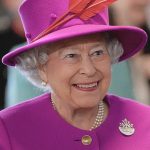
  • John Major – 1991 Commons Statement on Gulf War

    Below is the text of the statement made by John Major, the then Prime Minister, in the House of Commons on 17 January 1991.

    The Prime Minister (Mr. John Major) With permission, Mr. Speaker, I shall make a statement on the start of hostilities in the Gulf in the small hours of this morning.

    Aircraft of the multinational force began attacks on military targets in Iraq from around midnight Greenwich mean time. Several hundred aircraft were involved in the action, including a substantial number of RAF aircraft. The action was taken under the authority of United Nations Security Council resolution 678 which authorises use of all necessary means, including force, after 15 January to bring about Iraq’s withdrawal from Kuwait.

    The action was taken after extensive consultation with the principal Governments represented in the multinational force and following direct discussions between President Bush and myself over a period of weeks. It was taken only after exhaustive diplomatic efforts through the UN, the European Community, Arab Governments and others to persuade Saddam Hussein to withdraw peacefully.

    The action is continuing. Attacks have been directed at Iraq’s military capability, in particular airfields, aircraft, missile sites, nuclear and chemical facilities and other military targets. Reports so far received suggest that they have been successful. Allied aircraft losses have been low. I regret to inform the House that one RAF Tornado from later raids is reported missing.

    The instructions issued to our pilots and those of other forces are to avoid causing civilian casualties so far as possible.

    Our aims are clear and limited. They are those set out in the United Nations Security Council resolutions: to get Iraq out of Kuwait-all of Kuwait; to restore the legitimate Government; to re-establish peace and security in the area; and to uphold the authority of the United Nations.

    As I explained in the debate in the House of Commons on Tuesday, it is only with the greatest reluctance that we have come to the point of using force as authorised by the Security Council. We did so only after all peaceful means had failed and Saddam Hussein’s intransigence left us no other course. We have no quarrel with the people of Iraq. We hope very much for a speedy end to hostilities. That will come about when Saddam Hussein withdraws totally and unconditionally from Kuwait. Our military action will continue until he comes to his senses and does so.

    Most of all, our thoughts go to the men and women of our forces and their families who wait anxiously at home. [HON. MEMBERS: “Hear, hear.”] They have our wholehearted support and our prayers for a safe return home.

  • Queen Elizabeth II – 1991 Queen’s Speech

    queenelizabethii

    Below is the text of the speech made by HM Queen Elizabeth II in the House of Lords on 31 October 1991.

    My Lords and Members of the House of Commons,

    I look forward to visiting Australia in February, the European Parliament and the Council of Europe in Strasbourg and Malta next May, France in June and Germany in October.

    My Government attach the highest importance to maintaining our security. For nearly half a century NATO has formed the cornerstone of our defences. It will continue to be the principal focus, but the dissolution of the Warsaw Pact and the other welcome developments in the Soviet Union and Eastern Europe permit changes to NATO’s strategy and will enable us to maintain our security with smaller forces. Nevertheless instability and other risks remain in Europe and elsewhere, and substantial and effective nuclear and conventional forces will be maintained.

    The United Kingdom will work for balanced and verifiable arms control agreements including early ratification of the Conventional Armed Forces in Europe Treaty. Efforts will continue to control the proliferation of weapons of mass destruction and to encourage greater international responsibility in the transfer of conventional weapons. The completion of multilateral negotiations on the abolition of chemical weapons will be pursued.

    My Government will require full, unconditional compliance by Iraq with the United Nations Security Council Resolutions, including the disposal of its missiles and weapons of mass destruction. They will press for long-term peace in the Middle East, including a settlement of the Palestinian problem. They will continue their efforts to secure the release of hostages in the Middle East.

    They will continue to work for a stronger, more effective United Nations.

    My Government will, with our Community partners, pursue the successful conclusion of the Uruguay Round of multilateral trade negotiations. Within the Community, they will continue to play a constructive role in the two Inter-Governmental Conferences on Political Union and Economic and Monetary Union; and will work to complete the Single European Market, to promote budgetary discipline, and to reform the Common Agricultural Policy. They will prepare for the United Kingdom’s Presidency of the Community beginning on 1st July 1992.

    The United Kingdom will continue to develop our good relations with the Soviet Union and its republics, and to encourage their integration into the world economy; and will work to help Estonia, Latvia and Lithuania re-establish themselves in the international community.

    My Government will further encourage the development of democratic institutions and market economies in central and eastern Europe; and pursue the completion of Association Agreements with Hungary, Poland and Czechoslovakia. They hope for a peaceful settlement in Yugoslavia. They will contribute constructively to the Helsinki Conference on Security and Co-operation in Europe.

    My Government will encourage all sides in South Africa to pursue peaceful means of constructing a democratic, non-racial society.

    A substantial aid programme aimed at promoting sustainable economic and social progress and good government in developing countries will be maintained.

    My Government will continue to support the Commonwealth.

    My Government will continue to administer Hong Kong in the interests of its people and to co-operate with China in implementing the Sino-British Joint Declaration.

    My Government will continue their fight against terrorism in the United Kingdom and elsewhere. They will vigorously pursue their policies to combat drug trafficking and misuse of drugs, nationally and internationally.

    The United Kingdom will work for a successful United Nations Conference on Environment and Development next June.

    Members of the House of Commons,

    Estimates for the Public Service will be laid before you.

    My Lords and Members of the House of Commons,

    My Government will pursue, within the framework of the Exchange Rate Mechanism, firm financial policies designed to reduce inflation further and maintain the conditions necessary for sustained growth. They will promote enterprise and training and improve the working of the economy. They will continue to prepare for the privatisation of the British Railways Board and the British Coal Corporation.

    They will maintain firm control of public spending with the aim of keeping its share of national income on a downward trend over time.

    My Government attach the highest priority to improving public services. They will implement the programme of reform in the White Paper on the Citizen’s Charter. including bringing forward Charters for individual public services.

    Legislation will be introduced to reinforce the regulation of privatised utilities.

    Legislation will be introduced to provide for a new council tax, to establish a review of local government structure in England, and to enhance competitive tendering for local authority services.

    Action will be taken to improve quality and choice in education. Legislation will be introduced to reform funding of further education and sixth form colleges and to reform higher education in England and Wales, and to make information available about the performance of individual schools.

    My Government will continue to develop policies to enhance the nation’s health and to improve the effectiveness of the health and social services, and the social security system.

    Work for the regeneration of our cities will continue.

    A Bill will he introduced to enable applications for asylum in the United Kingdom to be dealt with quickly and effectively.

    A Bill will be presented to create an offence of prison mutiny and to increase the maximum penalty for aiding prisoners to escape.

    Legislation will be introduced to revise health and safety arrangements for offshore installations.

    A Bill will be introduced to replace private legislation as the means for authorising transport development schemes.

    A Bill will be introduced to provide for a Cardiff Bay Barrage.

    For Scotland, legislation will be introduced to reform further and higher education.

    In Northern Ireland, My Government will resolutely seek to defeat terrorism through the even-handed and energetic enforcement of the law; to promote political progress; to strengthen the economy; and to create equality of opportunity and equity of treatment for all sections of the community. They will maintain positive relations with the Republic of Ireland.

    Legislation will be introduced to improve the supervision of charities.

    Other measures will be laid before you.

    Mr Lords and Members of the House of Commons,

    I pray that the blessing of Almighty God may rest upon your counsels.

  • John Major – 1991 Statement on the 1991 European Council Meeting at Maastricht

    johnmajor

    Below is the text of the speech made by John Major, the then Prime Minister, in the House of Commons on 11 December 1991.

    The Prime Minister (Mr. John Major): With permission, Mr. Speaker, I should like to make a statement on the European Council in Maastricht which I attended with my right hon. Friends the Foreign Secretary and the Chancellor of the Exchequer.

    The European Council has reached agreement on a treaty on European union. The relevant texts have been deposited along with the presidency conclusions. The House will be invited to debate the outcome next week.

    Let me set out the main provisions of the agreements we reached. The treaty covers economic and monetary union and political union. It follows the structure for which the United Kingdom has consistently argued.

    The treaty creates a new legal framework for co-operation between member states in foreign and security policy and in the fight against international crime. That co-operation will take place on an intergovernmental basis outside the treaty of Rome. That means that the Commission will not have the sole right of initiative and the European Court will have no jurisdiction.

    On defence, we have agreed a framework for co-operation in which the primacy of the Atlantic alliance has been confirmed and the role of the Western European Union has been enhanced.

    As the House knows, there was strong pressure over many months for all aspects of co-operation to come within European Community competence. That was not acceptable to this country. Instead, an alternative route to European co-operation has been opened up. I believe that this will be seen as an increasingly significant development as the Community opens its doors to new members, and more flexible structures are required.

    I turn now to the main features of the text. The treaty provides for the possibility that member states will wish to adopt a single currency later this decade, but they can do so only if they meet strict convergence conditions-conditions for which the British Government have pressed from the outset. These cover inflation, budget deficits, exchange rate stability and long-term interest rates.

    A single currency may come into being in 1997, but only if a minimum of seven countries meet the convergence conditions, and eight of the Twelve vote in favour. The treaty lays down that a single currency will come into being by 1999, but only if those convergence conditions are met and only for those countries which meet them. It is therefore highly uncertain when such a currency will be created and which countries it will cover.

    In the House on 20 November, I said that there must be a provision giving the United Kingdom the right to decide for ourselves whether or not to move to stage 3. That requirement has been secured. It is set out in a legally binding protocol which forms an integral part of the treaty. The protocol was drafted by the United Kingdom and fully protects the position of this House. The effect of the protocol is as follows. We have exactly the same option to join a single currency at the same time as other member states if we wish. We shall be involved in all the decisions. But, unlike other Governments, we have not bound ourselves to join regardless of whether it makes economic or political sense.

    The treaty text on political union provides for enhanced intergovernmental co-operation on foreign and security policy, on defence policy and in the fight against terrorism, drug trafficking and other crimes.

    International crime knows no frontiers. Terrorists and other criminals must not be allowed to escape justice or to retire abroad with the proceeds of their crime. This text gives us a new basis for co-operation with our partners in bringing these criminals to justice.

    The text provides for joint action in foreign policy, building on what was already agreed in the Single European Act. But, as I told the House on 20 November, if Britain needs to act on its own, it must be free to do so. The treaty meets that requirement. Joint action can take place only if we agree. Where there is no joint action, each member state is entirely free to act on its own. If, after joint action has been agreed, a member state needs to take its own measures to meet changed circumstances, it may do so.

    There was pressure from other member states to take foreign policy decisions by majority voting. I was not prepared to agree that Britain could be outvoted on any substantive issue of foreign policy. Some of our partners also sought to draw a distinction between decisions of principle, where unanimity would apply, and implementing decisions which could be subject to majority voting. No one was able to explain how that distinction would work. I told the European Council that, if such occasions did arise, we should consider the case for majority voting on its merits. The treaty reflects our view. It provides that the Council may, but only by unanimity, designate certain decisions to be taken by qualified majority voting. But we cannot be forced to subject our foreign policy to the will of other member states. We have, in fact, preserved unanimity for all decisions where we decide that we need it.

    We are agreed that Europe must do more for its own defence. We should build up the Western European Union as the defence pillar of the European union, but the treaty embodies the view set out in the Anglo-Italian proposal two months ago, and endorsed at last month’s summit of the North Atlantic Treaty Organisation that whatever we do at European level must be compatible with NATO. The WEU must in no way be subordinate to the European Council. It is not. We have avoided the danger of setting up defence structures which would compete with NATO. We have created a framework in which Europe can develop its defence role in a way which complements the American presence in Europe and does not put it at risk.

    In these negotiations, we put forward a series of proposals designed to be of direct benefit to the European citizen. All of them were accepted. The Community has agreed to increase the accountability of European Community institutions; to strengthen the European Parliament’s financial control over the Commission; to allow the European Parliament to investigate maladministration and to appoint a Community ombudsman accessible to all Community citizens; to build up the role of the Court of Auditors, which becomes an institution of the Community; and to ensure compliance with Community obligations by giving the European Court of Justice power to impose fines on Governments who sign directives but subsequently do not implement them.

    We wanted-and secured-a sensible enhancement of the role of the European Parliament. We did not accept the proposal made by other member states for a power of co-decision between the Parliament and the Council. As I told the House on 20 November, the Council of Ministers must be the body that ultimately determines the Community’s laws and policies.

    I also said then that we were prepared to consider some blocking power for the European Parliament. That has now been agreed. The treaty sets up, in a limited number of areas, a conciliation procedure where there is disagreement between the Council and Parliament. In the last analysis, the Parliament would be able to block a decision in those areas, but only if an absolute majority of its members turned out to vote the proposal down.

    The House has been rightly concerned at the creeping extension of Community competence over the last few years. The Commission has often brought forward proposals using a dubious legal base, and the Council has found it difficult to halt that practice in the European Court. We have taken significant steps to deal with that problem. First, the structure of the treaty puts the issues of foreign and security policy, interior and justice matters and defence policy beyond the reach of the Commission and the European Court. Secondly, the treaty itself embodies the vital principle of “subsidiarity”, making it clear that the Community should only be involved in decisions which cannot more effectively be taken at national level. Thirdly, in some areas-notably health protection, educational exchanges, vocational training and culture-we have defined Community competence clearly for the first time. Fourthly, there will be no extension of Community competence in employer-employee relations-the so-called social area. We have a high standard of social protection in this country. Our national health service, free at the point of use, is the envy of many in Europe, but we recognise the Community’s social dimension. Also-unlike some of our European partners-we have implemented that dimension too ; 19 out of the 33 measures in the social action programme have been agreed. But there is no reason for the Community to get involved in employment legislation, which must be for each country to decide for itself.

    Over the past 12 years, we have transformed labour relations. In 1979, 29 million working days were lost in strikes. Last year the figure was less than 2 million. I was not prepared to see that record put in jeopardy. Nor was I prepared to risk Britain’s competitive position as the European magnet for inward investment. I was not prepared to put British jobs on the line. [Interruption.]

    Mr. Speaker : Order. A great many people outside the House are interested in what the Prime Minister has to say.

    The Prime Minister : Many of our partners have a wholly different tradition of employment practice which is reflected in the separate arrangements which they have agreed, which will affect only their countries and for which only they will pay. But even among these member states there are many who fear the effect of Community measures on their jobs and their ability to compete. Our arguments are based not only on our national interest but on the risks we perceive to the competitive position of the Community as a whole. This week’s events in the Soviet Union were a salutary reminder that reform in the Community is not an end in itself. The Community’s primary task must be to extend its own advantages of democracy, stability and prosperity to eastern Europe. At British initiative, we committed ourselves at Maastricht to the further enlargement of the Community, starting with the EFTA countries. When they and, in due course, the new democracies of eastern Europe are ready to join the Community, we shall be ready to welcome them. With this in mind, the Commission will report on enlargement to next June’s European Council in Lisbon. Thereafter, it will be for the British presidency to carry that work forward. I look forward to doing so.

    We agreed a number of statements on foreign policy issues. I will single out two of them. On the Soviet Union, the European Council calls on the republics to respect the rights of minorities, to implement international agreements on arms control and nuclear non-proliferation, to control and secure their nuclear weapons, and to honour their obligations in respect of the Soviet Union’s external debt.

    The European Council has endorsed the demands which we, France and the United States have made to the Libyan Government requiring them to abandon their support of terrorism and to hand over the alleged perpetrators of the Lockerbie bombing.

    The founders of the Community knew that they could not create a viable organisation if they established goals that could never be achieved. In talking about European union, we are talking about concepts that have to be cast in the reality of national legislation and everyday life. The Single European Act started as a grandiose design and ended up as a workmanlike blueprint for a free market. Those treaties have followed the same course.

    Our role has been to put forward practical suggestions-and sometimes to rein in the larger ambitions of our partners. Where we believed their ideas would not work, we have put forward our own alternatives.

    Those can be found throughout this treaty. As with all international negotiations, there has been give and take between all 12 member states. But the process was one in which Britain has played a leading role, and the result is one in which we can clearly see the imprint of our views.

    This is a treaty which safeguards and advances our national interests. It advances the interests of Europe as a whole. It opens up new ways of co-operating in Europe. It clarifies and contains the powers of the Commission. It will allow the Community to develop in depth. It reaches out to other Europeans-the new democracies who want to share the benefits we already enjoy. It is a good agreement for Europe, and a good agreement for the United Kingdom. I commend it to the House.