Tag: 1990

  • Michael Heseltine – 1990 Statement on the Number of Prosecutions Undertaken by the National Rivers Authority

    Michael Heseltine – 1990 Statement on the Number of Prosecutions Undertaken by the National Rivers Authority

    The statement made by Michael Heseltine, the then Secretary of State for the Environment, in the House of Commons on 12 December 1990.

    I understand that the National Rivers Authority brought 3,997 successful prosecutions for all types of offences during its first year of operation. Of these, 3,549 were for fisheries offences, 370 for water pollution offences, 59 for navigational offences and 19 for water resources offences. I shall be reviewing progress with Lord Crickhowell in the near future.

    I attach great importance to securing improvements in environmental standards wherever they are needed. We have established an environmental and economic framework within which decisions will be taken.

  • Michael Heseltine – 1990 Speech on the Community Charge (Poll Tax)

    Michael Heseltine – 1990 Speech on the Community Charge (Poll Tax)

    The speech made by Michael Heseltine, the Secretary of State for the Environment, in the House of Commons on 5 December 1990.

    I beg to move, to leave out from “House” to the end of the Question and to add instead thereof: congratulates the Prime Minister and the Government for their decision to undertake a careful and fundamental review of the community charge; and deplores the fact that despite several unsatisfactory attempts, the Labour Party has failed to come forward with any clear or workable proposals of its own.”. My right hon. Friend the Prime Minister has described the Government’s review of the community charge which he has invited me to lead as very thorough, very constructive and very fundamental. It is time to raise the whole tone of this debate—[Interruption.] I hope that the Labour party will not rule itself out of our continuing discussions.

    The debate is not about who pays how much in each local authority. The issues——

    Mr. Alexander Eadie (Midlothian) rose——

    Mr. Heseltine

    The issues involved far exceed the precise financial impact on particular groups or constituencies of this or that local tax. The heart of the matter is the future relationship——

    Mr. Eadie

    Will the Secretary of State give way?

    Mr. Heseltine

    No.

    The heart of the matter is the future relationship between central and local government, and the relationship that local government will have in its turn with its local community, in the fullest sense.

    These relationships go to the heart of the sort of society that we have and want to have. I make no apology for putting that issue before the House. The question of the proper relationship between central and local government has lurked beneath the surface of policy making in successive Governments for the past quarter of a century. I believe that it is widely recognised that in those 25 years we have not been able to bring ourselves to look at the structure and finance of our local government as two sides of the same coin.

    Mr. Eadie rose——

    Mr. Heseltine

    The time has now come to address both issues together.

    In seeking to improve standards, central Government have begun to change attitudes to the pursuit of value for money, significantly by the establishment of the Audit Commission, but Government have yet to see sufficient progress in raising the quality of services that many local authorities deliver. In advocating accountability, successive Governments have not dealt with the structural and functional weaknesses to make accountability a reality.

    We will not solve this problem unless we are prepared to recognise the proper partnership between the different parts of our democratic system——

    Mr. Eadie rose——

    Mr. Heseltine

    and my first purpose must be to try to bring that about. I shall begin with the Opposition parties.

    Mr. Gould

    Before the Secretary of State goes off on a detour, perhaps he will save us all a great deal of time and trouble by answering the single question that is in the minds of millions of poll tax payers. Will he now commit himself to abolishing the poll tax—yes or no?

    Mr. Heseltine

    There is a certain—[HON. MEMBERS: “Yes or No?”] There is a certain quaintness about the fact that the hon. Member for Dagenham (Mr. Gould) has not been able to answer any questions in three years, but he thinks that I will give him a yes or no answer in three days. [HON. MEMBERS: “Yes or No?”] Let me help the hon. Member for Dagenham and the Labour party.

    Mr. David Clelland (Tyne Bridge) rose——

    Mr. Heseltine

    I shall start with the Opposition parties. If Opposition Members could bring themselves——

    Mr. Eadie

    Will the right hon. Gentleman give way?

    Mr. Speaker

    Order. The hon. Member for Midlothian (Mr. Eadie) is an experienced Member, and he knows that, as the Secretary of State has not given way, he must resume his seat. There is no point in persisting.

    Mr. Heseltine

    If Opposition Members could bring themselves to do so, I should like to take this matter beyond the narrow bounds of party political conflict. The country wishes us to try to identify a stable and just basis for the future development of local government and the provision of local services. I should like to explore with the Opposition parties the extent to which we can establish common principles for the future role and direction of local government. [Interruption.] The country will not have lost sight of the fact that, when we offer to discuss these matters, all we get is baying and divisiveness. [Interruption.]

    Mr. Speaker

    Order. This debate is of great interest not only to every hon. Member in the House but to many other people outside who may well be listening to it. If this din continues, they will not be able to hear it.

    Mr. Heseltine

    What I could hear from the Opposition was not worth hearing.

    I hope that the Opposition will take my proposal seriously, because it might help them in a material way. If they were prepared to enter into dialogue, it might help them to clear their own minds about the answers to questions that have escaped them for so long. I hope that local authorities will recognise that they have an important role to play. They too must help to improve the climate in order to allow these essential developments to flourish.

    Mr. Graham Allen (Nottingham, North)

    Perhaps there was so much noise that the Secretary of State did not hear the question that was posed earlier. Will he answer yes or no about whether he will commit himself to the abolition of the poll tax? That is an easy question. Why does the right hon. Gentleman dodge it?

    Mr. Heseltine

    The hon. Gentleman clearly heard what I said. I said that, in our review, we wish to enter into a dialogue with Opposition parties to see whether we can find a basis of stability in our future relationships with local government.

    Mr. David Blunkett (Sheffield, Brightside)

    So that we may be clear about the matter, will the Secretary of State confirm that he intends to try to take the issue of the poll tax out of party politics and to go for a second review of both the tax and the structure of local government, even though he knows that he has no intention of abolishing the tax? He has no permission to abolish it, on the very simple grounds that it would be the greatest U-turn in political history and a clear admission that we have been right all along.

    Mr. Heseltine

    The hon. Gentleman should appreciate that I am offering the Opposition the chance to contribute constructively to the establishment of a basis for stability within which local government can operate. It is quite apparent that the Opposition have no interest at all in constructive dialogue, because they can produce only negative proposals.

    I hope that local authorities will also recognise that they have an important role to play. They must help us to improve the climate. In the past, I have not been slow to criticise waste and inefficiency in local government. I make no apology for that, and that will continue to be an aspect of criticism. However, I have also paid tribute to the part that local government plays—and should play—in defining and giving expression to our quality of life.

    The hon. Member for Dagenham spent some time quoting speeches that I made when I was a Back Bencher. I am not sure whether he was wise to call in aid what Back Benchers say about their party’s policies. If the hon. Gentleman listened to what his Back Benchers say about Labour’s policies, he would realise that Back Benchers have a degree of freedom and discretion which is at the heart of our parliamentary democracy.

    I do not for one moment attempt to escape from the fact that I have been involved in these matters before. Like many right hon. and hon. Members, I have views that I have expressed, and they are on the record. I have always assumed that that is what Back Benchers are for. Today, as Secretary of State, it is my responsibility to start afresh; in doing so, I neither overstate the possible, nor deny the potential.

    Mr. Allen McKay (Barnsley, West and Penistone)

    The Secretary of State may or may not be aware that the offer of co-operation was made three years ago, in Committee on the Local Government Finance Bill, when my hon. Friend the Member for Copeland (Dr. Cunningham) made the then Secretary of State for the Environment the same offer. He pointed out the dangers facing the Government, and we told the Government to forget the poll tax altogether. We said that they should take the Bill back and that we should look together at a proper system of local government funding. The Secretary of State’s present offer is three years too late. Does his present offer of co-operation include the abolition of the poll tax if it is found to be at fault?

    Mr. Heseltine

    My position is absolutely clear. We are conducting a comprehensive review, as defined by my right hon. Friend the Prime Minister. In that context, we rule nothing in and nothing out. In that spirit, I believe that the Opposition will come to regret their instant hostility to my offer.

    Mr. Malcom Bruce (Gordon)

    Does the Secretary of State accept that my party believes that his philosophical approach is correct and that we must have a system for local government that will be permanent and which will last? Does he therefore accept that we would be willing to discuss with him all possible options, provided he repeats that no options, including complete abolition, are ruled out?

    Mr. Heseltine

    I made it quite clear that no options are ruled in and no options are ruled out. The observations of the hon. Member for Gordon (Mr. Bruce) are a great deal more statesmanlike than the instant party, divisive views of the hon. Member for Dagenham.

    Mr. Donald Dewar (Glasgow, Garscadden)

    I want to understand what is being offered to me and my right hon. and hon. Friends. The right hon. Gentleman referred to a constructive dialogue. What is he actually offering? Is he suggesting all-party talks or that other parties join the working party? What is he suggesting exactly?

    Mr. Heseltine

    We can all welcome the thinking man’s contribution from the Labour party. The hon. Member for Glasgow, Garscadden (Mr. Dewar) has suddenly spotted the trap into which the hon. Member for Dagenham fell from a million miles. My offer could not have been clearer. I am offering to consult the Opposition parties to see whether we can find a basis of stability for the relationship of this House with local government. That could not have been clearer, and it is recorded in Hansard.

    Mrs. Margaret Ewing (Moray)

    I am grateful to the right hon. Gentleman for recognising that a variety of views are held by hon. Members who represent different Opposition parties on what should replace the community charge. My party has made that clear with our amendments and in our letter to him. Is the right hon. Gentleman to introduce a time scale for the completion of the dialogue to which he has referred?

    Mr. Heseltine

    I hope that the hon. Lady will accept my assurance that that matter will be addressed in my speech as I make progress.

    Mr. John D. Taylor (Strangford)

    First, I take the opportunity of congratulating the right hon. Gentleman on his return to the Government Front Bench. I can well understand his difficulty in answering the question yes or no, but surely he can answer with a yes or a no the question whether he will extend the poll tax. There still remains one party in Northern Ireland, the Conservative party, whose spokesmen want an extension of the poll tax. It is the only party left in the nation that takes that view. Will the right hon. Gentleman confirm that he will not extend the poll tax to Northern Ireland?

    Mr. Heseltine

    I said that I rule nothing in and rule nothing out but I hope that the House will understand if I rule out the concept that the poll tax should be extended to Northern Ireland.

    Mr. Dafydd Wigley (Caernarfon)

    I welcome the Secretary of State’s undertaking that nothing whatsoever is ruled out. It will obviously take time to examine such a broad scenario. Can he give an undertaking that, in the meantime, some assurance can be given to the beleaguered poll taxpayers that some relief will come as from next April?

    Mr. Heseltine

    I hear clearly what the hon. Gentleman says, and my answer is the same as that which I gave to the hon. Member for Moray (Mrs. Ewing). If the hon. Gentleman will allow me to expand my speech, I think that he will find that these matters will be thoroughly covered.

    Mr. Dave Nellist (Coventry, South-East)

    Will the Secretary of State give way?

    Mr. Speaker

    Order. I think that the Secretary of State has now given way to all the minority parties in the House. I think that it would now be wise to get on with the debate. Hon. Members will have an opportunity later of expressing their views if they are called.

    Mr. Heseltine

    I think that the House will feel that I have tried to reflect the interests of the House. If I give way further I might be trespassing on what I have to say later. The hon. Member for Coventry, South-East (Mr. Nellist) might have a small part to play in what I have to say.

    Mr. Gould

    I have been listening carefully to the Secretary of State. He appears to be saying that he and his party are now so bereft of ideas that they are prepared to come a-begging and to ask others whether they might be prepared to help. As we have already developed a fully worked out position, I am prepared to make a counter-offer, from a position of some strength.

    If the right hon. Gentleman would care to talk on the basis of an agenda on which the abolition of the poll tax is the first item, and a proper consideration—with the help of the civil service and the Government’s computers—of our alternative is the second item, I am prepared to make available to him, free of charge, our fully worked out proposal. I make a further offer. If the right hon. Gentleman recognises the merits of what we propose, we shall support him in any Division that takes place over any legislation that he brings forward to implement our proposals.

    Mr. Heseltine

    I am grateful to the hon. Gentleman for giving me an additional copy of his party’s policy. It contains only one fact—the price, and that is too high. I congratulate the hon. Gentleman on a new record. He has been the proud possessor of the ability to move from policy position to policy position at three-day intervals. He has now done that in about three minutes. Having rejected what I have been saying, he now realises—with the assistance of his right hon. Friends—that I was actually giving the Opposition the most generous opportunity that they have ever been offered.

    Several Hon. Members rose——

    Mr. Heseltine

    I think that I should continue arid say something more about my attitudes towards dealing with the matter.
    I yield to no one in my belief that central Government must exercise their mandate; that in the end, power lies in this House. Indeed, all Governments insist that the mandate upon which they were elected should prevail. The Labour party must learn to accept that in opposition, just as surely as they have always accepted it in government.

    Certainly, no Chancellor of the Exchequer can tolerate a challenge to his authority to manage the economy with prudence and discipline. No Secretary of State can turn his back on inadequate standards simply because they are administered by a local authority. Indeed, I would go further—I do not believe that this House would have legislated to share so much of its responsibility for financial prudence or for the quality of services if it had believed that local authorities would claim the right to frustrate or undermine the mandate of central Government.

    I have made as clear as I can my belief that, with the authority of Parliament, the will of Governments must prevail. However, that clear statement does not and should not close the options for a partnership with local government that provides for civic pride and local initiative; nor should it close the potential for men and women to have their desire to serve their community fully satisfied within their own local authority; nor should it divert our attention in Parliament, or outside in local government, from the responsibility to deliver quality of service and value for money, without which it is the nation and its people that pay an unacceptable price.

    I believe that now, far more than appeared possible 10 years ago, the importance of partnership is recognised. For all the rhetoric, and despite all the difficulties in the relationship between central and local government, there is a sense of partnership and co-operation in our inner cities, very much satisfying the aspirations that I held years ago. Despite all the tensions of the past 10 years, central and local government are now able to work together to regenerate some of our worst urban areas. Local authorities throughout the country, of all parties, have accepted the vital role of the private sector in economic revival——

    Mr. Neil Kinnock (Islwyn)

    The right hon. Gentleman is saying a great deal about partnership and the role that he wants to be developed between national and local government. Would he care to reflect on the fact that, when he was previously Secretary of State for the Environment, the amount of central Government expenditure as a proportion of total local government expenditure fell from 61 per cent. to 52 per cent., and that over the same period there were education cuts of 16 per cent.?

    Mr. Heseltine

    Those figures are not immediately in my mind. I remind the right hon. Gentleman that, when his party was in government, the collapse of local authority council building was imposed upon them by the International Monetary Fund. The reason why our waters and our sewers are in such a state today is that the Labour Government slaughtered the capital programmes. It is nothing short of hypocrisy for the right hon. Gentleman to try to deny what his Government were forced to do by the profligacy of their economic mismanagement.
    I repeat what I profoundly believe—that, despite all the tensions of the past 10 years, central and local government can now work together to regenerate life in some of our worst urban areas. Local authorities are working together. Local authorities which told me 10 years ago that the message of involving the private sector was unacceptable are now at the forefront in their plans to do exactly that.

    In all our big cities, there are now collaborative projects which show the right way ahead. The Birmingham Heartlands initiative is bringing together the city council, a number of private companies and central Government to regenerate east Birmingham.

    In St. Helens on Merseyside, Ravenhead Renaissance is a consortium of private sector companies and the local council. With Government support, it is regenerating a large rundown area of the town.

    Mr. John Evans (St. Helens, North) rose——

    Mr. Heseltine

    In Newcastle, the Cruddas park project to regenerate two council estates grew out of a private 321sector initiative. In Glasgow, there is a striking example of the transformation that can be achieved when central and local government work in partnership with the private sector. If hon. Members doubt the success of that partnership, I urge them to go to Glasgow and see for themselves what is being achieved by partnership between local authorities and the private sector.

    Mr. John Battle (Leeds, West) rose——

    Mr. Heseltine

    There is now a range of co-operation in the network of enterprise agencies giving advice and support to small companies. The Groundwork Trust is using the enthusiasms of the voluntary sector, the enterprise world and local authorities to clean the rural fringe in many of our older towns. [Interruption.] The nation will be dispirited by the Opposition’s total indifference to all those major advances.

    Mr. Thomas Graham (Renfrew, West and Inverclyde) rose——

    Mr. Heseltine

    For a century, the Opposition have shown a deep embittered resentment at any constructive attempts to bring new life to the inner cities. They have a vested interest in talking down the success of Scotland. Time and time again, when they get the opportunity, they shout down anyone with whom they disagree.

    Several Hon. Members rose——

    Mr. Heseltine

    I take a wholly more optimistic view. There has been a change of culture in Britain. Just as the flow of private sector cash into urban renewal has followed from the Government’s initiatives, there is now a widening range of opportunities in our run down areas.

    It is not simply a question of urban renewal. My Department has to deal with environmental issues. The entire nation is preoccupied with the view that we should develop an international presence in environmental matters. It is gravely damaging——

    Mr. Brian Wilson (Cunningham, North)

    On a point of order, Mr. Speaker.

    Mr. Speaker

    I hope that it is a point of order.

    Mr. Wilson

    It is a genuine point of order, Mr. Speaker. As I understand it, the debate is entitled “Abolition of the Poll Tax”. It is not an opportunity for a tour d’horizon to cover the five years during which the Secretary of State has been out of government. May we have your guidance on whether the Minister should address himself to the subject of the debate?

    Mr. Speaker

    If the hon. Gentleman looks at the Order Paper, he will see that the Secretary of State is moving his amendment, and that is what he is addressing himself to.

    Several Hon. Members rose——

    Mr. Speaker

    Before we proceed, in what I hope will be good order, I should add that many of those hon. Members who are seeking to intervene are the very same hon. Members who are seeking to participate in the debate. It will be difficult for the Chair to call them if they seek to delay the proceedings in this way.

    Mr. Stuart Bell (Middlesbrough)

    Further to that point of order, Mr. Speaker.

    Mr. Speaker

    Order. As there was no point of order, the hon. Member cannot raise anything further on it.

    Mr. John Home Robertson (East Lothian)

    On a point of order, Mr. Speaker.

    Mr. Speaker

    It is really not good practice to seek to intervene in a speech by making a point of order, but I will allow the hon. Member to do so on this occasion.

    Mr. Home Robertson

    You, Mr. Speaker, drew attention to the fact that the Secretary of State is speaking to his own amendment, which is all about the poll tax. His comments about urban renewal and the international perspective are fascinating stuff, but they have nothing to do with the business before the House.

    Mr. Speaker

    Every right hon. and hon. Member has a right to make points in his own way. I have heard nothing that is out of order. If the hon. Member will examine the Government amendment, he will clearly see that the Secretary of State was perfectly in order.

    Mr. Heseltine

    It is inconceivable that one could address the subject of financing local government by whatever means and not be preoccupied with local government structure or the quality of the services for which the money is to be raised. I am glad that, despite the Opposition’s totally artificial and almost irrelevant attitude, local Labour councils know that they must co-operate with central Government in the ways to which I referred.

    Mr. Harry Barnes (Derbyshire, North-East)

    Will the right hon. Gentleman give way?

    Mr. Heseltine

    At the moment, no. The hon. Gentleman does not even pay his poll tax.

    Mr. Kenneth Hind (Lancashire, West)

    Does my right hon. Friend agree that, given the way that he has presented the review, which provides for open and honest consultation, the electorate and others outside the House who are watching this debate will not understand artificially imposed conditions on his offer of discussions, designed to avoid councils participating in what many of them accept is an absolutely necessary reform of local government finance?

    Mr. Heseltine

    I am grateful to my hon. Friend. The general public will understand exactly the role that the Labour party is playing this afternoon. I greatly regret it, because from my talks with councillors of all political persuasions, I know full well that they want stability. They want to know the nature of the relationship and that it will stretch into the future. The Opposition are trying to frustrate a genuine attempt to find a constructive way forward.

    I must refer to one more area in which co-operation is essential in the national interest. Local and central Government have an inseparable role in attracting inward investment—discretionary and footloose—to depressed areas of Britain where jobs need to be created. That will not happen if an alien atmosphere is created by Labour for party political reasons.

    In all those matters, it is increasingly obvious that a new relationship is emerging between local and central Government. Local authorities are beginning to perceive and come to terms with their new strategic role as enabling authorities, as opposed to providers of all services. All that is fostering a new spirit of co-operation at local level, as private companies compete with local services, as owners intermingle with tenants, and as parents and teachers play an increasing role in school management. All those trends are to be welcomed, and are characteristic of the change in attitudes that occurred under the premiership of my right hon. Friend the Member for Finchley (Mrs. Thatcher).

    The 1984–86 review of local finance, which led to the proposals for the community charge, concerned itself very much with the issue of accountability. It explored the mechanisms of central funding, which produced local tax rates, which bore little relation to local spending decisions. It found that, in many areas, only a minority of voters contributed to the cost of local services, and it found that in some areas much of the extra cost of services was met by those without a vote. That situation had to be addressed.

    In practice, under our previous arrangements, many who consumed the local services were paying relatively little or nothing for them. That is why there has been a broad measure of support for the simple idea that nearly everyone should make a contribution to the cost of the local services that they consume. It is not that principle which has caused difficulty.

    One thing that I have always made absolutely clear is that there is no quick fix for this problem. For next year, my predecessor announced some important proposals, which will significantly improve the financial position of local authorities and local charge payers. I am now considering the response to the consultation on those proposals. I will place the statutory reports before the House in the light of those comments, once colleagues have considered the matter.

    As all right hon. and hon. Members know, there is no prospect whatsoever that a final answer can be designed, passed through Parliament and implemented in under a two-year time scale. A complete solution may require a longer time scale. That is a matter of hard reality. But: that is not an excuse for procrastination or delay. The issues involved have been explored many times. I must keep open, however, a proper sense of timing. Our review could well identify a programme, divided into quite different time perspectives. It may well be that what is required is a programme of building blocks, constructed logically and carefully towards a clearly defined objective.

    In the context of such a review, it is obviously right to explore why it is that the ambitions originally set for the community charge have not found the necessary degree of public support and understanding.

    An argument which is much advanced is that, if the charge had been introduced at a lower level, its underlying principles of accountability and broad coverage of most of those who benefit from local services might have been more readily accepted. We shall consider whether that is true; but there is one truth which cannot be avoided. Local authorities as a whole increased their spending by nearly 13 per cent. this year—and by nearly a quarter in only two years. It is difficult to escape the conclusion that local authorities have sought to use the turbulence of the changeover to mask their spending increases and to pass the blame on to others.

    There is another truth. The law is the law. Bills legally issued under the authority of this place must be collected. There can be no dining a la carte with the law of the land. I want to say just a brief word to Opposition Members who hold to the constitutional novelty that they are the arbiters of what is legal and what is not, and particularly that they are justified in refusing to pay. I cannot abide the concept that many on low incomes from limited savings in their twilight years—[Interruption.] Of course the Opposition do not care, but we care. I cannot abide the concept that such people should be expected to pick up the tab for those who are elected to this House in the name of the world’s foremost parliamentary democracy, and then claim a bogus veto over the mandate of the people. It is neither moral nor fair; nor is it constitutionally justified. The Labour party would never tolerate it from us if we were in opposition, and it is unforgivable that they should allow it to themselves in the present context.

    Mr. Nellist

    Is it not a fact that, had it not been for the 14 million who have yet to pay the poll tax, the Secretary of State would not be here this afternoon announcing a review suggesting changes or possibly abolition? Furthermore, if the right hon. Gentleman is so concerned about people on low incomes, why—despite his announcement of a two—year review-is his right hon. Friend the Secretary of State for Social Security still imposing on every local authority in the country a £100 million cut in the Government payments made to them to provide rebates for the lowest paid? He is cutting those Government rebates from 97 per cent. to 95 per cent.

    Mr. Heseltine

    As the hon. Gentleman knows, one in four people receive a rebate. He has asked the wrong question: the question for the House is whether, by majority decision, we create the legislation that governs the country, or whether the hon. Gentleman’s entrenched bigotry imposes a veto on what the majority of us decide here. But it is not just a question of the hon. Gentleman’s having a veto; it is a question whether a large number of people who are a great deal less well off than he is should be expected to pay for his self-indulgent hypocrisy.

    We are determined that the taxes that we advocate should be seen to be fair, and the British public must be persuaded that the arrangements proposed at the conclusion of the review will be fair. Our priority must now be to address their concerns as fully as possible.

    Our second priority is to put the relationships between central and local government on a healthier footing—to replace conflict with partnership, preferably within a widely accepted consensus about their proper roles. This is not a debate about complete localism or complete centralism; a myriad of options lie in the middle ground. Some we may be quick to implement, while others will take longer. The task now is to identify what is available, and what will serve us best in the long term. That is why the Government have decided to include in its review issues of structure alongside issues of finance. If we can resolve those matters, there is, I believe, a chance for a new, constructive phase in the development of local government.

    In all my consideration of these difficult issues, I cannot escape the fact that some of the greatest moments in British history have coincided with the times of resolve, civic pride and municipal initiative in our great towns and cities. I am therefore determined not to set a rigid timetable for our review. I cannot anticipate what agreements can be found; I can only promise to listen with care, to decide, with my colleagues, on the way forward once our review is complete, and then to act with determination. That is the responsibility of Government, and the responsibility that we shall discharge.

  • Michael Heseltine – 1990 Speech on the Crisis in the Gulf

    Michael Heseltine – 1990 Speech on the Crisis in the Gulf

    The speech made by Michael Heseltine, the then Conservative MP for Henley, in the House of Commons on 6 September 1990.

    I take issue with the right hon. Member for Plymouth, Devonport (Dr. Owen) on just one small, cavilling point. That is his comment that, if Saddam Hussein had been able to hear our debate he might have taken comfort from it. I do not think that he could take comfort in any way from it. I believe that it reflects overwhelmingly the view of the British people that a great wrong has been done and that Britain is determined to play its full part in putting it right. That is the only conclusion that anyone who has listened to the debate could draw. It is positively healthy that there has been the occasional speech, representing a negligible quantity of opinion, in which a different view has been taken. The very isolation of those speeches indicates the strength of the overwhelming majority in this place.

    The Government’s position I find exemplary. I have said consistently, as have so many others, that the Government have taken precisely the right view from the beginning of the crisis. However much we may have been out of touch during the past two or three weeks—we followed events as best we could, often only through the media of other countries—it is obvious that the process adopted by the Government has continued as it began.

    The position that my right hon. Friend the Prime Minister set out this afternoon is clear and exactly right. It is completely compliant with resolution 661 of the United Nations. The Prime Minister has set out for none to misunderstand her interpretation, backed by the best legal advice available to her. She has made clear, on behalf of the British Government, what she believes the resolution to mean. It means that we shall apply mandatory sanctions, that we shall enforce them and that, within certain circumstances, as my right hon. Friend defined, that might need the use of force.

    It is necessary to have read only the occasional speech of my right hon. Friend the Foreign Secretary to know that the last thing that he wants, the Government want or our allies want is the use of force. No one can have any doubt, however, that in the mind of the Government, and presumably in the minds of our close allies, that context is not ruled out. It is not anticipated in any way in the short term but it is within our interpretation of resolution 661.

    We are an open society and part of the open world. If there are those in the United States who believe that we have misinterpreted the resolution and who wish to disown what we claim to be the meaning of the vote that they cast, they have plenty of time to make their position clear. They can start to do that now. They can react at once to what we are saying the resolution means by saying that, when they voted for it they thought that it meant something else. If they do not do so, they cannot complain if we act upon the interpretation that we set out at an early stage.

    The issue is whether we should return to the United Nations for further clarification if sanctions do not achieve the desired objective. Powerful arguments were put by the Leader of the Opposition and reinforced by the right hon. Member for Leeds, East (Mr. Healey). It is not that the law may be defective, but that there is a political dimension to the enforcement of that law which it might, on some subsequent occasion, be wise to pursue as opposed to legally necessary.

    I wish to put another view. We all want the sanctions to work—that is not in question—but let us suppose we reach a stage where it is perceived that they are not working. We are not playing cricket. The object then would be to win at the lowest possible, though doubtless awful, cost. A lonely judgment will have to be made by a limited number of people about whether their action, unheralded, would be more or less likely to secure the objectives of the original resolution. They would have to weigh that against the advance warning of a change of tactics that going back to the United Nations would imply.

    The announcement of a new dimension to the policy could provoke a first strike—or, as the right hon. Member for Plymouth, Devonport said, a second strike, but from the Iraqis. Do we want that? I can think of no argument for saying that in a few weeks or a few months we should alert the Iraqis to a new dimension to our policy. Our task then will be to win quickly and decisively. That is the overwhelming reason why I hope that my right hon. Friend the Foreign Secretary, in replying to the debate, will give no further assurances. All the necessary assurances have already been given in the clearest language. To do so would only undermine the strength and clarity of our position in a way that he would be the last person to want to do.

    The tragedy of the crisis is that it is dynamic and events are unfolding. I have agreed with the right hon. Member for Devonport from the beginning—I do not think that the Iraqis will launch an attack on us or move into Saudi Arabia, because that is the way for them quickly to lose. They will try to bust the sanctions. By now, they will be combing the world to find ways to do what sanctions busters have always done, which is to get around the sort of peaceful coercion that the United Nations has imposed. No one knows whether they will succeed, but that is their best chance of success.

    If that happens, the dynamics will unfold and the moderate Arab leaders will begin to wonder whether they can win. The advocates of fundamental Islam will latch on to a new hero who is likely to advance their cause. The kingdoms of the Gulf will begin to wonder whether they can contain the ever larger numbers of people injected into their societies to spread the word that their days are numbered. All over the world, people will begin to say, “It is the Americans, the imperialists, the western powers and no one else.” Indeed, they will probably say that it is just the Americans. We have heard that today, but, to the source from which it came, it is always just the Americans. If the Iraqis got out of Kuwait as quickly as the Americans got out of Grenada or Panama, who would be complaining as loudly as we are likely to have to do?

    The most difficult point of the debate—it is not just enmeshed in this particular policy dilemma—is that the reason why the Americans are hated is because they can act. They are prepared and they have the strength and the coherence to move decisively and quickly—

    Mr. Faulds

    Even if they are wrong.

    Mr. Heseltine

    That is a judgment that the hon. Gentleman must defend, as he did in his speech. This House overwhelmingly believes that, in this case, the Americans are right.

    The issue is whether the Americans want to be isolated, alone and the big brother. Like so many right hon. Members, I served as a Defence Secretary in the NATO alliance. I agree that the Americans hustled us along. We have been trying to get the initiatives right and trying to keep our nerve. It would be a brave hon. Member who said that we could have done it without them. I could not say, with my hand on my heart, that all the European members of the NATO alliance were always in such agreement that they could be relied upon. I remember the footnotes and the qualifications. I remember the phone calls from national Parliaments saying, “Don’t do this, qualify that, hold back, wait a minute.” It was always the Americans who took the lonely, tough decisions, and that is where we are today. They have taken those decisions, and because our Government were the first to back them, we have contained the appalling damage of the occupation of Kuwait.

    Now we want to try to help, but how? The way to help is to strengthen the American support. Other nations of like mind to ourselves should increase their commitment, whether military or financial, to the American endeavour. The greater the endeavour that we make, the more we can ask to be consulted and the more influential we shall be in—

    Mr. Deputy Speaker (Sir Paul Dean)

    Order. I am sorry to interrupt the right hon. Gentleman, but he has overrun his time.

  • Michael Heseltine – 1990 Speech on the Balance of Payments and Interest Rates

    Michael Heseltine – 1990 Speech on the Balance of Payments and Interest Rates

    The speech made by Michael Heseltine, the then Conservative MP for Henley, in the House of Commons on 6 March 1990.

    The right hon. Member for Swansea, West (Mr. Williams) has done us all a service. His speech was thoughtful and comprehensive, embracing a coherent strategy on how to attempt to run an economy. To paraphrase what he said, there was the once-and-for-all bonanza of North sea oil and “we”—I assume he meant the Government of which he hopes to be a member—will be able to use that money for a once-and-for-all investment process for the greater benefit of the British people. That shows the difference between the Opposition and the Government. The weakness in the Opposition’s case is that they have no idea how to use the money, which they would have confiscated through high taxes from the people who had extracted the oil from the North sea.

    It is precisely because Governments the world over do not have the sophisticated mechanisms for investing money for profit that the system described by the right hon. Gentleman does not work. Socialism fails because it misuses resources in its hand. It is the marketplace that finds the probable investments, and that is what the Labour Government, had they been in power, would have denied—the proper effective disposition of resources.

    The seriousness of the right hon. Gentleman’s speech, with the conclusions of which I wholly disagree, was in stark contrast with what I think he described as the “knockabout rubbish” of the speech of the hon. Member for Dunfermline, East (Mr. Brown)—which was funny. By any standards in the House, it was extraordinarily funny, and the better the jokes, the more apparent it became that he had absolutely no policy contributions to make. If this country wants to be run on the basis of inspired humour and the odd wit of Opposition Members, it has today seen what lies over the edge of the abyss.

    The hon. Member for Dunfermline, East was quite specific about what he wanted to do. He wanted to introduce a Budget for investment to bring down interest rates. We were led to understand that that commitment was at the top of his list of priorities. He did not tell us what the Budget would contain to bring down interest rates. Bringing down interest rates would mean cutting the level of demand in the economy. As my right hon. Friend the Chancellor eloquently put it, “If it ain’t hurting, it ain’t working.” The hon. Member for Dunfermline, East did not say where he would impose the pain necessary to get a grip on inflation.

    The hon. Gentleman then moved on to the second broad sweep of policy. I wholly agree with many of the sentiments he expressed, but then, all hon. Members would broadly agree with them. He argued for more education, training and research and development. He would be the first to say that those are essentially long-term policies. It is no use thinking that, if we say that we are going to put £1 billion into education, the kids will be in the factories within 24 hours, changing the nature of the performance of British industry. It is a long-term policy. With research and development, we must start with a gleam in the eye, work through to the application and then the product emerges.

    Mr. Gordon Brown indicated assent.

    Mr. Heseltine

    The hon. Gentleman is generous enough to agree with me.

    With training, we have to start the process, find people to do the training and set up the facilities, and, in five to 10 years, we will probably get a greater output of trained people. The hon. Gentleman and I are at one on that, but there is a lacuna in his argument. If, when he and his party were in power, they were doing all the training, education and investing in research and development, why did the economy fall apart when they left power? We should have been the beneficiaries and inheritors of that great legacy, but they had done none of those things.

    The third, and by no means the worst, item of the hon. Gentleman’s agenda for change is regional policy. If I understood him correctly, the implications of his speech were that the northern parts of our economy work less effectively than the southern parts, and a little bit of subsidy here from central Government to stimulate a little bit of job creation there, will change things in a way that all Governments since the war have failed to do. However, there is a small problem for the hon. Gentleman——

    Mr. Allen

    The right hon. Gentleman tried it when he was Secretary of State.

    Mr. Heseltine

    No. The hon. Gentleman says that we tried it. The Labour Government did something quite different. In their regional policy, they spent a few hundred million pounds from the centre to the regions while they took billions of pounds from the regions in the south-east in one form of subsidy or another to the City of London and the pension funds.

    What do the Opposition think they achieved with the capital gains tax that destroyed the family businesses of the north? What do they think they achieved when they subsidised pension funds to take the money out of the wealth-creating companies to institutionalise them in the City of London? What did they think they achieved when they gave the publicly quoted companies of the south of England the privilege of taking over the businesses in the midlands and the north with tax incentives? Where did the power go from? From the north. Where did the power go to? To the south. When the communications explosion of the 1980s took place, where did it take place? Where the head offices were. Where were they? Down here. Why? Because they had been driven out of all parts of peripheral Britain by the Labour party. That is what has happened.

    The fourth argument of the hon. Member for Dunfermline, East—his cri de coeur to my right hon. Friend the Secretary of State for Trade and Industry—was, “Give me this one hope.” The hon. Gentleman’s message was, “Let there be no more restructuring of British industry.” I have heard that before. That was the essence of nationalisation—remove the industry from the initial owners, subsidise it, protect it, prevent it from being changed, do not let it diversify, ossify the economies around the country’s periphery, and then expect those economies to compete.

    That is what the hon. Member and his party achieved. When the market winds blew, the subsidised, nationalised industries were the first to shed the horrendous number of jobs which, if they had been changed and diversified when the economy was prosperous and growing, would have resulted in much less pain and much more benefit. It took the Conservative party to face up to that, and it is because the Opposition have learnt nothing that they must remain what the hon. Gentleman made them today—an eloquent, uproarious joke, fit for opposition but not for government. [HON. MEMBERS: “What about Jaguar?”] Hon. Members know it has already been sold to the Americans.

    I wish to speak about the central issue to which my right hon. Friend the Secretary of State for Trade and Industry referred—the battle against inflation. Conservative Members understand that that is the battle we must win. I am grateful that the Chancellor is here today. He and my right hon. Friend the Secretary of State should seriously consider the first act of nationalisation in the post-war world—the nationalisation of the Bank of England. The Government have achieved wonders by working back through the corridors of history and privatising most of the major nationalised industries. It is curious that we did not concentrate on the first act of nationalisation, that of the Bank of England. We all know that it cannot be privatised, but there is every conceivable reason why we should seek to distance the Bank of England from its current relationship with the Government.

    I say that for two reasons. First, the battle for inflation is an institutional and a psychological battle. It is of critical importance that the people, the politicians and the wage negotiators of a country know what is the overriding priority of a nation, and that has to be the battle against inflation. If, as with the German, American and Swiss banks, the central bank is distanced from the Government, everybody knows that the only way in which politicians can change the influences on the value of money is by direct and open direction through a bank that is likely to resist it. That is a huge sanction. There would be no diminution in the sovereignty of the House, because it would be easier for the House to detect the process that was at work, and the power built into the central governor’s position would have a major stabilising impact in the direction that I have described.

    Secondly, whatever one might consider to be the likely effects of German unification, we are moving, driven by treaty, towards the completion of the single European market. One of the major benefits of that market is not just the removal of the structural inhibitions between the 12 countries: it is the enhanced confidence that can come from the investment profile of a much larger and more stable home market, a market that enables Britain, within a partnership of Europe, to stand on all fours with the United States or Japan. One method of achieving that is to obtain a degree of monetary stability in the wider market place.

    The debate is increasingly becoming one of sovereignty, and there are no ways in which, in logic and in the ultimate, that issue can be avoided. But in the first stages towards a more co-ordinated market, the European monetary system and the disciplines of the exchange rate mechanism, no unacceptable loss of sovereignty is involved in moving into such a mechanism. But one would preserve that sense of national independence if we saw it happening coincidentally with the establishment of a central independent bank in Britain.

    We should suggest to our European partners that they should all establish independent central banks on the same model as the Bundesbank, operating to the disciplines of the Bundesbank. Let us have no illusions about that: the disciplines of the Bundesbank are precisely those to which we are all committed. It is precisely because it has been so successful, and the deutschmark so powerful, that all of us recognise that either it will make it on its own, dominating the European economic marketplace, or there will be some arrangement within which we conduct a dialogue; in other words, we have access to the top table.

    A way in which that could be achieved without loss of national sovereignty would be if an independent team of hankers, operating to the same disciplines as the Bundesbank, were established in the national capitals, acting coherently as a council of central bankers.

    It would be perfectly possible for any country to opt out of the exchange rate mechanism or not to attend the meeting of the council of central bankers if it wanted to. But if one did not attend, it would become apparent that one was worried about the disciplines themselves and, in leaving the central mechanism, one would lose the underpinning of the exchange rate mechanism itself, so there would be a price to be paid. But if the central management of a national economy is such as to justify such a removal from the mechanism, one will pay that price in any case, so the important point is to establish disciplines which bind us into the highest standards, which are those of Europe, the deutschmark and the Bundesbank.

    It is apparent from what we have heard in the House today that the alternative policies of a putative Government are those of yesterday, with no understanding of the changes that are coming. But for Britain the 1990s will be more traumatic and the change more far-reaching than is yet perceived. We shall deal with the rationalisation of industry and commerce on a scale that is relevant to the competitive challenge of the modern world only if we get inflation under control and if we have disciplines that are equal to the best in Europe. That is something that only the Conservative party understands and has the will to achieve.

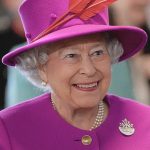
  • Queen Elizabeth II – 1990 Christmas Broadcast

    Queen Elizabeth II – 1990 Christmas Broadcast

    The text of HM Queen Elizabeth’s Christmas Broadcast from 25 December 1990.

    Over the years, I have dwelt on the happier side of life in my Christmas Broadcasts – we need reminding of it, particularly at Christmas time. This year, there have been, I hope, times of happiness and good cheer for most of us.

    My family, for instance, has been celebrating my mother’s Ninetieth Birthday, and we have shared with you the joy of some of those celebrations.

    My youngest grandchild’s christening, two days ago, has brought the family together once again. I hope that all of us lucky enough to be able to enjoy such gatherings this Christmas will take time to count our blessings.

    For it seems to me that there is one deep and overriding anxiety for us all on which we should reflect today. That is the threat of war in the Middle East.

    The servicemen in the Gulf who are spending Christmas at their posts under this threat are much in our thoughts. And there are many others, at home and abroad, servicemen and civilians, who are away from their own firesides. Wherever they are, may they all, when their duty is done, soon be reunited with their families safe and sound.

    At the same time we must remember those still held hostage. Some of them have spent years in captivity, and Christmas must, for them, be especially hard to bear. My heart goes out to them and to their families.

    We can, at least, rejoice at the safe return of many of their compatriots over the last weeks, and salute the courage which they have shown.

    Wars, threats of wars and civil disturbance inevitably cause thousands of innocent people to become refugees and to have their lives ruined or disrupted. It is difficult for us, safe at home, to contemplate the scale of the suffering for homeless and hungry people caused by the ever-widening consequences of the crisis in the Gulf.

    The invasion of Kuwait was an example on an international scale of an evil which has beset us at different levels in recent years – attempts by ruthless people to impose their will on the peaceable majority.

    In extreme form, as we know only too well, these attempts lead to disaster and death, and their tragic aftermath for families and communities. In the United Kingdom, we have suffered once again during the past year from the scourge of terrorism, its disregard for human life and its efforts to dress its crimes in political clothes.

    But all this is nothing new. The tributes we paid last summer to the heroes of Dunkirk and the Battle of Britain were tributes to their achievement in repelling a determined invader. That was fifty years ago.

    Nowadays there are all too many causes that press their claims with a loud voice and a strong arm rather than with the language of reason. We must not allow ourselves to be too discouraged as we confront them.

    Let us remember that Christ did not promise the earth to the powerful. The resolve of those who endure and resist these activities should not be underestimated.

    I never cease to admire the stoical courage of those in Northern Ireland, for example, who go about their business in defiance of the terrorist. The reaction of those who have lost loved ones at violent hands is often an inspiration to the rest of us.

    Then again, I, like many others, was much heartened by the virtually unanimous opposition of the international community to the unprovoked invasion of Kuwait, and by the speed with which moves were made to try to relieve the plight of the innocent victims.

    I want, therefore, to say thank you today to the men and women who, day in and day out, carry on their daily life in difficult and dangerous circumstances. By just getting on with the job, they are getting the better of those who want to harm our way of life.

    Let us think of them this Christmas, wherever they are in the world, and pray that their resolution remains undiminished. It is they and their kind who, by resisting the bully and the tyrant, ensure that we live in the sort of world in which we can celebrate this season safely with our families.

    I pray also that we may all be blessed with something of their spirit. Then we would find it easier to solve our disputes in peace and justice, wherever they occur, and that inheritance of the earth which Christ promised, not to the strong, but to the meek, would be that much closer.

    A Happy Christmas and God bless you all.

  • Geoffrey Howe – 1990 Resignation Letter to Margaret Thatcher

    Geoffrey Howe – 1990 Resignation Letter to Margaret Thatcher

    Below is the text of the resignation letter from the Cabinet written by Geoffrey Howe on 1 November 1990.

    Dear Margaret,

    I am writing to explain some of the reasons for my decision to resign from the Government.

    I do so with very great regret. Almost sixteen years have passed since you asked me to serve as Shadow Chancellor. Since then we have done so much together, against the odds, to rebuild the economic and political strength of our nation. Your own strong leadership has been of crucial importance in making this possible. It has been a privilege and an honour for me to have contributed to that success.

    Our work has been based on common values and shared beliefs—for economic and personal freedom, for a responsible society and for greater British influence in the world. Although our principles have been sorely tested by opponents of the Government at different times over the last eleven years, I have always tried as best as I can to uphold and advance those principles in a way that united our Party and served the best interests of Britain.

    It gives me all the more sadness, therefore, to acknowledge the growing difference which has emerged between us on the increasingly important issue of Britain’s role in Europe.

    As much as you, I have wanted to make the most of Britain’s influence in the world, to deploy Britain’s sovereignty to the best advantage of our people. Ever since our original application to join the European Community in 1962, that has clearly involved Britain’s firm, practical commitment to the historic process of closer European partnership.

    I was proud to have steered Britain’s membership through the House of Commons in 1971, and prouder still to play my part promoting Britain’s national interest in Europe, first as your chancellor of the Exchequer, and then as your Foreign Secretary, for ten hard and rewarding years.

    My vision of Europe has always been practical and hard-headed. I am not a Euro-idealist or federalist. My concern is less with grand schemes than with immediate realities, as they affect our well being and prospects as a nation. Like you, I have fought too many European battles in a minority of one, to harbour any illusions on that score.

    Our conduct of policy on the crucial monetary issue in Europe—first on ERM and now on EMU—has given me increasing grounds for concern. We did not find it easy, in the run-up to last year’s Madrid Summit, to establish the conditions for the UK’s entry into the ERM. I felt at that time that my continued membership of your Cabinet could help maintain a united approach on this issue.

    Now that we are finally inside the ERM, we have a great opportunity at last to shape Europe’s monetary arrangements in the years ahead. We can only do that by being and staying firmly on the inside track.

    We must be at the centre of the European partnership, playing the sort of leading and constructive rôle which commands respect. We need to be able to persuade friends as well as challenge opponents, and to win arguments before positions become entrenched.

    The risks of being left behind on EMU are severe. All too much of our energy during the last decade has been devoted to correcting the consequences of our late start in Europe.

    It would be a tragedy, not just for our financial institutions and our industrial strength, but also for the aspirations of a younger generation, if we were to risk making the same mistake again, by trying to draw an arbitrary line under our engagement in the European process.

    I am deeply anxious that the mood you have struck—most notably in Rome last weekend and in the House of Commons this Tuesday—will make it more difficult for Britain to hold and retain a position of influence in this vital debate.

    Of course, there are still huge questions to be considered and resolved in this discussion. None of us wants the imposition of a single currency, but more than one form of EMU is possible. The important thing is not to rule in or out any one particular solution absolutely. We should be in the business, not of isolating ourselves unduly, but of offering positive alternatives that can enable us to be seriously engaged.

    Cabinet government is all about trying to persuade one another from within. So too, within the unique partnership of nations that is making the European Community. Plain speaking certainly—but matched always by mutual respect and restraint in pursuit of a common cause.

    The need to find and maintain common ground on the European issue within our own party will be crucial to our electoral success and the future of the nation. In all honesty I now find myself unable to share your view of the right approach to this question. On that basis, I do not believe that I can any longer serve with honour as a member of your Government.

    I am, of course, very sad that our long years of service together should have to end in this way. The close of this Session of Parliament seems an appropriate moment for me to leave. It has been a great privilege to serve under your leadership at a time when we have been able to change Britain’s future so much for the better. I shall, of course, maintain my support for your Government in following policies to that end.

    Yours ever,

    Geoffrey.

  • Queen Elizabeth II – 1990 Queen’s Speech

    queenelizabethii

    Below is the text of the speech made by HM Queen Elizabeth II in the House of Lords on 7 November 1990.

    My Lords and Members of the House of Commons,

    I look forward to visiting the United States of America in May and being present on the occasion of, the Commonwealth Heads of Government Meeting in Zimbabwe next Autumn.

    My Government attach the highest priority to national security, and to the preservation of international peace with freedom and justice. They will give full support to NATO as the basis for collective Western defence, and will maintain adequate and effective nuclear and conventional forces. They will play a full part in adapting NATO strategy and will take forward work on restructuring our forces to reflect the welcome changes in Europe and threats to peace in other parts of the world.

    My Government will work for balanced and verifiable measures of arms control. They welcome the prospect of an agreement on Conventional Armed Forces in Europe and will be active in further negotiations on this, and in the multilateral negotiations in Geneva on the abolition of chemical weapons.

    My Government will continue to uphold the purposes and principles of the United Nations. My Government will work with the utmost determination, together with our Allies and the whole international community, for the unconditional implementation of the resolutions of the United Nations Security Council which require the withdrawal of Iraq from Kuwait, and the restoration of the independence and legitimate government of Kuwait. My Government will maintain their efforts to secure the release of all Britons held hostage or detained in Kuwait, Iraq, Lebanon, and elsewhere in the Middle East. My Government will continue to work for long-term peace in the Middle East including a settlement of the Palestinian problem.

    My Government will host the next Economic Summit in London in July.

    My Government will work to strengthen still further the good relations between the United Kingdom and the Soviet Union, and to buttress the new democracies in Eastern Europe. They will play an active part in the Paris meeting of Heads of State and Government of the Conference on Security and Co-operation in Europe.

    My Government welcome the unification of Germany and look forward to working closely with the Government of the United Germany.

    My Government will continue to work with our Community partners to complete the Single Market; to reinforce budgetary discipline; to continue reform of the Common Agricultural Policy and to bring about a successful conclusion to the Uruguay round of multilateral trade negotiations. They will contribute constructively to the inter-governmental conferences on Economic and Monetary Union and Community institutions beginning in December. They welcome the new European Bank for Reconstruction and Development to London.

    My Government will promote further international co-operation on environmental issues.

    My Government will maintain a substantial aid programme aimed at promoting sustainable economic and social progress and good government in developing countries.

    My Government will continue their policy of encouragement to all sides in South Africa to enter negotiations to create through peaceful means a democratic non-racial society.

    My Government will work vigorously to fulfil their responsibilities for Hong Kong, building on the Sino-British Joint Declaration. They will honour their commitments to the people of the Falkland Islands.

    My Government will continue to play a full part in the Commonwealth.

    My Government will maintain their fight against terrorism in the United Kingdom and overseas.

    Members of the House of Commons,

    Estimates for the Public Service will be laid before you.

    My Lords and Members of the House of Commons,

    My Government will maintain firm financial policies, strengthened by the Exchange Rate Mechanism, designed to reduce inflation and foster the conditions necessary for sustained growth. They will continue to promote enterprise and improve the working of the economy.

    They will maintain firm control of public expenditure with the aim of keeping its share of national income on a downward trend.

    A Bill will be introduced to facilitate contractor operation of the Atomic Weapons Establishment. Legislation will be introduced to provide for the sale of the Insurance Services business of the Export Credits Guarantee Department.

    My Government will promote improved efficiency and safety in transport. Legislation will be introduced to encourage privately financed roads; to reform procedures for streetworks; to improve road traffic; to convert trust ports into private companies; and to provide for a second Severn crossing.

    Legislation will be introduced to improve arrangements for compensation for compulsory purchase of land and buildings and to make the town and country planning system more efficient.

    My Government will continue to work for the regeneration of our cities.

    My Government will vigorously pursue their policies in fighting crime. A Bill will be brought forward for England and Wales to deal with sentencing of offenders and to strengthen the parole system.

    My Government will work vigorously to combat the trafficking and misuse of drugs nationally and internationally.

    My Government are concerned to strengthen parental responsibility for children. Measures will be introduced to improve the assessment, collection and enforcement of maintenance.

    A Bill will again be brought before you to give our courts the jurisdiction to try alleged war criminals.

    My Government will continue to take action to improve quality in education. A Bill will be introduced to establish new machinery for negotiating the pay and conditions of school teachers in England and Wales.

    My Government will continue to work to improve the quality of Health and Social Services.

    In Northern Ireland, My Government will be resolute in their efforts to defeat terrorism: a Bill will be introduced to replace existing anti-terrorism legislation. They will sustain their efforts to secure political progress, to strengthen the economy and to promote mutual respect and trust throughout the community. They will maintain positive relations with the Republic of Ireland.

    For Scotland, a Bill will be introduced to create a Natural Heritage Agency to achieve an integrated approach to conservation and countryside matters.

    Legislation will be introduced to provide new benefits for disabled people.

    Other measures will be laid before you.

    My Lords and Members of the House of Commons,

    I pray that the blessing of Almighty God may rest upon your counsels.

  • David Trimble – 1990 Maiden Speech in the House of Commons

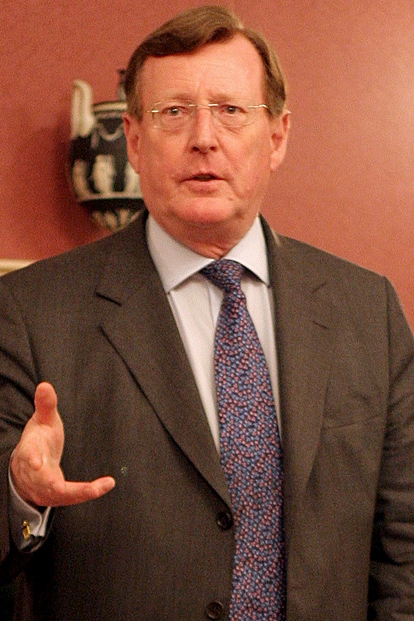
    By https://www.flickr.com/photos/altogetherfool/ - https://www.flickr.com/photos/altogetherfool/3674015778, CC BY-SA 2.0, https://commons.wikimedia.org/w/index.php?curid=39319835
    By https://www.flickr.com/photos/altogetherfool/ – https://www.flickr.com/photos/altogetherfool/3674015778, CC BY-SA 2.0, https://commons.wikimedia.org/w/index.php?curid=39319835

    Below is the text of the maiden speech made by David Trimble in the House of Commons on 23 May 1990.

    I understand that it is customary for me to begin by paying tribute to the previous Member for Upper Bann, which I do gladly. Mr. Harold McCusker can be aptly summed up as a man of the people. He worked extremely hard for the people of Upper Bann and cared deeply for their welfare. I know from canvassing in the recent by-election that he was held in high regard and with deep affection by the people of Upper Bann. Harold, characteristically, was a fighter. He fought for those people and he fought in personal terms. His illness would not have been so prolonged if he had not fought so strongly against it. As many hon. Members know, Harold’s surname literally means “a son of Ulster”, and he was a son of Ulster. He was conscious of the soil from which he sprang and the traditions of the area and its people.

    The Upper Bann area is proud of its Unionist heritage, and many elements within the area express that heritage. I had some pleasure in reading a recent publication by the Public Record Office, edited by David Miller. Hon. Members will be familiar with his earlier work, which was extremely enlightening, on Unionism and loyalism. That publication included a copy of the account by Colonel Blacker of the formation of the Orange Order, of which I am proud to be a member. We find within it not only the Armagh area—sometimes the Armagh people, it being the County of the Diamond, forget that other counties contributed—but particularly in the west Down area. I am thinking particularly of the Bleary boys who contributed to that and to the successful defeat of the 1938 rebellion shortly afterwards.

    The Unionist heritage of the north Armagh area is in some ways epitomised by the statute of Colonel Saunderson, which stands in the centre of Armagh. I shall refer again to Colonel Saunderson in a way that is particularly apposite to other matters.

    Upper Bann is significant not only for its Orange heritage but for the way in which its character was formed largely through the plantation processes of the 17th and early 18th centuries. The major towns in the area are plantation towns. We see that from the contribution of the Brownlows to the creation of Lurgan and of the Warings to Waringstown and other towns in the area.

    That plantation had a significant heritage in other repects, because directly from it sprang the Ulster custom, which after the Ulster land war of the 1770s provided a basis from which the industrial revolution was able to occur. The industrial revolution in Ulster, which was centred on the Lagan valley, was an indigenous growth. Ministers may be interested in this, because it owed nothing to Government contribution or significant landlord patronage. It was indigenous and arose out of the customary rights that the tenants had won for themselves. We find the traces of one of the first major industrial developments in the area—the textile industry—through the middle Bann valley, running from Gilford down to the town of Banbridge, which lies in the centre of the constituency.

    During the recent by-election in Upper Bann, attention focused on the intervention of what are called national parties. I want to reflect on that for a moment. I mentioned Colonel Saunderson, whose statue stands in the centre of Portadown. The inscription refers to him as the leader of Ulster’s Unionists in the House for more than 20 years. As hon. Members will know, he first sat in the House as a Liberal, representing the constituency of County Cavan, and in the 1880s was returned for North Armagh, including Portadown, as a Conservative. Of course, he is noted as the leader of the Ulster Unionists.

    The term “national parties” which has been bandied about in recent times is misleading. It was misleading for some people who call themselves Conservatives to intervene in that election and call themselves the national parties. They claimed that their arrival was something new. Of course it was not new. Nor are they right to refer to themselves as solely national parties as distinct from provincial parties. We in the Ulster Unionist party are the British national party in Ulster. We were formed historically by an alliance between Ulster Liberals and Ulster Conservatives, with Ulster Labour representatives too, to combat Irish nationalists. We are the national British parties in Ulster. In that context, one must put a large question mark against the aims and motives of a group calling itself Conservative which contested the election with, it seemed to us, the object of dividing and diminishing the Unionist voice and, by so doing, diminishing the voice of the British people of Ulster.

    Since my arrival in the House, several hon. Members have expressed to me their regret at the decision of the Conservative party to contest the Upper Bann election. I did not regret it during the election. While canvassing, I repeatedly told the electors that the election was an opportunity for them to vote against the policies of the Government. The results show that the electorate of Upper Bann seized that opportunity with both hands. Hon. Members will not need to be reminded that the candidate representing the policies of the Government scored a total of 2.9 per cent.—less than 3 per cent.—of the valid votes cast in the election. That is a clear rejection of the policies of the present Administration. That demonstrates—indeed, it confirms, because we had demonstrated it on many previous occasions—that the policies pursued by the Northern Ireland Office have no mandate from the people of Ulster. That is significant.

    People cannot say that a majority elsewhere in the United Kingdom in favour of the Government’s policies legitimises those policies. A clear distinction can be drawn between Northern Ireland and, say, Scotland. In Scotland, where again the Government have no mandate for their policies, they can say that their policies are applied on a Great Britain basis and that they have a majority in Great Britain. However, the policies pursued in Northern Ireland are applied, not on a United Kingdom basis but specifically to Northern Ireland. Northern Ireland is treated differently from the rest of the United Kingdom and its constitutional status in the kingdom is diminished.

    A mandate for the Government’s policies can be obtained only from the people of Ulster. Clearly that mandate does not exist. In the light of that, the only honourable course for the Government is to reconsider their policies and accept the offers made by my colleague to extricate them from the position in which they have put themselves. They should adopt policies that reinforce the position of the kingdom of Ulster within the kingdom.

    At least the Conservative party came to seek a mandate in Upper Bann, even though that mandate was refused. If listened with interest to the speech of the hon. Member for Leicester, South (Mr. Marshall). I find his detailed interest in matters relating to Northern Ireland interesting. I agreed with several of the points that he made. Surely he must find it a little strange to take such a detailed interest in Northern Ireland matters and discuss them at length in the House when he belongs to a party that not only does not contest elections in Northern Ireland but refuses people in Northern Ireland the right or opportunity to join it. A member of a party which deliberately boycotts the people of Northern Ireland must surely find it inconsistent to take such a detailed interest in Northern Ireland.

    Tonight we are discussing the Appropriation (No. 2) (Northern Ireland) Order 1990. The measure is dealt with in the form of an Order in Council. Order in Council procedures are less than satisfactory. Indeed, that is an understatement. The hon. Member for Belfast, East (Mr. Robinson) referred a few moments ago to defects in the planning legislation on article 22 inquiries. As hon. Members will know, a planning and building regulations order has been tabled and is shortly to be debated. If that was legislation dealt with in the normal way, the hon. Member for Belfast, East could table an amendment to provide a remedy for the defects to which he referred. Of course, he cannot do so. That is not right. The procedures should not operate in the way that they do. Significant changes are needed.

    I support the comments made by the hon. Member for Antrim, South (Mr. Forsythe) on the Payments for Debt (Miscellaneous Provisions) Act (Northern Ireland) 1971. Order in Council procedure is objectionable partly because it is described as temporary. It is a temporary procedure stemming currently from the Prevention of Terrorism Act 1974 and originally from the Northern Ireland (Temporary Provisions) Act 1972. One wonders what the meaning of the word “temporary” is in that context.

    That is even more appropriate in the context of the point raised by the hon. Member for Antrim, South. He dealt with a temporary measure introduced in 1971, which is still operating. Not only is the measure objectionable because it was a temporary measure which lasted 19 years, but the provisions made for deduction of benefits under the Act were made as the result of administrative action.

    I should have thought that hon. Members who are interested in the rights of persons subject to the law of the United Kingdom would want people’s property rights determined in the courts or through some form of judicial procedure, rather than civil service actions. Civil servants may decide to withhold benefits in order to pay debts owed to other persons. That is particularly strange when, through the Enforcement of Judgments Office and its provisions for attachment of earnings and other assets, procedures have to be followed and some independent judgment is placed between the debtor and the creditor by the operations of the enforcement officers.

    Surely, at least on those grounds, something should be done. Even if it is still felt necessary to make deductions from people entitled to claim benefit, surely something should be done to enable people to make representations before a third party. It would be appropriate to provide something analogous to the procedure for enforcement judgments.

    My first point about the order concerns planning policy in the Craigavon district. That area is unique in Northern Ireland as the only area that does not have in force a development plan or area plan. The original, non-statutory plan, which is now some 20 years old, is not relevant, because the position has changed drastically in the past 20 years, with the failure of the new city project contained within it. In that area, we are operating with the detritus of the new city project.

    While canvassing during the election campaign, I was struck by the desolation of the estates in the central Craigavon or Brownlow area. I hope that some thought has been given to planning policies that could help to regenerate that area. I was also struck by the way in which many areas of the town of Lurgan have been badly blighted because of road proposals which, I am told, have since been abandoned. Again, I hope that some serious planning policies will be evolved to regenerate those areas.

    I was also struck by one of the consequences of the 1960s housing policies which I hope will not be repeated. I refer to the not very well built medium and high-rise flat developments. Nearly all the developments that I saw were semi-derelict and unoccupied. They were eyesores and worse—especially in the Portadown district, where properties that were originally constructed by the local Housing Executive have been bought by the tenants under the right-to-buy procedures, which the Government encouraged.

    The owners have found that, to some extent, their properties have been devalued by the derelict medium-rise flat developments just across the road. I hope that some urgent action will be taken on that. I was told by the occupiers—the purchasers—that they had been told by the executive that they would have to wait two or three years simply for a decision on the flat developments, let alone for any action to be taken.

    My second point about the appropriation order relates to the community relations cultural traditions programmes. As the Minister said, the programmes are being expanded considerably. That is a good thing, and I very much welcome the existence of those programmes. However, I should like an assurance that they will be genuinely representative and even-handed. I must confess to being uncertain about the Northern Ireland Community Relations Council. Technically, it is not a Government body, although in the first instance all its members have been appointed by the Government. It has been given a budget of £300,000. We must ask, how was the body formed? How representative of the community are the people who serve on it and how balanced is that representation? It seems that that representation does not rise above the level of tokenism as far as the majority tradition in Ulster is concerned. Many of the people who serve on it cannot be regarded as truly representative.

    Finally, I refer to an item of expenditure relating to the Northern Ireland Assembly. I note that there is a provision for £274,000 to be spent—over £200,000 of which will be spent on maintaining a cadre to provide the basis for an Assembly, should one be called in the future. I welcome that expenditure because there is a great need for representative institutions in Ulster. Hon. Members will know that there is a virtual absence of representative institutions and that what are called “local authorities” are not really what are normally understood by that term. They rarely get above the level of English parish councils. There is a huge gap between them and this House. We need representative institutions.

    Although I welcome that expenditure on the Northern Ireland Assembly, I do not want my comments to be taken as implying my approval of the proposals in the Prior Act—the Northern Ireland Act 1982. I am not sure that those proposals ever were workable. If we ever have an Assembly—or devolution on any significant scale in the future—I hope that it will be much more substantial than that of the Northern Ireland Assembly, if it is to be regarded as worthwhile devolution as distinct from what is essentially local government restructuring, which is another matter.

    Devolution is said to be the Government’s policy. I find it curious that a Government with that policy have not made any proposals that would advance that policy. That is to be contrasted with the experience or the actions of the Ulster Unionist party because it is now almost two and a half years since the Ulster Unionist party made detailed proposals for developments in Northern Ireland to the previous Secretary of State, to which there has not yet been any response. The Government do not make any proposals of their own. Their attitude is passive. If we were to have discussions on the proposals, I suspect that the Government would not advance any proposals of their own, but would simply adopt the role of picking holes in the proposals of ourselves and others.

    I wonder why that should be the case. I suspect that, despite its protestations to the contrary, the Northern Ireland Office actually prefers the present position. I suspect that it does not really want devolution, but prefers to sustain the present direct rule. Under that system, it is effectively insulated from any form of democratic control. Ministers can speak for themselves, but civil servants in the Northern Ireland Office give the impression that they are not really interested in devolution, and that they enjoy the freedom from accountability that direct rule gives them. That is another reason for ending direct rule at the earliest opportunity.

  • John Major – 1990 Speech to the Young Deaf Achievers Awards

    johnmajor

    Below is the text of the speech made by John Major, the then Prime Minister, at the Cafe Royal in London on the 12 December 1990.

    Ladies and Gentlemen:

    Chairman, thank you very much indeed. I must let you into a secret that not many people are aware of – indeed, if they were, I suppose in a curious way it would not be a secret! But we do have in the House of Commons something of a trade union of former Ministers for the Disabled. It is a very discreet, very select, rather enjoyable trade union but in that trade union the Father of the Chapel, irrespective of anything to do with politics, is undoubtedly Jack Ashley and it is a very great privilege for me to follow him today and to thank him publicly for the extraordinary amount of work he has done not just for people who are disabled through deafness but for people who are disabled in a whole range of ways. He has done more in my judgement [Applause].  Well there you are, I need not say it because you know, so it does not need saying!

    Jack was kind enough to say that minutes were precious and to thank me for coming. If I may say so, I think perhaps I should thank him for inviting me because the reason I was keen to come today is because there are many of us here who are very fortunate in that we have to face no disability in the normal journey through life that all of us have; but those who do need a very special courage to face that – not just the courage to meet the challenges, but the ordinary everyday courage to actually decide to take on those challenges in the first place, perhaps to go to a workplace or a university or to enter into a sport or to enter into the normal social contact that most people accept, anticipate and enjoy with no difficulty whatsoever.

    Faced with a disability, whether it be deafness or perhaps some other disability or perhaps a myriad series of disabilities which alas is so often the case, it does take a very remarkable kind of personal courage to enter into that commitment into society and the young people that I had the privilege of meeting just before lunch today were people who have not only had the courage to enter into society in that particular fashion but have achieved very remarkable things as a result of having done so and for me, it is a very great privilege today to have had the opportunity of meeting them. A privilege but not a surprise, for having been Minister for the Disabled, albeit for the all too short time of just a year, I learned during that period across a whole range of disability, with what enormous courage so many people in this country face hurdles that many of us cannot imagine and perhaps would not be able to cope with if we were able to imagine them. For we ought not to pretend, as we see these young people receiving their well-deserved awards in a few moments, that what they have achieved has been easy or comfortable or without some difficulties, for it has not been and indeed, in many ways it simply could not have been.

    Many of us might think what today’s finalists have done was almost impossible but I think if you do think that, that shows the failure of our imagination and not theirs, for the young people who receive these awards did realise what could be done, put themselves to do it and have succeeded in my judgement in rather spectacular fashion.

    One of the reasons I regard this as an important occasion is to touch upon something that Iain Vallance said. In many ways, these young people offer a very considerable beacon of hope to other people who are disabled as to what they can achieve in their own lives and they have precisely the same right to achieve what they can in their lives that everybody else has and we have an obligation to assist them to do it, whether or not they be disabled, and to ensure that they can get the maximum possible out of their lives provided that they will put into it – as those we meet today and hundreds of thousands of others do – the effort and courage that is necessary to deal with the difficulties they often face.

    I hope that those people who perhaps still have in their minds some form of prejudice or difficulty because somebody has one form of disability will realise that one form of disability does not disable people from the normal functions of life, the normal responsibilities of life, the normal duties of life and the normal pleasures that the rest of us are able to enjoy.

    If there is one thing that has been happening remarkably in the last twenty years or so, but which still has further in my judgement to go, it is to open up the opportunities for people who are disabled that those who are not disabled have over the years come to take for granted and I hope that that is something we will all be able to take a part in doing in the years ahead.

    The people who are disabled know from their own experience the will power that is necessary to achieve what they have achieved and I think in terms of will power and courage, if there are two attributes that the young people you will meet shortly have demonstrated to a very remarkable extent it is those. I hope that we will continue to encourage them and many others to achieve precisely the same things in the future.

    I would, if I may, therefore like to thank most warmly both [indistinct] and Iain Vallance and British Telecom for sponsoring this event, for the enormous amount that they have done, are doing and I very much hope will continue to do in the future and perhaps I should also mention just as an example, the contribution that British Telecom has made to the Royal National Institute for the Deaf telephone exchange for the deaf, which it has been jointly funding with the Government. This does allow deaf people to telephone, hearing people by providing an operator with whom deaf people can communicate through text; the operator then passes on their message. British Telecom announced a grant of 4 million pounds this year to allow this service to continue and I would like publicly to express my thanks to Iain Vallance for that very generous and … [Applause].

    I think, if I may presume to speak upon behalf of the award winners today and perhaps also a little wider on behalf of disabled people – people who have disabilities I might more accurately say – elsewhere in the community, there are, I think, some people whom they would wish to thank and whom I might thank on their behalf and that is their parents and friends who will have encouraged them and helped them throughout the vast majority – in the case of their parents, throughout all their lives – to deal with their disabilities and to make the most of their opportunities. On behalf of disabled people, I would like to extend those thanks most warmly for I think they are thanks well deserved by those who offer so much to people who have been treated so harshly in so many instances.

    I think, if I may say so, Chairman, that the principal purpose of today’s meeting is to honour those young people who have won in a very in a very remarkable fashion these awards which are so difficult to obtain and so I will say no more except to say that in a few moments I hope you will give a very warm welcome indeed to a number of very remarkable young people who have achieved what few could have achieved and which all of us may look at with a certain degree of pride that young people in our country can do such things despite the handicaps that they face.[Applause].

  • Cecil Parkinson – 1990 Speech on the Marchioness Report

    Below is the text of the speech made by Cecil Parkinson, the then Secretary of State for Transport, in the House of Commons on 24 July 1990.

    Directly after the tragedy I announced immediate requirements for chartered Thames river craft to record passenger numbers before sailing, and lodge the record ashore, and that passengers should be given proper instructions on where to find emergency equipment and what to do in the case of an emergency. Regulations to make these provisions mandatory for all passenger craft throughout the United Kingdom came into force on 12 April 1990.
    Within 10 days I had received the marine accident investigation branch’s interim report, and announced that the six recommendations made in that report should take effect as soon as practicable, with the assistance of the Port of London Authority where required.

    The two recommendations on look-outs and lights on vessels of more than 40m in length were implemented on 18 September 1989 by amendments to the general direction for navigation in the port of London.

    The third recommendation related to the need for those in charge of passenger launches to keep continuous radio watch—implemented in the same general directions for navigation—and look frequently astern—covered in a PLA notice to mariners. This recommendation also proposed that if necessary insulation against noise should be provided on passenger launches. My surveyors are taking action to ensure that launches are modified so that recommended noise levels are not exceeded.

    The fourth recommendation proposed a review of traffic control arrangements, particularly under bridges. This has been considered, and a contractor has been appointed to develop a triggered light system, activated by the passage of ships along the river, indicating priority for larger vessels at bridges.

    The fifth recommendation was that the interim recommendations should be transmitted to port authorities generally. This has been done.

    The final recommendation suggested that the Department should examine the possibility of setting standards for the construction of ships’ bridges, with a view to international agreement. This recommendation is being dealt with on two fronts. First, the question of bridge visibility has already been raised at the International Maritime Organisation with a view to incorporating the IMO guidelines as an amendment to the safety of life at sea convention 1974. Secondly, inspections of all relevant vessels on the Thames are taking place to determine existing visibility standards in order to determine necessary action. These inspections are well under way.

    Apart from this action, I should also add that all passenger craft on the Thames were inspected by my surveyors after the tragedy, and the frequency of random inspections has been increased.