Tag: 1986

  • Robert Parry – 1986 Speech on Urban Deprivation in Liverpool

    Below is the text of the speech made by Robert Parry, the then Labour MP for Liverpool Riverside, in the House of Commons on 16 January 1986.

    I am pleased to have this opportunity to raise the subject of urban deprivation and housing problems in the inner-city areas of Liverpool.

    In the debate initiated by the Opposition on a Supply Day on 11 December, I sat in the Chamber for more than five hours without being called. The debate covered the increasing poverty and deprivation in our inner-city areas and the Government’s failure to deal with the serious problem of widespread disrepair in urban areas, the need to regenerate Britain’s cities and the need to reverse the deliberate reduction of rate support grant and investment in housing which is leading to a major housing crisis and more homelessness among the more unfortunate members of our society.

    I do not apologise for detaining the House so late, as I want to put on record my views and the problems facing my constituency and inner-city areas in Liverpool. According to figures supplied by the House of Commons Library, the estimated level of male unemployment in my constituency is 41 per cent. That is the highest in Great Britain, not just on the mainland. Of that number, 40 per cent. are under 25 and 61 per cent. have been unemployed for more than one year. Of the under-25s, 47 per cent. have been unemployed for more than 52 weeks. In areas such as Vauxhall, Everton and Toxteth, the true figure is well over 50 per cent.; more than one in every two people is on the dole and the scrap heap cannot be tolerated in any caring or civilised society or by any Government, including this most heartless and cruel one. The tragedy of long-term unemployment, especially among youth and white people is bad enough, but it is far more serious among black youth in Toxteth and other inner-city areas such as Handsworth, Brixton, Tottenham and Moss Side, which have witnessed horrific riots, violence and civil disturbances.

    The Merseyside Manpower Services Commission has recently published a survey on ethnic minorities which shows that a disproportionate degree of unemployment is experienced by the black population of Liverpool and that, on average, black people need to be submitted for 25 vacancies before finding a job as compared to 15 for white people. I suggest that the figures are on the conservative side and can be multiplied throughout our urban areas. Mass long-term unemployment is, I believe, the major root cause of discontent in our inner-city areas.

    I shall now consider the critical housing situation. I firmly believe that the right to life is the first basic human right but that the right to work and live in dignity with a roof over one’s head follows closely behind. The right hon. Member for Wanstead and Woodford (Mr. Jenkin), when he was Secretary of State for the Environment, and the hon. Member for Eastbourne (Mr. Gow), when he was the Minister for Housing and Construction, visited my constituency, at my request, and both publicly stated after the event that they saw some of the worst housing they had ever seen. In spite of seeing pre-war slum tenements and appalling tower blocks, like the infamous “Piggeries” and the “Ugly Sisters”, their response was to cut further Liverpool’s allocation for the housing investment ​ programme. The cuts have averaged 15 per cent. each year since 1979. Last year, Liverpool bid for £132 million to deal with its critical housing problems but was given only a miserly £31 million.

    Then there were the central Government’s cuts and the dereliction of responsibility by the Liberal-Tory coalition on the city council: few houses were built for rent for nearly a decade, the maintenance and repair departments were deliberately run down with job losses and the repair backlog reached epidemic proportions—the elected Labour city council, on a mandate given to it by the Liverpool people in two successive elections, kept its promise. It embarked on a crash programme of demolition of the old pre-war slum tenements and rat-infested tower blocks, maintenance of jobs within the council and provision of services. For that initiative, the democratically elected councillors will later this month face a court threat. This action may banish them from public office and make them bankrupt and even face imprisonment.

    I have always supported the city council. I salute its brave councillors, its men of honour. Most of the 17 priority areas which are designated to be built in Liverpool are in my constituency. This is the most imaginative house-building programme in Britain. Where there were old slums, there are new building programmes. People are moving out of the slums to semi-detached houses and bungalows. There is sheltered accommodation for the aged and disabled. People, sometimes for the first time in their lives, are in a house with a garden in the back and front. I know people who are grandparents and great-grandparents who moved out of Victorian dwellings into the pre-war tenements and have never had a house. For the first time, they have a house in the community with a garden at the back and front. They are very happy about this.

    According to the official figures, Liverpool, Riverside has 19·5 per cent. owner-occupiers compared with 55·7 per cent. for Great Britain. Rented council accommodation in the area is 53 per cent. compared with 31 per cent. nationally. On overcrowding, 8·5 per cent. of households in Riverside have more than one person per room, which is nearly twice the national average of 4·3 per cent. This is the highest in the north west. The last census shows that 6·2 per cent. of households in Riverside lacked or shared the use of a bath, which is nearly twice the British average of 3·2 per cent.

    I must declare an interest in that I am a sponsored member of the Transport and General Workers Union and a member of its construction branch. Liverpool, despite its house-building programme, still has a waiting list of more than 20,000 people. It has the highest unemployment level in the construction industry in the United Kingdom.

    It is crazy that, in areas of mass unemployment in the building industry and where there is a dearth of good housing, we witness the Government robbing the city of badly needed resources and finance. The “Group of Eight” in the construction industry, of whom the national secretary of my trade union, Mr. George Henderson, is one, has lobbied the Prime Minister, without success.

    Recently, the chairman of the Association of Metropolitan Authorities housing committee stated that it would need an injection of £19 billion just to keep the present housing stock in both the private and the public sector in a decent state of repair. In Liverpool alone, for every £1 spent on housing in 1979, when the Conservatives first came to ​ power, only 26p was spent in 1985. Since 1979, more than 450,000 jobs in the building industry have gone. None of those statements has been refuted by the Government.

    Last January, I tabled an early-day motion on unemployment in the building industry, which was supported by 123 right hon. and hon. Members. The Motion called for a massive increase in public investment to build badly needed new homes, to construct new roads and improve existing roads, and to overhaul our decaying sewerage and water system. It also called for a programme of public works to be carried out as suggested by the Confederation of British Industry, the Trades Union Congress, the National Federation of Building Trade Employers, the building trade trade unions, the National Home Improvement Council and others to get the 450,000 building workers back to work and to help the companies which supply materials, thus creating more jobs and putting more life into decaying inner city areas. Those areas are stinking ghettoes suffering much deprivation. Thousands of our citizens are homeless or are living in dirty, squalid conditions. The unemployed are living in misery and despair, without any hope for the future.

    I wish to quote from a letter which I received from the National Home Improvement Council:

    “The NHIC is deeply concerned regarding the depressed housing of Liverpool and believe that this is reflected in many other inner cities. It is time the Government made positive steps to encourage new initiatives before the crisis becomes a national disaster.”

    I agree totally with that.

    To complete the picture, now that public transport is under attack by the Government and the metropolitan councils are being abolished services will be further affected in inner city areas. Official Government figures in the 1981 census showed that in Riverside, my constituency, 79·3 per cent. of all households had no car. That was a higher percentage than in any other constituency in England and Wales and the third highest in Great Britain. The United Kingdom average was 39·5 per cent.

    When the Minister replies, I hope that he will not put on the old record which we have heard so many times in the past when we have raised the question of deprivation. The Government keep repeating talk about investment in Merseyside in the international garden festival, the Merseyside development corporation, the enterprise zone or the freeport. The garden festival was a success for nine short months. The 500 jobs that were created by it have gone unfortunately and those people are back on the dole. Very few new jobs have been created by the freeport or by the Merseyside development corporation which is looking after the Albert docks.

    Recently the Government were warned about what is happening by the Church of England in its report “Faith in the City”. The Church of England, which was once called the Conservative party at prayer, and the leaders of the Catholic Church, the Methodists and the Free Church have expressed deep concern, as have the League of Friends, the Quakers. They cannot all be wrong.

    In a Quaker survey a newcomer to Liverpool, who was a former social worker, said:

    “They’re really friendly, really warm. They go out of their way to help. It’s as if there’s a war on and we’re all in it.”

    An NSPCC official said:

    “One of the most awful things about unemployment is the loss of the individual’s self-esteem and value in society. Our materialistic society rates success in terms of the kind of job and size of salary that a person has, rather than on who people are and what they do for each other—their personality and caring.

    We need to change how we value people. We need to recognise that we have bred a generation of young people who may never work—may never have the opportunity to attain success as we now measure it.”

    Even this uncaring, heartless Government cannot ignore a city’s cry for help. I represent Toxteth and before redistribution I represented the Granby area in which there is most civil disturbance. I warned the Government before the 1981 riots that things would blow up, but I was ignored.

    Unfortunately, in 1981 there were the worst civil disturbances on the British mainland in our history, in 1985 there were even more serious incidents in Birmingham and London. I warn the Government that if they ignore the problem they will be responsible for any further civil disturbances, not only in Liverpool but in other inner-city areas.

    We are sitting on a volcano ready to erupt. The time bomb is ticking away. The answer lies with the Government, and I sincerely hope that they heed the warning.
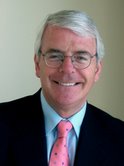
  • Charles Kennedy – 1986 Speech on Statutory Sick Pay

    Below is the text of the speech made by Charles Kennedy, the then Liberal MP for Ross, Cromarty and Skye, in the House of Commons on 15 January 1986.

    The speech of the hon. Member for Oldham, West (Mr. Meacher) was reasonably credible, and I agreed with much of what he said until his closing sentiments—perhaps that does not surprise him. It will certainly not surprise those sitting on the Treasury Bench. A return of the Labour party to power would greatly surprise the British people.

    My hon. Friend the Member for Roxburgh and Berwickshire (Mr. Kirkwood) and I welcome the fact that, on this occasion, the DHSS is staying within and upholding the law of the land, and will uprate accordingly. We have no argument with that. It was sensible of the DHSS to bring the uprating procedure into line as from 1987. My noble Friend Lord Banks and others have argued for that, and we welcome it.

    My basic point on the uprating order relates to the impact that statutory sick pay has on small businesses. The Minister will recall that my hon. Friend and I have moved amendments and made speeches, in Committee and in the House, on the effect of the statutory sick pay scheme in this respect. That is why we welcome the reference in the explanatory details that accompanied the order to the DHSS consultation paper on the reduction of burdens on business. It would be helpful if the Minister would say briefly how matters are progressing in that respect—by which I mean the suggestion that employers should be allowed to opt out of SSP, provided that they pay wages to their sick employees at least as good as their SSP entitlement.

    The Government will recall that the announcement of an extension of the SSP scheme was met with horror by, among others, the National Federation of Self Employed and Small Businesses. I agree with the hon. Member for Oldham, West that the bureaucracy of the SSP scheme and the extension which has been announced would discriminate against the employment potential of small businesses, and encourage more part-time employment rather than full-time employment. The Government said during SSP debates that they were conscious of the difficulty, and made some concessions in terms of bridging the gap.

    You have been tolerant of my similarly lateral interpretation of the order, Mr. Deputy Speaker. May I end by saying that we welcome the fact that the uprating will go ahead, and especially the fact that the SSP uprating will be brought into line with other benefits. Any comments which the Minister can make on these broader points, based on the principle that we are debating this evening, would be helpful to my hon. Friend and myself.

  • Michael Meacher – 1986 Speech on Statutory Sick Pay

    Below is the text of the speech made by Michael Meacher, the then Labour MP for Oldham West, in the House of Commons on 15 January 1986.

    First let me make it clear that the uprating principle underlying the order is not in contention, but I wish briefly to use the debate to highlight two main issues where the Opposition remain distinctly critical. One is the experience of statutory sick pay as it has developed, especially in the light of its extension to 28 weeks from 6 April next, and the other is the proposed privatisation of other benefits where the example of statutory sick pay is being used as a model.

    Our main objection is that the extension of statutory sick pay represents not only the abolition of state sickness benefit but the prolongation over a much longer period of all the disadvantages clearly manifest in this act of privatisation.

    First, unlike sickness benefit—and we take a view of it different from the over-generous picture for employees given by the Minister—statutory sick pay is taxable and subject to deductions for national insurance contributions. Therefore, for many employees, especially those on low earnings, SSP means less money when they are unable to work because of sickness or disability. Indeed, for those on very low incomes, about £50 a week, the loss can be as hefty as £14 or £15 a week.

    Nor is it any defence to say, as Ministers do—although the Minister did not do so tonight—that the low level of SSP is compensated for by supplementary benefit. Recent figures show that one third of sick or disabled people do not claim the supplementary benefit to which they are entitled. Perhaps that is the best indication of the inadequacy of SSP. Means-tested supplementary benefit should never be regarded as a satisfactory substitute for an adequate benefit as of right when people cannot work.

    Ministers also like to evade the unsatisfactory nature of SSP by referring—as the Minister did tonight—to the number of occupational sick pay schemes. Of course, a few do exist, but many employees are not covered by them because they are generally run on a discretionary basis. In particular, part-time workers and others in low-paid jobs are frequently excluded.

    A sign of the amount of loss of benefit from the extension of SSP is provided by the Government’s estimate of the so-called savings that will accrue in the next financial year—of the order of £200 million. Those savings are being made purely at the expense of the sick and disabled who are already having to cope with the extra costs of disability. It is surely wrong and unfair that employees will be paying out more in tax and national insurance contributions because of the extension of SSP, while employers will not be expected to pay any national insurance contribution for SSP payments.

    Another matter for concern is that—

    The Minister for Social Security (Mr. Tony Newton)

    The hon. Gentleman plainly has not understood the financial basis of SSP. The saving of £200 million is a saving to public expenditure, but it is almost precisely counterbalanced by the revenue forgone from the national insurance fund in compensation for the payments by employers to employees. The notion that either the original introduction of SSP or its extension entail losses to beneficiaries of the sort suggested by the hon. Gentleman is, quite simply, wrong.

    Mr. Meacher

    The figures are not so very different from what I have suggested. The Minister is right to say that there is an offset, and I wholly accept that. But there are substantial disadvantages to employees. The figure that I am quoting is the public expenditure figure that appears in the Government’s public expenditure papers.

    Does the Minister deny that, if employees are to pay substantially more in tax and national insurance contributions, there will be a significant disadvantage for them? Does he deny that as a result of the scheme, many on the lowest levels of income—about £40, £50 or £60 a week—are suffering substantial losses that can be as much as £14 or £15 a week?

    Another matter for concern is that the rate of unemployment is already higher among the disabled than among the work force as a whole. An extension of SSP, with the additional administrative burden on employers, is all too likely to lead to discrimination against workers with poor health records.
    Indeed, there are other disadvantages to SSP. It has involved a much harsher linking than that applying to sickness benefit, although that is now to be changed.

    Moreover, because it is administered by employers—that is not to be changed—and not by the DHSS, there are no powers, short of taking the employer to court, to ​ enforce payment of statutory sick pay by employers. If an adjudication officer, social security appeal tribunal or a social security commissioner issues a formal decision that a person is entitled to statutory sick pay, the DHSS cannot force a recalcitrant employer to pay the correct amount to the employee. Employees in unorganised workplaces, particularly part-time workers or those in low-paid jobs, are vulnerable to harassment by employers in relation to absence through sickness, given the leeway that the DHSS has now given to employers.

    There is no protection for employees who are dismissed by their employers so that the latter can avoid paying them statutory sick pay. Extending statutory sick pay in April will increase the employee’s exposure to unscrupulous manoeuvres by some employers.

    For those reasons, we contend that statutory sick pay, which was introduced almost without warning and with perfunctory consultation, has worked to the detriment of employees in a variety of ways.

    There are good grounds for the fear that the introduction of statutory sick pay will be used as a wedge in the door of further moves to hive off state responsibility for social security benefits. Evidence of further intended privatisation by the Government emerged on 19 December when the DHSS issued a consultation paper on statutory maternity allowance. That proposed that responsibility for paying maternity allowance—

    Mr. Deputy Speaker (Mr. Harold Walker)

    Order. The hon. Gentleman is straying wide of the order. I have given him a lot of rope, but he must not discuss maternity pay.

    Mr. Meacher

    I am not seeking to introduce a debate on maternity allowance, but I am making the valid point that the introduction of statutory sick pay is being used as a model for further extending the privatisation of social security benefits. I wish to make one or two other brief comments related to that, but I do not seek to discuss that argument in depth because it is to be discussed in another place.

    Mr. Deputy Speaker

    That can be left to another place because the order is about uprating statutory sick pay, not the principle, which the House has already decided.

    Mr. Meacher

    I accept that, but it is important that this is being used as a model for further privatisation. It suggests that statutory maternity allowance should be paid at the lowest rate of statutory sick pay—£31·60 a week in April 1986 terms—regardless of earnings. Statutory maternity allowance and statutory sick pay should not in general link to the same period of interruption in work. A further act of privatisation is now to be carried out on the model of statutory sick pay, despite all its drawbacks, but in this case it will be on even meaner terms with only one level of benefit instead of three, and that will be the lowest statutory sick pay level.

    We do not dispute the uprating basis in the order, but we want to place firmly on record our strong condemnation, not only of the principle of the privatisation of social security benefits, but of the manifest disadvantages for the employee that this has been shown to involve. We oppose the extension of the principle, with its disadvantages to other benefits such as statutory maternity allowance.

    If the Government do not take note of our objections, I give notice that when we come to power we shall deal with them rapidly.

  • John Major – 1986 Speech on Statutory Sick Pay

    Below is the text of the speech made by John Major, the then Parliamentary Under-Secretary of State for Health and Social Security, in the House of Commons on 15 January 1986.

    I beg to move,

    That the draft Statutory Sick Pay Up-rating Order 1985, which was laid before this House on 17th December, be approved.

    The purpose of the order is to increase the rates of statutory sick pay and the bands of earnings which determine the rate payable. My right hon. Friend the Secretary of State has carried out his annual review of those amounts as he is required to do by the Social Security and Housing Benefits Acts 1982. The uprating of the bands, and consequently the rates, is reviewed in relation to changes in the general level of prices which, in the 12 months to October 1985, rose by 5–4 per cent. as measured by the index of retail prices. The draft order accordingly provides for an equivalent increase in the SSP rates and earnings levels to apply from 6 April 1986.

    As hon. Members will know, there are three rates of SSP. As usual, in working out the new rates we have followed established practice and rounded them to the nearest 5p. The new upper and middle thresholds have been rounded down to the next 50p. Rounding down in that fashion is beneficial to employees as it enables more to qualify for the higher and middle rates of SSP than would otherwise be the case. The lower earnings threshold—below which no SSP is payable—is not subject to uprating by the order. That is set automatically by the Act at the lower earnings limit for class 1 contributions, which will be £38 from 6 April 1986.

    The result of these calculations is that from next April employees with average earnings of £74·50 or more per week will qualify for SSP at the new standard weekly rate of £46·75. Those who earn between £55·50 and £74·49 will be entitled to the new middle rate of £39·20. And those who earn between £38 and £55·49 will receive the new lower rate of £31·60. These new rates represent increases of £2·40, £2 and £1·60 per week respectively.

    The draft order makes the usual transitional provision for those employees who have current entitlement to SSP at the time the uprating takes effect. Whichever level of SSP an employee is receiving at the time the uprating takes place, whether standard, middle or lower, he will, from 6 April receive the new amount of SSP relevant to that level for as long as his period of entitlement lasts. This is so even if his average earnings—which are, of course, calculated at the start of his sickness—would put him in a different earnings band. Without this beneficial provision some employees could face a significant reduction in the SSP payable to them at the uprating date and I am sure hon. Members will welcome the fact that this will not occur. [HON. MEMBERS: “Hear, hear.”] I acknowledge support from whatever quarter it comes.

    April 1986, will, of course, see other changes in SSP that lie outside the main provisions of the order. The House will recall that under legislation passed in the Social Security Act 1985, an employer’s maximum liability for paying his employees SSP when sick will increase from eight weeks to 28 weeks. Full reimbursement of the costs of this extended period will continue to be available with employers deducting their costs from their national ​ insurance liability. Some other changes in the present rules and procedures will also take place consequent on the increased maximum duration. These were developed following consultation and discussion with employers and others earlier last year. I am pleased to say that a completely revised employer’s guide to statutory sick pay, incorporating these changes, was issued to all employers last October to enable them to make the necessary preparation for these changes. The new rates covered in the order before us will thus be the first ones to apply to the extended scheme.

    It remains the Government’s intention to review SSP rates and earnings bands annually, with increases taking effect from the following April. By 1987 social security benefits will also have moved to an April uprating date, We intend, therefore, that in future the Secretary of State will review SSP rates at the same time as other social security benefit rates.

    Details of the new SSP rates and earnings bands will be notified to employers shortly in a leaflet issued with the new national insurance contribution rate tables, which will also come into operation in April. The new SSP rates will also be publicised in leaflets available generally from the Department of Health and Social Security.

    Finally, I should perhaps remind the House that the rates of SSP are statutory minima. Many employees—in fact, the great majority—receive occupational sick pay from their employers and a number continue to get full pay when sick. We have no evidence to suggest that the current rates of SSP have resulted in hardship or difficulties for employees. Indeed there are clear indications that most employees prefer SSP to the sickness benefit it replaces because it is so much simpler for them to receive their money when sick from the same source as when working. Neither is there evidence to suggest that the rates have affected employers’ and employees’ flexibility for negotiating levels of occupational sick pay.

    The draft order provides for the SSP rates to keep pace with the rise in the general level of prices. I commend it to the House.

  • Gareth Wardell – 1986 Speech on Leasehold Reform

    Below is the text of the speech made by Gareth Wardell, the then Labour MP for Gower, in the House of Commons on 14 January 1986.

    I beg to move,

    That leave be given to bring in a Bill to amend the Leasehold Reform Act 1967 to prevent the establishment of further leasehold agreements in residential properties; to establish formulae for the calculation for the price for the purchase by tenants of their existing tenancies held under leasehold agreements; to extend the provision of legal aid to tenants exercising their rights under the 1967 Act and under this Act; and to establish freedom of choice for holders of leasehold tenancies to obtain insurance from the company of their choice.

    In his famous Limehouse speech, David Lloyd George said that the residential leasehold system

    “is not business … it is blackmail”.

    Despite considerable improvements effected by the Leasehold Reform Act 1967 and some additional amendments under the Housing Act 1980, the estimated 1·5 million leaseholders in England and Wales would maintain that Lloyd George’s observation is as true today as it was in 1909.

    The leasehold system is archaic, iniquitous and inequitable. Leasehold tenure is essentially a landlord versus tenant relationship. Therefore, it will always be incompatible with the rights of home ownership, which we associate with being free from intimidation and having security of tenure, freedom of choice relating to our home and, eventually, full rights of home ownership.

    A ground landlord buys a freehold for perhaps £300. On site is a house for which the owner paid, say, £30,000. The home owner pays the landlord ground rent of perhaps £30 a year, but the power of the landlord is disproportionate to the interest that he has purchased in that property. In return for allowing a home to be on his land, the landlord can insist on an amazing number of restrictions and obligations from the tenant.

    Rules governing internal and external decoration and care of gardens, for example, are common, and many home improvements require permission and approval. Home extensions may involve an extra layer of fees, payable to the landlord for him to examine the plans and determine what work may or may not be carried out.

    The home owner is not free to choose the policy or the company which will provide insurance cover. The insurers are nominated by the landlord, who in most cases receives what amounts to a considerable profit bonus from the commission payments.

    Last year, one of my constituents forgot to sign the cheque for the ground rent payment. Within the three weeks that it took for the landlord to return the cheque, for my constituent to sign it and for the landlord to record payment, my constituent had received a notice from the landlord informing him that certified bailiffs had been instructed to distrain goods for the £25 ground rent plus £7·50 costs.

    Leaseholders are not protected by section 147 of the Rent Act 1977 and ground landlords do not have to get a court order to distrain goods. That sort of harassment, the fear of infringing conditions in a lease and the lack of control and choice over matters affecting a home, which has been bought, are central to the need to abolish the leasehold system.

    If a leasehold home owner infringes any of the conditions of a lease, the landlord can cancel that lease. On cancellation or normal expiry of the lease, all the ​ buildings and property on the plot revert to the landlord. As the report of the Building Societies Association on leaseholding states:

    “An Englishman’s home, if held on Leasehold, is his landlord’s castle.”

    I am sure that the same is true of the Welshman’s home.

    My Bill would prevent any new leaseholds being created and prevent any trading in leaseholds except between existing ground landlords and their tenants. The Bill would also establish a fixed formula, on a sliding scale, for assessing the purchase price of freeholds. Firm proposals for such a formula already exist, drafted by the Labour party in 1979, for reform of the 1967 Act. A fixed formula will stop the present common practice of landlords plucking a purchase price from the air.

    Under the Bill, flat leaseholders would be offered full ownership by adopting a system similar to the strata title system, pioneered in New South Wales, which is working well. Such a system would not be too difficult to incorporate into British law. It would have advantages for individual flat owners, and it is consistent with the new movement by housing associations and housing trusts towards co-ownership of blocks of flats, which will enable improvements to be made to the national housing stock.

    The relationship between the leasehold valuation tribunals and the Lands Tribunal would be changed. The South Wales Leaseholders Association has discovered that if a landlord loses the decision of the leasehold valuation tribunal, the landlord asks for a complete re-hearing of the case on appeal to the Lands Tribunal. Although a tenant can probably afford a hearing at the leasehold valuation tribunal, he cannot afford the costs of the Lands Tribunal, which are all too often out of proportion to the amount of money involved. My Bill would make appeal to the Lands Tribunal relate to points of law only, which is normal in other tribunal systems. Such a change would be fair to both sides.

    My Bill will allow leaseholders of houses to purchase their own insurance cover. It will give to ground landlords the right of annual inspection of the policy and a certificate of paid premium. Such a system would undoubtedly work better to protect both parties’ interests without undermining anyone’s rights and consumer choice.

    The provisions are an amalgam of the many attempts to introduce legislation and the recommendations calling for action to deal with the most serious problem of leaseholders. In another place, the noble Lord Evans of Claughton introduced the Leasehold Reform Bill which would have simplified the enormously complicated 1967 Act. The Leasehold Flats Reform Bill, introduced by my hon. Friend the Member for Norwood (Mr. Fraser), was followed by the Co-ownership of Flats Bill, introduced by the hon. Member for Kensington (Sir B. Rhys Williams). Almost a year ago to the day, my hon. Friend the Member for Birmingham, Erdington (Mr. Corbett) presented the Leaseholders (Choice of Insurers) Bill. During the past two years the Building Societies Association, the Law Society, the National Consumer Council, the Welsh Consumer Council, the South Wales Leaseholders Association and the Office of Fair Trading have called for reform of one, or several, aspects of the leasehold system. The Nugee committee report is expected shortly and it will also have recommendations on the topic. It would appear that well researched and reasoned reform is possible and timely.

    During the past two years hon. Members representing South Wales have, without exception, received representations from constituents who are leaseholders about harassment and pressure from unscrupulous ground landlords, perhaps no more so than my hon. Friend the Member for Caerphilly (Mr. Davies). We agree that constituents are being harassed and made to feel insecure. We assume that is because the landlords wish to pressure the leaseholders to purchase their leases on the landlords’ terms. We have been helpless to stop those practices because the landlords are not acting illegally. When Parliament cannot protect people from the law, it is time to change the law.

  • Jim Wallace – 1986 Speech on the Reprocessing Plant at Dounreay

    Below is the text of the speech made by Jim Wallace, the then Liberal MP for Orkney and Shetland, in the House of Commons on 14 January 1986.

    I welcome the opportunity to raise on the Floor of the House the terms of reference of the public inquiry into the proposed fast reactor reprocessing plant at Dounreay in Caithness.

    In the latter part of May last year, the Parliamentary Under-Secretary of State for Energy announced that Britain would seek to play its part in a collaborative European programme on fast reactors by seeking to have a reprocessing plant sited at Dounreay. On 3 June, the then Secretary of State for Scotland called in the joint planning application of British Nuclear Fuels and the United Kingdom Atomic Energy Authority because he believed that the proposed development had implications of greater than regional importance which he wished to see examined at a public inquiry.

    The Secretary of State subsequently appointed Mr. Bell as the reporter, and the date for the inquiry was originally set for 17 February. At a pre-inquiry meeting held on 12 December to discuss procedure and general preparations for the inquiry, the reporter allowed a postponement for seven weeks because of the uncertainty of the applicants about what would be the port of entry for spent nuclear fuel that would have to be transported to Dounreay.

    I do not think that anyone who has followed the issue would disagree that there has been general discontent in Scotland and further afield about the remit of the reporter. That discontent led a number of bodies and individuals to seek meetings with the former Secretary of State for Scotland, the right hon. Member for Ayr (Mr. Younger).

    In July a petition signed by more than 30 organisations and individuals was sent to the right hon. Gentleman. It sought a meeting, but that was refused. A request for a meeting from two Members of the European Assembly was rejected by the Under-Secretary in a letter in September. I twice formally sought a meeting, along with other hon. Members, not only from my party, to try to demonstrate the broad agreement, particularly on the Opposition Benches, over the terms of reference of the inquiry.

    In a letter dated 11 November, the Under-Secretary said:

    “As the responsibility for the final decision on the application will rest with the Secretary of State, following the inquiry, I do not believe it would be appropriate for George Younger or myself to meet you to discuss issues concerning the case in advance of the eventual decision.”

    The Secretary of State will act in a quasi-judicial role and to the extent that he might have been addressed on the merits of the proposal, so it would have been proper for him or the junior Minister to refuse to meet delegations to discuss the merits of the case.

    There is an important distinction to be drawn between representations on the merits of the proposal and representations relating to the form and the nature of the inquiry. It is on the form and nature of the inquiry that these representations for a meeting were made. The previous Secretary of State for Scotland failed to draw that distinction, as will be evident from the letter I have just quoted, and it is because of that that I have sought to raise the matter in the House.

    We have a new incumbent in the Scottish Office who has perhaps the added advantage over the previous Secretary of State in that he is not only a right hon. Member but a right hon. and learned Member. He will note this legal distinction and perhaps be more willing to listen to the representations that have been made about the terms and nature of the inquiry. What is principally proposed by those seeking a wider remit is a joint planning inquiry commission. The basis of statutory authority for referral to a planning inquiry commission, is found in section 45(2) of the Town and Country Planning (Scotland) Act, 1972 which states,

    “Any of the matters mentioned in subsection (1) of this section”—
    that indisputably applies to this application—

    “may be referred to any such commission under this section if it appears expedient to the responsible Minister or Ministers that the question whether the proposed development should be permitted to be carried out should be the subject of a special inquiry on either or both of the following grounds—

    (a) there are considerations of national or regional importance which are relevant to the determination of that question and require evaluation, but a proper evaluation thereof cannot be made unless there is a special inquiry for the purpose;

    (b) the technical or scientific aspects of the proposed development are of so unfamiliar a character as to jeopardise a proper determination of that question unless there is a special inquiry for the purpose.”

    These provisions in the section are fulfilled in this case. The joint planning inquiry commission is provided for under section 47 of the same Act in circumstances where interests in both Scotland and England are affected. Because of the national policy implications, these are United Kingdom considerations and therefore a joint planning inquiry commission is appropriate.

    Mr. Simon Hughes (Southwark and Bermondsey)

    The particular importance is that a decision taken in a planning inquiry about Dounreay will clearly have an effect as a precedent on the prospective applications for developments of similar sites elsewhere on the coasts not only in Scotland but in England. It is not just in relation to this particular inquiry that there is great concern throughout the United Kingdom, but also because it will clearly be used as a marker and a remit for future public inquiries even under technically English as opposed to Scottish legislation.

    Mr. Wallace

    My hon. Friend has added yet another argument why the joint planning inquiry planning commission is appropriate. In correspondence to me in response to parliamentary questions the Minister has taken the view that the considerations spelt out in the sections to which I have referred, do not apply in this case. This is an application of national and, indeed, international importance. The proposals form part of a joint European collaboration project, the terms and implications of which have never been debated by this House. Unlike the inquiries over the thermal oxide reprocessing plant at Windscale or the Sizewell inquiry, because of the narrow terms of reference imposed on the proposed local public inquiry, there will be no opportunity for objectors or interested parties to assess or question the policy issues underpinning this development.

    It has international importance, because, as I discovered on a visit to Norway last year and from other representations which we received from Denmark, there is fear that any liquid emissions or discharges from a ​ proposed reprocessing plant could, because of tidal currents affect the west coast of Norway and Denmark. It raises issues of proliferation. The Government maintain that there are sufficient safeguards in various international treaties and that there would be no breach of our obligations under the non proliferation treaty.

    Writing in the house magazine of the French utilities industry, M. Lammers said that the Superphenix fast reactor in France

    “will produce in the mantle of its core enough plutonium of ad-hoc quality to make about 60 bombs each year. Under these conditions, Superphenix becomes of course the technical basis of the French nuclear military force.”

    I shall not go into the merits of that case—although plutonium from the Superphenix will undoubtedly be reprocessed at any such plant. However, an important issue is involved. The Government say that there are sufficient safeguards, but a man involved in the French energy industry says that the Superphenix is implicated in French military nuclear planning.

    What about our commitment to fast reactor technology, of which reprocessing is an important and essential part? There has been general understanding that we would not go down the road towards commercial fast reactors without a full-scale public inquiry. It appears that we are now going a long way down that road with only an inquiry with the narrowest of remits.

    In view of the low cost of uranium and the great stockpiles of plutonium in Europe, are we making a worthwhile use of our resources in this plant? Before going down the road towards the fast reactor economy, we should bear in mind the comments of the sixth report of the Royal Commission on environmental pollution, which warned against becoming overdependent on an economy based on plutonium before we properly consider the alternatives. We need a forum to consider the role that could be played by alternative energy sources.

    I do not expect the Minister to go into the merits of the arguments on national energy policy, but important issues for this generation and future generations must be discussed and taken into account. A local planning inquiry is not a suitable forum to consider those issues fully.

    Environmental considerations are causing considerable concern in my constituency, not least because of what happened at the Windscale plant. The criminal operation of that plant by British Nuclear Fuels lead not only to its successful prosecution but contamination of the Irish sea. Until now, the Dounreay establishment has been operated solely by the United Kingdom Atomic Energy Authority, but the present planning application is a joint one by BNFL and UKAEA.

    In a letter sent out before the 12 December meeting, the reporter, Mr. Bell, said:

    “I regard my remit as extending to the consideration of all land use, environmental and safety questions which can be regarded as the foreseeable consequence of approving this development, provided these consequences are not too remote.”

    How far can these environmental considerations be looked at in a public local inquiry? I do not believe that it will go far enough. Is an accident a “foreseeable consequence”? It is important to have a proper risk assessment of all the possible consequences of an accident or, in these days of sabotage and terrorism, deliberate interference with the plant. Do the environmental considerations extend as far as the level of discharges? It has been suggested that that ​ is a matter for the Scottish Office, which already determines the level of discharges having regard to internationally agreed acceptable levels.

    This would exclude any consideration of whether these international levels are acceptable. There can be no safe dose of radiation. It is a matter of subjective opinion—no doubt based on the highest quality scientific evidence—what constitutes acceptable levels. These matters should be open to public debate and scrutiny. Again, a joint planning inquiry commission would refer to circumstances where the

    “technical or scientific aspects of a proposed development are of so unfamiliar a character as to jeopardise a proper determination of that question unless there is special inquiry for that purpose.”

    I do not think that it can be reasonably or honestly said that the reprocessing of spent nuclear fuel as part of the fast reactor fuel cycle is a matter which the Scottish Office or indeed Britain is exactly familiar with. I do not think that this type of application is of a familiar character. It is of a unique character and one which can only properly be scrutinised and challenged if one has a special inquiry for the purpose.

    Admittedly, there is a plant already in existence at Dounreay, which reprocesses some spent nuclear fuel, but the volume of fuel which would go through the proposed plant is 10 times as much as that going through the existing plant. Although the authorities at Dounreay maintain that they can keep discharge levels down to the present rate, that again is a matter for consideration; and I very much doubt whether proper and effective scrutiny of that claim can be made by a public local inquiry.

    Then there is the whole question of transport. The inquiry was postponed because of doubts as to what the port would eventually be. In a comment in the Glasgow Herald of 8 January of this year, Mr. Peter Davies, head of the European demonstration fuel reprocessing plant inquiry team for the Atomic Energy Authority, said:

    “If British Rail decided to abandon the North Highland line, our plans would fail. There is no way that this inquiry can impose a transport inquiry on us.”

    So there is this whole question of transport and of the port of entry, particularly from the point of view of my constituents who are worried about the transportation of radioactive material through what I am sure the Minister knows can be a rather stormy Pentland Firth to Scrabster or Wick. It is a matter of considerable importance. In the light of that claim by a senior employee of the United Kingdom Atomic Energy Authority, can the Minister indicate the extent to which transport is a relevant consideration? Is it correct to say that a transport inquiry cannot really be part and parcel of the local public inquiry which is currently to go ahead?

    The further advantage of a joint planning inquiry commission is that the commissioner can commission his own evidence, which can to some extent overcome some of the secrecy which unfortunately has been part of the nuclear authority’s approach to the present inquiry, and can also help to overcome some of the funding problems.

    As I indicated when I quoted from the Act, it is a matter of whether the Secretary of State considers it expedient. He, one fears, wishes to get a quick answer to this because perhaps of other matters—for example, the French desire to site the reprocessing plant in France. Nevertheless, the whole planning procedure which is meant to be there, particularly for local inquiries, to air the fears and the objections of people, not only local people ​ but those further afield who have an interest, comes into disrepute if it is felt that the procedure does not match up to the scale and importance of the issue before it.

    If our planning procedures do not have the confidence of the people generally, we could be building up for ourselves a considerable amount of trouble in the future.

    It may be said that the Windscale and Sizewell inquiries went on for too long. They were not joint planning commission inquiry commissions, and I would invite the Minister to reconsider the matter and to take what would be a unique step in setting up a joint planning inquiry commission. The issues involved are of sufficient national and international importance, and relate to matters of scientific and technical interest which are unique. They could certainly not be described as familiar. They warrant the major step of having a planning inquiry commission.

  • Roger Moate – 1986 Speech on Seatbelts

    Below is the text of the speech made by Roger Moate, the then Conservative MP for Faversham, in the House of Commons on 13 January 1986.

    Like the hon. Member for Wigan (Mr. Stott) I feel a sense of pride at having taken some small part in the legislation which we enacted some years ago. It was not achieved without a great deal of battling over many years. That is why many of us feel a great deal of pleasure at, in the words of my hon. Friend the Under-Secretary when he introduced the measure, the public’s wholehearted and instant acceptance of the measure. In that we do not include my hon. and learned Friend the Member for Burton (Mr. Lawrence), but that would have been rather too much to hope for.

    One of the most striking things has been, despite all the prognostications of the opponents, that the public have accepted the measure as a commonsense one that contributes greatly to road safety. That is in stark contrast to their forecasts at the time.

    It has been suggested that my hon. and learned Friend made the same speech that he made several years ago. That was not a fair accusation because he has completely shifted the grounds of his argument. It is significant to recall the forecasts made by the opponents of the measure. First, they forecast that it would be unenforceable by the police. That was a common cry. In fact there have been a dramatic increase to about 95 per cent. in the public wearing of seat belts. I am sure that my hon. and learned Friend is big enough to admit that there have been no problems over enforceability. We were told that there would be massive resentment by the public against this measure which would cause animosity towards the police. That, again, has not happened.

    My hon. and learned Friend significantly admitted that fewer people might be hurled through windscreens and that there would be fewer front seat deaths. The measures opponents were denying that some years ago. That was the point of their argument. They said that that would not happen. I am sure we can at least agree that there has been a significant reduction in front-seat passenger deaths. That is important proof of the sense of the legislation.

    I find extraordinary the ground onto which the opponents have moved. In effect they are saying that this safety device is so effective that it makes people complacent and that therefore other deaths result. That is a strange argument and I hope that we do not try to apply it too often in the sphere of safety. If one carried the argument to absurd lengths, one might do away with brakes, because brakes make drivers more careless. If they had no brakes they would drive so much more carefully and fewer injuries would be inflicted on pedestrians and cyclists. We might do away with fire extinguishers because they make people careless about fires. My hon. and learned Friend is admitting that this safety device works so well and drivers are so confident of it that it increases their carelessness.

    My hon. and learned Friend and my hon. Friend the Member for Keighley (Mr. Waller) started by admitting that there had been an inexplicable increase in rear-seat accidents, and deaths of and injuries to pedestrians, cyclists and motor cyclists, and cited that as evidence that the wearing of seat belts causes injury to others. That is absolute nonsense. The facts remain as shown by a range of inquiries, including an independent assessment that at least 200 lives a year have been saved. My hon. Friend and others say, “We heard a figure of 1,000 a year”. That is true, but my hon. and learned Friend will remember that, in those debates, many of us said that even if only 100 lives a year were saved, it must be worth doing.

    My hon. and learned Friend’s arguments about civil liberties, which sound strange when applied to the rules of the road and are quite inapplicable in that area, subside into nothing when compared with a saving of life on the scale about which we are talking.

    Mr. Lawrence

    What assessment does my hon. Friend give to the success or otherwise of the drink-driving regulations?

    Mr. Moate

    My hon. and learned Friend must remember that we are talking about net figures, and about increases in some other figures that could equally be attributable in that way. The figures have been carefully analysed by independent assessors. My hon. and learned Friend will not accept them in a month of Sundays, but other independent assessors and a mass of evidence say that we have at least achieved that worthwhile and significant reduction in casualties on the road. After all these years, I should have thought that my hon. and learned Friend would start to see the sense of the argument. Even if he remains an almost lone and obstinate voice on this issue—[HON. MEMBERS: “He is not alone.”] I said “almost”.

    The point is that the majority of the British public accepts this as common sense. If my hon. and learned Friend fears that the legislation causes more injuries to rear-seat passengers, I hope that he will follow the logic ​ of his argument and accept compulsory restraints on rear-seat passengers to help to reduce casualties on the road. But even then, I fear that his phoney arguments about civil liberties in this instance will always be more important to him than reducing the carnage on our roads.

  • Roger Stott – 1986 Speech on Seatbelts

    Below is the text of the speech made by Roger Stott, the then Labour MP for Wigan, in the House of Commons on 13 January 1986.

    It would be impertinent if the Front-Bench speakers took more than the minimum time in this debate, because this is a House of Commons matter. Each hon. Member must make up his or her mind whether to agree with the proposition. I do not intend to spend a great deal of time advocating my support for the points made by the Under-Secretary of State. That is not to say that I do not believe implicitly or fervently in what he said, but I believe that I should give other hon Members time to deploy their arguments.

    I do not know what motivates hon. Members to walk down a particular Damascus road, but I note that the Under-Secretary of State and the Secretary of State for Transport have decided that the evidence compiled by their Department has convinced them that the way in which they voted the last time this matter was discussed was wrong. I presume that they will reverse that decision and vote in favour of the continuation of the compulsory wearing of seat belts. I do not say that in a malevolent sense; I say it in a spirit of good will to them, because I believe that they have now had an opportunity to look objectively at the overwhelming evidence that has come forward since the experiment.

    I appreciate the efforts, work and commitment of the hon. Member for Wallasey (Mrs. Chalker) in all the road safety matters that we have discussed since she has been a member of the Government, especially since she has been concerned with transport. There are not many measures during the six years of the Conservative party’s term in office with which I am proud to be associated. There is little legislation that I would commend to anyone. I am, however, proud to be associated with the 1981 transport legislation. The hon. Member for Wallasey deserves credit for ensuring that it reached the statute book. She is right in claiming credit for the lives that have been saved and the accidents and fatal injuries that have been prevented as a result of the wearing of seat belts.

    It would be academic of me if I were to rebut the views of the hon. Member for Keighley (Mr. Waller) with a typewritten script from the Parliamentary Advisory Council for Transport Safety on the virtues of compulsory seat belt wearing. I doubt that I would convince him of its arguments. Many important people concerned with road safety support the council’s claims, including the Association of Chief Police Officers, the Automobile Association, the British Medical Association, the Casualty Surgeons Association, the Child Accident Prevention Trust, the County Road Safety Officers Association, the County Surveyors Society, the Institute of Road Safety Officers, the Medical Commission on Accident Prevention, the Motor Conference, the Royal Society for ​ the Prevention of Accidents and the Society of Motor Manufacturers and Traders. I concede that the Cyclists Association and Friends of the Earth might take a different view and might disagree with the overwhelming evidence on the compulsory wearing of seat belts which the House has received during the past three years. I accept that in a democracy they have an absolute right to do that, in the same way as I accept that Dr. Adams has a right to proffer his analysis. Unfortunately, my record shows that the hon. Member for Keighley did not vote in the last Division on this issue. I refer him to Hansard of 28 July 1981 where I took Dr. Adams to task for his assertions that the compulsory wearing of seat belts would not be beneficial. Dr. Adams tilts at conventional windmills. I do not disregard that. Long may he continue to do so, but I believe that on this occasion, as on the last, his evidence is seriously flawed. He has not satisfied me—

    Mr. Lawrence

    The hon. Gentleman is an ordinary Member of the House.

    Mr. Stott

    He must satisfy me as an hon. Member. The fact that I am propped up against the Dispatch Box gives me no more rights than the hon. and learned Member for Burton (Mr. Lawrence). Dr. Adams has failed to convince me that what he is saying is correct. I do not believe that it is.

    There is abundant evidence to support our case. The compulsory wearing of seat belts has saved lives and has prevented injuries to and the disfigurement of many car drivers. If the House of Commons is about doing anything it is about doing that. I rest on what I said a little earlier: this is one piece of legislation with which I have been proud to be associated during the past six years. I shall vote for its renewal this evening.

  • Gary Waller – 1986 Speech on Seatbelts

    Below is the text of the speech made by Gary Waller, the then Conservative MP for Keighley, in the House of Commons on 13 January 1986.

    Some believe that there is no philosophical issue involved in this matter—in other words, if any measure such as this saves lives, it is justified. There are others for whom the matter is equally simple. They argue that it is entirely a matter of individual freedom, and that expediency cannot override principle. Finally there are those—among whom I count myself—who are perhaps the majority in the country, who accept that some element of freedom is compromised, but on the whole, are prepared to put up with such an impairment of their freedom if there is a clear safety benefit.

    It goes without saying that if one is involved in an accident when wearing a seat belt, one stands a better chance of avoiding death or serious injury than if one is unbelted. The statistics show clearly that following the introduction of compulsory front seat belt wearing, more drivers and front seat passengers are surviving than before. Those who are blind to argument would say, “End of story”, but those who are anxious to get at the truth will look at the position of other road users, because of the possibility that drivers will act differently if they feel more secure.

    Those who want to pour scorn on such a hypothesis may do so by appealing to subjective observation. At first sight, that seems reasonable. Most people say that they do not feel that they are taking a greater risk because they are wearing a belt, and nobody has been able to detect whether drivers wearing a seat belt drive faster or more dangerously than they would if they did not. To suggest that such a difference would or could be detected is to distort the theory that driving behaviour is altered by perception of risk.

    Unfortunately, fatal accidents happen every day, but every day many millions of miles are covered by motorists, and a fatality occurs once in every 1,000 million miles driven. The difference in behaviour only needs to be infinitesimal and, certainly, immeasurable to have an effect on the casualty rates.

    More people may see the point of the argument, if we reverse the process. Take away a seat belt from a rally driver, and who would deny that he would drive more cautiously? If he crashes the result may be more calamitous, but is it not more likely that he will take great care to ensure that he does not crash, and will he not take a fraction of a second more when he encounters a bend, and brake a fraction of a second early to increase his chances of reaching his destination? Enough of theory. Let us see what has happened in practice.

    Professors Durbin and Harvey, who were commissioned by the Department of Transport to carry out an analysis of the statistics, rely mainly on the figures for those killed and seriously injured, rather than on fatalities alone. Where the change in fatalities appears to support the risk-compensation hypothesis they fall back on the number of those killed and seriously injured. However, those figures are open to misunderstanding and misreporting.

    A serious injury may require the casualty to remain in hospital for only one night. The Transport and Road Research Laboratory says that 59 per cent. of serious injuries to cyclists are never reported to the police, and the British Medical Association claims that the figure is even higher. Therefore, the figures of those seriously injured are open to extreme doubt.

    What do Durbin and Harvey say when they find fatalities that are inconsistent with the view that seat belts bring about a safer environment? On page 51 of the Department’s report, they state

    “The fact remains that we find the large proportionate increase in rear seat passengers killed hard to understand … We are reluctant to accept changes in driving behaviour as an explanation since these would be expected to lead to a corresponding increase in numbers seriously injured and there is no evidence of such an increase. We must therefore leave the sharp rise in the number of rear seat passengers killed as an unexplained mystery, at least until more evidence is available.”

    Had the House had an opportunity to extend the experimental period, as my hon. and learned Friend the Member for Burton (Mr. Lawrence) suggested, more such evidence could have become available. Regrettably, the House has not been granted that option.

    In the two years following the introduction of compulsion, the increase in deaths among rear seat passengers was 18 per cent. Durbin and Harvey were also at a loss to explain increases in casualties among cyclists and pedestrians. When we examine the figures more carefully, we find that the increases did not occur for cyclists and pedestrians killed because they came into contact with heavy goods vehicles, but, because they were hit by cars and light vans, most of whose drivers were wearing seat belts. On page 31 of their report, Durbin and Harvey accepted that the evidence was unmistakable. They said

    “There remains strong evidence of a substantial increase in numbers of cyclists killed in accidents with cars.”

    As they pointed to an increase of about 40 per cent., that conclusion was unavoidable.

    Even for those who accept all the arguments favouring compulsion, the fatality statistics for motorists must be a serious disappointment. In 1977 the then Labour Minister, Mr. William Rodgers, forecast that 1,000 lives a year would be saved. By 1982 the Department of Transport suggested a figure of 700 or fewer, and on this morning’s radio a spokesman for the BMA was talking about 200. The Lancet admitted

    “There will be regret that the evidence on deaths is not more one-sided and disappointment that the measure has fallen short of its promise.”

    The fact that the Department’s chosen statisticians, Durbin and Harvey, neglected to take into account was the concerted effort against drink-driving which also began in the first part of the same year, 1983, with the introduction of the evidential breath testing machine and the jump in prosecutions. There was a significant drop in the number of drivers killed who were found to be over the limit and ​ 160—curiously close to 200—fewer drunken drivers died in 1983 than in 1982. Most significant of all, the number killed between 10 pm and 4 am, often described as the drink-drive hours, fell by 23 per cent. compared with a drop of only 3 per cent. at all other times of day. The Department’s statisticians attributed all the savings to seat belts but the evidence points in a very different direction.

    The Lancet said, referring to Dr. Adams, that it was

    “unhelpful of the Department of Transport to have suppressed an evaluation supporting his doubts.”

    More charitably, I would say that the 1981 evaluation of the experience of compulsion in other countries was not intended for publication. Nevertheless, it accepted Adam’s finding of an increase in pedestrian injuries in every one of the eight countries which had introduced compulsion and described the statistical odds against achieving eight such positive results as one in 256. It also warned that the predominance of increased casualty rates for pedestrians was “alarming” and noted that

    “since pedestrians account for 20 per cent. of casualties in Britain and the law effect seems positive for them”

    in other words, casualties increased—

    “closer scrutiny is called for.”

    That seems to be a serious understatement.

    Given that the evidence points to a seriously increased risk for non-motorists, it is not surprising that alarm has been expressed by representatives of pedestrians, cyclists and motorcyclists. Motorcycle organisations noted that despite new safety legislation passed by the House and despite a proven reduction in drinking and riding, casualties among motorcyclists did not fall.

    The representative of the Pedestrians’ Association on the Parliamentary Advisory Council for Transport Safety drew attention to the fact that the organisation had ignored some of Durbin and Harvey’s findings and the representatives of the Cyclists Touring Club and Friends of the Earth, who had originally favoured compulsion, also changed their minds when they saw the effects.

    Mr. Sheerman

    Does the hon. Gentleman admit that those three organisations did not change their stance to one of anti-compulsion but merely said that they would be neutral and that they are only three out of 48 members of PACTS?

    Mr. Waller

    The three representatives to whom I have referred are now decidely against compulsion, having previously supported it.

    One major motoring organisation quotes as fact figures for casualty savings which the most ardent pro-compulsion lobbyists would not dare to claim as proven. Another claims that at least the net effect is probably positive. In effect, an increase in casualties among pedestrians and two-wheelers is regarded as acceptable if there is a sufficient reduction in driver and passenger casualties. I hope that Ministers disagree with that attitude, but if some of the evidence produced by the Department itself is to be accepted the conclusion that in endorsing the regulations we accept a transfer of the burden of risk from the best protected to the most vulnerable is inescapable. If one examines the department’s own evidence fairly it points, regrettably, in that direction.

    My hon. Friend the Minister of State, Foreign and Commonwealth Office, whom I, too, congratulate on her new appointment, said in defence of compulsion—and the hon. Member for Hamilton (Mr. Robertson) made the ​ same point—that she had received a number of letters of thanks from motorists saved by seat belts. The graves of those who died because some drivers took greater risks bear no distinguishing signs and my hon Friend the Minister will not be receiving any letters from them. Nevertheless, if one takes the fatality statistics as the only ones with which one cannot argue, if one considers the effects of drink-drive legislation which were ignored by the statisticians, and if one considers the international evidence, and if one asks why more pedestrians, cyclists and motorcyclists have died than one would have expected, only one conclusion is possible—that we should not approve the regulations today.

  • George Robertson – 1986 Speech on Seatbelts

    Below is the text of the speech made by George Robertson, the then Labour MP for Hamilton, in the House of Commons on 13 January 1986.

    At a social occasion last summer in my constituency a young man came up to me and said that he had started to wear a seat belt because the law said that he had to do so, but that he had resisted it until then because he believed many of the arguments advanced by some hon. Members. A notable example of those arguments has been reiterated by the hon. and learned Member for Burton (Mr. Lawrence). However, this young man said, “Last week I was in a road accident and there is no doubt in my mind that as a consequence of that road accident, had I not been wearing a seat belt, I should be dead or so severely injured that I would not be out and about tonight. So I suppose I have to thank you, and the likes of you, by persuading me, through the law, to wear a seat belt, for the very fact that I am here and able to speak to you this evening.” That spoke more eloquently to me than anything else that I have heard, certainly this evening, about what the general public believe has been the advantage of the law that Parliament passed three years ago.

    Reference has already been made to the hon. Member for Wallasey (Mrs. Chalker) and I, too would congratulate her this evening on her apparent elevation to the Foreign Office, even if the consequence of that will be that she will suffer the attacks, not of my hon. Friend the Member for Wigan (Mr. Stott), but of myself in another incarnation. We believe that it is being seen as promotion, and we wish her well because she has supervised this issue with great assiduousness.

    I have a slight interest to declare in this debate. As chairman of the seat belt survivors club, I have been in contact with a large number of people who have had their lives saved and who have been saved from serious injury because over the years they have worn a seat belt in accidents that would otherwise have rendered them dead or infirm.

    I admit that over the years I have become a zealot on this issue. I wore my seat belt for many years because I thought that it made common sense. Nine years ago this Sunday I was involved in a head-on collision with a Land Rover, and only as a consequence of wearing a seat belt was I saved from almost certain death. That certainly concentrated the mind and gave me an enthusiasm for the issue.

    I have always believed, and I know that hon. Members on both sides of the House who have supported the measure have believed, that this was a matter of common sense. We are reassured by the fact that over the three years since the law came in, what was a matter of great controversy, of almost endless debate in the House and repeated votes, with large majorities in favour, is now a matter of no controversy at all. The vast majority of motorists put on their seat belts now with no more thought than they give to making sure that the doors of the car are firmly closed behind them.

    Ninety four per cent. of motorists are now using seat belts. The statistics that the Minister gave are eloquent testimony to the success of the measure. The Minister is a brave man this evening to come to the Dispatch Box and admit that he was one who was not convinced but has now had conviction forced upon him. He is not alone in that. One of the most vivid speeches in all the debates on the subject that I can remember was that by the hon. Member for Bury St. Edmunds (Sir E. Griffiths), who gave his personal testimony to his scepticism on the issue and the conviction that was imposed upon him by his experience as a Minister at the Department of Transport and the vivid recollections that he had of the casualty wards in hospitals and the sight of the road accident victims within them.

    This is without doubt the single most successful road safety measure that Britain has ever seen. It costs nothing in civil liberty and financial terms, and it has saved so much. It has saved the suffering and the pain that goes with the road casualty figures every day of this life. It has saved our nation at least £130 million. More than that, it has saved countless numbers of maimings, blindings and cripplings, which are the real human manifestation of the road accident statistics that are represented in the savings that have been put forward over the past three years.

    The hon. and learned Member for Burton made virtually the same speech tonight as we heard three years ago and in practically every other debate beforehand. [Interruption.] My hon. Friend the Member for Huddersfield (Mr. Sheerman) says that the hon. and learned Member did not vote.

    Some have chosen to support Dr. John Adams’s theory of risk compensation, and this is an attractive and eloquent theory, put forward by somebody whose mastery of the statistics gives him a bogus authority. Is his theory worth anything? If it works in this case, why does it not work in every other case where preventative measures have been taken in road safety? Are we to abandon all safety measures for people on the roads and in their cars simply because a questionable, flimsy, tendentious theory suggests that those who are belted have more confidence and start knocking down pedestrians, cyclists and motor cyclists? I am sure that the vast majority of the population would reject that theory, and they have shown that they have done so by the act that they continue to wear their seat belts.

    Some have said that the numbers saved from death and serious injury are smaller than was suggested by the proponents of the measure when this issue was last debated in Parliament. That is so, but the estimates were never likely to be precise, any more than the statistics used this evening are precise. We know that if the usage rate were to go from 94 to 100 per cent., the chances are that the targets established on the guesses and best estimates would be met.

    At least 200 more people a year are alive who would otherwise be dead, and at least 7,000 who would otherwise ​ be seriously injured are able to get around. We are told that there has been a 25 per cent. reduction in admissions to hospitals of front seat road accident victims, and a 30 per cent. reduction in hospital inpatients from road accidents. There has been a 40 per cent. reduction in major and minor brain injuries among those injured in car accidents. Are these not testimony enough to the valuable and life-preserving measure?

    Three years ago, thanks to the skill and opportunity of Lord Nugent, a former Conservative Transport Minister, in the other place, this House had a chance to embrace this life-saving legislation. As it always has done, the House gave the measure its support. The evidence has been clear. People have been saved, and we must therefore consolidate that success.