Tag: 1985

  • Geoffrey Johnson-Smith – 1985 Speech on Young People and Violent Crime

    Below is the text of the speech made by Geoffrey Johnson-Smith, the then Conservative MP for Wealden, in the House of Commons on 6 December 1985.

    I beg to move,

    That this House views with great concern the problem of violent crime committed by the young; notes the important influence which parents, the schools and the media can have in their formative years; and calls upon the Government to lead a renewed and vigorous effort to develop in our young people an increased sense of responsibility and awareness of the interests of their fellow citizens, and to encourage their more active participation in their communities.

    The motion has a broad canvas, and yet in the context of violence by young people it may be thought to be drawn too narrowly because it does not invite the House to consider the influence of unemployment, poor housing conditions or badly planned, inhuman and congested housing estates. That is not because I do not consider that any or all of those problems have no consequence whatever, but because I know that the House has addressed itself recently to their effects.

    My purpose today is to call attention to those influences where the individual, by his own actions and example, can help to reduce the chances of young people committing acts of violence. I hope that my motion will enable us to concentrate on those more personal influences where people have a constructive role.

    The growth of violence in our society has aroused great concern on both sides of the House. The figures for crimes of violence against the person—homicide, attempted murder and serious wounding—have nearly doubled in the past 10 years. What has caused most anxiety has been the level of violence among young people. There is no way of knowing how much violent crime young people commit. All we have are the figures of those cautioned or found guilty in the courts. The figures for 1974 show that 49,879 were found guilty or cautioned for crimes of violence. By 1985 that figure had risen to 68,500.

    Of course, there are more young people today than 10 years ago, reflecting the baby boom of the 1960s. Nevertheless—this is what is so disturbing about the figures—the proportion of young people found guilty or cautioned for crimes of violence is higher. Most surprising of all, the biggest increase is among the 14 to 17 age group.

    It is easy to seek scapegoats, but we are all involved in our society and the tasks of parenthood and teaching have become even more demanding. There is no one reason, but I believe that I shall carry the House with me when I say that the causes lie in the fact that we live in a country in transition, not only industrially and economically but socially and morally.

    We talk of a return to Victorian values—discipline, hard work, voluntary service, a pride and involvement in the community, patriotism and a respect for law and order. All those we associate with the Victorian era. But it was also a time, so well described by Dickens, of grinding poverty, exploitation, hunger, human misery, harsh authoritarianism and moral hypocrisy.

    The strides that we have made since then have shown that we have grasped the threads of humanism. Our social and welfare legislation of the 20th century ushered in a kinder and more tolerant society, greater respect for the individual and his desire for personal fulfilment and freedom of choice, and, I believe, a system of justice that has been shorn of much of its harshness.

    However, over the past decades, and even longer, with those improvements have come a decline in moral values and discipline, less respect for our institutions and the rule of law, and a desire among some sections of the community for instant and selfish gratification—to be achieved, if necessary, by force. We have also had to contend with the effects of the second world war—the second world war this century—which may have had some effect on the problem.

    To a large extent, the old rules have gone and the power of the Church has diminished, as has some of our traditional tolerance. We do not appear to know how or with what to replace them. We do not know how to reconcile the need for an orderly society with our need for a wider freedom or how to have discipline and regulation without unfeeling authoritarianism. Perhaps that is why parents and teachers find it so difficult to discharge their duties and why so many children, growing up in an unsure and ill-defined framework of rules and regulations, regard them as arbitrary and too dependent on whim.
    Therefore, the ties of family have become weaker, families are smaller and fewer families have had the experience of their Victorian ancestors where the older children first learnt the art of rearing children by looking after their younger brothers and sisters.

    Many families have moved away from their roots. Indeed, hon. Members will remember our debates about the effects on families of moving to new towns—known as the new town blues. Families were separated from their grandparents, aunts, uncles and cousins, who, when the family lived within a nuclear unit, often lent a hand. Of course, we are all familiar with the growth of one-parent families, the problems that that causes, and the destructive effect on children.

    Faced with all those difficulties, it is not surprising that there are parents—especially the poor and the less well-educated, those with criminal records or those living in the poorer areas in our inner cities—who, not surprisingly, have lost confidence in their ability to discharge their responsibilities, especially to their adolescent children.

    My following remarks will be addressed to ways in which we can strengthen the family. The findings of an investigation known as “Delinquency: its roots, careers and prospects” provide some hope. The first step is to help people in poverty. It is better to spend money supporting those families than to spend even larger sums employing social workers after the damage has been done. I hope that that is what the reform of our welfare services, promised by the Government, will achieve. In addition, a whole raft of measures, from day nursery provision, parental guidance centres and, not least, opportunities to inculcate into deprived children a different sense of values, should be pursued.

    I believe that that means paying more attention in schools to the problems of the troublesome child. The earlier that is done, the better the chances of success. It means giving them an opportunity to achieve at school, even if it is not academic achievement. I sometimes think that the emphasis placed on academic achievement, at the expense of simply achievement, can do more damage to the psychology of children than anything else that happens during school hours.

    The influence of the teacher cannot be emphasised too strongly. I accept that teachers quite rightly say that it is not for them to take on the role of parents. Teachers have a great many responsibilities. However, they also say that ​ schools are not just examination factories and that education should be concerned with turning out good citizens. All the more reason why our schools in areas of high criminal activity should play a greater role in combating juvenile delinquency.

    I urge my hon. Friend the Minister and his Department to call upon my right hon. Friend the Secretary of State for Education and Science to encourage the growth of pastoral care. The earlier that the emotional problems of the child are observed and treated, the better the chance that that child will not turn to crime.

    I am not simply espousing theory; research has been carried out, and experience has been gained. What we need is action, and something more. The decline in religious teaching and worship in our schools is leading to a moral vacuum. If people do not go to church, where else can our youngsters expect to develop a sense of what is morally right? Should it be in the home? Yes, of course, where that is possible, but it should always happen in school. Did not that great headmaster Dr. Thomas Arnold say about schools:

    “What we must look for here is first, religious and moral principle, second gentlemanly conduct and third intellectual ability.”?

    The phrase “gentlemanly conduct” may sound a little old-fashioned these days, but perhaps such conduct leads to less violence—does it not?

    Can the media, especially television as it is the most powerful medium of communication, play a more active role? A recent report by 15 teachers—with no axe to grind, and the BBC and IBA knew all about it—said:

    “It became clear in the course of discussions with producers and others working for the BBC and ITV companies that there was little agreement among them about the wider educational influence and possibilities of television. Producers often assumed that any discussion of the educational role of the programmes was an attempt to press them into taking a more didactic stance in their productions … It is not possible to separate the responsibilities to educate and to entertain into such self-contained boxes. Yet it seems that programme makers often do so. As a consequence they fail to recognise or act upon the conflict and continuity between the duties to educate and to entertain. It is this failure to link the two that causes concern to teachers, parents and others.”

    Many people find it strange that so much television is preoccupied with violence. It is estimated that young people aged between nine and 14 years of age spend an average of 23 hours a week watching television, sometimes far into the night. What a waste. Just think what could happen if some of them spent 23 hours practising a musical instrument; they would learn to play it and would achieve something of lasting benefit.

    Be that as it may, those youngsters watch television and there is violence on television. I accept that it would be inconceivable to have television without violence, for television must reflect the world as it is rather than as some of us would like it to be or therein lies the road to censorship. However, I ask parents to remember that there is such a thing as the on-off switch. It is their responsibility not to allow their children to watch late-night movies.

    We often praise the system of broadcasting for its quality. Indeed, its products have earned world-wide admiration. Therefore, it is only fair to say that the same people who lead that industry with considerable skill, imagination and integrity are the very same people who must make very difficult judgments about what is suitable ​ for a wide-ranging audience. They must bear in mind the well-researched fact that individuals vary considerably in their perceptions of violence.

    Only recently, a senior research officer of the IBA said about people’s perceptions:

    “The more closely a fictional setting approaches or resembles everyday life and the more graphic the portrayal of pain and suffering, the greater should be the care we take over the decision of whether such a portrayal should be shown and whether a programme that contains it should be transmitted.”

    It is precisely because the broadcasting authorities are perceived by Mrs. Mary Whitehouse and others to, have neglected that fact that has led to demands for censorship and more effective controls over the showing of violence on television.

    Such people are bitterly offended and, to judge from some of the examples that they put before us, that is not surprising. In my view, the critics have a point, and the origins of it stem from technological innovation as well as criticisms of personal judgment. Many of today’s programmes which contain violence are made in real life settings because the new lightweight cameras are very portable and require little, and at times no, additional lighting, so that they can be taken to locations where the acting has a reality that is difficult to simulate in a studio.

    For the unsophisticated and undeveloped mind—the juvenile mind—it can be difficult to separate what is real from what is not. It is not surprising that such developments have made possible the new television phenomenon known as the docudrama, where fact and fiction meet, and it can even deceive the sophisticated adult.

    It is argued by responsible people inside and outside broadcasting that there is no causal proof of a link between violence on the screen and violence on the street. Looking at the research, it is difficult for a layman such as myself to know where the balance of the argument lies because research by responsible researchers can point either way. Much depends on the methodology and, as a layman, I find it hard to make a judgment as to who wins that argument.

    It is clear, however, that over the years more and more research findings have concluded that the frequent viewing of television can influence some people to commit violent crime and that repeated exposure to television violence increases the chances that a spectator will act violently. Even some of those who deny a causative effect admit that television can have a reinforcement influence.

    One of the most interesting pieces of research was done in the early 1970s by William Belson. His report, “Television violence in the adolescent boy,” contained the principal finding that there was strong evidence to support the view that long-term exposure to television violence increased substantially the extent to which London boys engaged in acts of serious violence.

    That finding does not stand alone. Many others, here and in the United States, support that opinion. The most recent study, conducted by the National Institute of Mental Health in America, reported in 1982 that

    “the consensus among most of the research community is that violence does lead to aggressive behaviour by children and teenagers who watch the programmes.”

    That concern is shared by exalted people such as Lord Lane, the Lord Chief Justice. It could be argued that in this area his opinion should carry no more weight than that of ordinary mortals. He is an expert on the law, but that does not make him an expert on research into behavioural ​ attitudes and responses.

    Nevertheless, I should have thought that Lord Lane would be a cautious man when giving opinions on such an issue. He was reported in July of this year as saying that violence in films and on television, including in news reports, had contributed to an alarming increase in the nastiness of crime. He went on to say that it was

    “now accepted as common form that once you have your victim on the ground, you kick him, preferably on the stomach or on the head, where the blows are likely to do maximum injury.”

    Lord Scarman, in his report on the Brixton disorders, saw the broadcasting medium as bearing some responsibility for the escalation of violence. A former colleague of ours, Eric Moonman, who conducted interviews among the people of Toxteth, wrote:

    “The influence of television on their responses to the situation could not be doubted. TV made it look easy. They knew what kind of thing to do.”

    The BBC and IBA are statutory bodies and among their duties is the duty to listen to and heed public opinion. Indeed, both organisations claim that they do so. The IBA has a code of conduct which it was statutorily compelled to compile. It is a lengthy, detailed document which was drawn up with great care. One paragraph referring to the portrayal of violence states:

    “There is portrayed violence which is potentially so disturbing that it might be psychologically harmful, particularly for young or emotionally insecure viewers.”

    Every producer must have regard to that comment.

    The BBC has no code, but it has its own guidelines, and they too are lengthy, well constructed and the consequence of a great deal of thought. They include the passage:

    “a consensus of research suggests that de-sensitisation can result from an excess of violence and the amount and treatment of violence needs to be carefully examined all the time.”

    To judge from comments that are being made, it is possible that the public and the broadcasting organisations are getting our of step, in which case it would be helpful for the BBC and IBA to explain in greater detail to the public their policy towards violence. They might provide examples of when they think it appropriate to apply the code or guidelines to producers and when not to apply it. They could say whether they are contemplating revising their practices and, if not, why not. They might also tell the public about research that they carry out into the effects of their programmes.

    There is another reason why it would be in the interests of British broadcasting to set a lead and take the public into its confidence. We are on the brink of an expansion in the number of television channels we can receive. Not all of even the English language programmes will be in British ownership or transmitted by British companies. There is a distinct risk that more will not mean better, that more will not lead to more choice, and that standards will fall. Standards cannot always be upheld by popular choice in the market place. As with many things in life, the people may not have a will to uphold decent and fair standards. We need the institutional framework.

    Britain has a reputation for creating authorities by which, as in the broadcasting world, regulation can coexist with freedom of expression. Our broadcasting organisations will continue to carry influence abroad and help to shape international regulation and a decent framework only if they are seen to observe higher standards at home, and in that respect I look to the Government to give their every assistance, for their sake and for that of our children.
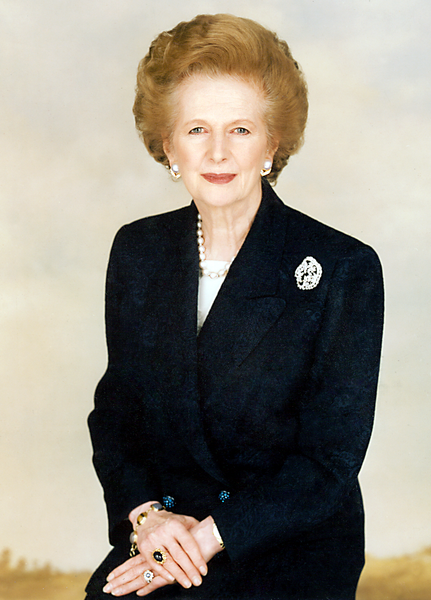

  • Margaret Thatcher – 1985 Statement on European Council in Luxembourg

    Below is the text of the statement made by Margaret Thatcher, the then Prime Minister, in the House of Commons on 5 December 1985.

    With permission, Mr. Speaker, I shall make a statement about the European Council held in Luxembourg on 2 and 3 December. My right hon. and learned Friend the Secretary of State for Foreign and Commonwealth Affairs accompanied me to this meeting. I have arranged for the conclusions of the Council to be put in the Library of the House.

    The European Council reached agreement in five main areas. The first was the completion of the Community’s internal market. This has been an important United Kingdom objective for a long time, with the strong support of British industry and business. The target of completing the Common Market by 1992 will be established in the treaty, and we agreed that there should be greater use of majority voting on a number of treaty articles dealing with goods and services. But unanimity will be retained for all decisions on taxation. The free movement of persons and the rights and interests of employees.

    We also retain the right to take national action where required to protect public, animal and plant health.

    The United Kingdom’s position and the position of this Parliament are thus properly protected on such vital questions as frontier controls in relation to terrorism, crime, drugs and immigration from outside the Community; and on essential controls in health—for example, on rabies. The Luxembourg compromise, whereby a member state can invoke a very important national interest to prevent a decision being taken, is unaffected.

    Secondly, the European Council agreed that the treaty should be brought up to date by new articles on technology, environment and the regional fund. Action has hitherto been taken in these areas on the basis of the general article in the treaty. The new articles will provide a more precise basis for action in these areas in future. Unanimity will be preserved for all-important decisions.

    Thirdly, we agreed on procedural changes to improve consultation with the European Assembly. There will be better arrangements to enable the Council to take account of amendments to Community legislation suggested by the Assembly. But in all cases the last word on such legislation will rest with the Council. There will be no transfer of power on these matters from this House to the Assembly.

    Fourthly, on monetary co-operation between member states, an amendment to the treaty was agreed which describes what has already been achieved in the Community framework, without entering into new commitments.
    Finally, agreement was reached on a separate treaty of co-operation in foreign policy on the basis of the draft presented last summer by the United Kingdom. This formalises existing arrangements for consultation among the Ten on foreign policy matters and looks to a steadily closer co-operation.

    The European Council’s decisions on all these matters remain subject to general reservations from Italy and Denmark. The proposed amendments to the treaty will go forward only if these reserves are lifted. The United Kingdom has reserved its position on the voting arrangements in a proposed new treaty article on working ​ conditions. We insist that unanimity be preserved, in view of the risks that this article might be used to impose unfair burdens on our small and medium-sized business.

    The European Council also discussed the economic and social situation and confirmed existing economic policies designed to reduce inflation and encourage sustained growth. On deregulation, the Commission gave an undertaking that in future all new proposals would be accompanied by an assessment of the effects on business and job creation; that the most important existing regulations would be re-examined to simplify them and to reduce the burden on industry; and that there should be a regular procedure for monitoring progress towards this objective. The United Kingdom’s initiative earlier this year has thus been formally adopted.

    In my statement in this House following the last European Council in June, I made it clear that we would have been ready then to take the steps necessary to complete the internal market, to improve decision taking, to formalise foreign policy co-operation and to improve procedures for consultation with the European Assembly.

    Those objectives are now embodied in the conclusions of the Luxembourg European Council together with some tidying up of the treaty to reflect the Community’s development. The amendments to the treaty have to be approved by each sovereign Parliament and accordingly will be submitted to this House.

    I believe that the conclusions on completing the Common Market and reducing the burden of regulations will be of long-term benefit to British firms selling their goods and services in the European Community. Together with the arrangements to reduce the scale of Britain’s budgetary contribution agreed last year, they will be an important step towards enabling this country to realise more fully the benefits of our membership of the European Community.

  • John Major – 1985 Speech on Heating Bills

    Below is the text of the speech made by John Major, the then Parliamentary Under-Secretary of State for Health and Social Security, in the House of Commons on 4 December 1985.

    The hon. Member for Dundee, East (Mr. Wilson) has pursued the issue of heating in all its aspects for some time, and I congratulate him on his persistence. I hope that he will understand if I cannot congratulate him wholeheartedly on everything that he said. It is not so much what the hon. Gentleman said as what he did not say.

    An acknowledgement of what the Government have done to help with heating bills would have been welcome. By any yardstick, the Government’s contribution has been substantial, whether in terms of summer or winter bills. It is appropriate to put that on the record.

    The hon. Gentleman did not mention that the Government have committed many billions of pounds to social security and have kept major benefit rates ahead of rising prices since 1979. This includes considerable help to the least well off for day-to-day expenses, including ​ heating, through substantial increases in supplementary benefit rates. These rates rose by 6 per cent. over and above the rise in prices between 1979 and 1984, and they were raised again a few days ago. More specifically, there was no acknowledgement of the substantial sum of £400 million spent last year on heating additions. The money was directed primarily to pensioners on supplementary benefit, to the sick, to the disabled and to some other special groups. That is a substantial record. The hon. Gentleman did not acknowledge that that substantial amount was £140 million more in real terms than had been spent by any previous Government on heating additions. This substantial Government record is not inclusive of all that has been achieved. I am sorry that the hon. Gentleman, when presenting his case, was not able to make specific acknowledgement of this record.

    Mr. Wilson

    I do not wish to deter the hon. Gentleman from answering the principal case, but does he think that the Government have done enough, considering the rising trend of deaths from hypothermia and the misery that many elderly people face in their homes?

    Mr. Major

    I shall deal with that issue in the course of my speech.

    The principle of weekly help with all living expenses, plus extra weekly help for those with special needs, is one that we plan to retain under the proposed reforms that will see the light of day in the White Paper shortly. I stress this because the hon. Gentleman clearly feels that, by changing the present complex system of heating additions, we are ending assistance with heating costs. That is not the position.

    The income support scheme which we propose in our Green Paper in June will provide a better basis for regular weekly help for claimants. There will be basic personal allowances for normal living expenses, including fuel costs. There will be weekly premium payments for families, pensioners, the sick, the disabled and for lone parents. The premiums will be given in recognition of the fact that these groups face special pressures, not least with the cost of extra heating.

    The fact that we shall not call the premiums “heating additions” does not mean that they do not exist, that the cash is not in the claimants’ pockets and that it cannot be used towards fuel costs. We expect that these resources will be used to go towards fuel costs and that income support, for a variety of reasons, will be a simpler and more effective means of help than the present complex system which has many defects, some of which the hon. Gentleman honestly outlined.

    I do not disparage the substantial help given through heating additions, though their structure results in an uneasy alliance between automatic entitlement for pensioners on supplementary benefit and others and the complex rules about details of claimants’ health problems. The present regulations are quite mind-boggling in their complexity. The advantages which we believe will accrue from the income support scheme include the fact that we will avoid complexity and most important, the intrusive questioning that takes place before an entitlement can be determined. I believe that the hon. Gentleman will concede that that will be a substantial improvement on the ​ present position. I emphasise strongly that help will continue to be given to these groups through the special premia that we propose.

    The hon. Gentleman spoke about high summer fuel bills, and I recognise that there are particular difficulties when bills are higher than usual. However, the problem must be put in context. Social security collectively costs many billions of pounds. It helps millions with their living expenses, and our aim is to ensure that that happens as effectively and simply as possible. Surely no one can dispute that over the years the system has become far too complicated and that that is not in the interests of claimants who receive assistance or those who run the system. It is clear that it is of no help to anyone. However, we shall make no progress in producing the right sort of rational, modern and helpful system that directs and targets help to where it is most needed if we try to tailor the weekly income that is provided for millions by introducing variations that are based on weather conditions, time of year or locality, for example.

    Most people plan on the basis that they will spend less one week and more the next, and we should give social security claimants the credit of recognising that they do likewise. We shall continue to provide a level of weekly income that takes account of the recurring extra pressures that are faced by groups such as pensioners. That must be a more sensible and efficient way of providing help than increasing heating additions in the winter, decreasing them in the summer and increasing them again in the summer if the weather proves to be especially bad, as the hon. Gentleman has said it was during this summer.

    The hon. Gentleman referred to the length of the heating season, and I understand the arguments that he has advanced. I have already explained that the help that we provide is geared to people’s needs year in and year out and not to providing higher levels of help at certain times of year. He implied that the heating season is generally longer in the colder parts of Great Britain than elsewhere. That followed on to a matter which he has raised before and on which he has some depth of knowledge, which is his idea of a cold climate allowance. That means, effectively, variable rates of weekly benefit depending on which part of the country someone lives.

    I recognise the hon. Gentleman’s interest in this subject, and he knows that my colleagues have discussed it with him in the past. There are real difficulties. Ministers in previous Governments have seen strong arguments against any deviation from the principle of national benefit levels and I am bound to say that we can see the same arguments against them. Apart from heating, there are many regional price variations. It would be possible to make a similar case based on variations in transport or food costs, for example. There is a variety of other variable prices in different parts of the country and I have no doubt that others could point to variations that have an acute effect on the persons with whom they are concerned.

    If we were in the business of trying to take a detailed and comprehensive account of all the variations, the task of setting and changing all the benefit rates each year would become impossibly complicated. I am sure that the hon. Gentleman will acknowledge that that is so when he has time for reflection. There is evidence that there is little variation between the amount spent on average on fuel by those who live in different parts of Britain. That remains true at all income levels throughout the United Kingdom.

    I share the hon. Gentleman’s concern about hypothermia. Each winter we hear distressing accounts of old people —perhaps proud and independent people who are entitled to help but who for various reasons do not seek it, or who face difficulties in obtaining it —who suffer from the cold. I understand the problems and care about it as much as the hon. Gentleman. However, it is not reasonable to portray the Government —I think that the hon. Gentleman began to move in this direction when he remarked about help for farmers and not for those in need of heating additions —as uncaring and aloof from the problem of hypothermia.

    Mr. Wilson

    They are.

    Mr. Donald Stewart (Western Isles)

    That is right.

    Mr. Major

    I reject that charge absolutely. They would do well to recall, before they make it, that it was a Conservative Administration in 1979 that introduced automatic heating additions for the first time for older supplementary pensioner householders.

    Mr. Wilson

    It is not enough.

    Mr. Major

    If he thinks that that initial move was not enough, the hon. Gentleman may recall that subsequently we extended the number automatically entitled to heating additions so that as of today about 1·5 million supplementary pensioners over 65 get extra help with their heating of between £2·20 and £1–45 per week. When he makes remarks about help for cattle and not for people, he overlooks that substantial amount of assistance that was introduced, and is being given, by this Government. He might also bear in mind that nine out of every 10 supplementary pensioners now get heating additions, compared with only six or seven out of every 10 in 1978.

    The hon. Gentleman also dealt with the exceptionally severe weather payments and some of the difficulties they cause. That payment is often confused with the cold climate allowance, but there is an important difference which may be understood in the House but not outside. Those payments are one-off payments to claimants in any part of the country if they have used more fuel than planned because of a period of exceptionally severe weather. The payments have always been a tiny part of the overall help with heating costs for the least well off.

    The winter before last the chief adjudication officer, who advises local adjudication officers on the interpretation of the law, introduced a new system for determining when the regulation was satisfied. That system was based on temperature data provided by the Meteorological Office, collected from 17 weather stations throughout the country. The system was first fully tested earlier this year. As the hon. Gentleman will recall, there were some criticisms of the way in which it worked. I put that in the mildest form that is appropriate.

    In the first place there were complaints from Scotland and from some parts of England and Wales where payments were not made. Secondly, the system was very complicated to understand. I recall that my hon. Friend the Minister for Social Security himself described it as a pretty weird and wonderful construction. Thirdly, the amount of help delivered under the system was relatively modest, about £10 on average. We now know that the administrative cost of the scheme was very high indeed in proportion to the help given. We estimate that last winter it cost over £1 million administratively to pay out £1·7 ​ million in benefit. Clearly that was not satisfactory. In view of the difficulties we undertook to review the provision.

    In the meantime, the chief adjudication officer arranged for a test case to be heard by the social security commissioners to clarify whether his guidance properly reflected existing law. Their decision, which was issued recently, was that the system used last winter was not a satisfactory method for deciding claims. They held in effect that local adjudication officers should use their own judgement in deciding, on the facts of each individual case presented to them, whether there had been a period of exceptionally severe weather and how much extra the claimant had spent as a result.

    The chief adjudication officer is now issuing new guidance to local adjudication officers in the light of the commissioners’ decision, so we shall no longer have the system of trigger points and degree day percentages which caused so much bewilderment last winter. None the less, local adjudication officers may still have to face substantial difficulty in determining whether exceptionally severe weather payments should be made. For example, they will have to decide whether the weather is exceptionally or abnormally severe. Interpretation of those terms is difficult. They will have to decide whether there has been a period of exceptionally severe weather, although there is no set definition of “period” and it may in theory be as little as a single day.
    The local adjudication officers will also have to establish both what the claimants’ normal fuel expenditure is and how much extra is spent as a result.

    Mr. Wilson

    Is the Minister saying that in departing from the previous system of trigger points and so forth the temperature to be used as a criterion in each area will be a local one rather than a national one? In other words, will it still be possible for people in the south to get benefits under the severe weather scheme while people further north will not get them if their average temperature is much colder?

    Mr. Major

    I was about to make that point, though we shall have to wait for the guidance of the chief adjudication officer, which we shall have very shortly. There is a substantial probability that payments may still ‘vary between different parts of Britain in an unacceptable fashion. I stress that point because some hon. Members may have overlooked it. The commissioners, in their recent decision, held that the weather must be exceptional for the place in question.

    A number of other factors will need to be considered, one of which is the commissioners’ ruling that “exceptionally severe” also means exceptional for the time of year. I have no wish to belittle the difficulties outlined by the hon. Member for Dundee, East, that high summer heating bills can cause. The issue is whether ad hoc, finely calculated payments towards specific bills are the best ‘way to help. I wonder if the social security budget and social security staff are best employed making adjustment for exceptionally rainy summers, exceptionally chilly springs, exceptionally misty autumns, and so on. Surely it is better to concentrate on delivering the correct level of weekly income efficiently to those in need.

    We are therefore continuing to consider this provision very carefully in the light of the commissioners’ decision and the chief adjudication officer’s impending guidance. ​ We shall be looking at the effects of that guidance, both in terms of the way in which it seeks to provide extra help with fuel bills and its practical implications. In the meantime, the guidance is being issued so that staff will be able to handle any claims being made.

    I hope —though my expectations are not high —that I may have persuaded the hon. Member for Dundee, East that the Government are anxious to help the least well off ​with their heating problems. The Government are genuinely concerned about the matter and, regardless of whether I have convinced the hon. Gentleman, we shall continue to offer substantial assistance, although it may not be in the ways that the hon. Gentleman suggested in his remarks today.

  • Gordon Wilson – 1985 Speech on Heating Bills

    Below is the text of the speech made by Gordon Wilson, the then SNP MP for Dundee East, in the House of Commons on 4 December 1985.

    The subject of the debate is the effect of poor summer weather on the elderly and the very young. Before coming to that, I must say that the debate on the Northern Ireland (Loans) Bill evoked memories of 1975 and devolution. It is one of the paradoxes of this place that Northern Ireland is to be offered devolution when it does not want it, while Scotland, which wants it, cannot get it.

    I want to turn the attention of the Minister and the House to the problem facing many elderly and very young people because of the poor weather during the summer —if summer be the right description. In recent years a considerable amount of attention has been drawn to the instances of fuel poverty, but most of the concern was about the effects of winter weather on the frail, elderly and the families living on the margins of income.

    Those on supplementary benefit and heating allowances hope that during the summer they can save to pay their winter electricity, gas and coal bills. Many hon. Members will have experience of constituents approaching them at the end of winter with high bills that they have great difficulty in paying under the current supplementary benefit rates. Indeed, they have been faced with the prospect of disconnection.

    Some of those people were able to cut their arrears during the summer months when they could turn off their heating systems, or perhaps put something aside towards the bills for the winter months. We must recognise that this is not an academic matter, nor is it purely a case of the discomfort that many families experience because they cannot afford sufficient fuel. It can be one of life and death.

    Age Concern has looked into the matter. It has said, based upon a survey done as far back as 1972, that some 70,000 Scots pensioners are at risk from hypothermia. If, however, one scales it up to the present population aged over 65 years, I am informed that the figure is now nearer 130,000.

    The problem medically for the elderly, although it applies also to children in their first year of life, is that they sometimes have difficulty in being able to sense changes in temperature. The young have no control over their clothing or the way in which they react. The elderly frequently do not notice changes in temperature up to something like 5 degrees Centigrade. That is why they can be at risk and, before they know it, they can be in danger.

    There are between 3,000 and 5,000 deaths per year in Scotland from cold-related illnesses. Some 20 per cent. of all Scottish houses —and that may be an underestimate —have a problem with dampness. In 1972 the Wicks report when it came out made it clear that pensioners spend over twice as much of their budget on fuel as the average of all households. Indeed, that same report demonstrated that 88 per cent. of people who would have liked more heating cited expense as the reason for not having it. They deliberately economised on fuel because they felt they did not have the resources with which to pay for it. We are now dealing with the problem of the population becoming progressively older so that at present some 17 per cent. of the Scottish population is over pensionable age.

    I do not pretend that this is a purely Scottish problem. Other areas of the United Kingdom suffer from climatic variations, but I trust that it is stating the obvious to point out that the Scottish climate, because of our northerly location, suffers from harsher weather conditions. It is a matter of indisputable scientific proof that it is 20 per cent. more expensive to heat a house in Glasgow than it is to heat a similar house in Bristol. In Aberdeen the comparable figure is 30 per cent., while there are many more upland and exposed households where the weather is windier and colder. Nor is it just the case that cold weather is more severe. People also have to cope with a longer winter, lack of sunshine, shorter days, greater wind velocity and a higher rainfall, all part and parcel of living further to the north in winter. It is not surprising, therefore, that electricity consumption is 25 per cent. and 50 per cent. higher in the south and north board areas respectively compared with consumption in England.

    If any further proof were needed, a glance at a recent written answer given to the hon. Member for Carrick, Cumnock and Doon Valley (Mr. Foulkes) shows not only that official hypothermia death returns are running in the first half of 1985 at record levels but that Scotland accounts for some 33 per cent. of all the deaths where mention is made of hypothermia on the death certificate. As we know, the official returns on the death certificate, because of the difficulty of diagnosis, represent only a small proportion of those who die from cold-related illness.

    All this has been compounded by the 1985 summer. Apart from the month of October, it was simply appalling. Cumulative Scottish weather conditions were found to be the worst for a century. From July to September rainfall was 200 per cent. to 300 per cent. above normal. Sunshine was less that 75 per cent. of the usual. This has had a direct impact on heating. People had to heat their homes right through the summer. During the summer quarter, fuel consumption rose dramatically. Compared with 1984 gas consumption went up by 20 per cent. and electricity in the south of Scotland electricity board area by 12 per cent. Figures have not been made available for the hydro-board area, but might be greater because it covers the more northern latitudes. Increases in coal were also sustained in different areas, to upwards of 20 per cent.

    It is not surprising that during the summer fuel arrears have arisen. Many people have used up the savings that they had kept for fuel consumption during the winter. This is serious, because the graphs show that deaths among the elderly rose by 20 per cent. and among the very young by 40 per cent. in winter, as compared to summer. This phenomenon does not occur in similar age groupings in Scandinavia. Part of the blame lies in the poorer quality of housing. With lack of insulation, a disproportionate amount warms the external environment, and there is no real programme of upgrading, and what there is seems to be under attack. It is one of the stupidities of Government policy that in 1981 –83 they paid out something under £15,000 million of fuel benefits, actual or reputed, but provided only some £18 million for basic insulation.

    The whole point is about ability to pay. on 28 November, the Government acknowledged the exceptionally bad weather conditions, when the Minister of Agriculture, Fisheries and Food gave a subsidy to farmers, for fodder for their cattle. What about the people who also had to put up with the cold, wet and windy summer? So ​ far, there has been no announcement, although winter has struck early and most bitterly. The benefit system is inadequate, unfair and unjust.

    The House knows that I have before called for a cold climate allowance. Instead, there is the severe weather allowance, which I prefer to call a warm climate allowance because it favours payment in the south rather than in the north. Last year, 170,000 payments were made in England, but none in Scotland, although lower temperatures were prevailing in our country.
    No one in Scotland will miss the severe weather allowance when it is abolished. It does not give us any help —a case of cold comfort for the Scots, and southern comfort for the English. In any event, the system has been declared illegal by the Social Security Commissioner, but the Government are silent, and I hope that the Minister will say something to clear up the position, and about the guidelines. Will the scheme last, and will any back-money be paid to all those people who applied last year, but failed to get a bean out of the system?

    In plain language, the scheme is daft. It is unfair to those living in normally cold areas. It is confusing for benefit officers, and if it is confusing for them, how much more confusing must it have been for the general public? The elderly could not predict whether the cold temperatures would last long enough to bring clown the average and so trigger off the payments. Old folk had no way of knowing whether they could afford the extra heat. The winter has struck early, and the fear of the size of the fuel bills is the greatest disincentive to the elderly in keeping warm. After the summer, many could have difficulty in paying for fuel, and be in a more difficult and harsh position than last year.

    The Government cannot be complacent about the trend in deaths. It is immoral to give extra cash to keep animals alive when people either die or face the misery of being trapped in cold and draughty homes. It is necessary to give help to the farmers, in view of the bad summer, but, if the Government are willing to give it to the farmers, they should also be prepared to help other people. The Government cannot abolish fuel allowances. Adequate allowances are the only guarantee for aged and low-income families that they will have any chance of keeping themselves warm in this and future winters. I hope that the Minister will be able to respond sympathetically to my case.

  • Clare Short – 1985 Speech on Silentnight Plc

    Below is the text of the speech made by Clare Short, the then Labour MP for Birmingham Ladywood, in the House of Commons on 3 December 1985.

    I beg to move,

    That this House gives its fill support to the employees of Silentnight plc who are on strike; notes that the workforce of the company have shown great forbearance in the face of an aggressive and obdurate management, that the union agreed to forgo a claimed pay rise for three months in return for an undertaking by the company of no further redundancies, but that the company broke the agreement eight weeks later by declaring another 52 employees redundant and that the present strike was supported by a ballot of the workforce; condemns the company for refusing a union offer to submit the dispute to binding arbitration and for dismissing those on strike; further notes that the company’s claim that it cannot afford a pay rise costing £210,000 in a year fits oddly with its ability to pay out dividends to family shareholders of £700,000; and calls upon the company to lift the dismissal notices and negotiate, and upon the Government to use its influence to bring an end to this dispute.

    I begin by making it clear that my hon. Friend the Member for Kingston upon Hull, East (Mr. Prescott), deeply regrets his absence tonight and has asked me to put on record for the House and the Silentnight workers his regret that his duties have taken him elsewhere.

    We have chosen to debate this dispute partly because we and the Silentnight workers want a settlement of this six-month dispute. We believe that if the Government were willing, they could use their influence to settle the dispute. We do not accept the Government’s amendment and their suggestion that they find the dispute regrettable. If they did, they could use their influence to bring the dispute to an end.

    We also wish to debate the dispute because of its wider implications. We want to know whether there are the kind of industrial relations the Government are now seeking. We hear much about a new atmosphere in industrial relations and about management’s right to manage. We want to know whether the Government intend to return us to 19th-century industrial relations and to the bitterness and conflict that we see in the Silentnight dispute. We are all aware of examples of this style of industrial relations from our own constituencies.

    In my constituency there was a similar bitter dispute that ended some months ago at Kenwal Brothers in Middlemore road. It lasted 19 weeks. It was a small textile workshop with appalling conditions and illegal rates of pay. The workers learned that the rates were illegal and that there were such things as wages councils which were meant to protect them. They learned of their rights, and it was not because the wages inspectorate came to inspect the offices. The workers joined a trade union. The owner conceded the minimum rates under the wages council and shortly afterwards deliberately provoked a dispute which lasted 19 weeks.

    At the request of the workers, I was involved in meetings with the owner. He told me that he deeply regretted the dispute, that everything that he had built up in his working life was now lost and that he would have to sell up. Once the mostly Asian women workers at Kenwal Brothers decided that they could not go on with their strike, the owner reopened his business and took on more workers, as I understand it, at illegal rates of pay. Again the wages inspectorate has not intervened. We have ​ a strong sense of community in Ladywood, however, and the owner is finding it difficult to obtain enough workers. My hon. Friend could tell similar stories of a deterioration of industrial relations which the Government seem to describe as an improved atmosphere.

    The Silentnight dispute has been going on for six months. It has caused enormous hardship to those who are on strike and has also caused the company’s first loss. The half-yearly figures published in October showed an £828,000 group loss compared with a £1·1 million profit for the same period last year. The company, it seems, is willing to damage its financial interests as well as the livelihoods of its 346 workers, for purely ideological reasons.

    The Government may wish to claim that the dispute has nothing to do with them. That is the implication of the amendment that they seek to move tonight. That claim does not stand up to scrutiny when we look at the record of the company, its involvement with the Conservative party and the record of Ministers and their entanglement with the company.

    Mr. Robert Atkins (South Ribble)

    The what?

    Ms. Short

    I shall come to what I am implying. Mr. Tom Clarke, who is a chairman of the company, is a member of the Conservative party and was until recently president of the Skipton Conservative association. His links with the Tory party got him an OBE from the present Government for services to industry. It also got him a visit from the Prime Minister—certainly a Minister—in 1983, who described him as “Mr. Wonderful”. We want to know from the Minister tonight whether the Government still consider him and his industrial relations policy wonderful.

    Even worse, in the Adjournment debate on 6 November initiated by my hon. Friend the Member for Burnley (Mr. Pike), the Under-Secretary of State for Employment, the hon. Member for Rossendale and Darwen (Mr. Trippier)—we notice that he is not answering for the Government tonight and wonder whether that is some form of an apology—defended the management of the company and gave a misleading account of the dispute, taken, we believe, from a misleading company briefing published for the purpose of that debate. He made some wild and unsubstantiated allegations about violent conflict in the course of the dispute. Much of this was misleading and untrue. It is likely that some of it will be repeated this evening so my hon. Friend the Member for Burnley will deal with the allegations in some detail later.

    Mr. Dave Nellist (Coventry, South-East)

    My hon. Friend referred to allegations of violence or intimidation—at least, that was the implication of her words. Is she aware that, after the 5,000-strong rally on Saturday in Barnoldswick in support of the strikers, Mr. David Marshall, the regional official of the Furniture, Timber and Allied Trades Union, was attacked and injured by two men with sticks? If pickets had attacked management representatives, right hon. and hon. Members on the Government Front Bench and every Tory newspaper in Britain would have been talking about or reporting acts of violence and intimidation. When union officials are on the receiving end of sticks, there is total silence from Ministers and Tory newspapers.

    Ms. Short

    I was not aware of that, and I am grateful to my hon. Friend for having put the matter on the record.

    In the Adjournment debate to which I have referred, the Minister cannot claim that he was being impartial about the dispute and expressing the regret that the Government claim in the amendment that the dispute has been continuing for some time. He made no attempt to encourage conciliation and a settlement. Indeed, he said that the Prime Minister was right to praise Mr. Clarke, and added:

    “We need more people like Tom Clarke.”—[Official Report, 6 November 1985; Vol. 86, c. 103.].

    I shall tell the House what the local newspaper, the Lancashire Evening Telegraph—

    Mr. D. N. Campbell-Savours (Workington)

    That is a good newspaper.

    Ms. Short

    thought of the remarks of the Minister, the hon. Member for Rossendale and Darwen. Its editorial of 8 November reads:

    “What kind of employment minister is the one likely to appear more responsible—one who seeks to end a strike or one who fans the flames of the dispute?

    We ask this because of the apparently crass and partisan behaviour of Rossendale and Darwen MP Mr. David Trippier, No. 2 at the Department of Employment”—

    I do not know whether the Minister is No. 2 in the Department—

    “during the Commons debate into the bitter, 22-week dispute at the Silentnight works at Barnoldswick, where some 500 employees were sacked after striking over a pay claim.

    For we believe Mr. Trippier comes out of it very badly—in seeming to take sides and so wasting the opportunity to use his office to get both sides together. He is sufficiently experienced to know that no dispute is ever solved by intransigence, but his line in the debate can only prolong that attitude.

    If his stance were prompted by a belief that the public generally does support governmental moves to curb over-reaching trade union power, he has made the mistake of going too far into the realm of pure union-bashing, something which, we believe, goes beyond most people’s idea of political responsibility.

    So in declaring his support for this employer and saying that the country needs more like it, Mr. Trippier overlooks the fact that firms cannot thrive in the atmosphere of polarised industrial relations and that it is the duty of a responsible employment minister to promote the alternative.”

    We hope that tonight we may get a rather different attitude from the Department of Employment.

    The history of the dispute is well known. There have been articles in The Guardian, The Times and the Daily Mirror and a programme on Channel 4. That is quite remarkable for a relatively small localised dispute. It is surprising that it received such strong national coverage. Perhaps the reason is that the injustice is so gross. It is a typical example of the shifting mood in industrial relations which the Government seem anxious to promote.

    In January 1985, the company asked the workers to forgo a wage increase for between three and four months to avoid job losses. The workers agreed to that. In April 1985, the company reneged on the deal and declared 56 redundancies. The workers accordingly requested their pay increase. The company refused and said that it could not afford to pay it. The trade union made inquiries to ascertain whether that was true and undertook some research. It found that the claim was false.

    It found, first, that from January 1984 to January 1985 the company made a profit of £595,000; secondly, that the Silentnight group of companies made a profit of £2·5 million; thirdly, that the chief executive of the company, ​ Mr. Tom Clarke, received a £5,000 a year increase, bringing his salary to £50,000 a year; fourthly, that a family trust called Famco, which is composed of Mr. Tom Clarke and immediate members of his family, received £646,000 this year in dividends from group profits; and, fifthly, that it would have cost only £250,000 over 12 months to pay the members of the union their nationally agreed wage rise. These are the economic facts of the dispute.

    In May, there was a ballot at the company on the refusal to honour the award. The result was that 352 workers voted for industrial action and 203 against out of a work force of 700. The ballot produced a 3:2 majority in favour of industrial action. The company remained obstinate and refused arbitration on a number of occasions. Despite what the company is putting out in its briefings and what the Under-Secretary of State, the hon. Member for Rossendale and Darwen, said in the Adjournment debate, the union declared itself willing to go to arbitration in the absence of any terms. It did so because it was not possible to reach agreement on terms. The union has been anxious throughout the dispute to go to arbitration and the company has refused to do so.

    As a result of the failure to come to an agreement, a go-slow started on 10 June. Again, the workers were anxious not to strike. They decided merely to take some action to promote negotiations with the management. Immediately the go-slow started, shop stewards were summoned by the management and told that if the workers were not working normally in 10 minutes, they would be suspended and sent home. The result was that 200 were suspended. The remaining workers walked out. Three factories came to a standstill and, in July, 346 workers received dismissal notices. They are still on strike.

    Those workers want—and we want—the Government to use their substantial influence with the company to arrive at a settlement and get the workers back to work. Are the Government willing to use their influence in that way? Is the Minister willing to say that he thinks that the dismissal notices should be withdrawn and that there should be negotiations? If he is not, we are forced to conclude that this is an example of the industrial relations that the Government are trying to promote and that this is what they mean by management’s right to manage. If that happens, we know that there will be more and more bitter conflicts of this sort throughout the land which will bring benefit to no one.

  • Jack Dormand – 1985 Speech on the Northern Region

    Below is the text of the speech made by Jack Dormand, the then Labour MP for Easington, in the House of Commons on 3 December 1985.

    I beg to move,

    That this House condemns Government policies which have brought to the Northern region the highest rate of unemployment in the United Kingdom outside Northern Ireland, shown callous disregard for the region’s traditional industries, failed to provide adequate measures for the attraction and creation of new jobs and brought about a lowering of the quality of life; and demands a fundamental change of policy to end this savage decline.

    It is significant that we are using part of our first Opposition day of the Session for a debate on the northern region. It is significant not only because we recognise the region’s many problems, but because the Opposition realise the value of the north’s contribution to the country, to the industrial development of Britain in the past and its potential for the future.

    Most of the region’s difficulties arise from its high unemployment which remains the highest in the United Kingdom outside Northern Ireland. It has held that unenviable position in the unemployment league since the Government came to office in 1979, and the position has worsened since that date. In October 1979 there were 99,900 people unemployed in the region—7·3 per cent. There has been no reduction in any year since that time. In October of this year there were 227,500 unemployed—a disgraceful rate of 18·1 per cent. The north has lost 219,000 jobs since 1979, 125,000 of them in manufacturing. It has lost 30,000 jobs in the service sector, while 369,000 service sector jobs have been created in the United Kingdom. The Government make great play these days about the service sector, but apparently that does not apply to the north.

    However, that is not the whole story. In the north, 440,000 people earn low wages. They are paid below what the Council of Europe calls the decency threshold. That figure represents 42 per cent. of the work force in the north.

    When I asked the Prime Minister on 21 March about unemployment in the north, she replied:

    “The wages in that region are also comparatively high.”—[Official Report, 21 March 1985; Vol. 75, c. 986.]

    She said that that might be related to the high unemployment. All I can do is repeat what the right hon. ​ Member for Old Bexley and Sidcup (Mr. Heath) said of the Government recently—that they must live in a different world from the rest of us.

    Those statistics are especially relevant to what was said by the present chairman of the Conservative party, then the Minister of State, Department of Trade and Industry, in a debate on the north on 15 July 1981:

    “I share and understand the concern at the levels of unemployment in the region, and that concern is recognised in our regional policy, which gives such a high priority to the North of England.”—[Official Report, 15 April 1981; Vol. 3, c. 354.]

    In view of the figures that I have just quoted, heaven help those who do not get such high priority.

    George Bernard Shaw once said:

    “You can get used to anything, so you have to be very careful what you get used to.”

    Those are wise words. I confess that I have become extremely worried that the people of the north will get used to the low standard of living brought to the region by the Government.

    I chose a quotation from the former Minister of State, Department of Trade and Industry in 1981 for a specific reason. At that time, the Government’s new regional policies were beginning to take effect. Some might have thought, “Let us give them time to work.” Those regional policies were introduced with such a fanfare in 1979 by the then Secretary of State for Trade and Industry, now the Secretary of State for Education and Science. They were so good and effective that they had to be changed again last year, although the changes last year were instituted as part of a cost-cutting operation. The words “flexibility” and “cost-effectiveness”, which were bandied about so much at the time in relation to regional aid, were euphemisms for the biggest cuts ever made in regional provision. On the Department of Trade and Industry’s own admission, total aid to the north during the past six years has been cut by no less than 57 per cent. If the Minister has received any praise for the new system from employers, local authorities, trade unions or anyone else, the Opposition would like to hear it.

    That brings me to the nub of the problem, and to what the Opposition believe to be the essence of the debate. How much longer must we wait for the Government’s policies to work? That is a perfectly legitimate question to ask. If six and a half years of Tory government is insufficient time, any impartial judge would say, “Enough is enough. Confess your failure and start anew.”

    Of course, we know what the answer will be. When the Minister replies, he will give a catalogue of events dressed up as progress. However, he had better remember the words of the Under-Secretary of State for Employment—I am glad to see him in his place—in an Adjournment debate initiated by my hon. Friend the Member for Hartlepool (Mr. Leadbitter) as recently as 22 October 1985. In his typically straightforward and whimsical fashion, referring to the Prime Minister’s recent description of success stories in the northern region, the Under-Secretary of State said, “Alas, they are few.” We admire his truthfulness and perception, but he had better be careful. He might drown in the sea of crocodile tears which the Prime Minister continually sheds for the north.

    I shall be so bold as to anticipate two points with which the Minister will regale us. He will tell us that organisations in the north have responded positively to the ​ youth training scheme and that the Manpower Services Commission plans to provide more than 25,000 places for young people in the north this year. He is perfectly entitled to report such progress, if progress it be—[Interruption.] The Minister laughs. What worries me and my hon. Friends is that the Government appear to believe that those places are an adequate substitute for what we call real jobs. I do not say that some of the experience gained by some youngsters is not valuable. However, I advise the Minister to listen to the colourful language used by some youths in my constituency when describing their experiences. I beg the Government to begin thinking about permanent, productive employment for our youngsters.

    The tragedy of the position was starkly illustrated a fortnight ago by the devastating reply from the chairman of the Conservative party to a northern newspaper reporter, who asked whether he agreed with the view being expressed in the north that there would be a lost generation—a generation of youngsters who would never obtain permanent jobs. The right hon. Gentleman said that he thought that could possibly be the case. When I hear such an admission, I wonder how some members of the Government can sleep soundly in their beds at night.

    The Minister will also tell us about the Government’s generous treatment of the coal industry, which plays an important role in the economy of the north. We shall be told not to worry because NCB Enterprise Ltd. will take care of all the problems caused by pit closures. However, we have some questions to ask about that. Why, if it is such an important and necessary organisation, was it not established until late 1984? Pits were closing long before then, and the Government and the NCB were determined long before the miners’ strike to accelerate the closure programme. The scheme is barely in operation now. If it is the best way of coping with job losses in the coal industry, why was it not established in 1982 or 1983? After all, the Government have had the exact parallel experience of the steel industry.

    Secondly, why was the pitiful sum of £5 million allocated to NCB Enterprise Ltd? The Government partly answered that question by shortly afterwards increasing the sum to £10 million, more recently increasing it to £20 million, and saying that more money will be made available should it be necessary. It is difficult to imagine a more pusillanimous, hesitant or muddled attitude to any Government policy. Perhaps the real reason is that their heart is not in it.

    In the context of a completely misguided policy for the coal industry, I hope that the scheme will make some contribution to the well-being of mining areas in the north, but my recent experience shows its limitations. A fortnight ago I had the pleasure of opening a new factory in my constituency. I was delighted that such a well-known company as Bowaters Containers should come to the area. That factory employs 16 workers now and hopes to increase the number to 40 within a few months. Exactly one mile from that factory is Horden colliery, which the NCB proposes to close with the loss of 900 jobs. The pit will go through the new review procedure, but if, like so many pits in the north, it must close, NCB Enterprise Ltd. will have to perform little short of miracles in the area. The Government have been completely ham-fisted in this matter. Any rational and caring Government would have provided a bridging period for an area with such difficulties.

    The Government can refer to one success in the region—

    Mr. Roland Boyes (Houghton and Washington)

    Before my hon. Friend leaves the point about the problems of jobs for coal miners, may I ask whether he agrees that another travesty of justice by this Government is the decision to close the development corporation which has the task of creating industry? My hon. Friend has raised this matter many times. Does he agree that the corporation could have created jobs for the miners?

    Mr. Dormand

    I was just about to make that point.

    The Government can refer to one success story—the record of the three new towns in the area—but I do not believe that the new towns will get a mention as the Government have reached new heights of lunacy by deciding to abolish the development corporations in 1988.

    Washington, Aycliffe and Peterlee cover a very large sub-region of the north. They have attracted thousands of new jobs and will continue to do so. They also have ready access to excellent road, rail and sea communications but—I hope that the Minister will acknowledge this—their great appeal is to offer what is called a “one stop” deal for companies. The proposals now being made simply do not meet that criterion. With an accelerated pit closure programme, can the Government believe that there will be no further use after 1988 for the expertise and dedication of the staffs of the new town corporations? The Government’s decision in this matter epitomises their misjudgments and misconceptions about the northern region. I ask them to reconsider a decision that was based purely on a doctrinaire attitude.

    The motion refers to the quality of life in the northern region—and having a job makes the biggest single contribution to that. The Government have failed abysmally in that respect. There are, however, other factors to which I am sure my hon. Friends will wish to refer.

    The state of the environment is an important factor in the quality of life. As vice-president of the Northumbria tourist board, I would be the first to praise the attractions of that part of the region. The beauty of most of Cumbria is self-evident, but there is a considerable legacy of the industrial revolution, and present-day heavy industry also leaves scars on the region. I could give horrific descriptions from my own constituency, but I prefer to mention two recent reports. The Commission on Energy and the Environment published its report “Coal and the Environment” in 1981, an the 10th report of the Royal Commission on Environmental Pollution was issued as recently as 1984. I regret to say that both reports give special mention to the northern region. They make very depressing reading, but the Government’s response to the recommendations in both reports has been negligible. When will the Government take action on those recommendations?

    It would be more than a gesture for the Government to make arrangements with the Arts Council to increase the grant to Northern Arts. Northern Arts, which does an excellent job for the region in difficult circumstances, receives most of its income from Tyne and Wear county council which, as the Minister will know, is soon to be abolished. An act of positive discrimination is needed, but perhaps that is too much to hope for from such a philistine Government.

    If the Government are serious about helping the northern region, they should change and strengthen their regional industrial policies by establishing a northern development agency, structured and financed on the lines of the Scottish and Welsh Development Agencies. The Government could also transfer Civil Service jobs to the region. The Labour party has not forgotten that one of the first acts of the 1979 Tory Government was to cancel the arrangement to transfer 1,000 Civil Service jobs to Cleveland. Since then, not one Civil Service job—as I know, having asked many parliamentary questions on the matter—has come to the north. The Government could also establish research and development agencies in the region now that there is considerable evidence that firms tend to stay in the area where the new products are developed.

    The Government could improve their regional policies by accepting the advice of their friends in the CBI. The CBI adopted Labour party policy at its annual conference two weeks ago when it said that the Government should spend directly on reducing unemployment rather than on cutting income tax. The north needs £300 million-worth of road improvements and repairs. That is the CBI figure, not mine. The northern CBI last month said that the picture in the region was very mixed. Some companies are finding a worsening of the position. The heavy capital sector is still depressed and more orders are needed for shipbuilding and ship repair companies. The situation in six months is likely to be even less hopeful. If the Government will not listen to the Opposition, perhaps they will heed their own supporters in industry and business.

    The last thing that the Opposition want to do is give the impression that the north is a dull, dreary, desolate place, lacking excitement, beauty, enjoyment and culture. In fact, the opposite is the case, despite our history, which has involved hard and dangerous work in heavy industry, the destruction of large parts of the landscape and an almost total lack of interest by Conservative Governments.

    Mr. A. J. Beith (Berwick-upon-Tweed)

    The hon. Gentleman has mentioned the Government’s lack of interest and touched on the idea of an economic development agency for the north. Why did the Labour Government, of which he was a member, resist the pleas by Labour Members and others to take the opportunity offered by a devolution programme for Scotland and set up a regional development agency for the north?

    Mr. Dormand

    The hon. Gentleman has got his facts wrong. He has been a Member of this House long enough to realise that it is not possible for any Government to implement a full programme. He has obviously forgotten that the Labour party’s manifesto at the last election specifically mentioned a development agency for the north.

    The region’s greatest resource is its people. They are responsible, proud and hard working. Any employer who has come to the north will agree with that statement. The people would like the opportunity to demonstrate those qualities in full measure. The Prince of Wales, in his recent statement on the so-called northern employee attitude, could not have been more wrong. It ill becomes one in his comfortable position to present such an inaccurate picture of northern workers.​

    Mr. Deputy Speaker (Sir Paul Dean)

    Order. I remind the hon. Gentleman that references to the royal family in aid of debate are not in order.

    Mr. Dormand

    In a modern society it is not unreasonable to expect to have a job, to live in a decent house in a pleasant environment, to benefit fully from the education system and to rely on the Health Service. The Opposition believes that the northern region is being denied those basic rights. In the circumstances, it is not surprising that Tory Governments have such meagre support in the north. If the Government refuse to recognise the reality of the situation, refuse to change direction and ignore the Opposition’s pleas, we shall not be surprised if they receive even less support in future.

  • Julian Ridsdale – 1985 Speech on Health Services in North-East Essex

    Below is the text of the speech made by Julian Ridsdale, the then Conservative MP for Harwich, in the House of Commons on 29 November 1985.

    I am grateful for this opportunity to raise the subject of health services in northeast Essex, especially at this time. Strong feelings have been aroused in my constituency about the threatened closure of a small children’s ward and a proposal to shut a radiotherapy unit and a medical rehabilitation centre. I am concerned because these actions led to the Health Service being given a bad name, because a new general hospital has been built and considerable extensions are planned for the main hospital in my constituency.

    We all know the expression, “spoiling the ship for a ha’porth of tar.” I call this “spoiling the good name of the Health Service for the lack of even a penny’sworth of political sense.” We need care, not management consultants. What is the use of spending all these millions of pounds on new hospitals and ruining it all by closing down such a small, valuable children’s ward and two other valuable units?

    Yesterday, I received a letter from one of my constituents showing a very human reaction. He commented on a pamphlet issued by the health authority entitled, “Clacton Coastline—a real community hospital.” My constituent said:
    “We are a community. We have our young. We have our middle-aged and elderly as well as our psychiatric and mentally handicapped. In times of illness, we all need treatment and care as near to our homes as possible.”

    I stress the words

    “as near to our homes as possible.”

    It is all very well having grandiose hospitals 20 or 30 miles away, where excellent treatment can be given, but it is important to ensure that the treatment and care provided are as near as possible to the people needing the care. Just to show how cynical one’s constituents become, my constituent states in a postscript:

    “Does the leaflet contravene the Trades Description Act?”

    It is a shame that the good name of the Health Service is ruined by such actions by the health authority. Those actions have made it a million times more difficult to get over to the people what is being done to improve the Health Service locally and nationally.

    We welcome the opening of the new general hospital in Colchester. We welcome the development at Clacton hospital in 1986, which will include an additional ward, day hospital places for psychiatric and psychogeriatric patients and an improved X-ray service. We welcome the promise to build phase 2 of the Clacton hospital extension which will provide 50 badly needed beds for the elderly. I have pressed for that extension for a considerable time.

    In spite of the improvements, we are considering cuts in these sensitive areas. Why? Strong feelings have been aroused among more than 500 people who, last Saturday, marched against these closures. I know that 500 people in East Anglia do not take to the streets unless they feel strongly about something. Twenty three thousand people have signed the petition against the closure, and there are 13,000 signatures against the threatened closure of the radiotherapy unit at Colchester. We are to face cuts in three areas: the children’s ward, the Passmore Edwards medical rehabilitation centre in Clacton, and, possibly, the ​ radiotherapy unit at Colchester, which will follow soon after the opening of the new district hospital. That would mean that patients must travel to Chelmsford.

    During the past few years Clacton has also seen the closure of the Middlesex convalescent home and the maternity home, while, at the same time, there has been the acceptance of greater responsibility within the community for the care of the mentally retarded. All have resulted in considerable savings for the local health authority.

    Directly I heard about the threatened closure of the children’s ward I asked the north-east Essex health authority to withdraw the proposal. There is a conflict of medical opinion, but I have had the full backing of general practitioners and the Clacton hospital throughout the dispute. Again this week I asked the authority to give way, but again it refused. As the authority has refused twice, and bearing in mind the petitions and marches, I hope that the authority will put the case to the Minister for his decision.

    Three years ago, when we agreed to the closure of the maternity home, we reached a compromise by accepting that the children’s ward in Clacton hospital should be turned into a maternity ward, and that a place should be found for a children’s ward of six beds. Despite accepting that agreement, the health authority is adamant that it now wants to close the ward. Is it not understandable that strong feelings and local anger have been aroused by the decision? If adequate research had been carried out, we would not have had any of the trouble, and, more particularly, the unnecessary anxiety placed on the seriously ill. People with cancer have enough to contend with, without all the worry and extra burden of having to travel long distances for treatment.
    I do not believe that the local health authority realises that 46 per cent. of householders in Clacton are without transport, or is aware of the distances that must be covered to the nearest district hospital.

    Sir Antony Buck (Colchester, North)

    Everyone in Essex and East Anglia is grateful to my hon. Friend for raising the matter. I hope that he will stress that the arrangements for the treatment of cancer are still at a consultative stage, and that he, like me, will have been sending large numbers of letters and making representations about it.

    Sir Julian Ridsdale

    My hon. and learned Friend, like all of us, takes a great interest in health facilities in northeast Essex. I agree that the arrangements are at a consultative stage, but I do not think that the authorities realise the difficulties that arise from announcing consultation. Good government flourishes in the dark. It is far better to have consultation between the people who must make the decisions without making it public. A great deal of worry has been caused by that not being the case.

    Many cancer patients must rely on public transport to take them to their radiotherapy centre. The extra miles to Chelmsford will place an additional burden on an already overstretched ambulance service, just as it will if the children’s ward is closed, and all young patients are sent to Colchester. It would also be difficult and expensive for young mums to get to the new hospital to visit their children.

    Regarding the proposed closure of the Passmore Edwards medical rehabilitation centre, the district should develop its own facilities, but that will take about five years. Until then I am against the closure.

    In short, we feel that we have been treated unfairly by these threatened closures. If more money must be found for north-east Essex, let me make some suggestions where we may be able to find it.

    I fear that as long as north-east Essex stays in the northeast Thames regional health authority, we shall not get a fair deal. We would be far better off, and our problems far better understood, if we were in the East Anglia health authority. How can an authority that deals with the problems of London understand the problems of the country districts? The health problems of an urban area are entirely different from those in country areas. The problem of distances is not understood. That is one reason for the difficulty that we are having in north-east Essex.

    North-east Essex is the worst funded region in the north-east Thames region. We are not getting our fair share of the region’s revenue. I draw the Minister’s attention to the performance indicators taken from the Health and Social Service Journal of 26 September 1985, of which I have sent him a copy. Our performance indicator shows north-east Essex at 82, while the London boroughs are double that figure, with Islington at 194. Will Ministers keep up their pressure in their reviews of the Thames region to accelerate a redistribution within the region? Will they please take a far tougher line with London and speed up the process of shifting resources to Essex? I hope that the Minister, in his reply, will tell us what action has been taken to see that a much more fair redistribution takes place.

    Will the Minister also deal with the more equitable redistribution of national health resources? The authority claims that it is all very well to achieve equity at a faster speed when there is adequate growth, but where there is a modest amount of cash a redistribution has become far more difficult. It claims that that has resulted in a real cut in the region of 0·3 per cent. It goes on to say that, when it takes into account the fact that, due to increasing numbers of elderly persons and advancing technology, 1 per cent. growth is needed merely to stand still, the financial problems become real indeed. Will the Minister comment on that?

    The second national problem, and a more difficult one that affects us, is the shortfall in pay awards. Is the funding of the health authority, allowing for 4·5 per cent. inflation, adequate, bearing in mind that major groups have reached the pay norm? This is costing £350,000 in the current year and will cost £1·2 million next year if the gap is not met. Unless that is sorted out quickly the health authority tells me that next year planning will become difficult.
    I hope that as a result of what I have said my hon. Friend will be sympathetic to the problems that we face and understand the reasons for the strong feelings that exist. We must find a fair solution to those problems and not spoil the good name of our National Health Service, of which we have good reason to be proud.

    Again, I underline that we are just not getting our fair share from the north-east Thames regional health authority. I ask my hon. Friend to press the north-east Thames authority, which, after all, considers London as its major objective, to see that we get our fair share of funds. We have made our sacrifices, but it is up to the ​ authority now to do what it can to help with the small sums of revenue that these closures entail. I am sure that it could easily afford it if it got the redistribution right.

  • Geoffrey Howe – 1985 Statement on the Foreign Affairs Council

    Below is the text of the statement made by Geoffrey Howe, the then Foreign Secretary, in the House of Commons on 28 November 1985.

    With permission, I will make a statement on the Foreign Affairs Council held in Brussels on 25 to 26 November at which I and my right hon. Friend the Minister for Trade represented the United Kingdom.

    The Council agreed a mandate for negotiations with Mediterranean partners on the adaptation of their cooperation and association agreements to take account of Spanish and Portuguese accession. This covers measures designed to ensure that traditional trade flows from Mediterranean partners are not adversely affected. Agreement was also reached on a mandate for negotiations with Cyprus on a customs union.

    The Commission reported to the Council on its recent visit to Tokyo for discussions with the Japanese Government on the Community’s trade relations with Japan.

    The Council also discussed the Community’s trade relations with the United States, including the renegotiation of the 1982 carbon steel export restraint arrangement. The United Kingdom reserved its position on the proposed arrangement to allow time to consider the information the Commission had received from the United States about access to the United States market for semi-finished products.

    The Council discussed the Commission’s proposals for the 1986 generalised scheme of preferences.

    The Council discussed arrangements for the forthcoming European Council in Luxembourg on 2 and 3 December, and adopted reports on European union and People’s Europe which will be noted by the European Council without discussion.

    A further session of the intergovernmental conference on the future development of the EEC was held at the same time, at which there was discussion of ways to accelerate progress towards our key objectives on the internal market.

    Ministers also considered how to update the treaty to take account of the Community’s role in technology and the environment. A meeting with representatives of the European Parliament was devoted to considering ways in which the Parliament might be able to express its views more fully before decisions are taken by the Council.

  • Max Madden – 1985 Speech on Rail Services in Bradford

    Below is the text of the speech made by Max Madden, the then Labour MP for Bradford West, in the House of Commons on 26 November 1985.

    I am pleased to have this opportunity to discuss Bradford’s rail services. To understand the mounting concern in Bradford about rail services it is necessary to explain the city’s unemployment crisis, the efforts that are being made to regenerate the city’s economy and the city’s anxiety about resources being deployed with a wrong sense of direction and priority.

    The jobs crisis is massive. During the period 1961 to 1978, manufacturing industry in Bradford lost 54,000 jobs, 45,000 of them in textiles alone.

    Between 1978 and 1981 a further 23,000 jobs in manufacturing industry were lost, 16,000 of them in textiles. The rate of unemployment has increased from 2 per cent. in 1974 to 16 per cent. in 1985, and 35,000 men and women are desperately looking for work. Wage levels remain well below the regional and national averages. The result is that millions of pounds have been taken out of the pockets of the men and women of Bradford and the rates revenue of the local authority has rapidly diminished.

    Car ownership in Bradford is very low. Only half of the families in the district own a car. There is substantial poverty and extensive deprivation. But the people of Bradford have a gritty independence. They want to help themselves.

    However, they are rapidly coming to the conclusion that although the Government have offered support to enable the people of Bradford to help themselves their help is inadequate. It is not being provided with the sense of urgency and commitment that the people of Bradford believe to be necessary.

    We have seen the city council, which is the city’s largest employer, losing millions in rate support grant and paying millions to the Government in rate penalty. We have seen the university, the city’s second biggest employer, suffering extensive cuts in 1981 and having to pay for substantial redundancies, and we have seen other unacceptable consequences as a result of those cuts, which are estimated to have taken another £6 million out of the local economy. All these pressures have led to extensive efforts being made by the city employers and others to diversify, to compensate for the losses experienced by manufacturing industry, by expansion of the service employment, especially in tourism.

    Transport services are obviously of vital importance to the city, and this concern led Bradford council and British Rail to enter a joint review of inter-city services and to issue a joint report recently. The report highlighted the importance of transport, particularly rail services to Bradford, and the extensive and mounting concern about the future of our rail services in the city.

    The chamber of commerce, trade unions, including the Transport and General Workers Union, by which I am sponsored, the Confederation of British Industry and many others, have stressed the importance that they attach to improving the transport services. The CBI, at its annual conference recently in Harrogate, devoted a considerable amount of time urging the Government to spend more on public works of all sorts, and there were numerous references to the need to improve transport services.

    Bradford should have one of the best rail services in Britain, and should not be condemned to having one of the worst. Bradfordians using public transport, including rail services to work, business or pleasure are entitled to services that are reasonably priced, comfortable and convenient. Sadly, this is not the case today, and unless the Government intervene, the prospects are that Bradfordians will be asked to pay higher fares for an increasingly third class service.

    It would be ludicrous for the line between Bradford and Leeds not to be electrified when the line between Leeds and the east coast main line is to be electrified, we hope by 1989. The investment for that electrification amounts to more than £300 million. The Government must find a way to give British Rail the £4 million that it needs to electrify the Bradford to Leeds line. The Government must ensure that British Rail expands the direct inter-city service between Bradford and London, which is now worse than it was 20 years ago.
    The joint report prepared by Bradford city council and BR, commenting on inter-city services, said that 10 years ago there were five through trains from Bradford to London, and six in the opposite direction. Now, there are three in each direction, all via Leeds.

    “It is unfortunate … that the Inter City service to and from London is worse in 1985 than it was in 1965. Industrialists comment about the length of time it takes to get from London to Bradford when a change has to be made at Leeds. They also criticise the scruffy, slow and often crowded nature of the link between Leeds and Bradford. Conferences are being, and have been lost because of the declining rail service between Bradford and London. Most tourists come by coach or car … Journey time, comfort and convenience by rail from London particularly, are important for many new and developing industries. At the present time, Bradford is at a great disadvantage. Decision makers and investors will not be attracted to Bradford if it becomes the largest city in the country without an Inter City rail service, or if it retains the worst Inter City rail service of any of the top six metropolitan districts in the country.”

    That is a succinct description of the concern in Bradford about rail services and particularly about the inter-city service.

    Over the years, the declining rail service has had spinoff effects on other services. The Bradford post and telecom advisory committee wrote recently to a senior executive at the Post Office expressing concern that Bradford had been excluded from the new dedicated intercity transport service, which will be operating between the main cities of this country. The letter said:

    “We have recently reached the stage where the 19.43 Bradford/Kings Cross train has been withdrawn and vans are having to be sent to Sheffield and York to catch trains there. This means that the evening posting time has had to be advanced in some districts by at least half an hour. This causes tremendous inconvenience to the business community who would normally be posting between 5.00 and 5.30 pm and who how have to get their mail to the Post Office before 5.00 pm.

    We find it difficult to understand why Bradford has been excluded from the new service, yet Leeds with a far better transport network has been included. Surely it would be preferable to include in the dedicated service those large cities which are suffering from a poor network.”

    I raised the issue recently with a Department of Trade and Industry Minister and I regret very much that he gave me a dismissive and off-hand reply, saying that he was not prepared to raise the matter with the chairman of the Post Office.

    The Government must take action to ensure that local rail services are maintained. The usual spiral of deteriorating services, leading to fewer passengers, trains being axed and lines being closed, must not be allowed.

    There is also mounting concern about services to Keighley and Ilkley, and it is a genuine based anxiety. Clear assurances must be given by the Government. They must take action to ensure that those services are not only maintained, but improved.

    The Government must recognise the vital importance of all transport services and do everything possible to find the money necessary to maintain and improve Bradford’s services. The city council has suggested that we need an interdepartmental Government task force, representing the Departments of Transport, the Environment and Trade and Industry to ensure a joint Government approach so that our transport services, particularly the rail services, can be defended and improved.

    Ministers visit Bradford fairly frequently, but not many travel by train and few experience the overcrowded, uncomfortable and inconvenient arrangements suffered by most passengers on trains from Leeds to Bradford. I urge the Under-Secretary to come to Bradford to meet the city council and discuss its proposals for ensuring that the Leeds-Bradford line is electrified, and its proposals for maintaining and improving the inter-city service. Such a visit would be welcomed by the council and would give the Minister some experience of conditions for passengers between London and Bradford.

    Good transport, including a good modern rail service, is central to Bradford’s efforts in providing new jobs, encouraging existing firms to expand or new firms to come to Bradford and in attracting visitors to the city.

    I end by quoting a good editorial in the Bradford Telegraph and Argus on 5 November:

    “If short-term, cost-cutting economic factors are the sole consideration in deciding whether or not to keep open the nation’s main transport arteries, we are likely to end up with a few highly prosperous major cities, such as Leeds, surrounded by vast areas of neglect such as Bradford. We believe it is time for the Government to take a longer-term, social view, before cities like ours are allowed to sink further into decline.”

    That view is generally held in Bradford, and the Minister can help to dispel it tonight. He can only hope to do so by promising action and cash. We are told that BR cannot electrify the line between Bradford and Leeds because of the stringent financial controls imposed by the Government, and that BR must show a proper rate of return on any investment made to proceed with that investment.

    For those reasons and arguments, to give hope to Bradford, to give positive and practical help to back up the self-help it is already involved in, to try to overcome the unemployment crisis, and to help our efforts to revive our economy, I appeal to the Minister tonight to give clear assurances that he places the highest priority on ensuring that our rail and transport services are saved. That is what the people of Bradford want to hear. I hope that he can give those assurances in his reply.

  • Julian Amery – 1985 Speech on the Anglo-Irish Agreement

    Below is the text of the speech made by Julian Amery, the then Conservative MP for Brighton Pavilion, in the House of Commons on 26 November 1985.

    I congratulate my hon. Friend the Member for Eastbourne (Mr. Gow) both on his decision to resign and on his speech. There is an old saying, “Money lost, nothing lost. Honour lost, much is lost. Courage lost, all is lost.” My hon. Friend has shown a sense of honour and a degree of courage beyond the call of duty, and I salute his decision. For many years as parliamentary private secretary to my right hon. Friend the Prime Minister, he inevitably lived in the shadow of our political life. His public decision brings him a new status. It will earn him the respect of all hon. Members, whether we agree with him or not, and our admiration.

    I should next like to congratulate the hon. Member for Foyle (Mr. Hume), who I am sorry to see is no longer in his place, and who is the architect of the Hillsborough agreement. It is no mean thing for the leader of a party, which represents a little more than half of the minority in the Province, to be able to convince the Governments in Dublin and London to reach such an agreement.

    However, I must warn him and the House that this is a fragile concept and an affair of mirrors. The nationalists are being told that the agreement is a step towards the reunification of Ireland, while the unionists are being told that it is a guarantee of their remaining in the United Kingdom. Although the right hon. Member for Barnsley, Central (Mr. Mason) spoke in praise of the agreement at the beginning and end of his speech, he showed clearly the difficulties that lie ahead.

    The agreement is flawed in the first place—here my unionist friends will not agree with me—because it renews a commitment to devolution. It is worth recalling that Carson was against devolution. He said that he wanted the Province to be treated in exactly the same way as Scotland, Wales and England. Had it been so treated, the political division in the Province would have evolved along the same lines as it has here between Conservatives and radicals.

    Stormont did many good things. It preserved law and order in the Province when the Free State, as it then was, was ravaged by revolution. It preserved law and order when the second world war came on. It was in many ways successful; but it, inevitably perhaps, put order ahead of justice. In my judgment—hon. Members will correct me if I am wrong—it froze the political confrontation into one between unionists and nationalists or republicans. It also had the unfortunate effect, since corrected, I am glad to see, of keeping the leaders of both communities in Belfast instead of sending them here where they were represented by what might be called a second eleven, distinguished though many of them were.

    I cannot help thinking that when my right hon. Friend the Member for Old Bexley and Sidcup (Mr. Heath) destroyed Stormont—I am not sure whether he was right or wrong—he had a chance to introduce what my hon. Friend the Member for Eastbourne called the Airey Neave proposal, to integrate the Province completely into the United Kingdom and just have one or more regional authorities. He did not do that. Instead, my noble Friend Lord Whitelaw went out to try to destroy the unionist ascendancy. He succeeded; he got two of them. I do not know whether that has been of any help from the point of view from which he set out.

    He and his colleagues then went on to embark on power sharing. Power sharing is a complicated operation. I have some experience of it. I helped to devise a power-sharing constitution for Cyprus. It was an admirable constitutional bit of work. It was approved by the Greek and Turkish communities of Cyprus and by the Greek and Turkish Governments and by our Government. Look at Cyprus now. My father before me tried to introduce power sharing in India. It was broken up, with millions of dead, into three bits. Some other Minister, I forget who, tried to have power sharing in Palestine.

    There was an admirable power-sharing constitution in the Lebanon, but read the papers this morning or those for any other day for the past few weeks. [Interruption.] I do not think that Sunningdale had much chance, but whatever chance it had was killed by the introduction of the Irish dimension, which introduced an element of condominium.

    We have had a little experience of condominium. We had quite a good one in the Sudan because we would not let the other codominus, the Egyptians, come into it. We had an admirable one in the New Hebrides as a result of which no attempt was made to interfere with the tribal customs of the inhabitants, not all of which would have been approved in this House had it been informed about them.

    Then we came to direct rule. I must pay tribute to the right hon. Members for Morley and Leeds, South (Mr. Rees) and for Barnsley, Central (Mr. Mason) for the way in which they administered the situation. If I may say so, they did it rather better than we have. It had one important result. The leaders of the official Unionists, the Democratic Unionists and the SDLP came here. That is already a step in the right direction. Although they have mainly talked to us about Irish problems, they have been encouraged by the right hon. Member for South Down (Mr. Powell) to talk and to vote on other matters and some have even joined the European Parliament. That was the whole idea that Carson had at the beginning. He believed that this House should be the protector of the majority in the North against the Republic in the South and the protector of the minority in the North against the majority in the North.

    People in Britain cannot sit still, particularly the civil servants. That is understandable, but there is a passion for initiative, encouraged by the United States and other elements. So we had the proposal of my right hon. Friend the Member for Waveney (Mr. Prior) for the Assembly. Some of us bored the pants off the House keeping hon. Members up late at night saying that that would fail. I am sorry that we kept hon. Members up late at night, but who can say that we were wrong? The Assembly has produced the most disastrous fiasco. Although the hon. Member for Foyle (Mr. Hume) has talked a lot about co-operation, I am not at all clear from his speech whether he is intending to join the Assembly even now. It is expensive and totally unsuccessful, and I do not see what point it has served.

    My conclusion is that devolution perpetuates division and that the best chance lies in integration. The atmosphere of this House softens differences and tends to ridicule extremism. I remember well when Mrs. Braddock, of blessed memory, came into the House. I approached her once on some subject and she said that she did not talk to Tories. Two years later I found her the most garrulous and agreeable of companions. There is some chemistry in the House that operates in this way.

    I cannot help thinking that the commitment to devolution, as we rejected it for Scotland and Wales, makes the inhabitants of the Province, if not second-class citizens, at least citizens of a different category. It is imposing on them a kind of dual nationality, and that is a fundamental flaw.

    Then there is the flaw of the condominium. We are assured, and I believe it, that the representative of the Republic, the Minister who comes, will have only a consultative right. He will not have a right of veto or anything of that sort. But suppose that any of us was in his shoes. He is responsible to the Dail. Any question on some alleged grievance in the Province can be referred through some member of the Dail to him in his capacity as a Minister in his own Parliament. So the affairs of the Province can be discussed in the Dail almost as intimately as if the Province were part of the Republic. He will be under great pressure. As election time approaches, he will be asked what is said and whether he stood up for the rights of Mrs. Maloney, or whoever it may be. That could become serious where security is concerned.

    Let us suppose that the GoC or the Chief Constable wants to adopt a new line and puts it to the conference. Let us suppose that the Republic representative does not like it. Will the Secretary of State say, “Perhaps we should be careful. The Republic does not like it.” Are operations to be subject to diplomacy?

    Where will that lead? It is not so much that we have the right to overrule and to decide, as that there could be a reluctance on the part of the British Government to override the view of the people directly responsible for security.

    My third criticism is that there is no element of reciprocity. In the United Kingdom we are deeply involved in the affairs of Northern Ireland and southern Ireland. We have a large southern Irish population. It is difficult to be sure how many Irish there are here, but they are entitled to work, enjoy our social services, vote and stand for public office. They come here because of the way in which the economy in the Republic is administered.

    Mr. Heffer rose—

    Mr. Amery

    I know that the hon. Member for Liverpool, Walton (Mr. Heffer) knows a great many of the Irish in Liverpool.

    Mr. Heffer rose—

    Mr. Amery

    I could perhaps have swallowed the agreement if it had been a step towards a reunion of the British Isles or the Anglo-Celtic isles, whatever one may like to call them, but I cannot help feeling that this is an irretraceable step towards a united Ireland. Certainly that is how our friends in the United States appear to see it.

    I accept the commitment of my right hon. Friend the Prime Minister to the union, but I would add a qualification. People are led by the calculation of their brain but also by the heart. My right hon. Friend the Prime Minister, like her predecessors, has reiterated many times, and several times in her statement on 18 November, the old formula that there will be no change in the constitutional status of Northern Ireland unless the people of the Province require it. I cannot help finding that a chilling, cold and clinical formula.

    The Queen does not want any unwilling subjects, but I should like to hear the Government and the Conservative party take pride in the patriotism of the majority of the ​ people of Northern Ireland and in the contribution that they have made in shipbuilding, aircraft building and the eight field marshals that they provided during the war out of a total of 11. I want to hear us say that, although we will not stand in the way of their joining the Republic, if that ever crosses their mind, we would do so with the greatest reluctance.

    In the speeches of my right hon. Friend the Prime Minister, I cannot find any of the warmth that I should like to see for our association with the Province. Because I cannot find that, and because of the arguments that I have attempted to put forward in criticism of the agreement, I find it impossible to support the initiative that she has taken.