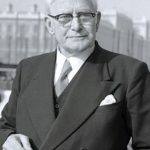
Tag: 1967

  • Barbara Castle – 1967 Speech on Transport

    Barbara Castle – 1967 Speech on Transport

    The speech made by Barbara Castle, the then Transport Minister, in the House of Commons on 6 November 1967.

    This debate is on the Queen’s Speech and our present discussion is geared to the Amendment moved by the hon. Member for Worcester (Mr. Peter Walker) to the passage in the Gracious Speech relating to transport. In that Amendment the hon. Gentleman complains that the Government are not … concentrating on practical measures to improve conditions for the travelling public and for industry”. The passage in the Gracious Speech on which the hon. Gentleman bases this complaint reads: Legislation will be brought before you to provide for the better integration of rail and road transport within a reorganised framework of public control … That is an integration which has long been overdue and which the development of the container is making technically imperative.

    The passage continues: … to promote safety and high standards in the road transport industry … Is not that a matter that will improve conditions for the travelling public and for the public in general, who have been complaining for years about the danger of “killer” lorries on our roads?

    Then the Speech says: … to strengthen the powers of local authorities to manage traffic … Will any rational Member in this Chamber seek to claim that this will not be an important measure for improving the travelling conditions on the congested roads of our great cities? The hon. Gentleman did not have time for even a fleeting reference to it, although he asks the House to approve an Amendment condemning this whole paragraph.

    The paragraph states, finally, that the legislation will: … reorganise the nationalised inland waterways with special emphasis on their use for recreation and amenity “. Is not that another matter in which the public is very interested indeed? The hon. Gentleman is always pressing me to produce my White Papers elaborating the different aspects of the Bill I shall be presenting to Parliament before very long. I gave him a White Paper on the inland waterways part at the beginning of September. I do not think that he has even read it, and today he has not made so much as a passing reference to it.

    I will come in a moment to the perfunctory way in which he has dismissed another White Paper, which he has had in his hands all morning.—[Laughter.] Yes, I know—the hon. Gentleman is slow to pick up new ideas, but in the other part of his speech he was complaining that the ideas were not new at all, so I do not know what further time he needs to discuss it.

    Before I leave that aspect of the argument let us get the roads expenditure position quite clear. The hon. Gentleman believes in economy. He believes in economy in new speeches, and we have had this same one of his time after time. Let me therefore deal once and for all with this aspect of his argument, which is at the heart of the comparison between the records of the previous Administration and this Government in this important sphere.

    Under this Government, the total Exchequer expenditure on roads in the five years up to 1970 will be greater than that involved in the previous Conservative Government’s proposals—and let us remember that their proposals for the five years were merely paper plans. They had never got to the point of finding the money for them. They had never got to the point of having to turn a pre-election propaganda into concrete fact, but this is what we are doing.

    Mr. Peter Walker rose—

    Mrs. Castle Just a moment. This is what we are doing.

    The fact is that in the seven years 1964–65 to 1970–71, a period for which the Labour Government will be responsible, Exchequer expenditure on new and improved roads in Great Britain will be in the neighbourhood of £1,600 million. The total public expenditure on new and improved roads in Britain will be about £1,850 million. We have had to find the money, and we have been doing so, and we shall be doing so faced merely by demands from hon. Gentlemen opposite that we should cut public expenditure.

    Mr. Peter Walker Will the right hon. Lady explain why, in reply to a Question on 28th February of last year, the Parliamentary Secretary stated that, for the years 1965 to 1970, Exchequer expenditure would be £1,100,000 on new roads, yet in July, 1964, my right hon. Friend stated that expenditure would be £1,200,000 for the same period?

    Mrs. Castle I assure the hon. Gentleman that the figures I have given exceed the proposal of the former Conservative Administration, just as the expenditure has exceeded it beyond all bounds. I remind the hon. Gentleman that this year alone—and let us talk about 1967–68—Exchequer expenditure on new and improved roads will be nearly double what it was in 1963–64, the last full period of Conservative Administration. That was the peak of their achievement after 13 years in office; and it really does not lie in the mouths of hon. Gentlemen opposite to keep bringing up this Tory charge.

    The transport system which the Labour Government inherited required fundamental and practical improvement over the whole sphere. This was the approach which underlay last year’s White Paper. It is the approach which will dominate the Transport Bill, which will give effect to it—except, of course, to the ports issue, which, as has been explained, is a matter for separate legislation later in the lifetime of this Parliament.

    After that, I part company with the hon. Gentleman because his main preoccupation on every possible occasion, both inside and outside the House, is to denigrate public ownership. The Labour Government’s approach is to recognise that public ownership must play a vital rôle in transport, and to ensure that the nationalised industries are given the right social and financial targets to enable them to play their rôles. The publication today of the White Paper on railway policy shows how successfully the Government are succeeding with that task.

    It is no good the hon. Member for Worcester coming along with his sad story about morale in the railways. The constant propaganda of hon. Gentlemen opposite against the very concept of public ownership is one of the most damaging things that can be done to denigrate this publicly-owned industry. The fact is, of course, that the hon. Member for Worcester does not care about the railways. He does not care about any particular form of public ownership. My hon. and right hon. Friends, on the other hand, do care and we believe that the people of this country want to see their nationalised railways made a maximum success.

    Sir Robert Cary (Manchester, Withington) Does the right hon. Lady recall that in our debate on 18th July, when we were discussing bus operators and road hauliers, she promised to publish a White Paper, to be laid in August, with the Bill to come in September? She has laid a White Paper today on the railways. Why has she not also laid a White Paper on bus operators and road hauliers?

    Mrs. Castle I promised—I intend to keep this promise and I am in the process of keeping it—to lay detailed White Papers on the different aspects of the Transport Bill, before the publication of that Bill, so that the House fully understands the implications of what will be a very detailed Measure.

    I have already produced two of the White Papers and the remaining two, including the one to which the hon. Member for Manchester, Withington (Sir R. Cary) referred, will be appearing during the next few weeks. I assure the hon. Gentleman that he will get it well in advance of the publication of the Bill; and I shall be only too glad to enlighten him and his hon. Friend the Member for Worcester about some of the implications of the P.T.A.s, which he is so anxious to mis-represent.

    I have told the House that the details which I have circulated about my proposals are for consultation only. Those consultations have taken place. Ideas have been advanced and these have been adapted in the light of those consultations. The results of the consultations will appear in the White Paper for which the hon. Gentleman has asked and I certainly do not intend to anticipate that White Paper today.

    The hon. Member for Worcester has really wasted an opportunity. Instead of repeating, almost verbatim, the speech which he made the last time we debated this subject, he might have given a little attention to the White Paper on railway policy, which, at last, should have enabled him to deal not with speculation but with fact. I appreciate that this document was available in the Vote Office only at 11 o’clock this morning. It was due for publication tomorrow, but when the Opposition chose today for this debate I thought it only courteous to expedite its publication. [Interruption.] If it had appeared tomorrow, when the debate was over, I can imagine what hon. Gentlemen opposite would have said.

    Several Hon. Members rose–

    Mrs. Castle I must get on. The Stationery Office worked overtime during the weekend to enable the House to have the White Paper in time for this debate.

    I regret that the hon. Member for Worcester has seen fit to pay such perfunctory tribute to the outstanding work that has been done by the Joint Steering Group, under the chairmanship of the Joint Parliamentary Secretary, my hon. Friend the Member for Aberavon (Mr. John Morris). However grudging hon. Gentlemen opposite may be, I assure them that the Government are deeply grateful to the group for the long and arduous months of work they have put in.

    As for the date of publication, the simple position is this. Although it is true that the final Report of the Joint Steering Group—the Report in its final form—is dated September, that was only one part of the process. The Government had to consider the recommendations, decide their action on them and write and publish a White Paper; and this is, in fact, what we have done. It would be no good giving the House the Joint Steering Group’s recommendations without the Government’s reaction to them. To have produced that White Paper as quickly as we have is an indication of the sense of urgency which the Government feel about the railway situation, despite the frivolity of hon. Gentlemen opposite.

    This has been a novel kind of inquiry. On the Joint Steering Group have been representatives of the railways, of Government Departments and from outside. We are particularly grateful to the independent members who have worked tirelessly without reward and who have given us of their wisdom and long experience. The inquiry is also a shining example of worker participation because on the group and contributing his ideas was a rank and file railway man, in addition to representatives of the railway trade unions, who submitted their experienced views. I pay tribute to the masterly way in which this work has been chaired by the Parliamentary Secretary. The House should recognise the calibre of the Morris Report and pay tribute to all concerned.

    The hon. Member for Worcester is always complaining about the Government trying to keep things from the House. I assure him that we have been a great deal more forthcoming than the Administration who produced the Stedeford Report, not a word of which ever got published. Indeed, I have not even been allowed to see it, though a succeeding Minister. There has, therefore, been a very different practice between the two Administrations in handling what is a matter of widespread public interest.

    All that the hon. Member for Worcester could find to say was that there had been Press leaks. He said that The Times had it all on 26th June. He wanted to know what the Government were doing about it, what was the point of having a White Paper and what was the point of publishing the Report. The July Report of the group did not exist on 26th June. So the report was not even accurate. Certainly, the Government’s decisions upon it did not exist at that time. So it is absurd for the hon. Gentleman to suggest that in some way I had leaked the matter to the Press.

    I hope that the debate will now be concentrated on the White Paper and the indications that it gives of the kind of approach that we shall have in the Transport Bill. Let us look at what the White Paper says. It should be considered as one of the triumvirate. There will be other White Papers on the National Freight Corporation and the Passenger Transport Authorities, though the implications of the setting up of a National Freight Corporation on the finances of the railways are taken into account in Appendix B of the Report in the Annex, and also it is important to remember that the method of fixing the grants for the socially necessary lines will be appropriate whoever may become responsible for them.

    Today’s White Paper concentrates on two aspects which are critical to any business—finance and management. If these two are right there is a good chance that the business, whether it is private or nationalised, will prosper, and unless they are right, it will not prosper. But the railways are not just a business. That was the mistake that right hon. and hon. Members opposite made when they voted for the 1962 Transport Act. To treat nationalised transport as a business or a series of businesses without taking account of the social aspects of a public service is not to have any real grasp of the needs of the travelling public.

    The 1962 Act set up the railways as a separate entity, encouraged them to compete with other forms of nationalised transport and then left the profit and loss account as the sole criterion of success and did not even provide conditions in which the profit and loss account could be balanced. The Railways Board was early told to break even as soon as possible, but an open-ended grant was provided in case it failed. So it is not surprising that the deficit for the current year is almost as large as in 1962.

    This fact is a complete indictment of the whole purpose and machinery of the 1962 Transport Act. It took no account of the social factors. It provided detailed machinery for closing lines but imposed no duty on the Minister to heed social considerations when deciding closures, still less the effect on the workers involved.

    Mr. T. G. D. Galbraith (Glasgow, Hillhead) The right hon. Lady has made a charge—

    Mrs. Castle I have not given way.

    The Deputy Speaker (Sir Eric Fletcher) Order. The hon. Member must resume his seat unless the Minister gives way.

    Mrs. Castle I object to being harangued by the hon. Gentleman on his feet when I am on my feet. If he will behave courteously I shall be glad to give way.

    Mr. Galbraith I am very grateful to the right hon. Lady. But she made a charge against the previous Administration when she said that social considerations were not taken into account. I can categorically deny that and would like her to accept it.

    Mrs. Castle To the extent that they were taken into account they were in breach of the terms of reference of the 1962 Act. The hon Gentleman had better make it clear. The 1962 Act placed an obligation on the British Railways Board to break even as soon as possible. The very fact that the right hon. Member for Wallasey (Mr. Marples) could not follow the logic of his own statute does not mean to say that that made the position any better. Indeed, I believe that one of the serious sources of the problems of the railway industry is that it has never been given any clear-cut financial target appropriate to the sort of social conditions that a railway business has to take into account as well.

    During the 18 months from the publication of the Beeching Plan in March, 1963, and being swept out of office in October, 1964, the right hon. Member for Wallasey had already imposed on British Railways an annual burden of well over £1 million by refusing to consent to closures, which, therefore, showed the inconsistency of his own policy.

    What we are doing—it is long overdue, and when the hon. Gentleman says that nobody outside approves of my policy I would tell him that every sort of financial and economic commentator has been asking for a very long time that this kind of separation of financial and social objectives should be carried through—is to recognise and face the fact that there are many railway passenger services which do not pay and cannot be made to pay but are an essential part of any foreseeable transport system.

    This is what the White Paper is about. We said that, having decided that as a Government, and decided it as a point of principle, we ought to identify these services, consider whether they were of the right level, whether they should be increased or reduced, make sure that they run efficiently and then meet the full cost of any losses on these socially necessary lines, and meet that consciously as a community.

    The Joint Steering Group’s Report, which is annexed to the White Paper, explains in detail the procedure which has been worked out. I think that every hon. Member who studies that Report—and no one ought to talk about transport policy in future unless he has—will agree that the procedure has been systematically and carefully evolved to enable us to get the benefits of a social element of transport policy without undermining financial incentives and efficiency. For instance, the Report suggests that these grants, instead of being paid in arrears, should be based on estimated losses three years ahead, with no repayment if the Railways Board does better than the estimates, and this is designed to give an incentive to the Railways Board to do even better than at first had been hoped.

    Hon. Gentlemen opposite have frequently asked me for the estimated total cost of the grants, and I am surprised that the hon. Gentleman did not consider even mentioning it in his speech. The best estimates that the consultants and the Group can make of what would be the total of these grants in any one year is a figure of some £40 million in 1969, plus £15 million allowance for interest, making £55 million in 1969, and reducing to some £50 million in 1974.

    This decision, which is in accord with the Government’s policy on nationalised industries, and is published in the White Paper, marks a major development in nationalised industry policy. No one in the House can talk about the need for greater efficiency in the Government or in the nationalised industries unless he fairly and squarely faces the fact that something of this kind had to be done. The hon. Gentleman who is so anxious to quote denigrations and attacks upon me might have paid a little attention to the leading article in The Times a day or two ago when it welcomed this new approach to the finances of the nationalised industries and said that it was imperative to their future efficiency that economic and social elements should be differentiated out from the financial ones.

    Mr. Gordon Campbell (Moray and Nairn) Did the right hon. Lady also notice the leading article in the Scotsman last Thursday, saying, “For integration read disintegration”?

    Mrs. Castle Yes, I read it. That leading article was applying to a wider field than just this. But I would tell the hon. Gentleman and the Scotsman that it is a curious definition of disintegration when the Government come along and say, “It is time the country established what size of railway network we need and then set about finding more intelligent ways of paying for it.” In my view, that is not disintegration. It is the first ray of rational light on this subject for many a long year.

    The Report also provides for a capital reconstruction of the railway industry so as to give a really efficient target to the railways and provide the basis on which we can expect the railways to meet their charges, including interest, out of revenue by the early 1970s. Here again, a first-class expert job of work has been done by all concerned.

    I think that it is helpful to the House to have had examined all the possible elements in railway costs that could be attributed to their social obligations. The Joint Steering Group, for example, examined the concept of stand-by capacity which the railways have argued for a long time as one of the excuses why they could not be expected to break even. The railways say, “The trouble with the public is that they want the railways, but only to use them very occasionally, so we should be compensated for an element of stand-by capacity.”

    This the Report has rejected, but it does point to the existence of surplus capacity in the railway system due to the duplication of track in many places where a reduction of track would achieve dramatic economies. Reducing tracks from four to two and, in some cases, from two to one can make a major contribution to cutting costs.

    Miss J. M. Quennell (Petersfield) The right hon. Lady keeps saying that the Report will be “useful” to the House. She has said that the Report was in the Vote Office at 11 a.m. I have been in the House all day and I did not know that it was available until I read about it in the mid-day edition of an evening newspaper. It was 2.15 when I got the Report, and it was not possible to read it sensibly before this debate.

    Mrs. Castle I also took the precaution of informing the House, in a Written Reply on Friday, that the Report would be in the Vote Office at 11 a.m. today. I am only too anxious to give the House as much time as possible to study the Report, but it was not I who chose the subject of today’s debate. The best I could do was to expedite the White Paper as quickly as possible.

    The Joint Steering Group’s Report therefore proposed—and I think that the House will agree that this is an imaginative and constructive suggestion—that the best way of helping to reduce costs and the deficit was for track rationalisation to be pressed ahead with the help of a track rationalisation grant which would taper off over the next few years.

    The major part of the Group’s Report is the emphasis it lays upon the management question. When capital reconstruction has been carried through, even if the Railways Board begins by breaking even, we know that it will have a very tough job to maintain that position. That is why an integral part of the Report is the emphasis that it lays upon the need to have another look at the management structure of the railways.

    As the House will have seen, the Report recommends a somewhat smaller Board whose members should not be tied down by day-to-day executive responsibilities for particular functions. This would leave the Board freer to concentrate on policy questions and on the long-term planning and financial control of the industry, helped by the appointment of two senior members of the Board with specific responsibility for these two aims, in addition to a chief general manager and a member responsible for long-term development of labour relations in the industry.

    The Government broadly accept these recommendations, which, clearly, will involve a considerable reorganisation of the Board’s work. The hon. Gentleman raised with me the position of the chairman of the Board. I believe that this reorganisation must involve a change in the chairmanship and I am currently discussing with Sir Stanley Raymond the possibility of his taking another job in transport. The outcome of our discussions will be announced in due course.

    As for the suggestion that there is some kind of breach between Mr. Philip Shirley and myself, I will tell the hon. Gentleman that Mr. Shirley resigned at his own request and that it was not as a result of any disagreement between him and me. I remind the hon. Gentleman that Mr. Shirley is, after all, a signatory of the Report which is in the Annex to the White Paper, and if there had been any such disgruntlement he would not have accepted my invitation to become a part-time member of the Board, which he has willingly done.

    It is sad that the hon. Member had nothing to say about the merits of these proposals in the Joint Steering Group’s Report. If he claims that he has known for some time what was in the Report, then I should have thought that he would have been giving a little thought to it in all his consideration of the problems of the railway system. If he has known, as he says he has, that the Joint Steering Group—and I have announced this to the House on more than one occasion—was working on the principles of a social grant to keep alive the socially necessary lines, he has had plenty of time to decide first whether he approves of the Government’s proposals to pay such grants on the socially necessary services which do not pay their way and, secondly, what principle the Government should employ in fixing them.

    The hon. Gentleman has challenged me more than once today. I challenge him now. It is not asking him very much, between 11 a.m. this morning—I saw that the hon. Gentleman had the Report; he got it personally—and 5 p.m., to decide whether he approves of the principle of paying grants on socially necessary lines which do not pay their way. Perhaps he will answer that one now.

    Mr. Peter Walker I did not receive the Report at 11 a.m., but somewhat later. I will judge this question on the criteria to be used for these services. I want to know how they are to be paid for. I am violently against their being paid for out of the rates. What are “social criteria”? The term can mean anything. I am not willing to commit myself to the details of the Minister’s proposals until she has expressed them fully.

    Mrs. Castle That will not do. The hon. Gentleman is dodging it. If he does not know what social criteria are, he should ask some of his hon. Friends behind him. Week after week they ask that railway lines be kept open in their areas. They say that they should be kept open because they serve tourism or remote areas, or because their constituents would not have alternative means of transport, or because the lines are heavily used by commuters or because they serve areas scheduled for future development and to which industry is being attracted.

    Mr. Peter Walker If that is the right hon. Lady’s view, where do the 3,000 miles of railway track that she is closing fit into these social criteria? May we have the answer to that?

    Mrs. Castle Certainly. The basic network published in the railway map some months ago was drawn up in full consultation with the regional economic planning councils and with the Government Departments concerned with development and the siting of new towns. All these factors were taken into account. But the 3,000 miles of line will still be subject to the full statutory procedure and it has been made clear that, as a result of the examination, some of these lines not marked for development in the basic map may be added to the “black line network”. That has been made clear to the hon. Gentleman time and again. Some pruning of duplicate lines as well as duplicate stations is not only inevitable, but desirable in the interests of railwaymen themselves who have to live in an industry that ought to be able to afford them higher standards.

    We need to find a balance between complete sentimental sterilisation of the status quo and an adjustment of the policy of drastic reduction which we would have been faced with under the 1962 Transport Act. The hon. Gentleman knows perfectly well what are the social criteria. He knows perfectly well that there are lines which the right hon. Member for Wallasey refused to close and other lines which his hon. Friends would like to Government to refuse to close.

    The question we now have to ask ourselves is, if, as a result of these examinations and the will of Parliament, some of these lines are to be kept open and will not pay their way, is it or is it not right that they should be included in the operating deficit of the Railways Board? Should they not rather be put into a separate account, carefully costed by the Ministry and the Railways Board, and have a proper grant affixed to them, the Government deciding to pay that grant? That policy will be widely welcomed by the travelling public and by railwaymen as one of the most practical contributions which the Government can make. It is a great pity that the hon. Member is still back in his July speech and has not moved a step further forward despite all the information and evidence we keep putting in front of him.

    So much for this Government’s interest in efficiency of the nationalised industries. There was not a word of praise from the hon. Member, although we are debating the references in the Queen’s Speech, for our intention through the computer licensing Bill to establish a licensing system for motor vehicle licensing and driver licensing. This is something which is urgently needed and which was welcomed by The Times Business Supplement. It reported that car dealers have to deal with 183 local authorities and they are expected to welcome this proposal as a practical contribution to the transport problem, but there was not a word from the hon. Member about it.

    There was not a word from him about our White Paper on the inland waterways which, once again, has taken the chaotic, muddled situation left by the previous Administration and clearly separated the commercial from social activities. This is what a Socialist transport policy means and it makes practical sense. There was not a word by the hon. Member about all the other practical contributions we have made. He is concerned and obsessed about the conditions of the passenger transport authorities. As I said earlier, we shall discuss this matter in the light of the White Paper. I certainly do not intend to anticipate the outcome of the consultations, which will be reported fully to the House in that document.

    In conclusion, I refer to one very practical activity in which the passenger transport authorities will be engaged. One of them is proposed for the Manchester area, S.E.L.N.E.C. area. The need for integration of road-rail services there, for something to be done practically and urgently to improve transport conditions for people using public transport, is demonstrable to anyone who ever tries to travel in that city.

    No one knows this more than Manchester City Council. That is why it gladly engaged with us in the promotion of a rapid transport study towards the possibility of which we paid a grant of 75 per cent. That is something else practical done in this matter by this Government. The report is now available and will be published tomorrow. A Question is to be asked of me about it and I shall be giving fuller details. It begins to hold out exciting possibilities of a breakthrough in the improvement of public transport.

    I merely say to the hon. Member—this is another of the practical things we have done to which he never troubles to refer —that my new power to pay capital grants towards the cost of new public transport authorities, a power I shall be seeking in the Transport Bill, will enable me to contribute to the cost of new major transport projects in Manchester, provided they form part of a comprehensive transportation plan.

    Here we have been acting while the hon. Member has merely talked. That is why I say to the House that the local authorities, whatever the hon. Member may try to do, will welcome these passenger transport authorities and cooperate with them because they know that what is needed are practical measures and that they are getting them from this Government.
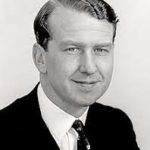

  • Peter Walker – 1967 Speech on the Government’s Transport Policy

    Peter Walker – 1967 Speech on the Government’s Transport Policy

    The speech made by Peter Walker, the then Conservative MP for Worcester, in the House of Commons on 6 November 1967.

    I beg to move, at the end of the Question, to add: but humbly regret that the Gracious Speech contains proposals to nationalise further large sections of the transport industry instead of concentrating on practical measures to improve conditions for the travelling public and for industry. I am sure the House regrets that this debate is taking place under the shadow of a major railway disaster. I assure the House that any criticisms of the management or policies of British Railways are in no way connected with the railway’s safety record, which has been outstanding over the years, or the diligence with which our railwaymen apply themselves to seeing that railway travel is safe and secure.
    Last week’s by-election results are perhaps a reflection on the fact that the Government’s performance contrasts vividly with their plans. If the plans which have been published week by week, and month by month, had been fulfilled, or even started to be fulfilled, the Government’s popularity would be very much higher, but instead we have had a long series of plans contrasting vividly with performance, and this is particularly true of transport.

    An examination of the various forms of transport shows that in every sphere Government policies are hindering progress. In aviation one finds that B.E.A.’s future is in jeopardy as a result of the constant delay and indecision of the Government on replacing the present B.E.A. fleet. If one considers future developments in aviation, internal air services, the development of freight air services, and the indecision, and probably wrong decision, on matters such as Stansted, one sees aviation once again being affected by the Government. It is remarkable that this industry, which could perhaps best be quoted as an industry of the future, is completely and utterly without investment grants as a result of the Government’s policies.

    When one considers shipping, and ports and docks, one sees that only last week the Confederation of British Industry and the British Shippers’ Council gave their verdict on the Government’s policy. Their verdict is summarised in a statement issued last Wednesday or Thursday: To face the industry with an administrative revolution when it is already grappling with great changes would surely reduce operating efficiency, retard evolution, increase costs, and thus, by raising the price of exports, damage the economy. No case has been made for fundamental change now or in the future. The Minister’s proposals establish no reasoned case for a further change of ownership or control. On the railways, we see a fast increasing deficit, obviously completely out of the Minister’s control. Indeed, it was the Minister herself who said in reply to a Question on 25th January of this year, at col. 1471 that the railway deficit this year would be £130 million, but we were told in a debate in another place that the figure was now likely to be £150 million. Labour relations on the railways have never been worse than they are at the moment, and the position of top management is in complete chaos.

    One of the most fundamental needs is an improvement in the road building programme, but we see the Minister complacently going up and down the country boasting that at the moment expenditure on road building is higher than it has ever been in our history. This is a boast which every Minister of Transport has been able to make every year since 1950, but the real test of the Minister’s performance—and that of the Government—is to see how the right hon. Lady has carried out the road building programme which she inherited.

    The programme was laid down in great detail in July 1964. It proposed Government expenditure of £1,200 million on road building in the years 1965 to 1970. The party opposite said that it was an electioneering offer, and something to entice the voters. Indeed, the right hon. Member for Vauxhall (Mr. Strauss), who at that time was the shadow Minister of Transport, stated categorically in the Press and in speeches that the programme announced by the Tories for the period 1965–70 was too little and too late.

    Let us examine what has happened to the programme which the present Government described as too little and too late. We can establish the exact figures because my right hon. Friend the Member for Barnet (Mr. Maudling) published a White Paper setting out the Government’s investment programme for 1967–68. He said that in that year at 1963 prices, £470 million would be spent by the Government and local authorities on roads in this country. Adjusted to 1963 prices, it would be necessary to spend £53 million this year to fulfil the promise which hon. Gentlemen opposite described as too little and too late. This year the Government and local authorities will spend £450 million on the roads, so this year alone they will spend £81 million less than that set out in a programme which they described as too little and too late.

    The Government have stated categorically that in the period 1965–70—this information was given in reply to a Question—they will spend £1,100 million. This is £100 million less than the sum laid down in the programme which they described as too little and too late, and during this period the motorist has had an extremely bad deal. Comparing this year’s figures with those for 1964–65, one sees that this year the Government will spend £70 million more on roads, but from the owners of motor cars they will get an extra £350 million in increased petrol tax, in increased Purchase Tax, and in increased motor vehicle licences. Thus, for every £1 extra which they are spending on reads they are taking an extra £5 from the motorist. This is the Government’s record for the motorist and the roads.

    The Government’s record on the railways, in aviation, in shipping, and in the road programme is bad, and what do they offer for the future? They have put forward a programme—which received enthusiastic support at the Labour Party conference as a good Socialist one for tackling transport problems—substantially to increase the nationalisation of public transport.

    First, I turn to the proposals for passenger transport authorities. These proposals have no friends. Local authorities do not like them; industry does not like them, and the bus industry in particular does not like them. Everybody is opposed to them. The Minister says that this is not nationalisation, and describes me as illiterate for speaking of it as such. She claims that it is local ownership and not nationalisation. The only real ownership which will be given locally is the ownership of losses.

    How can the Minister claim that these P.T.A.s will have local control? Let us consider some of the features of the proposal. These authorities will be very much in the hands of the Minister of Transport. First, the Minister will designate the boundaries of the P.T.A.s, and she has specifically stated that not only will she designate them but will allow no form of public inquiry into them, and there will be no appeal from her decisions. So much for local control of the boundaries.

    Secondly, local control will consist of immediately confiscating the assets of all municipal bus companies—a very odd and peculiar way of giving local control—and doing away with local bus companies.

    Thirdly, there will be considerable investment control in the hands of the Minister. Grants will depend on her being satisfied with the way P.T.A.s are run. Then, the Minister will have nominees on the boards of the P.T.A.s. Her first suggestion was that one-third of the representatives should be appointed by the Ministry of Transport and that the chairmen should also be so appointed. We are pleased to know that as a result of considerable criticism and pressure she has reduced her demands for representation, and the chairmen will now be appointed by the P.T.A.s. But let us remember that even if, for example, her representatives consisted only of 20 per cent. of the Board, this would be 20 per cent. more than the representation on the boards which are now running local government transport. Also, if, in a public transport authority area, 60 per cent. of the authorities were Tory-controlled and 40 per cent. Labour-controlled, with the Minister’s nominees and the Labour-controlled representatives the Minister’s nominees would have a majority on the P.T.A. Under the P.T.A.s, many major boroughs will have no appeal on the question of fares or timetables.

    There is much evidence that there is no great advantage in size, in respect of bus operations; indeed, the public will vouch for the fact that the bigger the size the less efficient is the bus company, the more inferior its labour relations, and the less direct contact it has with the public.

    It is becoming more and more clear that all the local authorities in the major conurbations and elsewhere are becoming bitterly opposed to this project. The Minister will say that this is due to briefing and interference on the part of the Conservative Central Office and the leaders of Tory councils, but she should remember that last May the people of this country overwhelmingly voted Tories to their local councils, and they did not vote for them to give back into public ownership private and municipal bus companies.

    But not only Tory councils are opposed to this scheme. One of the Minister’s civil servants—a person who is particularly responsible for P.T.A.s.; a Mr. Locke—spoke to municipal operators, and if he reported accurately to the Minister he will have told her that local authorities are passionately opposed to her proposals. At the M.P.T.A. conference five Labour chairmen of local authority transport committees spoke in the debate upon the P.T.A. proposals. Every one was opposed to those proposals. Perhaps their objections were most appropriately put by Councillor Williams, chairman at St. Helens, who said: It would be a voice in the wilderness. I am second to none as a supporter of the Labour party, but this is not one of the things they ought to be doing. Another opinion—and I am sure the Minister will appreciate this, as she represents a Lancashire division—was expressed by Alderman Walsh, vice-chairman at Bolton, who said that the whole programme could only be called a load of codswallop. It is understandable that local authorities should be strongly opposed to P.T.As. First, the ratepayers will have to bear the service charges necessary to compensate for the taking over of privately owned bus companies. Secondly, they will lose their municipal assets. Thirdly, they will have to make a contribution to the deficit of passenger railway services in their areas. Fourthly, fares will increase as a result of the levelling up of wages and conditions of all those employed in bus companies which are taken into P.T.As.

    One of the proposals which will be greeted with great alarm is a clear undertaking that P.T.As. will have control over coaches and coach excursions going out of their areas. Many people travel by coach because of the cheap fares. To travel from Birmingham to London costs 34s. by coach, but £3 6s. by second-class railway fare. We can understand this Minister, for what she will describe as good transport planning, deciding that it is wrong to take this traffic from the railways and therefore placing considerable restrictions on coach services.

    Alternatives to this programme are quite clear. They are immediately to repeal some of the policies which the Government have pursued, which are directly opposed to the efficient running of our bus companies. It was this Government who took away investment allowances for buses and coaches, immediately resulting in increased fares. It is this Government who made bus companies create an interest-free overdraft for the Government, in the form of S.E.T., and it is this Government who are dragging their feet on trade union reform, which would help to bring single manning and do away with some of the overmanning which exists today.

    It is a remarkable thing that if there was one proposal which should have waited for the report of a Royal Commission it was the P.T.A. proposal, which should have waited for the report of the Royal Commission on Local Government. But the Government were determined to hasten through these proposals before the published. What a different attitude to their attitude on trade union reform. The creation of passenger transport authorities will result in considerable increases in road fares and a great loss of freedom of choice in terms of transport for the individual, and we shall oppose this proposal.

    The post-war history of the railways is that from the early 1950s, as people began to own more and more motor cars, and passengers turned from the railways to the roads, and as a great modernisation programme was required to change from steam to diesel electric, the railways ran into increasing deficits. It was then that a Conservative Government appointed Lord Beeching and a major reorganisation started to take place. The success of this was reflected in the last two years of Tory Government, when the railway deficit was reduced by £37 million. In the first three years of Labour Government it will have increased by over £30 million.

    Today we have had published a White Paper. I say that it has been published today but, like all Government documents, it was really published many weeks previously in the Press. It is remarkable that every major proposal in the White Paper appeared in The Times of 26th June. That newspaper’s transport correspondent described the proposals of the Joint Steering Group under the chairmanship of the Parliamentary Secretary. He described its conclusions in respect of subsidies for services of social importance; he described the recapitalisation of the railways and the writing off of a great deal of capital. He described in detail the proposals for reorganisation of the main board and the doing away with regional boards, and he went on to describe the special subsidies for bridges, level crossings and railway police.

    If that same correspondent wanted to summarise the Minister’s White Paper he could not do better than repeat his article of 26th June. This is a terrible reflection upon Her Majesty’s Government.

    One political correspondent suggests today that the right hon. Lady should become the next Foreign Secretary. On Press leaks, she puts Lord Chalfont completely in the shade, because every major proposal from the Ministry since she has been Minister has been leaked, in one way or another, beforehand. If these proposals were not leaked by the Ministry itself, the Ministry should have done something to give this House the White Paper, the details of which appeared in the Press in June, some time before November, a few hours before this debate. Instead, with the normal sense of priorities of this Government, the Press came first and Parliament came afterwards.

    The White Paper carries the report and recommendations of a very distinguished firm of accountants, Cooper Brothers, who have done a great deal of work, and of the steering group which contained a number of distinguished men from industry and the British Railways Board, and a distinguished professor of finance, under the chairmanship of the Parliamentary Secretary. The whole House will want to examine carefully its proposals, and we obviously have not had time to study some of the background facts and statistics; some of the figures, of course, are not available in the White Paper. But there are some questions which I should like to ask the Minister.

    First of all, she states in the White Paper, in rather strange wording; that, after consultation with British. Railways, the Government have decided to adopt the proposals. Do British Railways agree with the proposals? I know that they had representatives on the Steering Group, but it has been said that the Chairman and many of the Board disagree with the proposals. We should like to know whether this is true or whether it was purely consultation, without the Board fully supporting the proposals.

    One of the things which will dramatically affect British Railways is the Minister’s proposals for a National Freight Authority. This Steering Group contains the advice of one of the best firms of accountants in the world, with men of considerable ability who have looked in depth into the management and financial problems of British Railways. I therefore challenge the right hon. Lady to ask this same Steering Group, with all its knowledge, whether or not it is in favour of the creation of the National Freight Authority. If it is, that will give great support to her case. If it is not, it will show that her proposals are thoroughly irresponsible and against the future interests of British Railways. If the right hon. Lady declines that challenge to put that question fairly and straightly to the Steering Group, the country will realise why?

    The real problem for the railways is not the proposals in the Report, interesting though they are and correct as many probably are. It is easy to study and decide what should be done, but the test is implementing that study. Everything that has so far happened has given us absolutely no confidence in the Minister’s ability to bring this Report into being, because the essence is the attraction of top and good management. The railways today have labour relations problems, and a rising deficit, yet, for more than a week, 350,000 men employed by British Railways— an industry losing £150 million a year—have known that their chairman has been under notice to quit, but have had no idea who his replacement is to be. That is an appalling situation for any major industry.

    Also, almost every national newspaper reported that, in the middle of the most crucial negotiations with the unions, in which a major strike was a possibility, the chairman of British Railways was called out to be hold by the Minister that she was going to offer him another job. What a way to handle top management. If this did not happen, the Minister should immediately have issued a statement saying that it did not, instead of leaving this situation for a week.

    Everyone knows that the chairman has been offered another job but does not know his replacement. The vice-chairman has said that he will join a shipping company and has given notice to quit. Did the Minister tell Mr. Shirley that she would like him to go, after which he found another job, or did the reverse happen? As the Minister has constantly praised Mr. Shirley in the country for the wonderful way in which he has organised freight liner trains, why can she not provide him with the terms and conditions under which he could stay? Either he was important and successful, in which case it was her duty to see that he was kept or enticed to stay, or else he has been inefficient for some time, in which case she has been wrong to praise him all over the country. As well as the chairman and vice-chairman, Mr. Fiennes, one of the most creative thinkers of all the general managers of British Railways, has been sacked and has left the service.

    This is the position of top management in British Railways after the Minister has been in charge for a couple of years. She says in the White Paper that the real need is for stability of British Railways. What a lot of stability there is at present—an army without a general, a major industry not knowing exactly what will happen in terms of top management.

    Who will be attracted to take on the jobs of top management? What is this Minister’s record in this respect? Just look at the treatment of top management. First of all, the road construction units were created so that the county surveyors, who had been vocal critics of all Governments, would no longer have that same say. Then, Sir Alexander Samuels was removed from his position as road traffic adviser to the Minister because, as we knew, he was having a number of disagreements with her. Then, Sir Alfred Owen had views on the 70 m.p.h. speed limit and was removed from his position as chairman of the National Road Safety Advisory Council and replaced by the Parliamentary Secretary, Lord Rochdale, who was Chairman of the National Ports Council, opposed nationalisation and was in favour of developing Portbury, so he was given another job and replaced by someone from one of the nationalised boards. This is a complete record of any person who disagrees with the Minister being removed to another job.

    Who will take on the job of Chairman of British Railways, with this sort of background—[HON. MEMBERS: “George will.”]—when the Minister has already stated that the track will remain at 11,000 miles, no matter what the commercial considerations? The new chairman will immediately inherit that fixed position. She has also said that she will take away from British Railways its most expanding element, the freightliner trains, and give it to the National Freight Authority. So the new Chairman will be told. “You will have to keep the track as it is and I am taking away the best potential for the future, but, apart from that, you have every freedom and may get on with the job.” This is an impossible position for top management.

    Any top management coming into British Railways while the present Minister remains will, of course, remember her words at the Labour Party conference. When pressed to set up various organisations, she said: No, friends, when it comes to transport planning, I have got to be the overall authority. The real trouble is that any person working under this Minister knows that he will always be subject to considerable political interference.

    The other proposal which will be in the Government’s Bill, the National Freight Authority itself, also has no friends and no supporters in industry. No one in the railways supports it, either. There has been no pronouncement from the Railways Board or from the railway unions saying that it wants such an authority. Sir Donald Stokes, who would not be quoted as an enemy of the present Government, has made his position clear. He said: If we are going to have restrictions for Socialist doctrinaire reasons, it is absolutely crazy. He went on: … if they are going to restrict road transport, it is still worse, because in Great Britain we need above all a competitive transport system. This is the biggest machine tool of industry. Sir Donald Stokes has clearly stated his view, and so has the C.B.I.

    The proposal for a national freight authority is a proposal to allow the nationalised industries to take over a large section of the road haulage industry without compensation. Seventy thousand vehicles will be subject to new tribunals. How many bureaucrats will be employed on those tribunals? What sort of people will decide, and what criteria will those people use?

    The Minister has stated that licences will be taken away or refused only if it can be shown that the railways are faster, less expensive and more reliable. Those are the three criteria. Will all three have to apply or will it be a matter of balance? Who will judge the speed of British Rail? Will British Rail have to prepare a time-table? A lot of tribunals would not take much note of that. Who will decide whether the reliability will be better or worse? Is this to be based on promises? Who is to decide on cost in its relationship with time?

    We on this side of the House have made our position quite clear. We believe that the best people to decide how best to send their goods are the customers themselves, and not some bureaucratic tribunal trying to decide for them. The position is that £150 million worth of assets belonging to private road hauliers are in jeopardy without any form of compensation.

    Let us just look at the handicap which the Government have put on those in the road haulage industry before they start: three increase in fuel tax, graduated pension contributions up, National Insurance contributions up, Selective Employment Tax, postage and telephone costs up, industrial training 1.6 per cent. up, road vehicles licences increased by 50 per cent. and investment allowances on road haulage vehicles completely taken away by this Government. The Minister has said that the N.F.A. would give the road haulage industry a good run for its money, and so I should think, with the handicap put on the road haulage industry before ever it starts.

    In every sphere of transport the performance is bad, and instead of the Government offering remedies for these performances they are embarking on a programme of public ownership of all our ports and docks, considerable ownership of the bus industry, interferences in the ancillary services such as taxis and coaches, and a considerable extension of the public section of long distance road haulage. We on this side believe that this will make no contribution to efficiency. It is yet another attack on free enterprise by a Government that by now should realise that they are doing great harm to the country by their constant attacks on free enterprise, and that they will bring about a considerable worsening, and not an improvement, of the nation’s transport system.

  • Barbara Castle – 1967 Statement on the Railway Network Map

    Barbara Castle – 1967 Statement on the Railway Network Map

    The statement made by Barbara Castle, the then Minister of Transport, in the House of Commons on 15 March 1967.

    When the House debated transport policy last month I was able to report on the progress which the Chairman of the Railways Board and I had made on the determination of the new basic railway network. I am now glad to be able to tell the House that the network has been decided. A detailed map of the network, with an explanatory foreword by the Chairman and myself, will be available in the Vote Office at 11 o’clock.

    In deciding which lines should be included I have taken account of my consultations with the planning Ministers, with the Economic Planning Councils, and with the railway unions. Above all, I have given full weight to the Government’s determination that broader social and economic needs, not just narrow profitability, should count when it comes to national decisions on priorities. The result is a basic network of about 11,000 miles—some 3,000 miles longer than the likely outcome of the policy of the last Administration.

    This will be a network of which the industry, and the country, can be proud. In itself, it will give a much-needed boost to railway efficiency and morale, but the Chairman and I do not intend that these 11,000 miles should simply remain in being; they must be a working system, continually developed with the aid of modern research and technology: and I shall see that this is done.

    The Railways Board will now be reviewing the future of the lines outside the basic network. For these lines, it will be up to the Board to publish passenger closure proposals under Section 56 of the Transport Act if it so decides. But I would remind the House that no such line will be closed without my individual consent, and only after a full examination by the Transport Users Consultative Committees and the Economic Planning Councils of the hardship and economic planning implications.

    The basic network is a landmark in carrying out the railway policy set out in the Government’s White Paper. It will help the railways to provide an efficient and flexible service to the public, fitted to the needs of the day. The Government are determined that a revitalised railway industry should play its full part in the integrated transport system of the country. This network will give them the right infrastructure to do it.

    Mr. Webster Is the right hon. Lady aware that it has been a growing practice, since morning Sittings began, to make Statements which are palatable to Government supporters in the afternoon and those which are unpalatable to them in the morning? Is she further aware that it is a monstrous discourtesy to the House to make a Statement at 10 o’clock, when the map which we are discussing, if we are to have any substance out of this Statement, will not be published for another 50 minutes, and that this is something which all my hon. Friends will wish to probe most deeply in relation to what is happening in their regions?

    How does the right hon. Lady propose to maintain lines which are running at a loss? To what extent will the local authority contribute and to what extent will the central Government? What sanctions does she propose to use if a local authority does not contribute, and how will she undertake to keep these lines going if they are running at a loss? Is she further aware that, for every seven miles closed in the period 1951–64, she is closing 10 miles under her present proposals?

    Mrs. Castle I cannot accept for one moment that this statement is unpalatable to Government supporters. On the contrary, they realise full well the plans which were afoot under the policy of the previous Administration for a constant contraction of our railway service to a mere skeleton of a system—

    Several Hon. Members rose—

    Mrs. Castle Hon. Gentlemen must not jump up at this stage. The hon. Member for Weston-super-Mare (Mr. Webster) has asked me half a dozen questions and I must take some time to answer them. Of course, when the railway map is available for detailed consideration, it will be open to any hon. Member to put down any Questions or to probe in any way he likes, and I shall be only too delighted to try to deal with any particular points.

    The hon. Member for Weston-super-Mare asked how unprofitable lines will be paid for. We have discussed this matter in the House; it was referred to in the White Paper and it was discussed in the debate on transport policy. There is at the moment a joint study going on between the Railways Board and myself, under a steering committee, of which the Joint Parliamentary Secretary is Chairman, and the job of which is to identify these socially necessary unprofitable lines and decide the amount of subsidy that will be necessary. We have made it clear that the Government, having adopted a policy of maintaining socially necessary lines—even if they do not pay—must, the Government having made that decision, give an open subsidy for those lines; and I am sure that the majority of hon. Members welcome this decision.

    The position regarding local authorities has already been outlined in the White Paper. We will be moving forward towards the creation of conurbation transport authorities and—

    Sir G. Nabarro On a point of order. Is it not a fact that, in accordance with the custom and tradition of this House, you ask for supplementaries to be brief, Mr. Speaker? That being so, should you—

    Mr. Manuel Sit down.

    Sir G. Nabarro I was asking, Mr. Speaker—[Interruption.]

    Mr. Speaker Order. There is too much morning enthusiasm.

    Sir G. Nabarro Are we to have inflicted upon us by Ministers long answers of this type? Cannot Ministers be brief, as back benchers are asked to be brief?

    Mr. Speaker Order. I allow a certain amount of latitude or longitude to the Front Bench spokesmen.

    Sir G. Nabarro There is too much longitude.

    Mrs. Castle As I have had a number of questions inflicted on me by the hon. Member for Weston-super-Mare—[Interruption.]—presumably he wants them answered. It is intolerable if, when I am attempting to answer them, hon. Gentlemen opposite complain.

    I was explaining, regarding local authorities, that the new transportation authorities, under the new arrangements for the general help which the Government are giving to public transport, will take over responsibility for deciding which socially necessary lines they want as part of their local transport plans. In such a situation, the responsibility for maintaining those lines could gradually transfer to the local authorities. In the meantime, the subsidy will be a Government subsidy, although we leave it open to individual local authorities to approach the Railways Board and try to negotiate the retention of a purely local line on the basis that they will meet the particular subsidy.

    Mr. Manuel Is my right hon. Friend aware that there will be no discourtesies or competition for discourtesy from this side of the House arising from her statement? Is she aware that we welcome it and that we are, by it, redeeming some of the pledges which we made at the General Election? Is she aware that one of the important results of her statement will be the heartening effect it will have on railway workers throughout the country? I assure my right hon. Friend that she will have the full backing of the influential railway trade unions in this matter.

    Mr. Speaker Order. Even compliments must be phrased in an interrogatory form.

    Mrs. Castle I am grateful to my hon. Friend for those remarks.

    Mr. John Hall The Minister has made an important and interesting statement. Would not she agree—and, as a constituent of mine, I am sure that she will agree—that it is difficult to be sure exactly what she is stating without our having the advantage of having looked at the map first? I cannot believe that it is possible for any hon. Member to say unreservedly that he welcomes her statement without having seen the effect of it by having looked at the map. Would it not have been more convenient to the House—I say nothing about discourtesy because I am sure that the right hon. Lady would not treat the House in a discourteous manner—if the map had been published earlier, instead of at 11 o’clock, and her statement made this afternoon, since we would then have been able to examine the matter more closely, and—

    Mr. Speaker Order. Questions must be brief.

    Mr. Hall Would not the right hon. Lady agree that we would have been able to examine the matter more closely and been able to ask questions more intelligently than we are able to do without the map?

    Mrs. Castle It is possible to welcome unreservedly the two principles which I have laid down. The first is that the Government do not believe that we can have a satisfactory railway network in Britain on the basis of purely commercial considerations. This is, therefore, a fundamental change of policy and, on that principle, hon. Members can make up their minds. The second point to be welcomed is the fact that we are going to give a period of stabilisation to the railway industry on the basis of a railway network which is about 3,000 miles longer than it would otherwise have been.

    To answer the hon. Gentleman’s question about the availability of the map, even if it had been released earlier, this is inevitably such a detailed subject that at this stage it is possible to discuss only the broad principles. However, it will be open to hon. Members to put down Questions about details of the matter in the normal way.

    Mr. Tudor Watkins Is my right hon. Friend aware that the Central Wales line was examined by the T.U.C.C. about five years ago? Is it her intention that this line should again be examined by herself and the T.U.C.C.?

    Mrs. Castle Yes, Sir, that is so. The Central Wales line will be one of the lines on the map for further consideration. However, I repeat that those lines on the man which are not included in the basic network will not necessarily all be closed. They are simply lines which need further examination so that we can see whether they should be retained, whether they should be modified or whether alternative methods can be found to cater for the people of the area.

    Mr. Peyton Would not the right hon. Lady agree that it is rather odd for her to have made a statement like this without hon. Members having the map, particularly since the map will be available in only half on hour’s time? I do not wish to accuse the right hon. Lady of discourtesy, but I urge her not to follow the example of some other members of the present Administration, and to show at least some courtesy to the House of Commons.

    Accepting all she says about socially necessary things, is she aware that one socially necessary thing always competes against another socially necessary thing for the limited resources that are available? Will she, therefore, when making her judgments about what is necessary, at least bear in mind and examine carefully those instances where local authorities press for the preservation of a line—[HON. MEMBERS: “Too long.”]—I apologise to the Minister for the barking that is coming from her hon. Friends; it is making my question that much longer—at the same time as they maintain an uneconomic bus service in competition with it?

    Mrs. Castle I naturally do not want to be discourteous to the House, and did not think that I was being discourteous. It is quite normal practice for a Minister to make a statement and to draw attention to material that is being placed in the Vote Office. I repeat that this is inevitably a detailed matter which could not possibly, even if the map were available now, be examined in great detail in the form of question and answer following a statement.

    As to what is socially necessary, we of course recognise that there must be a balance here—a balance on the basis of social cost benefit. This is the principle that we are bringing into our consideration of these lines. One factor which we shall take into account—it is important that we should, because this country cannot afford to throw money about just for the fun of it—in examining the grey lines on the map is to consider what are the alternatives and whether a more integrated local policy might be able to make the line pay.

    Mr. Dalyell Will my right hon. Friend bear in mind the broader social and economic considerations in central and south Scotland? Is she in a position to say anything about the Edinburgh—Carlisle line?

    Mrs. Castle As my hon. Friend is no doubt aware, the Edinburgh—Carlisle line has already been proposed for closure and is already coming under the normal examination. [HON. MEMBERS: “Oh!”] This preceded the publication of the map, and whether in the end the Edinburgh—Carlisle line finishes up as one of the parts of the stabilised network must depend on the outcome of this examination.

    Mr. Alasdair Mackenzie While there is no reference to Scotland in the Minister’s statement, we welcome the fact that it says that social and economic needs will be considered in coming to decisions on closures, and so forth. Is she aware that this affects my part of the country, the Highlands of Scotland, very much? I should like an assurance from the right hon. Lady that there will be no further rundown in railway services in the Highlands of Scotland, because we are at the moment suffering a great deal on account of the rundown that has taken place in the past.

    Mrs. Castle I am sure that the hon. Gentleman will be delighted to know that as a result of my reversal of the previous Administration’s policy, the line routes included in the basic network map include the Perth-Thurso line, which would have disappeared, the Aberdeen-Inverness line, which would have disappeared, the Helensburgh-Oban line, which would have disappeared, and a number of others.

    Mr. Speaker Mr. Mendelson.

    Mr. Mendelson rose—[Interruption.]

    Mr. Speaker Order.

    Mr. Manuel On a point of order, Mr. Speaker. I ask, with the greatest respect to you, why, if hon. Members on this side seem to be pulled up right away, hon. and right hon. Members opposite get the utmost liberty to throw remarks about in this Chamber.

    Mr. Speaker I call to order hon. Members who are misbehaving when I notice them. I happened to notice the hon. Member concerned. Mr. Mendelson.

    Mr. Mendelson I should like to ask about the decisions which my right hon. Friend reserves to herself after these matters have been before the Economic Development Council. Would she bear in mind that a conflict is developing between the actual need to save on certain local lines and the future economic development of the areas they serve? The general policy of the Cabinet to have diversity of industry and new industries in certain old industrial areas is now being contradicted by the decision to close or drastically revise certain lines that should be kept open on economic grounds.

    Mrs. Castle I am very acutely aware of the need to take into consideration possible industrial and housing development in an area. This is one of the facts which should be very much taken care of by the Economic Planning Councils, and the basic map has been drawn up in consultation with them. The responsibility for the final network is mine, but the councils with this kind of idea in mind, have put many proposals to me to which I have responded in drawing up the basic network. I repeat that when we examine the closures which will have to be considered in the next few months, I shall have this very much in mind as well.

    Mr. Edward M. Taylor As the present Government have either closed or plan the closure of 4,991 miles of railway line compared with 3,480 miles in the 13 years when the previous Government were in power, does not the right hon. Lady agree that it is outrageous that we should have this statement made without the map? Why could the map not have been given to us by 10 a.m., in time for her statement?
    Will the right hon. Lady also—

    Mr. Speaker Order. Supplementary questions must be brief.

    Mr. Taylor —try to explain what is meant by gradually transferring the burden to local authorities? Does this mean that the 11,000 miles target can be achieved only if ratepayers in certain areas accept a further heavy burden? If so, is this wise in view of the already heavy burden that exists?

    Mrs. Castle I hope that we can nail once and for all the mythology that hon. Members opposite had tried to build up about closures. The truth is that more mileage was planned for closure in the last year of Conservative government than there has been in the whole life of this Government. The right hon. Member for Wallasey (Mr. Marples) merely refused 10 closures during his period of office; my right hon. Friend the Member for Hamilton (Mr. Tom Fraser) and I refused 29 in our two years of responsibility. Hon. Members will be able to see perfectly clearly what we have done in fixing this basic network to reverse a situation under which, under the logic of the policy of the previous Administration, we should have had something like 4,800 passenger miles left on our railway network. That was a fact, and this is the policy we have reversed.

    As to local councils, the answer to the hon. Member for Glasgow, Cathcart (Mr. Edward M. Taylor) is that it does not mean that the preservation of 11,000 route miles depends on the ratepayers’ carrying this burden.

    Dr. John Dunwoody May I congratulate my right hon. Friend on allaying the doubts and anxieties that have hung over the railway industry since the days when the present Opposition were in power? Can she assure the House that the basic railway network as it is to be published will remain for the foreseeable future? Will she agree that if local authorities are to play a part in financing the maintenance of unprofitable branch lines, it may mean some changes in the criteria by which the central Government support local government? Will she consider consulting her right hon. Friend the Minister of Housing and Local Government with this end in view?

    Mrs. Castle I am grateful to my hon. Friend. As a result of this reversal of policy, new hope is being brought to the South-West, because included in the basic network will be the Plymouth-Penzance line, the Salisbury-Exeter and Okehampton-Barnstaple line, and the Castle Cary-Dorchester line. These are some of the examples of what will be in the basic network map. I can assure my hon. Friend that no proposals for the closure of any lines now in the basic network will be made in the foreseeable future.

    On the local authority point, quite clearly it would be ridiculous to transfer to existing local authorities the Exchequer burden that we are openly taking here. There must be a move towards the creation of wider transport authorities in the context of the grant policy for public transport as a whole before a transfer of the burden could even be contemplated. In addition, I repeat that some local authorities have said that there are purely local lines that might otherwise be closed under Section 56 but which they want a chance to try to keep open by local subsidy. I have made it clear that if they want to do that, it will be open to them to negotiate with the British Railways Board.

    Several Hon. Members rose—

    Mr. Speaker Order. We must cut down the length of supplementary questions and answers if possible. Sir John Eden.

    Sir J. Eden Before leaving this matter, Mr. Speaker, may we hear from the right hon. Lady at what time the map was given to the Press?

    Sir G. Nabarro Having regard to the open-ended subsidy to which the Minister referred, whatever that jargon may mean, has she calculated what this will add to the existing rate of loss on the railways of £130 million per annum, when she abandons a commercial enterprise in favour of a Ministry of Social Security exercise?

    Mrs. Castle Hon. Members opposite had better make up their minds whether their objection is that I am to subsidise too much or whether it is that no lines are to be closed at all. This has been the duplicity of the policy of hon. Members opposite for years—[Interruption.]—and it has bedevilled the case—

    Mr. Barber On a point of order, Mr. Speaker. Is it in order for the Minister to accuse hon. Members on this side of duplicity?

    Mr. Speaker I think that the right hon. Gentleman is being unduly sensitive.

    Mrs. Castle It is—

    Hon. Members Withdraw.

    Mr. Speaker Order. We should be able to proceed more quietly.

    Mrs. Castle It is this which has be-devilled the creation of a proper railways policy. I do not know what the hon. Member for Worcestershire, South (Sir G. Nabarro) means by his reference to “open-ended subsidy”. I have made it clear that, on the contrary, in every case where the Government decide that a line is socially necessary, the joint survey to which I have referred will examine in great detail what economies can be brought into play in order to reduce the loss before deciding the size of the contribution which has to be made on social grounds by the Government.

    This will not add to the deficit of the Board, because the position at the moment is that, where closures are refused, the cost falls on the deficit anyhow. The right hon. Member for Wallasey refused certain closures on the one hand, while, on the other, lecturing the Railways Board about the need to pay its way. No one could hope in that way to get an efficiency target for British Railways that it could hope to reach.

    Mr. Ridley On a point order, Mr. Speaker. May we take it that my right hon. and hon. Friends will be allowed to ask longer supplementary questions in view of the disproportionate amount of time being taken by the right hon. Lady’s answers?

    Mr. Speaker I have already commented on that matter.

    Mrs. Castle The trouble is that I get such long questions, so I have to give long answers.

    Sir G. Nabarro On a point of order, Mr. Speaker. That jibe was directed at me. Is it not a fact that my supplementary question was a masterpiece of brevity?

    Mrs. Castle Well, it certainly was not a masterpiece of sanity.

    Sir G. Nabarro You have constantly ruled, Mr. Speaker, that supplementary questions should be brief. If my supplementary question had not been brief, you would have been on your feet in a split second. But you made no attempt to halt my question, which was a masterpiece of brevity. Would you, therefore, ask the right hon. Lady to withdraw her shocking innuendo that my supplementary was insane and not brief?

    Mr. Speaker The last question is not part of the hon. Gentleman’s point of order, the first part of which was a statement of fact.

    Sir G. Nabarro You agree with it?

    Mr. Speaker Order. The hon. Gentleman must contain himself a little. We must get on.

    Sir J. Eden Has the right hon. Lady made any assessment of the likely increase to the taxpayer of the Government’s policy?

    Mrs. Castle Perhaps I should explain what happens if a closure is refused even though the line is losing money. This cost falls on the deficit, although it is the Government and Parliament who have decided that the line should remain open. In such a situation, it is obvious common sense to have a separate social account so that, Parliament having willed a line to be kept open, Parliament will put it not on the deficit but under a special social subsidy. The amount involved cannot be foreseen until the joint survey has examined each socially necessary line, what economies can be made and what size of subsidy will be required.

  • David Webster – 1967 Comments on Dismissal of Gerry Fiennes by Barbara Castle

    David Webster – 1967 Comments on Dismissal of Gerry Fiennes by Barbara Castle

    The comments made by David Webster, the then Conservative Transport spokesperson, on 26 September 1967.

    The peremptory and humiliating sacking of Gerald Fiennes is in sharp distinction to the treatment of Lord Robens. In Lord Robens’ case he was, in my view rightly, asked to stay on after the disaster of Aberfan and after the tribunal had found the Coal Board, of which he was the head, to be seriously at fault and also to have been most unsatisfactory in their giving of evidence.

    In Mr Fiennes’ case, this distinguished and faithful servant of the railways has said what many people would heartily agree with in criticising the apparent lack of interest of the railways board to attempt to attain its financial objectives. He had been summoned to HQ and sacked immediately – with hardly time even to tidy his desk.

    At one moment a lifetime with the railways is suddenly severed, although acute shortage of top railways management is everywhere acknowledged. I suspect that in this case the hand that caused the sacking is that of Mrs Barbara Castle. We know that Mrs Castle has little interest in the financial objectives of the railways. We know that Mrs Castle is impatient of independent opinion, as in the case of the removal of the chairman of the British Road Safety Advisory Council and in her attempts to dominate the road research laboratory. We will demand an inquiry into this grisly affairs as soon as Parliament reassembles.

  • Claude Lancaster – 1967 Speech on Aberfan Inquiry

    Claude Lancaster – 1967 Speech on Aberfan Inquiry

    The speech made by Claude Lancaster, the then Conservative MP for South Fylde, in the House of Commons on 26 October 1967.

    I do not intend to comment on the speech of the hon. Member for Merthyr Tydvil (Mr. S. O. Davies) because I have a number of things to say and I know that many other hon. Members wish to speak. A fortnight ago the Annual Report on accidents at mines was published. It is a very encouraging Report. Last year, deaths from accidents totalled 160—the lowest figure ever. But Mr. Stephenson, Her Majesty’s Chief Inspector, said that in view of advances in engineering technique applied in recent years, we should not be complacent about that.
    The Aberfan disaster was not reportable under the Mines and Quarries Act, 1954. Nevertheless, Mr. Stephenson says that the disaster will have a world-wide impact. I was abroad when it occurred, visiting the Trucial States. Immediately on my return, I happened to have a conversation in the Lobby with the hon. Member for Bedwellty (Mr. Finch), who has given me permission to refer to it.

    The hon. Gentleman asked me what I thought and I said that I knew no more about it than what I had read in the newspapers abroad. He inquired what my opinion was of the possible cause of the disaster and I replied, “I fancy that you will find that it was a trickle of water”. I shall refer to that later.

    In its first-class Report, the Tribunal puts the cause of the disaster on a breakdown in communications both horizontal and vertical. I suggest another dimension —the psychological. It was endemic in the formation of the National Coal Board, which was hurriedly put together in 1947, that it should take on an over-centralised aspect. I am certain that if the right hon. Member for Easington (Mr. Shinwell) were here he would be the first to say that, with the passage of time, it needs seriously overhauling.

    Unfortunately, the only important inquiry, the Fleck inquiry, did nothing to bring about any decentralisation. Indeed, the Board solidified something which was already too over centralised. The result has been that, progressively, all decisions have come to be made at Hobart House.

    Hobart House is responsible for every aspect of mining, including the administration of coal production. Thus, there has arisen a tendency for the men in the regions to look to Hobart House for decisions in all sorts of directions, be they the shape of shafts or the use of props at the coal face. There was, there-for a tendency not to give the soil tips the attention that the problem deserved.

    It is true that there were no regulations about coal tips before Nationalisation, but in the East Midlands there was a common practice, which I believe was fairly general throughout the coal industry—I do not think that we were any more enlightened than anybody elsewhere the control of tips was a regular feature of the day’s work. Soil tips are a necessary evil. For every ton brought out of a pit almost a quarter of that weight goes on to the coal tip. It is the difference between the run of mine coal and saleable output. It was necessary to take considerable precautions to settle on a piece of land which was not unduly soft or broken ground and had no previous encroachments and to have very careful regard to the type of debris being tipped.

    As an example, a change-over from dry slag to effluent, or what is now called tailings, could have a definite effect on the angle of repose. Therefore, the matter had to be watched very carefully and, above all, it was against all tradition to site a tip either on a spring or in the vicinity of a stream.

    There was normally a gang of men working on the tip and they were responsible for whatever mechanical devices were being employed. Over that gang was a man called a chargehand and among his various duties were two very important ones. One was to report any unusual movement of the tip, and certainly he had to report any signs of water emerging from the base of the tip. He made his report either to the surface manager or, in a smaller pit, to the surface foreman who in his turn reported it to the colliery manager. The colliery manager went up every three or four weeks and had a good look at the tip, decided where the tipping for the next period would occur, and drew the charge-hand’s attention to any aspect of the tip which was giving him cause for concern.

    These precautions were carried out in the East Midlands not because life was at stake—at least we hoped not—but because undue spreading of the tip involved compensation to farmers for destroyed buildings and the like in the vicinity.

    1933In South Wales, the need for precautions on the sides of hills with a 60 in. rainfall is all the greater. It would be presumption on my part to talk about South Wales, but it so happens that a few years after nationalisation two of my original staff went there. One was chairman of the South Wales district and the other was the chief mechanical officer. I used to go down and talk to them, so, although I never talked about tips, I have some familiarity with what went on down there.

    That is all I have to say about tips in general. As has been said, it is essential that we take a fresh look at these matters and do everything possible to rectify this appalling situation, more particularly in South Wales.

    I come now to Lord Robens’ part. Lord Robens has been a very distinguished Chairman of the National Coal Board. He has been there since 1961 and has proved himself a supreme salesman and a doughty fighter on behalf of the coal mining industry. I think that his greatest contribution was restoring the morale of the industry after the setback from a seller’s to a buyer’s market after the year 1958. He restored confidence to the industry. Moreover, as regards pits being closed and redundancy, he has acted with a great sense of imagination and charity.

    I have had a number of discussions with Lord Robens and I have accompanied him up and down the coalfields visiting pits and the like. He is a friend of mine. Therefore, what I have to say is the more invidious.

    I consider, first, that his public image has been immensely spoiled by this tragedy. He should have gone down there on the first day. Years ago, when I was first learning something about coal mining—I had no executive position—I went away on a Saturday and the colliery manager rang me that night and said that there had been an over-wind in the shaft, two men had been killed, and I must come back straight away. He was a wise old man. He said. “You must be here because you are the boss class.”Today, Lord Robens and the people around him are the boss class, and they should have been there if for no other purpose than showing their sympathy at that moment with the bereaved.

    The second thing I must say about him is that he was most unwise to make any comment about the cause or otherwise of the tragedy. He is wholly untechnical. He was bound to make mistakes, and he did so. He would have been much wiser to have said nothing about it.

    Thirdly, and most important, he should have gone to the Tribunal when it was set up and should have said not only, “I will put all the resources of my organisation at the disposal of the Tribunal”, but,” I have two or possibly three men I would like to nominate whose evidence you should take. It is up to you, the Tribunal, to call whom you wish, but I have two or three men I would like particularly that you should call. I think that they can give you great help.”The Tribunal, in its early days, said, and said rightly, that it wanted no delay in its proceedings, it wanted no evidence which in any way would mislead it, and it wanted a ready acknowledgement of mistakes that there had been.

    There are three men I have in mind. One has been mentioned by my hon. Friend the Member for Hereford (Mr. Gibson-Watt), Mr. Kellett, the Chairman of the South-West District. I have met him. He is a man of high reputation and very well respected. Many chairmen happen to be administrative men, but he is a technical man. He was the man responsible for that district and he should have been one of the men to give evidence.

    The second man who I suggest should have been called at the earliest moment is Mr. Harry Collins, who was the Director of Production and a Board Member. Mr. Sheppard, who was called, was not a Board member. Mr. Harry Collins is a man of great experience who has held a number of very high posts. If the right hon. Member for Easington (Mr. Shinwell) were here he would confirm that when Mr. Collins was in charge of our coal production in Germany after the war he gained the confidence of the German coal mining industry, which is not an easy thing to do. He gained it because he was a man of great competence himself and they responded to him. I went to Essen on two occasions to spend some little while with him and I also was most impressed with the reputation that he gained for himself.

    If an additional witness was required the Deputy Chairman of the Coal Board, Sir Humphrey Brown, could have been called. He gained his reputation originally in the old Manchester collieries as a planner. He made a good name for himself when he was Chairman of the West Midlands Division and he is the foremost technician on the Coal Board.

    What, in fact, happened? Mr. Sheppard became the spokesman for the Coal Board. It is not for me to question Mr. Sheppard’s competence, but I cannot feel that he can look back on his evidence with any feeling of satisfaction whatever. After all, the Chief Inspector of Mines in the South-West Area said of his evidence that it was “astonishing”. Additionally to that, the Tribunal said that nothing it had heard in evidence at Aberfan in any way confirmed a single syllable of the minute of the statement of the Coal Board committee set up by Mr. Sheppard.

    None of the stipulations which the tribunal made—that there should be no delay, that there should be no attempt to confuse the issue and that there should be a ready acceptance of responsibility—was met either by Mr. Sheppard or, I am sorry to say, by Lord Robens in his evidence. Indeed, as we have already heard from my hon. Friend the Member for Hereford, counsel for the Coal Board had to ask the Tribunal to ignore Lord Roben’s contribution to the Tribunal’s considerations as being of no value.

    Can anybody imagine that either Mr. Kellett or Mr. Collins would agree to that approach? The Coal Board put forward a statement denying blame for what had occurred at any level. These two men would not have lent their names to such a statement. These two men would not have delayed proceedings or mystified the Tribunal, and these two men would have been the first to acknowledge what had gone wrong, because they would have been only too clear about what had gone wrong.

    It has been suggested that this was a very complex geological problem; it was not. Tips are not complex geological problems and advice about the movement of earth and the science of soil mechanics was available from any private engineering firm. If any hon. Member would like to see something comparable to Aberfan he can do so within five miles of Parliament at Dawson Hill, in South-East Camberwell, where very much the same thing has happened. The corporation had been tipping rubbish for a generation; there was water and about 40 houses were swept away, luckily with no loss of life, and three streets have been at risk at the bottom of the hill. In the light of what had happened at Aberfan, Southwark Council very sensibly called in a geological concern—and I must declare an interest, because I have worked with that concern for the last 20 years—and the council has put the matter right in a reasonably short time.

    However, in the Press and elsewhere it has been suggested that there were imponderables and the like about the tip at Aberfan. There are not such things about tips, which do not represent a complicated geological problem. They represent a problem which the average colliery manager can perfectly well handle and in which he is perfectly well versed.

    I join with my hon. Friend in saying that we must ask the Minister to give us the reasons why Mr. Kellett and Mr. Collins were not called. I am sure that the Minister has read the typescript of the evidence and must be appalled by the evidence put forward by Mr. Sheppard and Lord Robens. I do not think that either wilfully set out to mislead the Tribunal and I am sure that they are both honourable men. It was because of the standard of their competence, because they were second-class men in the sense of their technical or general abilities. They went there on behalf of the Coal Board and yet the Tribunal had firmly put responsibility not on the lower or middle echelons of men whom eventually it condemned in its final report, but squarely on the Coal Board, and it was up to the Coal Board to give every assistance it could and to send its best men. It did not do so.

    I find myself in the position of not agreeing with my hon. Friend. Lord Robens has done a fine job. He has served the State in a number of distinguished positions. He did the honourable thing by resigning. I feel that the Minister should not have asked him to take back his resignation. I know that the right hon. Gentleman may produce all sorts of reasons, but the underlying position still remains that he ought not to have asked him to take back his resignation.

    Aberfan will not be quickly forgotten I can assure the Minister that the Tribunal’s Reports will have been read in Pennsylvania, in Lens, in Brussels, in the Ruhr and in the Donbas. In a strange way the mining world is quite small and follows what happens up and down the mining world very closely. Unless we do what I have suggested, it will be said that we have dropped our standards. For me this is a sad day, because my heart is in the coal industry, but this is something which we shall not forget for many a long day.

  • Stephen O Davies – 1967 Speech on Aberfan Inquiry

    Stephen O Davies – 1967 Speech on Aberfan Inquiry

    The speech made by Stephen O Davies, the then Labour MP for Merthyr Tydfil, in the House of Commons on 26 October 1967.

    The House will probably understand why the day of this debate has been my most unhappy day in the very long years I have been a Member. It is not merely because the disaster took place in my constituency; it took place among men, women and even children whom I knew and know.

    We hope that with the debate and the Report and recommendations of the Tribunal we shall put an end to disasters of the kind which occurred at Aberfan. It is not an easy job, but it must be done.

    It is not my intention to add to the sorrows of my neighbours. A number of them are here today and they should leave the House with a conviction that their loss has not entirely been in vain, and that the House will take steps, as it can, to prevent such tragedies in the future. As an ex-miner, and a mining engineer, I have made a life-long study of mining. I have something to say about the potential dangers of similar tragedies that still exist, particularly in the South Wales coal field. On the whole, the coal seams are far below the surface and the physical topography of the Wales coal field adds immensely to the dangers of the tipping that has been going on. The National Coal Board inherited the practices of the long years before it had responsibility for the mines of this country.

    When I was a young coal miner, working in a colliery immediately to the west of where this disaster occurred, I came up from the coal shaft one Monday afternoon—and Monday was a short day in the collieries—to the beautiful sunshine, and I saw on the mountainside, which must have been beautiful, too, at one time, rubbish and debris being tipped from the coal mine. Standing near me on my left was the general manager, a man for whom I had great respect. Indeed, he started many of us as students of mining and of science in coal mining. I turned to him—his name, like mine, was Davies—and I asked, “Mr. Davies, is not that an absolute scandal, bringing all this rubbish from underground and tipping it on the hillside, instead of scientifically stowing it underground and thus perhaps preventing in the future widespread subsidence in the coal field?” He was a great mining engineer. His answer was typical of those days. He said, “Stephen, let me tell you, confidentially, that I have to bring it out because it is cheaper to haul it up the shaft and tip it on the hillside”. Needless to say, I never reported that story while that first-class man held a responsibility under the old dispensation. He was extremely kind to the youngsters in the industry.

    The Coal Board has inherited a beastly and unscientific tradition. It accepted what had been done in the old days. May I deal with the fact that Members of the House have no power to question anything done by the Coal Board which we feel ought to be questioned? I made that point while the Bill nationalising the industry was being passed through the House. In general I supported it, but there was one part of it which I did not like, and that was that we were lifting the industry out of the control of the House and vesting it in a number of unelected and unrepresentative men. I used that expression at the time, and I also pointed out that if a disaster happened in any of the collieries in my constituency and hundreds of lives were lost, neither I nor any other hon. Member would have the right to put a Question to the Minister, except by the grace of Mr. Speaker or his Deputy. We should have no such right unless it were conceded to us—and I say that with no disrespect to the Chair.

    Some of us have spoken a lot about tipping during our days. I have mentioned the topography of these valleys in South Wales and the dangers of subsidence. Time is passing and subsidence is getting a bigger danger than ever. How are we to obviate that danger? We must get these tips cleared. There is no alternative.

    We must be under no illusion that the Aberfan tips have been made safe by today. They have not been made safe. There are two tips right at the top of the old tip, to be seen glaring at us every day, full of threat. They might come down and cover some part of the village again. The Aberfan people insist —and I insist with them—that what is left of those tips must be removed. I hope that the Minister and the Secretary of State for Wales will be with us on this matter.

    Mr. Marsh My hon. Friend has made an incredibly serious statement. As far as I am concerned, there is no foundation whatsoever for his suggestion that the tip at Aberfan still represents a danger to the village. Before I wind up the debate I will make further inquiries, but I thought that this was such a serious statement that I should intervene. I will make further inquiries and if what my hon. Friend says is not the case, I hope that he will be prepared to withdraw it.

    Mr. Davies I hope that my right hon. Friend will take it from coal miners, from those of us who live there, and I have lived there for nearly 50 years, and whose industrial preoccupation is still coal mining, that it is a danger. I should not like this to boomerang on my right hon. Friend after the statement which he has made. I repeat that it is a danger, an obvious danger. I am not panicking over this, although I can forgive certain people who may get a little panicky about it. My right hon. Friend must abandon his opinion, because we had assurances of that kind over and over again before the disaster happened. We were told, “Everything is all right and perfectly safe”. I remind my right hon. Friend of those two tips at the very top, almost on the ridge of the hill between us in the valley and the west. I will tell him that if there is subsidence in that valley and that hillside, and if a creep or tremor runs up that hillside and sets those tips moving again, there could be very serious danger. My right hon. Friend must take advice on this from those who know something about coal mining and not be as ready to accept the advice of those who have misled from the very beginning.

    I feel that it was rather unfortunate that at the very beginning of this great trouble the Attorney-General said that no prosecution would be engaged in whoever might be found responsible. That was a most unfortunate expression on his part. People have been found blameworthy and we say, consequently, guilty. The only thing that might mitigate that blame in the least is what I have already said—that they inherited traditions from the past when nothing but profit mattered. They carried on that tradition and, as a result, this disaster happened and others might again happen.

    The hon. Member for Hereford (Mr. Gibson-Watt) referred to the actions of the Press. I must say that, on the whole, the Press has been pretty good, bur there have been exceptions—cold-blooded, cheap, journalese exceptions, some in this country and some abroad. I shall not reproduce the horrible statements made in certain organs of the British Press, statements wholly unrelated to the feelings and expressions of those who suffered and are still suffering from the disaster. But I will quote to the House the filthiest classic of all. I have a photostat copy of the article. It is headed Aftermath of Aberfan Tragedy. It declares: Jealous parents”— can anyone here imagine anything more cruelly vicious and untruthful? Jealous parents of 116 dead kids”— that is not my word— vow to kill a child because he is alive. A whole page is given to this. It goes even further. It gives the name of a young woman of Aberfan and the name of her son. I know this family extremely well. With this write-up, the paper presented what was supposed to be a picture of mother and son. But in the picture the mother looks at least between 12 and 14 stone. The lady referred to, however, is hardly more than half that weight. I shall not upset the House by going into further detail but I think that this article has reached the limit of unscrupulous, conscienceless and cruel journalism.

    I am pleased at least to say that that article was not printed in this country. It is from a greatly advertised American periodical called Midnight.

    I have referred to the statement made by my right hon. and learned Friend the Attorney-General. That statement has not been accepted kindly by the people of Aberfan, and I can quite understand why. It is very difficult for any person to see why those adjudged guilty should not be made to make some amends for what they have been accused of doing. My right hon. and learned Friend’s statement at the outset was a mistake. It should be left to the courts to decide whether the Coal Board merely accepted the inherited traditions of the past without question. We in this House were not given the right to question anything that the Coal Board did. This House should nevertheless hold the Coal Board responsible and make it face the consequences of what it has done.

    I know that I have been wandering in my speech but I am sure that I need not apologise to the House. This is the most unhappy time in my long service in this House. I hope that, in any case, the House will agree with me that these tips must be removed and that those still left in Aberfan must be removed at once.

    The Aberfan tips are still a danger. I shall accept no statement to the contrary. I have lived in these valleys all my life and I know something about the effects of subsidence and the springs of water oozing from our hillsides We should not hesitate to finish the job at Atierfan and carry on with the job elsewhere, particularly, as I have said, in South Wales, where the physical topography adds to the dangers which already exist.

  • David Gibson-Watt – 1967 Speech on Aberfan Inquiry

    David Gibson-Watt – 1967 Speech on Aberfan Inquiry

    The speech made by David Gibson-Watt, the then Conservative MP for Hereford, in the House of Commons on 26 October 1967.

    I am sure that the House will be grateful to the Secretary of State for the very sympathetic way in which he has dealt with this very difficult subject, for 21st October, 1966, will certainly rank as one of the grimmest days in Welsh history. It is not the first time that a mining community has suffered, for mining is a hard and dangerous calling, but it is the first time in the long history of the mining industry that the young have had to suffer.

    Anyone who knows the valleys of Wales will agree that they have a special character. They are close communities. The valley which contains the two villages of Aberfan and Merthyr Vale has a community that is especially close, for a great proportion of the men employed there are employed in the Merthyr Vale Colliery. Mining, with all its hazards, creates a particular fraternity among those men, and this closeness was certainly never shown to better advantage than in the awful moments that followed the fatal disaster in October last year.

    Whatever we say today in this debate, we should bear in mind that our main objective is to heal and to give strength to these people, and we should honour those who have suffered and not add to their suffering.

    We would all wish to pay tribute to the many who helped after the disaster—the many volunteers spearheaded, of course, by the miners themselves; to the police, the Civil Defence, the ambulance and nursing services and other public bodies, the many voluntary services and organisations and, indeed, to the troops who came in later. Nor should the Welsh Office be without its share of credit, as my right hon. Friend the Leader of the Opposition said in the House some days after the disaster.

    The administrative job, as the Secretary of State has said, was complicated by two factors: first, Aberfan falls under two authorities—Glamorgan and Merthyr Tydvil; secondly, the vast number of people who flocked to Aberfan on that day, some to gaze helplessly but many more to dig and to work. I myself, like other Members of the House, saw dozens of young volunteers going in their cars with equipment, only to be turned away, so great was the crush within the valley. Considering these two problems—the duplication of administration and the crowds who flocked there—the rescue and the clearance work was certainly very well done.

    I would ask the Minister whether the aftermath of this disaster has perhaps changed some of the thinking in the Home Office on this matter. I also ask this question: on such an occasion, who should be in charge—a Minister, a mayor, a policeman or a Civil Defence officer. I think perhaps more guidance might be given on this point from the Home Office in case of any trouble in the future.

    The Tribunal set up by the Secretary of State for Wales was, as the right hon. Gentleman said, composed of three well-known men, and was under the chairmanship of Sir Edmund Davies, a Lord Justice of Appeal, a popular man who was born and bred in the valleys. It is clear that they carried out their unpleasant and difficult task with sympathy and competence, and, indeed patience, for this Tribunal went on for an unnecessarily long time.

    The Tribunal’s Report is clear. It is detailed and it makes recommendations to help the avoidance of future such disasters. On page 131 is the summary of its findings. The first finding is: Blame for the disaster rests upon the National Coal Board. The reasons for its findings are detailed in the Report, and the men whom the Tribunal describe as not being without blame have been named. I do not intend to pursue this. It is a heavy punishment indeed to be named by a tribunal of this sort.

    But what a tale this Tribunal unfolded. It is a sombre catalogue of incompetence, subterfuge and failure, of warnings disregarded, a complete exposure of the lack of communication within the National Coal Board. It must seem incredible to anybody who reads this Report that Tip No. 7 on Merthyr Mountain should ever have been chosen and that it should have been tipped on for so long, when the water problems was abundantly clear, when the tailings problem was admitted and when there were so many complaints about Tip No. 7.

    Complaints came from several organisations, including the Merthyr Corporation, many individuals and, in particular, Councillor Mrs. Williams, whose strong complaint in the Merthyr Planning Committee was reported in the Merthyr Express in 1964. She said: If the tip moved it could threaten the whole school. The complaints were frequent.

    Let me quote but two from the Merthyr Corporation. They started in July, 1959, as we are told on page 52 of the Report. Letters from the Borough Engineer, Mr. Jones, in 1963, referred to apprehensions about the movement of slurry to the danger and detriment of people and property adjoining the site of the tips. The Deputy Borough Engineer, Mr. Bradley, in 1963, wrote a number of letters which were headed Danger from coal slurry being tipped at the rear of the Pantglas Schools. To all these complaints the National Coal Board turned a deaf ear. It went on tipping. I cannot entertain the suggestion that the Merthyr Corporation can be held responsible in any way, nor, indeed could the Tribunal. As Mr. Alun Davies, Q.C., said at the Tribunal: …perhaps the natural mistake made by the Merthyr Corporation was that it accepted the opinions of the experts of this organisation at their own valuation. Little did the Corporation realise how empty were the assurances given by their experts, but in my submission this cannot be blameworthy conduct as between responsible men. To the several complaints from the Merthyr Corporation the answer was given by the National Coal Board that experts were being used. In 1950, the Coal Board wrote to the borough engineer saying that the Board was constantly checking the position of all these tips. In fact, it blinded them with science.

    Alderman Tudor, himself an important witness, who gave considerable warnings to the Coal Board, said to the Tribunal: Remember, I was a layman with limited knowledge of tips. I had raised the matter of tips in the Consultative Committee and I was compelled to accept what Mr. Wynne told me, recognising that he had far more ability than had. And I thought that he was capable enough of making a decision. If he was not capable enough of making a decision, well then, he should have called someone else in. As a layman I could not argue with him, because he could have blinded me, because he knew more of the pits and he knew more of the pit work than I did. The Coal Board blinded them all. It was deaf to all warnings, written and vocal. It was blind, also, to the visual warnings. There has been tip slips on Mynydd Merthyr, which could all have been seen by those in charge. In 1944 a rotational slip on tip 4 was followed by a flow slide; between 1947 and 1951 a rotational slip on Tip No. 5; in 1963 a rotational slide on Tip No. 7 followed by a flow slide. Between 1964 and October, 1966 there were further slipping movements on Tip No. 7. There were also the other tip slides at Tymawr and Cilfynydd, from the neighbouring valleys.

    Yet something stopped these men taking action. Something stopped them concentrating on this tip about which they were constantly warned. What was it? Was it just a combination of ignorance and failure to take responsibility? Was it the pressure of other work at the pit itself and in the rest of the area? Was it the fear that, if they stopped tipping on Tip No. 7, there was very little other land to tip on and the pit itself might be in danger of closure?

    The evidence of the hon. Member for Merthyr Tydvil (Mr. S. O. Davies) reflects this question, but the Tribunal, in investigating it, did not find sufficient evidence to support it. Or was it the same attitude which any of us could have taken, an attitude which exists in the minds of those who live below a volcano and which may be epitomised in just a few words—”It will never happen”?

    The Tribunal just blames the National Coal Board and says that there was an absence of tipping policy and no legislation dealing with tip safety. Although the Tribunal found blame for the disaster to rest with the Coal Board, it took a long time for the Coal Board to admit it. At the beginning, its statement gave no hint of acceptance at any level of any degree of blame for the disaster. Indeed, the Board’s counsel said: The Board’s view is that the disaster was due to a coincidence of a set of geological factors, each of which in itself is not exceptional but which collectively created a particularly critical geological environment”. Those words were later shown to be false, for, on the 65th day of the hearing, the Tribunal heard Mr. Piggott, the Board’s expert, say that the only exceptional feature about Merthyr Mountain lay in the fact that it had been used as a tipping site at all. Mr. Sheppard, the Director-General of Production of the National Coal Board, said in answer to Mr. Wien, the Board’s counsel, All the geological features could have been previously appreciated”. There was, in fact, a definite and continued attempt, in the view of the Tribunal, by the Coal Board to avoid responsibility.

    Lord Robens’ original statement and his evidence did not make things any easier. After he had been to Aberfan, Lord Robens told a reporter: It was impossible to know that there was a spring in the heart of this tip which was turning the centre of the mountain into sludge”. Clearly, this was inaccurate, and it was said without technical advice. The evidence which Lord Robens gave to the Tribunal later was self-contradictory and inconsistent, so much so that counsel for the N.C.B., in his closing address, said that it had not assisted the Tribunal and asked that it be disregarded.

    Lord Robens was in a difficulty. He must, like anyone connected with this matter, have been in a state of mental turmoil. He made his inaccurate statement to the television reporter before he had been able to get proper advice. But, surely, he must afterwards have known what the Coal Board’s line was to be before the Tribunal, after that statement and before the Tribunal had met.

    Lord Robens said in his evidence—this is recorded on page 91 of the Report —that by the time the inquiry started on 29th November he was satisfied that the causes were reasonably foreseeable. If that was so, why did the Coal Board persist in its attitude until day 65, when Mr. Piggott, the Board’s expert, finally said: All the geological features could have been previously appreciated”? This is not easy to understand. It is easy, as the Tribunal said, for anyone to be guilty of hindsight. It is easy for us to criticise and to accuse with the Report before us. But it is not easy to understand Lord Robens’ attitude from the time of the disaster to the end of the Tribunal. Blame for the disaster rests with the Coal Board. That is the Tribunal’s first finding, and, as the Secretary of State said, certain officials of the Coal Board have been moved within the Board’s organisation.

    Lord Robens offered his resignation to the Minister. It was certainly the honourable thing for him to do, as head of this vast industrial empire which was blamed for the disaster by the Tribunal. The Minister has refused to accept his resignation. I ask the Minister today to say a little more about his reasons for not accepting it. The only point in the Secretary of State’s speech in which I did not fully concur was when he said that the Minister had given his reasons. The copies of the letters passing between the chairman of the National Coal Board and the Minister do not give us the reasons.

    In his letter to Lord Robens rejecting his resignation, the right hon. Gentleman said: Nor do I consider that the conclusions of the Tribunal are of a kind which call for your resignation. The conclusions of the Tribunal were that the Coal Board was totally responsible for the disaster. The evidence of Lord Robens was not only late, but it was found to be useless by the Coal Board’s counsel, so much so that, as I have said, he asked for it to be disregarded. I cannot help saying to the Minister that I am sure he has further reasons for refusing Lord Robens’ resignation, and from our side we should very much like to hear them. I repeat that we are not asking that Lord Robens should resign. We want only to be told more about the Minister’s reasons.

    The right hon. Gentleman may say that Lord Robens’ leadership is essential to the Coal Board in the difficulties which the industry faces, and with this we could agree. It is a complicated industry. In Wales alone, just under 60,000 men are still employed in just over 70 collieries. Lord Robens has done much to restore morale within the mining industry.

    I put these questions to the Minister. How much does this huge industry decentralise? How much more will it decentralise now, since the study which, we are told, has taken place? How much responsibility did the divisions take in the past? I ask this question because, in all the evidence which was brought before the Tribunal, there was one person who was not called by counsel for the Coal Board. I find it curious that Mr. Kellett, the Chairman of the South-Western Division, was not called to give evidence regarding a pit disaster which occurred within his division. I hope that the Minister will be able to answer that tonight.

    The Minister of Power (Mr. Richard Marsh) May I be clear on the question about Mr. Kellett which the hon. Gentleman asks? Is he asking me why no one —including the Tribunal itself—called Mr. Kellett, or merely why the Coal Board’s counsel did not call him? The Tribunal could have called anyone it wished. It did not call him.

    Mr. Gibson-Watt The point of my question is that one would have expected counsel for the Coal Board to call the chairman of the division. I do not understand it. If there is a reason, I am very ready to accept what the Minister may say. I should like him to give us an answer on the point.

    The Coal Board, like other nationalised industries, enjoys immunity from Parliamentary control. No Member of Parliament may ask Questions in the House about the administrative matters of nationalised industries. This gives the industries, as it were, an impregnability which I am not always sure is in their own interests. In this case, it was not possible for the hon. Member for Merthyr Tydvil to come to the House and ask the Minister concerned about the tip menace. The general public cannot understand this prohibition on Parliamentary probing. Some changes could be made. After all, Mr. Aneurin Bevan did not make that mistake with the National Health Service when he introduced it. Would it not be possible for this matter to be considered by the Select Committee on Nationalised Industries?

    Many hon. Members wish to speak in the debate, and, therefore, I want only shortly to say a word about the repair work which has taken place on the Aberfan complex in draining, terracing and reseeding Tip No. 7. As far as one can judge, this has been well done, and when one goes up the valley one, sees the freshly seeded grass. The Under-Secretary of State spoke the other day of the £1 million which is to be spent by the Coal Board in reshaping the tips on Merthyr Mountain, with reseeding and planting of fair-sized trees. It remains to be seen whether this will be adequate. Fair-sized trees do not grow easily, particularly in coal tips, and the job should be done by experts.

    I have no doubt that it will be, but it is not clear that Tips Nos. 4 and 5 are to be included in the landscaping. The Minister has the advantage of me, for he has seen the model and I have not. But we cannot accept any excuse that Tip No. 5 is still burning and, therefore, cannot be removed. That should be made very plain to those who are clearing up that part of Merthyr Mountain. It was stated in the Tribunal, by one of the Coal Board experts, that One may conclude that No. 5 has been standing and is standing at a very low factor of safety. Therefore, we shall need a good deal of convincing that adequate work is being done.

    As the right hon. Gentleman said, there has been a good deal of Press and television coverage of the whole affair. Whatever people’s reactions to some of it may have been, it should at least remind every one of us of the debt the country as a whole owes to the mining communities and the country’s responsibility to see that the existing tips are safe, and that the lives of those living in the valleys shall not only be safer but shall be made less drab by reshaping, reseeding and re-afforestation.

    It is only when one lives there or goes there that one realises that in South Wales there are not hundreds but thousands of coal tips. The real difficulty here, unlike other coal-mining areas, is that there is practically nowhere to put the tips except on the slope at the side of the valley. It is immaterial whether the slipping tip is now the property of the Coal Board or not. A number of small though potentially dangerous slips have taken place in the past few months, and throughout periods of heavy rain, such as we had recently, there is a great deal of anxiety about them.

    The Secretary of State has announced that grants of between 85 and 95 per cent. will be available to local authorities under the 1966 Industrial Development Act. I do not believe that that goes quite far enough. Any local authority which is tackling a scheme of any size—say, of £250,000—and which is asked to provide 10 per cent. of the money to do the repairing and reshaping will have to find a large amount from the local ratepayers. It will probably be dealing with a coal tip that was put there some years ago and in many cases might be just a relic of a bygone economic age. Therefore, I hope that the Government will reconsider this and perhaps be even more generous to the local authorities than they have been so far.

    I have no doubt that the disaster at Aberfan has taught a terrible lesson to the Coal Board, and no doubt it has made certain reorganisations. But the disaster has also brought home to us the lesson that there are many tips that need remedial action in order to relieve anxiety.

    I do not wish to say anything in detail about the disaster fund. When he winds up, will the Minister tell us how the fund, totalling nearly £2 million, has been administered, and what is the up-to-date position?

    I have put a number of questions to the Minister. First, will he give us the reasons why he did not accept Lord Roben’s resignation? Second, will he say why the Chairman of the South Western Division did not give evidence at the Tribunal? Third, will he consult his colleagues about changing the rules which prevent hon. Members from asking Questions about nationalised industries in the House? Fourth, will he ensure that the Coal Board adequately reshapes the tips at Aberfan? Fifth, will the Government be more generous to local authorities? Finally, will he tell us more about the disaster fund?

    Having put those questions to the Minister, I conclude by saying to all who have suffered at Aberfan. “We wish you strength and faith to overcome your grief.”

  • Cledwyn Hughes – 1967 Statement on Aberfan Inquiry

    Cledwyn Hughes – 1967 Statement on Aberfan Inquiry

    The statement made by Cledwyn Hughes, the then Secretary of State for Wales, in the House of Commons on 26 October 1967.

    I beg to move, That this House takes note of the Report of the Tribunal appointed under the Tribunals of Inquiry (Evidence) Act 1921 to inquire into the disaster at Aberfan (House of Commons Paper No. 553). Just over a year ago this House and the whole world was shocked to learn of the dreadful tragedy which had occurred at Aberfan, a small mining village near Merthyr Tydfil. Hundreds of thousands of tons of colliery waste suddenly moved down the steep mountainside and overwhelmed a large part of the junior school and a number of houses in the vicinity. Desperate efforts at rescue were made by those nearby, who were joined by others who poured into Aberfan from all over South Wales and beyond, but no one was taken out of the ruins alive later than two hours after the first movement of the tip, and a hundred and forty four persons, the majority of them young children, lost their lives.

    As soon as news of the tragedy reached me I went immediately to Aberfan to see whether I could be of use. After seeing the site my first concern was to clarify the division of responsibility for the work that was going on. The Chief Constable of Merthyr had been placed in overall operational charge, and I confirmed this. The National Coal Board was asked to concentrate on the stabilisation of the tip, and the local authority was asked to take full responsibility for all the rescue work. The other local authorities, who had so readily and promptly come to help, willingly accepted my invitation to put their resources temporarily under the control of the officials of the Merthyr Tydfil Borough Council.

    Later that evening I was joined by my right hon. Friend the Prime Minister, who made it clear that the whole of the resources of the Government were at my disposal for the rescue operation. Other colleagues in the Government also came to the site.

    I have already in this House thanked all those who took part in the rescue operation for the splendid work which they performed in the most harrowing circumstances.

    No time was lost in setting up a Tribunal of Inquiry into all the circumstances of the disaster and we were fortunate to secure the services as Chairman of Lord Justice Edmund Davies, a Welshman born and bred in a neighbouring valley and renowned for his distinction as a lawyer and for his humanitarian sympathy, and as members of the Tribunal with him, Mr. Harold Harding, the eminent civil engineer, and Mr. Vernon Lawrence, the greatly respected former Clerk to the Monmouthshire County Council.

    Lord Justice Edmund Davies promptly visited the scene of the disaster and arrangements were quickly made for the Tribunal to sit at Merthyr Tydfil and a preliminary meeting was held on 8th November. The proceedings were opened on 29th November by my right hon. and learned Friend the Attorney-General, and so began what was to prove the longest inquiry of its kind in British legal history.

    Written statements were taken by the Treasury Solicitor from all who wished to give evidence, about 250 witnesses in all, and of these 136 gave oral evidence also, being examined and cross-examined by counsel and questioned by members of the Tribunal. Including the preliminary meeting the Tribunal sat in public for 77 days, first at Merthyr Tydfil and later at Cardiff, and commanded, I believe, universal admiration for their patience and thoroughness in elucidating the facts. The Tribunal finally rose at the end of April and the members then addressed themselves to the massive task of sifting the evidence and drawing up their report and recommendations.

    As the House knows, the Chairman placed a copy of the Tribunal’s Report in my hands in the latter half of July and it was printed by order of the House and published on 3rd August. It is not my intention to go through the Report, but I am sure that it would be the wish of the House that I should express our admiration for the high sense of duty with which the Tribunal applied itself to its most onerous task and our gratitude for its findings and for its recommendations on the measures needed to prevent a recurrence of such a disaster. These findings and recommendations, as has been made clear already, have commanded general acceptance by Her Majesty’s Government. We are all much indebted to Lord Justice Edmund Davies and his colleagues who have performed a great public service.

    Before I come to action taken on receipt of the Report, I should like to say a word or two about action taken during, and even before, the sittings of the Tribunal. Immediately after the disaster the National Coal Board ordered an inspection of all tips, active or disused, in the Board’s ownership and my right hon. Friend, the Minister of Housing and Local Government and I invited local authorities in England and Wales, invoking the assistance of the National Coal Board as necessary, to arrange for an inspection of all tips in private ownership. These measures disclosed potential instability in several tips and appropriate precautions were taken and remedial action put in hand at once.

    The incidents which occurred during the heavy rains of last week, however, although relatively minor in character, demonstrated that some tips can still present problems and that much remains to be done. As hon. Members will hear from my right hon. Friend who hopes to wind up this debate, the efforts of the National Coal Board, the Government, and all concerned, are being directed to ensure that all problems, both large and small, can be foreseen and promptly dealt with.

    One of the results of the disaster at Aberfan was to give a new stimulus also to the effort to clear up the land left derelict by industrial processes of the past, a problem of which everyone has long been uncomfortably aware, especially in the mining valleys of South Wales. The objective of this effort is not only to reclaim land now useless so that it may be available for industry or housing or other beneficial use, but also to make these areas more attractive to incoming industry and for those who live in them. To pursue this objective more effectively, shortly after the disaster I set up in the Welsh Office in Cardiff a Derelict Land Unit to work closely with the local authorities in preparing schemes of rehabilitation and getting them carried out.

    With the co-operation of the Board of Trade, progress has already been made to an extent which is, I think, most encouraging. So far, the unit has had discussions with 60 local authorities and has visited 115 derelict sites, covering approximately 2,650 acres, in 42 of these local authority areas. The unit has been asked to help by preparing outline proposals for 48 sites, covering about 1,000 acres, and has prepared such proposals for 10 of these sites and is at present engaged on preparing them for others.

    The first stage of one large tip scheme has been completed and work on others is well under way—for example, work on the huge Lewis Merthyr tip in the Rhondda, being done in conjunction with a coal recovery operation. Achievement of the objective inevitably takes a very long time. One cannot heal in a day the scars of great wounds made over generations. It is a task of great magnitude. But during this past year much more work has been done or started than in the whole of the preceding five years—and the way has been prepared for a much accelerated rate of progress in the future.

    The National Coal Board has also changed its basic structure and now has three levels of authority instead of the former five. This change, which was in hand before Aberfan for other reasons, should go a long way to reducing the difficulties of communication to which the Tribunal drew attention. This reorganisation took effect from the beginning of April this year. The Board’s civil engineering organisation has also been strengthened and a post of area civil engineer has been created in each area. The many detailed measures which the Board has taken to improve its organisation and avoid blurring of responsibilities are summarised in a note which has been made available in the Vote Office by my right hon. Friend the Minister of Power.

    Now to return to the Report. The oral evidence tendered to the Tribunal was recorded in a daily transcript which was made available to all the parties appearing before the Tribunal, and of course, to the Tribunal members. Copies of the written evidence received a similar circulation so far as the number of copies available permitted. The Tribunal, in its Report, quotes freely from both the oral and the written evidence and the Report promised the publication of the papers recording the results of the investigations carried out, in view of their scientific interest and importance.

    Arrangements for the publication of this material are well forward, but I must tell the House that the volume is unlikely to appear before next Easter. The reason for this is that it is necessary to redraw, so as to render them suitable for printing, the large number of maps, diagrams and drawings which accompany the text. To publish the text alone would be simpler, but useless, as much of it is a commentary on the illustrations drawings and diagrams. The work is going ahead with all speed and I am told that those who are familiar with the processes of printing scientific documents will be well satisfied if the date I have mentioned can in fact be met.

    Now I come to the Tribunal’s lessons and recommendations and the action which is being taken, or has already been taken, to implement them. Some, as the Tribunal pointed out, require legislation and this is being prepared with a view to its being introduced next Session.

    One of the Questions to be considered is what should be done about the remaining tips at Aberfan. I say “remaining tips” because, during the course of the very extensive work which has been done by the National Coal Board since the disaster, to ensure safety, the rest of the disaster tip has virtually disappeared, and the area of hillside over which it slipped has been cleaned up and covered with a new growth of grass.

    In the spring of this year, the National Coal Board commissioned a landscape consultant, who has lived 20 years in Wales, to prepare a scheme taking into account all the considerations. This scheme, illustrated by a large scale model, was explained to representatives of the Aberfan Parents and Residents’ Association, accompanied by their expert advisers, and to representatives and officials of the Merthyr Tydfil Corporation, at a meeting in the Welsh Office a week ago, under the chairmanship of my hon. Friend the Under-Secretary of State. The model is now on display in the village of Aberfan.

    This scheme incorporates all the further safety measures proposed by all the expert advisers who gave evidence before the Tribunal. Apart from these further safety measures, the proposals involve reducing the height of the tips, smoothing the contours, and sowing and planting the whole area below the area of burning tip material with grass, gorse, broom and a variety of trees, including some fairly large transplanted trees.

    I understand that the preliminary civil engineering works—that is to say, the further drainage measures, the removal and redisposition of substantial quantities of tip material, and the terracing—can be completed in about a year. If a beginning is made soon, perhaps all and certainly the greatest part of the sowing and planting can then be done in the planting season of the winter of 1968–69; and, by the spring of 1969, not only would the whole of the tips complex be greatly altered in outline, but also the whole of the area below the burning tips would be green.

    Most of the Tribunal’s recommendations are of general application. First of all, the Tribunal stated that tips should all be regarded as potentially dangerous, although the Tribunal recognises that the dangers mainly arise with active working tips; secondly, tips should all be treated as engineering structures and, therefore, the procedures of preliminary site investigation and subsequent control customary in other branches of civil engineering should be applied. These two propositions are accepted by the National Coal Board and are already being acted on. I commend them to all who are in any way concerned with spoil heaps, whether connected with the coal industry or not.

    I have already mentioned the new structure of the National Coal Board, which will improve, among other things, the state of internal communications. The observations of the Tribunal upon this aspect are not, I am sure, unheeded by many—and I am not now referring only to the coal industry—who have had occasion to consider how their own conduct would have stood up to a similar searching inquiry. I am sure that all hon. Members would agree that there is a lesson here for us all, for everybody engaged in any enterprise where more than a handful of people are involved.

    My right hon. Friend the Minister of Power proposes to appoint a National Tip Safety Committee to advise him, and perhaps other Ministers, also, on problems affecting the stability of tips. Discussions are now going on as to the terms of reference such a Committee might have and I hope to see it constituted in the very near future. The Committee, when set up, will be asked as one of its first tasks to consider a standard code of practice.

    The Tribunal’s recommendations which require legislation fall mainly within the field of my right hon. Friend the Minister of Power, who will be replying to this debate on behalf of the Government, though there is one matter affecting local authorities which is in the field of my right hon. Friend the Minister of Housing and Local Government and myself.

    My right hon. Friend the Minister of Power is preparing legislation to amend the Mines and Quarries Act, 1954, so as to give effect to those of the Tribunal’s recommendations which require new legislation. He will give the House details of his proposals and the House may take it that they will be comprehensive. Broadly speaking, the Ministry of Power and the Mines Inspectorate will be given the additional powers and duties recommended by the Tribunal and tips forming part of active mines and quarries will be regularly inspected by persons competent to judge their stability.

    I should like myself to say something about the powers and responsibilities of local authorities, although details will need to be worked out in consultation with local authority associations. If any local authority has any reason to fear that a working tip presents a hazard, it should at once inform the Ministry of Power or the local Inspector of Mines. The Ministry will immediately make an investigation and, if need be, require the owner to carry out tests or remedial work. If the local authority is still not satisfied, the matter can be referred to an independent arbiter, who will be empowered to order further work to be done.

    In the case of a disused tip which gives cause for anxiety, a local authority should also get in touch with the Ministry and obtain the advice of the Mines Inspectorate. In the light of this advice, the local authority could decide whether there was a prima facie case of instability. The authority would be empowered to require the owner to carry out specified tests and to furnish a report and also to carry out specified remedial work. The local authority would also have default powers to carry out tests or do the works themselves or appoint contractors to do so. If the owner objected to any test or remedial work, he could appeal to the Minister of Power.

    These proposed arrangements should go far to ensure that local authorities are fully empowered to protect the inhabitants of their area—a protection which, as the Tribunal pointed out, it is every citizen’s right to expect.

    Besides safety, there is the question of the general appearance of working tips. The local planning authorities are able to control this by imposing conditions when they grant planning permission. This applies both to tipping operations and also to the recovery of material from disused tips.

    I now turn to a subject on which the Tribunal very properly made no recommendation, though no small part of its Report was concerned with it, namely, the responsibility of individuals for the disaster and the strictures passed on other individuals whose conduct was censured by the Tribunal. This aspect of the Report has received long and anxious consideration by the Government, by my right hon. Friend the Minister of Power and by the National Coal Board. My right hon. and learned Friend the Attorney-General came to the conclusion that the facts disclosed by the Report did not justify the institution of criminal proceedings. My right hon. Friend the Minister of Power did not accept the offered resignation of the Chairman of the National Coal Board and made known his reasons for asking Lord Robens to continue in office. Those individuals named in the Report who are still in the service of the National Coal Board have been moved to other work.

    In paragraph 210 of the Report the Tribunal referred to “the vastly disagreeable task of censure” which the sense of public duty of its members obliged it to carry out. In a moving passage in paragraph 207, the Tribunal expressed its belief that Whether or not named or adversely referred to in this Report, there must be many today with hearts made heavy and haunted by the thought that if only they had done this, that or the other the disaster might have been averted. Of these, some will blame themselves needlessly; others, while blameworthy in some degree, will condemn themselves with excessive harshness; yet others must carry the heavy burden of knowing that their neglect played an unmistakeable part in bringing about the tragedy. There, in my view, the matter ought now to be allowed to rest.

    Finally, I should like to speak of the village of Aberfan as it is today. A sad anniversary has just passed and renewed the poignancy of grief for those who lost loved ones. But life must go on, and Aberfan is bravely facing the task of physical reconstruction and its families the no less difficult task of restoring mental tranquillity. Thanks to the wonderfully generous response of the public to the appeal for the Aberfan Fund, the resources are not lacking. But if the inhabitants are to find peace, they need a period away from the glare of publicity to which they have been exposed for so long. I appeal to everyone to give them the quiet they need to bear their burden of grief and to rebuild their shattered lives.

  • Queen Elizabeth II – 1967 Christmas Broadcast

    Queen Elizabeth II – 1967 Christmas Broadcast

    The Christmas Broadcast made by HM Queen Elizabeth II on 25 December 1967.

    Every once in a while an event occurs which seems to mark a milestone in history.

    For the Commonwealth, such an event was Canada’s centenary this year. A hundred years ago the confederation of the provinces of Canada laid the foundations for the country’s subsequent development.

    Once a land of pioneers largely dependent on agriculture and raw materials, Canada has become also one of the leading industrial nations of the world.

    Prince Philip and I went to Ottawa for the Centenary celebrations and it was a most moving occasion. Canada has every reason to feel proud of her achievements in the last hundred years.

    Confederation as a formal act could have achieved little by itself. Only the determined will of a great variety of individuals and groups to co-operate for the greater national interest could have breathed life into the creation of the Fathers of Confederation.

    The future of Canada as a great and prosperous country depends just as much on the will of the present generation to work together. It is for them to continue and expand the process of development which began with such high hopes one hundred years ago.

    Nothing has demonstrated this more forcefully than Expo ’67, the remarkable international exhibition staged with such dramatic effect on a series of man-made islands in the St. Lawrence River.

    The theme of Expo was ‘Man in his World’, and the lasting impression which I took away with me from Canada’s Centennial and Expo ’67 is the degree of unity in outlook among the diverse nations, creeds and races of the world.

    The Commonwealth is a system which is in a constant process of change and development. This was brought home to me vividly when I revisited Malta only a month ago.

    When I first went to the islands, they were a colony and my husband was serving with the Mediterranean Fleet. Today Malta is independent, with the Crown occupying the same position as it does in the other self-governing countries of which I am Queen.

    This is the opening of a new and challenging chapter for the people of Malta and they are entering it with determination and enthusiasm.

    Great national events can stir the imagination, but so can individual actions. Few people can have attracted so much universal attention as Sir Francis Chichester during his epic journey in Gypsy Moth.

    I am sure that the reason his great feat of seamanship so warmed our hearts was that we recognised in his enterprise and courage the very qualities which have played such a large part in British history and which we in these islands need just as much today and for the future.

    Let there be no doubt that Britain is faced with formidable problems, but let there also be no doubt she will overcome them. Determined and well-directed effort by a people who for centuries have given ample evidence of their resources of character and initiative, must bring its reward.

    I am glad to say that contacts at all levels between Commonwealth countries continue to grow, and I have been delighted to welcome Commonwealth prime ministers and leaders in various walks of life.

    Among the people who attract the greatest attention are visiting sportsmen and athletes. Cricket teams from India and Pakistan braved the vagaries of the English summer, and the redoubtable All-Blacks from New Zealand have made a solid impact on British rugby footballers.

    Kenya sent us her great runner Keino. I hope many more sportsmen from Africa will take part in competitions and will establish new contacts between Africa and the rest of the world.

    I have myself made many visits to other Commonwealth and overseas countries and every one was a journey of discovery. I am therefore particularly pleased that is it possible for so many young people and students to enjoy the experience of travel, to give service and to make new friends abroad.

    My two elder children came back from the Commonwealth Games in Jamaica enchanted with the adventure, the kindness of the people, and the opportunity to meet so many athletes from every part of the Commonwealth.

    For my son this came at the end of a period in Australia which he would not have missed for anything and where the exciting challenges and opportunities deeply impressed him.

    In October this year, I took my son and daughter with me to the Opening of Parliament at Westminster. The Opening of Parliament is not just a ritual. It should remind us that Parliament symbolises the nation and the national interest.

    It should also remind us that we believe in government by consent and that our system can only work if we all want it to work and feel that we have some part in it. Democratic government is a tradition we all share and which is the ideal of all the members of our association of nations.

    Modern communications make it possible for me to talk to you in your homes and to wish you a merry Christmas and a very happy New Year. These techniques of radio and television are modern, but the Christmas message is timeless.

    You may have heard it very often but in the end, no matter what scientific progress we make, the message will count for nothing unless we can achieve real peace and encourage genuine goodwill between individual people and the nations of the world.

    Every Christmas I am sustained and encouraged by the happiness and sense of unity which comes from seeing all the members of my family together.

    I hope and pray that, with God’s help, this Christmas spirit of family unity will spread and grow among our Commonwealth family of nations.

  • John Hynd – 1967 Speech on the Transport Bill

    John Hynd – 1967 Speech on the Transport Bill

    The speech made by John Hynd, the then Labour MP for Sheffield Attercliffe, in the House of Commons on 20 December 1967.

    Unlike the hon. Member for Weston-super-Mare (Mr. Webster), I rise to give my warmest support to the Bill. The hon. Member for Worcester (Mr. Peter Walker) suggested that the Bill was the result of the thinking of an extreme Left-wing Socialist. He will probably be surprised to find the Bill receiving unanimous support on this side of the House from all sections of the Labour Party.

    I support the Bill because it accepts many of the principles which many of us have been advocating for many years. It accepts the principle that we can no longer go on with our overcrowded roads, with their daily death toll, while our railways are under-used. It accepts the principle of reducing the unfair charges which the railways have had to pay for far too long. It does this by proposing to write off the debts which have been accrued by the railways, largely because of these unfair charges. It also accepts the principle of assessing the true costs of transport under the different methods which are available to us.

    I agree with the hon. Member for Worcester that it is a pity that we have been given only one day to debate a Bill of this size. This Measure contains at least four other Bills. I do not know why he should complain about this, because for this problem to be tackled comprehensively, if this Measure had not been introduced, four other Bills would have had to be brought before the House. The hon. Gentleman seems to be complaining about my right hon. Friend’s productivity in bringing these four Measures together in one Bill so that everyone can balance one aspect of the problem with another when these issues are discussed in Committee.

    Why is my right hon. Friend being so modest about road haulage charges vis-à-vis those in the great centres of private enterprise which are so often lauded by hon. Gentlemen opposite, for example, West Germany? Many of us would have liked to have seen a much more realistic approach, perhaps on the German lines, but no doubt this will follow the discussions on the true costs.

    The hon. Gentleman repeated the usual charge that no such Bill as this should be introduced when the economy is in such a parlous state. It is just when the economy is in a parlous state that it is necessary to get on with reorganising the very basis of our economy, and in particular reorganising this great national service on which our economy and industry depends.

    The hon. Gentleman also repeated, in slightly different terms, the charge made from the Front Bench opposite during our last debate on transport, that the Bill merely represented further nationalisation, and proposed substituting for a highly competitive industry a monolithic State enterprise….”.—[OFFICIAL REPORT, 6th November, 1967; Vol. 753, c. 750.] This is being said by hon. Gentlemen who represent the party which was responsible for the establishment of public ownership of London transport to deal with the chaos which existed then. After the 1951 General Election, one of their first acts was the nationalisation of MacBrayne Steamers in Scotland, part of the transport industry. Hon. Gentlemen opposite were also responsible for keeping the greater part of British Road Services nationalised, after their fruitless attempts to destroy it, and the reason for this was that our road haulage services had proved to be more highly efficient and effective than private enterprise had been, and even their own supporters demanded that they put an end to denationalisation.

    The interesting thing to note about the phrase “substituting for a highly competitive industry a monolithic State enterprise” is that when the Conservative Party calls for sacrifices from the common people of this country, for one purpose or another, hon. Gentlemen opposite refer to us as a nation, but when they are opposing Labour or Socialist Measures they refer to us as a state. This is supposed to be an epithet, but it refers to the same thing.

    The hon. Gentleman talked about a highly competitive industry. It is interesting to note that he did not say a “highly successful competitive industry”, a phrase which one usually hears from the other side about private enterprise. The reason for this is that it has not been a highly successful competitive enterprise in any sector of the national transport scheme.

    It may be that the hon. Gentleman is too conscious, of the fact that the present situation is a direct result of too much interference and hesitation by Tory Governments during the 13 years from 1951 to 1964. The Tory Government were never tired of praising the efficiency and enterprise of the British Transport Commission, but the hon. Gentleman is aware that the British Transport Commission, and the railways themselves, were, for the first time, earning a profit in 1951–52, when the Conservative Government took over and started interfering with them? This is where and when the story of the growing deficits began, and hon. Gentlemen opposite know this only too well.

    In 1958, hon. Gentlemen opposite were claiming that but for the temporary economic recession at that time the B.T.C. would have been “right on target”. Three years later, in November, 1961, they were telling us that despite the growing deficit in the railways’ accounts everything was going to be all right. They chided those of us who had been talking of transport as a social service with the fact that if such wild ideas were put into practice we might have vast deficits amounting to as much as £100 million a year. The Minister then said, “We believe we have got the balance right”. How did they get the balance right? The right balance, according to what was said in introducing the 1962 Bill, was a loss not of £100 million but £150 million, with an estimated £160 million for the following year, followed by a loss of £134 million in 1963 and £121 million in 1964—and now we understand that we are faced this year with a loss of £153 million.

    The story of deficits in the railway industry began under a Conservative Government, and these deficits were maintained under Conservative Governments. We are therefore delighted that we are now reaching the point where we can say goodbye to this sorry story, which was described by a Tory Minister as “the right balance”. Incidentally, in 1961, after Dr. Beeching’s appointment, we were promised enormous savings to balance these deficits. During the six years since that time the savings arising from these wholesale railway closures have amounted to only £17 million.

    Mr. Daniel Awdry (Chippenham)

    The hon. Member is expressing delight that the railways will be relieved of this deficit. Does not he appreciate that the deficit is being wiped out purely by a currency device?

    Mr. Hynd

    It is an accounting arrangement, but when a continual deficit of about £150 million, year by year, is loaded on to the railways—a deficit which will never be repaid, anyhow—it cannot make any difference if the deficit is written off and the railways are given a chance to begin to earn a reasonable profit on their activities.

    We have had ample opportunity to hear what many hon. Members opposite have been saying about the closures under the Beeching regime, and we hope that they will take this opportunity of following us into the Lobby this evening.

    The interesting thing is that neither in the last debate nor in this have we heard a word about any alternatives from hon. Members opposite, although they have opposed everything the Government propose. Is it that they are satisfied that the present situation should be allowed to rip? Are they satisfied that we should go on with these great deficits—£150 million a year—adding again to the existing confusion on the roads? Do not they want to do anything about this confusion on the roads, which costs so much in terms of the daily toll of lives, to say nothing about the estimated £1,000 million cost to the nation arising from delays and accidents? What is their policy? So far as we can judge from what they have said during the debate they are happy to continue with the impossible situation that they created during their 13 years of office.

    I speak for many thousands of railway-men and others outside the industry in giving a warm welcome to the Minister for her courage and her practical new approach, which seeks to bring an end to the confusion and disasters of the Marples regime and restore the policy of integration of our transport services which, right from the 1920 Commission, has been the policy advocated by every independent body that has inquired into transport problems.

    A Bill of this size cannot adequately be covered in the time available to a back bench speaker, involving as it does a complete reorganisation of this immense and complex industry, and containing so many proposals and involving so many facets of the industry’s activities.

    I confine myself to asking the Minister one or two questions about the details of the Bill. First, and probably most important, when may we expect to receive the results of the investigation into the true costs of road and rail transport, taking into account the £179 million annually loaded on to the railways in respect of tracks and signalling, for which there is no comparable burden on road transport?

    Secondly, why should not all the pending and further railway closures be suspended until such time as this assessment has been made and the true comparative costs established? Until, for that matter, the results of the review of the Regional Economic Councils will be made known? It may prove, as it has in the past, that certain lines should not be closed. For example, under the Beeching Plan the railway line to Fort William was to be closed down, although another Minister in the same Tory Government was arranging for the building of a great new factory at Fort William. In the end, they had to cancel the idea of cutting out the railway line.

    This could happen again. As a result of the investigation into the true costs of road and rail transport it could be that many of the lines and services which are now proposed to be closed down will turn out to be more economical than any available alternative form of transport.

    Is my right hon. Friend satisfied with the set-up, and especially with the freight services organisation? Would it not have been a much more practical proposition to restore the old British Transport Commission which, during its lifetime, proved so effective as the blanket organisation for the sectors of transport which it then covered? With all the separate organisations which now exist, or which will exist—the British Railways Board, the National Freight Corporation and Passenger Transport Authorities, to, say nothing of British Road Services, the port authority and, even, now the air services—there are bound to be clashes of interest, and decisions will have to be taken, many of them quickly.

    I do not see how decisions can be taken effectively and speedily by the Minister or by an advisory council. Many situations are bound to arise in which urgent decisions are needed at top level which cannot be dealt with promptly and adequately by a Government Department, and which ought to be dealt with by an overall body. I would have preferred to see the restoration of the British Transport Commission.

    My next point concerns the separation of the National Freight Corporation from the railways. Sufficient has been said about this to make it unnecessary for me to go into details, but nobody has yet made the point that the Bill provides that the National Freight Corporation will cater for traffic originating by road and the railways for traffic originating by rail. Is the Minister satisfied that such a distinction can always be clearly drawn? Those with practical experience of transport know that it is not always easy to say where the traffic substantially originated. If a question of this kind arises, who will decide? If it is to be the Freight Integration Council it will not be adequate. It will not work speedily enough. I ask my right hon. Friend to look closely at this question.

    I agree with what has repeatedly been said that the separation of the N.F.C. from the railways is taking from them one of the services upon which everyone had assumed they would largely depend for their financial viability. In the last year traffic increased by about 400 per cent., representing £2½ million. We understand that it will treble next year, if things continue as they are going. This must be a serious blow to railway finances. I do not understand the object of separating it from the railways, which are quite capable of managing the freight services.

    Finally, there is the question of safeguarding the interests of both the railway employees and the public. It is true that the Bill proposes a certain extension of opportunities for appeals to the T.U.C.C.s, but most people who have had anything to do with those organisations are worried not so much about the opportunities for appeal but about their lack of powers and nothing in the Bill extends those powers to enable the councils to make more effective recommendations and take account of all the factors involved in considering whether a service should be maintained.

    I know that my right hon. Friend fully realises the vital importance in this great new experiment of carrying the employees with her and bringing confidence into the ranks of the workers in the railways and elsewhere, but there is no clearly stated provision in the Bill about the rights of employees to full consultation up to the top level. What forms of consultation will be created—so far as I understand the Bill from a rapid reading, and no one could have done more in the time that we have had—are apparently to be left entirely to the Minister to decide later. She has not said on what considerations she will base decisions. This is highly important.

    The unions are greatly concerned. They are already concerned about who will be catering for whom in these new centres where roads and railways will be mixed up and there will be freight liner employees, local passenger services and area passenger services employees, railwaymen, local authority employees and others. The delineation of some of these fields may be extremely difficult. It would reassure the workers affected by the Bill if the Minister made an early statement about what form consultations will take and about how the problem of who employs whom is to be resolved.

    As so many hon. Members wish to speak and time is so short, I will confine myself to these questions at this stage, although I hope to have an opportunity of asking a number more later on. I hope that the Minister will consider that my questions are constructive and sufficiently important to justify an answer, since they urgently concern many thousands of railwaymen as well as others besides myself.

    I repeat what I said at the beginning, that I give the Bill and its general purposes and principles the warmest possible support. I hope that it will be given overwhelming support in the Lobbies. I can assure the Minister that, given certain assurances, it will have the full support of the workers in the railway industry.