Tag: 1965

  • Barbara Castle – 1965 Diary Entry on Becoming Transport Secretary

    Barbara Castle – 1965 Diary Entry on Becoming Transport Secretary

    The diary entry on 21 December 1965 in Barbara Castle’s diaries, The Castle Diaries 1964-1970.

    TUESDAY 21 DECEMBER 1965

    At 8.45 pm phone call from Marcia [Williams]. Could I come down and see the PM? Harold [Wilson] waved me into his room, boyish and slightly dishevelled. “May I open my heart to you? You and I ought to talk more, only I’m so busy and you are, too. Have a whisky or brandy?”. When I said that I’d love a brandy, he said, “it’s the only thing that keeps me going. Fortunately I have a most intelligent doctor who prescribes it for me. It does something to my metabolism”.

    ……

    “I always knew that Tom [Fraser] was weak, but I was saddled with a shadow Cabinet, every one of whom expected a job” he went on, “I must have a Minister of Transport who can act. Tom has got a very strong Permanent Secretary whom Churchill got rid of in the Cabinet secretariat and brought in Burke Trend (though I’ll get rid of Helsby before I’m through). I am convinced he has killed integration. But we have got to have an integrated transport policy. I can’t hold the Party otherwise. And the Party is key to everything. We have offered Tom all sorts of advisers but he doesn’t know how to make use of them. Unless you accept my offer the reshuffle can’t take place. I hope you will, but, Barbara, if you say no I shan’t hold it against you. I know what you feel about Overseas Development, but I want you on the home side. I think you are the best person we have got. I want you to be Minister of Transport”.

    I closed my eyes.

  • Douglas Haig – 1965 Article on Recent Transport Ministers

    Douglas Haig – 1965 Article on Recent Transport Ministers

    The article written by Douglas Haig, a journalist for the Birmingham Post, on 31 December 1965 following the appointment of Barbara Castle as the Transport Minister.

    Of the last three Transport Ministers to precede Mrs. Barbara Castle, men who tackled the problems of railways deficits, the introduction of motorways and systems of traffic engineering and control to reduce congestion and improve safety, Mr. Ernest Marples stands hand and shoulders above the others.

    He is now recognised, even by many of those who had the “Marples Must Go” stickers in the rear windows of their cars, to be the publicist, technocrat type of Transport Minister the country now needs.

    …….

    During his reign, despite heavy and faster capital renewal, the railways were disintegrating commercially. So, Mr. Marples, not satisfied with the report of an expert planning board to reorganise the railways under Lord (then Sir Ivan) Stedeford, brought in Dr. Richard Beeching. He also announced a complete financial reorganisation of the railways, and the break-up of the British Transport Commission into five separate boards, each to try to be self suppporting.

    His objective was to make them all commercially viable. This began to be achieved by reductions in the deficits of the railways under Dr. Beeching until (as he observes with regret) an increase in deficit of £20m under Mr. Tom Fraser. The object achieved – a much more business-like and economic running of all the nationalised transport undertakings, Mr. Marples used as his motto “The Boss Ought Know”. His method was to gauge the size of the problem, study the facts in depth, but above all act with deeds, not words.

    …….

    His rule – you must keep up the momentum in a Ministry, or it will sag. Mr. Tom Fraser, regarded as a sound, solid, but unimaginative Minister, let it sag. His main contributions have been the reversal of many Marples-Beeching railway closures, subsidising London Transport, the 70mph speed limit and the 30mph danger lights on motorways in difficult conditions.

    ……

    Mr. Fraser failed to make public a Labour transport road-rail co-ordination programme. In this, to Labour MP’s chagrin, he achieved nothing. Nor do transport experts believe it is possible properly to co-ordinate the two, without damage to industry and transport costs. They forecast that Mrs. Castle will be no more successful in this sector of Labour policy.

  • Queen Elizabeth II – 1965 Christmas Broadcast

    Queen Elizabeth II – 1965 Christmas Broadcast

    The Christmas Broadcast made by HM Queen Elizabeth II on 25 December 1965.

    Every year the familiar pattern of Christmas unfolds. The sights and the customs and festivities may seem very much the same from one year to another, and yet to families and individuals each Christmas is slightly different.

    Children grow and presents for them change. It may be the first Christmas for many as husband and wife, or the first Christmas with grandchildren. Some may be far from home, and others lonely or sick, yet Christmas always remains as the great family festival.

    A festival which we owe to that family long ago which spent this time in extreme adversity and discomfort.

    I think we should remember that in spite of all the scientific advances and great improvements in our material welfare, the family remains as the focal point of our existence.

    There is overwhelming evidence that those who cannot experience full and happy family life for some reason or another are deprived of a great stabilising influence in their lives.

    At Christmas we are also reminded that it is the time of peace on earth and goodwill towards men. Yet we are all only too well aware of the tragic fighting, hatred and ill-will in so many parts of the world.

    Because of this, cynics may shrug off the Christmas message as a waste of time, but that is only the gloomy side of the picture; there are also brighter and more hopeful signs.

    The great churches of the world are coming to understand each other better and to recognise that without their inspiration and great ideals mankind will be smothered by its own material wealth. We must have dreams and ambitions for peace and goodwill and they must be proclaimed.

    Perhaps the most practical demonstration of goodwill towards men is to be found in the growing practice among young people to give some form of voluntary service to others.

    In Britain and throughout the world they are coming forward to help old people or to serve in every kind of capacity where they may be needed at home and overseas.

    A new army is on the march which holds out the brightest hopes for all mankind. It serves in international work camps, in areas hit by natural disasters or emergencies and in helping the poor, the backward or the hungry.

    “Peace on Earth” – we may not have it at the moment, we may never have it completely, but we will certainly achieve nothing unless we go on trying to remove the causes of conflict between peoples and nations.

    “Goodwill towards men” is not a hollow phrase. Goodwill exists, and when there is an opportunity to show it in practical form we know what wonderful things it can achieve.

    To deny this Christmas message is to admit defeat and to give up hope. It is a rejection of everything that makes life worth living, and what is far worse it offers nothing in its place.

    In fact it is just because there are so many conflicts in the world today that we should reaffirm our hopes and beliefs in a more peaceful and a more friendly world in the future.

    This is just the moment to remind ourselves that we can all find some practical way to serve others and help to create a better understanding between people.

    To each one of you I wish a very happy Christmas and if throughout the Commonwealth we can all make a sustained effort, perhaps Christmas next year will be a much happier one for many more people.

  • Anthony Barber – 1965 Comments on Labour’s Election Pledges

    Anthony Barber – 1965 Comments on Labour’s Election Pledges

    The comments made by Anthony Barber, the then Conservative MP for Altrincham and Sale, in the House of Commons on 29 July 1965.

    I beg to move, That this House deplores the Government’s failure to honour their election pledges. As we approach the day when we rise for the Summer Recess, I think that both sides of the House will agree that it is not inappropriate to take stock of the events of this first Session of the Labour Government and, in particular, in this debate today, to ponder the contrast between promise and performance which, in a democracy, is rightly one of the most influential criteria governing the decisions of the electorate.

    In the main, I propose to concern myself not with the casual proposals and promises of those Labour Members of little significance in their party, but with the specific election pledges made in the Labour Party’s General Election manifesto and with pledges made by those who are now members of the Labour Government.

    We are concerned in this debate not merely with a profusion of broken promises, which I shall show is on a scale unparalleled in modern times, but also—and I think that this is of more fundamental importance—with the effect of electoral deceit on the status of political life in this country. I say that because although politics in a free society is bound inevitably to throw up some men who command little respect, we have hitherto been fortunate, unlike many other countries, in attracting into Parliament, in the main, men and women of sincere convictions and high purpose.

    But we shall not continue to do so if politics is thought of merely as a game in which one party is prepared to outbid the other with cynical disregard for the implementation of the pledges which they give. It is no good the First Secretary putting his hand on his forehead like that. I shall refer to him in a few minutes and to some of the things which he said during the General Election.

    I believe that when the history of these times comes to be written the apposite chapter heading for last October’s Socialist victory will be, “The Great Deception”. The Government, in their first Session, have dissipated virtually every ounce of good will with which they came to office, and they have done so not merely because they have exhibited a degree of incompetence which I think must have surprised even the Prime Minister at times; they have done so not merely because they have failed to fulfil the expectations of last October; they have lost the good will of the nation primarily because it is now clear to those who voted Socialist last October that they were the victims of a political swindle.

    Let me turn to some of the specific promises made by Labour leaders. If I start with taxation I do so for three reasons. First, there were no promises made by the Leaders of the Labour Party at the last election which had wider coverage than those concerning taxation. Secondly, because Socialism has always been associated, I believe quite rightly, with high and rising taxation, a specific promise not to increase taxation was calculated to have, and did have, a profound effect on the uncommitted voter. Thirdly, there is no more blatant example of political deception than this particular promise.

    Let me remind the House of the record—and I am pleased that the Prime Minister is to reply to the debate, because I want, first, to remind the House once again of the words used by the right hon. Gentleman himself when he appeared before millions of television viewers on 15th September. This is what he said: we can carry out our programme without any general increase in taxation. Does the right hon. Gentleman still stand by that statement? If he does will he now endorse that pledge by promising that during the lifetime of this Parliament taxation will be reduced by £500 million a year, the amount by which his right hon. Friend the Chancellor of the Exchequer has already increased it, for there is no other way of redeeming that pledge? I will willingly give way to the right hon. Gentleman if he wishes to intervene now.

    Hon. Members

    Get on.

    Mr. Barber

    In that case I hope that the right hon. Gentleman will answer this question when he replies to the debate.

    It was not only the Prime Minister. The Chancellor of the Duchy of Lancaster who, for years, as we all know, had been the architect of the Labour Party’s taxation policy—and I am pleased to see him in his place this afternoon—made this misguided promise, that Labour will not need to increase the general level of taxation to pay for its programme.

    And, finally, the unequivocal undertaking of the man who it was known at the time would be the Chancellor of the Exchequer in the event of the Labour Party gaining power—and who is today, in fact, the Chancellor of the Exchequer. He could hardly have made himself clearer when he said in his speech on the eve of the poll: The whole basis of our case is that increased social expenditure will be financed out of the growing expansion of British industry.

    Hon. Members

    Hear, hear.

    Mr. Barber

    Before hon. Gentlemen opposite cheer, there is a little more of that quotation. As if to make doubly sure that he got the votes he was seeking, he rammed home the point with these words: As far as we are concerned, the fulfilment of our social programme depends upon the achievement of a faster rate of growth in the economy.

    Hon. Members

    Hear, hear.

    Mr. Barber

    I hope that hon. Gentlemen opposite will cheer the next sentence which was uttered by the Chancellor: We shall not cash cheques until the money is in the bank.

    The Chancellor of the Exchequer (Mr. James Callaghan)

    Hear, hear.

    Mr. Barber

    The right hon. Gentleman says, “Hear, hear”, but what is the simple truth? What has actually happened? Within six months of taking office the right hon. Gentleman had increased taxation by no less than £500 million a year.

    Hon. Members

    Why?

    Mr. Barber

    The Hon. Gentlemen opposite need not worry. I will be coming to the economic situation in a few moments. There is not an hon. Member in the House who would pretend that if the country had known last October what was in store for it the Labour Party would have won the three crucial marginal seats which now give the Government their only authority to govern. [Interruption.]

    Mr. Speaker

    Order. We are all in favour of joy, but it cannot be wholly unconfined otherwise we cannot make progress. It is much easier to listen to one speech than to several speeches simultaneously.

    Mr. Barber

    As I was saying, every hon. Member knows perfectly well that the Labour Party would not have won the last election if it had been known that when in government hon. Gentlemen opposite would increase taxation by no less than £500 million a year. The fact is that the nation was duped, and every hon. Gentleman opposite knows it. If they do not accept my words let them put both their sincerity and their record to the test by going to the country this autumn.

    Mr. Robert Maxwell (Buckingham) rose—

    Hon. Members

    Sit down.

    Mr. Maxwell

    Would the right hon. Gentleman not agree that had his right hon. Friend the Member for Barnet (Mr. Maudling) and all his other colleagues in the former Administration “come clean” with the nation about the £800 million deficit there would now be less than half the present number of hon. Members sitting on the benches opposite?

    Mr. Barber

    The hon. Gentleman should listen to what I am saying.

    Hon. Members

    Answer.

    Mr. Barber

    A moment ago I said that I would deal with the economic position of last October shortly.

    The truth is that the Prime Minister dare not go to the country this autumn because he knows that not only will the nation note the contrast between their Government’s promises and their performance, but that the nation will also note the contrast between the Labour Government’s immediate taxation increases of £500 million a year and previous Conservative Governments’ taxation cuts totalling more than £2,000 million a year.

    It is as well to remember, when considering what the present Chancellor of the Exchequer has done, that during the 13 years of Conservative administration we five times reduced taxation for all taxpayers. Now, in one fell swoop, the Labour Government, running true to form, are back on the old familiar Socialist road of high and rising taxation.

    What of that other form of taxation, rates? I hope that the Prime Minister will deal with the pledges that were made concerning rates. What is preventing the Government now from honouring their pledge to give relief from rates? Why is it that the Minister of Housing and Local Government and other Ministers associated with this matter have been so coy? I remind the Prime Minister of the pledge made in the General Election manifesto of the Labour Party, a pledge to give relief to the ratepayer which was in no way qualified by reference to reviews or investigations.

    These words appeared in that manifesto: We shall also seek to lighten the burden of rates which today falls heavily on those with low incomes. While the reform of the rate system and investigation of alternative forms of local government finance may take some time to accomplish, we shall seek to give early relief to ratepayers by transferring a larger part of the burden of public expenditure from the local authorities to the Exchequer. The people really are entitled to know why nothing has been done. We all realise that the Government, as promised, have set up an inquiry, but during the election campaign the right hon. Gentleman who sits on the Front Bench opposite, sniggering next to the Prime Minister, the First Secretary, went out of his way to deal with this very point. I hope that the First Secretary will take note of what he said. Perhaps he does not remember.

    Hon. Members

    Get on.

    Mr. Barber

    I will. The First Secretary referred to the inquiry which is now in progress and asked this simple question: What are we going to do while we are waiting? Then he answered his question in these words: Labour will transfer some of the burden of the local ratepayers to the Government. What does the right hon. Gentleman say about that today? That was a clear promise to the electors at that time and they took him at his word. They will not do so next time, and then he will have to wipe the smile from his face. I have no doubt that the First Secretary was eminently successful in securing a few thousand more votes for the Labour Party, but what a sordid way of proceeding.

    Why have the Government done nothing to help? Certainly, they cannot rely on the hackneyed excuse that they have not had enough parliamentary time, because the Minister of Housing and Local Government was presented with an ideal opportunity in December, when he had to fix the general grant to be given to local authorities for the next two years. If the right hon. Gentleman had meant to keep his promise all he had to do was simply to increase the proportion to be paid by the Exchequer. Nothing could have been more simple. But no. He chose not to do it. He deliberately acted in breach of the pledge which had been given, which was formally set out in the manifesto and endorsed by the First Secretary.

    What is even worse is that the increases in rates this year under the Labour Government have soared beyond all expectations. If the House doubts my words I will, once again, give the figures of the percentage increases in recent years. In 1960–61 the increase was 7.3 per cent.; 1961–62, 7.3 per cent.; 1962–63, 8.8 per cent.; 1963–64, 10.5 per cent.; 1964–65, 8 per cent. And now, in this first year of Socialism, the rates are going up on average by no less than 14 per cent. The Prime Minister, the First Secretary and the Minister of Housing and Local Government may all have forgotten the ratepayers, but I assure the House that the ratepayers will not so easily forget the three right hon. Gentlemen.

    As to the cost of living, I do not propose to add to the compelling evidence adduced by my hon. and right hon. Friends in yesterday’s debate. I would only say that there is not a man or woman in Britain who does not now regard with unmitigated cynicism the First Secretary’s election boast that the rise in the cost of living … can, must and will be halted. For all the Labour Party’s talk about co-operation with the trade unions, there is no one, from the most humble elector to the Minister of Technology himself, who any more seriously pretends that the First Secretary’s incomes policy is other than a monumental flop.

    On top of the increased taxation and the increased rates there come the increased mortgage interest rates, which are also somewhat the concern of the First Secretary of State, in view of what he said during the election. If I were to retail to the House the innumerable promises made by almost every member of the Government and every Labour candidate concerning lower interest rates for the would-be home owner, I doubt very much whether we should rise for the Summer Recess next week.

    They all stem, however, from the unequivocal promise to introduce specially favourable rates for “intending owner-occupiers”, which was set out in the Labour Party’s election manifesto. Of course, the masterly inactivity of the Minister of Housing and Local Government over these past few months has been common knowledge amongst those who are now having to pay the unprecedented rate of 6¾ per cent.—and, in some cases, 7 per cent.—for their mortgages.

    But only last Thursday there was a gleam of hope. It then seemed that at last something might be done to help the owner-occupier, for there appeared the following newspaper report: ‘Exploratory talks about a possible plan for subsidising house mortgages have been taking place between the Minister of Housing and his advisers and the council of the Building Societies Association.’ This was said yesterday by Mr. Donald Gould, the association’s chairman. He said that an attempt was being made to find out how to implement the Government’s election manifesto promises. That was last Thursday. By Tuesday, only five days later, the Chancellor of the Exchequer had found the answer—the whole promised scheme was to be deferred indefinitely. It is no exaggeration to say that of the whole tarnished record of this Government, the unfulfilled pledge to the owner-occupier is the most callous.

    I say that because—and I am sure that every hon. and right hon. Member opposite knows this, also—those who are buying their own homes are frequently, and we see this in our constituencies, among the most over-stretched financially of our middle-class society—

    Mr. William Hamilton (Fife, West)

    What does the right hon. Gentleman know about that?

    Mr. Barber

    Those people switched to the Labour Party in their tens of thousands on the promise that they were to get a better deal. The Government have had every opportunity to redeem that pledge. They have not done so.

    What reasons have been advanced for this lack of action? First, the Minister of Housing and Local Government said that there was no time, but the whole world knows that but for the courageous action of a handful of hon. Members opposite the Prime Minister certainly took the view that there was time in this Session to nationalise the steel industry, and certainly there was time for a Finance Bill, which most people now agree was largely irrelevant to the difficulties we face—[Interruption.]

    The second reason put forward is that the economic situation does not permit of the promised relief, but where is the Prime Minister’s conviction which he so expressly and forcefully revealed in opposition? I am sure that the right hon. Gentleman is not so vain as to read his own speeches, but perhaps I can remind him of this one—

    The Prime Minister (Mr. Harold Wilson)

    At least I write my own speeches.

    Mr. Barber

    The right hon. Gentleman will be telling us that he writes his own teleprompters soon.

    This is what the right hon. Gentleman said when in opposition: As a result of the Government’s monetary policies … the householder is already paying what many people will consider to be an excessive rate of interest to the building societies though, as the hon. Member for Wimbledon made clear, that cannot be laid at the doors of the building societies. It must be laid at the door of the Government’s monetary policies.”—[OFFICIAL REPORT, 2nd July, 1957; Vol. 472, c. 948–9.] The right hon. Gentleman was right—let no one doubt now where the responsibility lies.

    But perhaps the most blatant breach of faith of all concerns the specific promise of an income guarantee. I am grateful to my hon. Friend the Member for Finchley (Mrs. Thatcher) for having drawn my attention to certain facts which I believe the whole House will, in view of what the Chancellor said two days ago, consider to be highly relevant. I want the House to be under no illusion as to the calculated electoral appeal of the way in which this pledge was given—and it is no good the right hon. Gentleman the First Secretary of State mumbling there. This, for many people who took the Labour Party at its word, is a very serious matter indeed.

    I should also like the House to be under no illusion as to the significance of the Chancellor of the Exchequer’s announcement two days ago, as I understood him to say, that there can be no question of introducing the income guarantee scheme for at least another year, and there was no hint of an undertaking that it might be introduced even after that. But, of course, even had the Chancellor of the Exchequer given such an undertaking, in view of what has happened during the past few months the whole nation would have received it as just another worthless Labour pledge.

    If anyone doubts the electoral appeal of the income guarantee scheme and its coverage among the population, let me start by quoting a short passage from the Labour Party’s document “New Frontiers for Social Security”. It states: … in addition to our long-term reform of National Insurance, there must be a special rescue operation designed to bring immediate relief to these forgotten millions. The remedy we have in mind is a quite novel kind of Income Guarantee … Then came the General Election, and the widely- publicised passage in the Prime Minister’s own election address, which I am sure he will remember well. He said: An income guarantee will ensure that everyone has enough to live on as of right and without recourse to National Assistance. This will come without delay. The Prime Minister, I understand, is to speak next in this debate, and on this matter, the whole country—or at least the millions who were enticed by that pledge—are entitled to the answer from the right hon. Gentleman himself.

    And let us have no more of this nonsense—[HON. MEMBERS: “Hear, hear.”]—about the introduction of an income guarantee, scheme being dependent on the state of the economy. This, I will tell the benches opposite, is a very important matter for millions of people, and if hon. and right hon. Members opposite treat it as a joke, and it is known outside, it will redound only to their discredit. There can be no question of the income guarantee scheme being dependent for its introduction upon the state of the economy.

    I say that because, on this particular point, the Labour Party’s election manifesto was crystal clear. The Labour Party document “The New Britain stated: … we stress again that, with the exception of the early introduction of the income guarantee, the key factor in determining the speed at which new and better levels of benefit can he introduced, will be the rate at which the British economy can advance. “With the exception of the early introduction of the income guarantee”—the House will see that of all the social security benefits promised by the Labour Party, this was the benefit that was specifically excepted from the provision that the timing depended on economic progress.

    The Prime Minister, realising the electoral advantage to be gained by promulgating this scheme, repeatedly drove home the point during the election campaign. In a broadcast to the nation, he said: … I pledge the Labour Government to urgent action to deal with this problem … to ensure to each a guaranteed and adequate income … To millions of television viewers, on another occasion, he answered a question about retired people with these words: What we are going to do now, and we’re going to do it early because the problem is urgent and it’s needed … is to provide a guaranteed minimum, below which no one will be allowed to fall. Then he went on to say: … substantially more than the existing National Assistance scale. If I may divert for a moment from the misguided trust of the electorate in what the right hon. Gentleman said to the near ridiculous, there must be no more shattered Member of the Government than the right hon. Lady the Minister of Pensions and National Insurance, whom I am happy to see in her place, for it was she who told the nation: We have no doubt about it that with men like Harold Wilson, George Brown and Jim Callaghan leading this country we shall be able to afford all the benefits outlined in this statement. It is no disrespect to the right hon. Lady to say that perhaps on this occasion we can discount her gullibility, because she is not generally a very gullible person.

    In the light of the Prime Minister’s election manifesto, we are entitled to a full explanation from him. [Interruption.] It is all very well the Prime Minister once again talking to his right hon. Friend the First Secretary. I do not know whether he is discussing the answer, but I must tell him this, because we have never had an answer on the point before and he is committed on it in his election address. It will take a little more than the Prime Minister’s slick banter if he is to get off this hook.

    Dr. Jeremy Bray (Middlesbrough, West)

    If the right hon. Gentleman will refer to the passage from which he has just quoted he will see that of the five measures relating to social security, of which only the income guarantee was exempted from the relationship to the state of the economy, three have already been carried out.

    Mr. Barber

    The hon. Member has not been following my argument with his usual perspicacity. I was referring to the income guarantee scheme. No doubt we shall have from the Prime Minister the reasons—apart from the economic ones, which are not relevant according to the “New Britain”—why it has not been introduced.

    The Prime Minister will doubtless know—I hope that he will give me his attention, because this is a matter which concerns a quarter of a million old people. The Prime Minister will doubtless know that one of the reasons which has been given consistently for turning down the proposals in the Bill of my hon. Friend the Member for Abingdon (Mr. Neave), which, the House will remember, was intended to give the old-age pension to a quarter of a million men and women who are at present excluded, was the impending income guarantee scheme.

    As the scheme is now to be deferred for at least a year, perhaps the Prime Minister will tell us whether, next session, the Government, if they are still in office—[HON. MEMBERS: “We will be.”]—will give time for my hon. Friend’s Bill. The Chancellor of the Exchequer is nodding. I do not know whether he is giving time or simply exuding a little confidence.

    Mr. Callaghan

    I was saying that we shall still be here.

    Mr. Barber

    I hope that the Prime Minister will say something on this point.

    It is only because I want to leave plenty of time for my hon. Friends to develop the case which I have made that I do not propose to deal with the multitude of other pledges given by those who are now members of the Labour Government.

    Mr. Ivor Richard (Barons Court) rose—

    Mr. Barber

    I cannot give way. I do not want to take too long. [Interruption.]

    Mr. Deputy-Speaker (Dr. Horace King)

    Order. If the right hon. Gentleman says that he will not give way, no bullying will make him.

    Mr. Barber

    I will give way to the hon. Member.

    Mr. Richard

    I am obliged. A quarter of an hour ago the right hon. Gentleman promised that he would deal specifically with the economic situation last October. Does he and his party accept responsibility for the balance of payments situation as it was on 15th October, 1964? If he does, will the right hon. Gentleman answer, on behalf of his party, one simple question which we have asked for the last 10 months: should we, faced with that situation, have raised any taxes at all, and, if so, what?

    Mr. Barber

    The hon. Member will not alter my speech one iota—[HON. MEMBERS: “Answer.”]—for the simple reason that I intended to deal with that precise point.

    There is not time to deal with all the pledges, for example, the pledge given, I do not doubt, in all sincerity by a member of the Administration for whom I have a great respect, and that is my successor at the Ministry of Health. I refer to the pledge, of which the Prime Minister knows because he has dealt with it in the past, to set up four new medical schools at least. I was Minister of Health at the time when that pledge was given and I know the impact which it made on the family doctor. Perhaps the Prime Minister will tell us when he speaks whether this pledge is also discarded.

    What about the hospital building programme? The Prime Minister, in his election address, promised—[Interruption.] I wish that the First Secretary would stop interrupting. [HON. MEMBERS: “Get on with it.”] This is a question which, I am sure, the Prime Minister will want to answer, because in his election address he promised that the hospital building programme would be revised. I will tell the right hon. Gentleman and his right hon. Friends what the result of that revision has been to date. As to building projects costing more than £100,000, there are to be no new ones this year. Twenty of the major projects which I approved for starting this year have now been postponed by the Minister of Health. No doubt the Prime Minister will wish to comment on this, because so far we have not had an answer on this point from any right hon. Gentleman on the Government Front Bench.

    Mr. Laurence Pavitt (Willesden, West) rose—

    Mr. Barber

    I cannot give way. I do not want to take too long.

    Other pledges were held out for higher education, technical colleges and universities. I understand that the building of these is now to be postponed in accordance with the announcement by the Chancellor of the Exchequer on Tuesday. I would not dream of entering the preserve of the Left-wing members of the Labour Party, so I leave them to pursue the pledges concerning the nationalisation of steel and nuclear policy.

    On Monday, we are to have a debate on the economic situation. When I appeared on television with the First Secretary on Tuesday night, after the Chancellor of the Exchequer had announced his measures, the First Secretary admitted that his right hon. Friend, in his statement, had given no reasons for the sudden switch in policy over the previous 12 days. I wish, therefore, as we are to have a debate on the economic situation on Monday, to make only one point, which is relevant to this debate and which is the point raised by the two hon. Members in their interventions, a point which I intended to deal with in any event because it is relevant to the question of election pledges.

    On Tuesday, the Chancellor in his statement, discarded one pledge after another. To the Prime Minister and to the two hon. Members who have intervened, I say that the time has now passed, for reasons which I will explain, when anyone in his right senses can any longer accept as an excuse the reference back to the situation last October. [HON. MEMBERS: “Nonsense.”] I will explain why.

    Mr. Richard

    Answer the question.

    Mr. Barber

    Certainly, by the time of the autumn Budget in November last year—nobody will deny this—the Chancellor of the Exchequer, I am sure he will agree, at that time was in full possession of all the facts. He pretended to the nation that there were things he had not known until he got into office, but by November he was certainly in full possession of the facts, and he then introduced his autumn Budget and he told the House that he deemed it to be enough.

    Then, in his April Budget, the right hon. Gentleman changed his mind again, and again he told us that he was taking all the action he then deemed to be necessary. He told us so in his Budget speech. Then, on Third Reading of the Finance Bill, when the Chancellor followed me, he gratuitously made this statement to the House about his taxation proposals, and as it is so important and quite short I propose to remind the House of it.

    The right hon. Gentleman said this—only 13 or 14 days ago: There is a temptation to assume, because the effects of these measures”— those were his Budget measures— are not immediately obvious, that we should rush into further measures which would have the effect of restraining the economy even more. This would be an unfortunate thing to do and I am resisting the temptation to do it.”—[OFFICIAL REPORT, 15th July, 1965; Vol. 716, c. 911.] That was only a fortnight ago to the day. The electorate, in the light of those proposals, can draw only one conclusion, and that is that the right hon. Gentleman and his colleagues have failed.

    On 15th October last year the Prime Minister set himself the objective of 100 days’ dynamic action. What the right hon. Gentleman has achieved is nine months of creeping disillusion. The nation is sick and tired of the right hon. Gentleman and his Government. They have forfeited the confidence of the British people. They have forfeited the confidence of our friends abroad.

    Mr. Richard rose—

    Mr. Deputy-Speaker

    Order. If the hon. Member persists in interrupting I shall have to ask him to leave the Chamber.

    Mr. Barber

    I would conclude by saying this to the right hon. Gentleman. If he has a jot of statesmanship left in him let him put the national interest first. Let him go to the country.

  • Harold Wilson – 1965 Speech on Foreign Affairs

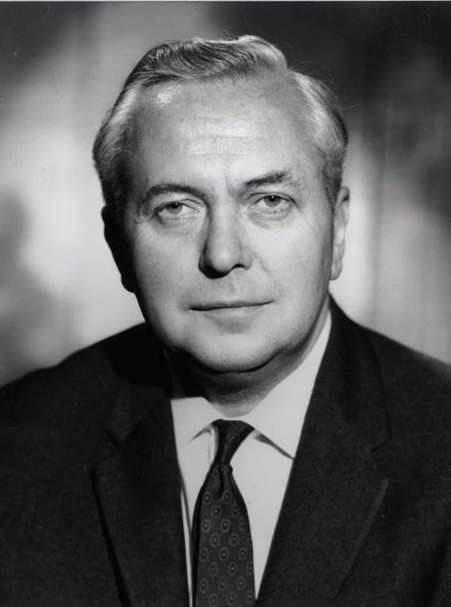
    Harold Wilson – 1965 Speech on Foreign Affairs

    The speech made by Harold Wilson, the then Prime Minister, in the House of Commons on 19 July 1965.

    This two-day debate, to which the Opposition and the Government have each contributed a day, can be expected to range pretty widely. In opening it, I feel that it may be more helpful to the House that I should not embark—as has sometimes been done in these debates in the past—on a comprehensive tour d’horizon, touching on all the issues of world affairs, but none of them, perhaps, very deeply. Rather I propose to single out three or four major issues which have dominated international relations in the past few weeks and months and which must be expected to dominate all our affairs for the rest of this year and perhaps much longer.

    The issues which I think, the House would want me to deal with are Vietnam, Malaysia, the central problem of relations with the Middle East, the present situation in Europe, the prospects for disarmament, and measures to stop the spread of nuclear weapons.

    To choose these subjects means that I shall not be dealing with a number of major issues which hon. and right hon. Members will wish to raise. It means excluding a discussion of the present situation in United Nations, although I know that my right hon. Friend the Foreign Secretary will hope to deal with that if he catches your eye, tomorrow, Mr. Speaker.

    It leaves little time for discussing the wider problems of the Middle East, including South Arabia and the Gulf States, or the flare-up in Santo Domingo, the question of Spain, the Gibraltar issue, and many other issues which will be in the minds of hon. Members. But as three Foreign Office Ministers hope to take part in the debate if they catch your eye, Mr. Speaker, I trust that the Government will be able at some stage in the next two days to deal with any questions which are raised.

    Before I turn to my main subject, I should like to say a word or two about some of the underlying themes of world affairs against which these three or four central issues have to be considered.

    The first relates to the nature of the challenge that we are facing. I would be the last person to underrate or understate the grave dangers of the fighting in Vietnam escalating into a major land war in Asia, or even into a graver confrontation than that. Nor do I think that there is a sufficiently widespread realisation of the dangers that could occur by any intensification or extention of the confrontation between Malaysia and Indonesia. But, having said that, I should point out that it is clear that the past year has shown us, with growing clarity, how the nature of the world struggle is changing.

    We must remain on our guard in Europe; we emphatically cannot afford the luxury of further strains within N.A.T.O. or the further development of nationalism within an alliance whose essence and inspiration are international collective defence. But the very nature of the thermo-nuclear balance in the world—the so-called balance of terror, based on a recognition that either of the two major nuclear Powers has within itself the capability to destroy utterly large areas of the other, and thus of itself and of the world—means that N.A.T.O. must maintain adequate conventional strength in Europe.

    Having said that, I submit that the main danger in the world now is a more subtle form of challenge, of penetration, not capable of resistance by purely, or even mainly, military means. We must guard against the temptation to be so dominated by the undoubted challenge and danger that we were facing in the early 1950s that we put all our strength into defending our front door while the back door and the kitchen window are left unguarded. It was this theme which underlay the important speech of my right hon. Friend the Secretary of State for Defence at the last N.A.T.O. Defence Ministerial Meeting, and I believe that there was widespread recognition that his call for a fundamental reappraisal of the scale and nature of the challenge that N.A.T.O. was facing was timely—indeed, overdue.

    We may look at this situation in rough periods of ten years since the war. If the problem of 1945–55—the first ten years after the war—was to come to terms with the new power situation which followed the defeat of Hitler, particularly the situation in Europe, and then to build up an effective situation of strength based on collective security; and if the dominant theme of the second post-war decade has been that of a world coming to terms with the facts of thermo-nuclear power—with Cuba, in 1962, providing the watershed—it is equally true that that second decade saw the emergence of new problems which I believe will dominate the third post-war decade from 1965 onwards, and, I believe, for many years after that.

    This new problem is presented by the emergence of China as a world Power, by the ideological struggle between Russia and China, and by the growth of the so-called National Liberation Movements, not only in Asia, but in Africa and in Latin America. Just as there has been a growing recognition that the military, weapons appropriate to conventional land warfare are inappropriate, irrelevant and even dangerous in the jungle, so there is widespread recognition that political and economic infiltration cannot be dealt with mainly or even primarily by a military approach.

    I say quite frankly to the House that this was one of the underlying themes of the recent and, I believe, successful Commonwealth Conference.

    Behind all these specific issues which dominated that conference and which featured in the communiqué—such as the Vietnam Peace Mission, Rhodesia, disarmament, Commonwealth trade, the Commonwealth Secretariat and the rest—there was a deeper and more fundamental theme. I probably over-simplify it, but I do not think that I over-dramatise it when I say that what was at stake at that conference, and what is at stake in all the dealings of advanced industrial countries with the newly emerging nations, what was at stake in Algiers and Cairo and actually during the Commonwealth Conference, and what will be of growing importance as year succeeds year is the struggle for the soul of Africa. I hope that there can be no doubt in any of our minds who are the leading nations in that struggle. I hope that there can be no doubt either that Britain, through history, through geography, through the whole history of our Commonwealth development, cannot contract out of that struggle.

    I refer to one other theme to which the right hon. Gentleman the Leader of the Opposition drew attention in opening the foreign affairs debate from this Box a year ago, namely, the rift which has developed between Russia and China. That was one of his main themes last year. I agreed with a great deal of what he said then, though I think that the passage of another year has underlined at any rate one warning which I gave him then. I said that, while I was not underrating the importance of this development, there was a danger in attitudes which might seem to suggest that because of disagreement between Russia and China we might automatically assume—as the right hon. Gentleman at one point last year almost seemed to assume—that Russia’s desire for coexistence would cause her to agree more readily with Western policies, the feeling that we could and should play on this rift in the Communist camp. I said then that I thought that this was dangerous, and I think that the whole course of world events since then has proved it.

    I do not want to compete with the professional demonologists, be they Kremlinologists, Pekinologists or any other kind, in seeking to analyse the significance of the theoretical and ideological part of the argument. More important, perhaps, is the difference arising from the stage of development which the two countries have reached, the fact that the Soviet Union has vast achievements, vast developments, a vast capital structure—I am not saying a “capitalistic” structure—to defend and has, in consequence, developed a system of society which, making complete allowance for political differences, has become, not least in its functional structure and in its class structure, more and more assimilated to that of an advanced Western country, whereas China, at a much earlier stage of development, is, perhaps, inevitably, more militant and more—as their leaders would claim—revolutionary in her ideological doctrines and, much more important, more revolutionary in her attitude to world affairs.

    I think that my warning of last year stands. The very fact that there is a struggle between Russia and China not only for power and influence amongst uncommitted nations, be they in Afro-Asia or Latin America, but, still more poignant in the minds of leaders of Moscow and Peking, a struggle for the leadership not only of the uncommitted world, but of the Communist world, means that, when the strains are at their greatest, as they have been over Vietnam, one cannot assume—as, perhaps, might have been assumed a year ago—that the Soviet Union will then be driven into accepting more and more Western positions.

    It is precisely because of this struggle, precisely because of this difference, that we are faced with this great challenge to our diplomacy, and we have to see that we do not force the Soviet Union into positions of competitive militancy which may not be in her long-term interests and which certainly are not in the interests of world peace. I believe that this consideration is one of the central ones in the first main problem to which I now turn, the problem of Vietnam.

    I do not intend to take up the time of the House with a long account of the development and history of the present situation in Vietnam, from the 1954 Geneva Agreement onwards. The House will recall that, in our last foreign affairs debate, my right hon. Friend the Foreign Secretary dealt with the whole ten or eleven years and, in his admirable Oxford speech which has been widely, and rightly, praised, he dealt with the history of this question with the utmost clarity. He explained, as I tried to do in that same debate last April and many times subsequently, why we have supported the actions of the United States in Vietnam. The American position, which we support, is this—that when conditions have been created in which the people of South Vietnam can determine their own future, free from external interference, the United States will be ready and eager to withdraw her forces from South Vietnam.

    This is what they have said, and we support them. This is right, but it can only be as a result of a conference. We support that too. A unilateral withdrawal of the United States would have incalculable results, first in Vietnam. It would have incalculable results, too, over a much wider area than Vietnam, not least because it might carry with it the danger that friend and potential foe, throughout the world would begin to wonder whether the United States might be induced also to abandon other allies when the going got rough. One has only to look at the map of South-East Asia—rich, fertile, mouth-watering, not in current economic terms, but in terms of temptation to those seeking a wider sphere of exclusive influence.

    Again, in terms of great power relationships, a unilateral withdrawal would be held as a humiliating defeat and would make not only countries such as Russia but—let us be frank—America herself, that much more intransigent and tough and determined to see that the experience was not repeated and that much less inclined to policies of co-existence. I think that there is now a growing recognition that the problem of South Vietnam cannot be solved by military means. Military means can prevent an imposed solution, but there can be no victory now. This war will end when that realisation penetrates those capitals which are at present intoxicated by hopes of an early military settlement.

    However, if the South Vietnamese Government and people, with their American allies, may not be able to impose a settlement on the Vietcong and the North, equally, it is not within the power of the National Liberation Front, with whatever aid they get from North Vietnam, to bring South Vietnam and the Americans to their knees. Perhaps I am not going too far when I say that the only condition in which there could be a military solution of the struggle in Vietnam will be one which followed a major escalation, possibly a major world war. That would, on doubt, provide a military solution, but such a war might settle a lot of other things besides the position in Vietnam, not excluding the question of the future of human life on this planet.

    If the House accepts this analysis, it is a question, by every means open to us, of getting men round the table to secure an honourable and lasting peace. This has been the central theme of Her Majesty’s Government’s policy for many months. The right hon. Gentleman the Leader of the Opposition, with whom I do not intend to pick any quarrels this afternoon—[An HON. MEMBER: “Why not?”]—in speeches in the North the weekend before last—Why not? Because I think that there were one or two passages there which he would, on reflection, prefer that he had not used. He said: I hope the Socialist Government will now recognise that peace is not furthered by opportunism, but by solid, secret work and preparation through diplomatic channels, leading to negotiation. I wonder what he thinks we have been doing all these months. Let us take, first, our relations with Washington. We have, throughout, been in the closest discussion with the United States Government, one of the main parties to this dispute and to any possible conference. I had long discussions myself, as the House knows, with President Johnson on this matter last December and again in April.

    Nor are our discussions limited to the times when the President and I are sitting on the same side of the Atlantic. My right hon. Friend has had many discussions with the American Secretary of State, both in America and in Europe, and all of us have discussed the matter with the American Administration at all levels. While it is true that, in those dark months in February and March, when it was difficult for me to explain to the House what we were doing and what we were urging: at any rate we were able, by April, not only privately but publicly, to express our full support for the President’s Baltimore speech in which he called for discussions.

    As the House knows, subsequently the President, other American leaders, the Secretary of State, Mr. Adlai Stevenson—with whom I was discussing this Vietnam problem for several hours only nine days ago—all the American leaders, have since April expressed their willingness without conditions to enter into negotiations. At one point they indicated their willingness to suspend bombing policies in order that discussions would take place. We played our part in trying to carry this message through to the North Vietnamese authorities through the channels open to us, but without success.

    So much, then, for our diplomatic contacts with the United States. What about the other side? As the House knows, the Foreign Secretary is, with the Foreign Soviet Minister, a co-Chairman under the Geneva Agreement. In February we urged Mr. Gromyko to take joint action with my right hon. Friend for an approach to all the other Geneva powers as a first step towards a peaceful settlement. After some weeks, indeed on the eve of Mr. Gromyko’s visit to London, we were told that it was not acceptable for the Soviet Foreign Minister to join in this approach. Throughout the week of Mr. Gromyko’s visit to London my right hon. Friend day after day—supplemented by my own efforts at a two-hour meeting—tried to persuade Mr. Gromyko to join with us in an initiative on the lines we proposed. We failed.

    Then, as the House will know, in April we took up the Soviet suggestion of a conference on Cambodia and expressed our willingness to join with them in calling such a conference. Even a Cambodia conference was bristling with complications, including the question of the attitude of certain other states directly affected in South-East Asia. When hon. Gentlemen sometimes express doubts about Mr. Gordon Walker’s visit, let me say that to him more than to anyone they lay the credit for getting a general acceptance of such a conference in South-East Asia but we have not so far been able to persuade the Soviet Government to carry out their original intention in joining us in calling it.

    On more than one occasion we have tried to use the good offices of the Secretary-General of the United Nations. His proposed peace tour secured the same result as the unofficial visit of Mr. Gordon Walker. The Indian representative was rebuffed, the seventeen non-aligned nations were rebuffed, and France was rebuffed. More recently we secured the almost unanimous Commonwealth support for a Commonwealth Mission on Vietnam, and again Peking and Hanoi refused to accept the Mission.

    When the right hon. Gentleman the Leader of the Opposition says that what he calls “opportunist proposals” such as the Commonwealth Peace Mission or the visit of my hon. Friend the Member for Leek (Mr. Harold Davies) to Hanoi are “inappropriate, even dangerous”, when, as he suggested, in a rather extravagant phrase that this was the Foreign Secretary falling into the Communist trap, I wonder just how he feels that the secret diplomacy for which he calls can operate in this situation. I hope we shall hear from him about this. Of course, he tells us how successful this was in the case of Laos, but I remind him that even though this took place at a time when Russia and China were both willing to see a conference take place, it took him almost two years to get agreement, including the time for getting the conference established. When we look at the situation in Laos today we can be forgiven for wondering whether it was the unqualified success it is sometimes suggested to have been.

    Laos is not a parallel with the situation in Vietnam. The situation in regard to Vietnam is entirely different. It is in part, both in origin and character, a civil war, but it is equally a war that most of us feel would not be sustained and could not be intensified but for the participation of North Vietnam in the fighting both with troops and with supplies. Therefore, Hanoi is the key to this situation. I hope I carry hon. Members opposite with me in the statement that Hanoi is the key to this situation. What I want them to understand is that that key cannot be turned in Moscow. There is no direct line from the West through Moscow to Hanoi. If there were it would have been turned a long time ago, but I assure right hon. Members opposite that there is no possible means for diplomatic approaches in Moscow to get through to the authorities in Hanoi.

    The Soviet position is that the Vietnam situation is one which must be settled between the parties to the fighting—listed by them as the United States and Vietnam, including, of course, North Vietnam and the National Liberation Front, the Vietcong. The Soviet position is that they are not involved in the fighting and, further, that they have not been asked by those whom they support and recognise as allies, namely North Vietnam, to intervene in a mediatory or any other rôle. When the Commonwealth ambassadors went to see Mr. Kosygin about the Commonwealth Peace Mission, he made these points clear to them and he told our representatives that they should go to Hanoi. So, in those circumstances, it is quite impossible for the normal workings of diplomacy to get through to Hanoi via Moscow.

    I hope this will be agreed as one of the basic facts of the situation when we are asked to use diplomatic channels, that we cannot use Moscow diplomatic channels to get at Hanoi. Equally, there is the position of Her Majesty’s Consul General in Hanoi—perhaps here I may pay my tribute to him and to his predecessors for the faithful and devoted way in which they carry out their duties in most difficult conditions. Her Majesty’s Government—and this, of course, was true of right hon. Gentlemen opposite as well as of ourselves—do not recognise de jure or de facto the D.R.V. Our Consul General therefore exercises purely consular functions, although there have been occasions—nothing like universal—when he has been able to transmit messages, and indeed to get a reply. But there have been other times when, I must tell the House, the absence of diplomatic recognition has led to refusal to receive an important message. It was for this reason—however much we may regret it—that Mr. Ponsonby was not allowed to accompany my hon. Friend in his talks, although my hon. Friend had the valuable benefit of his advice in a whole series of meetings during his visit.

    So the impeccable view of the right hon. Gentleman about using diplomatic channels, although I heartily agree with this as a principle, simply will not work as far as Hanoi is concerned. It will not work in this dangerous Vietnam crisis. Unless he is suggesting that we should accord diplomatic recognition to North Vietnam—if that is what he is suggesting, I hope he will make it plain to us, but I do not think he is suggesting it—then I think his criticism is entirely unfounded. What is worse, it might appear to carry with it the suggestion—I am sure he does not mean this—that if we cannot work towards peace by ordinary diplomatic methods, then we ought not to go on working towards peace.

    So far I have been talking entirely in terms of the initiatives and approaches necessary to get a conference. This was one of the two declared objectives of the Commonwealth Peace Mission. We intended also, of course, to try to identify the conditions which would make a ceasefire possible. Here I draw a distinction between what might be called external action on the one hand and a cease-fire in the fighting within South Vietnam on the other. The Commonwealth Peace Mission, with the full support of the Commonwealth—this is in the memorandum for guidance to the Mission, endorsed by the conference and printed with the communiqué—called in terms for

    “(a) a suspension of all U.S. air attacks on North Vietnam, and

    (b) a North Vietnamese undertaking to prevent the movement of any military forces or assistance or material to South Vietnam.”

    It was felt that bilateral restraint of this kind would help the Mission in the discharge of its duties. This was in a sense an expression of external intervention. To insist on a cease-fire inside South Vietnam is just as urgent, although to say that this must precede a conference and be a condition of the conference taking place might defer the time at which the conference began to meet. For one thing, to police and inspect a cease-fire in the conditions of fighting in South Vietnam is much harder than to police and inspect external intervention. It is possible, for example, to police, inspect or verify where external bombing is going on. That can be inspected. But, in the conditions of South Vietnam, it is very much more difficult, because incidents like throat cutting and hand grenade attacks on a dark night present different problems of policing. And if one cannot police them satisfactorily, it is always possible that isolated incidents might lead to an outbreak of fighting, mutual recrimination and accusations.

    At various times suggestions have been put forward for the kind of settlement to which this conference might lead if we were able to get the conference established. Some have suggested an Austrian-type solution, with neutrality guaranteed by the major powers. Others have suggested a Korean-type solution, with the country divided for a time, with effective defence of the frontier—if that is possible in Vietnamese conditions—leading to an integrated country at a later stage.

    Others have suggested—and I think that this is right—a straight return to the 1954 Agreement. I do not think it would be helpful for us to try to decide this question in detail today. This must be a matter for the conference. As I have said, the main objective of the Commonwealth Peace Mission is to establish the conditions in which such a conference can be held with any hope of success.

    What I think is more immediately relevant is the type of conference which should be held. This is something which I hope lies sufficiently in the near future for us to be able to be discussing how it should be done. I do not think there is any difference of view on either side of the House about it. Her Majesty’s Government strongly take the view—and this was the view of our Commonwealth colleagues and, I think, of right hon. Gentlemen opposite—that we should be creating the conditions in which Mr. Gromyko and my right hon. Friend, as Geneva co-Chairmen, could convene a conference, whether at Geneva or elsewhere, under the aegis of the 1954 Agreement and under their co-chairmanship. This proposal has the support of the United States, and I think it right to remind the House that the United States Government are ready to accept the 1954 Agreement as a basis for the ultimate solution. The American Secretary of State said on 4th July: We would be glad to go to the conference table and take up these agreements of 1954 and 1962 to see where they went wrong and try and bring the situation back to those basic agreements. I am sure the House will agree with that approach. To sum up the Vietnam situation, I invite the agreement of the House to these propositions.

    First, this is a war—and this is inevitable in conditions of modern war, even conventional war—which as long as it continues will bring death, destruction, tragedy and mutilation to thousands upon thousands of people whose only desire is to live in peace with their own people, and who in all conscience have seen enough fighting, fighting on their own homeland, fighting without respite, for almost a quarter of a century. I think that there will be no disagreement with proposition number one.

    Secondly, this is a war which carries with it the gravest danger of escalation; of extension to the point where we might, within a very short period of time, see it extended to become a major land war on the Asian mainland. Nor is that the entire extent of the danger which it presents, because my third proposition is that this is a war the very fact of which is poisoning the whole of international relationships, is halting the hopeful progress towards co-existence on which Eastern and Western nations alike have pinned their hopes and which, if it is allowed to continue, may possibly lead to a reversal of the hopeful trend and a hardening of attitudes which it may take years to break down again. I do not think that there will be any disagreement on that.

    Fourthly, a solution to this problem will not be found by military means alone. A decision to defer any hope of a political solution, to deny the means of a political solution, is a decision that the military measures may be intensified with all that that means. I do not think that there will be any disagreement with that proposition.

    Fifthly, to get a political solution means getting men round a table. Every effort to do this—whether through the co-Chairmen, whether through the Secretary-General of the United Nations, whether through the French initiative, whether through my right hon. Friend’s message to the Heads of the Geneva Conference Governments, whether through the initiative of the 17 non-aligned countries, whether through the initiative of the Commonwealth Peace Mission and subsequent attempts to get acceptance of that Mission—has so far foundered on the unwillingness of Hanoi, and, to the extent to which China accepts responsibility of these matters, of Peking to agree to negotiations. I do not think that there will be any disagreement with that proposition.

    Sixthly, all these attempts have established the willingness of the United States, the Government of South Vietnam and of the majority of the Geneva parties to have negotiations. No further diplomatic approaches are necessary with them. That is probably accepted by hon. Members.

    Seventhly, the key to the situation is Hanoi, as I pointed out earlier. This is the view of Her Majesty’s Government. It is the view of the United States and of the Soviet Union. I hope that I carry hon. and right hon. Gentlemen opposite with me as well in saying that because, if they agree about this, it brings me to my eighth proposition, which is that there is no means open to Her Majesty’s Government and to the vast majority, whether of Western powers, Geneva powers, Commonwealth powers or of non-aligned powers, of influencing Hanoi by ordinary diplomatic means because diplomatic channels do not exist. I hope that I carry hon. Gentlemen opposite with me on this proposition as well.

    My ninth proposition is that, in these circumstances, it was the duty of Her Majesty’s Government, and it remains their duty, to seek to get the message through to Hanoi in the hope of getting acceptance, first, for the Commonwealth Peace Mission and, secondly, of getting support for the conference. It is our duty, in these circumstances, to do this by any means open to us, orthodox or unorthodox, conventional or unconventional, regardless of whether we may have to suffer disappointments and what right hon. Gentlemen opposite like to call rebuffs. Again, I would like to hear from the right hon. Gentleman whether he agrees with this proposition, which seems to follow from those I have argued.

    The outcome of my hon. Friend’s visit was a disappointment, due partly, in his view, to a high degree of confidence in North Vietnam—no doubt reflected in China—that time is on their side, that they are winning, that they have more to gain on the battlefield than in the conference room. I believe that this view is tragically wrong, and I think that my hon. Friend’s visit and his 16 hours of persistent argument about it may have done something to shake that confidence. I hope it has.

    I hope that, in the cooler atmosphere of this debate, recognition will be given to the fact that, in these uniquely difficult circumstances, my hon. Friend’s visit represents the first occasion on which we in the West have been able to get a message through. That message was delivered with vigour, with conviction and with sincerity and fluency, if not directly at the North Vietnamese personalities we should have liked, and even if we had to accept Hanoi’s refusal to receive Foreign Office officials on the ground that we did not recognise North Vietnam. That was the reason we could not have them there.

    Of one thing I am sure; that these arguments have by now got through to the political high command of North Vietnam in a way they have never got through to the leading Ministers there before. The danger we faced only a month ago when the Commonwealth initiative was announced was of rigidity, fixed positions, inability to communicate and unwillingness to consider fresh attitudes. One thing the Commonwealth Mission has done is to make every country involved think again.

    I believe that my hon. Friend’s visit, while it has not melted the ice, has caused some cracks and shifting to take place in what seemed solid pack ice. Those who think that these two initiatives were wrong have a duty to explain what they would have done in these unique circumstances to stop the present conflict and the danger of a further drift to war.

    Sir Alec Douglas-Home (Kinross and West Perthshire)

    Can the Prime Minister say something about Dr. Nkrumah’s visit? Is it part of the Commonwealth initiative, or has it been arranged by the right hon. Gentleman, or has it been done solely on Dr. Nkrumah’s responsibility?

    The Prime Minister

    All I can say is that Dr. Nkrumah as well as Dr. Williams and, of course, Sir Abubakar, and I have been in the closest touch from the moment the Commonwealth Peace Mission was appointed and have consulted throughout on all messages, initiatives, and the rest. But until Dr. Nkrumah has given his own reply to the invitation which I learned from my hon. Friend North Vietnam was intending to give, I think that I had better not say anything more. But I would be glad to say something further when we have the reaction of Accra to the particular proposal. I think that within a few hours—probably before this debate ends—it may be possible to say something.

    I hope that my hon. Friend will have brought home, not only to us in the outside world but to those in Hanoi, the danger of continuing in a position where they carry so much of the responsibility for the continuance of the war. In this country, and in every other country, there is a great desire for peace in Vietnam. That is a banner—the “Peace in Vietnam” banner—that I hope we could all carry, although it is becoming clear that some of those who shout loudest for it, both here and in other countries, are concerned not with peace in Vietnam but with victory in Vietnam.

    There will be no quick or easy victory for anyone, and a refusal to negotiate now will mean an intensification of the war in which, in the end, inevitably after thousands more have lost their lives, after thousands more have been made homeless, and after innumerable children have been made fatherless, the realisation will slowly dawn that peace will come only at the conference table. If that is what occurs, as I believe it will occur ultimately, the responsibility will lie on those who refuse to come to the conference table. For let us be clear—the enemies of negotiation are the enemies of peace.

    I have spent so much time on Vietnam because, as I have said, this utterly dominates world relationships; because it is the cloud overhanging every East-West dialogue. But, as the House knows, we are deeply concerned, deeply involved, in another Asian confrontation—that between Malaysia and Indonesia. Our full support is pledged to Malaysia in its struggle to maintain its integrity as a nation against a country which refused to recognise its very existence. This country, under the previous Government and under this Government, has been unstinting in providing military support, and I want the House to know that although actual fighting has been up to now on a relatively limited scale—and we thank God for that—we should be utterly wrong to dismiss the danger of a much more serious crisis over Malaysia if this issue is not quickly settled. I have said before now in this House why Britain cannot take the initiative in mediation here—I think that it is well understood—but other Asian countries, including Commonwealth countries, may well have a rôle to play as soon as there are signs of a willingness to talk.

    Turning from that subject, since I understand that my right hon. Friend will be dealing with the Middle East tomorrow, if he catches Mr. Speaker’s eye, I will not go into the vast issues of that region today, save only to say this. Within hours of this Government taking office, the then Foreign Secretary, Mr. Gordon Walker, made clear his desire for improved relations with the United Arab Republic. He embarked on a series of discussions, the so-called dialogue, with the United Arab Republic Ambassador. For our part, we see no reason why the hostility and difficult relations of the years since Suez should be continued into the future, though in saying that we have certainly no intention, as we have made clear, and as I now repeat, in any way of deserting our traditional friends in the Middle East or in any way altering our relationship to the Arab-Israel dispute. As part of our contribution to civilising and improving relations in the Middle East, we envisaged at the earliest possible moment a visit by a senior Foreign Office Minister to Cairo.

    This is still our intention and our hope—we want to see relations improved. But one major obstacle stands in the way; and this is the series of subversive and terrorist actions taking place in South Arabia in circumstances which make it impossible for us to acquit Egypt and her friends of connivance, even involvement. We have addressed the strongest protests to the U.A.R. on this question. Many of us in all parties took the opportunity of the entirely helpful and friendly visit of a U.A.R. parliamentary delegation to make this country’s position clear a week or two ago. I hope to have another opportunity of doing this tonight because, given an ending of this terrorist campaign, I believe that one of the greatest difficulties standing in the way of a speedy and mutually helpful improvement of relations between Britain and the U.A.R. will have been removed. If it is removed, I should like to pay my tribute to the visit of the U.A.R. parliamentary delegates and to the contribution which hon. Members of all parties in this House made to the success of that visit.

    Before I sit down, the House will, I think, expect me to refer to the situation in Europe, and also to say something of our hopes in the forthcoming Geneva Disarmament Meeting. I do not think it necessary for me to add anything to what has been said in this House in foreign affairs and defence debates about Britain’s relations with the N.A.T.O. Alliance. We approach its problems in a radically reforming spirit designed to bring closer unity within the Alliance, to create a more effective defence, and to ensure that it responds to the changing nature of the challenge it is facing. Progress in this matter is slow, and will be slow. I know that the House understands the difficulties—particularly in regard to our own Atlantic Nuclear Force proposals—of advancing further until after the German elections.

    But I must make reference to another aspect of European affairs, namely, the strains that have recently developed with the European Economic Community. I hope that we can all agree on this; that no one in Britain, and certainly not the Government, can find any cause for rejoicing in the situation that has developed within the E.E.C. in the past two or three weeks. We have had many debates in this House about whether Britain should join the E.E.C.—or, more precisely, about the terms on which Britain could join the E.E.C.—but, whatever the disagreements, and there have been disagreements within parties at least as much as between them, I think that we are all united in one belief, which is that the success of the Community itself is vitally important for the countries concerned and for Europe as a whole.

    I have had occasion in the past to quote the Labour Party’s statement, endorsed by an overwhelming majority at the Brighton Conference three years ago. I think it right today, in this present set-up, to remind the House of the opening words of that statement, because they express the views of Her Majesty’s Government today as surely as they expressed our views as a Party in 1962. The statement opened: The Labour Party regards the European Community as a great and imaginative conception. It believes that the coming together of the six nations which have in the past so often been torn by war and economic rivalry is, in the context of Western Europe, a step of great significance. It is aware that the influence of this new Community on the world will grow and that it will be able to play—for good or for ill—a far larger part in the shaping of events in the 1960s and 1970s than its individual member states could hope to play alone. Our arguments were not about whether we wished to see the Community succeed, but about the question whether Britain could or could not join it on the particular terms open to us without perhaps fatally compromising our essential national and Commonwealth interests. We had those arguments, perhaps we shall have them again, but, at any rate, the fact that we have had these arguments about the conditions in which Britain could join, should not detract from our earnest hope that the present difficulties in Europe will be overcome on terms acceptable to the member countries. It is not for us to take sides or to express opinions, still less to exploit this serious difficulty which has arisen for advancing a particular conception or a particular doctrine about European unity or about British participation. I hope no one is going to start saying, “Ah, well, because there are five who hold one view and the others hold another view, we can take advantage of the split between the five and the one.” I hope no one will say that an assertion has been made that supranationality is unacceptable and that that fits in with our doctrines, which most of us hold, against a supranational solution in political and defence matters. I think we can be most helpful by not attempting to take sides but by using such influence as we have to make sure that our European friends settle this problem amongst themselves on terms acceptable to them, because by so doing they will not only be helping themselves but peace in Europe.

    Our position remains, too, that means should be found as soon as possible to begin the dialogue between E.F.T.A. and the Common Market countries with a view to reducing and ultimately ending the economic and political damage which results from this costly and far from economic division of Europe.

    There is no immediate issue of our being asked or being able to join the Common Market, and so we do not need to argue at this moment about the terms. What all of us agree about is the need to get a single trading market for the whole of Europe, first covering the countries of the Six and E.F.T.A., and, as political realities permit, capable of bringing about closer economic relations between Western Europe and Eastern Europe. Equally, we are anxious to play our full part in increasing political unity within Europe on the basis of a growing and more intimate inter-governmental co-operation. My right hon. Friend has repeatedly urged—indeed, we all have—the need for Britain to be in on the ground floor in any such political discussions.

    This review of foreign affairs and the rôle of British policy in the present world scene that I have tried to give this afternoon is inevitably a sombre one. For reasons which I have explained and which are well understood by the House as a whole, we have gone through some very difficult months, not only in direct East-West relations, but in the wider expression of East-West relations in such fields as the United Nations and in disarmament.

    My right hon. Friend will no doubt wish to deal in greater detail with some of these questions. But, while our attention in the House has been so highly concentrated on Vietnam in these months, I hope the House will have seen and, indeed, will recall its judgment on the leadership which Britain has been able to give in helping the United Nations to emerge from its difficulties stronger, more united and more effective. After years of doubts about the degree of support that this country was prepared to give the United Nations, when the chips were down, I believe that Britain’s acceptance of the U.N. as a cornerstone of our world policy is now recognised by every nation in the world.

    If that is true, I believe no one is more responsible than our representative in the United Nations, a member of the Government, my noble and learned Friend, Lord Caradon. The hon. Gentlemen who laugh have identified themselves as the small group of men who do not begin to understand the nature of the world that we are living in. Not only have we taken action to act in accordance with resolutions of the United Nations, not only have we taken an unprecedented lead in pledging logistic support for world peace-keeping operations—the first step to the international police force we have all dreamed of—but, at the darkest moment in the United Nations financial crisis this summer, a crisis where finance was the symbol rather than the cause of the strains between nations, it was Britain who came out with the proposal for an unconditional contribution, and it is now for more nations to follow our lead.

    We have played our full part in the Disarmament Commission, and now I think the House will be glad to welcome the fact that the 18 Nation Geneva Conference is to resume in a week’s time. We have a Minister—and I think this is unique in the world—charged with full-time responsibilities in the realm of disarmament. During the weeks and months when hope of renewed discussion seemed dim, he has been active, not only in Whitehall, but in almost constant discussion with our allies, our friends, and with anyone who had anything to contribute in the disarmament field. By setting up a highly authoritative advisory council in this country, including scientists, defence and international experts from the universities, from Parliament and elsewhere, the Government have been able to draw on a wide range of expert advice.

    We have been hard at work on the general problems of comprehensive nuclear and conventional disarmament. But we believe that the first and most urgent task must be an agreement to prevent the further spread of nuclear weapons. In our approach to the disarmament conference, we are reinforced—and I know the House will welcome this—by the powerful and unanimous declaration of the entire Commonwealth, 21 countries, of further proposals and further steps for disarmament and non-proliferation which we issued from our meeting last month.

    We have spent these months working on the draft of a non-dissemination treaty which we have been discussing and are still discussing with our Western Allies and which we hope to present to the Geneva Conference. This treaty is not based on any exclusive attempt to preserve nuclear privileges for a small group of powers. It is based on a realistic recognition of the consequences there would be if nuclear weapons were to pass into the hands of more and more states, with all the dangers that a nuclear war by mistake, miscalculation, accident or madness could bring.

    We shall press on urgently to extend the plans for a partial test-ban treaty to cover the whole area of nuclear testing, including underground tests. We should like to see progress made towards President Johnson’s plan for a freeze of strategic nuclear delivery vehicles, on which both sides have agreed in the past. But we believe that we should go further with this and link with it a phased destruction of some of these weapons, as well as a freeze on their extension; because, pending a comprehensive and complete disarmament treaty, we believe that it is urgent to make a move towards limiting and reducing nuclear armouries, without destroying or upsetting the present overall military balance.

    It is our hope, starting from this conference, to move forward within Europe, and not only within Europe but to achieve, within a maintained balance of military power, areas of controlled disarmament in which there could be agreed and balanced reductions of conventional forces and nuclear-free zones, provided, as I have made clear, they are genuinely nuclear-free, taking into account the missiles trained on an area as well as those sited within it.

    A sombre scene, therefore, but one where there are hopes of advance. I believe that it is the duty of Britain to take initiatives in any and every field where they are needed today. I believe that we can claim that in only a few months we have not been backward in doing so—initiatives within the Western Alliance, initiatives to improve relations with France, initiatives towards bridge-building in Europe, initiatives that led to a cease-fire and easing of tension between India and Pakistan over the Rann of Kutch, and initiatives for peace in Vietnam. Wherever one looked last autumn—and I want to make it plain that this is a commentary on the international scene and not a reflection on our predecessors in office, who played their part in moves to ease tension—there seemed to be vast, apparently limitless areas of solid pack ice, rigid, immobile and to all appearances permanent and immovable. I believe that cracks are appearing in that cold front, a thaw here, signs of movement there, and I believe that we as a nation have contributed at least as much as any other nation to those cracks appearing.

    I believe that this is a rôle for Britain. Our traditions, the skill of our Diplomatic Service at home and abroad, our pattern of alliances and our unique relationship with a great Commonwealth all fit us for what the world needs today, at least in relation to many of the world’s problems, and that is a phase of diplomacy by movement. If I may change my arctic metaphor, we have tended, in relation to problems not only of East-West tension but of European economics, to dig ourselves in deep in a system of diplomatic trench warfare. Patient preparation through diplomatic channels—yes, I agree with the right hon. Gentleman, where they exist they should be used; and intimate daily contact with our friends and allies in preparation for the next move, yes, that is our policy. But we must have the courage to recognise that some of the great battles in history have been won by recognising the right moment to break out.

    What in the right circumstances can be true of a war of movement can be true of a diplomacy of movement. No one is better fitted than Britain to take advantage of open territory—nor to choose when the moment has arrived to embark on it. That, I am sure, has been the traditional rôle of Britain in world affairs throughout history. I am sure that it is the main lesson to be drawn from this serious but not entirely unhopeful review of the world position that I have tried to present to the House today.


  • Queen Elizabeth II – 1965 Queen’s Speech

    queenelizabethii

    Below is the text of the speech made by HM Queen Elizabeth II in the House of Lords on 9 November 1965.

    My Lords and Members of the House of Commons:

    My Husband and I look forward to our forthcoming Caribbean tour and to our visit to Belgium.

    My Government will seek to promote peace and security throughout the world, to increase international confidence and Co-operation and to strengthen the United Nations. They will promote disarmament, and in particular will seek the conclusion of a treaty to prevent the further spread of nuclear weapons. They will persevere in efforts to secure peace in Vietnam and to promote the stability of South-East Asia.

    They will continue to support Britain’s alliances for collective defence and will work for a generally satisfactory organisation of the nuclear resources of the allies.

    My Government will continue to work for the greater unity of Europe. They will seek to strengthen the European Free Trade Association and to promote co-operation between the Association and the European Economic Community, and the establishment of a wider European market.

    They will play a full part in promoting the success of the negotiations for tariff reductions under the General Agreement on Tariffs and Trade. They will seek a successful conclusion to their discussions with the Government of the Republic of Ireland on the establishment of a Free Trade Area between the two countries. They will continue to encourage Commonwealth trade.

    My Ministers will continue to assist, in concert with other industrialised nations and the international institutions, the social and economic advance of the developing countries.

    My Government will maintain their unremitting efforts to bring about through negotiation a peaceful and honourable solution in Rhodesia on a basis acceptable to the people of the country as a whole.

    A measure will be laid before you to reorganise the Army Reserve and Auxiliary Forces.

    Members of the House of Commons:

    Estimates for the public services will be laid before you.

    My Lords and Members of the House of Commons:

    My Government’s aim is to develop a soundly based economy. They will give priority to ensuring that balance in external payments is restored next year and that the strength of sterling is maintained. They will continue their efforts to increase exports. They will also further the international discussions of means of strengthening the world payments system.

    In implementing the National Plan My Government will extend the range of the Economic Development Committees and encourage British industry to achieve greater competitive efficiency by reorganisation, the more general use of advanced technology, and better use of manpower. They will give special attention to ensuring balanced economic growth in all regions.

    Steps will be taken to improve the arrangements for providing incentives for industrial investment with due regard to the development of the economy and the special needs of particular areas.

    My Government will strengthen and develop the policy for productivity, prices and incomes which they have agreed with management and unions. They will introduce a Bill for this purpose, and will continue to develop the policy in co-operation with all concerned.

    My Government consider the more efficient working of the ports, including a radical improvement in industrial relations and more efficient use of labour in the docks, to be of the highest importance and will introduce legislation and take other necessary action to further this objective.

    My Ministers will pursue their policy for the selective expansion of agriculture, based on increasing productivity. They will introduce legislation for the longer term development of agriculture through better farm structure, cooperation, and improved hill farming and to establish a Meat and Livestock Commission. They will promote the economic development of the fishing industry.

    For the protection of consumers, a Bill will be introduced to strengthen the law on misleading trade descriptions.

    Legislation will be introduced to remove statutory limitations impeding the proper use of the manufacturing resources of the nationalised industries.

    A Bill will be introduced to assist the financing of the coal industry and the redeployment of its manpower.

    A Bill will be introduced to establish a Land Commission with power to acquire land for the community and to recover a part of the development value realised in land transactions. My Ministers will introduce legislation to reform the leasehold system for residential property in England and Wales, including provision for leasehold enfranchisement.

    Legislation will be introduced to establish a new system of Exchequer subsidies for local authority housing.

    A Bill will be introduced to regulate priorities in privately sponsored construction.

    Legislation will be introduced to lessen the injustices of the rating system and to limit the burden of rates.

    My Ministers will continue to develop higher education. A Bill will be introduced to facilitate revision of the constitution of the older Scottish universities and to provide for separate universities at St. Andrews and Dundee.

    My Government will take steps to provide more teachers and promote further advances in secondary education on comprehensive lines. A Public Schools Commission will be set up to advise on the best way of integrating the public schools with the State system.

    Measures will be laid before you to provide supplementary national insurance benefits, related to earnings, in the early stages of sickness, unemployment and widowhood; to extend the supplementation of workmen’s compensation; and to empower agricultural wages boards to fix minimum rates of sick pay for agricultural workers.

    Other measures will increase the pensions of retired members of the public services and their dependants and provide a pensions scheme for teachers’ widows in England and Wales.

    My Government are studying with the medical profession ways of improving the family doctor service and will introduce the necessary legislation.

    Measures will be introduced to improve the administration of justice and to reform and modernise the law.

    My Government will promote the provision of improved services for the family, the development of new means of dealing with young persons who now come before the courts and the advancement of penal reform.

    Further steps will be directed to the effective integration of immigrants into the community and to strengthening the control of Commonwealth immigration.

    A measure will be introduced to provide for fuller disclosure of information by companies, including the disclosure of political contributions.

    A Bill will be introduced for the appointment of a Parliamentary Commissioner for Administration with powers to investigate individual grievances.

    My Ministers will bring forward proposals for the more effective coordination of inland transport. You will be invited to approve a measure designed to promote greater safety on the roads.

    Provision for meeting the special needs of Scotland will be made in the various measures proposed by My Government.

    Other measures will be laid before you.

    My Lords and Members of the House of Commons:

    I pray that the blessing of Almighty God may rest upon your counsels.

  • Harold Wilson – 1965 Memorial Speech to Winston Churchill

    haroldwilson

    Below is the text of the speech made by Harold Wilson, the then Prime Minister, in the House of Commons on 25 January 1965.

    I beg to move, That an humble Address be presented to Her Majesty humbly to thank Her Majesty for having given directions for the body of the Rt. Hon. Sir Winston Churchill, K.G., to lie in state in Westminster Hall and for the funeral service to be held in the Cathedral Church of St. Paul and assuring Her Majesty of our cordial aid and concurrence in these measures for expressing the affection and admiration in which the memory of this great man is held by this House and all Her Majesty’s faithful subjects. In accepting this Motion, this House, and, by virtue of its representation in this House, the nation, collectively and reverently will be paying its tribute to a great statesman, a great Parliamentarian, a great leader of this country.

    The world today is ringing with tributes to a man who, in those fateful years, bestrode the life of nations—tributes from the Commonwealth, from our wartime allies, from our present partners in Europe and the wider alliance, from all those who value the freedom for which he fought, who still share the desire for the just peace to which all his endeavours were turned. Winston Churchill, and the legend Winston Churchill had become long before his death and which now lives on, are the possession not of England, or Britain, but of the world, not of our time only but of the ages.

    But we, Sir, in this House, have a special reason for the tribute for which Her Majesty has asked in her Gracious Message. For today we honour not a world statesman only, but a great Parliamentarian, one of ourselves.

    The colour and design of his greatest achievements became alive, on the Parliamentary canvas, here in this Chamber. Sir Winston, following the steps of the most honoured of his predecessors, derived his greatness from and through this House and from and through his actions here. And by those actions, and those imperishable phrases which will last as long as the English language is read or spoken, he in turn added his unique contribution to the greatness of our centuries-old Parliamentary institution.

    He was in a very real sense a child of this House and a product of it, and equally, in every sense, its father. He took from it and he gave to it.

    The span of 64 years from his first entry as its youngest Member to the sad occasion of his departure last year covers the lives and memories of all but the oldest of us. In a Parliamentary sense, as in a national sense, his passing from our midst is the end of an era.

    He entered this House at 25—already a national and controversial figure. He had fought in war, and he had written of war, he had charged at Omdurman, he had been among one of the first to enter Ladysmith, an eye-witness of the thickest fighting in Cuba, a prisoner of a Boer commando—though not for as long as his captors intended.

    And he brought his own tempestuous qualities to the conduct of our Parliamentary life. Where the fighting was hottest he was in it, sparing none—nor asking for quarter. The creature and possession of no one party, he has probably been the target of more concentrated Parliamentary invective from, in turn, each of the three major parties than any other Member of any Parliamentary age, and against each in turn he turned the full force of his own oratory. If we on this side of the House will quote as a classic words he uttered over half a century ago, about the party he later came to lead, hon. Members opposite have an equally rich treasure-house for quotations about us, to say nothing of right hon. and hon. Gentlemen below the Gangway.

    When more than 40 years after his first entry as a young M.P. he was called on to move the appointment of a Select Committee about the rebuilding of this Chamber, he proclaimed and gloried in the effect of our Parliamentary architecture on the clarity and decisiveness of party conflict; he recalled, with that impish quality which never deserted him, the memories of battles long past, of his own actions in crossing the Floor of this House, not once in fact but twice.

    For those who think that bitter party controversy is a recent invention and one to be deplored, he could have had nothing but pitying contempt. And as he sat there, in the seat which I think by general wish of the House should be left vacant this afternoon, in those last years of the last Parliament, silently surveying battles which may have seemed lively to us, could we not sense the old man’s mind going back to the great conflicts of a great career and thinking perhaps how tame and puny our efforts have become?

    A great Parliamentarian, but never a tame one—they misjudge him who could even begin to think of him as a party operator, or a manipulator, or a trimmer, or a party hack. He was a warrior, and party debate was war; it mattered, and he brought to that war the conquering weapon of words fashioned for their purpose; to wound, never to kill; to influence, never to destroy.

    As Parliament succeeded Parliament he stood at this Box, at one time or another holding almost every one of the great Offices of State. He stood at the Box opposite thundering his denunciation of Government after Government. He sat on the bench opposite below the Gangway, disregarded, seemingly impotent, finished. His first Cabinet post—the Board of Trade—made him one of the architects of the revolution in humane administration of this country. He piloted through the labour exchanges; he led the first faltering steps in social insurance.

    The Home Office and then the more congenial tenure of the Admiralty—Ministerial triumph and Ministerial disaster in the first War. Colonies, War, the Treasury: the pinnacle of power, and then years in the wilderness. The urgent years, warning the nation and the world, as the shadow of the jackboot spread across an unheeding Europe. And then came his finest hour. Truly the history of Parliament over a tempestuous half-century could be written around the triumphs and frustrations of Winston Churchill.

    But, Sir, it will be for those war years that his name will be remembered for as long as history is written and history is read. A man who could make the past live in “Marlborough”, in his dutiful biography of Lord Randolph, who could bring new colour to the oft-told tale of the history of the English-speaking peoples, for five of the most fateful years in world history, was himself called on to make history. And he made history because he could see the events he was shaping through the eye of history. He has told us of his deep emotions when, from the disaster of the Battle of France, he was called on to lead this nation. I felt he said, as if I were walking with destiny, and that all my past life had been but a preparation for this hour and for this trial. Ten years in the political wilderness had freed me from ordinary party antagonisms. My warnings over the last six years had been so numerous, so detailed, and were now so terribly vindicated, that no one could gainsay me. I could not be reproached either for making the war or with want of preparation for it. I thought I knew a good deal about it all, and I was sure I should not fail. Therefore, although impatient for the morning, I slept soundly and had no need for cheering dreams. Facts are better than dreams. His record of leadership in those five years speaks for itself beyond the power of any words of any of us to enhance or even to assess. This was his finest hour, Britain’s finest hour. He had the united and unswerving support of the leaders of all parties, of the fighting services, of the men and women in munitions and in the nation’s industries, without regard to faction or self-interest. In whatever ôle, men and women felt themselves inspired to assert qualities they themselves did not know they possessed. Everyone became just those inches taller, every back just that much broader, as his own was.

    To this task he brought the inspiration of his superlative courage, at the hour of greatest peril; personal courage such as he had always shown, and indeed which needed a direct order from his Sovereign to cause him to desist from landing on the Normandy beaches on D-Day; moral courage, the courage he had shown in warning the nation when he stood alone, now inspired the nation when Britain and the Commonwealth stood alone. There was his eloquence and inspiration, his passionate desire for freedom and his ability to inspire others with that same desire. There was his humanity. There was his humour. But above all, he brought that power which, whenever Britain has faced supreme mortal danger, has been asserted to awaken a nation which others were prepared to write off as decadent and impotent, and to make every man, every woman, a part of that national purpose.

    To achieve that purpose, he drew on all that was greatest in our national heritage. He turned to Byron—”blood, tears and sweat.” The words which he immortalised from Tennyson’s “Ode on the Death of the Duke of Wellington” might well be a nation’s epitaph on Sir Winston himself. Not once or twice in our rough island-story, The path of duty was the way to glory; He that walks it, only thirsting For the right, and learns to deaden Love of Self, before his journey closes, He shall find the stubborn thistle bursting Into glossy purples, which outredden all voluptuous garden-roses. The greatest biographer of Abraham Lincoln said in one of his concluding chapters: A tree is best measured when it is down. So it will prove of Winston Churchill, and there can be no doubt of the massive, oaken stature that history will accord to him. But this is not the time.

    We meet today in this moment of tribute, of spontaneous sympathy this House feels for Lady Churchill and all the members of his family. We are concious only that the tempestuous years are over; the years of appraisal are yet to come. It is a moment for the heartfelt tribute that this House, of all places, desires to pay in an atmosphere of quiet.

    For now the noise of hooves thundering across the veldt; the clamour of the hustings in a score of contests; the shots in Sidney Street, the angry guns of Gallipoli, Flanders, Coronel and the Falkland Islands; the sullen feet of marching men in Tonypandy; the urgent warnings of the Nazi threat; the whine of the sirens and the dawn bombardment of the Normandy beaches—all these now are silent. There is a stillness. And in that stillness, echoes and memories. To each whose life has been touched by Winston Churchill, to each his memory. And as those memories are told and retold, as the world pours in its tributes, as world leaders announce their intention, in this jet age, of coming to join in this vast assembly to pay honour and respect to his memory, we in this House treasure one thought, and it was a thought some of us felt it right to express in the Parliamentary tributes on his retirement. Each one of us recalls some little incident—many of us, as in my own case, a kind action, graced with the courtesy of a past generation and going far beyond the normal calls of Parliamentary comradeship. Each of us has his own memory, for in the tumultuous diapason of a world’s tributes, all of us here at least know the epitaph he would have chosen for himself: “He was a good House of Commons man.”

  • Clement Attlee – 1965 Memorial Speech to Winston Churchill

    Clement_Attlee

    Below is the text of the speech made by Clement Attlee in the House of Lords (he was then the Earl Attlee) on 15 January 1965.

    My Lords, as an old opponent and a colleague, but always a friend, of Sir Winston Churchill, I should like to say a few words in addition to what has already been so eloquently said. My mind goes back to many years ago. I recall Sir Winston as a rising hope of the Conservative Party at the end of the 19th century. I looked upon him and Lord Hugh Cecil as the two rising hopes of the Conservative Party. Then, with courage, he crossed the House—not easy for any man. You might say of Sir Winston that to whatever Party he belonged he did not really change his ideas: he was always Winston.

    The first time I saw him was at the siege of Sidney Street, when he took over command of the troops there, and I happened to be a local resident. I did not meet him again until he came into the House of Commons in 1924. The extraordinary thing, when one thinks of it, is that by that time he had done more than the average Member of Parliament, and more than the average Minister, in the way of a Parliamentary career. We thought at that time that he was finished. Not a bit of it! He started again another career, and then, after some years, it seemed again that he had faded. He became a lone wolf, outside any Party; and, yet, somehow or other, the time was coming which would be for him his supreme moment, and for the country its supreme moment. It seems as if everything led up to that time in 1940, when he became Prime Minister of this country at the time of its greatest peril.

    Throughout all that period he might make opponents, he might make friends; but no one could ever disregard him. Here was a man of genius, a man of action, a man who could also speak superbly and write superbly. I recall through all those years many occasions when his characteristics stood out most forcibly. I do not think everybody always recognised how tender-hearted he was. I can recall him with the tears rolling down his cheeks, talking of the horrible things perpetrated by the Nazis in Germany. I can recall, too, during the war his emotion on seeing a simple little English home wrecked by a bomb. Yes, my Lords, sympathy—and more than that: he went back, and immediately devised the War Damage Act. How characteristic! Sympathy did not stop with emotion; it turned into action.

    Then I recall the long days through the war—the long days and long nights—in which his spirit never failed; and how often he lightened our labours by that vivid humour, those wonderful remarks he would make which absolutely dissolved us all in laughter, however tired we were. I recall his eternal friendship for France and for America; and I recall, too, as the most reverend Primate has said already, that when once the enemy were beaten he had full sympathy for them. He showed that after the Boer War, and he showed it again after the First World War. He had sympathy, an incredibly wide sympathy, for ordinary people all over the world.

    I think of him also as supremely conscious of history. His mind went back not only to his great ancestor Marlborough but through the years of English history. He saw himself and he saw our nation at that time playing a part not unworthy of our ancestors, not unworthy of the men who defeated the Armada and not unworthy of the men who defeated Napoleon. He saw himself there as an instrument. As an instrument for what? For freedom, for human life against tyranny. None of us can ever forget how, through all those long years, he now and again spoke exactly the phrase that crystallised the feelings of the nation.

    My Lords, we have lost the greatest Englishman of our time—I think the greatest citizen of the world of our time. In the course of a long, long life, he has played many parts. We may all be proud to have lived with him and, above all, to have worked with him; and we shall all send to his widow and family our sympathy in their great loss.

  • Anthony Eden – 1965 Memorial Speech to Winston Churchill

    Below is the text of the speech made by Anthony Eden in the House of Lords (he was then the Earl of Avon) on 15 January 1965.

    My Lords, this is a day not only of national mourning but of mourning throughout the Free World. For Sir Winston’s service was to mankind, and for this his place will always be among the few immortals. Many of your Lordships knew Sir Winston well, and worked with him closely at one or other period of his career. But this afternoon, as has been apparent from almost every speech, our minds go back more especially to that period of the Second World War which he himself called our “finest hour”, and which was certainly his.

    It seems to me in every sense appropriate that this sad occasion should be so exceptionally signalised as in this Royal Message—and not only because of Sir Winston’s qualities of true greatness in leadership above all. These in themselves would be cause enough for the Message which we have received. But there is also another reason: that Churchill epitomised, at the same time as he led, the nation, at a time of brave and (why should it not be said?) splendid resistance against odds which might have seemed overwhelming. So, my Lords, as we mourn and honour Sir Winston, we reverence also all those who fell to bring victory to a cause for which he had dedicated himself and us. They are now together.

    My Lords, what follows is a suggestion to which I expect, of course, No immediate reply or comment, and which I make with some temerity, but from messages I have received I believe that it is not only my thought. It seems to me that the nation would feel glad if there could be a “Churchill Day”. This could be most appropriately connected, perhaps, with some date in that summer of 1940, when both Churchill’s leadership and this country’s will to resist, whatever the cost, expressed themselves so gloriously. They could then be enshrined together for as long as our calendar endures.

    I should like also to associate myself with the messages to Lady Churchill. No tribute, however penned or phrased, could out-measure what is deserved.

    My Lords, courage is never easy to define. Sometimes it is shown in the heat of battle; and that we all respect. But there is that rarer courage which can sustain repeated disappointment, unexpected failure, and even shattering defeat. Churchill had that, too; and he had need of it, as the noble Earl, Lord Attlee, will remember, not only for days but sometimes for weeks and for months. Looking back now at the war, victory may seem to have been certain. But it was not always certain; and when news is bad, it is very lonely at the top.

    Like one or two of those who are with us in this House this afternoon, I saw much of Sir Winston then—often many times a day, not only at official meetings but in such periods of comparative relaxation as there were, at meals and, as was his wont, late into the night. I grew to respect and love him, even though the argument might sometimes be sharp.

    My Lords, there is the granite type which feels little. Sir Winston was nothing of that at all. He felt deeply every blow of fortune and every gleam of hope. Alert, eager and questing as his temper was, he could hold on through all tides and tempests; and he had that gift, rare and difficult to discharge in statesmanship, of knowing when to reject “No” as an answer, recognising that the arguments against any positive action could always be trusted to marshal themselves. During those war years his mind was always projected to the next move, and in this he was aided by an energy which was something much more than zest for life. With that constitution, Sir Winston would have survived any strain in any age, but he loved best the present one in which he lived. I have heard it said in criticism that his opinions were of his own generation. Certainly they were. And that was his strength, because he was at the same time open-minded and comprehending as are very few men in this century. He saw clearly and further than most, and he spoke fearlessly and without favour of what he saw. He sensed the danger for his country with the instinct of the artist and the knowledge of the historian.

    As we cast our minds back this afternoon and pay tribute to his memory, there is, of course, nothing for which we in this Assembly shall remember him more than as a Parliamentarian. He called himself a “child of the House of Commons”. But he was, of course, much more than that. He had been brought up in a great Parliamentary age. I remember how he used to tell me how in those days speeches, even of Under-Secretaries, were fully reported in the Press. With awe, almost, he spoke of those days. And the great figures that dominated that period gave him an intimate sense of the power of Parliament which he never lost, just as he never forgot that Parliament put him where he was in 1940. It was a memory with him always.

    So, my Lords, as we say farewell to him now, we thank this, the greatest of all Parliamentarians whom we shall know; and we can best enshrine his work by devoting ourselves to the same thing, to those cherished thoughts, traditions and beliefs to which he held, through life, till death.

  • Edward Heath – 1965 Conservative Party Conference Speech

    tedheath

    Below is the text of the speech made by the then Leader of the Opposition, Edward Heath, to the 1965 Conservative Party Conference.

    Lady Davidson, I want first to say how absolutely wonderful it is for all of us here to have you presiding over this final session of the Conference. Your typical approach and stimulating introduction have reflected the high spirits of this Conference which are obvious to us all. We thank you for the start you have given to us for our final session. We would like to say ‘Thank You’ for the splendid record of service which you and your husband have given so unstintingly to our Party. It is nearly half a century of service. I have to confess to you, Lady Davidson, that my early recollections of your entry into politics are slightly hazy. All I can say is that they are very much clearer than those of the present Chairman of the Party, who was not even born at that time!

    It is a great pleasure to have Lord Davidson with us today, because he is part of our Party’s history. Ill though he is, we are glad that he has been able to come and give us that sense of continuity of our Party in all its activities during these past decades. So together we express to you our intense gratitude. Thank you for the welcome you have just given to me. We miss you from the House of Commons, because you were always our guide and friend. There was no need for us to adopt the present method of the Labour Party and have a lady in the Whips’ Office; there you always were, to look after us. I hope it will not be misunderstood if I say that to all of us – and especially my generation – you were indeed our mother.

    Many happy things have happened to me this week, for which I want to thank you all. There have been many kindnesses, which I have greatly appreciated, and other things as well. I found in my Daily Mirror yesterday – I read it avidly, as no doubt you always do – that the barbers of West Bromwich had banded together and come to the conclusion that, seen from the back, my haircut was the best in the country. I can only apologise to you all that this splendid panorama has been reserved for the members of the National Executive Committee.

    We have got to know each other well, and this is all-important in our political life. To come and be here at the Conference throughout has been of immense help to me, and perhaps, Madam President, Sir Max and Sir Clyde, who have done so much to make this Conference a success, I may express the hope that the invitation to the leader to be present may become part of the permanent pattern of our Party Conference. I think it will mean a new relationship between the Party as a whole and the Party at this Conference, lacking, I hope, nothing of the past but also being in tune with the times today. It has been a good Conference. Just think of all those fellows in Transport House with their eyes glued to the television screen, just to see that everybody was being fair to us and fair to them.

    It has been a good Conference, and at Bexley, my own constituency, a fortnight ago – I had to get a plug in somewhere – I asked that this Conference should face facts realistically, frankly and courageously. Madam President, that is what we have done. We have done it to an even greater degree than I ever dared to hope.

    Just look back over those splendid speeches from the hall: frank, honest, sometimes critical. Gone are the days of praise and platitudes – well, almost gone! A little praise is very agreeable sometimes, and the speeches from the platform show that I am right to be proud of the splendid team we have heard during the whole of this Conference. They are men of great experience: Mr. Maudling, the Deputy Leader of our Party, always at my right hand and by my side; Sir Alec Douglas-Home, a man of great experience with a wealth of negotiating experience; Iain Macleod; Enoch Powell; Peter Thorneycroft; Sir Keith Joseph; Tony Barber; and the other members of the Front Bench who have spoken; and Sir Edward Boyle, who not only spoke here during the Conference but addressed a great gathering of 2,000 people at CPC. It was a great intellectual gathering which had come to listen to what, I am told, was a very detailed, sustained argument about forecasting, or indicative planning, as it is technically known. This interested me greatly. I somehow feel that indicative planning is not really endemic in the British character. The forecast for the night of the CPC meeting – broadcast far and wide in every hotel – was heavy rain. Yet 2,000 people came to this hall without a single umbrella between them. It only shows that weather forecasts themselves are not enough. Somebody has got to do something about it. Then there were the younger members of the Front Bench: Margaret Thatcher, Peter Walker, David Price. They also made admirable speeches.

    Did I really hear it said at Blackpool that Mr. Wilson, looking at the Government, said that man for man they could more than match us, more than match this team? Look again, Mr. Wilson, look again.

    He had better look at some of the others as well. I will not mention their names; it would not mean anything to you. I will mention their Departments. What about the Minister of Transport in the present Labour Government? He has done absolutely nothing to alleviate our traffic problems, but he is the only Minister who produces jam today as well as promising jam tomorrow.

    Then there is the President of the Board of Trade. Poor Mr. Jay – reduced to carrying George Brown’s bags to international conferences. When there is good news, that is; when there is bad news he has to open the bag and read it himself.

    And Mr. Willey, the Minister landed without any natural resources. And the Postmaster General, Wedgwood Benn, that would-be whiz kid who always gets the wrong number – even when adding up his election expenses.

    But there is one matter which is beyond a joke, and that is the Minister of Technology. In Londonderry a fortnight ago I challenged him to stand up and be counted, separate from the block vote, straightaway. I said, ‘Resign as General Secretary of your Union or resign as Minister because you cannot do both with honour.’ But he has not stood up to be counted. So I ask Mr. Wilson when he is going to restore the collective responsibility of his own Cabinet. Unless he does so, and until he does so, the whole country knows that despite the fine words, he is too weak himself even to deal with Mr. Cousins.

    Now to return to our own Conference. On Wednesday I called for a change of mood, that we should put the emphasis on individual effort and enterprise, on the importance of choice for us all, on the need for freedom and independence to stand on our own feet. The outstanding thing about this Conference in Brighton this week has been that the mood is already changing. It is clear here in this Conference. It is a mood, too, of realism. Let me affirm that to the eyes of the world which are upon us.

    Our task is to change the mood of the country as a whole. We know our line of advance. Let us see that other people do. Let us heed the wise, stimulating words of our young Chairman, who has just been speaking to you. We have presented and discussed our policies. We know them. Let us see that everyone else does. Let that be our resolve as we leave this Conference.

    Realism, I said. We are realistic. What a contrast with Blackpool. Did you notice that George Brown in one of his happier moods said, ‘This has been a great year for Britain.’ A great year for Britain? Do we really read it aright? Where has he been living all this time? Has it been a great year for industry? The longest period of 7 per cent bank rate since 1921. The toughest credit squeeze since the twenties. Investment and modernisation programmes curtailed. Costs rising and production static. A great year for agriculture? The farmers, whom I am getting to know better and better, thought the weather was the biggest hazard they had ever had until they met this Government. Was it a great year for education, with the building programmes: universities, the technical colleges, colleges of education – the CATS – all severely cut? A great year for motorists, with the road programme slowed down? For the taxpayers, with taxes going up more than at any time since the last Labour Chancellor of the Exchequer? For the householders, with rates higher than ever before? For the ‘young marrieds’ with many home loan schemes closed down and with mortgage rates higher than for twenty years? Was it a great year for all of them?

    Oh yes, I remember well that Mr. Wilson came to London and made a great speech, and said: ‘We shall provide specially favourable interest rates’ for those who are going to buy their own homes. He referred to a 4 per cent rate. Nothing specific – nothing in small print even, but just the implication – 4 per cent. This was enough to bring George Brown rushing down from the North to my own constituency, and what did he say? He implied that what he had in mind was 3 per cent. At any moment I expected to be overwhelmed by Jim Callaghan coming down and saying ‘2 per cent.’

    We have the highest mortgage rates since 1945, and prices rising faster than for years – and what did George Brown say here? ‘We will tackle the problem of rising prices at the roots.’ Well – he did; he manured the roots.

    Was it a good year for sterling – under threat for eleven months and supported by £1,100 million of additional debt? They sat there waiting for something to turn up, and in August, when another £1,000 million standby turned up, they preened themselves on having found the solution to our problems. A great year, indeed!

    Yes, it has been a great year for the public relations men, stimulated by keen competition from the Prime Minister. It is the only competition in which he is really interested. He has his army of ‘admen’ in the basement – they must be getting pretty close to the bottom of the barrel now, looking for the glowing terms with which Mr. Wilson can pat himself on the back – ‘a dynamic Government,’ ‘a purposive Government,’ ‘an honest Government,’ ‘a frank Government,’ ‘a Government imbued with the Dunkirk spirit,’ and ‘a Government with guts.’ What self-adulation – and the latest word is ‘gritty.’ It goes back to David Lloyd George – sand in the works.

    What is their defence for all these broken promises, for the blunders, for the incompetence and for the very high debts? The so-called £800 million deficit. Let us deal with this once and for all. It is time the people of this country recognised the truth, and it is very relevant to the judgment of last year, 1964, and it is very relevant to those of you who from the hall in our debates on policy and economic affairs asked us questions about the management of the economy next time.

    Mr Wilson’s favourite trick is bitterly to attack those whom he accuses of selling sterling short. I will tell you the name of the man who in the past year has done far more than any other to sell sterling short: that is Harold Wilson himself. He did it by his politically-motivated exaggeration of the £800 million so-called deficit. We have suffered enough from this lie, and we must suffer no more. Let us look at it.

    Of the £750 million overall deficit, £350 million was British investment overseas – solid assets like the Shell share in the Italian petrochemical industry. Those are assets of which Mr. Wilson is proud to boast when he travels abroad. Of the remainder, another £100 million was due to aid for the developing countries – and we in the Conservative Party are not ashamed of that, and we were always pressed to do more by the Labour Opposition.

    But there was a gap, and I will tell you why. It was because during 1963 and 1964 the Conservative Government, under Mr. Maudling’s guidance, was deliberately trying to break out of the cycle of recession and expansion which we had experienced since the war: a stable expansion, more modernisation, greater competition, intensive regional redevelopment – all these together formed a coherent policy. And, as part of this expansion, we forecast a high level of imports in 1964. They were needed for our expansion, but they were higher because of stockpiling from fear of the restrictions which a new Labour Government might impose on our manufacturers. And by our policies we were encouraging exports to rise to catch up with our imports.

    And, of course, the myth about this has been exploded by the Labour Government themselves. It has been exploded in their own National Plan – page 69, chapter 7, subsection 4. Go and read it, Mr. Brown, go and read it, and you will find there a fairer balance set out of the situation. It acknowledges and accepts all these facts, and demolishes the myth of the White Paper of 26th October of last year.

    Let me remind you that Mr. Wilson himself supported this policy. Indeed, Labour, pressed us to expand faster. And on this policy of a steady expansion depended many of our hopes for the future, But what have the Government always done? They have always accused Mr. Maudling and our Government of refusing to take necessary action last year because of electoral considerations, refusing to take advice to deal with the economy. In fact, Mr. Maudling put up Bank Rate in January. He put another £100 million on the Budget in April. There is not one word of truth in the accusation that advice from any quarter to act was refused or rejected, and certainly never for electoral considerations.

    But Mr. Wilson put political interest before the national interest. He broke the confidence on which our expansion depended. What mock horror he shows now at the state of affairs he says he found when he took office. What he forgets is that five weeks before the Election he accurately predicted the trade position. What he forgets is that two weeks after the Election he himself officially stated there was no need for measures of restriction. At the same time, he knew that the deficit this year was going to be halved – he was told so, and he said so in his own White Paper. Plus is no new discovery as a result of the Government’s policies of the past year. There were seven weeks when they knew the position, seven weeks when they said it was manageable. The crisis only came after their exaggeration and their muddle. The mess was created by Messrs. Wilson, Brown and Callaghan – messers indeed.

    This Conference will be remembered for our policy document, Putting Britain Right Ahead. What we have done here is to work together on our action plans for the next Conservative Government. These plans you can put to the people. There are five of them which I wish to put before you to sum up our discussions.

    First, our action plans to give all those who have already retired individual care and attention.

    Second, our plans to give all those who retire in the future the real security for themselves and their families of a pension which can really be called their own.

    Third, our plans for helping the young marrieds to find a home of their own, and a home at a reasonable price.

    Fourth, our plans to ensure that the earner enjoys the prosperity that he himself, and only he himself, will be creating.

    Fifth, our plans for giving the customer, whether the motorist or the commuter, the hospital patient or the housewife, better service and, above all, steadier prices.

    All of these plans derive their strength from the two great driving forces of modern Conservatism. First, our belief in the virtue of a property-owning democracy, which Iain Macleod elaborated in his speech here. What does it mean? For us, it means three things: a home owning democracy, a share-owning democracy, and a pension-owning democracy. The other force, which has been emphasised time and again at this Conference, is our belief in the individual, the man and the woman, the individual as taxpayer and as a member of a trade union, the individual in the school and in old age, the individual at work and at play. Here, all around us, as well as in the rest of our country, we see the immense richness of diversity of individual character and personality and, let it be said, often eccentricity, which is the great source of our strength as a nation. It is this which we must nourish.

    This Conference will be remembered, too, as you, Sir Max, recalled, for the debate on Rhodesia, in which passionate feelings were expressed with reason and in which the Conference reached a firm and clear decision. There were two young men yesterday who, I think this Conference will agree, showed great courage in the speeches which they made. One of them was Jonathan Aitken, son of a dear friend of many of us here, Bill Aitken, who, alas, died so recently – but with whose great uncle, I am afraid, I sometimes disagreed. His was a remarkable speech.

    I wish to say a few words about Rhodesia. Last Saturday I saw Mr. Smith. I did so only after the negotiations between the two Governments had broken down. My main object was to find some means of re-starting the dialogue between the two Governments, of seeing that the negotiations continued. We could not leave the British Government to sit in Whitehall and Mr. Smith to go off to Salisbury, possibly to take the drastic step of a unilateral declaration of independence. I did not believe that this could possibly be allowed to remain where it was.

    Later that night, we saw Mr. Wilson. As a result of the points we raised, there was a further meeting between Mr. Wilson and Mr. Smith on Monday, and I was glad of it. Later that evening, I issued a statement, after the meeting of the Shadow Cabinet, urging further negotiations. On the Tuesday, Mr. Wilson made the proposal for a Commonwealth Mission. It may seem strange to some that, if such a proposal were going to be made, it was not discussed with Mr. Smith when he was in London. But at least it means that another method of keeping negotiations open is being examined.

    The position the last British Government took up, which has been followed by the present Opposition, was clearly stated yesterday by Sir Alec Douglas-Home. A unilateral declaration of independence would be invalid. Its impact would have the gravest consequences. The whole Commonwealth, the old members of the Commonwealth as well as the new, have made that abundantly plain. In these two respects the present Government’s policy has followed ours, but the handling of the negotiations is the Government’s responsibility alone. They have not, and cannot have, a blank cheque from us on that. We are free to criticise the conduct of the negotiations, and, if I may say so, the Government themselves need to look again at the psychology of their handling of these negotiations and their relations with Rhodesia.

    To all our citizens in this country, in these very difficult moments, I would say how greatly I deplore the use by anyone of the emotive words, words like ‘treason’ and ‘traitors,’ which can do nothing whatever to help to bring a solution to this problem. As an Opposition we shall concentrate all our efforts on securing a solution by negotiation.

    This Conference made it abundantly clear yesterday that the overwhelming majority present wish to do nothing to prejudice that. This is why it overwhelmingly supported the Resolution. As your Leader, I bear an immense responsibility in this matter. With my colleagues I shall continue to discharge it, knowing that you have given us your confidence. Today, at the end of this eventful week everyone here prays that there will be no unilateral declaration of independence by Rhodesia. We pray that with all our hearts. Our views are known to the British Government, and, on behalf of us all, I should like to send this solemn message to Mr. Smith and his colleagues: ‘We believe that a middle way must be found. If there are still thoughts of unilateral action, then turn back from the brink.’

    In that debate yesterday, and throughout the week, many of you spoke of the consequences, for good or ill, of change. We are just twenty years since the end of the Second World War. There is no particular magic in that figure, but a whole generation has now come to manhood who knew nothing of it, and those of us who did now realise how far off it all is. To my generation, who had just reached manhood before the last war, how different the situation is. Some of us were born along this coast, looking across the Channel always towards Europe, loving our country and outward-looking. Then we used to take our chance without any money to get across to Europe and to wander round and see it. Why? Because Europe still then, and only twenty-five or thirty years ago, was the hub of power in the world as a whole; it was the centre of affairs still as it had been for centuries. Then it all changed. Now today this is a time, twenty years after that cataclysm, when men’s minds are again beginning to question so many of the things they have since taken for granted; to question the things in their daily lives, in their jobs, in their families and in their country. This is happening all over the world where people are trying now to find a fresh equilibrium. Even in the year since the last election this process has moved apace. The first practical steps have been taken towards nuclear weapons in China. We have seen the polarisation of the Sino-Soviet conflict. For us in some ways the most important of all, we see the changing balance between the two sides of the Atlantic. Whether it is in trade, in industrial goods or in farm produce, whether it is in the international financial arrangements, whether it is in the defence of the west as a whole, the old arrangements are being questioned and new ones have to be worked out.

    How different the situation was when these arrangements were first made. Europe was weak then, and across the Atlantic they were powerful. They gave generously of their strength, and as a result Europe today is rebuilt, prosperous and flourishing in trade and finance. The more clearly the changing balance between the two sides of the Atlantic is understood, then the greater are our chances of redressing the balance without friction between friends. It is in this position today that I want Britain to be able to exert her influence.

    I want again to have a British policy. I do not want this in any nasty nationalistic sense; I want it in order to be able to perform our duty internationally as we do here, with the traditions of centuries and she experiences of ages, to do our duty as we see it. I want us to do our duty in the Western Alliance, in Europe, in the Commonwealth and the developing countries as a whole. Alas, today this Government has neither the power nor the will to pursue such a policy; overburdened with debt it is inhibited from pursuing effective action. Therefore, it is we who must pursue a British policy.

    What we have to do now is to carve out a new place for Britain in the world, carve it out without nostalgia, without bitterness and without regret, but with imagination, skill and with determination. That is what our discussions this week have been about. Change has been constantly on our lips. Change in attitudes, change in skills, change in policies, and in people. But the change most necessary is a change in Government.

    In this world where the constant need is to understand change, the Labour Party today, as we see them, have all the wrong attributes. Why? Because they consist of one part revolutionaries and three parts stand-patters. They are revolutionary optimists wishing to march back into the 19th century to the time of the birth of their doctrine. They are evolutionary pessimists finding every conceivable argument why day-to-day change should not take place. They are rooted in vested interest. They are avid for the status quo. It is no paradox, strange though it may seem, that in a period of rapid change like this, what the nation needs is leadership from a progressive and modern Conservative Party, for it is only we Conservatives who will get moving and seize the opportunities which exist for us as a country. It is only we Conservatives who will act, and it is only we Conservatives who will remember and care, as change goes on, for the individuals – and there are always many who find it difficult and uncomfortable. Above all, it is only the Conservatives who will have the foresight and the sense of history to keep and protect those elements which are fundamental and valuable in our society, to keep the things which make this country the place where we want to live.

    The moral of this is plain. We must regain power, but power has to be won. We must work to bring it back. There is no easy way. I did not disguise this when I became your leader. It must be clear to every one of us here at this Conference. Once again, it is the efforts of the individual men and women which count. Let us face this fact realistically. The Government today is still on trial by the people of this country. But we also know that the day of reckoning will soon come. It will come when the people of this country find that words are no substitute for deeds; that publicity is no substitute for policies; and that gimmicks are no substitute for government. We here, every one of us, and those whom we represent in our constituencies can bring that day nearer. We do so as we capture the hearts and the minds of our fellow citizens by our own personal influence one upon another. You, Madam Chairman, with all your long experience of politics, will know that that is in fact the only way. But great is the prize. It is to guide the destinies of Britain in this ever-changing world. It is that upon which we set our hearts here at this Conference today. It is that prize and nothing less which together we will win.