Tag: 1953

  • Queen Elizabeth II – 1953 Christmas Broadcast

    Queen Elizabeth II – 1953 Christmas Broadcast

    The Christmas Broadcast made by HM Queen Elizabeth II on 25 December 1953.

    Last Christmas I spoke to you from England; this year I am doing so from New Zealand.

    Auckland, which I reached only two days ago, is, I suppose, as far as any city in the world from London, and I have travelled some thousands of miles through many changing scenes and climates on my voyage here.

    Despite all that, however, I find myself today completely and most happily at home. Of course, we all want our children at Christmas time – for that is the season above all others when each family gathers at its own hearth. I hope that perhaps mine are listening to me now and I am sure that when the time comes they, too, will be great travellers.

    My husband and I left London a month ago, but we have already paid short visits to Bermuda, Jamaica, Fiji and Tonga, and have passed through Panama. I should like to thank all our hosts very warmly for the kindness of their welcome and the great pleasure of our stay.

    In a short time we shall be visiting Australia and later Ceylon and before we end this great journey we shall catch a glimpse of other places in Asia, Africa and in the Mediterranean.

    So this will be a voyage right round the world – the first that a Queen of England has been privileged to make as Queen. But what is really important to me is that I set out on this journey in order to see as much as possible of the people and countries of the Commonwealth and Empire, to learn at first hand something of their triumphs and difficulties and something of their hopes and fears.

    At the same time I want to show that the Crown is not merely an abstract symbol of our unity but a personal and living bond between you and me.

    Some people have expressed the hope that my reign may mark a new Elizabethan age. Frankly I do not myself feel at all like my great Tudor forbear, who was blessed with neither husband nor children, who ruled as a despot and was never able to leave her native shores.

    But there is at least one very significant resemblance between her age and mine. For her Kingdom, small though it may have been and poor by comparison with her European neighbours, was yet great in spirit and well endowed with men who were ready to encompass the earth.

    Now, this great Commonwealth, of which I am so proud to be the Head, and of which that ancient Kingdom forms a part, though rich in material resources is richer still in the enterprise and courage of its peoples.

    Little did those adventurous heroes of Tudor and Stuart times realise what would grow from the settlements which they and later pioneers founded. From the Empire of which they built the frame, there has arisen a world-wide fellowship of nations of a type never seen before.

    In that fellowship the United Kingdom is an equal partner with many other proud and independent nations, and she is leading yet other still backward territories forward to the same goal. All these nations have helped to create our Commonwealth, and all are equally concerned to maintain, develop and defend it against any challenge that may come.

    As I travel across the world today I am ever more deeply impressed with the achievement and the opportunity which the modern Commonwealth presents.

    Like New Zealand, from whose North Island I am speaking, every one of its nations can be justly proud of what it has built for itself on its own soil.

    But their greatest achievement, I suggest, is the Commonwealth itself, and that owes much to all of them. Thus formed, the Commonwealth bears no resemblance to the Empires of the past. It is an entirely new conception, built on the highest qualities of the spirit of man: friendship, loyalty and the desire for freedom and peace.

    To that new conception of an equal partnership of nations and races I shall give myself heart and soul every day of my life.

    I wished to speak of it from New Zealand this Christmas Day because we are celebrating the birth of the Prince of Peace, who preached the brotherhood of man.

    May that brotherhood be furthered by all our thoughts and deeds from year to year. In pursuit of that supreme ideal the Commonwealth is moving steadily towards greater harmony between its many creeds, colours and races despite the imperfections by which, like every human institution, it is beset.

    Already, indeed, in the last half-century it has proved itself the most effective and progressive association of peoples which history has yet seen; and its ideal of brotherhood embraces the whole world. To all my peoples throughout the Commonwealth I commend that Christmas hope and prayer.

    And now I want to say something to my people in New Zealand. Last night a most grievous railway accident took place at Tangiwai which will have brought tragedy into many homes and sorrow into all upon this Christmas day.

    I know there is no one in New Zealand, and indeed throughout the Commonwealth, who will not join with my husband and me in sending to those who mourn a message of sympathy in their loss. I pray that they and all who have been injured may be comforted and strengthened.

  • Eric Bullus – 1952 Speech on the Apple Juice Industry

    Below is the text of the speech made by Eric Bullus, the then Conservative MP for Wembley North, in the House of Commons on 19 February 1952.

    Because we are not always able to forecast how long our Parliamentary business will take, I have been sitting here almost solidly since 2.30 p.m. fearful to leave the Chamber because of the chance that I might be called in my absence and thus miss my Adjournment debate. Consequently, I have learned much today about merchant shipping, about judicial salaries, about Income Tax and Customs and Excise law, about miners’ welfare and Z reservists. I add to this diversity the subject of this Adjournment debate, which I hope may have the support of the whole House.

    It is a truism that the present grave economic crisis means that in this country we have to plan our national resources to see that we get maximum value from them. Especial care must be taken to see that we extract every bit of use from material and products which hitherto have been waste. Local authorities have been doing this since the time of the war and have salvaged much waste paper and waste metal.

    But there are other products at present wasting which can and should be used at little or no extra cost to the nation. I am concerned at this late stage of our proceedings to deal with one such proposal—the right use of the apples at present going to waste. Apples contain much natural sugar and have as by-products pectin and, from the residue, a certain amount of animal feeding stuffs. Without dilating unduly on the properties of the apple, it is significant that the calorific value of the apple is higher than that of beer and almost as high as that of milk.

    Despite the big crop of English apples, in the 11 months ended 30th November last, imports of apples amounted to 184,000 tons—about 8.6 lb. per head of the population. Permitted imports between 1st December, 1951, and 30th June next will total 70,000 tons—approximately 3.1 lb. per head of the population. But it has been estimated that if last year’s average crop is maintained in the coming year, and the public consumption remains at average, there will be a surplus on home production alone. There will be absolutely no need for the importation of any apples.

    The National Farmers’ Union have given figures showing the estimated surplus of apples last year from certain parts of the country. These do not cover the whole of the country, but the figures available suggest that in the counties of Kent, Devon, Dorset, Essex, Hampshire, Somerset and Gloucestershire the total wastage last year was in the neighbourhood of 30,000 tons of apples.

    Mr. Gerald Nabarro (Kidderminster) What about Worcestershire?

    Wing Commander Bullus I am inclined to believe that the wastage was higher than that, because I believe these figures deal with apples at the packing stations and I do not think they include the apples which were allowed to rot on the trees for the want of picking. Local estimates for the Wisbech area suggest that over 14,000 tons were wasted in the season, and for the year 1951—although it was not a glut year—I think it might reasonably be estimated—and it is almost certainly an under-estimate—that the total wastage of apples in this country was over 50,000 tons. I think that is an under-estimate; in a good year the figure would be considerably larger.

    Generally, apples cannot be kept long in storage, and so the home industry has been considered a seasonal one, and that is one of the excuses given for the importation of apples. But it has been possible since 1936—and this is not generally known—to turn the apples into pure fruit juice, retaining all the natural sugar. I say this is not generally known. It it were, there would not be the need for so great an importation of apples, we should not have such flagrant waste and we should get the maximum value from our own crops—and the British apple is the finest in the world.

    The pure unfermented apple juice industry—in which I have no vested interest—commenced in this country in 1936 as a direct outcome of the very considerable wastage of apples, as a result both of glut crops and of the development of the grading of apples for market. The consumption of the product grew very slowly, but at the beginning of the last war consumption had reached about 200,000 gallons a year, and the Minister of Food froze the production at that figure for the duration of the war.

    At the end of the war two other firms began production, but the total sales have now fallen below 100,000 gallons, and there is a real possibility of the industry ceasing to function. Indeed, at a meeting of the Apple Juice Producers’ Association in November last all member firms agreed regretfully that this season might be the last one for the Association. And yet the industry could take a large part, if not all, of the present surplus of English apples without further capital cost. The capacity of the industry is well over four times its present production.

    Let us look at what the utilisation of the waste apples by this industry might mean. Assuming that the waste last year was in the region of 50,000 tons, then it is estimated that this would have produced over 7 million gallons of pure, unfermented apple juice, which would have had a content of 3,500 tons of sugar from natural sources. If this quantity of 50,000 tons of apples had been processed into juice and the pomace dried at least 3,000 tons of product with a high pectin value would have been obtained. This would have been a most valuable addition to our supplies of dried apple pomace for the pectin industry. And we import pectin, be it remembered. Dried apple pomace contains approximately 8 per cent. to 10 per cent. by weight of pectin. Therefore, it is fair to assume that the utilisation of this 50,000 tons of waste apples would provide about 250 tons of dried pectin, an extremely valuable commodity at the present time, when pectin from dollar sources is difficult to come by. The Government figures show that we spent £52,700 on the import of pectin in 1950. So it will be seen what a valuable contribution in pectin can be made if our waste apples are used.

    Again, the dried pomace, after extraction of pectin, can be redried, and then it still has some considerable value as a feedingstuff, although, admittedly, it is very low in protein content. Approximately 1,500 tons of this material would be available from the use of 50,000 tons of apples. Though I do not seek to compare the total nutritive value of apple juice with that of other products it is a good source of calories. Apple juice contains 300 calories per pint compared with 184 in a pint of beer and 375 in a pint of milk.

    The sugars present in apple juice are nearly all composed of glucose and laevulose which are said to be very easily assimilated by the system. It has been shown by independent analysis to contain approximately 9 per cent. of invert sugar and.5 per cent. of cane sugar. This point should be of real interest to the Ministry of Health in connection with the hospitals service. It would appear that very large quantities of apple juice would be required if it were given only to those people who are in need of taking a considerable volume of liquid containing some nutritive materials such as sugars. The juice also contains minerals of which the chief is potassium, and on the Continent this product is very widely used, I understand, in hospital practice for diseases of the heart, kidney, and liver. On the Continent, it is said, mineral constituents are of prime importance.

    Should the pure, unfermented fruit juice industry become defunct it would be extremely difficult in an emergency, in case of possible war, to resuscitate the various organisations. The Ministry of Food announced last November that very severe cuts in import licences for fruit juices were to be made this year. These cuts are of such an order as to embarrass the soft-drinks trade, and it would seem to be an entirely wrong time to allow the home fruit juice industry—an industry requiring no sugar—to lapse.

    The Ministry of Agriculture is engaged in the final stage of considering a marketing scheme for apples, which may be placed before the fruit growing industry in the near future. The ultimate success of such a scheme with the grading of fruit as one of its main provisions must depend very largely on providing a suitable outlet for the cull apples at a price which enables the processer to show a profit. Removal of the apple juice industry from active participation in fruit utilisation would be a serious blow to the organisers of the scheme. The present shortage of sugar and the impending cuts in imported fruit juices throws into relief the fact that the processing of surplus apples would produce a volume of juice that would contain thousands of tons of natural sugar.

    Now may I make a few suggestions about how the Ministry could help this industry? During the past 15 years the Apple Juice Producers Association has on various occasions approached the Ministries of Food, Health and Agriculture with its problems, and though received with sympathy there has not been any form of practical support. In Germany, France and Switzerland the Governments have given continuous assistance; and the United States Government is heavily subsidising its apple exports. The British Apple Juice Producers Association does not ask for any form of subsidy or financial help. Obviously the Government could not sponsor any individual industry, but the Minister of Health could be of the greatest possible help by encouraging the further production of a valuable food from fruit that would otherwise be wasted.

    I suggest that the Minister of Food could collaborate with the Minister of Health to ensure the maximum possible use of apple juice, primarily as a special issue in the hospitals and nursing homes in the Minister’s control. I am given to understand that the juice is acceptable and liked in hospitals, though the present price may mitigate against its wide use at the moment; but a greater production from the industry means, of course, a cheaper product. It is thought that the beverage, with its completely unfermented character, and with its high content of natural fruit sugars, could be usefully served in Service canteens such as the N.A.A.F.I., and especially to flying men in the Air Force who are not permitted for some hours before flying to drink beverages of an alcoholic nature.

    Not all schoolchildren like the milk given in schools, and I suggest that this fruit juice might prove an admirable alternative, if not a nutritive substitute, in our schools. Certain importations would not be necessary, or could be materially reduced. There would be no need for the importation of apples if we used all the apples in this country; and we should save on some of the imports of pectin and supply animal feeding stuffs. I do not know whether the Minister of Food still has his “Food Facts” publicity, but I think that such publicity might be given to the value of fruit juices produced from our own English apples.

    These are only a few suggestions to help a British industry, to use a waste product to advantage, and to assist us in our efforts to balance the nation’s budget. The suggestions I have made are by no means exhaustive. I suggest that what I have attempted to say tonight is of interest to other Ministries than the Ministry of Food, for the Ministries of Agriculture, Health, Education and the Service Ministries are concerned; and, not least, in view of the possibility of using waste products and saving dollar imports, and possibly building up a useful export trade, the Chancellor of the Exchequer might have a healthy interest in my proposals.

    Already the pure fruit industry does a certain export trade, but there are immense possibilities, especially to Empire countries, such as India and Pakistan, and to South America for dollars. I should presume to call the attention of the Chancellor of the Exchequer to what I have said.

    Finally, though representatives of the industry recently saw Ministry of Food officials, nothing tangible has yet resulted. I hope the Minister will, as a result of what I have said tonight, give sympathetic consideration to it to see if something can be done to extract full value from the apple crops of this country. The general advantages are enormous, and I think they are obvious.

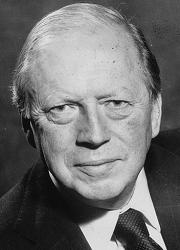
  • Airey Neave – 1953 Maiden Speech

    aireyneave

    Below is the text of the maiden speech made in the House of Commons by Airey Neave on 29th July 1953.

    This is the first time that I have had occasion to address this House and I ask the indulgence of hon. Members. A maiden speech in the House of Commons is a milestone in the life of a new Member and I ask, therefore, for the consideration of hon. Members when I make certain points on the subject of defence.

    It may be thought that this is a complicated and difficult subject for a maiden speech, but I have chosen it for certain reasons. In the first place, in my constituency of Abingdon, which I have recently come here to represent, there are certain defence establishments, in particular the Military College of Science at Shrivenham and several other Service establishments, as well as the Atomic Energy Research Establishment at Harwell. As hon. Members will be well aware, my predecessor was much interested in defence matters and it would appear that I shall be connected with such matters through having these establishments in my constituency.

    There are personal reasons why I should like to take part in this debate and to put forward a few views which I hope will be regarded as not very contentious. The first is that I served for a long time in the Territorial Army, recently leaving it, when I retired about two years ago, and I specialised during the last war in military intelligence. As a consequence I want to lay emphasis on the subject of training in that sphere, and the points I want to make about National Service men are in respect of the time they will spend in the Territorial Army. I also want to suggest certain measures by which they can be attracted towards remaining in the Territorial Army on a voluntary basis.

    It is clear to all hon. Members that a certain amount of radical re-thinking is required upon defence policy. I want to preface my remarks by referring to the need for highly trained Reserves. That applies to the policy of having a system of defence under the North Atlantic Treaty Organisation. Highly trained Reserves are essential to any practical scheme of defence. That point has been made by General Eisenhower on numerous occasions and it is in that connection that I shall call attention to the principle that, in respect of the Territorial Army and other Reserve organisations in the future, it is our duty to seek the highest quality as much as quantity by creating large and skilled Reserves. By encouraging the voluntary aspect of service in the Territorial Army, and by encouraging men to remain on after they have done their National Service, the Territorial Army could be made more attractive to the National Service men of the future.

    My first point is that the training of Territorial intelligence officers should be encouraged. That is a type of military service which would be highly suitable for certain types of men who might volunteer to remain on in the Territorial Army. There is at present a certain amount of machinery for that purpose in the field security units which exist in T.A. camps, but it should be carried much further. In the war, no branch of the Armed Forces had a higher proportion of civilian soldiers than military intelligence, and it will be well within the knowledge of hon. Members that many men came from offices and factories to carry out this type of work. It is thoroughly interesting work, and although there may be security problems involved in taking on Territorials for this purpose—former National Service men—I suggest that a lot could be done.

    I therefore have three suggestions to make which I hope will find agreement in the House. First of all, we should encourage more language training for Territorials. That could certainly be done more widely than it is at the moment. It would be useful to have a pool of trained linguists available from the resources of the Territorial Army. Secondly, it should be possible to send Territorials abroad in connection with the liaison work which may be required if, unhappily, we have to defend Western Europe through the North Atlantic Treaty Organisation. Individual Territorials could be sent abroad to study such problems in Europe and in other N.A.T.O. countries.

    Another point which concerns all Territorial units is training abroad. Would it not be possible to send them abroad a great deal more than is done at present? I know that certain airborne units are being sent abroad for their annual training, but it could be done more generally so that the Territorials could study some of the ground upon which they might unhappily one day have to operate, although we hope that the present relaxation in the international atmosphere will prevent that from occurring.

    Speaking of the policy of building up these highly-trained Reserves, I suggest that these are imaginative and interesting methods of training, more likely to attract men to the Territorial Army than an increase in bounty or action of that kind. It may well be that such an increase in bounty would do a lot of good, but if we are to build up skilled Reserves we must attract the sort of people we want by the methods which I have suggested.

    My final point can be put much more shortly and it relates not to training in intelligence but to the provision of up-to-date weapons for the mechanics and skilled engineers and, indeed, the infantrymen who are willing and available to join the Territorials at present. I realise that this involves very difficult questions of cost and the whole problem of keeping weapons up to date, but as to the nature of the training, I ask the House to consider that it is very important that mechanics and trained engineers should do a type of voluntary training which does not involve too much in the way of regimental duties or too much foot drill.

    Although such duties and training are necessary for certain branches of the Army, I think we ought to provide specialists with facilities to study, in the case of those I have mentioned, the mechanics of new, technical and complex weapons. It seems to me that to adopt this procedure and to cut down the purely regimental duties is a much more effective way of training them, because in my submission it is our duty, in building up a specialist Reserve for the future, to concentrate on quality.

    In that connection, although I do not wish to go deeply into the subject, I think the standardisation of weapons should reach down into the Reserves within the N.A.T.O. system. That certainly would be of assistance in bringing about some of the results which I have suggested.

    I have made those few points and suggestions for future methods of training in looking ahead to the possibility that we may have to rely upon a long-term plan for training Reserves for the Army and, indeed, the other Services. I believe these are methods by which we can establish an efficient defence system in the future. I thank the House for listening so patiently to my views on the subject.