Tag: 1945

  • Marcus Lipton – 1945 Maiden Speech to the House of Commons

    Below is the text of the maiden speech made by Marcus Lipton, the then Labour MP for Brixton, in the House of Commons on 26 October 1945.

    The traditional sympathy extended to those who, like myself, address this House for the first time will, I hope, speedily transfer itself to the much more deserving object, namely, the provision of legal aid for poor persons, on which I venture to speak this afternoon. In May of this year the report of the Committee on legal aid and legal advice in England and Wales was presented to Parliament. This highly qualified Committee, consisting of men and women of great eminence and wide experience, presented unanimous and very practical findings on which I would urge His Majesty’s Government to express an opinion at the earliest possible moment. I am only too well aware of the very heavy demands upon the Government’s time, but this can be said: this question of legal aid is fortunately one that requires no world-wide preliminary measure of international agreement, but is one that can be solved within our own unfettered jurisdiction.

    It is, I think, generally agreed that existing facilities are totally and hopelessly inadequate. Laws and Regulations of all kinds are pouring forth in an ever-growing flood, and many of them are not clear even to some hon. Members of this House. Legal assistance for ordinary folk, therefore, becomes all the more necessary, and an adequate scheme of legal aid must be regarded as an essential contribution towards improved social services. There are of course many aspects of this problem covering both criminal and civil proceedings. I shall not attempt to deal with more than one aspect of the problem, an aspect which I know is a source of gnawing anxiety and suffering of spirit to very large numbers of our fellow citizens—how large this House will, in a moment or two, be able to judge.

    In 1942 the Army Council, realising the importance of legal aid to Service men and women in their civil affairs, introduced a scheme of legal aid in which I have had the privilege of taking some part. The other two Services followed suit. It is not for me, either now or at any other time, to appraise the value or the necessity of this scheme; of legal aid for the Services.

    Suffice it to say that, according to the latest annual report of the Law Society, the number of cases submitted by the Army and the R.A.F. Legal Aid Sections to the Poor Persons Committee now reaches no less a figure than 900 a month. Largely as a result of Service cases, the number of applications received by the Poor Persons Committee of the Law Society in London during 1944 was 11,137, treble the figure of 1941. Of these cases, 97 per cent. are matrimonial. I understand that so far this year over 13,000 new applications have already been received, and that the number of cases awaiting consideration by the Poor Persons Committee increased between January and October of this year from 9,000 to 14,000. The Poor Persons Committee, I know, is doing its best to cope with the influx of cases but it now takes nearly ten months before a poor persons’ certificate is granted. After that certificate is granted, the actual conduct of the case is assigned to another committee of the Law Society, the Services Divorce Department. I understand that at this moment there are 2,500 cases in respect of which poor persons’ certificates have been granted and they are held up because they cannot be accepted by the Services Divorce Department, which is itself more than occupied with current cases. The Services Divorce Department has over 12,000 cases in hand at the moment.

    Here is a state of affairs which, when its full moral and social implications are realised, ought to stir the conscience of the nation. Everyone knows that a major casualty of the war on the home front has been the number of homes broken and ruined, not by enemy bombs, but by the infidelity of one or the other spouse. I have known of cases where our men have come back from German and Japanese prison camps to find children in their homes of which they were not the fathers. I have known other cases in which the first intimation that anything was wrong was when the Service man contracted venereal disease from his wife on his return to his home. To a Service man who applies for legal aid, one has to say, “Yes, you have a good case, and you; should certainly be able to obtain a dissolution of your marriage, but it will take at least two years, and it may be a bit longer.” It is tribute to the self-control of our men that in so few cases, when faced with domestic tragedies of this kind, do they take the law into their own hands, and when they do English juries, flatly disregarding judicial direction, have been known to return a verdict of manslaughter rather than murder, a danger signal that the law and public opinion are drifting apart. I do not ask for the impossible, or even for the difficult. At this moment I am not asking for the law to be changed. I ask only that it be applied. A practical solution has been worked out and is available in the report to which I have ventured to draw attention. It is one which, I believe, will be supported in most quarters of the House and by most people whose opinion in the matter is worth taking into account.

    It involves no new revolutionary principle. It merely reaffirms a principle established 730 years ago in Magna Charta: To none will we refuse or delay right or justice. I emphasise the word “delay.” It is on this principle that I base my very heartfelt appeal to the Government to give early attention to the report of this Committee. There is another reason. Each of the thousands of cases to which I have referred affects two, if not three, or more persons. The happiness and wellbeing of thousands of men, women and children are involved. Delay amounting almost to a denial of justice puts a premium on irregular unions, illegitimate children who can never be legitimised and all the other unsatisfactory social consequences of unsettled and completely severed family ties. Real social security is not just a matter of housing, education, food and such material things, essential though they are. Social security is just a facade which is not buttressed by the spiritual values that develop out of happy homes. It is our duty to rebuild or to repair the social fabric of these broken lives as well as it is our duty to rebuild our shattered houses. Despite the alarming figures to which I have referred, the vast number of men who have served will happily return to homes where the purity of family life has been cherished and preserved in all these trying years. Let us ensure, as we can do, given the assistance of His Majesty’s Government, that for those of our serving men whose home-coming is darkened by domestic misfortune, the fruits of victory shall not be made bitter because the opportunities of legal redress have become so increasingly remote.

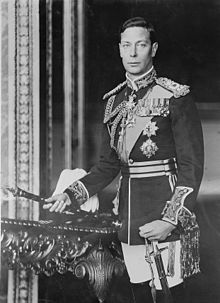
  • King George VI – 1945 King’s Speech

    kinggeorge6

    Below is the text of the speech made by King George VI in the House of Lords on 15 August 1945.

    My Lords and Members of the House of Commons,

    The surrender of Japan has brought to an end six years of warfare which have caused untold loss and misery to the world. In this hour of deliverance, it is fitting that we should give humble and solemn thanks to God by whose grace we have been brought to final victory. My Armed Forces from every part of my Commonwealth and Empire have fought with steady courage and endurance. To them as well as to all others who have borne their share in bringing about this great victory and to all our Allies our gratitude is due. We remember especially at this time those who have laid down their lives in the fight for freedom.

    It is the firm purpose of my Government to work in the closest cooperation with the Governments of my Dominions and in concert with all peace-loving peoples to attain a world of freedom, peace and social justice so that the sacrifices of the war shall not have been in vain. To this end they are determined to promote throughout the world conditions under which all countries may face with confidence the urgent tasks of reconstruction, and to carry out in this country those policies which have received the approval of my people.

    At Berlin my Ministers, in conference with the President of the United States and Premier Stalin, have laid the foundations on which the peoples of Europe, after the long nightmare of war, may restore their shattered lands. I welcome the establishment of the Council of Foreign Ministers which will shortly hold its first meeting in London and will continue the work begun at Berlin in preparation for a final peace settlement.

    My Ministers will submit to you the Charter of the United Nations which has now been signed without reservation by the representatives of all the fifty States who took part in the Conference at San Francisco and which expresses the determination of the United Nations to maintain peace in accordance with justice and respect for human rights and to promote the welfare of all peoples by international co-operation. The devastating new weapon which science has now placed in the hands of humanity should bring home to all the lesson that the nations of the world must abolish recourse to war or perish by mutual destruction.

    It has given me special pleasure to meet the President of the United States on his brief visit to my country after the Conference at Berlin. I have also been glad to express the gratitude of this country to the Supreme Commander of the Allied Expeditionary Force for his inspiring leadership in the campaign for the liberation of Europe.

    My Forces in Europe continue to discharge the duties entailed in the occupation of enemy countries and the, repatriation of the many thousands of persons who were deported from their homes by the enemy. My Navy, aided by the Navies of my Allies, is clearing the seas of mines so that merchant ships and fishing fleets may once more sail in safety.

    In the Far East my Ministers will make it their most immediate concern to ensure that all prisoners in Japanese hands are cared for and returned to their homes with all speed. The bringing of relief to those who have suffered under Japanese tyranny and the disarmament and control of the enemy will continue to impose heavy demands on my Forces.

    Members of the House of Commons,

    You will be asked to make further financial provision, not, happily, for the continuance of the war, but for expenditure on reconstruction and other essential services.

    My Lords and Members of the House of Commons,

    My Government will continue the orderly release of men and women from the Armed Forces on the basis of the plans announced in the autumn of last year and will take every step to secure that these plans are carried out with the greatest speed consistent with our military commitments and fair treatment to serving men and women. The arrangements already in operation for the resettlement in civil life of men and women released from the Forces and from war work, including those who have been disabled during their service, will be continued and, where necessary, expanded.

    The continuing shortages in the supply of many necessaries, especially houses, food, clothing and fuel, will call for the same spirit of tolerance and understanding which the nation has displayed during the past six years of war.

    It will be the aim of my Ministers to see that the national resources in labour and material are employed with the fullest efficiency in the interests of all and that the standard of living is progressively improved. In the pursuit of this aim the special problems of Scotland and Wales will have the attention of my Ministers.

    My Government will take up with energy the tasks of reconverting industry from the purposes of war to those of peace, of expanding our export trade, and of securing by suitable control or by an extension of public ownership that our industries and services shall make their maximum contribution to the national well-being. The orderly solution of these difficult problems will require from all my people efforts corn-parable in intensity and public spirit to those which have brought us victory in war.

    In order to promote employment and national development machinery will be set up to provide for the effective planning of investment and a measure will be laid before you to bring the Bank of England under public ownership. A Bill will also be laid before you to nationalize the coalmining industry as part of a concerted plan for the co-ordination of the fuel and power industries.

    Legislation will be submitted to you to ensure that during the period of transition from war to peace there are available such powers as are necessary to secure the right use of our commercial and industrial resources and the distribution at fair prices of essential supplies and services.

    An urgent and vital task of my Ministers will be to increase by all practicable means the number of homes available both in town and country. Accordingly they will organize the resources of the building and manufacturing industries in the most effective way to meet the housing and other essential building requirements of the nation. They will also lay before you proposals to deal with the problems of compensation and betterment in relation to town and country planning, to improve the procedure for the acquisition of land for public purposes, and otherwise to promote the best use of land in the national interest.

    You will be asked to approve measures to provide a comprehensive scheme of insurance against industrial injuries, to extend and improve the existing scheme of social insurance and to establish a national health service. Legislation will be introduced to repeal the Trade Disputes and Trade Unions Act.

    My Ministers will develop to the fullest possible extent the home production of good food. To this end they will continue, with suitable adaptations, those war-time policies under which food production has been organized and the efficiency of agriculture improved, and will take all necessary steps to promote a healthy fishing industry. The ravages of war have made world food supplies insufficient to meet demands, but my Ministers will do all in their power to provide and distribute food to my peoples at prices which they can afford to pay; and they will keep in being and extend the new food services for the workers and for mothers and children which have been established during the war.

    A measure will be laid before you for the reorganization of air transport.

    It will be the aim of my Ministers to bring into practical effect at the earliest possible date the educational reforms which have already been approved.

    My Government will continue to work in close consultation with the other members of my Commonwealth on all matters of mutual concern.

    In accordance with the promises already made to my Indian peoples, my Government will do their utmost to promote in conjunction with the leaders of Indian opinion the early realization of full self-government in India.

    They will also press on with the development of my Colonial Empire and the welfare of its peoples.

    I pray that Almighty God may give His blessing to your counsels.

  • Clement Attlee – 1945 Humble Address after Second World War

    Clement_Attlee

    Below is the text of the speech made by Clement Attlee, the then Prime Minister, in the House of Commons on 15 August 1945.

    I beg to move, That a humble Address be presented to His Majesty as followeth: Most Gracious Sovereign, We, Your Majesty’s most dutiful and loyal subjects, the Commons of the United Kingdom of Great Britain and Northern Ireland in Parliament assembled, would humbly convey to Your Majesty our congratulations on the achievement of final victory over Your enemies. The enemy in Asia has followed the enemy in Europe into complete defeat and submission to the will of the victorious nations which have pledged themselves to free the world from aggression. We would rejoice with Your Majesty in the liberation of our fellow subjects in those lands which for more than three years have been subject to the ruthless oppression of the Japanese and in the removal of the peril of invasion from Your Dominions of Australia and New Zealand, Your Indian Empire and the eastern territories of Your Colonial Empire. We would humbly acknowledge the great debt which Your peoples owe to Your Majesty and to Your most Gracious Consort for the courage with which You have sustained them and the sympathy which You have shown them, reaffirming their love and their loyalty during the dark years in which You shared their afflictions. On this occasion of national rejoicing, we would pay especial tribute to Your Majesty’s Forces from all parts of the British Commonwealth and Empire who, fighting side by side with the Forces of Your Majesty’s Allies, have bought with their blood and toil the return of peace to the world. Nor at this time would we forget our gratitude to the Merchant Marine, the Civil Services, the Civil Defence Services and Police, and to all those who in home, office, industry or agriculture have contributed to victory. It is now our most earnest prayer that the clouds of war which have overshadowed Your Majesty’s reign will lift for ever and that the splendour of the victory which, by God’s providence we celebrate to-day, may be matched by the glory of Your peoples’ achievements in the constructive work of peace. We have just returned from giving thanks to Almighty God for the deliverance of this country from the manifold perils which have beset her so long, for the victory vouchsafed to the Forces of the United Nations against the Japanese aggressor and for the surrender of the last of our enemies. It is, I think, altogether fitting that our first action should be to express our loyalty and gratitude to the Sovereign. It is exactly three months to the day since in this House the then Prime Minister, the right hon. Gentleman opposite me, moved a Motion similar to this on the occasion of the end of the German war. In that Address to the King the House pledged its resolute support to the prosecution of the Japanese war. I imagine that few Members on that occasion thought that the end would come so soon. Few envisaged the changed conditions in which this Motion would be brought forward. We have had a General Election which has brought great alterations in the composition of this House. We have had a change of Government; but in the midst of change there are things which remain unaltered. Among those are the loyalty and devotion of the House of Commons to His Majesty. It is the glory of our democratic Constitution that the will of the people operates and that changes which, in other countries, are often effected through civil strife and bloodshed, here in this island proceed by the peaceful method of the ballot box.
    The institution of the Monarchy in this country, worked out through long years of constitutional development, protects us from many of those evils which we have seen arise in other countries. I believe that the peaceful transfer of power from one political party to another, during these last few weeks, so smoothly and with such acceptance, has been a valuable demonstration to the world of the working of real democracy. My right hon. Friend in his speech three months ago, with an eloquence which I cannot emulate, drew a picture of the position of the King as a symbol of unity not only to his subjects in these islands, but to all the many nations which are united in the British Commonwealth and Empire. He spoke with the general assent of all parties in this House and I shall not, this afternoon, attempt to traverse the ground which he covered; but in rendering our congratulations and thanks to His Majesty we pay tribute to something more than the institution of kingship.

    His Majesty the King and his gracious Consort the Queen have shared our anxieties, our tribulations and our sufferings during the war, and the shadow of bereavement has fallen on them as it has fallen on the homes of their people. The King and Queen have throughout set us an example of courage and devotion which will not be forgotten. By this, and by their sympathy, they have strengthened the bond uniting them to their people. This bond is no mere constitutional formality, but the basis of the deep affection and understanding which, I believe, have been strengthened by the experiences through which we have passed.

    However well and skilfully constitutions may be framed they depend in the last resort on the willingness and ability of human beings to make them work. Our British Constitution, in war and peace, works because the people understand it and know by long experience how to operate it. A constitutional monarchy depends for its success to a great extent on the understanding heart of the monarch. In this country we are blessed with a King who, as my right hon. Friend said, combines with an intense love of our country and all his people, a thorough appreciation of our Parliament and democratic Constitution. In the difficult times ahead I believe that the harmonious working of our Constitution, in which the people’s will is expressed by King and Parliament, will be an example of stability in a disordered world. It is, therefore, to my mind, a fortunate thing that this new Parliament, like its predecessor, should, in this Address, have the opportunity of expressing its feeling, and of giving thanks to the Sovereign.

  • Clement Attlee – 1945 Announcement of Japanese Surrender

    Clement_Attlee

    Below is the text of the speech made by Clement Attlee, the then Prime Minister, in the House of Commons on 15 August 1945.

    Mr. Speaker, at midnight last night the terms of the Japanese surrender were announced to the world. The House will, I trust, bear with me while I repeat them, for I feel that it is fit and proper that they should be for ever on record in the annals of this ancient and honourable House. They are as follow:

    “With reference to the announcement of 10th August, regarding the acceptance of the provisions of the Potsdam Declaration and the reply of the Governments of the United States, Great Britain, the Soviet Union, and China, sent by Secretary of State Byrnes on the date of 11th August, the Japanese Government has the honour to communicate to the Governments of the four Powers as follows:

    (1) His Majesty the Emperor has issued an Imperial rescript regarding Japan’s acceptance of the provisions of the Potsdam Declaration.
    (2) His Majesty the Emperor is prepared to authorise and assure the

    signature by his Government and the Imperial General Headquarters, of the necessary terms for carrying out the provisions of the Potsdam Declaration.

    (3) His Majesty is also prepared to issue his command to all military, naval, and air authorities of Japan and all the forces under their control, wherever located, to cease active operations, to surrender arms, and to issue such other orders as may be required by the Supreme Commander of the Allied Forces for the execution of the above-mentioned terms.’—(Signed) Togo.”

    Thus the long, grievous war is at an end, and peace on earth has been restored. To each of us at this time there will come many memories and thoughts; to each of us at this time there will also come the wish to pay our tributes to those who have, in a lesser or greater degree, contributed to this final and complete victory. There will be time and occasion for these, but one feeling, I am sure, predominates in all our hearts, the feeling of gratitude to Almighty God for this great mercy. I think, therefore, that the House will wish forthwith to go to the Church of St. Margaret’s to render thanks, and I propose to submit to the House a Motion to this effect a little later.

    But this departure from our time-honoured procedure involves certain alterations of Business. Instead of taking into consideration the Gracious Speech from the Throne to-day, I suggest that we should, on returning, after Mr. Speaker has read the Gracious Speech, consider an Address of Congratulation to His Majesty which I will propose. Following that, we shall ask the House to consider a Motion to alter the hours of sitting so that we may meet to-morrow at 2.15 p.m. I may say that for the present we propose to continue the arrangements which were in operation towards the end of last Session. To-morrow, after the Sessional Orders have been read and passed, the Address in reply to the Gracious Speech will be moved and seconded, and Debate will arise.

    I must also inform the House that it is the intention of the Government to propose a Motion to take the whole time of the House for Government Business, and to provide for the presentation of Government Bills only. We suggest that the Debate on the Address be adjourned about 6 p.m. to-morrow in order to consider this Motion which, but for the alteration of the arrangements, would ordinarily have been taken as the first Order that day.

    I beg to move, That this House do now attend at the Church of St. Margaret, Westminster, to give humble and reverent thanks to Almighty God on the victorious conclusion of the war.

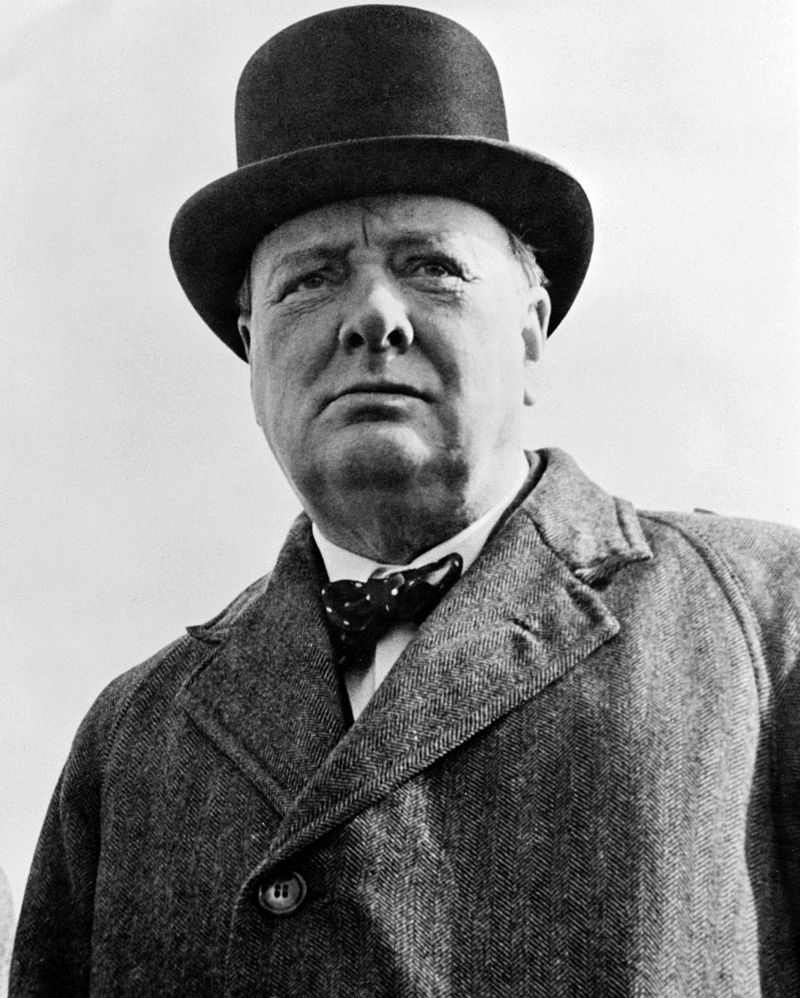
  • Winston Churchill – 1945 Response to the Loyal Address

    winstonchurchill

    Below is the text of the speech made in the House of Commons by the then Leader of the Opposition, Winston Churchill. The speech was made on 16th August 1945 and was the response to the Loyal Address.

    It is customary, to an extent which has almost developed into routine, for the Leader of the Opposition on this occasion to begin by offering compliments to the mover and seconder of the Address, and I do not think I remember, in 42 years of service in this House, any occasion when that task has not been accomplished. But certainly I can recall few occasions when it was more easy to offer the unstinted compliments of the House than it is today to offer them to the two hon. and gallant Members who have addressed us. I say “two hon. and gallant Members” because service with the Fire Brigade will never be denied a meed of tribute to gallantry, except in the particular conventions which prevail in this Assembly. They have both made speeches which, if they have not plunged deeply into the matters which divide us or unite us, have nevertheless shown that, in achieving power in this country, the Labour Party have gathered most valuable elements into their body. We see, in these two Members who have addressed us for the first time with so much decorum and becoming taste, two who will, we hope, shine in our Debates. Their maiden speeches accomplished, they will wait other less favourable opportunities to take part in our Debates, and we trust that as the vicissitudes of British politics unfold, long and important political careers may await both of them.

    Our duty this afternoon is to congratulate His Majesty’s Government on the very great improvement in our prospects at home, which comes from the complete victory gained over Japan and the establishment of peace throughout the world. Only a month ago it was necessary to continue at full speed and at enormous cost all preparations for a long and bloody campaign in the Far East. In the first days of the Potsdam Conference President Truman and I approved the plans submitted to us by the combined Chiefs of Staff for a series of great battles and landings in Malaya, in the Netherlands East Indies and in the homeland of Japan itself. These operations involved an effort not surpassed in Europe, and no one could measure the cost in British and American life and treasure they would require. Still less could it be known how long the stamping out of the resistance of Japan in many territories she had conquered, and especially in her homeland, would last. All the while the whole process of turning the world from war to peace would be hampered and delayed. Every form of peace activity was half strangled by the overriding priorities of war. No clear-cut decisions could be taken in the presence of this harsh dominating uncertainty.

    During the last three months an element of baffling dualism has complicated every problem of policy and administration. We had to plan for peace and war at the same time. Immense armies were being demobilised; another powerful army was being prepared and despatched to the other side of the globe. All the personal stresses among millions of men eager to return to civil life, and hundreds of thousands of men who would have to be sent to new and severe campaigns in the Far East, presented themselves with growing tension. This dualism affected also every aspect of our economic and financial life.

    How to set people free to use their activities in reviving the life of Britain, and at the same time to meet the stern demands of the war against Japan, constituted one or the most perplexing and distressing puzzles that in a long life-time of experience I have ever faced.

    I confess it was with great anxiety that I surveyed this prospect a month ago. Since then I have been relieved of the burden. At the same time that burden, heavy though it still remains, has been immeasurably lightened. On 17th July there came to us at Potsdam the eagerly awaited news of the trial of the atomic bomb in the Mexican desert. Success beyond all dreams crowned this sombre, magnificent venture of our American Allies. The detailed reports of the Mexican desert experiment, which were brought to us a few days later by air, could leave no doubt in the minds of the very few who were informed, that we were in the presence of a new factor in human affairs, and possessed of powers which were irresistible. Great Britain had a right to be consulted in accordance with Anglo-American agreements. The decision to use the atomic bomb was taken by President Truman and myself at Potsdam, and we approved the military plans to unchain the dread, pent-up forces.

    From that moment our outlook on the future was transformed. In preparation for the results of this experiment, the statements of the President and of Mr. Stimson and my own statement, which by the courtesy of the Prime Minister was subsequently read out on the broadcast, were framed in common agreement. Marshal Stalin was informed by President Truman that we contemplated using an explosive of incomparable power against Japan, and action proceeded in the way we all now know. It is to this atomic bomb more than to any other factor that we may ascribe the sudden and speedy ending of the war against Japan.

    Before using it, it was necessary first of all to send a message in the form of an ultimatum to the Japanese which would apprise them of what unconditional surrender meant. This document was published on 26th July—the same day that another event, differently viewed on each side of the House, occurred. The assurances given to Japan about her future after her unconditional surrender had been made, were generous to a point. When we remember the cruel and treacherous nature of the utterly unprovoked attack made by the Japanese war lords upon the United States and Great Britain, these assurances must be considered magnanimous in a high degree. In a nutshell, they implied “Japan for the Japanese,” and even access to raw materials, apart from their control, was not denied to their densely-populated homeland. We felt that in view of the new and fearful agencies of war-power about to be employed, every inducement to surrender, compatible with our declared policy, should be set before them. This we owed to our consciences before using this awful weapon.

    Secondly, by repeated warnings, emphasised by heavy bombing attacks, an endeavour was made to procure the general exodus of the civil population from the threatened cities. Thus everything in human power, short of using the atomic bomb, was done to spare the civil population of Japan, though there are voices which assert that the bomb should never have been used at all. I cannot associate myself with such ideas. Six years of total war have convinced most people that had the Germans or Japanese discovered this new weapon, they would have used it upon us to our complete destruction with the utmost alacrity. I am surprised that very worthy people, but people who in most cases had no intention of proceeding to the Japanese front themselves, should adopt the position that rather than throw this bomb, we should have sacrificed a million American and a quarter of a million British lives in the desperate battles and massacres of an invasion of Japan. Future generations will judge these dire decisions, and I believe that if they find themselves dwelling in a happier world from which war has been banished, and where freedom reigns, they will not condemn those who struggled for their benefit amid the horrors and miseries of this gruesome and ferocious epoch.

    The bomb brought peace, but men alone can keep that peace, and henceforward they will keep it under penalties which threaten the survival, not only of civilisation, but of humanity itself. I may say that I am in entire agreement with the President that the secrets of the atomic bomb shall so far as possible not be imparted at the present time to any other country in the world. This is in no design or wish for arbitrary power but for the common safety of the world. Nothing can stop the progress of research and experiment in every country, but although research will no doubt proceed in many places, the construction of the immense plants necessary to transform theory into action cannot be improvised in any country.

    For this and many other reasons the United States stand at this moment at the summit of the world. I rejoice that this should be so. Let them act up to the level of their power and their responsibility, not for themselves but for others, for all men in all lands, and then a brighter day may dawn upon human history. So far as we know, there are at least three and perhaps four years before the concrete progress made in the United States can be overtaken. In these three years we must remould the relationships of all men, wherever they dwell, in all the nations. We must remould them in such a way that these men do not wish or dare to fall upon each other for the sake of vulgar and out-dated ambitions or for passionate differences in ideology, and that international bodies of supreme authority may give peace on earth and decree justice among men. Our pilgrimage has brought us to a sublime moment in the history of the world. From the least to the greatest, all must strive to be worthy of these supreme opportunities. There is not an hour to be wasted; there is not a day to be lost.

    It would in my opinion be a mistake to suggest that the Russian declaration of war upon Japan was hastened by the use of the atomic bomb. My understanding with Marshal Stalin in the talks which I had with him had been, for a considerable time past, that Russia would declare war upon Japan within three months of the surrender of the German armies. The reason for the delay of three months was, of course, the need to move over the trans-Siberian Railway the large reinforcements necessary to convert the Russian-Manchurian army from a defensive to an offensive strength. Three months was the time mentioned, and the fact that the German armies surrendered on 8th May, and the Russians declared war on Japan on 8th August, is no mere coincidence but another example of the fidelity and punctuality with which Marshal Stalin and his valiant armies always keep their military engagements.

    Mr. Evelyn Walkden (Doncaster) I suggest that the right hon. Gentleman should remind his hon. Friends on that side.

    Mr. Churchill It is not part of the duty of the speaker who for the moment has the honour to address the House, to regulate the applause on either side.

    I now turn to the results of the Potsdam Conference so far as they have been made public in the agreed communiqué and in President Truman’s very remarkable speech of a little more than a week ago. There has been general approval of the arrangements proposed for the administration of Germany by the Allied Control Commission during the provisional period of military government. This régime is both transitional and indefinite. The character of Hitler’s Nazi party was such as to destroy almost all independent elements in the German people. The struggle was fought to the bitter end. The mass of the people were forced to drain the cup of defeat to the dregs. A headless Germany has fallen into the hands of the conquerors. It may be many years before any structure of German national life will be possible, and there will be plenty of time for the victors to consider how the interests of world peace are affected thereby.

    In the meanwhile, it is in my view of the utmost importance that responsibility should be effectively assumed by German local bodies for carrying on under Allied supervision all the processes of production and of administration necessary to maintain the life of a vast population. It is not possible for the Allies to bear responsibility by themselves. We cannot have the German masses lying down upon our hands and expecting to be fed, organised and educated over a period of years, by the Allies. We must do our best to help to avert the tragedy of famine. But it would be in vain for us in our small island, which still needs to import half its food, to imagine that we can make any further appreciable contribution in that respect. The rationing of this country cannot be made more severe, without endangering the life and physical strength of our people, all of which will be needed for the immense tasks we have to do. I, therefore, most strongly advise the encouragement of the assumption of responsibility by trust-worthy German local bodies in proportion as they can be brought into existence.

    The Council which was set up at Potsdam of the Foreign Secretaries of the three, four or five Powers, meeting in various combinations as occasion served, affords a new and flexible machinery for the continuous further study of the immense problems that lie before us in Europe and Asia. I am very glad that the request that I made to the Conference, and which my right hon. Friend—I may perhaps be allowed so to refer to him on this comparatively innocuous occasion—supported at the Conference, that the seat of the Council’s permanent Secretariat should be London, was granted. I must say that my right hon. Friend the late Foreign Secretary, who has, over a long period, gained an increasing measure of confidence from the Foreign Secretaries of Russia, and the United States, and who through the European Advisory Committee which is located in London has always gained the feeling that things could be settled in a friendly and easy way, deserves some of the credit for the fact that these great Powers willingly accorded us the seat in London for the permanent Secretariat. It is high time that the place of London, one of the controlling centres of international world affairs, should at last be recognised. It is the oldest, the largest, the most battered capital, the capital which was first in the war and the time is certainly overdue when we should have our recognition.

    I am glad also that a beginning is to be made with the evacuation of Persia by the British and Russian armed forces, in accordance with the triple treaty which we made with each other and with Persia in 1941. Although it does not appear in the communiqué, we have since seen it announced that the first stage in the process, namely, the withdrawal of Russian and British troops from Teheran, has already begun or is about to begin. There are various other matters arising out of this Conference which should be noted as satisfactory. We should not, however, delude ourselves into supposing that the results of this first Conference of the victors were free from disappointment or anxiety, or that the most serious questions before us were brought to good solutions. Those which proved incapable of agreement at the Conference have been relegated to the Foreign Secretaries’ Council which, though most capable of relieving difficulties, is essentially one gifted with less far-reaching powers. Other grave questions are left for the final peace settlement, by which time many of them may have settled themselves, not necessarily in the best way.

    It would be at once wrong and impossible to conceal the divergencies of view which exist inevitably between the victors about the state of affairs in Eastern and Middle Europe. I do not at all blame the Prime Minister or the new Foreign Secretary, whose task it was to finish up the discussions which we had begun. I am sure they did their best. We have to realise that no one of the three leading Powers can impose its solutions upon others and that the only solutions possible are those which are in the nature of compromise. We British have had very early and increasingly to recognise the limitations of our own power and influence, great though it be, in the gaunt world arising from the ruins of this hideous war. It is not in the power of any British Government to bring home solutions which would be regarded as perfect by the great majority of Members of this House, wherever they may sit. I must put on record my own opinion that the provisional Western frontier agreed upon for Poland, running from Stettin on the Baltic, along the Oder and its tributary, the Western Neisse, comprising as it does one quarter of the arable land of all Germany, is not a good augury for the future map of Europe. We always had in the Coalition Government a desire that Poland should receive ample compensation in the West for the territory ceded to Russia East of the Curzon Line. But here I think a mistake has been made, in which the Provisional Government of Poland have been an ardent partner, by going far beyond what necessity or equity required. There are few virtues that the Poles do not possess—and there are few mistakes they have ever avoided.

    I am particularly concerned, at this moment, with the reports reaching us of the conditions under which the expulsion and exodus of Germans from the new Poland are being carried out. Between 8,000,000 and 9,000,000 persons dwelt in those regions before the war. The Polish Government say that there are still 1,500,000 of these not yet expelled within their new frontiers. Other millions must have taken refuge behind the British and American lines, thus increasing the food stringency in our sector. But enormous numbers are utterly unaccounted for. Where are they gone, and what has been their fate? The same conditions may reproduce themselves in a more modified form in the expulsion of great numbers of Sudeten and other Germans from Czechoslovakia. Sparse and guarded accounts of what has happened and is happening have filtered through, but it is not impossible that tragedy on a prodigious scale is unfolding itself behind the iron curtain which at the moment divides Europe in twain. I should welcome any statement which the Prime Minister can make which would relieve or at least inform us upon this very anxious and grievous matter.

    There is another sphere of anxiety. I remember that a fortnight or so before the last war, the Kaiser’s friend Herr Ballen, the great shipping magnate, told me that he had heard Bismarck say towards the end of his life, “If there is ever another war in Europe, it will come out of some damned silly thing in the Balkans.” The murder of the Archduke at Sarajevo in 1914 set the signal for the first world war. I cannot conceive that the elements for a new conflict exist in the Balkans to-day. I am not using the language of Bismarck, but nevertheless not many Members of the new House of Commons will be content with the new situation that prevails in those mountainous, turbulent, ill-organised and warlike regions. I do not intend to particularise, I am very glad to see the new Foreign Secretary sitting on the Front Bench opposite. I would like to say with what gratification I learned that the right hon. Gentleman had taken on this high and most profoundly difficult office, and we are sure he will do his best to preserve the great causes for which we have so long pulled together. But as I say, not many Members will be content with the situation in that region to which I have referred, for almost everywhere Communist forces have obtained, or are in process of obtaining, dictatorial powers. It does not mean that the Communist system is everywhere being established, nor does it mean that Soviet Russia seeks to reduce all those independent States to provinces of the Soviet Union. Mr. Stalin is a very wise man, and I would set no limits to the immense contributions that he and his associates have to make to the future.

    In those countries, torn and convulsed by war, there may be, for some months to come, the need of authoritarian Government. The alternative would be anarchy. Therefore it would be unreasonable to ask or expect that liberal Governments—as spelt with a small “l”—and British or United States democratic conditions, should be instituted immediately. They take their politics very seriously in those countries. A friend of mine, an officer, was in Zagreb, when the results of the late General Election came in. An old lady said to him, “Poor Mr. Churchill. I suppose now he will be shot” My friend was able to reassure her. He said the sentence might be mitigated to one of the various forms of hard labour which are always open to His Majesty’s subjects. Nevertheless we must know where we stand, and we must make clear where we stand in these affairs of the Balkans and of Eastern Europe, and indeed of any country which comes into this field. Our idea is government of the people, by the people, for the people—the people being free without duress to express, by secret ballot without intimidation, their deep-seated wish as to the form and conditions of the Government under which they are to live.

    At the present time—I trust a very fleeting time—”police governments” rule over a great number of countries. It is a case of the odious 18b, carried to a horrible excess. The family is gathered round the fireside to enjoy the scanty fruits of their toil and to recruit their exhausted strength by the little food that they have been able to gather. There they sit. Suddenly there is a knock at the door and a heavily armed policeman appears. He is not, of course, one who resembles in any way those functionaries whom we honour and obey in the London streets. It may be that the father or son, or a friend sitting in the cottage, is called out, and taken off into the dark and no one knows whether he will ever come back again, or what his fate has been. All they know is that they had better not inquire. There are millions of humble homes in Europe at the moment, in Poland, in Czechoslovakia, in Austria, in Hungary, in Yugoslavia, in Rumania, in Bulgaria—[Hon. Members: “In Spain”]—where this fear is the main preoccupation of the family life. President Roosevelt laid down the four freedoms and these are extant in the Atlantic Charter which we agreed together. “Freedom from fear”—but this has been interpreted as if it were only freedom from fear of invasion from a foreign country. That is the least of the fears of the common man. His patriotism arms him to withstand invasion or go down fighting; but that is not the fear of the ordinary family in Europe tonight. Their fear is of the policeman’s knock. It is not fear for the country, for all men can unite in comradeship for the defence of their native soil. It is for the life and liberty of the individual, for the fundamental rights of man, now menaced and precarious in so many lands that peoples tremble.

    Surely we can agree in this new Parliament or the great majority of us, wherever we sit—there are naturally and rightly differences and cleavages of thought—but surely we can agree in this new Parliament, which will either fail the world or once again play a part in saving it, that it is the will of the people, freely expressed by secret ballot, in universal suffrage elections, as to the form of their government and as to the laws which shall prevail, which is the first solution and safeguard. Let us then march steadily along that plain and simple linee. I avow my faith in democracy, whatever course or view it may take with individuals and parties. They may make their mistakes, and they may profit from their mistakes. Democracy is now on trial as it never was before, and in these islands we must uphold it, as we upheld it in the dark days of 1940 and 1941, with all our hearts, with all our vigilance and with all our enduring and inexhaustible strength. While the war was on and all the Allies were fighting for victory, the word “democracy,” like many people, had to work overtime, but now that peace has come we must search for more precise definitions. Elections have been proposed in some of these Balkan countries where only one set of candidates is allowed to appear, and where, if other parties are to express their opinion, it has to be arranged beforehand that the governing party, armed with its political police and all its propaganda, is the only one which has the slightest chance. Chance, did I say? It is a certainty.

    Now is the time for Britons to speak out. It is odious to us that Governments should seek to maintain their rule otherwise than by free, unfettered elections by the mass of the people. Governments derive their just powers from the consent of the governed, says the Constitution of the United States. This must not evaporate in swindles and lies propped up by servitude and murder. In our foreign policy let us strike continually the notes of freedom and fair play as we understand them in these islands. Then you will find there will be an overwhelming measure of agreement between us, and we shall in this House march forward on an honourable theme having within it all that invests human life with dignity and happiness. In saying all this, I have been trying to gather together and present in a direct form the things which, I believe, are dear to the great majority of us. I rejoiced to read them expressed in golden words by the President of the United States when he said: Our victory in Europe was more than a victory of arms. It was a victory of one way of life over another. It was a victory of an ideal founded on the right of the common man, on the dignity of the human being, and on the conception of the State as the servant, not the master, of its people. I think there is not such great disagreement between us. Emphasis may be cast this, way and that in particular incidents, but surely this is what the new Parliament on the whole means. This is what in our heart and conscience in foreign affairs and world issues we desire. Just as in the baleful glare of 1940, so now, when calmer lights shine, let us be united upon these resurgent principles and impulses of the good and generous hearts of men. Thus to all the material strength we possess and the honoured position we have acquired, we shall add those moral forces which glorify mankind and make even the weakest equals of the strong.

    I am anxious to-day to evade controversial topics as far as possible, though I am under no inhibition such as cramped the style of the two hon. and gallant Gentlemen to whom we have listened. There is one question which I hope the Prime Minister will be able to answer. What precisely is Mr Laski’s authority for all the statements he is making about our foreign policy? How far do his statements involve the agreement or responsibility of the Secretary of State for Foreign Affairs? We know that Mr. Laski is the Chairman of the Labour Party Executive Committee—[Hon. Members: “Gestapo.”] Everybody has a right to describe their own party machine as they choose. This is a very important body. I have been told—I am willing to be contradicted and to learn—that it has the power to summon Ministers before it. Let us find out whether it is true or not. Evidently it has got great power, and it has, even more evidently, a keen inclination to assert it. The House, the country and the world at large are entitled to know who are the authoritative spokesmen of His Majesty’s Government.

    I see that Mr. Laski said in Paris a few days ago that our policy in Greece was to be completely changed. What is the meaning of this? I thought we were agreed upon our policy towards Greece, especially after Sir Walter Citrine’s and the trade unions’ report. (Interruption.) I would say to hon. Members not to speak disrespectfully of the report or they may be brought up before that body. That policy in Greece is to help Greece to decide upon its own future by plebiscite and elections according to the full, free, untrammelled will of the Greek people, and that those elections shall be held as early as practicable. The Greek Government have invited official foreign observers to be present and report, so that everyone in the world may judge whether the vote and elections are a free, fair and honest expression of the popular wish. The British, United States and French Governments have accepted this invitation. I was sorry we could not persuade Russia to come along too. Has there been any change in this question, or are we to understand, as Mr. Laski seems to suggest, that, though the Greek people may vote freely, they must only vote the way which he and those who agree with him would like?

    Mr. George Griffiths (Hemsworth) That is what the right hon. Gentleman said in the General Election.

    Mr. Churchill I am sure the hon. Member will never find that I have ever said that people were only entitled to vote in the way I like. I never nursed such an illusion. It is that very freedom which was so vehemently exercised against me and my friends that I am defending now in respect of other countries.

    Mr. Laski also made a declaration about France which has most important and far-reaching effects, namely, that if the French people vote Socialist at the impending election, Great Britain will renew the offer which was made in June, 1940, that Britain and France should become one nation with a common citizenship. That offer was made in the anguish and compassion which we felt at the fate of France. It is remarkable that the Cabinet of those days, when we in this island were in such dire peril, really seemed more shocked and pained at the French disaster than at our own very dangerous plight. Much has happened in the five years that have passed, and I am of opinion that the idea of France and Britain becoming one single nation with common citizenship—alliance is another question—must, at the very least, be very carefully considered by the responsible Ministers before any such proposal is made to Parliament, still less to a foreign country. I ask, therefore, did the Prime Minister authorise this declaration? Does the Foreign Secretary endorse it? Were the Cabinet consulted? Is the offer to France open only if a Socialist Government is elected? I hope the Prime Minister will be able to give reassuring answers on those points.

    Broadly speaking, it is very much better that declarations about foreign policy should be made by Ministers of the Crown responsible to the House of Commons. I am sure the new Government will get into very great difficulties if they are not able to maintain this position firmly. Also, I consider it a great mistake for us to try to interfere in the affairs of foreign countries, except in so far as is necessary to wind up any obligations we may have contracted during the war. It is impossible to understand the domestic politics of other countries. It is hard enough to understand the domestic politics of one’s own. But Mr. Laski has spoken with great freedom about French, Spanish and United States affairs during the last fortnight. He has told the United States on the broadcast, for instance, that free enterprise is the most ingenious fallacy which American business men ever put over on the American people. At a time when we have vital need of the material aid of the United States, I cannot feel—and perhaps the Chancellor will agree with me—that such a remark is exceptionally helpful. To-day, we read that Mr. Laski says that the attitude of the British Government towards the United States is favouarble whereas towards Russia there is “a profoundly brotherly affection.” I wonder very much—and this is an extremely serious matter—whether these invidious distinctions are likely to bring about the good results which were anticipated and which are absolutely necessary.

    Somebody asked about General Franco. I am coming to him. Mr. Laski appears to contemplate vehement intervention in Spain against General Franco. Anybody who has had the opportunity to read the letter which I wrote, with the full agreement of my Coalition colleagues in the War Cabinet, to General Franco some months ago, in reply to one he wrote to me—and I should be very glad to see my letter published here as it has already been practically verbatim in the United States—will see what calumny it is to suggest that I or my friends on this side are supporters, admirers or partisans of the present régime in Spain. We are proud to be the foes of tyranny in every form, whether it comes from the Right or from the Left. Before I left Potsdam, the three major Powers had agreed upon the form of the public announcement about the exclusion of Spain, while under the Franco régime, from the world organisation of the United Nations. No alteration was made, as far as I am aware, by the new Prime Minister or the new Foreign Secretary in the terms of that most wounding, and deliberately calculated wounding, declaration against that régime.

    It would, however, be wrong to intervene in Spain in a forcible manner or to attempt to relight the civil war in that country which has already and quite recently lost between one and two millions of its none too numerous population in a horrible internal struggle. However, if that is the policy of His Majesty’s Government, it is they who ought to say so, and then we can debate the matter here in full freedom. Let me point out in leaving this unpleasant subject that I make no suggestion to the Government that they should endeavour to muzzle Mr. Laski. Anybody in a free country can say anything, however pernicious and nonsensical it may be, but it is necessary for the Government to let us know exactly where they stand with regard to him. Otherwise, I assure hon. Gentlemen opposite that their affairs will suffer and our affairs, which are mixed up inseparably with their affairs, will also suffer.

    I now turn to the domestic sphere, which takes up one part of the Gracious speech. I have already spoken of the enormous easement in their task which the new Government have obtained through the swift and sudden ending of the Japanese war. What thousands of millions of pounds sterling are saved from the waste of war, what scores and hundreds of thousands of lives are saved, what vast numbers of ships are set free to carry the soldiers home to all their lands, to carry about the world the food and raw materials vital to industry. What noble opportunities have the new Government inherited. Let them be worthy of their fortune, which is also the fortune of us all. To release and liberate the vital springs of British energy and inventiveness, to let the honest earnings of the nation fructify in the pockets of the people, to spread well-being and security against accident and misfortune throughout the whole nation, to plan, wherever State planning is imperative, and to guide into fertile and healthy channels the native British genius for comprehension and good will—all these are open to them, and all these ought to be open to all of us now. I hope we may go forward together, not only abroad but also at home, in all matters so far as we possibly can.

    During the period of the “Caretaker Government,” while we still had to contemplate 18 months of strenuous war with Japan, we reviewed the plans for demobilisation in such a way as to make a very great acceleration in the whole process of releasing men and women from the Armed Forces and from compulsory industrial employment. Now, all that is overtaken by the world-wide end of the war. I must say at once that the paragraph of the Gracious Speech referring to demobilisation and to the plans which were made in the autumn of 1944—with which I am in entire agreement in principle—gives a somewhat chilling impression. Now that we have had this wonderful windfall I am surprised that any Government should imagine that language of this kind is still appropriate or equal to the new situation. I see that in the United States the President has said that all the American troops that the American ships can carry home in the next year, will be brought home and set free. Are his Majesty’s Government now able to make any statement of that kind about our Armed Forces abroad? Or what statement can they make? I do not want to harass them unduly, but perhaps some time next week some statement could be made. No doubt the Prime Minister will think of that. Great hopes have been raised in the electoral campaign, and from those hopes has sprung their great political victory. Time will show whether those hopes are well founded, as we deeply trust they may be. But many decisions can be taken now, in the completely altered circumstances in which we find ourselves. The duty of the Government is to fix the minimum numbers who must be retained in the next 6 or 12 months period in all the foreign theatres, and to bring the rest home with the utmost speed that our immensely expanded shipping resources will permit.

    Even more is this releasing process important in the demobilisation of the home establishment. I quite agree that the feeling of the Class A men must ever be the dominant factor, but short of that the most extreme efforts should be made to release people who are standing about doing nothing. I hope the Public Expenditure Committee will be at once reconstituted, and that they will travel about the country examining home establishments and reporting frequently to the House. Now that the war is over there is no ground of military secrecy which should prevent the publication of the exact numerical ration strengths of our Army, Navy and Air Force in every theatre and at home, and we should certainly have weekly, or at least monthly, figures of the progressive demobilisation effected. It is an opportunity for the new Government to win distinction. At the end of the last war, when I was in charge of the Army and Air Force, I published periodically very precise information. I agree with the words used by the Foreign Secretary when he was Minister of Labour in my Administration, namely, that the tremendous winding-up process of the war must be followed by a methodical and regulated unwinding. We agree that if the process is to be pressed forward with the utmost speed it is necessary for the Government to wield exceptional powers for the time being, and so long as they use those powers to achieve the great administrative and executive tasks imposed upon them, we shall not attack them. It is only if, and in so far as, those powers are used to bring about by a side-wind a state of controlled society agreeable to Socialist doctrinaires, but which we deem odious to British freedom, that we shall be forced to resist them. So long as the exceptional powers are used as part of the war emergency, His Majesty’s Government may consider us as helpers and not as opponents, as friends and not as foes.

    To say this in no way relieves the Government of their duty to set the nation free as soon as possible, to bring home the soldiers in accordance with the scheme with the utmost rapidity, and to enable the mass of the people to resume their normal lives and employment in the best, easiest and speediest manner. There ought not to be a long-dragged-out period of many months when hundreds of thousands of Service men and women are kept waiting about under discipline, doing useless tasks at the public expense, and other tens of thousands, more highly paid, finding them sterile work to do. What we desire is freedom; what we need is abundance. Freedom and abundance—these must be our aims. The production of new wealth is far more beneficial, and on an incomparably larger scale, than class and party fights about the liquidation of old wealth. We must try to share blessings and not miseries.

    Mr G. Griffiths Say that again.

    Mr. Churchill The production of new wealth must precede commonwealth, otherwise there will only be common poverty. I am sorry these simple truisms should excite the hon. Member opposite—whom I watched so often during the course of the last Parliament and whose many agreeable qualities I have often admired—as if they had some sense of novelty for him.

    We do not propose to join issue immediately about the legislative proposals in the Gracious Speech. We do not know what is meant by the control of investment—[Laughter]—but apparently it is a subject for mirth. Evidently, in war you may do one thing, and in peace perhaps another must be considered. Allowance must also be made for the transitional period through which we are passing. The Debate on the Address should probe and elicit the Government’s intentions in this matter. The same is true of the proposal to nationalise the coalmines. If that is really the best way of securing a larger supply of coal at a cheaper price, and at an earlier moment than is now in view, I, for one, should approach the plan in a sympathetic spirit. It is by results, as the hon. and gallant Gentleman who moved the Motion for the Address said, that the Government will be judged, and it is by results that this policy must be judged The national ownership of the Bank of England does not in my opinion raise any matter of principle [Hon. Members: “Oh”]. I give my opinion—anybody else may give his own. There are important examples in the United States and in our Dominions of central banking institutions, but what matters is the use to be made of this public ownership. On this we must await the detailed statement by the Chancellor of the Exchequer, who, I am glad to say, has pledged himself to resist inflation. Meanwhile it may be helpful for me to express the opinion, as Leader of the Opposition, that foreign countries need not be alarmed by the language of the Gracious Speech on this subject, and that British credit will be resolutely upheld.

    Then there is the Trade Disputes Act. We are told that this is to be repealed. Personally, I feel that we owe an inestimable debt to the trade unions for all they have done for the country in the long struggle against the foreign foe. But they would surely be unwise to reinstitute the political levy on the old basis. If would also be very odd if they wished to regain full facilities for legalising and organising a general strike. It does not say much for the confidence with which the Trades Union Council view the brave new world, or for what they think about the progressive nationalisation of our industries, that they should deem it necessary on what the hon. and gallant Gentleman called “the D-Day of the new Britain” to restore and sharpen the general strike weapon, at this particular time of all others. Apparently nationalisation is not regarded by them as any security against conditions which would render a general strike imperative and justified in the interests of the workers. We are, I understand, after nationalising the coalmines, to deal with the railways, electricity and transport. Yet at the same time the trade unions feel it necessary to be heavily rearmed against State Socialism. Apparently the new age is not to be so happy for the wage-earners as we have been asked to believe. At any rate, there seems to be a fundamental incongruity in these conceptions to which the attention of the Socialist intelligentsia should speedily be directed. Perhaps it may be said that these powers will only be needed if the Tories come into office. Surely these are early days to get frightened. I will ask the Prime Minister if he will just tell us broadly what is meant by the word “repeal.”

    I have offered these comments to the House and I do not wish to end on a sombre or even slightly controversial note. As to the situation which exists to-day, it is evident that not only are the two parties in the House agreed in the main essentials of foreign policy and in our moral outlook on world affairs, but we also have an immense programme, prepared by our joint exertions during the Coalition, which requires to be brought into law and made an inherent part of the life of the people. Here and there there may be differences of emphasis and view, but in the main no Parliament ever assembled with such a mass of agreed legislation as lies before us this afternoon. I have great hopes of this Parliament and I shall do my utmost to make its work fruitful. It may heal the wounds of war, and turn to good account the new conceptions and powers which we have gathered amid the storm. I do not underrate the difficult and intricate complications of the task which lies before us; I know too much about it to cherish vain illusions, but the morrow of such a victory as we have gained is a splendid moment both in our small lives and in our great history. It is a time not only of rejoicing but even more of resolve. When we look back on all the perils through which we have passed and at the mighty foes we have laid low and all the dark and deadly designs we have frustrated, why should we fear for our future? We have come safely through the worst. Home is the sailor, home from sea, And the hunter home from the hill.
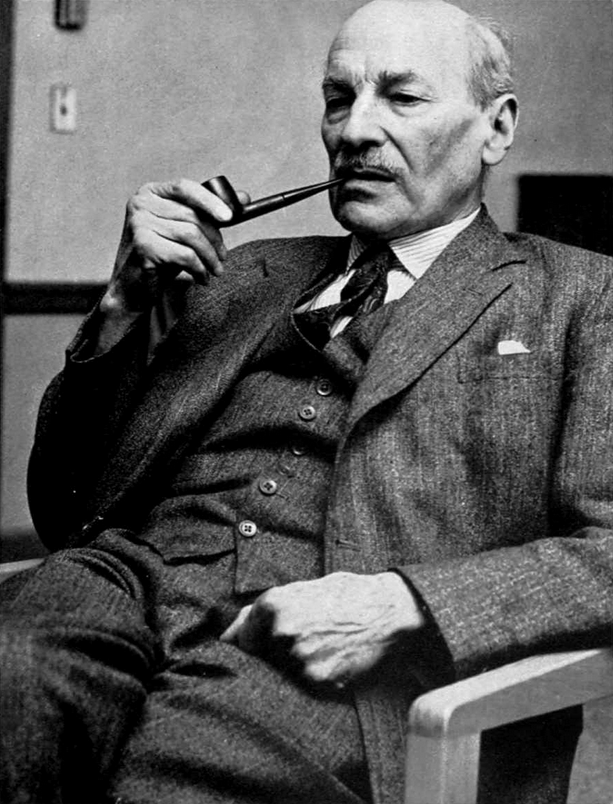
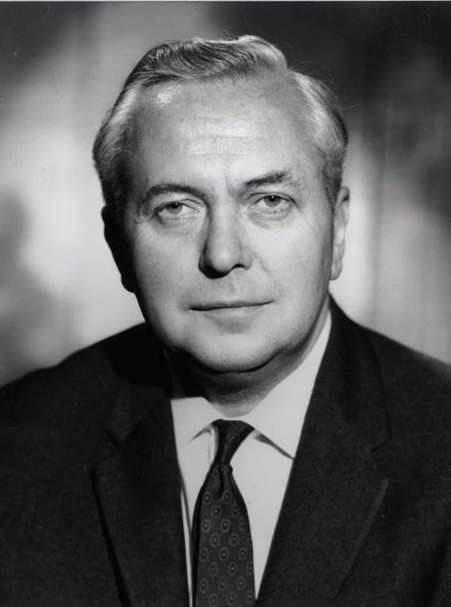
  • Harold Wilson – 1945 Maiden Speech

    haroldwilson

    Below is the text of the maiden speech made in the House of Commons by Harold Wilson on 9th October 1945.

    I am not sure whether in making a maiden speech from what is, I think, an unusual part of the House one is entitled to ask for its indulgence. Probably I am not entitled to ask for it, though on this occasion I feel the need for it even more than many of my colleagues who were elected to Parliament for the first time in the recent Election. They, at least, have spoken with great authority on the subjects which they have chosen and, although I find myself speaking from a part of the House where one is expected to speak with authority — though I am told this has not always been the case — I am called on to deal with a subject which even veteran Members of this House would enter upon only with very great trepidation — the important question of the amenities and facilities provided for private Members of this House.

    May I say that, speaking as one of the new young Members to whom my hon. Friend referred, I share, as we all do, their desire to see Parliament work as efficiently as it is possible for it to work. My hon. Friend raised a number of points with some of which I am not competent to deal. For instance, he raised the question of the Treasury for which I am, perhaps fortunately, not answerable. He raised also the question of postage which I know is inflicting very serious concern on a number of hon. Members, and I will undertake to see that what he said is brought to the notice of the authorities concerned. I think that all I can properly reply to is this question of the allocation of rooms for which the Ministry of Works is partly responsible, and also the subject he mentioned at the beginning, namely, the provision of accommodation in London for Members who have, so far, had difficulty in finding it.

    With regard to the amenities of Members within this House, the Government and all the authorities concerned are trying to do everything possible to improve them so that Members can do their job as efficiently as possible. I know how important this is in the matter of facilities for dictating letters and interviewing the general public. Members who have had greater experience than I have told me that in the past few weeks the amount of correspondence they have received has been very much greater than they can remember in the past. Certainly, those Members who have had an opportunity, during the recent Recess, of refreshing themselves by visiting their constituencies, or living in them, can testify to the desire of the public, greater than ever before, to see their Member of Parliament and discuss with him questions of private or public importance. I believe that the confidence of the public in Parliament as an institution, and in Members as individuals; is perhaps greater now than at any time in the past.

    The Government are most desirous that all possible facilities shall be given for adequate meetings, and for free and frank discussion between Members and the public. My hon. Friend referred to facilities which have been provided in other parts of the world. I, too, have seen the lavish scale on which Congressmen and Senators in the United States for instance, can entertain members of the public. As the House will know, provision is being made, when the Chamber is rebuilt, for additional amenities for Members, particularly for interviewing and the dictation of letters. In order that those who are charged with the duty of building the new Chamber shall be kept informed of what is required, I am asked by my right hon. Friend to say that it is his intention to carry out the proposal made by his predecessor to appoint a panel of private 188 Members to advise him on any questions of lay-out which may arise in the course of that work.

  • Konni Zilliacus – 1945 Maiden Speech

    Below is the text of the maiden speech made by Konni Zilliacus in the House of Commons on 23rd August 1945.

    I venture to take part in this Debate so soon after entering this House, because this subject is one very close to my heart. While I was still in the Army at the end of the last war, I decided to try to enter the service of the League of Nations, and I succeeded in that attempt. For 19 years I was an official of the League of Nations Secretariat. I entered the service of the League because I believed then as I believe now that world government is the only alternative to world war, and I believed then and I believe now that this country has a very special part to play in the great adventure of leading mankind into the paths of peace.

    Some of the founders of the Covenant looked upon the League as the first step towards world government. It is my belief that the League failed largely because we lost the urge and the vision necessary to follow up that first step. At any rate, we did lose, and the second world war was the penalty. That is the price we have paid for our second chance, perhaps our last chance as has been said here before. Presented to us as our second and last chance, the Charter of the United Nations inspires mixed feelings, in some of us at any rate. On the one hand we are profoundly grateful to have been vouchsafed a second chance, and, of course, we must ratify this Charter and make the best of it; but on the other hand, 27 years after the launching of the Covenant and after six years of the second world war, this Charter is a very poor and timid affair. The Covenant, it will be remembered, was regarded by large sections of public opinion as a deep disappointment and as a very poor and unsatisfactory proposition, but the Charter of to-day is only the Covenant writ large. There are some improvements certainly, but there is not very much added to the Covenant. There is, of course, ode enormous difference, and a very great and beneficial difference, and that is that the Charter was first ratified, and by the overwhelming majority of 89 votes to two, by that redoubtable body, the United States Senate, which an American friend of mine once described as the graveyard of all the fallen hopes of world peace.

    The second important fact is that one of the three foundation members of this Charter of the United Nations is the Union of Soviet Socialist Republics. I venture to believe that the third and equally great fact is that this Charter is being presented for approval to this House by the first Labour Government to have a majority of its own. In a world where long-range rockets and flying bombs, world-wide air travel, television and wireless communication have become commonplace, the Charter strikes one rather, when presented as a foundation for building world peace, as a proposition to enter a horse and buggy race at Brooklands. In the light of the explosion of the atomic bomb, which has bludgeoned our imagination and bruised our souls, one feels rather that on arrival at Brooklands in our horse and buggy we find that the event has been changed without notice into a jet-plane race.

    That is why I welcomed the Prime Minister’s statement the other day that the discovery of the atom bomb might make a revaluation of the whole situation, especially in the sphere of international relations, necessary, and the even stronger words that fell from the lips of my right hon. Friend the Secretary of State for Foreign Affairs at the opening meeting of the Preparatory Commission for the United Nations, when he said that the effect of the atom bomb on the organisation of security was such that, in the whole security sphere, a great many of our previous conceptions and a great many of the assumptions on which the San Francisco Conference had worked might have to be radically revised.

    I hope that we take the San Francisco Charter in our stride, and ask ourselves incidentally, “Where do we go from here?” The Charter provides for its own amendment and can be used as the starting point for supplementary treaties and agreements of every kind based on this or that provision of its many clauses. Let me deal with one or two of the points that seem to me to arise in the present situation within the main features of the Charter. I believe that we should proclaim boldly that we regard the Charter as nothing more or less than an embryo system of world government, and intend to work as far as and as fast as we can to develop it in that direction. At the end of the last war, when the Covenant was first being elaborated to the world, a great statesman, Field-Marshal Smuts, with that union of lofty idealism and practical wisdom to which the Prime Minister paid such a just tribute yesterday, produced a remarkable pamphlet, “The League of Nations: a Practical Suggestion.” It was really a kind of public statement more than a pamphlet, for Field-Marshal Smuts was then a member of the Imperial War Cabinet. In that pamphlet he said that what we wanted was a League of Nations that would be real, practical and effective as a system of world government.

    I suggest that nothing less than that should be the aim of British foreign policy to-day, and that all secondary problems and immediate issues should be approached in the light of that over-riding major purpose. It makes a real difference to the way in which we solve immediate issues if we approach them from the point of view of working for the realisation, as the Labour Party’s policy in 1935 put it, bit by bit and step by step, of a co-operative world commonwealth, or, as we approach the Charter, of the maximum infringement of sovereignty within which we will try to make ourselves as comfortable as we can on the basis of the balance of power. So much for our major long-term policy in approaching the problems of organisation raised in the new Charter.

    I come to the economic and social foundations of this new peace machinery. The Charter is a great improvement in this respect and a great advance on the Covenant. For the first time, the improvement of social and economic activities and relations has been realised, as it were, officially and as a part of the structure of peace. I want to suggest four points that, I think, are worthy of attention in this connection. The first is the need for making the new specialist agencies, or, as I should prefer to call them, functional organisations, comprehensive, combining this new machinery and the bits that remain of the old machinery. For instance, the International Food and Agricultural Organisation should absorb whatever is left of the International Institute of Agriculture. The new World Health Organisation should take over what is left of the League’s Health Organisation and the old pre-last war international Public Health Office in Paris. The new organisation for transport and communications should find room within its framework for the universal Postal Union, and so on.

    Second, there should be a sufficient measure of central direction and impulse to this whole rather elaborate and scattered machinery. That is the point to which my right hon. Friend and former colleague from Geneva, the Senior Burgess for Oxford University (Sir A. Salter), has already called attention. It is a serious problem because, owing to the degree to which States have clung to their independence of this new machinery, the danger is that, with the very multifarious economic, social and technical activities, we shall have Governments succumbing to the temptation, either of saying that they will not do a thing for fear of offending certain sections of public opinion, or of not doing a thing because they do not want to do it, and so “passing the buck” from one committee and conference to another ad infinitum. We saw the beginning of that kind of thing at Geneva, and it would be a pity if the scattered and loose nature of this new machinery should allow such a situation to arise again. Fortunately, the provisions of the Charter are so vaguely and lightly sketched that there is room for a great deal of initiative in this respect, and I hope that the Government will take the initiative in framing these new proposals on lines that will endow the Social and Economic Council with adequate powers of supervision, direction and co-ordination, and that it will base this organisation on the budget and general directives of the Assembly.

    I hope, too, that the principle of the International Labour Organisation, the principle of direct functional representation which has been found so successful, will be extended to all the specialised agencies. For instance, in the organisation concerned with international economic relations, I hope there will be room not only for boards of trade, but also for national and international chambers of commerce, for national and international co-operative associations and trade union organisations; and in the transport organisation I hope to see the great international shipping companies, the national and international associations concerned with coastal traffic, railways and other forms of communication, as well as the international transport workers’ federations, seamen’s unions, railwaymen’s unions, postal workers’ unions and every kind of sectional interest directly concerned with these organisations. The arguments for that are the same as the arguments for applying the principle to the International Labour Organisation.

    I come to the question of international trusteeship, to which my right hon. Friend the Prime Minister drew attention yesterday. As this system stands in the Charter, it does not advance us very far, for in Chapter 12, Article 76, it is provided that the principle of the open door shall be applied, subject to the overriding interest of the native inhabitants. That is a very true and sound principle, but the Charter allows it to be applied by the colonial powers on their own judgment and consideration. Article 77 provides that Governments may, if they wish, voluntarily put their colonies within the international trusteeship system, but are under no obligation to do so if they do not choose. The system applies primarily only to the colonies taken from enemy Powers in the last war and the colonies that may be taken in this war. So that what the system amounts to in the Charter is a very high-sounding formula for allowing us to take the colonies of the ex-enemy States and putting them within our Imperial preference system.

    The Labour Party have a policy on this subject, which I hope will be in some form, in outline or principle, the policy of His Majesty’s Government. The Labour Party in 1943, at their annual conference, adopted a post-war policy on colonies in which they proposed, on the basis of reciprocity, to offer to put all non-self-governing colonies under a system of international trusteeship, and to apply to that system the principle of the open door, subject to the over-riding rights of the native inhabitants, but taking the judgment of the International Trusteeship Council on whether or not any particular measure of discrimination should or should not be regarded as necessary in the interests of the native inhabitants, with the right of appeal to the court on questions of law and fact arising out of such matters. I hope that that is still our policy, for, if that is the policy of His Majesty’s Government, we shall infuse honesty and vitality into provisions that at present seem somewhat hollow.

    The central question of the organisation of peace is, of course, the question of the distribution and use of power. I welcome the fact that power in the Charter is to be openly vested in the permanent members of the Council, that is, the Big Five. I have no objection to the so-called veto of the Big Five. In the first 10 years of the League, the League worked effectively only because it was, in fact, run by England and France who have been Allies in the war, and still could pull together. They had to take account of the views of other States, because the votes of other States were necessary, and they were bound by the obligations of the Covenant; but they did, in fact, control the League jointly on the basis of the obligations of the Covenant, with due regard to the rights of smaller States, and although they were theoretically bound to apply sanctions to each other, such a contingency was unthinkable. As from 1934 onwards, the Labour Party advocated the revival of the collective system, laid in ruins by the appeasement policy of the self-styled realists, but the conclusion of an alliance between France, Great Britain and the Soviet Union within the League as the steel framework of peace in Europe, and by establishing the closest possible co-operation and association between this group of States and the United States as the foundation of world peace. That, I believe, was a close anticipation of the central security provision of the new Charter, and I believe if that policy had been adopted when it was first pressed by the Labour Party 10 years ago, we should never have had the second world war.

    Let us assume for a moment that the primary problem of how to keep the Big Five together has been solved from the point of view of security. Obviously, if the whole of security rests on the solidarity of the Big Five, the major problem of security is not the assembling of international military forces to deal with aggression so much as the political problem of how to ensure that the Big Five pull together and do not fall apart. As long as they pull together, there is no aggressor in the world that would dare to stand up to them for five minutes. They therefore do not need any of the elaborate provisions of the Charter for assembling international forces from the ends of the earth, which is a dubious expedient and politically quite superfluous. All that is unnecessary as long as the Big Five pull together.

    There is a secondary problem, the genuine police force problem of maintaining law and order. If the Security Council is to function effectively, it needs some kind of what I should like to call a handy all-purposes executive arm. The Labour Party’s policy contained in “The International Post-war Settlement,” for a genuine international police force to be put under the command of some commander appointed by the military staff committee of the Security Council, would provide the proper body for discharging the routine functions of maintaining world law and order that will fall to the lot of the Security Council. We have had two instances recently which may serve as cases in point. The first was the recent trouble in Syria and Lebanon. It would have been very valuable if we had had the Security Council in being and an international police force at its orders to maintain law and order in those territories, without arousing the kind of suspicion and national animosity that were aroused by the way in which the incidents had to be handled under existing conditions.

    Again, we have had a good deal of potential trouble and unrest between Greece and her Northern neighbours. There, too, the kind of force that I am suggesting, and which is suggested in the Labour Party’s foreign policy, would be an extremely useful kind of force to carry out any routine police duties and investigations required by the situation. The Charter is an advance on the Covenant in that it rules out national intervention—the system by which a great Power would land marines or something of that sort to take care of the lives and property of its subjects in the territory of some other State which, in the view of the great Power, had not maintained order and which was too weak to resent this action, and such an international force would be useful to the Security Council to fill the vacuum thereby created. An international police force would carry out such policing duties as were necessary under the orders of the Security Council.

    What about the major political problem of keeping the Big Five together? I believe that it turns very largely on whether agreement can be reached between the Great Powers on the question of their armaments. If there is any kind of competition or suspicion between them as regards their armaments, it is impossible for them to work together effectively, and any kind of alliance between them will not be worth the paper it is written on. On the other hand, if we do conclude an agreement on armaments, then we have laid the foundation for a solid working agreement as partners and allies in upholding law and order in the world. The question of the atomic bomb is crucial to that issue, because so long as we withhold the secret of the atomic bomb from the Soviet Union we make ourselves directly responsible for starting a race in atomic bomb research, which will be far worse than a race in armaments; indeed, it will be the most fiendish form of a race in armaments. I realise that the Government may have difficulty in stating now their position on that issue, but I do hope that they will at least repudiate the attitude adopted by the right hon. Gentleman the Leader of the Opposition, who declared firmly and emphatically his opposition to sharing this secret with any other State in the world. A gloss has been given to that statement, perhaps quite unjustly, in certain parts of the Press. It has been stated by some diplomatic correspondents, for instance, that now there is a serious shift in the balance of power owing to our monopoly of the secret of the atomic bomb, and that from now on an Anglo-American bloc will function more or less as a unit in international affairs and will use their improved position in the balance of power to take a much tougher line with the Soviet Union about Eastern European affairs. Whatever hesitation the Government may perhaps quite rightly have about stating their positive policy on this matter before meeting the other Foreign Secretaries in council, I hope that they will make it perfectly clear that they do not propose to play Anglo-American atomic power politics against the Soviet Union in Eastern Europe.

    So much for the question of power, in relation to the holding together of the Big Five, which is the central issue in making this new world organisation work. I should like to touch on the essential problem in its relation to our European policy. Let me take as a starting point two statements made by my right hon. Friend the Secretary of State for Foreign Affairs during his magnificent address to the Blackpool Labour Conference last Whitsuntide. He said that the United States of America was a country which believed in private enterprise and that the Soviet Union had socialised her internal economy. Britain, he said, stood between the two with a tremendously progressive urge towards the socialised economy we need. My right hon. Friend the Minister of Education just now made the same point that we stand, in many respects, half-way between the Soviet Union and the United States. It is a very important point, to which I shall return in a moment. The Blackpool statement went on: I think it was the late Lord Beaconsfield who once said Britain and France joined together are an insurance for peace, but Britain, France and Russia joined together are a security for peace. How can an Anglo-Franco-Soviet combination serve to keep together the Big Five? I believe it can do so in this way. The United States and the Soviet Union are at opposite poles in this social crisis which, at present, is convulsing the world. The real danger for peace—let us face it quite frankly and honestly—is that the Big Five may break up because their two greatest members drift apart owing to their too-different approach to the paramount social issue. But under no conceivable government on either side of the Atlantic could a breach be opened between the English-speaking nations wide enough to threaten peace. Thank God for that; we have reached the stage of civilisation in our mutual relations where that possibility is definitely ruled out. On the other hand, American reactions, I believe, could and might have pulled a Tory England out of Europe and into opposition to the Soviet Union, whereas American Liberalism and trade unionism will always be strong enough to prevent a breach between an Anglo-Franco-Soviet combination and the United States. Therefore, our way to keep the Big Five together is to cleave to our Alliance with the Soviet Union through thick and thin, and let nothing come between us or cloud the good relations and feelings which exist.

    For what purpose and on what basis can we and France and the Soviet Union co-operate and form a firm and enduring combination within the United Nations Security Council? I believe we can do that by dedicating ourselves to the reconstruction, the unification and pacification of Europe. We are pledged to co-operate by the Anglo-Soviet Alliance, and I venture to believe we should work towards converting the Anglo-Soviet and Franco-Soviet Alliances into a comprehensive all-in agreement embracing on one side Great Britain, France and our Western European neighbours grouped in some form of economic and political union, and on the other the Soviet Union and the Eastern European group of States associated with the Soviet Union. The immediate objective of that combination, of course, would be to apply the provisions of the peace settlement to the ex-enemy States, but the constructive long-term purpose would be the unification and reconstruction of Europe. In that enterprise we could confidently enlist the co-operation and friendship of the United States and, so far as they were relevant to the situation, of China also.

    On what basis can Europe be reconstructed? The point has been rightly made that political democracy is essential to the reconstruction of Europe, but I think it is equally important to make the point that Europe can be successfully reconstructed for peace only on the basis of a sweeping advance towards Socialism. I hope that His Majesty’s Government will make their position quite clear on that point, even at the risk of losing the appearance of national unity in foreign policy. The Labour Party declared in its own foreign policy statement, “The International Post-War Settlement,” that Socialism was a fundamental necessity to the realisation of our international aims as well as of our domestic aims. Why did we say that? The answer is quite simple; it is not even new. It is contained in Palmerston’s statement, “If you ask me what a good foreign policy is, I reply that it is a good home policy,” and in Gladstone’s statement, “If you want to understand a country’s foreign policy, you must examine its domestic conditions, for the two are inseparable.”

    To-day, it is less than ever possible to separate domestic policy from foreign policy, for both are concerned primarily with issues of social justice and economic organisation. The dividing line between them has become so thin as to be well-nigh invisible. In home affairs we have national unity as regards our aims. We all want more houses, full employment, social security, better health services, better education and better pensions for the aged, and the only rock on which our national unity is split is the all-important question of the means to attain those aims. We believe that certain measures of nationalisation, a limited but definite advance towards Socialism, form the essential basis for reconstruction in this country. The other side do not believe that. I venture to think that in foreign policy we have the same unity of aims and the same difference as regards the methods necessary to attain them.

    While those of us who sit on opposite sides of this House can debate this question, thank Heaven, in a spirit of mutual understanding, and a desire for compromise and agreement, those who represent the same two points of view in Europe are standing on opposite sides of the barricades with arms in their hand. These things are being settled by Fascist counter-revolution and by social revolution led by the resistance movements. The overthrow of Fascism in Europe has meant the downfall of capitalism, for the reason that the defenders of the old social order in Europe, with a few honourable exceptions who were promptly liquidated or expropriated, threw in their lot with Fascism and have been dragged down in its fall. They started as appeasers, continued as collaborators, and ended as Quislings; they are now pushing up the daisies or facing firing squads. The resistance movements, on the other hand, are based on the working class, and largely on Socialist and Communist leadership. Their reconstruction programmes involve a sweeping advance toward socialism. On the issue of political democracy and civil liberty we stand with the U.S.A. in opposition to the views of the regimes in Eastern Europe. We are entitled to press our views of political democracy and civil liberty. I am glad we have abandoned the principle of non-interference in the internal affairs of European countries, because I think the job of reconstruction cannot be hindered by the claims of sovereignty.

    The political formulae of Western democracy displaced from their social context can mean anything or nothing. I speak feelingly because I have seen three years of intervention in Russia conducted in the name of non-interference with the internal affairs of Russia, claiming to be solely concerned with political democracy and self-determination in Russia without taking sides either with the Right or Left. I have seen, at Geneva, years of appeasement of the Fascist powers, conducted in the name of non-interference. I have seen some people defend non-intervention in Spain. As for Greece, I leave hon. Members to draw their own conclusions. I do beg the Government to make it clear that when they are using this same formula of political democracy and self-determination they axe doing so in the context of the social struggle that is taking place in Europe, and that they will make it clear that in no circumstances and under no pretext whatever will British-controlled economic and military power be used to bolster up reaction and counter-revolution in Europe. Having pressed our view of political democracy and civil liberties, I hope we will also say that we share with the Soviet Union the view that economic reconstruction in Europe can operate successfully only on the basis of a substantial advance towards Socialism, because the old social order has been smashed materially and compromised morally beyond repair in Europe, and that we agree with the reconstruction programmes of the resistance movements under their Socialist and Communist leadership, wish them every success, and would be glad to co-operate with them on the lines indicated in their reconstruction programmes.

    Let us say frankly that we believe Socialism is a fundamental necessity to the reconstruction of Europe and the spread of political democracy and liberty in Europe. Those were our words when we were in opposition; let us stick to this policy now that we are in power. We have acted on that belief in this country; let us act on it abroad. The necessity for Socialism does not stop at our frontiers, but expands throughout Europe. A new wind is blowing throughout the world and we are part of the wind. My right hon. Friend the Lord Privy Seal said a few days ago that he hoped it would be understood that the coming into power of Labour meant something different in this House. It means something different throughout the world. For this election, if you like, is our British version of the Russian Revolution, or, better still, perhaps it bears the same relation to the Russian Revolution and to its successor, the resistance movements in Europe, as the Government and Parliament that brought in the Reform Bill of 1832 bore to the French Revolution, and just as the Whigs and Liberals of the 19th century made no bones about their sympathy and support for the middle-class revolutions that were engaged in cleaning up the remnants of feudalism and the power of the landed aristocracy on the Continent, I hope that Labour in this country, to-day as yesterday, will send its sympathy and support and give its co-operation to the resistance movements which are working for a new social order in Europe. Let the message go forth that the hopes of those in other countries who greeted the advent of a Labour Government with joy are not mistaken, that their great expectations are not to be dashed to the ground, that we are not merely a Tory “Caretaker” Government in foreign affairs, but that foreign policy from now on will be inspired by a new vision, a new spirit, a new hope, new aims and new purposes, so that those who have died in the war shall not have died in vain and that this country, the Mother of Parliaments, will once more take the lead in this difficult art of living, the art of government, and apply that leadership and new faith to that enormously difficult problem of converting the tangled and miserable world of to-day into a mankind living free and at peace under an effective system of world government.

  • James Callaghan – 1945 Maiden Speech in the House of Commons

    Below is the text of the speech made by James Callaghan in the House of Commons on 20th August 1945, his maiden speech in Parliament.

    Rising for the first time, I seek the indulgence which the House always extends to those who address it. However, I must say that listening during the last few days it seemed to me that a new tradition is growing up; you get up and ask for indulgence, and then proceed to lay about you with all you have got, tormenting everybody on the other side, and hoping to get away with it. I hope I shall not trespass too deeply on the indulgence of Members on the other side of the House, but I do want to ask hon. Members to lift their eyes for a few moments from the European scene to what is happening in Asia at the present time.

    I was very glad indeed to hear what the Foreign Secretary had to say about the prodigious American contribution to victory in the Pacific war. Those of us who have had the opportunity of seeing a little of that contribution are left in amazement at the breadth of conception and the speed of execution with which the Americans have carried out their attack across thousands of miles of ocean. I believe it to be almost unparalleled in its field, but at the same time I would like to say that I think this House and this country also owe a debt to those dogged Australians who slogged their way across New Guinea.

    However, this very successful strategy of the Americans, which has taken Japan by the throat at the earliest opportunity, has left problems behind it. The first problem is this, that because they have been willing to leap across hundreds of miles of ocean, cutting the communications of the Japanese, they have left behind them large forces of well-equipped troops, well-housed, well-dug-in, well trained and not a bit feeling like surrender. We are going to face the spectacle of tens of thousands of troops at present in Truk, in Rabaul, in Indo-China, in Malaya, throughout the Netherlands East Indies, returning to Japan undefeated and that, in my judgment, is a most dangerous event. I do not suggest for one moment that we should prosecute the war on those islands to kill them—we value the lives of our own men too much—but I do say that the course which events are taking in Japan at the present time is liable to reinforce the militaristic myth which has bedevilled that country far too long.

    I will try to speak with a due sense of responsibility for I remember the Foreign Secretary’s words on the need for it. I can understand the policy of the Allied commanders at the present moment, which is to use the authority of the Emperor of Japan to compel the surrender of his troops, but I hope that when that surrender has been compelled, we shall have no more to do with the Emperor of Japan. He is, as a divine monarch, the embodiment of all that is opposed to a democratic State and I think this ancient and honourable House will recall that 300 years or so ago it once had occasion to deal with the divine rights of kings. Now we have the spectacle of an Emperor who puts himself on a far higher plane than did our own King Charles. We must have had enough of the Emperor. His position as a semi-divine monarch cannot be reconciled with the introduction of a democratic State in Japan and I say that we must get rid of him.

    The second point I want to make is this. I do not know whether hon. Members have been following the composition of the new peace Cabinet in Japan, but I regard it as the height of insolence to the Allied commanders that some of the men now holding office in the Japanese Cabinet should be permitted to retain those offices, and I hope the Allied commanders will make away with them. May I remind the House that the present Vice-Premier of Japan, Prince Konoye, is the man who was Prime Minister of Japan when she made war on China; that he is the man who condoned the stripping of British subjects at Tientsin; that he is the man who concluded the military alliance with Italy and Germany? Is that the sort of man we are going to treat with? Do hon. Members know, too, the Character of the present Foreign Secretary of Japan, Shigemitsu? He, too, was a member of the War Cabinet in Japan who was recently operating against us, and who has exchanged the friendliest of messages with Herr Hitler, Signor Mussolini and Count Ciano in the past. We must have nothing to do with these people. They hold out no hope for the future as far as we are concerned.

    I hope, if I may look across the Inland Sea to China for a moment, that at some stage before we break up, the Foreign Secretary will be able to give us some information about the present negotiations between China and Russia. I believe these discussions are fraught with in credible possibilities for peace or war in the future. If I might venture to utter a criticism of what the right hon. Gentleman the Member for Warwick and Leamington (Mr. Eden) said earlier in the day, it would be this: he seemed to refer to China as though it were a country like Greece or Bulgaria or Poland. Hon. Members will know as well as I do that China is no country; it is a continent, it is an empire. General Chiang Kai-shek cannot claim to speak for the whole of the peoples of China. I think I am right in saying that at one time during recent years there have been as many as four Governments in China; certainly at the moment there are two who can lay claim to the allegiance of considerable numbers of the Chinese people. I think we should be very hesitant in coming down on one side without having regard to the vast territories which are administered by another section of the Chinese people, which are administered well, and as far as one can make out, have some contribution to make to the future of the world.

    One final word. I think that now the rising tide of Japanese aggression has passed its summit and the waters are beginning to recede, we shall find that the configuration of the landscape has changed. Throughout the whole of Asia there are new problems and new landmarks arising. A fierce resurgent nationalism is to be detected throughout the whole of the Netherlands East Indies, throughout Indo-China and Malaya, certainly in Burma, which will give headaches to the Empires of Britain and of the Dutch and to France. I believe the Foreign Secretary will have to find new men and new methods if we are to deal successfully with the problems which will confront Great Britain in its relations with its Dominions and its Colonies in South-East Asia.