
Tag: 1893

  • James Lowther – 1893 Speech in the House of Commons on Fear of Immigrants (Jewish and Russian Migration)

    James Lowther – 1893 Speech in the House of Commons on Fear of Immigrants (Jewish and Russian Migration)

    The speech made by James Lowther, the then Conservative MP for the Isle of Thanet, in the House of Commons on 11 February 1893.

    I cannot avoid expressing my regret that it falls to my lot to introduce a subject of this importance under conditions so little favourable to its satisfactory consideration by the House. I am not, of course, going to rake up the embers of controversy respecting the policy of considering the Address under the very exceptional circumstances of a Saturday Sitting. This has come about by circumstances over which I have no control, yet I venture to enter a very emphatic protest against a Saturday Sitting. The subject of my Amendment, as I have before stated, is one of very great importance, and it will be generally admitted, without regard to the views which hon. Members in every quarter of the House may entertain as to the direction which legislation or Executive action on it should take, that not only is it of importance, but it is of great interest to all classes, and possesses the characteristics of extreme urgency. I must again repeat that this is not a Party subject.

    MR. W. E. GLADSTONE Hear, hear!

    MR. JAMES LOWTHER I am glad to find that, the right hon. Gentleman and his colleagues realise that fact, but when I stated my personal position in this matter the other night I gathered from sounds of dissent from those less well informed than the right hon. Gentleman that they thought my action was not wholly devoid of some Party considerations. But, now I need not labour that point since it has been so generally conceded that there is nothing of a Party character in this Motion. I ought, perhaps, to explain that I was in no way responsible for action not being taken by the late Government. I may remind the House that the question was introduced early in the career of the last Parliament, and a Select Committee was appointed to consider the subject, and did consider it for two Sessions.

    I was not then a Member of the House, and consequently no place was accorded me in the deliberations of the Committee. I, moreover, was not in a position to urge upon the Government of the day the immediate consideration of the recommendations of the Committee or of the evidence adduced in the course of the inquiry, for the reason that it always has been, and I hope it always will be, recognised that when a Member of this House has made himself responsible for the conduct of a question and its submission to the House of Commons, it would be contrary to Parliamentary courtesy and usage for another Member to interpolate his action and to do anything which would have a tendency to take the matter out of the hands of the hon. Member who had made himself responsible for it; and in this connection I have to make reference to the loss which the Conservative Party, and indeed the House at large, has suffered by the lamented death of the Member for Stockport (Mr. Jennings), who devoted much attention to this question. The hon. Member had indicated his intention of bringing the matter under the notice of the last House of Commons; but unfortunately his health was so unsatisfactory that he was compelled to abandon the intention, and asked me to deal with the subject as best I could. In consequence of that intimation, questions were addressed to the then Government by the hon. and gallant Member for Central Sheffield and by myself, and the result eventually was an announcement that the question had been placed in the hands of the then Home Secretary, who had been charged by his colleagues with the duty of preparing a measure dealing with the subject, and it was hoped that it would be shortly laid before the House. The Nome Secretary subsequently informed me, in reply to questions publicly put, that he had prepared two alternative drafts of a measure. We were then approaching a time when it was obvious that contested legislation, or any legislation partaking very largely of a controversial character, could scarcely be proceeded with with any hope of success in the expiring moment of the Parliament; and in the course of a week or two after the declarations of the then Leader of the House and of the then Home Secretary, the latter right hon. Gentleman informed me that certain difficulties had arisen in the way of placing the Bill in the hands of hon. Members, although be hoped that those difficulties would be overcome in a short time.

    It is not for me, however, to attempt to peer into the region of contemporary history to seek the causes of hesitation on the part of the late Government. Rumour, verified I am bound to say by a statement by a Member of t he late Cabinet, pointed in the direction that assurances were not forthcoming that the measure would receive that general support at the hands of the Leaders of the then Opposition in the absence of which it was useless to introduce a Bill on the subject, which there was no hope of passing into law before the dissolution of Parliament. I have entered thus far into the history of the subject for the purpose of clearing myself and those who think with me from any charge of having neglected our opportunities for bringing this subject under the notice of the House whilst our own Political Party held the reins of Office. The evil with which I now ask Her Majesty’s Government to deal has been largely increasing in this country during the last few years. It is not only with the actual immigration of alien paupers that the Government will have to deal; but they will have also to reckon with the state of public opinion which that unrestricted immigration has formulated. I am aware that a strong opinion prevails in many quarters that my proposal is of a half-hearted character, many persons desiring that a measure should be introduced of a mere stringent nature, and that it should be in the direction of the total exclusion of alien immigrants.

    Many Trades Councils and other Public Bodies, composed of politicians of all Parties, especially those which now directly represent the labouring classes, desire to see a measure of a most stringent character passed into law that would have the effect of prohibiting not only the immigration of the destitute persons with whom my Motion proposes to deal, but also of stopping the competition with home labour—whether the immigrant arrives in this country in an affluent or in a destitute condition. But that is not a matter with which I propose to deal to-day. I wish to guard myself distinctly against being supposed to be out of sympathy with those who point to the serious competition with home labour which has been established in various parts of this country by means of foreign alien immigration. The minds of the middle classes, I know, are very largely exercised with regard to the competition due to the engagement of foreign clerks on the commercial staffs in the various mercantile houses in this country; mid amongst the voluminous correspondence which I have received since I have placed my notice upon the Paper are many communications from domestic servants and waiters, who, not unnaturally, complain of the very serious competition to which they are subject by reason of the employment of foreigners. But that subject is not immediately before us in the Motion which I now submit.

    As I said before, the evil is increasing, notwithstanding the denial of the right hon. Baronet the Member for the Forest of Dean. We are constantly met by statistics which, it is asserted, show that the total number of foreigners in this country form but an infinitesimal proportion of our total population; but even taking the official figures, which, in my opinion, are absolutely unreliable, they show that there has been an increase of 35 per cent. in the foreign population of the country between the Census of 1881 and the last Census. The authorities upon whom is east the duty of preparing the Census Returns, and who discharge that duty, as a whole, with singular ability and industry, had very serious difficulties to contend with; and had it not been for the very cordial co-operation of some of those associated with the administration of various charities in London, even approximate Returns of the number of aliens in this city could scarcely have been obtained. It is notorious, its was pointed out by a Select Committee of this House, that these immigrants congregate in a few specified localities, and attach themselves to particular trades and callings upon which they exercise a very marked effect.

    There are those who evade the definition of foreigners by the adoption of an English name, or in a smaller number of cases by going through the process of naturalisation, and the House should bear that in mind in connection with the figures laid before it. But there are other Returns besides the Census Returns. There are Returns ordered to be made under an Act of William IV., which was dragged from its oblivion by the Select Committee. That Act enables the authorities in this country to compel the masters of vessels to fill in certain Returns, giving the nationality of their passengers. These Returns are, I venture to say, for all practical purposes, substantially worthless. They are, I am informed, made up in a most haphazard manner. The captain, who has his hands full with navigation and other important duties, delegates the task to a subordinate officer. I am told that the ship’s carpenter, no doubt a very invaluable officer, has often the task assigned to him; but he has his own work to do, so eventually his subordinate—the carpenter’s boy—has to undertake the responsibility of carrying into effect legislation sanctioned in the reign of William IV. These Returns, even taking them for what they are worth, show a very serious state of affairs.

    The figures, prior to the year 1891, may be dismissed as utterly unreliable, and so I will pass at once to the figures for 1891 and 1892. They show that in the year 1891 38,000 aliens arrived in this country who were not stated to be en route for America; while of the 98,500 who were supposed to merely pass through the country on their way to other lands, it is probable that no insignificant proportion remained here. The Board of Trade attach a foot-note to the Returns, to the effect that it is not to be assumed that the aliens not stated to be en route to America remain in this country, as, in fact, many return to the Continent. I think it would have been a little more candid on the part of those who are responsible for die Returns upon this subject if they had gone on to say that they had not possessed themselves with information which enabled them to state authoritatively that any considerable proportion of the 98,000 aliens stated to be en route to America had not remained in this country. I assert, without fear of contradiction, that a large proportion of them do remain in this country, and I would like to draw attention to the grounds upon which some of them do so, and the particular category in which they are placed.

    It is well-known that the stringent regulations in force in the United States have had during recent times a very deterrent effect upon those who are responsible for the shipping arrangements between Liverpool and other ports in the United Kingdom and the United States. The authorities in the latter country are invested with a power, which on many recent occasions they have shown they are not disinclined to exercise, under which they can compel the steamship owners to carry back at their own cost any persons who, in their judgment, are not fit objects for reception into that country—that is to say, those who are suffering under disabilities which are specified in detail in the regulations in force in the United States; and such, for example, as are the most utterly unfit and destitute, and liable to become chargeable on the rates, are denied admission and are thrown back upon the steamship owners, who are compelled, at their own expense, to take them back to their homes. And when I use the words “their homes” I have fallen into a verbal error. Whither do they return—these discarded immigrants? Do they return them to Russia or other countries of Europe whence they have come? I fear not. In many cases they return them to the port of embarkation; they cast them, penniless and destitute, on the landing stages at the ports of the United Kingdom, there to become fierce competitors with our own working people, and, in many cases, to become chargeable to the rates of the localities on which they are stranded. I should like to draw the special attention of the House to the character and race of great numbers of these immigrants. There can, for instance, be no doubt that Italian immigration has been carried on largely into this country, and, I believe, mainly into the Metropolis.

    Many Italian children are annually imported for the purpose of carrying on a trade which comes within the laws of mendicity and vagrancy. Those who have the management of Government Departments must know full well that this is a matter of notoriety, and no hon. Member will, I feel sure, be found to defend, on its merits, such a state of things. Ought such a gross outrage to be any longer perpetrated upon the hospitality of this country? There are, no doubt, graver causes of complaint with respect to the great numbers of immigrants entering this country from the Russian Empire, of whom a large proportion are of the Jewish race. Before I deal further with this matter I wish to say that, so far as I am personally concerned—and I think I am also speaking for all those who are co-operating with me in this matter—nothing could be further from our objects and sentiments than to cause pain to that injured race, many of whose members in this country are among the most loyal and patriotic and charitable subjects of the Queen. I also desire expressly to guard against saying anything which might give offence to those who are responsible for the law as it is administered in the dominions of the Czar.

    I think I shall have the sympathy of the right hon. Gentleman the Leader of the House when I deprecate, even on the part of those who may occupy positions of greater freedom and less responsibility, any indulgence in remarks which might run the risk of being misinterpreted by any Powers which are in alliance with this country. While I have never been one of those who have expressed extreme admiration for the policy and principles embodied in the system of government in vogue in Russia, and while I have never made myself responsible for the endorsement of the policy associated with what has been called “the Divine figure from the North,” I shall carry with me the assent of Her Majesty’s Government when I say that any Member dealing with a subject of this kind, Which bears very directly upon the internal administration of foreign States, would be wise to adopt, so far as reference to such internal administration is concerned, the policy of “hands off.”

    As to the reasons which in my judgment operate very strongly in favour of action on the part of this House, they are to be found in the ruinous competition which has been brought into play with regard to our home labour markets. In particular localities and in certain trades, as I said before, this undue competition is extremely severe. It is notorious that the tailoring trade, for instance, as was shown by the evidence given before the Sweating Committee, is absolutely overrun by these destitute foreign immigrants. The percentage of foreigners in the London tailoring trade has been put as high as 90 per cent. of the whole number of workers engaged in that trade; while the figure given by Mr. Burnett, the Labour Correspondent of the Board of Trade, who is considered rather to understate than to overstate the matter, is 80 per cent. in London. That is to say, out of 18,000 or 20,000 persons engaged in the trade, only a few hundreds are of the Anglo-Saxon race. The system of employing aliens, too, is spreading to Birmingham, Leeds, Manchester, Newcastle-on-Tyne, Glasgow, and other large towns, and the ready-made clothing trade is falling almost entirely into foreign hands.

    Again, in the boot and shoe trade, 25 per cent. of those employed in London are foreigners; and these are constantly on the increase, while a similar condition of affairs prevails in the case of the cabinet makers. There are other trades which, though less important, have in the past at Ordered employment to considerable numbers of our own people, and these are being more and more absorbed by foreigners. Of these minor industries, I may cite as examples artificial flower making, stick-polishing, and work of that sort. Many persons who formerly gained an honest livelihood by those trades have now become chargeable to the rates, because they are unable to get employment in consequence of the large influx of foreigners. That is not all. Many of these aliens, arriving in a destitute condition, not only themselves become chargeable upon the rates, but they constructively add to the demands upon public charity, and upon the pockets of the ratepayers, by throwing out of employment our own work-people.

    SIR J. GOLDSMID (St. Pancras, S.) Will the right hon. Gentleman give us some figures to prove that?

    MR. JAMES LOWTHER My hon. Friend, on whom I am happy to think will devolve the ditty of replying to me, knows perfectly well that there are no such statistics in existence. I have already pointed out that the difficulties of preparing the Census—so far as these aliens were concerned—were almost insurmountable, and that the Board of Trade Returns are far from reliable; yet t he hon. Baronet asks me—a private individual—to give figures showing how many natives of this country, as the result of alien competition, have been driven out of employment and on to the rates. Such figures are practically impossible of compilation by any body—whether public or private.

    SIR J. GOLDSMID My question referred to the number of Jews who are said to have been driven upon the rates in consequence of immigration.

    MR. JAMES LOWTHER The hon. Baronet has put into my mouth terms which I did not employ. My hon. Friend asks me how many Jews have become chargeable upon the rates or upon charitable funds. I have already stated I am aware that a very large number of persons who come within the category of those to whom I am endeavouring to draw attention by my Amendment profess the Jewish faith; but I must decline to base my argument upon either race or creed. I know perfectly well that the charitable element among the Jewish connection have concerted measures for dealing with distress in the East End of London, and, indeed, it is the only bright picture in relation to this painful subject that such charity and large-heartedness has been employed. But that is one of the grounds of my complaint. The philanthropy and assistance which my hon. Friend and others have bestowed upon the charitable institutions of this country, without reference to the claims of race or creed, have been largely appropriated by those who have no claim whatever to them. These destitute aliens, who ought to be supported by the Government under whom they were born, are being sent over here in large numbers to compete not only with honest labour in the market, but with the charitable funds of this country, against those who have a legitimate claim to public and to private charity. This is one of the most serious forms which that competition has assumed.

    My hon. Friend will be able to confirm me in the statement that during the last few years the reply to applications for charitable subscriptions, which hitherto had invariably been sent by many of the most philanthropic and generous hearted members of his own community, have been that they deeply regretted that demands upon the charitable funds under their control, which had a prior claim because of the affinity of race or creed, rendered it impossible for them to contribute to objects of a general character with a liberality which otherwise they would have exhibited. I am glad my hon. Friend has drawn attention to this point. These destitute aliens who come into this country, and who should be supported in their own native countries by the Government under which they were born, are made chargeable upon the charitable funds of this country, and, what is more, they have, in some cases, even become individually chargeable on the rates. I am not going to accept contradiction on that point, even from such a great authority as my hon. Friend, unless he gives some statistics to show not only that these destitute aliens do not go on the rates, but that they do not constructively add to the burdens of the ratepayers by driving native labour into the workhouse.

    My own opinion is, that a not inconsiderable number find their way on to the rates; but no private individual or Government Department that could be created could ever present accurate statistics to show the number of persons thrown upon the rates as the indirect effect of this foreign competition. There is another serious matter which must be taken into consideration in connection with this subject. I refer to sanitary grounds, on which this alien immigration is a very serious and grave national danger. In the last few months we have had an only too well-founded alarm with respect to the appearance in this country, as following closely upon its appearance in many parts of the Continent, of one of the most terrible epidemics which have been known during this or any other generation.

    Within a few hours of the appearance of Asiatic cholera at Hamburg, the disease was found to be in existence upon one of the emigrant ships which was moored at Gravesend after coming front that continental port. The extent of the danger in this respect is not, however, to be measured merely by the number of persons who may arrive from ports scheduled as being under this terrible visitation, because it is well-known that the districts from which these unfortunate people are mainly drawn are hotbeds of disease. Typhus and other fevers of the most serious character are practically chronic in those districts; and it is within official knowledge that the condition in which these emigrants for the most part live is filthy and revolting in the extreme. Nor are the conditions under which they live after their arrival in this country such as we can contemplate with equanimity. Their dwellings arc of the most foul and loathsome character; they are huddled together in numbers and under conditions which happily do not prevail in these days among the home-born population of this country; and the general hygienic conditions under which they live are such as to render their presence a source of permanent danger to the health of this country.

    It is all very well to talk of issuing orders—as has been done with much promptitude by the President of the Local Government Board, for which the right hon. Gentleman deserves all credit— calling upon Local Authorities to exercise supervision over the sanitary districts over which they have control, and it is all very well to endeavour to carry out certain regulations at the ports; but when we find that persons are living Within a few minutes’ drive of this House under revolting conditions of human existence which can be scarcely imagined, can it be denied that the presence of these people constitute a source of permanent danger with regard, not only to the initiation, but to the propagation of disease?

    The President of the Local Government Board knows perfectly well that he might go on multiplying his staff of Inspectors in vain in the endeavour to deal adequately with this evil. One of the remedies proposed to check the immigration of these people is that the British taxpayer should be called upon to pay for the appointment of numerous inspectors. But I think that, no matter how you may enlarge your staff of Inspectors, it will be impossible to render innocuous the existence of these people in our midst. There are, I am aware, some persons who object to any legislation on this subject, or to any administrative arrangements, which can have a tendency to run counter to the old traditions of hospitality in this country. Under proper conditions, no doubt, hospitality is a virtue; but what would be said of a father of a family who exercised hospitality wholesale, and, in order that he might entertain anybody aid everybody, turned his own fancily out of doors? I venture to think that if this hospitable person found himself before a bench of magistrates charged with neglecting his obligations to his family, and if he stated that he turned his family out to starve so that he might entertain persons who had no claim upon his hospitality, the plea would be regarded as an aggravation of his offence.

    There are also those who talk very largely about the right of asylum, but the person who exercises that right under such conditions should, I think, he conducted himself to an asylum of another kind—namely, the nearest madhouse. There are those, again, who take the view that any interference with this immigration would be counter to the great principles of Free Trade. I do not profess to be an authority upon Free Trade; but, while I do not wish to enter upon this subject, I will say, as one who has never hesitated to avow myself an opponent of the fiscal system prevailing in this country, that I would welcome nothing more heartily than that the cause of Free Trade should be identified with Free Trade in destitution, with Free Trade in sweating, and with Free. Trade in disease. I should welcome that as a platform on which I should be heartily delighted to meet the advocates of Free Trade. There is another argument, in addition to that of the right of asylum, which may be used in the Debate. It is what is called the minimising argument, the argument that the number of persons affected is relatively small, and that the injury to the community is very slight.’ It is, however, clearly explained in the deport of the Select Committee that it is the concentration of this immigration in given areas, and particularly trades that constitutes so great an evil apart altogether from the actual number concerned.

    The House will probably be told that there is emigration as well as immigration. That emigration, however, consists for the most part of the best blood or the country, and of the able-bodied men who are driven front England, Scotland, and Ireland, out of their own country, and out of the dominions of the Queen, to seek refuge in foreign lands. Possibly amongst those persons there may be found a curtain number who have immigrated, but the most hopeless and the most destitute element is left behind. I may also be told that my Amendment is contrary to the recognised principles of English legislation. If that is the ease, then so much the worse for the precedents that may be adduced. On the other hand, I say that the legislation of this country shows that when an evil is found to exist a remedy is applied. What are other countries doing in this matter? In speaking of the extreme urgency of this evil I am not dealing merely with its sanitary aspect, but also with the fact that, in consequence of the more stringent legislation and regulations adopted in the countries of Europe, the United States of America, and in our own colonies, the risk is greatly increased of a larger number still of destitute persons being thrown upon these shores. Germany and Austria and the other Continental Powers have adopted very stringent legislation in this respect. I will not Weary the House by going in detail through the regulations of the various States that have legislated on the subject, but I hope my omission to do so will not be used against me to show that I am not in full possession of the facts. I may say, speaking- generally, that every country has adopted regulations for checking the incursion of destitute persons.

    The United States legislation prevent the landing of any person who, all the opinion of the authorities, is likely to become a public charge or to compete unfairly with native labour. The result of the regulations under the American Alien Acts and under the Contract Labour Law is that already the Steamship Companies have adopted stringent precautions to prevent such persons from taking passages in order to avoid the responsibility of bringing them back again to their own country, and the stream of immigration into this country is thereby likely to be largely increased. Already, as the result of the arrangements made by the United States, a considerable number of these persons have been refused passages by the various Shipping Companies and I do not think Her Majesty’s Government are in a position to deny that, although in the past the regulations in the United States may only have been intermittently put in force, public opinion in that country has expressed itself in decided terms to the effect that, if the existing legislation is not found to be powerful enough, Congress will be called upon to pass more stringent legislation. I take it that the House agrees with me that, speaking generally, all the European countries have legislated in the direction to which I refer.

    SIR CHARLES DILKE (Forest of Dean) No.

    MR. JAMES LOWTHER The right hon. Baronet says “no.”

    SIR CHARLES DILKE I do not deny that there are such laws, but I do deny that they are enforced.

    MR. JAMES LOWTHER Yes, although stringent laws are upon the Statute Books of these countries, they have only been hitherto intermittently enforced, yet, in times like the present, when sanitary precautions are forced upon the attention of the authorities, the House may be sure that these powers will be more stringently exercised in future, and that in the United States Congress will be compelled by the force of irresistible force of public opinion to see that they are so exercised. There is only one Power which has scarcely any legislation worth mentioning on this subject, and which, although in ancient alliance with this country, was not held in high favour in certain influential quarters—I mean the Turkish Empire. I do not think the Prime Minister would care to take as his model of social and domestic legislation a Power which has been described by the right hon. Gentleman—as “the one anti-human specimen of humanity,” and has also been referred to as the “Unspeakable Turk.” I know that the right hon. Gentleman has been wrongly credited with the last-named observation, though the quotation I gave first would not be denied by him as his own, while the other no doubt should be assigned to the late Mr. Carlisle. I am bound to admit that, without public opinion at its back, it would be difficult for the Government to carry serious legislation dealing with this matter.

    But the subject has been urged on the attention of the House by many representative bodies. The Trade Union Congress, and also Trade Councils and Unions in many of our most important centres of industry, has passed resolutions strongly urging the subject upon the attention of Parliament. I myself have had deputations from London trade councils on the matter. Forty-three labour organisations, six town councils, 14 metropolitan boards of guardians, and 16 boards of vestries, have also taken action. I do not think the right hon. Gentleman the President of the Board of Trade will be prepared to deny my statements, which are not made at random. The Trade Union Congress, which assembled in Glasgow last autumn, passed a resolution instructing its Parliamentary Committee— To use every legitimate means in its power to have brought and passed through the House of Commons a Bill to prevent the immigration of pauper aliens to our shores. Political bodies of all kinds have taken this matter up. The National Union of Conservative Associations has more than once passed similar resolutions. There is in London an Association for preventing the immigration of destitute aliens, and the executive of that Association includes several members of this House, and even of Her Majesty’s Government, which shows, at all events, that this is by no means a Party question.

    I think it right to remind the House that this question is not a Party question, and that hon. Members opposite, as well as behind me, are members of this Association. And that there is also another body called the London. Reform Union, which is very largely patronised by hon. Members on the other side of the House. I ought to mention what the objects, cited in the official published paper, are of this body— London Reform Union, 9, Bridge Street, Westminster. Object: To reform the existing administration of the river, docks, and wharves, the markets, water supply, means of lighting, locomotion, police, the City funds, hospitals, and other charities; to disseminate knowledge concerning the unfavourable conditions under which vast numbers of the working population live owing to defective and insanitary dwelling and working accommodation, irregular and ill-paid labour, the competition of alien immigrants, the harshness of the Poor Laws, and so on.

    Now, Sir, that body I find has been patronised by a good many Members of this House. As I am reading from a document, I shall be in order, and it may be more convenient to hon. Members who may not yet be acquainted with the constituencies of hon. Members if I quote from the document. Amongst the supporters of this scheme for disseminating knowledge concerning the unfavourable conditions under which the working population live, owing to the competition of alien immigrants and other causes, are— Mr. Haldane, Q.C., M.P., Haddington; T. Lough, M.P., West Islington; Ralph Neville, M.P., Exchange, Liverpool; W. Saunders, Walworth; J. Stuart Wallace, M.P., Limehouse; Murray M’Donald, M.P., Bow; S. Montagu, M.P., Whitechapel; D. Naoroji, M.P., Finsbury; Lord Compton, M.P., Barnsley; J. W. Benn, M.P., St. George’s, E.; Professor Stuart, M.P., Hoxton. The Members of the rank and file of the Party are not without some official guidance and support, for I find no less than 11 Members of Her Majesty’s Government are either connected with this body or with a body representing similar views. I find two Lords of the Treasury, Mr. W. M’Arthur and Mr. R. K. Causton; the name of Mr. Sydney Buxton, who occupies a position so well earned, of Under Secretary for the Colonies; Mr. T. Burt, Secretary to the Board of Trade. I find the name of the right hon. A. Acland, Vice President of the Council; the right hon. Arnold Morley, Postmaster General, who comes down, I see, with £100. I also find the name of Lord Carrington, Lord Chamberlain. Then we come to other great personages, the Marquess of Ripon, K.G., Secretary to the Colonies, and the Earl of Rosebery, Secretary of Foreign Affairs, who, I see, like the Postmaster General, has given £100.

    Then we come to the name of a gentleman who I am very glad to find is a Vice President. Foremost amongst Vice Presidents I find right hon. A. J. Mundella, M.P. Sir, this list would hardly be complete if I did not remind the House that at a large and influential meeting in support of this body, held, I think, upon the 15th December, a speech was delivered—the House need not be afraid, I am not going to read it, but it was, I need hardly add, an eloquent and able speech from the right hon. H. Asquith, Her Majesty’s Principal Secretary of State, and the Daily News in furnishing the report says— The meeting broke up, and Mr. Asquith and Lord Rosebery were cheered along the Strand when they left the meeting. I do not suppose the people present, and who cheered the Ministers down the Strand, eared very much about many of these subjects; I dare say many of the subjects they had only a slight interest in; but the subject of all those included in the programme for which most persons care is the subject which I have brought forward. The right hon. Gentleman and Ids Colleague on the strength of this received a cheer down the Strand, and they ought to do what in them lies to carry out the objects to which the Association they were addressing lends its influence and name.

    Sir, I twist thank the House for the indulgence they have extended to me, but I fear, although I have been compelled at no inconsiderable length to enter into the matter, there may be some points which I may have omitted to make perfectly clear, still I think I have shown the Horse that there are grounds for prompt action in this matter. We do not want any more inquiries. We had a Committee in each House of Parliament; we have had the Sweating Committee of the House of Lords; the Alien Committee of the Noose of Commons: elaborate inquiries industriously pursued by Members of both Houses: the facts are plain, and they are that prompt and effective action is necessary. For my own part, while cherishing the hope that the Government will recognise the necessity, I shall certainly not consider myself justified in assuming any share or responsibility in the event of further outbreak of disease or the intensification of the other evils to which I have referred. I should not envy those on whose heads such responsibility would rest. I beg to move the Amendment which stands in my name.

  • Dadabhai Naoroji – 1893 Comments on the Hyderabad Plot

    Dadabhai Naoroji – 1893 Comments on the Hyderabad Plot

    Below is the text of the question asked by Dadabhai Naoroji, the then Liberal MP for Finsbury Central, in the House of Commons on 21 August 1893.

    MR. NAOROJI (Finsbury, Central) In the absence of the hon. Member for Elgin and Nairn, I beg to ask the Under Secretary of State for India whether he is now aware that a person named Jowad Hussain has been arrested in Hyderabad, Deccan, on a charge of plotting to murder the British Resident, Mr. Plowden, or to blow up the Residency with dynamite; and that the arrest is stated to have been in consequence of the production to the Nizam by Mr. Plowden of a letter purporting to warn him that such a plot existed; whether there is any ground to believe in the existence of such a plot; and, if so, are any other persons stated to be implicated in it; what was the cause of the banishment from Hyderabad, on 15th ultimo, of the Political and Financial Secretary, the Nawab Mohsin-ul-Mulk, Mehdi Ali; and having regard to the circumstance that similar designs on Mr. Plowden’s life when he was Resident at the Court of the Ruler of Cashmere were attributed to that Ruler, and were without inquiry afterwards put forward as one of the causes officially assigned for his deposition, Her Majesty’s Government will direct that a full and careful iuquiry be made by some independent authority into the facts connected with the alleged plot, and the other recent events in Hyderabad which have been brought to their notice, so as to insure that no injustice is done to the Nizam’s Government?

    THE UNDER SECRETARY OF STATE FOR INDIA (Mr. G. Russell,) North Beds. As regards questions 1, 2, and 3, the following information has been received by telegraph from the Viceroy:— One Jowad Hussain, arrested in Hyderabad, but not on Resident’s initiation, is principal person charged with complicity in plot to murder Resident. Facts not yet elicited, but Departmental inquiry is being held by two Judges of Nizam’s High Court. Mehdi Ali resigned and left State under Nizam’s orders in consequence of implication in one lakh of rupees bribery case. Complete correspondence regarding this incident posted 13th instant. In view of the fact that an inquiry into the alleged plot is now being held by two Judges of the Nizam’s High Court, the Secretary of State thinks it unnecessary, at the present stage of affairs, to order a separate inquiry to be held.

  • Dadabhai Naoroji – 1893 Comments on Indian Opium Revenue

    Dadabhai Naoroji – 1893 Comments on Indian Opium Revenue

    Below is the text of the comments made by Dadabhai Naoroji, the then Liberal MP for Finsbury Central, in the House of Commons on 30 June 1893.

    MR. NAOROJI (Finsbury, Central) said, he was not speaking on this question now for the first time. He had been studying it for years, and as far back as 40 years ago he had edited a pamphlet against it. He had studied it from all points of view, and he had come to the conclusion that the opium traffic was a curse both for England and India. In this country opium was declared to be a poison by Act of Parliament, and its sale was under very stringent restrictions. How could that which was a poison here be harmless in other portions of the Empire? As far as he was concerned, he could not believe in the sincerity of those who said that opium used in moderation was not injurious. The question of opium, however, was nothing. It was the mere fringe of the great question of Indian administration under the present system. The pity was not only that time would not allow, but that the subject would not permit, of their entering into the great question which caused all the mischiefs and evils from which India was suffering. These problems—the opium question, the Salt Tax question, and kindred matters—were constantly cropping up, but this House was never able thoroughly to grapple with them. And they never would be properly grappled with until the advice of John Bright was adopted, that statesman having said— That if a country be found possessing a most fertile soil, and capable of bearing every variety of production, and that, notwithstanding, the people are in a state of extreme destitution and suffering, the chances are that there is some fundamental error in the government of that country. He (Mr. Naoroji) maintained that so long as the House did not set itself to find out this fundamental error and endeavour to remove it, all these minor questions, which must be regarded as the fringe of the great problem, could never be dealt with satisfactorily.

    To bring the matter to a practical issue, why could not the Commission be instructed to go into the whole question somewhat in the way in which inquiries took place every 20 years under the rule of the East India Company? For then, and then only, would this House understand the mischiefs under which India was suffering; then, and then only, would they know how it was that, after 100 years of the rule of the best administrators, and the most highly-paid administrators, India should be the poorest country in the world. He could adduce testimony from the beginning of the century down to the present time to show that there was nothing but poverty in India. That could not be satisfactory to England, who desired that India should appreciate British rule, though how that could be expected he could not understand, seeing that an income of £6,000,000 or £7,000,000 a year was made by poisoning another great people, and that taxes—the most cruel that had ever been conceived in the whole history of mankind, such as the heavy Salt Tax—were imposed. Such should not be the method of British administration, and such should not be the result of British rule. There was no reason why it should be so. If the existing errors and evils were discovered and grappled with, he had no doubt that India would bless the name of British rule. He would ask the Prime Minister, therefore, to enlarge his Amendment, and to declare in it that the Royal Commission should inquire into the whole condition of India.

  • Dadabhai Naoroji – 1893 Speech on Surwur Jung

    Dadabhai Naoroji – 1893 Speech on Surwur Jung

    Below is the text of the speech made by Dadabhai Naoroji, the the then Liberal MP for Finsbury Central, in the House of Commons on 30 March 1893.

    In the absence of the hon. Member for Elgin and Nairn, I beg to ask the Under Secretary of State for India whether he is aware that the present British Resident at the Court of Hyderabad has been accepting as intermediary between himself and His Highness, the Nizam, a person of notoriously blemished antecedents and character, and well known to be hostile to the responsible Minister of State; whether he is aware that this person, named Surwur Jung, has, under the countenance of the Resident, succeeded in obtaining for himself all the real power in the Hyderabad State and completely paralysing the Ministry; whether he is aware that an action for defamation has been under trial before a subordinate of the Resident against the printer of a libellous pamphlet, of which Surwur Jung has been practically admitted to be the author, the complainant being the Home Secretary to the Hyderabad State; that Surwur Jung has compassed the suspension of the complainant from his office while the case is sub judice, has prevented him from having access to his own witnesses, has supported the defence by vast sums of money taken from the Public Treasury and from the trust funds of minors under his charge, and has established a reign of terror amongst witnesses whereby the course of justice is gravely prejudiced; whether he is aware that the complainant’s counsel has presented a Petition to the Resident’s Court, setting forth the contempts of Court which have been thus committed, but that the Resident has neither prevented nor punished such contempts; whether he is aware that during all the period covered by these matters the Resident has been receiving Surwur Jung in private conference at the British Residency, and that by means of the influence thus conferred upon him, Surwur Jung has now succeeded in extorting 100,000 rupees from the Minister by false pretences, with which offence he now stands charged before His Highness the Nizam; and whether, in the interests of public justice, Her Majesty’s Government will urge on the Government of India the necessity of Surwur Jung being removed from the influential position which he has acquired under the Resident’s support?

  • Dadabhai Naoroji – 1893 Speech on East India

    Dadabhai Naoroji – 1893 Speech on East India

    Below is the text of the speech made by Dadabhai Naoroji, the then Liberal MP for Finsbury Central, in the House of Commons on 28 March 1893.

    The hon. Member for Hull told us in very emphatic language of the sufferings of the Anglo-Indian Services in India. I do not blame him for that. Not only he, but even the Viceroy in his long speech went over the same ground, and in as emphatic a manner as possible portrayed what he called the sufferings, and hardships, and cruel wrongs of the Anglo-Indians, and in every way possible emphasised the demands of the Anglo-Indian servants. But it never occurred to either the hon. Member for Hull or the Viceroy that there is another side to the picture. And if these Anglo-Indians are suffering, there are also other people who are suffering far more. What is the position of the Indians themselves from the fall in this exchange? Have the hon. Member or the Viceroy, or any of the English gentlemen who are talking about this subject, given a single thought to the effect which is being produced upon the people of India? “Certainly not,” as I suppose you would say. [Cries of “No!” “Certainly!” and “Oh! oh!”]

    Here is this long statement by the hon. Member for Hull, in which he has portrayed in very strong terms the sufferings of the Anglo-Indian servants, but he has not said one single word as to what the Indians them-selves have suffered. And not only the hon. Member, but the Viceroy also—as I have already said—emphasised as strongly as possible the sufferings, and used all the strong words to be found in the English vocabulary with regard to the hardships of the English servants, but in these long speeches there has not been one word of pity or sympathy with regard to those from whose pocket whatever is demanded has to be paid and what these people themselves have already suffered. Lord Macaulay has said that “the heaviest of ​ all yokes is the yoke of the stranger.” [“Oh, oh!”] So long as this House does not understand that the yoke as it, at present exists practically in India is “the heaviest of all yokes,” India has no future, India has no hope. [Loud cries of “Oh, oh!”] You may say “Oh, oh!” but you have never been, fortunately—and I hope and pray you may never be—in the condition in which India is placed in your hands. [“Oh, oh!”] Wait a little, please. The saddest part of the picture is that while the British people and the British Parliament do not wish and have not willed that India shall be governed on the principle of “the heaviest yoke is the yoke of the stranger,” yet it is so. It is distinctly laid down what the policy is to be, and this Parliament has actually willed 60 years ago that the rule over India ought to be the rule of justice, righteousness, beneficence. That was repeated again in the great Proclamation of 1858. But what has been the actual practice? What has been done by those who have been thus instructed? The actual practice has been to make this yoke the heaviest yoke—”the yoke of the stranger.” [“Oh, oh!”] Has the hon. Gentleman who cries “Oh!” ever been in such a condition as we are? If he has not he can never understand it. I pray that you may never feel that yoke You have been free from it ever since the time when the Normans became assimilated with the English people [Cries of “Question!”] From that] time forward you have been a free people, and I hope and pray you may ever remain so. But, at the same time, it is difficult for you to even surmise the condition of the people of India.

    If it is within your power to make this rule a rule of justice and honour, and at the same time beneficent and profitable, both to yourselves and to us. But I cannot now enter further into that point. The hon. Member for Hull introduced the subject of the poverty of the people of India and treated it with a light heart. That is exactly the question that has to be fought out by me upon the Floor of this House, but the time is not now. I cannot now enter into a Debate upon that point, because you, Mr. Speaker, would very properly call me to Order. I can only intimate my point, and give you some ​ high testimony upon that subject. I will not go into my own reasons, but only quote you the testimony of some of the highest financiers of India. First of all, a Viceroy like Lord Lawrence has distinctly stated in those words—it was in the year 1864—

    “India is, on the whole, a very poor country. The mass of the population enjoy only a scanty subsistence.”

    Then, again, in 1873, he repeated his opinion before the Finance Committee—

    “That the mass of the people were so miserably poor that they had barely the means of subsistence. It was as much as a man could do to feed his family, or half feed them, let alone spending money on what might be called luxuries or conveniences.”

    Thou, coming down to a more recent date—to the days of Lord Cromer—these are the words of Lord Cromer in 1882—
    “It has been calculated that the average income per head of population in India is not more than Rs.27 a year. And though I am not prepared to pledge myself to the absolute accuracy of a calculation of this sort, it is sufficiently accurate to justify the conclusion that the tax-paying community is exceedingly poor. To derive any very large increase of revenue from so poor a population as this is obviously impossible, and, if it were possible, would be unjustifiable.”
    Later on this authority goes on to show the extreme poverty of the mass of the people. Then he reverts back again to the question of the Salt Tax in India—

    “He would ask hon. Members to think what Rs.27 per annum was to support a person, and then he would ask whether a few annas was nothing to such poor people.”

    There is the testimony of your highest Finance Minister, Lord Cromer, who is able to give a very satisfactory account of the work he is doing in Egypt, but was not able to give much encouragement as to India. And when we ask for information from the Government that would satisfactorily show whether, under the most highly praised administration in the world, and after 100 years of this administration, India is poor or not, a Finance Minister as late as 1882 expresses the same opinion as was expressed long ago. Nothing more can be said than that India is extremely poor. These are the words of your own Finance Ministers. Now take the conclusion to which Lord Cromer came in 1882, an extract from ​ which I have read to you with regard to the income of India being not more than Rs.27 per head per annum. This calculation is based upon a Note prepared by the present Finance Minister, and I ask the Government of India, I ask the Under Secretary of State for India, for a Return here in this House of that Note. It is only by complete information given by the Government in conformity with the requirements of this House, which requires that a complete statement of the moral and material progress of India should be laid upon the Table every year, that hon. Members can become acquainted with the actual condition of India. We have it every year of a kind it is not worth the paper it is printed on. There is a certain half-truth line of view always expressed in it, but the information that is required is what is the actual income of the country from year to year. My wish, Sir is to compare figures and see whether the country is improving or becoming poorer. But such information as is needed is not given. I have asked for this Return, and what is the answer given? “That it is out of date.” That is to say, that while this Note of 1881 was the basis upon which this public statement was made by Lord Cromer, this Return is not to be given to us.

    I now ask again that this Return should be given to us, and also a similar Return for 1891, that we may compare and judge whether India is really making any progress or not. Until you get this complete information before the House year by year, you will not be able to form a correct judgment as to the improvement of India. So far, we have, however, these high financial authorities telling us that India is the poorest country in the world, that it is even poorer than Russia. I trust that these facts are sufficient to satisfy hon. Gentlemen. Again, never has England spent, so far as I know, and so far as my information goes, never has there been a single farthing spent out of the British Exchequer, either for the acquirement of India, or for the maintenance of it, or administration, or in any manner connected with India, whilst at the same time hundreds of millions of the wealth of India have been constantly poured into this country. Whether any country in the world could stand such drain as India is subjected to is ​ utterly out of the question. If England itself, with all its wealth, was subjected to such a drain as India is subjected to, it would be reduced to extreme poverty before long.

    When the necessary information is before this House I shall be able to show how during the whole of this century Englishmen themselves have pointed out that India was kept impoverished. Now, what has been the effect upon the natives of India—the taxpayers themselves—from the fall in exchange? During the 20 years from 1873 up to the present day there has been a heavy loss in exchange in the remittances for home charges. I am not hero to-night discussing the justice or injustice of the home charges; I am taking the home charges as they stand, and taking the effect upon the Indian taxpayers. The people live on a very scanty subsistence, and, according to your highest financial authorities, they are extremely poor, yet in their ordinary condition they have to pay Rs. 100,000,000 to the Anglo-Indian servants for salaries, &c., of Rs. 1,000 and upwards per annum, and salaries under Rs. 1,000 besides. There is a large military expenditure to be kept up, and you have other payments under “the system of the yoke of the stranger.” All this means a great loss of wealth, wisdom, work, and capacity to India. I hope the House will be able to take all these points into consideration. Now let us see what a further heavy burden is put upon India by this fall in the exchange!

    There has been already, during the last 20 years, about Rs. 650,000,000 lost to the taxpayer on account of this fall of the exchange, and before next year is over it will be something like Rs. 1,000,000,000. And with these heavy burdens under which the taxpayer of India are groaning, you do not pay the slightest attention to them. You simply think of the sufferings and hardships of your own fellow-countrymen, for which I do not blame you at all. [“Oh, oh!”] It is only natural you should feel for them, but at the same time you ought to have some heart and some justice to consider from what sources this money has to be made up. You do not give a single thought to the sufferings of the men who are being ground to the very dust—as Sir Grant Duff once truly said. To ​ these people who are being literally ground and crushed to dust and powder you wish to add a still heavier burden. They have already suffered greatly from these causes. Can you have the heart to do it? They are a poor people living on a scanty subsistence, merely hewers of wood and drawers of water. I can say nothing more. I leave the matter to your sense of justice, to your heart, to consider whether it is right or proper that you should put still more burdens upon these poor people already so low.

    I have said there has not been a single shilling spent, out of the British Exchequer upon India during all this long connection. But I should make this one exception. On the occasion of the last Afghan War the then Prime Minister, who is also now, offered and gave £5,000,000 towards the expenses that were put upon us by the War. But that was only about one-fourth of the expenses of that iniquitous war. We suffered very heavily by that Afghan War, and heavy military expenses are going on without check or hindrance. Had the British people to pay (which they must pay at least in some fair proportion), we would have heard on this very floor a great deal about them. Now the House is asked by the hon. Member for Hull to put another burden upon the Indian taxpayer. What is the use of asking this?

    The fact is the Viceroy has already committed himself in as strong language as he could that he would do something for the Anglo-Indians, whether the burden upon the poor taxpayers becomes greater or not. He has not said a word about the sufferings of the poor Indian taxpayer. He has not even thought of him. The only thing he said in his long speech was that he did not yet add to the taxation simply because he thought it would be a temporary difficulty. But if it became a permanent difficulty, and as the Anglo-Indian Services could not tolerate the suffering that they have been put to, then he would determine to do something for them by additional taxation. “Very well, then,” says the hon. Member for Hull, “we must do something.” You should not put the expense on the poor native taxpayer, who has no vote. One right hon. Member talked about the vote, and that is just ​ because the poor Indian has no vote that there is so little heed for him. He is truly helpless and crushed down with every possible burden. If hon. Gentlemen here, after drawing millions from the native taxpayer, intend to put this additional burden upon him, then I can only say Heaven save him.

    With regard to the proposed relief, I would like to direct the attention of hon. Gentlemen to the words of the Viceroy in which he almost wholly commits himself to do something. In the face of that admission what is the good of a Committee. The Viceroy says that, whatever may be the Report of Lord Herschell’s Committee, he is determined that if the present state of things continues, the distress which has been borne for some time past by the officials cannot continue to be tolerated. Well, after that you may appoint Committees, but what the result will be is perfectly clear. You have a Committee of Europeans, you have European witnesses, European interests, and all the European sympathy. We know very well what the result will be of the deliberations of such a Committee. We have had ample experience of those Committees in the past. At all gatherings which had been held, where the interests of Europeans and Indians clashed, we know very well that the Indians had gone to the wall. There has hardly been an instance in which a Commission has sat on such a matter as this, and decided in a manner that can be called impartial and unbiassed. [Cries of “Agreed, agreed!”] I can quite understand that hon. Gentlemen should become impatient.

    A Committee is not required to prove the cases the hon. Member for Hull has brought forward. No doubt there is a great deal of suffering, but I ask you not to drag the relief from those who are already crushed, or as he himself said, not to be liberal with other wretched people’s money. I appeal to the British people in this instance to say that it is proper, right, and just that the British Exchequer should find the amount of money wanted. I will give a special reason for this. Every farthing that will be paid for this relief will be spent in this country. It will be simply passing from one hand to another. On the other hand, if you put the burden on the Indians, it means that every farthing taken out of their scanty substance will be carried away from India to this country, and thus our distress and our poverty will be enhanced. The money given for this relief will not be spent in India, but in this country, and I appeal to your justice, to your honour, and to your conscience whether it would be right to put such additional burden on the taxpayer of India? At the present exchange he has lost nearly Rs. 1,000,000,000. I appeal to hon. Gentlemen of this House, to the British people at large, that in this case especially it will be the right and proper and humane thing to give this relief to Anglo-Indian servants from the British Exchequer.

    The Motion is for a Committee. You may have it, but it is merely a farce; the whole thing is a foregone conclusion. Do not put additional taxation on these poor people. The pressure at present upon them is already far too heavy. Lastly, the only effective and permanent remedy for our woes is to remove the cause—the inordinately heavy foreign agency must be reduced to reasonable dimensions—and then there will be no burden and no problem of loss by exchange. Remove the yoke of the stranger and make it the rule of the benefactor, and you will be as much blessed and benefited as we.

  • Dadabhai Naoroji – 1893 Maiden Speech in the House of Commons

    Below is the text of the maiden speech made by Dadabhai Naoroji, the then Liberal MP for Finsbury Central, in the House of Commons on 28 February 1893.

    MR. NAOROJI (Finsbury, Central) said he did not wish to go into the question of the merits of monometallism and bimetallism. He wished merely to refer to the chief argument of bimetallists, which was that France had stood by bimetallism for 70 years, and had thereby introduced a fixed ratio between gold and silver. The question now was whether the bimetallism of France had been the cause of keeping the ratio between gold and silver steady, or whether it was not the fact that the ratio of gold and silver was not steady even when the system of bimetallism existed in France. He would ask if bimetallism had steadied that ratio why had it been broken up, and why had France given it up?

    When bimetallism existed in France there had been no universal consent between France and the other nations of the world, and why was that universal consent required now if bimetallism had any virtue in it? His contention was that when the time came that the ratio between gold and silver had become steadier they might have bimetallism or not, for it would come to the same thing. But India was the subject on which he wished to address the House principally. It had been said over and over again in the course of the Debate by one side that India had been largely benefited by the fall in exchange, and by the other side that India had been injured by the fall in exchange. It was difficult to arrive at a conclusion as to which side to believe, for each side had said it had official authority for its assertion. Instead of making general statements of that kind he would lay before the House a simple ordinary trade transaction from which they would be able to judge how far the difference in the two currencies in England and India, and the rise and fall in exchange, affected India. But in considering the subject they should always remember that India was in an unfortunate economic condition.

    They should consider India in two aspects—both as a self-governing country, like China independent of outside political influences, and as a country under foreign domination, with many important forces influencing her for evil and for good. Let them first take India as situated like China or any other self-governing country that had a silver currency.

    As far as trade and commerce between two independent countries were concerned it made no difference what currency existed in those countries. He would illustrate that by a simple trade transaction. A trader in India had to sell a hundred bales of cotton which cost him R.10,000. He sent the cotton to an agent in England to sell with directions to forward him the net proceeds of the sale. When the exchange stood at par rate of 2s. a rupee the trader had in calculating his profits to take that into consideration, as well as freight and insurance, and he would know exactly that he had to get a certain price, say 6d., for his cotton, in order to get his original R. 10,000 back and a profit of say another R.1,000. But suppose the rupee stood at 1s. instead of 2s. in exchange. In that case the trader would get only 3d. per pound instead of 6d. per pound for his cotton to cover his R.11,000. As exchange fell prices fell with it proportionately in England, and all the talk about India getting immense quantities of silver when there was a fall in exchange was simply absurd. The Manchester manufacturer was not such a fool as to pay 6d. per pound for cotton in England when by sending a telegram to Bombay he would be able to get the same cotton for 3d. per pound.

    His contention was, that whether there were two separate currencies in the two separate countries or not it had no weight or effect on the one country or the other, commercially, and in any case the Indian trader in the business transaction he had mentioned got back the money he had invested and in ordinary circumstances a profit of 10 per cent. In these controversies there was always a reference to prices. It was said that on such and such an occasion prices were high, and that on such another occasion prices were low. That was a very fallacious test, because the ultimate prices of commodities were not the result of one particular force, but the result of many forces, such as supply and demand, exchange, cost of production, &c. He was exceedingly thankful to those hon. Members who had shown so much sympathy towards India, but somehow or other the argument was always on the side for which it served its purpose. India was at one time exceedingly poor, and at another time exceedingly prosperous. But whatever the state of India might be, the system of exchange had nothing to do with it. Then take India, as it was, under foreign domination. It was true that India, under her peculiar circumstances, felt the pinch. India had to remit £16,000,000 sterling to this country every year. This year, or perhaps next year, it would unfortunately be £19,000,000, because for several years the India Office had got capital paid by Railway Companies in England, and did not require to draw their bills in India to that extent.

    The whole evil arising from the fall in exchange was this: that the disease already existed in India, and that fall in exchange came in and complicated it. If the disease of excessive European Services did not exist it would not be the slightest consequence whether the exchange was 6d. or 1s., or 2s. or 4s. the rupee. The position was, therefore, this: India had to send from her “scanty subsistence” a quantity of produce to this country equal to the value of £19,000,000 in gold. As gold had risen, India had to send more produce in proportion to the rise in gold, no matter what the currency was — silver, or copper, or anything. The sympathies of those who wished well to India in the course of the Debate were therefore a little misdirected. The remedy for the evils from which India was suffering did not lie in introducing bimetallism, or changing the currency into gold or restricting the silver currency, but in reducing the expenses of the excessive European Services to reasonable limits.

    After a hundred years of British administration—an administration that had been highly paid and praised— an administration consisting of the same class of men as occupied the two Front Benches, India had not progressed, and while England had progressed in wealth by leaps and bounds—from about £10 in the beginning of the century to £40 per head—India produced now only the wretched amount of £2 per head per annum. He appealed to the House, therefore, to carefully consider the case of India. He knew that Britain did not want India to suffer—he was sure that if the House knew how to remedy the evil they would do justice to India, but he wished to point out that bimetallism and the other artificial devices that had been put forward were simply useless, and that India would get no relief from them whatever. On the contrary, much mischief would be the result. With regard to the meeting of the Conference again, he thought it would be useless.

    In 1866, when Overend, Gurney, and Company failed, when many of the East India banks broke or were shaken to their foundations, and Bombay was in ruins, entirely on account of the fall in the price of cotton, no man in his senses tried to save this or that merchant, and raise the price of cotton somehow or other. The storm raged and ran its course. Many a well-known name passed into oblivion, but in a year or two no one thought anything more about it; cotton came in as usual from the interior, new men came into the field, and all the ruin was forgotten. The mischief was done in the present instance by the United States.

    There was a commercial disturbance, coming from demonetisation in Germany, or the excessive production of silver in America; just as storms arise in the physical world. The United States undertook the absurd feat of trying to stop it, and keep up the price of silver, and the result was that the more it was stemmed the greater force it acquired. Twenty years of suffering had been due entirely to this one mistake. The Indian people would be the greatest sufferers, but the storm must take its course. They could no more stop it than they could order gravitation to become non-existent, or make water run upward. Silver would go on falling until it had reached its proper bottom; the Indian and Chinese currencies would remain; there would be silver-using and gold-using countries, and the amount of silver that would come into operation would be useful in one way or another.

    On the one hand they were told that it was law that had made all this confusion, and the very same gentlemen who told them so would rush to the same law again to produce an artificial and worse condition of affairs. They must allow laws, commercial, physical, moral, or political, to be governed by nature. If they tried to stop the storm, the result would be far more disastrous. Conferences might meet, but they would not reach any conclusion except some artificial device which would merely cause more mischief. It was said that France was anxious for bimetallism and laid the blame of her not adopting it on England. But when France and the other Latin nations had bimetallism silver took its own course, and there was no use laying the blame on England now. He was of opinion that England must stick to the sound scientific principle of currency that she had adopted. Nor should she allow the currency of India to be tampered with. He thanked the House for the favourable hearing accorded to him, and hoped that before any step was taken to change the currency system either of this country or of India they would think once, twice, and three times.

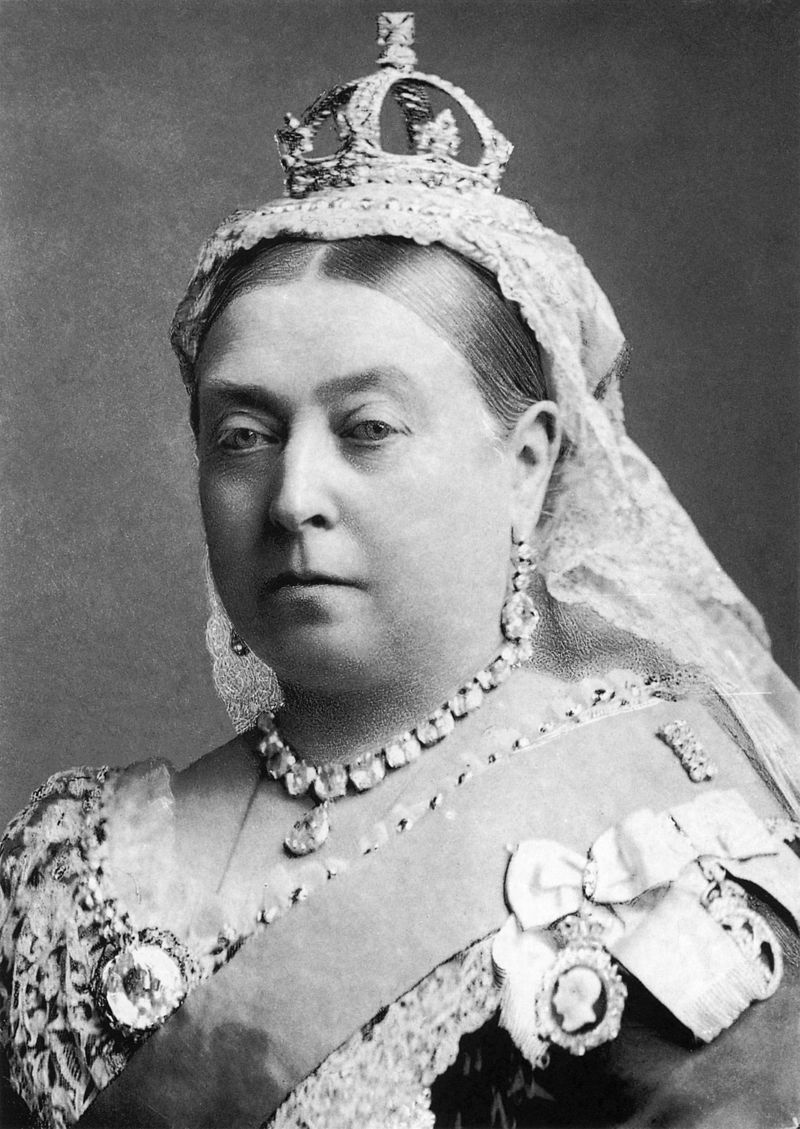
  • Queen Victoria – 1893 Queen’s Speech

    queenvictoria

    Below is the text of the Queen’s Speech given in the House of Lords on 31 January 1893. It was spoken by the Lord Chancellor on behalf of HM Queen Victoria.

    My Lords, and Gentlemen,

    I continue to hold friendly and harmonious relations with all foreign Powers.

    Their declarations in every quarter are favourable to the maintenance of European peace.

    In connection with the approaching evacuation of Uganda by the British East Africa Company, I have deemed it expedient to authorise a Commissioner of experience and ability to examine on the spot, with adequate provisions for his safety, into the best means of dealing with the country, and to report to my Government upon the subject.

    In view of recent occurrences in Egypt, I have determined on making a slight augmentation in the number of British troops there stationed. This measure does not indicate any change of policy, or any modification of the assurances which my Government have given from time to time respecting the occupation of that country.

    The Khedive has declared, in terms satisfactory to me, his intention to follow henceforward the established practice of previous consultation with my Government in political affairs, and his desire to act in cordial co-operation with it.

    In relation both to Egypt and Uganda, papers in continuation of those heretofore presented will at once be laid before you.

    Gentlemen of the House of Commons,

    The Estimates of Charge necessary for the Public Service in the coming financial year have been framed, and will be laid before you at an early date.

    My Lords, and Gentlemen,

    I have observed with concern a wide prevalence of agricultural distress in many parts of the country. It is to be hoped that, among the causes of the present depression, some may be temporary in their nature. But I do not doubt that you will take this grave matter into your consideration, and make it a subject of careful inquiry.

    The Proclamations recently in force, which placed Ireland under exceptional provisions of law, have been revoked; and I have the satisfaction of informing you that the condition of that country with respect to agrarian crime continues to improve.

    A Bill will be submitted to you, on the earliest available occasion, to amend the provision for the Government of Ireland. It has been prepared with the desire to afford contentment to the Irish people, important relief to Parliament, and additional securities for the strength and union of the Empire.

    Bills will be promptly laid before you for the amendment of the system of registration in Great Britain; for shortening the duration of Parliaments; and for establishing the equality of the franchise by the limitation of each elector to a single vote.

    There will also be proposed to you various Bills bearing on the condition of labour, among which are measures in relation to the liability of employers, the hours of labour for railway servants, and a Bill to amend the Law of Conspiracy.

    Your attention will likewise be invited to measures for the further improvement of Local Government, including the creation of Parish Councils; for the enlargement of the powers of the London County Council; for the prevention of the growth of new vested interests in the Ecclesiastical Establishments in Scotland and in Wales; and for direct local control over the liquor traffic; together with other measures of public utility.

    I humbly commend your labours upon these and upon all other subjects to the guidance of Almighty God.

  • William Ewart Gladstone – 1893 Speech on Unemployment

    Below is the text of an answer given in the House of Commons on 1st September 1893 by the Prime Minister and First Lord of the Treasury, William Ewart Gladstone, on unemployment.

    COLONEL HOWARD VINCENT : I beg to ask the First Lord of the Treasury whether, in negatively replying to the representations recently made to him on behalf of the large number of persons in London and elsewhere now without employment, he has considered the state of affairs disclosed by the last number of The Labour Gazette, officially published by the Board of Trade, as to the decline in trade, the increase in pauperism, the 20,000 highly skilled artizans unemployed, and the widespread reduction in wages; and if the Government propose to take any steps to mitigate the consequences to the masses of the people?

    MR. W. E. GLADSTONE : I cannot help regretting that the hon. and gallant Gentleman has felt it his duty to put the question. It is put under circumstances that naturally belong to one of those fluctuations in the condition of trade which, however unfortunate and lamentable they may be, recur from time to time. Undoubtedly I think that questions of this kind, whatever be the intention of the questioner, have a tendency to produce in the minds of people, or to suggest to the people, that these fluctuations can be corrected by the action of the Executive Government. Anything that contributes to such an impression inflicts an injury upon the labouring population. Every and any suggestion with reference to the improvement of the position of the people, whether in respect to fluctuations in trade or any other matter, is always entitled to and will have our best and most careful consideration; but I believe the facts are not quite correctly apprehended. The decline in trade is not greater now than at previous periods of depression from which there has invariably been a recovery. Although there is a slight increase of pauperism as compared with last year, pauperism is much less in proportion to the population than at any previous period of our history. The Return of the Local Government Board for the year 1892 shows a percentage of 2.5 of the population, as compared with 3 per cent. in 1882, and 4 per cent. or 5 per cent. 20 or 30 years ago. The unemployed among the artizan population are at present about 6 per cent. for the Unions making Returns, but this rate is not specially high at this moment, and it has fallen pretty steadily since the beginning of the year, when it was 10 per cent., and higher percentages have been known in previous periods of depression.

    COLONEL HOWARD VINCENT : Is it not proposed to take any steps at all in the matter?

    MR. W. E. GLADSTONE : I have stated that I am not aware of anything in the present depression of trade which indicates any duty incumbent upon the Government except the duty of considering any proposal or suggestion which may be made, and which has about it the smallest promise of utility.

    MR. J. BURNS : Will the right hon. Gentleman consider, with the President of the Local Government Board, the desirability of again sending a Circular Letter to all the Local Authorities asking them to give employment to the unemployed on reproductive and useful works, as was done in 1886, 1888, 1890, and 1892 by the late President of the Local Government Board?

    MR. W. E. GLADSTONE : Yes; I shall be happy to consider that question.