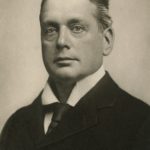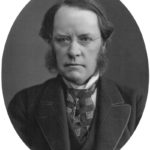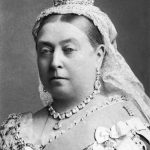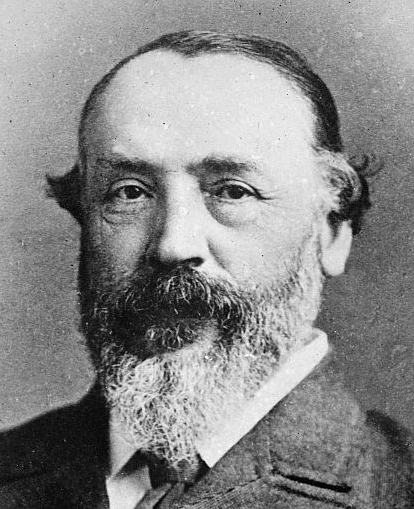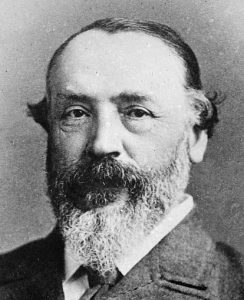
Below is the text of the speech made by Henry Labouchère, the then Liberal MP for Northampton, in the House of Commons on 23 August 1886.
MR. LABOUCHERE said, that at present they were in a somewhat curious political situation. They had a Tory Ministry in power without a Tory majority of their own supporters. Upon the Opposition side of the House they had Gentlemen whose policy was not to oppose the Tory Ministry, and the Tory Ministry were dependent for their maintenance in Office on Gentlemen on the Opposition side of the House who disagreed with some of their own Party. They were engaged in thanking Her Majesty for Her Gracious Speech. Certainly, considering that the Speech contained absolutely nothing, they were grateful for exceedingly small mercies. It was well known that the Speech was only nominally that of Her Majesty; in reality it was the Speech of the Ministry, and he should, therefore, not be wanting in respect if he said that the Speech seemed to him to be conceived in the spirit of the demand of the footpad—”Give me your purse, and say nothing whatever about it. Don’t venture to talk.”
That wonderful Speech had been very short; but it had been supplemented by the speech of the noble Lord the Leader of the House, who had said that the policy of the Government was a policy of immense deliberation. Well, but the gifted beings who ruled over them had deliberated. They contemplated the appointment of a certain number of Commissions in Ireland; and in the meantime they had sent a Major General there to look after the Irish, and they assured the Irish landlords that if that Major General was not successful in enabling them to obtain their full rents, they would ask the British taxpayer to make up the difference to them. The Dissentient Liberals on his side of the House were silent. He did not know whether silence gave consent to the policy of Ministers. All they knew respecting the opinions of those Gentlemen was that they had opposed the Statutory Parliament proposed by the late Prime Minister, and if he were to judge from their Election orations they were as strongly opposed to the Land Purchase scheme of the Chancellor of the Exchequer. They appeared to have preferred that the destinies of the country should be in the hands of the noble Lord the Chancellor of the Exchequer, rather than in those of the right hon. Member for Mid Lothian, because of their disapproval, not only of the Statutory Parliament, but of the Land Purchase Bill of the late Government.
Their objections to those plans must have been very strong to lead them to support the Tory Party during the late Elections, and particularly to have supported the Chancellor of the Exchequer, who put forward an Electioneering manifesto, which, might be taken, from the noble Lord’s position in the Party, to be the manifesto of the Party of which he was now the Head in that House. In that manifesto the noble Lord spoke of the right hon. Member for Mid Lothian as having been guilty of a conspiracy more base than any of the designs and plots which he had conceived for the last 25 years—referred to the right hon. Gentleman’s plans as the outcome of political hysterics and worthy only of Colney Hatch or Bedlam. This “tissue of absurdities,” as the noble Lord termed the Prime Minister’s Bill, was produced for no other reason than “to gratify the ambition of an old man in a hurry.” [Ministerial cheers.] He could understand hon. Members opposite cheering that manifesto, but every Radical must regard it as an insult to the whole Radical Party. He did not believe that manifesto was approved by the Liberal Dissentients. He was surprised that they had not taken the first opportunity of addressing to the public, through their constituencies, a protest against its terms. But who were these Dissentients?
According to themselves and their admirers, they were the flower of the Liberal Party. It was said the other day in one of their organs, or one of the organs of the Conservative Party, which he supposed was the same thing, that everyone would admit that they contained nine-tenths of the ability, reputation, and intelligence of the Liberal Party. Now, he had observed the same sort of thing in a great many newspapers; but newspaper editors had an unfortunate habit of making their standard of intelligence in agreement with themselves. It appeared that the great body of the Liberal Party had sinned against the light. They had no business to have opinions. It was their duty to subordinate their views to their political superiors. But he should take the liberty to make a slight comparison between the flower of the Liberal Party and other Gentlemen who also sat on that side of the House. They had on his side the right hon. Member for Mid Lothian (Mr. W. E. Gladstone). Surely the right hon. Gentleman was equal, he would not say for a moment superior—he would not say anything invidious—to the noble Lord the Member for Rossendale (the Marquess of Hartington). Then there was his right hon. Friend the Member for Derby (Sir William Harcourt). Perhaps his right hon. Friend the Member for West Birmingham (Mr. Chamberlain) would excuse him for saying that the right hon. Member for Derby was his equal.
They all recognized the great ability and intelligence of the right hon. and learned Member for Bury (Sir Henry James). Still, he thought the late Attorney General (Sir Charles Russell) was the equal of that right hon. and learned Member. Then there was the right hon. Member for Great Grimsby (Mr. Heneage). He would not venture to pit any single individual against a Gentleman of such masterly intelligence; but he did almost think that the late Chief Secretary for Ireland (Mr. John Morley), the late President of the Board of Trade (Mr. Mundella), and the late Secretary to the Treasury (Mr. Henry H. Fowler) and other Gentlemen who sat on that Bench, were perhaps almost the equal in intelligence of the right hon. Gentleman the Member for Grimsby. The majority of the Dissentients were Whigs. Now, whatever the Whigs might have been once, they were now a small aristocratic body with exceedingly few followers in the country; they had almost all gone over to the Conservative side. They never had a majority in the House. But they always exercised a weight out of all proportion to their numbers in the Liberal Party, because they had always managed in some way to get in large numbers upon the Executive. They might well use the words, Sic vos non vobis. They always got into Office and kept themselves in Office. In this art they were, of course, the superiors of the Radicals. There was nothing in the alliance of the Whigs with the Tories.
To the Whigs, politics were nothing but a game between two rival aristocratic bands, with Office as the stakes. They had always been ready to ally themselves with the Tories when they thought the Democratic coach was going too fast. He did not blame them for it; but he protested against the prescriptive right which those Gentlemen seemed to think they had to be the Leaders of the Liberal Party, and against the opinion they seemed to entertain that when they spoke Liberals were to hear and obey. Besides this Whig gang and some other non-descripts here and there, there was what perhaps he might term the Birmingham gang. The Head of the Birmingham gang was the right hon. Gentleman the Member for West Birmingham. The gang consisted mainly of the family of the right hon. Gentleman and the present and ex-Town Councillors and Aldermen of Birmingham.
No doubt, the people of Birmingham owed these Gentlemen gratitude for their municipal services; but at the Elections they appear to have subordinated Imperial interests to municipal gratitude. In the country and beyond Birmingham he thought these Birmingham Gentlemen had no sort of influence, and that was not surprising, for the views of the right hon. Gentleman on Ireland had frequently been before the public, and the right hon. Gentleman had never made a speech on the subject without proposing some new plan and contradicting some previous speech of his own. It seemed to him that the basis of the right hon. Gentleman’s policy in regard to Ireland was that no scheme was to be judged on its merits, and that no scheme could possibly be good of which he himself was not the author. In fact, the right hon. Gentleman’s policy was to reverse the words of Dickens—”Short’s your friend, not Codlin.”
The Radicals in the country, as soon as they perceived that the right hon. Gentleman desired to establish a Dictatorship for himself in the Radical Party, protested against it; but they were still more indignant when they found the right hon. Gentleman calling in the Tories as allies in order to force that Dictatorship upon them. He wished to point out that no Dissentient Liberal who had had to submit to a contest at the Elections had been returned by Liberal votes. There was a majority in favour of the policy of the right hon. Gentleman the Member for Mid Lothian in Scotland and Wales, and in Great Britain 1,300,000 Liberal electors voted in favour of it. The Dissentient Liberals were not convinced by the argument of figures, and attributed the votes given in favour of the policy of the right hon. Gentleman the Member for Mid Lothian to a temporary aberration of intelligence on the part of the electors. But there was no doubt that the policy of the Liberal Party must be the policy of the right hon. Gentleman the Member for Mid Lothian. Still these Whig Gentlemen met at Devonshire House. They deposed the right hon. Member for Mid Lothian and chose the noble Lord the Member for Rossendale as their Leader, declared themselves to be the Liberal Party, and proceeded to state what were the views of this Party—namely, to keep the Tories in Office until the recalcitrant Liberals accepted their Leaders. The right hon. Member for West Birmingham was at that meeting.
Not long ago the right hon. Member for West Birmingham denounced the noble Lord the Member for Rossendale as a Rip van Winkle; and the noble Lord the Member for Rossendale pointed out that the right hon. Member for West Birmingham, with his doctrine of ransom, was little better than a bandit. He was very curious to know what concessions on the one side or the other had brought these two hon. Members together. He deplored the fall of the right hon. Member for West Birmingham. He thought the right hon. Gentleman was worthy of better things than to become a mere Whig henchman and to elaborate policies for the Liberal Party in a ducal drawing-room. When the Doge of Genoa visited Louis XIV. at Versailles he was asked what was the most strange thing he had seen at Versailles, and he answered, “Myself.” If the right hon. Gentleman had been asked what was the most strange thing he had seen at Dovonshire House, and had answered sincerely, he would have said, “Myself.” Facilis descensus Averni; and he hoped the right hon. Gentleman would pause in his downward career. If not, the next thing that would be heard of would be that the right hon. Gentleman had been gazetted Lord Chamberlain, and the right hon. Gentleman would produce a genealogy—certified to by the Somerset Herald-at-Arms—that he was descended from the Sire de Chamberlain, who came to England with the Sire de Brassey at the time of the Norman Conquest.
The Radicals did not for a moment ignore the great qualities of the right hon. Gentleman, and would always be glad to receive him as one of their Leaders; but as a Dictator forced upon them by an illustrious family and Tory votes the Radicals would never accept him. He believed that the majority of the electors were in favour of Home Rule, and that the Land Purchase Bill lost the Election. The right hon. Gentleman, the Member for Mid Lothian introduced that Bill, not that he particularly approved of it, but to conciliate the Tories. The right hon. Gentleman did not conciliate the Tories, and alienated a considerable number of Radicals. The fact was that Democrats had no sort of sympathy with landlords in this country, and they had still less sympathy with landlords in Ireland. They considered that the distressful state of Ireland was mainly due to the oppression and iniquities of the Irish landlords; and far from wishing to buy them out they were perfectly ready to leave them to the tender mercies of an Irish Parliament. He had no doubt they would receive justice; and no doubt useful precedents would be established for Democrats dealing with landlords in this country.
He did not envy the position of Her Majesty’s Government. The position of Dissentient Liberals in the House was sufficiently humiliating; but not so humiliating as the position of the Government, who were obliged to bow the knee to the Whigs. He looked upon the noble Lord the Chancellor of the Exchequer as a sort of Sinbad, with the Whigs upon his back, and the Whig bridle in his mouth, and he wished him joy of them. At the same time, he (Mr. Labouchere) was anxious to conciliate. He was always in favour of a fatted-calf policy, and if the Dissentients would come back the rest of the Party would be ready to receive them with open arms. But he did not think even the Prodigal Son would have been received with open arms if he had returned to his father with a band of the companions of his debaucheries to knock at his father’s door. If he had wished to dislodge his father from his seat at the head of the table, and had told the decent, respectable friends of his father that they were to wait on this prodigal son and his companions, he suspected there would have been very little fatted calf for them.
The direct issue at the Elections was the question of Ireland, yet there was no mention of Ireland in Her Majesty’s Speech. That was, however, supplemented by the statements of the Chancellor of the Exchequer in that House, and of a noble Lord in “another place,” and their declaration was that there was to be no Statutory Parliament for Ireland. That was perfectly natural; but when they went on to say that the question was finally settled they went entirely beyond the mark. Did they imagine for one moment that the Irish people would consider the question was finally settled until they had achieved their right to self-government? It was no longer a question between the millions of Great Britain and the population of Ireland, but it was a question between the Radical Democracy and the privileged classes.
It was a new and monstrous doctrine to contend that the Liberal Party when defeated on a great question like that of Home Rule should humbly acknowledge the defeat and declare that they would cease to strive for the ends which they held desirable. How many reforms would the Liberal Party have carried if they had allowed themselves to be ruled by a doctrine of that kind? He trusted that the Irish would not abate one jot or tittle of their demands, and that in the prosecution of their object they would adopt every means which was legitimate in the case of a nation wrestling to be free. He honoured them for their dogged resistance. The vilest of slavery was the slavery of race to race. There were Irishmen all over the world, driven out of their country by oppression and misery, and it was a magnificent sight to see them still united with their brethren in Ireland in their tireless effort to obtain self-government for their unhappy island.
For centuries they had struggled against servitude, for centuries they had clung to their nationality, and now, when the cup was within reach of their lips, they were asked to abandon their design. It had been said that the Chicago Convention would lead to a split; it had done nothing of the kind, but had resulted in an expression of undiminished confidence in the hon. Member for Cork (Mr. Parnell). The Irish might well be proud of their Leader, who was conspicuous for energy, ability, tenacity of purpose, and for the possession of the mens aequa in arduis. His contempt for the insults which were heaped upon him by the English Press also compelled admiration. When silent, he was told that he did not dare to speak, and that he was a coward; when he spoke, he was told that he could not be believed, because he was a liar. Sometimes he was even called an assassin; but he could treat all these attacks with contempt, because he had gained the love of his countrymen and the respect of every Englishman whose respect was worth having. It had been said that Jefferson Davis had “made a nation; “but it might with even more truth be said that the hon. Member for Cork had made the Irish nation.
It was a curious fact of journalism that the two men most grossly abused were the two men most popular in their respective nations—the hon. Member for Cork and the right hon. Member for Mid Lothian. Hon. Members opposite called the followers of the hon. Member for Cork a mercenary band, because they were supplied with money from America for Party purposes. That Irishmen abroad should send over money to enable Ireland to achieve what she desired showed their ineradicable love for their country. The sneer came with exceedingly bad grace from representatives of the privileged class. How many Gentlemen sitting opposite, he should like to know, had had their Election expenses paid out of funds subscribed by Dukes and Marquesses? It would appear that while it was a dishonourable thing for a poor Member to receive help from his country, it was an honourable thing for Gentlemen opposite, and perhaps some Dissentients on his own side of the House, to sit as the henchman, sycophants, and followers of some noble Duke or other.
The intention of the present Government in regard to Home Rule was perfectly obvious. It was that nothing in the shape of local self-government should be given to Ireland. He knew that the Chancellor of the Exchequer had talked vaguely of some scheme which should apply equally to England, Scotland, and Ireland; but no good could come of any identical scheme for the three countries, because a plan suited to England would not be suited to Scotland, and certainly not to Ireland. Like some of his Predecessors, the noble Lord the Leader of the House had already begun to juggle with the figures relating to agrarian crime. When it served their purpose Ministers declared that there was no agrarian crime, and when the contrary served their purpose better they said that there was a vast amount of it. The noble Lord had said that this kind of crime had increased, and he doubtless hoped that it would increase to a still greater extent.
Winter was coming on, evictions were becoming more in number, and the noble Lord was about to commission the military to aid in carrying them out. That was what he called “maintaining order.” Was it possible to suppose that when men should see their wives and children driven from their homes there would be no disturbance in Ireland? [An hon. MEMBER: Hear, hear!] An hon. Member opposite said “Hear, hear!” He should despise the Irish if in such circumstances they were to remain passive.
Well, these disturbances would serve the Government as an excuse for not granting any kind of Home Rule, and then would come the Salisbury policy—the Hottentot policy—of “20 years’ firm government.” At the end of that period, if the Irish kissed the rod, they would then perhaps have some small modicum of local self-government given to them. It had been the object of the Tory Party to show that if Home Rule were granted there would be disturbances in many parts of the country, and with that view the noble Lord proceed to Belfast, and there fanned the flames of religious bigotry, and when his efforts had been crowned with success, and when disturbance did break out, he and his Friends came forward saying—”We have proved our case, for you see the bare idea of Home Rule has been the cause of serious disturbances.”
He thought, for his own part, from their experience of the noble Lord and his Friends and their manœuvres in regard to Belfast that they were most anxious and would do their best in order that there should be disturbances throughout Ireland. The fact was the Tories—the privileged classes—did not want this Irish Question settled. They were not such fools as to kill the hen that laid the golden eggs. Ireland was the best card in their hands. They knew that there was a strong feeling in the country against the privileged classes and their privileges, and they considered it good policy to divert attention from them by stirring up ill-feeling and race animosity in Ireland. He rerejoiced at the declaration of the late Prime Minister that he would never cease to protest till Ireland had a Domestic Legislature. That pronouncement would be a message of peace and goodwill to Ireland.
The Unionists and the Conservatives declared they would never consent to the establishment of such a Legislature for Ireland, so that no compromise between them and the Radicals was possible. But if the Liberal Party were true to Ireland, and the Irish were true to them, he had no doubt that the cause would win in the end. The policy of the masses would overthrow the policy of the classes. The noble Lord did not limit himself to a negative policy, but announced that a certain General would be sent to Ireland. No doubt this General was a brave and brilliant soldier, but it was singular that in the exercise of his profession he had been mainly occupied in slaying and crushing the Nationalists of Africa. The late Secretary for Ireland (Mr. John Morley) declined to sanction the employment of the military and constabulary in the work of rent collecting, and it was owing to this that Ireland had been comparatively peaceful. He wished to know whether the Military Forces of the Crown were to be employed only in preventing outrages or also in aiding the landlords to collect their rents? If they were to perform the latter duty, it was vain to hope for peace or quiet in Ireland. Then the noble Lord had announced the proposed appointment of various Commissions. It seemed to him that this Government might fairly be described as one of Commissions and omissions. The first Commission was to be one for drainage and to be composed of men well known in engineering and contracting works; so contractors would benefit if nobody else did. But this work ought to be the work of an Irish Parliament.
The country had had Commission upon Commission, and the question was whether any real work was now to be done or not? The other Commission was to investigate the operation of the Land Act in Ireland. It had been admitted by all, he thought, with the exception of the noble Lord, that judicial rents were at present and must in the nature of things be too high owing to the fall in the value of produce. The noble Lord stated that the Commissioners in awarding the judicial rents had taken into consideration the possible fall of the value of produce. He never heard that stated before, and no one who was concerned in the forming of the Commission or the Commissioners themselves had any such idea. It should be remembered that there were 530,000 holdings in Ireland that could not possibly bear any rent at all and enable the tenants to live and thrive at the same time.
Therefore, the formation of this Commission was nothing more than a dilatory plea, and meant very little. But the Government went further, and stated their views with regard to the Land Act. The noble Lord on the Front Opposition Bench, and the noble Lord on the Ministerial Bench, had laid it down that the judicial rent was a final settlement of the whole question of rent with regard to the landlords. When the rent was reduced, the landlords, as he understood it, were guaranteed that they should not in any way suffer if the tenant was unable to pay the rent. The second proposition of the two noble Lords was that dual ownership in the land was undesirable in Ireland. The noble Lord opposite, on these two propositions, founded what he took to represent the policy of the Government—namely, that the State was bound to indemnify the landlords if they did not receive any rent, or a rent less than that which they had a right to under the award of the Land Commission; and that the State ought to buy out the landlords of Ireland. But it was not only that the State ought to buy out the landlords, but that it ought to buy them out not at the actual commercial price of the land now, but upon the value at which it stood in 1881.
Then he should like to know where the money was to come from for all this? He presumed that it was, if possible, to be screwed out of the Irish people; and if it could not be got in that way, it was to be drawn from the English people. In any case, it was obvious that the English would have to give a guarantee for it. In fact, according to the reasoning of the noble Lords, we had already given the Irish landlords a guarantee for the amount of the judicial rent, and if the landlords were bought out we should have to give a guarantee for the payment of £300,000,000. What was this but a Land Purchase scheme?
What was the difference between this and the Land Purchase scheme of the right hon. Gentleman the Member for Mid Lothian? The only difference was that they were to receive more money than they would get under the scheme of the right hon. Gentleman. He was glad that the hon. Member for the Scotland Division of Liverpool had protested against such a scheme. He was glad that the hon. Gentleman and the Irish Convention had stated that the Irish people were not ready to sell their birthright for any such mess of pottage. As far as he could see if they did so they would be called upon to pay for the pottage. If we were mortgagees for the greater part of the land, and we guaranteed the rent to the owners of the rest, was it likely that we should grant the Irish Home Rule? It would be said that the enormous financial interests which, we had in Ireland gave us a right to remain there. They knew very well that this scheme was a simple mode of rendering Home Rule impossible. He should like to know what the Conservatives had to say to such a scheme, and what was the opinion of the Dissentient Liberals with regard to it? Liberal Members knew that their constituencies were placarded with great broadsheets denouncing them because it was said that if they were elected the English taxpayers would have to pay a vast sum of money.
The Conservatives and the Unionists in Northampton united to oppose him and his Colleague, and the result of the coalition of the two Parties was that they hired a donkey. This quadruped went about the streets with great placards on his back, stating that if he and his Colleague were elected the unhappy people of Northampton would have to pay their share of £150,000,000, which the late Prime Minister was going to take out of the pockets of the British taxpayers and give to the Irish. It appeared to him that this donkey represented the policy of the Unionists and of the Conservatives. The Dissentient Unionists, more than anyone else, protested against this scheme of Land Purchase, and sided with the Government. He thought that they should make some public announcement at once upon the subject. What had the noble Lord the Member for Rossendale and the right hon. Gentleman the Member for West Birmingham to say to it?
The right hon. Gentleman distinguished himself by his declaration that the landlords and the privileged classes ought to pay ransom; but it would seem, according to this scheme, that the plan of ransom existed, but that the ransom ought to be paid to the landlords. Was the right hon. Gentleman in favour of the scheme, and did he propose to vote for it when it was brought forward? Both sides of the House had protested against any scheme of Land Purchase, and it was no part or parcel of the scheme of the right hon. Gentleman the Member for Mid Lothian for the settlement of Ireland. The right hon. Gentleman asked the constituencies merely to say whether they were in favour of a domestic Legislature for Ireland. If that was the case, and there was a majority in the House and in the constituencies against a Land Purchase Scheme, it would be perfectly monstrous if such a scheme were forced upon the House, and, by arrangements and intrigues, carried through. Before any such scheme was passed there should be an appeal to the country. He quite understood the dislike of hon. Gentlemen opposite to such an appeal. They were eager for an appeal in the last Parliament. But he should like to know whether the country had been consulted upon this Land Purchase Scheme?
So far as it had been consulted, it had pronounced against any such scheme; and he submitted that they ought to use every Form of the House in order to insist that before the country was pledged to a scheme involving, perhaps, £300,000,000, it should have an opportunity of expressing its opinion upon it.