Blog

  • Claire Coutinho – 2024 Speech on the Clean Energy Superpower Mission

    Claire Coutinho – 2024 Speech on the Clean Energy Superpower Mission

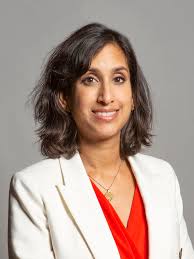
    The speech made by Claire Coutinho, the Shadow Secretary of State for Energy Security and Net Zero, in the House of Commons on 18 July 2024.

    I would like to put on the record my disappointment not to get the statement in good time. I know that the right hon. Gentleman will want to provide us with the same courtesy that we tried to provide him when we were in government. That being said, I congratulate him on his return to government. I was sad not to see more of him during the election campaign, particularly because our ability to secure enough cheap energy will be crucial to this nation’s success in the decades ahead. I would also like to put on record my thanks to the officials he will now work with.

    I wish the right hon. Gentleman well in his endeavour, but energy will be this Government’s big test. They talk a good game on growth, but the Secretary of State’s energy policy is their greatest liability. In government, we built more offshore wind than any other country bar China. We set out the largest expansion of nuclear power in 70 years. We said that, yes, we will need oil and gas in the decades ahead, as the Climate Change Committee has said, and we should use British oil and gas where needed. We are in a global race for energy, and demand will be higher in the years ahead because of data and artificial intelligence.

    If the right hon. Gentleman’s plans to decarbonise the grid by 2030 are in place, we need to know what they will do to people’s energy bills, our energy security and our reliance on the current dominant player for cables, batteries and critical minerals—China. He is happy to quote the Climate Change Committee, but it also acknowledged that we will need oil and gas well into 2050. He must answer: where would he like that to come from?

    When it comes to quotes, he should consider some from the business world who have commented on his policy, such as the chief executive of Mitsubishi Power, who said that his plans would require a “huge sacrifice” by the country, citing the costs of the Secretary of State’s approach. The chief executive of Ineos said that his approach to energy was “absurd”, leaving us dependent on imports of foreign fuels with higher emissions and doing nothing for the climate. Even the GMB said that his plans were “unviable” and would lead to power cuts, blackouts and enormous cost. Unite has said that the Government’s plans for the North sea would turn oil and gas workers into the coalminers of their generation.

    The right hon. Gentleman must answer why he would like to import gas with much higher emissions. How many jobs will be lost from his plans? How much investment into the new technologies of the future, such as hydrogen, carbon capture and offshore wind, will be lost? Will he meet those workers and explain to them what will happen to their livelihoods?

    During the election, the right hon. Gentleman claimed that he would lower bills and save families £300. However, those numbers are already in the savings, and no one on his side can set out the cost of his plans to decarbonise the grid by 2030. Who will pay for those network costs? What will they do to people’s standing charges, which were already too high?

    The right hon. Gentleman also, I think, commented on having a say in terms of communities. The energy infrastructure he will need, and the fact that he wants to go further and faster, will have a huge impact on rural communities. Their concerns must be addressed. As I set out, the plans for our energy cannot come at the expense of our food or national security.

    In his statement, the right hon. Gentleman accused me of dither, but as he will know from his officials, in at least one of the cases he has signed off I had already instructed some time ago that I was minded to reject it, and that paperwork was being prepared. He must set out urgently what his criteria will be. In one case, he overturned an expert examining authority. In another case, he signed off a solar farm which will be 40% on our best and most versatile agricultural land. Did he know that was the case? If so, what was his basis for finding that acceptable? Will he continue our efforts to build more solar on rooftops? I think he mentioned that he would reconvene the solar taskforce. I hate to tell him, but it had never been disbanded and we were due to publish that work. So, I would like to know what date he will be able to publish that work.

    In conclusion, the Secretary of State’s party won the election and promised change, but he was not on show during that campaign to answer these critical questions of how he was going to provide that change and what it will mean for the country. What will his plans mean for the price of electricity? What will they mean for our ability to keep the lights on? What will they mean for struggling families’ bills, for our economy, and for the livelihoods of oil and gas workers? What will they mean for our reliance on China? For all that the Labour Government talk about growth, they will not be able to deliver on that with the Secretary of State’s plans for energy. I hope that in the months ahead he will set out some of that detail to be examined.

    Edward Miliband

    May I start by congratulating the right hon. Lady on her recent engagement? I wish her and her fiancé all the best for the future. We may disagree on some issues, but I believe this Government and the right hon. Lady can at least share a belief in long honeymoons. [Laughter.]

    On the right hon. Lady’s response, I have to say that I was disappointed. The lines were very, very familiar. That is because they were the lines she has used for the last year. And here she comes today to the House and repeats the lines as if the intervening meteorite has not hit the Conservative party: the worst election result in 200 years for her party. The truth, as sensible Conservatives know, is that the lurch she worked on a year ago with the former Prime Minister, the Leader of the Opposition, the right hon. Member for Richmond and Northallerton (Rishi Sunak), was an electoral disaster for the Conservative party—the lurch away from climate action. What we saw in her statement is the classic dilemma for the Conservative party, which we will see played out, I hope, for many long years of Opposition. The dilemma is do they go the Reform route to be climate deniers, or do they actually re-embrace climate—[Interruption.]

    Mr Speaker

    Order. Can I just say that I do not need any advice? I will decide whether it is a question. It is an answer, actually.

    Edward Miliband

    On the points the right hon. Lady made, there is a fundamental issue, which is that unless we drive for clean energy—this is what the Climate Change Committee said; I strongly recommend that right hon. and hon. Members read it—we will end up energy insecure. We had the worst cost of living crisis in generations because of our exposure to fossil fuels, both domestically and internationally, set and sold on the world market. Unless we drive for clean energy, we will end up paying more for energy. The House would not know that from what she said about our 2030 target. She had a target when she was in government of 95% clean power by 2030. Of course, targets did not matter for the previous Government, because they were always miles away from reaching them.

    As for the North sea, we set out our manifesto position, which is not to issue licences to explore new fields but to keep existing fields for their lifetime. Here is the truth of the conversation that we must have. The fate of North sea oil and gas communities is defined by these questions. Do we drive forward the clean energy of the future? Have we a plan for carbon capture and storage? Have we a plan for hydrogen? Have we a plan for offshore wind? The Conservatives had no such plans, so we will take no lectures on just transitions from them.

    The right hon. Lady had other lines that were a rehearsal of the election. Let me say this to her, on the solar question. She referred to one particular planning decision, and I do think she has a degree of brass neck. She criticised me for overturning the planning authority. I am in a quasi-judicial role, so I will be careful about what I say, but she had this in her Department for a year. She could have agreed with the planning authority and rejected the application, but she chose not to do so. That is the reality.

    In my experience, when you lose a general election a period of reflection is in order, and I say to Conservative Members that they need to reflect long and hard on the signals that they sent in this election. Their climate lurch was a disaster—a disaster for them electorally, but, much more important to me, a disaster for the country. Under this Government, Britain is back, open for business and climate leadership.

    Bill Esterson (Sefton Central) (Lab)

    It is great to see you back in the Chair, Mr Speaker. It is also great to see the Secretary of State at the Dispatch Box on this side of the House again. I welcome what he said about the jobs, lower bills, energy security and climate action that lie at the heart of this Government’s plans. That is very true in respect of the Liverpool city region, where offshore wind—as he said—will play an important and increasing role in our energy future, along with onshore wind, solar power, hydrogen, carbon capture and nuclear energy. However, we also have exciting plans for tidal energy in the region, and I hope he can confirm that it will form a part of what he wants to achieve through the plans that he has announced.

    Edward Miliband

    My hon. Friend has long been an eloquent advocate for the role that business can play in generating the clean energy of our future and generating prosperity. I can absolutely confirm that we want to embrace the widest range of technologies. Obviously we must ensure that that gives value for money, but what I always say on these occasions is that the climate crisis and the energy security challenge are so big for us as a country that we must embrace every form of technology at our disposal, because that is the only way in which we will succeed.
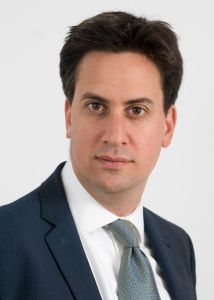
  • Ed Miliband – 2024 Statement on the Clean Energy Superpower Mission

    Ed Miliband – 2024 Statement on the Clean Energy Superpower Mission

    The statement made by Ed Miliband, the Secretary of State for Energy Security and Net Zero, in the House of Commons on 18 July 2024.

    With permission, I would like to make a statement about the Government’s mission to make Britain a clean energy superpower. This Government were elected two weeks ago. Since then, we have lifted the onshore wind ban in England, which had been in place since 2015; consented more than 1.3 GW of solar projects, powering the equivalent of almost 400,000 homes; established the 2030 mission control centre in my Department under Chris Stark to plan and deliver our mission; and established under the Chancellor a national wealth fund to create good clean energy jobs across our country. We are just getting started.

    We are moving at this pace for one overriding reason: the urgency of the challenges we face. We have the challenge of our energy insecurity, laid bare by Putin’s invasion of Ukraine and paid for by the British people in the worst cost of living crisis in generations. We have the challenge of an economy that does not work for working people, with too few good jobs at decent wages. We have the challenge of the climate crisis—not a future threat, but a present reality. This Government have a driving philosophy: homegrown clean energy can help us tackle all those challenges, including crucially energy security. Today the Climate Change Committee publishes its progress report to Parliament. I thank the interim chair Piers Forster and the interim chief executive James Richardson for their excellent work.

    The Committee says in its report:

    “British-based renewable energy is the cheapest and fastest way to reduce vulnerability to volatile global fossil fuel markets. The faster we get off fossil fuels, the more secure we become.”

    It is right. That is why making Britain a clean energy superpower is one of the five missions of this Government, delivering clean power by 2030 and accelerating to net zero across the economy.

    Today, the committee’s report also lays bare the truth about the last Government. Despite achievements, which I am happy to acknowledge, the report is coruscating about the lurch of recent years. It says that

    “last year…the previous Government signalled a slowing of pace and reversed or delayed key policies.”

    It goes on:

    “the…announcements were given with the justification that they will make the transition more affordable for people, but with no evidence backing this claim.”

    It concludes that

    “the country is not on track”

    to hit our 2030 international target of 68% emissions reductions. Indeed, it says:

    “Our assessment is that only a third of the emissions reductions required…are currently covered by credible plans.”

    That is our inheritance for a target to be achieved in just five years.

    I will respond formally to the committee in the autumn and, as part of that, I have asked my Department to provide me with a thorough analysis of its findings, but I can tell the House today that we will hold fast to our 2030 clean power mission and our nationally determined contribution, because it is the right thing to do for our country.

    Today, I set out our next steps. First, onshore wind is one of the cheapest sources of power that we have. To those in the House who claimed they were protecting communities with the onshore wind ban, let us be clear: they have undermined our energy security and set back the fight against the climate crisis. That is why in the first 72 hours of this Government we lifted the ban, which today I confirm formally to the House. Under the onshore wind ban, the pipeline of projects in England shrank by 90%.

    Over a year ago, the last Government’s net zero tsar Chris Skidmore, whom I pay tribute to, made a recommendation of an onshore wind taskforce to drive forward projects. The last Government ignored it; we will implement it. The taskforce will work with developers to rebuild the pipeline of projects.

    Secondly, solar power is among the cheapest forms of power that we have. My right hon. Friend the Deputy Prime Minister and I are determined that we have a rooftop revolution. We must use the rooftops of our country for solar far better than we do at the moment. That is why the Deputy Prime Minister and I are clear that rooftop solar should play an important role, where appropriate, as part of the future standards for homes and buildings. The solar road map—we have been waiting for it for 18 months—will be published soon, with greater ambition. I have reconvened the solar taskforce to deliver that objective.

    As we face up to the challenge of the energy transition, we must also plan for how we use land in this country to ensure a proper balance between food security, nature preservation and clean energy. After dither and delay under the previous Government, the Environment, Food and Rural Affairs Secretary will publish a land use framework working in tandem with our spatial energy plan.

    I also assure the House that communities will continue to have a say on any proposals in their area. It is important for this Government that where communities host clean energy infrastructure, they should directly benefit from it. But we will not carry on with a position where the clean energy we need does not get built and the British people pay the price.

    Credible external estimates suggest that ground-mounted solar used just 0.1% of our land in 2022. The biggest threat to nature and food security and to our rural communities is not solar panels or onshore wind; it is the climate crisis, which threatens our best farmland, food production and the livelihoods of farmers. The Government will proceed not on the basis of myth and false information, but on evidence. Every time, the previous Government ducked, delayed and denied the difficult decisions needed for clean energy, that made us less secure, raised bills and undermined climate action. No more.

    Thirdly, offshore wind will be the backbone of our clean energy mission. Allocation round 5, overseen by the last Government, was a catastrophe for the industry, with no offshore wind contracts awarded. The upcoming round is a critical test. We will get this crucial industry back on its feet. By the beginning of August, I will report back on the budget for AR6 to ensure that as much clean, home-grown energy as possible gets built while ensuring value for money.

    Our fourth step is the Great British Energy Bill announced in the Gracious Speech. I am extremely proud that this is the first Bill for decades that will enable us to establish a UK-wide publicly owned energy generation company. The truth is that there is already widespread public ownership of energy in Britain, but by foreign Governments. We have offshore wind farms in the UK owned by the Governments of Denmark, France, Norway and Sweden through state-owned companies. Those Governments know that a publicly owned national champion is part of a modern industrial strategy and generates a return for taxpayers, crowding in, not crowding out, private investment. For too long, Britain has opted out and lost out. Today, we say: no more.

    Great British Energy, headquartered in Scotland, will invest in home-grown clean energy to increase our energy independence, create good jobs with strong trade unions and tackle the climate crisis. It will invest in technologies such as nuclear, offshore wind, tidal, hydrogen and carbon capture, and ensure a just transition for our oil and gas communities. GB Energy will also oversee the biggest expansion of community energy in British history through our local power plan. The Government believe in the ownership of British assets by the British people, for the benefit of the British people. Following the people’s verdict at the general election, I hope that this is a patriotic mission that the whole House can get behind.

    I have seen 19 years of debates on climate and energy in this House. The clean energy transition represents the biggest transformation of our economy for 200 years, and it is massively challenging. We have been at our best as a country, and as a House, when we have worked together for the sake of the national interest. I pay tribute to people of all parties who have been champions of this agenda over the past 14 years: Baroness May, who legislated for net zero; the right hon. Member for Kingston and Surbiton (Ed Davey), who oversaw the growth of offshore wind; Caroline Lucas; and on the Labour Benches, my friend Alan Whitehead.

    One of my early decisions was to re-establish the role of the Secretary of State as the lead climate negotiator in my Department, because we can only protect future generations with strong action at home and leadership abroad. Next week in London I will host the President of this year’s COP29 in Azerbaijan. He will be joined by the Presidents of COP28 and COP30. I have invited the President of COP 26, Lord Sharma, who presided with such distinction, to join our discussions. This is a sign of how I intend to go on—working with people of all parties and none in this national endeavour. That is what the British people have a right to expect of us. As the Prime Minister rightly says, “Country first, party second.” That is more true on this issue than any other. This Government will act at pace and work with anyone who shares our mission. I commend this statement to the House.

  • Greg Smith – 2024 Comments on Prison Capacity

    Greg Smith – 2024 Comments on Prison Capacity

    The comments made by Greg Smith, the Conservative MP for Mid-Buckinghamshire, in the House of Commons on 18 July 2024.

    I listened very carefully to the Lord Chancellor’s comments about Members present and past who had legitimate concerns about new-build prison proposals in their constituencies. She will no doubt be aware of the proposals for a new mega-prison in Buckinghamshire on farmland adjacent to HMP Spring Hill and HMP Grendon. Those proposals are deeply unpopular in my constituency, first, on fairness grounds—they are affecting communities just one mile from the construction of HS2, which are already under siege from big construction—and, secondly, because the prisons in Buckinghamshire cannot recruit to the vacancies that they already have. Fully staffing a brand new prison is just not going to happen, so I ask the new Lord Chancellor to do my constituents the courtesy of sitting down with me so that she can hear why this particular proposal just will not work.

    Shabana Mahmood

    I thank the hon. Member for his question. May I gently say that this is part of the problem? I am not going to get into the specifics of his particular constituency or those particular planning proposals—those proposals are already within the planning system, as the shadow Lord Chancellor, the right hon. Member for Melton and Syston (Edward Argar), alluded to in his remarks—but prisons have to be built in this country. We have to do more building, we have to do it more quickly, and we have rightly said that we will always treat prisons as of national importance. That was actually a change brought in by the previous Government to unlock the delays that they had faced for many years, particularly when concerns were raised by their own Members of Parliament.

    We take too long to build any kind of infrastructure in this country. That will not be the approach of this Government, so while I am very happy to consider any proposals that any Members of this House have about specifics in their constituency, the reality is that prisons will always be deemed by this Government to be of national importance, and they will be built.

  • John McDonnell – 2024 Comments on Prison Capacity

    John McDonnell – 2024 Comments on Prison Capacity

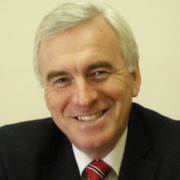
    The comments made by John McDonnell, the Labour MP for Hayes and Harlington, in the House of Commons on 18 July 2024.

    I declare a non-pecuniary interest: I am an honorary life member of the Prison Officers’ Association.

    In seeking to be fair, as she always is, my right hon. Friend is being too kind on the last Government. They brought about a staffing crisis in our prisons that has brought rehabilitation to an end and levels of violence that we have never seen before. Will she bring forward as soon as possible a workforce strategy for our prisons and probation? As a matter of urgency, will she look in particular at Feltham young offenders institution, which has become a violent emergency for staff and for prisoners themselves?

    Shabana Mahmood

    My right hon. Friend is right. I take this opportunity to pay tribute to all the staff in our prisons, who do an excellent job under very difficult circumstances. He is right to acknowledge that the levels of violence in our prisons have been increasing, placing those staff at ever greater risk. This is similar to the question that I just answered on probation. When prisons are so badly overcrowded, it is incredibly difficult to run any kind of regime that can do good work on rehabilitation, or provide a safe atmosphere for the staff who work in them.

    I will, of course, have conversations in the usual way when it comes to discussions about the spending review and other measures that the Chancellor will bring forward. I hope that I need not tell my right hon. Friend that I will bat hard for our Department and the people I represent. That will all happen in the usual way. We are committed to publishing our 10-year capacity strategy as quickly as possible so that we can begin the process of returning our system to some sort of health. I thank him for raising Feltham; I will look at that and write to him.

  • NHS England – 2024 Statement on IT Outages

    NHS England – 2024 Statement on IT Outages

    The statement made by NHS England on 19 July 2024.

    The NHS is aware of a global IT outage and an issue with EMIS, an appointment and patient record system, which is causing disruption in the majority of GP practices.

    The NHS has long-standing measures in place to manage the disruption, including using paper patient records and handwritten prescriptions, and the usual phone systems to contact your GP.

    There is currently no known impact on 999 or emergency services, so people should use these services as they usually would.

    Patients should attend appointments unless told otherwise. Only contact your GP if it’s urgent, and otherwise please use 111 online or call 111.

  • Alistair Carmichael – 2024 Speech on Prison Capacity

    Alistair Carmichael – 2024 Speech on Prison Capacity

    The speech made by Alistair Carmichael, the Liberal Democrat Justice spokesperson, in the House of Commons on 18 July 2024.

    I also welcome the Lord Chancellor to her new position, and thank her for advance sight of her statement.

    It has been apparent for months that measures of this sort would be necessary. These are described as temporary measures, but 18 months is a very long time for temporary measures. There would be a real danger of damaging public confidence in our criminal system if the measures were to be extended beyond that point.

    The answer surely has to be more than just building more prison capacity. The problem is not that our prison estate is too small; it is that we send too many people to prison, and that the time they spend there does nothing to tackle the problems of drug and alcohol dependency, poor literacy and numeracy skills, and poor mental health, which led to their incarceration. Can we hope to hear in the very near future the Government’s comprehensive plan to tackle the issue of the time that people spend in prison?

    Finally, may I bring to the Lord Chancellor’s attention the report published this morning by His Majesty’s inspectorate of probation on the failings of the Cambridgeshire and Peterborough probation delivery unit? That report outlined that our duty of care to those whom we lock up should not end the day they leave custody. When will we have a response to that report?

    Shabana Mahmood

    I welcome the right hon. Gentleman to his place. On the 18-month period, we have inherited a criminal justice system in complete crisis and at risk of total breakdown and collapse. It will take some time, by necessity, for us to be able to put that right. I do not want to mislead the public that somehow these changes will have a quick effect. The system is in dire straits and it will take time to repair it. It is right that we are up front and honest about that time, and I will update the House regularly.

    As I say, this Government’s approach will be very different from that of the last Government. We will have a regular release of data, and I anticipate that I will regularly appear before Members to talk about that data, but I welcome that opportunity because it is important that the public are kept updated, and that their representatives in this place are able to scrutinise what is happening and hold us to account. We will need time for the measures to take effect to enable us to move the system to a position of greater health.

    In terms of who goes to prison, why and for how long, when we have overcrowded prisons, there is no capacity to do much other than hold people in their cells. The activity that we know is important to help people in the prison system to turn their lives around, come out as better citizens and make better choices, having made amends to society, cannot happen in deeply overcrowded prisons. That is why dealing with the capacity crisis is so necessary not just to prevent the collapse of the criminal justice system but to cut reoffending in the long term. Creating some space will allow us to introduce proposals to bring down reoffending rates in the country.

    On probation, I pay tribute to all probation staff for their tremendous work. My first visit in my new role was to meet probation staff in Bedfordshire. I recognise that they have been working in a system and a service under extreme strain and facing real difficulty. That is why we will onboard 1,000 new trainee probation officers before March 2025 to add extra capacity, and why returning the probation system to health will be a key priority for this Government.

  • Edward Argar – 2024 Speech on Prison Capacity

    Edward Argar – 2024 Speech on Prison Capacity

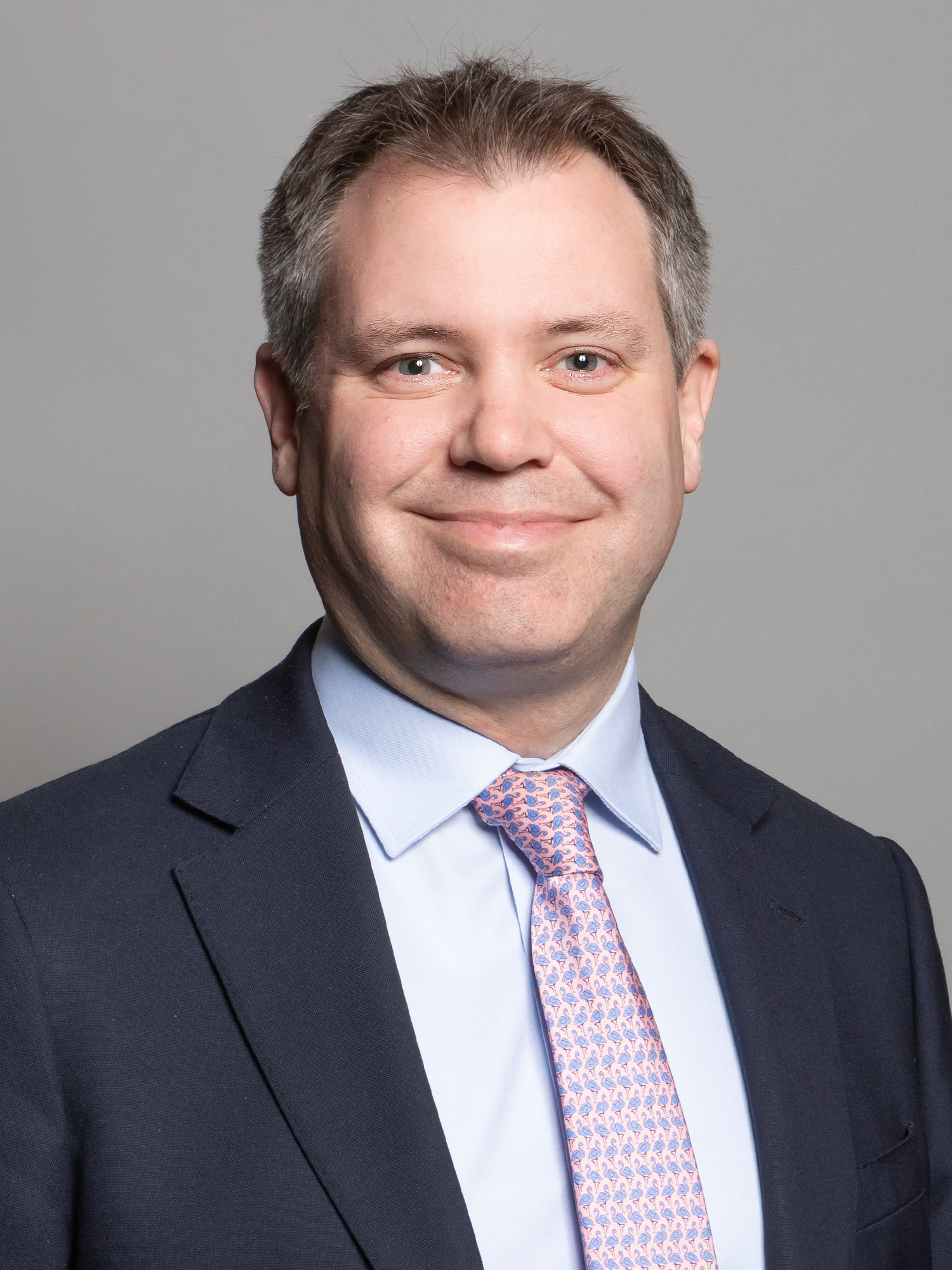
    The speech made by Edward Argar, the Conservative MP for Melton and Syston, in the House of Commons on 18 July 2024.

    I am grateful to the Lord Chancellor for very timely advance sight of her statement. May I take this opportunity to congratulate her on her appointment, as well as the Under-Secretary of State for Justice, the hon. Member for Pontypridd (Alex Davies-Jones)? I congratulate the Minister of State, Ministry of Justice, the hon. Member for Swindon South (Heidi Alexander) on her return to this place. Notwithstanding the occasional tussle across the Dispatch Box, I look forward to working constructively with Lord Chancellor, and to holding her and the Government to account. She is of course a decent, courteous, and incredibly able person, and I wish her well in her role.

    We recognise the challenges and pressures facing the prison and criminal justice system, and the need to ensure that our prisons function effectively. Of course, the Government were well aware of those things when they were in opposition, as I know from challenging oral question sessions. In Government, we took the right decisions to significantly toughen up sentences for those who commit the worst crimes, in order to ensure that society was protected. To reflect that, we set in train the biggest prison building programme since the Victorian era. More than 13,000 additional prison places were delivered while we were in government. Two new prisons opened; one prison is under construction; there are two prisons with planning permission; and one prison is on the cusp of a decision. Labour’s planning permission proposal for prisons would not impact any of those developments. In that respect, it is simply a gimmick.

    Crucially, in the covid pandemic, supported by the then Opposition, we made the tough but correct decision not to mass-release prisoners as other countries did, and we maintained that bedrock of our justice system, trial by jury. Those correct decisions meant less space, and the number of people on remand waiting for trial or sentencing dramatically increasing from around 9,000 to 16,500, with resulting additional pressures.

    In deciding to reduce capacity pressure, the paramount consideration for the Lord Chancellor must always be public protection. With that in mind, although we will of course have to scrutinise the detail of her proposed sentence reduction scheme, I must say that we have significant public protection concerns about what she has announced so far, and I hope that she will be able to address those concerns today.

    The Lord Chancellor set out plans for limited exclusions relating to domestic abuse, but can she confirm that if a domestic abuser is convicted of, say, common assault, as is often the case, they would not be exempt from this policy? What exclusions does she plan to put in place to ensure that the worst, persistent, repeat offenders cannot benefit from this scheme? She set out that this was a temporary measure that will be reviewed after 18 months. What criteria will she set for its ending? Better still, will she commit to sunsetting the measure in the delegated legislation, and to returning to the House on this afresh in 18 months, if needed?

    What additional resources are being made available to probation? We hear what the Lord Chancellor says about getting 1,000 more trainee probation staff by March 2025, but how many of those will actually be new? How many will be additional to those whom we already planned to have in place through the existing trajectory for new trainees? Can she guarantee that no prisoners will benefit from her early release scheme without GPS tags and strict conditions? Indeed, will she mandate the imposition of GPS tracking? Can she confirm to the House progress on bringing HMP Dartmoor’s places back into use, and her long-term plans for HMP Dartmoor’s places? The previous Government committed £30 million to acquire land for building new prisons, and had already begun drawing up a site longlist. Is she expanding that fund, or merely re-announcing the same thing?

    More widely, the Lord Chancellor states that this is a temporary measure to ease pressure, so what are her long-term plans for meeting demand? Is she planning to scrap the tougher sentences for serious crimes that the Conservatives put in place to protect the public, and so to reverse our changes, or is she planning to build more prisons over and above the six that we committed to funding, to meet future demand? If it is the latter, has the Chancellor agreed the significant extra funding needed? Those are the long-term questions to which she and the Government owe this House and the public answers, given the changes that she is making today. I hope that she will be able to give clear answers.

    Shabana Mahmood

    I welcome the shadow Lord Chancellor to his place; we have always worked constructively together wherever appropriate, and I look forward to continuing to do so while he is in post. He made a heroic attempt to gloss over many years of failure in planning by the previous Government. I was surprised that he managed to say it all with a straight face. He knows full well that for many years the previous Government struggled to get such measures past many of their Back-Benchers, not all of whom have returned post the general election, but some of whom remain here, and remain implacable opponents of any kind of planning developments in their constituency. They think that national infrastructure is a good thing as long as it is elsewhere. I look forward to seeing whether there is a change of heart among those on the Opposition Benches. It would be welcome, because this Government will not allow the planning system to prevent our country from having either the prison places or the national infrastructure that we so desperately need. He also knows full well that of the 20,000 places that were supposed to have been provided by the previous Government by 2025, only 6,000 have been delivered.

    I am concerned about the position relating to prisoners on remand. The shadow Lord Chancellor rightly notes that the number of those on remand in our prison estate is around 16,000. Of course, judges need to be able to remand people to prison for public protection reasons. That will not change. He will know, given his former role in the Department, that there are no immediate solutions, because many of those individuals will in the end be sentenced to custody. I am considering all options available to me for driving that number down as much as possible. In the end, we will need our 10-year capacity plan to take account of what we expect the sentenced population to look like.

    On the sentences that are covered by this measure, the shadow Lord Chancellor will know that in order to make a change by means of a statutory instrument, it has to relate to specific offences. That is why we have taken every precaution and every option available to us to exclude sentences connected to domestic abuse. He knows that those will include—I am sure that he has seen the draft statutory instrument—offences related to the breaching of a non-molestation order; stalking, which I mentioned in my statement, including stalking involving the fear of violence, serious alarm or distress; strangulation or suffocation; controlling or coercive behaviour in an intimate or family relationship; the breaching of a restraining order; and a breach of a domestic abuse protection order. The common offences that we know are connected to domestic abuse are caught in the statutory instrument. On multiple and repeat offences, he will know that the decision relies on the combination that is reviewed when the sentencing calculation is done.

    As I said in my statement, I will return in 18 months to update the House. We want to remove this temporary measure as quickly as possible, and we will be transparent throughout. The shadow Lord Chancellor will not need to chase me around this building trying to find out what is happening, as I had to when I was in his position and we were considering the previous Government’s early release scheme. We will be transparent in a way that the previous Government simply were not. We will do a quarterly release of all the data, and we will update the House regularly.

    I am sure that the right hon. Gentleman followed the announcement on Friday closely, so he will know that the announcement on probation does not involve new money. It is a re-prioritisation of resources, because strengthening probation to make sure that it is in the strongest possible position to deal with the early release scheme is incredibly important to us.

    On Dartmoor, the right hon. Gentleman knows the history very well. Safety is our No. 1 priority, and after close monitoring of the situation at HMP Dartmoor, it has been decided that prison will be temporarily closed. I will update the House as the situation develops. I say to him gently that we have committed to a 10-year capacity strategy. We recognise that we need to make sure that this country has the prison places that it needs. We will deliver where the previous Government failed, and we will never allow the planning process to get in the way of having the prisons that we need in this country.

    Longer term, however, we will also look at driving down reoffending, because the entrenched cycle of reoffending creates more victims and more crime, and it has big impacts on our ability to have the capacity that we need in our prison estate. That is why this Government will make it a key priority to drive down reoffending. That is a strategy for creating better citizens, not better criminals. It is a strategy for cutting crime, and in the long term, it will deal with our capacity problems for years to come.

    Bambos Charalambous (Southgate and Wood Green) (Lab)

    I welcome my right hon. Friend to her place on the Government Front Bench. The imprisonment for public protection prison population is more than 2,700; 99% of those people are over tariff, and more than 700 prisoners are now 10 years over their original tariff. Can she accelerate the Ministry of Justice’s refreshed IPP action plan to help to reduce the prison population and right that wrong?

    Shabana Mahmood

    I thank my hon. Friend for that question. The situation with IPP prisoners is of great concern, and I know that huge numbers of Members on both sides of this House care about it deeply. I share that concern. IPP prisoners are not caught in the changes that we are putting forward; those are indeterminate sentences, not standard determinate sentences. We supported the previous Government in what we thought were sensible changes to the licence period and the action plan, and we will continue that work. However, any changes made have to account for public protection risks, first and foremost. We want to make progress with that cohort of prisoners, but not in a way that impacts public protection.

  • NEWS STORY : Secretary of Justice Makes Commons Statement on Prison Capacity

    NEWS STORY : Secretary of Justice Makes Commons Statement on Prison Capacity

    STORY

    Shabana Mahmood, the Secretary of State for Justice and the Lord Chancellor, has made a Commons statement on the shortage of prison places and the Government’s plans for limited early release. In the statement, she said:

    “Since this Government took office two weeks ago, it has become clear that our prisons are in crisis and are at the point of collapse. The male prison estate has been running at over 99% capacity for the last 18 months. We now know that my predecessor warned No. 10 Downing Street but, rather than address this crisis, the former Prime Minister called an election, leaving a ticking time bomb. If that bomb were to go off—if our prisons were to run out of space—the courts would grind to a halt, suspects could not be held in custody and police officers would be unable to make arrests, leaving criminals free to act without consequence. In short, if we fail to act now, we face the prospect of a total breakdown of law and order. Rather than act, the last Prime Minister allowed us to edge ever closer to catastrophe. Last week, there were around 700 spaces remaining in the male prison estate. With 300 places left, we reach critical capacity. At that point, the smallest change could trigger the chain of events I just set out. With the prison population rising, it is now clear that by September this year, our prisons will overflow. That means there is now only one way to avert disaster.”

    Edward Argar, the Shadow Secretary of State for Justice, replied accepting that the Conservative Party were aware of the issue, noting:

    “We recognise the challenges and pressures facing the prison and criminal justice system, and the need to ensure that our prisons function effectively. Of course, the Government were well aware of those things when they were in opposition, as I know from challenging oral question sessions. In Government, we took the right decisions to significantly toughen up sentences for those who commit the worst crimes, in order to ensure that society was protected. To reflect that, we set in train the biggest prison building programme since the Victorian era. More than 13,000 additional prison places were delivered while we were in government. Two new prisons opened; one prison is under construction; there are two prisons with planning permission; and one prison is on the cusp of a decision. Labour’s planning permission proposal for prisons would not impact any of those developments. In that respect, it is simply a gimmick.”

    RESOURCES

    Speech made by Secretary of State for Justice

  • Shabana Mahmood – 2024 Statement on Prison Capacity

    Shabana Mahmood – 2024 Statement on Prison Capacity

    The statement made by Shabana Mahmood, the Lord Chancellor and Secretary of State for Justice, in the House of Commons on 18 July 2024.

    With permission, Mr Speaker, I will make a statement about prison capacity in England and Wales.

    As you know, Mr Speaker, I wanted to make this announcement first in this House. However, given the scale of the emergency facing our prisons, I was forced to set out these measures before Parliament returned.

    Since this Government took office two weeks ago, it has become clear that our prisons are in crisis and are at the point of collapse. The male prison estate has been running at over 99% capacity for the last 18 months. We now know that my predecessor warned No. 10 Downing Street but, rather than address this crisis, the former Prime Minister called an election, leaving a ticking time bomb. If that bomb were to go off—if our prisons were to run out of space—the courts would grind to a halt, suspects could not be held in custody and police officers would be unable to make arrests, leaving criminals free to act without consequence. In short, if we fail to act now, we face the prospect of a total breakdown of law and order.

    Rather than act, the last Prime Minister allowed us to edge ever closer to catastrophe. Last week, there were around 700 spaces remaining in the male prison estate. With 300 places left, we reach critical capacity. At that point, the smallest change could trigger the chain of events I just set out. With the prison population rising, it is now clear that by September this year, our prisons will overflow. That means there is now only one way to avert disaster.

    As the House knows, most of those serving standard determinate sentences leave prison at the halfway point, serving the rest of their sentence in the community. The Government now have no option but to introduce a temporary change in the law. Yesterday, we laid a statutory instrument in draft. Subject to the agreement of both Houses, those serving eligible standard determinate sentences will leave prison after serving 40%, rather than 50%, of their sentence in custody, and will serve the rest on licence. Our impact assessment estimates that around 5,500 offenders will be released in September and October. From that time until we are able to reverse this emergency measure, 40% will be the new point of automatic release for eligible standard determinate sentences.

    The Government do not take this decision lightly, but to disguise reality and delay any further, as the last Government did, is unconscionable. We are clear that this is the safest way forward. In the words of the Metropolitan Police Commissioner, Sir Mark Rowley, these steps are “the least worst option”. He went on to say that

    “the worst possible thing would be for the system to block”,

    and that any alternative to these measures would be “dangerous for the public”.

    I understand that some may feel worried by this decision, but I can assure the House that we are taking every precaution available to us. There will be important exclusions. Sentences for the most dangerous crimes—for sexual and serious violent offences—will not change. That will also be the case for a series of offences linked to domestic violence, including stalking, controlling or coercive behaviour and non-fatal strangulation, as well as those related to national security.

    We will also implement stringent protections. First, this change will not take effect until early September, giving the probation service time to prepare. Secondly, all offenders released will be subject to strict licence conditions, to ensure they can be managed safely in the community. Thirdly, offenders can be ordered to wear electronic tags, and curfews will be imposed where appropriate. Finally, if offenders breach the conditions of their licence, they can be returned to prison immediately.

    Let me be clear: this is an emergency measure, not a permanent change. This Government are clear that criminals must be punished. We do not intend to allow the 40% release point to stand in perpetuity. That is why I will review these measures again, in 18 months’ time, when the situation in our prisons will have stabilised. Throughout, this Government will be transparent. We will publish data on the number of offenders released on a quarterly basis, and we will publish an annual prison capacity statement, legislating to make this a statutory requirement.

    When we implement this change, we will stop the end of custody supervised licence scheme introduced by the last Government, which operated under a veil of secrecy. From the Opposition Benches, I was forced to demand more information about who was being released and what crimes they had committed. This Government have now released that data, showing that over 10,000 offenders were released early, often with very little warning to probation officers, placing them under enormous strain. This was only ever a short-term fix. It was one of a series of decisions this Government believe must be examined more fully, which is why we are announcing a review into how this capacity crisis was allowed to happen and why the necessary decisions were not taken at critical moments.

    The measures I have set out today are not a silver bullet. The capacity crisis will not disappear immediately, and these measures will take time to take effect. But when they do, they will give us the time to address the prisons crisis, not just today but for years to come. This includes accelerating the prison building programme to ensure we have the cells we need. Later this year, we will publish a ten-year capacity strategy. That strategy will outline the steps that the Government will take to acquire land for new prison sites, and will classify prisons as being of national importance, placing decision making in Ministers’ hands. The Government are also committed to longer-term reform and cutting reoffending.

    Too often, our prisons create better criminals, not better citizens, and nearly 80% of offending is reoffending, all at immense cost to communities and the taxpayer. As Lord Chancellor, my priority is to drive down that number. To do that, the Government will strengthen probation, starting with the recruitment of at least 1,000 new trainee probation officers by the end of March 2025. We will work with prisons to improve offenders’ access to learning and other training, as well as bringing together prison governors, local employers and the voluntary sector to get ex-offenders into work. We know that if an offender has a job within a year of release, they are less likely to reoffend. It is only by driving down reoffending that we will find a sustainable solution to the prisons crisis.

    In a speech last week, I called the previous occupants of Downing Street “the guilty men”. I did not use that analogy flippantly. I believe that they placed the country in grave danger. Their legacy is a prison system in crisis, moments from catastrophic disaster. It was only by pure luck, and the heroic efforts of prison and probation staff, that disaster did not strike while they were in office. The legacy of this Government will be different. We will see a prison system brought under control; a probation service that keeps the public safe; enough prison places to meet our needs; and prisons, probation and other services working together to break the cycle of reoffending and so cut crime.

    I never thought that I would have to announce the measures that I have set out today, but the scale of this emergency has forced this Government to act now, rather than delay any longer. This Government will always put the country and its safety first. I commend this statement to the House.

  • Justin Madders – 2024 Statement on the Post Office Horizon Scandal

    Justin Madders – 2024 Statement on the Post Office Horizon Scandal

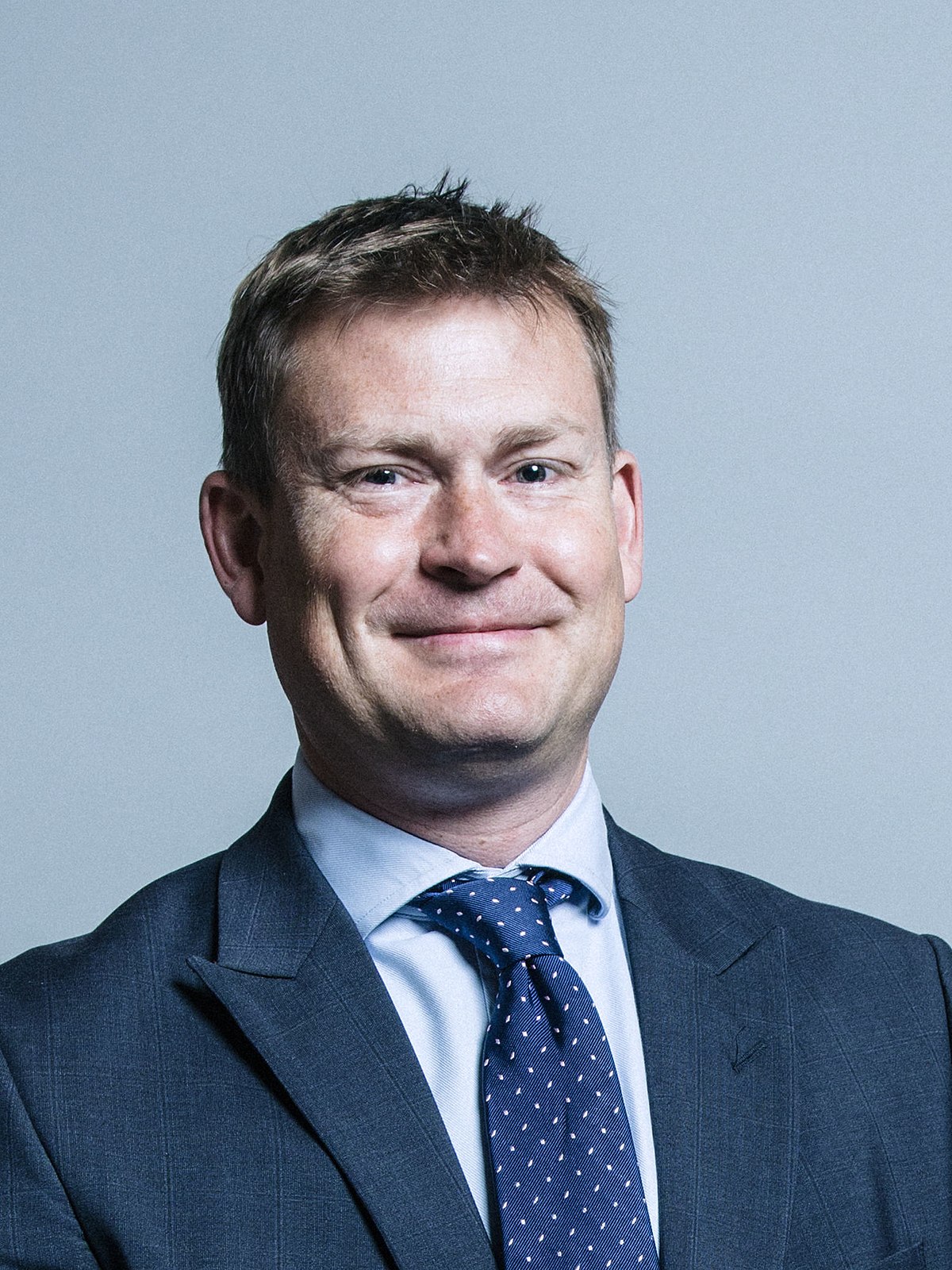
    The statement made by Justin Madders, the Parliamentary Under-Secretary of State for Business and Trade, in the House of Commons on 18 July 2024.

    I congratulate the shadow Secretary of State on his new position and on securing the first urgent question of this Parliament.

    Members will know that the Government made a key manifesto commitment to ensure that justice and compensation are delivered as swiftly as possible for every postmaster caught up in the Horizon scandal. The Secretary of State has already met Sir Alan Bates, Kevan Jones and the chair of the Post Office, Nigel Railton, to discuss the progress being made and what more can be done. The Government intend to make a significant announcement on the new redress scheme before the summer recess. This scheme will apply to postmasters whose convictions have been overturned by the Post Office (Horizon System) Offences Act 2024 passed in the last Parliament.

    Kevin Hollinrake

    I welcome the Minister to his role. I say in all sincerity that I wish him the very best of luck. We on the Opposition Benches, in the national interest, wish the Government to succeed. It is vital that his Department succeeds in its brief. When British businesses do well, we all do well.

    I hope this urgent question, on a matter on which the House has been in agreement, will set us off on the right foot in working together in the national interest. That matter is of course compensation for sub-postmasters affected by the Horizon scandal. I was the previous Post Office Minister, and the House will know of my commitment and my party’s commitment to the individuals whose lives have been torn apart by this scandal.

    It is right that the Post Office (Horizon System) Offences Act received Royal Assent during wash-up to quash the convictions of hundreds of affected postmasters, but the Minister will know that the Act itself does not provide compensation, which is why, alongside that legislation, we announced plans for a new Horizon convictions redress scheme. This scheme will make compensation payments to those who have had convictions quashed by the Act.

    In government, we ensured that Royal Assent was achieved as soon as possible so that there was no gap in the availability of compensation. It is only right that postmasters have access to swift and fair compensation. That is why we overturned those convictions. Those with overturned convictions have the option of immediately taking a fixed and final offer of £600,000. It is also why, in government, we changed the rules for those in the Horizon shortfall scheme so that they are entitled to a £75,000 fixed-sum award, bypassing the assessment process; so that all full and final settlements below that figure would be automatically topped up; and so that an appeal process for those in the HSS is also considered.

    Although I am pleased that, as of 31 May, approximately £222 million has been paid to over 2,800 claimants across the scheme, I must push the Government for more detail on when the redress payments set out by the Horizon convictions redress scheme can be expected—we were told that it would be by July. I also note that the Department for Business and Trade has said that it “continues to work” on the new Horizon convictions redress scheme.

    I ask the Minister—[Interruption]—when will the scheme be up and running? When does he expect the £75,000 top-ups and the HSS appeal process to be implemented, and the victims to be contacted to that effect? When will he open the scheme? Will he announce a date for full compensation under the Horizon convictions redress scheme?

    Mr Speaker

    Order. I gently say to the Chamber that it is a new beginning, and we want to start on the right foot, not the wrong foot. It is difficult to go from Government to Opposition, but there is a two-minute limit for the Opposition and a one-minute limit for the third largest party. Please let’s stick to the rules and start as we mean to go on.

    Justin Madders

    Thank you, Mr Speaker.

    The shadow Secretary of State set out the intent he had in government, which we intend to carry on. We also believe there is absolutely no reason why we should not continue to work on a cross-party basis, as we agree with him on the importance of delivering fast and fair compensation, which is at the heart of all we are trying to achieve. We will be making a statement by the end of July, before the summer recess. As the shadow Secretary of State has already noted, we have committed to do that. We are working at pace with officials, victims and those who have been affected by the scandal to work up the detail, and an announcement will be made in due course.

    Jon Trickett (Normanton and Hemsworth) (Lab)

    It is good to see you back in your place, Mr Speaker. The new Minister will recall the old saying that a new broom sweeps clean, and I am sure he will make progress very quickly indeed. It seems to me that the Post Office scandal reveals a wider problem in British society. Whether it is Orgreave, Grenfell, contaminated blood or the problems at Hillsborough, the British establishment seems incapable of listening to the voices of ordinary people. Will he raise that matter with other Ministers and see whether there is a way for this Government to ensure that is not repeated?

    Justin Madders

    My hon. Friend raises an interesting point. In recent years, we, as Members, have reflected on the question of political accountability for decisions that have been taken and actions that have taken place over many years. We will be reflecting on how best to ensure there is genuine political accountability in the system.

    Mr Speaker

    I call the Liberal Democrat spokesperson.

    Mr Alistair Carmichael (Orkney and Shetland) (LD)

    I also welcome you back to your place, Mr Speaker. It is a genuine pleasure for me, as the Liberal Democrat spokesperson, to be addressing the House on behalf of the third largest political grouping. My party will use the privilege of that position to hold the Government and Ministers to account. We will not be using it simply to stoke division and manufacture grievance. That is what the people of the United Kingdom, and Scotland in particular, voted for.

    At the heart of the Horizon scandal was the culture at the centre of the organisation that failed to respect the work that was being done by sub-postmasters at the frontline. The Minister and the Secretary of State will meet with the chief executive of the Post Office. What evidence have they seen that that culture has actually changed?

    Justin Madders

    I do not know if the right hon. Gentleman is aware that the current chief executive officer has stepped aside for a brief period to concentrate on the inquiry. Over the coming months, we will be reflecting on the important questions that the right hon. Gentleman raises, particularly when the outcome of the inquiry is known.

    Gareth Snell (Stoke-on-Trent Central) (Lab/Co-op)

    Referring to the point raised by my hon. Friend the Member for Normanton and Hemsworth (Jon Trickett), what role does the Minister think this Government can find for third party organisations, such as WhistleblowersUK or those organisations that work with people to highlight such scandals? As my hon. Friend pointed out, this was a systematic failure across Government and society, and we simply cannot allow it to happen again.

    Justin Madders

    My understanding is that the last Government undertook a consultation on whistleblowing. We are reflecting on the outcome of that and on the important point my hon. Friend raises. Across a whole range of bodies in this country, whistleblowers have not been heard. We need to consider whether the current legislation gives them sufficient confidence to speak out, and whether their actions and concerns are being addressed.

    David Mundell (Dumfriesshire, Clydesdale and Tweeddale) (Con)

    Many congratulations on your re-election, Mr Speaker. I congratulate the Minister on his appointment. I know he is genuinely committed to promoting British business at home and abroad, but is he aware of a serious issue flowing from the Horizon scandal that is now affecting current postmasters? In order to express their disgust at what has happened in relation to Horizon, some members of the public are not using the Post Office in the way they did previously. Will he and the Government commit to promote the view that the Post Office is safe to use, because the scandal has been resolved and because using post offices is good for the community?

    Justin Madders

    I am concerned to hear about such incidents. It should go without saying that the postmasters are not the ones who should take the opprobrium of the public on this matter. They are doing a fantastic job. They hold communities together and provide a public service. We should celebrate that and encourage people to use their facilities as much as possible. If the right hon. Gentleman has specific examples of postmasters receiving abuse or people being discouraged to use their services because of the scandal, I would be interested to hear about them.

    Caroline Nokes (Romsey and Southampton North) (Con)

    It is a delight to see you back in the Chair, Mr Speaker. There were many sub-postmasters and mistresses who were not convicted, but who are seriously out of pocket due to the shortfalls that they themselves made up and deeply traumatised by the experience that they went through. Can the Minister provide reassurance that the Department will seek to ensure that they are supported, and that the compensation scheme is swift, effective but also very straightforward for them?

    Justin Madders

    I thank the right hon. Member for her question. Those are the principles that we want to address and carry on with from the previous Government: the system should be fair, swift and simple. We know that postmasters have already gone through an incredibly difficult time. We do not want to make it even harder by having a convoluted system. We absolutely agree that justice should be fair, quick, complete and straightforward for people.

    Kit Malthouse (North West Hampshire) (Con)

    Beyond compensation, one of the most important things that campaigners are looking for is consequences for those people who played a part in the creation of this scandal. The Prime Minister has made much about the integrity and accountability of his Government. Presumably that is retrospective. What consequence does the Minister envisage for those current serving Government Ministers who are deemed by the inquiry to have been negligent in their conduct in ministerial office in the past?

    Justin Madders

    That is a very important question. It would be premature of us to draw conclusions before the inquiry has been completed but, absolutely, we should be looking very carefully at all those individuals whose behaviour unfortunately led to the scandal happening and to it taking far too long to address. That is a matter for the inquiry to make recommendations on and, certainly, we will be looking to follow those up.

    Jim Shannon (Strangford) (DUP)

    I welcome the Minister to his place. I know that he was vociferous on this issue when he was on the Opposition Back Benches, so I have absolutely no doubt that he will deliver on it.

    Some 26 postmasters implicated in the scandal in Northern Ireland are worried and concerned. It is imperative that all postmasters feel that they can have an open and frank discussion with no fear of repercussion in the upcoming investigations, and there can be no further unwarranted delays. Can the Minister confirm that, as a priority, he will make sure that postmasters have access at every level to ensure that their concerns are addressed and that he will make every effort to take steps in the right direction? Thank you so much, Mr Speaker.

    Mr Speaker

    I do not see why that point should have come last. [Laughter.]

    Justin Madders

    What a surprise to see the hon. Member in his place today. I am sure that this will not be last time that we have an exchange across the Dispatch Box, but he does raise an important point. We absolutely agree that we need to make it as easy as possible for postmasters to raise their concerns and to get the justice that they have so long waited for.

    Mr Richard Holden (Basildon and Billericay) (Con)

    I congratulate you, Mr Speaker, on your return to your place, and the Minister on taking up his appointment.

    Compensation is one part of this, but what victims of this scandal, such as Betty whom I met, want to see are truth and accountability. I am referring not just to Ministers, to whom my right hon. Friend the Member for North West Hampshire (Kit Malthouse) referred, but to those involved in the scandal. What can the Minister say to people in the Post Office and to Betty, who want to see those responsible in the Post Office properly held to account, as well as the compensation for their suffering?

    Justin Madders

    I thank the hon. Member for his question. He makes an important point. Justice is one side of the coin, but there is also accountability for what has happened. A lot of people want to see that: not just those directly affected, but everyone who has been outraged by the years of inertia and obfuscation that we have seen in this scandal. The purpose of the inquiry is to get to the heart of who knew what, who did what and who did not do what they should have done, and whether individuals should take some responsibility for their actions. I have no doubt that, when those recommendations are released, we will want to see some very swift action on the back of that.

    Andrew George (St Ives) (LD)

    I was privileged to be one of those MPs who, a decade ago, was campaigning on this issue in Parliament with the now Lord Arbuthnot and campaigning on cases in my constituency—people had been treated appallingly. Those people have not yet received compensation. If there is going to be any kind of delay in compensation to those who have suffered, is there any way that early, interim payments can be made to those who need the support now and certainly before too long?

    Justin Madders

    I thank the hon. Member for his question, and join him in praising Lord Arbuthnot’s work in this area. As of 31 May, £222 million has already been paid out in compensation. There have actually been significant interim payments as well. We understand that, while this is a very large scheme, it is important that we get early payments, so I assure the hon. Member that interim payments are a very large part of this programme.

    Dr Kieran Mullan (Bexhill and Battle) (Con)

    The legislation that we passed was a blanket measure. It might be clear to us who is or is not included, but for the individuals affected it will not necessarily have been clear. Will the Minister update the House on the progress that has been made in identifying them and writing to them to confirm that their convictions have been quashed?

    Justin Madders

    I thank the hon. Member for his important question. We have been working closely with colleagues in the Ministry of Justice to identify those people who are affected by the legislation, and they will be contacted in due course if they have not been already.