Blog

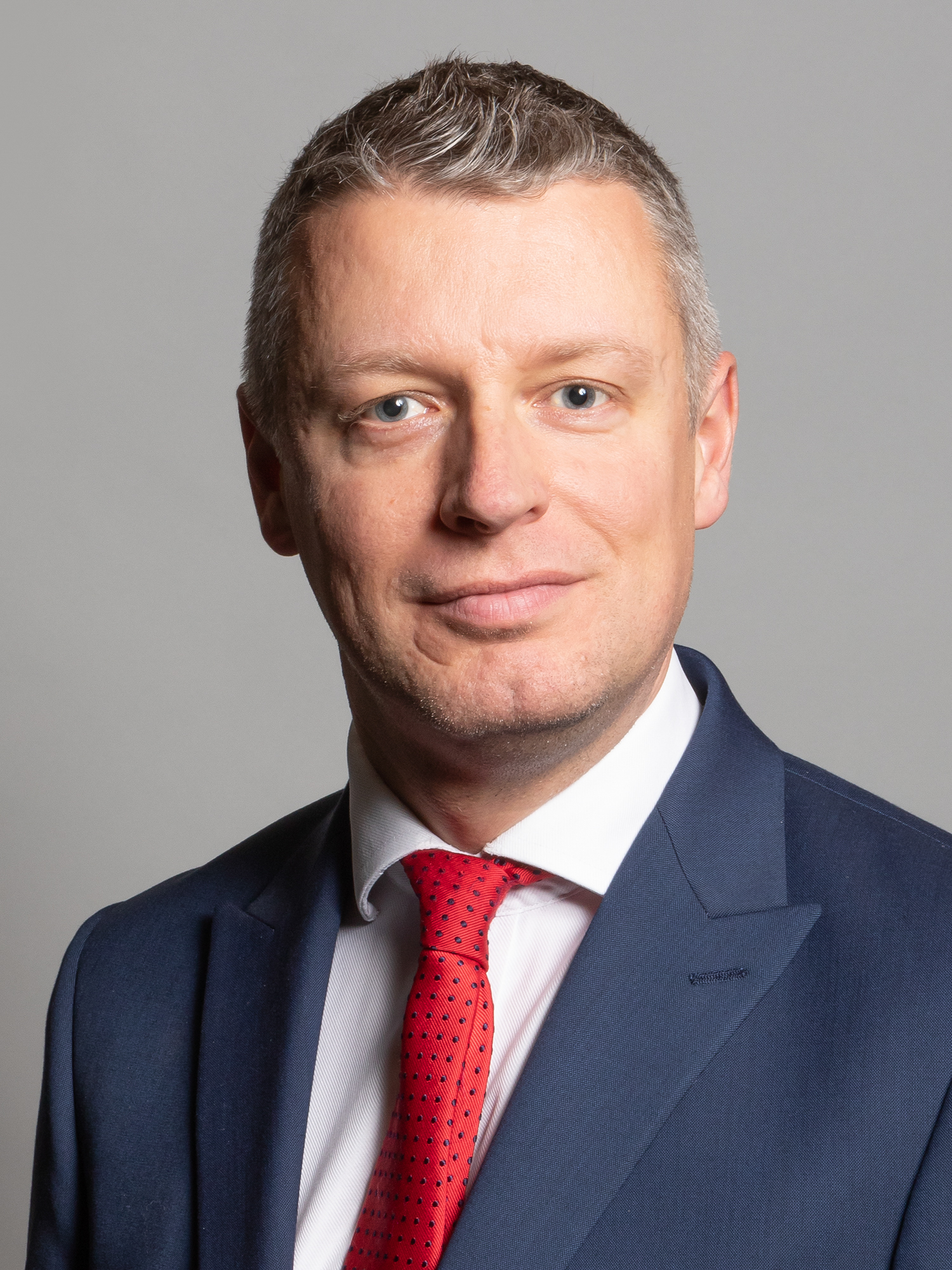
  • Lewis Cocking – 2024 Maiden Speech on Planning, the Green Belt and Rural Affairs

    Lewis Cocking – 2024 Maiden Speech on Planning, the Green Belt and Rural Affairs

    The maiden speech made by Lewis Cocking, the Conservative MP for Broxbourne, in the House of Commons on 19 July 2024.

    I congratulate all Members who have made their maiden speeches today. I am a geographer by background, so it is an absolute privilege to sit here and learn about all the different parts of our lovely United Kingdom.

    It is truly the greatest honour of my life to stand here as the Member of Parliament for Broxbourne. I am under no illusion about the responsibility of representing the place where I was raised, where my family lives and that I call home. I am hugely grateful to the residents of Broxbourne, who put their faith in me and elected one of their own. They will be keeping me on my toes—not least my nan, who will not hesitate to badger me if she thinks I need to get things sorted.

    We are straight-talkers in Broxbourne, and chief among us was my predecessor, Sir Charles Walker. He certainly was not afraid to speak his mind in this Chamber. More than a decade ago, I was lucky enough to do some work experience in Sir Charles’s office here in Parliament. I simply would not be here today without the opportunities and wisdom that he offered over the years. Sir Charles had a number of triumphs in Broxbourne, and I was grateful to join him and our community in our efforts to save Cheshunt urgent care centre in 2011 and to stop the energy-from-waste facility in Hoddesdon in 2017.

    I joined Sir Charles on many occasions out on the doorstep. The December 2019 general election campaign in particular sticks in the mind. Despite the darkness and the cold, the ever-enthusiastic Sir Charles ploughed on. On one occasion, it was just the two of us, and all of a sudden, Charles slipped and fell. I gasped and said, “Charles, please don’t injure yourself when you’re just with me, or they’ll be saying I did it to get the seat.”

    Sir Charles served Broxbourne for 19 years, and although I knew him well, it is only in the short time since my election that I have come to understand just how much of an impact he had on this House. As Chair of the Procedure Committee and, later, the Administration Committee, Sir Charles championed the institution of Parliament and the individuals who make it. That has been made clear to me from the reactions of House staff when they discover that I represent Broxbourne. I will do my utmost to follow him in taking my responsibilities of scrutiny and representation seriously.

    As I have said, Broxbourne is my home and the place I love. The constituency is characterised by its closeness to both London and the countryside, with the Lee Valley regional park on our doorstep. In 2012, Broxbourne became an Olympic borough: we hosted the canoe events at our world-class Lee Valley white water rafting centre, and we have a gold post box in Cheshunt thanks to our very own Laura Kenny’s success in the cycling. There are a number of Team GB athletes with connections to Broxbourne heading to the summer Olympics, and I wish them all the best.

    The area has many small independent businesses, particularly around our towns of Waltham Cross, Cheshunt and Hoddesdon. They are the backbone of Broxbourne’s local economy, and I will do all I can to support entrepreneurship at every level. I am also proud of the international investment coming to the constituency over the next few years. I am pleased to say that Hollywood is coming to Broxbourne: a £700 million project is well under way to build a film studio complex, which will have the capacity to produce four blockbusters at the same time.

    At this election, the constituency of Broxbourne took on the villages of Stanstead Abbotts, St Margarets, Hertford Heath, Great Amwell and Brickendon. These villages are all known for their tight-knit communities and natural beauty, which brings me on to the topic of this debate. While preparing for this speech, I noticed that both of the former MPs for Broxbourne referred to the unspoiled green belt that we are lucky to have in our area. Broxbourne has a local plan and has built hundreds of new homes—too many in a short space of time, some of my constituents would argue, and too many in total. I tend to agree. As many Members who are councillors will have seen if they have sat on a planning committee, developers use outline planning permission to promise the world. I have seen houses in outline that look absolutely amazing: the development has schools, new roads, a local centre and healthcare facilities. However, once outline planning permission has been granted, the developers come forward for full planning permission, and nine times out of 10 the application looks incredibly different, with bad design and no infrastructure. And developers wonder why residents get up in arms!

    We need to better link the NHS to new developments. On several occasions, getting local NHS providers to tell us what they need, or even getting them around the table so that we can plan new services for my constituents, has been a real struggle. I have a real issue in Goffs Oak and the wider west Cheshunt area, which has seen a lot of new housing but no new healthcare facilities. It is obvious to everyone living there that those facilities are desperately needed.

    We must ensure that developments are acceptable—not development anywhere, but appropriate development in the right places. Infrastructure must come first, with new schools, GP surgeries and section 106 moneys up front, or as close to day one as possible. Above all else, we must ensure that local people have a say over development in their area, so I hope the Government will listen to local people. On this and other issues, I assure my constituents that I will be their voice in this place, and I hope I can begin to repay their trust as my hard work starts now.

  • Mary Glindon – 2024 Speech on Planning, the Green Belt and Rural Affairs

    Mary Glindon – 2024 Speech on Planning, the Green Belt and Rural Affairs

    The speech made by Mary Glindon, the Labour MP for Newcastle upon Tyne East and Wallsend, on 19 July 2024.

    It is a great honour to be in the Chamber to hear so many wonderful maiden speeches, especially those of my north-east colleagues. They have made me very proud today, and I think they are going to be fantastic representatives of all their constituents.

    This is my fifth election to Westminster, but my constituency has changed, with only four wards from my former North Tyneside constituency and six wards added from the former Newcastle upon Tyne East constituency. I thank the people of my former constituency for giving me the honour of serving them for the past 14 years, and I thank the people of the new constituency for placing their trust in me at the general election. I will work hard to honour that trust.

    Voters in the former Newcastle upon Tyne East constituency were fortunate to be represented for 41 years by the right hon. Nick Brown, who commanded great respect in this House. Constituents hold him in high regard for all his work and achievements, both in the constituency and as a Minister in the last Labour Government. He has earned his well-deserved retirement, but personally I am grateful to Nick for all his help and friendship.

    Across my new constituency, people face the same challenges—the cost of living crisis, a shortage of good social housing, hikes in mortgages and diminished public services—and they have all taken a toll on people’s everyday lives. My constituency is crying out for this Labour Government’s shared mission of renewal. I share the view of our new North East Mayor, Kim McGuinness, in fully supporting the English devolution Bill. Kim believes that her office will be the delivery arm of the Labour mission in the north-east, and she is keen to start that work at pace. Although I know it will not be easy, I have great hope that the announcements made in the King’s Speech will start to turn the tide and make life better for everyone in this country.

    I was a North Tyneside ward councillor for 15 years before I entered the House, so I have a self-confessed bias for North Tyneside council. The council’s planning committee has not voted against offers or recommendations on any medium or large house building site for over a decade. It has an up-to-date local plan and ambitious housing targets of its own, yet it still has sites stuck in the planning system. Although National Highways agreed in the local plan that strategic sites should proceed and be accommodated in road infrastructure, when it came to planning applications being submitted, National Highways placed a holding objection on the sites, leading to 5,000 new homes being stuck in the system. Alongside dealing with other planning reform issues, I ask Ministers to look at the impact of statutory consultees on delays in the planning system, to help authorities such as North Tyneside.

    The Health Equals campaign coalition, which is made up of 27 organisations, has launched its visually though-provoking campaign, “Make Health Equal”, to highlight the fact that levels of poverty and deprivation lead to people in parts of my constituency and other such areas living 16 years less than people in more affluent parts of the country. The coalition acknowledges that the King’s Speech will start to repair some of the building blocks of health, such as decent and secure housing, good work opportunities and clean transport. It looks to the Government to assess the impact of the King’s Speech on health inequalities, and, in the spirit of unity, to work with such groups to deliver the mission in my constituency and across the country.

    I also make a plea on behalf of the offshore energy industries. Although the Great British Energy Bill is welcome, we must not lose sight of the fact that oil and gas play a massive part in our economy, and will continue to do so. On the tobacco and vapes Bill, I hope that the Government will, unlike the previous Government, take into account the views of the industry.

    I look forward to supporting the King’s Speech in the voting Lobby, along with my 411 colleagues and, hopefully, Members of the Opposition. In so doing, we will vote for an agenda fixed on making the lives of everyone in this country far better.

  • PRESS RELEASE : Keir Starmer meeting with Prime Minister Støre of Norway [July 2024]

    PRESS RELEASE : Keir Starmer meeting with Prime Minister Støre of Norway [July 2024]

    The press release issued by 10 Downing Street on 18 July 2024.

    The Prime Minister met Jonas Støre , the Prime Minister of Norway at Blenheim Palace today, as part of the European Political Community meeting.

    The Prime Minister reflected on the close friendship between the UK and Norway, which was built on historic ties and a shared outlook.

    The Prime Minister said he was also proud of the close defence partnership between the two countries, and said he hoped the UK and Norway could go further in the coming years to uphold stability in the High North

    The leaders also discussed the importance of energy security, including how both countries could work together on green energy and renewables. The leaders agreed that they should initiate a Norwegian-UK partnership on security and energy transition.

    The leaders agreed to stay in close touch.

  • PRESS RELEASE : Keir Starmer meeting with Prime Minister Sánchez of Spain [July 2024]

    PRESS RELEASE : Keir Starmer meeting with Prime Minister Sánchez of Spain [July 2024]

    The press release issued by 10 Downing Street on 18 July 2024.

    The Prime Minister welcomed Pedro Sánchez, the Prime Minister of Spain, to Oxfordshire this afternoon.

    The Prime Minister set out his plan to reset the United Kingdom’s position on the international stage and said he hoped the change in approach would forge the way for an agreement on Gibraltar that worked for all parties.

    The leaders also discussed the generational challenges facing Europe, including Russian disinformation, the climate crisis and illegal migration.

    The Prime Minister said he hoped the UK and Spain could work even closer together to tackle such issues in the coming months.

    The leaders agreed to stay in close touch.

  • PRESS RELEASE : Keir Starmer’s meeting with Prime Minister Tusk of Poland [July 2024]

    PRESS RELEASE : Keir Starmer’s meeting with Prime Minister Tusk of Poland [July 2024]

    The press release issued by 10 Downing Street on 18 July 2024.

    The Prime Minister met Polish Prime Minister Donald Tusk at Blenheim Palace today, as part of the European Political Community meeting.

    The Prime Minister thanked Prime Minister Tusk for attending the summit, and said he was looking forward to advancing the UK and Poland’s close friendship.

    That relationship was not just based on historic ties but also shared values, the leaders agreed.

    The Prime Minister said he hoped the UK and Poland could do more together on sectors of national importance, such as energy and defence.

    Turning to Ukraine, the leaders discussed the situation on the battlefield and agreed on the need to never relent in the face of Russian aggression.

    The leaders looked forward to speaking again soon.”

  • PRESS RELEASE : Keir Starmer’s press conference remarks at the European Political Community summit [July 2024]

    PRESS RELEASE : Keir Starmer’s press conference remarks at the European Political Community summit [July 2024]

    The press release issued by 10 Downing Street on 18 July 2024.

    Hello everyone, thanks for being here.

    We’ve had a very successful and productive summit…

    Bringing together 46 European leaders – including President Zelenskyy who addressed the EPC this morning.

    We discussed once again our commitment to stand with Ukraine…

    Including supporting their energy needs ahead of winter…

    And cracking down on the ships that are helping Russia to evade sanctions.

    We need to be clear that Ukraine is fighting not just for the Ukrainian people – and of course it is – But for the European people…

    For freedom, democracy and the rule of law.

    Our security therefore starts in Ukraine.

    So we pledged to President Zelenskyy, once again, that we will stand with Ukraine for as long as it takes.

    We also had productive discussions on wider European security…

    Defending our democracies against Russian interference…

    And supporting countries like Moldova who are dealing with more direct threats.

    It’s not just a good idea to work with our partners, it’s essential.

    I said on the steps of Downing Street, that I would govern for the whole country – including those who didn’t vote for us.

    And I meant it.

    We can only make progress on the issues that so many people care about…

    Like illegal migration and national security…

    If we have the maturity and leadership to reach out a hand to our European friends.

    And I want to congratulate Ursula von der Leyen on her re-election today as President of the European Commission.

    So we are going to deepen our cooperation…

    On defence and security…

    And on illegal migration, where we are resetting our approach and that’s been central today.

    We are going to smash the gangs, break their business model, and secure our borders.

    We will do this, not by committing taxpayer money to gimmicks…

    But with practical solutions, that are in line with international law.

    As Director of Public Prosecutions, I saw the work that can be done, across borders…

    To bring terrorists to justice and break up their networks.

    I simply do not accept that we can’t do the same with organised migration crime.

    We started that work here today.

    We’re increasing the UK presence at Europol in The Hague…

    To play our full part in the European Migrant Smuggling Centre.

    We’ve agreed new cooperation arrangements with partners like Slovenia and Slovakia, to disrupt organised crime.

    And with our new Border Security Command…

    We are going to work with our European partners to share intelligence, data and expertise and put the gangs out of business.

    To stop illegal migration, we must also tackle it at source.

    So today I am announcing £84 million of new funding for projects across Africa and the Middle East.

    That includes humanitarian and health support, skills training, help with job opportunities, and access to education.

    This is a vital part of gripping the migration crisis.

    And it shows how we are going to do business on the world stage.

    We are facing up to the huge problems beyond our shores…

    Because these problems echo at home.

    The effects play out on our streets.

    In a dangerous world, we serve no-one and solve nothing by turning inward.

    We have to step forward and lead.

    That’s what we’re doing – that’s what we’ve shown here today.

    Because it’s the best way to uphold our values…

    And keep our people safe.

    So, I’m proud to leave this summit with stronger relationships across Europe…

    And to leave the EPC in a stronger position as well.

    With a clear agenda for the coming months…

    And the next summits confirmed in Hungary this year…

    And Albania and Denmark in 2025.

    Thank you very much.

  • Luke Pollard – 2024 Speech at the Global Air & Space Chiefs’ Conference

    Luke Pollard – 2024 Speech at the Global Air & Space Chiefs’ Conference

    The speech made by Luke Pollard, the Minister for the Armed Forces, in London on 18 July 2024.

    Good morning all.

    When I say that I am delighted to speak to you today, it is not just because this is my first speech as a Minister. It is also because you, the people in this room, are the people who are going to be responsible for the biggest transformation of our Air Force and space capabilities that we need, not just in the UK, but across our Alliances as well.

    Because whether you are a member of the armed forces, an international ally, or a partner in industry, you will know that our air, land and sea naval capabilities are all dependant on our ability to work together in space, and in cyber.

    Satellites and cyber communications are intrinsic components of our command and control, our secure comms, our ISR and PNT capabilities, and our missile defence.

    Yet for far too long, the Ministry of Defence and Government strategies have not given enough value to space and cyber that they should have. And neither have they given enough value to those people who work in them either.

    If we are to get Britain’s fighting forces fit to deter our adversaries, and defeat them if necessary, we must be ready for the profound step-changes in warfare that we are seeing in our increasingly fast-evolving, volatile, and contested world.

    We need to be a truly integrated force, equipped for ‘all domain warfare’.

    Multi domain integration is not enough.

    I see MDI as a journey that takes us to a destination. That destination is all domain warfare.

    Where to win we control space, cyber, electronic spectrums, as well as air, land and sea in a single joined up approach.

    And that is the change that we are determined to bring to defence, to support those people in defence who are already working on that.

    I will come back to that concept of All Domain Warfare in a moment, and the role we all have to play in realising it, but I’m first going to focus on the existing work of our air, space and cyber forces, and how the new Labour government’s plans for defence can strengthen that work.

    If we ever needed reminding about the outstanding work that our servicemen and women of our air, space and cyber forces do, then 2024 has given us plenty of examples.

    From protecting UK and NATO airspace 24/7/365, or 366 as it will be in this leap year,

    to operating seamlessly with allies to conduct precision strikes against Houthi sites in Yemen; intercepting Iranian missiles and drones launched against Israel.

    From training Ukrainian F-16 pilots and lighting up the sky for the anniversary of D-Day to thwarting countless cyber attacks; getting crucial humanitarian aid into Gaza, and conducting major exercises with NATO, and our other allies around the world. Showing that NATO is joined-up, capable, and ready.

    And they’ve also kept our comms systems and intelligence secure, and strengthened our alliances that help protect our national interests right round the globe.

    It amounts to an impressive legacy from just 7 months’ work. And I want to thank everyone who has served for their professionalism, and for everything they and you do to protect not just our country but our allies as well.

    But the United Kingdom does not fight alone. We are proud of the NATO alliance. Proud to be the founding member. And my party is proud of the role we played in forging that alliance all those years ago.

    Proud that it continues to grow with our new alliance partners in Sweden and Finland.

    And proud to work seamlessly with so many allies around the world, many of whom are represented here today.

    Now, I’m the son of a Royal Navy submariner, and a very proud Navy brat, and as an MP for my hometown in Plymouth, which is home to Devonport, the largest naval base in Western Europe, my experience of talking to Armed Forces personnel has gone from being a small child smuggled onto a submarine to have a look around, to attending Armed Forces Days up in Plymouth Hoe if you’ve seen them.

    I know that when you speak to our Armed Forces personnel about their achievements, they’re more than likely to say it was just ‘part of the day job’.

    But as I’ve seen since being a kid, being a member of our Armed Forces is more than a day job.

    It takes you away from your home and your loved ones and demands everything from you. It is the ultimate public service. And that’s why, as the Minister for the Armed Forces, I will endeavour to always have your back.

    But I have to level with you first. That does not mean that we will be able to do everything we want to as quickly as we’d like.

    Over recent years, the new Defence Secretary, John Healey, and myself, have raised concerns about real term Government cuts, and its inability to fund existing plans.

    I’ve raised concerns about force size and capabilities; about readiness and resilience; about the state of defence facilities and the appalling state of military housing that we ask our Armed Forces personnel and their families to live in; and about the state of retention and recruitment.

    And regardless of how much I would like to be able to address all these challenges overnight, we know it will take time.

    But the work of change has begun across Government and that includes in the Ministry of Defence.

    The Prime Minister has laid out an ambitious, yet deliverable path, towards rebuilding our Armed Forces, built on public service and collaboration and a clear understanding that defence is the first duty of any Government.

    And that started with the Strategic Defence Review, that he announced on Tuesday.

    That review will be overseen by the Defence Secretary and led by former NATO Secretary General, Lord Robertson.

    You don’t need me to tell you that this is going to be a critical review for the Royal Air Force, for UK Space Command, for our partnerships with industry, and for the evolution of our air, space, and cyber capabilities.

    Over the last year, drones and missiles fired by Houthis have terrorised international shipping. Putin has used them to terrorise our friends in Ukraine, and Iran has used them to attack Israel.

    They have pushed the envelopes of what we consider modern warfare.

    That means we have to look again at how we fight. How we strengthen air and missile defence, look at our counter-measures and get that right up the agenda.

    As drones and technology reshape the battlefield, and satellites become increasingly central to warfare, if only in the public understanding of their role. The risk of cyber attacks continue.

    The risks of undermining our institutions, our critical national infrastructure, our democracy continues.

    The breadth of the threats we face, and the need to innovate at an ever-increasing pace, demands a fresh assessment of the state of our armed forces, the capabilities we need, and the resources that we have available.

    So you’ll be hearing more from me and other ministers about a ‘one defence’ approach, with truly integrated Services and capabilities, that we can prosecute all domain warfare.

    It is integral to our ability to deter and integral to our ability to fight and win if we need to.

    Our Strategic Defence Review will be an open and collaborative defence Review. And those who that have heard me speak before will know that I always give out homework.

    And the homework I’m giving out to you is this: Please contribute.

    Whether you are from the forces, industry, academia, or one of our allies: Please add your insights and expertise to that process.

    So that we don’t just bolster the front line – we do everything that underpins it as well.

    From our skills base to our industrial resilience, and of course to our alliances.

    That collaborative approach will mean that the Strategic Defence Review will report in the first half of 2025.

    However, the work to strengthen our deterrence began on day one of getting elected.

    For the international visitors: you go straight from a sports centre where you get announced as an MP at 4am in the morning, slightly bleary-eyed, into a department.

    It’s slightly a whirlwind time. But the work of change needs to start straight away.

    That’s why we have committed to increasing defence spending to 2.5% of GDP as soon as we can. We have committed to our nuclear ‘triple lock’ – that’s continuing out continuous-at-sea nuclear deterrent, with our four new next generation ballistic missile carrying nuclear submarines being built in Barrow, and a commitment to all the future upgrades required to keep Britain and our NATO allies safe with those submarines.

    And although there has been a change in Downing Street, let me reassure you as well that there will be no change in Britain’s steadfast support for our friends in Ukraine.

    Within 48 hours of being appointed, the Defence Secretary was in Odesa to pledge a new shipment of missiles and munitions to support Ukraine’s fight. And he committed to President Zelensky to get crucial UK kit into Ukrainian hands within 100 days.

    At the NATO Summit in Washington, the Prime Minister told President Zelenskyy that he would stick with Ukraine and provide £3 billion in military aid each year for as long as it takes for Ukraine to win.

    Putin’s illegal war has underlined the belief our government has in a ‘NATO first’ defence policy.

    And it has shone a light on shortcomings of our and many of our allies’ stockpiles as well.

    So we will provide leadership by boosting Britain’s industrial capacity and resilience of our supply chains by aligning our defence industrial strategy more closely with our security priorities as well as our economic priorities, which will provide a boost for British jobs, industry, and our regions.

    And we have also committed to look hard at procurement – to cut out waste, improve value for money, and bring greater urgency to our acquisition programmes.

    And we have instigated important organisational reforms to improve military leadership and planning, with a new Military Strategic Headquarters, and a new National Armaments Director.

    Whilst these domestic commitments and reforms are fundamental to strengthening our deterrence and our capabilities, our global alliances and partnerships are equally important to the security of our nation.

    Our commitment to NATO is unshakable.

    We must, and we will fulfil all our obligations as a member and strengthen Britain’s leadership within the alliance.We will also seek to strengthen European security by negotiating a new security pact with the EU – seeking a new bilateral defence agreement with Germany, refreshing the Lancaster House agreement with France, and stronger defence partnerships with our Joint Expeditionary Force partners.

    Further afield, to protect our values and global interests, and drive innovation, we are committing to developing and strengthening the AUKUS partnership to realise its full economic and security potential, and committed to building closer partnerships in the Indo Pacific and our allies in Africa.

    The final and most important piece to have effective defence is our people.

    And again, I must level with you that we are currently not recruiting or retaining enough people in our Armed Forces.This is a challenge not unique to Britain – many of our Allies are facing this as well.

    But if we are to transform our Armed Forces, we need to attract more people, we need to train more people, and we need to retain more people.

    That means offering them a career that makes them want to stay for longer. And for those who have left, want to rejoin.

    The moral component of fighting power remains the key to building an effective and lethal force.

    Which is why, over recent years, John Healey the Defence Secretary, and I have fought to highlight the need to improve conditions for serving personnel, their families, and veterans.

    And that’s why, as a Government, we are determined to renew the contract between the nation and those who serve. You will hear more about that in the months ahead.

    It’s a commitment we made in our manifesto and it’s absolutely vital for our national security.

    If we don’t get this right, we don’t get the people that keeps the country and our allies safe.

    So we will put the Armed Forces Covenant fully into law and appoint an independent Armed Forces Commissioner with a clear brief to improve service life.

    And as our new Minister for Defence Procurement and Industry, my colleague, Maria Eagle, has said we will fix our broken procurement system. And she also has a determination to tackle the poor quality of the housing our personnel and their families.

    And our new Minister for Veterans and People, who was until a few months ago a Colonel in the Royal Marines, Alistair Carns, will improve veterans’ access to support for mental health, employment, and housing.

    We will be a joined-up, ‘One Defence’ ministerial team, breaking down silos, and working to deliver a joined-up ‘one defence’ approach to the sector, with serving personnel, officials, innovators and industry, all working more closely.

    Now, the window in my new office overlooks the River Thames. This is a big improvement to the window to my office in Parliament.

    As a relatively new MP elected in 2017, if you’ve got a window in your office, you’re doing well. So to have multiple windows is a quite a treat.

    So to have multiple windows in the MOD I can see the RAF memorial on the banks of the River Thames.

    That memorial to the British and allied pilots who fought in the Battle of Britain,

    that Churchill christened as the “few who gave so much for the many” is something that I take very seriously.

    It’s a reminder of the important role that the Royal Air Force plays. Not just in our national security but our national story as well.

    As I take on the role of the Minister for Armed Forces, those memorials, not just on the Thames but in every community around the country, including the one that I represent in Plymouth, are a lasting reminder that we must have a strong Air Force, but that we must back the people who work in uniform and the civilians who support or Air Force.

    But like in the 1930s, our world is increasingly volatile and dangerous. And like the 1930s, we need to invest in airpower, and give our Royal Air Force not only the best aircraft but the best capabilities and people that we can.

    Just like the 1930’s, when new technology like radar was being pioneered by the RAF, today, some of the same spirit of innovation exists and must be nurtured further in space, cyber and across electronic warfare, giving us a much clearer plan for averting war in Western Europe than existed in the 1930s.

    Our security relies on ‘effective collective deterrence’. And this new Labour government will enhance it: By increasing defence spending; investing in our Armed Forces; investing in our next generation nuclear capability; and reconnecting Britain with our allies and partners.

    We will reform defence to improve decision making, strengthen industrial resilience, improve morale, and deliver better value for money.

    And in partnership with our innovators and industry, we will equip ourselves for all domain warfare, cutting edge capabilities, and greater lethality.

    More integrated and interoperable with our allies, standing with Ukraine, standing up to Putin, and standing up for the values that we all share. Democracy, human rights, and the rule of law.

    So whether you are on the front line, or in support. An international ally, or ally in industry. We all have an important part to play.

    And to our international friends, I want you to know that Britain is back.

    In Britain, with Keir Starmer as Prime Minister and John Healey as Defence Secretary, you have a refreshed and revitalised partner in the world stage.

    Reconnecting with friends and building new alliances in service of collective deterrence and security.

    We have our eyes wide open about how difficult these challenges are and how hard the world is. And nothing I’ve outlined today will be quick or easy.

    There are difficult challenges ahead: Hybrid threats and hostile states.

    But we bring serious pragmatic leadership, a clear plan, and a renewed spirit of collaboration, that will make us more secure at home and strong abroad.

    Thank you.
  • PRESS RELEASE : A Britain secure at home and strong abroad – UK defence a key focus during King’s Speech [July 2024]

    PRESS RELEASE : A Britain secure at home and strong abroad – UK defence a key focus during King’s Speech [July 2024]

    The press release issued by the Ministry of Defence on 18 July 2024.

    The King’s Speech announces the Armed Forces Commissioner who will be a strong, independent champion to improve life for UK service personnel and their families, while the Government reinforces the UK’s unshakeable commitment to NATO.

    The new Government’s commitment to defence and Armed Forces personnel has been strengthened in the King’s Speech, with the announcement of a new, independent Armed Forces Commissioner.

    The Armed Forces Commissioner, the first of its kind in the UK, will act as a strong independent champion for our service personnel and their families, committed to improving service life and strengthening parliamentary oversight.

    The King’s Speech also:

    • Confirmed the launch of a root and branch Strategic Defence Review
    • Reinforced the UK’s unshakeable commitment to NATO and the UK’s leading role in the alliance

    Meanwhile, the Defence Secretary, John Healey, opening the first full day of debate following the King’s Speech yesterday, emphasised that a secure Britain – through strong defence – is essential for economic growth and prosperity in an increasingly volatile world.

    He also reaffirmed that the first duty of this new government is to keep its people safe. He committed to action, not words to ensure that the UK is secure at home and strong abroad.

    Defence Secretary, John Healey, said:

    I want Defence to be central to the future security of Britain and central to the country’s success in this new era. This is a government of service that will always stand up for those who serve our country, and our Armed Forces will always have its full support.

    That’s why at the NATO summit in Washington the Prime Minister confirmed this Government’s unshakeable commitment to NATO. That’s why this week the Prime Minister launched a first-of-its-kind Strategic Defence Review.  And that’s why in the King’s Speech we announced legislation to create a new Armed Forces Commissioner.

    Together, we will make Britain more secure at home and strong abroad.

    The Armed Forces Commissioner is a step to renewing the moral contract with those who make extraordinary sacrifices to serve the nation, and the families who support them. The Commissioner will be a strong public voice for personnel and their families, committed to improving service life from basic training, throughout their military career and beyond.

    As a direct point of contact for serving personnel and their families, independent and outside their chains of command, they will be empowered to investigate individuals complaints and review issues which are affecting the lives of our serving personnel, further strengthening parliamentary oversight.

    Elsewhere in the speech, the King confirmed that a root and branch review of UK defence has been launched by Prime Minister Keir Starmer on Tuesday to make Britain secure at home and strong abroad for decades to come.

    The Strategic Defence Review, confirmed in the King’s Speech, will be done at pace and report in the first half of 2025, with work starting immediately in recognition of the urgency of the threats facing the UK.

    The review – headed by three external Reviewers in a first-of-its-kind for UK defence – is the next step following a successful NATO Summit in Washington, where the Prime Minister reaffirmed the UK’s unshakeable commitment to the alliance and the “serious commitment” to spending 2.5% of GDP on defence.

    The Government will also continue to work with international allies and partners to step up support for Ukraine through the international Capability Coalitions and the £3bn pledge on military aid, whilst speeding up the delivery of equipment promised to Ukraine.

  • Daniel Zeichner – 2024 Speech at the NFU Summer Reception

    Daniel Zeichner – 2024 Speech at the NFU Summer Reception

    The speech made by Daniel Zeichner, the Farming Minister, in the Attlee and Reid Room in the House of Lords on 18 July 2024.

    Thank you so much, Tom, thank you for that very, very kind introduction. Ministers often say they are really pleased to be here. I think you will understand I’m really, really pleased to be here.

    And let’s start by thanking you Tom, David, Rachel, Abby and Aled for the advice and help you have given me in learning this brief over the last four or five years. I suppose I’m in a slightly fortunate position in the sense of having done the shadow brief for four and a half years. I’ve always said, I was always finding out how much I didn’t know. And now I’m in the department, that’s really quite clear. It’s a learning process but you and all your staff have been hugely supportive in providing support for me.

    Can I just start by saying that the Secretary State would have loved to have been here today. He’s actually visiting one of our key facilities in terms of protecting our biosecurity, which I think you will be pleased to hear. He sends his very best wishes and we were delighted to first meet Rachel at the Great Yorkshire Show last week. We wanted to send a very clear message in our first few days. And I listened very closely to the wise words of Lord Carrington and your wise words, Tom. And let me say, absolutely at the outset, I recognise the pressures that so many people are under – very much echoing your points. The climate issues, which have led to flooding in an unprecedented way, is a real challenge. The threat of disease, which we know is all too real. And of course, the cost pressures. And we know that, put together, they’re putting a huge toll on people’s mental health. And let’s be frank, uncertainty. Uncertainty about policy direction and change – all of which contributes to making life really, really hard.

    Now, some of those things are big things that we must address but the policy uncertainty, it is my responsibilities to address. So, I keep coming back and I will keep coming back to the key point the Prime Minister has been making. That it’s about public service, it’s about stability. And this job isn’t actually about us. It’s about you and the people you represent. For a long period of time now, my boss, Steve Reed, the Secretary of State, has been saying “we’re not going to upset the apple cart”. I always thought it’s a slightly interesting phrase really; I’m not sure there are that many apple carts anymore. All those Australian Pink Lady apples, I doubt they come by apple cart.

    But the point is an important one, we absolutely recognise the need for stability. I’d also say that in terms of public service, I look around and I see some familiar colleagues from the last Parliament. And I say, welcome back to all of those. But I also see many, many new people, and a really warm welcome to all the new colleagues. Let me make an offer to all of you.

    In the last Parliament, I think it’s fair to say that some of us enjoyed many a happy day in Westminster Hall or at Defra questions on a Thursday morning. Sometimes it was a slightly small, select band. But I think we always tried to work in in a friendly, positive and collegiate way. And it’s true that some of the big characters have left. Jim Shannon is still here and I’m sure he’ll be making his voice heard. But what I want to say is, I will try and make sure that the debates will continue to be conducted in a spirited, collaborative manner. And I’ll try and work it out in a cross-party way wherever I can because these challenges are bigger than just one particular party or one particular government.

    I’m going to say a little bit about where the current government is coming from. You’ve heard the words: food security is national security. This is absolutely at the centre of Labour’s mission to grow the economy and actually underpins the agendas of multiple government departments and constituencies. So, food security is a shared mission of this government. Absolutely, we share it with you. And to get there, we’ve pledged a number of things and this will be familiar to many from the manifesto.

    We’re absolutely determined to boost rural economic growth and enhance Britain’s food security with a new deal for farmers. We really, really want to seek a new veterinary agreement with the EU to get our food exports moving and absolutely want to make sure that farmers aren’t undercut by low welfare and low standards in trade deals. We want to cut people’s energy bills by switching on GB Energy. We absolutely want to speed up the planning decisions to allow farmers to rapidly plug renewable energy into the grid.

    Whenever I’ve gone around – I’ve done many, many visits over the last couple of years – I’ve always been shocked by crime. It’s a horrible thing. It’s unsettling. In some cases, it’s more than unsettling. It’s downright vicious. I’m talking about people which are not easily intimidated. But some of the stuff people face is really horrible. So, we’re absolutely committed to the first ever cross-government rural crime strategy. Of course, this will cover agricultural theft, fly-tipping and livestock worrying but also that personal sense of people feeling anxious.

    More positively, we want to empower agricultural businesses to upskill the workforce through a reformed apprenticeship levy. Going back to my earlier point, we want to tackle mental health and loneliness, with a mental health hub in every rural community and 8500 more mental health professionals.

    Let me go back to the point about stability and continuity. That’s one of the ironies of the election campaign – the change was the change to stability. And I think that’s an absolutely key point. It’s what many of you need most of all because remember, you are businesses. You’ve got to be able to run effective businesses. And every sector, it’s the same – business needs stability. So, that will be our goal. So, when people have asked me about whether we’re committed to the ongoing transition to the environmental land management schemes – absolutely, we are committed. Of course, there will be tweaks, changes; it’s been an iterative process so far and that will continue to be the case. But we’re absolutely committed to working with you to make sure that this system works for farmers and delivers both food security and also provides the protections we need for our environment.

    And let me conclude on one of the most difficult issues which you raised with me the other day, Tom. We are determined to eradicate bovine TB. The goal is 2038. That’s quite a long time away. But we’re absolutely determined to do it. It’s a complicated issue. Everybody knows that. We absolutely believe we can do a lot through biosecurity, herd management, and speeding up the development of a vaccine that works with an effective test and all the things that need to come in terms of trade and so on. And I know the culling debate is a really, really hard one. Very, very contentious. Huge passion on both sides of the argument. But let me tell you, the Secretary of State has been clear: the current round of licences will be honoured. I absolutely believe we’re only going to eradicate bovine TB by working closely and constructively together to use all the science and everything that we’ve got to beat it. We are going to beat it. I tell you, I’ve already said to the department, that is my top priority. So, you have my assurance.

    In conclusion, we’re committed to supporting farmers and rural communities to boost Britain’s food security, protect and enhance the environment and grow the rural economy. We absolutely want to increase confidence and build trust between farmers and government. And I so look forward to working with you, Tom, and everyone else here throughout this Parliament to deliver the practical policies that are needed to achieve that mission. Thank you very much.

  • PRESS RELEASE : Specialised Committee on the Implementation of the Windsor Framework – joint statement [July 2024]

    PRESS RELEASE : Specialised Committee on the Implementation of the Windsor Framework – joint statement [July 2024]

    The press release issued by the Cabinet Office on 18 July 2024.

    The Specialised Committee on the Implementation of the Windsor Framework held a meeting today, co-chaired by officials from the European Commission and the UK Government.

    The co-chairs took stock of the implementation of the Windsor Framework since the last meeting on 25 April 2024. In particular, they reviewed developments in the areas of agri-food, customs, medicines and trade.

    The co-chairs discussed the outstanding implementation issues as well as the upcoming milestones. They agreed to step up work with renewed determination to fulfil the joint commitment to the full, timely and faithful implementation of all the elements of the Framework, noting the importance and priority of concrete practical steps to this end.

    The Committee co-chairs also took stock of the work of the Joint Consultative Working Group and its structured sub-groups. They reiterated the importance of continued joint engagement with Northern Ireland stakeholders.