Blog

  • PRESS RELEASE : Foreign Secretary’s meeting with China’s Director of Foreign Affairs Commission Office and Foreign Minister [July 2024]

    PRESS RELEASE : Foreign Secretary’s meeting with China’s Director of Foreign Affairs Commission Office and Foreign Minister [July 2024]

    The press release issued by the Foreign Office on 26 July 2024.

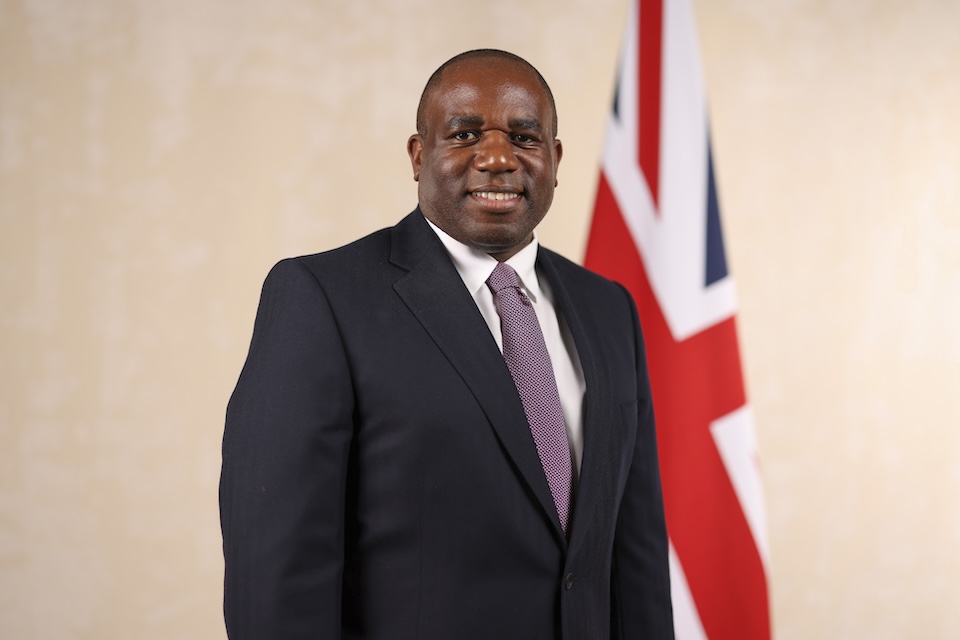
    On 26 July, the Foreign Secretary David Lammy met China’s Director of Foreign Affairs Commission Office and Foreign Minister Wang Yi at the ASEAN Foreign Ministers meeting in Vientiane, Laos.

    They had a constructive first discussion and the Foreign Secretary outlined this government’s vision for a long-term, consistent and strategic approach to UK-China relations. He set out that the government would cooperate where we can, compete where needed and challenge where we must. He made clear the UK would always stand firm in prioritising our national security, as well as supporting human rights.

    The Foreign Secretary welcomed the opportunity to work with a fellow member of the UN Security Council and the world’s second largest economy to combat global challenges like climate change.

    The Foreign Secretary underlined the UK’s ironclad commitment to Ukraine and urged China to prevent its companies supporting Russia’s military industrial complex which poses a material threat to international security and prosperity.

    Both sides agreed to work towards building long-term communication channels.

  • Alan Strickland – 2024 Maiden Speech on the Economy, Welfare and Public Services

    Alan Strickland – 2024 Maiden Speech on the Economy, Welfare and Public Services

    The maiden speech made by Alan Strickland, the Labour MP for Newton Aycliffe and Spennymoor, in the House of Commons on 22 July 2024.

    I congratulate the hon. Member for West Suffolk (Nick Timothy) on his maiden speech, and all those who have spoken for the first time in the House today.

    It is an honour for me to make my maiden speech as the first Member of Parliament for the Newton Aycliffe and Spennymoor constituency. I pay tribute to those who came before me. The former Sedgefield constituency makes up the majority of the new seat. In addition, we have taken Spennymoor and Tudhoe wards from Bishop Auckland, and Coxhoe ward from City of Durham. I wish to put on record my thanks and pay tribute to Paul Howell and Dehenna Davison for their public service, and to my hon. Friend the Member for City of Durham (Mary Kelly Foy) for her continuing dedication to her constituents.

    Unlike some former Members of this House, I am not fluent in Latin, but I am assured that the motto of my hometown translates as “Not the Least, but the Greatest we seek.” This has not only served as a powerful statement of intent for the new town of Aycliffe since 1947, but captures the shared spirit of the towns and villages across this new constituency—varied in history, but united in a desire to get on, to do well, to strive for a better future. My own family’s story is testament to this spirit of aspiration that has long defined the working people of our country.

    Several generations ago, both sides of my family were drawn from mining villages across England to the Durham coalfields because of their reputation for good wages and reliable work. In turn, my grandparents moved from pit villages to Aycliffe new town, home for two years to the late Lord Beveridge, in search of modern housing and better jobs for their children. My parents’ generation then worked hard to give us the opportunities that they never had, including higher education, the chance to work across the country and across the world and personal freedoms to flourish. This ethos—that each generation raises the next, that background be no barrier, and that opportunity be distributed as widely as talent—is the driving force in families in my constituency and a lodestar for this Government.

    But making that a reality requires strong economic growth across our country. We must back the industries of the future, such as Hitachi Rail in my constituency, which manufactures world-class, green trains, and employs 700 highly skilled workers and another 1,500 in the supply chain. I thank a former Member of this House, Phil Wilson, for his tireless campaign, alongside The Northern Echo, which led to the plant being located in the area some years ago. I am also grateful for the public commitments made by my right hon. Friends the Prime Minister, the Chancellor and the Transport Secretary to support Hitachi’s future. I look forward to working with them to secure those jobs and expand high-tech manufacturing more widely. That includes the innovative work at Sedgefield’s NETPark. This Durham University spin-off hub develops innovative products in satellite technology, drug development and biological weapon detection, which are then exported around the globe. The creation of jobs in the industries of the future is particularly important in a constituency with former mining communities, where ongoing economic development is badly needed.

    I do not want the House to think that my constituency is all work and no play. We are famous for the Sedgefield ball game—a historic Shrove Tuesday tradition not for the faint-hearted. We are home to excellent football clubs, including Newton Aycliffe, where my parents served on the committee, and Spennymoor Town. Spennymoor itself typifies our rich cultural history, with a heritage trail dedicated to Norman Cornish, one of the pitmen painters, who learned his craft alongside his mining in the Spennymoor settlement.

    Some of the best brass bands in the country can also been found in the constituency. They not only keep alive the cultural traditions of our past, but provide excellent, high-quality music education for new generations of young people today. We are also home to incredible local produce, including artisan chocolate made in Coxhoe, and award-winning real ale brewed at the Surtees Arms in Ferryhill—I have personally quality-assured the latter on several occasions. On the topic of ale, my predecessor Tony Blair was noted for hosting world leaders in pubs across the constituency. I have yet to find a pub without a photo of the former Prime Minister and his closest NATO allies, but my diligent search continues.

    Finally, I am proud of our thriving community organisations. The Ladder Centre does invaluable work to support residents, and the Cornforth Partnership is a lifeline for those looking to get back into work. Just as Durham coal powered our economy in the past, so constituencies such as mine can power our modern economy, with high-tech, green manufacturing and research.

    Let me return to where I began—“Not the Least, but the Greatest we seek.” Mr Deputy Speaker, in this House, let us commit ourselves to seek the greatest—the very best—for our constituents, for our communities and for our great nation. I look forward to seeing the economic measures in the King’s Speech start to spread wealth, growth and opportunity to every corner of this United Kingdom, including the people of Newton Aycliffe and Spennymoor.

  • Nick Timothy – 2024 Maiden Speech on the Economy, Welfare and Public Services

    Nick Timothy – 2024 Maiden Speech on the Economy, Welfare and Public Services

    The maiden speech made by Nick Timothy, the Conservative MP for West Suffolk, in the House of Commons on 22 July 2024.

    I congratulate the other new Members on their excellent maiden speeches, in particular the hon. Member for Hartlepool (Mr Brash), where I know his predecessor, Lord Mandelson, recommends the mushy peas.

    It is an honour to be called to speak for the first time. I pay tribute to the last MP for West Suffolk, Matt Hancock, who oversaw the delivery of the covid vaccines, a vital achievement for our country. Less well known is that Matt once rode in, and won, the Blue Square Cavalry Charge horserace in Newmarket, a feat that required him not only to be propelled forward by a thoroughbred horse at 30 miles per hour, but to train for three months and lose 2 stone. For all these reasons, not least the dubiousness of the idea that I have 2 stone to lose, I can assure the House that I will not be stepping into my predecessor’s stirrups.

    Newmarket is the best-known town in my constituency. It is most famous for horseracing, an international success story that brings thousands of jobs and hundreds of millions of pounds to the local economy every year. From Charles I to Charles III, racing gives West Suffolk its long connection to royalty, but unfortunately ours is not an unblemished record, for Newmarket was once the home of Oliver Cromwell’s new model army. Old Ironsides championed free expression yet persecuted his enemies. He attacked aristocratic privilege and patronage, but handed power to his cronies. Censorious, joyless and puritanical—it is like he wrote the Labour manifesto.

    Fortunately, we have left those days of self-denial behind, and from the Star in Lidgate to the Queen’s Head in Hawkedon, the Affleck Arms in Dalham to the White Horse in Withersfield, and many others, we have some of the best pubs in Britain. And we have plenty more besides: beautiful villages, vibrant towns and farms that feed the country; Anglo-Saxon settlements and ancient churches; rolling countryside and big Suffolk skies; dense forest and the world-famous gallops; businesses doing everything from seed drills to particle engineering; charities such as Reach in Haverhill and the day centres in Brandon and Newmarket; Highpoint prison near Stradishall; the airbases at Lakenheath and Mildenhall; and public servants working for their communities every day.

    I look forward to championing them all and addressing our challenges too, including dealing with flooding in Clare, Cavendish and elsewhere, and fighting the appalling decision to approve the Sunnica solar and battery farm, due to be built on high-quality agricultural land. In Brandon, lorry traffic is a problem. We need the Ely and Haughley junctions sorted to get freight on to the railways. In Mildenhall, where 1,300 new homes are coming, we need a relief road. We are not against new house building in West Suffolk—we have had 3,000 new homes built in the last five years—but we need attractive family homes in the right places. We need services and infrastructure to keep pace. We need to get tougher with the developers and reform the construction market. We need to drastically cut immigration, not just for the economic and cultural reasons that should by now be obvious, but to limit new demand for housing.

    Our largest town, Haverhill, has doubled in size in only 30 years, to almost 30,000 residents. It has an incredible community spirit, but the town centre is struggling. We need a new start for our high streets, and I will fight for a railway linking Haverhill to Cambridge. The development of Cambridge looms large for us, but I want us to embrace the opportunities, not just fear the risks. If we get it right, we have the chance to get better infrastructure, new investment and more jobs. That is why I wanted to speak in today’s debate.

    From potholes to public sector pay, the thread that runs through all our challenges is an inconvenient truth. While it is plainly incorrect to claim that the new Government have the worst economic inheritance since the war—[Interruption.] It is incorrect, but we are less prosperous than we often tend to assume. This is not a question of party politics, but of the decline and failure of our country’s long-established economic model. Put simply: we do not make, do or sell enough of what the world needs.

    Our £33 billion trade deficit—1.2% of GDP—means we sell off valuable assets and build up external debt to limit the current account deficit. We end up with less control over our economy, and more exposed to global risks and shocks. From low pay to regional inequality, poor productivity to the funding of public services, all the things we worry about are symptoms of this wider problem.

    We need to question economic theory, challenge Treasury orthodoxy and think beyond the intellectual limits of ideological liberalism. Theories like comparative advantage have led us to offshore industry and grow dependent on hostile states, like China. But international trade is neither free nor fair, and net zero cannot mean sacrificing our prosperity and security. Being a services superpower is a great advantage, but alone it is not enough. We need a serious strategy to reindustrialise, narrow the trade deficit and rebalance the economy. We need to change and, in the months and years ahead, I look forward to debating how we do so.

  • PRESS RELEASE : Energy Secretary convenes COP leaders past, present and future to offer UK support and leadership in responding to the climate crisis [July 2024]

    PRESS RELEASE : Energy Secretary convenes COP leaders past, present and future to offer UK support and leadership in responding to the climate crisis [July 2024]

    The press release issued by the Department for Energy Security and Net Zero on 26 July 2024.

    The Secretary of State for Energy Security and Net Zero met with COP leaders in London to discuss the need for greater urgency in tackling the climate crisis.

    On Friday 26 July, the Secretary of State for Energy Security and Net Zero met with the Rt Hon Sir Alok Sharma, President for COP 26, HE Mukhtar Babayev, COP29 President Designate and HE Ana Toni, National Secretary for Climate Change from Brazil as COP 30 Presidency. This was part of a visit that included a roundtable with His Majesty King Charles III to discuss the need for greater urgency in tackling the climate crisis.

    The Secretary of State welcomed the outcomes achieved through the UAE consensus, including the historic agreement to transition away from fossil fuels, and offered full support to Azerbaijan and Brazil for their upcoming COP 29 and COP 30 Presidencies. He underlined the UK’s determination to act as a global leader and reliable partner on climate action. Emphasising the importance of all countries, especially major emitters, taking action to implement the outcomes of the Global Stocktake and bringing forward 1.5°C aligned Nationally Determined Contributions (NDCs) as soon as possible, he offered to share the UK’s experiences from COP 26 in supporting ambition in NDCs. He further emphasised the UK’s commitment to working together with all Parties to agree an ambitious New Collective Quantified Goal (NCQG) on climate finance and accelerate the necessary reforms of the global financial architecture.

    The Secretary of State underlined the importance of the UK’s renewed domestic leadership in encouraging ambitious action abroad. Climate and clean energy are at the heart of the new government’s agenda. The UK is taking immediate action to unlock investment in onshore wind, begin a solar revolution, and setting out our plans for Great British Energy.

    The Secretary of State expressed the UK’s utmost concern at the growing scale and severity of climate impacts around the world, especially in developing countries, and emphasised our full commitment to working with the Troika and all Parties in this critical decade to deliver increased ambition to achieve the goals of the Paris Agreement, keep 1.5°C in reach and support the most vulnerable.

  • PRESS RELEASE : Change of British High Commissioner to Solomon Islands – Paul Turner [July 2024]

    PRESS RELEASE : Change of British High Commissioner to Solomon Islands – Paul Turner [July 2024]

    The press release issued by the Foreign Office on 26 July 2024.

    Mr Paul Turner has been appointed British High Commissioner to Solomon Islands in succession to Mr Thomas Coward who will be transferring to another Diplomatic Service appointment. Mr Turner will take up his appointment during January 2025.

    Curriculum Vitae

    Full name: Paul Robert Turner

    Year Role
    2020 to 2024 World Bank, Uganda – secondment from FCDO
    2017 to 2020 Kampala, DFID, Senior Private Sector Adviser
    2016 Pretoria, FCO, Head of UK Prosperity Fund for Southern Africa
    2013 to 2016 Harare, DFID, Head of Economic Livelihoods
    2011 to 2013 Tunis, UK Representative to African Development Bank
    2005 to 2011 Brussels, EU Afghanistan Unit – secondment
    2002 to 2005 Skopje, North Macedonia, Deputy Head of EU Agency for Reconstruction
    2000 to 2002 Pristina, Head of DFID Kosovo
    1998 to 2000 DFID, China desk, East Asia Directorate
    1997 to 1998 DFID, Assistant Private Secretary to Secretary State for International Development
    1997 Home Office, Assistant Private Secretary to Parliamentary Under-Secretary of State
    1993 to 1996 Home Office, Northern Ireland section
  • PRESS RELEASE : Scotland to have world’s first peatland UNESCO World Heritage site [July 2024]

    PRESS RELEASE : Scotland to have world’s first peatland UNESCO World Heritage site [July 2024]

    The press release issued by the Department for Culture, Media and Sport on 26 July 2024.

    The Flow Country has been added to the UNESCO World Heritage List.

    Site to become world’s first peatland bog to gain world heritage status
    Becomes Scotland’s first natural world heritage site, joining the likes of the Grand Canyon and the Great Barrier Reef
    The Flow Country has become the UK’s newest UNESCO World Heritage Site, having been granted the accolade today, at the 46th session of the World Heritage Committee.

    The landscape, which is widely considered to be the largest area of blanket bog in the world covering around 1,500 square miles in Caithness and Sutherland, has become the UK’s 35th UNESCO World Heritage Site and is the world’s first ever peatland site to gain world heritage status.

    The site will also become Scotland’s first natural world heritage site and joins a very exclusive list of natural UNESCO World Heritage Sites, including The Grand Canyon and The Great Barrier Reef.

    It will be the seventh Scottish site, joining St Kilda and the Forth Bridge, which attract hundreds of thousands of visitors to Scotland.

    Due to the nature of the site, this listing is also expected to bring new opportunities for local people through the creation of green jobs in landscape restoration and conservation.

    The Flow Country is home to a wide range of wetland and moorland species, including many birds, such as the red-throated diver, golden eagle and short-eared owl and has been considered to be of outstanding universal value due to its remarkable diversity, the home that it provides for these species and the role it plays in storing approximately 400 million tonnes of carbon in the north of Scotland.

    The news follows the announcement of Gracehill in Northern Ireland receiving World Heritage Status, making this the second new addition to the list of UK World Heritage Sites today.

    UK Government Culture Minister Sir Chris Bryant said:

    It is fantastic to see the UK adding two new sites to the World Heritage List in the space of a day – of historical and natural significance respectively.

    The Flow Country is one of our most precious resources, as a vital habitat for many species and a key site for carbon capture that continues to inform our understanding of how blanket bog can be used to help mitigate climate change.

    It is right to recognise this truly inspiring landscape and I look forward to working closely with counterparts in Scotland to showcase this important addition to our UK World Heritage Sites.

    Scottish Secretary Ian Murray said:

    Scotland has a rich history of UNESCO World Heritage sites with six spread across our country from Heart of Neolithic Orkney to New Lanark, the Old and New Towns of Edinburgh to St Kilda and I am delighted the Flow Country has become Scotland’s seventh.

    Thanks to a strong endorsement from the UK Government the Flow Country, which has international importance as a habitat and for the diverse range of rare and unusual breeding birds it supports, is now the first peatland site on the World Heritage list.

    Acting Scottish Government Net Zero Secretary Gillian Martin said:

    This is a truly momentous day for Caithness and Sutherland, and indeed Scotland as a whole.

    The Flow Country is an area of truly outstanding natural beauty and its diverse ecosystems and peatlands are a vital part of our efforts to combat climate change and nature loss. This new global prominence will help preserve the area for many generations to come.

    I want to congratulate the Flow Country Partnership and everyone who has worked so hard towards this tremendous achievement. Their passion and determination has not only elevated the Flow Country to UNESCO World Heritage Status, but has ensured its protection far into the future.

    Bid lead for the Flow Country World Heritage Site project and NatureScot Head of Operations for the North of Scotland, Graham Neville, said:

    World Heritage status for the Flow Country is a momentous moment for Scotland’s people and their beloved landscape. This successful bid is testament to the hard work and determination of the Flow Country World Heritage project team as well as community members, scientific experts, businesses, landowners and public bodies from across the Flow Country who have been so generous with their time, knowledge and expertise to shape the bid for the benefit of the whole area. World Heritage Site status will lead to greater understanding of the Flow Country and raise the profile of Scotland’s peatlands globally for their value as biodiverse habitats and important carbon sinks. It is a wonderful recognition of the expert stewardship of farmers and crofters in maintaining this incredible ecosystem as a natural legacy for future generations.

    Professor Mike Robinson, Non-Executive Director, Culture at the United Kingdom National Commission for UNESCO says:

    We are delighted that the Flow Country has been inscribed onto the UNESCO World Heritage List in recognition of its Outstanding Universal Value. World Heritage status recognises the global importance of the Flow Country and its peat bogs, not only as an important ecosystem for wildlife but also, through their carbon storage, as a critical defence against the impact of climate change. In this sense, World Heritage and the protection afforded to it will contribute directly to sustainable development.

    ENDS

    Notes to editors:

    The UK Government’s Department for Culture, Media and Sport is responsible for meeting the requirements of the World Heritage Convention within the UK. This includes maintaining and reviewing the Tentative List of sites, formally nominating new sites, and ensuring existing sites are conserved, protected and given a life in the community.

    The other UNESCO World Heritage Sites in Scotland are St. Kilda, Edinburgh Old Town and New Town, The Heart of Neolithic Orkney, New Lanark, The Antonine Wall and The Forth Bridge.

    The first UNESCO World Heritage Sites were announced in 1986. The full list of UNESCO World Heritage Sites in the UK and Overseas Territories are:

    Cultural:

    • Blaenavon Industrial Landscape (2000)
    • Blenheim Palace (1987)
    • Canterbury Cathedral, St Augustine’s Abbey, and St Martin’s Church (1988)
    • Castles and Town Walls of King Edward in Gwynedd (1986)
    • City of Bath (1987)
    • Cornwall and West Devon Mining Landscape (2006)
    • Derwent Valley Mills (2001)
    • Durham Castle and Cathedral (1986)
    • Frontiers of the Roman Empire (1987,2005,2008)
    • Gorham’s Cave Complex (2016)
    • Heart of Neolithic Orkney (1999)
    • Historic Town of St George and Related Fortifications, Bermuda (2000)
    • Ironbridge Gorge (1986)
    • Maritime Greenwich (1997)
    • New Lanark (2001)
    • Old and New Towns of Edinburgh (1995)
    • Palace of Westminster and Westminster Abbey including Saint Margaret’s Church (1987)
    • Pontcysyllte Aqueduct and Canal (2009)
    • Royal Botanic Gardens, Kew (2003)
    • Saltaire (2001)
    • Slate Landscape of Northwest Wales (2021)
    • Stonehenge, Avebury and Associated Sites (1986)
    • Studley Royal Park including the Ruins of Fountains Abbey (1986)
    • The English Lake District (2017)
    • The Forth Bridge (2015)
    • The Great Spa Towns of Europe (2021)
    • Tower of London (1988)
    • Jodrell Bank Observatory (2019)

    Natural:

    • Dorset and East Devon Coast (2001)
    • Giant’s Causeway and Causeway Coast (1986)
    • Gough and Inaccessible Islands (1995,2004)
    • Henderson Island (1988)

    Mixed:

    • St Kilda (1986,2004, 2005)
  • David Lammy – 2024 Speech at ASEAN Foreign Minister’s Meeting in Laos

    David Lammy – 2024 Speech at ASEAN Foreign Minister’s Meeting in Laos

    The speech made by David Lammy, the Foreign Secretary, in Laos on 26 July 2024.

    Thank you, Your Excellency Dato Erywan, for your kind words and all your work as UK Country Coordinator. And thank you, Deputy Prime Minister Saleumxay Kommasith, for hosting us in your beautiful country.

    As Foreign Secretary, I have a clear mission: reconnecting Britain with the world. Joining you at the end of only my third week in office shows my long-term commitment to this relationship.

    Britain’s new government recognises that the world is changing rapidly. That we are all stronger when we work together. And that in the Indo-Pacific in particular, ASEAN has a distinct and important voice, working to affirm ASEAN’s centrality for over 50 years.

    So I am delighted that Britain is now ASEAN’s 11th Dialogue Partner. We have made good progress on over 80% of our Plan of Action commitments, and we are showing a genuine spirit of partnership together.

    Take health. COVID sharply illustrated how interconnected the world has become. Today, UK experts have been involved in drafting the ASEAN One Health Plan. And I just launched a new Health Security Partnership Programme, so that together, we can prevent, detect and address health threats of the future.

    Our first joint statement shows our desire to take that spirit of partnership further.

    Let me highlight 3 areas where I see potential to do more.

    First, security. You founded ASEAN during the Cold War. Today, geopolitical rivalry is again on the rise. From Ukraine to Gaza, there are more active conflicts than at any time since 1945. We cannot treat these conflicts in isolation – prosperity and stability in the Euro-Atlantic and Indo-Pacific are indivisible.

    And so Britain is committed to working with you to promote peace and security in this region and beyond. By supporting ASEAN’s Five Point Consensus on Myanmar. And seeking to join the ASEAN Regional Forum and ASEAN Defence Ministers’ Meeting Plus.

    Second, economic growth. Our trading relationship is worth almost £50 billion.

    The UK is a top 10 investor in southeast Asia and the region’s third largest partner in financial services. If ASEAN were a single nation – and don’t worry, I recognise this disguises the great diversity of your membership – you would be Britain’s eighth biggest trading partner.

    We can deepen those ties, creating economic opportunities for all.

    Third, climate. Our new government is determined to be back at the forefront of climate action. We will take more action at home, and deepen partnerships abroad, including through our planned ASEAN-UK Green Transition Fund.

    Together, we need to seize the opportunities of the clean energy transition.

    It’s vital to achieving the Sustainable Development Goals – one of your priorities in the ASEAN Outlook on the Indo-Pacific, and to building more resilient economies on a liveable planet.

    Today is about dialogue. So I want to hear your priorities.

    Our goal must be to become even more closely connected. So that we can meet the challenges of this rapidly changing world.

  • PRESS RELEASE : The fourth European Political Community summit held at Blenheim in the United Kingdom – UK statement to the OSCE [July 2024]

    PRESS RELEASE : The fourth European Political Community summit held at Blenheim in the United Kingdom – UK statement to the OSCE [July 2024]

    The press release issued by the Foreign Office on 25 July 2024.

    Deputy Ambassador Deirdre Brown says the fourth European Political Community summit held in the UK demonstrated strong commitment to Ukraine and on shared challenges like migrant smuggling and energy security.

    Thank you, Chair. I would like to provide a brief readout of the meeting of the European Political Community last week at Blenheim Palace. At that summit, the Prime Minister reaffirmed our commitment to security, freedom, democracy and the rule of law – and to work with our European partners to meet the challenges we all face.

    As you know, for the first time the OSCE Secretary General was invited to attend. Unfortunately, it was not possible for her to attend, but I hope that demonstrates our commitment to this institution and to ensuring a coherent approach to shared challenges from all the countries and institutions of Europe.

    Front and centre of the Summit was clear and steadfast support for Ukraine among European leaders, who reiterated their commitment to do whatever it takes in the face of continued Russian aggression. We were honoured to host President Zelenskyy, to whom the Prime Minister personally committed the UK’s continued and deep support.

    For the first time, migration was on the agenda with a roundtable discussion chaired by Italy and Albania. The UK was pleased to agree new deals with Slovakia and Slovenia to tackle organised crime; to increase the UK presence at Europol, playing our full part in the European Migrant Smuggling Centre; and to announce £84 million in support to tackle upstream migration.

    Leaders also agreed on the challenge of increasing energy security through a roundtable chaired by Norway and Slovenia. There was a focus on resilience and interconnection, with particular emphasis on assistance to Black Sea countries, as well as discussing novel energy projects, sharing expertise, and accelerating the pace of electrification.

    Leaders did not lose sight of the fact that European security is also under threat beyond Ukraine. A roundtable also discussions challenges around Foreign Information Manipulation and Interference. The margins of the Summit also saw a meeting of the Friends of Moldova Group which underlined the international commitment to Moldova’s sovereignty and democracy.

    Colleagues, the UK was immensely proud to host the EPC last week, and we look forward to continuing the work of revitalising our relationships with our friends and partners across the globe, and particularly in this room, as we place European security at the forefront of our foreign and defence priorities. And for the UK it was an opportune moment to make clear our government’s focus on resetting our relationships with our neighbours and friends across Europe.

    Thank you.

  • PRESS RELEASE : Gracehill Moravian Church in County Antrim becomes UK’s newest UNESCO World Heritage Site [July 2024]

    PRESS RELEASE : Gracehill Moravian Church in County Antrim becomes UK’s newest UNESCO World Heritage Site [July 2024]

    The press release issued by the Department for Culture, Media and Sport on 26 July 2024.

    Moravian Church settlement in the Georgian village of Gracehill, Northern Ireland has been added to the UNESCO World Heritage List.

    Settlement becomes Northern Ireland’s second UNESCO World Heritage Site and the 34th UNESCO World Heritage Site in the UK
    Joins the likes of the Taj Mahal, the Grand Canyon National Park and Machu Picchu on the World Heritage List
    The Gracehill Moravian Church settlement in County Antrim has become the UK’s newest UNESCO World Heritage Site at the 46th session of the World Heritage Committee today.

    The site was nominated as part of a transnational effort led by the United States to achieve World Heritage Status for Moravian Church settlements founded in the 18th century, alongside other sites in Herrnhut, Germany and Bethlehem in the United States.

    Each of these settlements exemplifies the Moravian Church’s spiritual, societal, and ethical ideals that aimed at the creation of a religious community and found expression in a distinctive style of town planning and architecture.

    Founded in 1759, Gracehill includes distinctive Moravian buildings, including a particular type of congregation building known as Gemeinhaus, a church, choir houses and a cemetery. There is an active congregation present at the site today, who continue Moravian traditions.

    Gracehill is the best preserved example of a settlement representing the Moravian ideal in the UK and Ireland and the only example built on the island of Ireland, with its urban plan clustered around a central green square.

    It becomes Northern Ireland’s second UNESCO World Heritage Site, with the first being Giant’s Causeway, which was listed in 1986.

    UK Government Culture Minister Sir Chris Bryant said:

    Gracehill has been rightly cherished by the local community since its foundation in 1759 as a town built around the central values of equality and tolerance and I am glad to see it gain the recognition that it deserves.

    I look forward to working together with the international community and my counterparts in Northern Ireland to celebrate the Gracehill site and ensure the Moravian traditions live on to be passed onto future generations.

    The Parliamentary Under-Secretary of State for Northern Ireland, Fleur Anderson, said:

    I am delighted to see the Moravian Church settlement becoming a new member of the globally renowned list of UNESCO World Heritage Sites.

    This is an exciting moment for the community of Gracehill and a huge achievement for everyone involved in the bid. The significance of it is carried throughout Northern Ireland and the whole United Kingdom.

    Northern Ireland has a rich heritage and is home to many culturally significant sites, and I have no doubt this accolade will encourage more visitors to come and see them for themselves.

    Northern Ireland Communities Minister Gordon Lyons said:

    I am delighted that the cultural importance of Gracehill to the world has been recognised through the UNESCO designation.  In recent years, my department has worked with the Gracehill community to maintain the village and develop their World Heritage bid. We have supported listed building repairs and provided advice and, since the US formally decided to proceed in 2021, we have contributed to the nomination costs. Gracehill is a special place with an active community and this recognition of a small village on the world stage is a great endorsement, helping to remind us all that Northern Ireland has a fascinating heritage that is well worth exploring.

    Dr David Johnston, Chair of Gracehill Trust said,

    The prize of a cultural World Heritage listing is a huge good news story for Northern Ireland as a whole, something that everyone can share in and be proud of, with the potential to promote understanding and reconciliation and bring social, economic and cultural benefits right across the region now and for generations to come.

    We are fortunate and thankful to have had the enthusiastic support of the whole community, Mid and East Antrim Borough Council, the Northern Ireland Department for Communities and the UK Department for Culture, Media and Sport as well as the enthusiasm of our international partners.

    Professor Mike Robinson, Non-Executive Director, Culture at the United Kingdom National Commission for UNESCO said:

    We are delighted that the Moravian Church Settlements, including Gracehill in Northern Ireland, Herrnhut in Germany, and Bethlehem in the United States of America, have been inscribed onto the UNESCO World Heritage List in recognition of their Outstanding Universal Value. Along with Christiansfeld, a Moravian Church Settlement (Denmark) that was inscribed onto the World Heritage List in 2015, the inscription not only represents the international reach of the Moravian community, but also highlights the opportunities, where appropriate, for World Heritage transnational-serial nominations to bring communities together through their shared histories.

    Notes to editors:

    The UK Government’s Department for Culture, Media and Sport is responsible for meeting the requirements of the World Heritage Convention within the UK. This includes maintaining and reviewing the Tentative List of sites, formally nominating new sites, and ensuring existing sites are conserved, protected and given a life in the community.

    The first UNESCO World Heritage Sites were announced in 1986. The full list of UNESCO World Heritage Sites in the UK and Overseas Territories are:

    Cultural:

    • Blaenavon Industrial Landscape (2000)
    • Blenheim Palace (1987)
    • Canterbury Cathedral, St Augustine’s Abbey, and St Martin’s Church (1988)
    • Castles and Town Walls of King Edward in Gwynedd (1986)
    • City of Bath (1987)
    • Cornwall and West Devon Mining Landscape (2006)
    • Derwent Valley Mills (2001)
    • Durham Castle and Cathedral (1986)
    • Frontiers of the Roman Empire (1987,2005,2008)
    • Gorham’s Cave Complex (2016)
    • Heart of Neolithic Orkney (1999)
    • Historic Town of St George and Related Fortifications, Bermuda (2000)
    • Ironbridge Gorge (1986)
    • Maritime Greenwich (1997)
    • New Lanark (2001)
    • Old and New Towns of Edinburgh (1995)
    • Palace of Westminster and Westminster Abbey including Saint Margaret’s Church (1987)
    • Pontcysyllte Aqueduct and Canal (2009)
    • Royal Botanic Gardens, Kew (2003)
    • Saltaire (2001)
    • Slate Landscape of Northwest Wales (2021)
    • Stonehenge, Avebury and Associated Sites (1986)
    • Studley Royal Park including the Ruins of Fountains Abbey (1986)
    • The English Lake District (2017)
    • The Forth Bridge (2015)
    • The Great Spa Towns of Europe (2021)
    • Tower of London (1988)
    • Jodrell Bank Observatory (2019)

    Natural:

    • Dorset and East Devon Coast (2001)
    • Giant’s Causeway and Causeway Coast (1986)
    • Gough and Inaccessible Islands (1995,2004)
    • Henderson Island (1988)

    Mixed:

    • St Kilda (1986,2004, 2005)
  • PRESS RELEASE : The Russian Federation is increasing its malign activities and interference – UK statement to the OSCE [July 2024]

    PRESS RELEASE : The Russian Federation is increasing its malign activities and interference – UK statement to the OSCE [July 2024]

    The press release issued by the Foreign Office on 25 July 2024.

    Deputy Ambassador Deirdre Brown underlines the increased scale and intensity of the hybrid threat now faced by many participating States.

    Thank you, Madam Chair. The threat from the Russian Federation comes in many forms, so let me thank France for tabling this item, and allowing participating States the opportunity to put on record just how reckless it is becoming. As Russia continues to pursue its devastating war in Ukraine at ever greater cost to Ukraine and itself, Russia’s operations abroad have become more diverse and more widespread.

    Russia’s use of disinformation and other malign tactics is well documented – deployed to advance its influence, sow discord and undermine global rules and norms. This is pervasive across the globe, but particularly in its near abroad. Alongside the US and Canada, the UK recently condemned Russian attempts to undermine Moldova’s democratic institutions in the leadup to the October presidential elections, and the referendum on Moldova’s EU membership. The UK will continue to stand firm with our friends, against Russia’s persistent attempts to undermine sovereignty and democratic processes, and to provide support to bolster regional resilience.

    In Europe, participating States have seen buildings burned down. In May, five British men were arrested and charged in relation to an arson attack in London. Two of these individuals were arrested and charged under the UK’s new National Security Act including offences relating to a foreign intelligence service – with the Crown Prosecution Service confirming Russia as the foreign state involved in the sabotage incident. Similar incidents and arrests have taken place in Poland, Czechia, and Latvia, which we assess to be part of a covert and coordinated sabotage campaign, directed by Russia. It is clear that those behind this activity do not care who bears the consequences of their recklessness.

    This year, there have been numerous reports of assassination plots allegedly prepared by Russia, including one which allegedly resulted in the death of a Russian defector, who was shot dead in Spain. This is nothing new; it brings to mind the attempted assassination of Sergei Skripal by the GRU, which led to the death of an innocent British civilian in 2018, or the poisoning of Alexander Litvinenko in 2006. What is new, is the scale and intensity of the hybrid threat now faced by so many participating States, signalling an increase in Russia’s readiness to use covert and illegal methods abroad to further its agenda, posing the most acute threat to European security and to global stability.

    Such aggression requires a robust and collective response from all participating States who seek to uphold the core values of this organisation. We must make clear to President Putin and the Russian authorities that attempts to undermine our support for Ukraine will not work, by maintaining the assistance it urgently needs to defeat Russia on the battlefield. And we must work together to deny Russia’s attempts to operate inside our own borders, whether directly or through its proxies.

    The UK has taken action to expel the Russian Defence Attaché, an undeclared GRU officer, and is working intensively to make the UK the hardest possible operating environment for Russian hybrid attacks. Such measures are vital to prevent Russia from destabilising those who stand in its way, and to send a clear message that we will not falter in the face of its belligerence. Thank you.