Blog

  • PRESS RELEASE : Ground-breaking cancer and Parkinson’s research team given 5 year funding boost [September 2024]

    PRESS RELEASE : Ground-breaking cancer and Parkinson’s research team given 5 year funding boost [September 2024]

    The press release issued by the Department for Science, Innovation and Technology on 5 September 2024.

    Researchers at the University of Dundee are receiving a government funding boost to continue their vital work for a further 5 years.

    • Vital work by Dundee-based cell biology researchers, who have already developed a drug to treat skin cancer and attracted £60 million in private investment, to continue thanks to further government backing
    • Almost £30 million in government funding could potentially unlock new treatments for conditions, from motor neurone disease to Crohn’s, by supporting research into how signals are transmitted within the body’s cells.
    • Science and Technology Secretary will announce funding at the Universities UK conference as he sets out his vision for harnessing the power of higher education to boost innovation and economic growth across the country.

    Dundee-based researchers with a track record of devising treatments for deadly diseases like cancer and Parkinson’s – whose work has crowded in £60 million in investment to date – are receiving further backing from the government to continue their vital work for a further 5 years, Science and Technology Secretary Peter Kyle will announce today (Thursday 5 September).

    The Medical Research Council’s Protein Phosphorylation and Ubiquitylation Unit (MRC PPU) will receive nearly £30 million of funding allocated from UKRI’s Medical Research Council (MRC) to bolster its cell biology research centre as it continues its vital work over the next 5 years.

    Currently, the 200-strong scientific community of staff and students based at the University of Dundee are using cutting-edge technology and biochemistry to explore how signals transmitted within the body’s cells are disrupted. Working closely with industry, Dundee’s unit has been a fundamental part of the development and clinical approval of over 40 drugs that are now widely used to treat patients, attracting almost £60 million in private investment. It is just one example cementing Scotland’s place at the forefront of the UK government’s plans to make Britain a powerhouse for life sciences that attracts international investment and drives forward the deployment of discoveries that grow the economy, create prosperity across the country and improve lives and public services.

    Improving our understanding of the processes within cells could be the key to unlocking the scientific basis of innovative treatments for a range of diseases – from Alzheimer’s and Parkinson’s to Crohn’s and coeliac disease.  Their work has already delivered a drug that is now widely used to treat skin cancer.

    The new funding comes ahead of the Science and Technology Secretary addressing higher education representatives at the Universities UK conference at the University of Reading, where he will reflect on his personal experience in higher education and will give his full-throated backing to the sector as a vehicle for much-needed economic growth.

    He will also outline his vision for DSIT, and the crucial role universities can play in this, harnessing discoveries and innovations for novel therapies and technologies, like those developed in Dundee, that could transform patients’ lives and drive economic growth.

    Science and Technology Secretary Peter Kyle said:

    “I went to university later in life than most, but when I did it changed everything for me. It was the first time in my life that people saw potential in me that I never knew I had, and gave me the support and focus I needed to build something from it. The value of our universities, to the economy and to the whole of society, cannot be overstated.

    “As we embark on a decade of national renewal, the higher education sector has a profound role to play in every piece of work we’ll need to do, to build a Britain that delivers for working people: from seizing the potential of clean energy to rebuilding the NHS. I will always champion our universities. They are society’s most powerful engines for innovation, aspiration, economic growth and the creation of better lives for all – which is why investing in their work, like this £30m in funding, is so important.”

    Science Minister Lord Vallance said:

    “The work at the University of Dundee, which we are announcing support for today, is proof of how deep expertise, effective links with industry, and the power of curiosity can deliver meaningful improvements to people’s lives, while also driving economic growth across the UK.

    “This funding puts the unit on track to strive for still more health breakthroughs, that could help more patients live longer and healthier lives.”

    Working with other companies, including GlaxoSmithKline, the team was central to developing a drug now widely used to treat melanoma, and a promising new drug for Parkinson’s disease is in clinical trials as a result of the team’s globally recognise work, investigating the condition to discover potential causes and treatments.

    Universities are vital to the government’s mission to boost our economy and transform healthcare services with world-class science and research. They are at the heart of our research strengths, underpinning key sectors including life sciences. Backing university-based researchers, like the team at the University of Dundee, will ensure that they can continue unlocking the technologies and therapies that could be life-changing to patients, and which drive economic growth and productivity.

    Professor Dario Alessi, Director of the MRC PPU said:

    “We are incredibly grateful for the long-term support that our Unit has received from the MRC over the last 34 years. This has enabled our researchers to tackle the most important questions and greatly contributed to our understanding of how derailment of biological pathways causes human diseases including neurodegeneration, diabetes, cancer, and immune dysfunction.

    “Our mission for the next 5 years will be to work with leading research centres, clinicians, and pharmaceutical companies to translate our discoveries into clinical progress and accelerate drug discovery. Whilst doing this research we aim to provide our staff with a unique training opportunity working in a collaborative multidisciplinary environment paying attention to improving culture and development best practices.”

    Professor Patrick Chinnery, Executive Chair of the Medical Research Council, said:

    “The MRC are proud to be investing for a further 5 years in the exceptional research of the MRC PPU in Dundee. They are leaders in conducting rigorous fundamental research and then working with industry to translate those breakthroughs for patient benefit. The MRC PPU have an outstanding culture of collaboration and sharing their leading research expertise, products and techniques with the wider scientific community.”

  • PRESS RELEASE : Secretary of State has permitted the use of three bluetongue vaccines subject to licence [September 2024]

    PRESS RELEASE : Secretary of State has permitted the use of three bluetongue vaccines subject to licence [September 2024]

    The press release issued by the Department for Environment, Food and Rural Affairs on 5 September 2024.

    The Secretary of State permitted the use of 3 unauthorised bluetongue serotype 3 (BTV-3) vaccines within the United Kingdom yesterday (4 September). The vaccines are suppressive, meaning they will reduce some of the clinical signs experienced by animals with the disease. They do not prevent infection.

    These vaccines must only be used with an appropriate licence being in place. Available licences to allow use will either be geographically targeted general licences, initially in high risk counties as part of a phased approach, or specific licences which can be applied for through the Animal Plant Health Agency (APHA). We will publish these imminently.

    Unlike some of the authorised BTV vaccines for other BTV serotypes the BTV-3 vaccines reduce rather than prevent viraemia (presence of BTV virus in the blood). This means that they may not prevent your animals from being infected or infectious, rather depending on the vaccine their claims include reduction or prevention of clinical signs experienced or mortality. For this reason, all movement controls and trade restrictions in place will still apply to vaccinated animals.

    Vaccination status will not affect movement restrictions which remain in place and apply to all ruminants and camelids moving out of the restricted zone and to the movement of their germinal products within the zone. Farmers are reminded to only move animals within the extended zone where this is absolutely necessary.

    Farmers in England are urged to contact your private veterinarian if you want to use any of the available BTV-3 vaccines.

    Following several confirmed cases of Bluetongue virus BTV3 across Norfolk, Suffolk and Essex, the UK Chief Veterinary Officer has declared a bluetongue restricted zone across the region to mitigate the risk of further cases of disease occurring.

    Biosecurity Minister Baroness Hayman said:

    The permitting of these vaccines forms one part of our efforts against this highly infectious disease.

    We are working at pace in order to provide farmers with everything they need to protect their livestock and businesses and would recommend they contact their veterinarians for access to the vaccines. Farmers are also reminded that free testing remains available.

    Chief UK Veterinary Officer Christine Middlemiss said:

    These vaccines are an important step forward and will aid in reducing clinical signs in animals and the impact of disease on farms but it is not a protective vaccine, so we are still urging farmers to follow all of our guidance in order to prevent the disease spreading to their herds and any further.

    I urge farmers to contact their veterinarians if they wish to use the vaccines and to continue monitoring their animals frequently for clinical signs and report suspicion of disease immediately to the Animal Plant Health Agency.

  • PRESS RELEASE : UK signs first international treaty addressing risks of artificial intelligence [September 2024]

    PRESS RELEASE : UK signs first international treaty addressing risks of artificial intelligence [September 2024]

    The press release issued by the Ministry of Justice on 5 September 2024.

    Lord Chancellor Shabana Mahmood signs first legally-binding treaty governing safe use of artificial intelligence.

    • strengthens safeguards against risks to human rights, democracy and the rule of law
    • Lord Chancellor also outlines support for Ukraine at Council of Europe meeting

    Human rights, democracy and the rule of law will be further protected from potential threats posed by artificial intelligence (AI) under a new international agreement to be signed by Lord Chancellor Shabana Mahmood today (5 September 2024).

    The new framework agreed by the Council of Europe commits parties to collective action to manage AI products and protect the public from potential misuse.

    AI is likely to bring significant benefits like boosting productivity and increasing cancer detection rates. But the new convention includes important safeguards against its risks, such as the spread of misinformation or using biased data which may prejudice decisions.

    The treaty will ensure countries monitor its development and ensure any technology is managed within strict parameters. It includes provisions to protect the public and their data, human rights, democracy and the rule of law. It also commits countries to act against activities which fall outside of these parameters to tackle the misuse of AI models which pose a risk to public services and the wider public.

    Once the treaty is ratified and brought into effect in the UK, existing laws and measures will be enhanced.

    As the first legally-binding international treaty on AI, the Convention will ensure there is a united front across the world to managing the dangers of the technology in line with our shared values. Countries outside the Council of Europe are also being invited to become signatories, including the United States of America and Australia.

    Lord Chancellor and Justice Secretary Shabana Mahmood said:

    Artificial Intelligence has the capacity to radically improve the responsiveness and effectiveness of public services, and turbocharge economic growth.

    However, we must not let AI shape us – we must shape AI.

    This convention is a major step to ensuring that these new technologies can be harnessed without eroding our oldest values, like human rights and the rule of law.

    The new agreement has 3 over-arching safeguards:

    • protecting human rights, including ensuring people’s data is used appropriately, their privacy is respected and AI does not discriminate against them
    • protecting democracy by ensuring countries take steps to prevent public institutions and processes being undermined
    • protecting the rule of law, by putting the onus on signatory countries to regulate AI-specific risks, protect its citizens from potential harms and ensure it is used safely

    The government will work closely with regulators, the devolved administrations, and local authorities as the Convention is ratified to ensure it can appropriately implement its new requirements.

    The UK continues to play a key role as an international leader in safe, secure, and trustworthy AI, having hosted the AI Safety Summit and co-hosted the AI Seoul Summit, establishing the world-first AI Safety Institute, and playing a key role in the negotiations which have framed the Convention signed today.

    Secretary of State for Science, Innovation and Technology, Peter Kyle said:

    AI holds the potential to be the driving force behind new economic growth, a productivity revolution and true transformation in our public services, but that ambition can only be achieved if people have faith and trust in the innovations which will bring about that change.

    The Convention we’ve signed today alongside global partners will be key to that effort. Once in force, it will further enhance protections for human rights, rule of law and democracy, – strengthening our own domestic approach to the technology while furthering the global cause of safe, secure, and responsible AI.

    The Lord Chancellor also reiterated the UK’s commitment to supporting Ukraine and ensuring Russia is held accountable for its full-scale invasion. She discussed with international counterparts, the progress on establishing a Special Tribunal for the Crime of Aggression to hold Putin’s Russia to account for its illegal war.

     Notes to editors

    • The use of AI to kickstart economic growth and deliver transformative change across the UK’s public services are central pillars of the government’s 5 key missions. The Technology Secretary has recently launched the AI Opportunities Action Plan led by Matt Clifford, which will play a central role in ensuring the UK can reap the benefits of AI across the economy.
    • The UK’s AI Safety Institute was launched in November 2023, and is the world’s first state-backed body dedicated to AI safety. It continues to drive forward international collaboration on AI safety research, signing a new agreement on AI safety with the United States earlier this year.
    • In the King’s Speech, the government also confirmed plans to introduce highly-targeted legislation which will focus on the most powerful AI models being developed.

    Further announcements on this legislation will follow in due course.

  • PRESS RELEASE : Home Office will not use RAF Scampton for asylum accommodation [September 2024]

    PRESS RELEASE : Home Office will not use RAF Scampton for asylum accommodation [September 2024]

    The press release issued by the Home Office on 5 September 2024.

    Plans to house asylum seekers at RAF Scampton axed as latest assessment finds site is not value for money for the taxpayer.

    The Home Office has made the decision to end plans to house asylum seekers at RAF Scampton, the former Ministry of Defence site in Lincolnshire.

    Opening the site from this autumn as planned would have cost a total of £122 million by the end of its use in 2027, meaning the site no longer represents value for money.

    A total of £60 million has already been spent on the site.

    Work to close the site will begin immediately with the sale happening in line with the process for disposing of Crown land.

    Progress is already being made to clear the backlog of asylum cases, which will save around £7.7 billion in asylum costs over the next decade.

    The Minister for Border Security and Asylum, Dame Angela Eagle MP said:

    Faster asylum processing, increased returns and tighter enforcement of immigration rules will reduce demand for accommodation like Scampton and save millions for the taxpayer as we drive forward work to clear the asylum backlog and strengthen our border security.

    We have also listened to community feedback and concerns about using this site for asylum accommodation.

  • PRESS RELEASE : The parties must end the suffering by agreeing to a ceasefire now: UK statement at the UN Security Council [September 2024]

    PRESS RELEASE : The parties must end the suffering by agreeing to a ceasefire now: UK statement at the UN Security Council [September 2024]

    The press release issued by the Foreign Office on 4 September 2024.

    Statement by Ambassador Barbara Woodward, UK Permanent Representative to the UN, at the UN Security Council meeting on the situation in the Middle East.

    Last week, we heard the news that the bodies of six Israeli hostages were recovered in Gaza. We condemn their murder by Hamas.

    My Prime Minister has conveyed his thoughts and prayers for the families and the Israeli people.

    The UK supported Israel’s request for this briefing to shine a spotlight on the abhorrent crimes of Hamas and their impact on innocent civilians. It is also entirely right, as Algeria proposed, to focus on recent grave developments in the West Bank and Gaza.

    President, of the 253 hostages taken in the horrific October 7th terrorist attacks, 101 hostages remain captive in Gaza and subject to unimaginable horror. We once again condemn Hamas’ terrorist acts in the strongest terms. We reiterate our demand for Hamas to release the hostages immediately. There can be no doubt that Hamas pays not the slightest heed to international humanitarian law. We urge all parties to agree a ceasefire deal which would bring an end to the ordeal of these hostages.

    Israel continues to face threats, not only from Hamas, but also from Iran and its range of hostile proxies who openly call for Israel’s annihilation. Iran should be in no doubt of our commitment to challenge their malign and destabilising activity, and our commitment to Israel’s security.

    President, the suffering of Palestinians also worsens each day. Over 40,000 Palestinians have been killed, many of whom are women and children. The most basic needs of children and thousands of orphaned children are unmet. A ceasefire deal offers an opportunity to end their suffering.

    As we’ve heard, the humanitarian situation in Gaza is beyond appalling, with dire sanitary conditions, a serious risk of famine and now polio. We welcome the polio vaccination campaign and urge Israel to continue to cooperate with the WHO and health agencies to ensure that the full 90% of children who need to be are vaccinated.

    More generally, as we’ve heard, humanitarian access remains inadequate with attacks on convoys, evacuation orders undermining operations and aid far below Israel’s stated commitment to ‘flood Gaza with aid’. We urge Israel to do much more to ensure lifesaving food and medical supplies reach civilians in Gaza.

    As my Foreign Secretary said this week, we are also deeply concerned by credible claims of mistreatment of Palestinian detainees, which the International Committee of the Red Cross cannot investigate after being denied access by Israel.

    President, concerns on the treatment of detainees and humanitarian access were part of my Government’s review into Israel’s International Humanitarian Law compliance. As a result, my Foreign Secretary took the decision to suspend certain UK arms export licences to Israel earlier this week. This decision in no way undermines our unwavering commitment to Israel’s security.

    Whilst we recognise Israel’s need to defend itself against security threats, the UK is also deeply worried by the ongoing IDF operations in the West Bank, particularly the reports of civilian casualties and the destruction of civilian infrastructure. Israel must also tackle the accelerating settler violence and end its illegal expansion of settlements which undermine prospects for the realisation of the two-state solution.

    President, let me conclude by thanking the US, Qatar and Egypt for their efforts on the ongoing negotiations. The parties have had time to study the deal on the table. The parties must now bridge their differences and end the suffering by agreeing to a deal and immediate ceasefire and rediscover the path to a two-state solution.

  • NEWS STORY : Mel Stride Out of Conservative Leadership Contest

    NEWS STORY : Mel Stride Out of Conservative Leadership Contest

    STORY

    Mel Stride is the second candidate to have left the contest to become the next Conservative leader after he secured the lowest number of votes in the second round of voting by Conservative MPs. Robert Jenrick secured 33 votes, Kemi Badenoch secured 28 votes whilst James Cleverly and Tom Tugenhadt received 16 votes. The next vote of Tory MPs will be after the party’s conference, when the party members will then decide between the final two candidates.

  • NEWS STORY : Foreign Office Announce Change of British High Commissioner to Cameroon

    NEWS STORY : Foreign Office Announce Change of British High Commissioner to Cameroon

    STORY

    The Foreign Office have announced a change of the British High Commissioner to Cameroon, with Matt Woods taking over Barry Lowen in September 2024. Woods’s previous roles include:

    2019 to 2024 Madrid, Head of Political Team
    2016 to 2019  EU Delegation to Haiti, Head of Political, Press and Information Section and Chargé d’Affaires
    2013 to 2016 Rio de Janeiro, Deputy Consul General
    2009 to 2012 Addis Ababa, Second Secretary Political
    2007 to 2009 FCO, Roles in Consular and Europe Directorates
    2002 to 2007 Roles at Deloitte Consulting, the Home Office, French Civil Service and the OECD
  • NEWS STORY : Serious Allegations Made Against the Personal Conduct of Jeremy Kyle

    NEWS STORY : Serious Allegations Made Against the Personal Conduct of Jeremy Kyle

    STORY

    Serious allegations have been made against Jeremy Kyle during the inquiry into the suicide of Steve Dymond. Kyle’s show was cancelled by ITV after reviewing the footage and Dymond’s landlady Michelle Thaxter revealed that he had told her that Kyle had “backed him into a corner”. It was revealed that Kyle had used aggressive language against Dymond during the show, with Thaxter’s son saying that Dymond was “mortified and disgusted by the way Jeremy Kyle had treated him”. It was also revealed by the inquest that producers on the show had laughed in private messages that Dymond had been crying before appearing on the show. The inquest is continuing.

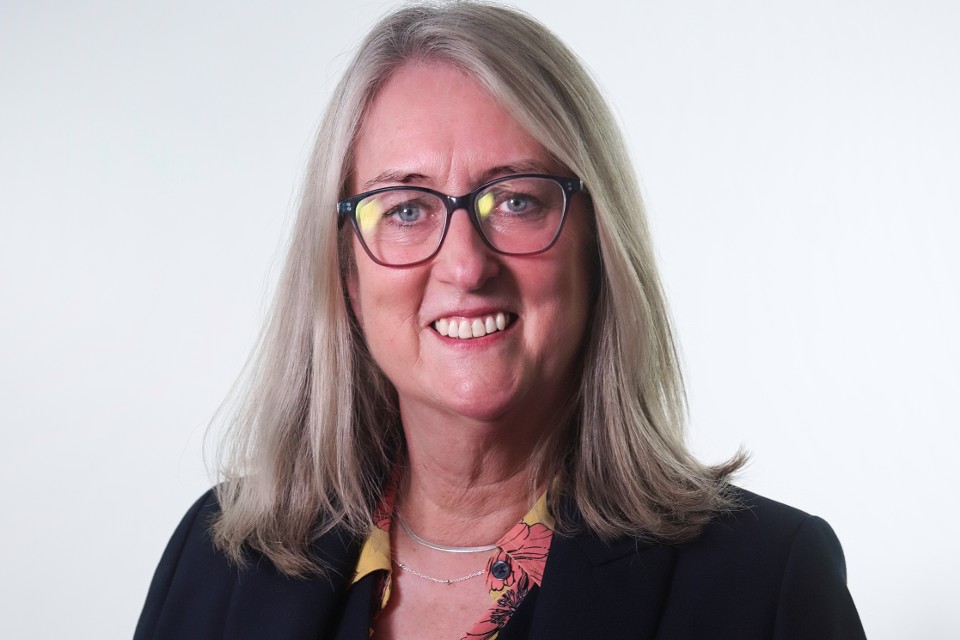
  • Jacqui Smith – 2024 Speech at Universities UK Conference

    Jacqui Smith – 2024 Speech at Universities UK Conference

    The speech made by Jacqui Smith, the Skills Minister, at the University of Reading on 4 September 2024.

    I thank you very much for that welcome, and it’s an enormous honour to be here, and thank you very much to Universities UK for the kind invitation. I’m also very pleased and proud to be back in government again, 25 years after I first arrived at the Department for Education in my first ministerial job, but it’s great this time to be here at the beginning of a new government too.

    The Prime Minister and the Chancellor have rightly been outlining the enormous challenges and tough choices that we face in the coming months. But despite that, I’m really excited. I’m excited to be part of a mission led government determined to create a new era of opportunity and economic growth and a fairer society for everybody, where excellence is a given, not just something that the most fortunate get to enjoy. And I’m excited to be working with you. Bridget Phillipson has been absolutely clear that we are resetting the approach, that we’re taking an approach that will focus on working in collaboration. I want to have a constructive relationship with all of you, all of us working together, talking to one another to build a more sustainable future based on partnership, not picking fights.

    So I’d like to spend my time with you today reflecting on my early impressions in this role, and then I’d like to hear your ideas and respond to questions. Our universities and the higher education offered in this country is up there with the very best in the world, and we should be rightly proud of it. And as I said in my maiden speech, which you’ve heard referenced in the House of Lords, our university sector is one of this country’s greatest enablers. It provides opportunities for people to follow their passions and to expand their horizons through research and teaching. It enables us to challenge our understanding and develop new ideas in many communities, it provides an anchor for wider economic development.

    So, our universities are vital engines of economic growth and of opportunity for everybody throughout their lives. That’s my starting point, but I also recognise that now, more than ever, we need to work together to put higher education on a strong footing so that it continues to deliver for everybody, for students, obviously, but also for universities themselves, for our economy and for all of us well into the future. And I hadn’t been in the job an hour before people were outlining for me the real financial peril that the sector faces.

    Higher education providers are rightly independent from government and have a responsibility to plan prudently to ensure their long-term sustainability. However, I am well aware that providers are under financial strain, and that’s why we took immediate action. Sir David Behan, who carried out the recent independent review of The Office for Students, has now been appointed as its interim chair, and Sir David will oversee the important work of refocusing the Office for Students’ role to concentrate on a number of key priorities, including prioritising the sector’s financial stability. And I will be working closely with the OfS to understand the sector’s changing financial landscape. And I am committed to making sure that there are robust plans in place to mitigate risks as far as is possible. And we’re determined in government that the higher education funding system should deliver for our economy, for universities and for students, and we are carefully considering all options to deliver a more robust higher education sector, working on it now, but this isn’t something that’s going to happen overnight. It will take time to get it right, and we’re doing it – as I started by outlining – in an era of enormously difficult and tough fiscal choices that we need to make.

    So, financial stability is the foundation, but we are more ambitious for the future of higher education than that. We need to use that foundation to build wider reform. The OfS has an important role to play in that too. Sir David’s review of The Office for Students is a serious and sobering read, and it makes very clear that the regulator should focus its work on clearly defined key priorities, alongside financial stability, those will also include making sure that quality is of a high standard, that public money is protected, and that the interests of students are paramount, and that’s the right focus and Bridget and I have been very clear about that. And I know that those are changes in terms of the focus that you want to see yourselves, because many of you have told me so. But there is even more that you can do to contribute to the missions that I outlined, ensuring opportunity and driving growth.

    Firstly, those of us fortunate enough to have gone to university know first-hand about the opportunities that flowed from that. Looking around the room, I can be pretty confident that most of us went at a time when only a small minority got that chance. Many more benefit now, but too many people across our country still don’t get the chance to succeed, because the way ahead is an obstacle course strewn with barriers and dead ends, which is why we are absolutely committed to supporting every young person who meets the requirements and wants to go to university to do so. Because while universities are, as I’ve said, vital to delivering the skills that we need, while the research that you do is vital to shaping the economy of tomorrow, that’s not and it cannot be all that we ask or expect of higher education.

    As the Robbins Report set out over 60 years ago, and as I believe today, universities have a broader role to play in shaping and enriching the society we live in and the culture that we enjoy, not just for each of us, but for all of us, and that’s why it’s vital, absolutely vital, that access to higher education should be based on individual ability and attainment, not fettered by where you happen to live, or simply the success or otherwise of your parents.

    So, improving access and progression for students is key to our ambitions for the future. I know that many of you are already working hard on this, and I’m keen to hear more about what we can do together alongside the refocused OfS, to make further progress on getting all people who can benefit from higher education into university and, alongside that, to ensure that they’re getting the best possible teaching and the most enriching experience when they’re there. A rich and diverse student body is, of course, one of the things that draws people to higher education in the first place, but for some, it will not be that positive, life enhancing time that it needs to be. That’s why I’ve been discussing this with Edward Peck, who’s been briefing me about the disturbing growth of mental health problems among university students in recent years, and what should be done about it.

    I’ve heard how UK members have responded to this challenge, engaging enthusiastically with the university mental health charter so that student wellbeing is supported across every aspect of campus life, and thank you for the work that you’re doing in that and I’ve asked Edward to continue as higher education student support champion, and his task force on mental health intends to publish its second stage report in November.

    So, alongside this enormous contribution to ensuring individual opportunity and wellbeing, the HE sector has a huge role to play locally, nationally and internationally in driving growth. In July, the Prime Minister launched Skills England to drive forward our plans to tackle the skills shortages that are holding the economy back. That new organisation will unify the skills landscape. It will bring together employers, trade unions, universities and other training providers to make sure that the opportunities are there for everybody to get on in life.

    And of course, higher education is an integral part of that skills landscape at a more local level. Why do so many of my colleagues in Parliament lobby and campaign for university campuses in their constituencies? It’s because they understand the economic, the social, the cultural power that they can bring to the communities that they represent. What more then can we do to encourage this role and to ensure that partnership and collaboration with each other, with further education, with local government, with employers and with communities can flourish and on a global stage, I know that higher education has both a global status and a global impact.

    You asked us to make a strong statement about the role of international students, and Bridget did just that in her speech to ambassadors in July. The UK is outward looking. It welcomes international students from all over the world. They make a hugely positive impact on this sector, on our economy and on society as a whole. In fact, of course, attracting the brightest students from around the world is good for our own students too, as it leads to more university places for them and a strong culture of research informed teaching across our campuses, as well as lifelong friendships. So, it’s not just an economic benefit, but a social and geopolitical export, too.

    The impact of those whose formative study has been in the UK going back to their homes with the values of the UK echoing in their ears should not be underplayed. I’d like to state as plainly as I can that international students are and will continue to be welcomed in the UK. So, all these objectives and the financial stability which needs to underpin them will, of course, need effective leadership, strong governance and a focus on efficiency we know that exists in the sector.

    How do we ensure that the best is spread more widely? Before I finish, I just want to touch on one other area where we listened and acted quickly. As you know, we have paused further implementation of the Higher Education Freedom of Speech act to give us time to consider all our options, but we are completely clear that higher education must be a space for robust discussion where students and staff hear and express a host of diverse opinions and are able to challenge each other and ideas.

    But concerns, of course, have been raised about the Act, as it stands, that that wasn’t the way to achieve those ends, and indeed, risk making matters worse, not better. Academic freedom and freedom of speech are too important for us to risk getting this wrong, and that’s why we will consider further, and we’ll be announcing what the future holds for this Act as soon as possible. So, just finally, then my whole professional life has been about making sure people get every opportunity to learn and to get on and to lead better, more rewarding and fulfilled lives. That’s what I’m bringing to this role. I’m very proud to be in a position to work alongside you so that we can all translate our shared objectives into opportunities for all to flourish and for all to succeed wherever they start and whatever the hurdles that they need to overcome. Thank you.

  • PRESS RELEASE : Celtic gold twisted torc bracelet at risk of leaving the UK [September 2024]

    PRESS RELEASE : Celtic gold twisted torc bracelet at risk of leaving the UK [September 2024]

    The press release issued by the Department for Culture, Media and Sport on 4 September 2024.

    A temporary export bar has been placed on a Celtic gold twisted torc.

    • The bracelet has been valued at £45,000
    • Export bar is to allow time for a UK gallery or institution to acquire the torc

    A temporary export bar has been placed on a Celtic gold twisted torc bracelet dating back to the Iron Age.

    The bracelet is a fine and well-preserved example of a personal ornament particular to Britain in the late first millennium BC known as a ‘torc’.

    Personal ornaments, such as this gold torc bracelet are rare finds in Britain and are often closely associated with the identity of ancient Britons prior to the Roman invasion.

    The torc was created from two wires twisted and plied together with a single, round, looped terminal at either end. Experts advise that it has been bent to form a bracelet from a larger ring, likely either from an arm ring or a small neck-ring for a child.

    The form and style confirms that it originates from Britain, most probably central or eastern England, in contrast to the diverse torc forms that are found across Continental Europe.

    Arts Minister Sir Chris Bryant said:

    “This well preserved item brings our distant past into the present, and an opportunity to understand fashion and metalworking in a period of our history we are still learning so much about.

    “I hope placing an export bar on this Celtic torc means a suitable UK buyer can be found so that the public have more opportunities to learn more about the lives of our ancestors.”

    The Minister’s decision follows the advice of the Reviewing Committee on the Export of Works of Art and Objects of Cultural Interest. The RCEWA Committee found the torc met the third Waverley criterion for its outstanding significance to the study of goldsmithing, personal dress and identity in Britain before the Roman invasions.

    Committee member Tim Pestell said:

    “Torcs have long been associated with Britain’s Iron Age, an image conjured up ever since Roman historian Cassius Dio described Boudica, queen of the Iceni as ‘wearing around her neck … a large golden necklace’. This plied and twisted gold bracelet takes the form of a simple neck torc created from two wires twisted and plied together with single, round, loops at each terminal. Was this small example originally made to be worn around the neck of a child and later folded into a bracelet? Or was it made as a bracelet in the shape of a torc? Examples of jewellery like this are of utmost rarity and outstanding importance for what they can tell us about the early British society that produced them.

    “Made of 97% pure gold and conventionally dated to c.150 – 50 BCE, this bracelet is of a form unique to England. Because the production of Iron Age jewellery like this is still imperfectly understood, its study can yield vital information on the use and availability of gold, goldsmithing techniques and decorative styles during this period. I earnestly hope that a museum might be able to acquire this remarkable bracelet and enable the public to enjoy seeing it and learning the new stories that will be told as a result of its further study.”

    The decision on the export licence application for the torc will be deferred for a period ending on 3 November 2024 inclusive. At the end of the first deferral period owners will have a consideration period of 15 Business Days to consider any offer(s) to purchase the torc at the recommended price of £45,000 (Plus VAT). The second deferral period will commence following the signing of an Option Agreement and will last for three months.

    Notes to editors

    1. Organisations or individuals interested in purchasing the Bracelet should contact the RCEWA 02072680534 or rcewa@artscouncil.org.uk .
    2. Details of the Bracelet are as follows: Plied and twisted gold bracelet. The form is that of a simple twisted torc created from two wires twisted and plied together with a single, round, looped terminal at either end. This is a fine and well-preserved example of a personal ornament particular to Britain in the late first millennium BC during a period conventionally described as the Iron Age. Gold alloy. Composition listed in the application is 97% gold. 72mm. Weight: 157.5g. Length along bracelet from end of one terminal to the other: 287mm.
    3. Provenance: London art market. Antiquities; Christie’s, London, 7 December 1994, lot 172. Sold at Christie’s, London, 5 July 2023, lot 55.
    4. The Reviewing Committee on the Export of Works of Art and Objects of Cultural Interest is an independent body, serviced by the Arts Council (ACE), which advises the Secretary of State for Culture, Media and Sport on whether a cultural object, intended for export, is of national importance under specified criteria.