Blog

  • NEWS FROM 100 YEARS AGO : 26 October 1924

    NEWS FROM 100 YEARS AGO : 26 October 1924

    26 OCTOBER 1924

    Major Beaumont Thomas, the Conservative candidate for Pontypool, was attacked by hooligans.

    A demonstration was held by communist supporters in Trafalgar Square, London.

    Burnt Oak station on the Hampstead-Edgware tube extension opened.

  • NEWS FROM 100 YEARS AGO : 25 October 1924

    NEWS FROM 100 YEARS AGO : 25 October 1924

    25 OCTOBER 1924

    An amazing letter from the Presidium of the Executive Committee of the Communist International, Moscow, to the Central Committee of the British Communist party, has come into the hands of the Foreign Office. The letter gives instructions to British Communists as to how to bring about a revolution. The Foreign Office has written to the Chargé d’Affaires of the Soviet Union stating that His Majesty’s Government cannot allow such propaganda, and must regard it as a direct interference from outside in British domestic affairs.

    Professor Charles Sarolea, in an article on Bolshevism in the Labour movement, shows the close connection which exists between Russian Bolshevism and British Socialism.

    Lord Balfour, speaking at Haddington, denounced the policy of the Government with regard to Imperial interests.

    Viscount Younger, speaking at Annan, said the choice before the electors was Constitutionalism or Socialism. If the electors wanted a stable Government and wanted to avoid annual elections, let them vote for the Unionist party, the only party which could have a majority. Socialism meant tyranny and the sinking of our freedom.

    Lord Birkenhead addressed a Unionist demonstration at Aberdeen.

    Sir Robert Horne, addressing the Hillhead electors, said the great questions which previously divided Conservatives and Liberals had for the most part disappeared, and today the differences between them were almost inappreciable in comparison with the great abyss that separated both of them from the creed of Socialism.

  • NEWS FROM 100 YEARS AGO : 24 October 1924

    NEWS FROM 100 YEARS AGO : 24 October 1924

    24 OCTOBER 1924

    Stanley Baldwin, addressing a crowded meeting at Gravesend, and referring to Preference, said he pledged himself there, as he had pledged himself before, that there would be no taxation of food if the Unionist party were returned to power.

    The Earl of Balfour, Sir Robert Horne, and Sir John Gilmour, in a letter to the Editor, emphasise the importance of defeating the Socialists, and urge Unionist electors in Scotland during the present election, in all constituencies where there is no Unionist candidate, to register their votes for the Liberal nominee, and to give him all the support in their power.

    Lord Birkenhead in Glasgow dealt with the Prime Minister’s grievances and the Government’s failure to implement its promises.

    Herbert Asquith, speaking at Paisley, denounced the attempts of the Socialists to prevent their opponents stating their case, and said he was not going to submit to the humiliation of having the free statement and interchange of views left at the mercy of a set of unintelligent hooligans.

    David Lloyd George at Pembroke declared that Liberals made far too little of the part they had played in making the Empire possible. He suggested that some day a conciliated Ireland would render to the Empire the service which was rendered by the Boers in the Great War.

    The Prime Minister, speaking at Aberavon, said that neither the Coalition nor the Tory Government had ventured to face the problem of supplying houses to be let for rent as opposed to houses built by private enterprise and sold when they were built.

    The Prime Minister announced at Aberavon that the third Commissioner to the Irish Boundary Commission had just been appointed.
  • NEWS FROM 100 YEARS AGO : 23 October 1924

    NEWS FROM 100 YEARS AGO : 23 October 1924

    23 OCTOBER 1924

    Stanley Baldwin points out in a message to the women electors that the future of their homes and their children depends greatly upon how the women of Great Britain use the power of their vote.

    Lord Balfour, speaking at Peebles on behalf of the Unionist candidate, declared that even a brief experiment of Socialist State organisation would mean national disaster.

    Herbert Asquith met with a hostile reception from a rowdy element at his meeting at Paisley, and was continually interrupted during his speech.

    David Lloyd George spoke at Haverfordwest in support of his son’s candidature. He said it was a good thing that Labour had had an opportunity of office, if only to convince them of the impossibility of building up a great new social era in six months.

    Speaking at Alnwick, Viscount Grey said the three qualities needed in public life today were sympathy, truth, and courage. The Labour Government was directed, not to inducing people to pull together, but to a class war.

    Ramsay MacDonald, at Aberavon, said that Labour was making things move. That was why the other parties were so angry with Labour.

    Socialists and Communists were present in large numbers at Sir Robert Horne’s meeting in Partick Burgh Hall, and created a disturbance. The stewards had to eject several of the interrupters from the hall.

  • NEWS FROM 100 YEARS AGO : 22 October 1924

    NEWS FROM 100 YEARS AGO : 22 October 1924

    22 OCTOBER 1924

    Sir Alfred Mond was refused a hearing in Hackney, where the Socialists broke up his meeting.

    Glasgow Magistrates issued a warning that they would take a serious view of any cases of disturbance or obstruction at election meetings which might come before them in their judicial capacity.

    Lord Curzon, at a Unionist meeting in London, strongly condemned the Russian Treaty. He said that the policy of the last Government was British throughout. It was the policy of the firm hand.

    Sir Robert Horne, addressing his constituents in Glasgow, said there had never been a grosser fraud perpetrated on this country than the Russian Treaty. Trade Unions had issued a circular stating that the Treaty should be carried through, but he did not believe that Trade Unions would lend a single penny of their funds to Russia.

    Winston Churchill at Bristol said the Unionist programme might have served for an actively progressive Liberal Administration. “Trust the people” was a motto which should animate them in the present fight.

    Sir Auckland Geddes, at Blackburn, said the Government in the field of foreign policy filled him with grave uneasiness. They seemed to speak not knowing, perhaps not caring, and other countries listening to their words believed them to be full of meaning.

    Addressing his supporters at Paisley, Mr Asquith said that Mr Wheatley’s Bill now stood not as a monument to the creative insight and skill of the Labour Government, but as a co-operative undertaking in which all parties in the State had a hand.

  • NEWS STORY : Archbishop of Canterbury Justin Welby Resigns

    NEWS STORY : Archbishop of Canterbury Justin Welby Resigns

    STORY

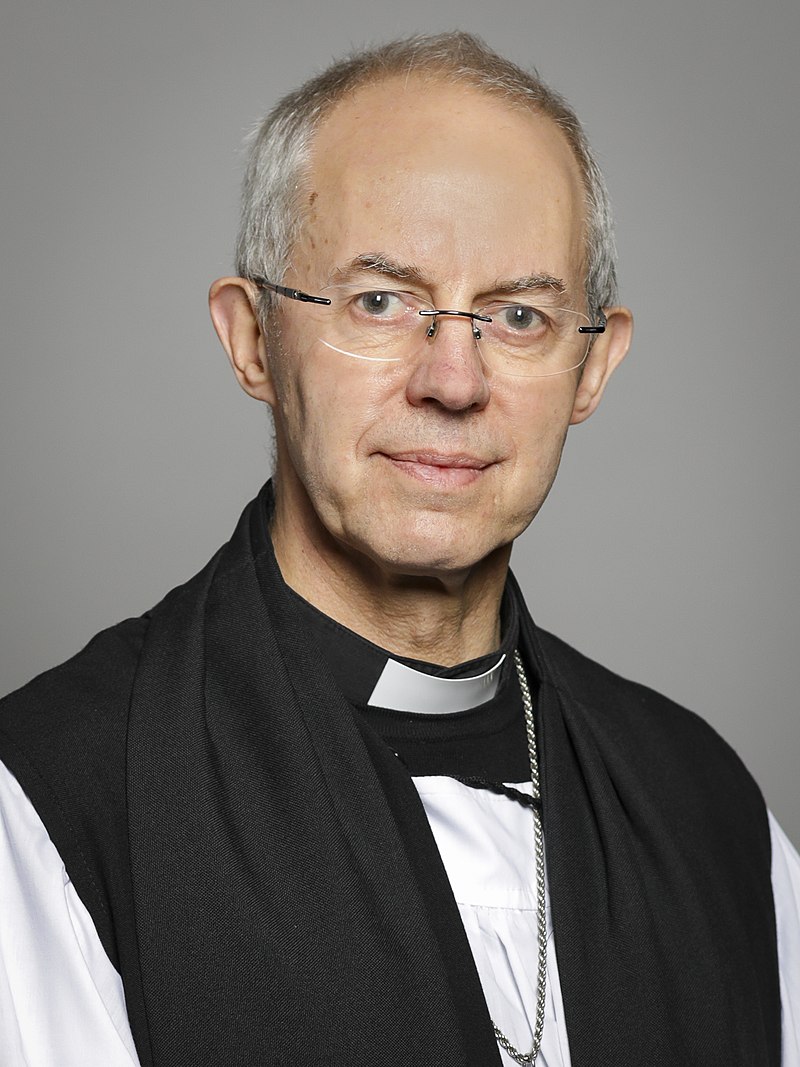
    Justin Welby, the Archbishop of Canterbury, has resigned. The news comes hours after further members of the church decided to stand down against allegations that Welby could have done more to tackle historic sexual abuse claims.

  • NEWS STORY : Sue Gray Rejects Nations and Regions Envoy Role

    NEWS STORY : Sue Gray Rejects Nations and Regions Envoy Role

    STORY

    Sue Gray, the outgoing Chief of Staff to the Prime Minister Keir Starmer, has rejected the role she had been offered as the Nations and Regions envoy. The Guardian Newspaper reported that Gray had been warned that Starmer would have withdrawn the job offer as rumours continue about disputes amongst senior figures of the Prime Minister’s team. Downing Street sources confirmed that Gray would no longer be taking up her new role.

  • NEWS STORY : Calls for the Archbishop of Canterbury to Resign Continue

    NEWS STORY : Calls for the Archbishop of Canterbury to Resign Continue

    STORY

    The Archbishop of Canterbury, Justin Welby, is facing mounting pressure to resign following the publication of the Makin Review, a damning report into the Church of England’s handling of abuse allegations against John Smyth QC. Smyth, a prominent evangelical lawyer, is alleged to have subjected as many as 130 young men and boys to brutal physical and psychological abuse over several decades. The Makin Review concluded that Smyth might have been brought to justice sooner had Welby formally alerted authorities in 2013 when he first became aware of the allegations. This failure, coupled with a perceived lack of urgency in addressing the systemic issues that allowed the abuse to occur and remain hidden for so long, has fuelled calls for Welby to step down.

    A petition launched by three members of the General Synod, the Church of England’s parliament, calling for Welby’s resignation has garnered over 10,000 signatures. Andrew Morse, a victim of Smyth’s abuse, stated that Welby’s admission of failing to take sufficient action in 2013 “is enough in my mind to confirm that Justin Welby along with countless other Anglican church members were part of a cover-up about the abuse.” 

    The Bishop of Newcastle, Helen-Ann Hartley, has also joined the chorus of voices demanding Welby’s resignation, stating that his position is “untenable.” She argues that the Church needs a leader who can demonstrate a “passion” for safeguarding and a commitment to transparency and accountability. However, Welby has thus far resisted calls to resign. A Lambeth Palace spokesperson stated that the archbishop “hopes the Makin Review supports the ongoing work of building a safer church here and around the world.” Welby himself has acknowledged his failings in 2013 but maintains that he will not step down, emphasising his commitment to learning from the review and implementing its recommendations.

    The calls for Welby’s resignation highlight the deep sense of betrayal and anger felt by survivors of abuse within the Church of England. They argue that his departure would symbolise a break with the past and a commitment to prioritising the safety and well-being of vulnerable individuals. However, others argue that Welby should remain in post to oversee the implementation of the Makin Review’s recommendations and ensure that such failings are never repeated. The controversy surrounding Welby’s leadership has plunged the Church of England into a crisis, raising serious questions about its ability to address past wrongs and create a safe environment for all its members. The coming weeks and months will be crucial in determining whether the Church can regain the trust of those harmed by Smyth’s abuse and rebuild its reputation as a place of safety and spiritual guidance.

  • NEWS STORY : Neatishead Footpath Reopened After Five-Year Dispute in Victory for Community

    NEWS STORY : Neatishead Footpath Reopened After Five-Year Dispute in Victory for Community

    STORY

    A long-running dispute over a blocked footpath in the picturesque village of Neatishead has finally been resolved, granting villagers access to a cherished walking route. The path, which links the village to the serene Alderfen Broad, a hidden gem of the Norfolk Broads, had been blocked by a local farmer since 2019, sparking a five-year battle between residents and the landowner. The dispute arose when the farmer, who claimed no public right of way existed, obstructed the path with logs and farm machinery. This led to heated exchanges and accusations of intimidation between walkers and the farmer, Stuart Pairpoint. Villagers argued that the path had been used for decades, providing a vital connection to Alderfen Broad, a haven for wildlife and a popular spot for dog walkers.

    The case was eventually brought before the Planning Inspectorate, the Government body responsible for resolving public rights of way disputes. After a public inquiry held last month, the Inspectorate ruled in favour of the villagers, citing historical evidence and witness testimony that confirmed the path’s long-standing use. “This is a victory for common sense and for the community,” declared a spokesperson for the Neatishead Parish Council. “This path has been enjoyed by generations of villagers, and we are delighted that it will once again be accessible to all.”

    The decision has been met with relief by residents, who are eager to reclaim their access to the scenic beauty of Alderfen Broad. “It’s a wonderful place for walking and enjoying nature,” commented a local resident. “We’re so glad this dispute is finally over.” The reopening of the footpath marks a positive outcome for the community and reinforces the importance of protecting public rights of way for the enjoyment of all.

  • NEWS FROM 100 YEARS AGO : 21 October 1924

    NEWS FROM 100 YEARS AGO : 21 October 1924

    21 OCTOBER 1924

    Stanley Baldwin, in a speech at Southend, urged the importance of an inquiry into food prices. Referring to Russia in his Southend speech, Baldwin that at one time there went up a cry of “Hands off Russia.” He thought it was time some of them said to Russia, “Hands off Britain.”

    Addressing Paisley electors, Herbert Asquith said it was not for the Labour party of all people in the world to descant on the immorality of what we called pacts. The Liberal party put them in office and kept them there so long as it was safe for the country to do so.

    David Lloyd George, speaking at Walsall, dealt with the land question and the Liberal programme in regard to it.

    Referring to the Campbell case at Aberavon, Sir Alfred Mond said the Workers Weekly article was an incitement drawn up in Moscow.

    That this country, if it committed itself to a loan to Russia, would assume a responsibility for the crimes of the Soviet Government was emphasised by Winston Churchill in the course of a speech at Epping.

    The Prime Minister, speaking at Leicester, said that to the Labour party the issue of the election was “Is Labour to rule? Is the Labour Government to receive a vote of confidence from the country or is it not?”

    In West Edinburgh Mr Ian MacIntyre, the Unionist candidate, is waging a vigorous campaign against both Liberal and Socialist nominees.