Blog

  • Vikki Slade – 2026 Speech on Less Survivable Cancers

    Vikki Slade – 2026 Speech on Less Survivable Cancers

    The speech made by Vikki Slade, the Liberal Democrat MP for Mid Dorset and North Poole, in Westminster Hall on 6 January 2026.

    I thank the hon. Member for Southport (Patrick Hurley) for that really moving account. We know that cancer affects us all. In my family it claimed my mum Lin; my sister-in-law Lisa and my stepmum Sally have both beaten it, and now my dad Ray is living with terminal cancer. One of my team is also undergoing treatment for cancer, so we know that it is prevalent among all our lives. All of them were fit, healthy people who did everything right, as are so many others each year who get the horrible news or—worse—turn up in A&E after becoming suddenly unwell. According to a Cancer Research study, many of those patients had visited their GP but had not been referred for tests, either because they did not meet the thresholds or because they had been missed altogether. This is not a criticism of our GPs, who are working in highly difficult situations. Indeed, when I shadowed Dr Wright from Walford Mill surgery in Wimborne, he had the sober task of sharing a diagnosis and undertaking a very personal test during his appointment, which he let me witness.

    If diagnosis doubled across the six least survivable cancers alone, an additional 7,500 lives a year would be saved. Each year in my constituency of Mid Dorset and North Poole, there are 540 diagnoses of cancer and 300 cancer deaths. Although 85% of them should be starting treatment within 62 days, the number is actually only 60%. What is the Minister doing to bridge that gap? If we met the target in my constituency, 70 additional people would be getting on with their lives. Across the country, 45,000 additional people would be given a greater chance of not just surviving but having a life shared with those they love.

    Furthermore, once they get to hospital, patients are faced with out-of-date machinery and not enough specialist nurses. Macmillan Cancer Support says there is an acute shortage and calls for a cancer nurse fund to increase the numbers by 3,700. Will the future cancer strategy include such funding?

    I want to speak briefly about pancreatic cancer, which claimed the life of my cousin Colin, a super-fit former Welsh Commonwealth games cyclist who died in his 50s despite the best care available. Many other constituents have written to me about poor prognosis for this treatment. They have flagged that the NHS has approved selective internal radiation therapy, but only for colorectal and liver cancers—not those whose primary cancer was in the pancreas and then spread to the liver. These families are keen for urgent trials to be undertaken to allow the treatment to be used, given the incredibly short life expectancy faced by patients. Will the Minister consider that?

    We have been waiting such a long time for this cancer strategy. We need the workforce plan and the road map for the NHS plan. Nine hundred and fifty people will be diagnosed with cancer today, and those people need hope.
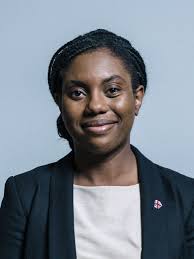
  • Patrick Hurley – 2026 Speech on Less Survivable Cancers

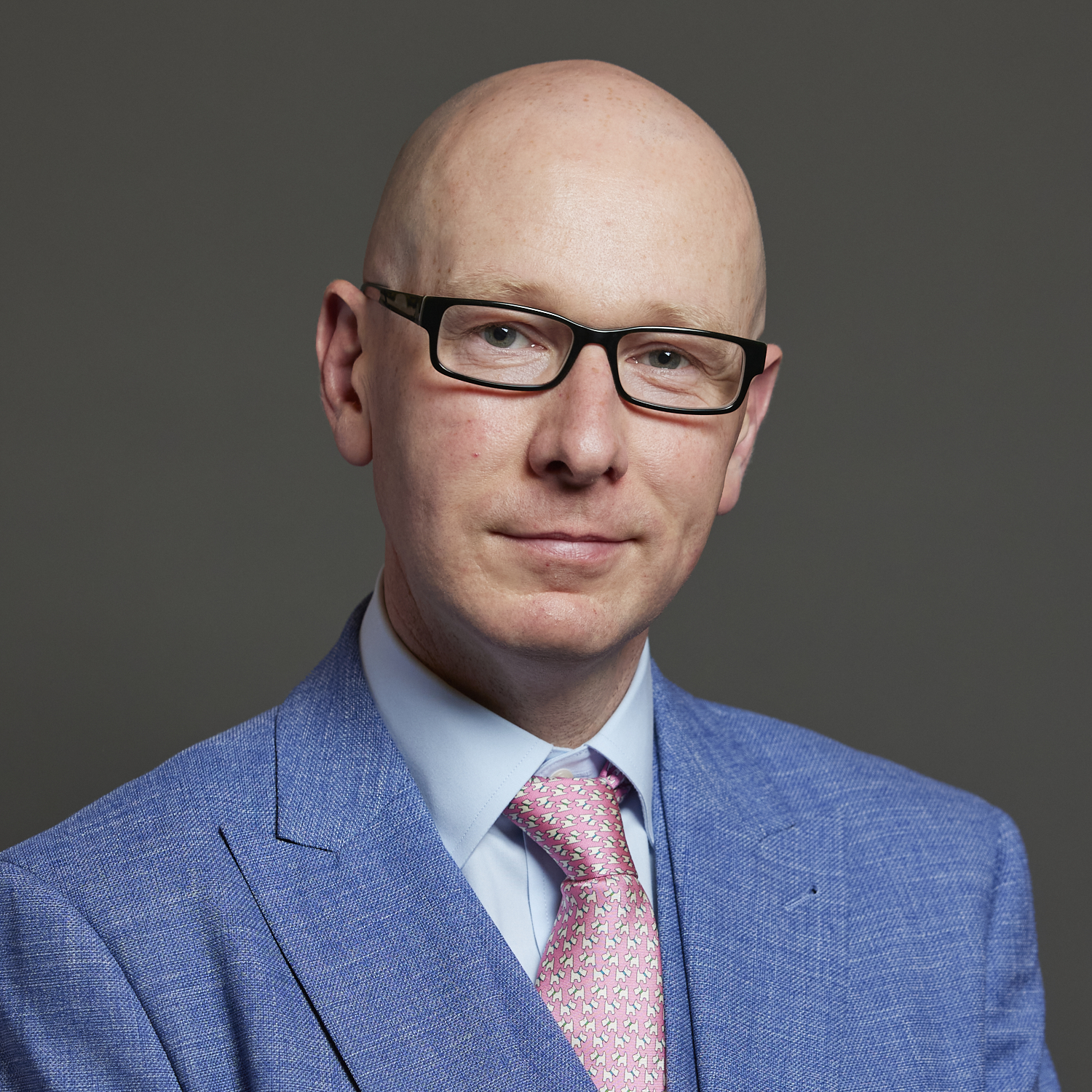
    Patrick Hurley – 2026 Speech on Less Survivable Cancers

    The speech made by Patrick Hurley, the Labour MP for Southport, in Westminster Hall on 6 January 2026.

    It is a pleasure to serve under your chairmanship, Mr Efford. Less Survivable Cancers Awareness Week is an important marker in the calendar, but I want to talk about another important marker when it comes to these cancers—one that is important for me and my family anyway—because this year marks 20 years since I was made unavoidably aware of the devastation of oesophageal cancer. In May of that year, my father developed the classic symptoms: difficulty swallowing, feeling like food was getting stuck, heartburn and weight loss. He was diagnosed in August and died on 23 December: from becoming symptomatic to losing his life was just seven months. The rapidity of the decline was overwhelming. Barely had he been diagnosed than he was given a terminal diagnosis. I must admit, though, that I was not giving my father my full attention during that time. In almost any other circumstances I would have been a much more dutiful son, but my own focus was elsewhere that year. On 1 August 2006, my wife Susan also became symptomatic with oesophageal cancer. She was diagnosed on 11 September and died on 14 November.

    The speed with which I read that sentence reflects the speed with which Sue died. There was barely any chance to understand what was happening, to seek help or for the family to manage. That is not unusual with these sorts of diseases. It is the sort of story that thousands of us know. Crucially, for my Southport constituency, it is also a story that disproportionately impacts people from the north-west and from north Wales. For my family, there was not any long fight or slow decline—only shock, confusion, urgent decisions and death. That is what a less survivable cancer looks like.

    May I make a clear ask of the Minister today? I am asking for a personal commitment, and a commitment across Government, to drive up survival rates for all these less survivable cancers, but most urgently—for my personal history and for the geographical distribution that shows that my part of the country has higher levels than elsewhere in the UK—for oesophageal cancer. That could mean things such as early diagnosis, recognising that one size fits all does not work. It could mean fast-track treatment pathways once suspicion is raised. Above all else, it should include serious investment in experimental and pre-symptomatic techniques, finding ways to detect cancers before symptoms even appear. These are difficult cancers to deal with, and that is why they need targeted action. I am here today because two people I loved did not get the help they needed, so I urge the Government to help other families avoid that same fate.

  • Kemi Badenoch – 2026 Comments on West Midlands Police and Football Policing Decision

    Kemi Badenoch – 2026 Comments on West Midlands Police and Football Policing Decision

    The comments made by Kemi Badenoch, the Leader of the Opposition, on 6 January 2026.

    West Midlands Police capitulated to Islamists and then collaborated with them to cover it up.

    They knew extremists were planning to attack Jews for going to a football match, and their response was to blame and remove Jewish people instead. They presented an inversion of reality and misled a Parliamentary Committee.

    We have had enough of this in Britain.

    The Chief Constable’s position is untenable.

    The British Police serve the British public, not local sectarian interests.

  • NEWS STORY : UK and France sign plan for post-ceasefire forces in Ukraine after ‘Coalition of the Willing’ talks in Paris

    NEWS STORY : UK and France sign plan for post-ceasefire forces in Ukraine after ‘Coalition of the Willing’ talks in Paris

    STORY

    The UK and France have signed a “declaration of intent” on deploying forces to Ukraine in the event of a peace deal, after Prime Minister Keir Starmer met European and American allies alongside President Volodymyr Zelenskyy in Paris. Starmer said the Coalition of the Willing is focused on helping to deliver “a peace that can last” and working with the United States to guarantee Ukraine’s long-term security.

    Downing Street said the declaration would pave the way for a legal framework under which British, French and partner forces could operate on Ukrainian soil, including securing Ukraine’s skies and seas and supporting the future regeneration of Ukraine’s armed forces. Starmer said that following a ceasefire the UK and France would establish “military hubs” across Ukraine and build protected facilities for weapons and equipment to support Ukraine’s defensive needs.

    Starmer also said coalition partners had agreed further steps including participating in US-led monitoring and verification of any ceasefire, supporting the long-term provision of armaments for Ukraine’s defence and working towards binding commitments to support Ukraine in the event of a future armed attack by Russia. He said a peace deal would require compromises from Vladimir Putin, arguing Russia was “not showing that he is ready for peace”, and pledged further support for Ukraine’s defence in 2026 alongside additional measures targeting oil traders and “shadow fleet” operators that the UK says help fund Russia’s war effort.

  • Keir Starmer – 2026 Remarks after Coalition of the Willing Meeting

    Keir Starmer – 2026 Remarks after Coalition of the Willing Meeting

    The remarks made by Keir Starmer, the Prime Minister, on 6 January 2026.

    It’s important that we are starting the year like this –  

    European and American allies, side-by-side with President Zelenskyy…  

    Standing for peace. 

    And we are closer to that goal than ever…  

    But the hardest yards are still ahead…  

    So we’re here today to keep driving that effort forward.  

    And we’ve had a very constructive meeting…  

    Which has built on the excellent progress made in negotiations over recent days and weeks.  

    The purpose of the Coalition of the Willing… 

    Is to help deliver a peace that can last –  

    And to work with the US to guarantee Ukraine’s security for the long term. 

    This work is now more advanced than ever.   

    Today’s joint declaration set that out in clear terms –  

    On top of that, and alongside President Zelenskyy and President Macron,  

    We went even further today.

    We signed a Declaration of Intent… 

    On the deployment of forces to Ukraine in the event of a peace deal. 

    This is a vital part of our iron-cast commitment to stand with Ukraine for the long term.  

    It paves the way for the legal framework… 

    Under which British, French and partner forces could operate on Ukrainian soil –  

    Securing Ukraine’s skies and seas –  

    And regenerating Ukraine’s armed forces for the future. 

    We discussed these issues in detail today. 

    And so I can say that, following a ceasefire,  

    The UK and France will establish “military hubs” across Ukraine… 

    And build protected facilities for weapons and military equipment… 

    To support Ukraine’s defensive needs. 

    And with our Coalition partners,  

    We also have agreed significant further steps.  

    First, that we will participate in US-led monitoring and verification of any ceasefire. 

    Second, we will support the long-term provision of armaments for Ukraine’s defence. 

    And third, we will work towards binding commitments… 

    To support Ukraine in the case of a future armed attack by Russia. 

    This is all about building the practical foundations on which peace would rest. 

    But we can only get to a peace deal if Putin is ready to make compromises. 

    And so, we have to be frank –  

    For all Russia’s words…  

    Putin is not showing that he is ready for peace. 

    Over the last few weeks, we have seen the opposite: 

    Further horrific strikes on Ukraine… 

    Killing and wounding civilians… 

    And cutting off power from millions of people in the dead of winter. 

    His forces hit a hospital in Kyiv just yesterday.  

    And he has tried to distract from peace efforts with unfounded claims of attacks on his residence. 

    Now this only hardens our resolve.  

    We will continue to step up our support to Ukraine’s defence in 2026… 

    To ensure it gets the equipment and backing it needs to continue the fight. 

    And we will keep up the pressure on Russia… 

    Including further measures on the oil traders and Shadow Fleet operators funding Putin’s war chest.  

    We will continue these efforts until they come to the table in good faith… 

    And until we realise the goal that we all share – of a just and lasting peace. 

    Thank you, Emmanuel.

  • NEWS STORY : Axel Heitmueller appointed to lead Prime Minister’s Delivery Unit

    NEWS STORY : Axel Heitmueller appointed to lead Prime Minister’s Delivery Unit

    STORY

    Axel Heitmueller has been appointed as the new Head of the Prime Minister’s Delivery Unit and will also serve as an Expert Adviser on Delivery, Downing Street has announced. The role is a full-time Direct Ministerial appointment and will be paid.

    The Prime Minister’s Office said Heitmueller will advise ministers and “drive forward the Government’s vision for national renewal”, with a focus on ensuring people “get help with the cost of living” and see changes in bills, communities and the health service.

    Heitmueller previously worked as the Prime Minister’s Expert Adviser on Health and has held senior NHS-related roles, including Chief Executive of Imperial College Health Partners and Executive Director of Strategy at Chelsea and Westminster NHS Foundation Trust.

  • PRESS RELEASE : Appointment of Axel Heitmueller as Head of the Prime Minister’s Delivery Unit and Expert Adviser on Delivery [January 2026]

    PRESS RELEASE : Appointment of Axel Heitmueller as Head of the Prime Minister’s Delivery Unit and Expert Adviser on Delivery [January 2026]

    The press release issued by 10 Downing Street on 6 January 2026.

    Axel Heitmueller has been appointed as the Head of the Prime Minister’s Delivery Unit and Expert Adviser on Delivery. 

    He will also advise ministers and drive forward the Government’s vision for national renewal to ensure more people get help with the cost of living and see a change in their bills, communities, and health service.

    The full-time role is a Direct Ministerial appointment and will be paid.

    Axel brings with him extensive experience, including as the Prime Minister’s Expert Adviser on Health. Prior to that, he was CEO of Imperial College Health Partners and Executive Director of Strategy at the Chelsea and Westminster NHS Foundation Trust Hospital.

  • Siobhain McDonagh – 2026 Speech on Less Survivable Cancers

    Siobhain McDonagh – 2026 Speech on Less Survivable Cancers

    The speech made by Siobhain McDonagh, the Labour MP for Mitcham and Morden, in Westminster Hall on 6 January 2026.

    I thank the hon. Member for Wokingham (Clive Jones) for organising this debate. My purpose is to find a cure for glioblastoma brain tumours, the biggest cancer killer of children and adults under 40, with a life expectancy from diagnosis of just nine months and a five-year survival rate of 5%. The only way to find a cure and improve outcomes for a cancer that has seen no improvement in 30 years is through drug trials.

    In the absence of commercial or charitable glioblastoma drug trials, we launched our own trial in memory of my late sister, Margaret, in July last year. The trial is being run by Dr Paul Mulholland, Europe’s leading consultant on glioblastoma, who is based at University College London. It will include 16 newly diagnosed patients at University College hospital. This is a pre-surgery immunotherapy trial focused on patients who have received no prior treatment. The drug is given before surgery, allowing the immune system to attack the tumour before it is removed.

    I am delighted to confirm that we have already recruited five patients and, while the trial remains at an early stage, we are encouraged by the early findings. This is only the start. This journey has proven extraordinarily difficult and has been possible only because of an alignment of factors that very few will ever encounter: access to one of Europe’s leading clinicians working from a major London teaching hospital, alongside a world-class university; a group of my sister’s friends who have campaigned tirelessly and raised more than £1 million in two years; and the engagement and backing of the Secretary of State for Health and Social Care to get the trial over the line.

    Our ambition is to establish 10 such trials using 10 different immunotherapy drugs, but ultimately our ability to raise money will end. How can Dr Mulholland apply for funding to support the programme of trials using repurposed immunotherapy drugs? Can the Minister’s team provide a written explanation and a link setting out how a bid can be made to the NIHR to access those funds? It is a straight question, and I would welcome a straight answer.

  • PRESS RELEASE : Government seeks views to modernise laws on powered mobility devices [January 2026]

    PRESS RELEASE : Government seeks views to modernise laws on powered mobility devices [January 2026]

    The press release issued by the Department for Transport on 6 January 2026.

    Have your say on how laws around powered mobility devices could reflect modern technology and improve safety by 31 March 2026.

    • 40-year-old laws on powered mobility devices to be brought up to date to better support those who use electric wheelchairs and mobility scooters
    • consultation seeks to review size, speed and usage rules to better reflect modern technology and improve safety
    • this forms part of the government’s wider mission to break down barriers to opportunity and make transport more inclusive and accessible for all

    Laws around powered mobility devices, including electric wheelchairs and mobility scooters, could be modernised, as the Department for Transport launches a 12-week consultation today (6 January 2026).

    The government is inviting users, accessibility organisations, industry and the public to share views on how outdated rules should evolve to reflect modern technology and improve safety.

    Current legislation, which dates back nearly 40 years, does not reflect the technological advances that have transformed these devices. For example, some modern wheelchairs used by adults and children exceed the current maximum legal weight limit, meaning they can only legally be used on private land.

    The consultation seeks views on how regulations should evolve to better support people who rely on powered mobility devices, while ensuring safety for everyone who uses our roads and pavements.

    Simon Lightwood MP, Minister for Roads and Buses, said:

    Powered mobility devices give people independence and freedom and the law should enable their safe use.

    This consultation is a chance for users and organisations to help us modernise these outdated rules and ensure they meet today’s needs.

    Throughout this consultation, powered mobility device users, accessibility organisations, industry and other members of the public will be able to make their views heard on a variety of areas critical for updating these laws. These include:

    • updating terminology in law, replacing outdated terms such as ‘invalid carriages’ with language that reflects modern attitudes and respect for users
    • clarifying where powered mobility devices can be used – on roads, pavements, or other spaces
    • reviewing size, speed, and age requirements for larger devices
    • considering whether 2-person tandem devices should be permitted on UK pavements and roads
    • exploring whether other devices, such as powered transporters, should be allowed on public roads or pavements when used by disabled people or those with reduced mobility

    Minister for Social Security and Disability, Sir Stephen Timms MP, said:

    We are determined to break down barriers to opportunity for disabled people and improving access to assistive technology, as well as making sure that the laws around its use are up to date, is essential to this.

    I encourage disabled people to respond to the Department for Transport’s consultation so their views and voices are used to shape this policy.

    Isabelle Clement, Director of Wheels for Wellbeing, said:

    We are delighted to see the Department for Transport consulting on modernising laws on ‘powered mobility devices’. Over 10 million people in the UK have mobility-related impairments and existing laws create confusion, restrict market innovation and limit disabled people’s freedom to travel.

    New high-quality regulations that meet disabled people’s needs will enable millions more disabled people to legally use a growing range of existing and innovative safe, convenient, cost-effective, low-carbon mobility devices to move around our communities.

    This has the potential to improve the independence, physical and mental health, employment, educational and social options of disabled individuals and our families across the UK.

    Nick Goldup, CEO, Wheelchair Alliance CIC, said:

    The Wheelchair Alliance wholeheartedly welcomes this government review of powered wheelchair legislation. For too long, wheelchair users have been sidelined by outdated legislation and offensive terminology. Many individuals using wheelchairs over 150kg have been left feeling anxious and worried about breaking the law.

    Having worked closely with Simon Lightwood MP for over a year, we are beyond proud that our campaigning has secured this commitment to change. We will continue to amplify the voices of our community to ensure this review delivers a fairer, more inclusive future for all.

    The powered mobility devices consultation will run for 12 weeks and will close on 31 March 2026. A government response will be published soon after.

  • NEWS STORY : Government extends Plug-in Truck Grant with £18m boost, offering up to £120,000 off electric lorries

    NEWS STORY : Government extends Plug-in Truck Grant with £18m boost, offering up to £120,000 off electric lorries

    STORY

    Hauliers and fleet operators will be able to claim discounts of up to £120,000 on new electric lorries after the government announced an extra £18 million to extend the Plug-in Truck Grant until March 2026. The Department for Transport said the move is designed to cut the higher upfront cost of going electric and help firms benefit from lower day-to-day running costs compared with diesel vehicles.

    Ministers said the funding sits within a wider £318 million green freight investment package aimed at reducing emissions while supporting growth and jobs. Under the updated grant levels, smaller trucks (4.25t to 12t) can receive up to £20,000, mid-sized trucks (12t to 18t) up to £60,000, larger trucks (18t to 26t) up to £80,000 and the biggest lorries (26t and over) up to £120,000.

    Alongside the grant extension, the government said it will launch a consultation on a regulatory roadmap to phase out the sale of new non-zero emission HGVs by 2040, which it said is intended to give industry more certainty to plan investments.