Blog

  • PRESS RELEASE : Joint Statement by UNSC Members on Syria Chemical Weapons [February 2023]

    PRESS RELEASE : Joint Statement by UNSC Members on Syria Chemical Weapons [February 2023]

    The press release issued by the Foreign Office on 7 February 2023.

    Media stakeout by UN Security Council Members:Albania, Ecuador, France, Japan, Malta, Switzerland, the United States, and the United Kingdom.

    Today, the Security Council discussed the latest report from the OPCW’s Investigation and Identification Team (IIT) on the use of chemical weapons in Syria. The IIT has concluded that there are reasonable grounds to believe that the Syrian Arab Republic was responsible for the 2018 chemical weapon attack in Douma, which killed 43 men, women and children and affected dozens more.

    We welcome this report as an important and necessary step in establishing the truth about the horrific 2018 attack on Douma. We commend the efforts of the investigation teams and acknowledge the bravery and contributions of the first responders, witnesses and all those who participated in the international investigation.

    We also express our full support for the impartial, independent and professional work of the OPCW and its Technical Secretariat, who have worked tirelessly over the years on the Syria file.

    This is the ninth independent impartial expert finding on the basis of sufficient and reliable bodies of information that the Syrian Arab Republic was responsible for the use of chemical weapons, and yet we are still no closer to accountability for the perpetrators or justice for the victims. This report should be a further step towards accountability and justice for the victims of these attacks.

    Failure to hold those who violate the Chemical Weapons Convention to account signals to others that these attacks are acceptable. Impunity for the use of chemical weapons, by anyone, in any circumstances, cannot and will not be allowed.

    As Under-Secretary-General for disarmament affairs and OPCW Director General have made clear in their many reports and briefings to the Council, including during today’s meeting, Syria’s initial and subsequent declarations to the OPCW cannot be considered accurate and complete.

    This lack of assurance of the destruction of Syria’s chemical weapons stockpiles and the ongoing failure of Syria to implement its obligations under the CWC and UNSCR 2118 poses an ongoing threat to international peace and security. Syria remains in violation of its commitments under the Chemical Weapons Convention, despite its accession in 2013. Syria is still in breach of its obligations under UNSCR 2118, which was unanimously adopted by the Council in 2013.

    So, today, we call on Syria, yet again, to remove any obstacles and cooperate fully with the OPCW and fulfil its international obligations under the Chemical Weapons Convention and UNSCR 2118.

    We will not give up until we have assurance from the OPCW that Syria has taken the actions necessary to exclude completely the possibility of the use of chemical weapons anywhere, at any time, under any circumstances.

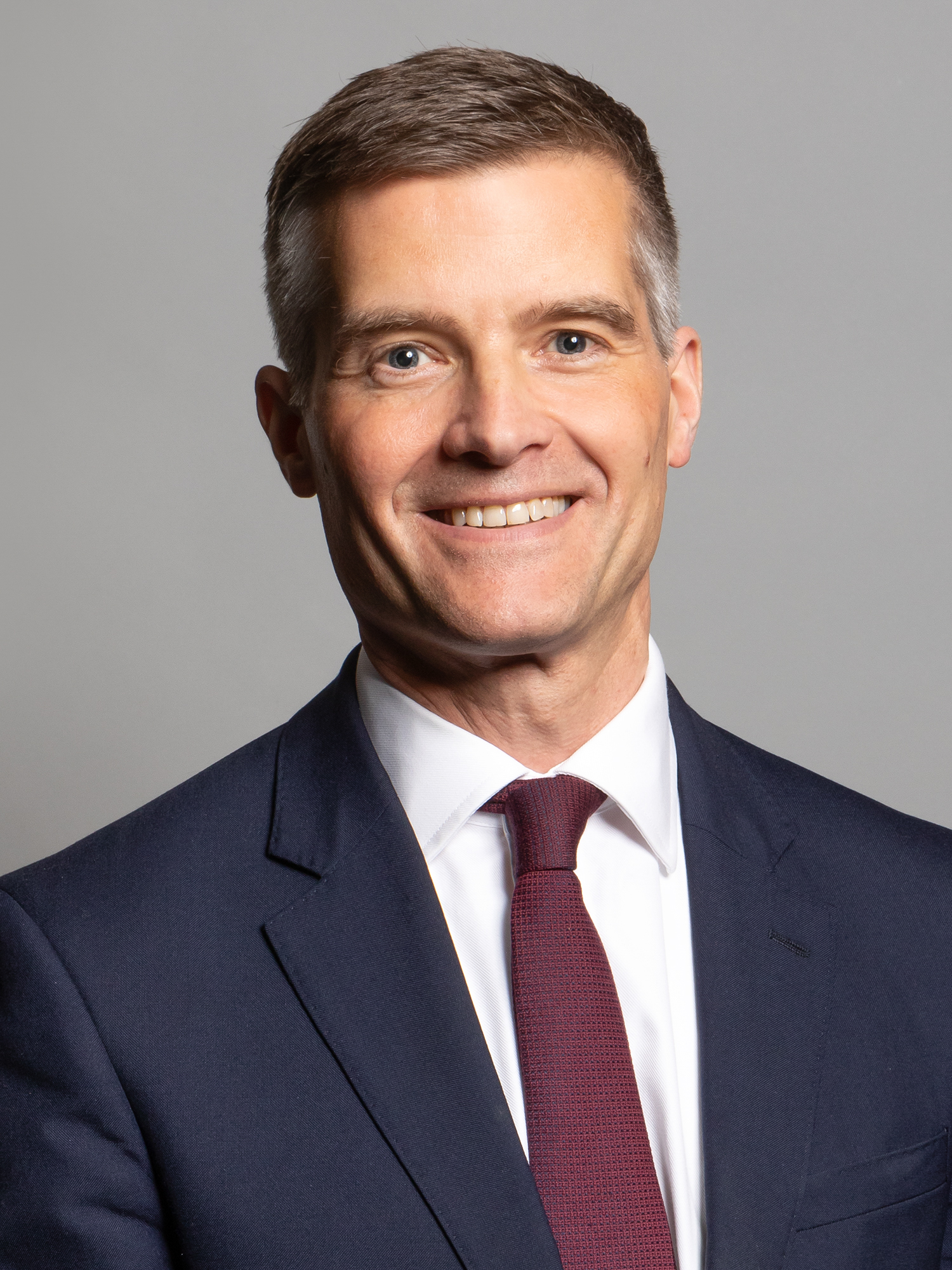
  • Mark Harper – 2023 Keynote Speech on the Future of the Railways at the George Bradshaw Address

    Mark Harper – 2023 Keynote Speech on the Future of the Railways at the George Bradshaw Address

    The speech made by Mark Harper, the Secretary of State for Transport, at the Institute for Civil Engineers in London on 7 February 2023.

    Good evening and thank you to Andy Bagnall and his team at Rail Partners for organising this event and for inviting me to deliver what is my first rail speech since becoming Transport Secretary.

    What a fantastic setting this is, surrounded by reminders of Britain’s glorious engineering history and Bradshaw in whose name we meet today (7 February 2023). Whose timetables brought order to the chaos of the Victorian network is as much a part of rail’s story as Stephenson, Brunel and others honoured throughout this building.

    I would also like to pay tribute to Adrian Shooter who sadly passed away in December. Over the past 30 years, few have played a bigger role in the growth and modernisation of the railways and I’m sure he’s missed by many a friend and colleague here today.

    I realise I’m the second Transport Secretary to give this prestigious address. And I’m pleased to see Patrick in his seat. But me and Lord McLoughlin, Patrick as we all know him, or chief as I used to call him, have a bit more in common. We both hail from working class backgrounds: my dad a labourer, his a coal miner. We both grew up in historic railway towns: Swindon in my case and Stafford in his. And we were both promoted from the whips office to running the Department for Transport. Though admittedly, he was a bit faster than me I spent an interlude on the backbenches.

    Now, 6 years may not seem like a long time but, as Andy says, during that period we’ve since left the EU, emerged from a global pandemic, had 2 general elections and my party may have had one or two changes in leadership. Yet the more things have changed outside the railways, the more they seem to have stayed the same inside.

    Patrick’s 2016 Bradshaw Address was a passionate call for a more flexible, more accountable and more joined-up railway. That still rings true today, as do the reflections of previous Bradshaw speakers. Lord Hendy’s case for a whole system railway in 2018. Keith Williams, a year later, with his relentless and right focus on passengers and even Rick Haythornthwaite’s warning at the inaugural Bradshaw Address in 2011 of a disillusioned public not trusting the way our railways are run. Those all sound eerily familiar.

    So, I’ve spent my first few months in this job listening to the experts, indeed to many people in this room, drawing on my experience in government and many years in business, to understand what’s holding back meaningful change and how we move forward.

    Modernisation

    There’s clearly a lot of frustration in the industry. There’s a widespread desire to end the sense of drift. By moving on from re-diagnosing the industry’s ills to getting on with fixing them. The government’s policy is clear. The Plan for Rail has already been announced to the House of Commons in May 2021 so delivering that policy, moving from the words to action that is my priority.

    Because the railways, quite frankly, aren’t fit for purpose. We’re mired in industrial action, which lets down passengers and freight customers down. And historically unable to deliver major improvements at good value for the taxpayer. Britain is yearning for a modern railway that meets the needs of the moment. One reliable enough to be the 7-day-a-week engine for growth businesses expect. Nimble enough for post pandemic travel, whilst allowing more flexibility for freight and efficient enough when public spending is rightly scrutinised like never before.

    The railways need fundamental reform and that is what we will deliver. And what I will try to set out this evening is how we re-energise that process. Freeing reform from the sidings and getting it back onto the mainline.

    Context

    But first, I must provide some important context. In putting an end to last year’s unwelcome political and economic turbulence this government promised to be straight with the public about the difficult choices ahead. We set out a plan to restore economic stability and that plan is working.

    We’ve seen a significant settling of the market, we’ve reassured investors, calmed the markets and strengthened the currency. It’s a strong base from which to deliver the Prime Minister’s 2023 economic priorities: halve inflation, growing the economy, and reducing debt.

    It is testament to this industry’s huge economic potential that even amidst a challenging fiscal climate we gave full backing to the £96 billion Integrated Rail Plan.

    The largest single investment ever made in our railways will take HS2 from Euston to Manchester. Northern Powerhouse Rail across the Pennines. East West Rail between Oxford and Cambridge. And that has the Chancellor’s full support.

    We’re not wasting any time. In December, I saw the huge construction effort underway at the site of Curzon St Station in Birmingham. It will be the first new intercity terminus built since the 19th century. Attracting tens of thousands of jobs and sparking housing and commercial regeneration across the city.

    Broken model

    Don’t take my word for it go and talk to Andy Street and you’ll get a very passionate case about the transformation that HS2 is bringing to his city.

    But we risk wasting that future infrastructure spending if our railway model is stuck in the past and thanks to Keith’s painstaking work, we know what the underlying issues are. A fragmented structure that quickly forgets the customer. Decision making with too little accountability, but with too much centralisation. And a private sector rightly criticised for poor performance but with too few levers to change it. An industry in “no man’s land” as Andrew Haines correctly described it in his Beesley lecture.

    And in the end it’s rail’s customers that suffer. Like on the East Coast Mainline, where passengers still await the full benefits of billions of pounds in taxpayer investment and years of infrastructure upgrades. I know this first hand. As a backbench MP, when I was trying to get a Sunday train from my constituency to London, I remember constantly refreshing the First Great Western timetable to find half the trains weren’t running. Like many passengers, I had no choice but to give up and take the car instead.

    Andrew, who was then running First Group, probably remembers my rather irate emails from the station platform, interrogating him about why the service was so unreliable. Four months into this job, I now know why. I possibly owe him an overdue apology. It wasn’t entirely his fault. Because Sunday services are essentially dependent on drivers volunteering for overtime. Which means, despite best efforts, we can’t run a reliable 7-day-a-week railway on which customers can depend. It’s why I and the Rail Minister, Huw Merriman, have been clear throughout this period of industrial action that modernising working practices must be part of reform.

    Pandemic impact

    Finally, the pandemic has made a bad problem worse, a lot worse. Thanks to hybrid working, an economic model dependent on 5-day commuting is out of date. Take season ticket sales, which are at just 28% of pre-COVID levels.

    Unsurprisingly, and you don’t need a chartered accountant like me to tell you this, the impact on the industry’s bottom line has been stark. Revenue is around £125-175 million lower each month and costs keep rising year on year.

    Any other industry would have collapsed years ago but the railways have only survived because of the taxpayer and the public purse. The source of over 70% of income over the past 2 years at a cost of £1,000 per household. I won’t mince my words: operating the railways is currently financially unsustainable and it isn’t fair to continue asking taxpayers to foot the bill. Most of them don’t regularly use the railways. Including plenty of my constituents in the Forest of Dean.

    But they find themselves subsidising an industry that delivers only 1.5% and 2% of all journeys that are taken by the public. That disproportionately serves commuters in the south-east and whose funding comes at the expense of other vital transport upgrades. At a time when sacrifices are being made across the economy we must be aware of the trade-offs when it comes to public spending and remind ourselves, as Patrick rightly said in his address, that the Department for Transport isn’t the “Department for the Railways”.

    So, we have a broken model. Unable to adapt to customer needs and financially unsustainable. Left untreated, we will drive passengers away with poor performance, that will lead to fewer services, that will drive more passengers away and so on and so on. Only major reform can break that cycle of decline and Keith’s blueprint is the right place to start. So yes, we will create a more customer focussed and joined up railway. But we want to go further, I want to go further, and actually enhance the role of the private sector. Not just in running services but in maximising competition, innovation, and revenue growth right across the industry. Which the benefits of the private sector has delivered time and again.

    Customers

    Let me start, however, with customers. To raise revenue, we must instil a customer first culture. That means reliable services, comfortable journeys and accessible stations. But it also means tackling the issue which tops passenger lists of biggest concerns, which is fares and ticketing. With 55 million fares available how can anyone feel confident they’re getting the best value for money? Ticketing should be hassle free, something you barely have to think about. Which is why, today, I can confirm the extension of Pay-As-You-Go ticketing, with 52 stations across the south-east set to be completed this year including on Chiltern, London Northwestern, and C2C services.

    Ticket prices should also be fairer but often there is little difference between the cost of a single or a return. Operators are often unable to significantly reduce prices on quieter services. So, after LNER’s successful single leg pricing trial we’ll extend it to other parts of the LNER network from the spring and then carefully consider the results of those before extending more widely. It means a flexible single fare will always be half the cost of the equivalent return – giving passengers more flexibility and better value. This is not about increasing fares, I want passengers to benefit from simpler ticketing that meets their needs.

    We’re also going to learn from the aviation sector and better manage capacity as well as raise revenue by trialling demand-based pricing on some LNER services too.

    Yet, passengers aren’t the industry’s only customers. Carrying tens of billions of pounds worth of goods we cannot overstate rail freight’s untapped potential for green growth. So I intend to create a duty to ensure the new industry structure realises that potential with a dedicated Strategic Freight Unit tasked with creating better safeguards, more national coordination and, later this year, listening to what was said earlier, setting a long-term freight growth target.

    Structure

    However, turning towards customers requires us to turn away from the current industry structure. So, we will establish Great British Railways, or GBR. As we prepare for that, we’ll pick up the pace of reform. I am pleased to announce that the winner of the GBR HQ competition will be revealed before Easter. And by the summer, we will respond to the consultation on GBR’s legislative powers.

    The industry has long called for a guiding mind to coordinate the network so GBR will be responsible for track and train, as well as revenue and cost. Which means finally treating the railway as the whole system it should be rather than a web of disparate interests that it’s become. Passengers won’t longer face the excuse-making and blame-shifting of years past. Instead, GBR will be wholeheartedly customer-focussed. Serving as the single point of accountability for the performance of the railway and crucially, following ministerial direction, the GBR Transition Team will develop the guiding long-term strategy for rail which we will publish later this year and I hope will provide strategic direction to the sector.

    Yet there remains a lot of misinformation about GBR. So let me tackle some of these myths head on.

    This is not going to be Network Rail 2.0, nor a return to British Rail. Taking politics out of the railways is the only way to build a truly commercially led industry and, for me, that is non-negotiable. That’s why GBR will be an arm’s length body ensuring a balanced approach to both infrastructure and operations. With both sides getting a seat at the table and both sides delivering an efficient, high performing railway for customers.

    The role of ministers is to provide strategic direction and be accountable to Parliament. It is not the role of ministers to pore over operational decisions. For example, I shouldn’t need to approve whether a passenger train ought to be removed from the timetable to allow a freight train to run instead, as I was doing earlier today. That will be left to industry experts in 5 regional GBR divisions working in partnership with regional bodies such as the Greater Manchester and the West Midlands Combined Authorities.

    Similarly, we can’t take the other extreme view. Public oversight of our critical infrastructure is needed. Especially to support those passenger services that don’t turn a profit, yet still play an important economic and social role. That’s why we need a pragmatic partnership between state and industry, harnessing the necessary oversight of the state. With the dynamism, innovation and efficiency of the private sector.

    This integrated model works, and not just with the railways. That was how we achieved one of the quickest and most successful COVID vaccine rollouts in the world, and its what we need to do in the railways.

    Private sector offer

    Which brings me to the final area of reform. To enhance the role of the private sector, which I see as central to the future of the railways. Under privatisation and thanks to a resilient and world class supply chain, passenger numbers doubled to 1.75 billion by the eve of the pandemic. With private sector investment in rolling stock reached nearly £7 billion over the past 10 years.

    I don’t want to turn my back on that commercial expertise. The National Rail Contracts and current overcentralised approach are temporary, a short-term fix that has helped steer the industry through the pandemic and this will be phased out.

    I want the private sector to play its most important role in our railways yet. To reinvigorate the sector, drive innovation and most importantly, attract more customers to the railway. It will do so in partnership with GBRGBR will help set the right commercial conditions across several key areas.

    There will be new Passenger Service Contracts that will balance the right performance incentives with simple, commercially driven targets. But they won’t be a one-size fits all approach. In the past, we know some operators took on more financial risk than they could handle. So, now that risk will sit where it is best managed and that includes with operators, but only where it drives the best outcomes for passengers and taxpayers. We shouldn’t be afraid to let managing directors of train operating companies actually manage and direct their operations. Which is not what they’re able to do at the moment.

    We’ll also open up railway data and systems, whilst lowering barriers to entry for the industry. For ticketing, that means a more competitive retail market and I will welcome new players to spur more innovation and give passengers the services they need.

    We will expand commercial opportunities around land and property near stations. In Japan, rail companies take full advantage of these investments, generating even more income for the railways and we should look to do the same.

    And finally, we will support more open access services where it benefits passengers and taxpayers. We’ve seen this work well with Hull Trains and Grand Central as well as with Lumo on the East Coast Mainline. All offering passengers greater choice and more direct links. Open access operators will play an important role in the industry’s future, especially as we grow new markets and make best use of spare capacity on the network.

    Conclusion

    Let me finish by saying that despite being the second Transport Secretary to deliver this address I’m probably the first to be given a biblical nickname. Modern Railways Magazine described the rail industry as waiting for “Moses Harper to come back from the mountain with tablets of stone.” Whilst I’m, of course, flattered by that comparison, unlike Moses, I do plan to live long enough to reach the promised land of rail reform. And whilst my words this evening have not been divinely inspired they do have the full support of the Prime Minister and the Chancellor, which, in politics, is the next best thing.

    As a whole government, we are pressing ‘go’ on rail reform. Day-to-day work will be ably led by the Rail Minister, Huw Merriman, who’s here tonight and has long championed the need for a reformed railway, including when he was chairman of the Transport Select Committee. He will provide the stability and leadership needed, while also giving the industry freedom to deliver meaningful change and I hope you will all rise to the challenge:

    • to put customers first
    • to realise the benefits of GBR
    • to help enhance the role of the private sector

    Because only then can the railway earn the public trust it needs to grow.

    As we look ahead to the industry’s 200-year anniversary in 2025, this is our chance to resurrect some national pride in our railways. A chance to harness the political will that is there, the economic imperative and I believe the industry buy-in to build the modern railway Britain deserves.

    It’s a chance we cannot waste.

  • PRESS RELEASE : Rishi Sunak call with President Erdogan of Turkey [February 2023]

    PRESS RELEASE : Rishi Sunak call with President Erdogan of Turkey [February 2023]

    The press release issued by 10 Downing Street on 7 February 2023.

    Prime Minister Rishi Sunak spoke to Turkish President Recep Tayyip Erdoğan this afternoon, following the devastating earthquakes which struck Türkiye and Syria. He expressed his deep condolences for the tragic loss of life and pledged the UK’s steadfast support.

    The Prime Minister confirmed that a 77-strong British search and rescue team arrived in Gaziantep today with specialist equipment and dogs, in response to a request from the Turkish government, and will immediately start work assisting with the rescue effort.

    President Erdoğan thanked the Prime Minister for the UK’s solidarity in response to this tragedy and welcomed international search and rescue and medical support for the initial emergency response.

    The Prime Minister also noted the deeply concerning humanitarian situation over the border in North-West Syria, where Türkiye plays an important coordinating role, and set out how the UK has increased support to aid organisations and emergency responders.

  • PRESS RELEASE : Plane carrying UK search and rescue team arrives in Turkey [February 2023]

    PRESS RELEASE : Plane carrying UK search and rescue team arrives in Turkey [February 2023]

    The press release issued by the Foreign Office on 7 February 2023.

    A plane carrying 77 UK search and rescue specialists, equipment and four search dogs, has arrived in Gaziantep, Turkey to support the earthquake response.

    • Plane carrying a team of 77 UK search and rescue specialists, equipment and four search dogs arrived in Gaziantep today
    • UK’s world-class specialist skills and state-of-the-art search equipment will help locate survivors in the rubble of the earthquakes
    • British Embassy in Ankara and consulates lower their flags to half-mast as a mark of respect to those who lost their lives

    Today (Tuesday 7 February) a UK team of 77 search and rescue specialists, 4 search dogs and rescue equipment arrived in Gaziantep in south east Turkey to join the emergency response.

    An Emergency Medical Team were also on the flight. They will conduct a full assessment of the situation on the ground.

    The UK government is immediately providing the support requested by the Turkish government. The UK will continue to assess the situation and stands ready to provide further long-term assistance as needed.

    The UK International Search and Rescue team is made up of firefighters and staff from 14 fire and rescue services from across the country, including experts from England, Scotland and Wales. They will be using specialist search equipment including:

    • Seismic listening devices;
    • Concrete cutting and breaking equipment; and
    • Propping and shoring tools.

    Their world-class specialist skills and state-of-the-art heavy duty equipment will allow the UK team to cut their way into buildings and locate survivors in the rubble during this vital time.

    The team is self-sufficient upon arrival and provides its own food, water, shelter, sanitation, communications and all necessary equipment to undertake search and rescue operations.

    In solidarity with the Turkish people, the British Embassy in Ankara and Consulates across Turkey have lowered their flags to half-mast for the 7-day national mourning period declared by the Turkish government.

    In north-west Syria, the UK-funded White Helmets continue to carry out a significant search and rescue response and have mobilised all their resources to respond to emerging needs. The UK has given the White Helmets £2.25 million in the last year and an additional funding uplift of £800,000 for front line search and rescue operations.

  • PRESS RELEASE : Chief of the Defence Staff hosts sixth Dragon Group meeting in London [February 2023]

    PRESS RELEASE : Chief of the Defence Staff hosts sixth Dragon Group meeting in London [February 2023]

    The press release issued by the Ministry of Defence on 7 February 2023.

    The Dragon Group, named after its first meeting aboard HMS Dragon in 2018, is a regular meeting of Defence Chiefs from the Gulf and Middle East. The meeting focused on global and regional security challenges, including the impact of Iran’s support for Russia’s invasion of Ukraine.

    During the meeting, the Chiefs viewed recovered Iranian weapons destined for Yemen that were seized by Royal Navy ship HMS Montrose in the Gulf of Oman last year.

    UK Chief of the Defence Staff Admiral Sir Tony Radakin said:

    The flow of Iranian weapons to Russia’s war in Ukraine demonstrates that there is no easy geographical distinction on matters of defence. Through the Dragon Group, the United Kingdom and our Gulf partners are better able to understand the interconnected forces that shape our shared security and prosperity.

    Today’s discussions underline the continuing importance the UK places on the Gulf, our commitment to working collectively to address the region’s challenges, and our ambition to strengthen cooperation between our respective Armed Forces.

    The UK has historic links with countries in the region and remains committed to working in partnership to secure peace, prosperity and security. The UK routinely has over 1,000 military personnel in the region, in addition to aircraft and ships, contributing to counter-terrorism, anti-piracy and counter-smuggling operations.

    Members of the Dragon Group include Bahrain, Egypt, Iraq, Jordan, Kuwait, Oman, Qatar, Saudi Arabia, the United Arab Emirates and the Gulf Cooperation Council.

    Meetings of the group take place twice a year and the UK has recently hosted summits at the Royal Military Academy Sandhurst and aboard HMS Queen Elizabeth off the Gulf of Oman.

  • PRESS RELEASE : UK and Greece seek strengthened Defence partnership [February 2023]

    PRESS RELEASE : UK and Greece seek strengthened Defence partnership [February 2023]

    The press release issued by the Ministry of Defence on 7 February 2023.

    Greece and the United Kingdom have today signed a new defence and security agreement, targeting closer collaboration to benefit each country’s military.

    Greece’s Minister for National Defence, Nikos Panagiotopoulos, signed the Joint Vision Statement (JVS) with UK Defence Secretary, Ben Wallace, on a visit to the UK, which included a Guard of Honour in London and a tour of HMS Diamond – a Royal Navy destroyer – at His Majesty’s Naval Base Portsmouth.

    The JVS highlights the shared determination to work together to enhance resilience against all security threats and challenges in the Euro-Atlantic area. To further develop the UK-Greek relationship, an annual ‘Roadmap’ outlining the defence cooperation priorities will be agreed each year.

    Defence Secretary, Ben Wallace said:

    Greece is our long-standing NATO ally and defence partner and I am delighted to welcome Nikos Panagiotopoulos.

    This new joint defence and security agreement will promote greater UK-Greece collaboration and defence cooperation, helping us tackle shared security threats and challenges in the Euro-Atlantic.

    To address new threats and challenges, Greece and the UK will look to exploit new opportunities for collaboration, including enhancing the effectiveness and interoperability of our Armed Forces, and improving capabilities provided to NATO, including high readiness forces such as the Allied Rapid Reaction Corps.

    Building on a successful history of capability collaboration, the nations will also work together to develop innovative solutions for future equipment needs, maximising military interoperability, and reducing acquisition and support costs.

  • PRESS RELEASE : Details of Government Reshuffle [February 2023]

    PRESS RELEASE : Details of Government Reshuffle [February 2023]

    The press release issued by 10 Downing Street on 7 February 2023.

    His Majesty The King has been pleased to approve the following appointments:

    • Rt Hon Grant Shapps MP as Secretary of State for Energy Security and Net Zero
    • Rt Hon Michelle Donelan MP as Secretary of State for Science, Innovation and Technology
    • Rt Hon Kemi Badenoch MP as Secretary of State for Business and Trade. She remains as President of the Board of Trade, and Minister for Women and Equalities
    • Rt Hon Lucy Frazer KC MP as Secretary of State for Culture, Media, and Sport
    • Rt Hon Greg Hands MP as Minister without Portfolio in the Cabinet Office
    • Rt Hon Graham Stuart MP as a Minister of State in the Department for Energy Security and Net Zero
    • George Freeman MP as a Minister of State in the Department for Science, Innovation and Technology
    • Nigel Huddleston MP as a Minister of State in the Department for Business and Trade
    • Nusrat Ghani MP as a Minister of State jointly in the Department for Business and Trade and the Cabinet Office
    • Andrew Bowie MP as a Parliamentary Under Secretary of State in the Department for Energy Security and Net Zero
    • Paul Scully MP as a Parliamentary Under Secretary of State in the Department for Science, Innovation and Technology
    • Kevin Hollinrake MP as a Parliamentary Under Secretary of State in the Department for Business and Trade
    • Rt Hon Stuart Andrew MP as a Parliamentary Under Secretary of State in the Department for Culture, Media and Sport, and as a Parliamentary Under Secretary of State (Minister for Equalities) in the Department for Business and Trade
    • Maria Caulfield MP as a Parliamentary Under Secretary of State (Minister for Women) in the Department for Business and Trade, in addition to her current role as a Parliamentary Under Secretary of State in the Department of Health and Social Care
    • Lord Johnson of Lainston CBE as a Minister of State in the Department for Business and Trade
    • Rachel Maclean MP as a Minister of State in the Department for Levelling Up, Housing and Communities
    • Julia Lopez MP as a Minister of State in the Department for Culture, Media and Sport
    • Lord Callanan as a Parliamentary Under Secretary of State in the Department for Energy Security and Net Zero
    • Amanda Solloway MP as a Parliamentary Under Secretary of State in the Department for Energy Security and Net Zero, in addition to her current role as a Government Whip (Lord Commissioner of HM Treasury)
    • Lord Parkinson of Whitley Bay as a Parliamentary Under Secretary of State in the Department for Culture, Media and Sport
    • Ruth Edwards MP as a Government Whip (Lord Commissioner of HM Treasury)
  • PRESS RELEASE : Assad has been actively rebuilding chemical weapons in Syria [February 2023]

    PRESS RELEASE : Assad has been actively rebuilding chemical weapons in Syria [February 2023]

    The press release issued by the Foreign Office on 7 February 2023.

    Statement by Ambassador Barbara Woodward at the Security Council meeting on Syria.

    On behalf of the UK, I give my condolences to those people affected by the earthquake in Turkiye and Syria. Our thoughts are with those families still searching for answers and loved ones from the rubble and those in mourning in the aftermath of the earthquake and its aftershocks and with those helping them in any way. The UK is contributing immediate support and stands ready further to support humanitarian efforts.

    Madame President, I start by thanking High Representative Nakamitsu, Director-General Arias and IIT Coordinator Oñate for their briefings.

    We welcome the publication of the OPCW Investigation and Identification Team’s latest report which has decisively found the Assad regime responsible for the 2018 chemical weapons attack on Douma, which killed 43 men, women and children and injured dozens more, in horrifying circumstances.

    Yet again, we are faced with undeniable evidence that the Syrian state has used chemical weapons to murder its own citizens.

    This is the ninth such finding of Syrian regime responsibility for chemical weapons attacks in investigations by the UN and OPCW. We welcome this report, and once again commend the expertise, independence, dedication and professionalism of the OPCW’s staff.

    We owe it to the victims of Douma and the thousands of other victims of chemical weapons attacks across Syria to hold the Syrian regime to account.

    Moreover, President, today we are gravely concerned that the Assad regime has been working actively to rebuild its chemical weapons stockpile since at least 2018 – in flagrant violation of its obligations and the commitments 193 states parties have made under the Chemical Weapons Convention in pursuit of a world free from chemical weapons.

    This is why it remains vital that we support the OPCW in efforts to resolve inconsistencies and discrepancies with Syria’s Chemical Weapons declaration. The Syrian regime must now change its behaviour on chemical weapons, and must provide this Council with concrete assurance that it has destroyed all stockpiles and no longer possesses the capability or intent to use chemical weapons anywhere, under any circumstances.

    Despite the latest overwhelming evidence of Syria’s chemical weapons use, we have heard again today Russia’s usual barrage of lies, denials, disinformation and unfounded criticism of the OPCW. But the OPCW’s painstaking report, which considers the ‘alternative scenarios’ put forward by Russia, specifically, comprehensively and credibly rejects them on the basis of evidence.

    If the Assad regime, and its protector Russia, prevent progress, block accountability and deny justice for the victims, they also risk further erosion of the global norm against the these abhorrent weapons. All of us here today have a responsibility to support the OPCW, to uphold the Chemical Weapons Convention, insist on compliance with the resolutions of this Council, and continue to seek accountability for the victims of these heinous attacks.

    Thank you.

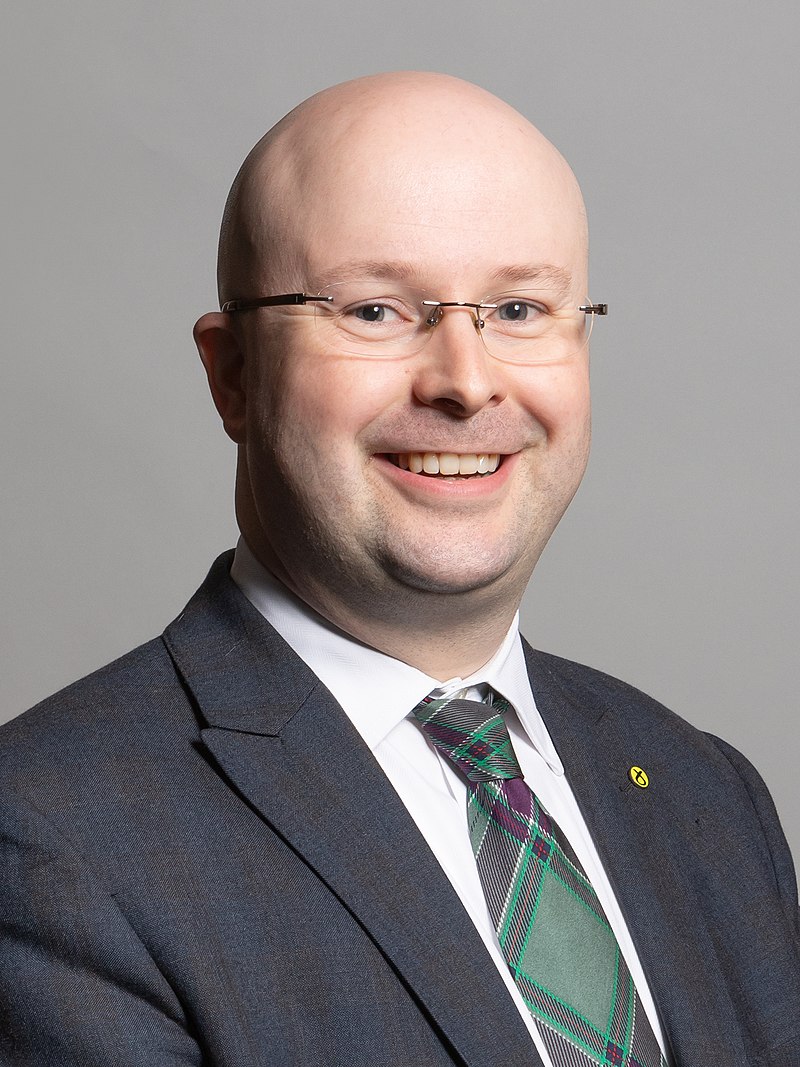
  • Patrick Grady – 2023 Parliamentary Question on the 1998 Scotland Act and the Constitution

    Patrick Grady – 2023 Parliamentary Question on the 1998 Scotland Act and the Constitution

    The parliamentary question asked by Patrick Grady, the SNP MP for Glasgow North, in the House of Commons on 2 February 2023.

    Patrick Grady (Glasgow North) (SNP)

    What recent discussions he has had with Cabinet colleagues on the potential impact of the use of section 35 of the Scotland Act 1998 on the constitution.

    The Parliamentary Secretary, Cabinet Office (Alex Burghart)

    Alas, I am a mere junior Minister and I rarely get to talk to my illustrious Cabinet colleagues, but I can assure the hon. Gentleman that the Government used section 35 very carefully and very reluctantly, in order to preserve the balance of powers between our countries.

    Patrick Grady

    If the Government were so determined to resolve their dispute with the Scottish Government, they would publish the amendments that they say would make the Gender Recognition Reform (Scotland) Bill acceptable to them. Is not the reality that the Tories are prepared to veto and undermine the elected Scottish Parliament because they never really wanted devolution in the first place?

    Alex Burghart

    As the hon. Gentleman knows, section 35 of the Scotland Act is part of our constitution. He will also know that it is now for the Scottish Government to bring forward a Bill that addresses the adverse effects set out in the statement of reasons. Once again, the nationalists do not wish to take responsibility.

  • NEWS STORY : Treasury and Bank England Make Plans for a Digital Pound

    NEWS STORY : Treasury and Bank England Make Plans for a Digital Pound

    STORY

    The HM Treasury and the Bank of England have announced that they are currently considering plans to develop a digital pound or central bank digital currency (CBDC). The digital pound would be a currency that does not exist as physical money in the form of notes or coins, but instead exists in the form of an amount on a computer. The Bank of England and the Treasury are designing the digital pound, which will be launched in the second part of this decade. The Treasury and the Bank of England stressed that one digital pound would equate to the same value as one physical pound coin and that there would be no divergence in their values.

    The Bank of England said in a statement:

    “The money we issue as the UK’s central bank is the anchor of confidence in our monetary system. This type of money supports the UK’s monetary and financial stability. Today, banknotes are the only type of money we provide for the public to use. Having a digital pound could help us to keep providing this anchor for the UK”.

    They added that there were no plans to stop issuing cash:

    “Cash is also very important to ensure people are able to exchange one type of money for another. For example, you can withdraw the money you have in a bank account as banknotes at a cash machine. This is known as ‘uniformity’ of money. Having a digital pound could help us to keep this uniformity in a future where the majority of payments are digital”.

    RESOURCES

    Treasury and Bank of England Press Release

    EXTERNAL NEWS LINKS

    Government Consultation on the Digital Pound

    Bank of England Resources on the Digital Pound