Blog

  • PRESS RELEASE : Declaration of intent between the UK, Bulgaria and Romania on organised immigration crime [April 2025]

    PRESS RELEASE : Declaration of intent between the UK, Bulgaria and Romania on organised immigration crime [April 2025]

    The press release issued by the Foreign Office on 7 April 2025.

    The United Kingdom (UK) has signed a landmark declaration of intent with Bulgaria and Romania which unites all three countries in tackling cross-border organised immigration crime and criminal financial flows through central southern Europe.

    The UK’s 2002 Proceeds of Crime Act (POCA) is a key legislation admired globally for its effectiveness in disrupting illicit cash, commodities and assets. Hundreds of millions of pounds have been seized in recent years through this mechanism, targeting organised criminal groups (OCGs) involved in migrant smuggling, sex and drug trafficking, money laundering, in addition to terrorism financing.

    The UK, Bulgaria and Romania will work closely to share best practices and successes from their national legislations since all three have demonstrated remarkable achievements in harming OCGs profits and to further develop their cooperation for tackling financial flows.

    We look forward to working together on this issue.

    Dame Angela Eagle DBE MP

  • PRESS RELEASE : Cuts to red tape to make great British staycations cheaper [April 2025]

    PRESS RELEASE : Cuts to red tape to make great British staycations cheaper [April 2025]

    The press release issued by the Department for Business and Trade on 7 April 2025.

    Consultation aims to cut costs of UK staycations for families and small businesses.

    •  New plans to help UK tourism businesses offer better deals and value-for-money packages
    • Plan for Change to cut outdated regulations will allow hotels, attractions, and restaurants to collaborate more easily
    • Families planning their summer holidays will have more choice, better prices, and greater convenience

    The UK’s travel industry is set for a boost as the Government unveils plans to cut red tape as part of its Plan for Change, and make it easier for businesses to offer package deals, giving consumers better value and supporting growth across the tourism sector.

    The measures being looked at in a consultation, could remove barriers that currently prevent small businesses including B&Bs and restaurants from working together to create tailored UK holiday experiences. The measures if implemented, could boost the travel sector and help grow the staycation economy right across the country.

    The proposals will support the domestic travel market to go for growth by giving families and travellers more affordable, flexible, and convenient options for their staycations.

    The proposed measures will make it easier for businesses to bundle offers together, helping hotels, attractions, and restaurants team up to provide exclusive deals.

    • For example, a B&B in the Lake District that may not be able to offer dinner, could team up with a nearby restaurant or pub to offer a discount on an evening meal when purchased together with the room booking.
    • Or a campsite in Cornwall could be able to offer discounts and deals for the local surf school.
    • But it could also apply to trips in towns and cities too, with tourists staying in a London-based hotel could offer discounted show tickets when they refer a consumer who has booked a room with them.

    It will aim to support businesses through measures like setting a time limit for third parties to provide redress to organisers and improving the flexibility of insolvency protection provisions for non-flight packages.

    For UK holidaymakers, these changes will give families better staycation options to help them plan summer holidays. Instead of booking everything separately, these measures would make it easier for consumers to access tailored packages that combine great accommodation with exciting local experiences.

    Minister for Employment Rights, Competition and Markets, Justin Madders, said:

    “Right now, a British hotel, local attraction, and restaurant can’t offer a joint deal without jumping through regulatory hoops – and that’s frankly ridiculous. As part of our Plan for Change, we’re fixing that.

    “These common-sense changes will help small businesses, boost British tourism, and give families more choice when booking a staycation. More options, better value, and a stronger UK economy.”

    The 12 week consultation will seek input from businesses and industry leaders on how best to implement these reforms.

  • PRESS RELEASE : UN Human Rights Council 58 – UK Closing Statement [April 2025]

    PRESS RELEASE : UN Human Rights Council 58 – UK Closing Statement [April 2025]

    The press release issued by the Foreign Office on 7 April 2025.

    UK Closing Statement for the 58th HRC. Delivered in Geneva.

    Thank you, Mr President.

    The UK remains fully committed to implementing the Covenant on Economic Social and Cultural Rights. In respect of the resolution L.7 on the realisation of economic, social and cultural rights, the UK notes that States take different approaches, appropriate to the constitutions of their country, to implement the Covenant. The Covenant binds the UK in international law but is unincorporated. Unincorporated treaties are not justiciable domestically so UK courts would not normally contribute to identifying gaps in legislation in respect of Covenant rights. The UK continues to progressively realise the rights recognised in the Covenant through a combination of legislation and administrative measures, in accordance with Article 2 (1) of the Covenant.

    The UK also notes that Article 2 (1) of the Covenant accommodates different States’ resources through the progressive realisation of Covenant rights. International human rights law does not, however, accommodate the notion of common but differentiated responsibilities and respective capabilities, which is a concept set out in certain international environmental treaties. Any attempt to imply that concept forms part of international human rights law, in resolution L.26 Rev.1 on the right to a clean, healthy and sustainable environment, is a mischaracterisation of the law. The UK recognises that the Paris Agreement will be implemented to reflect equity and the principle of common but differentiated responsibilities and respective capabilities, in the light of different national circumstances. The UK remains committed to the UNFCCC (United Nations Framework Convention on Climate Change), the Paris Agreement, and to accelerating action in this critical decade on the basis of the best available science, in the context of sustainable development and efforts to eradicate poverty.

    The UK thanks for the core groups for their constructive engagement on both resolutions.

    Thank you.

  • NEWS STORY : Government Orders Sweeping Quango Review in Push to “Rewire the State”

    NEWS STORY : Government Orders Sweeping Quango Review in Push to “Rewire the State”

    STORY

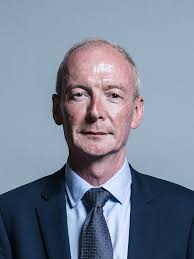
    Every public body across government is now under scrutiny as the Chancellor of the Duchy of Lancaster, Pat McFadden MP, orders departments to justify the existence of all arms-length bodies — or face closure, merger, or reintegration into core government departments.

    In a move billed as a key part of the Prime Minister’s “Plan for Change,” the government says the sweeping review will “rewire Whitehall” to create a more productive and agile state. Officials say the changes aim to reduce bureaucracy, eliminate duplication, and ensure that decisions of national importance are made by elected ministers, not unelected bodies.

    The directive to review all quasi-autonomous non-governmental organisations — commonly known as quangos — has been sent to every government department, with the presumption that unless a body can prove its necessity, it will be restructured or dissolved.

    Streamlining for a New Era

    The government argues that in an age of increasing global instability, a more streamlined and accountable civil service is essential. “Only by fundamentally re-wiring the state can we deliver our Plan for Change to secure Britain’s future and serve working people,” McFadden said. “We are taking action to ensure decisions that affect everyone are made by those who have been elected to do so.”

    The review follows last month’s announcement that NHS England will be brought back into the Department of Health and Social Care, a move the government says will end duplication and empower frontline staff.

    Four Tests for Survival

    Each quango will be assessed against four key principles:

    1. Ministerial Oversight – Major national policies must fall under the control of elected officials.

    2. Efficiency – Any duplication of effort between departments and public bodies must be eliminated.

    3. Stakeholder Management – Engaging with stakeholders is no longer a valid reason for a body’s separate existence.

    4. Independent Advice – Only bodies that deliver genuinely independent advice or legal scrutiny will remain untouched.

    Crucially, the review will consider legislative changes where necessary to overcome past difficulties in reforming public bodies established by law.

    Accountability and Reform

    While watchdogs that scrutinise government or uphold the rule of law will be protected, most others will need to make a compelling case for survival. Cabinet Secretary Simon Case, along with Secretaries of State and Permanent Secretaries, will be held directly accountable for any arms-length bodies that remain.

    The reforms are expected to result in many policy-heavy quangos being brought back into ministerial departments. Ministers argue that this approach will restore democratic oversight while retaining the expertise of specialist staff.

    A Politically Charged Shake-Up

    The announcement is likely to reignite debate over the role of quangos in modern governance. Critics of previous attempts to slash public bodies have warned that such reforms risk undermining expert-led advice and oversight. Supporters, however, argue that bloated public bodies too often escape accountability and stifle innovation.

    As the Plan for Change gathers pace, the government says this latest overhaul will help deliver its core pledges: kick-starting economic growth, rebuilding the NHS, and strengthening Britain’s borders.

    The review begins immediately, with changes expected to follow in the coming months.

  • PRESS RELEASE : Hundreds of quangos to be examined for potential closure as Government takes back control [April 2025]

    PRESS RELEASE : Hundreds of quangos to be examined for potential closure as Government takes back control [April 2025]

    The press release issued by the Cabinet Office on 7 April 2025.

    Every quango across government will be reviewed, with a view to close, merge or bring functions back into departments if its continued existence cannot be justified.

    • The Chancellor of the Duchy of Lancaster has written to departments to justify every quango otherwise they’ll be closed, merged, or have powers brought back into the department.
    • Changes will drive efficiency and reduce bureaucracy as part of Prime Minister’s Plan for Change, delivering security and renewal for working people.
    • New era of global instability means Government must go further and faster in reform.
    • Government will consider what legislation may be required to deliver these reforms.

    Every quango across government will be reviewed, with a view to close, merge or bring functions back into departments if its continued existence cannot be justified.

    The review, commissioned by the Cabinet Office at the request of the Chancellor of the Duchy of Lancaster, is the latest move to re-wire Whitehall and produce a more productive and agile state. It is part of our Plan for Change, delivering security for working people and national renewal.

    This follows news last month that NHS England will be brought back into the Department of Health and Social Care (DHSC) to put an end to the duplication resulting from two organisations doing the same job in a system currently holding staff back from delivering for patients.

    Chancellor of the Duchy of Lancaster, Pat McFadden MP said:

    We are taking action to ensure decisions of national importance that affect everyone in this country are made by those who have been elected to do so.

    Only by fundamentally re-wiring the state, can we deliver our Plan for Change to secure Britain’s future and serve working people; kick-starting economic growth, rebuilding the NHS and strengthening our borders.

    The review will aim to drive out waste and inefficiency across Whitehall, reducing duplication and bureaucracy – saving the taxpayer money and cutting the cost of ‘doing government’.

    It is expected that quangos with large policy functions could be brought back into departments, bringing ministerial, elected, scrutiny back to major decisions that affect the public. This would also retain the expertise and experience of staff working in these areas.

    All departments must demonstrate the necessity of each one, operating under the presumption that these bodies will be affected unless there is compelling justification for their separate existence.

    Where independence from Ministerial decision making is essential, such as quangos which scrutinise government or protect the rule of law, then these will remain unaffected.

    The Cabinet Secretary and departmental Secretaries of State and Permanent Secretaries will be held directly accountable for the Arms Length Body (ALBs) that continue to exist following the review.

    The review will consider four key principles:

    • Ministerial policy oversight – if a policy is of national importance then Ministers should have appropriate oversight and control of its development. Major decisions that affect the country and the public should be taken by those elected by the country to do so.
    • Duplication and Efficiency – government should drive out duplication and inefficiency wherever possible, this includes if there is duplication of policy or delivery work between ALBs and Ministerial departments.
    • Stakeholder Management – the fact that government needs to engage stakeholders should not be a reason for an ALB to exist, government itself should be working hard to engage with a variety of partners at every stage.
    • Independent Advice – where there is a clear justification for independent advice, then this should be conducted at arms length.

    Many ALBs are set up in legislation, and previous work to deliver these changes has been hampered by the difficulty in updating and changing individual pieces of ALB legislation. As part of this work, the Government will consider what legislation may be required to ensure the reviews announced today can be implemented and delivered upon.

  • PRESS RELEASE : Consultation launched to cut red tape for asset managers and boost growth [April 2025]

    PRESS RELEASE : Consultation launched to cut red tape for asset managers and boost growth [April 2025]

    The press release issued by HM Treasury on 7 April 2025.

    Red tape will be cut for asset managers, as the Chancellor goes further and faster to drive growth through the Plan for Change.

    • Consultation launched to simplify regulation for Alternative Investment Fund Managers.
    • Changes are expected to save asset managers time and money, while enhancing the UK’s appeal as a premier destination for capital management.
    • Continues action to cut red tape and reduce the burden of regulation on businesses, to go further and faster to drive growth and put more money into people’s pockets through Plan for Change.

    Following the Prime Minister’s commitment to cut the administrative cost of regulation on business by a quarter last month, the Treasury will consult on changes to rules governing Alternative Investment Fund Managers (AIFMs).

    It will be focused on removing unnecessary barriers to investment by making rules less onerous for AIFMs. This will save asset managers millions in time, money and resource – while freeing them to help the UK’s most exciting businesses scale up, grow and create jobs.

    Emma Reynolds, Economic Secretary to the Treasury, said:

    We want to bring security to working people by going further and faster to drive growth through our Plan for Change.

    That means making Britain the number one place to do business and tearing down unnecessary barriers to investment, such as costly regulation that prevents asset management firms from growing and provide capital for businesses across the country to grow.

    Simon Walls, Interim Executive Director of Markets at the FCA, said:

    We want rules, better tailored to UK investment managers. These could allow them to operate more efficiently, further supporting competition, competitiveness and economic growth.

    It’s part of our wider work to streamline the regulatory regime for asset managers, to support the continued competitiveness of our world-leading financial services as outlined in our new strategy.

    Michael Moore, Chief Executive of the British Venture Capital Association, said:

    We welcome the government’s consultation on developing a simpler and more competitive system for alternative investment fund managers (AIFMs). More effective, less burdensome regulation will make the UK private capital industry more globally competitive and help it to boost investment from the UK and international investors into growing British businesses.

    This consultation is an important step in securing the UK’s status as one of the world’s leading private capital hubs. We look forward to engaging on the principles and the detail of the changes, but this provides the opportunity to create a real boost for the Government’s growth mission by developing the UK’s private capital fund ecosystem and increasing inward investment in UK SMEs.

    Together with the FCA we plan to refresh outdated regulatory thresholds. The consultation will take place over the next 9 weeks, providing hedge funds, private equity firms, and investment trusts the opportunity to contribute to the development of a more streamlined regulatory environment.

    Currently, firms face a suite of new regulatory burdens once they hold 100 million euros in assets, which can discourage some firms from growing and financing more investment across the country.

    This inadvertent cliff edge means that smaller asset management firms immediately have to sign up to the same rules as the biggest firms once they reach this threshold, bringing about large costs.

    The consultation aims to create a more graduated regime, where only the largest firms – with the value of over £5 billion are subject to the full scope of requirements, with the majority of firms subject to much less prescriptive rules, helping to reduce admin costs for those businesses.

    Once the consultation has concluded, feedback from the asset management sector will be used to design draft legislation which will then be shared with asset management businesses next year.

    Further information

  • Martin Rhodes – 2025 Parliamentary Question on the Glasgow 2026 Commonwealth Games

    Martin Rhodes – 2025 Parliamentary Question on the Glasgow 2026 Commonwealth Games

    The parliamentary question asked by Martin Rhodes, the Labour MP for Glasgow North, in the House of Commons on 3 April 2025.

    Martin Rhodes (Glasgow North) (Lab)

    What discussions she has had with the Glasgow 2026 Organising Company on the 2026 Commonwealth games.

    The Parliamentary Under-Secretary of State for Culture, Media and Sport (Stephanie Peacock)

    My Department is in regular contact with the organising company, and I was pleased to meet recently with both the CEO and the chair to discuss progress on delivery, at a meeting in my Department and when I was delighted to attend the King’s baton relay launch at Buckingham Palace with His Majesty the King to mark 500 days until the games. The UK has been proud to host the Commonwealth games twice since 2014, and I am delighted that the UK Government have been able to get behind and support Glasgow 2026.

    Martin Rhodes

    I thank the Minister for her response. Does she agree that it is important that the games bring benefits to local communities? What discussions is she having with colleagues in the Scotland Office, the Scottish Government and Glasgow city council to ensure that local communities in Glasgow benefit from the games in 2026?

    Stephanie Peacock

    Of course, I agree with my hon. Friend that it is important that a successful games supports lasting benefits for the city and the region. As I said, I met with the CEO and chair two weeks ago. I was in Edinburgh to meet with my counterpart in the Scottish Government to discuss the games. My team is in close contact with the Scottish Government, the Scotland Office and other delivery partners to understand the games’ ambitions for these wider benefits. The organising company has already confirmed that the games will include £6 million of investment in existing sporting venues, as well as 3,000 trained volunteers and a cultural programme.

    Joe Robertson (Isle of Wight East) (Con)

    The Minister will know the springboard that hosting international events is for the economy, grassroots participation and sporting facilities in the UK. Under the last Government, we secured and hosted a number of major events, with a pipeline of events. What steps are this Government taking to ensure we have that pipeline of major events in the future?

    Stephanie Peacock

    The hon. Member is right to pay tribute to the economic contribution and the huge inspiration of these events. We have a number of exciting events coming up, whether that be rugby or cricket, and the Government are hugely supportive of major events.

  • John Whittingdale – 2025 Parliamentary Question on Use of AI in the Creative Industries

    John Whittingdale – 2025 Parliamentary Question on Use of AI in the Creative Industries

    The parliamentary question asked by John Whittingdale, the Conservative MP for Maldon, in the House of Commons on 3 April 2025.

    Sir John Whittingdale (Maldon) (Con)

    What discussions she has had with representatives of the creative industries on the use of AI.

    The Secretary of State for Culture, Media and Sport (Lisa Nandy)

    Our creative industries lead the world. This is the top priority for them, and I am clear that if it matters to them, it matters to us, and we are determined to get it right. Since I was appointed, I have discussed this with representatives across music, publishing, film, TV, fashion and gaming. The Secretary of State for Science, Innovation and Technology and I will shortly convene further roundtables to work with industry across artificial intelligence and the creative industries to strike the right balance and to grip this issue.

    Sir John Whittingdale

    The Secretary of State will be aware of suggestions that the Government may offer concessions around AI regulation in a deal to reduce US tariffs. Will she assure the creative and news media sectors that any negotiations will not include an offer to weaken our copyright framework, which would be opposed by creative industries both in the UK and in the US?

    Lisa Nandy

    Our creatives are second to none in the world, as I just said, and our copyright framework is an essential part of their success. We have been clear that if it does not work for creatives, it does not work for us and we will not do it. On negotiations with the United States, the Prime Minister has been clear that this is the start of the process, but we will always work in the national interest, and we are considering all steps as we look to the future.

  • NEWS STORY : UK and Canada Leaders Unite to Prevent Global Trade War Amid U.S. Disruption

    NEWS STORY : UK and Canada Leaders Unite to Prevent Global Trade War Amid U.S. Disruption

    STORY

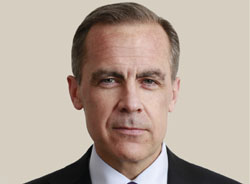
    The Prime Minister held a call with Canadian Prime Minister Mark Carney on Saturday evening to discuss mounting concerns over global economic stability following a major announcement from the United States earlier this week that has rattled international markets.

    In their conversation, the two leaders reaffirmed their shared commitment to protecting the global economy and preventing an escalation into a full-blown trade war. Both agreed that such a scenario would be in no one’s interest, as fears of retaliatory tariffs and fractured supply chains loom large over the international community.

    A United Front for Free Trade

    Echoing growing concern among U.S. allies, the UK and Canada are positioning themselves as champions of free and open trade. During the call, the British Prime Minister underlined the value of strengthening trade between “like-minded nations” and pointed to international partnerships such as the Comprehensive and Progressive Agreement for Trans-Pacific Partnership (CPTPP) as vital frameworks in this new era of geopolitical realignment.

    The UK formally joined the CPTPP in 2023, marking one of its most significant post-Brexit trade moves, and both London and Ottawa view the bloc as a crucial counterbalance to rising protectionist pressures globally.

    Ukraine and Defence Cooperation

    Beyond trade, the leaders discussed ongoing support for Ukraine amid its continued resistance to Russian aggression. Prime Minister Carney thanked the UK for its leadership on the issue and reiterated Canada’s commitment to the “Coalition of the Willing” — a growing alliance of countries providing coordinated military and humanitarian support to Ukraine.

    With the conflict entering its third year, both leaders agreed on the importance of maintaining international unity in the face of ongoing threats to European and global security.

    Looking Ahead to the G7

    The call concluded with the British Prime Minister expressing his anticipation for the upcoming G7 Summit, which Canada will host in June. The summit is expected to focus heavily on trade reform, economic resilience, and security partnerships in light of the current uncertainty. The two Prime Ministers agreed to remain in close contact as global developments unfold.

  • PRESS RELEASE : New hydrogen power projects to boost growth [April 2025]

    PRESS RELEASE : New hydrogen power projects to boost growth [April 2025]

    The press release issued by the Department for Energy Security and Net Zero on 7 April 2025.

    A new wave of hydrogen powered projects have been shortlisted today to help cut emissions and create thousands of jobs in the UK’s industrial heartlands.

    • 27 hydrogen projects advance to next stage of government’s flagship hydrogen programme
    • innovative projects support hydrogen use in new clean power generation, glass manufacturing, brick making, and sustainable aviation fuel production
    • paves way for thousands of clean energy jobs in manufacturing communities, delivering on the Plan for Change by unlocking growth

    A new wave of hydrogen powered projects have been shortlisted today (Monday 7 April) to help cut emissions and create thousands of jobs in the UK’s industrial heartlands – driving growth as part of the government’s Plan for Change.

    Twenty-seven hydrogen projects have been selected for the next stage of the Second Hydrogen Allocation Round (HAR2) – supporting low-carbon hydrogen production in the UK. The industry has the potential to attract over £1 billion of private sector investment into the UK by 2029, supporting the government’s mission to become a clean energy superpower.

    Hydrogen will help deliver a new era of clean energy across the UK and decarbonise emission-intensive industries. It has already attracted £400 million of private sector investment in towns and cities such as Milford Haven in Wales and High Marnham in Nottinghamshire, and is creating over 700 direct jobs in construction and operations.

    Government support for hydrogen will help create thousands more jobs in the sector and reindustrialising the UK’s proud manufacturing regions. This includes roles for apprentices, graduates and technically trained professionals, such as engineers, welders, skilled construction workers, pipefitters and operations specialists.

    Today’s shortlist includes projects that could use hydrogen to help tackle the climate crisis by decarbonising their manufacturing and industrial practices, including ammonia production, new clean power generation, glass manufacturing, brick making, and sustainable aviation fuel production.

    Industry Minister Sarah Jones, said:

     We are deploying hydrogen at a commercial scale for the first time – not just investing in a technology – but investing in British jobs, our proud manufacturing communities and our energy security.

    From distilleries and sustainable aviation fuel to public transport and clean energy  generation, hydrogen can power our everyday life and unlock clean energy growth across the country as part of our Plan for Change.

    Green hydrogen is produced by using renewable energy to split water into hydrogen and oxygen, resulting in a zero-carbon fuel that can be used for power generation, transport  and industrial processes.

    This builds on the success of the First Hydrogen Allocation Round which saw 11 projects being allocated over £2 billion in government funding. One recipient, Whitelee Green Hydrogen in Scotland, will produce hydrogen for the Inchdairnie Whiskey distillery which intends to sustainably distil whisky by 2027.

    Stretching across England, Scotland, and Wales, this latest wave of shortlisted HAR2 projects showcases the government’s commitment to create skilled jobs and establish clean energy hubs across Great Britain. The HAR2 shortlist could lead to projects that help support strong supply chains and the delivery of the clean energy superpower mission.

    Dr Emma Guthrie, CEO of the Hydrogen Energy Association, said:

    This much-anticipated announcement brings vital clarity to the UK’s hydrogen sector, providing a crucial boost for projects that will drive forward the country’s low-carbon transition.

    The funding support offered through HAR2 gives our members and the wider industry the confidence to gear up for delivery, unlocking investment, creating jobs, and driving economic growth.

    This is great news – not just for the hydrogen sector but for the UK’s ambition to become energy secure and a global leader in clean energy.

    Clare Jackson, CEO of Hydrogen UK, said:

    We’re thrilled to see many Hydrogen UK members succeed in the second Hydrogen Allocation Round, marking a crucial step for scaling electrolytic hydrogen.

    This progress builds on valuable lessons from past rounds and strengthens UK leadership in clean energy – reinforcing the sector’s crucial role in economic growth and energy security.

    Case studies

    In December 2023, the government announced an initial 11 projects from the First Hydrogen Allocation Round (HAR1), totalling 124 MW of production capacity.

    Five of these projects have signed their contracts, including the Bradford Low Carbon project in Yorkshire and the Cromarty Hydrogen Project in northeast Scotland.

    The Bradford Low Carbon project, in the heart of the city centre, will use renewable electricity to power a 10.6 MW alkaline electrolyser. Being developed by Hygen and Ryze, it will supply the mobility sector, including JCB diggers and Wrightbus – which developed the world’s first hydrogen powered bus.

    The Cromarty Hydrogen Project is being developed by Scottish Power and Storegga. It will use electricity from nearby wind farms to power an 11 MW electrolyser, supplying hydrogen to local industries, including distilleries.

    Notes to editors

    The full list of shortlisted projects can be found here: Hydrogen Allocation Round 2 (HAR2): shortlisted projects.