Blog

  • NEWS STORY : UK Government Moves Toward Nationalising Steel Industry in Historic Intervention

    NEWS STORY : UK Government Moves Toward Nationalising Steel Industry in Historic Intervention

    STORY

    In a bold and unprecedented move, the UK government is set to begin the process of nationalising parts of the country’s beleaguered steel industry, as fears grow over mass job losses and the collapse of domestic steel production.

    Ministers are expected to unveil emergency legislation this weekend granting the government powers to intervene directly in strategically vital steel firms, including British Steel and Tata Steel’s operations in the UK. The plan would give ministers the ability to take temporary control of assets, inject public funding, and ensure production continuity in regions heavily dependent on steelmaking.

    The decision follows mounting pressure from trade unions, Labour backbenchers, and local leaders, particularly in industrial heartlands like Scunthorpe and Port Talbot, where thousands of steelworkers face redundancy due to the planned closure of blast furnaces and the shift toward electric arc furnace technology.

    ‘A Matter of National Interest’

    Announcing the move, Business Secretary Jonathan Reynolds told reporters: “Steel is not just a symbol of our industrial heritage—it is a cornerstone of our future. From defence and infrastructure to the green transition, we cannot afford to lose sovereign capacity in steel production. The government is acting decisively in the national interest.”

    The proposed intervention would mark the UK’s most significant act of nationalisation since the bailout of the banking sector in 2008, and the first re-entry of the state into steel ownership since British Steel was privatised in 1988.

    Under the legislation—dubbed the Steel Industry (Special Measures) Bill—the government would gain temporary ownership rights over sites deemed economically or strategically vital, with compensation mechanisms for current owners. The move is expected to focus initially on preserving production at British Steel’s Scunthorpe site, which is facing imminent shutdown.

    Backlash and Support

    The proposal has already stirred fierce debate. Business leaders warn it could send the wrong signal to investors, while union leaders have welcomed the plan as a necessary step to protect livelihoods and national resilience.

    Unite the Union’s General Secretary Sharon Graham called the move “long overdue,” adding: “The market has failed. The government is right to step in. You cannot build a green economy or a serious industrial strategy without a steel industry.”

    The Conservative opposition has accused the Labour government of returning to “1970s-style economics.” Shadow Business Secretary Kemi Badenoch said the decision was “ideologically driven” and risked “saddling taxpayers with costly liabilities for failing companies.”

    Why Now?

    The nationalisation proposal comes amid a perfect storm for the industry. Rising energy prices, global overcapacity, and the reimposition of US tariffs on British steel have all contributed to financial instability. Meanwhile, the transition to green steel has raised urgent questions about investment, competitiveness, and employment.

    Tata Steel’s move to shut its blast furnaces in Port Talbot and replace them with cleaner electric arc furnaces has left 2,800 workers facing redundancy. British Steel, owned by Chinese firm Jingye, is reportedly losing nearly £700,000 per day.

    Government sources insist the nationalisation plan is “temporary and targeted,” with a long-term strategy still focused on delivering a modern, decarbonised steel sector through public-private partnerships.

    Looking Ahead

    The Steel Industry Bill will be debated in Parliament over the coming week, with a fast-tracked schedule to avoid production halts. If passed, the first sites could come under public control as early as next month.

    With steel at the centre of defence supply chains, infrastructure plans, and the green transition, ministers are expected to argue that keeping it in UK hands is not just a question of economics—but of sovereignty.

    As one senior government official put it: “You can’t build a clean energy future on foreign steel. Not if you’re serious about reindustrialisation.”

    The stakes are high, but so is the symbolism. After decades of managed decline and global retreat, the state is stepping back into the furnace.
  • NEWS STORY : Trump Humiliated by Another Tariff U-Turn as US Reverses Course on Electronics Levies

    NEWS STORY : Trump Humiliated by Another Tariff U-Turn as US Reverses Course on Electronics Levies

    STORY

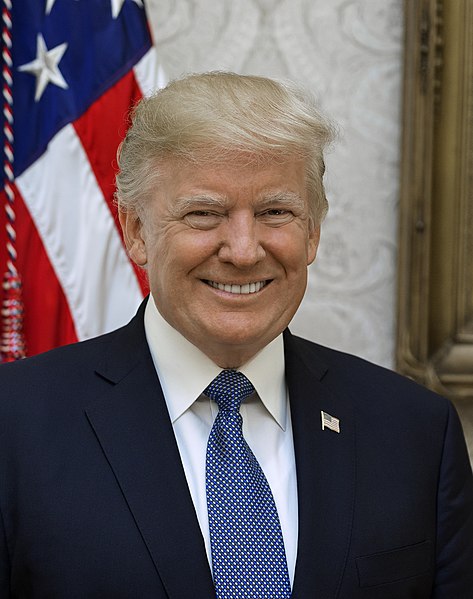
    In yet another dramatic reversal, the Trump administration has scrapped plans to impose sweeping tariffs on smartphones, laptops, and other electronic goods—just days after championing them as a cornerstone of his “America First 2.0” trade crusade. The decision, which blindsided Republican allies and delighted global markets, marks the second major tariff climb-down in as many weeks and has been widely described in Washington and abroad as a political embarrassment for former President Donald Trump, who is eyeing a return to the White House in November.

    The now-abandoned tariffs, announced with typical fanfare during a campaign rally in Michigan, were intended to target Asian tech manufacturing hubs, including South Korea, Vietnam, and China. Trump claimed they would protect American jobs and “punish countries who cheat,” but the announcement triggered immediate backlash from US tech giants, Wall Street, and international trade partners. The proposed levies, which would have added up to 25% on imports of phones, tablets, and household electronics, were labelled “economic lunacy” by industry groups, with Apple and Samsung warning of price hikes and supply chain chaos in the run-up to Christmas.

    Facing pressure from the tech industry, consumer advocacy groups, and even Republican governors concerned about inflation, Trump’s trade team issued a late-night statement on Friday confirming the tariffs would no longer go ahead. The statement cited “a re-evaluation of market dynamics” and “ongoing stakeholder consultations”—Washington code for “this went down like a lead balloon.”

    Critics were quick to pounce on the retreat.

    “This is a humiliation for Trump,” said Democratic Senator Maria Campbell. “You can’t play strongman one day and wave the white flag the next. It shows the chaos and incoherence of his entire trade agenda.”

    Even some Republicans expressed frustration at the backpedal. “If we want to lead, we need clarity—not chaos,” said Senator Rick Burns, a long-time proponent of tough trade policies. “This does nothing for credibility.”

    Across the Atlantic, European officials greeted the U-turn with a mix of relief and amusement. One senior UK trade official quipped, “It’s becoming hard to keep up. One day it’s a tariff war, the next day it’s a group hug. We’re just trying not to get caught in the crossfire.”

    The White House has remained tight-lipped, with aides reportedly scrambling to contain the fallout. Sources close to the Trump campaign admitted privately that the proposal was “poorly timed” and “politically damaging.”

    This latest U-turn follows hot on the heels of Trump’s embarrassing reversal on steel and car part tariffs—also scrapped after diplomatic uproar and pressure from American manufacturers.

    Observers now question whether Trump’s “tough on trade” posture has any remaining credibility. “The pattern is clear,” said Dr. Lena Alvarez, an international trade analyst. “Bluster, backlash, backtrack.”

    As Trump prepares for upcoming televised debates and eyes a second presidency, critics are warning voters to expect more volatility—and more headlines like this.

  • RESEARCH DOCUMENT : UK Steel Industry

    RESEARCH DOCUMENT : UK Steel Industry

    The document issued by the House of Commons Library in March 2025.

    Text of Document (in .pdf format)

    SUMMARY

    🔧 Overview

    The UK steel industry is facing significant challenges due to global overproduction, high domestic energy costs, and the pressing need for decarbonisation. It remains strategically important to the UK economy, both in terms of national security and supporting green infrastructure, but its output and workforce have declined dramatically over the past decades.


    📊 Economic Contribution (2023)

    • Gross Value Added (GVA): £2.3 billion

    • Employment: 33,900 to 40,000 jobs (depending on data source)

    • Firms: Around 1,160 steel businesses

    • Share of UK economy: 0.1% of total output and employment


    🌍 International Context

    • UK’s share of global steel production: 0.3% (5.6 million tonnes)

    • China’s share: 54% of world production

    • EU’s production: 7%, with the UK ranking 8th among EU steel producers


    🛒 Trade

    • Exports (2023): 3.2 million tonnes, worth £5.4 billion

    • Imports (2023): 5.5 million tonnes, worth £7.3 billion

    • Trade deficit: £1.9 billion

    • EU trade: 68% of exports and 71% of imports


    ⚠️ Key Challenges

    1. Global overcapacity has driven down prices.

    2. High energy costs make UK steel less competitive.

    3. Trade barriers and tariffs, especially post-Brexit and from the US (Trump’s 25% steel tariff reinstated in 2025).

    4. Decarbonisation pressures require costly transitions to low-carbon production.

    5. Job losses linked to the closure of traditional blast furnaces (e.g., at Port Talbot and Scunthorpe).

    6. Dependency on imported steel raises national security concerns.


    🏗️ Industry Restructuring

    • Tata Steel (Port Talbot): Moving from blast furnaces to electric arc furnaces (EAFs); 2,800 job losses expected.

    • British Steel (Scunthorpe): Similar EAF transition; potential reduction in primary (virgin) steelmaking capacity.


    🌱 Decarbonisation & Green Steel

    • Steel contributes 13.4% of manufacturing emissions and 2.2% of total UK emissions.

    • EAFs (powered by renewable electricity) are preferred over traditional coal-based methods.

    • Technologies being explored: hydrogen reduction, carbon capture (CCS), electrolysis.

    • The UK lacks firms using hydrogen-based DRI, while Sweden leads in this tech.


    🏛️ Government Policy

    Labour Government (2024–present):

    • Promised a new steel strategy in Spring 2025.

    • Created a £2.5 billion fund for green steel through the National Wealth Fund.

    • Launched a Steel Council with industry and union reps.

    • Emphasising public procurement, investment, and net-zero transition.

    Previous Government (Conservative):

    • Introduced steel procurement policies.

    • Offered energy cost relief (£730m since 2013).

    • Initiated trade remedies to prevent steel dumping.

    • Set up decarbonisation programs but criticised for slow progress.


    🔋 Energy Costs

    • UK energy prices are significantly higher than EU counterparts.

    • Energy-intensive firms like steel have received compensation, but industry calls for structural reform.


    🛡️ Trade and Protection

    • UK has steel safeguards post-Brexit (in place until 2026).

    • US tariffs on UK steel exports reinstated in 2025 are expected to hurt exports.

    • Sector supports a UK Carbon Border Adjustment Mechanism to level the playing field.


    📅 Future Outlook

    • Industry transition may result in fewer but higher-skilled jobs.

    • UK aims to be a global leader in green steel, but needs substantial public-private investment and policy consistency.

    • Debate continues on retaining primary steelmaking capacity for national resilience.

  • NEWS STORY : Mayor announces new £1m sports investment featuring holiday activities for young people at greatest risk of violence [April 2025]

    NEWS STORY : Mayor announces new £1m sports investment featuring holiday activities for young people at greatest risk of violence [April 2025]

    The press release issued by the Mayor of London on 9 April 2025.

    • Mayor’s Violence Reduction Unit (VRU) investing in a range of activities this Easter and over the next year
    • Since the VRU was set up, it has delivered more than 400,000 diversionary activities for young people
    • Funding for community-led projects to deliver physical activity and mentoring for up to 2,000 young people in areas of the capital most underrepresented by sport
    • Compared to when the VRU was set up, there has been a 31 per cent reduction in homicides and a 28 per cent fall in hospital admissions for knife injuries of under-25s

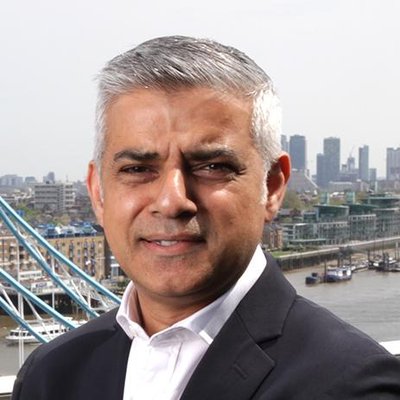
    The Mayor of London, Sadiq Khan, has today announced his Violence Reduction Unit (VRU), the first in England and Wales, is investing a further £1m to deliver sports and physical activities for young people at greatest risk of being affected by violence.

    Activities begin this Easter with up to 20 community-led projects across London getting a slice of the investment over the next year to deliver opportunities during all school holidays for almost 2,000 young people most underrepresented in sport.

    Since the VRU was set up, it has delivered more than 400,000 diversionary activities for young people. During this time, there has been a 31 per cent reduction in homicides, a 28 per cent drop in hospital admissions of under-25s as a result of assault with a sharp object, and a 12 per cent reduction in robbery. Last year also saw the lowest number of homicides of under-25s in more than 20 years. However, the Mayor has always been clear that one death as a result of violence is one too many and is committed to working in partnership to drive down violence in London.

    Funding will be used to deliver a variety of sports interventions for young people over the next year. There will be a strong emphasis on targeted provision and delivery during school holidays to provide safe spaces for young people and access to activities to benefit both their physical and mental health. Diversionary activities will work to support young people during the school break when evidence shows they are more vulnerable to exploitation and to violence.

    It’s part of the VRU’s approach to prevent and tackle violence by providing opportunities for young people and access to youth work, youth clubs and community hubs. Research suggests that sports interventions can have an impact in tackling violence.

    Alongside funding for holiday provision, investment in sport over the next year will support a further 1,000 young people as they prepare to transition from primary to secondary school. Access to a mentor and sports sessions will combine to support those at greatest risk of exclusion to engage in education and school life.

    It will also provide sports internships for young people in major sport sector organisations and build on connections and careers already developed with the likes of the Lawn Tennis Association, GB Snowsport and Formula E.

    Funding for sport builds on the Mayor’s investment in his VRU, which he set up and funds to lead on prevention and early intervention to drive down violence in the capital. VRU investment in sport and physical activity since 2023 has already delivered activities including sport sessions, mentoring and internship programmes, for more than 10,000 young people.

    Sport plays a key part in the VRU’s approach to tackling violence, which includes interventions to tackle school exclusions and keep young people safe in and out of school, and funding youth work and access to positive opportunities.

    Today, the Mayor and VRU director, Lib Peck, visited a youth club in Westminster. The youth club is funded by the VRU to deliver activities including multi-sport, music production, wellbeing sessions and healthy cooking for young people during the holiday period. Sadiq and Lib did some cooking with chef and influencer Nathaniel ‘Natty’ Mortley during the visit. Natty spent two years in prison and has turned his life around. He is passionate about young people accessing positive opportunities to help set them up for their futures.

    Other activities funded by the VRU, City Hall and others can be found on the Local Village Network app and signposting website, which offers thousands for live youth services, activities and job opportunities for young Londoners.

    The Mayor of London, Sadiq Khan, said: “My top priority is to be tough on violence and tough on its complex causes to build a safer London for everyone.

    “I have been clear that we can’t arrest our way out of this issue and that’s why a key part of my approach to tackling violence is investing in prevention and positive opportunities for young people, at the same time as providing record investment in policing for enforcement.

    “My Violence Reduction Unit is investing a further £1 million for sports and physical activities during the holidays and beyond, delivering on my commitment to provide a further 250,000 positive opportunities for young people and access to youth clubs and hubs.”

    Lib Peck, Director of London’s Violence Reduction Unit, said: “Sport and physical activity play hugely important roles in a young person’s life, providing opportunities to develop skills, teamwork and access to positive role models in coaches and youth workers.

    “Working with the Mayor, we’re funding a range of activities and opportunities for young people during the holidays when we know they are at greatest risk of exploitation and violence.

    “Prevention and delivering thousands of positive activities for young people is critical to tackling violence and whilst our work is having impact, it’s clear there is more to do. We’re committed to working in partnership across London to keep young people safe because we believe violence is preventable, not inevitable.”

    Chef Nathaniel ‘Natty’ Morley, aka @nattycancook_ on socials, said: “I know first-hand how important it is that young people are able to access positive opportunities and role models, and how proper support can be lifechanging. If I had been able to take up activities like these, I believe I would have been able to get my life on track much sooner, so I’m really pleased that the Mayor has announced this £1m investment. Everyone deserves the chance to succeed, and the VRU programmes are helping level the playing field.”

    Marcus Leon, programme manager at the Avenues Youth Project, said: “As a former member and resident of this area, I experienced first-hand how transformational The Avenues Youth Project can be. Many of my first experiences happened during the school holidays in this youth club.

    “Having a free service that provides such a wide range of activities and experiences is invaluable in Westminster. The funding we received from the VRU ensures that we can give the children and young people of this area experiences that are not normally afforded to them. It also allows us to provide sports coaching for activities such as judo, boxing, and football — which can be unaffordable at times for some families.

    “We want to ensure that children and young people have equal opportunities, no matter their background or circumstances.”

    Kyanne Auguste-Walker, a young person who uses the youth club, said: “Having The Avenues is like having a second family, that always has cool stuff happening and people that are there for you. Avenues is our safe space.”

    Emily Robinson, London Sport CEO, said: “Sport has the power to change lives, and from our vital work across the capital, we know that access to physical activity and positive role models can play a vital role in supporting young people’s wellbeing and future opportunities.

    “London Sport is proud to support the Mayor’s Violence Reduction Unit in investing in community-led sports initiatives that provide safe spaces, mentorship, and life-enhancing experiences for young Londoners. This funding will help ensure more young people, particularly those at risk of violence, have the opportunity to benefit from the positive impact of sport.”

  • NEWS STORY : St George’s Day Festival Returns to Trafalgar Square with Music, Dance and Family Fun

    NEWS STORY : St George’s Day Festival Returns to Trafalgar Square with Music, Dance and Family Fun

    STORY

    The Mayor of London, Sadiq Khan, has announced the return of the capital’s St George’s Day Festival to Trafalgar Square on Monday, April 21. Running from 12:00 PM to 6:00 PM, the free, family-friendly event will celebrate England’s rich heritage through live music, dance, and interactive workshops. Hosted by singer-songwriter Harley Moon Kemp, the festival will feature performances by The Nigel Grice Jazz Collective, the English Folk Dance and Song Society, singer-songwriter Matilda Garcia, dance company Bird and Gang, spoken word artist Palacio de Poetas, the West End Kids, and harmony group Vocal Shack. Attendees can also enjoy traditional Morris dancing from the Belles of London City and meet the famous Pearly Kings and Queens.

    Throughout the afternoon, St George and his Dragon will be roaming across the Square, adding to the festive atmosphere. A variety of food and drink stalls will be available, and the day will conclude with a ceilidh led by Cut A Shine, a troupe of traditional musicians and dancers. Mayor Sadiq Khan expressed his enthusiasm for the event, stating, “I’m delighted that our St George’s Day celebrations return to Trafalgar Square this month. Londoners and visitors can enjoy an afternoon of free, family-friendly entertainment in the heart of our capital. It’s an event that brings our communities together and showcases all that’s brilliant about England, as we build a better London for everyone.”

  • PRESS RELEASE : Mayor’s St George’s Day Festival returns to the heart of the capital [April 2025]

    PRESS RELEASE : Mayor’s St George’s Day Festival returns to the heart of the capital [April 2025]

    The press release issued by the Mayor of London on 10 April 2025.

    The Mayor of London, Sadiq Khan, has announced the capital’s St George’s Day Festival will return to Trafalgar Square on Monday 21 April. Londoners and visitors can look forward to a free, family-friendly event celebrating England’s rich heritage through music, dance, and workshops.

    Running from 12-6pm, this year’s festival promises an exciting main stage line up hosted by singer-songwriter Harley Moon Kemp, who returns after a fantastic event in 2024.

    The festival features an eclectic programme of live music, dance, spoken word, and interactive workshops.

    Main stage acts include The Nigel Grice Jazz Collective, the English Folk Dance and Song Society, singer-songwriter Matilda Garcia, South London-based dance company Bird and Gang, spoken word artist Palacio de Poetas, West End Kids who will perform musical theatre numbers and harmony group Vocal Shack.

    Throughout the afternoon St George and his Dragon will be roaming across the Square, with traditional Morris dancing from the Belles of London City, and the chance to meet the famous Pearly Kings and Queens.

    A wide variety of food and drink stalls will be available and the day will conclude with a ceilidh led by Cut A Shine, a troupe of traditional musicians and dancers.

    The Mayor of London, Sadiq Khan, said: “I’m delighted that our St George’s Day celebrations return to Trafalgar Square this month. Londoners and visitors can enjoy an afternoon of free, family friendly entertainment in the heart of our capital. It’s an event that brings our communities together and showcases all that’s brilliant about England, as we build a better London for everyone.”

    Presenter and singer Harley Moon Kemp said: “Can’t wait to be back this year, hosting and performing for London’s St George’s Day celebrations! Looking forward to a full day of entertainment, great food, and fun for all! See you there!”

  • NEWS FROM 100 YEARS AGO : 21 March 1925

    NEWS FROM 100 YEARS AGO : 21 March 1925

    21 MARCH 1925

    Lord Curzon is dead.

    In their comments on the late Lord Curzon the French newspapers acknowledge his devotion to the interests of the British Empire, but they criticise his attitude to France in the post-war period.

    Mr Neville Chamberlain, speaking at the anniversary dinner of the Edinburgh Chamber of Commerce, emphasised the unsatisfactory condition of our industries which had to meet competition abroad, and the disparity in wages between those engaged in sheltered and unsheltered trades. He urged the necessity of united effort to restore our trade.

    King George and Queen Mary arrived at Genoa and embarked on the Royal yacht Victoria and Albert for their Mediterranean cruise.

    In the Dominion House of Commons Mr Meighen denounced as an ill-considered and reckless blunder the Canadian Government’s project to subsidise the Petersen Fleet in an attempt to force a reduction in North Atlantic shipping rates.

    There were scenes of uproar in the French Chamber of Deputies when M. Herriot replied to an interpellation on the recent letter issued by the Cardinals and Archbishops of France denouncing the French laicity laws. The Chamber passed a vote of confidence in the Government by 325 to 251.

    The death is announced of M. S. Carmichael, a prominent French industrialist. He was of British descent.

    There are seven candidates for the German Presidency. The election takes place on Sunday, 29th inst.

  • NEWS FROM 100 YEARS AGO : 20 March 1925

    NEWS FROM 100 YEARS AGO : 20 March 1925

    20 MARCH 1925

    The death-roll in the Southern Illinois tornado is put, in the latest accounts, at about 1000, the number of injured at 2500, and the homeless at 10,000.

    The First Lord of the Admiralty, in submitting the Navy Estimates to the House of Commons, dealt at length with the Singapore base scheme, and gave figures of cost under main heads. He emphasised the purely defensive character and purpose of the project. To talk of the British naval programme as provocative was, he said, sheer nonsense. Out of 352 warships building or projected our contribution was 20 ships.

    The British Sugar Subsidy Bill was brought from the Commons and read a first time in the House of Lords. A first reading was given to the Government of India Civil Service Bill, introduced by Lord Birkenhead. The Therapeutic Substances Bill and the Merchant Shipping Equivalent Provisions Bill were read a third time.

    Lord Curzon’s condition has become worse.

    The Earl of Ypres (formerly Sir John French) underwent a serious operation in London.

    The death is announced of Sir George Donaldson, a well-known musical amateur and art patron.

  • NEWS FROM 100 YEARS AGO : 19 March 1925

    NEWS FROM 100 YEARS AGO : 19 March 1925

    19 MARCH 1925

    Attention having been called in the House of Lords to the demoralisation resulting from juvenile unemployment, Viscount Peel stated that the Government was considering a proposal to empower Local Authorities to compel attendance between the ages of 14 and 16 at juvenile unemployment centres in areas where the central authority was satisfied unemployment of this kind was sufficient to justify the step.

    The British Sugar Subsidy Bill passed third reading in the House of Commons by 346 to 56. The Former Enemy Aliens Bill was read a second time and the financial resolution for the Church of Scotland Property and Endowments Bill passed Report stage.

    The Glasgow Boundaries Bill was read a second time in the House of Commons by a majority of 118.

    A cyclone in Southern Illinois has caused serious loss of life.

    Thirty-three men were entombed in a coal mine at Fairmont, West Virginia, United States, as a result of a terrific explosion.

    A great fire in the northern section of Tokio has destroyed 3000 buildings. Twenty thousand people are homeless.

    Trujillo, the third largest city of Peru, is reported to have been destroyed by floods.

    On the question of North Atlantic shipping fares the Canadian Premier stated in the Dominion House of Commons that the Government’s decision finally to take action was reached long before the Preston report was made. The same subsidy as that given to the Petersen lines would be granted to other Companies if they would submit to control of rates by the Government. If the scheme succeeded, he predicted, it would not be long before other parts of the Empire joined in a common effort to reduce rates.

    The King and Queen leave London for their Mediterranean trip to-day.

  • NEWS STORY : UK Parliament Recalled to Debate Emergency Nationalisation of British Steel

    NEWS STORY : UK Parliament Recalled to Debate Emergency Nationalisation of British Steel

    STORY

    In a rare move, the UK Parliament will be recalled from its Easter recess on Saturday, April 12, to debate emergency legislation aimed at safeguarding the future of British Steel. The decision underscores the urgency of addressing the potential closure of the company’s Scunthorpe plant, which employs approximately 3,000 workers.The Government plans to introduce the Steel Industry (Special Measures) Bill, granting ministers the authority to intervene directly in steel companies operating in England. This legislation is designed to prevent the shutdown of British Steel’s blast furnaces in Scunthorpe, a move that could have significant economic and strategic implications for the UK.

    British Steel, owned by China’s Jingye Group since 2020, has been facing severe financial challenges, reportedly losing around £700,000 daily. The company’s difficulties have been exacerbated by high energy costs and recent 25% tariffs imposed by the United States on all steel imports.​ The recall of Parliament for this debate marks the 35th such instance since 1948, highlighting the critical nature of the situation.​ The House of Commons will convene at 11 a.m., followed by the House of Lords at noon, to deliberate on the proposed legislation.