Blog

  • NEWS STORY : Prime Minister reinforces NATO unity and UK security in call with Mark Rutte

    NEWS STORY : Prime Minister reinforces NATO unity and UK security in call with Mark Rutte

    STORY

    Prime Minister Sir Keir Starmer held a significant call with NATO Secretary General Mark Rutte on 8 January 2026 to coordinate the alliance’s response to escalating security challenges in the North Atlantic and the High North. The conversation followed a flurry of diplomatic activity, including the ‘Coalition of the Willing’ meeting in Paris, and comes amid heightened tensions regarding regional territorial integrity and the future of Ukrainian security.

    The two leaders began the discussion by paying tribute to British military personnel who have been engaged in critical operations in the North Atlantic and Syria over the recent days. These missions have been described as vital for protecting both UK national interests and wider Euro-Atlantic security against evolving threats.

    A primary focus of the call was the increasingly contested High North region. Both the Prime Minister and Mr Rutte agreed that while NATO allies have successfully increased their presence in the Arctic and North Atlantic, more robust action is required to deter Russian aggression in these waters. They welcomed ongoing strategic discussions on how the alliance can further protect the region from Russian maritime and hybrid threats, which have intensified throughout the winter months.

    Regarding the conflict in Ukraine, the Secretary General provided an update on the morning’s North Atlantic Council meeting. The leaders reaffirmed their commitment to securing a just and lasting end to the war, stressing that any potential peace settlement must be underpinned by strong security guarantees. This dialogue follows the Prime Minister’s recent political declaration alongside France and Ukraine concerning the deployment of deterrent forces and the establishment of military hubs to support Kyiv’s long-term defensive capabilities.

    The call also touched upon the importance of maintaining a unified alliance posture following reports of American interest in Greenland. Sir Keir, who also spoke with Danish Prime Minister Mette Frederiksen today, reiterated the UK’s firm support for Danish sovereignty and the self-determination of the Greenlandic people.

  • PRESS RELEASE : Keir Starmer call with NATO Secretary General Mark Rutte [January 2026]

    PRESS RELEASE : Keir Starmer call with NATO Secretary General Mark Rutte [January 2026]

    The press release issued by 10 Downing Street on 8 January 2026.

    The Prime Minister spoke to NATO Secretary General Mark Rutte this afternoon.

    The leaders began by paying tribute to the UK personnel involved in operations in the the North Atlantic and Syria in recent days to protect UK and Euro-Atlantic security.

    Turning to the meeting of the Coalition of the Willing on Tuesday, both leaders welcomed the strong commitments by all participants in Paris. It was vital that the security guarantees for Ukraine ensured Russia was never able to invade again, the leaders reiterated.

    The Secretary General then updated on the North Atlantic Council meeting this morning. They agreed that more needed to be done to deter Russia in the High North and welcomed discussions on how Allies could further protect the region from increasing Russian threats.

    Both agreed to stay in close touch.

  • Paul Dennett – 2026 Statement on Attack Destruction of Holocaust Memorial Bench in Salford

    Paul Dennett – 2026 Statement on Attack Destruction of Holocaust Memorial Bench in Salford

    The statement made by Paul Dennett, the Mayor of Salford, on 8 January 2026.

    We are deeply saddened and appalled by the mindless vandalism and destruction of the Holocaust Memorial bench in Clowes Park. The bench was a memorial to Holocaust survivor Mr Chaim Ferster and the work he has done over many years sharing his story and experiences, while also teaching & reminding us all about the horrors of the Holocaust.

    I have personally been in contact with Mr Chaim Ferster’s youngest son and community representatives to offer our sincerest condolences and full support at this time.

    I’d also like to thank Councillor Andrew Walters for escalating this matter to Greater Manchester Police (GMP), who are investigating the incident. The City Council and City Mayor’s Office will continue to work closely with GMP’s officers, our local Jewish community and Mr Chaim Ferster’s family in connection with this shocking incident. Our thoughts continue to be with all those who are affected by this hateful act at this time.

    Working with Mr Chaim Ferster’s family and our local Jewish community, the City Council will also seek to address concerns of safety and security within Clowes Park and restore and repair the Holocaust Memorial Bench, so it can be rightfully put back into place and serve, once again, as a place of peace and reflection.

    Hate has no place in our great diverse and vibrant City of Salford and we stand shoulder to shoulder with our all our residents & communities in the face of such adversity, showing the Spirit of Salford in all that we do.

  • PRESS RELEASE : Border Force seizes over 250 endangered species [January 2026]

    PRESS RELEASE : Border Force seizes over 250 endangered species [January 2026]

    The press release issued by the Home Office on 8 January 2026.

    Hundreds of endangered species seized in crackdown on international wildlife smuggling.

    Live snakes, tarantulas and lovebirds have been found crammed into vehicles at the UK border following a global crackdown on wildlife smuggling gangs.

    In just one month, Border Force seized more than 250 endangered species and illegal wildlife products at airports, ports and mail depots across the country.

    The seizures this autumn were part of an annual international operation to combat illegal wildlife smuggling – representing a 73% increase from 2023.

    They include two rainbow boa constrictors, which officers found hidden under blankets in a car in Dover. The driver had bought them at a German reptile show without a licence.

    Border Force also discovered over 100 endangered birds crammed into a car, including scarlet ibis, green-cheeked conures and lovebirds. Some had died and the rest were kept in filthy conditions, risking the spread of disease.  

    There has also been a surge in spider trafficking since 2023. In one instance, Border Force intercepted a car transporting over 2,000 live tarantulas from Europe – worth an estimated £70,000. The consignment included more than 300 protected species without the appropriate licences.

    Adult tarantulas can sell for between £50 to £500 depending on the species.

    Other items prevented from reaching the black market included an elephant hair ring from the United States, king cobra balm from Thailand and a blacktip shark jaw from Australia.

    Wildlife crime is worth up to £17 billion a year globally, making it the fourth largest international crime – behind firearms, drugs and human trafficking. 

    The intercepted items are protected by the Convention on International Trade in Endangered Species (CITES) which is currently marking its 50th year.

    Migration and Citizenship Minister Mike Tapp said: 

    Wildlife smuggling is serious organised crime. It fuels corruption, drives species to extinction, and undermines our border security.

    I congratulate Border Force on this year’s hugely successful operation, which has cut off a major source of funding for dangerous gangs.

    But we won’t stop until we’ve broken this business model. Anyone attempting to bring illegal wildlife products into the UK – by air, sea, or post – will be searched and prosecuted.

    DEFRA Minister Mary Creagh said:

    The illegal wildlife trade is vile and destroys the natural world.

    By tackling wildlife crime we’re sending a clear message to the criminal gangs that this government will strain every sinew to bring those involved to justice.

    The seizures took place between 13 September and 15 October as part of Operation Thunder – an annual crackdown led by Interpol and the World Customs Organization to dismantle criminal smuggling networks. 

    Police supported this year’s operation, carrying out inspections across the country. Where sellers could not provide paperwork, officers seized items including shark and crocodile meat, ivory carvings and a tiger claw bottle.

    Border Force’s specialist CITES team at Heathrow is recognised as world leaders in detecting and seizing illegal wildlife products.

    More than ever before officers are taking an intelligence-led approach – working with international partners to share expertise and shut the trade down. 

    Where possible, seized items will be rehomed or used for research. 

    As part of the Plan for Change, the government is determined to strengthen border security and break the business model of organised crime.

    Anyone who suspects smuggling and trafficking of any kind can report it online using the report smuggling service.

  • PRESS RELEASE : We welcome the Syrian leadership’s commitment to eradicate chemical weapons – UK statement at the UN Security Council [January 2026]

    PRESS RELEASE : We welcome the Syrian leadership’s commitment to eradicate chemical weapons – UK statement at the UN Security Council [January 2026]

    The press release issued by the Foreign Office on 8 January 2026.

    Statement by Caroline Quinn, UK Deputy Political Coordinator, at the UN Security Council meeting on Syria.

    It has been a year since the fall of the Assad regime in Syria.

    This new Syrian government has provided hope that Assad-era chemical weapons will be verifiably identified and eliminated, once and for all.

    The United Kingdom applauds the continued commitment of Syria’s leadership to comply with the Chemical Weapons Convention and to meet its obligations under Resolution 2118 and we commend the continued professionalism and dedication of the OPCW technical secretariat staff who carry out their work in Syria under difficult conditions. 

    In 2025, Syria and the Organisation for the Prohibition of Chemical Weapons made important progress under challenging circumstances.

    First, multiple OPCW deployments to Syria have increased our understanding of the scale and scope of Assad’s chemical weapons programme. Evidence found of an undeclared chemical weapons programme was a stark reminder of the threat in Syria and to the wider region.

    Second, a Syrian-led decision on expedited destruction was adopted by the OPCW Executive Council in October allowing Syria and the OPCW to deal with dangerous elements of Assad’s programme upon discovery. 

    And third, a Syrian-led decision adopted at the Conference of the States Parties in November was an important step towards restoring Syria’s rights and privileges at the OPCW.

    The United Kingdom welcomes the establishment of a continuous OPCW presence in Syria and the appointment of a new Syrian Permanent Representative to the OPCW in the Hague. We pay tribute to Qatar for representing Syria since January 2025.

    These milestones provide a foundation for Syria and the OPCW secretariat to accelerate their work in 2026; however, there remain challenges to overcome.

    Significant and sustainable financial and in-kind support from the international community is needed to deliver the elimination of Assad’s remnant chemical weapons programme.

    The United Kingdom is proud to support Syria in this respect, having contributed over $3.8million since December 2024 to OPCW Syria missions. We will continue to provide technical expertise to both Syria and the OPCW. 

    We urge Council members and the wider international community to assist in this endeavour.

    President, this Council has spent more than a decade discussing this file.

    With clear commitment from Syria’s leadership to eradicate chemical weapons and to seek accountability for their use, we hope to see continued progress in 2026 to deliver these important outcomes for the Syrian people.

  • PRESS RELEASE : Flight PS752 – Sixth anniversary statement [January 2026]

    PRESS RELEASE : Flight PS752 – Sixth anniversary statement [January 2026]

    The press release issued by the Foreign Office on 8 January 2026.

    The Foreign, Commonwealth and Development Office has issued a statement marking six years since the downing of Ukrainian International Airlines Flight 752.

    An FCDO spokesperson said:

    Today marks the six-year anniversary of Iran’s illegal downing of Ukraine International Airlines Flight 752.

    After all these years, Iran continues to refuse to take full legal responsibility for the downing, despite admitting its Islamic Revolutionary Guard Corps shot down Flight PS752.

    This is an affront to the memory of the 176 innocent victims, including UK nationals.

    The UK, alongside our allies in Canada, Sweden and Ukraine, remains committed to the pursuit of justice, accountability and transparency for the victims and their families.

    We will continue to progress our legal cases at the International Court of Justice and the International Civil Aviation Organization. Iran must be held accountable for its breaches of international law.

  • NEWS STORY : Labour Party Call for Reform UK to Expel Chris Parry for Hate Speech

    NEWS STORY : Labour Party Call for Reform UK to Expel Chris Parry for Hate Speech

    STORY

    The Labour Party has called for Reform UK to expel Chris Parry for comments that he made on social media. The party said in a statement:

    “Nigel Farage should stop being so weak and throw Chris Parry out of Reform UK today.”

    The row centres on comments made by Rear Admiral Dr Chris Parry, Reform UK’s candidate for the Hampshire and the Solent mayoral election. Parry apologised after Nigel Farage, the party leader, suggested that he should.

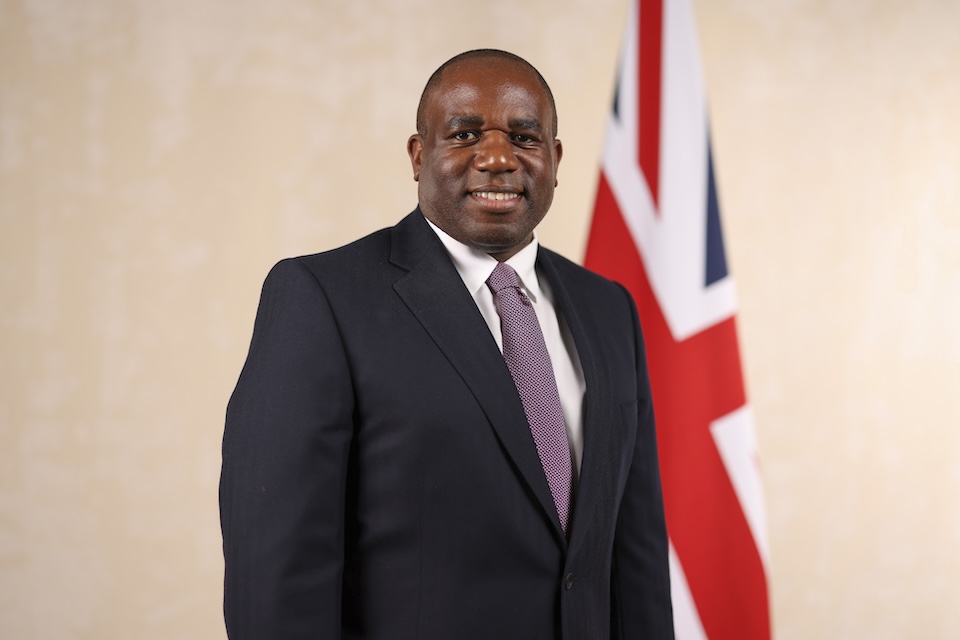
    Referring to a post he had made about David Lammy, the Deputy Prime Minister, being forced to “go home”, Parry said:

    “It was a clumsy tweet, there’s no question about that.”

  • Ed Davey – 2026 Comments on the Killing in Minneapolis

    Ed Davey – 2026 Comments on the Killing in Minneapolis

    The comments made by Ed Davey, the Leader of the Liberal Democrats, on 8 January 2026.

    Horrifying to see an American woman shot dead by an ICE agent on a Minneapolis street, and Donald Trump’s ghoulish response is truly chilling.

    Britain mustn’t follow America down this dark path.

  • Sarah Sackman – 2026 Speech on Jury Trials

    Sarah Sackman – 2026 Speech on Jury Trials

    The speech made by Sarah Sackman, the Minister for Courts and Legal Services, in the House of Commons on 7 January 2026.

    I beg to move an amendment, to leave out from “House” to end and insert:

    “believes that the Government inherited a justice system on the brink of collapse with a record and rising caseload created under 14 years of Conservative mismanagement, austerity and cuts to the justice system that has forced victims of crime to wait years for justice; notes that the justice system has historically evolved to match the needs of the society it serves; supports the Government in making the investment required, including continuing to break records on the number of sitting days funded; looks forward to Sir Brian Leveson’s upcoming recommendations on reforms to improve efficiencies across the courts system; further supports taking forward reforms to the justice system based on Sir Brian Leveson’s independent review of the criminal courts in which victims and the public can have confidence; and further notes that the Government will introduce legislation and publish its impact assessment in due course.”

    “Let’s fix it tomorrow”, says the right hon. Member for Newark (Robert Jenrick)—tomorrow, tomorrow and tomorrow. What a luxury! Our justice system is in a state of crisis, as he has said, but although in every crisis there is risk, there is also opportunity. The opportunity here is one that we in government grasp, to modernise our justice system and bring it into the 21st century.

    Let us start with the crisis. I did not hear an apology in the right hon. Gentleman’s speech, but he did lay bare the facts about what the previous Government did to our justice system. Being in government is about choices. We know what choices His Majesty’s Opposition would make about the justice system because they had 14 years to show the world. Now the right hon. Gentleman says, “Let’s come together, talk about investment in our system and talk about solutions,” but what did the Conservatives do for 14 years? They closed half of all courts in England and Wales. Who did they entrust with the guardianship of our justice system? Liz Truss, Dominic Raab, Chris Grayling. They decimated our legal aid system and all but broke our prison system.

    What is the result? Well, the right hon. Gentleman is right: there is consensus that we are in crisis and that the status quo cannot be tolerated. Nearly 80,000 criminal cases are currently waiting to be heard in the Crown court—more than double the waiting list pre covid. Victims are waiting years for justice—over 20,000 open cases in the Crown court backlog have been waiting for a year or more. Justice delayed is justice denied, and the Conservative party must bear much of the blame, but we will never hear the word “sorry.”

    Dr Murrison

    I am not interested in a party political rant, but plainly the Minister is. What I am interested in, however, is expediting justice for my constituents. She will have heard in my intervention on my right hon. Friend the shadow Justice Secretary that there is a model to solve that. Will she please explain why the model that my constituent James Ward brought forward, which had spectacular results in reducing delays in our criminal justice system, is not being applied but the abolition of trial by jury is?

    Sarah Sackman

    The Conservatives had 14 years to implement the solutions that they now say are blindingly obvious. The fact is that swift courts, flow courts, blitz courts—whatever we wish to call them—are being operated, but they cannot keep up with demand. Our justice system has simply not kept pace with the times and the demands of modern society. There is now record demand for criminal cases. There are more police officers, arrests are up by 10%, and cases arriving at the Crown court are up by 20%. Trials are more complex, with cases taking, on average, 71% longer. Technology, such as the smartphones we carry in our pockets, is creating more digital evidence than ever before. Jury trials take twice as long as they did in 2000.

    Those delays mean that in many cases justice is simply not being served. With those delays, witnesses pull out, memories fade and, as others have pointed out, more trials crack. As a result, justice is not being served. We have a system in which, as we know, there are criminals who are planning to spend next Christmas, and the Christmas after that, at home with their families. They are gaming the system, while victims wait longer and longer for justice, dealing with isolation and mental torment, unable to heal and to move on.

    No one is defending the status quo, yet no Government to date have been bold enough to take the necessary action towards finding a solution. I am a firm believer that politics is an agent of change—that is why I left my career in law to enter politics. When we are presented with a crisis, we see the opportunity, we find the plan, and we fix it—we make it better.

    James Wild (North West Norfolk) (Con)

    The Government’s amendment, which the Minister has signed, refers to the Government’s impact assessment. Have the Government done an impact assessment but are refusing to publish it, or did they announce plans to end jury trials for certain cases without that evidence?

    Sarah Sackman

    My answer to the hon. Gentleman is simple: there will be an impact assessment and this House will have the opportunity to scrutinise it. It is important that the impact assessment assesses the Bill that is brought forward, which must of course interact with the concordat process and the agreed number of sitting days with the judiciary.

    We as a Government do not practise the learned helplessness that His Majesty’s Opposition did in the past 14 years; we look for solutions. That is why we commissioned the independent review of the criminal courts, to conduct and carry out a careful piece of work, and to provide the blueprint for the change that is so desperately needed. All I hear from the Opposition is, “The Government should simply ignore that work”, but that is the evidence base, and that is the blueprint we are going to follow.

    Rachel Blake (Cities of London and Westminster) (Lab/Co-op)

    On the point about delay and the solutions we must bring forward, just yesterday I was with communities, near here in Victoria, who are facing the scourge of street drug dealing, and the aggressive harassment of residents by drug dealers, who also prey on vulnerable people who find themselves rough sleeping. The police, people in the sector and those working on the front line tell me that they are really struggling with the state of our courts and justice systems. Does the Minister agree that victims of crime are affected by that, as well as communities who are facing and struggling with the scourge of crime and antisocial behaviour on our streets? She will have listened to the remarks of the shadow Secretary of State, so was she as profoundly disappointed as I was by his attempt at building a consensus on this topic, and by the complete paucity of suggestions that he has brought forward, when many suggestions are already being considered?

    Sarah Sackman

    My hon. Friend is right: at the heart of the considerations that we must make as we bring our justice system, reformed and rebuilt, into the 21st century, are victims. This is all about delivering swift justice for victims, because what our constitution guarantees is not a constitutional right to a jury trial, but a constitutional right to a fair trial. The essential ingredient of fairness is timeliness, not waiting years while evidence deteriorates, memories fade, and victims and witnesses alike pull out; it is about getting swift justice. When I talk about reform of the system, of course I listen to important stakeholders who lead our professions, and of course their opinion counts, but my interest is in having a criminal justice system that serves the public, not one that serves lawyers.

    Warinder Juss (Wolverhampton West) (Lab)

    The Opposition are keen to rely on Magna Carta to defend jury trials, but Magna Carta also states that justice should not be delayed. Sir Brian Leveson reported that jury trials are taking twice as long as they did in 2000 because criminal cases are now much more complex and can involve thousands of pages of electronic evidence. We are putting more pressure—financial and otherwise—on jurors, and it is now much more difficult to support and guide them. There is clearly a case for reform. I understand that one recommendation made by Sir Brian Leveson was to have jury trials replaced by a judge and two magistrates, so could that be a possible compromise to reduce the delays?

    Sarah Sackman

    My hon. Friend is right to say that the nature of crime and of the evidence presented is altering the way our criminal justice system works, but let me provide this reassurance to the House: as well as modernising and rebuilding our justice system, these measures are designed to protect jury trials for the most serious cases. As I have said, many of those trials are becoming compromised, with many victims of the most serious crimes waiting years for justice. It is right that when we ask jurors to do the most important civic duty, we use their time wisely. Does it make sense that the queue of the victim of rape or of a homicide is shared with someone who has stolen a bottle of whisky and who could be dealt with by a lay magistrate who, by the way, introduces the lay and democratic element into our courts?

    Dr Luke Evans (Hinckley and Bosworth) (Con)

    The letter on criminal court reform written by the Justice Secretary to the Justice Committee states on rape and prioritisation:

    “We are not introducing a specific target for rape cases, but our overall objective is to drive down these wait times as quickly as possible. Listing is a judicial function and the judiciary already prioritises cases involving vulnerable victims and witnesses, which includes victims of sexual offences, including rape.”

    The Minister’s example about a bottle of whisky is therefore not appropriate; it is fundamentally wrong, according to the letter written by the Justice Secretary himself.

    Sarah Sackman

    The hon. Gentleman is right that listing is a judicial function, but the fact remains—this is CPS data—that some 4,000 cases last year could have been heard four times faster. We know that cases are heard four times faster in the magistrates court than in the Crown court, and although magistrates had the sentencing powers to deal with such matters, the defendants elected for a jury trial, which they have the right to do under the current system. Why did they elect for a jury trial? They did so because it would drag the process out longer. If a case can be dealt with four times faster in the magistrates court, then removing the right to elect, which is what we propose to do, is a far more efficient way to free up Crown court capacity so that very serious cases—not just rape, but robbery, homicide and serious drug offences—can be dealt with more swiftly.

    Natalie Fleet (Bolsover) (Lab)

    What has been missing from this debate is the word “victims.” We inherited a system in which there are criminals who will have chosen to spend Christmas at home with their children. They will still be at home with their children next year, and the year after that, because we have a system that allows them to kick justice down the road. Meanwhile, women will have been raped this Christmas, and they will have to wait half a decade for justice. How can Members defend that system?

    Madam Deputy Speaker (Ms Nusrat Ghani)

    Order. Interventions should be short and colleagues should have been here at the beginning if they wish to intervene—[Interruption.] I was not here at the beginning, but I do not need any help. Members must have been here at the beginning of the speech of the Member on whom they wish to intervene. Please keep interventions short.

    Sarah Sackman

    As so often, my hon. Friend the Member for Bolsover (Natalie Fleet) is a powerful advocate for women and for victims. As I have said, the reforms that the Government are bringing forward are laser focused on swift justice for victims. I wish to address the point about investment—

    Karl Turner

    Will the Minister give way?

    Sarah Sackman

    I will complete this point and then I will take an intervention.

    Investment is what is needed, and investment can get us out of the crisis we are in. Let me be absolutely clear: this Government are making an investment, turning round an oil tanker that had been run into the ground for years when we inherited it. This year alone, we allocated more than 11,000 sitting days to the Crown court. That is the highest ever number of sitting days, and 5,000 more than His Majesty’s Opposition allocated when they were in government. The concordat is taking its course, and there will be more to come.

    We have also invested in the professions, with an uplift for criminal legal aid solicitors of £92 million. That is part of this package. We have £34 million for criminal defence barristers, and, crucially, match funding for pupillages to increase the talent pipeline, so that we can have the sustainability in legal practitioners to both prosecute and defend cases in the system.

    We are making that investment, and we will ensure that that record-breaking investment continues so that people are not waiting longer and longer, but let me be absolutely clear that funding alone will not solve the problem. The Government cannot simply sit their way out and write a blank cheque. Do not take my word for it; that is the central conclusion of the independent review of the criminal courts. We need more investment, but investment alone will not resolve the crisis and decline in our criminal justice system.

    We need three things. We need investment, which is starting to be made and to percolate into the system. We need reform, which is what the independent review of the criminal courts tells us; the Opposition say, “Ignore it,” but I am not prepared to do so. We also need modernisation. How can we harness the technology at our disposal, whether it is AI transcription or case summarisation, to ensure that we get swift justice? It is those three pillars that will transform and bring our criminal justice system into the 21st century.

    There are those who tell us that simply spending our way out or tweaking a lever here and there will solve the problem, but it will not. I agree with those who say that we should bring prisoners to court more efficiently to avoid delays. Do we need to do that? Yes, we do. I eagerly await part 2 of Sir Brian’s report, but we are working on those things straight away. Do we need more efficient listing? I agree that we do, so let us get those efficiencies—there is consensus on that. Do the Government and I think that that alone will salvage the system where there is such an acute degree of crisis? No. We need the reform and the modernisation together with the investment.

    Liz Saville Roberts (Dwyfor Meirionnydd) (PC)

    We have already recognised that there is a regional aspect to this issue. Wales’s Crown courts generally outperform those in England. They are not perfect—we have a backlog of maintenance issues and other problems—but I can only reiterate the opposition of past and present Labour Welsh Government Counsels General, who say that scrapping jury trials is both extreme and unnecessary. Why not take this as an opportunity to keep jury trials in Wales so that we can get a real-time impact assessment that we could compare with what is happening in England if we have to have changes?

    Sarah Sackman

    The right hon. Lady is right that there are regional difficulties—the situation for those in the south-east, London and parts of the north-east and the north-west is utterly dire—but let me be absolutely clear and clarify something. She says that we are scrapping jury trials, but we are not. Let us get the facts straight about the way in which the system works now and the way in which things will work once these proposals are implemented.

    People talk about a right to a jury trial, and the public could be forgiven for thinking that everybody who graces a criminal court gets a jury trial, but that is not how things work. Some 90% of cases in this country are heard without a jury trial; they are heard robustly and rigorously in our magistrates court, which retains that lay element. I pay tribute to the work of our magistrates, who are drawn from our communities, provide local justice and represent the communities that they serve. The remainder of cases are currently heard by jury trial, and all the most serious crimes, such as homicide, kidnapping, robbery, serious drug offences and possession of a weapon, will continue to be heard by juries under our proposals.

    What we are making is in line with expert recommendations, as occurs in other jurisdictions such as Canada and New South Wales, which are comparable with ours. This is a fairly modest reform removing the right to elect so that those cases that can be heard by the magistrates court are retained in the magistrates court and a modest number of cases are heard through a swifter court—the Crown court bench division. In addition, complex fraud and economic crime currently heard with a jury will appropriately be heard by an expert judge. That is a sensible, pragmatic package of reforms informed by an independent review.

    I am afraid that asking us simply to ignore the work of the review is not sensible. If we were to leave that review on the shelf gathering dust, people would say, “The Government are failing to pull every lever.” I am not prepared to do that. We have asked people to have a long, hard look at it—not just Sir Brian Leveson, but David Ormerod, a distinguished criminal law academic, and other members of the panel. We will take that and implement it as our blueprint.

    David Smith (North Northumberland) (Lab)

    Let me speak to the point about the magistrates. In 2012, I took part in a six-month in-depth application process to become a magistrate, and I was accepted. I was then told that because of a pause by the previous Government, there would be no recruitment. In the following eight years, we lost 10,000 magistrates, to the point that in 2019 the then Justice Committee wrote that the crisis was

    “as frustrating as it was foreseeable”

    and that

    “it has taken a near crisis to prompt the Government into belated action.”

    Does my hon. and learned Friend agree that the Opposition cannot have their cake and eat it? They must understand that the system is in a crisis of their making.

    Sarah Sackman

    I could not agree more. As I am someone with responsibility for the recruitment of our magistrates, I know my hon. Friend will have seen in the early headlines this year that we are looking for more magistrates. We want them to be more diverse, younger and from different parts of the country and different backgrounds. As I said, our magistracy has halved in the last 10 years. I want to see us turn that around as we place our confidence in our magistrates to continue handling the vast majority of criminal cases, which they do at the moment.

    Kerry McCarthy (Bristol East) (Lab)

    My first job after graduating was in a magistrates court, which was just making the transition from writing court records in a huge ledger by hand to computerisation; I appreciate that it has modernised an awful lot since then. Let me pick up on the point made by my hon. Friend the Member for Cities of London and Westminster (Rachel Blake) about the impact of persistent drug dealing on local communities. One of the things being piloted in Bristol is an intensive supervision court. We know that a huge number of crimes are committed by people with persistent drug addictions, so if we can divert them from the criminal justice system it will help to free up our courts. Can the Minister say a little about what we are doing to roll out that programme?

    Sarah Sackman

    My hon. Friend asks a really important question, and we will lay out our plans on just that point. How do we prevent that revolving door of reoffending? It is there in the work that we are doing on sentencing and early intervention, because prevention is so much better than cure.

    One of the most depressing features that has arisen as a result of the rising waiting lists in our Crown court is that the number of early guilty pleas—those pleading guilty at the earliest possible opportunity—has gone down precipitously. That means that very often, offenders are pleading guilty at the door of the court, and that wastes huge amounts of resource. I want to ensure that jury trials are there for the most serious cases and that we are using jurors’ time effectively and efficiently, because we owe it to them to deliver swifter justice, just as we owe it to victims.

    As I have said, I have heard the concerns of the Opposition and those who head up the professions. There are those in the professions who support what we are doing, but we have our detractors. I am not putting my fingers in my ears; I have engaged with them throughout this process, just as the independent review of the criminal courts has done.

    People have questioned whether swift courts will work. The independent review of the criminal courts has recommended the swift court model, which was championed by Lord Justice Auld and The Times Crime and Justice Commission. As I said, it exists in other countries, such as Canada, and it works there. Sir Brian estimates that trials without a jury could reduce hearing time by at least 20%, which he says is a conservative estimate. It stands to reason that jury trials are important, but hearing cases without a jury negates the need for jury selection, for judges to explain legal concepts to jurors and for jury deliberation. Those all add to the time that it takes to hear a case in the Crown court.

    Karl Turner

    The Minister talks about Sir Brian’s presumption—which is what it is—that there will be a 20% reduction in time with a single judge, as opposed to a jury. I think that presumption is probably right, and I think he is probably right to say that it is conservative, but what about the writing up? When does the judge write the judgment and give the reasons? Are they doing that while putting the kids to bed in the evening, or are they doing it the following day, the day after and the day after that? Reasons will be necessary when a single judge is deciding the innocence or guilt of a defendant. What is the answer?

    Sarah Sackman

    My hon. Friend is right that if a case is determined by a judge, reasons will need to be given. Indeed, reasons are a good thing—those convicted of a crime will have transparency, knowing why the result has been reached. I am sure Sir Brian Leveson will have been well aware of the need for a judge to give reasons, and will have factored that into his conclusion, in the same way that we have the data from Canada and from New South Wales. I met judges at the Supreme Court in Toronto, where equivalent cases are tried by judges alone and tried by a jury. It is not about the relative merits of those two things; simply as a practical matter of timing, those judges told me that it takes about half the time. Given the evidence that we have, it is undeniable that trying cases by judges alone is going to take less time. When I have to focus on creating an efficient system that deploys resources in a proportionate way and delivers swifter justice for victims, it would be madness to ignore the conclusions of the independent review.

    Linsey Farnsworth (Amber Valley) (Lab)

    On the point of saving time through fewer jury trials, does my hon. and learned Friend agree that this is not just about the amount of time a jury is in the courtroom? It is about all the other factors within the criminal justice system that contribute to the time taken—the time it takes for back office staff to organise jury selection and summonsing, the time it takes for the Crown Prosecution Service to prepare reams and reams of paper for jury bundles, the time it takes to deal with the expenses, and so on. This is about the criminal justice system as a whole, not just the time spent in the courtroom.

    Madam Deputy Speaker (Ms Nusrat Ghani)

    Before the Minister responds, and to save another Member from any embarrassment, coming in halfway through a speech and trying to intervene is not acceptable.

    Sarah Sackman

    My hon. Friend speaks with ample experience from two decades spent working for the Crown Prosecution Service. She knows exactly how the system works, warts and all. The realism and pragmatism she brings to this debate speaks to the really important point that operating a jury system is expensive and takes a lot of time, which is why we have to deploy it in a timely and proportionate way for the most important cases. At the moment, it is available for 3% of cases, but so many of those cases are running in such a delayed fashion that they are collapsing at the 11th hour and justice is not being served. We are actually undermining the jury system by allowing it to run out of control. It is because we want to preserve that feature of our legal system that it is so important that we heed the recommendations of the independent review, make the necessary investment and modernise.

    Robert Jenrick

    Will the hon. and learned Lady give way?

    Sarah Sackman

    I will give way for the final time, and then I will wrap up.

    Robert Jenrick

    The hon. and learned Lady is being very generous with her time. The nub of her argument is that reducing the number of jury trials will make a material difference in cutting the backlog. She has quoted some conversations she has had with judges in Canada and so on, and I do not doubt her sincerity and the work she has done. Why will she not commit today to publishing the modelling and evidence basis for the assertions she is making, not in the months to come, but this week or next week—as soon as practicable? I will happily return to this Dispatch Box if she proves me wrong on the basis of the evidence she presents. Will she make that commitment to all of us today?

    Sarah Sackman

    I will make a commitment to publish an impact assessment, an equalities impact assessment, and the evidence of the independent review in the usual way when we bring forward our formal Government response and the necessary legislation. Parliament will have a chance to scrutinise that legislation, to interrogate it, and to express its opposition if that is the conclusion that is reached.

    Let me be absolutely clear, though. When I was in practice, when I used to appear in court and I made a proposition, the judge would say, “Where’s the evidence for your proposition?”, as I am being asked now. There is authority behind the proposition I am making—that, if vital institutions are not working for the British public, we should be open to changing them in three ways. Those are by making investment, which we are beginning to do; through structural reform, which is what is on the table; and through modernisation. The evidence base for that structural reform is as follows: the international comparisons; Sir Brian Leveson’s independent expert review; and—this is critical—the fact that we know from Ministry of Justice data that triable either way cases, which could be heard in the magistrates court or the Crown court, are heard four times faster in the magistrates court. If we take cases that are not suitable for the Crown court and hear them in the magistrates court, we free up capacity for the Crown court to hear the most serious cases, so it stands to reason that they will be heard faster. However, we will of course publish the detail at the appropriate time for all to scrutinise.

    To conclude, everyone in the Chamber today has agreed that we are in a state of crisis. The difference between His Majesty’s Opposition and the Government is that I reject the learned helplessness that festered under the previous Government. This Government have a choice to make, and we are making it. We are making the decision to use a crisis and turn it into an opportunity—to bring down the waiting lists and modernise the system in the process. People ask me, “Sarah, would you be doing this if there was not a crisis in our courts?” I say yes, because we need a better system, one in which courts, not criminals, triage cases. We need a system that makes better use of jurors’ time and ensures that someone accused of shoplifting is not in the same queue as a victim of another crime. No one has had the guts to take on a programme of reform of this scale, but this Government have the guts. The Conservatives had 14 years to fix the system, but they ran it into the ground. We make a different choice; we are bringing forward change.

  • PRESS RELEASE : Serious Fraud Office returns £400,000 to victims of global email fraud [January 2026]

    PRESS RELEASE : Serious Fraud Office returns £400,000 to victims of global email fraud [January 2026]

    The press release issued by the Serious Fraud Office on 8 January 2026.

    Nine fraud victims to be compensated 24 years after the crime following innovative SFO technique.

    The Serious Fraud Office (SFO) has successfully recovered more than £400,000 to be returned to nine fraud victims almost twenty-four years after they were defrauded.

    Investigators used civil recovery action to reclaim funds for victims of a fraud committed in 2002. As there has been no conviction, these funds would normally go to HM Treasury.

    The recovery relates to money stolen by Abdullah Ali Jammal, a former director of a retail-depositor bank, who operated an email fraud scheme from the UK between 2001 and 2002, securing over £4.4 million. Victims were told that their help was needed to release money from countries including Nigeria, with the promise of a 10-25% commission in return. This advanced fee scheme defrauded eighteen people, many of whom lost tens of thousands of pounds.

    In 2021, having determined that Mr Jammal – who fled the country before being charged – could not realistically be convicted, the SFO decided that the case’s unique circumstances merited an alternative approach to recovering money for victims. Mr Jammal’s accounts were frozen, including over £150,000 bound for the family-controlled Jammal Trust Bank in Lebanon, which remains sanctioned by the US for facilitating banking for a terrorist organisation.

    Investigators then spoke directly to victims around the world, working with the Australian Federal Police, Belgian Police, French Liaison Magistrate, US’s Federal Bureau of Investigations and the Foreign, Commonwealth and Development Office to locate them and secure their consent for this action.

    This demonstrates a new approach to civil recovery proceedings, with funds being returned directly to victims rather than the Treasury – a significant development in how proceeds of crime can be recovered. The SFO will now seek to use this technique across other relevant cases.

    Nick Ephgrave QPM, Director of the Serious Fraud Office (SFO), said:

    Fraud devastates lives and the SFO will pursue justice for victims using every tool at our disposal.

    This groundbreaking case demonstrates that determination. After years of complex international investigation, we’re returning stolen money directly to the people who were defrauded.

    Solicitor General Ellie Reeves MP, said:

    Fraud is a devastating crime. It hurts people, impacts businesses and damages the UK’s reputation as a trusted place to do business.

    This government is determined to tackle fraud and disrupt the perpetrators. The SFO has successfully secured thousands of pounds, going directly back to the victims. This demonstrates their innovative approach to recovering illicit gains, working with international partners, and relentless commitment to delivering justice.