Blog

  • PRESS RELEASE : Skills boost for planning authorities to create better neighbourhoods [March 2023]

    PRESS RELEASE : Skills boost for planning authorities to create better neighbourhoods [March 2023]

    The press release issued by the Department for Levelling Up, Housing and Communities on 21 March 2023.

    The Department for Levelling Up, Housing and Communities has given social enterprise Public Practice £1 million to help councils recruit and develop skilled planners.

    More skilled planning professionals will be recruited by councils following a £1 million funding boost from the government, the Housing Minister announced today.

    Social enterprise Public Practice will use the money to help councils recruit and develop skilled planners, increase awareness about careers in local government and share best practice around improving communities in the public sector.

    The money will help councils attract and develop those in the profession leading to higher skilled jobs, speed up property development and create better neighbourhoods that people are proud to call home.

    Minister for Housing and Planning Rachel Maclean said:

    Planning plays such an important role in shaping our neighbourhoods, making sure we have the right housing and infrastructure to level up the nation.

    It is essential that our planning authorities have the skills and resources they need and today’s funding will make sure the sector is better equipped to deliver a quality service for local communities.

    Pooja Agrawal, CEO of Public Practice said:

    Planning and placemaking is one of local government’s most important functions as it shapes the places we all live in, work and visit.

    However, it is clear that local authorities have substantial skills gaps which hinders the ability of developers and councils to deliver good quality new and refurbished homes, sustainable public spaces or accessible town centres and high streets.

    We are grateful to the Department of Levelling Up for this funding. We have a proud track record of bringing private sector planning and placemaking talent into local authorities and helping them to forge long-term careers in the public sector.

    Now is not the time to rest on our laurels but to re-double our efforts. We have a mission to help every council in England to find the skilled planners and place professionals they need to make communities and neighbourhoods better across our nation.

    The government recently published a consultation on increases to planning fees to generate additional income for councils to help deliver and improve planning services, making sure communities have the right infrastructure.

    This is alongside a wider programme of support and investment in high quality data and digital technology to reduce the administrative burdens on local planning authorities and support faster more efficient decision-making.

    Public Practice has attracted more than 2,500 applications to its placement programme over the past five years, 92% of whom have been working outside the public sector. Some 73% of applicants have never worked in the public sector and 53% have never previously applied for a job in the public sector.

    Nine-tenths of Public Practice Associates have chosen to continue working in the public sector following the conclusion of the year-long programme. The not-for-profit social enterprise has a mission to rebuild skills and capacity in the public sector to help improve places and communities across England.

  • PRESS RELEASE : Defence innovations recognised in 31st sustainability and conservation awards [March 2023]

    PRESS RELEASE : Defence innovations recognised in 31st sustainability and conservation awards [March 2023]

    The press release issued by the Ministry of Defence on 21 March 2023.

    The Sanctuary Awards have today recognised outstanding sustainability and conservation efforts across the Ministry of Defence (MOD) over the past year.

    • Innovative and forward-thinking solutions recognised at Sanctuary Awards.
    • Baroness Goldie presents this year’s Silver Otter to Captain Nigel Williams RAMC.
    • More than 30 years of awards recognising the MOD’s commitment to sustainability.

    Celebrated for more 30 years, the Sanctuary Awards – sponsored by the Climate Change & Sustainability Directorate and hosted by the Defence Infrastructure Organisation (DIO) – recognise the projects that are benefitting sustainable development and helping to conserve the environment, natural resources and heritage across Defence’s UK and overseas estates.

    This year’s winners include a number of ground-breaking initiatives across Defence supporting the MOD’s future sustainability, with the Sustainable Business Award won by The Queen Elizabeth Class Logistics Centre Project at HMNB Portsmouth – a fully net zero facility in its operation.

    The facility is a dedicated Forward Logistics Centre adjacent to the carrier berths at HM Naval Base Portsmouth which introduced several carbon reductions projects across the site, including photovoltaic panels, low energy lighting, highly efficient thermal cladding and the use of battery powered forklift and stores handling machines.

    Defence Minister, Baroness Goldie said:

    Defence procurement and the Defence Estate offer significant opportunities to support net zero and biodiversity. We remain focused on embedding a culture of sustainability while meeting essential Defence outputs and we are proud of the innovative ideas being generated to drive change.

    I send my congratulations to all the winners and nominees of this year’s Sanctuary Awards.

    Presented by Baroness Goldie, this year’s prestigious Silver Otter trophy was awarded to Captain Nigel Williams RAMC. This award recognises the best conservation group-led project or individual conservation effort on the MOD estate.

    Awarded due to Williams’ attitude and commitment to being innovative and creative in searching for new ideas and improvements, the trophy also recognises the prioritisation of safety and environmental protection processes, as well as the implementation of new procedures that have been shared as “Best Practice” and been at the forefront of driving cultural change around sustainability in Defence.

    Richard Brooks, DIO Principal Environmental Support and Compliance said:

    DIO is proud to host the Sanctuary Awards to celebrate the positive work taking place throughout Defence on climate change and sustainability initiatives.

    DIO takes this work incredibly seriously and we are pleased to continue to contribute to the wider Defence and government sustainability targets. Congratulations to all the winners and thank you for your contribution to making Defence greener.

    The coveted Net Zero and Resource Efficiency Award was this year given to Project Prometheus, which has constructed the British Army’s first solar farm at the Defence School of Transport (DST) at Leconfield.

    The solar farm was the first of four pilot farms across the Army estate, with the project aiming to decarbonise the estate, better understand solar farm construction, and generate long term cost savings for the Army.

    Set to save approximately £308,000 in its first year alone, the project will save around 400 tonnes of carbon dioxide in the first year – equivalent to removing 250 petrol cars from the road – and will provide at least 30% of DST Leconfield’s electricity needs.

    Julia Powell, Deputy Director for the Climate Change and Sustainability Directorate and Chair of the Sanctuary Magazine Editorial Board said:

    I am once again inspired by the accomplishments and commitment of this year’s awards winners.

    Tackling the impact of climate change and embedding sustainability will be a challenge, but the passion and innovation in evidence shows defence’s full commitment to finding solutions.

    Defence continues to prioritise sustainability and conservation and is committed to maintaining the capability of our world-leading Armed Forces whilst working to meet the government’s Net Zero policies.

    Background

  • PRESS RELEASE : Rehearsals underway for ground-breaking theatre production in Middlesbrough [March 2023]

    PRESS RELEASE : Rehearsals underway for ground-breaking theatre production in Middlesbrough [March 2023]

    The press release issued by the Environment Agency on 21 March 2023.

    Residents of Middlesbrough are being encouraged to explore what item they would save during a flood as part of an interactive play.

    Residents and visitors to Middlesbrough are being encouraged to explore the backstories of sentimental items which have been washed away during a flood as part of a free, interactive performance.

    Created by North East production company, Theatre Space and commissioned by the Environment Agency, ‘Washed Away’ invites the audience to choose an item and experience the joy, the sadness and the difference behind each irreplaceable possession lost and damaged by flood water.

    Presented on the high street in Middlesbrough, the play mixes live performance with a vital message. The show will be held over the weekend of the 25th and 26th March with each part of the storytelling able to be experienced as a stand-alone piece or as a unique narrative.

    Audience members can pick three of the eight different sentimental items during each performance. These could be anything from photo albums to soft toys or jewellery. Items can be picked at random at the start of each play, giving a different show each time, depending on what gets fished out of the waters. The play will also run two times each day, giving attendees the best chance to come and join in, completely free of charge.

    ‘Washed Away’ Aims not only to entertain but also deliver a potentially life-saving message about the risk of flooding. According to analysis produced by the Environment Agency, at least one in six people in England are at risk from flooding from rivers and the sea, with many more at risk from surface water flooding.

    However, nearly two in three households at risk of flooding don’t believe it will happen to them.  And despite the research showing that almost two thirds of people (60%) have taken at least one action to prepare for flooding, as many as 1.5 million households, who are at risk, are yet to prepare.

    Alex Scaife, Flood Resilience Engagement Advisor at the Environment Agency, said:

    “It’s incredibly exciting to be working with Theatre Space to bring ‘Washed Away’ to the people of Middlesbrough. This ambitious production aims to challenge the audience and asks some important questions on how they would respond if a flood was forecast.

    “We know how devastating flooding can be – the loss of your home, the financial stress, and the destruction of irreplaceable, sentimental belongings all place unbelievable strain on those affected. That is why it is vital that people take the necessary preparations as early as possible should the worst happen.

    “I hope that as well as an exhilarating theatrical event, ‘Washed Away’ will get people reflecting and debating on the steps they can take to Prepare, Act and Survive.”

    Corinne Kilvington, Theatre Space Artistic Director, said:

    “We’re so excited to create a fun, engaging and interactive performance to help people think about the impact of flooding. It’s so easy to think ‘it’ll never happen to me’ but that dialogue has to change, because it’s a lot more of a possibility than we’d care to think.

    “The team think it’s incredibly brave of the Environment Agency to try and tackle the subject in this way instead of relying on the usual channels and we are honoured to be creating the piece which will start conversations, challenge perceptions and above all entertain the audience.”

    Audiences will be able to see the stories they didn’t catch live on the Theatre Space website after the performance at Theatre Space – Any Space Is A Theatre Space

    People in flood risk areas should know what to do in a flood and they are encouraged to download the Environment Agency’s ‘Prepare. Act. Survive.’ flood plan to help reduce their risk.

  • PRESS RELEASE : Derby named as home of Great British Railways HQ [March 2023]

    PRESS RELEASE : Derby named as home of Great British Railways HQ [March 2023]

    The press release issued by the Department for Transport on 21 March 2023.

    Derby has been selected to become the home of Great British Railways, delivering high-skilled jobs to the region.

    • Derby named as the new headquarters of Great British Railways (GBR HQ), delivering high-skilled jobs and further levelling up the region
    • more towns and cities to benefit from GBR, with jobs spanning across Great Britain
    • GBR will be whole-heartedly customer focused, bringing back accountability and driving modernisation across the railways

    Derby has been named as the national headquarters of Great British Railways (GBR HQ), marking a key milestone in the government’s plan to reform the nation’s railways.

    As Europe’s largest rail hub, Derby will soon become the heart of Great Britain’s rail industry too, bringing track and train together and delivering high-skilled jobs to a city already brimming with the best talent in the industry.

    Derby came top of all 6 excellent locations in both the rigorous assessment process and the public vote. Their application demonstrated strong links to the wider network, well-established connections with the industry, supply chain and customers, as well as an extensive local cluster of private sector rail businesses.

    Transport Secretary, Mark Harper said:

    It’s full steam ahead for the reform of our railways and today’s announcement is not only a huge win for the brilliant city of Derby, but a key milestone for the entire rail industry across the country.

    Great British Railways will put the passenger first, promoting collaboration and innovation across a joined-up, efficient and modern network.

    Councillor Chris Poulter, Leader of Derby City Council, said:

    We’re absolutely thrilled that Derby has been selected to become the home of Great British Railways. This result is a testament to the hard work of our team, alongside our key rail and city partners based across Derby – we couldn’t have done it without them.

    Rail heritage is at the heart of our city and for this to be recognised by government is a fantastic achievement. The investment we’ll see from this significant move will be huge, not only just for Derby but for levelling up across the whole of the wider East Midlands.

    We have a rich history of being the only city in the UK to have manufactured rolling stock continuously since 1840, so I’m thrilled that Derby’s heritage is being recognised in this defining way. We can’t wait to see what this momentous move will mean for Derby and its citizens in the future.

    While Great British Railway’s headquarters will be in Derby, other towns and cities across Britain, potentially including the 5 shortlisted cities, will still benefit, becoming powered up regional GBR hubs equipped with local decision making, and investment powers aimed at benefiting their local communities and further creating jobs in the locations they serve.

    GBR will also have roles spanning across Great Britain including the North, South East, South West and London, with the HQ driving collaboration and innovation across the sector.

    The government is working closely and collaboratively with the Great British Transition Team to co-design the future of our railways. Passengers and freight customers will be GBR’s key priority, the new body will also take control of the industry’s finances to drive efficiency and work with the private sector to deliver for customers.

    Great British Railways will be locally led and will harness the potential of the private sector locally, regionally and nationally.

    Anit Chandarana, Lead Director, Great British Railways Transition Team, added:

    The announcement that Derby will be the home of the Great British Railways headquarters is another important milestone on our journey to create a simpler and better railway for everyone in Britain.

    Although Derby will be the home of our headquarters, Great British Railways will also introduce empowered regional centres, to bring decision making and leadership much closer to local customers and communities.

    The Transition Team is continuing to work with government and the wider rail industry to deliver this much needed reform and we look forward to working with colleagues in Derby in the coming months, too.

    GBR’s Transition Team will now work with Derby to identify the site for the HQ within the city.

    The Midlands is already a transport supercluster for Britain: with the Department for Transport and HS2 already having bases in Birmingham, bringing GBR’s HQ to Derby will be a further boost to the region’s transport sector and demonstrate our commitment to levelling up Great Britain.

    Today’s (21 March 2023) announcement follows on from the Transport Secretary’s George Bradshaw Address last month where he set out the government’s long-term vision for the future of the railways. Last month’s announcements included:

    • the expansion of single leg pricing across the LNER network and demand-based pricing to ensure passenger demand is more evenly spread between services.
    • an extension to pay-as-you-go ticketing in south-east England.
    • creating a dedicated strategic freight unit tasked with setting a long-term freight growth target this year.
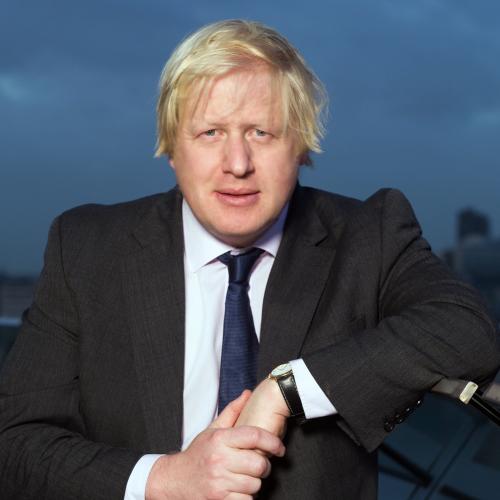
  • Boris Johnson – 2023 Submission to Priviliges Committee

    Boris Johnson – 2023 Submission to Priviliges Committee

    The submission made by Boris Johnson, the Prime Minister, to the Privileges Committee on 21 March 2023.

    Text of document (in .pdf format)

  • NEWS STORY : Baroness Casey Publishes Critical Report of Met Police

    NEWS STORY : Baroness Casey Publishes Critical Report of Met Police

    STORY

    The Baroness Casey report into the Met Police has been published following its commission in October 2021 after the murder of Sarah Everard by a serving police officer. The report was critical of the Met Police and concluded that the force was institutionally racist, sexist, and homophobic, and that significant structural reforms were needed to address these failings. She also questioned whether the Met Police was able to police itself and added that austerity had seriously impacted the force with 126 police stations closed in recent years.

    The review followed a number of high-profile incidents involving the Met Police, including the murder of Stephen Lawrence and the shooting of Mark Duggan, which had raised concerns about institutional racism within the force. The report found that the police had failed to address these issues adequately and had not done enough to increase diversity within their ranks.

    The Met Commissioner Sir Mark Rowley said in a statement:

    “This report sparks feelings of shame and anger but it also increases our resolve. I am proud of those people, our officers and staff, whose passion for policing and determination to reform moved them to share their experiences with such honesty. This is, in many ways, their report. It must be a catalyst for police reform. This report needs to lead to meaningful change. If it only leads to pillory and blame of the exceptional majority of officers then only criminals will benefit”.

    The report gave incidences of inappropriate behaviour, including:

    “There have been a number of incidents where baptised [Sikh] officers are picked on. One officer had his beard cut because an officer thought it was funny. Another officer had his turban put into a shoe box because they thought it was funny. Unless we educate our officers then this will happen.”

    An example was given of a Muslim police officer who told the report:

    “I found bacon left in my boots inside my locked locker. I was horrified but kept an open mind as to who this could be. I was hoping to identify who the culprit was and take appropriate action. I didn’t want to be branded a person who played the race card and out of fear of reprisals did not tell anyone at the time”.

    The report also mentioned WhatsApp messages from police officers, noting:

    “There are comments after intranet articles, along the lines of ‘why can’t we just get on with the day job, why do we have to care about bi-sexual people?’”

    The Casey report concluded:

    “Public confidence and trust in the Met have been falling, calling public consent into question, and the relationship with Black Londoners in particular remains unfixed. In these circumstances, good communication, consultation and engagement with the public – giving them a real say in how London is policed – becomes more important than ever”.

    RESOURCES

    Baroness Casey Report into the Met Police

    Met Police Press Release on the Report’s Publication

    EXTERNAL NEWS LINKS

    Metropolitan Police

  • PRESS RELEASE : Met calls for report into culture and standards to be catalyst for police reform [March 2023]

    PRESS RELEASE : Met calls for report into culture and standards to be catalyst for police reform [March 2023]

    The press release issued by the Metropolitan Police on 21 March 2023 in response to the Casey Report.

    The Metropolitan Police has welcomed a report into its culture and standards and has called for it to be a catalyst for police reform.

    The report follows an extensive review by Baroness Casey of Blackstock. Its findings, many of which are very critical of the Met, will be taken forward to inform and shape an ambitious plan to reform and rebuild trust while delivering for Londoners.

    Commissioner Sir Mark Rowley said: “This report sparks feelings of shame and anger but it also increases our resolve.

    “I am proud of those people, our officers and staff, whose passion for policing and determination to reform moved them to share their experiences with such honesty.

    “This is, in many ways, their report. It must be a catalyst for police reform.

    “This report needs to lead to meaningful change. If it only leads to pillory and blame of the exceptional majority of officers then only criminals will benefit.

    “We need it to galvanise Londoners, the dedicated police majority and politicians to coalesce around reform and the renewal of policing by consent for the 21st century.”

    The review was commissioned by the Met in October 2021 following the appalling murder of Sarah Everard by a serving officer and its publication follows other catastrophic and criminal incidents involving other officers.

    Baroness Casey was asked to examine the standards of behaviour and internal culture of the Met and to make recommendations on the actions required.

    Her final report, published today (Tuesday, 21 March), explores a wide range of issues including the Met’s organisation, its support for officers and staff, discrimination, standards, its approach to protecting women and children and its wider operational effectiveness.

    Sir Mark added: “The appalling examples in this report of discrimination, the letting down of communities and victims, and the strain faced by the frontline, are unacceptable.

    “We have let people down and I repeat the apology I gave in my first weeks to Londoners and our own people in the Met. I am sorry.

    “I want us to be anti-racist, anti-misogynist and anti-homophobic. In fact, I want us to be anti-discrimination of all kinds.

    “There are external factors – funding, governance, growing demand and resource pressures that shouldn’t sit with policing – that the report has identified. Baroness Casey is right to identify the impact these have had on our ability to police London, but there can be no excuses for us.

    “The core of the problems are for policing to determinedly confront.”

    The Met’s Turnaround Plan was intentionally published in draft form in January.

    It marked the start of a conversation and a programme of meaningful engagement with communities and partners with a revised and final version to be published in late Spring.

    Baroness Casey’s report will play a crucial role in shaping those ongoing conversations and will ensure the final plan meets the scope and scale of the challenge we are confronted with.

    Sir Mark said: “Our Turnaround Plan is already building momentum across the Met.

    “I am reassured that a number of issues highlighted by Baroness Casey – our service to victims, rebuilding neighbourhood policing and how we protect the most vulnerable for example – are priorities we too had identified.

    “Baroness Casey’s insights, alongside feedback from the public, will greatly influence the next version.

    “We know that the challenges ahead of us are not simple, but we have tens of thousands of inspiring and hard-working officers and staff and we will be determined and relentless in taking them on.

    “I am confident we will succeed.”

    A copy of Sir Mark’s letter to Baroness Casey is available online.

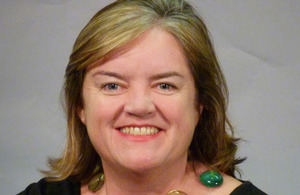
  • Louise Casey – 2023 Report into the Met Police (Baroness Casey of Blackstock)

    Louise Casey – 2023 Report into the Met Police (Baroness Casey of Blackstock)

    The report by Louise Casey, Baroness Casey of Blackstock, published on 21 March 2023.

    Text of report (in .pdf format)

  • NEWS FROM 100 YEARS AGO : 21 March 1923

    NEWS FROM 100 YEARS AGO : 21 March 1923

    21 MARCH 1923

    Following opposition from the Government, Earl Beauchamp withdrew his Parliamentary Election Bills which would have introduced the principle of the alternative vote.

    The results of the national strike vote of members of the Builders Unions were published, with 42,606 voting to accept the terms and 140,952 voting against.

    The Irregulars tried to destroy the residence of Maurice Healy, the brother of the Governor-General of the Irish Free State Tim Healy, saying that it was a reprisal for recent executions in Cork. The occupants were able to put the fire out after the arsonists had fled, restricting the damage to two rooms.

  • Lucy Powell – 2023 Speech on the Budget

    Lucy Powell – 2023 Speech on the Budget

    The speech made by Lucy Powell, the Labour MP for Manchester Central, in the House of Commons on 20 March 2023.

    It is a pleasure to open the debate on science and technology, as one of the few Members in this place probably with a science degree. You might be aware, Madam Deputy Speaker, that I studied chemistry at Somerville, like another well-known female politician very popular on the Government Benches. I hope that is where the similarities end, although we both have a reputation for, how shall I put it, getting our own way.

    Science, technology and innovation are close to my heart. I welcome the new focus—not before time—on these issues, which I will come to. Even with the new Department and a few mentions in the Budget, we are still miles behind where we need to be in exploiting the potential of the UK as a science and tech superpower.

    First, let me address the Budget overall. Having had a few days to digest and analyse, the verdict on the Budget is in. It is not a

    “sustainable plan for long-term economic expansion”.

    Those are not my words but those of The Daily Telegraph. The Federation of Small Businesses was no more complimentary, saying that its members would feel “short-changed” by the “meagre” Budget. The Institute for Fiscal Studies labelled Britain a high-tax economy, with households feeling “continuing pain”.

    The public view is that it is a Budget not for them, but for a tiny few—a growing theme after 13 years in office. No wonder most now trust Labour over the Conservatives when it comes to the economy. That is the verdict, because this is a Budget divorced from most people’s reality—or as we have just heard, from anybody’s reality. There was no mention in the Chancellor’s speech that this Parliament is set to see the biggest fall in living standards ever recorded—the biggest fall by a country mile, according to the Resolution Foundation. That means families worse off and prices going through the roof, as wages fall through the floor.

    New research for the BBC, out today, shows that the average British worker is now £11,000 a year worse off than they should be, after 13 years of a Conservative Government. That is the reality for most people. The reason for that cannot be passed off as global forces, as it is relative too—middle-income Britons are now 10% worse off than the French and 20% worse off than their German equivalents. When holidaying Brits return to the continent in force this summer, they will feel like the poor man of Europe once again. That is the record of this Government; no wonder they hardly mentioned it.

    It was a Budget divorced from the realities of most businesses, too. Nothing for them on their unaffordable, rising costs; nothing on business rate reform; and very little to boost their immediate workforce challenges either. Small businesses were offered thin gruel. Perhaps that was what the former Prime Minister meant when he said something quite unparliamentary about business.

    It was a Budget utterly divorced from the realities facing our public services too, with hardly even a mention of the NHS or care. Yet we have 7 million patients stuck on waiting lists, A&E waiting times at an all-time high, social care in crisis, putting extra pressure our hospitals, and a chronic workforce emergency.

    Dr Luke Evans

    Does the hon. Lady welcome the statement by the British Medical Association about the changes to pensions, which will get senior doctors back to work? The chair of the BMA pensions committee said in the media that the changes had the immediate effect of getting people back to work, which means the NHS workforce will be strengthened.

    Lucy Powell

    I will come on to say something about that, but as my husband is an A&E consultant I am all too familiar with these issues. As the IFS said, it was a golden

    “sledgehammer to crack a very small nut”.

    The realities facing our public services are not addressed in this Budget.

    It is another Tory Budget so divorced from reality that it exposes, once again, who the party in government is really for—tax cuts for the wealthiest, tax hikes for the rest. The last Tory Budget had a cut to the 45p top rate of tax; this Budget has a pension tax cut for the top 1%. Government Members might groan and wail, but that is the reality.

    Wealth managers already see the Budget as a bonanza, and not only a huge tax break for the super-wealthy but an inheritance tax wheeze for the super-rich too, with one wealth adviser describing it as

    “a great opportunity for tax-free growth.”

    Tim Loughton

    The hon. Lady has been quoting experts and the newspapers. Will she now admit that the figures that her colleague, the shadow Chancellor, gave about the benefit that the pension changes will bring was grossly miscalculated? A quote that appeared in the Financial Times said it was

    “based on a muddled understanding of how the pension tax rules operate”.

    Will she apologise for the calculations in the Labour press release or are they just muddled?

    Lucy Powell

    I will not apologise for those figures, and in the next part of my speech I will explain that the figures are perhaps worse than previously thought. There are issues for doctors, but only 16% of those who will benefit from this massive boon are doctors, and that is before all the speculators dive into this new wheeze. That is the political choice that this Chancellor and this Government have made—trickle-down economics, and tax perks for the tiny few. That is the record that they just will not be able to dodge.

    Dr Luke Evans

    On that point, will the hon. Lady give way?

    Lucy Powell

    I will not give way again. Government Members have plenty of time to give speeches.

    It is a Budget divorced from the reality of who caused this economic crisis. It was the Conservative party that crashed the economy, sending markets into freefall and interest rates sky high, resulting in a Tory mortgage penalty for millions of homeowners. The Government want to blame others, but their record is falling living standards, a stagnant economy, falling house prices and the worst growth forecast in the G7—all stats the Chancellor failed to mention.

    Andrew Bridgen (North West Leicestershire) (Ind)

    The hon. Lady is very unhappy about this Government’s pension changes. Would a future Labour Government reverse them immediately?

    Lucy Powell

    We have already said that we will, but we will make sure that there is a fix for doctors who need it.

    Let us move on to the realities in science, tech and innovation. Technology is moving at breakneck speed and changing the way we live, work and play in ways that we cannot even imagine yet. Not only can we search the entire world’s knowledge from devices in our back pockets or communicate with anyone anywhere at any time, but AI and computer programmes can increasingly perform roles better than humans. An AI bot could probably have written me a better speech than the one I have made today—perhaps the Secretary of State might want to look at that the next time she is giving a speech.

    The choice facing countries, companies and citizens is either to harness those changes and keep up with them or to fall behind. That is why a huge global race is going on to develop and adopt the technologies of the future and seize the opportunities of the digital revolution. The UK has led industrial revolutions before, and we can lead this one. We have world-leading universities and research, a global appeal with the English language, and digitally savvy consumers. We have a competitive advantage in life sciences, professional and financial services, healthcare and creative industries, all helping to attract fintech and the best talent.

    However, there are also some worrying signs. Our universities and research are not translating enough into commercial success for UK companies. We have a productivity problem because not enough of the economy is adopting the latest technologies. We have been slow to bring in digital regulation, so our world-leading position is being lost. Our public services could be cutting-edge and more efficient, but they have not seized the data and digital opportunities. Companies start up in the UK but do not scale up to compete in a global market: Arm’s recent decision to be listed in the US, not the UK, gave us yet more evidence of that. That is the story of Britain: we invented the silicon chip, but not silicon valley. That is why we need a Government who are up to the challenge of the tech revolution, not a slow-moving analogue Government divorced from the reality of what it takes to win the race.

    The announcements in the Budget pale in comparison with some of our international competitors. The Government announced new money for AI research, but we are already lagging far behind Canada, the US, France, Italy and others. For context, the EU is looking at a £7 billion project to support computer innovation across Europe. Even when the Government’s new supercomputer to support AI is up and running, it will have capacity equivalent to only 10% of what a single American company already has today. That does not sound like winning the global race to me, although I do think the Government showed excellent judgment in choosing the name of the new AI research challenge—“Manchester”, for those who were not watching.

    It is the same story with 5G infrastructure, which is so critical to the digital revolution: while the Government have invested £200 million in early-stage trials, Germany is investing billions and South Korea has already got a third of the country on 5G. The quantum strategy and funding are welcome, but Germany, which until recently was governed by a quantum chemist, invested the same amount over half the time and started two years ago, again putting Britain behind in the race.

    It is not just about investment. The UK should be at the forefront of regulation around new technologies, making sure that we are the first to set the rules of the game and are helping to attract businesses looking for certainty and a supportive regulatory framework, so that it is our values shaping how new technology develops, rather than those choices being made in China or elsewhere. The mess over TikTok was just the latest example of the Government dragging their feet. We saw the same thing with Huawei: the Government failed to invest in our sovereign capabilities and then failed to predict the security concerns, resulting in a chaotic and expensive unpicking of Huawei’s role in our national infrastructure.

    We now have a chance to get ahead of the curve in technologies and to help to secure our national resilience, so where is the regulation of digital markets that has been promised for years? Where is the semiconductor strategy? Where is the media Bill to protect and promote British broadcasters in the streaming age? Where is the commitment on Horizon? It is the elephant in the room. The ongoing uncertainty is costing collaboration opportunities, research projects and jobs across the country.

    While the Budget featured at least nods in the direction of the most advanced companies and technologies—in which regard we are already doing relatively well—there was nothing at all to bring up the long tail and answer the UK’s great productivity challenge. No wonder growth forecasts were down. This is another case of trickle-down thinking and a Government divorced from what constitutes the real problem.

    Technology should be a great leveller, but that will not happen by accident. We need to plan to ensure that the benefits of the digital economy are not concentrated only in London and the south-east, and that we take advantage of our great potential ingenuity and creativity in the rest of the UK. We need to boost tech adoption. We have one of the worst long tails of companies, particularly small and medium-sized enterprises, that are not taking advantage of digitalisation and the latest technologies, and their productivity is suffering.

    We need to harness data for the public good. Proposals in the Data Protection and Digital Information Bill are nothing more than tinkering with the General Data Protection Regulation, while the huge potential for data to transform our public services, empower citizens and put the UK at the forefront of open data is being left on the table. We need serious action on skills so that young people are not just endangered by social media but have the entrepreneurial and creative skills that the AI economy will need, and the current workforce are not made redundant by robots but are able to secure the new jobs of the future. We need to boost our digital infrastructure so that everyone has fast, reliable and affordable connections and we are at the leading edge of industrial 5G and the next generation of connectivity.

    It is Labour that is leading the way in tackling the big challenges that our country faces. Because of our ambitious plans for skills, start-ups, growth, industrial strategy, the digital economy and devolution, businesses are flocking to Labour. [Hon. Members: “No they’re not.”] Oh yes, they are. John Allan, the chairman of Tesco, said recently that Labour was

    “the only team on the field”

    when it came to growth. Kasim Kutay, of the life sciences firm Novo, says that Labour is the only party that has

    “demonstrated an understanding of the challenges facing the UK”.

    Apparently, however, it is not just business leaders who like Labour’s plans. We have proposed GB Energy, and the Conservatives have proposed GB Nuclear. We said “windfall tax”, and they said “energy profits levy”. We said, “We need a bold plan to fix childcare”, and they seemed to like that one too. Where Labour leads, the Conservatives follow. They do say, do they not, that imitation is the sincerest form of flattery? But the truth is that the Conservatives are not up to the job. They are divorced from reality. They crashed the economy, they are responsible for the biggest fall in living standards that we have ever seen, and they are losing the global race for jobs of the future. They are out of road and out of ideas, so instead of pinching our ideas, why do they not just make way?