Blog

  • PRESS RELEASE : Joint Statement on the UK-Poland Humanitarian Shelter Project [March 2023]

    PRESS RELEASE : Joint Statement on the UK-Poland Humanitarian Shelter Project [March 2023]

    The press release issued by the Foreign Office on 28 March 2023.

    The UK and Poland signed a joint statement on 28 March 2023 announcing a project providing homes and power for Ukrainians displaced by Russia’s war in Ukraine.

    Based on the Memorandum of Understanding, signed in autumn 2022, concerning the Joint UK-Polish project on shelter, food and complementary assistance for Internally Displaced Persons and Host Communities in Ukraine, as well as the accompanying announcement by the UK to provide up to £10 million in funding, today we are pleased to officially open shelters for Ukrainians in Lviv in western Ukraine.

    Nine years after Russia’s illegal annexation of Crimea and instigation of the conflict in the Donbas, and over a year since Russia’s full-scale invasion of Ukraine, which has internally displaced nearly six million Ukrainians and caused another eight million to seek refuge across Europe, Poland and the UK, in concert with our allies and partners, offer our continued, unequivocal support for Ukrainian, which is bravely facing the bloodiest war in Europe since the Second World War.

    Just as Polish-British bonds were forged during the Battle of Britain, today we join forces in support of Ukraine. Ukraine is fighting not only for its freedom, but that of all free nations. Today the future of European security is being determined on the territory of Ukraine. No matter how long it takes, we will support Ukraine’s fight for freedom and democracy.

    UK-Polish co-operation in providing temporary homes for displaced Ukrainian people is yet another example of the response of the international community, and aims to provide accommodation, light and hope to the people of Ukraine. The project has supported the development of two accommodation villages, in Lviv, in the west, and in Poltava, in the east, of Ukraine, and will support Ukrainians who have fled the fighting or lost their homes due to Russian shelling. Over 700 displaced Ukrainians stand to benefit. The UK-Polish partnership will also provide £2.5 million worth of generators to support schools, hospitals and community centres across Ukraine, supporting approximately 450,000 people in areas that have been re-captured by the Ukrainian Armed Forces or directly affected by the fighting. Additionally, the Ukrainian Red Cross will receive up to £2.6 million for their winter appeal.

    This is one of our many humanitarian responses to Russia’s attacks on civilian infrastructure, mounting evidence of which appears more and more clearly to constitute war crimes and therefore a clear violation of international humanitarian law, as well as being contrary to civilised norms and resolutions adopted by the United Nations General Assembly.

  • PRESS RELEASE : UK-Poland partnership to provide homes and power to Ukraine [March 2023]

    PRESS RELEASE : UK-Poland partnership to provide homes and power to Ukraine [March 2023]

    The press release issued by the Foreign Office on 28 March 2023.

    The UK has announced up to £10 million in funding to support a new UK-Polish partnership which will provide shelter and power for Ukrainians displaced by Russian attacks.

    • New partnership backed by up to £10 million in UK funding announced to provide shelter and power for Ukrainians displaced by Russian attacks.
    • UK-Poland partnership will provide vital temporary housing in purpose-built villages for more than 700 of the most vulnerable displaced people in Ukraine.
    • Generators to meet urgent power needs will also be provided following Russian attacks on Ukraine’s energy infrastructure over winter.

    The UK and Poland will build two major temporary villages in west and east Ukraine to provide vital housing to those forced from their homes by barbaric Russian attacks. The UK has announced up to £10 million in funding to support the new UK-Polish partnership, which will deliver temporary shelters, energy supplies and assistance to those who have lost their homes since the Russian invasion of Ukraine.

    The two accommodation villages in Lviv, in western Ukraine, and Poltava, in the east will offer accommodation for more than 700 of the most vulnerable Ukrainians who have fled heavy fighting on the frontlines or lost their homes due to Russian shelling.

    More than 17.6 million people are thought to be in humanitarian need in Ukraine, with more than eight million having registered as refugees in Europe – the largest movement in Europe since the Second World War. Nearly 50% of Ukraine’s pre-war population is in need of humanitarian assistance due to the catastrophic impact of President Putin’s invasion.

    Around 6 million people are currently displaced within Ukraine, having been forced to leave their homes and facing freezing winter condition due to the brutal Russian war of aggression against Ukraine, which is a total violation of the UN Charter and international law.

    Ongoing Russian targeting of Ukraine’s energy infrastructure has also left nearly 10 million people without power. Widespread power cuts, some lasting eight to twelve hours a day, have forced families to resort to desperate measures for survival, like melting snow for water and heating bricks for warmth.

    The UK-Poland partnership will also provide £2.6 million worth of generators to support up to 450,000 people via schools, hospitals and community centres in re-taken and frontline areas, including Kharkiv, Donetsk, Zaporizhia, Mykolaiv, Odesa and Kherson. The UK and Poland are also working with the Ukrainian Red Cross, donating up to £2.5 million to support those living through extreme cold in harsh winter conditions.

    UK Foreign Secretary James Cleverly said:

    For the past year, Putin has continued to target civilian homes and infrastructure, with the Ukrainian people paying a heavy price. This new UK-Poland partnership will help bring light, heat and homes to those most in need.

    The international community is resolute in our shared determination to support the Ukrainian people and see them prevail with a just peace on Ukrainian terms.

    Polish Foreign Minister Zbigniew Rau said:

    Poland was first to help Ukraine already in the early morning hours of 24 February 2022. The United Kingdom followed shortly after. Today we stand together in our joint endeavours to help Ukraine and its people.

    From the pages of the Polish history we know that Ukraine is fighting not only for their freedom but also for our freedom. There is no free Europe without free Ukraine.

    Today, together with the United Kingdom, we stand side-by-side in providing shelter, warmth and above all, in providing hope for the Ukrainian IDPs, both in the west and in central-east of the country.

    The Russian aggression on Ukraine was the second act of the barbaric “Russkij mir” tragedy. The first act started nearly a decade ago with the annexation of Crimea by Russia. The third and final act will be the end of hostilities and peace written by Ukrainians.

    Mayor of Lviv Andriy Sadovyy said:

    I would like to thank our international partners for their support and help.

    Together, we have managed to complete this project to a high standard and make the accommodation comfortable for displaced Ukrainians who needed a new and safe home in a short space of time.

    Thanks to your support, hundreds of people have got a chance for a new life, because Russia took away their old one.

    The British and Polish Ambassadors to Ukraine, Melinda Simmons and Bartosz Cichocki, attended the opening of the new accommodation village at the Lviv site yesterday [Monday], alongside key Ukrainian officials

    The UK-Poland shelter project is being delivered by Solidarity Fund Poland. It builds on Poland’s existing shelter programme in Ukraine, which has already provided housing for tens of thousands of people.

    Through our £220m humanitarian assistance, we are prioritising the most vulnerable, including women and children, the elderly and those with disabilities. To date, we have helped reach over 15.8 million people in need during this crisis.

  • PRESS RELEASE : Prime Minister’s Trade Envoy programme appointments [March 2023]

    PRESS RELEASE : Prime Minister’s Trade Envoy programme appointments [March 2023]

    The press release issued by 10 Downing Street on 28 March 2023.

    The Prime Minister has today made two re-appointments and one new appointment to his Trade Envoy programme.

    The re-appointments are:

    • Rt Hon David Mundell MP as the Prime Minister’s Trade Envoy to New Zealand,
    • Heather Wheeler MP as the Prime Minister’s Trade Envoy to Cambodia & Laos,

    The Prime Minister has also appointed Gareth Johnson MP as his Trade Envoy to the United Arab Emirates.

    Trade Envoys support the UK economy by supporting British businesses to take advantage of the opportunities arising from the UK’s global trade agenda. They champion Global Britain and promote the UK as a destination of choice for inward investment across all regions of the UK, helping to level up the country.

    The new appointments will extend the total number of Trade Envoys to 34 parliamentarians, covering 62 markets.

    The appointed Trade Envoys will work with the Department for Business and Trade’s global network, strengthen the UK’s trade and investment relationships with New Zealand, Cambodia, Laos, and the United Arab Emirates, and break down barriers to doing business for UK firms.

  • PRESS RELEASE : Schools and colleges to receive £2.5 billion to upgrade buildings and boost school places [March 2023]

    PRESS RELEASE : Schools and colleges to receive £2.5 billion to upgrade buildings and boost school places [March 2023]

    The press release issued by the Department for Education on 28 March 2023.

    Major government investment to improve school and college buildings and support more school places from 2026.

    Millions of young people across the country are set to benefit from a significant £2.5 billion boost so they can learn in high quality buildings and facilities that are fit for the future.

    Schools and colleges will receive investment to upgrade classrooms and refurbish buildings that will provide high quality learning environments – benefitting communities for years to come.

    Since 2010, one million school places have been created, the largest increase in school capacity in at least two generations. Thanks to this new tranche of funding, thousands of additional primary and secondary school places will be created in good or outstanding schools for September 2026.

    This comes on top of the School Rebuilding Programme which will transform buildings at 500 schools across the country over the next decade – prioritising those in poor condition. The government has already invested over £13 billion in school capital funding to improve the condition of school buildings since 2015.

    Minister for Skills, Apprenticeships and Higher Education Robert Halfon said:

    This significant investment will transform school and college buildings across the country so that they are fit for the future and can provide the best education for students, no matter where they live.

    We want every young person to have access to high-quality facilities and learning environments, to gain the skills they need to climb the ladder of opportunity into further study and work, whilst supporting efforts to grow the economy.

    The funding announced today includes:

    • A £1.8 billion investment for the 2023-24 financial year to improve the condition of the school estate across England. This builds on over £13 billion to upgrade school buildings since 2015.
    • A further £487 million will be invested to support councils to provide additional school places needed for September 2026.
    • Alongside this, 146 colleges will benefit from the final phase of the £1.5 billion Further Education Capital Transformation Programme, to upgrade buildings and transform campuses.

    The FE Capital Transformation Programme is just one part of a wider programme of government investment to transform post-16 education and training, ensuring that every student can gain the skills they need to progress and secure a good job.

    This includes massive investment to support the roll out of new T Levels, boost capacity so there is a place for every 16 to 19-year-old and a £300 million investment to establish a network of Institutes of Technology.

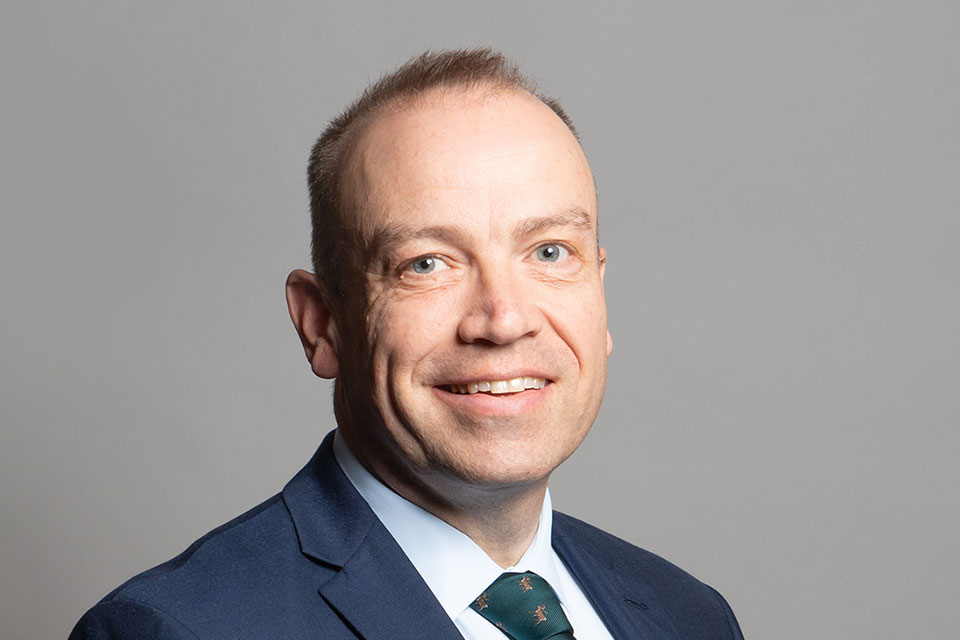
  • Chris Heaton-Harris – 2023 Speech at the 25 Years On : Global and Local Reflections on the Belfast (Good Friday) Agreement Conference

    Chris Heaton-Harris – 2023 Speech at the 25 Years On : Global and Local Reflections on the Belfast (Good Friday) Agreement Conference

    The speech made by Chris Heaton-Harris, the Secretary of State for Northern Ireland, in London on 27 March 2023.

    Good afternoon everyone, thank you to the FCDO and the Irish Department of Foreign Affairs for arranging this afternoon’s conference.

    It is an honour to have the opportunity to be with you this afternoon, to mark this historic 25th anniversary of the Belfast (Good Friday) Agreement, reflect on the transformation in Northern Ireland since its signing and to look ahead to the coming 25 years.

    The signing of the Belfast (Good Friday) Agreement on 10 April 1998 brought an end to 30 years of armed conflict, securing the peace that Northern Ireland’s people enjoy in their everyday lives today and helping to move towards a more reconciled society.

    The peace it has brought is undoubtedly an enormous achievement. But no less remarkable is what has been built upon that peaceful foundation. It has had a transformative effect on Northern Ireland’s economy and enabled the building of a more vibrant society.

    The UK Government remains steadfast in its commitment to protecting and upholding the Belfast (Good Friday) Agreement in all its dimensions. We are sincerely determined to build on the progress we have made this past 25 years.

    Of course, this progress was delivered through collaboration, with a common determination to make life better for everyone in Northern Ireland. No one party, government, individual or organisation owned the journey to the Agreement, nor the journey of Northern Ireland since.

    Instead, it was the collective endeavour of many, including the Northern Ireland parties, the Northern Ireland Women’s Coalition as well as the Irish and US governments, that resulted in the Agreement.

    For our part, the UK Government is committed to delivering real progress for the whole community in Northern Ireland, since the Agreement was signed.

    I know that the Irish Government is also just as committed to the Agreement as we are. To this day, the partnership and friendship between our countries has been vital in protecting the foundation of peace and prosperity the Agreement brings.

    My firm commitment as Secretary of State is to support and champion that precious relationship, through which we have achieved so much with our closest neighbour.

    I also wish to acknowledge the contribution that the United States, Finland, South Africa and Canada have made to the Agreement and to supporting disarmament and reconciliation in Northern Ireland.

    In recent weeks we have proven our commitment to the Agreement through listening to and heeding the concerns among the people of Northern Ireland with the Protocol, replacing it with a radical, legally binding new Windsor Framework. A Framework that restores the delicate balance struck by the Agreement.

    And it remains my sincere hope that we will soon see the Strand One institutions established by the Agreement in operation again in its 25th anniversary year, demonstrating the benefits of a local Executive and Assembly and of Northern Ireland’s place within the Union.

    It is not just peace that the Agreement has given Northern Ireland. Northern Ireland has built upon that peaceful foundation, to deliver increasing prosperity for its people.

    Northern Ireland boasts a world-leading screen and film production industry, Game of Thrones, The Northman, that has already contributed over £1 billion to the NI Economy.

    The fintech, cyber security and engineering sectors are going from strength-to-strength in the Northern Ireland of today. The Northern Ireland cyber security sector alone employs 2,300 people and contributes £161m per year to the local economy.

    It is also a testament to Northern Ireland’s increasing global reach that over one third of cyber security firms in Northern Ireland are headquartered in the US.

    However, there remains more to be done to fully deliver on the promise of the Agreement, by providing for a better future for everyone and further spreading and deepening economic prosperity in Northern Ireland.

    Northern Ireland’s journey towards greater prosperity and reconciliation continues to this day. The 25th anniversary of this remarkable achievement affords us an opportunity to restate our commitment to upholding the Belfast (Good Friday) Agreement and to building upon its peaceful foundation to create a brighter future for Northern Ireland.

    I look forward to working with you all to achieve it in the years to come.

  • PRESS RELEASE : Environmental permits issued for new nuclear power station at Sizewell C [March 2023]

    PRESS RELEASE : Environmental permits issued for new nuclear power station at Sizewell C [March 2023]

    The press release issued by the Environment Agency on 28 March 2023.

    Environment Agency issues three new environmental permits to NNB Generation Company (Sizewell C) Limited for a new nuclear power station at Sizewell in Suffolk

    The Environment Agency has issued three new environmental permits today to NNB Generation Company (Sizewell C) Limited for a new nuclear power station at Sizewell in Suffolk. The permits are required for the station to operate and will allow it to:

    • dispose of and discharge radioactive waste (radioactive substances activity permit)
    • operate standby power supply systems using diesel generators (combustion activity permit)
    • discharge returned abstracted seawater (from the cooling water system and 2 fish recovery and returns systems) and other liquid trade effluents (including treated sewage effluent) to the Greater Sizewell Bay – North Sea (water discharge activity permit)

    NNB Generation Company (Sizewell C) Limited applied to the Environment Agency for three environmental permits in May 2020. The Environment Agency consulted on the application from July to October 2020 and on their proposed decision and draft permits from July to September 2022.

    Each of the three permits is an important regulatory permission that the company requires to operate Sizewell C nuclear power station. They include the limits and conditions that the company needs to put in place to ensure high standards of environmental protection during commissioning, operation and decommissioning.

    The company will need to continue to apply for a range of environmental permits relating to site investigation, construction works and for relevant “associated developments” such as workers’ accommodation.

    The Environment Agency’s Sizewell C Project Manager, Simon Barlow, said:

    Today’s decision to issue the three permits for these operational activities comes after 10 years of pre-application discussions, three years of technical assessments and two public consultations. In reaching this decision we carefully considered all the responses from a wide range of stakeholders in the local community, national organisations and statutory consultees.

    I would like to thank everyone for contributing their evidence and views and attending our consultation events. We will continue our engagement with the local community as the company moves forward with its plans for construction of the nuclear power station.

    The documents we are publishing today provide detailed explanations of our decisions, show how we have considered all the relevant factors and explain our reasoning. By granting these permits many years ahead of Sizewell C operating, we can positively influence the design, procurement, and commissioning of the power station, whilst also ensuring that people and the environment are protected.

    The decision documents, a public summary and permits are available on the Environment Agency’s website.

    If you would like to sign up for Environment Agency e-bulletins about the work and regulation of the Sizewell C project, contact nuclear@environment-agency.gov.uk

  • PRESS RELEASE : RSH publishes regulatory notice for Easy Housing Association following a breach of the economic standards [March 2023]

    PRESS RELEASE : RSH publishes regulatory notice for Easy Housing Association following a breach of the economic standards [March 2023]

    The press release issued by the Regulator of Social Housing on 28 March 2023.

    In a regulatory notice published today (28 March 2023), the Regulator of Social Housing concluded that Easy Housing Association has breached the governance and financial viability standard.

    Following an investigation the regulator found that Easy Housing Association, a provider of supported exempt accommodation, is inadequately governed and that the board has failed to oversee the organisation with an appropriate level of skill and foresight. Easy Housing Association did not provide assurance that its board has appropriate experience or technical competence, and did not show evidence that it was addressing these skills gaps.

    Because of these failures in governance, Easy Housing Association also failed to assure the regulator that it complies with the home standard and that tenants are not at risk of harm.

    The regulator found that Easy Housing Association’s approach to business planning was inadequate and it did not plan appropriately for the risks associated with its lease arrangements. Its financial forecasting was also weak and it did not carry out appropriate stress testing of its business plan. In addition, Birmingham City Council has stated that one of Easy Housing Association’s properties was established without the required planning permission.

    Easy Housing Association has not been able to demonstrate that its homes meet the definition of social housing, or that it complies with the rent standard.

    In agreement with the regulator, the provider has put a plan in place to address these issues.

    Harold Brown, Senior Assistant Director for Investigation and Enforcement, said:

    Easy Housing Association has failed to meet our standards in multiple areas, including significant weaknesses in managing financial risks and in business planning. It also failed to show that it complies with the standards on key issues, including those for health and safety and rents. Its Board needs to take immediate steps to address these failures of governance.

    Easy Housing Association and its new Chair have started to address these issues, and we will monitor it closely as it works to return to compliance with our standards.

  • Keir Starmer – 2023 Speech on Reducing Crime

    Keir Starmer – 2023 Speech on Reducing Crime

    The speech made by Sir Keir Starmer, the Leader of the Opposition, in Port Vale on 23 March 2023.

    It’s good to be here in Burslem, the “mother town” of the Potteries. Where the spades first hit the ground in the construction of the great Trent and Mersey Canal. A fact which of course gives its name to Port Vale.

    Though for me, if I’m honest, this is better known as the ground where Arsenal came really close to losing the double in 1998. No really – you can look it up. Two draws in the cup and a very close penalty shoot-out somewhere over there. I went out to look at the pitch to see where those penalties were taken from.

    But we’re here today on more serious business. The launch of Labour’s second national mission – to make our streets safe, and stop criminals getting away without punishment.

    Now, if you think that sounds basic, something which should be guaranteed in a country like ours, then let me tell you: you’re right.

    Nothing is more important – more fundamental – to a democracy like ours. The rule of law is the foundation for everything.

    Margaret Thatcher called it the “first duty of government” – and she was right. An expression of individual liberty – our rights and responsibilities, but also of justice, of fairness, of equality – one rule for all.

    That’s the principle I’ve been proud to serve all my adult life. As a human rights lawyer, fighting for families with young children, trying to escape mould-infested accommodation, or for freedom of speech in the McLibel case.

    With the Police Service of Northern Ireland, advising them how to bring communities together, to make the Good Friday agreement work. And at the Crown Prosecution Service, as the Director of Public Prosecutions – the same principle.

    Everyone protected, everyone respected. No-one denied the law. No-one above the law. Not the murderers of Stephen Lawrence – who, for a time, thought they were, not Al-Qaeda terrorists. Not MPs, Labour or Conservative, gaming the expenses system to line their pockets. I prosecuted them all and I’m proud of that. One rule for all.

    That’s why I found the pandemic parties in Downing Street under Boris Johnson so reprehensible. The circus of the last few days – a reminder of his total disrespect for a national sacrifice. That’s why I said I’d resign, if I’d broken those same rules.

    I just couldn’t have looked the British people in the eye and asked for their trust. Those values are too important to me. The core of my politics today. So if the Tories want to attack me for being a human rights lawyer, attack the values I’ve stood up for my whole life, I say fine.

    That only shows how far they’ve fallen, and how little they understand working people.

    Because whatever the crime: anti-social behaviour, hate crime, serious violence, it’s always working people who pay the heaviest price.

    Working class communities who have to live under its shadow.

    That’s why tackling crime – law and order – will always be so important for my Labour Party.

    Fighting crime is a Labour cause.

    I grew up working class in a small town, I know how important it is to feel safe in your community.

    If you don’t have a big house and garden, the streets are where your kids play, your community is your family, your neighbours – your eyes and ears. You have to feel a sense of trust, of confidence, of security. It’s what gives you roots. A precondition of hope. The firm ground your aspirations can be built on.

    But as somebody who has worked in criminal justice for most of my life, I also know that far too often, the inequalities that still scar our society: class, race, gender; do find an expression in the very system that is supposed to protect us all, without discrimination.

    I’ve talked about this before, but the case that crystallised so much for me, was the murder of a nurse called Jane Clough. Stabbed to death in the car park of the Blackpool hospital where she worked.

    Killed – by the man awaiting trial on multiple charges of raping her, on the one morning she went to work unaccompanied. I will never forget the day her parents, John and Penny, came to my office and talked me through the awful treatment they’d received from our criminal justice system.

    It’s a moment that has shaped everything I’ve done since, everything I think about justice.

    How incomprehensible pain can only be met with practical action. And that if you have power and can do something for the powerless, you’ve got to roll up your sleeves. Work night and day. To make the changes – big and small – which can, if not put things right, then at least protect the future.

    That’s what happened that day. As I listened to John and Penny tell me Jane’s story, I knew a great injustice had been done. And I made a promise to work with them and make sure no other family would suffer the same fate.

    So together, we changed the guidelines on rape cases in court, and crucially, we forced a change in the law that gave prosecutors the right to appeal against a bail decision.

    Changes which do give extra protection to women brave enough – like Jane – to place their faith in the system and press charges. But it isn’t enough, I know that.

    In fact, it’s why I decided to come into politics. Because the more and more case files I read, the more and more I could see those ugly inequalities at work.

    You saw it in grooming scandals like Rochdale as well, how good prosecutors and decent police offices – people who hated crime – would end up looking for the “perfect victim”.

    Casting aspersions based on a way of thinking that was out of date, out of touch with the experience of the victims and communities that they needed to serve.

    “Why didn’t you come to the police straight away?”
    “Why did you go back with them?”
    “Why didn’t you put up a fight?”

    Questions and assumptions that are deeply flawed and have left vulnerable people, working class women and girls especially, ignored. Voiceless. Denied justice.

    That’s why the mission today matters to me.

    I’m proud of my previous work, proud of my record at the Crown Prosecution Service – but this is personal. Yes, it’s Labour’s plan to tackle the crime wave gnawing away at our collective sense of security – of course it is.

    But it’s also unfinished business in my life’s work to deliver justice for working people.

    Justice which, I’m sorry to say, feels quite absent as I look around Britain now. The statistics spell it out. Serious violence, rising again. Crime – way too high. The charge rate – just 5% – never lower.

    A recipe for impunity, an invitation for criminals to do whatever they want, swanning around our communities, without consequence.

    And it doesn’t stop there. Our courts are backlogged, victims trapped in a purgatory, waiting for the justice that they deserve. Anti-social behaviour is a growing blight. Knife-crime – back on the rise and not just in the inner cities.

    As you know – it’s increased in places like the Potteries as well. And then there’s the crimes that Jane Clough faced, that women face. Domestic violence – still rife. Sexual offences – higher than ever.

    Do you know – today, 300 women in Britain will be raped. But of those 300 rapes, just three cases will see someone charged. Honestly, I had to get my team to check those figures. I couldn’t believe them. But this is Britain right now.

    Yet from the Government – silence. No urgency, no reform, no big agenda – nothing. I could say it’s the usual Tory sticking plaster politics – and it is. But this is complacency on another level.

    It’s like they can’t see the Britain they’ve created, and maybe that’s it. Their kids don’t go to the same schools. Nobody fly-tips on their streets. The threat of violence doesn’t stalk their communities.

    They don’t see the problems, and so they’re complacent about the need for solutions. Asking outdated questions, making flawed assumptions, about victims, policing, crime, everything. Out of touch with the realities of modern Britain. They should try and walk in your shoes for a day or two.

    Come speak to the teenage girls here at The College in Stoke-on-Trent, who told me they’re afraid to walk down their high street in broad daylight, because they know they’ll get harassed. Or the women’s refuge I visited in Birmingham and see the bruises, not just on arms and bodies, but in the souls of the women I met there. The family that wrote to me, hiding, terrified that their father will come back to hurt them again, waiting since 2018 for their day in court.

    This is the Britain they’ve created – and they should look it in the eye. Working people don’t feel safe. I won’t take any lectures from them on this, I won’t have our commitment to justice called into question, and I won’t stop until working people feel protected.

    This is our mission, Labour will make Britain’s streets safe.

    And we will do so, as with all our missions, by bringing people together with purpose and intent, by embracing the challenge that comes with clear accountability, and setting out four clear, measurable goals.

    One, as I announced on Tuesday, we will restore confidence in every police force to its highest ever level.

    Two – we will halve incidents of knife crime.

    Three – we will reverse the collapse in the proportion of crime solved.

    And four – by solving more crime, by reducing the number of victims who drop out of the system, we will halve the levels of violence against women and girls.

    None of this will be easy – clearly. As I say about all our missions – they should invite a sharp intake of breath. After this week, nobody can doubt the scale of our ambition, nor its urgency. Or for that matter, how comprehensively the Tories have thrown in the towel. But equally – it’s obvious that these targets require partnerships, not just across government, but between politics and people.

    It’s not just about the police and criminal justice systems. It’s about education, media, health, community services, online regulation, tackling the evils our young boys are exposed to – that follow them in their pockets, everywhere they go.

    So yes, change has to come from all of us – it’s going to be a long, hard road. But there are some steps we need to take together now. Urgent priorities that my Labour Government would respond to immediately.

    So let me take each of our targets one by one, starting, as I did on Tuesday, with confidence in the police.

    Because the horror of what we’ve seen reported about the Metropolitan Police this week cannot be understated. I know there are good officers in the Met, as of course there are across the whole country. But the actions of that force, collectively and individually have tarnished the reputation of policing everywhere.

    Our policing by consent model – a precious model – is now hanging by a thread.

    And look – the confidence levels of police across the country are on a downward trend as well. Nearly every person I meet has at least one story, an interaction with the police where something just wasn’t followed up. Calls unanswered. Opportunities to share evidence – missed. And so people give up. They stop bothering. Crime – becomes decriminalised.

    Now, I know, as Louise Casey pointed out, that austerity has had a pernicious effect. I ran the Crown Prosecution Service in the early stages of austerity – I had a front row seat for the chaos: the lack of planning and vision which came with the cuts.

    I accept – like every public service, the police have been failed by this Government. But there must always be a plan – you’ve got to find a way to modernise, got to keep up with the way crime is changing, retain a visible presence on our streets. And there can never be any defence for the institutional failings. The racism, misogyny and homophobia that we have seen in the Met.

    That’s is why our mission will focus on confidence – it will push us to do the hard yards, to tackle the wider sense of impunity in society. Unblock our courts and lower crime meaningfully, without perverse incentives on charge or prosecution rates.

    Confidence is everything. It’s what effective, visible, open-minded policing can provide to the communities it serves, and, as we’ve seen this week, it’s what bad policing destroys.

    So let me make it very clear: the next Labour Government will modernise British policing.

    We will raise standards, overhaul training, modernise misconduct and vetting procedures, and we will root out institutional discrimination wherever we find it. I’ve seen what is possible with the Police Service of Northern Ireland – and had a hand in it.

    And that word – “service” that captures what needs to be done.

    Policing must change: must start thinking of itself as a public service, must stand with communities, not above them, respect their values. Because if we can get Catholics to serve in Northern Ireland, integrate nationalist communities there into policing, then there can be no justification for any special pleading from the Met in London, or any police force.

    Policing must start to serve women and minorities – no more excuses.

    And look – modernising the police is also the first step we must take on halving violence against women and girls. You can’t defeat misogyny without robust policing, but you can’t have robust policing without defeating misogyny.

    That’s what modern policing looks like, what serving your community looks like.

    So we’ll put specialist domestic abuse workers in the control rooms of every police force responding to 999 calls, supporting victims of abuse.

    We’ll get a specialist rape unit in every police force. And we’ll also set up dedicated rape courts – the current prosecution rates are a disgrace. We all know how hard it is for women to come forward, that the criminal justice system only ever sees the tip of the iceberg on sexual violence.

    And that the experience of going to court – the way victims are treated – just doesn’t work. I’ve been pushing for action on this for nearly 10 years.

    In 2014 I spent nine months with Doreen Lawrence taking evidence and testimony from victims. In 2016 I wrote a Private Members Victims Bill that had cross-party support. The only reason it’s not on the statute book is that we don’t have a government capable of looking this problem in the eye.

    But mark my words, a Labour Government is coming – and we will bring forward a proper victims law.

    And something else that Louise Casey made crystal clear is crucial to restoring confidence. Visible neighbourhood policing. We need reform to get more police on the beat – fighting the virus that is anti-social behaviour.

    Fly-tipping, off-road biking in rural area, drugs – now some people call this low-level – I don’t want to hear those words.

    There’s a family in my constituency – every night cannabis smoke creeps in from the street outside into their children’s bedroom – aged four and six. That’s not low level – it’s ruining their lives.

    So we won’t pull any punches on this. Everyone protected, everyone respected – that’s what justice means.
    And the Tories are soft on it. Soft on anti-social behaviour, soft on the crime that most affects working class communities. Only Labour will protect them.

    We’ll get 13,000 extra police on our streets, bring in new Respect orders – anti-social behaviour orders with teeth, and we’ll get clever with fixed penalty notices.

    If you want to commit vandalism or dump your rubbish on our streets, then you’d better be prepared to clean up your own mess. Because with Labour in power – that is exactly what you will be doing. Cleaner streets are safer streets.

    But the reality of today’s society, as any parent knows is that our children need protecting in their homes as well as on their streets. You can’t fight behaviour that is learned online, spread online, glorified online, armed only with the tools of the past.

    Take knife crime. We know so much of this is about prevention, about pulling young boys back before they get in too deep. It’s about good youth work, neighbourhood policing, mental health support – in every school. We’ll do all that.

    It’s about smart legislation as well. About making the criminal exploitation of children illegal, and using that to target the county line gangs who exploit kids to do their dirty work. But it’s also about standing up to the big tech companies. Seriously – how can we ignore the fact a child can go onto the internet and buy a machete as easily as a football?

    It’s exactly the same thing with the social media algorithms that bombard young minds with misogyny. Both are social evils, both an example of where greed comes above good. So my message to the big tech companies is this – the free ride is over. If you make money from the sale of weapons, or the radicalisation of people online, then we will find ways to make you accountable.

    You wouldn’t get away with it on the streets and you won’t get away with it online.

    But look – the fight against online hate, shows the scale of the challenge we face.

    As I’ve said before, about all our missions, change must come from all of us. Success depends on unlocking the pride and purpose that is in every community.

    This is a new way of governing. But it can be done.

    From my experience, in Northern Ireland and elsewhere – I draw strength. From the unbelievable campaigners I’ve met, from my friends Doreen Lawrence, the Cloughs, Mina Smallman and more – I draw inspiration.

    And from the people of this country – communities like this, I draw belief. Change can happen – and it can happen quickly. People forget – it was only in the 1980s when the physical punishment of children in schools was banned, and a huge cultural change has followed.

    So why can’t we imagine a society where violence against women is stamped out everywhere? Why can’t the future citizens of our country look back at this generation as the one which turned the page on misogyny, which protected our children and made our streets safe?

    I promise you this. If we pull together – we can do this. And I will give it everything.

    Because this mission – crime and justice – is my life’s work.

    I’ve made it central to my Labour Party. Because it’s central to the lives of working people.

    For the confidence they need in their community, to push on and hope for a better future. The foundation for a better Britain.

    Where working people succeed, aspiration is rewarded, children are protected and crime is punished.

    A Britain where families once again feel safe on their streets.

    The basis for a country that gets its hope, its future and its confidence – back.

    Thank you.

  • Keir Starmer – 2023 Statement on the Baroness Casey Report

    Keir Starmer – 2023 Statement on the Baroness Casey Report

    The statement made by Keir Starmer, the Leader of the Opposition, on 21 March 2023.

    This week I will announce details of Labour’s national mission on crime, one of five missions to give Britain its future back.

    These missions are about long-term plans to tackle long-term problems.

    And for those on the receiving end, there is no problem that has such a profound daily impact on their life as crime.

    From the antisocial behaviour that blights too many neighbourhoods and town centres.

    To the knife crime that is rising again.

    And violence against women and girls that is shamefully high.

    So in light of the shocking report by Baroness Casey today, I want to bring forward the announcement of part of that mission.

    Today I can announce that part of our crime mission will be:

    To raise confidence in every police force to its highest level.

    I know this will be difficult, but like our other missions, it is ambitious, serious and measurable.

    Every day across our country, we know brave police officers put their safety on the line to protect us all.

    Risking their safety for ours.

    I know that, because in my role as Director of Public Prosecutions I worked with many of them to bring criminals to justice.

    We owe them our thanks.

    But we also have to face the reality that public confidence in policing has been shaken to its core in recent years.

    By the hollowing out of neighbourhood policing.

    The collapse in the charge and prosecution rates.

    The delays in bringing criminals to justice.

    And, as we have seen today, evidence of serious failures on standards.

    Including with the Met – the failure to root out police officers who themselves had committed the most terrible and unthinkable crimes.

    There will be police forces, outside of London, who might shrug their shoulders and say – this isn’t us.

    But I have worked in criminal justice for decades and I say to them: wake up.

    The findings in the Casey report are a warning for every police force.

    Confidence must be restored.

    Policing by consent depends on trust.

    When that breaks down, policing becomes harder and crime thrives.

    And of course, there is a special focus today on the Metropolitan Police following Casey’s devastating report.

    She catalogues, in grim detail, the culture, attitudes and practices of a police force that has lost its way.

    She pulls no punches in exposing a police force where:

    – Poor management and basic lack of workforce planning

    – Predatory and unacceptable behaviour have been allowed to flourish.

    – Londoners let down with the huge loss of neighbourhood policing.

    – Public protection failures that have put women and girls at greater risk.

    Across the force she found: institutional racism, institutional misogyny and institutional homophobia.

    Page after page, the report provides both a detailed diagnosis of what’s gone wrong and a blueprint for radical reform.

    The strength of its findings require an immediate and urgent response.

    Without that, confidence in policing cannot be restored.

    The fight against crime will be weakened.

    People will continue to feel let down and fearful.

    A government that I lead would accept the findings of the report in full.

    We would work, not just with the Met, but with policing institutions and forces across the country to ensure that deep reforms and changes are made.

    The new Met Commissioner Mark Rowley has our support in the work he has now begun to turn it around.

    But he must go further and faster. And he will have our support in doing that.

    I know that there are officers right across the Met who are desperate to see these improvements put into place and action taken to rebuild the confidence of Londoners.

    But mark my words: I will be relentless in demanding progress and change.

    The reforms needed, will be, as the report suggests, “on a par” with the “transformation of the Royal Ulster Constabulary to the Police Service of Northern Ireland”.

    Note that word “service”.

    Having played my part in that transformation, I know how serious a job it is to make that sort of deep cultural change to an institution.

    It requires extraordinary leadership, an iron will to make real change.

    It means being ruthless on weeding out those who will not change or are changing too slowly.

    It means tough disciplinary standards – swift action on those who continue to act against the new values of the organisation.

    A proper partnership between government and the police service to get the job done.

    And above all it means changing the police from a force to a service – with public service values at its heart.

    From standing above communities, to standing with them.

    That is the route to radical change and it needs a total commitment from the police to achieve it.

    That’s why I will expect radical change in the Met – no excuses.

    London is a diverse city – that is its beauty.

    And if we can get Catholics to serve in Northern Ireland, reach out across communities there, then I will not accept any special pleading that the Met cannot represent modern London.

    But I have to say: you cannot separate the failings laid out in black and white today from the political choices that have led us here.

    The report makes clear, there has been a ‘hands off’ approach to policing since 2011.

    This approach has been accompanied by haphazard cuts.

    People feeling that law enforcement has effectively withdrawn from swathes of the country.

    Accountability has been destroyed.

    Progress halted and then slammed into reverse.

    After 13 years of Tory government, policing is yet another public service that is collapsing.

    No longer serving those who rely on it, sacrificed to a Tory hands-off ideology that has failed.

    And until we change course, we will carry on down this path of decline.

    Successive Conservative prime ministers have diminished the fight against crime and done nothing to reform the police.

    In short: they have been negligent.

    It remains extraordinary that, even now after the terrible examples of violence against women from police officers, there are no mandatory national rules for police forces on vetting.

    It is left to 43 different police forces to do their own thing.

    I would put an end this situation and in Labour’s first term we would:

    – Bring in national standards for all police forces to include mandatory vetting, training and disciplinary procedures

    – Bring in a stronger accountability regime to turn around failing forces.

    – Rebuild neighbourhood policing with 13,000 more police.

    – Get specialist 999 call handlers, trained in domestic violence, in every police control room.

    – Set up a dedicated, specialist rape unit in every Police force in the country.

    But throughout my whole career, I have seen reports come and go.

    Moments like this, missed.

    The biggest danger today is that this becomes just another report rather than the beginning of real, lasting change.

    It cannot be an occasion for even more words and too little action.

    There needs to be a reckoning.

    And there needs to be change.

    A change for Londoners.

    A change for those good police officers, who are fed up of being let down by a negligent Government.

    And change for the public who deserve a police service that they can have confidence in.

    The British policing model which we should cherish began here in London nearly two hundred years ago.

    Unlike most forces across the world our police are guardians not guards, rooted in the powerful tradition of policing by consent where the police are the public and the public are the police.

    But that vital tradition is in peril.

    And without the biggest overhaul in policing since the force began, I fear for its future.

    We must rebuild confidence.

    Today is a day for action.

  • NEWS STORY : William Hill Given £19.2 Million Penalty for Failing to Protect Customers

    NEWS STORY : William Hill Given £19.2 Million Penalty for Failing to Protect Customers

    STORY

    Three companies belonging to William Hill have been fined a total of £19.2 million by the Gambling Commission for failing to protect their customers. Andrew Groves, the Chief Executive of the Gambling Commission said in a statement:

    “When we launched this investigation the failings we uncovered were so widespread and alarming serious consideration was given to licence suspension. However, because the operator immediately recognised their failings and worked with us to swiftly implement improvements, we instead opted for the largest enforcement payment in our history”.

    888, the new owners of the William Hill brand, said:

    “After William Hill was acquired, the company quickly addressed the identified issues with the implementation of a rigorous action plan.”

    RESOURCES

    Gambling Commission Press Release

    EXTERNAL NEWS LINKS

    Gambling Commission

    William Hill