Blog

  • PRESS RELEASE : Professor Dame Angela McLean takes up role of Government Chief Scientific Adviser [April 2023]

    PRESS RELEASE : Professor Dame Angela McLean takes up role of Government Chief Scientific Adviser [April 2023]

    The press release issued by the Government Office for Science on 3 April 2023.

    Professor Dame Angela McLean DBE FRS takes up the role of Government Chief Scientific Adviser (GCSA) today after being appointed by the Prime Minister in February.

    Dame Angela was previously Chief Scientific Adviser for the Ministry of Defence and Deputy GCSA. She is the first woman to hold the post.

    The role of the GCSA is to provide independent scientific advice to the Prime Minister and members of Cabinet and advise the government on aspects of policy on science and technology. The GCSA ensures the quality of and improves the use of scientific evidence and advice in government.

    The GCSA leads the Government Office for Science, is Head of the Government Science and Engineering Profession, Co-Chair of the Council for Science and Technology and is part of the executive team of the Department for Science, Innovation and Technology.

    Speaking about her new role, Dame Angela said:

    “I am delighted to take on this role at such an important time in our country for Science Innovation and Technology. All of us in government are going to greatly miss Sir Patrick, and I look forward to working with colleagues to build on the work he has led during his time as GCSA.

    “My long-term mentor, the late Lord Robert May, held the post of GCSA between 1995 and 2000 and that personal connection adds a particular depth to my sense of honour in being asked to take on this role.”

  • PRESS RELEASE : NatWest on track to return to private ownership as successful trading plan extended [April 2023]

    PRESS RELEASE : NatWest on track to return to private ownership as successful trading plan extended [April 2023]

    The press release issued by HM Treasury on 3 April 2023.

    Government extends successful NatWest Group trading plan for a further two years to support the intention to exit its shareholding by 2025-26.

    • This represents continued progress in meeting the government’s aim to return its shareholding in NatWest Group to private ownership
    • Since the trading plan was established in August 2021, over £3.7 billion in proceeds have been raised

    NatWest is on track to return to private ownership as the government announces a two-year extension to its trading plan for NatWest Group (formerly the Royal Bank of Scotland Group plc) today (03 April 2023).

    A trading plan involves selling shares in the market through an appointed broker over the duration of the plan. Today’s extension, ensuring the plan will be in place until August 2025, indicates the government’s commitment to returning NatWest Group to full private ownership.

    Economic Secretary to the Treasury, Andrew Griffith, said:

    We are determined to return NatWest to full private ownership.

    Today’s extension marks another significant milestone in delivering this – ensuring we achieve best value for the taxpayer as we sell down the shareholding.

    The government’s NatWest Group shareholding currently stands at around 42%, down from around 84% at its peak. The government will only dispose of its NatWest Group shareholding when it represents value for money to do so and market conditions allow.

    HMT and UK Government Investments continue to keep other disposal options under active consideration for future sales. Extending the trading plan does not preclude government from using other options to execute future transactions that achieve value for money for taxpayers, including directed buybacks and/or accelerated bookbuilds.

  • PRESS RELEASE : Boost for rare and threatened species with new conservation funding announced [April 2023]

    PRESS RELEASE : Boost for rare and threatened species with new conservation funding announced [April 2023]

    The press release issued by Natural England on 3 April 2023.

    It will be used to create solutions to address species decline in England, research and to invest in wildlife habitat restoration and creation.

    A new multi-million pound grant scheme was launched today (Monday 3rd April) by Natural England to help safeguard rare and threatened species from extinction.

    Species such as lady’s slipper orchid, water vole, natterjack toad, wartbiter cricket and curlew could benefit from a grant from the £18 million Species Recovery Programme Capital Grant Scheme.

    The scheme will support projects over two years delivering targeted conservation action through the creation and improvement of specific wildlife habitats, conservation translocations – whereby native at-risk species are moved or released from one geographic area to another to boost populations – as well as supporting research and creating solutions to address species decline.

    Tony Juniper, Chair of Natural England, said:

    England’s wildlife is subject to a range of pressures with many species seeing drastic decline. The fragmentation of habitats, historic losses of natural areas, pollution, the changing climate and the impact of invasive alien species have all played their part, to the point today where nearly 40 per cent of England’s wildlife species are in decline and about 15 per cent in danger of becoming extinct here.

    We know that we can turn this around though. The return of large blue butterfly to flower-rich grasslands in the Cotswolds, red kites coming back to soar over the Chiltern Hills and beyond, the bittern making a comeback back in East Anglian wetlands and the white-tailed eagle to the South Coast all present practical cases in point as to what we can be done with careful planning and partnership working. The funding announced today will continue to build and support the excellent collaborative work that is happening as we work to put Nature on the road to recovery.

    Grants will be available for environmental charities, local authorities, protected landscapes, scientific institutions and others to improve the prospects, rebuild populations of vulnerable species and improve targeted habitats for nature across England.

    The fund supports the Government’s commitment to halt nature’s decline by reducing the risk of species extinction by 2042, and supports the creation of a Nature Recovery Network of wildlife rich habitat that allows nature to thrive and people to benefit.

    The new scheme is part of Natural England’s Species Recovery Programme (SRP), which has helped improve the conservation status of England’s priority and threatened species since the 1990s. Previous notable successes have included:

    • A targeted recovery effort for bittern, involving the restoration and creation of extensive reedbeds. Over a 20-year period, the bittern population has increased from 11 booming males to over 200 now, more than have occurred in England for over 200 years.
    • The recovery of the fen raft spider. Known in only three sites in the UK, recovery action began in 1991, first tackling water levels and quality, and then on reintroductions of the species at former sites using captive breeding.

    Natural England encourages applications from today (3 April 2023) that focus on the recovery of England’s most at-risk species across land, freshwaters and seas. Further details of the grant scheme, including how to apply, can be found on the Natural England blog.

  • PRESS RELEASE : £1.6 billion investment brought forward to speed up vital water infrastructure projects [April 2023]

    PRESS RELEASE : £1.6 billion investment brought forward to speed up vital water infrastructure projects [April 2023]

    The press release issued by the Department for Environment, Food and Rural Affairs on 3 April 2023.

    Projects worth over £1.6 billion of investment will tackle water pollution and increase resilience to drought.

    Over £1.6 billion of new investment will be directed into vital infrastructure to improve the water quality of our rivers, lakes and coastal waters and secure future water supplies, the government and Ofwat announced today (3 April).

    It follows a request from Defra to English water companies to accelerate investments between now and 2025 to tackle storm overflow discharges, reduce nutrient pollution from treatment works and address water resilience challenges.

    This announcement comes ahead of the government’s Integrated Plan for Water, which will be published tomorrow, and will set out how we can achieve cleaner and more plentiful water for future generations. The investment announced today will ensure improvements are made more quickly to address the unacceptable levels of pollution in waterways and deliver for customers.

    As part of the new package of investment, announced in draft form by Ofwat, companies will commit £1.1 billion to help eliminate harm caused by storm overflows. A further £400 million will be spent on water resilience schemes and £160m to help reduce nutrient pollution.

    It includes major new projects such as:

    • United Utilities reducing around 8,400 spills per year, including reducing discharges into Lake Windermere (£800 million)
    • Yorkshire Water improving wastewater treatment infrastructure in Ilkley to improve the bathing water quality of the River Wharfe (£67 million)
    • South West Water upgrading assets and storage to reduce discharges in Falmouth and Sidmouth (£70 million)
    • Anglian Water accelerating its regional storm overflow reduction plan in the east of England (£27 million)
    • Essex and Suffolk Water increasing water resilience in their area to better meet the needs of local customers including businesses (£18 million)
    • Severn Trent rolling out smart meters and modifying its Draycote Water reservoir in Warwickshire to increase water capacity (£70 million)

    Schemes will also focus on new infrastructure to reduce nutrient pollution. Improvements at 14 wastewater treatment works, with an investment of £160 million, will significantly reduce phosphorus pollution in protected site catchments. This includes proposals from Anglian Water to both reduce pollution and support sustainable housing development.

    All work will start in the next two years, from 2023 to 2025.

    Water Minister Rebecca Pow said:

    These new schemes will help accelerate the delivery of the urgent improvements we need to protect our environment. It includes £1.1 billion of new investment to stop sewage discharges at sites across the country and will deliver a reduction of 10,000 discharges per year in places like Lake Windermere, the River Wharfe, Falmouth and Sidmouth.

    The investment set out here will also provide an important boost for regional jobs, businesses and local communities.

    It builds on the key commitments in our five year strategy – our Environmental Improvement Plan – as well as our upcoming Plan for Water to tackle pollution, reduce water consumption and protect our waters.

    Ofwat Chief Executive David Black said:

    Substantial investment is needed to address the challenges to our water system of storm overflows, river and bathing water quality and drought resilience.

    We are pleased that we’ve been able to work with companies and identify significant investments which companies can start well before the next price control period. This will bring substantial benefits for customers and the environment and bring them faster. We want to see companies making more rapid progress in delivering improvements, and will hold them to account if they fall short.

    Ofwat will consult on these draft decisions and the consultation will close at midday on Monday 24 April 2023.

  • PRESS RELEASE : Pre-recorded evidence improves rape victims’ experience of court [March 2023]

    PRESS RELEASE : Pre-recorded evidence improves rape victims’ experience of court [March 2023]

    The press release issued by the Ministry of Justice on 3 April 2023.

    Report finds process less intimidating and yields better evidence.

    • pre-recording means victims can seek vital support earlier, such as therapy
    • rape cases reaching Crown Court double since launch of Rape Review

    Rape victims who pre-record their evidence are more likely to have a better experience of the court process, findings published today (3 April 2023) reveal.

    Today’s report finds that victims who use the measure, which has been available in all Crown Courts in England and Wales since September last year, find their experience less intimidating as they do not have to face their alleged attacker in the full glare of a courtroom.

    Other benefits include improved recall of events as a result of cross-examination being brought forward, normally nearer to the time of the alleged offence, and knowing exactly when they will need to give evidence. It also meant they were able to access vital support services earlier, such as therapy, without fear that it could be used against them in cross-examination.

    The rollout of pre-recorded evidence is one of several actions the government is taking as part of the Rape Review Action Plan to give every victim the confidence to come forward and get support they need, and bring more rapists to justice. Our actions are working, the latest figures show that the number of rape cases reaching Crown Court has doubled since the Rape Review was commissioned in 2019 and that the government is closer to its target of returning to 2016 levels by the end of this Parliament. Pre-recorded evidence will help ensure all cases reaching court are supported in the appropriate way to see justice delivered.

    Deputy Prime Minister, Lord Chancellor and Justice Secretary, Dominic Raab, said:

    Pre-recorded evidence is an important part of our plan to improve rape victims’ experience of the criminal justice system – reducing the stress and trauma that many suffer as a result of facing court. This report shows it is making an important and positive difference.

    Alongside better collaboration between police and prosecutors and a 24/7 support line we will stop at nothing to make sure that victims feel able to persevere with the process and bring more perpetrators to justice.

    Today’s report finds that pre-recording evidence can create a calmer, less intimidating cross-examination experience for witnesses compared to traditional cross-examination in a trial. One witness who had pre-recorded their evidence said:

    Making it possible to go and pre-record it, I have no words to explain how much pressure it took from my shoulders.

    I feel safe, and I felt like I don’t have to meet anyone I don’t want to meet. I felt protected, just a safe environment to me.

    A police officer interviewed for the evaluation report said:

    I’ve […] watched the complainant giving evidence and I really felt for that person because they’ve just been pulled apart and in that horrible, hostile courtroom environment which I wouldn’t wish on anyone.

    Other practitioners interviewed for the evaluation report – including Independent Sexual Violence Advisors (ISVA), at-trial advocates and police – highlighted the benefit of the witness knowing the exact date and time that they will give evidence, compared to traditional cross-examination where the witness may have to wait in court for days to give their evidence.

    The report also found the reduced time between the alleged offence and the cross-examination could improve witnesses’ memory recall. This could be especially beneficial to vulnerable witnesses, particularly children, whose recollection is more at risk of impairment while waiting for trial.

    The findings follow the introduction of the Victims and Prisoners Bill which places on a statutory footing the foundations of the Victims’ Code. This means that victims will be entitled to challenge decisions to not charge or continue a prosecution, receive information on how their case is progressing, and be able to access support services such as ISVAs.

    The rollout of pre-recorded evidence was a major part of the Rape Review Action Plan to drive up prosecutions and convictions for adult rape cases. Alongside this the government has also:

    • Launched a 24/7 support line run by Rape Crisis for rape and serious sexual violence victims
    • Expanded Operation Soteria to a further 14 police forces and to 3 new Crown Prosecution Service (CPS) areas
    • Passed new laws via the Police, Crime, Sentencing and Courts Act (2022) to stop unnecessary and intrusive requests for victims’ phones, with the majority of forces in position to ensure no victim should be without their devices for more than 24 hours
    • Committed to introduce new legislation on the way the police can request access to personal data from third parties such as medical data
    • Launched a specialist sexual violence support pilot at 3 Crown Courts – Leeds, Newcastle, and Snaresbrook in London. It seeks to provide victims with enhanced at-court support and help increase throughput of cases. It includes the introduction of trauma-informed training for court staff, maximising the use of technology, and access to ISVAs at court
    • Quadrupled victim support services funding by 2025 compared to 2010 levels. This includes increasing the number of Independent Sexual and Domestic Violence Advisors (ISVA and IDVA) by 43% over the next 3 years taking the total to over 1,000

    Taken together these measures are driving improvements across the system. Alongside the doubling in the number of rape cases going to Crown Court compared to 2019, the latest statistics show the key targets of the Rape Review are close to being achieved.

    These reveal that police referrals to the CPS and CPS charges, respectively, are up 117% and 94% on the 2019 quarterly average. Police referrals are also up 30% on 2016 levels with charges just 12% below the target the government set for the end of this parliament.

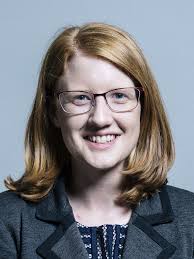
  • Holly Lynch – 2023 Speech on Human Trafficking and Modern Slavery

    Holly Lynch – 2023 Speech on Human Trafficking and Modern Slavery

    The speech made by Holly Lynch, the Labour MP for Halifax, in the House of Commons on 29 March 2023.

    It is always a pleasure to follow the hon. Member for Cumbernauld, Kilsyth and Kirkintilloch East (Stuart C. McDonald). I will start, as others have, by paying tribute to and thanking the hon. Member for Wellingborough (Mr Bone) for securing the debate. In addition, I thank him for all the campaigning work that he has done in this policy area. He shared powerful examples of where the failures in the system have further compounded the risk, particularly for children, of being re-trafficked. I also join him from the outset in paying tribute to the incredible work of Justice and Care, which has had a transformative effect. I have had the opportunity to see their victim navigators in West Yorkshire and the tremendous impact that they have had in supporting victims and securing prosecutions.

    We know that the number of victims of these heinous crimes is increasing. My hon. Friend the Member for Rotherham (Sarah Champion), like almost every Member who has contributed to the debate, made the point that we were once so proud of our modern slavery laws, but, as we have just heard, we seem to be taking backward steps in identifying victims and supporting them through to the prosecution of their abusers. Nearly 17,000 potential victims were referred to the NRM in 2022—a 33% increase on the previous year—but charities have predicted, using police data, that there could be at least 100,000 victims in the UK.

    I want to share the story of Sanu, who was tricked into living and working in slave-like conditions in the UK. For seven years, he was beaten, threatened and given no wages for the constant work he did in his trafficker’s shop. He had had to beg for money and food. Now he is living in a Salvation Army safe house where the support he is receiving is helping him to overcome his ordeal.

    Sanu told the Salvation Army:

    “I came to the UK to study. That was my goal…I worked at least 50 to 60 hours a week and sometimes 90 to 100. I would start at 8 o’clock and have to carry on until he said I could leave. I wasn’t allowed to go anywhere; no mobile phone. I couldn’t go to the GP. He said if you talk to anyone then the police will come and get you…My trafficker knew I had nowhere to stay and no other friends. He knew how to control me. He controlled me like in a video game with a remote controller…Every minute every second he took from me. Even now I can still be scared. What happened to me is all wrong. I still have trauma and nightmares…I try to sleep but I still see his face, it is like he’s still chasing me.”

    I do not need to tell the Members who are here in Westminster Hall that when we talk about victims, we are not solely talking about foreign nationals. The reporting of British victims to the NRM is rising, and 2022 saw the highest number of British possible victims identified since the NRM began. Most of those, as we have heard, were children. In 2022, one NRM referral in five was for a British child, and many more British children are thought to be vulnerable. Research suggests that there is a failure to refer many British victims to the NRM because they are not identified as victims of modern slavery or because of missed opportunities to safeguard them.

    In the face of such a crisis, we need a system that finds victims, protects them, supports them and helps them to rebuild their lives, but as things stand that is not happening. Many victims never access the NRM support system, and if they do, there are huge delays in decision making. That means that many are stuck in the system, receiving wildly varying quality of care and unable to move through. Once people are confirmed as victims, there are few meaningful support mechanisms to help them rebuild their lives, and the impact of that on their mental health must not be understated.

    How do we ensure that those vulnerable victims are reached and receive help once they have been identified? We desperately need to improve the first responder role. Effective, informed training and safeguarding procedures are needed to ensure that victims do not slip through the net. Training and policies need to include increasing understanding of the specific needs, circumstances and entitlements of British national victims, improving the transition from child to adult services, and the development of professional modern slavery risk assessment tools for British nationals.

    Let me look at how we can improve the decision-making process. Decision makers must have modern slavery understanding, expertise and experience. Evidence from pilot schemes that have devolved the decision making away from the Home Office shows that the pilots look to have generated impressive results. The processing is speeded up, and any conflict of interest for the Home Office is removed. A multi-agency approach, and the broad knowledge and wisdom that come with it, could improve decision making for victims—certainly those with complex needs.

    The key to truly ending these terrible crimes is to lock up the traffickers—a point about which the former Home Secretary, the right hon. Member for Witham (Priti Patel), spoke powerfully. We know that the number of victims is increasing, but prosecution rates are shamefully low. Ministry of Justice statistics show that in 2021 there were only 93 prosecutions and 33 convictions in cases in which modern slavery was the principal offence.

    Proper support enables modern slavery victims to engage in securing the prosecution of traffickers. Support for victims, including victim navigators, whose incredible work I have had the opportunity to see, is central to successful convictions.

    I want to talk about a case study that was shared in The Guardian this week by investigative reporter Annie Kelly. Julia is a Ukrainian survivor of human trafficking and sexual exploitation. She was tricked into coming to the UK under the false promise of legitimate hotel work. For five years, she was controlled by criminal gangs who had seized her passport and forced her to engage in prostitution. She had no control over who she saw or what she was expected to do. Desperate to support her child back in Ukraine and unable to speak English, Julia says she felt trapped by her immigration status and her debt. When she was rescued by the police, she began to build a relationship with a victim navigator, who supported her. Julia, with the victim navigator’s support, worked with the police, and her bravery has resulted in the establishment of an international taskforce, the identification of 120 other female victims and the conviction of five exploiters. Julia is now recovering and rebuilding her life.

    Julia’s story and research from charities on the frontline make it clear that consistent support means that victims engage with police investigations. That support needs to come first, to create stability and confidence, and the evidence backs this up. The final evaluation of Justice and Care’s victim navigator pilot scheme found that between September 2018 and June 2022, 92% of survivors who were supported engaged with police, compared with just 44% of survivors without a victim navigator. Twenty exploiters were convicted, 38 prosecutions of accused exploiters were supported and the total sentences for convicted offenders amounted to 178 years and eight months. Between 2018 and 2020, all 62 adult survivors receiving long-term support through one of the Home Office local authority pathways pilot schemes supported a police investigation.

    The public are very much ahead of the Government on this; they recognise the connection between supporting victims and bringing offenders to justice. Recent polling for the CSJ and Justice and Care revealed that 82% of the people asked agreed that more Government support for victims of modern slavery is needed to bring more criminal gangs to justice. All of this goes to show that if Government were serious about convicting traffickers, they would be serious about support for victims, but as others have said over the past two days, the Government’s legislation will make it much worse.

    The Illegal Migration Bill will have a devastating impact on victims of modern slavery. This is a quote from a letter by the CEOs of organisations that support people through the modern slavery victim care contract:

    “Were this bill to come into effect, we fear that many of these survivors would be denied the opportunities to rebuild their lives and reclaim their autonomy.

    This bill will do nothing to break cycles of exploitation or help people break free of modern slavery. Instead, it will feed the criminal networks who profit from the lives of vulnerable people. It is essential that genuine victims of modern slavery are afforded the right to seek support.

    Furthermore, by closing the route to safety and support, the Illegal Migration Bill risks strengthening the hands of trafficking networks. Traffickers keep people under their control with threats that they will not receive help if they reach out to the authorities. This bill will substantiate this claim and further dissuade survivors from coming forward…Failure to support survivors will result in an undermining of criminal investigations and prosecutions.”

    Modern slavery referrals are only a small proportion of overall illegal migration and asylum claims. As the Centre for Social Justice states, only 7% of small boat arrivals since 2018 have been referred to the modern slavery national referral mechanism.

    I join the hon. Member for Wellingborough in stressing how disappointed we are that Dame Sara Thornton, who was incredibly effective as the Independent Anti-Slavery Commissioner, left the post in April last year and it has been vacant for nearly a year. That is unacceptable, and I urge the Minister to update the House on why it has not been a priority for this Government and how they intend to correct that.

    We agree with the hon. Member for Thurrock (Jackie Doyle-Price) that cuckooing is an abhorrent crime. We welcome the Government’s commitment this week to engage with stakeholders on a new offence, but I urge them to move forward as a matter of urgency to protect people who might be subject to such a degree of abuse.

    It is right that we try to stop the dangerous crossings—the human cost is so great—but brutal and cruel targeting of vulnerable victims is not the right path, and I hope the Minister has understood that.

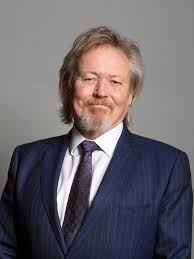
  • Stuart McDonald – 2023 Speech on Human Trafficking and Modern Slavery

    Stuart McDonald – 2023 Speech on Human Trafficking and Modern Slavery

    The speech made by Stuart McDonald, the SNP MP for Cumbernauld, Kilsyth and Kirkintilloch East, in the House of Commons on 29 March 2023.

    I, too, start by congratulating the hon. Member for Wellingborough (Mr Bone) on securing what he quite rightly described as a very timely debate. I hope that he is restored to full health very soon. I also very genuinely thank him for all his work over many years, which I think is recognised across the House; he has been a real champion for victims of trafficking.

    The starting point for this debate—unusually, I agree with the right hon. Member for Witham (Priti Patel)—should be recognition that we have in place across the United Kingdom some genuinely world-leading pieces of legislation that are designed to tackle trafficking and slavery. The problem, as a couple of hon. Members have already said, is that the message coming from those who work with trafficking victims is that we are in danger of going backwards and that these are truly worrying times for people caught up in those appalling crimes.

    That is because—again, as has already been alluded to in this debate—the Government are increasingly conflating trafficking and immigration. That is despite the fact that, as other hon. Members have also already said, since 2018 over 16,000 British nationals have been referred to the national referral mechanism. That is a clear reminder that modern slavery is a crime of exploitation and not immigration. Despite that, however, the Government now seem to be consciously stripping away rights and protections from trafficking victims as a tool of immigration policy. So, the first and most important call that I make today is that we need the Government to recommit to eradicating modern-day slavery, because at the moment the Government’s commitment is increasingly being seen as playing second fiddle to immigration policy. Indeed, I almost think that we are at a point where we have to ask whether we should have trafficking policy being decided by the same Department that is in charge of immigration policy, because I think that one is dominating the other and that is not good for victims.

    I will address three issues today. First, I will briefly consider the impact of the Illegal Migration Bill; secondly, I will take a quick look at some of the so-called “evidence” being used to justify that Bill, which the hon. Member for Rotherham (Sarah Champion) has already spoken about a little; and, thirdly, one issue that has not been touched on already is some of the updates to the modern slavery statutory guidance, which was implemented on 30 January 2023.

    First of all, in relation to the Illegal Migration Bill, it is fair to say and Members will be aware that there were widespread and deep-seated concerns raised right across the House yesterday about the impact of that Bill on victims of trafficking. Members will be aware that I absolutely reject the logic of deterrence. However, even if someone accepts that premise, the logic of deterrence that permeates the Bill just does not apply when it comes to trafficking, because the simple point is that we cannot deter a trafficking victim from coming here; it is not a free choice, as the hon. Member for Wellingborough pointed out. So it makes no sense for the Government to massively undermine the various UK modern slavery laws through the Bill in the way that they propose to do.

    The carveout in the Bill for situations where there is assistance with an investigation is worthless. That is because the result of the Bill will be that trafficking victims simply will not come forward to seek help at all, particularly if they are simply going to be discarded as soon as they have served any useful purpose in the criminal justice system. Consequently, I suspect that the Bill may well deliver a reduction in the number of possible trafficking victims being referred into the NRM, but that will simply be because fewer victims are coming forward and not because there are fewer victims.

    Indeed, the Anti-Trafficking Monitoring Group is clear that the Bill will increase the number of victims and reduce the number of prosecutions against traffickers, driving the modern slavery system underground, meaning that survivors will no longer be able to report trafficking and access the assistance that they genuinely require.

    Secondly, like the hon. Member for Rotherham, I will speak about all these allegations that people are “gaming the system”, to quote the current Home Secretary. I think that that narrative is quite simply not backed up by evidence, so the Home Office and the Home Secretary herself should provide the evidence to back up those claims, if there is any. The Home Office has already been reprimanded by the Office for Statistics Regulation and in December 2022 three UN special rapporteurs also expressed alarm at the UK Government’s increasing use of unsubstantiated and unevidenced claims.

    The simple point made by those working in the field is that abuse of the modern slavery system is barely possible, and that point was made several times yesterday as well in the debate in the main Chamber, because someone cannot just claim to be a modern slave and enter the NRM in that way; someone has to be referred by an approved first responder. The Home Office must trust its own system, which prevents people with fraudulent claims of modern slavery from accessing support. The reasonable grounds decision within the NRM is designed exactly for that purpose.

    So what are the actual statistics that are available to us? Based on Home Office figures, of the 83,000 people who arrived in the UK on small boats between 1 January 2018 and 31 December 2022, only 7% were referred as potential victims of modern slavery. In the calendar year 2022, it was only 6% and the percentage subsequently recognised as victims of modern slavery or trafficking was 85%. There is also no evidence of an uptick in those being referred into the NRM and receiving a negative decision. The calendar year 2022 is absolutely consistent with earlier years in showing that 90% or more of those being referred into the NRM received conclusive grounds decisions that are positive.

    This is the issue for the Minister: if the Home Office is going to persist in arguing that the modern slavery system is being abused, it must produce evidence. It would be useful to know what evidence and data the Government have.

    I agree with the hon. Members speaking yesterday that the Illegal Migration Bill, which is now before Parliament, risks pushing victims away from seeking support and back into the arms of traffickers. We should improve the NRM and trafficking assessments. We should improve access to support and not drive people away from it.

    The modern slavery statutory guidance, which was operationalised on 30 January 2023, was designed to remove what the Prime Minister referred to as the “gold plating” in our modern slavery system. Those updates include changes to the decision-making thresholds, which require survivors to provide unreasonably high levels of evidence in unrealistically short timeframes. New exclusions for bad-faith claims have been applied, but without sufficient safeguards built in. Victims and first responders will not be able to gather the necessary evidence in the five-day timeframe, meaning that genuine trafficking victims will be prevented from entering the NRM. There is no data yet available to determine the impact that the new guidance has had, so it would be useful to hear from the Minister what early analysis the Department has done about the impact of the new guidelines.

    In implementing these guidelines, it seems to have been forgotten that the whole premise of the NRM and the two-tier decision-making process is to allow people to get a reasonable grounds decision fairly easily in order to access a recovery and reflection period. At that stage, evidence can be gathered in order to receive a conclusive grounds decision, if that can be reached.

    Upping the reasonable grounds threshold will directly affect first responder organisations. They will have to provide a higher level of and more complex evidence, meaning that the amount of evidence and casework required to get a positive reasonable grounds decision, when compared with the situation previously, will put further extensive pressure on organisations that are already at breaking point. One designated first responder organisation has commented:

    “The update puts additional burden on an already collapsing First Responder system, with capacity for referrals dangerously low.”

    Concerns have been raised by modern slavery and trafficking organisations that the changes are building on previous regressive changes, including when the recovery period was reduced from 45 days to 30 and the multi-agency assurance panel process was removed. There are significant concerns that, together, those changes will make it harder for survivors to be identified and to access support, and that this represents a regression in efforts to increase identification and trauma-informed support for modern slavery victims.

    We could have said a lot in this debate about where we should go with our modern slavery policy. There are calls for more evidence-led policies; for collaborative approaches; for investment to fix the NRM and the huge backlog there; to improve training for first responder organisations; and to recognise more first responder organisations. There are calls for better and longer support for survivors that is tailored to their individual needs. That helps them and it helps us to prosecute criminals. We must improve prosecution rates and, as many hon. Members have said, we must have an independent anti-slavery commissioner in place.

    The problem is, however, that before we can move forward, we must stop moving backwards. Sadly, things appear to be getting worse, rather than better. At the very least, we must take out the modern slavery provisions in the Illegal Migration Bill. We must also reconsider some of the recent changes to modern slavery guidance. We have to consider whether we can continue to have one Department responsible both for looking after trafficking victims and for immigration policy, because it seems to be delivering absolutely the wrong results.

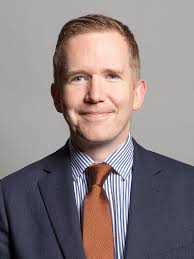
  • Giles Watling – 2023 Speech on Human Trafficking and Modern Slavery

    Giles Watling – 2023 Speech on Human Trafficking and Modern Slavery

    The speech made by Giles Watling, the Conservative MP for Clacton, in the House of Commons on 29 March 2023.

    It is an honour to serve under your chairmanship, Mr Betts. I congratulate my hon. Friend the Member for Wellingborough (Mr Bone) on bringing forward this important debate and speaking so powerfully. Since Kindertransport and before, right through to those coming from Afghanistan and Ukraine today, we are proud in this country to give people safe haven, and we must continue to do so.

    I will focus on the boats. As a yachtsman, I am well aware of the dangers of crossing open waters. On 23 September last year, I was crossing the channel—quite legally—and I saw the French warship Athos behaving in the most extraordinary fashion. I looked on the navigation device and saw that it was circling, and it kept circling as it left the French coast towards the UK coast. It was circling around a very small boat crowded with people. When we got closer, we could see those people; they were in a desperate condition. What horrified me about that particular incident was that the French warship was just circling them. I am a yachtsman; I am a seaman. That is what I do. What we do is take desperate people off those boats and make sure they are safe. I have the evidence on my phone right here.

    We must stop that sort of thing happening. Stopping illegal boats is a matter of common humanity. As my right hon. Friend the Member for Witham (Priti Patel) said, 39 people lost their lives in the back of a trailer, so it is not just the boats in south Essex. That is because of our weak borders. The cost to the taxpayer is enormous because of this Home Office malfunction, as I see it. It is not acceptable. I believe something like £7 million per day is spent on hotel fees, which is outrageous, but we are looking to address this. We have to show humanity about it.

    Locally, at a party conference last year I was contacted by the chief executive of my local council. He told me that he had been given 24 hours’ notice, at a weekend, that we were going to have a migrant hotel suddenly opened upon us. The council did not have time to get services in line. Those people would need help. It was a question of putting desperate people in a deprived place. This was not nimbyism; the local council had identified other, more suitable sites, but the company that the Home Office had employed had decided to open that site within 24 hours.

    Fortunately, by working with officials and asking an urgent question in the Chamber, I was able to get that particular incident stopped. We are dealing with this with a scattergun approach. We are being reactive as the incidents happen. We cannot go on like this. We cannot keep fighting a rearguard action. For the sake of humanity, and for the sake of the taxpayers of Clacton and elsewhere, we must stop the boats. That means backing the new Government measures, which have been laid out here today, and making the Home Office more logistically competent. In my view, and I have said this several times before, that means liaising with our French counterparts and getting British boots on the ground in France. We can do this. I am sure our French counterparts would like to see it. That would stop the boats leaving those beaches, and prevent the horror that so many people go through. We saw a child on a beach in Kent, and we never want to see that again.

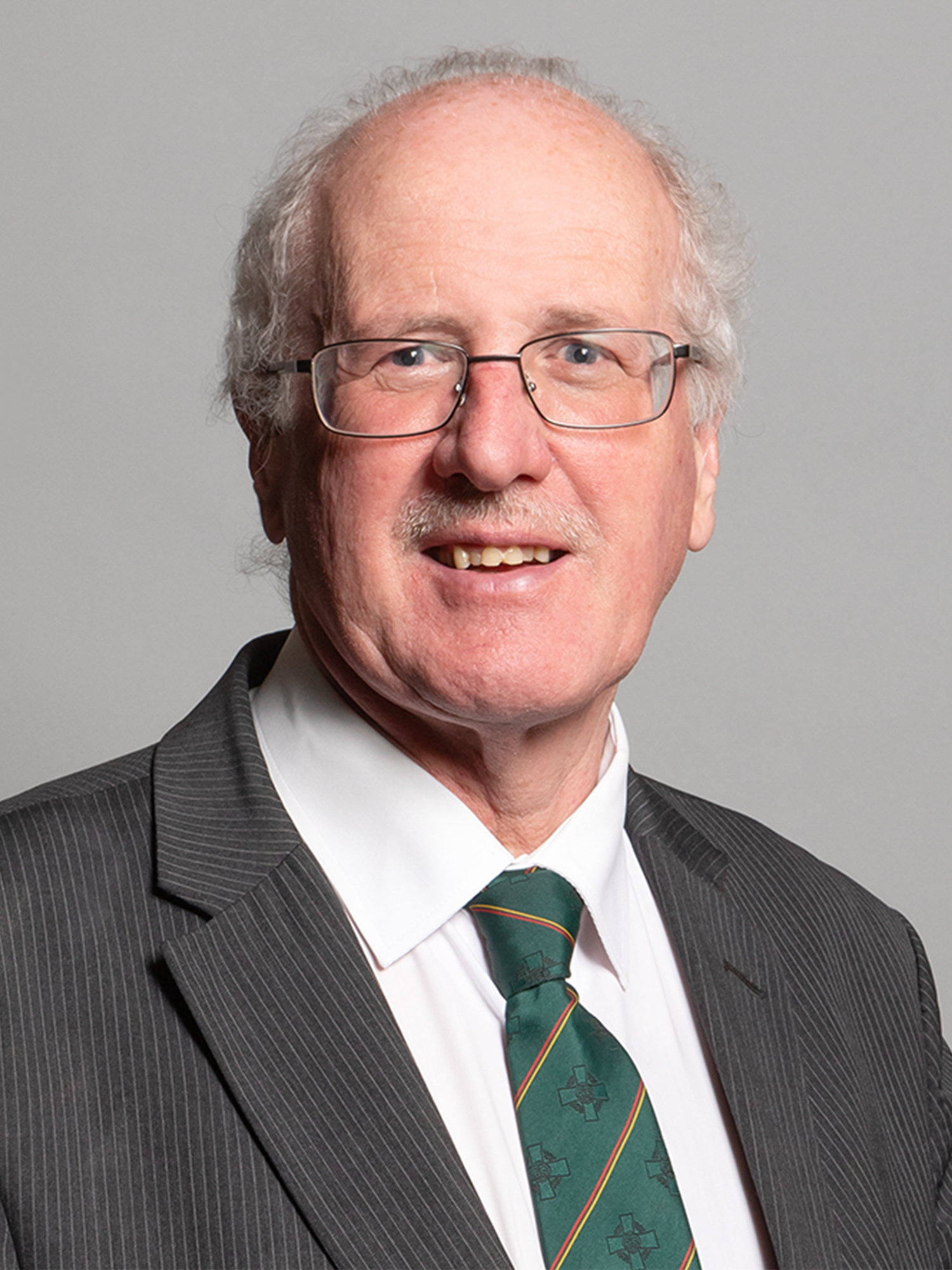
  • Jim Shannon – 2023 Speech on Human Trafficking and Modern Slavery

    Jim Shannon – 2023 Speech on Human Trafficking and Modern Slavery

    The speech made by Jim Shannon, the DUP MP for Strangford, in the House of Commons on 29 March 2023.

    It is a pleasure to follow the right hon. Member for Witham (Priti Patel) and I thank her for her contribution. I especially thank the hon. Member for Wellingborough (Mr Bone) for securing this important debate and powerfully setting the scene. It is a grave injustice that abuses such as human trafficking and slavery persist in the modern world, being used as weapons against already marginalised and vulnerable communities. I will focus on human trafficking and its relevance to freedom of religion or belief—two distinct but overlapping areas of human rights where much more work could be done by our Government. I declare an interest as chair of the all-party parliamentary groups for international freedom of religion or belief and for religious minorities of Pakistan.

    It is a grave injustice, heaped upon other injustices, that where girls and women are persecuted for their faith, they are also at risk of human trafficking. Such targeting threatens to dismantle entire communities, as women are no longer present to pass their faith on to their children. Should women escape their captors, as others have referred to, they face stigma and ostracism from their community.

    Reports by Open Doors on gender and freedom of religion and belief find that in many countries where Christians are the most persecuted, marriage documentation is often used to cover up human trafficking. It is estimated that in the 50 countries with the highest level of Christian persecution, forced marriages of women have increased by 16%. It is a real issue, and, through the APPG, we know of many cases and incidents. Those women are at a heightened risk of human trafficking and sex trafficking as a result. Open Doors’ research notes that traffickers often attempt to cloak the associated sexual violence behind a claim that the girl is now married, when clearly the girl has had no choice. In reality, it is often a forced marriage or one resulting from targeted seduction. We should be under no illusion what this means; evil people—evil men—target ladies for that purpose.

    Where religion forms a dimension of human trafficking and modern slavery, the motivating factor of profit no longer applies to those who exploit other humans. Material gain may come from the trafficking of those who belong to a different religious group, but the driving motivators are religious factors and the eradication of a religious group different from one’s own. That is a clear issue that we have identified. Sex trafficking serves as a primary tool for the persecution of religious groups, be that Boko Haram targeting Christians—as happens regularly —or Daesh targeting the Yazidis. Those are just two examples; there are many more across the middle east and the world.

    Freedom of religion or belief is a cornerstone human right, one that I adhere to and often speak about in this place, as do others. That cornerstone right also lays the foundation for other human rights; we cannot divorce the two—the two are married. Human rights and religious persecution go hand in hand. The prevalence of human trafficking in countries where freedom of religion or belief is not realised bears witness to that, as Open Doors, Christian Solidarity Worldwide and others have indicated. Similarly, modern day slavery correlates with places where freedom of religion or belief is not realised. In Pakistan, religious minorities are ghettoised into squalid conditions, and forced to do jobs under the most disgraceful conditions just because they do not belong to the Sunni branch of Islam.

    I was very privileged to be in Pakistan in February as part of the delegation on behalf of the APPG for international freedom of religion or belief. We were able to witness first hand some of the ghettos that Christian groups and other small ethnic minorities live in. A garage or shed has better conditions than the places where they were living. They are pushed into small portions of land with squalid conditions and little or no opportunity for education and healthcare. They are a caste group, and it concerns me. The APPG will be doing a report on the visit, and hopefully we can make recommendations, highlight the negatives and positives and then look at the solutions. As always, I am solution based. Solutions are how we make things better.

    To conclude, I ask what the Government and the Minister are doing to mainstream freedom of religion or belief in their international development and aid policy? I am a great believer that if we are going to give aid we should tie it in with human rights, ensuring the opportunity for people to practice their religion, whatever that may be. That opportunity should be there, and when it comes to giving aid to Pakistan or any other country across the world, we should ensure that.

    Against a worldwide background of worsening religious-based persecution, how can the Government be sure that their programmes are successful when they operate religion-blind? I seek some assurance from the Minister; I hope she can give it to me. If not, I will be happy for her to follow through with a letter. I feel that sometimes the grasp of the civil servants and the Foreign Office officials may not be as real as we would like it to be. We seek some assurance on that. The most vulnerable and persecuted groups are often defined by their religious beliefs. We cannot divorce the two. They are very clear in my mind, and the evidential base would prove that. How are the Government—my Government—responding sensitively and effectively to this?

  • Priti Patel – 2023 Speech on Human Trafficking and Modern Slavery

    Priti Patel – 2023 Speech on Human Trafficking and Modern Slavery

    The speech made by Priti Patel, the Conservative MP for Witham, in the House of Commons on 29 March 2023.

    It is a pleasure to serve under your chairmanship, Mr Betts. I thank all Members here today, and particularly my hon. Friend the Member for Wellingborough (Mr Bone), who is such a stalwart campaigner and a champion of everything to do with tackling human trafficking. I remember the day he was elected as chair of the APPG, and his reaction, and the comments he has made today about someone with right-wing political views working with others, show that there really is no political divide on this issue. We are here to build bridges, and there is so much collective experience in this room in terms of people who have fought for the victims.

    The debate is timely. We have heard reference to the Illegal Migration Bill, and today we will also see the introduction of the Victims and Prisoners Bill in Parliament. I have been campaigning for a victims Bill for many years, and I stand alongside those who have stood up, compassionately, for decades, for victims of the most appalling and abhorrent crimes. My hon. Friend made an outstanding speech and unpacked many of the complex issues associated with human trafficking, some of which are often conflated.

    Our priority must always be the victims. My remarks will focus on dismantling human trafficking criminal networks, tackling modern-day slavery and supporting victims. Some of these matters touch on my time in Government, most recently in the Home Office, but also in International Development. Many colleagues will know some of the work we have collectively done and what we have achieved in the past.

    Taking action on human trafficking and modern-day slavery requires continued focus, both at home, which is incredibly important, and abroad. As has been noted in the debate, there is ongoing legislation in this House, and future legislation coming. This is both a domestic and an international issue.

    Jackie Doyle-Price (Thurrock) (Con)

    Does my right hon. Friend share my concern that the fact that modern slavery has become part of the debate on the Illegal Migration Bill, which is before the House, means that we are forgetting some of the most vulnerable victims in our society right now? I particularly highlight the cuckooing of people with learning disabilities, who are perhaps the most discriminated community in our society. If we let the debate continue to be seen through the prism of migration, we will be letting down the most vulnerable.

    Priti Patel

    My hon. Friend is absolutely right. If I may, Mr Betts, I would reflect on the fact that, when I was Home Secretary, we saw the most appalling act of people trafficking, in a lorry in my hon. Friend’s constituency; that was the Purfleet incident, and 39 individuals—victims—passed away. It was one of the most horrific incidents, but we have had strong criminal prosecutions, and other work has taken place. I will come to that in a minute.

    On my hon. Friend’s point, cuckooing, children being exploited through drug gangs, and other vulnerable people have dominated much of my work over three and a half years. There is a fundamental link here: criminal gangs showing contempt and disregard for human life and dignity. This is a big tragedy, which we are all here discussing today.

    The latest figures from the ILO estimate that in 2021, 28 million people worldwide were forced into labour and 22 million were forced into marriages. These issues are more prevalent than ever today, despite the fact that we think the world and society have moved on and there is greater awareness. That 50 million is more than the population of Spain, so we should just think about the scale of the challenge we face. The ILO also estimated that that number had increased by 10 million between 2016 and 2021. That demonstrates the nature of the criminality, which my hon. Friend touched on, and that is why we have to be relentless.

    I recognise the Home Office footprint in this as well. We do need an anti-slavery commissioner; there are reasons why that was delayed last year, which are mainly down to the changes in Government that took place more than once. In reality, however, this should be a whole-of-Government effort. That is why my right hon. Friend the Member for Maidenhead (Mrs May), who deserves every credit and tribute for the work she led on securing the Modern Slavery Act 2015, was fundamental in this area because she recognised that. During my time in the Department for International Development, we worked internationally on this matter, and I had the privilege of working with my right hon. Friend when she was Prime Minister to develop that call to action to end forced labour, modern slavery and human trafficking. Under her leadership, that went straight to the United Nations General Assembly in 2017, and its impact was significant. It was a major moment for the United Kingdom and one we should be proud of. It brought together 37 countries to introduce commitments to strengthen law enforcement activity, galvanise international co-operation and support victims. We rightly funded that and put aid into that. That investment helped tackle modern-day slavery upstream in transit countries, tackling trafficking at the source. It absolutely shows how development assistance safeguards people and safeguards people’s lives. Over recent years, because this is no longer integrated in the way it once was, we have gone backwards and, with that, our international standing on this issue has also regressed. Sadly, I do think this is right.

    There are many issues around illegal migration that rightly need to be tackled, and the Government have to find all the right ways to do that. That is why, through the Nationality and Borders Act last year, we brought in temporary protection measures because it is right that we give the care and support to genuine victims. This was down to hon. Friends who spent time with me as Home Secretary, including my right hon. Friend the Member for Chingford and Woodford Green (Sir Iain Duncan Smith), my hon. Friend the Member for Wellingborough and others, who made this case. I worked with the Centre for Social Justice on this matter, and the various commissioners obviously made this point clearly.

    In the interests of time, I want to make two quick points. We must work comprehensively and thoroughly to bring offenders to justice, and our laws are too weak on this—they really are. On the level of prosecutions, there was a targeted measure in the Nationality and Borders Act last year to ensure that small boat pilots would be focused on for prosecution, obviously through the right way. Our National Crime Agency, which my hon. Friend mentioned, deserves great credit. Much of the work it does is based on securing intelligence information that can be disclosed only in court for prosecution purposes. The agency’s work in this country must be reinforced and bolstered at every single level.

    My last point is about supporting the victims. They are victims of horrendous and heinous crimes. I am delighted that the Victims and Prisoners Bill will come forward today—I have been going on about it for over a decade. This is where we must work together to ensure that the victims of human trafficking and modern-day slavery are given support in the criminal justice system, and that the laws are strengthened to ensure the prosecutions take place. My hon. Friend highlighted the frankly derisory figures on sentences and prosecutions. We must change that, and this House can do that.

    The other area to touch on for victims is statutory services. The care for adults is good, but we have institutional state failure on the approach for children where local authorities are allowing children to abscond. It then becomes a policing issue, and it should not just be about the police. Our statutory services must step up. Mental health services, housing services and trauma-informed approaches must be embedded.

    I know the Minister has been working assiduously on this issue, but we must start to hear further details on what work is taking place across Government to ensure that victims are given support and to bring forward the reforms required to give them justice.