Blog

  • PRESS RELEASE : UK SMEs secure funding to transform future of freight [April 2023]

    PRESS RELEASE : UK SMEs secure funding to transform future of freight [April 2023]

    The press release issued by the Department for Transport on 11 April 2023.

    Winning projects will help to create greener ways of delivering freight across the UK.

    • government funding awarded to winners of the first round of Freight Innovation Fund to decarbonise freight and improve transport links
    • innovative winning projects include remote island drones used in the Orkney Islands and lightweight 4-wheeled vehicles for deliveries
    • new solutions could help reduce pollution and traffic, create high-skilled jobs and transform how people receive their packages and goods

    Drones will be used to deliver packages on remote Scottish islands as part of 9 new innovative freight projects which have been awarded £1.2 million in government funding.

    The first winners of the Freight Innovation Fund (FIF), backed by £7 million overall, have been announced today (11 April 2023) and could help create cleaner, more innovative ways of delivering freight around the country. This could lead to reduced emissions, increased numbers of high-skilled jobs and better delivery services in hard-to-reach parts of the UK.

    The winners include Skyports Deliveries, which will use drones to improve island-to-island connectivity in the Orkney Islands, and Electric Assisted Vehicles, which is developing a 4-wheel, electrically assisted lightweight delivery vehicle to help reduce road emissions.

    The fund is one part of the government’s Future of Freight plan launched last year, setting a strategy to work closely with industry to deliver a world-class freight system, which supports economic growth and builds on the measures already taken to tackle the global HGV driver shortage.

    Roads Minister Richard Holden said:

    Whether it’s drones for deliveries on remote islands or zero emission buggies – we want to invest in future technology that could transform how we move goods around the country while reducing emissions and traffic and creating skilled jobs.

    The Freight Innovation Fund gives innovators the opportunity to test their ideas and help our freight industry become greener and more efficient – unlocking better connectivity and boosting growth across the country.

    The winning projects are led by small and medium-sized enterprises (SMEs) that have designed innovative technology and are partnered with existing industry companies to explore the viability of these solutions in real-world conditions.

    The 9 projects that have been awarded funding are:

    £150,000 for Skyports Deliveries Ltd (project based in Orkney, Scotland and partnered with Royal Mail and Loganair): improving logistics in ports and hard-to-reach areas through the Orkney I-Port project. It will create an intermodal transport hub to improve island-to-island connectivity using drones to make deliveries, conduct surveys and monitoring.

    £120,000 for CurbCargo (based in London and partnered with Savills): using data to track the environmental impact of freight deliveries, which will prompt companies to change how they order products to reduce vehicle movements.

    £119,000 for Lightricity Ltd (based in Oxford and partnered with Bradford Swissport Ltd): using a unique, patented technology that harnesses the energy from indoor and low-level light sources to power battery-free tracking devices. This will help companies realise the benefits of tracking devices without the cost challenges of battery change and sustainability impacts.

    £150,000 for Electric Assisted Vehicles Ltd (based in Bicester, Oxfordshire and partnered with FedEx): developing a 4-wheel, electrically assisted lightweight delivery vehicle as an alternative to petrol and diesel vans.

    £145,000 for Otaski Energy Solutions Ltd and Syselek Ltd (based in Gateshead and partnered with Costain): trialling their cost and energy-efficient smart charge and bi-directional converter, which allows electric vehicles to charge from any power grid source and discharge energy back to the grid or storage. This could help create an intelligent vehicle fleet charging system that increases grid reliability, resilience and stability and high adaptations to variable loads.

    £129,000 for CocoonFMS Ltd (based in Lichfield, Staffordshire and partnered with Simarco Worldwide Logistics): creating a digital calculator to provide automated management of port costs and shipping expenses, providing more accurate invoice information to users, reducing port delays and improving planning of deliveries.

    £145,000 for Entopy (based in Suffolk and partnered with Fujitsu Services UK and Atamai Freight): creating a digital twin of shipments to track them during their delivery, providing vital information and supporting greater use of digital products in the freight sector.

    £133,000 for RoboK Ltd (based in Cambridge and partnered with Port of Tyne): trialling the use of their AI system to generate insights from existing video data, such as CCTV, to provide analysis on things like capacity and asset movement in real time to reduce costly delays and inefficiencies.

    £100,000 for Estudio Cactus (based in London and in cooperation with Portsmouth International Port): trialling the use of their health, safety, security and environment software to provide operators real-time information about their port to increase efficiency through improved resource management.

    The winning SMEs will benefit from a freight innovation fund accelerator, which will provide bespoke business support to help them access private investment. They will also be invited to join a “freight innovation cluster”, a community of innovators that will hold events, encourage collaboration and generate new opportunities, and stimulate growth within the wider freight sector.

    The Freight Innovation Fund aims to accelerate the adoption of existing freight technologies within the freight sector and develop a future pipeline in line with the freight industry’s real-world needs. It is a 3-year £7 million programme designed to make delivering freight across the UK more efficient and cleaner.

    The winning projects will support ideas and technology addressing 3 longstanding issues in the freight sector including:

    • a lack of large-scale cross-industry data collection and sharing between different modes of freight transport, such as road, rail and maritime, could improve efficiencies and coordination
    • difficulties in intermodal transport, such as between rail and road, and ways to improve how large consignments are broken up into smaller ones could reduce emissions and traffic
    • improvements in freight distribution in ports across different transport modes could create knock-on benefits with timings, efficiencies and predictability of the journey

    In 2022, the government published the Future of Freight plan, the first-ever cross-modal and cross-government plan for the UK freight transport sector. Government launched the Freight Innovation Fund competition, which is delivered by Connected Places Catapult (CPC), earlier this year in January.

    Nicola Yates OBECEO at Connected Places Catapult, said:

    The freight sector has an enormous opportunity to support jobs and growth across the UK, which is why today we are pleased to welcome the 9 SMEs to the first round of the Freight Innovation Fund Accelerator.

    Working with innovators and industry partners through our accelerator programme allows us to develop a pipeline of technology and new ideas that promise to help tackle the freight sector’s emerging needs, ensuring that resilience, efficiency and carbon reduction are core to the sector’s future.

    The Freight Innovation Fund builds on previous government initiatives designed to support increased research and development in the freight industry.

  • NEWS FROM 100 YEARS AGO : 10 April 1923

    NEWS FROM 100 YEARS AGO : 10 April 1923

    10 APRIL 1923

    Robert Thomas won the by-election for the Anglesey constituency, winning the seat from Independent Labour. Robert Thomas secured 11,116 votes, Labour’s Edward John secured 6,368 votes and the Unionist candidate Richard Owen Roberts secured 3,385 votes.

    The Special Constables Bill and the Salmon and Freshwater Fisheries Bill were read for a second time in the House of Commons.

    The Free State Government in Ireland said that they were near to seeing the collapse of the Irregulars.

  • NEWS FROM 100 YEARS AGO : 9 April 1923

    NEWS FROM 100 YEARS AGO : 9 April 1923

    9 APRIL 1923

    Lord Derby, the Secretary of State for War, began an inspection tour of the police forces of Northern Ireland.

    The French press reported that the British, French and Belgian Governments had reached an agreement over the French occupation of the Ruhr Valley.

    Armed robbers broke into the house of the Coroner in Dublin who was investigating the murder of Mr Bondfield.

    Nine members of the Irregulars were killed at Glencar by Irish Free State troops.

  • NEWS FROM 100 YEARS AGO : 8 April 1923

    NEWS FROM 100 YEARS AGO : 8 April 1923

    8 APRIL 1923

    A conference was arranged to discuss ending the strike of farm workers in Norfolk.

    It was reported that fighting had broken out in Memel (now Klaipėda in Lithuania) with troops at a standoff with protesters.

    The remaining section of Dunwich Church tower was taken down to save it from the encroachment of the sea.

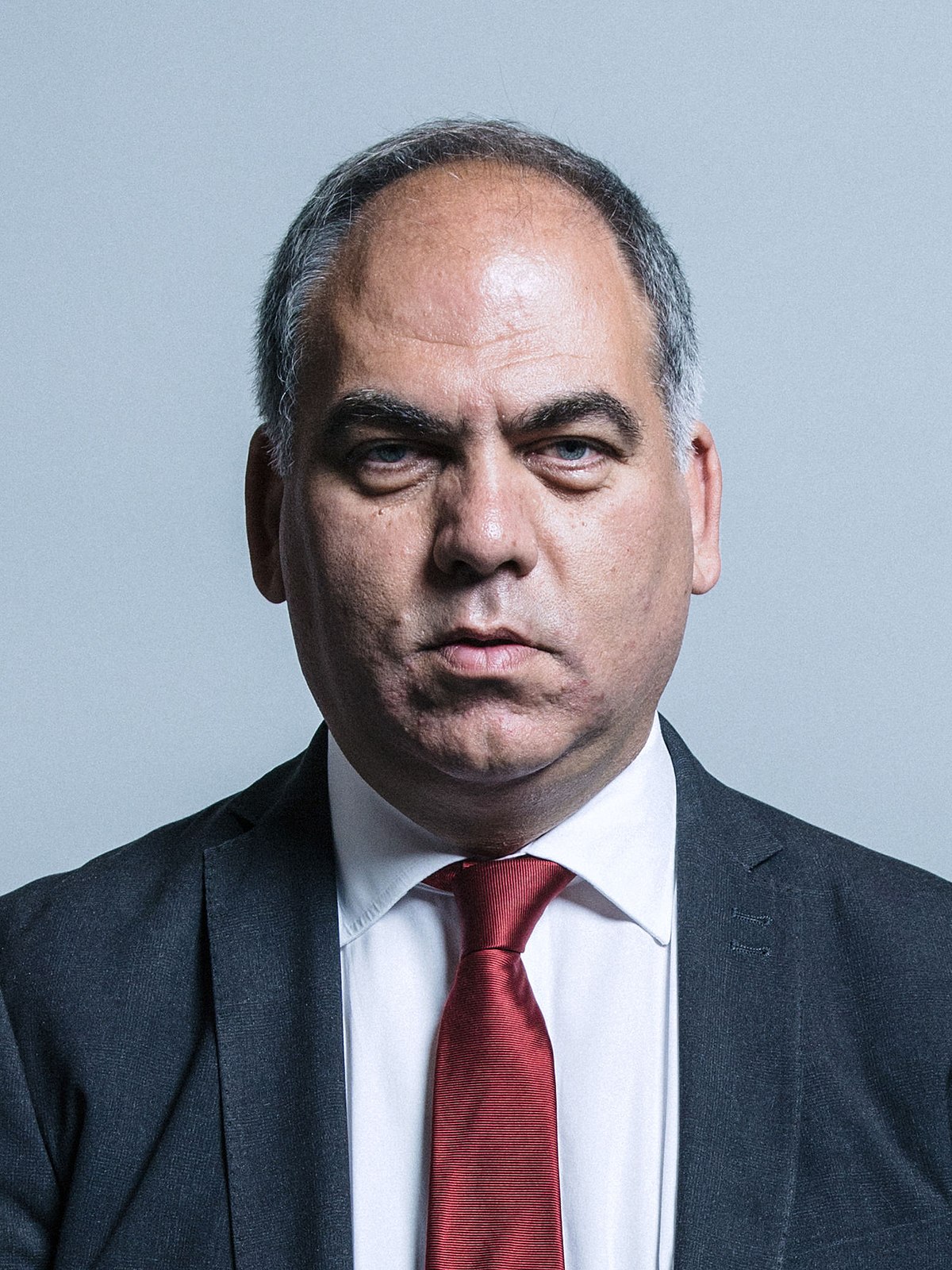
  • Bambos Charalambous – 2023 Speech on Israel and the Occupied Palestinian Territories

    Bambos Charalambous – 2023 Speech on Israel and the Occupied Palestinian Territories

    The speech made by Bambos Charalambous, the Labour MP for Enfield Southgate, in the House of Commons on 23 March 2023.

    The Labour party stands for international law, human rights and a negotiated peace based on a two-state solution, with a safe and secure Israel alongside a sovereign Palestinian state.

    At the last elections, Prime Minister Benjamin Netanyahu went into coalition with the far right and, under that new Government, an already fragile situation has worsened. His promotion of extremists Itamar Ben-Gvir and Bezalel Smotrich has put ultra-nationalism in key positions of the Israeli Government. I am sure that the whole House will have been appalled by Smotrich’s remarks in Paris this weekend, when he denied the very existence of the Palestinian people and their culture.

    Thus far, 2023 has seen one of the highest death tolls for Palestinians and Israelis in a long time, with more than 80 Palestinians and 14 Israelis killed this year. There has been a renewed assault on the rights of Palestinians, a ramping up of inflammatory rhetoric, and dangerous new moves to try to legitimatise illegal settlements, threatening the viability of a two-state solution. Israel has suffered from terrorist attacks and a new militant threat, and the Israeli Government are also taking steps that threaten to undermine Israel’s democracy. President Netanyahu’s attempts to undermine judicial independence and dispense with equality laws for the LGBT+ community are sowing division and deep unease. The weekly mass protests in Tel Aviv, Haifa and Jerusalem demonstrate that Israeli society is now also deeply divided.

    What is the Minister’s assessment of the impact of what many in Israel see as fundamental attacks on their precious democracy? The Prime Minister has, in his meeting with Prime Minister Netanyahu tomorrow, an opportunity to use Britain’s close relationship with Israel to take a clear stance on human rights, respect for international law and commitment to democracy. I am deeply concerned that the recently signed road map for UK-Israel bilateral relations dilutes long-standing UK positions, held by successive Governments, in relation to international law. The road map makes no mention of supporting a two-state solution, and it implies that settlements in the Occupied Palestinian Territories could be treated as part of Israel for the purposes of trade. Can the Minister tell the House whether the road map amounts to a change in policy, will she reiterate that the Government still support a two-state solution, and will she make it clear that the UK deplores the current escalation of violence?

    Anne-Marie Trevelyan

    It is always encouraging to hear both sides of the House agree that the UK’s position on the middle east process finding a resolution is that we want to see a negotiated settlement leading to a safe and secure Israel living side by side with a viable and sovereign Palestinian state, based on 1967 borders with agreed land swaps, with Jerusalem as the shared capital of both states, and a just, fair, agreed and realistic settlement for refugees. That remains a clear position and has not changed.

    The road map that the Foreign Secretary signed with his counterpart earlier in the week in London fulfils the commitments that were made in the November 2021 memorandum of understanding on strengthening co-operation across a range of relationships around our economic, security and technology ties and, importantly, advancing our co-operation on environmental and climate change issues, and leveraging our combined strengths in that area to address some of the global health challenges. It also contains provisions on the importance of regional co-operation in working together to expand the historic Abraham accords. That is a series of practical issues that we will work upon together with our Israeli friends, but it does not in any way change the UK’s position—it is good to hear the shadow Minister set out the same—on the agreed settlement that we continue to support.

  • PRESS RELEASE : As Russia sources weapons for its war, it is violating the very UN sanctions it helped to draft – UK Statement at the Security Council [April 2023]

    PRESS RELEASE : As Russia sources weapons for its war, it is violating the very UN sanctions it helped to draft – UK Statement at the Security Council [April 2023]

    The press release issued by the Foreign Office on 10 April 2023.

    Statement by Deputy Political Coordinator Alice Jacobs at the UN Security Council debate on export of weapons and military equipment.

    I’d like to start by congratulating Mozambique on their Presidency in March and also thank you to Under-Secretary-General Nakamitsu for her briefing today.

    As the perpetrator of a war of aggression against a sovereign nation, Russia has taken up the Security Council Presidency while it fails to meet the most basic obligations of a UN Member State.

    Russia’s decision to unleash an illegal war of choice on an innocent people threatens the fundamental principles of the Security Council. And as it sources weapons for its war, Russia is violating the very UN sanctions it helped to draft, on states such as Iran and the DPRK.

    The wider consequences of this war on food and commodity prices are severe, and are likely to drive further conflict. The UK calls on all other states to cease assistance to the Russian military and its affiliated forces. Arming the aggressor state is fuelling global instability.

    To preserve the Charter principles of sovereignty and territorial integrity, Member States should assist Ukraine to protect itself from this aggression, in line with Article 51 of the UN Charter. The UK has provided a wide range of equipment and support to Ukraine and will continue to do so, as a responsible UN Member State.

    Colleagues, the diversion and misuse of conventional arms costs hundreds of thousands of lives every year across the world, undermines security and sustainable development, and fuels conflict, crime and terrorism.

    The Security Council can play an important role on this issue, complementary to multilateral and national processes. Regrettably, it is Russia that has long sought to undermine this work – opposing new texts and consistently abstaining from resolutions on this issue, such as resolution 2117 in 2013, resolution 2220 in 2015, and resolution 2616 in 2021.

    The UK operates one of the most robust arms export control regimes in the world. We are committed to full implementation and universalisation of the Arms Trade Treaty. And we remain committed to all related UN mechanisms, including the UN programme of action on small arms and light weapons. We will continue to support appropriate measures through the Security Council.

    Colleagues, let me finish by restating one simple point. If Russia is serious about strengthening international peace and security its first action should be to end its illegal invasion, withdraw from Ukraine and uphold its responsibilities under the UN Charter.

  • PRESS RELEASE : Seven sites confirmed in the running for UNESCO World Heritage Status [April 2023]

    PRESS RELEASE : Seven sites confirmed in the running for UNESCO World Heritage Status [April 2023]

    The press release issued by the Department for Culture, Media and Sport on 10 April 2023.

    The Government has revealed the seven places it is backing to win UNESCO World Heritage Status.

    • York city centre, Birkenhead Park and an iron age settlement in Shetland could join prestigious list
    • The sites are added to the Government’s ‘Tentative List’ with the aim of joining global landmarks such as the Taj Mahal and the Galápagos Islands

    Cultural and natural heritage sites including York’s historic city centre are a step closer to becoming UNESCO World Heritage Sites after gaining Government backing for their bids.

    Five new sites from across the UK and Overseas Territories have been added to the Tentative List meaning they are now part of a seven site list to be put forward by the Government for inscription on the illustrious list.

    The Tentative List is published around every ten years by the UK Government. It sets out the sites it feels have the best chance of succeeding and will now work with local authorities and devolved administrations to develop their bids.

    Cultural sites on the list include York which has fantastic civic and religious buildings including its Minster as well as a rich history left behind by its Anglo-Saxon, Viking and Norman inhabitants.

    Birkenhead Park, which opened in 1847, was a pioneering project to bring greenery to urban environments and provided a blueprint for municipal planning that has influenced town and city parks across the world, including New York’s Central Park.

    UNESCO also awards World Heritage Site status to the most extraordinary natural places on the planet.

    The East Atlantic Flyway, a migratory bird route over western parts of Europe including Yorkshire, Lincolnshire, Norfolk, Suffolk, Essex and Kent, joins the UK’s list in recognition of its vital importance to bird populations and wildlife. The area sees huge transient bird populations pass through every year as the seasons change.

    The Little Cayman Marine Parks and Protected Areas, situated in the UK Overseas Territory of the Cayman Islands, have been put forward for their exceptional importance to marine biodiversity and their incredible natural beauty.

    Also on the list today is the Zenith of Iron Age Shetland, a collection of three ancient settlements dating back thousands of years.

    Heritage Minister Lord Parkinson of Whitley Bay said:

    Today we are confirming our support for some of the most enchanting heritage sites and breathtaking landscapes in the UK and its Overseas Territories as they bid for UNESCO World Heritage Site status.

    All the locations being put forward would be worthy recipients of this accolade – and we will give them our full backing so they can benefit from the international recognition it can bring.

    Laura Davies, HM Ambassador to UNESCO, said:

    It is great that the UK is contributing to making World Heritage more representative.

    These five sites brilliantly reflect the diversity and beauty of the UK and its Overseas Territories’ natural and cultural heritage, and I look forward to working with them towards World Heritage listing.

    Michael Copleston, RSPB England Director, said:

    We are absolutely thrilled that the global importance of the English east coast has been recognised by the independent panel and that the east coast wetlands will now be part of the UK’s Tentative List of World Heritage sites.

    The east coast is an essential refuge for over 155 bird species as well as a world-leading example of how we can manage our coastlines in the face of a changing climate, with true value for nature and people.

    We’re really looking forward to working with partners and communities up and down the coast to develop a bid for UNESCO in the coming years.

    UNESCO’s World Heritage Site system offers a fantastic opportunity for cultural and natural heritage sites to gain international recognition and promote themselves on a global stage.

    If successful, the seven sites would join the 33 other World Heritage Sites already based in the UK including Stonehenge and Hadrian’s Wall.

    Two sites which submitted their full nominations to UNESCO earlier this year also remain on the Government’s Tentative List. One is The Flow Country, a large area of peatland across Caithness and Sutherland in the north of Scotland which plays a crucial role in supporting biodiversity.

    The Gracehill Moravian Church Settlement in Northern Ireland is part of a joint bid alongside other Moravian religious sites in Denmark, the United States and Germany. The bid aims to recognise the church’s work in setting up an international religious community.

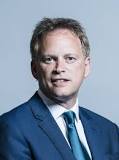
  • Grant Shapps – 2023 Speech to the Offshore Wind Industry Seminar

    Grant Shapps – 2023 Speech to the Offshore Wind Industry Seminar

    The speech made by Grant Shapps, the Secretary of State at the Department for Energy Security and Net Zero, in South Korea on 10 April 2023.

    Hello.  Aha-nyong-ha-se-yo

    It is half a century since South Korea turned to the United Kingdom to help develop its first ever car.  That vehicle – the Hyundai Pony – was produced with the aid of a British chief executive, British parts, British engineers, and even British finance and of course, … Korean ingenuity and Korean hard work.

    But no-one involved with that fledgling project could have imagined what it might lead to.  Today, South Korea is the fifth largest automotive manufacturer in the world – and it all happened here.

    And Hyundai’s new, electric Ioniq 5 is the current holder of the prestigious World Car of the Year award.

    What an incredible catalyst that early collaboration between our two countries in the 1970s proved to be: the beginning of a success story that, 50 years later, goes from strength to strength.  And 140 years after Britain and Korea first established diplomatic relations, our two countries are closer today than they have ever been in the past.

    We have Korean students in our schools, Korean pop music in our charts – and, thanks to my teenage daughter, in my home – and Korean food shops on our high streets.  And the reason I am here today is because we have incredible opportunities to work even more closer together.

    On our energy transition, we can create the secure, clean and reliable power that both our economies need to grow.  Through the UK-Korea framework, signed last June, both governments reaffirmed commitments to tackling climate change, and co-operating together to enhance energy security, particularly on renewables.

    That’s why, as the new UK Secretary of State for Energy Security and Net Zero, I’m so excited to be in Korea this week, and why I’m delighted to be taking part in this fantastic seminar today.

    Thank you representative HAN for inviting me.

    Our two nations stand together as partners in the energy transition.  But we also stand together in condemning Putin’s abhorrent war on Ukraine. The measures we are taking to isolate Russia internationally, punishing it economically, and helping Ukraine defend its sovereign territory.

    But although Vladimir Putin’s weaponization of energy has had a huge impact on our markets over the past year, the truth is that Russia’s gas, just like the president himself, belongs firmly in the past.

    And our discussions here today is about seizing the future, not retreating backwards.  Our future in Britain will be built on renewables, nuclear power and greater energy efficiency, whilst ensuring that the gas used during the transition is from reliable sources – like our own North Sea.

    With both our countries recognise the need to speed up the global energy transition to keep 1.5C alive. The IPPC’s Synthesis Report has emphasised the dire consequences should we fail to act.

    So I would obviously urge South Korea to bring forward its coal phase-out from 2050, join the ‘Powering Past Coal Alliance’ and incorporate the COP26 ‘Global Coal to Clean Power’ statement into its energy planning.

    The UK’s own ‘coal-to-clean’ story has been powered by offshore wind and we are eager to share expertise in this field with you.  Electricity produced from coal in the UK has plummeted from 40% in 2012 to just 1.5% last year.

    As a result, we are generating record amounts of electricity by wind – over half our total electricity comes from wind power on a good day.

    The UK has established itself as a world leader in offshore wind.  Our offshore capacity of 13.8GW is the greatest in Europe, and only second to China globally.

    We have the three largest offshore farms in the world.  Soon, we will have the fourth too.  And we have globally-leading ambitions to deploy up to 50GW by 2030, which will include up to 5GW of floating wind platforms.

    So we’re scaling-up renewables, and the development of a competitive domestic supply chain, that will meet our decarbonisation objectives.  It will also make us more resilient to economic shocks and provide energy security for future generations.

    And then there’s the economic opportunities that the transition to clean energy will bring.  The tipping point, when holding on to coal and gas power will no longer make economic sense, never mind environmental sense is getting closer and closer.  So we are focused on leveraging private investment alongside the public investment needed to support our ambitions and deliver net zero.

    But just as crucial as these domestic priorities we need to collaborate with key international partners too – and that means places like the Republic of Korea.  We have so much to offer each other.  I would strongly encourage companies which have invested in the offshore wind sector to consider coming to the UK.

    In the UK, the Offshore Wind Manufacturing Investment Scheme has made funding available to boost investment in major port and manufacturing infrastructure.

    One fantastic example this scheme has supported is a £512 million investment by Korean company SeAH Wind, a subsidiary of SeAH Steel whose CEO I am meeting this week, in a brand-new factory manufacturing offshore wind turbine monopile foundations in Teesside, England: a brilliant example of our two countries working together.

    I hope this is just the first of many successful ventures between the UK and the Republic of Korea and I would encourage interested companies to contact the British Embassy here in Seoul to better understand how the UK Government can help further investments.

    But the scope for collaboration goes beyond investment in the UK.

    The UK is an ally in South Korea’s offshore wind development.  You have set an impressive target of 12 GW offshore wind by 2030, with over 25 projects already in development. This includes huge floating offshore wind potential, which is already attracting UK players to your emerging market. As that market grows, the UK can become an even more trusted partner.

    Our expertise covers every phase of policy and project development.  We have established experience in oil and gas, marine and subsea, and can offer a unique combination of assets and opportunities to build on current ties between our countries.

    The British Embassy in Seoul is already starting this engagement, organising webinars to promote our offshore wind journey – and further areas of partnership.  Indeed, UK companies represent 60% of Korean offshore wind engineering contracts.

    I have been briefed on Corio Generation’s plan to build a 2.6GW floating wind portfolio of five projects, including working with Shell, on 1.5GW and 1.4GW of floating offshore wind in Ulsan.

    BP Renewables and Deep Wind Offshore recently formed a joint venture to develop offshore wind in Korea, with four projects across the Korean peninsula with a potential generating capacity of up to 6 GW.

    These examples show the value that the UK can bring to Korea – and what can be accomplished when we work side by side.

    So, on this 140th anniversary of UK/Korea diplomatic relations and, as we approach the 50th anniversary of the iconic Hyundai Pony launch, let us look forward to future success.  A future of greater energy security.  A future where clean renewables and nuclear power rapidly make fossil fuels obsolete.  And a future of close, mutually-beneficial collaboration between Britain and Korea.

    Working together, to power our success.

    Thank you.

  • PRESS RELEASE : UK to partner with Korea on energy transition – and stand united against Putin’s aggression [April 2023]

    PRESS RELEASE : UK to partner with Korea on energy transition – and stand united against Putin’s aggression [April 2023]

    The press release issued by the Department for Energy Security and Net Zero on 10 April 2023.

    UK and Republic of Korea to collaborate more closely on the development of renewable energy sources and move towards energy independence.

    Energy Security Secretary Grant Shapps today joined forces with the Republic of Korea to collaborate ever closer on accelerating the move towards a cleaner, more energy secure future, including renewables and nuclear, while also underlining the vital importance of our international efforts against Putin’s weaponization of global energy markets.

    Flying the flag for UK PLC in Seoul, Mr Shapps highlighted the close collaboration already taking place between the two countries – UK companies represent 60 per cent of Korean offshore wind engineering contracts, and Korea is already investing in projects supporting the offshore wind industry in the UK.

    He also emphasised the UK’s joint solidarity with the Republic of Korea against Putin’s illegal invasion of Ukraine and urged them to continue work towards energy independence from Russia’s gas supply.

    It comes on the first day of a trip taking in the Republic of Korea and Japan in the run-up to the G7 at Sapporo – making Grant Shapps the first Cabinet Minister to visit since the closure of negotiations on the UK’s accession to join the Comprehensive and Progressive Agreement for Trans-Pacific Partnership (CPTPP) – of which Japan is a member.

    He will also encourage the Republic of Korea to join the 168-strong “Powering Past Coal Alliance” and commit to bringing forward its own 2050 coal power phase-out date towards 2030, with support from Britain’s own expertise in offshore wind.

    As well as encouraging ever-greater collaboration on offshore wind, the Energy Security Secretary  also agreed a joint statement of cooperation with Dr Lee Chang-Yang – Minister of Trade Industry and Energy in the Republic of Korea on advancing civil nuclear power generation, cementing a partnership spanning over three decades, covering issues including safety standards and regulation, all agreeing the crucial role of nuclear in creating secure, affordable and clean energy.

    The visit is aimed at demonstrating the investment opportunities in the UK in the renewable energy sector, and how the UK’s world-leading expertise can help other countries to make the switch from fossil fuels – all at a time when both the Republic of Korea and Japan are looking to expand their use of renewable technologies including offshore wind.

    Energy Security Secretary Grant Shapps said:

    Putin’s illegal war in Ukraine has held up a mirror to the world, reflecting back just how vulnerable our energy security can be.

    Russia’s gas – just like the president himself – belongs in the past.  As we edge closer towards the tipping point when holding onto coal and gas power no longer makes economic sense, let alone environmental sense, there is ever-greater opportunity for British and Korean companies to work together, for the benefit of both countries and our communities.

    I want the Republic of Korea to work ever closer with us in the UK, making the most of world-leading British expertise to move further and faster towards greater use of renewables, of opportunities in the UK to invest, and to redouble our efforts against Putin’s weaponizing of our global energy sources.

    Grant Shapps’s visit follows the UK Government’s publication of its plan to Power Up Britain, with a multi-billion pound investment in green technologies, unlocking lucrative new international energy deals that will boost the economy, create new green jobs and further boost the UK’s energy security and independence.

    The Energy Security Secretary today argued that this move towards renewables, and away from fossil fuels, will further isolate Putin’s Russia, boosting both the energy security of the UK and that of the Republic of Korea.

    Already, Korea has a target for 12 GW of offshore wind by 2030 – with over 25 projects in development and UK companies representing 60 per cent of Korean offshore wind engineering projects. The UK has 14 GW of offshore and is targeting 50 GW by 2030 – over a threefold increase.

    But Mr Shapps also highlighted the opportunities for the Republic of Korea to invest in the UK.  In particular, he pointed to SeAH Wind’s £512million investment in a new factory on Teesside, manufacturing the foundations for wind turbines to be used offshore – all helped in part by the Government’s Offshore Wind Manufacturing Investment Scheme.

    This further investment and closer collaboration would follow over three decades of the UK and the Republic of Korea working together on advancing nuclear power generation, underpinned by the Nuclear Cooperation Agreement made in 1991.

    The joint statement of cooperation on energy transition, including civil nuclear energy, focuses on:

    • Accelerating plans for civil nuclear – with the UK and the Republic of Korea in united agreement that nuclear energy has an essential role to play in creating secure and affordable energy;
    • Agreement on collaborating to promote the highest standards of nuclear safety, regulation, security, safeguards and non-proliferation – setting a global standard; and
    • Confirmation of plans to build robust and resilient nuclear supply chains and to share experiences in developing the latest advanced civil nuclear technologies – including small modular reactors
    • Reaffirming a shared commitment to accelerate the just transition away from unabated coal power and actively collaborate on expanding renewable energy technologies

    This also complements the Powering Up Britain Plan, which includes the creation of Great British Nuclear, which will expand the UK’s nuclear power industry with the aim of serving a quarter of the country’s power through nuclear by 2050.

  • PRESS RELEASE : Green light for four new bathing sites [April 2023]

    PRESS RELEASE : Green light for four new bathing sites [April 2023]

    The press release issued by the Department for Environment, Food and Rural Affairs on 10 April 2023.

    Sites in Rutland, Plymouth and Suffolk will receive bathing water status from May.

    Four swimming spots in England are being designated as bathing waters ahead of the warmer months and will soon benefit from regular water quality monitoring, Water Minister Rebecca Pow has today (April 10) announced.

    Following a two-week public consultation, Sykes Lane Bathing Beach and Whitwell Creek at Rutland Water, Firestone Bay in Plymouth, and a section of the River Deben at Waldringfield, Suffolk, will all be officially designated ahead of the 2023 bathing water season. The four new sites will take the total number of bathing waters across the country to 424, the highest number ever.

    The Environment Agency regularly monitors water quality at designated bathing water sites and assesses whether action is needed to cut pollution levels, working with local communities, farmers and water companies to improve water quality at these locations.

    Over the past decade, we have made good progress in improving bathing water quality at existing sites, thanks to robust regulation and strong investment. Since 2010, the proportion of bathing waters assessed as ‘good’ or ‘excellent’ has increased from 76% to 93%. Meanwhile, 72% are considered ‘excellent’ – up from just 51% in 2010. This is the highest level ever, despite the classification standards for bathing waters having been made more stringent in 2015.

    Today’s announcement follows on from the Plan for Water, launched by the government last week, which sets out the action being taken by government to clean up our waters and ensure a plentiful supply into the future.

    It also follows the government’s Environmental Improvement Plan published earlier this year, which includes a target for everyone to live within a 15-minute walk from nature, such as bathing waters.

    Water Minister Rebecca Pow said:

    These popular swimming spots will now undergo regular monitoring, starting this May, so bathers have up-to-date information on the quality of the water.

    The regular monitoring also means that action can be taken if minimum standards aren’t being met.

    We now have more bathing waters than ever, and we’ve worked hard in recent years to boost their status – with an incredible 93% now classed as good or excellent – and our new Plan for Water will help us go further and faster on our targets.

    The Environment Agency will regularly take samples at the newly designated sites during the bathing season – which runs between 15 May and 30 September.

    When selecting new sites, Defra considers how many people bathe there, if the site has suitable infrastructure and facilities, such as toilets, and where investment in water quality improvements following designation would have the most impact. All applications are assessed against these factors and only those that meet these factors are taken forward to public consultation.

    This government has taken significant action in recent years to protect and improve the quality of water at designated bathing water sites at our rivers, lakes and coastal waters. This includes:

    • Setting strict new targets on water companies – designed to frontload action in important areas such as bathing waters – as part of our Storm Overflows Discharge Reduction Plan. This requires water companies to deliver the largest infrastructure programme in water company history – £56 billion capital investment over 25 years
    • Increasing monitoring of discharges from approximately 5% in 2016, to nearly 90% in 2021. This will reach 100% cover by end of this year. Through the Environment Act, water companies are being required to make near real-time data on storm overflow discharges publicly available
    • Working with the farming community and regulators to reduce nutrient pollution from agriculture through our future farming reforms. The government has also increased the Environment Agency’s capacity to conduct farm inspections, with the target of conducting 4,000 a year, and doubled the funding for Catchment Sensitive Farming
    • Setting record levels of fines for water companies who break the law. Since 2015 the Environment Agency has secured fines of over £144m. The government is making it easier and quicker for regulators to enforce penalties and hold companies to account. Fines and penalties handed out to water companies will also be invested in schemes that benefit the environment.