Blog

  • PRESS RELEASE : Change of His Majesty’s Ambassador to Somalia – Michael Nithavrianakis [April 2023]

    PRESS RELEASE : Change of His Majesty’s Ambassador to Somalia – Michael Nithavrianakis [April 2023]

    The press release issued by the Foreign Office on 17 April 2023.

    Mr Michael Nithavrianakis MVO has been appointed His Majesty’s Ambassador to the Federal Republic of Somalia in succession to Ms Kate Foster OBE, who will be transferring to another Diplomatic Service appointment. Mr Nithavrianakis will take up his appointment during May 2023.

    Curriculum vitae

    Full name: Mr Michael Stephen Nithavrianakis MVO

    Spouse: Mrs Libby Nithavrianakis

    Children: 2

    Year Role
    2022 to 2023 Milan, HM Consul General & Director Trade & Investment, Italy
    2019 to 2022 Karachi, Deputy High Commissioner and Director Trade & Investment, Pakistan
    2019 Kabul, Acting Deputy Head of Mission
    2018 to 2019 FCO, South Asia & Afghanistan Directorate
    2014 to 2018 Special Unpaid Leave, Managing Director of Castle Gordon Global Advisory Limited
    2009 to 2013 Chennai, Deputy High Commissioner
    2005 to 2009 Athens, Deputy Head of Mission and HM Consul-General, prior to this Director Trade & Investment, Greece
    2001 to 2005 FCO, Crisis Manager, Counter Terrorism Department
    2000 to 2001 Riyadh, First Secretary (Commercial)
    1997 to 2000 Accra, Second Secretary (Political/Press)
    1995 to 1996 FCO, Assistant Private Secretary to the Permanent Under-Secretary and Head of Her Majesty’s Diplomatic Service
    1984 to 1994 Various roles within the FCO and postings to Kuala Lumpur and Moscow, including roles in HR and Entry Clearance
  • PRESS RELEASE : Prime Minister outlines his vision for Maths to 18 [April 2023]

    PRESS RELEASE : Prime Minister outlines his vision for Maths to 18 [April 2023]

    The press release issued by 10 Downing Street on 17 April 2023.

    Prime Minister Rishi Sunak outlines vision to ensure every young person has the maths skills they need to succeed.

    • PM outlines vision to ensure every young person has skills they need to succeed
    • Higher maths attainment will grow the economy, creating better-paid jobs and opportunity
    • New expert group will lead review into how best to deliver maths to 18 for all – but not maths A-Level for all

    We must change our anti-maths mindset in order to boost growth, Prime Minister Rishi Sunak said today [Monday 17 April].

    Speaking to an audience of students, teachers, education experts and business leaders in North London, the PM argued that maths is vital for providing young people with the knowledge and skills they need to succeed in the jobs of the future.

    Despite it being a core skill which is “every bit as essential as reading”, the PM said that the value of maths is often overlooked and poor attainment is regarded as “socially acceptable”.

    The Prime Minister said:

    We’ve got to change this anti-maths mindset. We’ve got to start prizing numeracy for what it is – a key skill every bit as essential as reading.

    …I won’t sit back and allow this cultural sense that it’s ok to be bad at maths to put our children at a disadvantage…

    My campaign to transform our national approach to maths is not some nice to have. It’s about changing how we value maths in this country.

    In the decade following 2009, the UK has risen 10 places in the international league tables, however we remain one of the least numerate countries in the OECD. More than 8 million adults have numeracy skills below those expected of a 9-year-old and around a third of young people fail to pass GCSE maths.

    The PM argued that our future economic growth depends on combating poor numeracy and maximising the potential of all young people. He said:

    If we are going to grow the economy not just over the next two years, but the next twenty, we simply cannot allow poor numeracy to cost our economy tens of billions a year or to leave people twice as likely to be unemployed as those with competent numeracy.

    We have to fundamentally change our education system so it gives our young people the knowledge and skills they need – and that our businesses need – to compete with the best in the world.

    The PM reaffirmed his ambition to ensure that every young person studies some form of maths up to the age of 18. This will not mean every pupil studying maths A-Level. Instead, government will work to ensure that we have the right teaching framework and qualifications in place to deliver maths to 18 in the most effective way for students of all abilities.

    A new advisory group, comprising of mathematicians, education leaders and business representatives, will be established to advise government on the core maths content that students need to succeed in future. Taking evidence from countries which have high rates of numeracy and from employers across the country, the group will also advise on whether a new maths qualification is required for 16-18 year olds.

    On the process for delivering maths to 18, the PM said:

    We will not deliver this change overnight. We’ll need to recruit and train the maths teachers. We’ll need to work out how to harness technology to support them.

    And we’ll need to make sure this maths is additional to other subjects – not instead of them. But we are taking the first step today by identifying the maths content that will give our 16-to-18 year olds the skills they need to get on in life”.

    The Prime Minister also committed to extending Maths Hubs – unique partnerships of schools and colleges coming together to support maths teaching – as well as introduce a new voluntary and fully funded professional qualification for teachers leading maths in primary schools.

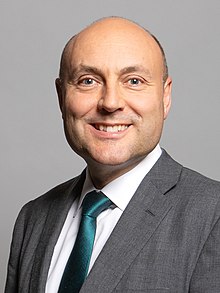
  • Andrew Griffith – 2023 Speech to the Innovate Finance Global Summit

    Andrew Griffith – 2023 Speech to the Innovate Finance Global Summit

    The speech made by Andrew Griffith, the Economic Secretary to the Treasury, on 17 April 2023.

    Good morning, everyone.

    Let me start by thanking Innovate Finance for inviting me and for organising such a fantastic conference.

    As ever, you really are kicking off UK Fintech Week in style.

    And it’s wonderful to be in this beautiful space – Guildhall – a venue constructed in the fifteenth century. It is a reminder of the proud and storied history of the financial services industry in this country.

    As Economic Secretary, my objective is to ensure that the UK is the most innovative, most international and most business-friendly economy anywhere in the world.

    I want the UK to prioritise growth, risk taking and wealth creation and to celebrate it for the moral good that it is.

    And as we chart our way forward with the ability of being able to make our own rules for the first time in decades, it has never been more important that financial services are at the heart of those efforts.

    That is certainly the objective that the Chancellor, the Prime Minister and I all share for the sector.

    Innovation – all of you in the dynamic fintech community – has a huge role to play.

    Bank accounts, payment services, the ability to borrow, save into a pension or other investments, buying insurance, or the provision of tools to understand finances better or to shop around offer enormous benefits to their users.

    They create ladders of opportunity, the ability to transfer wealth over a lifetime, the chance to provide for our old age or they can shield us from some of the adverse events that life can throw at us.

    Whilst I am proud to have many large and longstanding firms in the sector, it is rare that legacy firms have the ability to innovate at the pace required to make the most of changing technologies and keep us internationally competitive.

    Our Fin Tech community is vital for the economy in improving productivity, creating choice, and reaching into new under-served segments of the market.

    Which is why I am glad that as a location for Fin Techs to base themselves, on many fronts the UK is leading the way.

    Indeed, the sector continues to go from strength to strength.

    Data from Fintech Labs shows that almost half of Europe’s fintech unicorns are based here in the UK.

    And Innovate Finance found that last year, the sector attracted more investment than the next thirteen European countries combined.

    Our own commitment to supporting UK fintech is reflected in the actions we took, working with the Bank of England, to facilitate the private sector sale of the UK arm of Silicon Valley Bank to HSBC last month.

    I know many of you in this room were directly affected by the collapse of SVB and I am glad that we were able to act decisively to secure an outcome which protected your capital and ensured continuity of banking services.

    Throughout that intense period, I and other Ministers were accessible and constantly communicating with the sector.

    Government isn’t perfect but I hope that when the chips were down we demonstrated the benefits of being a sovereign nation with the agility to make its own decisions fast.

    But that is just the start.

    Our belief in this sector is also evident in the proactive steps we are taking to ensure that you continue to thrive in the years ahead.

    Importantly, the Government will reflect on the submissions to the Payment Services Call for Evidence and introduce an agile regulatory framework for payments and e-money that promotes growth and supports an internationally competitive payments sector.

    We’re also fostering innovation by making the UK a safe jurisdiction for cryptoasset activity.

    We set out plans in our wide-ranging consultation published in February, and we want to pro-actively support the use of distributed leger technology and tokenisation where it makes sense.

    At the same time, I was pleased to launch the Treasury’s joint consultation with the Bank of England, on how to move forwards with a sovereign or central bank digital pound.

    Private wholesale digital currencies are likely to come to market first and we are already creating the legislation to enable those which are fiat backed and used for settlement in the current Financial Services Bill going through Parliament right now.

    And we have the upcoming Financial Market Infrastructure Sandbox, which will help industry adopt and scale digital solutions that could radically change the way markets operate. That will be up and running this year.

    CFIT

    One of the most important steps we have taken to support financial innovation over the past two years has been implementing Ron Kalifa’s fintech review.

    Since being appointed, I have upped the pace of delivery and a few weeks ago we launched the new Centre for Finance, Innovation, and Technology – CFIT – in Leeds, a city where fintech adds £710 million to the local economy.

    CFIT is backed by £5 million of Treasury seed funding, along with an additional £500,000 from our partners at the City of London Corporation.

    It’s central task is to bring together industry players – entrepreneurs, policymakers, investors, and academics – into coalitions to address some of the trickiest challenges facing the sector.

    I am delighted to announce today that CFIT’s first coalition will look at Open Finance and how unlocking financial data can benefit SMEs and consumers.

    Everyone in this room understands how data can radically empower individuals and businesses alike.

    McKinsey estimate that opening up financial data could boost UK GDP by a useful 1.5% by 2030 so CFIT has my full support as they go after that opportunity.

    Open Banking

    Open finance would obviously be the next development beyond the existing Open Banking ecosystem, which is one of the most dynamic and exciting anywhere in the world.

    There are over 7 million regular active users of Open Banking in the UK and over a billion successful API calls every month. It’s spawned thousands of new businesses and products.

    Those who are close to it, know that this is a key moment for the Open Banking regulatory regime.

    We’ve done a lot of work over the last year through the Joint Regulatory Oversight Committee to set out the next steps to ensure Open Banking continues to go from strength to strength.

    This morning, the Committee set out its recommendations, with a vision of a data sharing market which is competitive and scalable for the long term.

    To achieve this, we will move Open Banking on to a sustainable regulatory framework, which the Government intends to develop through the Data Protection and Digital Identity Bill which has its second reading in Parliament today.

    Open Banking will also transition to a new entity, with a broad-based, equitable funding model and high standards of corporate governance. Today we set out how we plan to get this transition started this year.

    But we can’t spend all our time and energy on governance models.

    So we also set out an ambitious roadmap of actions for the next few years, again starting immediately. By Q3 this year, there will be tangible progress across the board, on key themes such as mitigating the risks of financial crime and promoting new services, including variable recurring payments.

    Let me be clear as I know some folk have been worried: this will be the year of delivery on the next generation of Open Banking.

    Our plan is ambitious but achievable, and I am committed to maintaining our country’s leadership in this field. We won’t rest on our laurels, and I want to encourage all of you to work with me to build on the success that Open Banking has been so far.

    Artificial Intelligence

    If data is one limb that has the potential to transform the financial services sector, the application of artificial intelligence is the other.

    Although there are already many deployments and uses in the financial sector, my belief is that we are barely getting started.

    AI can help firms to identify and prevent fraudulent transactions, detecting suspicious patterns in real time.

    By analysing data on market trends, customer behaviour, and other factors, AI algorithms can identify potential risks and provide recommendations for risk mitigation strategies.

    It can help investment managers to make more informed decisions, driving better returns for savers.

    And AI can power new customer service features, such as chatbots, which can deliver personalised support quickly and efficiently.

    This technology has immense potential to transform the financial services sector.

    And that is why the Government recently published its White Paper on AI which details our plans to make the UK the most trusted and pro-innovation system for AI governance in the world.

    This builds on our recent £900 million investment to build an exascale supercomputer and to establish a new AI Research Resource. These will provide significant compute capacity that many in this room may wish to take advantage of.

    Launch of the UK Fintech Census

    But even as we support the fintech community here in the UK, it is vital that we help our firms to expand internationally.

    That’s why my final announcement today is the launch of the UK Fintech Census, in collaboration with the City of London Corporation and Innovate Finance.

    It is designed to tailor our support for you as we make the most of the UK’s access to international markets.

    When you think about it, no other country on earth combines a seat on the Permanent Council of the UN with membership of NATO and AUKUS, a trade deal with the EU, accession to the Comprehensive and Progressive Trans-Pacific Partnership and being a founder member of the Commonwealth.

    The Census aims to help you make the most of these opportunities by seeking your feedback on three simple points:

    What international markets do you want to break into?

    What are the main challenges that you face?; and

    What further support and services would you like to see?

    The Census opens today and will run for five weeks, aiming to reach all 2,500 fintechs in the UK.

    And, in order to make it a useful and actionable data set, we will repeat the Census annually.

    Conclusion

    In conclusion, ladies and gentlemen I hope you are as excited about the opportunities as I am for you.

    UK fintech is in a great place today.

    But it’s our job, as a Government, to ensure that that success continues and we reach new heights… a mission to which, I assure you, we are utterly committed.

    I am a do-er by nature: I have worked in disruptive businesses for most of my life and I want to deliver concrete actions that help this sector to thrive.

    You’re already effective at telling us what you think – and I challenge myself and the team on a daily basis what more we can do to help.

    So please let’s keep working well together so that at next year’s Global Summit – and many more to follow – we’ll all be able to look back on many more fantastic years for UK fintech.

    Thank you very much.

  • PRESS RELEASE : RAF Voyager refuels mid-air with Sustainable Aviation Fuel [April 2023]

    PRESS RELEASE : RAF Voyager refuels mid-air with Sustainable Aviation Fuel [April 2023]

    The press release issued by the Ministry of Defence on 17 April 2023.

    • Voyager aircraft powered by 43% Sustainable Aviation Fuel (SAF) flies over North Sea.
    • The aircraft used a blend of traditional fossil fuels and SAF such as cooking oil.
    • Flight marks the launch of a new aviation Net Zero Carbon roadmap for commercial aviation.

    Flying from RAF Brize Norton, over the North Sea and via Farnborough on its return home, the Voyager aircraft also undertook air-to-air refuelling with Typhoons, as part of planned training.

    Made from waste-based sustainable feedstocks, such as used cooking oil, SAF reduces lifecycle carbon emissions by up to 80% compared to traditional jet fuel and will be key to reducing the RAF’s reliance on global supply chains and fossil fuels, while improving operational resilience.

    This significant moment follows a series of recent milestones achieved by the RAF towards a sustainable aviation future, including the world first RAF Voyager flight fuelled by 100% SAF.

    Defence Minister, Baroness Goldie said:

    Greater use of alternative and sustainable fuel can only lead to positive outcomes for Defence, the United Kingdom, and our collective endeavour against climate change.

    This is not an easy undertaking by the RAF, but time and again we see that by working collaboratively with our partners across industry we can achieve crucial transformation.

    Part of a two-day industry led conference – Sustainable Skies World Summit – the flight marks the UK aviation industry publishing its updated aviation Net Zero Carbon roadmap outlining how commercial aviation will become more sustainable and commercially viable.

    The annual event, hosted at Farnborough International Exhibition & Conference Centre, brings together various partners from industry to showcase the latest developments in sustainable aviation technology and support efforts moving towards the implementation phase of meeting its net zero commitment.

    Supporting the RAF’s ambitions to be Net Zero by 2040, the Voyager flight was part of an existing task from the Chief of the Air Staff to gather the required data to inform the longer-term transition away from fossil fuels.

    The RAF has identified that using SAF and alternative aviation fuels will be critical for the future operational capability of the RAF and wider military aviation.

    The UK’s SAF programme is already one of the most comprehensive in the world and supports our vision to set the UK up to be a global leader in the development, production, and use of SAF.

    Supporting the Prime Minister’s priority to grow the economy, new aviation technologies and fuels provide huge opportunities for economic growth, delivering jobs and prosperity across the country.

    Chief of Staff Support and Chief Engineer, Air Vice-Marshal, Paul Lloyd said:

    The continued success of sustainable aviation fuel is reassuring to see. If we are to achieve our net zero goal by 2040 then exploiting these technologies is going to be an enormous but worthwhile endeavour.

    Despite the challenge, the benefits of reducing our reliance on traditional supply chains and fossil fuels outweigh it.

    The RAF is proud to be leading in this area and I welcome the announcement introduction of commercial uses of SAF.

    Providing increased reliability and range, the Voyager aircraft gives the RAF an enhanced capability in support of troop mobility, the movement of military assets, and supports UK air defence.

    With a payload of 43 tonnes of freight and 291 seat passenger capacity, plus an aeromedical evacuation capability, Voyager also delivers flexibility in air mobility to the UK Armed forces in support of military and humanitarian operations.

    During the two days of the Sustainable Skies World Summit, the Jet Zero Council (JZC) – a partnership between industry and government with the aim of delivering at least 10% SAF in the UK fuel mix by 2030 and zero emission transatlantic flight within a generation – will also meet. The Jet Zero Council is driving the ambitious delivery of new technologies and innovative ways to cut aviation emissions.

    The SAF for the flight was sourced by International Airlines Group (IAG), and supplied by bp.


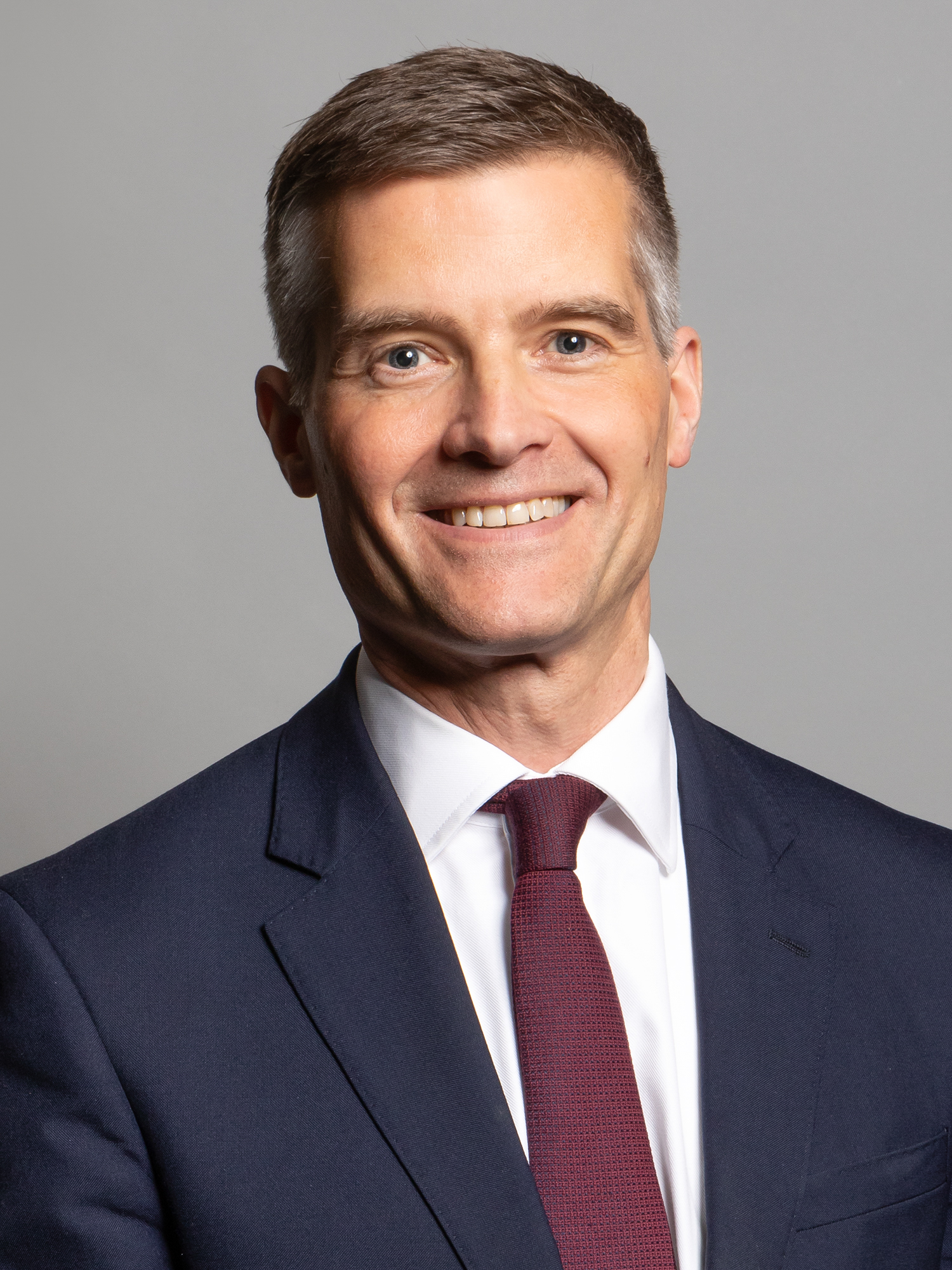
  • Mark Harper – 2023 Statement on Plans for New Smart Motorways Cancelled

    Mark Harper – 2023 Statement on Plans for New Smart Motorways Cancelled

    The statement made by Mark Harper, the Secretary of State for Transport, in the House of Commons on 17 April 2023.

    The government has announced that all plans for new smart motorways have been cancelled.

    This will mean that the 11 schemes already paused from the second Road Investment Strategy (2020 to 2025) and the 3 earmarked for construction during the third Road Investment Strategy (2025 to 2030) will be removed from the government’s road-building plans in recognition of the current lack of public confidence felt by drivers and cost pressures.

    While no new stretches will be converted, work on the M56 J6 to J8 and M6 J21a to J26 will go ahead as planned given they are already over three-quarters constructed.

    The government and National Highways will continue to invest £900 million in further safety improvements on existing smart motorways. This includes installing stopped vehicle detection technology on every all lane running smart motorway which has now been completed, adding an additional 150 emergency areas across the network by 2025 and investing in giving motorists clear advice when using existing smart motorways.

    The government will also continue to deliver against its other commitments as set out in its response to the Transport Select Committee in January 2022.

    This government will continue to ensure that our roads remain among the safest in the world – helping drivers not just to be safe, but crucially, to feel safe and confident when driving.

    The following schemes have been cancelled

    RIS2 (2020 to 2025) paused schemes

    New all lane running smart motorways

    M3 junctions 9 to 14

    M40/M42 interchange

    M62 junctions 20 to 25

    M25 junctions 10 to 16

    Dynamic hard shoulder to all lane running conversions

    M1 junctions 10 to 13

    M4/M5 interchange (M4 junctions 19 to 20 and M5 junctions 15 to 17)

    M6 junctions 4 to 5

    M6 junctions 5 to 8

    M6 junctions 8 to 10a

    M42 junctions 3a to 7

    M62 junctions 25 to 30

    RIS3 (2025 to 2030) pipeline schemes

    M1 North Leicestershire

    M1 junctions 35a to 39 Sheffield to Wakefield

    M6 junctions 19 to 21a Knutsford to Croft

  • PRESS RELEASE : £400,000 storm aid for Malawi from Scottish Government [March 2023]

    PRESS RELEASE : £400,000 storm aid for Malawi from Scottish Government [March 2023]

    The press release issued by the Scottish Government on 23 March 2023.

    Emergency relief funding following record-breaking storm.

    First Minister Nicola Sturgeon has pledged £400,000 of financial support to Malawi to assist with emergency relief efforts in the wake of Tropical Cyclone Freddy.

    The funding was confirmed in a letter to Malawian President Dr. Lazarus Chakwera, and the First Minister also expressed the sincere condolences of the people of Scotland, following the tragic loss of life.

    As of Monday 20 March, 499 people in the country have been killed and more than 508,244 people displaced as a result of the storm, which is the longest lasting and highest energy tropical cyclone ever recorded. A state of disaster in the Southern Region of Malawi has also been declared.

    The storm’s impact comes as Malawi faces what the UN has described as the deadliest cholera outbreak in its recorded history. In January, the Scottish Government provided more than £236,000 to aid the Malawian Government’s outbreak response.

    The letter reads:

    Your Excellency,

    It is with great sadness that I find myself writing on this occasion. Please accept the sincere condolences of the people of Scotland, and the Scottish Government, following the tragic loss of life and displacement of people as a result of Tropical Cyclone Freddy.

    It is heart wrenching to see the death, injury, and substantial damage to thousands of people’s homes and livelihoods, all at a time when Malawi is already facing a severe cholera outbreak.

    I want to confirm today that we will pledge £400,000 to support emergency flood relief in Malawi. We are discussing with partners working on the ground already as to the most effective way that we can provide that support for those most in need and will engage Malawian Department of Disaster Management as we develop the projects.

    Our thoughts are with all those affected by Tropical Storm Freddy, the people of Malawi at this difficult time and with your government in your response.

    Nicola Sturgeon

  • PRESS RELEASE : Historical adoption practices: A formal apology from Scottish Government [March 2023]

    PRESS RELEASE : Historical adoption practices: A formal apology from Scottish Government [March 2023]

    The press release issued by the Scottish Government on 22 March 2023.

    Heartbreak of mothers who were forced to give up babies.

    First Minister Nicola Sturgeon has delivered a formal apology to those affected by ‘cruel’ historical adoption practices.

    Many thousands of women – most of them young and unmarried – were forced to give up their babies for adoption until the late 1970s.

    The First Minister said the forced adoptions were ‘unjust and profoundly wrong’.

    Addressing the Scottish Parliament, the First Minister said:

    “As a Government, and a Parliament, we can set the record straight; we can acknowledge the terrible wrongs that were done, and we can say – with one voice – that we are sorry.

    “So today as First Minister, on behalf of the Scottish Government, I say directly:

    “To the mothers who had their babies taken away from them; to the sons and the daughters who were separated from their parents; to the fathers who were denied their rights, and to the families who have lived with the legacy;

    “For the decades of pain that you have suffered, I offer today a sincere, heartfelt and unreserved apology. We are sorry.

    “No words can ever make up for what has happened to you, but I hope this apology will bring you some measure of solace.

    “It is the very least that you deserve – and it is long overdue.”

    Background

    First Minister’s speech to parliament

    Following meetings with Ministers and campaigners, the Scottish Government last year encouraged people with direct experience of historical adoption practices to pass on their views and insight – online and through a questionnaire –  about how they can best be supported.

    The Scottish Government has committed funding of around £145,000 to provide specialist support and counselling. A proposal to establish peer groups has now been agreed. Research is also underway to identify how existing support services can be improved.

    The Scottish Government is continuing to explore, with those affected, the key challenges they face in relation to adoption records.

    Anyone who is impacted by trauma issues as a result of historical adoption practices can access information and advice from Health in Mind which provides a dedicated trauma support helpline on 07741 743971.

    The staff have knowledge and understanding of trauma and its impacts, including on mental wellbeing.

  • NEWS STORY : Rishi Sunak Calls for Extended Maths Education

    NEWS STORY : Rishi Sunak Calls for Extended Maths Education

    STORY

    In a keynote speech made in London today Rishi Sunak, the UK Prime Minister, has said that all school pupils in England should study some form of maths until they are 18 years old, stating that numeracy is a “key skill every bit as essential as reading”. Sunak first proposed the “maths to 18” vision in January 2023, but Education Secretary Gillian Keegan has admitted that schools do not currently have enough maths teachers to implement Sunak’s plans.

    Sunak argues that ending the “anti-maths mindset” in Britain is necessary to boost economic growth and to support this goal, he has also proposed an expansion in Maths Hubs, which are collaborative networks of schools working together to improve maths teaching and learning. Despite Sunak’s commitment to improving maths education, there are concerns about the feasibility of his plans without sufficient resources and support from schools.

    The Prime Minister said in his speech:

    “Everyone in our country will study some form of maths all the way to 18. Now let me be absolutely clear – I am not saying the answer is A-Level maths for everyone. But we do need to work out the maths our young people should study. So we’re going to look at what 16-18 year olds around the world are learning. And we’re going to listen to employers and ask them what they say the maths skills are that they need”.

    RESOURCES

    Prime Minister’s Speech

    PRESS RELEASE : Prime Minister sets ambition of maths to 18 in speech [January 2023]

    PETITION TO PARLIAMENT : Cancel plans for Maths to 18

    PRESS RELEASE : Quality maths graduates flock to teaching [August 2012]

    EXTERNAL NEWS LINKS

    Department for Education

  • Rishi Sunak – 2023 Speech on Mathematics

    Rishi Sunak – 2023 Speech on Mathematics

    The speech made by Rishi Sunak, the Prime Minister, in London on 17 April 2023.

    It’s great to be back at the London Screen Academy to celebrate the global powerhouse that is our film and television industry.

    From Star Wars to Game of Thrones…

    …007 to Top Gun Maverick…

    …you name it, we make it.

    And right here is where we’re training up the next generation of BAFTA winners…

    ….the producers, set designers, visual effects specialists…

    …who are going to ensure the UK remains one of the most creative countries in the world.

    Now the reason I’ve come here to talk about maths, is not just because I like maths.

    But because what I am setting out today is a fundamental part of how we need to change our country for the future.

    Now, one of my five priorities is economic growth.

    And if we are going to grow our economy not just over the next two years, but the next twenty…

    …we simply cannot allow poor numeracy to cost our economy tens of billions a year…

    …or to leave people twice as likely to be unemployed as those with competent numeracy.

    So, we have to fundamentally change our education system…

    ….so it gives our young people the knowledge and skills they need…

    …and that our businesses need…

    …to compete with the best in the world.

    And there’s no better example of that than in our creative industries.

    Because what’s the biggest skills shortage holding our film industry back?

    As you heard from Gillian, it’s a shortage of technical skills.

    And so what have the London Screen Academy put on the curriculum for their 16-to-19 year olds?

    Maths.

    Why?

    Because you can’t make movies without maths.

    You can’t make visual effects without vectors and matrices.

    You can’t design a set without some geometry.

    You can’t run a production company without being financially literate.

    And that’s not just true of our creative industries. It’s true of so many of our industries.

    In healthcare, maths allows you to calculate dosages.

    In retail, data skills allow you to analyse sales and calculate discounts.

    And the same is true in all our daily lives….

    …from managing household budgets to understanding mobile phone contracts or mortgages.

    We also know the benefits of maths for employability and earnings.

    Even just basic numeracy skills can increase your earnings by around £1,600 a year.

    Put simply, without a solid foundation in maths, our children risk being left behind…

    …shut out of the careers they aspire to; and the lives they want to lead.

    Now in the decade or so, we’ve gone up 10 places in the international league tables.

    And maths has become the most popular of all A-Levels.

    But it’s still the case that the UK is one of the least numerate countries in the developed world.

    More than 8 million adults have numeracy skills below those expected of a 9 year old.

    And around a third of our young people don’t pass maths GCSE.

    And it’s not just that we’re not good enough at maths…

    ….there’s a cultural issue here too.

    I’ll be honest, when my daughters first heard me talk about them doing more maths they weren’t too excited.

    And that’s just it.

    We make jokes about not being able to do maths.

    It’s socially acceptable.

    We say things like: “Oh, maths, I can’t do that, it’s not for me” – and everyone laughs.

    But we’d never make a joke like that about not being able to read.

    So we’ve got to change this anti-maths mindset.

    We’ve got to start prizing numeracy for what it is – a key skill every bit as essential as reading.

    So my campaign to transform our national approach to maths is not some nice to have.

    It’s about changing how we value maths in this country.

    And changing the way our education system works to deliver it…

    ….so that all our children get these vital skills for life.

    Now, parents and teachers listening to this will want to know what that means for our children today.

    So let me tell you.

    We’re in the process of making maths more accessible, building our children’s confidence, so they don’t fear maths.

    We’re creating more sector specific content that can excite young people about the relevance of maths for the careers that they aspire to…

    …to help teachers bring maths to life in the classroom…

    …from building sets for school plays to calculating the angles of free kicks or the speed of a formula one car.

    We’re extending our Maths Hubs – unique partnerships of expert schools that support maths teaching.

    And we’re strengthening maths in primary schools…

    …including with a new fully funded professional qualification for those that are teaching it.

    But we also need to address a very specific problem that’s causing us to fall behind the rest of the world.

    We are one of the few developed countries where young people don’t routinely study some form of maths up to the age of 18.

    They do it in Australia, Canada, France, Germany, Finland, Japan, Norway and America.

    Why should we accept any less for our children?

    Of course, we shouldn’t.

    That’s why I set out in January we are going to change the way our system works…

    …so that everyone in our country will study some form of maths all the way to 18.

    Now let me be absolutely clear – I am not saying the answer is A-Level maths for everyone.

    But we do need to work out the maths our young people should study.

    So we’re going to look at what 16-18 year olds around the world are learning.

    And we’re going to listen to employers and ask them what they say the maths skills are that they need.

    That’s why today I am appointing a new expert group….

    …who will help us identify that core maths content that our 16-to-18 year olds need…

    ….and whether we need a new specific qualification to support that.

    But to repeat: that will not be A-Level maths for all.

    And let me also be clear that we’re not going to deliver this change overnight.

    We’re going to need to recruit and train the maths teachers.

    We’re going to work out how to harness technology that we need to support them.

    And we’ll need to make sure this maths is additional to other subjects – not instead of them.

    Just as here at the London Screen Academy, they don’t teach maths instead of the arts – they teach both.

    Because they are complementary not contradictory.

    So it will take time to implement this change.

    But we are taking the first step today by identifying the maths content that will give our 16-to-18 year olds the skills they need to get on in life.

    And when we have that, then we’ll come back with a detailed plan to deliver it.

    I’ll just finish on a personal note.

    Every opportunity I’ve had in life began with the education I was so fortunate to receive….

    …and maths was a critical part of that.

    And I knew it was important then.

    And when I look at how the world is changing, it’s only going to be more important for my children – and yours.

    So I won’t sit back and allow this cultural sense that it’s ok to be bad at maths to put our children at a disadvantage.

    We’ve got to change this.

    We’ve got to value maths, and what it can do for our children’s futures.

    Giving our children a world class education is the single most important thing we can do.

    It’s the closest thing we have to a silver bullet….

    …the best economy policy, the best social policy, the best moral policy.

    That’s why I’m proud that it’s our policy, and I will never stop striving to achieve it.

  • NEWS STORY : Foreign Office Concerned about the Situation in Sudan

    NEWS STORY : Foreign Office Concerned about the Situation in Sudan

    NEWS STORY

    The Foreign Office has said that they are concerned about the situation in Sudan, following ongoing armed confrontations in the country resulting in dozens killed and hundreds injured. The situation is related to the ongoing political instability and unrest in Sudan, which has been a persistent issue since the ousting of former President Omar al-Bashir in 2019.

    One of the main sources of the current unrest is the ongoing dispute between the transitional government and the military over the country’s political direction and who should lead the country. There have also been reports of economic struggles, including high inflation rates and food shortages, exacerbating tensions in the country. Additionally, there have been clashes between various ethnic groups in the country, leading to violence and displacement. The United Nations has expressed concern about the current situation in Sudan and has urged all parties to prioritise dialogue and peaceful resolution of conflicts. The international community has also called for the protection of civilians and respect for human rights in the country.

    The Foreign Office said in a statement:

    “Now is the time for the Sudanese leadership to deescalate tensions and prevent further bloodshed. The UK calls on Sudanese leadership to return to dialogue. After months of fruitful political discussion, and real progress towards the return of a civilian-led transition, military action is not the solution. Long term peace is possible, but only through open, honest and pragmatic discussion.”

    RESOURCES

    Foreign Office Press Release

    Troika and European Union Envoys statement on Sudan

    EXTERNAL NEWS LINKS

    Foreign Office