Blog

  • Vladimir Putin – 2023 Comments on the Death of Silvio Berlusconi

    Vladimir Putin – 2023 Comments on the Death of Silvio Berlusconi

    IMPORTANT NOTE. The text of these comments from the Russian President are for informational purposes. Under Putin’s leadership, the country of Russia has started a war on the country of Ukraine and he is currently being investigated for war crimes.

    The comments made by Vladimir Putin, the President of Russia, on 12 June 2023.

    Pavel Zarubin: Mr President, hello.

    Excuse me, can I have just a minute of your time, please? Right before the ceremony [for presenting the Hero of Labour medals and the Russian Federation National Awards], tragic news arrived on the passing of Silvio Berlusconi. You had special friendly ties with him. Can I ask you for a few words about his role in Russian-Italian relations and in global politics?

    President of Russia Vladimir Putin: Yes. He was indeed a politician of European, and it can be said, of global scale. There are few people like him in the international arena nowadays. He was a good friend of our people and did a lot to develop business-like and friendly relations between Russia and the European countries.

    He initiated relations between Russia and the North Atlantic Alliance. It was with his assistance and on his initiative that respective interaction mechanisms were created.

    But he was primarily Italy’s politician, of course. He was an unusual person for a politician because he was very sincere and open-hearted. He also had a privilege that politicians of this scale lack – the privilege of saying what he meant.

    I am very sorry. I want to express heartfelt sorrow and condolences to Italian people and all of Mr Berlusconi’s family and friends. It is a great loss not only for Italy but also for global politics.

  • NEWS FROM 100 YEARS AGO : 7 June 1923

    NEWS FROM 100 YEARS AGO : 7 June 1923

    7 JUNE 1923

    The Restoration of Order in Ireland (Indemnity Bill) and the Rent Restrictions Bill passed their third reading in the House of Lords.

    The Rent and Mortgage Interest (Restrictions) Bill was discussed in the House of Commons during its second reading.

    The French and Belgian Governments agreed to a programme of fresh measures to increase the pressure on Germany to make war reparations.

  • NEWS FROM 100 YEARS AGO : 6 June 1923

    NEWS FROM 100 YEARS AGO : 6 June 1923

    6 JUNE 1923

    It was reported that a massage received in Paris from Berlin states that Germany’s new reparations offer is based on annual payments rather than specific fixed amounts.

    The Marquis of Salisbury stated that the Government’s view was that the establishment of a Singapore base was essential, after being questioned by Viscount Wimborne who suggested that there should instead be an investment in the air force.

    A vote of £44,655,246 for the Ministry of Pensions was discussed in the House of Commons and then agreed to.

  • NEWS FROM 100 YEARS AGO : 5 June 1923

    NEWS FROM 100 YEARS AGO : 5 June 1923

    5 JUNE 1923

    The Restoration of Order  in Ireland (Indemnity) Bill was read for a second time in the House of Lords.

    The Agricultural Rates Bill passed its second reading in the House of Commons by 286 votes to 127 votes.

    Stanley Baldwin, the Prime Minister, said in an interview with a Paris newspaper that Anglo-French difficulties could be adjusted and that if the two countries co-operated then wider problems in Europe could also be resolved.

    Juan Soldevilla y Romero, the Archbishop of Zaragoza, was assassinated.

  • NEWS FROM 100 YEARS AGO : 4 June 1923

    NEWS FROM 100 YEARS AGO : 4 June 1923

    4 JUNE 1923

    The result of a trade union ballot in the building trade on a proposed extension of hours during the summer months was rejected by a large majority.

    A formal apology was issued by the six Skye land raiders to the courts.

    Benito Mussolini, the Prime Minister of Italy, received a warm welcome during a visit to Venice.

    Governor Smith signed the Bill repealing prohibition enforcement in the state of New York.

  • NEWS STORY : Rhun ap Iorwerth Confirmed as New Leader of Plaid Cymru

    NEWS STORY : Rhun ap Iorwerth Confirmed as New Leader of Plaid Cymru

    STORY

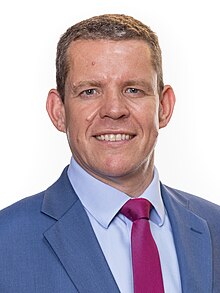
    Rhun ap Iorwerth, the Senedd member for Ynys Môn, has been confirmed as the new leader of Plaid Cymru as no other contenders stood for the position. He follows Adam Price, the previous leader who stood down in May 2023, having held the role since September 2018. Rhun ap Iorwerth, born in 1972, served as the deputy leader of the party from October 2018 and has been a member of the Senedd since August 2013.

    EXTERNAL NEWS LINKS

    Plaid Cymru Web-Site

  • Steve Barclay – 2023 Speech at the NHS Confed Expo

    Steve Barclay – 2023 Speech at the NHS Confed Expo

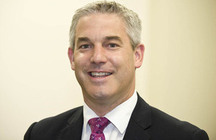
    The speech made by Steve Barclay, the Secretary of State for Health and Social Care, on 15 June 2023.

    Thank you, Matthew [Taylor] – it’s great to be with you today.

    Tuesday’s incident in Nottingham has shocked us all.

    I am sure everyone’s thoughts have been with the families of those who have lost their lives so tragically and all who have been affected.

    And I wanted to take this opportunity to thank in particular everyone in the NHS who responded from the ambulance crews and paramedics – to the staff at the Queen’s Medical Centre.

    I also recognise that this week brings additional challenges to many in the room due to the industrial action and I acknowledge that this creates additional pressures for you and your teams.

    Many people will be working particularly hard to ensure the impact on patients is mitigated as far as possible.

    And I know this work comes after an incredibly challenging period.

    While the World Health Organisation has announced that the Covid-19 pandemic is officially over, its after effects are still very much being felt – including the scale of delays it has caused for patients waiting for treatment and the pressures on staff.

    Thank you to everyone – across the whole health and care system – for the way you’re rising to meet these challenges.

    My motivation as Secretary of State is clear: to enable people to access the right care faster.

    Because when for example I think of cancer treatment, I am thinking of the constituent in her 20s with a young daughter who was told not to worry about her symptoms, only to later find that the cancer had spread.

    I challenge myself as to what more I can do in this job to get the right treatment to people like her as fast as possible.

    That challenge sits at the heart of our three recovery plans.

    And whether it’s electives, UEC or primary care, patients are – rightly – demanding improvements.

    They also want to see care that is better joined up.

    And with our Integrated Care Systems now taking proper statutory form, we are moving in the right direction.

    Last August, I visited the Jean Bishop Integrated Care Centre in Hull which is one of a number of fantastic examples of how health and social care can come together under one roof.

    NHS staff, care workers and volunteers are working to care for local people, including keeping thousands of frail and elderly patients out of hospital and helping them live at home with the independence and dignity they deserve.

    And with ICSs now fully operational, we can make this type of approach more commonplace across the country.

    Despite the difficulties we face, there are signs of progress.

    On electives we’ve virtually eliminated waits of over 2 years, and we’ve reduced 18 month waits by over 90%,

    But we know the overall number remains high.

    This has a material impact, like, for example, for the self-employed worker who is waiting for their operation before they return to work.

    This is why we are taking further action to expand patient choice and making information on patient choice much more transparent.

    On urgent and emergency care, ambulance handover delays have improved.

    But again we know it has been particularly difficult in the past few days.

    In primary care, more appointments are being delivered by GPs and the wider clinical team, with on average an extra 20 per practice per day.

    But demand remains high.

    I recognise many in this room will have played a direct part in bringing these additional services to patients.

    Alongside these plans, I know other important work continues apace.

    You will have heard yesterday from Amanda about the improvements in cancer, including the doubling of cancer checks.

    In the 21st century, with the technology at our disposal, we can go further.

    Thanks to your hard work, we’re already moving in the right direction.

    Take lung cancer as one example.

    Through our screening programme, we are now seeing more diagnoses at stage one and stage two in the most deprived communities.

    This is a positive step and a practical example of how we are addressing health inequalities.

    We’ve also made particular progress in areas like breast cancer and research this week shows that most women diagnosed in England will beat the disease.

    Now we must build on this, by getting people potentially life-saving tests, checks, and scans more quickly and bringing those checks closer to people.

    Community Diagnostics Centres are an example of this.

    There are now 108 in operation, and they’ve delivered more than 4 million tests, checks and scans and they will help us build on these hard-won gains in the years to come.

    Now, I don’t think there’s anything original about a Secretary of State being fixated on tech.

    But for me, this isn’t tech for tech’s sake.

    It is the way to get care to people quicker – and do so at scale.

    Take for example, the way we’re expanding the NHS App. Contrary to what you may have heard from one speaker yesterday, over 2.4 million repeat prescriptions were ordered in April alone.

    Alongside a quarter of a million primary care appointments that were booked on the app, with numbers increasing rapidly.

    Tech is also the way we can tackle the many frustrations that I hear from staff – and that I’m sure many of you in the room hear too.

    The reason I care about tech is simple: it improves outcomes and helps you do your jobs.

    And let me say this: when budgets are tight, tech is often the first thing to go.

    That is not my approach.

    I am protecting the tech budget – and those key investments that will help us in the long term.

    From ensuring every NHS Trust uses electronic patient records and investing more in bed management systems.

    To the significant investment we’re making in our new data platform.

    And digitising the front line – from speeding up staff logins to staff passporting.

    Because I am acutely aware that when it comes to tech it is often how we make the job of local teams easier that that really matters.

    Despite what you may have read, I believe strongly in devolving decision-making.

    Equally, I think this should sit alongside greater transparency.

    We need more devolved decision making to enable a place based approach with decisions taken closer to patient need.

    Equally there are areas of great innovation but we have a challenge in scaling that so it is widely adopted. And this challenge is reflected in too wide a variation in performance between similar areas.

    For me the opportunity is to devolve much more and to trust local decision makers. In return to expect more meaningful transparency.

    Let me give you a practical example of where I have applied this, even where it could be uncomfortable.

    I listened to those suggesting we publish the number of patients waiting for 12 hours or more from arrival in Emergency Departments.

    Together with NHS England colleagues, we acted on that and from April we started publishing that information.

    This is particularly relevant in the context of mental health patients, who we know are at greater risk of longer waits in A&E, and we’re taking targeted action to reduce that risk to reduce that risk to reduce that risk to reduce that risk.

    Including the roll out of mental health ambulances, mental health cafes and mental health crisis hubs.

    NHS leaders have been clear with me about what they want to see from government.

    Fewer targets and more trust in the system.

    As Matthew referenced, we published a new NHS mandate this morning which reflects this.

    For over a decade, governments have used the mandate to make asks of the system.

    Sometimes these asks have been excessive, with long documents with many pages full of tests and targets.

    I’m sure you won’t be alone if you’re sat there thinking: it doesn’t matter I don’t read it anyway.

    But what we’ve done this year is make it short and clear, setting out our priorities:

    Cutting waiting lists; the three recovery plans; tech; and workforce.

    It gives a clear direction and backs it up with the freedom and flexibility to deliver it.

    We know that change happens when people are trusted, have a common purpose and are free to innovate.

    It was something that Matthew highlighted yesterday as a lesson coming out of Covid. And it is something I very much agree with.

    Trusting ICSs with greater freedom from devolved decision-making alongside greater transparency was one of the reasons we commissioned the Hewitt Review. Thank you to all those who contributed to it.

    Before I wrap up, I just want to reflect that – as we sprint to address the present it would be easy to lose sight of foundations we can lay now to build hope for the future.

    Some – such as the Long-Term Workforce Plan – have been well debated by colleagues in this room.

    It offers significant opportunities not just to boost overall numbers, but to better use the full skills mix and deliver training and career progression in completely different ways.

    And there are other opportunities – such as the rapid developments in AI – that are exciting and fast-moving and generating much interest.

    One example of the work we’re doing with AI in the department is how we can use AI to improve patient safety in maternity services.

    And we’re also working closely with the life science industry to enable both population-level treatments and more bespoke and targeted medicine.

    And this is reflected in our recent deals agreed with Moderna and BioNTech, Lord O’Shaughnessy’s review to speed up and expand the adoption of clinical research trials we launched last month.

    And indeed the Chancellor’s citing of Life Sciences as one of his key growth sectors.

    The NHS has changed massively over the last 75 years, all while remaining true to its founding principles.

    Covid showed that we can deliver change very rapidly when it matters and that trust in local systems to make decisions allows them the freedom to better adopt innovation.

    It is the culture of innovation which gives us a strong foundation for the next 75 years.

    In closing, I want to reinforce my message today on the importance of trusting integrated care systems more.

    What that means for you is:

    • Greater freedom
    • Fewer targets from the centre
    • More meaningful transparency on performance

    That is the approach I am taking as we work with you on our shared challenge of making it easier for patients to access the care they need.

    Thank you.

  • PRESS RELEASE : UK funding for Syrians reaches almost £200 million this year [June 2023]

    PRESS RELEASE : UK funding for Syrians reaches almost £200 million this year [June 2023]

    The press release issued by the Foreign Office on 15 June 2023.

    UK funding for vulnerable Syrians and the region reaches almost £200 million this year.

    • The UK pledges up to £150 million at a pledging conference in Brussels
    • Earlier this year, the UK also committed up to £43 million to support the response to the earthquakes in Syria and Türkiye.
    • Funds pledged today will support food production, protect women and girls from violence, provide lifesaving assistance, and ensure access and improved humanitarian service provision.

    At the ‘Supporting the Future of Syria and the Region’ pledging conference in Brussels today (Thursday 15 June) the UK has pledged up to £150 million to support millions of vulnerable Syrians and help mitigate the destabilising impact of the conflict in refugee-hosting nations.

    This year’s pledge is in addition to the £43m committed earlier this year in response to the earthquakes in Syria and Türkiye, bringing the UK’s contribution to Syria and the region to £193m in 2023.

    Lord (Tariq) Ahmad of Wimbledon, Minister of State for the Middle East, said:

    The UK’s commitment to supporting the Syrian people is unwavering.

    On top of 12 years of harrowing conflict, Syrians have faced further tragedy this year in the form of February’s earthquakes.

    The international community must ensure the Syrian people are not forgotten. The UK will continue to play a leadership role in supporting Syrians to rebuild their lives and promote a long-term political settlement for lasting and sustainable peace.

    The funding announced today will support the humanitarian response both within Syria and across the region. It will enable around 65,000 Syrians in need per year to be less dependent on emergency aid, provide access to high-quality primary education in Northwest Syria and deliver specialised sexual and reproductive health services and gender-based violence services to help survivors recover.

    UK funding earlier in the year for earthquake relief in Syria included immediate support to the White Helmets for search and rescue operations, the delivery of urgent relief items – such as family tents, blankets, water purification kits – as well as a bolstered package of support to aid agencies to help those most in need. Last year, UK funding for the humanitarian needs of Syrians also provided thousands of people with drinking water and access to formal education, as well as delivering immunisation campaigns, medical consultations and sexual, gender-based violence and reproductive services.

    The UK is one of the largest bilateral donors to the Syria Crisis, having spent over £3.8 billion to date. It is the UK’s largest-ever response to a single humanitarian crisis.

  • PRESS RELEASE : UK joins international partners in delivering air defence equipment to Ukraine [June 2023]

    PRESS RELEASE : UK joins international partners in delivering air defence equipment to Ukraine [June 2023]

    The press release issued by the Ministry of Defence on 15 June 2023.

    A major new fund will deliver hundreds of vital air defence missiles, the result of a partnership between Denmark, the Netherlands, the UK and the USA.

    • A major new fund announced today will deliver hundreds of vital air defence missiles.
    • Result of a partnership between Denmark, the Netherlands, the UK and the USA.
    • Announcement comes on the eve of the Defence Secretary discussing the future of NATO at a meeting of Alliance defence ministers in Brussels.

    The UK will contribute to the rapid delivery of a significant package of vital air defence equipment for Ukraine, working alongside international partners, the Defence Secretary has announced today.

    The announcement was made today by the defence ministries of Denmark, the Netherlands, the UK and the USA, during a meeting of the Ukraine Defence Contact Group (UDCG). The UDCG brings together some 50 nations providing a variety of military support to Ukraine.

    Defence Secretary Ben Wallace said:

    Working with our international partners we are able to provide vital air defence equipment, which will help Ukraine support offensive operations and protect critical national infrastructure.

    Hundreds of short and medium range air defence systems will be procured via the fund. Delivery of the equipment has already begun and is expected to be completed within weeks. The package consists largely of Soviet-era missiles, supporting the Armed Forces of Ukraine’s most pressing needs for systems to support offensive operations and protect critical national infrastructure.

    As well as attending the UDCG, the Defence Secretary will also be attending a meeting of NATO defence ministers at NATO HQ, Brussels, ahead of next month’s summit of the Alliance’s leaders in Vilnius. The Defence Secretary will reiterate the UK’s ambition for Sweden’s accession to the Alliance to be ratified ahead of the NATO Leaders’ Vilnius summit.

    Ministers will also discuss changes to NATO’s military structures, strengthening ties with defence industry, and making sure the Alliance has the resources it needs to tackle threats across all domains – laying the groundwork for the biggest transformation of NATO for decades.

    Funding for air defences is the latest UK support for Ukraine to be announced, following the recent delivery of long-range Storm Shadow missiles, and the announcement from the Prime Minister last week that the UK is donating other air defence systems and long range attack drones.

    Earlier this week, the Defence Secretary met his Joint Expeditionary Force counterparts in Amsterdam, and announced that the UK will commit a further £250 million to the International Fund for Ukraine (IFU), as well as a new package of vital air defence capabilities worth £92 million. The equipment will be procured in the coming months through the IFU to bolster Ukraine’s ability to protect its critical national infrastructure, civilian population, and front-line personnel. The package will provide radars to help protect from indiscriminate Russian strikes as well as guns and a significant amount of ammunition. Norway, the Netherlands, Denmark, Sweden, Iceland and Lithuania have all contributed to the fund.

    Other recent support for Ukraine has included the granting of Challenger 2 main battle tanks, armoured vehicles, and self-propelled guns, as well as running training programmes for Ukrainian infantry, marines, and pilots.

  • PRESS RELEASE : Coronation flypast rearranged for the King’s Birthday Parade [June 2023]

    PRESS RELEASE : Coronation flypast rearranged for the King’s Birthday Parade [June 2023]

    The press release issued by the Ministry of Defence on 15 June 2023.

    Aircraft from across the Royal Navy, British Army and Royal Air Force will take part in a spectacular flypast for the King’s Birthday Parade, marking the first Birthday Flypast for His Majesty King Charles III.

    Around 70 aircraft will take to the skies above the crowds on The Mall and over Buckingham Palace watched by Their Majesties the King and Queen, alongside other members of the royal family.

    The aircraft will take off from 15 different locations across the UK before joining up across the south-east of England and flying across the capital.

    Chief of the Air Staff, Air Chief Marshal Sir Richard Knighton said:

    We are very proud to be able to showcase our capabilities to our Commander-in-Chief, on this historic occasion for His Majesty the King.

    We have planned a fitting and appropriate tribute for our monarch, that should be a true spectacle for the United Kingdom and the Commonwealth.

    The event will feature a mix of aircraft ranging from the Battle of Britain Memorial Flight dating back to the 1940s and the C-130 Hercules on its final ceremonial flight before retiring from service, to multiple Typhoon fighter jet aircraft and the Envoy IV CC1, making its flypast debut.

    At the front of the flypast will be a Juno HT1 piloted by Flight Lieutenant Tom Knapp from 60 Squadron, No.1 Flying Training School based at RAF Shawbury. The event will culminate in a spectacular show of red, white and blue from the pilots of the RAF Red Arrows.

    A similar sized flypast was planned for the King’s Coronation in May but was scaled down due to poor weather conditions. Therefore, this Birthday Flypast has been increased in size to pay tribute to the new monarch.

    Air Officer Commanding 1 Group, Air Vice-Marshal Mark Flewin said:

    It is a great honour to be part of His Majesty the King’s Birthday celebrations, where the flypast is an opportunity for us to showcase formation, precision and excellence in the air to our Commander-in-Chief on such a special occasion.

    The aircraft of the Armed Forces have a long and proud history of taking part in this occasion, with the first King’s Birthday Flypast taking place in 1913; and, most recently, formed part of Their Majesties’ Coronation in May and Her Majesty Queen Elizabeth II’s Platinum Jubilee last year.

    Many of the aircraft taking part in the flypast have been actively involved in operations around the world this year including the NATO Air Policing mission in Eastern Europe and the evacuation of British citizens from Sudan.

    The King’s Birthday Flypast follows Trooping the Colour which takes place on Horse Guards Parade in the morning. The ceremony dates back to the reign of King Charles II, and became an annual event in 1760. This year, the 1st Battalion Welsh Guards will troop their colour in the presence of His Majesty the King.