Blog

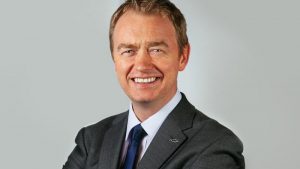
  • Tim Farron – 2015 Speech on the Future of the Liberal Democrats

    Below is the text of the speech made by Tim Farron, then standing in the leadership of the Liberal Democrats, at the IPPR on 25 June 2015.

    Thank you, David, and thanks also to IPPR for inviting me to deliver this talk. IPPR has always been one of the leading think tanks on the progressive wing of British politics. I welcome the interest you’ve shown in Liberalism, and I hope that in the next few years you will further develop the arguments in your 2007 book on Liberalism, Beyond Liberty.

    Now let me be frank. The election on May 7th was an utter disaster for the Liberal Democrats. In terms of our vote and number of MPs we are back to the level of the 1970 general election, when the Liberal Party won six seats on 7.5 per cent of the vote, compared to this year’s eight seats and 7.9 per cent.

    Compared to the last election, in 2010, we lost almost two-thirds of our vote and over 85 per cent of our MPs. There is no other occasion in the entire history of the Liberal Democrats or the Liberal Party, stretching back to the early nineteenth century, on which we have lost such a high proportion of our vote or our seats.

    It’s therefore entirely reasonable to ask the question: what is the point of the Liberal Democrats? Do we have a role to play in a country which appears to have rejected us so comprehensively?

    It won’t come as a surprise to you that I think we do! And I’m not alone. Since the election Party membership has surged by more than 30 percent, we are the fastest growing political party in the UK – that 18,000 people have, without being prompted, had the same thought, at the same time, and then done something about it… well that’s a phenomenon, indeed it is a movement. That’s more than just encouraging – it’s a signal that there are so many people out there who are Liberals at heart, who understand the threat that Liberalism faces, who think Liberalism’s worth fighting for and who see the Liberal Democrats as their vehicle and their voice.

    Even The Guardian has now reached that conclusion. Having compared us during the campaign to ‘rinse aid in a dishwasher … probably useful, surely not essential’ – they decided after the election just three weeks later that, ‘in the absence of a liberal party, one would have to be invented – and indeed … one will now have to be reinvented and rebuilt’.

    The result on May 7th might have been a rejection of the Liberal Democrats, but it was not a rejection of Liberalism. Rather, it was a consequence of our decision in 2010 to enter into coalition with our historic political enemies. We did the right thing by our country, and I am proud of Nick and all that we achieved, but our party was hugely damaged by the perceived submerging of our identity and by the tuition fees issue which undermined the electorate’s trust in us. Our election campaign did not help too much either: a campaign which seemed to say that we were desperate to get back into government and didn’t much mind with whom, while wholly failing to communicate what we stood for and what we believed. We said something about what we would do, but we did not tell people who we are.

    I want to be very clear, though: I am not repudiating the coalition. We were right to enter into coalition in 2010 and can be proud of what we achieved. Indeed, we proved that coalition government can be stable and successful and that people should not fear coalition in the future. But I spoke about all this at length to the Gladstone Club a couple of weeks back, so you’ll forgive me for not repeating myself here.

    In fact we achieved a lot for Liberalism in the coalition. The Agreement included: a rise in the income tax threshold to £10,000; the pupil premium to give extra resources for children from disadvantaged backgrounds; restoration of the earnings links for the state pension; a banking levy and reform of the banking system; investment in renewable energy; the immediate cancellation of plans for a third runway at Heathrow; an end to the detention of children for immigration purposes; the dropping of plans for identity cards; agreement to reach the UN target of 0.7 per cent of GNP for overseas aid by 2013; the introduction of a fixed-term parliament of five years; and reform of the House of Lords.

    With the exception of Lords reform, every single one of those objectives was achieved. And we managed more in the five years that followed: same-sex marriage, the world’s first Green Investment Bank, the triple lock for pensions, two million apprenticeships, free schools meals for the youngest pupils, and much more. I don’t believe any of that would have happened without Liberal Democrats.

    And that’s just the positive things we achieved; I don’t have time to list all the Tory commitments we blocked. Over the next five years people will see exactly what a difference we made. In fact, the last six weeks have shown pretty clearly what an outstanding job Nick Clegg and his team did.

    So why did we do so badly in the election? Ask random members of the public what they remember about the coalition, and will they list any of those achievements? While we were sweating over our best policies, people weren’t listening. Tuition fees created a barrier – like those force fields in Science Fiction films. We fired our best policies and achievements – and they were brilliant policies and achievements – and they just glanced off the electorate because the tuition fees barrier – that lack of trust – was too strong.

    So we need a fresh start. We have to prove, from first principles, why Liberalism in Britain still matters. So I’ll start by defining what I mean by Liberalism – what are the underlying beliefs and values that underpin our approach.

    All political philosophies rest on a view of human nature. The Liberal view is an optimistic one. We are not naïve about human beings, but we are not cynical and negative either. We believe that people do not need an overbearing state to help them do right. When afforded the freedom, dignity and respect that is due to all individuals, people generally show an enormous capacity to use their talents for good.

    We believe that, as rational beings, individuals are capable of judging their own self-interest. Indeed, they are the only ones able so to judge; no one else, whether politicians, priests or officials, can do that so well. The enabling society is therefore one in which each individual has the freedom to pursue their own ends as they judge best.

    My first core value, therefore, is liberty – the right of people to make the most of their lives: free to develop their talents, to say what they think and to protest against what they dislike according to their own values, free of a controlling, intrusive state and of a stifling conformity, and free to choose their own occupation or to set up their own business. A diverse society is a stronger society.

    This liberty must be protected with a framework of law. We have a steadfast commitment to human rights, because there are some things no government should ever be allowed to do to anyone, because the rule of law is the bedrock of freedom and prosperity, and because people are entitled to be treated with dignity and respect whatever their nationality or background.

    Since Liberals believe that every individual is of equal value, we are internationalists from principle. We believe that the free movement of people and the free exchange of ideas, goods and services across national boundaries enrich people’s lives, broaden their horizons and help to bring nations together in shared understanding. We believe that immigration is a blessing and not a curse.

    My second core value is democracy – but by democracy, I mean much more than just a mechanism for counting votes. I mean a spirit of equality, openness and debate, a coming together to decide our future fairly and freely, without being dominated by entrenched interests or financial power. A state that supports freedom has to be a democratic state, with power dispersed as widely as possible and built up from below, in which politics is not an activity confined to a tiny elite but something everyone can take their part in, as and when they choose. And we believe in the decentralisation of power – both political and economic – to the lowest level consistent with effective government, because the more locally an institution operates, the more responsive and transparent it can become.

    My third core value is fairness. Every individual is entitled to respect, whatever their income,

    way of life, beliefs or sexuality. That means that the state must treat citizens fairly – whether in the way police officers deal with young people on the streets, the way Jobcentres treat benefits claimants, or the way the tax authorities treat small businesses. It means fairness in other aspects of life, too, such as employees having a say over their conditions of work.

    But liberty and democracy and fairness alone are not enough, because people’s ability to realise their own goals is critically affected by their circumstances. Nothing robs you of your liberty more than poverty, ill-health, poor housing, or a lack of education.

    This isn’t just about high-quality public services and an effective welfare safety net, vital though they are. An unequal society – and Britain has one of the most unequal in the Western world – is weaker not just for those at the bottom of the pile but for everyone. The citizens of a less equal society suffer from poorer health, lower educational attainments, higher crime rates, and lower levels of trust and co-operation than their more equal counterparts. Government therefore needs to act to reduce inequalities in income and wealth. Inequality is not just immoral, it is impractical – it wastes the talent of the diverse people and places of our country.

    My fourth core value is environmentalism. Climate change, pollution and the degradation of the natural world pose one of the biggest threats to our welfare, to our economy and to our freedom that we have ever seen. We have to act both at home and internationally to promote green technologies, producing clean energy and transport, stopping the waste of natural resources, and protecting nature. The market by itself cannot achieve this; government action is needed across the board to set standards, provide new infrastructure and promote innovation – and in the process build a competitive economy and improve everyone’s quality of life. If we are going to defeat climate change, we need bold action. What the Green Party don’t get is that we won’t create and sustain the positive action we need on climate change with a message of doom and gloom. We need to communicate hope – because going green can bring a better quality of life for everybody, whether they’re climate wonks or not.

    This leads on to my fifth core value: quality of life- because some things, like the beauty of the natural world, or music and poetry and art, or spending time with friends and family, should never be sacrificed on the altar of profit or growth. A society in which people feel happier and more satisfied in life is one which is answering the needs of its citizens.

    Where else in the political spectrum are these core values represented? Is there another party that fights for liberty, democracy, fairness, internationalism, environmentalism and quality of life?

    It shouldn’t take too long to dismiss the Conservatives. David Cameron’s attempts to present himself as a liberal Tory, hugging huskies, hugging hoodies, building the big society, are long gone. Whether he really believes in any of that I strongly doubt – but if he does, he shows no signs of reining in Theresa May’s introduction of the so-called snoopers’ charter that we blocked.

    He stands behind George Osborne’s assault on the welfare state, with £12 billion of cuts to who-knows-what benefits to come – a Chancellor who could with a straight face claim that ‘we’re all in it together’ while cutting the top rate of income tax. Cameron fought the election on a manifesto that simultaneously promised to cut ‘carbon emissions as cheaply as possible, to save you money’ and to end all public subsidy to onshore wind, the cheapest form of renewable electricity – therefore ensuring that the average cost of renewables will go up, while losing jobs and investment.

    He has no interest in reforming the electoral system that gave his party a majority on 37 per cent of the vote. He will block any attempt at reform of party finances or election spending limits, to make sure that the bankers and hedge fund managers who fund his party can buy future elections too.

    He won the election not on a story of optimism, of a plan for ensuring better times for families and communities, but on a narrative of fear, of a Labour government propped up by Scottish Nationalists – in the process claiming that a vote for the SNP was illegitimate and thereby fanning the flames of Scottish separatism. When it comes to a choice between the good of their party and the good of the country Conservatives always put their party first.

    What about Labour? Liberal Democrats have tended to see the Labour Party as closer to our own progressive aims, partly because we have more of a history of cooperation with Labour governments – in Scotland from 1999 to 2007, in Wales from 2001 to 2003, or in the Lib-Lab Pact in the 1970s.

    And I think they score a little better than the Tories on some of my tests: the last years of the last Labour government saw positive developments in environmental policy, they fought the last election on a redistributive package that nicked one of its main planks – the mansion tax – from us, and they’re generally supportive of UK membership of the EU.

    But just remember what they were like in government. Even ignoring taking Britain into an illegal war, their record in other respects was unimpressive. Income inequality actually rose during New Labour’s term in office, while the seeds of the banking crisis were sown in their failure to regulate effectively the financial services sector.

    Their record on civil liberties was shameful; they were just as eager as the Tories to encroach ever more on freedom in the name of the war on terror. Even their cheerleader in the quality press, the Guardian, recognised, in an editorial on 15th May, that the Labour Party ‘is just as authoritarian as it is libertarian, and – with the impressive exception of the early Blair years – has been constitutionally conservative through much of its history’. The Guardian obviously forgot, incidentally, that Blair’s constitutional programme was set for him by the Cook-Maclennan Agreement, drawn up with the Liberal Democrats. In the last Parliament Labour joined with the Tories to block reform of the House of Lords and were at best lukewarm, and often hostile, over the AV referendum.

    What about UKIP? I’m not aware we share any value with them; they are the polar opposite of everything we stand for. And while the SNP is unlike UKIP in many ways, in one way they are the same: they exalt the race over the individual, they value people in terms of their nationality, not their character, they foster intolerance of others just because they are different.

    Finally, the Greens. I admire their dedication and their commitment to environmental aims, but at base they value the planet over its human inhabitants, which leads them into authoritarian and illiberal territory. It’s attractive to some because it promises a short cut to solve the huge problems of climate change, or inequality. But it isn’t rooted in a reality that understands how people behave – emotionally or politically. Policy by wishful thinking or authoritarian dictat ultimately doesn’t work – and I fear that many of their policies haven’t been rigorously thought through . Ultimately though, my concerns with the Greens are that they simply aren’t liberal. Free choice isn’t an inconvenience – it’s a fundamental part of what it means to be human, yet for the Greens it’s treated almost as an add on.

    So my conclusion is clear: while there may well be other parties with whom we can agree on particular policies, with whom we could cooperate in campaigns – for example for a yes vote in the EU referendum – there is no other party that is remotely Liberal in its basic philosophy, that shares our beliefs and values. So if Liberalism is worth fighting for, then logically the only course open to us is to rebuild the Liberal Democrats into a force than can fight for it effectively.

    And in turn that means building a campaigning movement, not just a political machine. It means ensuring that all of our campaigns – to stay in the EU, to retain the Human Rights Act, to defend the pupil premium because it attacks inequality, to oppose the Tories undermining the welfare states and selling off housing association homes, to promote green energy instead of shale gas – must be underpinned with a positive message of belief in this country, in its citizens and their communities. Our policy must be not just about what we will do but whom we are.

    This has always been the great cause of Liberalism, a creed which is now needed more than ever – an optimistic confidence in the capacity of ordinary people to make the most of their lives, fulfil their talents and realise their dreams, and the belief that it is the duty of government – active, ambitious, liberal government – to make this possible, to create the conditions in which people and their communities can flourish.

    I want to lead a party that motivates people to care about great causes, not dull managerialism. To inspire the movement that has come about since May 8th.

    I want to argue that inequality is wrong because every individual is equally precious, because inequality crushes the spirits of those at the bottom of the pile, because it creates a poorer society where the bonds between people count for less, because it is a stupid waste of talent, effort and resource. It is a brake on prosperity and work.

    I want to campaign for a bold environmental policy, not just because I believe that climate change must be tackled, though I do, but because green energy and transport means cleaner air and water, because green products and green exports will be the ones that succeed in global markets, because, as David Attenborough put it, ‘the natural world is the greatest source of excitement; the greatest source of visual beauty; the greatest source of intellectual interest. It is the greatest source of so much in life that makes life worth living.’

    I want to persuade people to vote for the EU, not just because of jobs and trade, important though they are, but because the European Union is the most successful peace process in human history, because we do not resent our neighbours, we love them; because open societies allow the human experience to widen and the human spirit to flourish, because it is better to treat foreigners as sisters and brothers, not as people to be feared or scapegoated when things go wrong.

    None of this will be easy, it will be a long hard slog, but I am confident that it’s possible. Remember, there was only seven years between David Steel taking over the Liberal leadership in 1976 after the devastation of the Thorpe scandal and the Alliance’s record-breaking vote in 1983. I don’t see why our recovery shouldn’t be much more swift than we fear, but it is not a given, we will have to earn it.

    We’ve done it before, in the 1950s and ’60s, when the Liberals under Jo Grimond recovered from near oblivion to challenge the Tory-Labour stranglehold on power; in the 1970s, when we adopted the approach of community politics, building on our local roots, fighting alongside local campaigners to make life better in a myriad of little ways for individuals and their communities; and in the 1980s, when I was a proud foot soldier as Paddy Ashdown and colleagues rebuilt the Liberal Democrats from the ashes of merger to argue the case for a fairer, freer, greener Britain.

    In each case we recovered because we knew that there was a cause worth fighting for: Liberalism. Liberalism is unique, it belongs to no other party. I am not about to allow the movement of Gladstone, Lloyd George and Grimond to die on my watch. Britain needs Liberals, it needs Liberal Democrats. Our cause must be fought for. I hope to lead that fightback.
  • Tim Farron – 2017 Speech at Liberal Democrat General Election Manifesto Launch

    Below is the text of the speech made by Tim Farron, the Leader of the Liberal Democrats, on 17 May 2017.

    A couple of weeks ago, in Kidlington near Oxford, I met a guy called Malcolm. I say met…he came up to me in the street and started shouting at me.

    You might have seen it on the news. Or the internet.

    In the end we actually got along. But he was angry with me for not getting behind Theresa May and backing Brexit. I think I calmed him down a bit when we spoke, but I don’t think I changed his mind.

    And that’s fine. You see, when last year’s referendum took place I campaigned harder than anyone else to remain. I believed passionately that our children would have a brighter future if Britain remained in the European Union.

    But we lost – and I accept that.

    But that doesn’t mean I have changed what I believe.

    I believe that our children will have a brighter future if we are inside the European Union. That they will be safer and better off. That our economy will be stronger and our country will have more influence in the world.

    But just because I believe that doesn’t mean I think people who voted to leave are bad people. Of course they’re not. We just disagree.

    You see, I grew up in Preston in Lancashire. And most of the people in Preston voted to leave. There are parts of Lancashire where two-thirds of people voted to leave.

    Friends of mine did. Members of my family did. They don’t all admit that to my face, but I know they did.

    Those people, they’re my people. I like them. They’re good people. Decent people.

    And, as it happens, I liked Malcolm too. Once he stopped shouting at me.

    But here’s the difference between me and Theresa May – I want Malcolm, and everyone in Preston, and every single one of you, to have your say over what comes next.

    Nobody knows what Brexit will look like.

    The choices Theresa May will make will affect your life and our country for decades – your job, your weekly shop, your environment, your safety, where you can travel to and where you can live.

    And she’s already making choices that will affect those things, including the most profound choice she could make – taking Britain out of the Single Market.

    That decision alone is a time bomb under our economy. And when it blows up it is going to take our NHS and our schools down with it.

    It is going to wreck our children’s future for decades to come.

    And it is a choice. Plain and simple. It wasn’t inevitable.

    There was nothing on the ballot paper last June that said we were choosing to pull out of the Single Market. There are other countries that are outside the EU but inside the Single Market – just look at Norway or Switzerland.

    There was nothing on the ballot paper that said that people and families from Europe who have made this country their home would be left in limbo, not knowing if they can stay in the country they raise their kids in.

    And there was definitely nothing on the ballot paper that said we would turn our allies into enemies. Yet here we are, with our government making accusations of our neighbours and even threatening war with Spain.

    The choices Theresa May makes – and the compromises she negotiates with bureaucrats in Brussels – will affect our children’s future for decades to come.

    My children, your children, Malcolm’s grandchildren.

    In June last year we voted for a departure, but we didn’t vote for a destination.

    So I want you to have your choice over your future.

    Someone is going to have the final say over the Brexit deal.

    It could be the politicians or it could be the people.

    I believe it should be the people.

    You should have the final say on whether Theresa May’s Brexit deal is right for you and your family in a referendum.

    And if you don’t like that deal, you should have the choice to remain in the European Union.

    Giving you the choice over your future is exactly what our manifesto is about.

    I want you to imagine a brighter future.

    Imagine a future where our children can grow up in a country where people are decent to each other.

    Where we have good schools and hospitals.

    Where we take the challenge of climate change seriously.

    Where give our teachers and nurses and soldiers the pay rise they deserve for the service they give our country.

    Where we have an open, innovative economy.

    Where we treat the poorest and the most vulnerable with compassion.

    Where we don’t turn our back on desperate refugees.

    That’s the Britain I love. That’s the Britain I want to lead.

    But that’s not the future Theresa May is offering you. If you want to know the most revealing thing that has been said during this election, look at Nigel Farage’s Twitter.

    He wrote: “Theresa May is using the exact words and phrases I’ve been using for twenty years.”

    Think about that for a minute. The ‘exact words and phrases’.

    The Prime Minister of our great country saying the same things that Nigel Farage has been saying for twenty years.

    And not just the words and phrases. The policies too, that’s what UKIP MEP Patrick O’Flynn said this week.

    Brexit never did just mean Brexit. For Nigel Farage, Brexit was always part of a package, a world view.

    It’s a world view that includes shunning climate change…

    …that includes shrinking the state by starving our schools and our NHS of the funding they need.

    …that includes turning our backs on some of the poorest and most vulnerable people in the world, as Theresa May did when she shamefully closed the door to desperate child refugees.

    That’s Nigel Farage’s world view. The same one that leads to Donald Trump banning Muslims and building a wall. The same one that Marine Le Pen tried to impose on the decent people of France.

    Nigel Farage’s vision for Britain is now Theresa May’s. He has taken over the Conservative Party.

    Anti-Europe. Anti-refugees. Slashing funding to schools and hospitals.

    No wonder UKIP is standing down candidates and backing the Tories.

    After all, who needs UKIP if the Government is doing what they want anyway.

    Somebody has to stand up to them. Someone has to fight for the decent, compassionate Britain we love.

    But it won’t be Jeremy Corbyn.

    On the biggest issue facing us all in a generation, when all this is at stake, Jeremy Corbyn’s Labour hasn’t shown up.

    Jeremy Corbyn even ordered his MPs and Peers to vote with the Tories and UKIP.

    Not against them. With them.

    Before the vote on Article 50, he said he would order his party to vote in favour even if the Government made no concessions to them whatsoever.

    So, surprise surprise, they didn’t.

    Jeremy Corbyn didn’t have to do that. He could have voted with us to stay in the Single Market, or to give European citizens living here the right to stay. He chose not to.

    Jeremy Corbyn has always been pro-Brexit – he campaigned against Europe for years – so we shouldn’t be surprised. But we should be disappointed.

    Labour are supposed to be the opposition, but they haven’t opposed anything.

    They are supposed to stand up for working people, but they haven’t stood up for anyone.

    They are supposed to care about our children’s future, but they are letting the Conservatives wreck it.

    They have lost the right to call themselves the opposition.

    Labour has lost its purpose but we have found ours.

    The brighter future we want for all our children is at stake. Our economy is at stake. Our schools and hospitals are at stake.

    This is about the future of the open, tolerant, united country we love.

    I am here tonight to tell you that we won’t roll over.

    A few weeks ago in France, the two parties that had run the country for decades came third and fifth in the election.

    Third and fifth.

    The decent people of France decided that they did not want to just simply accept one of the two tired old parties. So they rejected them.

    And when the two old parties had been eliminated, the decent people of France faced a stark choice: a liberal, pro-European candidate who believes in an open, tolerant and united France, and the leader of the National Front.

    Hope versus fear. A brighter future versus a cold, mean-spirited one.

    Nigel Farage pinned his colours to the mast. Just like when he backed Donald Trump in America, he backed the candidate who represented his world view – anti-Europe, anti-refugees.

    He backed the National Front.

    Well, the decent people of France chose hope over fear. And the National Front lost.

    Don’t let anyone tell you the only choice you have in this election is between Theresa May and Jeremy Corbyn.

    This election is about your choice and your future.

    You can choose a brighter future where our children grow up in a country where people are decent to each other…

    …where we have good schools and hospitals so that our children have a fair chance in life and our elderly are treated with dignity…

    …where we have a clean environment and an innovative economy.

    The more Liberal Democrat MPs you elect, the better the deal we will get on Europe.

    The more Liberal Democrat MPs you elect, the more jobs and more money for the NHS and schools.

    The more Liberal Democrat MPs you elect, the brighter the future for our children.

    Theresa May and Nigel Farage’s cold, mean-spirited Britain is not the Britain I love.

    The Britain I love is generous and compassionate.

    The Britain I love is one where we are decent to each other.

    The Britain I love is open, tolerant and united.

    If that is the Britain you love too then this is the moment to stand up.

    This is your chance to change Britain’s future.

    I am here tonight because when my children are my age I want to be able to look them in the eye and tell them honestly that when the moment came to stand up for their future, I stood up.

    I am determined that our children will grow up in a country where people are decent to each other.

    I am here tonight because the Britain I love is not lost yet.

    That’s the country I want to lead.

  • Theresa May – 2017 Statement at the G7 Summit in Sicily

    Below is the text of the speech made by Theresa May, the Prime Minister, in Sicily on 26 May 2017.

    Good afternoon.

    This week, the United Kingdom suffered one of the worst terrorist attacks in our history. The murder of innocent citizens and the deliberate targeting of children appalled people at home and around the world.

    Today, G7 leaders have joined Britain in condemning this barbaric act of violence. It is at moments such as this that we are reminded of the fundamental importance of this unique group of nations, and the unity that our membership affords.

    Because the threat of terror is one that all our countries face. And now more than ever we must strengthen our resolve to overcome this threat together and stand firm against those who want to destroy our precious values and our way of life.

    Yesterday I was at the NATO Summit in Brussels, where member countries reaffirmed their commitment to our transatlantic security alliance, and agreed on the importance of NATO expanding its counter-terrorism role.

    And, here in Sicily, the G7 has come together to address the biggest issues we face, from terrorism and conflict, to important foreign policy issues, global trade and climate change.

    I will address each in turn.

    Counter Terrorism

    Today, against the backdrop of Monday’s cowardly attack in Manchester, we have discussed what more we can do together to defeat global terror.

    We agreed the threat from Daesh is evolving rather than disappearing – as they lose ground in Iraq and Syria, foreign fighters are returning and the group’s hateful ideology is spreading online.

    Make no mistake: the fight is moving from the battlefield to the internet.

    In the UK we are already working with social media companies to halt the spread of extremist material and hateful propaganda that is warping young minds.

    But I am clear that corporations can do more. Indeed, they have a social responsibility to now step up their efforts to remove harmful content from their networks.

    Today, I called on leaders to do more.

    We agreed a range of steps the G7 could take to strengthen its work with tech companies on this vital agenda. And ministers will meet soon to take this forward.

    We want companies to develop tools to identify and remove harmful material automatically. And in particular I want to see them report this vile content to the authorities, and block the users who spread it.

    And the G7 will put its weight behind the creation of an international industry-led forum where new technologies and tools can be developed and shared to help us deny terrorists their pernicious voice online.

    It is also vital we do more to cooperate with our partners in the region to step up returns and prosecutions of foreign fighters. This means improving intelligence-sharing, evidence gathering, and bolstering countries’ police and legal processes.

    Foreign Policy

    The investigation into what happened in Manchester is ongoing. But the suicide bomber’s links to Libya undoubtedly shine a spotlight on this largely ungoverned space on the edge of Europe.

    So we must redouble our support for a UN-led effort that brings all the parties to the negotiating table and reduces the threat of terror from that region.

    Similarly in the case of Syria, we agreed that it will be impossible to defeat terrorism without a political settlement that brings a stable transition away from President Assad.

    We welcomed the progress towards de-escalation, but are clear that the regime’s backers, Russia and Iran, must use their influence to deliver a ceasefire and move to a genuine political process.

    Leaders agreed today that we must challenge Iran’s destabilising activity in Syria and the wider region, and that we must continue our efforts to prevent Iran from acquiring a nuclear weapons capability.

    Leaders were united in their condemnation of North Korea’s continued nuclear weapons and ballistic missile tests.

    We agreed to increase pressure on Pyongyang as we work to secure a peaceful resolution in the region.

    Economy and Trade

    This afternoon I led a discussion on trade and the global economy. As we prepare to leave the European Union, I reiterated the UK’s abiding commitment to free trade and open markets.

    But I and my fellow world leaders also recognised that some people feel left behind by globalisation. And that not all countries are playing by the rules.

    We need to show our citizens that the global economy can truly work for everyone.

    This means recognising the importance of the international rules-based system and the World Trade Organisation in creating a level playing field for trade – but accepting that we need to make the system work better.

    And it means taking action to ensure that all our citizens can share in the benefits of globalisation, and support those who feel they have lost out.

    The UK’s industrial strategy of economic and social reform is helping spread growth and opportunity to all parts of our country and society.

    We are ensuring people have the skills to capitalise on the opportunities presented by new technologies and a digital economy at the start of and throughout their careers.

    And as we work to make the UK an even more attractive place for businesses to invest and grow, we want companies to act responsibly and play their part in making ours a country that works for everyone.

    We had a productive discussion today about the importance of global action against climate change, to safeguard the prosperity and security of future generations.

    The UK remains committed to this agenda. We will keep energy affordable and maintain a secure and reliable supply in order to protect the interests of businesses and consumers.

    Clearly, the global challenges we face today are more urgent than ever before. When it comes to the fight against terrorism, we can only defeat this evil together, with determined and coordinated action.

    As the G7 we stand united today in our commitment to uphold the values we share – and to create a safe, secure and prosperous future for all our citizens.

  • Theresa May – 2017 Ramadan Message

    Below is the text of the statement made by Theresa May, the Prime Minister, on 26 May 2017.

    Ramadan is a unique and special time for Muslims in Britain and around the world.

    It is a time for them to renew their faith in God and increase their devotion and spirituality. A time when, despite the long summer days, Muslims across Britain will find strength through devotion to fulfil one of the five pillars of their religion.

    Ramadan fosters a strong sense of community spirit, reflected in the way mosques open their doors and welcome people of all faiths and none to share in the Iftar meal – something I have experienced in my own constituency of Maidenhead. It is an important chance for people from all walks of life to meet together, discuss and share experiences with their neighbours, and to increase familiarity and foster friendships.

    This Ramadan, let us celebrate the way in which this festival of peace, reflection and religious devotion brings people closer together.

    And let us say to Muslims here in Britain and across the world, Ramadan Kareem.

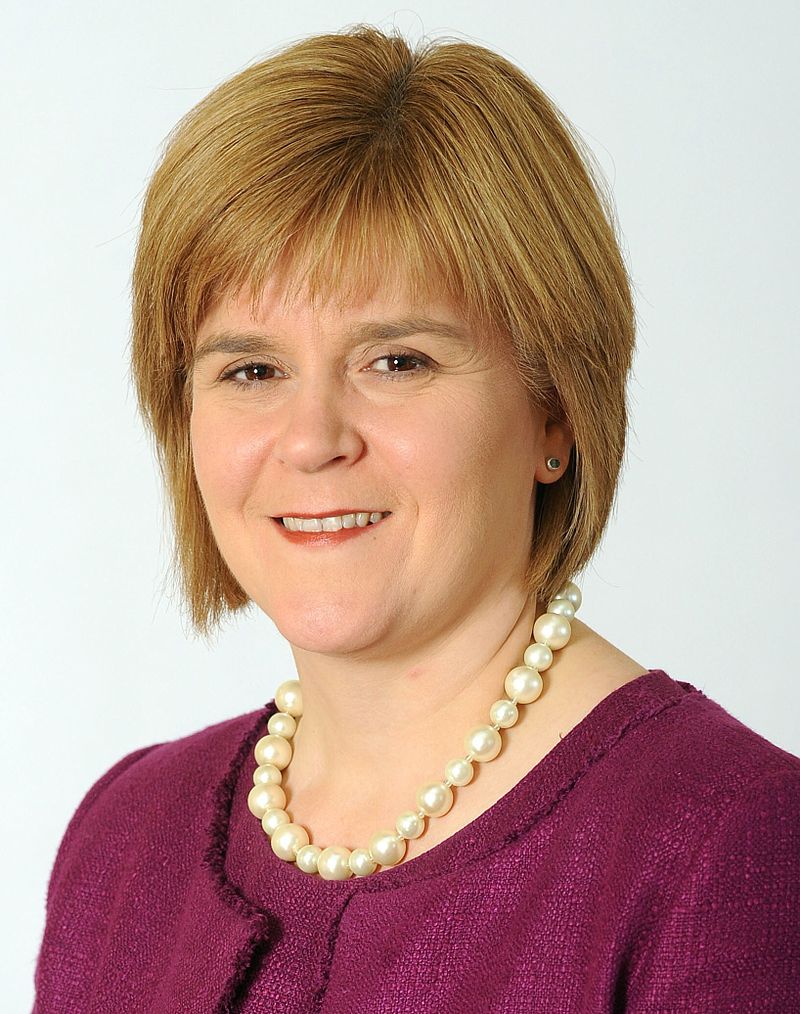
  • Nicola Sturgeon – 2017 Speech on Conservative Policies

    Below is the text of the speech made by Nicola Sturgeon, the Scottish First Minister, on 17 April 2017.

    The last few days have exposed the full horror of the rape clause, the wider issues around the cap on child tax credits and the complicity of Scottish Tories in the utterly immoral policies of their Westminster colleagues.

    The Tory government’s decision to ban low income families from claiming tax credits for any more than two children, and then force women to prove that they were raped in order to claim tax credits for a third child is inhumane and barbaric – and as we saw in the protest in George Square last week, it is an issue of increasing public anger as the full reality of this inhuman policy becomes clear.

    And while the rape clause is the most attention grabbing of the Tories welfare cuts, it’s not the only way in which women are being made to pay the price of Tory policies. Cuts to tax credits will affect women far more than men, because more of women’s income is dependent on benefits and child tax credits.

    50,000 Scottish households are expected to be affected by the cuts to child tax credits that will take effect by 2021. New families applying for tax credits could lose £545 a year.

    Since these cuts were first announced, with the detail of the rape clause buried deep in one of George Osborne’s final budgets, the SNP’s Alison Thewliss – backed by MPs and MSPs from Labour and the Greens – has led the campaign against them. That cross party support has been hugely important, but the behaviour of the Scottish Tories has been nothing less than contemptible.

    Having repeatedly failed to speak out against this disgusting policy, Ruth Davidson then tried to hide behind her official spokesperson. And then, last week, she came out in open support of the rape clause.

    She also made the suggestion that the Scottish Parliament should simply step in and pay for these benefits instead.

    That was just a desperate smokescreen – an attempt to deflect attention from the Tories’ direct responsibility for this policy and hide her own blushes. The truth is that, far from standing up to her Tory colleagues, Ruth Davidson is defending them regardless of the impact on families across Scotland.

    Let’s be clear, the answer to Tory cuts cannot simply be for the Scottish Government to get out the sticking plasters and patch up the Tories’ mess – using money intended for public services, while the UK Government pockets the savings from their cuts. The solution is for the Tories to scrap the rape clause and the two child policy – not just in Scotland but across the whole of the UK.

    Of course, if the Tories do want Scotland to take on the responsibility then let’s see all social security powers, and all of the funding used to pay for it, transferred to the Scottish Parliament – that way we can deliver a fair and balanced social security system across the board instead of just trying to clear up the mess.

    And when the Tories say these cuts are needed to help balance the books, we should never forget that in the very same budget in which they said there was no money to pay for tax credits, they found the money to cut taxes for the highest earners – a tax cut that the Scottish Tories supported north of the border as well.

    Many years ago, Theresa May infamously said that people often see the Tories as the nasty party. Now that she is Prime Minister, it appears that she – and Ruth Davidson – are determined to live up to that reputation.

  • Jeremy Corbyn – 2017 Speech at Church House, London

    Below is the text of the speech made by Jeremy Corbyn, the Leader of the Opposition, at Church House in London on 19 April 2017.

    The dividing lines in this election could not be clearer from the outset. It is the Conservatives, the party of privilege and the richest, versus the Labour Party, the party that is standing up for working people to improve the lives of all.

    It is the establishment versus the people and it is our historic duty to make sure that the people prevail. A duty for all of us here today, the duty of every Labour MP, a duty for our half a million members – including the 2,500 who have joined in the last 24 hours.

    Much of the media and establishment are saying that this election is a foregone conclusion.

    They think there are rules in politics, which if you don’t follow by doffing your cap to powerful people, accepting that things can’t really change, then you can’t win.

    But of course, they do not want us to win. Because when we win it is the people, not the powerful, who win.

    The nurse, the teacher, the small trader, the carer, the builder, the office worker, the student, the carer win. We all win.

    It is the establishment that complains I don’t play the rules: by which they mean their rules. We can’t win, they say, because we don’t play their game.

    We don’t fit in their cosy club. We ‘re not obsessed with the tittle-tattle of Westminster or Brussels. We don’t accept that it is natural for Britain to be governed by a ruling elite, the City and the tax-dodgers, and we don’t accept that the British people just have to take what they’re given, that they don’t deserve better.

    And in a sense, the establishment and their followers in the media are quite right. I don’t play by their rules. And if a Labour Government is elected on 8 June, then we won’t play by their rules either.

    They are yesterday’s rules, set by failed political and corporate elites we should be consigning to the past.

    It is these rules that have allowed a cosy cartel to rig the system in favour of a few powerful and wealthy individuals and corporations.

    It is a rigged system set up by the wealth extractors, for the wealth extractors.

    But things can, and they will, change.

    Britain needs a Labour government that is prepared to fight for people in every part of the country, our towns, villages, as well as big cities.

    A Labour government that isn’t scared to take on the cosy cartels that are hoarding this country’s wealth for themselves. It needs a government that will use that wealth to invest in people’s lives in every community to build a better future for every person who lives here.

    Because the Conservatives, drunk on a failed ideology, are hell bent on cutting every public service they get their hands on, and they will use all of the divide-and-rule tricks of the Lynton Crosby trade to keep their rigged system intact.

    Don’t be angry at the privatisers profiting from our public services, they whisper, be angry instead at the migrant worker just trying to make a better life.

    Don’t be angry at the government ministers running down our schools and hospitals, they tell us, be angry instead at the disabled woman or the unemployed man.

    It is the rigged economy the Tories are protecting that Labour is committed to challenging. We will not let the elite extract wealth from the pockets of ordinary working people any longer.

    So many people in modern Britain do what seems like the right thing to do. They get jobs, they spend all day working hard, they save to buy their own home, they raise children, they look after elderly or sick relatives. And yet, at the end of it, they get almost nothing left over as a reward.

    Compare their lives with the multinational corporations and the gilded elite who hide their money in the Cayman Islands because the Conservatives are too morally bankrupt to take them on.

    Labour in power will end this racket and make sure that everybody pays their taxes which fund our public services.

    We will overturn this rigged system. For all Theresa May’s warm words on the steps of Downing Street the Conservatives will never do any such thing.

    Seven years of broken promises show us that on pay, the deficit, the NHS, our schools, our environment.

    It was their wealthy friends in the City who crashed our economy. How dare they ruin the economy with their recklessness and greed and then punish those who had nothing to do with it? It was not pensioners, nurses, the low or averaged paid workers or carers who crashed the economy.

    The Conservatives boast of record numbers of jobs. But what good is that if people in work are getting poorer and don’t share in the profits of that economy while the Conservatives look after the wealthy few? Our offer is to tackle elderly poverty and loneliness, invest in our economy, NHS and schools, to improve rights at work and the ten pound living wage.

    Britain is the sixth richest economy in the world. The people of Britain must share in that wealth.

    If I were Southern Rail or Philip Green, I’d be worried about a Labour Government.

    If I were Mike Ashley or the CEO of a tax avoiding multinational corporation, I’d want to see a Tory victory.

    Why? Because those are the people who are monopolising the wealth that should be shared by each and every one of us in this country. Everyone, and I mean everyone, has a contribution to make and a life to lead. Poverty and homelessness are a disaster for the individual and a loss to all of us.

    It is wealth that should belong to the majority and not a tiny minority.

    Labour is the party that will put the interests of the majority first, while the Tories only really care about those who already have so much.

    That is why we will prove the establishment experts wrong and change the direction of this election. Because the British people know that they are the true wealth creators, held back by a system rigged for the wealth extractors.

    Theresa May will insist that this is an election about Brexit. She will try to downplay the issues that affect people’s lives every day and instead turn the election into an ego trip about her own failing leadership and the machinations of the coming negotiations in Brussels.

    It is only Labour that will focus on what kind of country we want to have after Brexit.

    In the coming weeks Labour will lay out our policies to unlock opportunities for every single person in this country.

    We will focus on giving people real control over their own lives and make sure that everybody reaps a just reward for the work that they do.

    We will no longer allow those at the top to leach off of those who bust their guts on zero hours contracts or those forced to make sacrifices to pay their mortgage or their rent.

    Instead of the country’s wealth being hidden in tax havens we will put it in the hands of the people of Britain as they are the ones who earned it.

    In this election Labour will lead the movement to make that change.

    We will build a new economy, worthy of the 21st century and we will build a country for the many not the few.

  • Theresa May – 2017 Speech in Bolton

    Below is the text of the speech made by Theresa May, the Prime Minister, in Bolton on 19 April 2017.

    It’s great to be here in Bolton, fresh from the House of Commons, fresh from winning a vote in the House of Commons which approved my decision to hold a general election on the 8th of June. It’s the right decision, it’s in the national interest. And that’s what this election is about providing the strong and stable leadership this country needs to take Britain through Brexit and beyond. It’s about strengthening our hand in the negotiations that lie ahead. And it’s about sticking to our plan for a stronger Britain that will enable us to secure that more stable and secure future for this country and take the right long term decision for the future. It’s about strong and stable leadership in the national interest. And you only get that strong and stable leadership by voting for the Conservatives. Because that’s what Conservatives government provides. And just look at what we’ve done.

    When I took over as Prime Minister, there were predictions of immediate financial crash, of economic danger. But we see consumer confidence remains high, we see record numbers of jobs, and economic growth that has exceeded all expectations. When I took over as Prime Minister people said the country was divided that it could never be brought together. But actually what I see today in this country is a unity of purpose – a desire for the Government to get on with the job of putting Brexit in to place and making a success of it.

    When I took over as Prime Minister, the country needed clear vision and strong leadership to ensure that we got on with that job of delivering on Brexit for the British people and that’s exactly what we did. We delivered that strong and stable leadership, we delivered the certainty that strong and stable leadership can give. And that’s what leadership looks like.

    Now there’s a very clear choice at this election. It’s a choice between strong and stable leadership under the Conservatives, or weak and unstable coalition of chaos led by Jeremy Corbyn. And that is very clear. Let’s look – the other parties are lining up to prop up Jeremy Corbyn. We’ve seen it with the Liberal Democrats, and we see it with Nicola Sturgeon’s Scottish nationalists. They’re very clear that they want to do everything they can to frustrate our Brexit negotiations. To undermine the job that we have to do, the task that lies ahead. Do everything to stop us from being able to take Britain forward. And it’s their tunnel vision focus on independence that actually provides uncertainty. They want to pull the strings, try to pull the strings of this election, prop up Jeremy Corbyn and provide more risk and uncertainty for the British people and that’s not in Britain’s interests.

    So it’s only a vote for the Conservatives that can deliver, and every vote for the Conservatives is a vote for me and local Conservative candidates, and it’s a vote to ensure that we have that strong and stable leadership that we need to take us through Brexit and beyond. Every vote for me and the local Conservative candidates here and across Britain is a vote to deliver on that plan for a stronger Britain and a more secure future for us all. And if we have that certainty of five more years of strong and stable leadership then we can ensure that we’re delivering for people, for ordinary working people up and down the country, across the whole United Kingdom.

    Yes getting the right deal with the European Union, ensuring that we get that good negotiation, that we deliver on that deep and special partnership with the European Union. Negotiating other deals for export of British goods and services. A country that is showing that we can be leaders in preventing terrorism and fighting modern slavery. But it’s also about getting the right deal for ordinary working people here at home, and that’s about building a strong Britain. Britain is the strongest country in Europe in terms of economic growth and national security.

    It’s about building a stronger economy. It’s about creating well paid secure jobs. It’s about ensuring that there is opportunity for all. That we provide a good school place for every child. That there is affordable housing. That people can get on in their lives. It’s about ensuring that we create a more united nation. That we take action against the extremists who want to divide us, and that we stand up to the separatists who want to break up our country. So it’s providing that strong and stable leadership.

    That certainty. That stability for the future, and that’s going to be our message as go out in to our election campaign. And I’m looking forward to it. We’re going to fight a positive and optimistic campaign about the future of this country. I’m going to be getting out and about around the country. I’m going to be visiting communities in every part of the United Kingdom. And I’m looking forward to taking our case out there to people. Because this is the case – that it is only with the Conservatives that you get the strong and stable leadership that this country needs to see us through Brexit and beyond.

    Only we can give that plan for a stronger Britain. For a more secure future. But only you can give us the mandate. So vote for a strong and stable leadership in this country. Vote for the strong and stable leadership this country needs. Give me the mandate to lead Britain. Give me the mandate to speak for Britain. Give me the mandate to fight for Britain, and give me the mandate to deliver for Britain.

  • Theresa May – 2017 General Election Announcement

    Below is the text of the statement made by Theresa May, the Prime Minister, on 18 April 2017, announcing a General Election.

    I have just chaired a meeting of the Cabinet, where we agreed that the Government should call a General Election, to be held on June 8.

    I want to explain the reasons for that decision, what will happen next and the choice facing the British people when you come to vote in this election. Last summer, after the country voted to leave the European Union, Britain needed certainty, stability and strong leadership, and since I became Prime Minister the Government has delivered precisely that.

    Despite predictions of immediate financial and economic danger, since the referendum we have seen consumer confidence remain high, record numbers of jobs, and economic growth that has exceeded all expectations.

    We have also delivered on the mandate that we were handed by the referendum result. Britain is leaving the European Union and there can be no turning back. And as we look to the future, the Government has the right plan for negotiating our new relationship with Europe.

    We want a deep and special partnership between a strong and successful European Union and a United Kingdom that is free to chart its own way in the world.

    That means we will regain control of our own money, our own laws and our own borders and we will be free to strike trade deals with old friends and new partners all around the world.

    This is the right approach, and it is in the national interest. But the other political parties oppose it. At this moment of enormous national significance there should be unity here in Westminster, but instead there is division.

    The country is coming together, but Westminster is not. In recent weeks Labour has threatened to vote against the deal we reach with the European Union. The Liberal Democrats have said they want to grind the business of government to a standstill.

    The Scottish National Party say they will vote against the legislation that formally repeals Britain’s membership of the European Union and unelected members of the House of Lords have vowed to fight us every step of the way.

    Our opponents believe that because the Government’s majority is so small, our resolve will weaken and that they can force us to change course. They are wrong.

    They under-estimate our determination to get the job done and I am not prepared to let them endanger the security of millions of working people across the country. Because what they are doing jeopardises the work we must do to prepare for Brexit at home and it weakens the Government’s negotiating position in Europe.

    If we do not hold a general election now their political game-playing will continue, and the negotiations with the European Union will reach their most difficult stage in the run-up to the next scheduled election. Division in Westminster will risk our ability to make a success of Brexit and it will cause damaging uncertainty and instability to the country.

    So we need a general election and we need one now, because we have at this moment a one-off chance to get this done while the European Union agrees its negotiating position and before the detailed talks begin. I have only recently and reluctantly come to this conclusion.

    Since I became Prime Minister I have said that there should be no election until 2020, but now I have concluded that the only way to guarantee certainty and stability for the years ahead is to hold this election and seek your support for the decisions I must take. And so tomorrow I will move a motion in the House of Commons calling for a general election to be held on the eighth of June.

    That motion, as set out by the Fixed-Term Parliaments Act, will require a two-thirds majority of the House of Commons. So I have a simple challenge to the opposition parties, you have criticised the Government’s vision for Brexit, you have challenged our objectives, you have threatened to block the legislation we put before Parliament.

  • Jeremy Corbyn – 2017 Easter Message

    Below is the text of the Easter Message from Jeremy Corbyn, the Leader of the Opposition, from 17 April 2017.

    I would like to wish everyone a happy Easter this weekend.

    As millions mark Easter around the world, it’s a time to reflect on the challenges we face both at home and internationally – and what our response should be.

    We hear painful stories every day, of homelessness, poverty or crisis in our health service – or across the world, of the devastating consequences of war and conflict, including millions forced to become refugees.

    It would be easy to retreat into our private lives because the challenges seem overwhelming, or allow ourselves to be divided and blame others. But we need to respond to these problems head on, through action and support for social justice, peace and reconciliation.

    Those principles are at the heart of Christianity. And Christians throughout the world will this weekend be remembering Jesus’s example of love and sacrifice, and the Easter message of redemption and peace.

    At a time of growing conflict, that message of peace could not have more urgency throughout the world.

    I meet Christians, and others of all faiths and none on a daily basis, who share and live those ideals: people who give their time for others, to run food banks, protect the vulnerable, look after the sick, the elderly and our young people.

    That spirit of respect for each other, peace and equality is one we can all share. So to all Christians and those of all faiths and none, have a happy and peaceful Easter.

  • Theresa May – 2017 Easter Message

    Below is the text of the Easter message given by Theresa May, the Prime Minister, on 16 April 2017.

    Easter is a moment to reflect and an important time for Christians and others to gather together with families and friends.

    This year, after a period of intense debate over the right future for our country, there is a sense that people are coming together and uniting behind the opportunities that lie ahead.

    For at heart, this country is one great union of people and nations with a proud history and a bright future. And as we face the opportunities ahead of us – the opportunities that stem from our decision to leave the European Union and embrace the world – our shared interests, our shared ambitions, and above all our shared values can, and must, bring us together.

    This Easter I think of those values that we share – values that I learnt in my own childhood, growing up in a vicarage. Values of compassion, community, citizenship. The sense of obligation we have to one another.

    These are values we all hold in common, and values that are visibly lived out everyday by Christians, as well as by people of other faiths or none.

    I think of those who go out of their way to visit the sick or bereaved, providing comfort and guidance to many in our country at some of the most difficult moments in their lives. I think of the sacrifices and service of aid workers who put themselves in harm’s way to bring much-needed relief in war-torn parts of the world.

    We should celebrate all these contributions and others like them, and the difference they make in our society and around the world.

    In doing so, we should be confident about the role that Christianity has to play in the lives of people in our country.

    And we should treasure the strong tradition that we have in this country of religious tolerance and freedom of speech.

    We must continue to ensure that people feel able to speak about their faith, and that absolutely includes their faith in Christ. We must be mindful of Christians and religious minorities around the world who do not enjoy these same freedoms, but who practise their religion in secret and often in fear.

    And we must do more to stand up for the freedom of people of all religions to practice their beliefs openly and in peace and safety.

    So this Easter, whatever our faith, let us come together as a nation confident in our values, and united in our commitment to fulfil the obligations that we have to one another.

    Let us work together to build that brighter future we want for our country. And let us together build a stronger, fairer Britain that truly does work for everyone. And let me wish you all a very happy Easter.