Blog

  • Gavin Williamson – 2020 Comments on Overhauling Higher Technical Education

    Gavin Williamson – 2020 Comments on Overhauling Higher Technical Education

    The comments made by Gavin Williamson, the Secretary of State for Education, on 14 July 2020.

    For too long we have been training people for the jobs of yesterday instead of the jobs of today and tomorrow.

    Employers are struggling to find the computer programmers, engineers, electricians and technicians they need, and students of all ages are missing out on the high skill, high wage jobs that higher technical education can lead to.

    The measures I have announced today will boost the quality and take-up of these qualifications to help plug skill gaps, level up opportunities and support our economic recovery.

  • Anne-Marie Trevelyan – 2020 Comments on Matching Public Donations

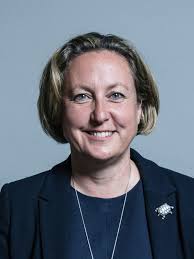
    Anne-Marie Trevelyan – 2020 Comments on Matching Public Donations

    The text of the comments made by Anne-Marie Trevelyan, the Secretary of State for International Development, on 14 July 2020.

    We are matching generous donations from the British people to the emergency appeal pound for pound, meaning your money will go twice as far in helping to protect millions of the world’s most vulnerable people from the deadly effects of coronavirus.

    Clean water and healthcare in refugee camps are essential in containing coronavirus in the developing world – helping stop the spread of the pandemic and protecting the UK from further waves of infection.

  • Kwasi Kwarteng – 2020 Comments on Battery Storage

    Kwasi Kwarteng – 2020 Comments on Battery Storage

    The comments made by Kwasi Kwarteng, the Minster for Energy and Clean Growth, on 14 July 2020.

    The key to capturing the full value of renewables is in ensuring homes and businesses can still be powered by green energy even when the sun is not shining, or the wind has stopped blowing.

    Removing barriers in the planning system will help us build bigger and more powerful batteries, creating more green-collar jobs and a smarter electricity network.

  • Thangam Debbonaire – 2020 Comments on Housing Benefit Discrimination

    Thangam Debbonaire – 2020 Comments on Housing Benefit Discrimination

    The text of the speech made by Thangam Debbonaire, the Shadow Housing Minister, on 14 July 2020.

    With increased numbers of people forced into the benefits system because of the economic impact of the Coronavirus crisis and the Government’s failure to push forward emergency legislation to help people to keep their homes after the temporary ban on evictions ends in August, there will be many people who will be faced with looking for a new home in the private rented sector this Autumn. With this in mind, this landmark ruling must help to protect those people from discrimination by some rogue landlords refusing to take them on as tenants.

    The Government needs to ensure that this finding will be properly enforced as an end to this discrimination and disseminated to all relevant landlords and organisations in order to protect people from losing their home.

  • Anneliese Dodds – 2020 Comments on ONS Statistics on Economic Growth

    Anneliese Dodds – 2020 Comments on ONS Statistics on Economic Growth

    The text of the comments made by Anneliese Dodds, the Shadow Chancellor of the Exchequer, on 14 July 2020.

    While it is encouraging to see that the economy started to slowly grow back in May, these figures show the scale of the challenge ahead of us.

    Labour pushed the government to do more protect and create jobs. While we have concerns around the implementation of the Kickstart scheme, we are pleased to have seen some action in this area. But ministers must do much more to prevent people becoming unemployed in the first place, such as a flexible Job Retention Scheme for badly-hit sectors and areas affected by additional lockdowns.

    Above all, the government must focus on getting the Test, Track and Isolate system working properly, which is vital to help build consumer confidence.

  • Louise Haigh – 2020 Comments on Northern Ireland Affairs Committee

    Louise Haigh – 2020 Comments on Northern Ireland Affairs Committee

    The text of the comments made by Louise Haigh, the Shadow Secretary of State for Northern Ireland, on 14 July 2020.

    The lack of detail and engagement from senior Ministers on the most significant change to border management in decades is staggering and irresponsible.

    The Government’s careless approach risks a ‘perfect storm’ for Northern Ireland with businesses unprepared for major new requirements with their largest trading partner, at a time when they are fighting to stay afloat during the Covid-19 crisis.

    The Prime Minister owes it to Northern Ireland businesses so badly let down by his broken promises, to urgently lay out the precise details of the new checks and arrangements that must be implemented in twenty six weeks’ time. This must include help with mitigation to avoid businesses going under as a result of the new costs, and outline if they will make use of measures like a bespoke Trusted Trader Scheme between GB and NI to avoid costly tariffs and checks on business.

  • Anneliese Dodds – 2020 Comments on OBR Analysis

    Anneliese Dodds – 2020 Comments on OBR Analysis

    The text of comments made by Anneliese Dodds, the Shadow Chancellor of the Exchequer, on 14 July 2020.

    This OBR analysis is very worrying. Unless the Government takes urgent action, the UK’s unemployment crisis is going to get much worse.

    The Chancellor must now listen to calls from Labour, business and trade unions and make the Job Retention Scheme live up to its name. Instead of withdrawing support across the piece, he must target it to sectors where it’s needed most.

    If he doesn’t act, even more people run the risk of being thrown into the misery of unemployment and our economy will continue to suffer.

  • Justin Madders – 2020 Letter to Baroness Harding About Councils and Health Data

    Justin Madders – 2020 Letter to Baroness Harding About Councils and Health Data

    The text of the letter sent by Justin Madders, the Shadow Health Minister, to Baroness Harding, sent on 14 July 2020.

    Dear Dido Harding,

    It is now more than two weeks since the Secretary of State, Matt Hancock, announced Leicester would be the first city in the UK to be put under a local lockdown. With restrictions expected to be reviewed this week, and anticipated guidance regarding what might trigger further local lockdowns expected, I am writing to ask that the concerns being made by local authorities regarding the timing and detail of the data they receive are recognised and resolved as a matter of urgency.

    Targeted local responses to coronavirus flare-ups are a key part of the Government’s plan to contain the spread of the virus and we know that the provision of complete and reliable data is essential to effectively monitor local areas and assist in that targeting. However, we are still hearing from local authorities and public health officials that there are significant gaps in the availability, quality and speed with which data is being processed and provided by the various organisations tasked with testing.

    The Welsh government publishes Pillar 1 and 2 data daily, but local authorities in England are still only receiving a weekly breakdown of Pillar 1 and Pillar 2 tests, with regional data being published every two weeks. Public health officials across England have also raised concerns that even when they do receive data that it is not easily accessible, with huge amounts of testing data to decipher, and that it does not include vital details on the ethnicity, post codes or workplaces of people who have tested positive, nor the number or proportion of the number of positive tests for each local area. These gaps prevent local authorities from being able to react with speed on the ground.

    Local authorities are clear: the data is not detailed enough, not accessible enough and not frequent enough.

    Labour has long been calling on the government to ensure that local authority directors of public health have access to all Coronavirus test data. As you develop local guidance, I urge you to ensure moving forward that:

    1. Data is transmitted to local authorities on a daily basis, in real time if possible.
    2. There is reference to ethnicity in the data.
    3. That each positive test also identifies by name, postcode and workplace (if any) of the individual.
    4. That the proportion as well as the number of positive tests is provided.

    We hope that should any future lockdowns prove necessary that any measures are agreed with the local authority before being implemented and that transparent and measurable guidance is produced which will help inform all parties the point at which lockdown measures can begin to be relaxed.

    Yours sincerely,
    Justin Madders MP

  • Justin Madders – 2020 Comments on Local Councils and Health Data

    Justin Madders – 2020 Comments on Local Councils and Health Data

    The text of the comments made by Justin Manners, the Shadow Health Minister, on 14 July 2020.

    Councils are getting testing data which is sometimes nearly a fortnight old and has such little information in it that it is virtually useless in being able to spot and stop local outbreaks.

    We are asking that positive test results are given to councils on a daily basis, in real time if possible, and that there should be sufficient information for them to be able to identify the workplace if possible, where an outbreak has occurred.

    The Government needs to be much more open and transparent with local councils so that together we can catch local outbreaks earlier and stop transmission of the virus.

  • Rachel Reeves – 2020 Speech on End of EU Transition Period

    Rachel Reeves – 2020 Speech on End of EU Transition Period

    The text of the speech made by Rachel Reeves, the Labour MP for Leeds West, in the House of Commons on 13 July 2020.

    I thank the Minister for advance sight of his statement. I associate myself with his comments about Dave Prentis, a great trade union leader who is always fighting for a better deal for public sector workers.

    It is vital that businesses and jobs are supported and that the oven-ready deal that the country was promised is delivered on this year, yet frankly many of us are worried about whether the oven was even turned on. Alarm bells have been ringing in the Cabinet this past week, expressed by the Secretary of State for International Trade in her extraordinary letter to the Minister and the Chancellor of the Exchequer written on 8 July. The letter presents a picture of chaos, complacency and confusion right at the top of government. Let me highlight to the House those concerns.

    First, the Trade Secretary expresses concern that the UK will be vulnerable to a World Trade Organisation challenge. Will the Government publish their advice and analysis of risk and cost to the Government of such a challenge?

    Secondly, the Trade Secretary highlights that there are EU-facing ports where the infrastructure to implement controls does not currently exist. Will the Minister give the country and, indeed, his Cabinet colleague reassurance by publishing all relevant delivery plans, land purchases and rental agreements, with timescales and risks—and not just for the port of Dover? The Labour party wants to see British firms exporting. We do not want to see their goods stuck at ports or, indeed, in lorry parks.

    Thirdly, the Trade Secretary is concerned in her letter that traders from the rest of the world could export their goods to the UK through the EU and, in her words,

    “undermine the effective operation of our trade policy”

    and undermine the collection of tariffs due. How will the Government prevent smugglers from exploiting the phased-in approach to the border? What is the estimated loss to tariffs as a result of the six-month delay to UK border checks on imports travelling through the European Union?

    Fourthly, on Northern Ireland, the Trade Secretary said that the digital delivery of the dual tariff system in Northern Ireland is a high risk and that HMRC is planning to apply the EU tariff as a default from 1 January. She adds:

    “This is very concerning as this may call into question NI’s place in the UK’s customs territory.”

    Those are her words. What risk do the Government attach to that? What reassurance can the Minister provide that the commitments made in the Government’s command paper on Northern Ireland will be fully honoured, and why do we have to wait until the end of this month for the details on Northern Ireland to be published? It is all very well announcing a multi-million pound advertising campaign, but if the right hon. Gentleman cannot persuade his bestest friend in Cabinet that everything is going according to plan, it is hardly surprising that the country is anxious and confused.

    A month ago, the Prime Minister said that there was “no reason” that a deal could not be reached by the end of this month. Will the Minister update us on where we are in terms of being on track to meet that deadline, with a deal agreed in the next fortnight? The Government have previously estimated that there will be up to 400 million customs declarations per year. HMRC said that they would cost £32 each, adding up to a staggering £12.8 billion bill for business. Does the Minister have any updated assessment of those numbers and the cost to UK firms?

    It is also reported that HMRC is not planning to test the systems until November—a handful of weeks before they are needed. Will the Minister explain why those checks are not taking place sooner, and will he outline what recent engagement the Government have had with Scottish and Welsh Governments on state aid policy prior to the announcements today? More than half of UK trade will experience greater delays, costs and barriers, so what percentage of UK trade will enjoy easier trading terms on 1 January next year?

    The best way to help all businesses to prepare is, of course, to agree a deal with the European Union on the terms that we were told to expect. That means no fees, charges, tariffs or quantitative restrictions across all sectors. It does not mean, as we heard in the statement today, customs, physical checks, export declarations, a commodity code, and economic operator restrictions and identification, and it certainly does not mean a living document with guidance that changes day by day.

    I am sure the Minister will agree that we should never make promises that we cannot keep, so will he guarantee that the promises made to UK businesses and workers in the Conservative party manifesto in December last year will be honoured, because they are not consistent with the statement that he has delivered this afternoon? Last week, the Chancellor of the Exchequer stood at that Dispatch Box and said that he will do all he can to support British business. Today, the Chancellor of the Duchy of Lancaster stands at the same Dispatch Box and is wrapping those businesses in red tape and sending them to a super-sized lorry park in Dover. For the sake of all workers worried about their jobs and all business owners anxious about their future, we need the Government to get this right. I am not convinced that today’s statement does that.