Blog

  • Jonathan Ashworth – 2020 Comments on Cancer Screening Catch-Up

    Jonathan Ashworth – 2020 Comments on Cancer Screening Catch-Up

    The comments made by Jonathan Ashworth, the Shadow Secretary of State for Health and Social Care, on 28 September 2020.

    Finding out you have cancer from a routine screening is already a scary thing to go through without the added anxiety of having to wait for months to start treatment.

    Under normal circumstances a drop in the number of people having to have cancer treatment would be positive, but given what we know has happened over the pandemic it instead looks like people are having trouble accessing screening altogether. It’s especially worrying because we know that early diagnosis and treatment is key to surviving cancer.

    Ministers tell us the NHS has ‘coped’ through the Covid-19 peak but that was on the back of cancelled operations, delayed scans and diagnostic tests.

    Estimates suggest two million people are waiting for cancer screening, tests or treatment and that 1600 cases of cancer are currently left undiagnosed every month.

    It’s now urgent ministers bring forward a plan to tackle the backlog in non Covid-19 care.

  • Tulip Siddiq – 2020 Comments on Childcare Support

    Tulip Siddiq – 2020 Comments on Childcare Support

    The comments made by Tulip Siddiq, the Shadow Minister for Children and Early Years, on 28 September 2020.

    This incompetent Government is completely failing to deliver support working parents with childcare at a time when they need it most.

    With around half of parents struggling to access childcare and the sector on the brink of collapse, it beggars belief that Ministers have repeatedly failed to get support to every family who needs it.

  • Liz Truss – 2020 Statement on the Gender Recognition Act 2004

    Liz Truss – 2020 Statement on the Gender Recognition Act 2004

    The statement made by Liz Truss, the Minister for Women and Equalities, in the House of Commons on 22 September 2020.

    Today, I am announcing the Government’s response to the consultation on the Gender Recognition Act 2004.

    As a Government, we are determined that everyone in the UK should be free to live their lives and fulfil their potential regardless of their sex, gender identity, race or disability.

    We are proud to have introduced same-sex marriage and passed the Turing law.

    We want transgender people to be free to live and to prosper in a modern Britain. We have looked carefully at the issues raised in the consultation, including potential changes to the Gender Recognition Act 2004.

    It is the Government’s view that the balance struck in this legislation is correct, in that there are proper checks and balances in the system and also support for people who want to change their legal sex.

    However, it is also clear that we need to improve the process and experience that transgender people have when applying for a gender recognition certificate—making it kinder and more straightforward. Our changes will address the main concerns that trans people themselves tell us they have about it.​

    In 2017, we conducted by far the largest survey ever of British LGBT people, with over 108,000 respondents, of whom 7,000 were trans. Of those who had completed their transition, around two in five said that they had a gender recognition certificate, a higher proportion than is often believed. The survey then asked those who had not applied what had prevented them from doing so. They were able to choose as many reasons as they wanted.

    Some 38% told us the process was too bureaucratic. So we will place the whole procedure online. Some 34% said the process was too expensive. This, too, we will address. We will reduce the fee from £140 to a nominal amount.

    We have also come to understand that gender recognition reform, though supported in the consultation undertaken by the last Government, is not the top priority for transgender people. Perhaps their most important concern is the state of trans healthcare. Trans people tell us that waiting lists at NHS gender clinics are too long. I agree, and I am deeply concerned at the distress it can cause. That is why we are opening at least three new gender clinics this year, which should see waiting lists cut by around 1,600 patients by 2022. The full benefit of the increases in clinical capacity that we have been able to secure will lead to greater patient choice, shorter waiting times, better geographical coverage and easier access. It will also make it easier to fulfil the medical requirements of obtaining a GRC.

    It is why we last year provided funding for the UK’s first national LGBT health adviser to help improve transgender people’s experience.

    Britain leads the world as a country where everybody is able to lead their life freely and treated with respect and that, for many years, transgender people have been widely accepted in British society: able to use facilities of their chosen gender; and able to participate fully in modern life.

    At the heart of this is the principle of individual liberty. Our philosophy is that a person’s character, their ideas, and their work ethic trumps the colour of their skin or their biological sex. We firmly believe that neither biology nor gender is destiny.

    The Equality Act 2010 clearly protects transgender people from discrimination. The same act allows service providers to restrict access to single sex spaces on the basis of biological sex if there is a clear justification.

    We want every individual, regardless of their sex, sexual orientation, or gender identity to have the confidence and the freedom to be themselves. We will continue with our international leadership by hosting our international LGBT conference to make sure LGBT people around the world are safe to be themselves.

    I am laying the analysis report of consultation responses as a Command Paper today and it will be published on gov.uk.

    The attachment can be viewed online at: http://www. parliament.uk/business/publications/written-questions- answers-statements/written-statement/Commons/ 2020-09-22/HCWS462/.

  • Liz Truss – 2020 Statement on the UK’s Future Trading Relationship with the US

    Liz Truss – 2020 Statement on the UK’s Future Trading Relationship with the US

    The statement made by Liz Truss, the Secretary of State for International Trade, in the House of Commons on 22 September 2020.

    The fourth UK-US free trade agreement (FTA) negotiating round took place from 8 September to 18 September 2020.

    There were 29 sessions held in this round, covering 16 different chapter areas. Significant progress has been achieved since launching negotiations in May 2020, and most chapter areas are now in the advanced stages of talks.

    In total, 132 sessions have been held over the past four negotiating rounds, as well as an additional 30 inter- sessional discussions, involving officials from 20 different UK Government Departments and agencies.

    In the fourth round, both sides continued to have detailed textual discussions, and negotiators are now in the process of consolidating texts in the majority of chapter areas.

    Shortly before the fourth negotiating round both sides exchanged their first tariff offers, allowing a series of detailed market access discussions to be held during the round.​

    The exchange of tariff offers is a notable milestone, and the speed at which this stage has been reached demonstrates the momentum behind these negotiations.

    Both sides reiterated their commitment to continue negotiations at pace throughout the Autumn in advance of the US presidential elections.

    The fifth round of talks will take place in mid to late October, with additional intersessional discussions taking place between the fourth and fifth rounds. Further such talks will be held this week on telecommunications, intellectual property, market access, and rules of origin.

    Below is a summary list of those workstreams discussed in the round:

    Sanitary and phytosanitary (SPS)

    Customs and trade facilitation

    Competition

    Technical barriers to trade (TBT)

    Market access

    Financial services

    Good regulatory practice

    Rules of origin

    Investment

    Economics

    Cross border trade in services

    Industrial subsidies

    Sectoral annexes

    Core text

    Trade remedies

    State owned enterprises

  • Victoria Atkins – 2020 Statement on Modern Slavery

    Victoria Atkins – 2020 Statement on Modern Slavery

    The statement made by Victoria Atkins, the Parliamentary Under-Secretary of State for the Home Department, in the House of Commons on 22 September 2020.

    Today, the Government have published their response to the transparency in supply consultation. A copy of the Government response will be placed in the Libraries of both Houses and it will also be published on gov.uk.

    The landmark transparency provisions in the Modern Slavery Act 2015 established the UK as the first country in the world to require businesses to report annually on their work to prevent and address risks of modern slavery in their operations and supply chains. This legislation was introduced to empower investors, consumers and civil society to hold businesses to account, and it has since sparked an international trend for supply chains legislation.

    I am proud that thousands of businesses have risen to the challenge of reporting and consistently raised the benchmark for transparency since the Act came into force. This year the Government joined the private sector in opening up about their supply chains, becoming the first country in the world to publish a Government modern slavery statement setting out how we are leveraging public spending to prevent risks in Government supply chains and drive responsible practices. In his foreword to the statement, the Prime Minister made the Government’s ambitions clear:

    “It’s not enough for Government and businesses to simply say they don’t tolerate modern slavery. As we take stock of both the challenges faced and achievements made, we must match our words with actions.”

    Five years on from the Act, it has become more important than ever that businesses take responsibility for their supply chains, and I am committed to ensuring this Government maintain their global leadership on this agenda. In May 2019, the final report of the independent review of the Modern Slavery Act, led by Frank Field, my right hon. Friend the Member for Basingstoke (Mrs Miller) and the noble Baroness Butler-Sloss GBE, considered the Act’s transparency legislation alongside four other key areas and made a compelling case for change. In response, the Home Office launched a public consultation seeking views on a range of measures to strengthen section 54 of the Modern Slavery Act and enhance the impact of transparency.

    I am grateful for the expertise of the reviewers and of those who responded to the consultation. Today, I am proud to announce the ambitious package of measures we will be taking forwards to strengthen and future-proof the Modern Slavery Act’s transparency legislation.

    To improve transparency, we will be requiring all organisations caught by the Act to publish their statement to a central Government-run reporting service, to ensure organisations’ work to prevent modern slavery is open to scrutiny. At the same time, we will be introducing ​mandatory topics that modern slavery statements must cover, to increase transparency and encourage year on year improvement in key areas. Taken together, these measures will drive a race to the top, ensuring progress is recognised and gaps are addressed.

    To improve compliance, we will introduce a single reporting deadline on which all statements must be published. We are also considering options for civil penalties for non-compliance forwards in line with the development of the single enforcement body for employment rights, led by the Department for Business, Energy and Industrial Strategy.

    Finally, we will be extending the reporting requirement to public bodies—a global first. Leveraging public spending is a crucial step towards driving responsible practices and identifying risks, and I welcome the voluntary efforts of many public sector organisations on this agenda. Like businesses, public sector organisations have a responsibility to be transparent about modern slavery risks in their supply chains and how these are being addressed. Ministerial Government Departments have already committed to publishing annual modern slavery statements, the first of which will be published in September 2021.

    Many of these measures are global firsts. However, I am determined that Government and industry do everything possible to protect vulnerable workers from exploitation. Tackling modern slavery remains a priority for the Government and I will continue to look at what further measures are needed to strengthen our response, in partnership with the devolved Administrations, law enforcement, business, public sector organisations, NGOs, civil society and the independent anti-slavery commissioner.

  • Caroline Dinenage – 2020 Statement on Loot Boxes

    Caroline Dinenage – 2020 Statement on Loot Boxes

    The statement made by Caroline Dinenage, the Minister for Digital and Culture, in the House of Commons on 23 September 2020.

    I am today launching a call for evidence on loot boxes in video games. I want to understand fully the existing research and concerns around loot boxes including any evidence of links to gambling-like behaviour and problem ​gambling amongst young people. This fulfils a commitment the Government announced on 8 June as part of their response to the Digital, Culture, Media and Sport Committee’s report on immersive and addictive technologies.

    The Government take concerns around potential harms from loot boxes seriously. This open call for evidence will seek detailed information on the impact of loot boxes on players, particularly children and young people, examining concerns that loot boxes may encourage gambling-like behaviour and lead to problem gambling, as well as examining the size and scale of the loot box market in the UK, and the impact of current voluntary and statutory protections. The call for evidence will also seek information on the direct experiences of video games players and adults responsible for children and young people who play video games.

    In 2019, the Government committed to review the Gambling Act with a particular focus on tackling issues around online loot boxes. The results from the call for evidence will be considered alongside the review of the Gambling Act and will inform future actions in regard to loot boxes. The Government stand ready to take action should the outcomes of the call for evidence support taking a new approach to ensure users, and particularly young people, are better protected.

    The Government continue to support the growth of the video games sector in the UK, recognising that video games bring great economic, cultural and social benefits. Over half the UK population plays games, the vast majority engaging safely with content that allows them to enjoy fun, exciting play, find moments of relaxation, socialise and learn new skills. The video games sector, a key part of the UK’s world-leading creative industries, is also a cutting edge creator and adopter of innovative new technologies, and a provider of highly skilled creative jobs.

    However, evolving digital technologies such as video games also present new responsibilities to ensure that users, particularly children and vulnerable people, are not exposed to harm.

    I believe the call for evidence the Government are launching today is an important step towards gathering the evidence required to ensure we can support the further growth of this innovative and important industry while protecting users.

    The call for evidence document will be available on gov.uk.

  • James Daly – 2020 Speech on Microchips in Pets

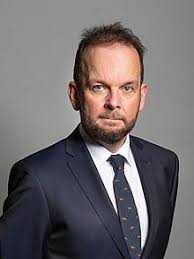
    James Daly – 2020 Speech on Microchips in Pets

    The speech made by James Daly, the Conservative MP for Bury North, in the House of Commons on 23 September 2020.

    I beg to move,

    That leave be given to bring in a Bill to make provision regarding pets with microchips; and for connected purposes.

    This Bill should more commonly be known as Tuk’s law and Gizmo’s law. Every responsible pet owner wants to ensure that their pet is safe. It is now a legal requirement for all dog owners to microchip their dogs since compulsory microchipping came into force in 2016. British Veterinary Association best practice guidelines recommend that vets should scan microchips on the first presentation in veterinary surgeries and at other regular intervals, including prior to any decision being made on euthanasia. These guidance notes also include advice on what a vet should do if details of the person presenting the dog are different from what is in the database, and on what to do when stray or lost dogs are brought into the veterinary surgery, including the need to check the microchip databases in order to reunite the animal with its owner or back-up rescuers. Although the guidance is helpful, the Tuk’s law campaign has found that many vets are not following these recommendations and a large number of healthy dogs are being euthanised without checking microchips to ascertain the owners or back-up rescuers.

    To date, over 121,000 people have signed a parliamentary petition set up by the Tuk’s law campaign, calling for a change in the law to make it mandatory for vets to scan microchips for owner and rescue back-up details before euthanising a healthy dog. Tuk’s law campaign began as a result of the premature and unnecessary euthanasia of a young, 16-month-old rescue dog called Tuk, who was a beautiful Mioritic dog who had full rescue back-up and whose rescue contact details were registered on his microchip as a secondary contact. His euthanasia was requested and acted on by someone who was not registered on his microchip—a vet who did not scan him prior to ending his life. Had the vet scanned him, he would have seen the rescue back-up contact details, registered the microchip and contacted the rescuer, who would have collected him and Tuk’s life would have been saved.

    Although Tuk’s death prompted the parliamentary petition, during the past 18 months the reported amount of unnecessary euthanasia of healthy and treatable animals—in particular, rescue animals—has grown alarmingly. Today I am putting forward a private Member’s Bill to ensure that all vets are legally required to scan for owner and rescue back-up contact details on microchips when any healthy or treatable dog is brought into a veterinary surgery to be euthanised. On Government-endorsed microchip databases, a prefix will be added to microchips to identify dual registration of rescue animals. If an unsubstantiated reason for euthanasia is made, the vet will be expected to seek corroborating evidence. Vets will also be expected to seek alternative options to euthanasia in situations where there are no life-threatening or emergency situations causing the dog suffering.

    By implementing this change in legislation, the lives of hundreds of dogs will be saved every year across Britain. Unless we act to make it mandatory for vets to check microchips, I am deeply concerned—taking into account the coronavirus pandemic—that we could see a ​steep increase in healthy dogs being put to sleep across Britain in the next 12 months. We must offer these dogs a lifeline. We must make the scanning of microchips mandatory without further delay.

    My constituent, Helena Abrahams, began the campaign for Gizmo’s law in 2016 following the death of her much-loved pet in tragic circumstances. Gizmo was 15 years old and involved in a road traffic accident. Sadly, she was disposed of before anyone scanned her chip. As I mentioned earlier, dogs must be microchipped under UK law, and drivers who hit dogs on the road must report the accident under UK law. An animal rescue or vet would be informed, and the animal would be scanned and identified in order to inform the owner. But the same is not true for cats, despite being the second most popular pet in the UK. Instead, cats are often picked up from the roadside and disposed of in landfills without being reported, scanned or identified, and certainly without their owner’s knowledge. A parliamentary petition set up by the Gizmo’s law campaign and signed by over 107,000 people, entitled “New law that cats killed/injured by a vehicle are checked for a chip”, led to a Westminster Hall debate on 17 June 2019, where it received broad cross-party support. The Government response to the parliamentary petition stated:

    “We encourage microchipping of cats and it is established good practice for local authorities and the Highways Agency to scan domestic pets found on our streets so that the owner can be informed”,

    but went no further.

    As part of the Bill that I am introducing today, there would be a legal requirement for local authorities to scan the microchip of a deceased cat and then to make all reasonable efforts to contact the owner to confirm what had happened to their animal and from where they can collect the cat if they so choose. Cats could be collected from the local authority or a local vet, and there would be a further legal requirement that owners will be given seven days to recover their much-loved animals.

    Guidance would be issued by Government on good practice, and local authority employees will be required to record the chip number, the location where the cat was found, its sex, colour, colour of the collar and any owners’ details on the bag in which the body will be preserved and protected. However, we must not limit our ambition only to return microchipped cats to their owners. This Bill will further require local authority employees to provide information in line with the aforementioned guidance, together with photographs, to organisations such as Deceased Cats UK and Ireland that exist to do everything possible to return deceased cats to their owners. A register of such organisations would be provided to local authorities by the Government.

    Deceased Cats UK and Ireland was established by Helena, Wendy and all at the Gizmo’s law campaign. They worked tirelessly through their Facebook page and with an army of volunteers all over the country to reunite much-loved pets with their owners. Thanks to their efforts, working with local vets and concerned members of the public, they are able to ensure that well over 1,000 much-loved pets are returned home each year.

    Finally, I address the issue of cost. Many local authorities do not have scanners, but we have a commitment from Encore, an international pet food manufacturer, to provide ​a scanner to any council that does not have that facility, and I thank it for its generosity and commitment to animal welfare.

    We should not allow deceased cats simply to be treated as rubbish and their bodies disposed of without a thought for their owners. That is not acceptable. Through this Bill, Gizmo’s law ensures that remains are treated with respect and reflects the fact that cats are much-loved pets and companions for millions of people throughout the country.

  • Rachel Reeves – 2020 Speech on the End of the Transition Period

    Rachel Reeves – 2020 Speech on the End of the Transition Period

    The speech made by Rachel Reeves, the Labour MP for Leeds West, in the House of Commons on 23 September 2020.

    I thank the right hon. Gentleman for advance sight of his statement.

    The news today that there could soon be tailbacks of 7,000 lorries in Kent is quite extraordinary. I know that the Government have said that they are committed to building new infrastructure, but I did not realise it meant concreting over the garden of England. Today’s warnings are based on a reasonable worst-case scenario, but given that we have a reasonable worst-case Government, we have to assume that these scenarios could play out quite soon.

    In their letter to the road haulage industry, the Government say that business should get ready, but what about the Government? There is a long list of promises for the future in the letter: the UK Government will be contacting haulage companies; they will be running targeted advertising; they will be publishing an updated haulier handbook; and they will launch advice stands at UK service stations. Why are these essential prerequisites for a smooth transition not already here? It is all well and good to tell businesses to act now, but without the systems in place, frankly, it is like telling me to bake a cake but forgetting to turn the oven on.

    Sectors from farming to haulage and car manufacturing are crying out for the Government to get this right. These sectors are the backbone of British industry, and they are vital to our everyday economy. If we do not listen to these experts, we will lose exports. I met the Road Haulage Association last week. It is tearing its hair out. It has since met Ministers and described that meeting as “a washout”. Frankly, this is not good enough.

    In the summer, I visited the proposed lorry park in Ashford, Kent, where construction had just begun. It was with some dismay that I later read that workmen had encountered a Saxon brick wall in their excavations. ​I hope this is not a metaphor, but can the Minister assure the House that progress there is on track? Another site apparently earmarked is in Ebbsfleet. It is currently a covid testing centre. With the test, trace and isolate system on its knees, this would be farcical if it were not so serious. Is it really too much to ask for a little bit of joined-up government from Ministers?

    On 4 September, the Government granted themselves the power to build additional lorry parks in 29 local authority areas without consulting residents. Can the Minister tell us exactly where those facilities will be? That is the least that local people deserve. Will he also tell the House how many customs agents and intermediaries are trained and in place? This is so important for the system to work.

    In the summer, the Government admitted that there would be £7 billion-worth of additional bureaucracy for UK businesses. It is the last thing they need right now, so is that still the most accurate assessment of the costs for businesses?

    It has been estimated that 10 new IT systems will be needed to make our new trading relationship with the European Union work. Can the Minister list those IT systems and guarantee that they will be in place and fully operational on 1 January? Given that we were promised a contact tracing app, first in May, then in June and then in July, and it is now September, what assurance can he give that this time the Government will deliver that vital technology and that it will be working and delivered on time? Frankly, the Government’s track record does not inspire confidence.

    We have just 100 days until the end of the transition period. Labour’s message to both sides in this negotiation is clear: stop the posturing, and start negotiating. It is in our national interest—it is in all our interests—that the Government get a deal, and get it soon, so that businesses have time to prepare. The Conservatives have had three Prime Ministers and four years since the referendum in 2016. We have seen serial incompetence and countless U-turns. I say to Ministers: get a grip on preparations, and get a grip now. The transition period comes to an end on 31 December. Will the Minister guarantee, not just to this House but to the whole country, that we will be ready?

  • Michael Gove – 2020 Statement on the End of the Transition Period

    Michael Gove – 2020 Statement on the End of the Transition Period

    The statement made by Michael Gove, the Minister for the Cabinet Office, in the House of Commons on 23 September 2020.

    With permission, I would like to make a statement on preparations for the end of the transition period.

    There are now just 100 days to go until the United Kingdom leaves the single market and the customs union, and that will be a moment of great opportunity, but also of significant change and challenge. It is vital that we all take the steps required to grasp those opportunities, and to meet and master those challenges. The Government are of course committed to negotiating a new free trade agreement with the EU before the end of the transition period, and those talks are progressing; but whatever the outcome of those negotiations, things will change for businesses and individuals as they trade with and travel to the EU. It is important that we, as parliamentarians, all understand that, and that we all take action to prepare.

    Whether we secure a good FTA before January or not, whether we get a Canada-style deal or exit on Australian terms, we will have left the single market and the customs union, and that fact means adjustments for businesses trading with the EU; changes for citizens travelling to the EU; and, of course, new responsibilities for Government in both scenarios.

    The superb civil servants at Her Majesty’s Revenue and Customs and their colleagues across Government are working with business to ensure that exporters and importers are ready for new rules. Every business trading with Europe will need to thoroughly familiarise itself with new customs procedures and, whether they develop their capacity in-house or work with a customs intermediary, enhanced preparation is vital. The Government have invested in increasing customs agent capacity and supported growth in the sector, and of course we stand ready to do more. HMRC is also able to support businesses to secure authorised economic operator, consignor and consignee status, which will ease the flow of goods.

    Businesses that are fully ready for life outside the customs union will also be better prepared for the growing number of export opportunities outside Europe, as the UK establishes new trade relationships with partners across the globe following the highly successful conclusion of our new trade deal with Japan. Because preparing for customs procedures will be required with or without a free trade agreement, these adjustments cannot be left until the last minute. More and more businesses are becoming fully prepared, but there are still many that have not quite taken the steps they need to take. Our survey evidence indicates that while 78% of businesses have taken steps, just 24% believed that they are fully ready. Indeed, 43% of businesses believe that the transition period will be extended, even though the deadline for any extension is now long past and the date on which we leave the single market and the customs union is fixed in law and supported across the House.

    The Government are taking action to prepare for that date, with the XO Committee—the EU Exit Operations Committee, the Cabinet Committee charged with preparations for the end of the transition period—now meeting almost daily and taking decisions on trader and haulier readiness, border infrastructure and fisheries ​protection. The Committee has met 136 times since it was established, and it will continue to meet to ensure that we have taken all the steps required to prepare, but we also need businesses to prepare. The consequences of a lack of business preparedness will be not just missed economic opportunities for those companies that do not prepare but potentially much wider disruption.

    That is why today we are publishing our reasonable worst case scenario planning assumptions, indicating what could happen if we do not all secure improved preparedness. I should stress that this is not a prediction or a forecast; it is just a prudent exercise in setting out what could, in the worst circumstances, occur if we do not improve preparedness and, of course, if our neighbours decline to be pragmatic. The scenario builds on an estimate that only 50% to 70% of large businesses and just 20% to 40% of small and medium-sized enterprises will be ready for the strict application of new EU requirements. In those circumstances, that could mean that only between 30% and 60% of laden heavy goods vehicles would arrive at the border with the necessary formalities completed for the goods on board. They would therefore be turned back by the French border authorities, clogging the Dover to Calais crossing. In that scenario, flows across the critical short-strait crossings could be reduced by up to 60% to 80%, compared with the normal rate, and such circumstances could lead to queues of up to 7,000 HGVs in Kent. Those queues and the associated disruption and delay would of course subside, as unready businesses that had had their goods turned back at the French border would not want to repeat the experience, but it is clearly far better for everyone to be aware now of what is needed to prepare, rather than face additional disruption next year. This is why we are publishing our reasonable worst-case scenario today: not just because any prudent Government will always prepare contingency plans for the worst, but to illustrate the costs of a lack of preparedness while there is still plenty of time to prepare.

    The Government are committed to doing whatever it takes to help business, and we have brought in a comprehensive series of measures to help businesses and individuals to adapt to the changes ahead. We are helping businesses that import by introducing new border controls on imports in stages, and full controls will be imposed only from July of next year. We have produced a comprehensive border operating model, which provides a simplified guide, complemented by the work of gov.uk for business, and we will be publishing an updated version with more granular detail in the coming weeks. We have invested £705 million in new technology, infrastructure and jobs at the border, and we are ensuring extra personnel: Border Force has recruited more than 1,000 additional staff, with hundreds more being recruited now. We have also made available over £80 million in grants for organisations to recruit and train new customs agents to support an expanded customs intermediary sector.

    A new network of information and advice sites will help to ensure that hauliers are up to speed with their new requirements and the correct paperwork. They will be able to check that their documentation is export-ready using the new Smart Freight web portal. We have complemented all this activity with a public information campaign to help businesses to prepare. The campaign communicates the actions that all businesses need to ​take before the end of the transition period, and there is a user-friendly checker tool on the gov.uk/transition page, which details exactly what businesses need to do.

    The Government are taking all these steps to help businesses to prepare, because change requires preparation. But change is what the British people voted for because, outside the single market and the customs union, the UK can exercise all the freedoms and flexibilities of a truly sovereign state. Outside the common agricultural policy, we can support our farmers better and enhance our natural environment. Outside the common fisheries policy, we can revive our coastal communities and improve our marine environment.

    We can strike new trade deals, which help developing nations to grow faster and lower prices for consumers. We can develop tailored policies to better support new technologies and level up our economy. We can invest the money that we currently send to Brussels in the NHS, in our science base and in improving productivity in all the nations of the United Kingdom. We can develop freeports, which bring investment to overlooked communities. We can regulate more smartly, legislate more accountably and strengthen our democracy.

    These are great prizes, and the British people voted in the 2016 referendum and the 2019 general election to make sure they were delivered. This Government are committed to honouring those democratic choices, and I commend this statement to the House.


     

  • Christopher Pincher – 2020 Speech on Evictions

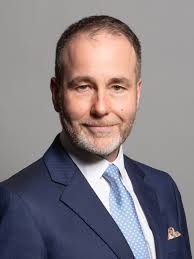
    Christopher Pincher – 2020 Speech on Evictions

    The speech made by Christopher Pincher, the Minister for Housing, in the House of Commons on 23 September 2020.

    I congratulate the hon. Member for Westmorland and Lonsdale (Tim Farron) on securing this urgent question. The Government have taken unprecedented action to support renters by banning evictions for six months, preventing people from getting into financial hardship and helping businesses to pay salaries. We have boosted the welfare safety net and increased the local housing allowance rates to cover the lowest 30% of market rents. We have made available £180 million for the discretionary housing payments this year, for local councils to distribute to support those renters who require additional support. We have now introduced comprehensive measures to ensure that renters continue to be protected over the autumn and winter, following the resumption of possession proceedings on Monday.

    However, we must strike a balance so that landlords are able to access justice alongside measures to protect the vulnerable. That is vital to the long-term health of the private rented sector. We have worked with the judiciary to put in place new court arrangements that seek to ensure appropriate support to all parties within the current statutory framework. The judiciary will look to prioritise the most serious cases, including antisocial behaviour, fraud and egregious rent arrears. New court rules also require landlords to reactivate any claim they have made before 3 August and to provide information to the court on the effect of the covid-19 pandemic on the tenant and their dependants. A court would be likely to take a very dim view of any landlord who tried to circumvent this requirement or mislead the court by not disclosing relevant information where known.

    To help to keep people in their homes over the winter, we have changed the law, increasing notice periods to six months in all but the most serious cases. Tenants now served notice will not be required to move over winter, while landlords will be empowered to take action where necessary—for example, where a tenant’s antisocial behaviour severely affects their neighbours’ quality of life. To further support renters, guidance has been issued to bailiffs by my right hon. and learned Friend the Lord Chancellor to ensure that possession orders are not enforced in areas where lockdown restrictions are in place or over the Christmas period, except in the most serious circumstances.

    Our package strikes a fair balance, supporting landlords to act in the most serious cases while keeping the public, including renters, safe. Comprehensive guidance has been published for landlords and tenants to explain these new arrangements and the possession process in courts. The Government are clear that all these measures are to protect renters over this period. They are kept under constant review in the light of evidence on public health, and we are prepared to take further measures as they are needed to protect landlords and tenants alike.