Blog

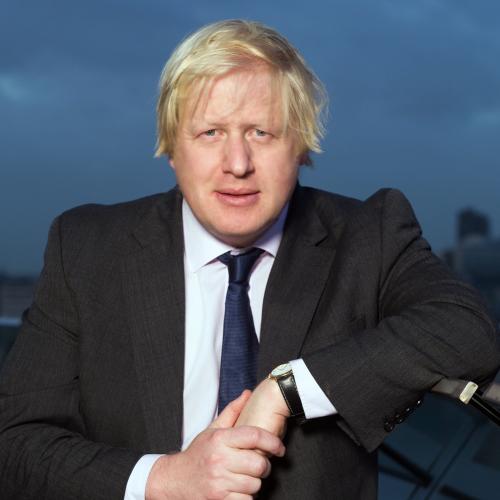
  • Boris Johnson – 2019 Statement in the House of Commons

    Below is the text of the statement made by Boris Johnson, the Prime Minister, in the House of Commons on 25 September 2019.

    The Prime Minister (Boris Johnson)

    Thank you, Mr Speaker. [Hon. Members: “Resign!” If they want a change of Government, let them have an election. [Interruption.]

    Mr Speaker

    Order. There will be ample opportunity for everybody who wants to question the Prime Minister, in conformity with usual practice, to do so, but the statement must and will be heard.

    The Prime Minister

    Thank you, Mr Speaker. With your permission, I shall make a statement on yesterday’s Supreme Court verdict and the way forward for this paralysed Parliament.

    Three years ago, more people voted to leave the European Union than had ever voted for any party or proposition in our history. Politicians of all parties promised the public that they would honour the result. Sadly, many have since done all they can to abandon those promises and to overturn that democratic vote. After three years of dither and delay that have left this country at risk of being locked forever in the orbit of the EU, this Government that I lead have been trying truly to get us out. Most people, including most supporters of the Labour party, regardless of how they voted three years ago, think the referendum must be respected. They want Brexit done, I want Brexit done, and people want us out on 31 October, with a new deal if possible, but without one if necessary.

    Some 64 days ago, I was told that Brussels would never reopen the withdrawal agreement; we are now discussing a reopened withdrawal agreement in the negotiations. I was told that Brussels would never consider alternatives to the backstop—the trap that keeps the UK effectively in the EU but with no say; we are now discussing those alternatives in the negotiations. I was told that Brussels would never consider arrangements that were not permanent; we are now discussing in the negotiations an arrangement that works on the principle of consent and is not permanent. I was told that there was no chance of a new deal, but we are discussing a new deal, in spite of the best efforts of the Labour party and this Parliament to wreck our negotiations by their attempts to take no deal off the table.

    The truth is that a majority of Opposition Members are opposed not to the so-called no deal; this Parliament does not want Brexit to happen at all. Many of those who voted for the surrender Act a few weeks ago said then that their intention was to stop a no-deal Brexit. They have said every day since that Parliament must vote against any deal at all. The people of this country can see very clearly what is going on. People at home know—[Interruption.]

    Mr Speaker

    Order. People are gesticulating wildly. I can scarcely hear the Prime Minister myself, and I wish to hear the statement, as other colleagues should also wish to do.​

    The Prime Minister

    The people of this country can see perfectly clearly what is going on. They know that Parliament does not want to honour its promises to respect the referendum. The people at home know that this Parliament will keep delaying, and it will keep sabotaging the negotiations, because Members do not want a deal.

    The truth is that Opposition Members are living in a fantasy world. They really imagine that somehow they are going to cancel—[Interruption.] This is what they want to do. They are going to cancel the first referendum and legislate for a second referendum, and Parliament will promise—this is what the hon. Lady opposite said—that this time it really, really will respect that vote. They think that the public will therefore vote to remain, and everybody will forget the last few years.

    I have to say, Mr Speaker, that that is an extraordinary delusion and a fantasy, a fantasy even greater than the communist fantasies peddled by the Leader of the Opposition. It will not happen. The public do not want another referendum. What they want, and what they demand, is that we honour the promise we made to the voters to respect the first referendum. They also want us to move on: to put Brexit behind us and to focus on the NHS, on violent crime, and on cutting the cost of living.

    That is why I brought forward a Queen’s Speech. This Government intend to present a programme for life after Brexit, but some Members could not stand that either. Instead of facing the voters, the Opposition turned tail and fled from an election. Instead of deciding to let the voters decide, they ran to the courts. And despite the fact that I followed the exact same process as my predecessors in calling a Queen’s Speech, the Supreme Court was asked to intervene in that process for the first time ever. It is absolutely no disrespect to the judiciary to say that I think that the court was wrong to pronounce on what is essentially a political question, at a time—[Interruption.]

    Mr Speaker

    Order. Whatever the strength and intensity of feeling and the passions to which these matters give rise, we must hear what is being said in the Chamber, and I wish to hear the Prime Minister.

    The Prime Minister

    I think that the court was wrong to pronounce on what is essentially a political question, at a time of great national controversy.

    So we have Opposition Members who block and delay everything, running to the courts to block and delay even more measures, including legislation to improve and invest in our NHS, and to keep violent criminals in jail. I think that the people outside this House understand what is happening. They know that nothing can disguise the truth.

    It is not just that this Parliament is gridlocked, paralysed, and refusing to deliver on the priorities of the people. It is not just unable to move forward. It is worse than that, Mr Speaker. Out of sheer political selfishness and political cowardice, Opposition Members are unwilling to move aside and give the people a say. They see MPs demanding that the people be given a say one week, and then running away from the election that would provide the people with a say. Worst of all, they see ever more elaborate legal and political manoeuvres from the Labour party, which is determined, absolutely determined, to ​say “We know best”, and to thumb their noses at the 17.4 million people who voted to leave the European Union.

    The Leader of the Opposition and his party do not trust the people. The Leader of the Opposition and his party are determined to throw out the referendum result, whatever the cost. They do not care about the bill for hundreds of millions of pounds that will come with every week of delay. They do not care if another year or more is wasted in arguing about a referendum that happened three years ago. All that matters to them now is an obsessive desire to overrule the referendum result. While we want to take our country up a gear—to go forward with a fantastic programme, an accelerated programme of investment in infrastructure, health, education and technology, they are throwing on the hand brake.

    We will not betray the people who sent us here; we will not. That is what the Opposition want to do. We will not abandon the priorities that matter to the public, and we will continue to challenge those Opposition parties to uphold democracy. If Opposition Members so disagreed with this Government’s commitment to leaving on 31 October, they had a very simple remedy at their disposal, did they not? They could have voted for a general election. I confess that I was a little shocked to discover that the party whose members stood up in Brighton this week and repeatedly, and in the most strident terms, demanded an election—I heard them—is the very same party whose members already this month, not once but twice, refused to allow the people to decide on their next Government. For two years they have demanded an election, but twice they have voted against it.

    The Leader of the Opposition changes his mind so often, I wonder whether he supports an election today, or whether the shadow Chancellor, or the shadow Attorney General, have overruled him again because they know that the voters will judge their manifesto for what it is—more pointless delay. Perhaps he is going to demand an election and then vote against it—just as he says that he wants to negotiate a new Brexit deal and then vote against that, too. Is he actually going to vote no confidence in this Government? Is he going to dodge a vote of no confidence in me as Prime Minister, in order to escape the verdict of the voters? I wonder, does he in his heart even want to be Prime Minister any more? He says that I should go to Brussels on 17 October and negotiate another pointless delay, but he does not want to go himself. And even if he did, his colleagues would not let him, because quite frankly they recoil at the idea of him negotiating on the people’s behalf, representing this country with the likes of Vladimir Putin, let alone the EU or the mullahs of Tehran.

    Or is it perhaps that he wants a Conservative Government? It would be a curious state of affairs indeed if Her Majesty’s loyal Opposition had every faith in the Government of the day. So if in fact the party opposite does not have confidence in the Government, it will have a chance to prove it. It has until the House rises—[Interruption.] I think they should listen. It has until the House rises today to table a motion of no confidence in the Government—[Interruption.] Come on! Come on, then. And we can have that vote tomorrow. Or if any of the smaller parties fancy a go, they can table that motion and we will give them the time for a vote. Will they have the courage to act, or will they ​refuse to take responsibility and do nothing but dither and delay? Why wouldn’t they act? What are they scared of? If that is what you are scared of, then have the—

    Mr Speaker

    Order. I appeal to the House to have some regard to how our proceedings are viewed by people watching them in the country at large. [Interruption.] Order. Let the remainder of the statement be heard. I am grateful for the Prime Minister’s exhortation but I do not require it; I am perfectly content. What I want to hear is the rest of the statement and then questioning on it.

    The Prime Minister

    Mr Speaker, thank you. As I commend this statement to the House, I say it is time to get Brexit done. Get Brexit done, so we respect the referendum. Get Brexit done, so we can move on to deal with the people’s priorities—the NHS, the cost of living. Let’s get Brexit done so we can start to reunite this country after the divisions of the referendum, rather than having another one. It is time for this Parliament finally to take responsibility for its decisions. We decided to call that referendum. We promised time and again to respect it. I think the people of this country have had enough of it. This Parliament must either stand aside and let this Government get Brexit done, or bring a vote of confidence and finally face the day of reckoning with the voters.

    I commend this statement to the House.
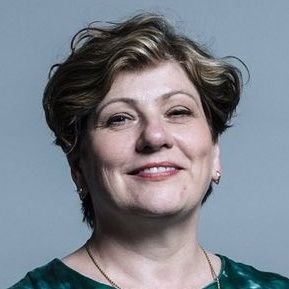
  • Emily Thornberry – 2019 Speech on Iran

    Below is the text of the speech made by Emily Thornberry, the Shadow Foreign Secretary, in the House of Commons on 25 September 2019.

    I thank the Foreign Secretary for advance sight of his statement.

    We have been summoned back here due to the unlawful actions of the Prime Minister, attempting to avoid debate on one vital issue, but it is important that we debate other vital issues, including the threat of war with Iran. First, Mr Speaker, may I take the opportunity of this discussion of vital issues in the middle east to apologise publicly to my Liberal Democrat colleagues for my crass throwaway “Taliban” remark in an interview last week? I am sorry for what I said. I believe that our politics is better when we are honest and apologise for our mistakes—a lesson that our country’s Prime Minister, Her Majesty’s Prime Minister, would be well placed to learn.

    I do not have a scintilla of doubt that Iran was responsible for the drone attacks in Saudi Arabia and the attacks on oil tankers in Hormuz. I totally agree with the Foreign Secretary that Iran’s actions are utterly unacceptable and must be condemned by all sides. Sadly, this was all too predictable, because just like during the tanker wars in the 1980s, there is a reckless and ruthless logic being applied by the Iranian hard-line theocrats who are now in the ascendancy in Iran, and it is this: “If you stop our oil supplies, we’re going to stop yours.”

    That development has been inevitable since the United States reimposed sanctions on Iran. There are absolutely no excuses for what Iran has done, but there is also no excuse for the Trump Administration wilfully wrecking the nuclear deal, destroying the chances of progress on other issues, and handing power back to the Khamenei hard-liners, who have always wanted to reverse the Rouhani Government’s attempt to engage with the west. What are we left with now? With a Trump Administration agitating for war and Iranian hard-liners actively trying to provoke it—war with a country that is nine times the size of Syria and has three times Syria’s pre-war population. That leaves us with a choice to make as a world and, even more important, a choice to make as a country and as a Parliament.

    In an era when we can no longer rely on the United States to provide any global leadership on matters of peace and war, or anything to do with the middle east, we need the EU and the UN to step up, to do our job and to demand that, after working so hard to negotiate the nuclear deal, we will not let it be thrown away and allow the spiral into war to continue. As the Leader of the Opposition said yesterday, real security does not come from belligerent posturing or reckless military interventions; it comes from international co-operation and diplomacy. Let me add that it does not come from what successive Governments have done by committing to military intervention with no planning for what comes next, creating chaos in the aftermath and opening up ungoverned spaces in which the evil of jihadist death cults thrives.

    If war with Iran is where the world is headed and we cannot stop it, we have a choice to make as a country, and we should have a choice to make in this Parliament. That choice is whether our country is involved and the lives of our servicepeople are put at risk as a result of a power struggle between Tehran and Riyadh, as a result of a power struggle between Khamenei and Rouhani, and as a result of a power-crazed president in the White House who wants to start wars rather than end them. In that climate, there is only one thing we should be doing now, and that is working to de-escalate the tension with Iran, getting the nuclear deal back on track, and using that as the foundation, which it promised to be, of addressing all the other concerns that we have about Iran, not least its continued detention of Nazanin and other dual British nationals.

    Instead, at this crucial moment, we have a Prime Minister openly talking about sending troops to Saudi Arabia, in an apparent bid to please Donald Trump. As the Leader of the Opposition said yesterday, have we learned nothing? On a day when we are also rightly focused on the powers of Parliament and the abuse of power by the Government, let me close by asking the Foreign Secretary one simple but vital question. Will he guarantee that, before any decision to join Donald Trump in military action against Iran and to put British servicepeople in harm’s way, this House will be asked to approve that action and given the chance to save our country from the disaster that war with Iran would be?

  • Dominic Raab – 2019 Statement on Iran

    Below is the text of the speech made by Dominic Raab, the Foreign Secretary, in the House of Commons on 25 September 2019.

    With permission, Mr Speaker, I would like to make a statement on Iran.

    The United Kingdom has always been clear-sighted about our engagement with Iran. We want to see Iran come in from the cold, but that can happen only if Iran shows the respect required for the basic principles of the rules-based international system.

    Iran’s violations are not mere technical breaches of international rules; they are serious and systemic destabilising actions that undermine the international rule of law. Those actions must have consequences. Take first the recent attacks on the Aramco facilities in Saudi Arabia. On 14 September, 18 drones and seven cruise missiles hit an oil field and a processing facility.

    As the UK Government, we took our time to assess the facts carefully and independently. We are now confident that Iran was responsible. The evidence is clear and there is no plausible alternative explanation. This conduct amounts to an armed attack on Saudi Arabia, a violation of one of the basic principles of international law under the United Nations charter.

    The attacks caused serious damage in Saudi Arabia and affected 5% of the world’s oil supply. In those circumstances, the UK has sought, and will continue to seek, to de-escalate tensions. However, our response is also an acid test of our resolve. We have condemned the attacks in co-ordination not just with Saudi Arabia and the United States, but with our European partners. I draw the attention of the House to the E3 statement released yesterday after meetings in New York. We will now continue to work with the widest international support to determine the most effective response.

    At the same time, Iran’s attacks on the Aramco facilities are a reminder of the importance of ensuring that Iran never gains access to nuclear weapons. That is why the UK remains committed to the 2015 joint comprehensive plan of action, notwithstanding US withdrawal. Equally, we have always recognised that it is not a perfect deal. The JCPOA has its strengths, including its provisions granting the International Atomic Energy Agency unfettered access to Iran’s nuclear facilities, but it also has its limitations. Its provisions are time limited, with some expiring next year, and it was never designed to address our long-standing concern about Iran’s wider destabilising behaviour in the region.

    Since May, Iran has gradually reduced its compliance with key aspects of the JCPOA, putting the deal at risk. Before any wider progress is possible, Iran must reverse those steps and must come back into full compliance. At the same time, as both President Trump and President Macron have said, we can improve upon the JCPOA. Ultimately, we need a longer-term framework that provides greater certainty over Iran’s nuclear programme and, as the attacks on Aramco demonstrate, we must also bring Iran’s wider destabilising activities into scope. That includes putting an end to Iran’s violations of the freedom of navigation, which are disrupting shipping in the strait of Hormuz and undermining the international law of the sea.

    Alongside our partners—the US, Australia, Saudi Arabia and Bahrain—we remain committed to the International Maritime Security Construct to ensure freedom of navigation in the region. We also welcome the European-led initiatives to achieve the same goals. We want the widest international support to uphold the rules-based international order.

    We must also see an end to Iran’s interference in Yemen, which has stoked further conflict through support for the Houthi rebels and fuelled the greatest humanitarian crisis in the world today. A political solution is the only viable way to bring peace to that terrible conflict. Iran must start to play a constructive, instead of destructive, role in that conflict.

    Finally, when it comes to respecting international law, Iran’s dire human rights record continues to be a serious concern to the United Kingdom, especially its practice of arbitrary detention of dual nationals. Today a range of UK dual nationals are languishing in jail in Iran. They have typically been arrested on spurious charges, denied due process and subjected to mistreatment, contrary to the basic tenets of international human rights law. This practice causes great anguish and suffering not just to those detained but to their families.

    Iran’s behaviour is unlawful, cruel and totally unacceptable. I have raised all these cases, along with Iran’s wider conduct, with Foreign Minister Zarif, and the Prime Minister raised the cases with President Rouhani yesterday in New York. We will continue to press for their release.

    Iran’s record of respect for the basic rules of international law is woeful, and it is getting worse. Let us be clear about this and about the Iranian Government’s responsibility for the plight of their own people. It is a matter of political choice—their Government’s choice—yet, even now, we retain the hope that we can work with Iran and with our international partners to de-escalate tensions, to rebuild confidence and to establish a clear path for Iran towards international respectability.

    Iran is a proud nation with a rich history and remarkable economic potential. It is held back by a regime that fails to respect the fundamental tenets of the rules-based international system. Iran faces a choice: it can double down on its approach, in which case the international opposition to its behaviour will only intensify; or it can take immediate steps to de-escalate tensions and rebuild international confidence by respecting international law and reducing the range of threats it presents to its neighbours. That is the only path to stability and prosperity for Iran and the wider region, and I commend this statement to the House.
  • Keir Starmer – 2019 Speech on Operation Yellowhammer

    Below is the text of the speech made by Keir Starmer, the Shadow Secretary of State for Existing the European Union, in the House of Commons on 25 September 2019.

    I thank the Chancellor of the Duchy of Lancaster for an advance copy of his statement. Let us get to the detail and test what he says.

    First, the right hon. Gentleman says that the negotiations have seen significant movement over recent weeks. Will he confirm that three papers were submitted to the EU last week and one was submitted today, but they are what the EU called non-papers, because they are for discussion and do not commit the member state to the policy outlined in them, and at the moment they are being kept secret from the EU27? What is the thrust or gist of those papers? If we are to assess the likelihood of success in negotiations, we need to know.

    Secondly, may I challenge the right hon. Gentleman’s statement that many businesses are already well prepared for no deal? At 3 o’clock last Wednesday, I sat round a table with the leaders of pretty well all the business sectors, and the one message they wanted to get across was how concerned they were that businesses were not prepared for a no-deal Brexit. I do not believe those businesses are saying one thing to me and another thing to the Government. Will he therefore clarify what he meant?

    The statement significantly and studiously avoids giving any detail of the scenario that we are told the Government’s civil contingencies secretariat has drawn up. On 9 September, just before we were shut down, an order was made that all the documents prepared within Her Majesty’s Government since 23 July relating to Operation Yellowhammer and submitted to Cabinet or a Cabinet Committee should be laid before the House by 11 o’clock on 11 September. The Government are spending a lot of money telling businesses and the country to get ready, and they want to know what they are to get ready for. They need to know what could happen so that they can prepare. On 11 September, the Chancellor of the Duchy of Lancaster wrote to the Chair of the Brexit Select Committee,

    “I thought it would be helpful to publish the Operation Yellowhammer document based on assumptions drawn up by the last Government.”

    I have that document in my hand; it was the only document disclosed. He went on to say,

    It is…my intention…to publish revised assumptions in due course”.

    Nothing else has been produced.

    The document disclosed to the Chair of the Select Committee is dated 2 August. Will the Chancellor of the Duchy of Lancaster explain how it is a document of the last Government, not this one? As he knows, it was leaked pretty well in full to The Sunday Times. Just so that the Chancellor of the Duchy of Lancaster does not try to avoid this by saying that he will not comment on leaked documents, I understand that it also went to the Welsh Government. In response to that leak, the Chancellor of the Duchy of Lancaster said on the Marr show on 1 September that the document

    “predated the creation of this new government”

    and that its predictions were the “worst possible eventuality.” The impression he was trying to create was that it is an old document and a worst-case scenario. [Interruption.] Thank you—that is exactly the point I want to come on to: the Chancellor of the Duchy of Lancaster went on to say that it is “constantly updated”. Given that the document is dated 2 August, was it produced for this Government, the last Government or both? If it was for the last Government, have this Government produced any documents of their own since 23 July relating to Operation Yellowhammer? It is no good saying, “We are going to produce them.” This Government have been in place for nine weeks, and there are only five weeks and two days to go until 31 October.

    If it is an old document and it was produced for the last Government, why did somebody change the title after the leak to The Sunday Times? It used to be branded the “base scenario”. Somebody got hold of an old, apparently irrelevant document and changed the title, so it is now called, “HMG Reasonable Worst Case Planning Assumptions”. Why was it changed if it is out of date and an old document? Who did it?

    Will the Chancellor of the Duchy of Lancaster confirm that the rebranded document has 20 substantive paragraphs, each word for word the same as those in the document leaked to The Sunday Times? If it is constantly updated, where are the constant updates? This is the only document we have. Will he confirm that, according to this document, there will be “significant and prolonged disruption” at ports; that the “worst disruption” to the channel straits will last “up to 3 months”; and that there will be “significant queues in Kent” and delays of up to two and a half days at the border for HGVs attempting to use the channel route to France? If the answer is no, what is that based on if there is not another document in existence that the Chancellor of the Duchy of Lancaster has not disclosed in accordance with the order of this House? The answer is either yes or no, based on a document that has not been disclosed.

    Paragraph 18 has not had the attention it should have had. It centres on the impact of no deal on Northern Ireland. I know that this is a matter that the House takes extremely seriously. It sets out the Government’s planned model. It states:

    “The agri-food sector will be the hardest hit… Disruption to key sectors and job losses are likely to result in protests and direct action with road blockages. Price and other differentials are likely to lead to the growth of the illegitimate economy.”

    It also mentions severe disruption at the border. The document itself concludes that the pressure will be such—[Interruption.] Northern Ireland happens to be extremely important to many people in this House.

    [Interruption.]

    We are here to scrutinise the Government; let us get on with it. This document indicates that the Government’s proposed model will come under such pressure that it is unlikely to survive for more than a few days or weeks. The Government’s preferred model for Northern Ireland is unlikely, according to their own assessment, to survive for more than a few days or weeks. A model that will not last more than a week is not a plan. There must be an update. Where is it?

    Has the Chancellor of the Duchy of Lancaster received any representations from the energy sector about the impact on oil and gas supplies to the UK in the event of no deal?

    Anyone watching today’s proceedings and still thinking that somewhere lurks a clever and cunning plan to get through the chaos of the Government’s making needs to think again. The Government have lost six out of six votes in Parliament and the Prime Minister has lost his majority and his case in the Supreme Court. The Chancellor of the Duchy of Lancaster said on the radio this morning that the Prime Minister is a born winner. I am glad that he has not lost his sense of humour. However, this is not a game, and for the Government to be five weeks away from leaving the EU without a plan is unforgiveable.

  • Michael Gove – 2019 Statement on Operation Yellowhammer

    Below is the text of the statement made by Michael Gove, the Chancellor of the Duchy of Lancaster, in the House of Commons on 25 September 2019.

    With your permission, Mr Speaker, I would like to make a statement on our preparations to leave the European Union and the steps that we are taking to be ready for every eventuality.

    Some 17.4 million people voted in the referendum in June 2016 to leave the European Union—more than have ever voted for any proposition in the history of our democracy—and this Government are committed to honouring that verdict. The Government are determined to secure a good deal with our EU partners. Negotiations have been led by the Prime Minister, the Brexit Secretary and the Foreign Secretary, and those negotiations have seen significant movement over recent weeks. Until recently, the EU has maintained that the withdrawal agreement was sacrosanct, but now it has acknowledged that it can be changed. Up until this point, the European Union has also said that the backstop was inviolable, but again, European leaders have said that they are not emotionally attached to the backstop and hat there are other ways of ensuring that we can safeguard the gains of the Good Friday/Belfast agreement and also ensure smooth trade flows across the island of Ireland.

    I want to commend the Prime Minister and his colleagues for the progress that has been made in those negotiations, and I hope that everyone in the House will agree that it is better for all of us if we can leave the EU with a withdrawal agreement in place, but Government need to be prepared for every eventuality. Since the PM took office, he has created a new Cabinet structure to ensure that, across Government, we take all the steps necessary to prepare for exit. A new Cabinet Committee—XO—has met 48 times and brought greater focus and urgency to our preparations. Our top economic priority is to ensure that we can maintain a smooth and efficient flow of goods and people from the UK into the EU and vice versa. We need to make sure that businesses are ready for changed circumstances and new customs requirements. There are, of course, some goods that require not just customs checks but other procedures—particularly food and products of animal origin—and we have been working with the Department for Environment, Food and Rural Affairs and the relevant sectors to ensure that those businesses are ready.

    We take very seriously our responsibility to ensure that the rights of millions of EU citizens in this country are protected, and we are working with our European partners to ensure that UK nationals in EU nations also have their rights safeguarded. The XO Committee has also taken steps to safeguard and enhance national security and the operation of our criminal justice system, to enhance the free flow of personal data across borders, to ensure that we can support the devolved Administrations in their work and, in particular, to support the Northern Ireland civil service in its vital work.

    With your permission, Mr Speaker, I would like to go into a little more detail about how we can facilitate the free flow of goods across borders, and it is in that context that I would like to explain the role of Project Yellowhammer in the Government’s planning. If the UK leaves the European Union without a withdrawal agreement, we will be a third country, subject to the EU’s common external tariff and trading on World Trade Organisation terms, and exports will be subject to new customs and sanitary and phytosanitary checks. These are unarguable facts, they pose specific challenges, and they constitute the base scenario with which we all have to work.

    The Government’s Civil Contingencies Secretariat has used these facts to develop a reasonable worst-case scenario of what might happen, including in cases where appropriate mitigations are not put in place and readiness measures are not implemented. That reasonable worst-case scenario and the steps required to mitigate it are the work undertaken under the name Operation Yellowhammer. As the National Audit Office reported in March, work on Operation Yellowhammer has been going on since June 2018. The NAO made it clear then that

    “Departments are working on the basis of a reasonable worst case scenario.”

    Many of the challenges that Operation Yellowhammer identifies relate specifically to flow at the border. It contains careful estimates of how flow might be affected through a range of factors, including if steps are not taken to help businesses to be ready. That is why this Government have taken significant steps to ensure that businesses are ready. Specifically, we know that in adjusting to this new situation, businesses require support to deal with those new customs procedures, and Her Majesty’s Revenue and Customs has acted to support traders. Importers will have access to transitional simplified procedures, which ensure that businesses have time to adjust to new duties. Businesses exporting to the European Union will need a specific economic operator registration and identification number from HMRC, and HMRC has already allocated EORI numbers to 88,000 VAT-registered businesses that currently trade with the EU and not beyond it.

    We have introduced postponed accounting for import VAT and negotiated access to the common transit convention, so that both imported and exported goods can continue to flow across international borders without the payment of any duties until they reach their final destination. We have established new transit sites in Kent and Essex, to ensure that trucks can flow freely, carrying goods into France and beyond to the wider EU. We are also providing tailored information to hauliers and businesses through a range of sites across the country, to ensure the greatest level of readiness. We have funded business representative organisations to share information with enterprises large and small, and they are preparing for exit. We have also worked with the authorities in both Dover and Calais to smooth trade, and I want to take this opportunity to thank the French authorities for the work they have done to ensure the operation of a smart border at Calais, so that compliant consignments should experience no delay.

    The steps we have taken are designed to ensure that businesses are ready for exit without a deal on 31 October, but these steps will in any case be necessary for life outside the single market and the customs union when we secure a new free trade agreement with the EU. Thanks to work undertaken under the previous Government, and accelerated under this Administration, many businesses are already well prepared. For any business that is in any doubt about what is required, the Department for Business, Energy and Industrial Strategy is conducting roadshows and visiting businesses in their premises, and gov.uk/brexit provides all the information required.

    As I mentioned, there are specific additional requirements for those who are exporting food and products of animal origin, with sanitary and phytosanitary checks. Traders will require export health certificates for food and catch certificates for fish. Hundreds of vets have now been trained to issue those certificates and additional personnel certified to support them. Again, the French authorities have taken steps to ensure the smooth flow of critical produce. They have specifically created a new border inspection post at Boulogne-sur-Mer to ensure that fish and shellfish products can be caught in the UK today and be on sale in the European Union tomorrow.

    Of course, as well as making sure that commerce flows, we must safeguard the rights of individuals. That is why this Government have provided the most comprehensive and generous offer to EU citizens in this country, in order to guarantee their rights. It is already the case that under the EU settlement scheme, more than 1 million people have been granted status, and the Home Office is helping thousands of new applicants every day. If any Member of Parliament finds that any of their constituents are having difficulties with that process, I would welcome their getting in touch directly with me and the Home Secretary.

    In the same way, we have taken steps to secure the rights of UK nationals in the EU, including access to healthcare after exit, and we will continue to work with our partners in member states to provide further protection for UK nationals.

    It is important that UK citizens in those countries register with the appropriate authorities. On gov.uk/brexit details are outlined, member state by member state, to enable every citizen to have the rights they deserve.

    Also this month, the Government committed to increasing the UK state pension, which is paid to nearly half a million people living in the EU every year, for three years after a no-deal exit. Previously the commitment was solely for the financial year 2019-20. As well as making sure that UK nationals in the EU, and EU citizens in the UK, have their rights protected, we want to make sure that UK citizens can continue to travel in the EU without impediment. That is why UK nationals will have visa-free travel into the EU. We are also talking to member states to understand how people who provide professional services can continue to do so, member state by member state.

    On security, it is vital to ensure, as we leave the EU, that we have the right approach to safeguarding citizens. That is why we have been talking to the EU about making sure we continue to have access to law enforcement and national security instruments. It is also important to recognise that, as we leave the EU, new tools will be available to ensure that we can better deal with people trafficking, smuggling and other criminal activity.

    On the situation in Northern Ireland, the Government are absolutely committed to the Good Friday/Belfast agreement, absolutely determined to ensure there will be no infrastructure at the border, and absolutely determined to uphold the functioning of the all-Ireland economy. That is why we will have no checks at the border and no tariffs. We wait to see what Ireland and the EU Commission will decide, but we stand ready to work with them to help to safeguard commerce and rights across the island of Ireland.

    I do not shirk from the fact that leaving the EU without a deal provides economic challenges, but it is also provides economic opportunities. There is the opportunity to secure new trade deals and become a strong voice for free trade at the WTO; the opportunity to develop new technologies that will help feed the world and enhance the environment; the opportunity to overhaul Government procurement to better support growing British businesses; the opportunity to introduce a fairer, more efficient and more humane immigration system; the opportunity to deal more effectively with cross-border crime; the opportunity to invest more flexibly and generously to support overlooked communities; and the opportunity to strengthen our democratic institutions.

    The British people gave us a clear instruction to leave the EU. This House now has a clear choice. Do we honour that instruction, or do we continue to delay and seek to frustrate the British people’s vote? The Government are clear that we must honour that decision. I commend this statement to the House.
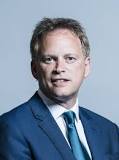
  • Grant Shapps – 2019 Statement on Thomas Cook

    Below is the text of the statement made by Grant Shapps, the Secretary of State for Transport, in the House of Commons on 25 September 2019.

    With your permission, Mr Speaker, I would like to make a statement about the steps that the Government have been taking to support those affected by the collapse of Thomas Cook, particularly for the 150,000 passengers left abroad without a flight back and the 9,000 people here who have lost their jobs in the UK.

    This is a very sad situation. All parties considered options to avoid the company’s being put into administration. Ultimately, however, Thomas Cook and its directors themselves took the decision to place the company into insolvency proceedings, and it ceased trading at 2 am on Monday 23 September. I recognise that this is a very distressing situation for all those involved. I assure Members of the House that the Government are committed to supporting those affected, including by providing repatriation flights free of charge for all those people.

    We have been contingency planning for some time to prepare for this scenario, under Operation Matterhorn. The Government and the Civil Aviation Authority have run similar operations in the past and have been working hard to minimise the disruption to passengers and to try to assist Thomas Cook’s staff. Even with our preparations, and previous experience with Monarch, the task before us represents the largest peacetime repatriation ever undertaken in the UK. Some disruption and delay is therefore inevitable, and we ask for understanding, particularly for Thomas Cook’s staff, many of whom are still working, alongside the Government, to try to help ensure the safe return of their customers.

    For example, the media reported on the situation in Cuba overnight. That aircraft has now left this morning, and all the passengers from Cuba who were scheduled to come home today are on that flight.

    Normally, the CAA’s responsibility for bringing back passengers would extend only to customers whose trips are covered by the ATOL scheme. However, there would have been insufficient capacity worldwide in the aviation market to allow people whose trips were not covered by the ATOL scheme to book tickets independently and bring themselves home. Some passengers would have had to wait for perhaps a week or longer, and others would have suffered financial and personal hardship as they waited for another flight. In my view, that would have created further economic problems, with people unable to return to work and unable to be reunited with their families. With tens of thousands of passengers abroad and with no easy means of returning to the UK, I instructed the CAA to ensure that all those currently abroad were able to return, ATOL or non-ATOL.

    Due to the size, complexity and geographical scope of the Thomas Cook business, it has not been possible to replicate the airline’s own flying programme and its schedule. In the case of the Monarch collapse back in 2017, the CAA was able to source enough aircraft of the right size and the right types to closely match the airline’s own aircraft. But Thomas Cook was a much bigger airline, and it also provided a global network of package holidays; as a result, this operation has been much more challenging. Some passengers will be travelling home on commercial flights, where other airlines have available seats. I know that the whole House would want to thank all the airlines and ground staff who have offered assistance to Thomas Cook passengers in this difficult situation.

    I would like to update the House with the latest information and give hon. Members a sense of the scale of the operation that has been going on. We have put arrangements in place to bring back 150,000 people, across 50 different countries. That requires over 1,000 flights by CAA-chartered aircraft over the next two-week period. Passengers will be able to complete their holidays, so that they should not be leaving early, and should return on the day that they were intending to.

    So far, in the first two days of the operation, we have brought home nearly 30,000 of the 150,000 passengers, on over 130 dedicated CAA flights. We hope to repatriate a further 16,500 passengers today, on about 70 flights. I checked before I came to the House, and the operation is proceeding according to these amended schedules.

    So far, 95% of people have been repatriated to their original point of departure. Again, we have not been able to bring everybody back to the airport from which they left, because of the difference in size and shape of available aircraft. In the first two days, we have therefore provided onward travel for 2,300 passengers, and have arranged an additional fight from Gatwick to Glasgow to relocate passengers who have flown back to the wrong airport because of that scheduling issue.

    The CAA has reached out to over 3,000 hotels, issuing letters of guarantee to ensure that British holidaymakers can remain in the hotels in which they are booked, and that has been followed up by calls and contact from FCO officials.

    Over 50 overseas airports are involved—around the Mediterranean, in north Africa and in north America—and 11 UK airports are engaged in this programme. There have been over 100,000 calls to our customer service centres, and on the first day alone there were over 2 million unique visitors to the CAA’s dedicated website—thomascook.caa.co.uk—with close to 7 million page views. In total, 10 Government Departments and agencies have been involved, including the Department for Transport, Foreign and Commonwealth Office, Department for Business, Energy and Industrial Strategy and Department for Work and Pensions, in London, and our extensive diplomatic and consular network in the affected countries.

    I have been hugely impressed, as the programme has been rolling out in the past couple of days. The response from everyone involved, including Thomas Cook passengers, has been generally positive, with many praising the CAA, local staff and government officials, even though there has been considerable disruption. For example, people have not been able to check in in advance, as they are used to doing these days, but have instead had to queue to check in for every single flight. That has caused some of the queues that we see on television. The programme has, though, been generally well organised and all those involved have been extremely professional.

    Despite these robust plans and their success so far, this is an incredibly distressing situation for all concerned. One of my top priorities remains helping those passengers abroad to get back to the UK and do so safely, but in addition to supporting passengers, we have been working across Government to ensure that the 9,000 former Thomas Cook employees in the UK and those overseas receive the support that they need. The decision by the Thomas Cook Group’s board has been deeply upsetting for employees, who are losing their jobs. DWP’s Jobcentre Plus rapid response service is in place, helping workers get back into employment. The Jobcentre Plus rapid response managers across the UK are ready to engage with the liquidators to start that vital work. Special arrangements are in place for UK employees who are owed redundancy pay and notice pay by their insolvent employer: the redundancy payments service in the Insolvency Service can pay statutory amounts owed to the former employees through the national insurance fund. I want to say more about that later, but I will do so in answer to questions.

    My colleague the Secretary of State for Business, Energy and Industrial Strategy is establishing a cross-government taskforce to address the impact on employees and local communities. That will help to overcome barriers to attending training, securing a job or self-employment, such as by providing child care costs, tools, work clothes and travel costs.

    My colleagues and I have been in contact with those Members whose constituencies will have been hardest hit by these job losses, and have given assurances that we will work with the industry to offer what support we can. In fact, pretty much every hon. Member’s constituency is affected in some way, even if only through the number of people working in a single shop location.

    My right hon. Friend the Secretary of State for Business, Energy and Industrial Strategy has written to the Financial Reporting Council to ensure that it prioritises, as a matter of urgency, an investigation into both the causes of the company’s failure and the conduct of its directors and auditors.

    I am also aware of the duty that this Government have to the taxpayer, and while affected passengers have been told they will not have to pay to be flown back to the UK, we have entered into discussions with third parties with a view to recovering some of the costs of this large operation. Around 60% of passengers have ATOL protection, and the CAA’s air travel trust fund will contribute proportionately to the costs of the repatriation, as well as refunding ATOL future bookings. We will also look to recoup some of the costs from the relevant credit and debit card providers and travel insurers, and will look to recover costs from other travel providers through which passengers may have booked their Thomas Cook holiday. We are also in discussion with the Official Receiver to understand what costs can be recouped through the company’s assets.

    The final cost of the operation to repatriate Monarch passengers back in 2017 was about £50 million, including ATOL contributions. The repatriation effort for Thomas Cook is now known to be about twice the size and is more complicated, for reasons that I have explained.

    I have also seen it suggested in the press that the Government should have avoided the collapse with a bail-out of up to £250 million for the company and shareholders. Given the perilous state of the business, including the company’s own reported £1.5 billion half-year loss which was reported in May and followed by a further profit warning in November, this simply was not the case, with no guarantee that an injection would have secured the future of the company. Our concern was that if we put in £250 million, we would risk throwing away good money after bad and still having to pay the cost of this repatriation. It is quite clear that in the last several years the company ran into a number of problems by trying to expand itself through investing more in the high street rather than less, while the entire market was moving in the opposite direction.

    The loss of an iconic British brand with a 178-year history—one of the oldest travel companies in the world—is an extremely sad moment. However, this should not be seen as a reflection on the general health of the UK aviation industry, which continues to thrive. Passenger numbers are actually up, and people are traveling more. However, the truth is that the way people book their holidays has changed an enormous amount over the years, but it did not change as much within the company. None of this should distract us from the distress experienced by those businesses reliant on Thomas Cook, by passengers and by Thomas Cook employees who, as I have said, have worked above and beyond, particularly in recent days during this distressing situation.

    We have never had the collapse of an airline or a holiday company on this scale before, but we have responded swiftly and decisively. Right now, our efforts are rightly focused on getting those passengers home and looking after those employees who have lost their jobs, but we also need to understand whether any individuals have failed in their duties of stewardship within the company. Our efforts will then turn to working through the reforms necessary to ensure that passengers do not find themselves in this ridiculous situation again. We need to look at the options within ATOL, and also to ascertain whether it is possible for airlines to be wound down in a more orderly manner. They need to look after their customers, and we need to be able to ensure that their planes can keep flying so that we do not end up having to set up a shadow airline for no matter what period of time. This is where we will focus our efforts in the next couple of weeks, but in order to do this we will require primary legislation and, dare I say it, a new Session of Parliament.

    In what has been a challenging time, I want to put on record my appreciation for the work of all those involved in this effort, particularly Richard Moriarty, the chief executive officer of the CAA. He and his team, and my officials in the Department for Transport, have done an extraordinary job so far. I am also grateful for the support of others, including the Mayor of Manchester, who has acknowledged the Government’s repatriation effort and its work with all the agencies involved in helping to get people home. This has been an unprecedented response to an unprecedented situation, and I am grateful to all the parties who have stepped in to support these efforts. I commend this statement to the House.
  • Matt Warman – 2019 Statement on Hacker House

    Below is the text of the statement made by Matt Warman, the Parliamentary Under-Secretary of State for Digital, Culture, Media and Sport, in the House of Commons on 25 September 2019.

    I thank the hon. Lady for raising this question today. I am answering it because it is part of my portfolio.

    As hon. Members may know, the Department runs a programme known as the cyber-security immediate impact fund. It is one of a range of programmes designed to increase the number and diversity of people who pursue careers in the cyber-security profession. Through the fund, we want to support new, creative and innovative projects that are delivered by a range of organisations, including start-ups and small and medium-sized enterprises.

    We have supported a variety of initiatives, awarding grants of between £20,000 and £500,000 since March 2018. Hacker House is one of the businesses that was awarded a £100,000 grant in February 2019 as part of our second funding round. To date, it has been paid around £47,000 for work completed. The grant was awarded by officials from DCMS, the Department for Education, techUK and, indeed, people from the National Cyber Security Centre. If the hon. Member for Oxford West and Abingdon (Layla Moran) wishes to impugn the motives of those officials, I invite her to think carefully before she does so.

    To date, we have awarded 11 companies grants to deliver 12 initiatives. More than 400 people have benefited from support through the fund. Our objective is that even more people will benefit as the businesses with which we partner further invest in a sector that I know the hon. Lady agrees is vital to the future of our security and our economy. That is part of our mission as a Department to identify untapped talent and help a broader range of individuals who have the capabilities and aptitude to develop their careers in cyber-security. I assure the House that all grants are awarded through an open, transparent and competitive process. Each grant is judged on specific assessment criteria and is approved by the panel I referred to earlier, with cross-departmental and industry representation. We are, of course, aware of the claims raised recently by The Sunday Times, and the Department is reviewing the decision that was taken, but we monitor all initiatives that have been awarded grant funding and we treat any allegations of impropriety with the utmost seriousness. As soon as I have any further information to share on this matter, I will, of course, update the House at the earliest possible opportunity.

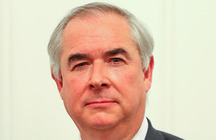
  • Geoffrey Cox – 2019 Statement on Prorogation

    Below is the text of the statement made by Geoffrey Cox, the Attorney General, in the House of Commons on 25 September 2019.

    As the hon. and learned Lady knows, the Supreme Court gave judgement on this issue yesterday, and that judgement sets out the definitive and final legal position on the advice given to Her Majesty on the Prorogation of Parliament. The Government’s legal view during the case was set out and argued fully before the Supreme Court. The hearing was streamed live and the Government’s written case was, and is, available on the Supreme Court website.

    I took a close interest in the case—[Interruption]—and I oversaw the Government’s team of counsel. I have to say that if every time I lost a case I was called upon to resign, I would probably never have had a practice.

    The Government accept the judgement and accept that they lost the case. At all times, the Government acted in good faith and in the belief that their approach was both lawful and constitutional. These are complex matters, on which senior and distinguished lawyers will disagree. The divisional court, led by the Lord Chief Justice, as well as Lord Doherty in the outer house of Scotland, agreed with the Government’s position, but we were disappointed that, in the end, the Supreme Court took a different view. Of course, we respect its judgement.

    Given the Supreme Court’s judgement, in legal terms the matter is settled, and, as the hon. and learned Lady will know, I am bound by the long-standing convention that the views of the Law Officers are not disclosed outside the Government without their consent. However, I will consider over the coming days whether the public interest might require a greater disclosure of the advice given to the Government on the subject. I am unable to give an undertaking or a promise to the hon. and learned Lady at this point, but the matter is under consideration.

  • John Bercow – 2019 Statement on Prime Minister’s Unlawful Prorogation

    Below is the text of the statement made by John Bercow, the Speaker of the House of Commons, in the Commons on 25 September 2019.

    Colleagues, welcome back to our place of work.

    The UK Supreme Court ruled yesterday that

    “Parliament has not been prorogued”

    and that the Speaker of the House of Commons and the Lord Speaker

    “can take immediate steps to enable each House to meet as soon as possible”

    to decide upon a way forward.

    I will arrange for the citation for that judgement to be entered in the Journal of this House and accordingly direct that the item relating to the Prorogation of Parliament in the Journal of Monday 9 September is expunged and the House is instead recorded as adjourned at the close of the business. I instruct the Clerk to correct the Journal accordingly and to record the House to have adjourned at the close of business on Monday 9 September until today.

    Members should also be aware that Royal Assent to the Parliamentary Buildings (Restoration and Renewal) Bill, which formed part of the royal commission appointed under the quashed Order in Council, will need to be re-signified.

    I wish to record my thanks, and I hope colleagues across the House will join me in doing so, to the staff of the House, including the security, catering, Chamber business, parliamentary digital and in-house services teams, who have worked exceptionally hard over the past 24 hours to prepare for this resumption.

    You will know—but in the name of the public intelligibility of our proceedings, I think it worthwhile to note—that there is no ministerial Question Time today, including therefore no prime ministerial Question Time. The reason for that is very simple. As colleagues will be aware, there are notification requirements: questions ordinarily are tabled three sitting days before the exchanges take place, so there are no Prime Minister’s questions today. However, there is scope, as I indicated in public yesterday, for urgent questions, ministerial statements and other business.

  • Boris Johnson – 2019 Speech to UN General Assembly

    Below is the text of the speech made by Boris Johnson, the Prime Minister, to the UN General Assembly on 24 September 2019.

    Mr President, Your Excellencies, Ladies and Gentlemen, faithful late night audience. It is customary for the British Prime Minister to come to this United Nations and pledge to advance our values and defend our rules, the rules of a peaceful world.

    From protecting freedom of navigation in the Gulf to persevering in the vital task of achieving a two-state solution to the conflict in the Middle East and of course I am proud to do all of these things, but no-one can ignore a gathering force that is reshaping the future of every member of this Assembly. There has been nothing like it in history.

    When I think of the great scientific revolutions of the past – print, the steam engine, aviation, the atomic age – I think of new tools that we acquired but over which we – the human race – had the advantage. Which we controlled. That is not necessarily the case in the digital age. You may keep secrets from your friends, from your parents, your children, your doctor – even your personal trainer – but it takes real effort to conceal your thoughts from Google. And if that is true today, in future there may be nowhere to hide.

    Smart cities will pullulate with sensors, all joined together by the “internet of things”, bollards communing invisibly with lamp posts. So there is always a parking space for your electric car, so that no bin goes unemptied, no street unswept, and the urban environment is as antiseptic as a Zurich pharmacy. But this technology could also be used to keep every citizen under round-the-clock surveillance.

    A future Alexa will pretend to take orders. But this Alexa will be watching you, clucking her tongue and stamping her foot. In the future, voice connectivity will be in every room and almost every object: your mattress will monitor your nightmares; your fridge will beep for more cheese, your front door will sweep wide the moment you approach, like some silent butler; your smart meter will go hustling – if its accord – for the cheapest electricity. And every one of them minutely transcribing your every habit in tiny electronic shorthand, stored not in their chips or their innards – nowhere you can find it, but in some great cloud of data that lours ever more oppressively over the human race.

    A giant dark thundercloud waiting to burst and we have no control over how or when the precipitation will take place and every day that we tap on our phones or work on our ipads – as I see some of you doing now – we not only leave our indelible spoor in the ether but we are ourselves becoming a resource, click by click, tap by tap. Just as the carboniferous period created the indescribable wealth – leaf by decaying leaf – of hydrocarbons.

    Data is the crude oil of the modern economy and we are now in an environment where we don’t know who should own these new oil fields, we don’t always know who should have the rights or the title to these gushers of cash and we don’t know who decides how to use that data. Can these algorithms be trusted with our lives and hopes? Should the machines – and only the machines – decide whether or not we are eligible for a mortgage or insurance.

    Or what surgery or medicines we should receive? Are we doomed to a cold and heartless future in which computer says yes – or computer says no. With the grim finality of an emperor in the arena? How do you plead with an algorithm? How do you get it to see the extenuating circumstances. And how do we know that the machines have not been insidiously programmed to fool us or even to cheat us?

    We already use all kinds of messaging services that offer instant communication at minimal cost. The same programmes, platforms, could also be designed for real-time censorship of every conversation, with offending words automatically deleted, indeed in some countries this happens today.

    Digital authoritarianism is not, alas, the stuff of dystopian fantasy but of an emerging reality. The reason I am giving this speech today is that the UK is one of the world’s tech leaders – and I believe governments have been simply caught unawares by the unintended consequences of the internet. A scientific breakthrough more far-reaching in its everyday psychological impact than any other invention since Gutenberg

    And when you consider how long it took for books to come into widespread circulation. The arrival of the internet is far bigger than print. It is bigger than the atomic age – but it is like nuclear power in that it is capable of both good and harm – but of course it is not alone. As new technologies seem to race towards us from the far horizon. We strain our eyes as they come, to make out whether they are for good or bad – friends or foes?

    AI – what will it mean? Helpful robots washing and caring for an ageing population? Or pink eyed terminators sent back from the future to cull the human race? What will synthetic biology stand for – restoring our livers and our eyes with miracle regeneration of the tissues, like some fantastic hangover cure? Or will it bring terrifying limbless chickens to our tables. Will nanotechnology help us to beat disease, or will it leave tiny robots to replicate in the crevices of our cells?

    It is a trope as old as literature that any scientific advance is punished by the Gods. When Prometheus brought fire to mankind. In a tube of fennel, as you may remember, that Zeus punished him by chaining him to a tartarean crag while his liver was pecked out by an eagle. And every time his liver regrew the eagle came back and pecked it again and this went on for ever – a bit like the experience of Brexit in the UK, if some of our parliamentarians had their way.

    In fact it was standard poetic practice to curse the protos heuretes – the person responsible for any scientific or technical breakthrough If only they had never invented the ship, then Jason would never have sailed to Colchis and all sorts of disasters would never have happened and it is a deep human instinct to be wary of any kind of technical progress. In 1829 they thought the human frame would not withstand the speeds attained by Stephenson’s rocket and there are today people today who are actually still anti-science.

    A whole movement called the anti-Vaxxers, who refuse to acknowledge the evidence that vaccinations have eradicated smallpox. And who by their prejudices are actually endangering the very children they want to protect And I totally reject this anti-scientific pessimism. I am profoundly optimistic about the ability of new technology to serve as a liberator and remake the world wondrously and benignly, indeed in countless respects technology is already doing just that.

    Today, nanotechnology – as I mentioned earlier – is revolutionising medicine by designing robots a fraction of the size of a red blood cell, capable of swimming through our bodies, dispensing medicine and attacking malignant cells like some Star Wars armada. Neural interface technology is producing a new generation of cochlear implants, allowing the gift of hearing to people who would not otherwise be able to hear the voices of their children.

    A London technology company has worked out how to help the blind to navigate more freely with nothing more than an app on their smartphones –

    New technologies, produced in Britain, helping the deaf to hear and the blind to see. And we used to think that printing was something you did to run off a boarding card. Now a British company has used 3D printing to make an engine capable of blasting a rocket into space.

    In African countries, millions of people without bank accounts can now transfer money using a simple app; they can buy solar energy and leap in one transaction from no electricity to green power. And new advances are making renewable energy ever cheaper, aiding our common struggle against climate change. Our understanding of the natural world is being transformed by genome sequencing.

    The discovery of the very essence of life itself. The secret genetic code that animates the spirit of every living being. And allows medical breakthroughs the like of which we have never known. Treatments tailored to the precise genetic makeup of the individual. So far, we have discovered the secrets of less than 0.3 percent of complex life on the planet. Think what we will achieve when – and it is a matter of when – we understand 1 or 2 percent, let alone 5 or 10 percent.

    But how we design the emerging technologies behind these breakthroughs – and what values inform their design –will shape the future of humanity. That is my point to you tonight my friends, my Excellencies – at stake is whether we bequeath an Orwellian world, designed for censorship, repression and control, or a world of emancipation, debate and learning, where technology threatens famine and disease, but not our freedoms. Seven decades ago, this General Assembly adopted the Universal Declaration of Human Rights with no dissenting voices, uniting humanity for the first and perhaps only time behind one set of principles.

    And our declaration – our joint declaration – upholds “freedom of opinion and expression”, the “privacy” of “home or correspondence,” and the right to “seek…and impart information and ideas”. Unless we ensure that new technology reflects this spirit, I fear that our declaration will mean nothing and no longer hold.

    So the mission of the United Kingdom and all who share our values must be to ensure that emerging technologies are designed from the outset for freedom, openness and pluralism, with the right safeguards in place to protect our peoples.

    Month by month, vital decisions are being taken in academic committees, company boardrooms and industry standards groups. They are writing the rulebooks of the future, making ethical judgements, choosing what will or will not be rendered possible. Together, we need to ensure that new advances reflect our values by design.

    There is excellent work being done in the EU, the Commonwealth, and of course the UN, which has a vital role in ensuring that no country is excluded from the wondrous benefits of this technology, and the industrial revolution it is bringing about. But we must be still more ambitious.

    We need to find the right balance between freedom and control; between innovation and regulation; between private enterprise and government oversight. We must insist that the ethical judgements inherent in the design of new technology are transparent to all. And we must make our voices heard more loudly in the standards bodies that write the rules.

    Above all, we need to agree a common set of global principles to shape the norms and standards that will guide the development of emerging technology.

    So – here’s the good news – I invite you next year to a summit in London, a wonderful city, where by the way it is not raining 94 per cent of the time, and where at one stage – when I was Mayor of London – we discovered that we had more Michelin starred restaurants even than Paris. The French somehow rapidly recovered – by a process that I wasn’t quite sure was entirely fair. But we still have by far, in the UK, by far the biggest tech sector – fintech, biotech, meditech, nanotech, green tech – every kind of tech – in London – the biggest tech sector anywhere in Europe, perhaps half a million people working in tech alone.

    I hope you will come there, where we will seek to assemble the broadest possible coalition to take forward this vital task

    Building on all that the UK can contribute to this mission as a global leader in ethical and responsible technology.

    If we master this challenge – and I have no doubt that we can – then we will not only safeguard our ideals, we will surmount the limits that once constrained humanity and conquer the perils that once ended so many lives.

    Together, we can vanquish killer diseases, eliminate famine, protect the environment and transform our cities.

    Success will depend, now as ever, on freedom, openness and pluralism,

    the formula that not only emancipates the human spirit, but releases the boundless ingenuity and inventiveness of mankind, and which, above all, the United Kingdom will strive to preserve and advance.

    Excellencies, Ladies and Gentlemen, thank you for your kind attention.