Blog

  • Sue Hayman – 2019 Speech at Labour Party Conference

    Below is the text of the speech made by Sue Hayman, the Shadow Environment Secretary, at the Labour Party conference held on 24 September 2019.

    Good afternoon, conference.

    Last week we witnessed an extraordinary global event. Millions of young people took to the streets across the world to demand more action in the fight against climate change. I’m sure many of you, like me, joined them to show your support.

    Millions of young people. Inspired to make a difference by a Swedish teenager. So let us applaud Greta Thunberg!

    On March 26 this year I stood up in Parliament and called on this Tory Government to declare an Environment and Climate Emergency. They refused. They said they are doing enough. They are not.

    On May Day, Jeremy Corbyn and I went back to Parliament. We declared a Climate Emergency, anyway. It is Labour that is leading the way. Last year we published Labour’s plans for a Green Transformation. We set out how we would decarbonise our economy. We have built on those plans.

    Earlier today you heard it. Our plans for a Green Industrial Revolution.

    And in these debates we have heard more of your ideas and aims. But I have been working on another revolution. A revolution in food and farming. It is an essential part of our effort to combat climate change.

    Agriculture contributes nearly six million tonnes of carbon dioxide to our carbon footprint. A much higher proportion of other greenhouse gases, like methane and nitrous oxides. Land use offsets some of these emissions but our chosen diets, our food packaging and food wastage contributes more again.

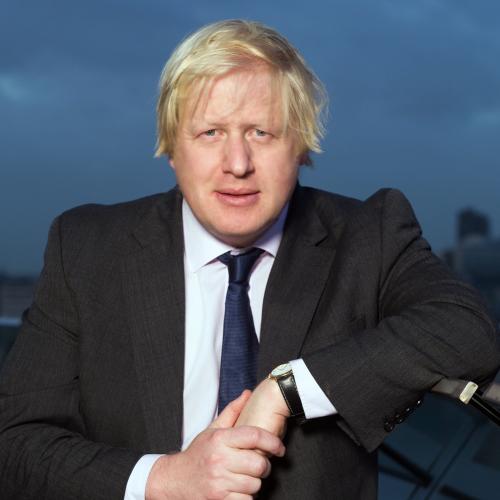
    Food waste. A symptom of a billion dollar industry astride a broken system. A system which leads to food banks. Do you remember what Boris Johnson said about food banks? He said, “When I was running London, I set up loads of food banks. They are fantastic things.”

    Food banks, Mr Johnson, are not ‘fantastic’. Food banks are the result of Tory austerity. They are the product of poverty, of food insecurity. They are the failure of Tory changes to the benefits system. They are late welfare payments. They are privatised work assessments. They are a punitive, heartless sanctions regime. How else is it, in 21st century Britain, in one of the richest countries in the world, more than one million emergency food supplies are handed out each year.

    How, in Britain, can there be children scavenging in school bins for apple cores because there is no food at home? How can people with malnutrition be taking 200,000 hospital bed days each year? Hospital admissions for malnutrition have trebled under the Tories and their Lib Dem coalition partners.

    It’s you, Prime Minister. Tories did away with child poverty targets. Tories won’t monitor hunger. And you have no strategy for food security. Just a taste for chlorinated chicken. Healthy food is not a luxury. It is a basic human right.

    Today , I am announcing that the next Labour government will introduce a Right to Food, embedded in UK law, underpinned by an over-arching national food strategy. We will introduce a Fair Food Act. We will ensure that everyone has access to nutritious and sustainable food.

    That means that everyone is able to feed themselves. Sufficient income. Reduced living costs. Social welfare. A real Living Wage. No more bedroom tax. An uprated carers’ allowance. And an end to punitive benefit sanctions.

    What kind of barbaric society punishes someone for missing an appointment by making their children go hungry? Our measures mean that Labour will halve food bank usage within our first year in Government. And we aim to end the need for food banks completely within three years.

    Labour will set up a National Food Commission to uphold the Right to Food. We will set up a £6m People’s Access to Food Fund in the 50 most insecure food areas in the country.

    We will ensure decent pay and collective bargaining for food and agricultural workers. And we will ensure and protect access to trade union representation for all food and agricultural workers.

    Conference, we will back British farmers and food producers to produce sustainable, quality foods. We will not allow a no-deal Brexit to flood the UK with imported food produced to lower environmental, social or animal welfare standards.

    Labour will not agree free trade deals or EU arrangements that threatens our existing food standards. We will stand up for our nation’s food security. Our nutrition. Our environment, Our public health. And our farmers, the bedrock of our rural communities.

    Labour’s food and farming strategy will address packaging and waste. Hundreds of thousands of people use food banks, but we throw away 10 million tonnes of food a year. 10 million tonnes of perfectly good food.

    That’s a quarter of all food purchased in a year, at a cost of over £20 billion. And it is equivalent to more than 20 million tonnes of greenhouse gas emissions. We cannot tackle climate change unless we sort out our food systems. A Labour government will commit to net zero emissions from farming and land use. The scope for carbon storage on agricultural land is huge. I’m already working with the National Farmers Union and sustainability organisations to make that happen.

    And I have also put animal welfare rights at the heart of Labour’s approach. Recently I published Labour’s animal welfare manifesto, a 50-point plan. The most comprehensive approach yet to promoting animal welfare standards and animal rights. It covers the way we treat farm animals as well as wild and domestic animals. It’s on the Labour Party website but you can also pick up a copy here.

    But conference, let me leave you with this. When someone tells you that all political parties are the same, you tell them this.

    A Labour Government will never let our children go hungry. And a Labour Government will make sure no-one has to use a food bank. Because every single person has a right to decent food. After a decade of Tories we will give people that right, as we start Rebuilding Britain.

  • John Bercow – 2019 Statement on the Unlawful Suspension of Parliament

    Below is the text of the statement issued by John Bercow, the Speaker of the House of Commons, on 24 September 2019.

    I welcome the Supreme Court’s judgement that the prorogation of Parliament was unlawful. The judges have rejected the Government’s claim that closing down Parliament for five weeks was merely standard practice to allow for a new Queen’s Speech. In reaching their conclusion, they have vindicated the right and duty of Parliament to meet at this crucial time to scrutinise the executive and hold Ministers to account. As the embodiment of our Parliamentary democracy, the House of Commons must convene without delay. To this end, I will now consult the party leaders as a matter of urgency.

  • Richard Leonard – 2019 Speech to Labour Party Conference

    Below is the text of the speech made by Richard Leonard, the Leader of the Scottish Labour Party, at the 2019 Labour Party conference held on 23 September 2019.

    Comrades and friends. I bring you greetings from the Scottish Labour Party.

    This conference is one of the most important in our entire history. With a General Election imminent, we know that this conference could be a turning point. And it is up to us, because we will only win the forthcoming General Election if we stay rooted in our enduring values of democracy and socialism, if we articulate a positive vision of change for the future, and if we all get 100 per cent behind Jeremy Corbyn’s leadership.

    And let me also say from the outset, that my aim as the Leader of the Scottish Labour Party is not simply to lead a better management team than the SNP. It is to lead a Scottish Labour Government worthy of the name and It is to go forward winning Scotland back to Labour. Because make no mistake that is the only way to deliver a Labour Government. That is the only way: by electing Scottish Labour MPs. For the avoidance of doubt, there is no shortcut to a Jeremy Corbyn government through the SNP.

    So we must work together in a spirit of cooperation and shared endeavour to build a better society in a peaceful world on the strong foundation of a democratic economy, a green economy and a participatory form of politics.

    That is the vision of the future that we are offering the people of this country. It is a vision of hope. It is a vision of real change. It is a vision of the future which is worth fighting for. And that means it is not enough to simply tell people what we are against, we need to tell people what we are for.

    And we need to stick to the message; the message of investment over cuts, the message of a green industrial revolution to transform our economy, the message that only Labour can stop a No Deal Brexit and can deliver a public vote and the message as well of public ownership of public services.

    Because the shareholder dividend and the profit motive should never have had any place in our National Health Service. And it should have no place in the delivery of our bus services, in the delivery of our post, no place in our prisons and no place in our asylum system.

    And it should have no place in our Railways either. Which is why I am announcing today that Scottish Labour will be forcing a vote in the Scottish Parliament next week to end the Abellio franchise of ScotRail so that once again we can put passengers before profits. And it is not just in transport that we need fundamental change, it is in the economy, it is in housing, and it is in land.

    Let me give you an example. There is a housing emergency in Scotland and the price of land lies at the centre of it. So when we launch our Housing Commission report in the next few weeks, it will make radical recommendations which tackle the excess profits of property developers. Including a proposal to introduce a new law giving local councils, housing associations and housing co-operatives the right to acquire land at an existing use-value.

    Good housing policy has always been at the core of Labour Party values. It is where we came from. And under the Scottish Labour Government that I lead, housing will become a national priority again.

    From its very beginnings, this party of ours has never stood for the status quo: economically, politically, or constitutionally. We delivered the Scottish Parliament, we delivered the Welsh Assembly. But the UK is still too centralised. Which is why, the time has come for Radical reform again.

    And that’s not just the view from Glasgow or Inverness. It’s the view from Manchester and Leeds. And it’s the view from Cardiff too.

    And if Brexit is showing us anything, it is that the British constitution is creaking and out of date. And it is time for democratic renewal.

    So I am proud that our party will go into government with a new determination to shift power closer to the people. We will extend democracy not just at the ballot box, but in every workplace and in every community.

    And so let me be crystal clear, this democratic renewal , this redistribution of power we seek, this is not simply about Parliaments and the Members elected to them. It is about strong local government. It is about redressing the imbalance of power between tenant and landlord, between worker and owner, between citizen and state, between women and men.

    So the next Labour government will deliver a new Scotland Act, that will provide for the devolution of employment law with a UK wide floor.

    This time last week, I joined Asda workers, GMB members in Glasgow in a national protest. Because I tell you this, if the Labour Party cannot support working people fighting against a basic injustice, then what else are we for?

    These workers, most of them women, all of them with years of service, are facing the sack if they do not sign a new contract with cuts to their terms and conditions. If we do nothing else we should change the law to once and for all end this kind of bullying of workers by an employer.

    It is not just more powers coming to Scotland that we need, it is a fundamental rebuilding of the broken British state that is required. So that is why we are proposing, at last, the abolition of the House of Lords. I believe that its replacement with an elected Senate of the Nations and Regions, built on a federal settlement, would begin the process of reshaping our whole political system.

    These changes will have to be worked for and people won over, but we must be confident; confident in the democratic tradition which we inherit, confident in the socialist ideal that drives us, confident in these practical ideas for radical reform.

    We are on the brink of something extraordinary, the greatest opportunity for more than a generation to elect a truly radical, transformative Labour government. And with that opportunity, we send out the clear and simple message from this conference today that a socialist Britain will do far more to improve the lives of the people than a separate Scotland ever could.

    So let’s hold our nerve. Let’s keep our faith. Let’s put in the hard work. A Labour government is within our grasp. Let us go out and win it.

  • John McDonnell – 2019 Speech at Labour Party Conference

    Below is the text of the speech made by John McDonnell, the Shadow Chancellor of the Exchequer, at the 2019 Labour Party conference on 23 September 2019.

    All the warmth of that welcome I take as a response to the hard work of my whole Shadow Treasury Team. I want to thank the often unsung heroes of my team.

    Peter Dowd – Shadow Chief Secretary, and MP for what he describes as the small fishing village of Bootle. Jonathan Reynolds – our missionary we send into the city of London to preach socialism. Anneliese Dodds – masterminding brilliantly our programme to tackle tax avoidance and evasion, digging up that magic money tree in the Cayman Islands. Clive Lewis – always getting into one scrape or another in pressing through our radical green agenda. Lyn Brown – the conscience of our party in ensuring everything we do will secure social justice and equality And Thelma Walker, whose brings her skills as a former ex headteacher to ensure we all do our homework and deliver.

    Finally, let me thank some other people here today. GMB members who work for Asda, who are being threatened with the sack for Christmas if they don’t sign up to worse contracts. By Walmart, one of the richest corporations in the world.

    Comrades – we stand with you and support you all the way in standing up to the bullies.

    Let me also thank my friend, who as leader of our party gives us his 100 per cent support. And what makes me so proud of him is that no matter what smears and personal attacks by the gutter press. He always continue to embody the kinder, gentler politics he advocates.

    My fear, though, is that – as a result of the behaviour, language and cynical opportunism of some politicians on the Right. We have entered a period of profound insecurity and risk to our democratic system.

    We have seen before in our history what kind of forces can be unleashed by politicians who have a total disregard for the truth in their ruthless pursuit of power for power’s sake.

    Politicians who attack the very institutions and practices no matter how flawed that protect and uphold our democracy. Parliament, the courts and the rule of law. The best antidote to those who attack our democratic rules and institutions is more democracy itself.

    That’s why we aim to trust the people in having the final say on Brexit. A Deal or Remain. Some of you will know I have said I will campaign for Remain. But let me make it clear that I profoundly respect those who support a genuine alternative.

    In our debates today I want us to demonstrate in the respect we show each other and how we bring our party together just how we can also bring the country together again.

    But I warn those who would revoke Article 50 without a democratic mandate. Ask yourselves what message that sends to our people.

    An old professor of mine Bernard Crick was once asked to define socialism in one sentence.

    He said socialism is the achievement of equality through democracy.

    We can’t say to people “Labour wants you to share in the running of your workplace, your community and your environment, but we don’t trust you to have the final say over Brexit” Nothing would do more to undermine their faith in democracy in all its forms.

    We would run the risk of losing the confidence we have built in people. In using democracy to change the world. The blossoming of hope and radical thought. The potential to turn that radicalism and that hope into transforming lives, increasing fulfilment and happiness for the many.

    Transforming lives means – before everything else – having enough to get by. Not just to scrape by, but to live a rich and fulfilling life.

    And millions today know how hard it is to do that. Worrying about getting to the end of the month.

    Transforming people’s lives means ending the modern evil of in-work poverty. Labour has traditionally been committed to full employment. We have always believed that getting a job should be a means to lift yourself out of poverty. But under the Tories the link between work and escaping poverty has been broken.

    So I commit today that within our first term of office Labour will end in-work poverty. That means completely transforming the way our economy works.

    We’ll restore full trade union rights and workplace rights from day one. We’ll roll out collective bargaining to enable workers to get their fair share of what they produce. We’ll bring in a Real Living Wage of at least £10 per hour. We’ll end the barbaric roll-out of Universal Credit. We’ll cap rents and build a million new genuinely affordable homes, so young people in particular aren’t pouring away thousands of pounds from their wages to rip-off landlords.

    But work isn’t just about wages. It’s about freedom from drudgery; having dignity, respect and a voice in the workplace.

    That means a strong trade union movement and collective bargaining. But also, in the new public services we’re creating, it means management by workers and service users rather than by remote bureaucrats in Whitehall.

    In large companies it means a third of directors being elected by workers and a tenth of shares being owned by those workers. It means doubling the size of our cooperative sector so wherever you work you will have a stake and a say.

    And it’s not just about a fulfilling life at work. We should work to live, not live to work. Thanks to past Labour governments but mainly thanks to the trade union movement, the average full-time working week fell from nearly 65 hours in the 1860s to 43 hours in the 1970s.

    As society got richer, we could spend fewer hours at work. But in recent decades progress has stalled. People in our country today work the longest average full-time hours in Europe apart from Greece and Austria. And since the 1980s the link between increasing productivity matched by expanding free time has been broken. It’s time to put that right.

    So I can tell you today that the next Labour government will put in place the changes needed to reduce average full-time hours to 32 a week within the next decade. A shorter working week with no loss of pay

    As a first step we’ll end the opt-out from the European Working Time Directive. As we roll out sectoral collective bargaining, we will include negotiations over working hours. We’ll require working hours to be included in the legally binding sectoral agreements. This will allow unions and employers to decide together how best to reduce hours for their sector.

    And we’ll set up a Working Time Commission with the power to recommend to government on increasing statutory leave entitlements as quickly as possible without increasing unemployment.

    But while millions are exhausted from overwork, there are too many others who can’t get the working hours they need, so we’ll also ban zero hour contracts to make sure every employee has a guaranteed number of hours a week too. And our Real Living Wage will make sure that people in work earn enough to live on. Because it’s not enough to give people power over their working lives. We believe in extending democracy across the board

    We know one of most urgent tasks will be to rebuild local democracy. Rebuild those local council services decimated by the Conservatives and Liberal Democrats.

    My generation inherited a treasure of public parks, libraries, swimming pools and leisure centres. Free or affordable for all. But in too many cases they’re now gone. They’ve been privatised or have priced out the families they were built for. These public assets meant a better life for millions of us. And were part of the strong welfare state that our movement fought for and built. Providing free at the point of use the things that make lives worth living. As well as the essentials like health, education, even those have come under attack in recent years

    But we mustn’t limit our ambition to repairing the damage caused by 9 years of Tory austerity. We must go much further. I’m launching today our document on Universal Basic Services. It lays out our belief that everyone has a right to a good life. That the state has responsibility to make good on that right.

    By providing public services free at the point of use. These services are part of our shared experiences. Experiences that are too important to be left to the vagaries of the market. Whether a family can afford them or not.

    As socialists we believe that people have the right to education, health, a home in a decent safe environment and, yes, access to culture and recreation. And I fervently believe the right to dignity in retirement is a part of that right to health and well being at any stage of life.

    The truth is our social care system is a national scandal. Nearly £8bn taken from council budgets for social care since 2010. The result is one million people not getting the care they need. 87 people dying a day waiting for care. More than five million unpaid carers – most of them women – looking after loved ones. And overworked, underpaid care workers only being allowed ten-minute visits to those they care for. Because the current system won’t pay for more.

    A report out last week demonstrated how, at the same time, many big care providers have developed highly complex corporate structures involving offshore tax havens. Sucking even more money out of the system.

    So I can announce today that, after years of campaigning by trade unions and carers – as the first building block in our new National Care Service – the next Labour government will introduce personal care free at the point of use in England. Funded not through the Conservatives’ gimmicky insurance schemes. But, like the NHS and our other essentials, through general taxation.

    And we’re publishing the first steps of our National Care Service vision today. Investing in the workforce and ensuring they are employed on local authority rates of the pay, working conditions and training to deliver high quality care, as Unison has advocated.

    And over time, we will bring those services back into public ownership and democratic control. We will make sure that local councils have the necessary resources after years of savage cuts. Building up capacity in local government for both care homes and domiciliary care

    So we’ll require all providers – public, private or charitable – to adhere to strict criteria on ethical standards. Because nothing is more important than dignity in retirement for those who have built our country and given younger generations the world we live in today. And I want to thank the hard work and leadership that Barbara Keeley has shown in driving forward our policy on this issue.

    Of course, in Scotland, a Labour government has already introduced free personal care, so when we spend the billions needed to guarantee free personal care in England, there will be billions more for First Minister Richard Leonard when he takes office in 2021. A Labour government making millions of lives better across the UK, thanks to our transformative policies in Westminster, but also through the new resources for the Scottish and Welsh governments.

    But of all the universal rights we hold dear, nothing is more important than the right to survival – survival of our planet.

    I believe when historians write about 2019, the most important political event so far has not been replacing one useless Tory prime minister with another. It’s been the emergence on the national scene of climate change as amongst the most urgent political questions of the day.

    Nobody has done more in Parliament than my colleagues Sue Hayman and Rebecca Long-Bailey. They paved the way for Parliament to declare a climate emergency in May this year.

    And outside Parliament I want to pay tribute to the school strikers and Extinction Rebellion. I have been proud to march and demonstrate with them. They have shamed older generations of politicians into taking climate change seriously and with the urgency it needs. Now it’s essential that the Labour movement continues to join in solidarity with those young people to help lead that fight.

    For my part, I will make sure the Treasury puts in whatever resources are necessary to meet our obligations. A Sustainable Investment Board, coordinating the Treasury, BEIS department and Bank of England. £250 billion of green government investment in a National Transformation Fund.

    And £250 billion more of lending through our National Investment Bank, delivered at grassroots level by regional development banks and our new Post Bank.

    And while the Labour government will need to take the lead, we’ll make whatever reforms are necessary to ensure the finance sector isn’t pushing the other way by investing in carbon-intensive sectors That means billions more raised through green bonds and support for a Europe wide green new deal programme so that we can bring forward significantly that 2050 target.

    Mobilising financial resources on a scale not seen since post-War reconstruction to achieve the twin goals of a sustainable future and a better today.

    In July, at our inaugural International Social Forum, I reiterated our support for socialist internationalism. We recognise that the First Industrial Revolution meant Britain was the first major contributor to climate change – something that left a lasting legacy for the Global South.

    And to begin making some reparations for our colonial past, I pledge we will provide to the citizens of the Global South free or cheap access to the green technologies developed as part of our Green Industrial Revolution.

    And we will work with other countries and social movements across the globe to reform the major international bodies to enable them to coordinate the global response to climate change.

    There’s an old trade union saying that “the cause of labour is the hope of the world”. Here in Britain it’s the Labour Party carrying that hope. The hope of a world where the riches of our planet are shared. The hope of a world with the chance for everyone to fulfil their full potential.

    We won’t build that world overnight. And let nobody tell you it will be easy. Or that we won’t face enormous resistance.But I believe our time is coming. Time to start work on our historic mission to lay the foundations of that new world.

    When they ask you some time in the future:

    “Where were you when people were left to sleep on our streets?
    “When families queued at food banks to survive?
    “When the Tories tried to sell out our country to Trump”
    “When climate change threatened our planet and our very existence?”

    I want you all to be able to say

    “I built the homes and public services our people needed”
    “I made sure everyone was fed and cared for.”
    “With nobody forced to endure poverty
    “I saved the planet by tackling climate change
    “I helped lay the foundations of a new society
    “Foundations so deeply rooted that the Tories can never break them up”

    And when they ask “how did you do that?” You can tell them: “I supported Labour, I joined Labour, I voted for Jeremy Corbyn. That’s how.”

  • Chuka Umunna – 2019 Speech at Liberal Democrat Party Conference

    Below is the text of the speech made by Chuka Umunna, the Liberal Democrat spokesperson on Foreign Affairs, at the party conference on 16 September 2019.

    Conference, it is an honour and a pleasure to be addressing you as a Liberal Democrat Member of Parliament and as your Shadow Foreign Secretary.

    From the bottom of my heart, thank you for making me feel so welcome. I could not be more at home in the wonderful Liberal Democrat family.

    The truth is, all the incredibly difficult decisions I have made on the journey I’ve been on this year were routed in my values and principles. I joined this party out of conviction.

    As you know, I am a Remainer and proud of it – we have spent far too long apologising for being pro-European in this country. Because you cannot be pro-Britain and put our national interest first without seeking to put Britain at the heart of Europe.

    Be in no doubt: this is the battle of our time and it goes far beyond Britain’s borders.

    In essence, the society we seek to build is one where if you work hard and play by the rules, you should be free to lead a happy, prosperous and secure life free of domination of either the state or the market.

    I grew up in world in which we took these values for granted.

    As a family of mixed heritage – English, Irish and Nigerian – our back story, alongside that of millions of others, stands as an example of Britain’s liberal, open, internationalist spirit.

    The notion that we all share the same basic rights and should live together in peace, regardless of background is something we will always fight for.

    This is the Britain we know and love – and Boris Johnson, Nigel Farage and the peddlers of hate and division in our country better know that this is what we will fight for at the coming election.

    It is our job to make sure this country’s heart beats in a liberal and internationalist direction; not nationalist, populist authoritarianism.

    This is the new fault line in British politics and we know where we stand.

    Because we recognise that these things cannot be achieved in isolation and that the pursuit of individual and social justice does not stop at the border, we seek to work together with other liberal democracies who share our values to overcome cross border obstacles to achieving our goals.

    That is why we are internationalists. That is why we are pro-European. Liberalism is needed at home to protect personal freedom and liberty; Liberalism and cooperation are also needed abroad to secure peace, promote democracy and defend human rights.

    Of course, the first thing we will do in Government is revoke Article 50 so that, once again, the British people can resume their role of providing leadership as a full and active member of the European Union.

    This order is imperfect. It must do far better at reducing inequality and fostering a more inclusive global economic system. But however flawed it may be, this liberal international order has none the less created peace and prosperity.

    The trade it has opened up between countries helped ensure global competition no longer resulted in military conflict. In turn, this has helped lift hundreds of millions out of poverty and people are more healthy than before.

    Furthermore, the liberal democracies that fall within the order have, in the main, also provided better protection of the rights and civil liberties of their peoples.

    And it has forced Extreme nationalism retreat.

    Yet the advances made then are now at risk.

    Today it is that liberal international order that is now in retreat. As a result the world is becoming a more dangerous place.

    Across the world, nationalist populism – the pernicious mantra that nations should be homogeneous and one people is superior to another – is making strides.

    Let us be clear: the Liberal Democrats are the only party that can get into office which is capable of meeting this challenge in Britain today.

    You see, you cannot defend a liberal, rules based order abroad if you so openly flout the rules at home.

    Boris Johnson has facilitated the takeover of Her Majesty’s Government by the remnants of Vote Leave campaign – an outfit that was not only was found guilty of lying during the 2016 referendum in relation to its claims on the NHS by the Statistics Authority, but it was found guilty of cheating and breaking the law by the Electoral Commission.

    Now, as he seeks to force through a catastrophic “no deal” Brexit, the Prime Minister has shut down Parliament and is threatening to break the law if necessary.

    And, as he seeks to force the UK out of the EU, he will become ever reliant on President Trump, whose political playbook he follows. But President Trump has always been clear – it will be America not Britain First.

    This brings me to the Opposition. The Labour Party likes to think of itself as a champion of liberal values at home and abroad.

    You cannot be a champion of liberalism if you are currently subject to a formal investigation by the Equality & Human Rights Commission for institutional racism against Jewish people.

    You cannot be a champion of liberalism when your leader’s supporters think it is acceptable to abuse, vilify and deselect anyone who dares to question the leader.

    And you cannot claim to be liberal when the political editor of the BBC needs to take a bodyguard to your conference.

    Of course what unites both Johnson and Corbyn is the fact that they want to leave the EU, the organisation which has been the biggest champion of liberalism in our part of the global neighbourhood. Neither is fit to lead this country.

    Its time for a change and someone who I know can provide that leadership: Jo Swinson.

    Under Jo’s premiership we can breathe a progressive breath of fresh air into the British foreign policy.

    Liberal Democrats are internationalists. This is at the heart of who we are as a party, it flows through everything we do.

    We believe in tearing down walls, not building them. We believe in working together through multilateral organisations, not standing alone.

    With Jo as our Prime Minister we will revive our reputation on the world stage and get on with helping to improve the lives of those across the world.

    As Liberal Democrats we have a duty to do this, to defend the values of human rights, democracy, and equality.

    And as your Liberal Democrat Shadow Foreign Secretary I can promise you that I will stand up for a truly global Britain.

    Thank you.

  • Sal Brinton – 2019 Speech at Liberal Democrat Party Conference

    Below is the text of the speech made by Sal Brinton, the President of the Liberal Democrats, at the party conference on 14 September 2019.

    Well, hello Conference and hasn’t everything changed since we last met in March!

    Wow! Just wow! We asked you to all go on the Stop Brexit march on 20 March to make it clear we are the strongest Remain party.

    You did that.

    It was my privilege to help lead thousands and thousands of Liberal Democrats along with Vince Cable at that march that had over a million people on the streets of London.

    We asked you to go out and give us the best results ever in the local elections.

    You did that.

    We made over 700 gains, and now control 18 councils. We’re still making gains in by elections too.

    We then said please go out and campaign for our best ever European Elections results, in a snap election, with very little time.

    You did that. 16 MEPs.

    Then we said (after all of that!), please go and help Jane Dodds and our Welsh colleagues in Brecon and Radnorshire.

    So you did that too!

    Jane Dodds MP has said she could not have won without all the help you provided.

    And over the last couple of months you have been pouring into Sheffield Hallam as well – Laura Gordon: we are with you and will do everything we can to ensure you can join Jane Dodds on those green benches soon.

    You see, I knew. I knew that your attitude and approach to life had changed. And all we needed to do was to get out there and make sure that people in our local communities felt the same.

    And they did.

    After the Euro elections, the press said this was a flash in the pan. They said that within weeks we’d plummet back in the polls.

    But now, their view has changed.

    Why?

    Because our poll rating has strengthened and solidified. Against all the pundits’ expectations. But they don’t know the reaction we were all getting on the doorsteps from people who have, for years, said “I would vote for you if I thought you could win”. Well, consistently 20% of voters believe we can and will win, and, more importantly believe that Jo Swinson can be our next Prime Minister.

    We must not forget those who kept the faith and kept us going. And I want, in my final speech as your President, to pay tribute especially to Tim Farron and Vince Cable, both of whom had a really tough time as Leader holding us together and rebuilding and preparing us for the success we have had this year. I thank them both for that selfless dedication when perhaps only we believed the Liberal Democrats had a future and the outside world just mocked and derided us.

    I also want to thank the many staff who worked against all the odds too. People assume that HQ is this large monolith filled with hundreds of people. Not true. Our few staff are brilliant. Not only doing the job they are paid to do, but also during elections, especially General Elections, redeployed into tasks that keep our successful campaign show on the road.

    And it is appropriate therefore for me to thank Nick Harvey, our Chief Executive, who has announced he is leaving us at the end of November. Nick, you have done an amazing job, especially in sorting out our key services, such as compliance, supervising the staff side of the new discipline process. Nick, your sage political common sense linking the day-to-day business of the party with the political actions of Lib Dems in parliaments, assemblies and local government.

    Thank you!

    I have had the privilege of being your President during the most extraordinary five years, which not one of us could have predicted in 2014.

    I don’t think that any President has faced two General Elections (so far!), one Referendum, three new Leaders, and two new Chief Execs.

    And on top of that, we’ve had major governance changes to make your Federal Board work strategically, and Federal Committees work more effectively.

    We’ve consulted and made changes to the Discipline System, which was the one thing you all made clear in 2014 we needed to tackle. That new system is now working, and there are only a few complaints started under the old system still to be resolved by the state and regional parties.

    Over these five years we’ve changed the way we campaign. Still out on the streets, but our social media presence has completely changed and – given the small resources compared to others – is outstanding. That is also true of the way we run elections now, much more digital.

    But above all, you, the members, still stand up for the party, and stand up against things that you disapprove of. My successor will discover that in your eyes, the President is responsible for absolutely everything that they don’t like or has gone wrong.

    This has included complaints to me, for example:

    To complain that staff haven’t replied to an email over a bank holiday weekend. AND I think my best though is the member who wrote to me to ask me to go and tell the Leader, they’re an idiot. And to remind me, which I never forget, that with senior positions of power and responsibility, liberals always remain suspicious of the establishment, including the President, and I wouldn’t have it any other way!

    I have learned so much from you over the last five years, but of one thing I remain certain. The democratic way we exist and operate is the reason that we are united as a party. We can debate, argue, and vote, and whilst there are matters hard fought for, we respect our internal democracy.

    At our lowest moments after the 2015 election, I said to you, Conference, to hold the faith. That we would bounce back. That you needed to keep positive, no matter what happened.

    We stand at a cross roads of infinite possibilities:

    Defending liberalism from nationalist and populists
    Defending our country’s place in the European Union
    Defending our democracy as unscrupulous Prime Ministers try to subvert it
    But we are not the defeated party of those years.

    We have a strong and growing political presence in Westminster, in the EU and in local Government.

    A party that lives its liberal values by welcoming those made homeless in the current political whirlwind because they didn’t know they are liberals, but are loving coming home to us

    We have in Jo Swinson a Leader who has taken the UK political scene by storm.

    And we have, in our party, 120,000 people who believe we can, and will transform our country, whatever our opponents throw at us.

    This will be our year – took a long time to come.

    Thank you.

  • Boris Johnson – 2019 Statement on Brexit

    Below is the text of the statement made by Boris Johnson, the Prime Minister, outside 10 Downing Street, London, on 2 September 2019.

    Five weeks ago I spoke to you from these steps and said that this Government was not going to hang around and that we would not wait until Brexit day – October 31 – to deliver on the priorities of the British people.

    And so I am proud to say that on Wednesday Chancellor Sajid Javid is going to set out the most ambitious spending round for more than a decade.

    I said I wanted to make your streets safer – and that is why we are recruiting another 20,000 police officers. I said I wanted to improve your hospital and reduce the waiting times at your GP. And so we are doing 20 new hospital upgrades in addition to the extra £34 billion going into the NHS.

    And I said I wanted every child in this country to have a superb education and that’s why I announced last week that we are levelling up funding across the country and spending much more next year in both primary and secondary schools.

    And it is to push forward this agenda on these and many other fronts that we need a Queen’s speech in October.

    While leaving due time to debate Brexit and other matters. And as we come to that Brexit deadline I am encouraged by the progress we are making. In the last few weeks the chances of a deal have been rising, I believe, for three reasons.

    They can see that we want a deal. They can see that we have a clear vision for our future relationship with the EU – something that has perhaps not always been the case. And they can see that we are utterly determined to strengthen our position by getting ready to come out regardless, come what may

    But if there is one thing that can hold us back in these talks it is the sense in Brussels that MPs may find some way to cancel the referendum. I don’t think they will. I hope that they won’t. But if they do they will plainly chop the legs out from under the UK position and make any further negotiation absolutely impossible.

    I want everybody to know – there are no circumstances in which I will ask Brussels to delay. We are leaving on 31 October, no ifs or buts. We will not accept any attempt to go back on our promises or scrub that referendum. Armed and fortified with that conviction I believe we will get a deal at that crucial summit in October. A deal that parliament will certainly be able to scrutinise. And in the meantime let our negotiators get on with their work without that sword of Damocles over their necks. And without an election, which I don’t want and you don’t want.

    Let us get on with the people’s agenda – fighting crime, improving the NHS, boosting schools, cutting the cost of living, and unlocking talent and opportunity across the entire United Kingdom With infrastructure education and technology.

    It is a massive agenda. Let’s come together and get it done – and let’s get Brexit done by October 31.

  • Winston Churchill – 1941 Statement on the Late Lord Lloyd

    Below is the text of the statement made by Winston Churchill, the then Prime Minister, in the House of Commons on 6 February 1941.

    The House will have learned with sorrow of the loss, not only that His Majesty’s Government, but our country and the whole Empire, have sustained in the sudden and unexpected death of the Secretary of State for the Colonies and newly-chosen Leader of the House of Lords. To me the loss is particularly painful. Lord Lloyd and I have been friends for many years and close political associates during the last 12 years. We championed several causes together which did not command the applause of large majorities; but it is just in that kind of cause, where one is swimming against the stream, that one learns the worth and quality of a comrade and friend.

    The late Lord Lloyd was a man of high ability. He had energy, he had industry; and these were spurred throughout his life by a consuming desire to serve the country and uphold the British name. He had travelled far and had acquired an immense mass of special knowledge, particularly knowledge of Egypt, East Africa, Arabia and India. He was deeply ​ versed in the affairs of the unhappy countries in the South-East of Europe, which now lie under the shadow of approaching danger and misery. In all these spheres, his opinion and advice were of the highest value. Having served under Lawrence in the Desert War, he had acquired a great love for the Arab race, and he devoted a large part of his life to their interest. His name is known and his death will be mourned in wide circles of the Moslem world. When we remember that the King-Emperor is the ruler of incomparably more Mohammedan subjects than any other Prince of Islam, we may, from this angle, measure the serious nature of the loss we have sustained.

    George Lloyd fought for his country on land and in the air. As honorary commodore of an air squadron, he learned to fly a Hurricane aeroplane and obtained a pilot’s certificate when almost 60 years of age, thus proving that it is possible for a man to maintain in very high efficiency eye and hand, even after a lifetime of keen intellectual work. He was a very good friend of the Royal Air Force, and, in recent years, was President of the Navy League. His was the voice which, as far back as 1934, moved a resolution at the National Union of Conservative Associations which led that body to urge upon the then Government a policy of immediate rearmament. Although an Imperialist and, in some ways, an authoritarian, he had a profound, instinctive aversion from Nazism. He foresaw from the beginning the danger of Hitler’s rise to power and above all to armed power, and he lived and acted during the last four or five years under a sense of the rapidly growing danger to this country.

    For two long and critical periods, covering together nearly 10 years, he represented the Crown, as Governor of Bombay, or as High Commissioner in Egypt. His administration of the Bombay Presidency was at once firm and progressive, and the Lloyd reservoir across the Indus River in Sind, which is the base of the largest irrigation scheme in the world and irrigates an area, formerly a wilderness, about the size of Wales—this great barrage, the Lloyd barrage, as it is called, is a monument which will link his name to the prosperity of millions yet unborn, who will see around them villages, townships, temples and fertile fields where all was formerly naught but savage scrub and ​ sand.

    Lord Lloyd took over the High Commissionership of Egypt in the dark hour after the murder of Sir Lee Stack. He restored, during his tenure, a very great measure of stability and tranquillity to the Nile Valley, and he achieved this without violence or bloodshed. He gained the good will of important elements in Egypt without sacrificing British interests and our relations with Egypt have progressively improved since those days, though other hands and other points of view have played their part in that. If he, like other British statesmen, promised to protect the people of the Egyptian Delta from foreign aggression, he lived long enough to see all the obligations and undertakings of Great Britain to the Egyptian people brilliantly vindicated by the decisions of war.

    When I was called upon to form the present Administration, in the heat of the great battle in France, it was a comfort to me to be able to reach out to so trusted a friend. Although his views, like perhaps some of mine, were very often opposed to the Labour party, I say, with the full assent of all his Labour colleagues, that he gained their respect and confidence and their regard in all those trying months, and that they found many deep points of agreement with him of which they had not previously been aware. The departure of Lord Halifax to the United States made it necessary to choose a new Leader for the House of Lords on behalf of the Government, and Lord Lloyd was selected for that important task. This gave him a great deal of satisfaction, and in the evening, two hours before his death, he conversed with others of his friends about the future work which lay before him in an expanding field and spoke with hopefulness and satisfaction about his ability to discharge it. Then, very suddenly, he was removed from us by death.

    I would like to think, as one likes to think of every man in this House and elsewhere, that he died at the apex, at the summit, of his career. It is sometimes said that good men are scarce. It is perhaps because the spate of events with which we attempt to cope and strive to control have far exceeded, in this modern age, the old bounds, that they have been swollen up to giant proportions, while, all the time, the stature and intellect of man remain unchanged. All the more, there- ​ fore, do we feel the loss of this high-minded and exceptionally gifted and experienced public servant. I feel I shall only be discharging my duties to the House when I express, in their name, our sympathy for his widow, who has shared so many of his journeys and all the ups and downs of his active life, and who, in her grief, may have the comfort of knowing what men and women of all parties think and feel about the good and faithful servant we have lost.

  • David Grenfell – 1941 Speech on Coal Supplies

    Below is the text of the speech made by David Grenfell, the then Secretary of State for Mines, in the House of Commons on 4 February 1941.

    I am sure the House will be grateful to the hon. Member for the general tenour of his remarks and, in particular, for the quotation from the “Daily Telegraph” which he has read. This problem is one of distribution, transport and right methods of buying and selection. The problem of distribution, particularly, is a serious one, and I think that a solution is to be found in right co- ​ operation between the responsible Ministers. I was disappointed when my hon. Friend referred to the coal shortage and attributed it generally to the inefficiency of the Government. There are many things which we have to endure which are not attributable to the Government. I do not resent taking, as head of the Mines Department, a share of the responsibility, but the hon. Member must know that new problems and difficulties have arisen which are not attributable to the Government. There are war conditions from which many inconveniences arise, and one of the problems is that of internal transport. We are not alone in that. Fortunately, the enemy has the same problems and we have added to his difficulties as he has added to ours.

    It is wrong for the hon. Member to say that we might have avoided all the complaints which he said had arisen from various parts of the country. He said the Government were responsible because they had received due warning 12 months ago. If the Government had done nothing in consequence of what happened, then they would have been to blame. Representing the Mines Department, I take a measure of credit to ourselves that we embarked on an ambitious scheme for storing coal in all parts of the country. As a consequence, we were successful in setting aside many million tons. We have stocked nearer 30,000,000 tons of coal than 20,000,000 because of what happened previously and we realised that there might be great danger to our fuel supplies if we did not make preparations in time. I want to assure the hon. Member that these preparations extended as far as Bristol, and there is not a town which has not got a substantially larger quantity of coal in stock than was in stock last year.

    The hon. Member said that the reserves in Bristol amounted to 50,000 tons of house coal. The Bristol householders, urged by the Department and by publicity of all kinds—I myself advocated the stocking of coal by householders—set aside, and the merchants disposed of, 113 per cent. more coal last summer than they did in the summer of 1939. We more than doubled the storing of coal in the consumers’ cellars in Bristol compared with the previous summer. There is now no danger of a widespread famine in Bristol because of any unwillingness on the part of the Government to provide ​ stocks in the summer time in readiness for the winter. There are people in Bristol, as elsewhere, who, unfortunately, have no room to stock coal. In all our large cities accommodation for stocking coal and the means to buy it are not available to all. There are people in Bristol about whom we are very much concerned. But it is not true to infer that there is a general famine of house coal in Bristol. There are people there who can go throughout the winter without further supplies. I am not suggesting that there is no shortage, because there is, but there are large stocks of coal in Bristol. The gas company, for instance, holds stocks for five weeks. If no coal went into Bristol at all, there would be no danger for more than five weeks of a discontinuance of operations at the gas works. There are two electricity works there; one has stocks of coal for seven weeks and the other for 16 weeks.

    My hon. Friend said there was no reason why more coal should not be brought to Bristol. More coal is being brought to Bristol. We are overcoming some of the difficulties by the very means which he advocated. He suggested that we should make up complete trains which would make the journey direct from the Midlands or Durham to Bristol, and that has been done. They travel to Bristol without further attention at marshalling yards or elsewhere until they reach their destination. Then he suggested that we should pool supplies and that customers should be compelled to take whatever coal is provided for them, that customers should be told, if it is house coal, “This is your ration, and you must take it.” I advise him to try that plan first in a public meeting at Bristol. It is easy to suggest it in this House, and to receive the concurrence of Members here, but it is not very easy in practice; and, further, it is not always the right thing to do. Not all houses have the same equipment for consuming household fuels. There are houses fitted with anthracite stoves, there are houses with wide, low fireplaces that want one kind of household coal, and others in which the draught is not sufficient to burn another type of household coal. In Bristol we are finding it difficult to get people to accept house coal that has been taken from a neighbouring coalfield in order to meet the shortage.

    Mr. Culverwell

    I suggested two or three grades of coal.

    Mr. Grenfell

    I agree that we should produce a number of qualities of house coal, but you cannot compel people to take any coal you choose to offer to them. In the last few weeks we have been able to augment supplies by various means. More trains have been going to Bristol, and we have improvised in ways which I shall not mention in detail, and more coal has been got from the neighbouring coalfields. Bristol does not draw all its coal from distant coalfields. No city of large size is closer to the coalfields than is Bristol. It has a coal mine within the city boundary. It is within 17 miles of the Somerset coalfield and within 40 miles of the Forest of Dean. In these three coalfields there is an output of nearly 2,000,000 tons a year. In those coalfields there is not a sufficient variety of quality compared with the supplies outside those three coalfields, and Bristol actually draws 75 per cent. of its supplies, not from the coalfields near it, but from the Midlands and elsewhere.

    The third point made by the hon. Member was in regard to increased production in Somerset. That is not as easy to deal with. He raised a point concerning wages which I have not time to discuss in detail, but it is not true that wages in Somerset have gone up disproportionately. The wages of miners in Somerset, the Welsh coalfields, the Midlands and Scotland have varied in accordance with the increases in the cost of living.

    Mr. Culverwell

    My point was that output had gone down.

    Mr. Grenfell

    The hon. Member said that while wages had gone up by 23 per cent., the output had gone down. If I were speaking to an audience of miners, I could quite easily explain the reason for that. The Somerset coalfield is very difficult.

    There is a shortage of labour, strange to say, in the Somerset coalfield. We are trying to attract more labour there. The hon. Member may truly say that output has gone down by a small percentage as compared with 12 months ago, but there are many factors to account for that fact. I can assure him that one of the matters connected with the present output is the dearth of young men; this has not arisen in the last few months and is not due to my presence here. It is due to the general unwillingness of young men to enter this industry. We find ourselves ​ without sufficient young men in the Somerset coalfield, and we are not now likely to get them.

    Lord Apsley (Bristol, Central)

    Is there not considerable unemployment in the coalfields?

    Mr. Grenfell

    There is a search of coalfields for men of military age. I am sure that I can convince my hon. Friend that no charge rests against the workers concerned, in regard to output. The additions which have been received to wages have been awarded to all the districts in the miners’ organisation in this country and are awarded on a scale in accordance with an increase in the cost of living. I can assure my hon. Friends that the points which have been put to me and to the Minister of Transport have been noted, and that we shall pay attention to what has been said. To the hon. Member who suggested that we should take control of the railways and work them, I would observe that while that is rather a revolutionary proposal I am quite willing for him to endeavour to persuade the House to acquire and control the railways. If he wants to do that, I am a candidate for the post of Minister of Transport in those conditions, but I am afraid the hon. Member will find some difficulty among the people to whom he talks in regard to that proposition. He said that if we were to increase the demurrage, that might have an effect. We have been trying to get people to secure the return of wagons, and we are not at all satisfied that it would be just or expedient to increase the demurrage.

    There are difficult conditions for transport in these days. An appeal has been made, and a request, that my right hon. and gallant Friend the Minister of Transport and I should work together for the common interest in order to secure and maintain the distribution of coal. I agree entirely, and I am glad that my right hon. and gallant Friend and I have been giver the opportunity to sit together on this Bench to-night to demonstrate our willingness to work together. I can assure the hon. Member that steps are already in operation, and that the outlook for the future is slightly better.

  • Cyril Culverwell – 1941 Speech on Coal Supplies

    Below is the text of the speech made by Cyril Culverwell, the then Conservative MP for Bristol West, in the House of Commons on 4 February 1941.

    I wish to draw the attention of the House to the serious coal shortage which has arisen in many parts of the country and which is largely due to inefficiency and a lack of foresight on the part of the Government. I want to describe the conditions which prevail in Bristol, not because that is the only city affected by the shortage, but because the position there is typical of that which exists, to a greater or lesser degree, in constituencies represented by hon. Members in all parts of the House. It is only because I am familiar with Bristol that I take the conditions in that city as an example. I want, first of all, to remind the House that the Government cannot shelter behind the excuse that they were ​ taken by surprise. Last winter there was an acute coal famine in many parts of the country. At that time, we were living under more or less peace conditions; no bombs had fallen, and coastwise shipping had been very little interfered with.

    In the light of that experience, the Bristol Corporation asked permission to build up reserves of coal, but they were informed—and we were all delighted to hear the announcement—that the Government intended to build up reserves of coal all over the country, so that such a catastrophe would never occur again. After months of strenuous effort during the summer, the Mines Department managed to build up the magnificent total of about 5,600 tons of house coal in Bristol—sufficient to last the city for about four days. I have no doubt that the dumps built up in other parts of the country were similarly helpful. No doubt the Minister will tell us that, in addition to this, the Department managed to build up a reserve of about 16,000 tons—it is, I am informed, nearer 10,000 tons—of steam coal, but clearly if an emergency arose it is very unlikely that the gas and electricity undertakings would be allowed to suffer in order that householders might be provided with coal.

    The position in Bristol to-day is that, while the average normal weekly consumption of house coal is about 10,000 tons, we have been receiving over the last three months an average of about 5,000 tons—sufficient to last about half the week. Therefore, we are to a large extent living on reserves that have been stored in private cellars. Patriotic and prudent citizens adopted the advice of the Government to build up stocks of coal against an emergency and they did so in Bristol—and no doubt elsewhere—to the extent of over 50,000 tons. But clearly, if the experience of last winter is any guide, when those cellars begin to run out—and probably they will all do so about the same time—the acute shortage will become manifest and grievous. There is no reason why the Government should be complacent because there has not been such a violent outcry up to now as might have been expected. There is plenty of coal available at the pithead. We have lost all our Continental markets, and indeed, we are finding it difficult to find employment for miners who are at present out of work.

    The coal famine in Bristol and other parts of the country is partly due to inefficient marketing and distribution methods, but chiefly to the chaotic state of the railway system. Therefore, anything the Minister of Mines can do to assist or relieve our overworked railway system will ameliorate our conditions. I want to put one or two suggestions, not necessarily new, which deserve careful examination as affording a possible relief to the situation. First, I suggest that merchants should be forbidden to order small consignments of coal. It should be the general rule that only complete trainloads should be ordered from the coalfields, and that the order should be given either by merchants in co-operation, or, if that is not practicable, by regional coal officers. It is quite obvious that this system would avoid a lot of shunting of wagons and the making-up of trains, and that thereby the task of the railways would be considerably eased. In small places where accommodation for a complete train is not available, special arrangements should be made for them by conveying the coal by Army lorries or commercial vehicles from dumps and sidings.

    Secondly, I suggest that just as we have adopted pool petrol so the time may have come when we should adopt a policy of pool coal. There should be two or three grades of coal at standard prices, and merchants and consumers should be compelled to take whatever kind of coal was available. There should be none of this picking and choosing between one type of coal and another which makes the task much more difficult in these times. Thirdly, I have urged the Minister to develop the output from local collieries which would obviate the necessity of hauling coal by railway from distant coalfields. Where necessary, the Minister should draft labour into these coalfields. I understand there is some unemployment in the coalfields; he could, therefore, draft labour in from the more distant coalfields for this purpose. In this connection I wish to draw my hon. Friend’s attention to some rather disquieting figures from a typical colliery. I do not know whether it is the general state of affairs, but if so it certainly deserves careful and serious examination. These figures show that while the wages of the miner has increased by 23 per cent. since October, 1939, the output per man has gone down by some- ​ thing just over 7 per cent.

    That seems to disclose a state of affairs which certainly deserves examination. I do not know whether all my suggestions are workable, but I understand the Minister is moving on these lines. All I am doing is to endeavour to make him move a little quicker. Certainly these suggestions would help to relieve the burden on the railway system.

    I turn now to the Minister of Transport. His Department is certainly largely responsible for the present serious state of affairs. We all appreciate the added burdens on the railways and the difficulties with which they are confronted. Indeed, if we were not familiar with them we could quickly learn of their achievements and difficulties from the enormous number of advertisements which appear in the daily Press. I urge the Minister of Transport to try to cut through the red tape and bureaucratic methods which stop the proper functioning of our railways. I am quite convinced, and I think it is the general opinion, that there is a lack of co-ordination and unification in our railways. They are still working in separate compartments, and they are still jealous in these times to guard their profits rather than provide service for the community. The Government should guarantee their profits and take over that side of the work providing we can get the coal and other materials we require transported throughout the country. The Great Western Railway, for instance, I am told will not allow wagons to leave its system until it has an equal number of wagons in exchange.

    It seems to me that that is not the kind of thing that should be allowed to continue. I am told also that one railway will not allow another to use its sidings. That seems to me obstruction. We are all aware that wagons lie about for days and weeks, sometimes even for months, being used as warehouses.

    When the railways are complaining of lack of wagons, that seems to be a system that should be stopped. The Minister might by further increasing demurrage rates discourage the use of wagons as warehouses. I am told that there is great hindrance at the junctions where one railway system connects up with another—such cases as Bordesley and Banbury. No doubt the railway companies could put forward ​ technical objections, but I am sure, if the Minister exercised drive and pressure, many of them could be overcome.

    Another point is that the Government should cut down all unnecessary traffic. They should not consider only the question of price. Last March I brought to the hon. Gentleman’s notice a case in which 60,000 tons of bricks were brought from the London area to build air-raid shelters at Bristol, merely because they were cheaper, overburdening the railways and at the same time throwing local brickyards out of work. Exactly what was foreseen has occurred. Forty per cent. of the local brickyards have closed down, their labour is dispersed and they are unable to start again. In normal times, this serious state of affairs, exhibiting such lack of foresight, inefficiency and lack of drive, would have justified a Vote of Censure on the Government, and it would have been carried by a large majority. As these are not normal times, as one does not want to put difficulties in the way of the Government or dwell on past mistakes, I have couched my remarks in very mild language, but I can assure my hon. Friend that feeling is very strong and, unless he takes energetic steps and brings pressure to bear on the railway companies and the coal merchants to bring their methods up to date and cut through their inefficient methods, we may be faced with a disaster of the first magnitude. I cannot do better, in conclusion, than quote from a leading article in the “Daily Telegraph” yesterday:

    “What is needed now is not emphasis on difficulties which should never have been allowed to arise, but more energetic collaboration between the Ministries of Mines and Transport to overcome them. The public, which has shown great patience, will look for immediate measures and concrete results.”

    I think I shall be voicing the views of other Members if I say that not only the public but the House will be looking for immediate measures and concrete results.