Blog

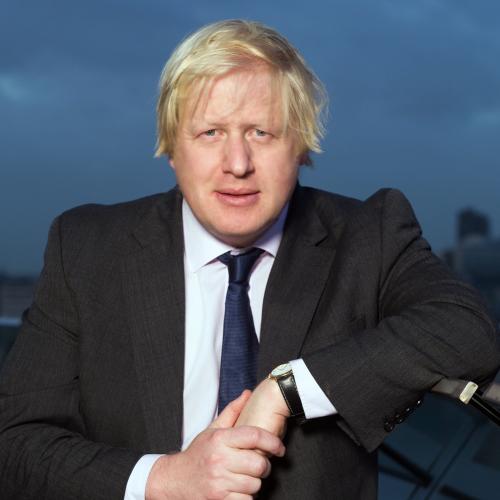
  • Boris Johnson – 2020 Speech at Holocaust Memorial Day

    Boris Johnson – 2020 Speech at Holocaust Memorial Day

    Below is the text of the speech made by Boris Johnson, the Prime Minister, on 27 January 2020.

    Last week Mala told me her story, including the scene that awaited Ian and our British forces when they liberated Bergen Belsen almost 75 years ago.

    I am lost in admiration for Mala’s courage and endurance and her unwavering determination to ensure that we remember.

    As she said to me, the Holocaust is unique, because it was the industrialised murder of a race, of 6 million Jews, of whom 1.5 million were children, along with millions of other targets of Nazi persecution.

    As Prime Minister, I promise that we will preserve this truth forever.

    I will make sure we build the National Holocaust Memorial and Education Centre, so that future generations can never doubt what happened, because that is the only way we can be certain that it never happens again.

    And I feel a deep sense of shame that here in Britain – in 2020 – we seem to be dealing with a resurgence of the virus of anti-semitism – and I know that I carry responsibility as Prime Minister to do everything possible to stamp it out.

    As we resolutely proclaim “never again”, it is right that we should also ask what happened to our resolve in the genocides that followed in Cambodia, Rwanda, Bosnia and Darfur.

    And as I stand here, in the presence of many of Britain’s Holocaust survivors, I feel a special obligation towards the sanctity of their testimonies, because nothing can compare with hearing directly from a survivor.

    I will do everything I can as Prime Minister to ensure these testimonies are shared as widely as possible, encouraging the use of technology so the tangible, palpable, irrefutable reality of this experience is preserved as something not just for this generation but for every generation.

    In doing so, we will ensure that Britain never forgets the truth of the Holocaust.

    In the name of all those who perished, may their memory be a blessing for ever.

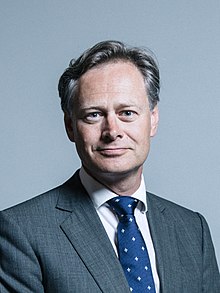
  • Matthew Offord – 2020 Speech on Holocaust Memorial Day

    Matthew Offord – 2020 Speech on Holocaust Memorial Day

    Below is the text of the speech made by Matthew Offord, the Conservative MP for Hendon, in the House of Commons on 23 January 2020.

    Thank you, Mr Deputy Speaker, for calling me to speak after that passionate speech.

    I am very pleased to have the opportunity to contribute to the debate, as I have more Jewish constituents than anyone else in the Chamber today, apart from, of course, my hon. Friend the Member for Finchley and Golders Green (Mike Freer). Unfortunately he is not able to speak because he is a Whip, but I am sure he will be thrilled that I am, no doubt, speaking on his behalf as well.​

    If, as a Member of Parliament for any faith group, I either promote or defend a cause or an issue, many critics will say, “Well, you would say that, wouldn’t you, because your constituents would expect you to do so.” For many of my constituents—and, by default, for me as well—the holocaust is something very personal. I have constituents who were in places such as Bergen-Belsen, one of whom I have spoken about previously in the Chamber, of whom I am indeed very fond, and whom I visit regularly. I should take this opportunity to wish mazel tov to Manfred Goldberg and Kurt Marx, who both received the British Empire Medal for services to holocaust education in the new year’s honours list. We are very proud of them.

    Just like the hon. Member for West Ham (Ms Brown), I take the opportunity at this time of year to do two things. First, I always like to read a memoir or factual account of the holocaust, and I am pleased to be reading “If this is a man” by Primo Levi right now. The second thing I like to do—again, like the hon. Member for West Ham—is to consider Holocaust Memorial Day from a different perspective, and for the past few months I have been thinking about concentration camps on British soil.

    Any Member who has read Nikolaus Wachsmann’s brilliant book “KL: A History of the Nazi Concentration Camps” will know how the concentration camps came about. The KL refers to the German word “Konzentrationslager”. In Germany in 1933, many of the first people arrested by the Nazis were detained in a variety of locations, including police stations, stables, schools and even industrial buildings—certainly none of the locations we have in our public consciousness. Those people were held in “protective custody” for their own safety, and most of them were released at a later stage. During that time, the law was used to defend many of them. Their relatives went to the courts to say that their treatment was not as it should be, and under the law they did have some protections, but of course that did not last. We know that, as the second world war continued, the rules certainly changed.

    The Konzentrationslager of Dachau in 1933 was very different from the Konzentrationslager of Auschwitz in 1944. Initially, Dachau targeted political opponents of the Nazis, such as German communists, socialists, Roma, Jehovah’s Witnesses, homosexuals and persons accused of asocial or socially deviant behaviour. By contrast, Auschwitz was a sprawling death camp containing European Jewry, Gypsies and others. As Primo Levi wrote:

    “Trains heavily laden with human beings went in each day, and all that came out was the ashes of their bodies, their hair, the gold of their teeth.”

    Representation of these camps in films and popular culture depicts Auschwitz-Birkenau as the pinnacle of the death camps, but Treblinka was close behind it in the number of people who were murdered, alongside other camps such as Belzec, Chelmno and Sobibor. All those camps were devoted to killing. They were death camps, and anyone who went through their gates would not come out again. In 1967, the West German Ministry of Justice drew up a list of 1,200 camps that it said were sub-camps of the main ones. The Jewish Virtual Library has come up with the even greater figure of 15,000 camps that it says were effectively Konzentrationslager.​

    To many of us, the representation of the camps through their names suggests a distant location and an otherness that is foreign and certainly not part of the British collective consciousness, but that is not the case. Last summer I was fortunate enough to sail to the Channel Islands, the only part of the British Isles to be inhabited by the Nazis during the second world war, and I visited Alderney. In January 1942, the Nazis built four camps in Alderney. There were two work camps, Lager Helgoland and Lager Borkum, and two concentration camps, Lager Sylt and Lager Norderney. Lager Norderney contained Russian and Polish prisoners of war, and the Lager Sylt camp held Jewish slave labourers. There are 397 graves in Alderney, out of a total population of about 6,000. On their return to Alderney, the islanders had little or no knowledge of the crimes that had taken place, because when they were finally allowed to return in December 1945, the majority of the senior German officers had left and no one really knew what had happened.

    Interestingly, in research being conducted by Professor Caroline Sturdy Colls at Staffordshire University, she has described the estimate of the number of victims as “very conservative”, given the difficulty of identifying prisoners in war records. The whole issue of post-holocaust archaeology is very much a contested area, and indeed very painful for many people who had direct experience of the holocaust. The professor has said that her research on the island has come up against great “hostility”, including from the Alderney Government, who she said had refused a permit for her to excavate some of the sites, forcing her to rely, in the research that she undertook, on “non-invasive” methods of analysis, such as drone filming.

    I have to tread carefully as I say this, but there is also some reluctance on the part of the Jewish community in the United Kingdom to give permission for the excavation of Jewish burial sites. This is a very delicate area, and I know that the great Chief Rabbi, Ephraim Mirvis, who is my constituent, has been involved in this issue. Rabbinic law dictates that the grave sites of Jewish people should not be disturbed. I have a great deal of sympathy with that point of view, but I do have a belief that unmarked graves, mass graves and locations of bodies hidden by their murderers are not proper graves in themselves, and I believe that it is appropriate for the identification of bodies to be undertaken, because people do need a proper resting place. I do not believe that the locations that I have described are proper graves; and as Elie Wiesel wrote,

    “to forget the dead would be akin to killing them a second time.”

    So I certainly will continue with the conversations that I have had with others about the delicate, sensitive process of identifying locations of bodies, and also the persons in those graves.

    So for me, Holocaust Memorial Day is not just something that is evoked through films such as “Schindler’s List”; it is something that is very personal and pertinent to many of my constituents. I shall conclude with the words of Primo Levi, in his fantastic book, in which he says:

    “It happened, therefore it can happen again: this is the core of what we have to say.”

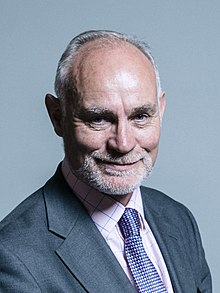
  • Crispin Blunt – 2020 Speech on Holocaust Memorial Day

    Crispin Blunt – 2020 Speech on Holocaust Memorial Day

    Below is the text of the speech made by Crispin Blunt, the Conservative MP for Reigate, in the House of Commons on 23 January 2020.

    As my hon. Friend the Member for Chichester (Gillian Keegan) noted earlier, it is a privilege to take part in this debate, and it is a very special debate. Before the hon. Member for Leeds North East (Fabian Hamilton) departs, I want to say just how much his speech has contributed to this debate, with the enormous emotion, which we were all moved by, that sat behind the testimony of his own family. It is of course a pleasure to follow my hon. Friend the Member for Harrow East (Bob Blackman), who has committed so much to this issue during his time in the House.

    For the beginning of my remarks, I want to pick up where the Minister began, which is by making it clear that this day marks a number of appalling horrors. He mentioned the Khmer Rouge, as did my hon. Friend the Member for Chichester. What I would describe as my first launch into public speaking was on the issue of the Khmer Rouge, when I took part in a United Nations Association speaking competition. As a 17-year-old then, I was trying to understand how on earth 1.7 million people had been killed in Cambodia through the work of the Khmer Rouge. It was quite appalling testimony to a failure of global policy to prevent that from happening.

    We heard moving testimony from my hon. Friend the Member for Rutland and Melton (Alicia Kearns) about her visit to Srebrenica, and of course from my hon. and truly gallant Friend the Member for Beckenham (Bob Stewart). I am utterly convinced that had he been in command of those Dutch troops who were charged with the defence of Srebrenica at the time, there would have been a very different outcome. That is the difference ​in the traditions and the pride that we take in our Army, and the proper latitude that we give our field commanders to deliver on their mission.

    The right hon. Member for Barking (Dame Margaret Hodge) mentioned today’s judgment in the International Court of Justice about the Rohingya, which is another searing issue that is current. Srebrenica of course happened in the context of the massacre in Rwanda just a year before. The fact that the ICJ is considering the Rohingya today should mean that we understand the purpose of today’s debate: it is current. However, the single worst atrocity of the 20th century—and possibly, in scale, of all time—was of course the holocaust visited on the Jews of Europe by the Nazis under the German Government of Adolf Hitler.

    This is very personal for me. My father, towards the end of the second world war, commanded a company that defended Field Marshal Montgomery’s army group headquarters. He was one of the young officers sent to go and see what had been found in Bergen-Belsen. He recalled that to explain to the German population, who had averted their gaze from what was happening very close to them, local leaders were invited to go and see what had happened.

    That is the lesson. This happened in a “civilised” nation. My hon. Friend the Member for Harrow East gave some of the historic background. It is now in school curriculums. Pupils are taught about the causes and how it ended with this worst ever atrocity. I wholly applaud the work of the Holocaust Educational Trust. I have had the opportunity to use its resources and to go with it, with schoolchildren, to Auschwitz-Birkenau. I think my hon. Friend the Member for Harrow East suggested that one should be there for more than one day. I have to say that a day was more than enough. It was one of the grimmest experiences of my life. As someone interested in history from a young age, it did not tell me anything new. I can vividly remember, aged 13, the episode of “The World at War” which focused on the holocaust and the camps. I grew up with the books of authors, such as Leon Uris, who made it clear what had happened to the Jewish people of Europe.

    I do not think that there is any doubt that this experience has been seared into the German soul. One can see it in its foreign policy. My hon. Friend the Member for Shrewsbury and Atcham (Daniel Kawczynski), wholly understandably, has a Polish perspective. These events and these days are so important, so that we do not forget and that we try to learn. But we have not learnt. What we need to understand is that too often other conflicts in other parts of the world have their base in hatred. Antisemitism is the virulent hatred that led inexorably to the holocaust, which is why it is so important it is called out. Other hatreds, based on ethnicity, sexuality and other characteristics, continue to exist. We saw that with ISIS, only too recently controlling a very large area of territory in Iraq and Syria, visiting out its version of it what it thought were its values that are so appalling and so anti the very tenets of civilisation. We have to pick up and learn the lessons that we do not pass by on the other side.

    There is no monopoly of good in the world. I have in this House pointed out, and will continue to point out, that there is very unlikely to be security for Israel until ​there is a decent measure of justice for the Palestinians. It is the elision sometimes of these issues that makes things extremely difficult. I have, in the whirl of social media, been called an antisemite, because I have had the temerity to stand up for the Palestinians. It is deeply hurtful—I worked for four years for the first Jewish Secretary of State for Defence and for the second Jewish Foreign Secretary, who is a very close friend of mine—to have that accusation made, simply because I have expectations of the Government of the state of Israel, as an important ally of the United Kingdom and as a font of democratic values in that region, that their policy should be not only in their interests but based on the morality and law that they expect their people should have respect to. We have to continue to find a solution there.

    I will finish with the words of Pastor Niemöller:

    “First they came for the Communists

    And I did not speak out

    Because I was not a Communist

    Then they came for the Socialists

    And I did not speak out

    Because I was not a Socialist

    Then they came for the trade unionists

    And I did not speak out

    Because I was not a trade unionist

    Then they came for the Jews

    And I did not speak out

    Because I was not a Jew

    Then they came for me

    And there was no one left

    To speak out for me.”

    It is the duty of this House, and the lesson of today’s debate, that where we see injustice in the world and it is perpetrated on the back of ethnic hatred, we call it out.

  • Bob Blackman – 2020 Speech on Holocaust Memorial Day

    Below is the text of the speech made by Bob Blackman, the Conservative MP for Harrow East, in the House of Commons on 23 January 2020.

    I am grateful, Mr Deputy Speaker, for the opportunity to speak in this deeply emotional debate. I congratulate the hon. Member for Warrington North (Charlotte Nichols) on her speech—on a personal level, but also in understanding the Jewish people and what they actually went through.

    Antisemitism is not new. It has been prevalent in society for centuries, and it is still prevalent with us today. But what makes the holocaust different is that it shows us the ultimate destination of antisemitism, with a systematic attempt to wipe out the Jewish race and anyone of Jewish religion—not just people who were openly Jewish, but anyone with Jewish genealogy somewhere in their DNA. The way in which people’s backgrounds were traced to see whether any relative or any person of their blood was Jewish was systematic, deliberate and intentional.

    I was at school with many Jewish children, and no one ever spoke about the holocaust. It was ignored—perhaps to be airbrushed from history forever because it was such a tragedy. The relatives—the fathers and mothers—of many of my friends had actually come from eastern Europe or Germany as refugees, but they never spoke about the holocaust. Whenever one went for dinner on Friday nights, it was never mentioned—I often wondered why. When we were at school, we never got the opportunity to learn about the horrors of the holocaust and what people went through.

    I remember my first visit to Yad Vashem. It was not the Yad Vashem that we see now—I have been there many times since—but the first formation of it. This was back in 1992, I think, on my first visit to Jerusalem. It was a much more intimate museum at that time. It commemorated things that had gone on. It had the first recordings of survivors—people who had sadly passed away, but recorded their testimony—and early photographs and other details of what had gone on in Germany and in eastern Europe, in particular, during the holocaust. That made Yad Vashem more intimate, in many ways, than it is now. When I heard the names of the children being recited, it brought home to me how people could systematically murder children—wipe them off the face of the planet—and what a terrible experience it was. I do not mind admitting that I cried. I cried for humanity, and I cried for the people who had lost their lives and their relatives.

    When I was elected to this place, the first all-party parliamentary group that I joined was the one on combating antisemitism, because it is right that we in this House stand up against it. I also do not mind admitting that when Holocaust Memorial Day was first mooted—it was when I was the leader of my party’s group on the London Borough of Brent Council—I was concerned that we were going to get into virtue-signalling. I am glad to say that I was wrong. It is right that we educate people, that we commemorate the liberation of Auschwitz and that we bring to bear greater understanding of the horrors that went on.

    I, too, have visited Auschwitz-Birkenau. My hon. Friend the Member for Shrewsbury and Atcham (Daniel Kawczynski) alluded to the concern that students see ​Auschwitz for one day, and it would be better if they could stay for longer. The problem with that is funding and the fact that lengthening the amount of time spent away might reduce the numbers who could go on such visits. The problem that I see with the programme of Auschwitz-Birkenau visits is that students learn about what went on there and think that that was it. We need to remember that there was a network of death camps—forced labour camps—across eastern Europe and Germany, where Jews and others were forced into slave labour and then systematically exterminated.

    I have often wondered how a civilised nation such as Germany could get into a position in which it would commit such inhumane acts. How could that possibly happen? When we talk about 6 million Jews being killed, it is a number, and it is hard to personalise that down to individual circumstances. It is difficult to visualise the horror of this attempt to wipe out the Jewish race. We have to remember that this did not just take place in one or two years. This was a deliberate attempt by the Nazis to eliminate the Jewish race.

    The roots of this are at the end of the great war, when Germany was subjected to severe reparations. That led to incredible poverty in Germany, which then gave rise to the Nazis, who could say, “It’s the Jews’ fault that you haven’t got any money. Let’s take it out on the Jews. If we take Jews out of their position, we can spread the wealth.” That was a deliberate policy, and it should never be allowed to be repeated. There needs to be a greater understanding and appreciation that, from the early 1930s onwards, this systematic approach led to the Shoah. We all have to remember that.

    We must also remember that antisemitism was rife in this country at that time. We should not think that it was only going on elsewhere. The thought process and the demeaning of Jewish people was going on in this country, and that is one reason why few people were allowed to escape from Germany to here. Had they been allowed to do so, many people who unfortunately lost their lives in camps would have survived.

    I pay tribute to Karen Pollock and her brilliant team at the Holocaust Educational Trust, who do such wonderful work to educate people—young and old—about the horrors of the holocaust. Not everyone can go to Auschwitz-Birkenau and witness evidence of the terrible crimes that were committed. We talk about the shoes, the spectacles and the clothing at Auschwitz-Birkenau. The memory that I have above all else is walking across the park with the lakes, where there is an eerie stillness. No birds tweet, and there is no sign of wildlife. There is nothing there because those ponds were where the Nazis put the ashes after emptying them from the gas chambers and incinerators. The wildlife know what happened, and so should we.

    One aspect of the Holocaust Educational Trust’s work that has become more important is the outreach programme. Last year, more than 600 schools partnered with the trust to enhance educational provision. That is important, because it allows holocaust survivors to give their first-hand testimony and lead workshops so that more and more young people can understand what happened and learn the lessons from it. It is important that we remember the survivors.​
    I echo the need for a holocaust education centre to be set up alongside this building. People visit this place as the cradle of democracy, and it is right that we have a holocaust education centre alongside our Parliamentary Education Centre so that people visiting London can see a proper record of what happened without having to travel to Jerusalem or other parts of the world. I co-chaired the all-party parliamentary group on holocaust memorial in the last Parliament. I pay tribute to my co-chair, Ian Austin, who called out antisemitism and did so much to ensure that people understood the evils of antisemitism and the need for an education centre.

    The testimony of survivors is most important. I want to place on record the details of those who sadly lost their lives last year and this year. Eve Glicksman and Henri Obstfeld both died last year, and Hermann Hirschberger MBE passed away on 1 January. One of the most famous holocaust survivors was Gena Turgel, who lived in Stanmore in my constituency. In many ways, she was a pioneer of holocaust education, as she was going into schools and colleges way before many of the current structures were set up. She was born in Krakow in Poland and had eight brothers and sisters. She was only 16 when her home city was bombed on 1 September 1939.

    Here is the part of Gena Turgel’s story that I think is most pertinent. Her family had relatives in Chicago, and they planned to leave for the United States, but they made their decision too late, as the Nazis had already invaded and closed all the entry and exit points, so her family had to move to just outside Krakow. In autumn 1941 she was moved to the ghetto in Krakow, and then moved after some of her family were shot by the SS in the ghetto. She was then forced into a labour camp, and in 1945 to Auschwitz-Birkenau, where she was sent with her mother on the death march from Auschwitz, leaving behind her sister, who they never saw again. They then arrived in a further labour camp, were forced on to trucks, and travelled under terrible conditions to Bergen-Belsen, where they arrived in February 1945. On 15 April 1945, the British Army liberated Bergen-Belsen and among the liberators was Norman Turgel, who became Gena’s husband just six months later. Gena passed away in 2018, but her record is in a book called “I Light a Candle”, so her legacy will live on.

    Hermann Hirschberger was born in 1926 in Germany. He lived with his mother, father and older brother. He attended a local non-Jewish school; in fact, there were only two Jewish students in his class and school. In 1936, Nazi laws ruled that Jewish children could no longer attend non-Jewish schools—that was part of the programme to eliminate and delegitimise Jewish people.

    Sir Peter Bottomley

    Those who have not ought to look at Adolf Eichmann’s story. He was appointed in 1932, and in 1933 he started dealing with what was thought of as “the Jewish problem”. The idea was to persecute, isolate, emigrate and then literally exterminate the Jews—it went all that time back.

    Bob Blackman

    I thank my hon. Friend for his intervention. It was clear that this was going on for a long time before the second world war broke out.

    Hermann and his brother had to walk to and from school, because German culture at that time prevented Jewish people from travelling on trams. Jewish people ​were not allowed to mix with other people on trams—this was the dehumanisation of Jewish people. Of course, on their way to and from school, Hermann and his brother were often verbally and physically attacked by students from the non-Jewish school. The people they called friends suddenly turned on them because they were Jewish.

    Then, at 9 pm on 9 November 1938, across Germany the synagogues were burnt, and businesses and homes and shops were smashed. Windows were smashed and homes and buildings were burnt to the ground. This is known as Kristallnacht, the night of broken glass.

    Hermann and his brother had not seen these crimes at first hand, but when they went to school the following morning, many of their teachers had been arrested and they were sent home. Hermann’s mother went to the bank where his father worked to warn him. However, two members of the Gestapo forced their way in and arrested his father at work. His father was then held for two days before being allowed home.

    After Kristallnacht, Hermann’s parents realised, as did many others in Germany, that they could no longer stay there safely. They tried to arrange for the family to leave but could not obtain visas for the whole family. However, they managed to arrange for Hermann and his brother to be sent to England on the Kindertransport, meaning that they were making a huge sacrifice—they knew they would probably never see their sons ever again.

    Fabian Hamilton

    I pay tribute to the hon. Gentleman for his work on fighting antisemitism, defending against it and ensuring that this curse can never happen again. Has he visited the amazing and incredible holocaust museum, Beth Shalom, in Ollerton in Nottinghamshire? It is absolutely incredible. It recreates the classrooms he has just talked about as well as the carriages of the Kindertransport. If he has not done so, I urge him to visit it.

    Bob Blackman

    I have not visited, but I will make it a priority to do so when it is convenient, because I believe that it is something we should go and witness for ourselves.

    Hermann and his brother had a long journey to get to the United Kingdom. They were then taken to a refugee hostel in Margate, where they remained for about a year, during which time Hermann had his bar mitzvah. They regularly wrote to their parents and two days before the war broke out, their parents wrote to them to say that they had just received their permits—they were going to be allowed to leave. However, once war had broken out, they were not allowed to leave. They were sent to a camp in the Pyrenees, from which they were still able to write to the brothers, but eventually they were deported to Auschwitz-Birkenau, where they were both murdered.

    In this country, Hermann and his brother were separated and sent off to different schools. Hermann was sent to work in Staffordshire while his brother worked in London, but eventually they were reunited. Hermann went on to marry and to live in London. He lived in my constituency, and he regularly spoke in schools about his experiences not only in Germany, but in this country, because we should remember that Jewish people coming as refugees to this country did not always have a happy experience. ​We should own up to that, and we should also say that we are not unique in offering service now to Jewish people. Sadly, Hermann died on 1 January 2020. I met him on many occasions and had the opportunity to hear of his experiences both in this country and before he arrived.

    I want to single out two other people. The first is Angela Ioannou, who is an ambassador for the Holocaust Educational Trust. She recently attended the Lord Merlyn-Rees annual lecture in Parliament, and has given an account of her views on how we can make sure that holocaust education continues to be rolled out. The other is Dr Alfred Weinberger, who was born 26 April 1900—he shares my birthday, if not my exact birth year. He was deported to the ghetto in 1943, and then on to Auschwitz-Birkenau, where he was killed.

    The reality is that the testimony of survivors and their experiences bring to life the horrors of the holocaust. We must set out our stall to make sure that such things never happen again. Members have mentioned other forms of systematic murder, but I have seen the plight of the Rohingya at first hand. The duty we owe is to ensure that those people who have perpetrated murder are brought to justice and suffer for the war crimes they have committed, and that we help and assist people who are refugees.

    I end by saying that the theme of this year is “stand together”, and I that think the whole House stands together united today in remembering the horrors of the holocaust and saying, with one voice, never again.

  • Luke Hall – 2020 Statement on Holocaust Memorial Day

    Luke Hall – 2020 Statement on Holocaust Memorial Day

    Below is the text of the statement made by Luke Hall, the Parliamentary Under-Secretary of State for Housing, Communities and Local Government, on 23 January 2020.

    I beg to move,

    That this House has considered Holocaust Memorial Day.

    This debate is taking place on the 75th anniversary of the liberation of the Nazi concentration camps throughout Europe, which brought an end to the murder of 6 million Jewish men, women and children by Nazi Germany. But as we know, it did not bring an end to the scourge of antisemitism. Today, sadly, we see antisemitism on the rise once more in this country and across Europe and the Americas. It is a mark of a civilised society that people of different faiths, different cultures and different traditions can live together in harmony. If we are truly to value Holocaust Memorial Day, we will do it by remembering this lesson: that we must show tolerance and respect for other people in order to live in peace. That is why it is vital that we all rise to the challenge and rid our society of this age-old hatred.

    On Holocaust Memorial Day, we remember all those murdered by the Nazis: the 6 million Jews; the thousands of Roma and Sinti; the political prisoners; those with physical disabilities and mental illness; and those persecuted for their sexuality. It is a day when we remember the 2 million victims of the Khmer Rouge in Cambodia and the almost 1 million victims of the Rwandan genocide. It is a day when we remember the 8,000 Muslim men and boys murdered in Srebrenica 25 years ago. On Holocaust Memorial Day, we remember them all.

    The enormity of the numbers can make it seem almost impossible to relate to individual victims. That is made even harder because the names of many holocaust victims have been lost to us. In Nazi Germany, Jewish men and women were forced to change any name believed to be Aryan to Israel for men and Sara for women. Others, in the camps, had their names stripped from them and replaced by a tattooed number. Personal names that had been handed down from father to son and from mother to daughter were lost or replaced.

    To mark the 75th anniversary of the liberation of Auschwitz, the Holocaust Memorial Day Trust has launched a social media commemorative project that will generate the name of an individual who was murdered by the Nazis, allowing us to honour those victims by giving them back their name. Today I will be honouring Johannes Degen. He was born in Germany on 8 July 1900 and was murdered by the Nazis for being a Jehovah’s Witness. I hope that all Members will take the time to take part and visit the trust’s website.

    Survivors are at the heart of holocaust commemorations. Those of us who have been fortunate enough to sit before a survivor and listen to them describe their experience can be in no doubt about the terrible truth of what happened. Sadly, to this day there are still people who insist that the holocaust never happened.

    Mr Barry Sheerman (Huddersfield) (Lab/Co-op)

    The Minister is absolutely right that as these wonderful survivors come to the end of their lives, we need to have a record of their testimony. The exhibition at the Huddersfield holocaust memorial centre, which was ​opened by Lord Pickles, is a wonderful resource. We have those recordings, and children and other people can learn and remember.

    Luke Hall

    I thank the hon. Gentleman for putting that on record, and I completely agree with what he said. Survivors are the ultimate rebuke to such thoughts, and the testimonies that we hear are a reminder of our duty to confront those who would tell lies about our history.

    I wish to take the time to share a little of the story of Auschwitz survivor Lily Eberts. In 1944, when she was just 14 years old, the Nazis deported her and her family from her Hungarian home town to Auschwitz. She was with her mother, brother and three sisters. On their arrival, they were split up, either directed left or right. Lily’s mother, brother and sister were told to go right and they were taken to the gas chambers and crematorium. Lily and her two sisters were directed the other way. They never saw the others again. The only possession that Lily was able to keep with her on her journey was her gold pendant, given to her by her mother, which, remarkably, survived the camp with her, hidden in the heel of her shoe.

    Seventy five years have passed since liberation. Lily is now a proud great grandmother. She still wears the tiny gold pendant and shares its remarkable story with all those who will listen. Any gold arriving in Auschwitz was stolen by the Nazis, so Lily believes that her pendant is unique in that it was the only gold to enter and leave the camp with its rightful owner. Like Lily herself, it survived against the odds.

    Many Members of this House and many millions of people from around the world have visited Auschwitz-Birkenau and have seen the thousands upon thousands of shoes, of all shapes and sizes, piled on top of one another. Many of those shoes, like Lily’s, hold the memories of those last murdered in Auschwitz. Hidden in the soles of those shoes are notes and photos—the last possessions of men, women and children murdered by the Nazis.

    I pay tribute to the eye witnesses for their resilience and their bravery. They are still, even in their 80s and 90s, sharing their testimony in schools across the country with the Holocaust Educational Trust. We are also hugely grateful to the next generation of Holocaust Educational Trust ambassadors—thousands of young people who have heard testimony from survivors and who have visited Auschwitz and returned to share what they have learned. They are doing incredible work, taking on that responsibility and commitment to carry the legacy and stand up to hate today.

    Sir John Hayes (South Holland and The Deepings) (Con)

    Further to that point and, indeed, to the intervention of the hon. Member for Huddersfield (Mr Sheerman), will the Government play their part in working with schools to bring the life of the work of the trust to every part of our kingdom? It is vital that the next generation understand that the future is, in part, shaped by what we learn from the past.

    Luke Hall

    I absolutely give that commitment, and I thank my right hon. Friend for the opportunity to put it on the record. That is why we should pay particular tribute to the next generation of volunteers who are really taking on that legacy and serious responsibility.​

    Although Auschwitz is synonymous with the holocaust, few people are aware of the Arolsen archive, the world’s most comprehensive archive on the victims and survivors of Nazi persecution. The collection has information on around 17.5 million people and belongs to UNESCO’s memory of the world. Apart from the paper records, the archive has 3,000 personal possessions belonging to former inmates of concentration camps. Thanks to the #StolenMemory campaign, the archive has returned precious recovered items to family members. Members can imagine the immeasurable value that these items have to their families—they are often the last remaining traces of parents, grandparents, brothers and sisters.

    Decades after the Nazis had confiscated a watch from his father, Jean-Pierre Lopez held it in his hands and wound it up again. He reported that it was extraordinary. He said that it seems to still work perfectly even after 74 years. In 1944, the Gestapo had arrested his father, José Lopez, as an anti-fascist and deported him as a forced labourer. He managed only just to survive, ending up with typhus and a body weight of just 40 kg.

    The theme for this year’s Holocaust Memorial Day is “stand together”. It is a reminder for us to stand together, with each other and with our communities, to remember the holocaust. It is also a reminder that during the holocaust and subsequent genocides, communities themselves were deliberately divided, with individuals persecuted because of their identity, and that, despite the dangers of doing so, some people chose to stand together with those targeted, to challenge the divisive actions of genocidal regimes. We must remember their bravery and sacrifice and be inspired by it. We also must make sure that we stand together to challenge hatred and prejudice wherever we find them today, which is why this Government are so proud of the support that they give to holocaust education remembrance.

    The incredible work of the Holocaust Educational Trust is of massive value. Every year, the trust takes thousands of young people to Auschwitz-Birkenau and trains hundreds of teachers across the country. The Government have provided £2.2 million to the trust’s “Lessons from Auschwitz” project and £1.7 million for visits to Bergen-Belsen, the camp liberated by British troops. We also provide £1 million a year to the Holocaust Memorial Day trust to deliver the annual memorial day and thousands of local events across the country. We have been funding the charity Remembering Srebrenica since 2013, including with a further £400,000 this year. The charity uses the funding to raise public awareness of the 1995 genocide, with the aim of creating a diverse movement of people coming together to challenge hatred and intolerance.

    Despite that education and the support of successive Governments and people in the United Kingdom, it is a sad fact that antisemitism has spread like a virus far into UK politics in recent years—even into the very building in which we stand. When the Chief Rabbi unprecedendently feels the need to speak about his fears during the general election campaign, when Jewish councillors and Members of Parliament are subjected to such campaigns of hatred that they feel they have no alternative but to stand down, when dangerous conspiracy theories become so widespread on social media that the ​public start to believe them and write in to our offices with the most offensive lies, we must shake ourselves and remember that this is not normal; this is wrong. I urge all Members to play their part in turning the tide of antisemitism.

    Andrew Percy (Brigg and Goole) (Con)

    The sad truth is that there are people elected to this place in the recent general election who have shared antisemitic conspiracy theories and breached the International Holocaust Remembrance Alliance definition of anti- semitism. It is all very well people apologising, but the real evidence that they have changed is their taking some action over what they have said—owning it and showing that their apologies are more than just words.

    Luke Hall

    First, I thank my hon. Friend for his work as vice-chair of the all-party parliamentary group against antisemitism. I agree that people should take action. We are proud to support the International Holocaust Remembrance Alliance, which unites experts and 34 member states behind the need for holocaust education, remembrance and research. In 2016, the IHRA created a working definition of antisemitism, which is now internationally accepted. The alliance seeks to ensure that no one can shirk responsibility for their words by playing with semantics, but it will succeed only if organisations sign up to the definition and support it. The IHRA definition is already used in guidance for the police and Crown Prosecution Service, to help them to identify hate crime. I urge public organisations in the UK to sign up to the IHRA definition.

    I will finish by saying a few words about the holocaust memorial and learning centre we plan to build in Victoria Tower gardens next to Parliament. We are fortunate that the foundation delivering the memorial is headed up by the right hon. Eric Pickles and the right hon. Ed Balls. By placing the memorial and learning centre next to Parliament, we ensure that it will serve as a permanent reminder that political decisions have far-reaching consequences.

  • Matt Hancock – 2020 Statement on Wuhan Coronavirus

    Matt Hancock – 2020 Statement on Wuhan Coronavirus

    Below is the text of the statement made by Matt Hancock, the Secretary of State for Health, in the House of Commons on 23 January 2020.

    With permission, Mr Speaker, I would like to inform the House about the outbreak of a new coronavirus in China and the UK’s response to protect the British public. As of this morning, 571 cases have been confirmed by the Chinese Government, and 17 people are reported to have died of this new strain of respiratory illness. All the fatalities have so far been contained to mainland China. However, this is a rapidly developing situation and the number of cases, and deaths, is likely to be higher than those that have been confirmed so far. I expect them to rise further. It has been reported that the Chinese authorities have placed further transport restrictions on the epicentre of the outbreak, Wuhan city, including on international flights. A small number of cases of the new coronavirus have now been detected in other countries, including Thailand, Japan, South Korea, Taiwan and the United States. Experts at the World Health Organisation are meeting again today to determine whether this new outbreak now constitutes a “public health emergency of international concern”.

    Most cases of the new coronavirus so far have been non-fatal. In these cases, most people experience cold and flu-like symptoms and then recover. However, there have been a small number of cases so far where it has proven more serious and fatal.

    There are no confirmed cases of this new infection in the UK so far. We have been closely monitoring the situation in Wuhan and have put in place proportionate precautionary measures. Our approach has at all times been guided by the advice of the chief medical officer, Professor Chris Whitty. Since yesterday, Public Health England officials have been carrying out enhanced monitoring of direct flights from Wuhan city, and all passengers on direct flights from China will receive information on what to do if they fall ill. Professor Whitty and Public Health England, aided by independent experts, are in close contact with their international counterparts, and are continually monitoring the scientific evidence as it emerges.

    The chief medical officer has revised the risk to the UK population from “very low” to “low”, and has concluded that while there is an increased likelihood that cases may arise in this country, we are well prepared and well equipped to deal with them. The UK is one of the first countries to have developed a world-leading test for the new coronavirus. The NHS is ready to respond appropriately to any cases that emerge. Clinicians in both primary and secondary care have already received advice, covering initial detection and investigation of possible cases, infection prevention and control, and clinical diagnostics. Acting on the advice of Professor Whitty, we have updated our travel guidance to British citizens to advise against all but essential travel to Wuhan city.

    We are working closely with our counterparts in the devolved Administrations. The public can be assured that the whole of the UK is always well prepared for these types of outbreaks, and we will remain vigilant and keep our response under constant review in the light of emerging scientific evidence.

    I commend this statement to the House.​

    Mrs Sharon Hodgson (Washington and Sunderland West) (Lab)

    I thank the Secretary of State for an advance copy of his statement, and for updating the House this morning.

    The coronavirus is indeed very concerning, and I am grateful for the work of Public Health England and the Department on it so far, especially in screening passengers on direct flights from Wuhan. However, a passenger arriving from Wuhan yesterday said that he had gone through virtually no screening, but was given a leaflet. Does the Secretary of State have any response to that?

    Will flights from other Chinese cities, not just Wuhan, be monitored, and when does the Minister think monitoring might begin? Will there be specific traveller advice for UK citizens travelling into China who have existing conditions that may mean they need to take more care?

    As the Minister said, Public Health England has assessed the risk of the coronavirus being spread to the UK as “low”. In the event of the virus spreading to the UK, are there contingency plans and funds to prevent further spreading, to deal with the scale of the problem?

    As the Minister knows, we are in the middle of flu season, so I do not want to cause any undue anxiety, especially as—as we have heard—there are no cases in the UK at the moment, but can he please advise people watching who may be concerned about their own symptoms of what they should do?

    We all know that the NHS has a tremendous record in responding to similar incidents, such as Ebola and monkeypox. We can certainly be proud of our public health record in these areas and can be confident in how public health bodies will respond to this incident. There is a chance that a global pandemic can be avoided if Governments across the world take the right measures in a timely fashion.

    I thank the Minister for his update today, and would be grateful if he could provide some further clarity on all the points I have raised.

    Matt Hancock

    I appreciate the cross-party approach that is being taken to this outbreak, as reflected in the shadow Minister’s remarks. I shall address the specific points that she raised. On the reports from the flight that arrived yesterday, it is important that we get the enhanced monitoring right. The challenge is that symptoms for the Wuhan novel coronavirus do not usually appear until five to seven days, and sometimes up to 14 days, after a person has been infected, and therefore the advice is that the most important part of the monitoring is to ensure that everybody knows what to do if the symptoms arise, because often the symptoms will not be there for somebody on the flight. Having said that, we do not expect further flights from Wuhan, because the Chinese authorities have taken steps to stop travel out of the city.

    The hon. Lady asked whether we will be monitoring flights from other Chinese cities or, indeed, from anywhere else. The current evidence suggests that the vast majority of cases are in Wuhan. Obviously we keep that under constant review, and we will not hesitate to take further steps, if necessary, to protect the British public.

    Robert Halfon (Harlow) (Con)

    We have a big and vibrant Chinese community and a very large Chinese community centre in Harlow. What information is being ​sent to such Chinese community centres? Many members of the Chinese community have relatives in Hong Kong, so what will be done if this disease reaches Hong Kong?

    Matt Hancock

    There is evidence of potential cases of the coronavirus in Hong Kong, although the vast majority of cases are in Wuhan city. We will keep that under review.

    The advice to my right hon. Friend’s Chinese residents is exactly the same as the advice to all, which is to avoid anything but essential travel to Wuhan city and that direct flights from Wuhan city appear to have ceased. An awful lot of people who work for Public Health England are already in Harlow, with more to come. I am sure he would want to join me in thanking them for the vigilant work they are undertaking.

    Anne McLaughlin (Glasgow North East) (SNP)

    It is obvious that the scale of this operation should not be underestimated. Shutting down a city the size of London as it prepares to celebrate Chinese new year is an extraordinary undertaking. What support has the international community offered to the Chinese authorities, particularly the health services, as they cope with this unprecedented strain on resources?

    Some of my questions have already been asked, so I will just ask about the World Health Organisation, which is meeting today. What communication have the UK Government had with the WHO? Can the Secretary of State assure the House that the Government will remain updated, in real time, on developments and on what steps, if any, are required in the UK?

    Finally, I have a number of Chinese constituents, as we probably all have, and English is difficult for many of them. When we give information to Chinese communities in the UK, is it provided in different languages?

    Matt Hancock

    Yes, the advice will be available today in Mandarin and Cantonese. The UK is heavily engaged in the WHO response and, of course, we are engaging with the Chinese Government. That engagement principally happens through the WHO, which has well-established procedures to make sure we understand the nature of the outbreak so that scientists can investigate the epidemiology and come to an evolving scientific analysis of what is happening. We then base our decisions, as much as possible, on the scientific advice that flows from that. The chief medical officer, who is an expert on these issues, is co-ordinating the work here in the UK.

    Jason McCartney (Colne Valley) (Con)

    Many UK universities, not least my local Huddersfield University, have strong links with the Wuhan University of Science and Technology. What particular advice is the Secretary of State’s Department giving to UK universities, particularly those with a large Chinese student population?

    Matt Hancock

    We are not giving them specific advice. We are giving the same advice to everybody, which is to avoid all non-essential travel to Wuhan, but I am happy to take away the point that we should communicate, through Universities UK, with all UK universities to make sure the message gets to students directly so that they hear the advice that is there for everybody, which is to avoid all but essential travel.

    ​Afzal Khan (Manchester, Gorton) (Lab)

    My thoughts go out to all the residents of Wuhan, Manchester’s sister city. Sadly, the news of this outbreak could not have come at a worse time, as residents are preparing to celebrate the lunar new year. What more can the Secretary of State do, in light of our expertise in coronaviruses, to support the Chinese Government? We have a sizeable Chinese community in Manchester, so we should raise awareness in this country.

    Matt Hancock

    I will ensure that the authorities in Manchester are fully apprised of, and keep up to date with, our advice, which, as I say, is based on the best scientific evidence, to make sure that Manchester and its sister city deal with this as well and as appropriately as they can.

    Alicia Kearns (Rutland and Melton) (Con)

    I thank my right hon. Friend for the comprehensive update and, in particular, for the detail on the test the UK has developed for the coronavirus. What consular assistance is being provided to British nationals caught up in affected areas in China and elsewhere?

    Matt Hancock

    My hon. Friend raises an important question. There are approximately 11 million people in Wuhan city, including British nationals. As far as we know, we have two UK staff in our consulate in Wuhan and 15 locally employed staff. Of course we are ensuring that they get all the support they need, and they are available to provide consular assistance to British nationals in Wuhan city.

    Hilary Benn (Leeds Central) (Lab)

    The House appreciates the fact that the Secretary of State has come here so promptly to make this statement. Of course we all hope that an outbreak here does not happen, but what is the current advice to members of the public about the use of face masks if it does? One thing about these outbreaks is that people look at what measures are being taken and what people are doing in countries where the disease has taken hold, and then ask the authorities here, “Why aren’t we doing the same?” It would be helpful to know this in anticipation; presumably it will come from guidance given by the chief medical officer.

    Matt Hancock

    That is right. We have well-established procedures for dealing with a potential outbreak such as this, be it of flu or a coronavirus. Our advice at the moment to the UK public is that the risk is low—of course we will keep that under review. We try very much only to put forward proposals that are clinically appropriate. The wearing of face masks is not deemed clinically necessary now. Of course we keep that under review, and we will be guided by the science.

    Munira Wilson (Twickenham) (LD)

    I thank the Secretary of State for the comprehensive update. We know that scientists are already working hard to find a vaccine for this newly identified strain of coronavirus. Given the importance of vaccines in combating serious diseases such as this, does he agree that education about vaccines ​is more important than ever in this age of disinformation? What conversations has he had with colleagues to combat fake news on vaccines?

    Matt Hancock

    The hon. Lady makes an incredibly important point, on which I wholly concur in the round: vaccines are incredibly important and valuable. We have a long-established process for working out where we should vaccinate. In this case, because of the nature of the virus, it is unlikely that a vaccine is going to be available—there is not one now—so that is not the route we should be looking at, but of course we will keep that under review. On her general point, when advised to take a vaccine, such as the flu vaccine for the winter or the measles, mumps and rubella vaccine for children, people should vaccinate, because it is both good for them and good for their neighbour.

    Dame Diana Johnson (Kingston upon Hull North) (Lab)

    I thank the Secretary of State for the statement. In Hull, including in my constituency, we have a lot of Chinese students. I just want to be clear about the advice being given to anyone worried about symptoms that might develop, as he said that that might happen up to 14 days after arriving in the UK. What advice should those students be given about what to do and who to contact?

    Matt Hancock

    Anybody with concerns, be they a student in Hull or elsewhere, should contact their doctor. As the first port of call, 24 hours a day, they can call NHS 111, which has clinical advice available around the clock. All the 111 contact centres have been updated and will be kept updated with the most appropriate advice.

    Jim Shannon (Strangford) (DUP)

    First, may I thank the Secretary of State for his statement and his clear commitment? Throughout the United Kingdom of Great Britain and Northern Ireland, people like you and me, Mr Speaker—you are a type 1 diabetic and I am a type 2 diabetic—have a chronic disease. Those who are diabetic and many others across the United Kingdom worry about the killer impact of this virus.

    I note that the United States of America has diverted flights to specific screening areas. I am sure that the Minister and many others in the House saw the news this morning, as I did. On the flight that arrived this morning, there were three different opinions among those coming off the plane: one said that they had had no advice or discussion whatsoever; the second one got a leaflet; and the third one said that they had some tests done before they left China. So it seems that mixed messages are coming out. It is important that we have a clear policy and that everyone flying here and every person here feels assured.

    Matt Hancock

    The hon. Gentleman is absolutely right. We had a divert in place for that flight to ensure that it went to a part of Heathrow where there are the procedures and processes to be able to deal with this issue. There was enhanced monitoring of that flight— not all of that is immediately obvious to the passengers themselves. Crucially, we understand that the Chinese Government have stopped future flights. We will of course keep all that under review.

  • David Adams – 1943 Question on Overcrowded Long Distance Trains

    Below is the text of the question asked by David Adams, the then Labour for Consett, in the House of Commons on 11 March 1943.

    Mr. David Adams

    Asked the Parliamentary Secretary to the Ministry of War Transport whether he is aware that long-distance trains are leaving King’s Cross with men, women and children passengers standing in the corridors for long periods, whilst first-class compartments are seating only six persons each; and whether, to remedy these hardships, he will give instructions that seating shall in future be not less than eight persons per compartment when required?

    The Joint Parliamentary Secretary to the Ministry of War Transport (Mr. Noel-Baker)

    I share my hon. Friend’s anxiety that the passengers on the long-distance trains to which he refers shall be spared all avoidable discomfort. I understand, however, that the seating accommodation in these trains, both in first and third-class compartments, is already being used to its full capacity. In some first-class compartments the fixed projecting arm-rests make it impracticable to seat more than six persons. But the train attendants have been instructed that where first-class compartments can seat eight passengers in reasonable comfort, this additional accommodation must be used.

    Mr. Adams

    Why was not this obvious necessity put into force long ago?

    Mr. Noel-Baker

    Instructions were in fact given some time ago. If my hon. Friend will give me particulars of any case he has in mind, I will make inquiries.

    Sir Granville Gibson

    Is the hon. Gentleman aware that if I travel to Yorkshire this afternoon, I must be at the station at least half-an-hour before the train starts?

    Mr. Noel-Baker

    I know that pressure on the trains is very great, and I regret it, but it is an unavoidable necessity.

    Miss Rathbone

    Is the meaning of the regulation that, if there is an arm rest which can be raised, the train officers have a right to insist that it shall be raised?

    Mr. Noel-Baker

    Yes, that is the understanding.

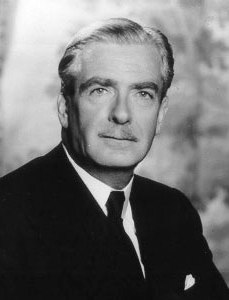
  • Anthony Eden – 1943 Statement on Death of Speaker Edward FitzRoy

    Anthony Eden – 1943 Statement on Death of Speaker Edward FitzRoy

    Below is the text of the statement made by Anthony Eden, the then Secretary of State for Foreign Affairs, in the House of Commons on 3 March 1943.

    The news which the House has just received will be felt, I think, as a tragic personal blow to each one of us. The Speaker was not only a great Speaker, but also he was a man whom every Member of the House had come to regard as a personal friend. In that light, perhaps, most of all we shall always remember him. This, as the House knows, is not the moment for the tributes which will in due course be paid, but I think I shall be expressing the feelings of every Member if now, on behalf of the House, I send a message of bur deepest and most heartfelt sympathy to Mrs. FitzRoy and to the family in the loss which, though it, is nearer to them than to us, is a loss which we the House of Commons feel also. [HON. MEMBERS: “Hear, hear.”]

    In the circumstances, I think the House will feel it appropriate that I should move, ​ “That this House do now adjourn till Tuesday next.”

  • Pierse Loftus – 1943 Speech on Grass at Aerodromes

    Below is the text of the speech made by Pierse Loftus, the then Conservative for Lowestoft, in the House of Commons on 24 February 1943.

    In the short time available to me I propose raising a matter which I believe is of greater national importance than is generally ​ realised, namely, the failure to use for feeding purposes for stock a vast amount of grass available on aerodromes. We are all begged to-day, each one of us, to economise to the utmost in the consumption and use of all feeding material, and those who can produce food, whether farmers or market gardeners, are urged to do their utmost to increase the food supply of the country. I believe myself that owing to the failure to use this vast amount of grass on our aerodromes we are wasting an enormous quantity of the most valuable animal food in the world. I believe that the loss may well run into over 100,000 tons a year, perhaps considerably more. The drying of grass is probably the most progressive, beneficent step achieved in agriculture in the last 50 years. Dried grass contains in itself a perfect animal food. It has an enormous quantity of vitamins, proteins, and so on; and such a food in these times should not be wasted. I recognise that in putting my case I must be brief, and that I must not use any figures as to the numbers of aerodromes and so on; I must deal with the matter in general terms.

    The first thing to note is that every aerodrome could utilise two drying plants. Between 1st May and 1st October each plant would produce 250 tons; that is to say, each aerodrome with two plants would produce 500 tons a year of this valuable food. A hundred aerodromes would produce 50,000 tons a year of this food for our stock. It is possible that some aerodromes could utilise three drying plants, but I take the figure two. Nearly all the surface of an aerodrome—quite 90 per cent.—is grass. On how many aerodromes are we utilising grass for drying? I have asked the Minister on what percentage of aerodromes it has been utilised, or on what number of aerodromes. He gave an answer in one word—”Ten.” Whether he meant 10 per cent. or 10 aerodromes I do not know—I presume he meant 10 aerodromes. In any case it is obvious that there is a great waste in not utilising the enormous majority of aerodromes for this purpose. What happens to the grass on these aerodromes? It has to be cut. I believe that in some instances, possibly in many, it is cut and then left to rot. The only way of utilising this grass is to dry it. You cannot utilise it as hay; it would not keep in such quantities, especially the very short grass.

    What is the answer that the various Government Departments have given on this matter? The first answer probably is that the disposal of the grass is left to the county war agricultural committees. I believe that these committees have the power to deal only with areas outside the aerodrome, small areas containing probably inferior, rough grass. I do not believe they have power to deal with the aerodromes themselves. I have a friend—and I will give particulars to the right hon. Gentleman later—who for 18 months has been trying to get the grass of five or six aerodromes in one county, and has offered £2 an acre, but cannot get an answer. He has been referred from one Department to another, chivvied from pillar to post, and he can find nobody in any Department who will take the responsibility of accepting his offer and adding to the food supplies of the country. The second answer is, that it may be said that camouflaging grass on aerodromes prevents the utilisation of the grass. I suggest that only a small proportion of the grass of an aerodrome is so affected. It should be known that camouflage has taken place for years on aerodromes where the grass has been dried, and further that the grass driers themselves used to apply the camouflage in certain aerodromes. I admit frankly that years ago there was a lot of camouflaging in aerodromes which did prevent the grass being used. I will not go into the details of the methods, naturally, but I know that that method has been abolished and is no longer used.

    The third answer may be given as follows; Aerodromes are sown with a special type of grass which is not suitable for grass drying. I reply to that that the majority of aerodromes laid before the war were seeded with first-class grass admirably adapted for grass drying. I have here the analyses of that grass from three aerodromes, and they are as follow: first, carotene, which forms 450 millograms per kilo; the second, 400 millograms per kilo; and the third, 330 millograms per kilo. First quality dried grass is anything above 250 millograms per kilo.

    Therefore it is first-quality dry grass. But I am also told by experts that even these special grasses which are used on the minority of aerodromes only can be utilised for grass drying. Surely, if there ​ is any question about it, it can be solved very easily. Let the Minister obtain samples and have them analysed by experts and discover whether the types of grass used on this minority of aerodromes are suitable or not.

    A possible answer is that drying plants are not available. I admit that they are not available to-day, but they can be made available quite easily. Grass drying plant can be easily and quickly made. It consists of an oven of sheet metal and a furnace, and I believe that we could get 500 of these plants made by one or two firms within three months, once the order was given and the material provided. I would point out to the Minister that these plants could be used for other purposes, such as drying corn during a wet harvest, and after the war they would be an invaluable national asset in providing food for stock.

    I feel that the only explanation is that the Air Ministry is the obstacle. I realise it is the obstacle. The Air Ministry is concentrating on its own magnificent job, which it is carrying out so splendidly, and the Minister and the Ministry personnel say, “We want to get on with our job and with the war, and we cannot deal with these agricultural troubles.” It is, I think, because they do not realise the immense importance of the subject. It is important for these and many other reasons. We want more milk, and the ideal food for the purpose is dried grass. We want more meat, we want to import less food for our stock. Dried grass is the perfect food. We have killed off our pig and poultry populations to a large extent, yet here we have the perfect food, not being used. If we had even half this available food, we could enormously increase our stock of pigs and poultry, to the general benefit of the country.

    My final consideration is this: Lord Woolton, in a passage which appealed to our people, said the other day, when begging us to economise on bread, that when you fiddle with a piece of bread by the side of your plate you are fiddling with the lives of our seamen. That went home to the British people. Here, I suggest, is a vast store of magnificent animal food which is being wasted. If we used it, it would save great quantities of food which might have to be brought in, indeed, will have to be brought in, in ships at great cost of loss of ships and men I would beg the Parliamentary Secretary​ to consider this matter seriously. I ask him to take at least this step, to insist on a joint investigation by the Ministry of Agriculture and the Air Ministry. Let there be a joint Departmental Committee to sift the facts and hear the evidence of experts, so that the obstacles are removed. That is a small request to make. I would like to quote the eloquent words used by the Parliamentary Secretary at Cardiff the other day. He is reported to have said:

    “More food is still the rallying cry in the battle of the fields. Every ton of food produced here helps in the battle against the U-boats. Each ship used to import food is one less to carry the war to the enemy.”

    Let the Parliamentary Secretary now break down this inertia, this lack of realisation of what is happening, and force a thorough investigation into the great possibilities of this food.

  • Ellis Smith – 1943 Speech on Transference of Labour

    Below is the text of the speech made by Ellis Smith, the then Labour MP for Stoke, in the House of Commons on 23 February 1943.

    Let me make It quite clear that we wish to maintain our record in the world battle for freedom. We want the complete annihilation of the Nazi and Fascist cliques and the subjugation of the economic and social forces that gave rise to the Hitlerites, who, in the main, are responsible for this war. Therefore, we are logically bound to support more efficient organisation. We support more efficient organisation, first of all, to enable us to secure an early victory, to avoid a war of attrition and to provide our Forces with overwhelming superiority in weapons and equipment. We desire more efficient organisation in order to be worthy of our great Russian Allies and to ​ send them the maximum supplies and, at the same time, to get this war over as soon as possible and so save thousands of our lives.

    I have prefaced what I intend to say, in order to point out the need, especially in the war situation, to get away from the pre-war quibbling that used to take place in this country, and which to a certain extent, when we come to deal with domestic affairs, we find is still there. The war has made this country dynamic, and we want to maintain that attitude. We want our country to gather momentum for victory and also for peace purposes. At the end of last year, the Minister of Production visited the United States, where he had consultations with those in charge of American production. I should think—and we would like a reply on this point—that agreement was reached on a united, planned strategy, on a planned production programme, based upon our strategical needs. The result of it was the Minister’s statement, which, summed up, meant this: Temporary dislocation, leading to the peak production of our offensive needs in ships, aircraft and tanks, in the main.

    To-day we are concerned with the following points which the Minister made and which I will give in an extract from his speech:

    “Nineteen forty-three will be a peak year in our war production, and the total labour force employed in the munitions industries during the year will considerably exceed the numbers employed in 1942. In order to obtain the additional labour force required and at the same time to satisfy the requirements of the Forces, there will have to be, by means of concentration or otherwise, further withdrawals of labour from the less essential industries and further mobilisation of women into industry both for munitions work and as replacements for those transferred from the less essential industries. At the same time transfers of labour within the munition industries themselves must take place ….

    Managers and workers who are affected by the changes in programmes which I have just described must realise that, notwithstanding any temporary dislocation that may occur, these changes are part of an ordered plan. If men and women find themselves being transferred to new work they will understand that it is because the new work is even more vitally important than that upon which they were previously engaged. If there is some temporary dislocation to management or to labour, the great and insistent demand for man- and woman-power will quickly reabsorb them into new activities.”

    We hope they are. If men and women find themselves being transferred to new ​ work, they will understand it is because the new work has become even more vitally important than that upon which they were previously engaged. If there is some temporary dislocation of management and labour, the great and insistent demand for all man- and woman-power will quickly re-absorb them into new activity.

    Then the Minister went on to say:

    “I would appeal to Members of this House, whose influence can be of so much importance in their constituencies, as well as to the managements of all companies, to give every assistance to my right hon. Friend the Minister of Labour and National Service in his difficult task, by explaining to their workpeople why the changes are necessary. If they are understood, doubt and uncertainty will not occur.”—[OFFICIAL REPORT, 19th January, 1943; cols. 38 and 39, Vol. 386.]

    That is our main purpose in this Debate. We differ from an hon. Gentleman who spoke from a Bench below the Gangway not long ago, in regard to Debates, because we believe that Debates in this House have been a great contribution to our war effort. We believe that, in this democratic assembly, Questions, in the main, and Debates have helped to stimulate the Government and Government Departments, and at the same time to provide Ministers with an opportunity of making statements which have explained matters of this kind to the country. It is with this reason in mind that we are raising this issue to-day.

    An important factor in the degree of success in the new policy will be how the workpeople are treated when these transfers are being made. Upon that matter I am instructed by my hon. Friends to speak, and I gladly do so. At the last Trades Union Congress this resolution was carried:

    “The Congress urges upon the Government the necessity of seeing that ample safeguards are provided to ensure that employers cannot take advantage of the Regulations by transferring their (the employers’) liability for subsistence allowance on to the Government and, in addition”—

    and this is what I want to emphasise—

    “that proper accommodation is provided for the workers prior to transference, and adequate welfare arrangements made. Further regard should be paid to the question of women workers and the need of keeping them employed as near their homes as possible.”

    I hope that, in the policy which the Minister of Production outlined, that resolution will be borne in mind. I understand that the new policy will mean that ​ transfers will have to take place on a national scale and also within a region, and that there will also be transfers within a restricted area. What does the Ministry consider a reasonable distance to travel daily for a transferred worker, from his or her home to the new place? Over a reasonable distance, workers should receive travelling allowance daily. When the travelling distance is over the reasonable mileage, can arrangements be made for transferred people to receive a hot meal when they arrive, or, at the very least, tea, if the distance is outside a reasonable mileage? I would also ask that the transferred workpeople should be given more free travelling vouchers, especially at holiday periods. When there is sickness at home they should be given leave as expeditiously as possible, because if their minds are on the fact that there is sickness in their homes, they cannot do justice either to themselves or to those in charge of the work. It is to be remembered that in those cases they have to bear the cost of making the journey home and that sickness in the home increases the domestic expenditure, while at the same time they suffer a loss of wages. That is why I suggest that leave should be granted to them more readily than has been the case up to the present, and that they should also receive more travelling vouchers. I think in circumstances like those, transferred people are entitled to some such benefits as I suggest, and I therefore ask that consideration shall be given to that aspect of the matter in connection with the new policy.

    Then, I would ask, cannot something be done to ease the difficulty experienced by workpeople who are transferred from a relatively highly-paid area to an area where the pay is lower? I can visualise that under the new policy which has been outlined this will be a cause of considerable difficulty. Cannot arrangements be made for the payment of a transfer bonus in cases of that kind? There is another point. Why have the Government not taken steps to put an end to the exorbitant charges which are being made for houses? This matter is probably causing as much friction as any other question—if not, indeed, more than any other question of which I know at the present time—in connection with the transfer of workpeople. If transference is to take place on a large scale, something will have to be done in this respect, in order that the ​ machine may work as efficiently as we desire it to work, and enable us to get the best results.

    Mr. Craven-Ellis (Southampton)

    The hon. Member has just complained of the charges which are being made for houses. Would it not be more correct if he were to say the charges made for lodgings, since house rent is controlled?

    Mr. Smith

    I was going on to make that point. My first point was in regard to houses, and I intended in the next place to mention that the same complaint applied to lodgings. The same thing applies to rent, and the same thing applies to charges for keys. All this means a form of inflation. The Government have done better than I expected as regards the avoidance of inflation in this country, but they do not seem to have tackled this particular problem, in the same way as they have dealt with bigger issues. We want to know to-day who has prevented this matter from being dealt with; who is responsible for it, and will it be dealt with before transfers take place on a larger scale? The question of housing accommodation is one of the most difficult which has to be faced in connection with large-scale transfers. In the industrial areas there were serious housing shortages even before the war, and these have been intensified by the large numbers of people who have come into the industrial areas since the war began.

    Within limits, the most efficient way of dealing with the problem would be for the Government to take over all the large hotels in the industrial areas and to retain the staffs and the service in those hotels for the accommodation of transferred workers. No class of people in this country, apart from the Armed Forces, are more entitled to have the most efficient service possible than the people directly employed in the manufacture of munitions. If it was right to take over seaside hotels to house Government offices and to accommodate Civil servants, then I think it is reasonable to suggest, now that a policy of large-scale transfer is to be embarked upon, according to the Minister’s own statement, that large hotels, within reasonable distance of industrial centres, should be taken over in order that our people may be housed on as decent a basis as possible.

    I do not know whether it is generally realised everywhere what our people have gone through during the last four or five years, particularly in the industrial centres. Very few countries, with the possible exception of Russia, have gone through worse experiences, and I do not think this is fully realised throughout the world. I live among these people; I belong to them and do not desire to be any different from them, and it is obvious, when you are among them and speak to them, how great has been the effect of the strain of the last few years upon them. No one could have made a greater contribution to the war effort than they have made. I submit that we have now reached a stage at which maximum hours could be fixed at a certain figure which would enable us to get the best possible production from the people, having regard to that strain under which they have been working. After Dunkirk they worked for 60 and 70 and 80 and 90 hours—a fact of which the Minister himself needs no reminding. He is as well aware of it as any of us. But now we have reached a stage of the war and a situation in regard to man-power, in which, I think, it would be good policy if hours were fixed, except in cases of exceptional emergency or urgency, at about 54 or 56 or some figure like that. Is the Minister satisfied that we are obtaining the best results from the men and women in industry who desire to give of their best? I would follow up that question by asking also: Are we getting the best production we could get from the numbers engaged in the aircraft industry? Those are questions to which we should have satisfactory answers before any large-scale transfers take place.

    I had expected that a representative of the Ministry of Production would have been here to-day, because the issues which are being raised concern not only the Ministry of Labour, but also the Ministry of Production and the Ministry of Supply. I would like to ask at this point whether better arrangements can be made to balance and to fit in the labour supply with the raw materials supply. When major modifications are made or when there is a change-over from one type to another, can we be given an assurance that transferred workpeople will not be sent to some place where they will have to mark time until production can start? Nothing has a worse effect on workpeople than ​ being transferred from one area to another, only to find that the area to which they have been transferred is not yet ready for production. There has been too much of that, and under the new policy that kind of thing ought not to take place. I would also ask whether workpeople will be allowed to remain as near to their homes as possible. I have seen a number of circulars issued by the Ministry, and we have heard speeches made by the Minister. We have noticed the spirit in which he makes those speeches, and I be-believe it is intended that the whole administration of the scheme should be carried out in that same spirit. What steps then are being taken, in connection with the new policy of transference, to see that the other Ministries involved in particular localities act in accordance with the Minister’s intentions? Will there be a linking-up in the localities to avoid friction?

    I suggest that where production committees have not already been set up some sort of joint committees should be established, in order that the facts can be explained to the workpeople. I have sufficient confidence in our people, and I know them sufficiently well, to say without hesitation that if the facts are explained to them most of them will respond.

    Unfortunately, too often a new policy is introduced and people are transferred, or some change takes place, without any explanation being offered to the people. These joint committees ought to be set up where large transfers take place, so that the facts can be put before the workpeople and so that general discussion can take place. I also suggest the setting-up of a rota, in the preparation of which everything would be taken into consideration in regard to domestic responsibilities and liabilities, and that the transfers should be made upon that basis.

    We all know that the Ministry of Labour has organised the British people in such a way that a great story can be told of it. It is time that that story was told to this country and to the world. It would inspire our people to greater efforts; it would encourage our men in the Forces, and that which would assist the enemy could be left out. In my view there is not yet the co-operation there should be between the Ministries responsible on such questions as transfers. Is there the co-ordination there should be on these questions between the Ministry of Labour, the Ministry of ​ Production, the Ministry of Supply, the Admiralty and the Ministry of Aircraft Production? Are we getting the co-operation we should get from the local authorities? Here is just one example. Let us remind ourselves that we are in the fourth year of war. In the last war supplementary rations were granted to workpeople. I believe that in this war those engaged in heavy manual work should have received supplementary rations, but the Ministry of Food would not agree to a policy of that kind. Many of my hon. Friends would not agree to a policy of that kind. I agree that it is very debatable.

    This is the reply which the Ministry of Food made to some of us. My right hon. Friend will remember those of us in Parliament who suggested that heavy workers like miners, engineers, transport workers, steel workers should be entitled to supplementary rations. The Ministry said, “We have a good deal of sympathy with you, but it cannot be done, owing to the situation we find ourselves in.” They went on to say that British Restaurants are now being established and that in industrial centres in particular the workpeople can take advantage of the facilities which the Ministry has organised at those British Restaurants and that this is equivalent to a supplementary ration.

    I thought that was very reasonable, and I accepted it. But what do we find? Here we are in the fourth year of the war, and so far as industrial centres are concerned this is what has been done. At the end of January, 1943, the number of British restaurants operating in the towns mentioned, per 30,000 of the population, were as follow:—Stoke-on-Trent, 1; Birmingham, 1; Manchester, 0.4; Sheffield, 0.4; Glasgow, 0.3; Salford, 0.1; Liverpool, 0.4. I have no hesitation in saying that these figures are a disgrace to those localities, and that were we getting the co-operation of the local authorities in those areas that we should do those figures would be much higher. I go on to the numbers that have been set up—Stoke-on-Trent, 9; Sheffield, 7; Glasgow, 10; Manchester, centre of a large industrial area which will probably become more important in view of our new needs and products upon which we are going to concentrate, 11; Birmingham, 35, with 14 being prepared; Newcastle-on-Tyne, 30; Salford, 1; Liverpool, 10; Darwen, ​ Eccles and Farnworth, none; Leigh, none; Mossley, none; St. Helen’s, none; and Swinton, none. Therefore, there seems to be need, before the Minister embarks on large-scale transfers, with the additional people going into those localities, to take notice of these figures.

    There is too much of this, and I am going to read this, because I think the House ought to be aware of it. A man wrote to me, and I asked him, because of what he said in his letter, whether he was a trade unionist, because that is a point which carries some weight, so far as we who come from industrial areas are concerned, because we believe, in view of the part which trade unions have played before and during the war, it places an obligation on the shoulders of all British working people to associate themselves with their fellows and become a part of the trade union movement. My correspondent replied under the official heading of the Transport and General Workers’ Union:

    “Dear Bro. Ellis Smith,

    Many thanks for the reply to my letter. I am sorry to inform yon that my wife died a few hours after writing yon on Saturday night, from meningitis. I think you will agree with me that her death would be aggravated by the suffering and worry over my having to leave her to go out of the district at that particular time. I do not want to take up much of your time but I would like you to hear this appeal of mine. I have also addressed a similar appeal to another member of the House. I might add that I feel very sore at losing my wife through the inefficiency of these people who claim to administrate in these cases, and I would like you to interview Mr. Ernest Bevin, the Minister of Labour (who might know me personally) to look up my case. I have written to the National Service Officer at Malvern for my release on the same ground as before except that I have added that my wife has since died and further that my activities as a union official warrant me a job nearer to my home. I am enclosing the original copy of my appeal.”

    Here is the original copy, which anyone can examine. This is a real tragedy. It is headed “Regulation 58A of the Defence (General) Regulations, 1939.” This man is being instructed to take up employment as a designated craftsman in another part of the country, and this is the case which he puts in his appeal:

    “1. Owing to the illness of my wife, who has been suffering from tuberculosis for the last 25 years. Secondly, of the four children left at home out of six, two of them, girls of 15 and 17 respectively, a son of 19 and a little girl of ​ seven require parental control, and my effort, if I went away, would be wasted to the country if these children lost all parental control.”

    That was sent by the man. They go on to say:

    “This man was withdrawn from building maintenance work at the R.O.F. on instructions from Regional Office, through the Inspector of Building Labourers Supply. He was directed to take up first urgency work.”

    I do not believe that it was ever the intention of this House that cases of that kind should be transferred. If transfers are to take place on a large scale, we have somehow to get the Minister’s and the Ministry’s spirit carried out right through the administration, because I do not believe that it was ever intended that that kind of case should be transferred.

    When workpeople are transferred in the future, I ask for the most efficient organisation and the best possible treatment from when they leave their homes to when they settle in another. We on this side of the House—I say that in no political sense but because of where we come from and belong to—have restrained ourselves from the beginning of this war to an extent to which I never thought I should be able to restrain myself. We have done that as a contribution to the war effort. We have allowed scores and scores of Regulations to go through this House without saying a word. Now it annoys us when we, sitting here, can see Members quibbling over Regulations when they are introduced, not to move people about, but because Ministers want to improve the efficiency of the war machine. We find certain hon. Members quibbling, and in many ways that is bound to have some effect on us, considering how these matters are dealt with. In pre-war days those who could afford it had their holiday tours arranged for them. During the whole of the tours they made there was very seldom a hitch. We want to aim at the same standard of organisation in the organisation and treatment of all transferred work-people. It is not luxury we are asking for. We are asking for human treatment, the avoidance of friction, the maintenance of good will, all leading to the maximum production. There is more consideration and sympathy in this country now for one another than at any, other time in my lifetime. We should keep in tune with the people and make care for the people’s welfare a State instruction to all. I remember when I was at work one very efficient manager whose ​ policy was to give full consideration to all questions that were raised. You could not have a row with him. The result was that he obtained maximum production. That is what we should aim at in this transference policy. We take no objection to the policy; we realise that it is a contribution to the war effort; but the policy should be carried out on the basis I have indicated, to eliminate friction and to maintain good will, so enabling us to secure maximum production. By that means we shall achieve earlier victory and take a much larger part in the battle for freedom.