Blog

  • Neil Hudson – 2020 Maiden Speech in the House of Commons

    Below is the text of the maiden speech made by Neil Hudson, the Conservative MP for Penrith and the Border, in the House of Commons on 13 February 2020.

    It is a great honour to stand to make my maiden speech as the Member of Parliament for Penrith and The Border. It is a tremendous privilege to be in this House, and I thank my electors for putting their trust in me. The three MPs before me—William Whitelaw, Lord David MacLean, and Rory Stewart—had amazing parliamentary careers, covering roles such as Home Secretary, Chief Whip and International Development Secretary. I pay special tribute to my predecessor, Rory Stewart. When I was selected as the candidate for my seat, Rory reached out to me and was extremely kind and generous with his support, for which I am grateful.

    Rory was a tireless champion for Penrith and The Border, famously walking around the entire vast constituency—even that did not tire him out. He helped ​countless numbers of constituents and campaigned hard for better broadband, overcoming rural isolation, protecting the environment, and flood management, which sadly has been critical again in Cumbria in recent days—my sympathies go out to the people of Appleby at this time. As a Minister, he was incredibly thoughtful, articulate and rational in portfolios such as the environment and prisons and, latterly, as International Development Secretary. As he moves on, I wish him and his family well. By the way, Rory, when you are next in Cumbria, you are welcome to come and kip with me.

    Penrith and The Border has a population of over 82,000 and an area of 3,120 sq km. As such, it is geographically vast and sparsely populated. The constituency contains many diverse and beautiful villages and towns. I will name but a few, with apologies to those that I miss out: Penrith, Wigton, Appleby, Longtown, Brampton, Alston, Kirkby Stephen and Shap. I am also proud to have parts of the original Hadrian’s wall in my constituency, as well as parts of the original “blue wall”.

    Agriculture is the lifeblood of the constituency, accounting for about 50% of land use, but there are other industries, too. Tourism is a hugely important sector for our local economy. Indeed, Cumbria has one of the largest tourist economies in the UK. There were 47 million visits to Cumbria in 2018 alone. In addition, there are over 5,700 businesses in Penrith and The Border. Such businesses are absolutely vital to our communities.

    Such a vast area has problems with connectivity, be it virtual or real. Whether it is broadband, mobile phone coverage or transport links such as trains and rural buses, communities and people need to be connected and joined together so that people can interact with and access their local services. I will champion these causes.

    As the name suggests, my seat goes right up to the Scottish border. I will join hands with my colleagues along and across the border. Working together, we can bring investment and infrastructure to the area through initiatives such as the Borderlands Partnership. I will also passionately stand up with all my heart for the precious Union that is our United Kingdom.

    I am a veterinary surgeon by background, and I believe I may be the first vet to be elected to the House of Commons since 1884, when Sir Frederick Fitzwygram was elected as the Member of Parliament for Fareham. The other vets at Westminster have included the late, great Professor Lord Soulsby, who was brought up in Penrith and was the dean of Cambridge Veterinary School, where I trained. Now there is Professor Lord Trees, who sits in another place. All three served as president of the Royal College of Veterinary Surgeons, of which I am proud to be a fellow.

    So why has this particular vet ventured into politics? My involvement as a veterinary inspector in the 2001 foot and mouth crisis spurred me into wanting to use my background in public service. I am sure Members will recall the dreadful scenes from that crisis—scenes we hope are never repeated. Supervising the culling of many, many animals is sadly emblazoned in my memory. Nationally, over 6 million animals were slaughtered. Cumbria was hit especially hard, with over 1.25 million animals lost. Forty-five per cent. of Cumbria’s farms were subject to culls, and this rose to 70% in the north. ​The crisis had severe effects on agriculture and the economy, and also on the mental health and welfare of the people who live and work in this area.

    As we all know, agriculture is incredibly important to the UK, contributing £9.6 billion to UK economic output in 2018, but it goes much wider than this. We are a nation of animal lovers. Some 40% to 50% of households have a pet and, as an equine vet, of particular relevance to me is the fact that there are over a quarter of a million horses in the UK. Issues in areas such as animal health and welfare, disease surveillance, public health and trade are pivotal, now more than ever, as we enter a crucial time of legislation and common frameworks in these areas.

    It is vital that, now we have left the EU, we stand up for our first-class standards of farming and animal welfare as we go on to secure trade deals. Indeed, this will be a great opportunity for the UK to be a beacon to the rest of the world on animal welfare. We can send out the message that if other countries want to trade with us, they need to bring their animal welfare standards up to our level.

    Sadly, the veterinary profession is over-represented in mental health issues and the incidence of suicide. I very much welcome the cross-party and, indeed, Government commitment to parity of esteem between mental health and physical health so that people, both young and old, can access the best mental health care in hospital and in the community.

    On a lighter note, being a vet in politics has some advantages on the doorstep. As I said, half of households have a pet, frequently a dog. When I am out canvassing and a dog hears a vet knocking at the door, either they run a mile, thinking they are about to get an injection or, worse, have their anal glands emptied—“anal glands” is something you will not read in Hansard every day—or they run towards me. I am reminded of the time a dog did just that and latched on to my leg, not in an aggressive fashion but more in an amorous manner. I looked down and said to the owner, “Well, I think I’ve secured his vote.” To which the owner smiled and replied, “Well, you’ve got mine now, too.”

    Finally, I would like to thank some specific people. First, I thank my family and friends for their enduring and steadfast love and support over the years—I could not have done this without you. I also thank Penrith and The Border Conservative association for all its help and support.

    I also thank specific Members of this House and another place for their support and encouragement in my journey here. To my right hon. Friends the Members for North Somerset (Dr Fox), for Epping Forest (Dame Eleanor Laing), for North East Cambridgeshire (Steve Barclay) and for Dumfriesshire, Clydesdale and Tweeddale (David Mundell), my hon. Friends the Members for Aldridge-Brownhills (Wendy Morton), for Berwickshire, Roxburgh and Selkirk (John Lamont) and for Moray (Douglas Ross) and, in another place, Lord McInnes of Kilwinning, thank you so much.

    On the other side of the House, I specifically mention the hon. Member for Edinburgh South (Ian Murray), whom I was up against as a candidate in 2010. When I was selected as the candidate for Penrith and The Border, he contacted me to wish me well, and he did so again when I arrived here. I feel strongly about that ​spirit of cross-party working. If someone on the other team has an idea that is good for the country, we should work together to bring it forward for the benefit of everyone. It is in that spirit that I enter this House and hope to continue.

    Finally, if you will permit me, Madam Deputy Speaker, I will say a final few words about someone you knew well, as he was a constituent of yours. My father, Christopher Hudson, sadly passed away just a few days ago. I have debated whether to say this and, indeed, whether to go ahead with my maiden speech this week, but I know it is what he would have wanted me to do.

    My dad, Christopher Hudson, was a professor of obstetrics and gynaecology, and he devoted his life to the service of his patients in the NHS and in Australia, and during periods spent in Nigeria and Pakistan. He notably worked to reduce maternal mortality and postpartum complications in the developing world. He delivered countless babies and saved countless lives through pioneering surgery in this area and, especially, in cancer surgery—those procedures are still making a difference today. In addition, he trained and mentored so many health professionals right up until the end. I am so sorry that he is not here today, but he is at peace now. With all my heart and soul: thank you, mum and dad. God bless you, dad. This one’s for you.
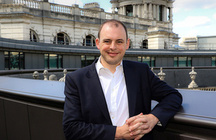
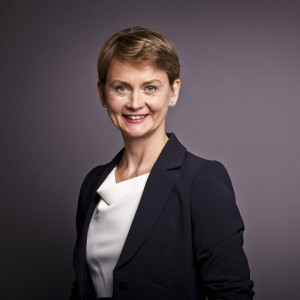
  • Jerome Mayhew – 2020 Maiden Speech in the House of Commons

    Below is the text of the maiden speech made by Jerome Mayhew, the Conservative MP for Broadland, in the House of Commons on 13 February 2020.

    I feel hugely privileged to be standing here as the Member of Parliament for Broadland. It is an exquisite sliver of breathtaking Norfolk, from Wighton in the north, where my parents were married, to the Halvergate Marshes near Breydon Water in the south-east. It is named after the eponymous Norfolk Broads, a magical combining of flooded medieval peat cuttings interconnected by rivers: the Yare, Bure, ​Ant, Wensum, and Thurne, to name a few. Together they make up the great harbour of the Broads. The harbourmaster is the Broads Authority, whose key duty rightly remains to maintain navigation. The area is also a wonderful haven for nature, created by Norfolk reed-cutting and marsh grazing over centuries, a harmonious form of traditional husbandry serving both nature and man. Long may those traditional occupations be able to continue to do their good work.

    However, to the north of the constituency, some 30 miles from the Broads, “Broadland” is a misnomer. Who would describe Fakenham, with its fine racecourse—but currently, shamefully, no post office—or the pilgrimage village of Walsingham as being in the Broads?

    The boundaries of my constituency have been much changed in recent times, but my predecessor, the right hon. Keith Simpson, flexed with them to represent this part of Norfolk for the past 22 years. An academic, Keith describes himself as a

    “military historian with an interest in defence and security”.

    This political modesty belies his long and distinguished service on some of the key Committees of the House, and most notably his valued membership of the Intelligence and Security Committee. He is a charming and witty after-dinner speaker, and I will struggle to meet his standards and expertise.

    Keith was a staunch advocate for Norfolk and for the infrastructure that it deserves. On reading his maiden speech, made back in 1997, I noticed his demand for the dualling of the A47, a key east-west artery for East Anglia. What I did not realise was that this is a tradition of the seat. Looking further back, I discovered that his predecessor, Richard Ryder, made an identical request 37 years ago, in 1983. I now join the club. I am still looking forward to the dualling of the A47, but with this Government’s welcome commitment to investing in our infrastructure, including the dualling of the A47, I am delighted that my eventual successor to the seat of Broadland—I hope in 2055 or thereabouts—will have something else to talk about.

    My hon. Friend the Member for North Norfolk (Duncan Baker), in his moving maiden speech, evoked the slower pace of life associated with our part of the world, which is epitomised, in his mind, by the village of Slowly. Well, once he has tired of Slowly, I invite him gently to join me in Little Snoring, or even in Great Snoring. But to talk of modern Norfolk in such terms is to ignore the dynamic businesses that thrive there, particularly in the farming, agri-science and green energy sectors. As a rural-based businessman myself, I know the desperate need for improved mobile phone coverage and broadband connectivity to allow the businesses of Broadland to thrive. That is why I wholeheartedly welcome the shared rural network agreement to provide 95% of geographical coverage by 2025, and I am already working with Mobile UK and Norfolk County Council to ensure that Norfolk is in the first phase of this roll-out. I also eagerly await the Government’s 1 gigabit broadband. Entrepreneurialism is alive and well in Broadland, and business there could have the best of both worlds—unrivalled quality of life, together with great connectivity—but we need the tools to do the job.

    I join this Parliament in what I believe to be an era-defining moment. For the last 40 years, the relative importance of this place has slowly diminished as more ​powers were gradually ceded to the EU in its founding quest for ever greater political union. Is it a coincidence that, over the same period, the reputation of this House suffered commensurate decline? As the power of this place to effect meaningful change in the lives of our constituents has diminished, so too has its reputation fallen. I believe that Brexit provides us with the opportunity to change all that. If the decision over Brexit has taught us anything, it is surely that this country does not like to be governed by bodies that it cannot vote out. The people took the lead away from the political class and taught us all a lesson, and actually, it was a lesson in democracy. That lesson has profoundly changed my political thinking. We have been re-taught that democratic accountability is needed in the decisions of state.

    That lesson does not just apply to international bodies. The European years also marked the proliferation of quangos, set up to be independent of politics in their delivery of key areas of national government. But what does independence mean? It means an organisation that is untrammelled by political pressures, and yet political pressure is the evidence of a democratic system at work. As we accelerate our already impressive response to the climate and environmental challenges that we face, we will be requiring huge changes to be made to the lives of all our constituents. Without the reform of quangos to bring them back within the structures of democratic government, I fear that we may be sowing the seeds of the next Brexit-style revolt when we can all least afford it.

    To be clear, I do not want to stymie our effective environmental and climate response. I want to do the opposite, but I invite the House to look forward. As our new and necessary policies begin to bite, with the huge changes to everyday life that they will entail, not everyone will be happy. The absence of democratic pressure valves in the implementation of policy will leave us all vulnerable to a demagogic backlash. If we do not bring the people with us through the implementation of our plans, it will be at our peril. Now is the time to learn the true lesson of Brexit, to embrace democracy once more throughout our national conversation and to restore true accountability to the people, in organisations that are trusted. Perhaps then the people will once more believe that they have the politicians they deserve.

  • Angela Richardson – 2020 Maiden Speech in the House of Commons

    Below is the text of the maiden speech made by Angela Richardson, the Conservative MP for Guildford, in the House of Commons on 13 February 2020.

    Thank you, Madam Deputy Speaker, for calling me to give my maiden speech in this general debate. I start by thanking the Speaker, the Deputies, including yourself, and the Speaker’s Office for the excellent advice, care and concern that has been shown to new Members. It is greatly appreciated.

    It is a pleasure to follow the hon. Member for Newport East (Jessica Morden) and to have heard the wonderful maiden speeches from my hon. Friends the Members for Bosworth (Dr Evans) and for Wrexham (Sarah Atherton)—I have thoroughly enjoyed listening to all the maiden speeches from this intake so far.

    I am delighted to be a Member of this Parliament, which is so wonderfully diverse and representative of the communities we serve. I would like to thank the Conservative Women’s Organisation, Women2Win, and the cross-party 50:50 campaign for the investment that they made in me and for encouraging women to stand in public life.

    My predecessor in Guildford, the right hon. Anne Milton, started her political journey as a borough councillor in nearby Reigate and Banstead. With her experience as an NHS nurse of 25 years and genuine warmth of character, she was close to our community and understood ​local people and their concerns. Anne always acted with principle and did what she believed was right both for her constituents and in the national interest.

    In Government, Anne was an effective Minister in the Department of Health and later a Government Whip—indeed, she was the first Conservative woman to hold the position of Deputy Chief Whip, where she introduced better access to physical and mental health provision as well as pioneering the induction programme for new Members, which we in this intake have all benefited from. Anne Milton’s most recent post in Government was as Minister of State for Apprenticeships and Skills. I look forward to continuing to make the case for the value of apprenticeships, not least as someone who did not go to university but was able to learn and earn. I can see the enormous potential of apprenticeships as we invest in our young people as part of our future global Britain.

    I have the wonderful privilege of representing a constituency that I believe encapsulates its name in so many ways. Guildford, or “Golden Ford”, is so named because it was the natural shallow crossing point of the River Wey, where the river bed shone with golden sand. The North Downs way is a footpath that stretches through Surrey, including the Hog’s Back and the centre of Guildford, past the ancient castle built shortly after the Norman conquest in 1066. It provides stunning views—in fact, you do not have to go far from the centre of Guildford to enjoy a view, especially of our iconic cathedral, which sits proudly on the skyline.

    Beyond the town, there are many beautiful villages in the Guildford constituency, with idyllic cricket greens and friendly pubs, many of which I managed to give good custom to during the general election as a well-earned break from knocking on doors. I have been proud to call the village of Ewhurst my home for the last decade and serve as a local councillor in the neighbouring community of Cranleigh, which still competes for the title of England’s largest village.

    There are hundreds of charities registered in Guildford, and scores more in the wider constituency. It is a kind-hearted, philanthropic place, and the borough council works extremely well in partnership with those charities, helping with all sorts of issues from rough sleeping to young carers. The council also has a fantastic ASPIRE programme to promote health and wellbeing. Homelessness and rough sleeping are high on my list of priorities, and I look forward to continuing to work with the council, and with charities such as Guildford Action, to ensure that the additional funding announced by the Government in December is put to good use. I will work both on a cross-party basis and with the Government to tackle those issues as an officer of the all-party parliamentary group for ending homelessness here in Westminster.

    Community is at the heart of this one nation Conservative Government’s agenda, and Guildford is uniquely placed to forge golden opportunities in linking the fantastic University of Surrey, Surrey Sports Park, the law college, Surrey Research Park, our entrepreneurs, our computer gaming industry and our leading 5G innovation, job creation and prosperity with our cultural gems of the performing arts and our beautiful cobbled high street, with its famous retail offering of shops, cafes and restaurants.

    However, the economic revenue produced by Guildford needs to be nourished with inward investment of skill, talent and funding. I will be seeking Government investment ​in infrastructure. It is time for a masterplan for Guildford town centre, and bold innovation to reduce traffic with green technology, road improvements, and a re-purposing of the old Cranleigh to Guildford Rail line to ease congestion on the A281. We know that a vibrant local community is more than its industry; it is about its services, its schools and its hospitals.

    I am delighted to have Royal Surrey County Hospital in my constituency. Our three children were born there. The accident and emergency department looked after me during a difficult second-trimester miscarriage, and it was an NHS consultant at the hospital who diagnosed our son with autism and offered support. I was proud that the Prime Minister put our NHS at the front and centre of the general election campaign, and I give heartfelt thanks to all our hard-working NHS staff. I look forward to continuing to work on the provision of better car parking at the hospital for both staff and patients, and endeavouring to link the hospital with Onslow Park and Ride.

    Let me say, as a proud immigrant to this country from New Zealand who ventured well beyond the famous antipodean settlements of Earl’s Court and Shepherd’s Bush, that community is something that I have had to invest in and build over the last two decades. The people of Guildford have been so welcoming to me, and through my work as their representative I hope to repay their trust.

    Being the Member of Parliament for Guildford is the honour of my life, and it would not be possible without the steadfast support of my husband Jeremy, who is in the Gallery today. With your indulgence, Madam Deputy Speaker, may I also pay tribute to my parents, who are watching in New Zealand? My mother instilled in me a lifelong love of learning, and my father is immensely practical with a fine sense of humour. That upbringing will, I trust, stand me in good stead in this place, as we combine philosophical principles with pragmatism, meet our country where it is today, and work together to forge its bright future.

  • Sarah Atherton – 2020 Maiden Speech in the House of Commons

    Below is the text of the maiden speech made by Sarah Atherton, the Conservative MP for Wrexham, in the House of Commons on 13 February 2020.

    Diolch yn fawr, Madam Deputy Speaker.

    I am the first ever Conservative MP for Wrexham and I am Wrexham’s first female MP. I stand humbled and privileged to serve every constituent, regardless of how they voted. The people of Wrexham are strong and proud, and they were affronted by the prospect of their democratic will being overruled. I have fulfilled my promise to the people of Wrexham and we have left the European Union.

    Wrexham is a town some six miles from the English border and a gateway both to north-west England and beautiful Snowdonia. Inextricably linked to England for work and play, we are still fiercely and proudly Welsh. We in Wrexham illustrate all that is rich in our Union. I am very typical of someone living in north-east Wales. My father is from Chester and my mother is from Caernarfon. The walls of Chester did nothing to keep out the Welsh women. [Laughter.]

    My mother came from a large humble “covie” family, where the women are matriarchs, resilient and strong. Indeed, Shakespeare was no stranger to the determination and the take-no-prisoners attitude of Welsh women, but I’ll let you read “Henry IV, part 1” for further information. The women of my mother’s generation were tasked with looking after the family and making ends meet. She never heard English until she attended school. How proud all the family are now, as one of them rises in this Chamber as the first ever female Conservative MP for Wales. I think they’ve even forgiven me for being a Tory. [Laughter.] But that goes to show how amazing this country of ours is and what we can offer to people when they put in hard work, commitment and sacrifice. We must ensure that all those opportunities are maintained and enhanced for our future generations.

    Wrexham has a long history of welcoming people into the town. In world war two, we had an influx of Polish servicemen who integrated and settled. There is a large Polish community in Wrexham and a smaller, yet significant Portuguese community. They have woven themselves into the fabric of Wrexham, adding to the diversity and culture of our one nation.

    For those who have not been to Wrexham, it is a hidden gem of a market town founded on mining, brewing, football and the military. Sadly, Wrexham claims the second largest mining disaster in Wales. In 1934, an explosion killed 266 men in the Gresford colliery. All but 11 remain buried beneath our feet as a lasting reminder of our industrial heritage. So many men died on that day, as they had changed their shifts to watch Wrexham play Tranmere Rovers. Indeed, as a student nurse back in 1990, I nursed an old man on a ​medical ward at the local Wrexham Maelor Hospital. His body was covered in small blue scars. He told me that he had been dragged out of the pit that day and was one of the few who survived. It was poignant that, when I visited him at home in Gwersyllt, the same coal that almost killed him was keeping his house warm and water hot.

    The mines have since closed, but the resilience and adaptability of the people of Wrexham have meant that other industries and business have filled the void. The people have risen to the challenge. These are the same people who voted me in and I thank them for their faith in me. Indeed, during the election campaign the shift in the political landscape was seismic. The Daily Mail reporter was somewhat surprised to find me and two former Ministers having a swift post-campaigning pint in the LLay Miners Welfare Institute, having just left the opposition in a rather upmarket coffee shop.

    As Members have heard, Wrexham’s passion for football goes back a long way and Wrexham Association football club is arguably the oldest in Wales. The Football Association of Wales was founded in Wrexham and I was pleased to see the recent opening of Colliers Park, the national football development centre for Wales, symbolically located on the site of the Gresford colliery pithead. I would like to highlight the good work done by Gresford Athletic football club and Brickfield Rangers football club, including their work in ensuring football is accessible to all, including our young people.

    In 1689, the Royal Welch Fusiliers was raised, recruiting from across north Wales. It has a long association with Wrexham’s Hightown barracks. Sadly, this has all changed, but the connection with Wrexham and the Welch Fusiliers remains strong. Madam Deputy Speaker, I stand in the House as the only female MP who has served in the regular Army. It goes without saying that I will do all I can to support our military personnel, veterans and all their families.

    Many of us have laid claim to a few firsts. In 1860, my constituency had over 19 breweries in the town. We obviously brew the best beer. Wrexham Lager began in 1882 and the lager is still brewed today. I, too, once dabbled in commercial brewing. I was a brewster—a female brewer. Those who follow me on social media will know that I appreciate a pint of real ale or two and I absolutely value the role pubs play in supporting our communities.

    I pay tribute to Ian Lucas, the previous Member for Wrexham, who served the people of Wrexham for 18 years and was a good constituency Member of Parliament. Despite our political differences, Ian and I do have one thing in common: we both served on Gresford Community Council. This is why I value the role of our community councils and councillors in making our communities a better place to live.

    Employment opportunities in Wrexham are relatively good. It is served by large businesses such as IPSEN, Moneypenny, DTCC, JCB and Kellogg’s, and we are within commuting distance of Airbus and Toyota. Wrexham is home to the second largest trading estate in the UK, directly employing about 12,000 people. With hopes of expansion comes the offer of further employment opportunities.

    It was clear to me during the general election campaign that the residents of Wrexham feel let down by the Welsh Labour Government. The health service is our ​main concern; a health service directly managed by Labour from Cardiff. Almost daily, I hear heartbreaking narratives from constituents about their disempowerment and suffering. I am listening. As one of seven Conservative MPs across north Wales, we are all listening and we are all looking at what we can do to influence the Welsh Labour Government.

    Wrexham has not escaped the problems faced by many towns across the country, but there are now positive plans afoot for regeneration. I have met so many enterprising traders, butchers, bakers and restaurateurs, and I shall be meeting many more. They are the seedcorn of our prosperity. I will do all I can to work with all who seek the success of Wrexham, always seeking to ensure that the people’s voice is heard.

    There is renewed optimism in Wrexham, bringing with it the hope that missed opportunities will now be realised. I have lost count of the amount of times people have stopped their car or stopped me in the street, shaken my hand and said, “I’d hoped this day would come.” Wrexham has indeed turned blue and I will prove to my constituents that they have made the right choice. Diolch yn fawr, bobl Wrecsam. Diolch am eich cefnogaeth.

  • Luke Evans – 2020 Maiden Speech in the House of Commons

    Below is the text of the maiden speech made by Luke Evans, the Conservative MP for Bosworth, in the House of Commons on 13 February 2020.

    Thank you, Madam Deputy Speaker. I thank the hon. Member for Harrow West (Gareth Thomas) for his passionate talk about the NHS, something which he will probably find is dear to my heart.

    One of the benefits of being one of those new Members who do their maiden speeches later is that you get to learn not only that the Opposition cannot intervene, but that it can be quite difficult for the Chair to intervene, especially when there is no time limit. The temptation is to go for a very long speech, but Members—and indeed you, Madam Deputy Speaker—will be very pleased to know that I actually take my advice from none other than Prince Philip, who once said, “The mind cannot absorb what the buttocks cannot endure.” With that in mind, I am going to keep it nice and short.

    Actually, a royal connection is not a bad place for me to start my speech. After all, my seat is Bosworth, and most people know it because of the battle of Bosworth. In August 1485, Henry VII defeated Richard III, bringing to an end the English civil war of the Roses and the Plantagenet dynasty, and ushering in the Tudor era. But my constituency is so much more than a barren battlefield. We produced the Hansom cab—think what Sherlock Holmes went around in. We taught Ada Lovelace—think of the world’s first ever computer programmer. We produce Triumph motorcycles—think Steve McQueen in “The Great Escape”—which are made in Hinckley; and there is much more.

    My constituency is beautiful and diverse. It is broadly made up of three distinct areas: across the top we have Markfield, Bagworth and Thornton, which are steeped in mining history; across the middle, we have Twycross, Market Bosworth and some of the smaller villages, which are more rural and farming in nature; and across the bottom, we have Hinckley, Burbage, Earl Shilton ​and Barwell, which are steeped in hosiery and shoes, and were renowned the world over for their products. Like those industries, times have changed, but the people of Leicestershire learned to adapt and they are innovative. In my constituency, we now have Twycross zoo, Mallory race park and MIRA. For those not familiar with MIRA, it is one of the world-leading research facilities for automotive technology—driverless cars; electric cars; electric batteries.

    Having listening to other Members’ maiden speeches, Madam Deputy Speaker, you may be forgiven for thinking that the world centres around their constituency. Well, I cannot debate that, but one thing I can say with the truest certainty is that the centre of England is actually in my patch—in Fenny Drayton in Bosworth. This was confirmed by the Ordnance Survey in 2013, much to the dismay of the then right hon. Member for Meriden. It is one of the absolute honours to represent the literal heart of our country here in the spiritual heart of our government.

    At this point, I would like to pay my respects to and thank my predecessor, who represented Bosworth in Westminster for 33 years—David Tredinnick. From the outside, it may be perceived with a slight irony that I, a GP, was elected, given his interests in alternative medicine. However, from the inside, what we both share—I am in absolute admiration of it—is his innate desire for and pursuit of improving the wellness of the human state. That is something that I want to take with me as I go forward in my career.

    As you heard me mention, Madam Deputy Speaker, I am a GP, and I have a declaration to make. My wife is a GP, my father is a GP and my mother is a retired nurse. My youngest brother is a GP and his fiancée is a hospital doctor. My middle brother broke the mould—he is a sports and exercise doctor, working for British Olympic swimming and Bath rugby. His wife—you guessed it—is a GP. Needless to say, when we have a Christmas dinner get-together, the conversation is riveting. My mother and father’s dedication to public life was instilled in me, and that is why I am here today. However, I would not be here without the support, dedication, sacrifice and patience of my wife, Charlie, who is in the Gallery today. Thank you.

    When people find out that someone is transitioning from being a GP to being a MP, a lot of them ask, “Why would you do that?”—I think my family thinks I am mad. I would answer with two retorts: first, there are lots of similarities between being a good local MP and a good local GP. We have to problem-solve, communicate effectively, distil complex information, and send it up towards the Government and down towards patients. Above all, we must care for the people we want to help and earn their respect. We do that by working hard, and I pledge to work tirelessly for the people of Bosworth. The only difference is that when a GP’s consultation is over, they do not say to the patient, “Can you now vote for me?”—that is something I must get used to.

    The second and probably more corny retort is that I want to make things better. Since being elected in December, I have spent the past few weeks fighting for the people of Hinckley and Bosworth. I have met Local Government Ministers to lobby for fairer funding for Leicestershire, and I met the Minister responsible for roads to ask for improvements to the A5. I have questioned Ministers from the Department for Digital, Culture, ​Media and Sport about ensuring that we improve our broadband and mobile phone signals. I met the Transport Secretary and asked him to reopen the Ivanhoe line. I have joined the Health Committee, in the hope that I can use some of my professional experience to be a critical friend of Government, and help to improve the health of not only my constituents in Hinckley and Bosworth, but hopefully the nation. I will take those responsibilities forward and work tirelessly to deliver on them over the coming years.

    The final question that I get asked—many new Members will find this—is about what I want to change, which I find really strange. I do not want to change the world; I want to solve the world. There are many problems up and down the country—indeed, across the globe—and I think we solve them by empowering people. If healthcare has taught me one thing, it is: help those who can’t, and empower those who can. I want to be part of a body that helps to bring forward legislation that gives people the tools to help themselves and their communities. That is done by not only protecting people’s rights, but giving them responsibilities. After all, we cannot escape the responsibilities of tomorrow by evading them today. That good motto works at many different levels, be it personal—the choices people make about what they eat, whether they exercise and where they spend their money—for organisations regarding how they hire and look after their staff, and from where they source their materials, or at Government level regarding how to deal with debt and the deficit, trade, and climate change.

    As the new Member of Parliament for Bosworth, I will fight for the rights of my constituents. I will fulfil my responsibilities to them to the best of my ability, and I will drive the Government to empower the country, and its citizens, to make a better world.

  • Matt Warman – 2020 Statement on Online Harms Legislation

    Matt Warman – 2020 Statement on Online Harms Legislation

    Below is the text of the statement made by Matt Warman, the Parliamentary Under-Secretary of State for Digital, Culture, Media and Sport, in the House of Commons on 13 February 2020.

    I thank my hon. Friend for their question on this important issue.

    The Government are taking significant action to tackle the issue of online harm and make this country the safest place in the world to go online. There is widespread consensus that online platforms must do more to make sure that their services are safe for all users, particularly children, while also promoting freedom of expression online. Strikingly, far fewer parents now believe that the benefits of their child being online outweigh the risks, with the proportion falling from 65% of parents in 2015 to 55% last year. That is a worrying trend that we must address. We can keep the benefits of the digital economy only if we can improve trust and confidence in technology and tackle what erodes it.

    The “Online Harms” White Paper proposed a statutory duty of care, enforced by an independent regulator. Since its publication, we have consulted on our proposals and announced our intention to legislate in the Queen’s Speech. The evidence given during the consultation will help us to get the balance right between an open and vibrant internet and one where users are protected from harm.

    Yesterday, as set out in a written ministerial statement, the Government published our initial consultation response. The response set out our proposed direction of travel following the consultation, and we will publish a full response in the spring, before bringing forward legislation in this Session. I wish to bring to the attention of the House four specific points raised during the consultation.

    First, we must ensure that in aiming to make the internet safer we do not inadvertently stifle legitimate debate. We will place safeguards in legislation, giving companies and the regulator the responsibility to protect users’ rights, including freedom of expression, online. We will introduce greater transparency about content removals so that users can appeal if their content is taken down.

    Secondly, we know that greater protections are needed to keep young people safe online. The new regulatory framework will require companies to take steps to prevent children from accessing age-inappropriate content and protect them from other harms.

    Thirdly, some consultation responses raised concerns that the regulation would place undue burdens on sites where opportunities for harm to occur are limited. Our legislation will be proportionate and risk-based, affecting only those companies in respect of which there is a risk of harm. The duty of care will apply only to businesses facilitating the sharing of user-generated content, for example, through comments or video sharing, and only around 5% of UK businesses provide these functions.

    Finally, the regulator will ensure that in-scope companies have appropriate systems and processes in place to protect users from harm, especially children and the ​most vulnerable. We are minded to appoint Ofcom to regulate online harms, building on its experience and expertise to make further progress on this important issue. We also yesterday appointed Ofcom to regulate video-sharing platforms under the audiovisual media services directive, which aims to reduce harmful content on these sites. That will provide quicker protection for some harms and activities and will act as a stepping stone to the full online harms regulatory framework.

    We will publish our full consultation response in the spring, setting out further details of our plans ahead of legislation and, alongside this, the Home Office will publish voluntary interim codes of practice to set out what companies should do to prevent terrorist use of the internet, or child sex exploitation and abuse on their platforms.

    We are confident that this publication and the other plans that we are driving forward will help to make Britain the safest place to be online and the best digital economy in the world. No other country in the world is working faster to foster tackling this vital issue.

  • Jared O’Mara – 2018 Maiden Speech in the House of Commons

    Below is the text of the maiden speech made by Jared O’Mara, the then Labour MP for Sheffield Hallam, in the House of Commons on 24 July 2018.

    Mr Speaker, thank you. In fact, everybody, thank you—you have all been terribly patient.

    I am delighted today to finally be able to make my maiden speech as the MP for the constituency where I grew up, Sheffield, Hallam. I was elected a year ago as Hallam’s first Labour MP, but due to mistakes I made when I was young, and for which I am truly sorry as they hurt a lot of people, I have been unable to speak in the House with confidence until now. I currently speak in the capacity of an independent Member. I am also Parliament’s very first autistic MP, as well as having cerebral palsy and other disabilities. This fills me with immense pride. It is an honour for me to have the chance to represent our country’s disabled people in addition to serving my constituents.

    I would like to give praise to my predecessor for his admirable and steadfast belief in the value of our membership of the European Union and for his commitment to multiculturalism, both of which I share. He shall be remembered fondly as a hard-working and capable constituency MP, and for that he has my respect.

    I may, of course, be biased, but Sheffield, Hallam is quite possibly one of the most beautiful and greenest constituencies in the country. On the cusp of the Peak ​District national park, it contains districts including Fulwood, Lodge Moor, Ecclesall, Stannington, Wadsley Park Village—where I lived for a number of years—Loxley, Crosspool, Dore, Bradway and Totley. It is home to too many great schools to mention, including the two I went to, Bradfield and Tapton, and we have the world’s second-oldest football club, Hallam FC, who play their home matches at Sandygate Road.

    On the subject of sport, our schools and villages have given rise to some of the nation’s greatest sports people, including Joe Root, Michael Vaughan, Dame Jessica Ennis-Hill, the best right back in world football Kyle Walker—even though I am an Owl and he is a Blade—and gold medal-winning Special Olympian Nathan Hill.

    My constituency gets unfairly typecast as one of the least diverse and most wealthy in the north, yet I have had the privilege of meeting and speaking to people from all walks of life in Hallam in this past year, be it our sizeable student community, people from humble beginnings and blue-collar professions—much the same as my own background—successful white-collar workers, academics and business people, inspiring and compassionate representatives of our 300-strong Jewish community, the many graceful and civic-minded British Muslims, or the plethora of bright young people from our local schools, who have impressed me no end. Hallam is in fact the epitome of multiculturalism, as is my city of Sheffield as a whole, and I am very proud to call it home.

    In my constituency and my city, I have also met many wonderful Christian people. Indeed my parents, who have been at my side through thick and thin, are Christians themselves. While I consider myself a man of science and more aligned with atheism and humanism, I have the utmost respect for all religious people, and I feel specifically that we can all learn from the teachings of Jesus. He was a man who forgave those who truly repented, and he shared my belief that our utmost human priority should be helping those who are the most disadvantaged and vulnerable amongst us—chiefly, our poor and underprivileged, our senior citizens, our children, people with disabilities and illnesses, and people who want to find the right path again after making mistakes.

    I ask my constituents, all parties in the House, and everyone in the country at large to join me now in prioritising those principles, and I thank Members very much for listening to my speech. I promise that I will do my utmost to help all those who are in need of help in my constituency, and to champion the cause of equality. When I return to Parliament in September, I shall do so with renewed vigour and an unwavering commitment to social justice. I look forward to being the best MP that I can possibly be.

  • Steve Double – 2020 Speech on Marine Licensing

    Below is the text of the speech made by Steve Double, the Conservative MP for St Austell and Newquay, in the House of Commons on 12 February 2020.

    I am delighted to bring to the House this debate to consider the process for the consultation on marine licensing applications carried out by the Marine Management Organisation on behalf of the Department for Environment, Food and Rural Affairs. The process has come to my attention in recent years because the way in which it works has led to widespread dismay among my local fishing communities. They have been left out of the consultation process when it comes to considering important decisions that impact on their livelihoods.

    The Cornish fishing industry has recently been highlighted on a national scale, not only in the British Academy of Film and Television Arts award-winning short film “Bait”, much of which was filmed in St Austell bay and which stars local Cornishman Ed Rowe, but in the excellent BBC series “Cornwall: This Fishing Life”. The series has highlighted, and brought to national prominence as never before, the highs and lows of the Cornish fishing communities and the tremendous risks involved in one of the most dangerous professions. Of the six episodes that were shown, I would have to say—although I may well be biased—that the first was the best, because it highlighted the thriving harbour of Mevagissey in my mid-Cornwall constituency and the fishermen who fish out of that port, often in under- 10 metre boats, in all weathers and at all times of the year.

    Let me provide some important background information on this jewel in the crown of fishing in Cornwall. Mevagissey is the second busiest and fastest-growing fishing port in Cornwall. Mevagissey harbour is home to a fleet of 62 registered fishing vessels and employs 94 full-time fishermen and dozens more who support the fishing industry. Some 75% of the fleet work very close to or within 500 metres of the shore at some point during the year, and many work exclusively close to the shore. An average year sees around £2.5 million-worth of fish landed into Mevagissey. I believe I can say with some accuracy that somewhere in the region of £1 million- worth of that fish is caught within 500 metres of the shore.

    The primary fishing industry aside, Mevagissey harbour relies heavily on associated fishing dues and revenues, but it also attracts 800,000 tourists every year, largely because it is a living, thriving fishing port. As Members can imagine, any issue that would impact on the lifeblood of Mevagissey without consultation with the fishermen would be cause for much consternation in the community.

    That brings me to the marine licensing consultation process, as carried out by the MMO, and specifically to decisions that were recently taken about mussel farms. Mussel farms, for colleagues who may not know, are made by intertwining heavy rope with large floats in areas of coastal water. Mussels are attracted to the ropes and grow off them, and can then be harvested.

    I have nothing at all against mussel farms; in fact, I am a huge fan of that growing sector. Sea farming is a sustainable way to grow and cultivate shellfish, and the mussels that are farmed from St Austell bay are, of ​course, the finest mussels in the country. However, naturally, the deployment of mussel farms, which can cover vast areas of the sea, can hinder more traditional fishing activities from taking place in that area. So, when a large mussel farm situated in St Austell bay, in an important area for the Mevagissey inshore fishing fleet, appeared—from their point of view—out of the blue, members of the local fishing community were understandably vexed. The Mevagissey Fishermen’s Association contacted the MMO and asked what had gone on.

    It turned out that no individual or organisation in Mevagissey had been consulted by the MMO when considering the application for a new mussel farm—not the Mevagissey parish council, the harbour trustees or Mevagissey fishermen, either through their association or individually. Yet fishermen are constantly receiving information from the MMO, so their contact details would have been readily available, and consulting them would not have required a massive time or resource commitment.

    It turns out that the MMO did consult some groups—specifically, the Royal Fowey Yacht Club. The club replied that the original location for the mussel farm would have had an adverse effect on recreational boating and sailing, and that led to the farm’s being moved to a place where it became a hindrance to fishermen. I place it on the record that I have nothing against the Royal Fowey Yacht Club. It is a fine establishment, which can be traced as far back as 1880, and whose patron is no other than the Duke of Cornwall. I absolutely respect the club’s right to be consulted on the application, and to raise its concerns regarding the positioning of the new mussel farm.

    Scott Mann (North Cornwall) (Con)

    The MMO does not have a great track record on consultation. Its recent proposals for the catch app have not gone down particularly well with fishermen from Padstow. I ask my hon. Friend to consider, when he makes his approach to the Minister, whether we could look at the catch app and see whether any alternatives to that could better serve many of our fishermen in Cornwall.

    Steve Double

    I am grateful to my hon. Friend and neighbour for raising that point. He makes a very good point about the wider concern in the fishing industry about the lack of consultation that often goes on with the MMO. The specific point that he raises regarding the catch app has been raised by many in the fishing industry in Cornwall, and I hope that the Minister will look at it again.

    The MMO was right to consult the yacht club. However, the Mevagissey fishermen, who have a legitimate expectation to be able to fish in the area where the new mussel farm was constructed, where they have fished for generations, should also have been consulted, and it was wrong for the MMO not to consult the local fishermen. The MMO did not follow their duty to act fairly when considering the application, by not informing the most affected stakeholders, who make their living in the waters in question.

    The fishermen brought this matter to my attention, and on appraising the consultation process for marine licensing, I have found it to be out-of-date and not fit for purpose. I have subsequently been in prolonged correspondence with the MMO, with DEFRA and with ​previous ministerial colleagues, in order to seek to reform the process and ensure that local fishermen are an integral part of the decision making process.

    I believe that there is room to improve the MMO’s consultation process to make it more robust and much more like that for planning applications. Maritime licences can, after all, have an impact on their surroundings just as much as buildings on land can have following a planning application, but at the moment there does not seem to be the same level of structure or clear consultation with statutory consultees for MMO licences as there is for planning applications.

    The MMO originally replied that it would consider including local parish councils among the statutory consultees for fishing communities. Again, that would be similar to the process followed for planning applications. Parish councils such as Mevagissey’s are integral parts of their community, are well connected with the local fishing community and harbour, and would, in my mind, be natural consultees. However, that was not followed up, as it was apparently considered to involve too much additional work for the MMO. I would challenge that. Particularly in areas such as Cornwall, which has a unitary council and no district councils, parish councils play an increasingly important role in representing their communities. It surely cannot be beyond the MMO’s ability to consult directly with them.

    If, however, the MMO is not prepared to consult parish councils, a fair compromise would be to transfer responsibility in the consultation process for checking with local bodies such as fishermen’s associations from the MMO to the local authority, which is already a statutory consultee. This would accomplish the dual outcomes of taking pressure off the MMO and allowing the local authority, which would presumably have a greater knowledge base, to speak to the right people. If that does not happen, the MMO, in conjunction with the local inshore fisheries conservation authorities, should draw up an up-to-date list of all fishermen’s associations and make them integrated statutory consultees for every licensing application.

    There is also scope—I ask the Minister to look at this—for modernising the public notice element of the process, which stipulates only that a small and sparsely worded notice be published in a local newspaper. As we are all aware, the readership of local newspapers is falling as more and more people obtain their news online. This method of giving notice of applications seems outdated. The process could be brought up to date; applications could be circulated online, alongside the existing notice, as part of the MMO’s regular communication with fishing communities. Fishermen also tell me that the MMO’s website is difficult to navigate; even when they know that there is a live licensing application, it is difficult to find it on the website.

    In conclusion, I hope I have shown that the MMO licensing consultation needs to be reviewed and significantly changed. The MMO needs to change the process to ensure that groups such as fishermen and parish councils are aware of licensing applications and are consulted on them. It needs to modernise the way it notifies the public about applications, and to improve its website, so that live applications can be easily found.

    I hope the Minister will take on board the points I have raised on behalf of my local fishermen. I look forward to going back to Mevagissey and giving the fishermen the good news that we in this place have ​listened to their concerns, and that the system will be reviewed and changed, so that in future, their views are sought on decisions that directly affect their livelihoods.

  • Yvette Cooper – 2020 Speech on Early Release of Terrorist Offenders

    Yvette Cooper – 2020 Speech on Early Release of Terrorist Offenders

    Below is the text of the speech made by Yvette Cooper, the Labour MP for Normanton, Pontefract and Castleford, in the House of Commons on 12 February 2020.

    I should like to start by congratulating the hon. Member for Crewe and Nantwich (Dr Mullan) on his thoughtful and beautiful speech. To give his maiden speech in that spirit shows the way in which he will work hard for his constituents to tell the stories not just of the two towns he represents but of the people within the towns, and also of the search for meaning and the search for purpose in politics. I really must congratulate him on making such a poignant and powerful maiden speech.

    I rise to support this legislation. The purpose behind the Bill is the right one. It is to ensure that those convicted of terrorist offences are not released early without a Parole Board assessment of whether they still pose a danger to the public. In the past few months, we have seen two awful terror attacks—one on London Bridge and one in Streatham—and our hearts go out to those who were killed or hurt, and also to their families and to those who were there and witnessed the awful events. We owe our thanks and tributes to brave members of the public as well as to the police, the security services and the emergency services, and to those such as Jack Merritt and Saskia Jones, who worked so hard on the rehabilitation of offenders in the community, and who worked every day to help keep others safe. They tragically lost their lives in the London Bridge attack.

    I agree with the Lord Chancellor and with my hon. Friend the Member for Torfaen (Nick Thomas-Symonds) that we should come together on this, because terrorists seek to undermine our way of life and to divide us, and we cannot let them so do. We have faced terrorist and extremist attacks for many years in this country. We have seen an increase in Islamist extremism and, more recently, an increase in far right extremism. The changing patterns of those threats include an increase in lone attacks by those who have been radicalised, either online ​or in prison. In those attacks, by extremists on all sides in pursuit of poisonous ideologies, people are hoping not just to hurt and harm us but to provoke fear and reactions that they can further feed upon. So it is a sign of our strength and resilience as a country that most people have always been determined to come together in the face of such extremism and attacks and not to let them divide us.

    The Streatham attack highlights a problem. The police, the courts, the security services, the prisons, the rehabilitation and prevention services and the affected communities all need our support and also Government support to keep communities safe. That is why this Bill is justified and needed. When someone has been convicted of terrorism and they are still dangerous to the public, they should not be released early from prison. That means that, before they are released, they must be subjected to a proper Parole Board assessment of whether they still pose a threat. The seriousness of terror events and the dangers of radicalisation mean that the police often rightly intervene before an appalling attack takes place and charge people with preparatory offences, but in some of those cases the police, the security services, the courts, and the prison and probation service are all aware that they are dealing with people who are capable of something even more serious.

    People have raised concerns about applying these new rules to those currently serving their sentences, and I accept the Government’s legal advice on the fact that the proposal does not change the length of sentences. We have always had administrative rules about the way in which sentences are served. For example, people are out on licence for the bit of the sentence that is served in the community. However, if licence terms are breached, people can be returned to prison to continue their sentence in custody, so that concept of risk is built into the criminal justice system, the system of custody and the system of sentencing. That is why it is right that the Parole Board should be able to assess the risk in such cases, just as they do in many other cases. It is sensible and proportionate.

    I have already said to Ministers that it is important that this legislation is drawn up in a way that is robust against legal challenge, particularly to ensure that Parole Board assessments can take place. I agree with both the Lord Chancellor and my hon. Friend the shadow Minister that we must ensure that we keep our communities safe and do what is right while defending the British values of the rule of law and supporting the European convention on human rights—all the very things that terrorists try to undermine and threaten.

    I also accept the need for emergency legislation and accept the Government’s warnings that they, the police and security services are concerned about other individuals who might otherwise be released without parole assessment and who they believe are a danger to the public and should not be released early without any kind of assessment. However, it is right to raise a concern that it is not ideal to be making this kind of legislation in a day. It is right that we do so in these circumstances, but the Government must recognise that it is not ideal to rush through legislation breathlessly.

    To be honest, there have been many warnings that such an issue was coming down the track, because the Government have known about the problem for some time. ​The Home Affairs Committee took evidence from Neil Basu in October 2018 during the course of its consideration of what became the Counter-Terrorism and Border Security Act 2019, and he told us:

    “The point that some of our radicalisers are getting short sentences, coming out early, and being able to continue is a problem, as is not having sufficient resources in place to use desistence or disengagement programmes.”

    Steve McCabe (Birmingham, Selly Oak) (Lab)

    I support the legislation, but I agree with my right hon. Friend that it feels a bit like a sticking plaster. The unanswered questions are the danger here. What happens to the people who we keep in prison longer unless there is effective intervention? What confidence can we have that MAPPA levels 2 and 3 are stringently managed and enforced? That is always the issue that must be addressed when such people come out of prison.

    Yvette Cooper

    My hon. Friend is exactly right. There is a danger that we are simply reacting to this situation in a hand-to-mouth way, rather than in a more strategic way that recognises some of the underlying issues that need to be dealt with over a long time. We may need further legislation, but that should be done in a thoughtful way, with proper scrutiny, not left until the last minute and, as a result, done in a breathless rush.

    Alicia Kearns (Rutland and Melton) (Con)

    The MAPPA review provides exactly that opportunity. We need this emergency legislation to go through, but it is by reviewing the MAPPA process that we will see results. One of the most crucial changes that I would like to the MAPPA process is to include Prevent co-ordinators in MAPPA meetings, because Prevent co-ordinators can understand that someone newly released has come to their community and say, “That individual is still a threat for the following reasons. I can map this individual against the communities and groups that they might be a risk to.” This emergency legislation is important because, for example, if we had had it in place, Anjem Choudary would still be in prison, but the crucial change will be to MAPPA so that Prevent co-ordinators can know where Anjem Choudary has gone and can therefore provide a relevant analysis of what he will do.

    Yvette Cooper

    I completely agree. Having a link between Prevent programmes and the MAPPA process is extremely important. There is a question here for the Government about how the MAPPA review and the Prevent review are going to link together. The problem is that we do not have a chair in place for the Prevent review, and I am unsure of the Government’s plans for the timetable for the two different reviews. It might be helpful, in fact, if the Minister were able to say something in his winding-up speech about how the two reviews will interact and how the Prevent review will be put back on track with somebody in place.

    What happens before a terrorist incident happens and what happens afterwards—whether that be in prison or probation or in assessment—need to be properly integrated, and the expertise in different parts of the system needs to be pulled together and effectively co-ordinated. We have known for some time that Sudesh Amman was due to be released this January, for example, so we need a more effective system to anticipate the challenges, because there have been previous opportunities to change the legislation.​

    We also need to address what happens at the end of the sentence, because my hon. Friend the Member for Birmingham, Selly Oak (Steve McCabe) is right to describe this legislation as a sticking plaster if we do not look more widely. When the Parole Board decides that somebody still poses a serious risk, that person will still, however, have served their time after, say, another couple of years. If they still pose a threat to the public at that point, we still will not have addressed the heart of the problem. The former independent reviewer of terrorism legislation, Lord Anderson, pointed out that if they are sufficiently dangerous to end up serving their whole sentence in custody, they will not have any further licensing conditions attached at the end of their sentence, nor will they be subject to further supervision.

    In the past, we had control orders and imprisonment for public protection sentences to address such circumstances. The Minister will know that I opposed the removal of control orders, and we have had debates about the decision to end rather than just to reform IPPs. However, in their absence, the question for the Government is whether the existing arrangements with TPIMs, for example, are sufficient to address the circumstances for individuals coming out at the end of their sentence, having served the full sentence in custody, with no licence conditions attached. Do the Government have plans to address those individuals should they still prove to be a danger?

    There is also a massive problem with what is happening in our prisons. The Chair of the Justice Committee has already raised this, but we do not yet have effective enough de-radicalisation programmes in prison. Former public prosecutors have warned that they have been underfunded. Academics point out that some prisoners who are willing to go on de-radicalisation programmes wait so long to get on them that they are released before they are able to do so. There are, of course, concerns about the effectiveness of the assessment of de-radicalisation programmes, the interaction between programmes that may work in the community but not in prison, and the best way to do this.

    Nobody should ever pretend that this is easy or that there is a magical response to solve the problems. However, there are real worries that we are not doing everything we could in prisons. The concerns raised by Ian Acheson, who conducted an independent review of Islamist extremism in the prison and probation service, are really serious. He said that frontline prison staff were ill-equipped to handle the situation, prison imams did not possess the tools or the will to tackle extreme ideology, the intelligence gathering system was not working, and there were serious problems of lack of leadership and management and a lack of end-to-end systems. He concluded by saying that, frankly, the prisons are struggling to cope.

    I heard what the Lord Chancellor said about things having moved on, but there is a problem in that we cannot judge whether that is right because the Government have refused to publish the entire Acheson report. I understand that there are sensitivities around radicalisation, but even Ian Acheson is not able to say, “Yes, all the problems are being addressed.”

    There are continual reports of people being further radicalised in prison. These are cases not where de-radicalisation fails but where, in fact, there is greater radicalisation. Non-radicalised people who go into prison ​end up being converted not just to Islam but to extreme perversions of the religion that are, in fact, an ideology, not a religion.

    A Wigan man was convicted of far-right extremism, but the judge concluded that this person would be vulnerable to further radicalisation and chose not to give him a prison sentence on that basis. We are in a very uneasy situation if our courts are reluctant to give prison sentences because they fear greater radicalisation. The prison system, which is supposed to be keeping us and our communities safe from extremism and terrorist threats, may instead be contributing to the problem and, in some cases, making matters worse.

    I do not doubt the huge commitment and hard work of many people across our prison system to try to tackle radicalisation and extremism. However, the evidence we have seen from the outside is that the system simply is not working. It is not enough for the Lord Chancellor simply to give us his word that things have improved if there is no proper system of oversight or checks and balances to ensure that progress is being made. I urge the Lord Chancellor and the Minister to talk to the Justice Committee about what more can be done to ensure proper oversight so that we can be sure we are making progress on what is happening both inside and outside prisons.

    We all have a shared interest in ensuring that extremists and terrorists are not able to threaten our way of life, to put people’s lives at risk or to threaten our communities and our democracy. There has often been cross-party consensus on the need to take a sensible approach to ensuring we protect both people’s safety and the values that terrorists challenge—the values of the rule of law and our democratic institutions. We need to challenge their ideology and work ever harder to make sure the systems that are supposed to address this can properly do so.

    It is therefore not a surprise that we have cross-party consensus in support of the Bill today. This is a sensible and proportionate response to keep people safe and to address a genuine problem to which the criminal system has to adjust and adapt. It is also imperative on all of us to work further across parties to address some of the deeper, longer-term problems, on which the Government need to do more. I hope we will be able to work across parties on addressing those longer-term challenges so that we can do a better job of keeping us safe.

  • Kieran Mullan – 2020 Maiden Speech in the House of Commons

    Below is the text of the speech made by Kieran Mullan, the Conservative MP for Crewe and Nantwich, in the House of Commons on 12 February 2020.

    Thank you, Madam Deputy Speaker, for this opportunity to make my maiden speech. I am conscious of the seriousness of the topic with which we are dealing today as I embark on the traditional features of a maiden speech, but we know that the positive community stories that I will be sharing are exactly what the terrorists seek to destroy, and what the Bill seeks to prevent them from destroying.

    Let me begin by paying tribute to my predecessor, Laura Smith. Laura was vociferous in her advocacy, and, like me, has frontline experience of public services. Before becoming a politician, she was a primary school teacher and a private tutor. It is a good thing to have diverse backgrounds and experiences in this place.

    Crewe and Nantwich is a true melting pot of northern Britain, and I could not possibly do all its diversity justice in this short speech. I represent a large number of villages and parishes including Haslington, Willaston, Wistaston, Rope, Hough, Basford, Shavington, Barthomley, Weston, Leighton and Wybunbury. Across the constituency can be seen a host of community activities that embed each of those places in my mind. Hough Village will ​always be best known to me as the home of a monthly charity bingo club set up by village resident Celia Brown, which has raised thousands of pounds over the years. I pay tribute to the amazing contribution that Celia and her family have made to charity fundraising. Willaston hosts the annual world worm-charming championship, which sees competitors travel from as far afield as New Zealand and Australia. I will ensure that the upcoming reform of the immigration system makes the necessary visas available to those who wish to compete in this important global competition.

    We have a host of fantastic local sports teams, including Crewe and Nantwich rugby club, which I play for. There is no better way of keeping your feet firmly on the ground than running around on the rugby pitch on a Saturday with team-mates and an opposition who could not care less about my being an MP: the bruise on my cheek testifies to that. The second team that I play for has a two-part team motto, the first part of which is “Win or Lose”; the second part contains unparliamentary language which I cannot repeat in this place.

    Inevitably, however, the constituency is best known for its two towns of Crewe and Nantwich. Nantwich is a true gem in the Cheshire tourism crown, attracting streams of visitors every year, whether it be to the regular farmers markets or the famous food festival, or just to enjoy a stroll around the cobbled pavements with a view of St Mary’s church and the beautiful floral displays of Nantwich In Bloom. It is home to Barony Park, which is championed by the Friends of Barony Park and their irrepressible cheerleader, Rachel Wright.

    Crewe is a town with a proud history, and there can be no better example of the kind of town this Government have pledged to support. Everywhere you look, there are people fighting to make a difference: people such as David McDonald and Margaret Smith, who are working hard to improve Crewe as part of the Crewe Clean Team. When the Beechmere residential home burned down last year, the whole community rallied round.

    However, Crewe faces a declining high street and an ongoing struggle to return once again to the high point of its enormous contribution to our national economy as home to Crewe Works, which at one point employed 20,000 people designing and building world-famous trains. The site’s famous 11-metre tall wall that had stood for more than a century was finally knocked down last year to make way for development. I grudgingly understand why that might have been the right decision, but it serves as a symbol of what we must get right for all of Crewe. Yes, let’s see progress—as we soon will with the arrival of HS2 and with the Towns Fund investment—but we must ensure that the reward is worth the cost, and losing the wall and the legacy it represented has been a blow for many local residents. Bombardier has allowed me to have a brick from that wall, and it has pride of place in my office to serve as a constant reminder to me of what has passed and what must come next. Why do things such as that wall matter to people? They matter because they help us to tell a story of our lives and our history.

    Seven years ago, as a junior doctor, I had the privilege to look after Jan Krasnodebski, a Polish man of quiet dignity, who was admitted to hospital towards the end of his life. His family were deported from Poland to Russia during the war, then allowed by Stalin to join the British Army training camps in Persia. Jan eventually ​joined the Polish army cadet school in Palestine, and when the British mandate ended, he came to Britain. He went on to live a rich life, but he had no wife or children. We would sometimes talk in the evenings, and he told me of his worry that without children of his own, his life would not be as vividly remembered as it deserved to be. I know, as a gay man, that the question of whether I would have children and how I would be remembered sometimes crossed my mind at the time, so I felt an affinity with him.

    We agreed that I would write the story of Jan’s life, so that he could share it with others and ensure that he would be remembered. For a week after I finished work, I sat with him as he quietly and studiously sketched it out for me. It was the story of two generations, his and his parents’, who lived in a world more precarious than most of us can imagine, and full of hardship but also of dignity. What we wrote together was read at his funeral following his death a couple of months after he left hospital. In preparing this speech, I revisited the story. In it, I think we can find some clues as to why, despite the hardship and upheaval that they faced, families such as Jan’s and their communities still lived contented lives. As I share Jan’s words now, they enter Hansard, so he can be sure that his story is preserved forever. Jan told me:

    “You can have a happy fulfilled life as long as you do something that you think is important.”

    When we get home from this place in the evenings, we climb into bed and all the pomp and ceremony and the expectations on us fall away, and we are no different to Jan in his hospital bed wanting to reflect on his life and feel that it had meaning. Our constituents are no different either. Listening to the maiden speeches of many new Members, I have been struck by how many have spoken about what is increasingly missing from people’s lives: that sense of how they fit in with this ever-changing complicated world we live in. People want meaning and a sense of where they belong. Too often, we forget that that comes in the form of expectations and obligations on us. Delivering on what we must give to others and what is expected of us helps to create our own sense of worth.

    There are no simple solutions to this challenge of people struggling with their identity and place in the world. If you have a low-paid skilled job but every week you help to run a women’s refuge, you can feel important. On the other hand, you can have a high-paid, high-skilled job but get lost in the world of addiction, because what you earn has, on its own, given you no sense of meaning. You can live on a deprived housing estate surrounded by drug-dealing gangs but feel no temptation to join them, because your loving family is all the community you need. And you can hold enormous talent in your hands but not feel valued, because society has decided that grafting all day for a great wage is not as important or worthy as going to university.

    Today we are talking about the evils of terrorism, but at the heart of any successful terrorist recruitment campaign are people who have lost that sense of meaning in their own lives, leaving them vulnerable to the simple narratives of victimhood and betrayal. We can build infrastructure and create jobs, but all of this sits in a vacuum if it is not part of a broader story of a nation and a community that people feel part of. Of course, I will always believe that it is our families—the very first community we are part of—that ensure we grow to ​become part of the wider world with confidence, ambition and a sense of right and wrong. People lacking that foundation need our help most of all.

    Modern culture holds up as important the people whose stories are being told loudest, on radio and television, in newspapers and on Facebook and Instagram, and whether a story is being told by admirers or detractors, we are made to feel that it is volume that counts. That is something that modern terrorist groups understand very well. Let us make sure that our constituents feel their story is important, however quietly told it is. I finish by returning to Jan’s words. He reflected:

    “Though I have written about some of the more memorable events in my life, I would say most of my enjoyment of life has been from the day to day involvement in smaller ways with the Polish community”.

    Whether we are addressing terrorism, loneliness, addiction or family breakdown, it is with community, belonging and importance that we need to start if we really want to level up this country. Many people have forgotten that the community right outside their door—in community bingo clubs, world worm-charming championships, parks groups, litter-pick groups and rugby teams—is where they will find that fulfilment, belonging and a sense of importance. Let us work hard in this place to remind them of that, to ensure that our society is one in which no terrorist ideology will ever find a home.