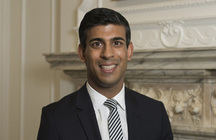
Below is the text of the Budget Speech made by Rishi Sunak in the House of Commons on 11 March 2020.
Madam Deputy Speaker,
I want to get straight to the issue most on everyone’s mind– coronavirus COVID19.
I know how worried people are.
Worried about their health, the health of their loved ones, their jobs, their income, their businesses, their financial security.
And I know they get even more worried when they turn on their TVs and hear talk of markets collapsing and recessions coming.
People want to know what’s happening, and what can be done to fix it.
What everyone needs to know is that we are doing everything we can to keep this country, and our people, healthy and financially secure.
We are clear that this is an issue above party.
We will do right by you and your family and I know I will have the support of the whole House as I say that.
This House has always stood ready to come together, put aside party politics, and act in the national interest.
We have done so before and I know we will do so again.
My RHF the PM, alongside officials and scientists, is leading the work on the public health response.
Today, I want to set out our economic response so we bring stability and security.
Let me say this: We will get through this – together.
The British people may be worried, but they are not daunted.
We will protect our country and our people.
We will rise to this challenge.
But let me also say:
Yes, this virus is the key challenge facing our country today. But it is not the only challenge.
We have just had an election where people voted for change.
Change in our economy, change in our public services, change in the cost of living, change in our economic geography.
This Budget delivers on that change.
Yes, as we deal with coronavirus it is a Budget that provides security today.
But it is also a plan for prosperity tomorrow.
It is a Budget that delivers on our promises to the British people.
It is a Budget of a Government that gets things done.
Madam Deputy Speaker,
Before I set out the details of our plan, let me first thank Members who’ve contributed to the discussions on how to respond to the coronavirus.
Members from both sides of this House.
Our economy is robust, our public finances are sound, our public services are well-prepared.
My RHF the Health Secretary is working around the clock to protect the public’s health.
And I will do whatever it takes to support the economy.
First, let me explain the nature of the economic challenge and my overall strategy.
The challenge is this:
There is likely to be a temporary disruption to our economy.
On the supply side, up to a fifth of the working age population could need to be off work at any one time.
And business supply chains are being disrupted around the globe.
This combination of people being unable to work…
…and businesses being unable to access goods…
…will mean that for a period our productive capacity will shrink.
There will also be an impact on the demand side of the economy, through a reduction in consumer spending.
The combination of those effects will have a significant impact on the UK economy.
But it will be temporary.
People will return to work.
Supply chains will return to normal.
Life will return to normal.
For a period, it’s going to be tough.
But I’m confident that our economic performance will recover.
So given this analysis of the situation, let me set out our strategy to deal with it.
We can’t avoid a fall in demand, because the primary driver of that reduction in consumption…
…the primary reason people are not spending as normal…
…is because they’re following Doctors’ orders to stay at home.
So, the right immediate policy response is to provide security and support for those who get sick or can’t work through funding our public services, and a strengthened safety net.
And on the supply side, the right response is to provide a bridge for businesses, to ensure that what is a temporary impact on our productive capacity does not become permanent.
In other words, our response will be temporary, timely and targeted.
This is the right response – and at the right time.
That response is clearly and closely coordinated with the Bank of England.
The Governor and I have been in constant communication about the evolving situation…
…and our responses have been carefully designed to be complementary and to have maximum impact, consistent with our independent responsibilities.
The Governor set out this morning the actions that the Bank will take to help UK businesses and households bridge across the likely economic disruption:
A 50 basis point reduction to interest rates, to support business and consumer confidence;
The introduction of an SME Term Funding Scheme, to help reinforce the transmission of the reduction in Bank Rate to the real economy;
And they have released the counter-cyclical buffer, to further support the ability of banks to supply credit.
The Government’s response will use fiscal action to support: public services, households and business.
Together, we are taking action that is coordinated, coherent and comprehensive.
Let me now set out our three-point plan.
First, whatever extra resources our NHS needs to cope with coronavirus – it will get.
So, whether its research for a vaccine, recruiting thousands of returning staff, or supporting our brilliant Doctors and Nurses…
…whether its millions of pounds or billions of pounds…
…whatever it needs, whatever it costs, we stand behind our NHS.
Second, during this immediate crisis, if people fall ill or can’t work, we’ll support their finances.
We’ll make sure that our safety net remains strong enough to fall back on.
My RHF the Prime Minister has already announced that Statutory Sick Pay will be paid from day one, rather than day four.
Today, with the assistance of My RHF, the Work and Pensions Secretary, I can go further.
Statutory sick pay will also be available for all those who are advised to self-isolate – even if they haven’t yet presented with symptoms.
And rather than having to go to the Doctors you will soon be able to obtain a sick note by contacting 111.
But of course, not everyone is eligible for Statutory Sick Pay.
There are millions of people working hard, who are self-employed or in the gig economy.
They will need our help too.
So to support them, during this period, we’ll make it quicker and easier to access benefits:
Those on Contributory Employment and Support Allowance will be able to claim from day 1 instead of day 8;
To make sure that time spent off work due to sickness is reflected in your benefits, I’m also temporarily removing the minimum income floor in Universal Credit;
And I’m relaxing the requirement for anyone to physically attend a jobcentre; everything can be done by phone or online.
Taken together, these measures on ESA and Universal Credit, provide a boost of almost £0.5bn to our welfare system.
To further support our people, I am also creating a £500m Hardship Fund, distributed to Local Authorities…
…who will be able to use that fund to directly support vulnerable people in their local area.
So, in total, that’s a £1bn commitment to support the financial security of our people.
But, Madam Deputy Speaker, the best way to support people is to protect their jobs.
And we do that by supporting our businesses – the third part of our plan.
The measures I’ve announced today on Statutory Sick Pay are crucial to support those who need to take time off work – but that cost would be borne by business.
And if we expect 20% of the workforce to be unable to work at any one time, the cumulative cost would hit our small and medium sized businesses hard.
So, in recognition of these exceptional circumstances, today I am taking a significant step.
For businesses with fewer than 250 employees…
…I have decided that the cost of providing Statutory Sick Pay to any employee off work due to coronavirus…
…will, for up to 14 days, be refunded by the Government in full.
That could provide over £2bn for up to 2 million businesses.
This will significantly ease the burden on businesses, but we can do more.
I have asked HMRC to scale up the Time To Pay service, allowing businesses and the self-employed to defer tax payments over an agreed period of time.
Starting today, there will be a dedicated helpline with 2,000 staff standing ready to help.
Although Time to Pay is important, it will still be the case that some good, well-run businesses will face problems with their cash flow.
They may struggle to pay people’s salaries, pay their bills, or buy new stock.
They will need loans to get through this period.
So, today, I am announcing a new, temporary Coronavirus Business Interruption Loan Scheme.
Banks will offer loans of up to £1.2m to support small and medium sized businesses.
The government will offer a generous guarantee on those loans, covering up to 80% of losses, with no fees, so that banks can lend with confidence.
This will unlock up to £1bn of attractive working capital loans to support small businesses, with more as needed.
Taken together, I expect the combination of these measures to protect the vast majority of businesses through the worst of the crisis.
But I have two other measures that will use the tax system to support businesses through this.
Our manifesto promised that for shops, cinemas, restaurants, and music venues…
…with a rateable value of less than £51,000…
…we would increase their business rates Retail Discount to 50%.
Today I can go further, and take the exceptional step, for this coming year, of abolishing their business rates altogether.
But there are tens of thousands of other businesses in the leisure and hospitality sectors, currently not covered by this policy.
Museums, art galleries, and theatres;
Caravan parks and gyms;
Small hotels and B&Bs; sports clubs, night clubs; club houses, guest houses.
They would not benefit from today’s measure – but they could be some of the hardest-hit.
So for this year I have decided to extend the 100% retail discount to them as well.
That means any eligible retail, leisure or hospitality business with a rateable value below £51,000 will, over the next financial year, pay no business rates whatsoever.
That is a tax cut worth over £1bn, saving each business up to £25,000.
And it means, over the next twelve months, nearly half of all business properties in England will not pay a penny of business rates.
I’m also launching today a fundamental review, to be concluded at the Autumn Budget, into the long-term future of business rates.
But even with the temporary extension of the retail discount to the leisure and hospitality sectors…
…many of our smallest businesses already pay no business rates, so would not benefit from this policy.
So to support them to manage their fixed costs, I am going to go a step further.
I am providing, to any business currently eligible for the small business rates relief, a £3,000 cash grant per business.
This is a £2bn cash injection direct to 700,000 of our smallest businesses.
Let me summarise for the House the fiscal impact of our immediate response to coronavirus.
Taken together, the extraordinary measures I have set out today represent £7bn to support the self-employed, businesses and vulnerable people.
To support the NHS and other public services, I am also setting aside a £5bn emergency response fund – and will go further if necessary.
Those measures are on top of plans that I will set out later in this Budget, which provide an additional fiscal loosening of £18bn to support the economy this year.
That means I am announcing today, in total, a £30bn fiscal stimulus to support British people, British jobs and British businesses through this moment.
And, of course, if further action is needed as the situation evolves – I hope the whole House knows, I will not hesitate to act.
I believe this represents one of the most comprehensive economic responses of any government anywhere in the world, to date.
The Governor of the Bank of England and I are in close contact with our counterparts, around the world, in the G7 and the G20.
And to support the global response, I’m also making new funding of £150m available for the IMF’s relief efforts.
Madam Deputy Speaker,
Coronavirus will have a significant impact on our economy – but it will be temporary.
I will do whatever it takes to get our nation through it. I’m acting today with a multi-billion-pound commitment:
More money for our NHS.
More generous Sick Pay.
Faster access to benefits if you’re self-employed.
Extra local support for the most vulnerable.
Tax cuts, loans and grants for businesses to protect people’s jobs.
Comprehensive action, and if more action is needed, I will take it. And I know all Members of the House will want to give this plan their full support.
Madam Deputy Speaker,
Before I turn to the economic forecasts, I hope the House will join me in thanking the Office for Budget Responsibility – and Robert Chote, in particular.
After ten years, this is his last Budget in charge.
He’s led the OBR with dedication and integrity – and established that institution as one that is respected around the world.
Madam Deputy Speaker,
Let me now turn to the growth forecasts.
Since the OBR closed their forecast, it has become clear that the spread of coronavirus will have a significant impact on our economy in the coming quarters.
But given the nature of the shock is temporary, I still want to set out for the House the OBR’s judgement on the economy over the medium term.
Even before coronavirus hit, we were facing a slowing world economy.
There has been, across developed economies, including here in the UK a decade-long slowdown in productivity.
This, combined with the political uncertainty over the last three years…
…which affected business investment in particular…
…has led the OBR to downgrade our productivity over the forecast period…
…and to slightly reduce GDP growth, compared to the March 2019 forecast.
But while the world may slowdown, we will act here with a response that is brave and bold, taking decisions now for our future prosperity.
We are investing in world class infrastructure, and to lead the world in the industries and technologies of the future.
The central judgement I’m making today is to fund an additional £175bn over the next five years for our future prosperity.
The OBR have said that, as a direct result of the plans I’m announcing, growth over the next two years will be 0.5 percentage points higher than it otherwise would have been.
For the benefit of the House, the GDP forecast without fully accounting for the impact of coronavirus would have led to growth of 1.1% in 2020 and 1.8% in 2021, then 1.5%, 1.3%, and 1.4% in the following years.
And today the OBR have made an estimate they’ve never made before.
They have said, in their words, that today’s “large planned increase in public investment should boost potential output too”.
If future Governments have the same determination to continue our approach, the UK’s long-term productivity will increase by 2.5%.
The OBR have confidence in the long-term future of our economy – and so do I.
Madam Deputy Speaker,
More investment and higher growth mean more jobs and higher wages.
We already have more people working in our economy than ever before.
Women’s employment is at a record high.
And since 2010, full time weekly wages have grown faster in every region and nation of the UK than they have in London.
The OBR expect half a million more people will be in work by 2025.
Wages are expected to grow in real terms in every year of the forecast period.
The story of this government has been the story of a national jobs miracle.
And, Madam Deputy Speaker, given the last few weeks I’ve had, I’m all in favour of jobs miracles.
On inflation, the OBR forecast 1.4% this year, increasing to 1.8% next year and then, for the rest of the forecast period, remaining on or around target.
And I’m sure the whole House will join me in taking this opportunity to thank Mark Carney, the Governor of the Bank of England for his 7 years of dedicated public service.
We congratulate him on his new role as Finance Adviser for COP26.
And welcome his successor Andrew Bailey, who takes up his post on Monday.
[FISCAL STRATEGY]
Madam Deputy Speaker,
Let me turn now to the fiscal forecasts.
The economic impacts of coronavirus remind us of the importance of fiscal responsibility.
Our public finances are strong, with the deficit down from 10% in 2010 to less than 2% last year.
Our economy is well-prepared for the future and it is well-prepared because of 10 years of Conservative-led Governments and Conservative Chancellors.
But it’s important that we update our fiscal framework to remain at the leading edge of international best practice.
Our economic security depends on maintaining the following principles:
Low and stable inflation delivering price stability;
Fiscal sustainability;
And independent, effective institutions – like the Bank of England and the OBR.
These features of our framework will always be protected.
But there is a live global debate about what our low interest rate environment means for fiscal strategy…
…about the case for fiscal policy to play a more active role in stabilising the economy …
…and about the best ways to measure productivity-enhancing investment in the economy, such as human capital, or measuring value on the public balance sheet.
So I want to take time to consider these questions over the coming months…
…so that our fiscal framework allows us to make the right long-term decisions for our economic security and prosperity.
I will review the fiscal framework, consulting widely with a range of experts.
And will report back in the autumn, if I conclude that any changes are necessary,.
But at the same time, credibility comes as much from what we do as what we say.
We were elected on a manifesto that promised to meet a specific set of fiscal rules.
Today’s Budget is about delivering our promises.
That’s why, despite the speculation, today’s Budget…
…is delivered not just within the fiscal rules in our manifesto, but with room to spare.
And I’m setting the amount that government will spend for the rest of this Parliament within those rules as well.
Today the OBR report a current budget surplus in every one of the next five years.
And in the target year of 2022-23, we have fiscal space of nearly £12bn.
The OBR forecast that borrowing will increase slightly from 2.1% of GDP in 2019-20 to 2.4% in 2020-21 and 2.8% in 2021-22.
It falls to 2.5%, 2.4% and 2.2% in the following years.
And the OBR forecast that headline debt will be lower at the end of the Parliament than it is today, falling from 79.5% this year to 75.2% in 2024-25.
I’m sure the House will understand that given how urgently we’ve developed our economic response to the coronavirus…
…that package of measures have not yet been captured in the fiscal forecasts, and nor have the fiscal impacts of the Bank’s actions.
But the House will also note that the target year for our current budget fiscal rule is not until 2022-23.
So even within our current framework, I have the flexibility to act as required over the next two years.
Madam Deputy Speaker,
As we enter a period of challenge, we start from a position of strength.
The economy growing.
More jobs.
Higher wages.
Stable inflation.
Sound public finances.
We promised to manage our economy responsibly – we’re getting it done.
Madam Deputy Speaker,
This Budget responds, at scale, to the immediate threat of Coronavirus.
And it reports on an economy whose foundations are strong.
It is a Budget that provides for security today.
But let me now outline our Plan for Prosperity tomorrow.
This is the first Budget of a new decade.
The first in almost fifty years outside the European Union.
And the first of this new government.
At the election, we said we needed to be one nation.
While talent is evenly spread, opportunity is not – we need to fix that.
This is a Budget that will deliver on our promises to the British people.
And it is the Budget of a Government that gets things done.
We promised to get Brexit done, and we got it done.
We promised to let hard working families keep more of what they earn.
This Budget gets it done.
We promised to back our businesses to innovate, invest and trade.
This Budget gets it done.
We promised to invest in science and research.
This Budget gets it done.
We promised to deliver green growth and protect our environment.
This Budget gets it done.
We promised to level up, with new roads, railways, broadband and homes.
This Budget gets it done.
And, yes, we promised record funding for our NHS and public services.
This Budget gets it done.
This Government delivers on its promises and gets things done.
Madam Deputy Speaker,
Our plan for prosperity starts immediately by putting more money in people’s pockets.
It was a Conservative Government that in 2016 introduced the National Living Wage, giving Britain’s lowest paid workers the biggest pay rise in 20 years.
And in just three weeks’ time, around 2 million workers will see their wage rise again by 6.2% – for a full-time worker, that’s a pay rise of almost £1,000.
That is the biggest cash increase ever.
But we’ve promised to go further.
Today we’re publishing a new Remit for the independent Low Pay Commission.
They now have a formal target that, as long as economic conditions allow, by 2024 the National Living Wage will reach two-thirds of median earnings.
On current forecasts, that means a living wage of over £10.50 an hour.
We promised to end low pay – we’re getting it done.
And as people earn more – we’ll also cut taxes on their wages.
I am increasing, in just four weeks’ time, the National Insurance threshold from £8,632 to £9,500.
That’s a tax cut for 31 million people, saving a typical employee over £100.
And taken together, our changes to the National Living Wage, income tax, and now National Insurance…
…mean that someone working full time on the minimum wage will be more than £5,200 better off than in 2010.
The Conservatives are the real workers’ party.
I can also confirm, now we’ve left the EU, that I will abolish the tampon tax.
From January next year, there will be no VAT whatsoever on women’s sanitary products.
And I congratulate all the Members and RH Members who campaigned for this, including the former Member for Dewsbury, who led the charge.
Let me turn now to duties.
Scotch whisky is a crucial industry – and our largest food and drink export.
My Scottish Conservative colleagues, including My HF the Member for Moray, have highlighted to me the impact that the recent US tariffs are having.
We will continue to lobby the US government to remove this harmful tariff.
In the meantime, I’m announcing today £1m of support for promoting Scottish food and drink overseas and £10m of new R&D funding to help distilleries go green.
And to further support the industry I can also announce that this year the planned increase in spirits duty will be cancelled.
Madam Deputy Speaker,
Pubs are at the centre of community life.
But too many have closed over the last decade.
We’re already promised to introduce a business rates ‘pub discount’, of £1,000, for small pubs.
But I’ve heard calls from many Honourable and Right Honourable Members, including My HF the Member for Dudley South, that we need to do more…
…especially given the possible impact of coronavirus on pubs.
So today I can announce that, exceptionally, for this year, the business rates discount for pubs will not be £1,000 – it will be £5,000.
And I’m also pleased to announce that the planned rise in beer duty will also be cancelled.
And because of decisions I’ve taken elsewhere in the Budget, I am also freezing duties for cider and wine drinkers as well.
For only the second time in almost twenty years, that’s every single one of our alcohol duties frozen.
Madam Deputy Speaker,
I have heard representations that after nine years of being frozen, at a cost of £110bn to the taxpayer, we can no longer afford to freeze fuel duty.
I’m certainly mindful of the fiscal cost and the environmental impacts.
But I’m taking considerable steps in this Budget to incentivise cleaner forms of transport.
And many people still rely on their cars.
So I’m pleased to announce today that for another year fuel duty will remain frozen.
Compared to pre-2010 plans, that’s a saving of £1,200.
Madam Deputy Speaker,
Wages – up.
National insurance – cut.
The tampon tax – abolished.
Spirits duty – frozen.
Beer duty – frozen.
Wine and cider duty – frozen.
Fuel duty – frozen.
We promised to cut taxes and the cost of living – and we got it done.
[BUSINESS]
Madam Deputy Speaker,
As Conservatives, we know that to put more money in people’s pockets, we need a thriving private sector.
That is what drives growth, that is what creates jobs, that is what lifts living standards.
So the second part of our plan for prosperity is to unleash the power of business.
Businesses need support to start up, grow and export.
So today, I provide:
£130m of new funding to extend Start-up Loans;
£200m for the British Business Bank to invest in scale-ups;
Another £200m for life sciences;
More money for Growth Hubs;
21 cities with British Library business support;
£5bn of new export loans for businesses;
And dedicated trade envoys representing the North, the Midlands, Wales and the West of England in embassies around the world.
Madam Deputy Speaker, businesses also need a fair tax system.
We were elected on a manifesto that promised to review and reform Entrepreneurs’ Relief.
I’ve now completed that review – and here’s what we’re going to do.
Entrepreneurs’ relief is:
Expensive – at a cost of over £2bn a year.
Ineffective – with less than 1 in 10 claimants saying the relief has been an incentive to set up a business.
And unfair – with nearly three quarters of the cost going to just 5,000 individuals.
Just because it is called Entrepreneurs’ Relief doesn’t mean that it’s entrepreneurs who mainly benefit.
For all these reasons, I have heard representations that I should completely abolish it.
The Institute for Fiscal Studies have criticised it.
The Resolution Foundation called it “the UK’s worst tax break”.
I’m sympathetic to that argument.
But at the same time, we shouldn’t discourage those genuine entrepreneurs who do rely on the relief.
We need more risk-taking and creativity in this country, not less.
So I have decided not to fully abolish Entrepreneurs’ Relief today.
Instead, I will do what the Federation of Small Businesses called “a sensible reform” and reduce the lifetime limit from £10m to £1m.
80% of small business owners are unaffected by today’s changes.
Those reforms save £6bn over the next five years – and I’m giving most of that money straight back to business through three additional measures.
The Research and Development Expenditure credit will be increased from 12 to 13% – a tax cut worth £2,400 on a typical R&D claim.
The Structures and Buildings Allowance will be increased from 2 to 3%, giving an extra £100,000 of relief if you’re investing in a building worth £10m.
And, to cut taxes on employment, I will deliver our promise to increase the Employment Allowance by a third to £4,000.
That’s a tax cut this April for nearly half a million small businesses.
Another step towards the dynamic, low tax economy we want to see.
Madam Deputy Speaker – we promised to cut taxes on business – we’re getting it done.
Madam Deputy Speaker, to help our businesses lead the next generation of high productivity industries…
…we also need to invest now in the technologies of the future.
We are the country of Newton, Hodgkin and Turing – ours is a history filled with ideas, invention and discovery.
And it is truly a national history.
The first steam railway ran between Stockton and Darlington.
The first television was invented by a Scot.
A Welshman invented the first hydrogen fuel cell.
And Jocelyn Bell Burnell, born in Northern Ireland, discovered the first radio pulsars.
To compete and succeed over the next decade and beyond, we need to recapture that spirit.
So, the third part of our Plan for Prosperity is to invest in ideas.
Madam Deputy Speaker, in our manifesto we made a promise to double investment in research and development to £18bn.
I will not be doing this today.
Instead, I will increase investment in R&D to £22bn a year.
That is the fastest and the largest increase in R&D spend ever.
As a percentage of GDP, it will be the highest in nearly forty years – higher than the US, China, France and Japan.
And a major step towards our target of increasing public and private investment in R&D to 2.4% of GDP.
We won’t wait to get started – next year, funding will grow by 15%, the fastest year-on-year growth on record.
Detailed allocations of our new investment in ideas will be set out at the Spending Review.
But I can make some announcements today.
I’m investing £1.4bn in our world-leading science institute at Weybridge, where, as we speak, they’re working to analyse samples of Coronavirus.
To secure our leadership in the technologies of the future, I’m investing over £900m in nuclear fusion, space and electric vehicles.
And as we invest in ideas, we’re also changing the way we fund science in this country.
I can confirm that we will invest at least £800m in a new blues-skies funding agency here in the UK…
…modelled on the extraordinary ‘ARPA’ in the US.
And as we invest in ideas, we’re also changing where we fund science in this country.
Today, 50% of R&D funding goes to London, the East and the South East of England.
We’re investing £400m incremental funding into high quality research, with much of that funding going to brilliant universities around the country.
We promised to make this country one of the scientific and research centres of the world – we’re getting it done.
Madam Deputy Speaker,
There can be no lasting prosperity for our people, if we do not protect our planet.
So the fourth part of our Plan for Prosperity, is:
To create the high skill, high wage, low carbon jobs of the future.
To level up, with completely new industries in our regions and nations.
To raise our productivity and lift our quality of life even as we cut our emissions.
The Treasury’s Net Zero Review will set out the Government’s strategic choices ahead of COP26 later this year.
Today’s Budget takes the first steps.
First, we will increase taxes on pollution.
Electricity is now a cleaner energy form than gas – but our Climate Change Levy, paid by companies, taxes electricity at a higher rate.
So as another step towards equalising the rates and encouraging energy efficiency, from April 2022 I’m freezing the levy on electricity and raising it on gas.
I will support the most energy-intensive industries to transition to Net Zero, by extending the Climate Change Agreements scheme for a further two years.
To tackle the scourge of plastic waste, we will deliver our manifesto promise to introduce a new Plastics Packaging Tax.
From April 2022, we will charge manufacturers and importers £200 / tonne on packaging made of less than 30% recycled plastic.
That will increase the use of recycled plastic in packaging by 40% – equal to carbon savings of nearly 200,000 tonnes.
Let me now turn to Red Diesel.
The Red Diesel scheme allows selected users to pay duty of just over 11p per litre for diesel, compared to almost 58p per litre for everyone else.
But the sectors using red diesel are some of the biggest contributors to our air quality problem – emitting nearly 10% of the most noxious gases polluting the air of cities like London.
This is a tax relief on nearly 14 million tonnes of Carbon Dioxide every year…
…the same as the entire population of London and Greater Manchester taking a return flight to New York.
It’s been a £2.4bn tax break for pollution that’s also hindered the development of cleaner alternatives.
So I will abolish the tax relief for most sectors.
That’s the right thing to do – but I recognise it will be a big change for some industries.
So firstly, this change will not take effect for two years – giving businesses time to prepare.
Secondly, I have heard the concerns about agriculture, particularly from the NFU, and [rural colleagues] including My RHF the Member for Sherwood…
…so I have decided that agriculture will retain the relief.
I’ll also keep the relief for rail, for domestic heating, and there will be no impact on fishing.
We’ll consult over the summer with other sectors.
And thirdly, to help develop cleaner alternatives to red diesel and other fossil fuels, we will more than double R&D investment in the energy innovation programme to £1bn.
As well as taxing pollution – we will invest and cut taxes on clean transport.
We’re introducing a comprehensive package of tax and spend reforms to make it cheaper to buy zero or low emissions cars, vans, motorbikes and taxis;
We’re investing £300m in tackling nitrogen dioxide emissions in towns and cities across England;
And we’re investing £500m to support the rollout of new rapid charging hubs, so that drivers are never more than 30 miles away from being able to charge up their car.
Taken together, this Budget invests £1bn in green transport solutions.
Madam Deputy Speaker,
Many Members around this House will have seen the devastating impact of the recent floods on homes and businesses in their own constituencies…
…and particularly the HM for Barnsley East, my HFs the Members for Calder Valley, and Telford, and My RHF the Member for Ludlow.
I can announce today that I’m making £120m available immediately to repair defences damaged in the winter floods.
To support those areas that have been repeatedly flooded, I’m providing £200m of funding directly to local communities to build flood resilience.
And to protect people and over 300,000 properties, I’m doubling our investment in flood defences over the next six years to £5.2bn.
Madam Deputy Speaker,
We’re also supporting natural habitats like woodlands and peat bogs.
I can confirm today that to protect, restore and expand these wonderful habitats – and capture carbon – we will provide £640m for a new Nature for Climate Fund.
Over the next five years, we will plant around 30,000 hectares of trees – that’s a forest larger than Birmingham – and restore 35,000 hectares of peatland.
This Government intends to be the first in history to leave our natural environment in a better state than we found it.
Madam Deputy Speaker,
I can make one further announcement on green growth.
Carbon Capture and Storage is precisely the kind of exciting technology where Britain can lead the world over the next decade.
I can announce today that we will invest at least £800m to establish two or more new Carbon Capture and Storage clusters by 2030.
Once up and running, these clusters will store millions of tons of carbon dioxide that would otherwise be released into the atmosphere.
The new clusters will create up to 6,000 high skill, high wage, low carbon jobs in areas like Teesside, Humberside, Merseyside or St Fergus in Scotland.
It’s levelling up in action.
Madam Deputy Speaker – green jobs; better flood defences; cheaper electric vehicles; innovative new technologies.
We promised to protect our environment – we’re getting it done.
Madam Deputy Speaker,
We as a party know that talent is evenly spread in this country, but opportunity is not. We have to put that right.
We need to build the infrastructure that will lay the foundations for a new century of prosperity. We need to grab the opportunity to upgrade, to improve, to enhance, to level up.
That starts today with the next part of our plan – as we get Britain building.
Madam Deputy Speaker,
Over the next five years, we will invest more than £600bn pounds in our future prosperity.
Public net investment will, in real terms, be the highest it has been since 1955.
Take the average amount we’ve invested over the last forty years in real terms – we’re tripling it.
Capital budgets in 2024-25 alone will reach over £110bn.
I will set out the detailed capital allocations at the Spending Review – but I’m taking three major steps today.
First, we’re going to change the whole mindset of Government.
To make sure economic decision-making reflects the economic geography of the country…
…we’re reviewing the Treasury’s Green Book…
…we’ll have Treasury offices in Scotland, Wales and Northern Ireland…
…and I can announce today that we’re also opening a new economic campus in the North…
…with over 750 staff from the Treasury, and the departments for business, local government and trade.
And we won’t stop there – our ultimate ambition is to move 22,000 civil servants outside central London.
Second, because of this changed mindset, we’ll invest more in our nations, cities and towns.
Today’s Budget provides an extra £640m for the Scottish Government, £360m for the Welsh Government, and £210m for the Northern Ireland Executive.
I’m announcing £242m of funding for new City and Growth Deals, taking our investment in these deals to more than £2.7bn.
We’ve agreed today a new devolution deal in West Yorkshire, with a directly-elected Mayor for the region.
And to make sure that it isn’t just Londoners who benefit from the kind of long-term transport deal that helped TfL…
…I’m announcing today that the new West Yorkshire Mayor will, along with seven other Metro Mayors…
…get new, London-style funding settlements, worth £4.2bn.
These settlements are in addition to the Transforming Cities Fund, which will invest over a billion pounds in local transport in 12 further cities, including Stoke, Preston, Derby and Nottingham, and Southampton.
Third, we’re going to build broadband, railway, roads – if the country needs it, we will build it.
Today’s Budget provides £5bn to get gigabit-capable broadband into the hardest to reach places.
And £510m of new investment into the shared rural mobile phone network…
…which means that in the next five years 4G coverage will reach 95% of the country.
And let me thank My RHF the Culture Secretary, who will get this done.
We’re also going to build better railways:
With spades going in the ground on HS2…
…our commitment to fund the Manchester-Leeds leg of the Northern Powerhouse Rail…
… funding today for a new station at Cambridge South and the Midlands Rail Hub…
…Darlington station moving to the next stage of development and approval…
…and funding to make a dozen train stations more accessible.
And there’s more money for our roads too.
Today, I’m announcing the biggest ever investment in strategic roads and motorway – over £27bn of tarmac.
That will pay for work on over 20 connections to ports and airports, over 100 junctions, 4,000 miles of road.
I’m announcing new investment in local roads, alongside a new £2.5bn pothole fund – that’s £500m every single year; enough to fill, by the end of the Parliament, 50 million potholes.
The details of all the road schemes I’m funding will be published later today – and I thank my RHF the Transport Secretary for his efforts.
Our ambition is truly national.
The A417 in the South West.
The A428 in the East.
The A46 in the Midlands.
Unclogging Manchester’s arteries.
Freeing the traffic north of Newcastle.
And, something my North and Mid Wales colleagues will be particularly pleased to hear…
…we’re protecting beautiful villages in the Welsh Borders, as we finally build the Pant-Llanymynech bypass.
We promised to get Britain moving – and we’re getting it done.
And there’s one more road I want to mention.
It’s one of our most important regional arteries.
It is one of those totemic projects symbolising delay and obstruction.
Governments have been trying to fix it since the 1980s.
Every year, millions of cars crawl along it in traffic.
Ruining the backdrop to one of our most important historic landmarks.
To the many H & RHMs who have campaigned for this moment – I say this:
The A303 – this government’s going to get it done.
Madam Deputy Speaker,
Today we’ve announced the biggest programme of public investment ever.
£27bn for strategic roads this Parliament.
Funding to fill 50m potholes.
New railways and stations.
£5bn for broadband.
A new Mayor for West Yorkshire.
Investment in every region and nation of the United Kingdom.
We promised to get Britain building – this Budget is getting it done.
Madam Deputy Speaker,
Only by having a plan for prosperity will we grow the economy.
Only by having a growing economy can we invest in our public services.
And only by investing in our public services, the people’s priority, can we send a clear message to those who rely on them:
You are our priority.
Our public services are the one of the most important tools by which we, the government, can level up and spread opportunity…
…so that no matter who you are or where you were born, you’ll have every chance to succeed in our modern dynamic economy.
That starts with education.
We’ve already provided schools with a three-year settlement worth over £7 billion by 2022.
My RHF the Education Secretary is taking forward our plans to increase per pupil funding next year by an average of over 4%.
Today, I’m providing every region in the country with funding for specialist 16-19 maths schools…
…£25,000 per year, on average, for each secondary school to invest in arts activities…
…and £30m a year to improve PE teaching…
…along with £8m for the Football Foundation’s scheme to build new pitches for around 300,000 people to play on.
And to support families, I’m providing £2.5m to fund research into how best to integrate family services, including family hubs, championed by My HF the Member for Congleton.
Next, I’d like to take the opportunity to pay tribute to my predecessor and friend, the RH Member for Bromsgrove.
One of the issues he is most passionate about is levelling up further education.
At the Spending Round, he increased funding for 16-19 education by £400m.
Today I can secure his legacy, with £1.5bn of new capital over five years to dramatically improve the condition of the FE college estate.
My predecessor wanted to level up FE – Saj, we’re getting it done.
Madam Deputy Speaker, I have one final education announcement.
I’ve talked today about Britain being the country of scientists, inventors and engineers.
But we’re also the country of Shakespeare, Austen and Dahl.
Our greatest export to the world is our language.
Our greatest asset is the free exchange of ideas and debate.
And our greatest responsibility is the education of our people.
A world-class education will help the next generation to thrive.
Nothing could be more fundamental to that than reading.
And yet digital publications are subject to VAT.
That can’t be right.
So today I am abolishing the reading tax.
From 1st Dec, just in time for Christmas, books, newspapers, magazines or academic journals, however they are read, will have no VAT charge whatsoever.
There will be no VAT on historical fiction by Hilary Mantel, manuals and textbooks like “Gray’s Anatomy”, or, indeed, works of fantasy like John McDonnell’s “Economics for the Many”. The irony is, it sold so few, it is literally his own little-read book.
Madam Deputy Speaker,
Our second priority is to make sure people have affordable and safe housing.
Today I can make good our promise to extend the Affordable Homes Programme with a new, multi-year settlement of £12 billion.
This will be the largest cash investment in affordable housing in a decade.
To support Local Authorities to invest in their communities, I’m cutting interest rates on lending for social housing by 1 percentage point…
…making available more than £1bn of discounted loans for local infrastructure…
…and consulting on the future of the Public Works Loan Board.
I’m confirming nearly £1.1bn of allocations from the Housing Infrastructure Fund…
…to build nearly 70,000 new homes in high demand areas across the country…
…a new £400m Fund for ambitious Mayors like Andy Street in the West Midlands, to build on Brownfield sites…
…and tomorrow, my RHF the Housing Secretary will set out for the House comprehensive reforms to bring the planning system into the 21st century.
But the housing challenge is most acutely felt by those with no home at all.
So today I’m confirming nearly £650m of funding to help rough sleepers into permanent accommodation.
That will buy up to 6,000 new places for people to live…
…enable a step change in support services…
…and help us meet our promise to end rough sleeping in this Parliament.
And to fund those rough sleeping measures…
…I’m confirming today that our manifesto promise to introduce a new stamp duty surcharge for non-UK residents…
…will be introduced at a rate of 2% from April 2021.
Madam Deputy Speaker,
I have one further measure to announce on housing.
Two and a half years on, we’re still grappling with the tragic legacy of Grenfell.
Last year, we allocated £600m to remove unsafe Aluminium Composite Material (or ACM) from high rise residential buildings.
Today I go further.
Expert advice is clear that new public funding must concentrate on removing unsafe materials from high rise residential buildings.
So, today, I am creating a new Building Safety Fund worth £1 billion.
That is what the independent experts have called for.
That is what the Select Committee has called for.
That is even what the Opposition have called for.
That new fund will go beyond dealing with Aluminium Composite Material to make sure that all unsafe combustible cladding will be removed…
…from every private and social residential building above 18 metres high.
And My RHF the Housing Secretary will spearhead our efforts to make sure developers and building owners do their fair share as well.
Madam Deputy Speaker,
There is no more cherished public service than our NHS.
Whatever resources the NHS needs to deal with coronavirus – it will get.
We all benefit from a thriving health service – so it is right that we ask everyone to contribute.
Business benefits from our NHS.
So, as promised in our manifesto, the Corporation Tax rate will not be cut this year, but will remain at 19% – still the lowest rate in the G20.
Migrants benefit from our NHS.
And we all want them to do so – but it’s right that what people get out, they also put in.
There is a surcharge already, but it doesn’t properly reflect the benefits people receive.
So, as we promised in our manifesto, we are increasing the Immigration Health Surcharge to £624, with a discounted rate for children.
To raise further funds for the NHS, I’m announcing a package of measures today to clamp down on aggressive tax avoidance, evasion and non-compliance…
…including extra funding for HMRC to secure £4.4bn of additional revenue.
And those extra contributions allow me to take three further steps to support our health services.
First, mental health support can be critical for many people – and particularly for our veterans.
Thanks to the campaigning from My HF the Member for Wolverhampton South West, and My RHF the Member for Harwich and North Essex…
…I will be supporting veterans’ with mental health needs with a £10m donation to the Armed Forces Covenant Fund Trust…
…and I’m also confirming today that, to encourage employers to offer veterans work, we’ll introduce a new National Insurance relief.
Second, I’ve listened to concerns, from all sides of this House, that the pensions tax system is preventing Doctors from taking on more hours.
To significantly reduce the number of people that the tapered annual allowance affects…
…I’m increasing both taper thresholds by £90,000, removing anyone with income below £200,000.
Based on their vital work for the NHS, that will take around 98% of consultants and 96% of GPs out of the taper altogether.
At the same time, I’m reducing the minimum annual allowance to £4,000 – which will only impact those with incomes above £300,000.
This is a £2bn commitment that supports our hardworking Doctors.
Let me turn now to the overall funding settlement for the NHS.
We’ve already provided the NHS with a record funding increase.
£34bn over five years – the biggest cash increase in public services since the Second World War.
Today I can go further.
I can announce over £6bn of new funding in this Parliament to support the NHS.
That new money will deliver:
50,000 more nurses.
50 million more GP surgery appointments.
And work starting on 40 new hospitals.
And you heard that right, 40 new hospitals.
We promised to back our NHS – this Budget gets it done.
I have one last point to make about public services.
We have now left the EU.
We promised to get Brexit done, and we got it done.
We promised to regain control of the money we send to Brussels.
And for the first time ever, today’s OBR forecast shows that the billions of pounds we would have sent to the EU, we can now spend on our priorities.
Today, I’m launching the next Spending Review, to conclude in July, setting out detailed spending plans for the Parliament.
Let me set out for the House our new totals for spending on public services.
The OBR have said that today’s Budget will be the largest sustained fiscal boost for thirty years.
Next year, day-to-day departmental spending will grow at the fastest rate in fifteen years.
Over the spending review period, its set to grow at the fastest rate since 2004.
An average growth rate in real terms of 2.8% – twice as fast as the economy.
That means that by the end of the Parliament, day-to-day spending on public services will be £100 billion higher in cash terms than it is today.
More police – safer streets.
More nurses – better healthcare.
More teachers – better education.
Madam Deputy Speaker, the House now knows what the electorate already knows:
The Conservatives are the party of public services.
Madam Deputy Speaker,
We’re at the beginning of a new era in this country.
We have the freedom and the resources to decide our own future.
A future where we unleash the energy, inventiveness and creativity of all the British people.
And a future where we look outwards and are confident on the world stage.
That starts right now with our world-leading response to the coronavirus.
This is a Budget delivered in challenging times.
We will rise to this moment.
We will get through this together.
This Budget delivers security today.
But it also lays the foundations for prosperity tomorrow.
This is just the start.
Over the next few months we’ll tackle the big issues head on.
From our National Infrastructure Strategy…
…to social care…
…and further devolution.
This is the Budget of a Government that gets things done:
Creating jobs.
Cutting taxes.
Keeping the cost of living low.
Investing in our NHS.
Investing in our public services.
Investing in ideas.
Backing business.
Protecting our environment.
Building roads.
Building railways.
Building colleges.
Building houses.
Building our Union.
A Budget that delivers on our promises.
A People’s Budget from a People’s Government.
And I commend it to the House.