Blog

  • Paul Rose – 1978 Speech on Playground Safety

    Below is the text of the speech made by Paul Rose, the then Labour MP for Manchester Blackley, in the House of Commons on 21 March 1978.

    In past debates and at Question Time I have frequently expressed a concern, which I know is shared by many hon. Members, on the subject of industrial safety and, indeed, road safety. More recently there has been an upsurge of interest in the dangers associated with the rather over-publicised pastime of skateboarding and the need to provide proper ​ facilities away from traffic and other hazards.

    It is a curious fact, however, that the House has spent very little time considering the provision of leisure facilities in general and, more particularly, for the very young and even less time—if any time at all—upon the hazards associated with existing playgrounds provided for young people.

    I express my appreciation at the reversal by the Minister of State, Home Office of his original decision to end the grant to the organisation Fair Play for Children, which has done much valuable work in this area.

    Similarly, I welcome the initiative of the Minister with responsibility for sport and the Sports Council in promoting suitable recreational projects in inner city areas. I also endorse the Government’s view that grant aid ought to be given by the Sports Council to such projects with the emphasis upon priority for these deprived areas. I hope that the series of conferences in the regions being held by the Minister with responsibility for sport, and indeed other Ministers in the Department of the Environment, will bear fruit in alleviating the lack of facilities in these deprived areas. What troubles me, as a former chairman of the North-West Sports Council, is that in the past we have neglected the needs of the very young and that there is a paucity of research into the dangers associated with the equipment that is at present provided.

    In February the Department of the Environment announced to me, in reply to a Written Question, that the British Standards Institution is now proposing a new standard for play equipment as well as including advice on its maintenance, construction and installation. These are welcome advances, but they highlight the lack of attention previously accorded to the problems which afflict our concrete jungles and waste lands and the 150,000 accidents annually which require medical attention, which take place in the playgrounds which we currently provide in our towns, cities and rural areas.

    Large areas of waste space exist in our cities, not least in the central areas. Some are privately owned, some are publicly owned, and others belong to local authorities. Many can be converted into temporary or permanent play ​ spaces. Dual use of school facilities has long been advocated by sports councils all over the country—this is a delicate topic—but there are still many recalcitrant local authorities.

    There is scope under the job creation programme—a matter for my right hon. Friend the Secretary of State for Employment—for play leaders and supervisors. There is the advantage to the whole community of creating within those areas a sense of community, an easing of some of the racial and inter ethnic tensions which exist, and permitting an outlet for the energies of youngsters in a society where nearly half the crime today is committed by juveniles.

    Criminal statistics are published annually. Yet the Department of Health and Social Security does not consider it practicable to keep statistics on the numbers or, indeed, the types of injuries caused to children who suffer accidents in these playgrounds.

    There are no mandatory provisions for local authorities. The furthest the Government have gone is to issue guidance to local authorities on the provision of play equipment on housing estates, as well as advice about accident prevention. There is no means of enforcing any of this guidance, any more than there is any real Government initiative in using waste lands in towns and cities for projects involving playgrounds, or projects involving gardening, or for some of the more adventurous projects such as introducing farm animals into inner city play areas, or helping local groups or individuals to find and secure waste land for such projects. Many of these projects have proved to be self-financing.

    Adventure playgrounds very often have an entirely new concept of creative play, and they do not require the expensive equipment that is often provided in the older type of playground. They avoid many of the hazards associated with swings, slides, roundabouts and rocking horses. They need play leaders and participation by the community in the most advanced projects, but tonight I should like to concern myself primarily in the latter part of what I have to say with the question of safety. RoSPA and the Research Institute for Consumer Affairs have provided much of the useful data in an area where so little research ​ has been carried out. Indeed, it is astonishing how little attention has been paid to this subject among researchers and by this House.

    Clearly, the maintenance of playgrounds leaves a great deal to be desired. One has so many examples of playground surfaces littered with rusty metal, broken glass—only tonight I heard of one such example—old bricks, splintered wood on swings and see-saws, wobbly climbing frames and ladders, missing handrails, jagged metal and missing bolts on slides. Those are just a few things. One could go on and catalogue hundreds of the results of failure to maintain and supervise many of our conventional playgrounds.

    I know, for example, that in my own native Manchester supervision is left to the parkkeepers. They do an excellent job, but they have so many other duties that they cannot possibly pay attention to this matter in the way that is necessary. Supervision is one of the most important factors in cutting down risk—and this is one area in which I do not believe it is right to cut back on public expenditure—not least from vandalism and from the misuse of equipment.

    The greatest single cause of accidents, from the available studies that one can lay one’s hands on—and there are not many—is swings. The most serious accidents arise from falls on to hard surfaces from climbing frames or ladders, and it was always a matter of amazement to me, I think ever since I was a youngster playing on a playground myself, that if I fell I would fall on concrete and not on to a softer surface. Roundabouts and rocking horses with exposed mechanisms can lead to trapped limbs. Nevertheless, three-quarters of the serious accidents today involve head and face injuries, fractured skulls and concussion, and a recent study at University College Hospital shows that three-quarters of the youngsters admitted there fell on to hard surfaces, most commonly from a climbing frame.

    The British Medical Association Journal of 8th November 1975 did a remarkable study of 200 accidents. The mean average age of the youngsters who were involved was 6·3. Swings accounted for 61 of those 200 injuries, and 13 of ​ them were fractures. Climbing frames accounted for 54, including 14 fractures. These were the most serious accidents.

    Slides accounted for 39 accidents, including 14 fractures. Roundabouts accounted for 15 injuries, including six fractures. All the researches I have been able to do bear out this general pattern in relation to the type of accident.
    Above all, therefore, softer surfaces around equipment would eliminate a high proportion of that type of accident.

    Grass and sand are difficult to maintain, perhaps, but there are now many synthetic surfaces on the market. Rubber tiles, for example, can be fitted beneath climbing frames. They do not need to cover the whole playground. Impact-absorbing swing seats, rubber cushioning around the edges or simply rubber tyres can cut down a whole number of accidents where children run close behind a moving swing. The siting of the swing is particularly important. All that may sound obvious, but it is not done. Slides often involve the risk of a youngster falling to his death from 20ft. Yet all that needs to be done is to build them on mounds following the contours of the ground or on artificial embankments to ensure that there can be no serious falls.

    Moving equipment should be designed and installed so that fingers, arms or legs cannot be trapped between the stationary and the moving parts or between the moving parts and the ground.

    I was particularly interested in the graphic and horrific examples, which any factory inspector would be more familiar with in the industrial context, in the magazine Design. If the law lays down mandatory safeguards in respect of factories, it should do so in respect of children.

    One example was the six-year-old boy in Fife killed falling from a 20 ft.-high playground slide—about the height of the one I take my youngest child on. I nearly have a heart attack every time, but he seems to enjoy it.

    A girl was scarred for life by a piece of metal on a slide penetrating her leg from the knee to the top of her thigh. Another girl was scarred for life and knocked unconscious by a swing in Walthamstow.

    However, it is right to say that the GLC playgrounds are probably the ​ safest in the country, as there is permanent supervision and regular inspection. Elsewhere, however, too often the pattern is of ancient, rickety equipment, protruding, rusty nails, inadequate supervision, bad siting away from first aid equipment or a telephone, and virtually no inspection. The separation of equipment for older children from that provided for younger children, intelligent siting, barriers by swings and the exclusion of bicycles are all obvious safety factors which are too often ignored.
    Design concluded that the most important contribution to playground safety would be to raise the level of selection and overall supervision of playground equipment within local authorities. Too often this is just one more task for an overworked parkkeeper or grounds-man.

    Government guidance is necessary. I am grateful to my hon. Friend the Minister for what has been done in recent times. But I should like to see mandatory standards in design, manufacture, installation, maintenance and supervision of playground equipment. Children no longer work in factories or in mines, but they are entitled to the sort of protection afforded to those who do. They have no protection at all. It is time to attack obsolete equipment, to produce official statistics, and to take immediate action to remedy the dangers I have outlined, by the comparatively simple methods which I have sought to suggest.

    Of course, playgrounds prevent more serious dangers than the alternative of playing on the roads, railways or canals and other dangerous spots. I accept that there are dangers wherever children play. But there is a growing awareness of the problems I have raised. I believe that voluntary and official bodies must press for greater and safer provision.

    Children do not have votes, but their parents do. I hope that this debate will stimulate more parents, local authorities and voluntary organisations into taking a long, hard look at what I believe to be a neglected topic. I hope that they will try to instil some greater sense of urgency into Government action.

    We cannot leave safety to voluntary bodies or uneven patterns of concern. We ​ need positive, mandatory standards, and they should be linked to a more generous approach to the provision of new and more exciting facilities to provide broader horizons and space to breathe and develop for those children confined to an environment of tawdry tower blocks or, as is so often the case in the North of England, crumbling Coronation Streets in twilight areas of our cities and towns.

    I hope that my hon. Friend will be able to give a positive response to this appeal.

  • Clinton Davis – 1978 Statement on Tanker Amoco Cadiz

    Below is the text of the statement made by Clinton Davis, the then Under-Secretary of State for Trade, in the House of Commons on 20 March 1978.

    The “Amoco Cadiz”, an American-owned tanker registered in Liberia with a cargo of 223,000 tons of light Iranian and light Arabian crude oil, lost steering control on 16th March off Ushant. It was subsequently taken in tow by a tug, but the tow parted and the tanker drifted ashore on rocks late that night some three miles from Portsall on the North Britanny coast and about 90 miles from both the Lizard and the Channel Islands.

    As soon as it was clear on the morning of 17th March that there would be coastal pollution, we offered assistance to the French authorities and subsequently to the Channel Islands. We also sent to the scene of the casualty a pollution expert from Warren Springs Laboratory and a coastguard inspector to establish personal liaison with the French authorities. I have maintained close contact with them over the weekend through my Department’s emergency operations room which has been manned throughout.

    About half the cargo is thought to have spilled from the tanker, which broke in two on Friday, and the rocks and shallow water near the wreck make pumping out operations extremely difficult. There is heavy pollution on the North Brittany coast and this has spread south-west and north-east on the French side of the Channel. Yesterday evening we agreed to a French request to send five spraying vessels to deal with the pollution to the north-east of the wreck, thus providing some protection to the Channel Islands as well as to the French coast. Three of the vessels, to be accompanied by a naval frigate, are now in position, but there is a Force 8 wind, which will make spraying operations difficult.

    These vessels are being supplemented as necessary in consultation with the French authorities. Other vessels and aircraft are ​ at readiness at Plymouth, though there is no immediate threat to our coasts.

    I am sure the whole House will join me in expressing to the French authorities our profound concern and sympathy on the occurrence of this disaster, parallelled only in scale by the “Torrey Canyon” disaster 11 years ago. While the collaboration between our two Governments on Channel safety and anti-pollution measures is very close, I have made it clear that I should like to have an early meeting with my French opposite number to discuss all the lessons of this disaster.

    Mr. Parkinson

    Is the Minister aware that we join him in his expression of sympathy to the French authorities, and in particular to the people of Brittany whose fishermen and tourist industry may face a very bleak summer? May I also assure him that we welcome the Government’s decision to offer aid to the French Government?

    Is the Minister satisfied that proper arrangements have been made to protect the Channel Islands and the West Country coastline? Does he agree that it was ironic in the extreme that this terrible accident took place on the eve of the first World Maritime Day? Does not this accident confirm the importance of the work of IMCO in seeking to raise international shipping standards? Does it not further underline the need to improve arrangements for shipping safety in the Channel?

    Mr. Davis

    I am grateful to the hon. Gentleman for his remarks about the declaration of sympathy for the French authorities and for the people of Brittany, who have been afflicted by this disaster. On the subject of the Channel Islands and the West Country, I must inform the hon. Gentleman that we are doing everything possible to ensure that the maximum degree of protection is afforded to both areas.

    I think that it is perhaps a bitter irony that this disaster occurred on World Maritime Day, but whenever it happened it would have been a disaster. It underlines the need for international action through the United Nations international body that is responsible for maritime affairs. Although it is much too early to judge, there is some satisfaction to be derived from the fact that at the last IMCO conference on tanker safety and ​ pollution a consensus was reached about certain protections that should be afforded to the way in which tankers operate in future.

    The hon. Gentleman asked me whether there is anything more that we can do. I believe that we have maximised the effort that we can undertake. The Royal Navy will participate to the full.

    Mr. Prescott

    My hon. Friend has noted the comparison that may be made between this incident and the “Torrey Canyon” affair. We are fortunate that there has been no loss of seafarers’ lives on this occasion, but will he recognise that yet again we are faced with the failure of a flag of convenience country to observe international conventions? That is why my hon. Friend should be addressing his attention to calling all European nations to come together to enforce regional agreements and to ensure that the standards and competence of the crews of such vessels are up to the standards that we enforce in this country.

    Mr. Davis

    There is to be an IMCO conference in June and July to deal with international standards of certification for seafarers to ensure that we achieve a higher standard of competence in future. That is warmly welcomed by the United Kingdom.

    My hon. Friend should not expect me to answer the first part of his question. Obviously, there is bound to be an inquiry into this sad affair. It would be wrong of me to attempt to prejudge responsibility for the incident, which, of course, is bound to be a most difficult issue.

    Mr. Stephen Ross

    Is the Minister aware—I am sure he is—of the quite sickening effect that these continuing disasters are having on the populace in this country and throughout the world, as well as the sad effects on wildlife, which always suffer in vast numbers whenever there are oil slicks? Why is it that the United Kingdom still continues with the spraying of detergents and does not adopt the process of booms and skims that has been taken up by most countries throughout the rest of the world? Is the hon. Gentleman able to assure us that skims and booms will be available to protect Britain’s South Coast resorts? What is ​ happening about the pumping out of the remaining oil from the tanker?

    Mr. Davis

    With respect, I do not think that the hon. Gentleman has applied his mind properly to these issues. It must be understood that we do not rely merely upon detergents. Indeed, we have a reluctance to use detergents. We have to adapt to meet different circumstances. The fact is that booms and skimmers would not operate in the prevailing conditions.

    Mr. Stephen Ross

    How do we know that?

    Mr. Davis

    Booms and skimmers would not operate off the French waters at present. There is a Force 8 gale. There has been a profound research study into booms and skimmers, which is nearly completed. I hope that the results will be published shortly. That does not mean that in the interim booms and skimmers are not available. The fact is that they are.

    Mr. Norman Atkinson

    My hon. Friend has referred to the international conference on tanker safety. Does he agree that the time has come when the maritime nations of the world can no longer accept the situation where good marine and ship design is sacrificed for the sake of transport economics? Does he agree that this disaster demonstrates that single-screw, single-steering gear ship designs of this sort, with crude tonnages of the sort involved in this disaster, are totally inadequate, and that Governments should now insist upon the sort of tanker design that would eliminate the vulnerability that this ship in distress demonstrated yet again? Will my hon. Friend consider the recommendations that have been made by marine engineers over the years for changing ship design in that direction?

    Mr. Davis

    I am not an expert on ship design. It would be presumptuous of me to make declarations about what is and what is not the right thing to do in the circumstances. There are international requirements dealing with steering gears. It would be wrong to convey a different impression. My hon. Friend is once again inviting me to make a comment that could easily have the effect of ​ prejudging an inquiry that is bound to take place.

    Several Hon. Members rose—

    Mr. Speaker

    Order. I ask for briefer questions. This is the time not for arguing the case but for seeking information.

    Mr. Patrick McNair-Wilson

    Is the Minister aware that at Fawley I have the largest oil refinery in Britain, which obviously creates much local concern? Is the hon. Gentleman further aware that in the White Paper that was published after the “Torrey Canyon” report it was suggested that IMCO would look at the practice and law regarding these accidents? Will he tell the House what action was taken as a result of the meeting of IMCO after the “Torrey Canyon” report? Finally, does he agree that when ships are crippled in such a way as was the “Amoco Cadiz”, the vessel should be towed into deeper water, rather than brought ashore, until the emergency services have been properly alerted?

    Mr. Davis

    I am being asked for detailed information on what I think should have happened. I am not at liberty to make such comments. The hon. Gentleman should know that there have been many deliberations at IMCO on this and other matters affecting tanker safety and the safety of other vessels. IMCO has a good reputation among United Nations’ agencies in that regard. The real issue is not so much the resolutions, declarations or conventions that are made at IMCO as the will of nations to enforce them. There is not sufficient evidence of such will among a number of countries. I do not believe that the United Kingdom is among those countries.

    Mr. Faulds

    One sentence—does not this incident point up the Government’s wrong-headedness in opposing the separate bulkhead concept at the recent London conference?

    Mr. Davies

    One word—”No”.

    Mr. Maxwell-Hyslop

    Will the Minister try to persuade our partners in the EEC to set a date after which single-screw tankers will not be permitted within the territorial waters of any EEC country so that they do not lose directional stability when steering gears fail? Will he fix a date for that to take effect within United Kingdom territorial waters, irrespective of ​ whether there is agreement, so that avoidable hazards due to lack of steering may be put into the past? Is the hon. Gentleman aware that a multi-screw craft is able to steer even without its rudder?

    Mr. Davis

    I shall consider that matter, but I am bound to say that sometimes we have to differentiate between human error and the availability of proper facilities on the vessels. However effective those facilities may be, we are always subject to the element of human error.

    Mrs. Dunwoody

    Is my hon. Friend aware that it does not matter how many resolutions are passed, because, unless the United Kingdom leads a campaign against tax havens where standards of safety are not maintained, we shall not have any protection from these accidents?

    Mr. Davis

    I am aware that the vessels of some flags of convenience countries have a bad safety record. I repeat that if I were to condemn this Liberian vessel merely because of that, it would be grossly unfair in advance of an inquiry.

    Mr. Wiggin

    Will the Minister confirm that all requests from the Channel Islands are being fulfilled and that equal priority will be given to them as if the mainland were affected? Will Britain assist to break up the slick even though it may be in international waters?

    Mr. Davis

    The answer to those questions is “Yes”. We are providing additional assistance today at the specific request of the Channel Islands to provide them with concentrates if they are needed.

    Regarding operations in international waters, we have in practice carried out our obligations to our partners, the French, in that regard. We have every intention of doing so in future should another calamity of this kind take place.

    Mr. Adley

    Is it not disgraceful that international oil companies should be allowed to cut corners literally by sailing within two miles of coastlines, be they in Brittany or elsewhere, to save half-an-hour or an hour’s sailing time with the appalling risks paid for not by the oil companies but by the communities concerned when things go wrong? Will the Minister set his mind urgently to reaching agreement with the French that these oil tankers should stay 12 miles offshore other than at times when they are coming into and going out of harbour?

    Referring to the point made by the hon. Member for the Isle of Wight (Mr. Ross), is it not also disgraceful that the oil companies should be the main manufacturers of the detergents which they sell at considerable profit after having caused the mess by allowing spills to take place?

    Finally, dealing with the Warren Spring Laboratory, will the Minister look at the answer that was given to me after the “Urquiola” affair in May 1976, that

    “Offshore trials have been planned and will be undertaken in the near future”

    on international oil recovery equipment? These trials, two years later, have still not taken place.

    Mr. Davis

    The hon. Gentleman knows that there has to be a scientific assessment of these matters, and that takes time. I have already indicated, notwithstanding his exasperation, that the research is very nearly completed.

    As for his taking up of Mr. Chirac’s suggestion—

    Mr. Adley

    It is not my suggestion.

    Mr. Davis

    I know that Mr. Chirac is waiting on every word from the hon. Gentleman. We must have regard to the fact that it would be difficult for tankers to remain 12 miles offshore when going through the Dover Straits.

  • Denzil Davies – 1978 Speech on the Economic Policies of the European Community

    Below is the text of the speech made by Denzil Davies, the then Minister of State at the Treasury, in the House of Commons on 16 March 1978.

    I beg to move,

    That this House takes note of EEC Commission Documents Nos. COM (77) 620 final, R/2355/77 and R/415/78 on Economic and Monetary Union and Co-ordination of National Economic Policies.

    These three documents contain proposals by the Commission to try to achieve a better and more balanced overall economic performance by the member States of the Community in the next few years. The document on the prospect of economic and monetary union, COM(77)620 final, outlines a five-year programme covering four main areas, convergence of economic policies, the completion of a common market, and structural and social policies. The communication on improved co-ordination, R/2355/77 covering COM(77)433 final, discusses a number of practical steps that member States might take to that end. The economic and monetary programme, R/415/78 covering COM(78)52 final, contains specific proposals for action this year.

    Before referring to the content of the documents perhaps I may put them in an appropriate context with a brief account of how they are being considered in Brussels. Last December, the European Council took note of the document on prospects for economic and monetary union but agreed to await the advice of Finance Ministers before it attempted to form a view. All three documents are currently being subjected to a detailed examination by the specialist economic and monetary committees that advise the Finance Councils, and by the Committee of Central Bank Governors. Finance Ministers are expected to begin discussion of them shortly on the basis of reports from these Committees. The present debate will enable the views of Members to be taken into account at ministerial level, prior to further discussion at the European Council.

    It may help the House if I outline briefly the background and scope of the present initiative by the Commission which is embodied in these documents. It is convenient to take as a starting point ​ the Summit meeting of the original Six members which announced at the Hague in 1969 that plans would be worked out

    “with a view to the creation of an economic and monetary union “.

    From this beginning came the report of the Prime Minister and Finance Minister of Luxembourg, with its concept of a Community proceeding rapidly to a fully fledged economic and monetary union in a few years. In accepting this initiative in 1971 the European Council committed itself to making the Community a single economy by 1980, with, in effect, a single currency and a single authority for domestic and external monetary management.

    The sequel to this undertaking is well known. Some of the first stage of the Werner scenario—notably the system of maintaining EEC currencies within certain margins, known as the snake—was implemented, though even this was not effective for the whole of the Community for more than a few months. The 1975 White Paper on renegotiation stated that

    “events have shown that the programme of movement towards full EMU by 1980 … was over-ambitious and unattainable.”

    Let me assure hon. Members, especially my hon. Friends that the objective of EMU has not been formally abandoned, but all member States accept that it has become what might be described as a more distant goal.

    The Community countries had been forced to focus their own efforts to overcome the problem which, in a sense, came to a head with the oil price crisis. But the emergence of inflation and recession, with poor confidence, poor investment and mounting unemployment, has increasingly led Member States to consider whether there can be benefit from concerted efforts and more economic convergence within the Community. I believe that there is now a much greater recognition that we should be talking about practical action in these areas, rather than having fruitless arguments about the unattainable.

    Our economies are becoming more interdependent. Nearly half the external trade of the Nine is carried on within the Community. As a result, we must cooperate with our partners in the EEC to ensure that we achieve faster growth and continuing control of inflation. This aim ​ of convergence of the economies of the Nine is the connecting thread that runs through all the documents.

    Convergence is rather a general term and it appears that there is no single definition. Some Governments tend to equate it mainly with greater equality of living standards achieved possibly through a transfer of resources within the Community. Others stress the need to devise complementary economic policies designed to achieve faster rates of growth for member States leading to lower levels of unemployment. Yet others think primarily in terms of greater price stability throughout the Community. These objectives of lower unemployment and greater price stability that all member countries share will be furthered if convergence in some of these senses is achieved.

    Document COM (77) 443 is the most important document on convergence. It makes a number of specific proposals designed to achieve more coherent and consistent economic policies. I shall return to these later.

    Document COM(77)620 discusses the prospect of economic and monetary union. Broadly, the Commission sees progress towards EMU as two-stage: first, persevering with and intensifying a gradual approach; and secondly, deciding on significant transfers of economic sovereignty. The second stage, however, the transfer of economic sovereignty, is seen as a longer-term goal, and the Commission recognises that it cannot be reached in the immediate future. So we are left with the gradual approach, a vital part of which, apparently, is economic convergence.

    Finally, we have the 1978 economic and monetary action programme—Document COM(78)52—which is the first year of a five-year action programme foreseeen in Document 620. Again, an important part of this action programme concerns economic convergence, and the document therefore reflects a number of the themes in Document 443.
    Document 443 argues for three things: first, the extension of the existing system of budgetary guidelines and their stricter supervision; secondly, the fixing of monetary guidelines for each member State; and, thirdly, developing consultations on ​ exchange rate trends and establishing exchange rate guidelines.

    Mr. Neil Marten (Banbury)

    Will the Minister explain a little more about how it is proposed to give guidelines on and more control of the money supply, which is what he was really talking about just now?

    Mr. Davies

    I think that the hon. Gentleman will appreciate that the documents are not particularly clear as to how this state of affairs is to be achieved, but I thought that I had better set out for the House the main proposals in the documents and then listen to hon. Members’ suggestions as to how they were to be achieved.

    Mr. Ian Wrigglesworth (Thornaby)

    I hesitate to suggest that the Minister, has not, perhaps, looked right through the documents, but if he looks a little more closely, he will see that there are proposals for meetings of central bank governors and co-ordination of monetary credit in the individual member count-tries. There is a fair amount of detail that we have not seen previously.

    Mr. Davies

    There are suggestions for a large number of meetings. Whether the suggestions will lead to practical decisions is another matter.

    The convergence proposals in Document 443 are, essentially, summarised in the part of Document 620 which deals with economic convergence as one aspect of the five-year action programme which, the Commission believes, will pave the way for economic and monetary union.

    Sir Anthony Meyer (Flint, West)

    Are we listening to a Front-Bench speech, or is the hon. Gentleman making a Back-Bench speech from the Front Bench?

    Mr. Davies

    It should be noted, however, that this does not in any way imply that economic and monetary union will take place in five years. In fact, no timetable is proposed and I imagine that many hon. Members will share my view that this is a very distant prospect.

    Additionally, Document 620 referred to the possibility of a return to greater integration of Community currencies, but it does not make any specific proposal on this and again does not set a rigid and inflexible timetable. The document also ​ suggests that an objective over the five-year period should be an increase in the financial resources available to the Community. These refer specifically to regional policy, social policy, industrial policy and energy policy.

    The two other main areas that the document covers are the completion of a single market and structural and social change. The completion of the single market covers such issues as tax harmonisation and freedom for internal capital movements as well as full exercise of the right of establishment. The suggestions on structural and social change cover the Commission’s intentions for Community action in industrial policy, public investment and social policy.

    It is the objective of each of the five one-year programmes to make specific proposals fitting in with the overall strategy of Document 620. This is what COM(78)52 sets out to do. It therefore has sections on convergence of the economies, the single market, structural policies and social policy. With the exception of the first section, on convergence, the Commission’s document is basically a list of Community proposals, which in some cases have been on the table for many years and which the Commission would like the Council to agree in the course of 1978.

    The section on convergence works through a similar analysis of the reasons why the European economies have in fact diverged and suggests ways in which greater convergence might be promoted. To some extent these represent a development on the Commission’s thought in Document 443. For example, Document 443 calls for the extension of budgetary guidelines to the whole of the public sector. Recognising, as a result of discussion on this point, that this would be premature, Document 52 merely suggests some further work on qualitative or quantitative data as the first stage in extending the scope of these budgetary guidelines.

    Following the discussion at the European Council of 6th December, Documents 620 and 443 were remitted for study by the various specialist economic and financial committees of the Community, and the convergence section of Document 52 has similarly been remitted. The rest of Document 52 has been remitted to the Committee of Permanent ​ Representatives. The attitude of the Government will be determined in the light of these studies and the views of Members.

    Naturally, there is scope for considerable debate within the Community about the detail of some of the proposals. We and some of our Community colleagues have, for example, indicated that too much weight should not be put on the specific convergence of intermediate objectives such as monetary or fiscal or exchange rate policy. The important thing is for these all to be seen to be fully consistent with the overall objectives of the Community’s economic policy. The discussions in the specialist economic committees so far show that this broad approach has a good deal of support. Member Governments of the Community are also thinking on these lines. My right hon. Friend the Chancellor took part in a wide-ranging debate at the Finance Council on 20th February, where the clear objective was to see how far co-ordinated action could usefully stimulate growth throughout Europe as part of the search for solutions which need to be on a world-wide scale.

    I am, of course, aware that there are within the House differing views about the role that the EEC should play in these matters. I can only reiterate what my right hon. Friend the Prime Minister told the House on 7th December:

    “Let us see how this new system can be of benefit to the United Kingdom in its recession as well as to Europe”.—[Official Report, 7th December 1977; Vol. 940, c. 1395.]

    Certainly, whatever our views about economic and monetary union, or about the EEC itself, there can be little doubt that action to stimulate growth at a Community level in the recession carries with it the prospect of greater effectiveness than action by individual Governments.

    One solid achievement over the last year or so has been the agreement reached on the need for a new aid to help the relief of unemployment amongst the young. With the active participation of the trade union and employer organisations, studies are taking place on, among others, the employment effects of investment, and of work sharing. Work sharing, as the TUC recognises, is an area where unilateral moves by an individual country could undermine that country’s ​ competitiveness. I am therefore pleased that this is an aspect of economic convergence which is due to be examined in the action programme for 1978.

    Again, the European Council last December recognised that solutions to the structural problems which are common to some industries in all member States must increasingly be sought at Community level. This is particularly true of the iron and steel, textile and ship building industries. There are other spheres where a concerted response may pay dividends. Multinational corporations pose special problems. It is in no one’s interest that they should seek to bid up investment aids by playing one country off against another. EEC ceilings on the amount of regional assistance that can be offered to such a project have an important part to play, while the different national systems of regional aids can take account of special national problems.

    These are some of the positive ways in which the Community can help. We should not allow ourselves to be directed by irrelevant arguments about the unattainable. I firmly believe it is in our best interests, as well as those of the Community, that working together we seek common answers to the serious economic problems facing us. Provided we are vigilant about our national interests, I believe that we can shape the Community policies outlined in these documents to serve the interests of all the Community’s members.

  • Roger Moate – 1978 Speech on Swale Hospital

    Below is the text of the speech made by Roger Moate, the then Conservative MP for Faversham, in the House of Commons on 15 March 1978.

    My object in seeking this Adjournment debate is specifically to draw attention to the need for a new general hospital in ​ the Swale area. I emphasise that this is the ultimate target. If we could gain acceptance for that, by implication there would be acceptance for all the other elements in the long-term capital programme for hospital development needed in the Medway health district. That district includes much of the Swale area.

    Essentially, what I am trying to do is to see whether we can get a commitment to a sustained programme of major capital investment in the Medway health district to cover the next 15 to 20 years. I understand that such a commitment has not been unusual elsewhere nationally, and particularly in the case of teaching hospital development programmes. Just such a programme has been set out in the district plan of the Medway health district, published in September 1977. I understand that this plan has been endorsed by the Kent health authority, and I hope that it will be approved by the region and the Government.

    The background to the plan is one of serious deprivation in terms of hospital facilities in the Medway district. I do not think that there is any dispute about the facts. The case has been put strongly in Adjournment debates raised by the ​ hon. Member for Rochester and Chatham (Mr. Bean) and more recently by the hon. Member for Gravesend (Mr. Oven-den). The case has been pressed frequently and tirelessly by my hon. Friend the Member for Gillingham (Mr. Burden), who is hoping to catch your eye later, Mr. Deputy Speaker. This emphasises very much the fact that this is in no way a party political matter. Its history spans many previous Governments, and I suspect that before it is solved many future Governments will be involved.

    The debates we have had recently have concentrated largely on the serious shortage of revenue available to Medway health district for the maintenance of our existing services. On 3rd March the Minister of State acknowledged that this year only £78 is being spent per person in Kent compared with £108 in Greenwich and Bexley and £122 in Lambeth, Southwark and Lewisham. Incidentally, the Minister of State said that he intends to visit the district later this year. May I say how welcome he will be? I hope that he will find time to visit us in the Swale part of the district and see how inadequate are our hospital facilities.

    There is no doubt that Kent as a whole is relatively under-funded. It is acknowledged that, within Kent, Medway is one of the most deprived districts. It is worth emphasising that, compared with the target allocations under the formula of the Resource Allocation Working Party, Medway is under-funded by £4 million, Maidstone by £5 million and Canterbury and Thanet—which includes part of the Swale district—by £6 million, which Kent as a whole is under-funded by £22·2 million.

    Comparatively, the teaching area of Lambeth and Lewisham is, in theory at least, over-funded by £23 million. I say “in theory” because in practice I am beginning to think that the RAWP formula is in many respects unworkable and should be reviewed. It might work well in a period of increasing resources, but I question whether it really can work in a period of restriction. Can it really work when poorer districts can be helped only by the closure of hospitals in other districts? I regret to say that in the short term we seem to have very little hope of any substantial improvement in the revenue situation.

    The extent of our deficiency in hospital services is quite dramatic. According to Government standards, we should have over 1,900 hospital beds. We have about 1,000. That is a shortage of 900 beds. Looking at the figures for the average daily bed provision per thousand population, we find that Medway is right at the dismal bottom of the league table, both for Kent and the South-East Region, and we are way behind the Department’s own recommended guidelines. This means longer waiting lists and that many patients have to travel longer distances for treatment. It means that in our area we face acute shortages in geriatric and maternity services and in acute surgery and psychiatric services.

    Looking at the provision of capital funds, we see that the region comes out badly. Apart from massive investment such as £45 million for St. Thomas’s Hospital and Guy’s Hospital alone, the region has regularly had the lowest share of capital per head of population of all the regions in the country. This year the figure is £3·3 per head, compared with £9·2 per head in the best region. No new hospital has been completed in the South-East Thames Region since the start of the National Health Service in 1948, with the exception of Greenwich Hospital.

    How is this great gap in the Medway area to be filled, and what assurances can the Government give to the people of Medway that in future adequate hospitals will be available? A programme has been drawn up for Medway and for Swale. This programme includes a number of major hospital developments. It includes the long overdue expansion of the Medway Hospital to provide, among other services, for extra geriatric, psychiatric and acute surgical services. It includes the improvement of All Saints’ Hospital, with a first priority for the new special care baby unit. It includes the phased provision of a second major hospital, ultimately to have 500 beds, in the Swale area. As the plan puts it, the site acquisition for this “should be pursued immediately”.

    I emphasise that the intention to develop Medway Hospital to its full potential as an 800-bed district general hospital was agreed by the regional board in the 1960s. My hon. Friend the ​ Member for Gillingham knows all about this, because he has been involved in it for so long.

    Today we only have phase one, with 213 beds, and it is likely to be the mid-1980s before we see phase two completed, if we are lucky. Also, the idea of providing a second major hospital within the health district is not new. It was recognised and agreed by the former regional hospital board. The only change is that it is now the view that this second hospital should not be built on a site which would have been fairly close to the Medway Hospital but should be situated within the Swale area, to meet the needs of that expanding population. There is a strong case for this.

    The population of Medway itself has increased by 30 per cent in each of the last two decades, and the population of Swale has also expanded substantially. It is significant that there is an exceptionally high proportion of young people and that this is expected to increase the demand for hospital facilities certainly into the 1990s. Therefore, it makes sense to have a new hospital in Swale. We accept that this is something for the longer term, but there will be no hope of achieving it even for the next generation, let alone the present one, unless we earmark a site now for the hospital and take steps to secure it now.

    It is very difficult for the health authorities to make such a commitment when they are so desperately concerned to find enough revenue to maintain existing services, but it is our job to look ahead. This is where the Government can give the necessary backing to the region and to the district by supporting this capital programme.

    I think that the case for the Swale hospital has been made very effectively in the Medway plan for which we are seeking Government support. A plan has been agreed for the provision of a new 28-bed geriatric unit at the Keycol Hospital. There is a desperate shortage of in-patient geriatric services, and this unit is needed. There is no conflict there with the long-term idea of a proposed Swale hospital development. I do not know whether there is yet an indication that the money for the Keycol project will be made available, but I hope that it will be soon.

    Although we are talking about new hospital facilities, there is no fundamental belief that the answer to health care is simply to build bigger, better and more hospitals. That point has been made clearly and emphatically in the health district report, and the health care planning team emphasises that it sees the provision of in-patient services as being combined with the equally important aim of reducing the need for hospital care and treatment by developing community and primary care. But our case is that the existing provision of hospital facilities falls far below the minimum needed to provide adequate and decent hospital services for the people of the Medway and Swale area.

    Before allowing my hon. Friend the Member for Gillingham to make his contribution, I ought to say that, in emphasising the need for a new hospital and in making a plea for it by drawing attention to the inadequacy of our present services, I do not wish it to be thought that I am denigrating the staff in our present hospitals, who do a splendid job of work, and the many voluntary organisations which give so much of their time and effort to supporting the existing hospitals. Even if we get a new Swale hospital, when we get the expansion and improvement of the hospitals about which we are talking there will still probably be some sort of role in the National Health Service for many of those hospitals.

    Although the Minister may not be able to promise us the money, I hope that he will at least be able to promise a sympathetic look at the need in the Swale area for a new district general hospital.

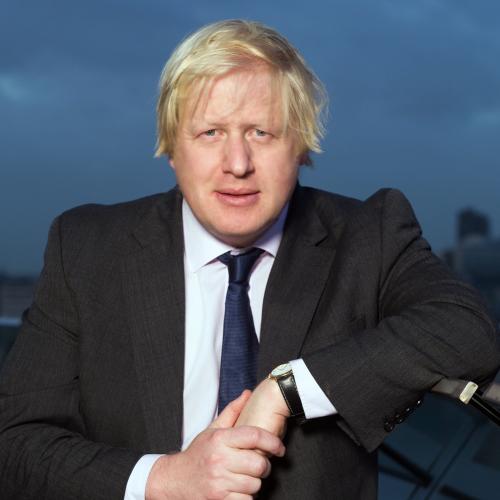
  • Boris Johnson – 2020 Statement on the Coronavirus 22/03/2020

    Boris Johnson – 2020 Statement on the Coronavirus 22/03/2020

    Below is the text of the statement made by Boris Johnson, the Prime Minister, on 22 March 2020.

    Good afternoon everyone

    Thank you for coming, and thank you to Robert Jenrick, the Communities Secretary, and Dr Jenny Harries, the Deputy Chief Medical Officer.

    I want again to thank everyone in the country today for the huge effort that we are collectively making.

    I want to thank the amazing workers in the NHS, everybody working in social care, in every sector, in food distribution, transport, you name it – absolutely everyone who is keeping this country going today.

    And I want to thank everyone who is being forced to do something differently today.

    Everyone who didn’t visit their mum for Mother’s Day but Facetimed them, Skyped them, rang them instead.

    Thank you for your restraint and for what you did.

    Everyone who was forced to close a pub or a restaurant or a gym or any other business that could have done fantastic businesses on a great day like this.

    Thank you for your sacrifice, I know how tough it must be.

    And I can tell you again that this government will be standing behind you – behind British business, behind British workers, employees, self-employed – throughout this crisis.

    And the reason we are taking these unprecedented steps to prop up businesses, support businesses and support our economy and these preventative measures is because we have to slow the spread of the disease and to save thousands of lives.

    Today we have come to the stage of our plan that I advertised at the outset, when we first set out the plan of the UK government.

    When we have to take special steps to protect the particularly vulnerable.

    I said the moment would come where we needed to shield those with serious conditions. There are probably about 1.5 million in all.

    And in a minute Robert Jenrick will set out the plan in detail.

    But this shielding will do more than any other single measure that we are setting out to save life. That is what we want to do.

    Also to reduce infection and to slow the spread of the disease.

    We have to do more to make sure that the existing measures that we are taking are having the effect that we want.

    So it is crucial that people understand tomorrow that the schools are closed.

    And tomorrow you should not send your child to school unless you have been identified as a key worker.

    And more generally in the view of the way people have responded over the last few days to the measures we have set out I want to say a bit more about how we interact outdoors.

    Of course I want people to be able to go to the parks and open spaces and to enjoy themselves – it is crucial for health and mental and physical wellbeing.

    But please follow the advice and don’t think that fresh air in itself automatically provides some immunity.

    You have to stay two metres apart; you have to follow the social distancing advice.

    And even if you think you are personally invulnerable, there are plenty of people you can infect and whose lives will then be put at risk.

    And I say this now – on Sunday evening – take this advice seriously, follow it, because it is absolutely crucial.

    And as I have said throughout this process we will keep the implementation of these measures under constant review and, yes of course, we will bring forward further measures if we think that is necessary.

    Always remember that in following this advice- and I know how difficult that is – that each and every one of us.

    You are doing your bit in following this advice to slow the spread of this disease.

    The more we collectively slow the spread, the more time we give the NHS to prepare, the more lives we will save, the faster we will get through this.

    And always remember – we will get through this, and we will beat it together.

    Next Robert Jenrick to outline the shielding measures.

  • Anthony Kershaw – 1978 Speech on Overseas Students

    Below is the text of the speech made by Anthony Kershaw, the then Conservative MP for Stroud, in the House of Commons on 13 March 1978.

    I wish to call the attention of the House to the treatment which overseas students in this country are receiving. I shall argue that the policy of Her Majesty’s Government towards them is unjust, even illegal, and that the consequences are hurtful to the students and harmful to the interests of the United Kingdom.

    In fact, it is difficult to know what the policy of Her Majesty’s Government is, because they have not at any time spelt out the basis of their approach. In 1976, the Secretary of State announced various increases in fees, the result of which is that overseas undergraduates pay £650 compared with £500 for home students, and graduates £850 compared with £750 for home graduates.

    However, in November 1976 the Secretary of State said that it was her intention, in due course, to remove the fee differential. Even if this is a rather a hollow promise, because fee levels effectively apply almost solely to overseas students since the vast majority of home students have their fees paid by public funds, nothing has yet been done towards fulfilling that promise. The Minister of State last July was only able to say that increases for the coming year would be made to take account of inflation.

    We have had inspired Press leaks which indicate that future policy will be towards positive discrimination in which rich students from richer countries will be charged very much higher fees, calculated to produce £120 million in a year, which will be used to subsidise poor students from poorer countries. I ask how it will be possible to determine the real income of students, how it will be possible to make it compatible with the free entry to universities of students other than those nominated by their home Governments. That is something I cannot understand.

    How are the countries to be nominated? As someone pertinently asked, are we now to refuse education investment into the United Kingdom from the ​ United States in projects such as those from the Brookings Institute?

    How do we stand with regard to the EEC? Are we to continue to charge high fees and to keep on raising them against other countries—against countries such as Germany and France, who receive a far larger number of British students than we take from them and who charge nothing or almost nothing? If those countries retaliate, what will be the effect on our students wishing to go abroad? Has that been considered?

    Is the conduct of the Government in this regard compatible with membership of the EEC? The only thing that the Government have done to mitigate hardship is to replace the widely used overseas students fees award scheme with the fee support schemes for postgraduates only. This has proved totally inadequate. The burden of easing hardship has been shuffled off on to local authorities, who are inappropriate for the job, and upon universities and polytechnics, who have struggled to help but without the slightest assistance from Government, except the so-called £1 million divided between universities and the State sector, which was not additional real money but was what would otherwise have been cut. What is certain is that the Government wish to limit the number of overseas students.

    The public expenditure White Paper of January 1978 shows the decline in the number of overseas students anticipated, from 52,000 this year to 44,000 in 1981–82, in higher educational establishments, and from 28,000 to 22,000 in non-advanced institutions. Why have these figures not been made public by the Department responsible and justified by argument? Why do we learn of them from a Treasury table? I shall tell the Minister why this is so. These instructions about quotas come from the notorious and largely incomprehensible Circular 8/77. This circular not only imposes quotas but authorises differential tuition fees, local education hostel charges and admission charges. It encourages reclassification of certain categories of immigrant students so that they may be charged higher fees. The circular apparently includes in the quota students who are wholly paid for by their own Government, imposing no charges ​ on the British taxpayer and bringing in investment earnings.

    For example, 1,500 Nigerian students are due here in September, bringing in £7 million a year. But they are to be part of the quota, apparently, a quota presumably designed to limit our costs. In fact, they are a profit.

    The reason why the Department of Education and Science will not explain its circular and give guidance to LEAs and others is that, paradoxically, it acts not in the name of common sense but for fear of offending against the Government’s Race Relations Act, which was designed to prevent, not promote, discrimination.

    I call upon Her Majesty’s Government, who so recently worked themselves up into a phoney lather about immigration and race, to withdraw Circular 8/77, which I say is morally and legally offensive. There sit the racists tonight—in the Department of Education and Science.

    The harassment of overseas students is becoming a scandal. Their hours of attendance are checked. They are forbidden to apply for continuation courses until their examination results are through, by which time they may well be too late to apply for the next course.

    The Inner London Education Authority, that creature of this Government, fined two London polytechnics £50,000 for accidentally exceeding their quota of overseas students, though I understand that one has now been let off paying that amount. Referring to this shameful incident and to the whole matter, The Times Higher Education Supplement wrote:

    “Either they’

    —that is, the polytechnics—

    “must work an unworkable racist quota, and thus perhaps fall foul of the law. Or they can refuse to work it and be fined.”

    In short, overseas students in this country are being treated not as honoured guests but shabbily, as if every one of them was a potential illegal immigrant. This curmudgeonly attitude is directly contrary to the short-term and long-term interests of the United Kingdom.

    In the long term, the kind of reception and treatment which students receive here will have an important influence on those who, in later years, will be prominent in the counsels of their countries. Our industrial, cultural and political influence in ​ the world will to some extent depend upon what they have thought of us.

    In the short term, the Treasury calculations of the costs of overseas students are manifest nonsense. These calculations appear to take no account of the money which students spend while they are here. The calculations depend upon the total costs of an institution being divided by the number of students to give a cost per head, ignoring that the buildings, the professors and the other overheads would still be there even if not one overseas student came. It is very arguable that, far from there being an expense, there is a net profit from overseas students.

    Certainly, the calculations take no account whatever of the academic value to us, especially of post-graduates. Great institutions such as the London School of Economics would be lamed and crippled if their numbers of foreign students were drastically curtailed. It is not only a matter of academic benefits. The material benefits of post-graduate research can be demonstrated to have brought much benefit to us, notably, perhaps, in medicine.

    No British student, so far as I have been able to ascertain, has been excluded from a course by too many foreigners. On the contrary—many courses from which British students take benefit could not be kept going without the foreign entry. But even if it were to happen that British students replaced foreign ones, that would bring not savings but extra expense, for we should be substituting subsidised British for fee-paying foreigners. The Government’s argument is economic nonsense, founded upon a false premise and wholly against the interests of this country.

    What is to be done? The first thing is to decide who in the end is responsible for policy. At least eight Departments, starting with the Department of Education and Science, the Foreign and Commonwealth Office, the Ministry of Overseas Development and the Home Office, have different and conflicting interests and responsibilities in this matter. Someone must be found to take overall charge if the drift is to be stopped.

    It is natural to look to the Secretary of State for Education and Science to do this, but she has been a great disappointment. When she came to office she was ​ widely regarded as a person in whom people of differing opinions could place confidence. When she leaves office, as shortly she will, she will be remembered as the best receiver of delegations in the business. Everyone goes away satisfied, but after a bit everyone notices that nothing happens.

    The Secretary of State gives the lie to the old saying

    “There is no smoke without fire”.

    With her, there is nothing but smoke. There is no fire of action, no flame of determination, and apparently no influence in the Cabinet. However, some Department must take the lead, whether the DES or another Department.

    My second suggestion is that, as there are so many conflicting influences, a commission of all those professional, academic and voluntary bodies directly interested, perhaps with the right to summon civil servants, should be set up to give advice. Such a body would provide a focal point where the interests of the universities, of educationists generally and perhaps also of this House and of the Government Departments concerned could be thrashed out. The Minister would benefit as a result.

    Certain it is that at present Government policy is obscure, unfair and contrary to the interests of this country.

  • Clinton Davis – 1978 Speech on Stansted Airport

    Below is the text of the speech made by Clinton Davis, the then Under-Secretary of State for Trade, in the House of Commons on 10 March 1978.

    The hon. Member for Saffron Walden (Mr. Haselhurst) has spoken eloquently about his fears concerning the future of Stansted Airport, but he has failed to give any proper recognition to the considerable effort the Government have deployed to develop sensible and realistic policies which take account of the views of those most concerned with airport development. I heard no word of that in his speech. He has attributed designs to the Government that I reject as being no part of our policy. I hope I shall be able to give him some reassurance on this point.

    As to a debate on the White Paper, I would certainly very much welcome that possibility, but the hon. Gentleman knows what the agenda of the House of Commons is before Easter. I do not have to remind him about that. With respect, that was rather a fruitless effort on his part, but if the Opposition feel as devotedly about it as he does, there is the opportunity of a Supply Day. I look forward to seeing whether the Opposition want to take advantage of that.

    The White Paper on airports policy is the result of unprecedentedly extensive consultations. We started the process in 1975, when we published the consultative document “Airport Strategy for Great Britain”, which sets out in the greatest detail the major issues involved in planning airport development for the future—the need for additional capacity in the London area, the problem of aircraft ​ noise, the implications for the environment, for surface transport and for employment.

    This was backed by an analysis or demand forecasts and by detailed supportive evidence on other technical matters. The Government’s intention was to lay the whole problem open to discussion and to involve all those concerned or affected by airport development in the policy-making process. In consequence of that, nearly 1,000 organisations and individuals contributed their views, and many took part in discussions—and in discussions with Ministers. It is from this thorough, painstaking, examination that the Government’s policy has emerged.

    The Government never expected that its conclusions would be universally accepted. This is just not possible when there are so many conflicting views and interests. What we have sought to do, and I think succeeded in doing—I think this is generally accepted, despite the hon. Gentleman’s assertion—is to strike a balance and adopt a sensible, flexible approach to airport development. We have acknowledged that our conclusions, particularly as regards the London area, are based on demand forecasts which are inherently uncertain. Who could have forecast the changing developments which took place between 1970 and the present day?

    The hon. Gentleman is inviting ms, in fact, to be more certain in my forecasting over the next 12 years. I cannot do that. But what we have undertaken to do is to keep these forecasts under constant review—another point that he failed to mention —and to lay the methodology of forecasting open to discussion, so that decisions about the future may be taken in full knowledge of the facts and of the uncertainties. I think that that is a particularly reasonable way of going about this matter. It involves open government in this area, and I should have thought that that would be welcome to the hon. Gentleman.

    The White Paper is concerned with the 1980s. With regard to the longer term, the Government have undertaken to continue to consult consumers of air services, amenity groups, local authorities and others about the provision of capacity ​ beyond 1990. There is no question of taking decisions about the longer term by stealth. Any further development must be subject to full and wide-ranging consultations, as I have said on a number of occasions. That is clearly stated in the Government’s policy.

    I visited Stansted on 13th February to discuss the White Paper with representatives of the various interests concerned. The hon. Gentleman was there. I invited him to attend my discussions. There was nothing furtive about it at all. He will know from his attendance that I totally rejected any suggestions that the Government have a ready-made solution and have already taken a decision to develop Stansted Airport or that there are any ineluctable development. I confirm to the House what I said to the people of Stansted.

    As explained in the White Paper, the problem we have to face in the London area is the shortage of airport capacity in relation to the expected growth in demand. The forecasts suggest that demand will range between 66 million and 89 million passengers a year by 1990—as the hon. Gentleman said—compared with a throughput of about 33 million in 1977. However, we have grounds for believing that the top end of the forecast range is too high.

    The hon. Gentleman asked me to say something about the methodology of the forecasts and the discussions that took place on the forecasting. There was the most careful consultation between the CAA and the BAA. There was also discussion with British Airways and British Caledonian. Although I cannot tell the House today what their present views about the forecasting may be, they are entitled to have their views. One has to channel those views through the machinery that we are proposing to set up. We see no reason for being tardy or for delaying the establishment of the machinery. We need to do that as rapidly as possible.

    Capacity at the four main London Airports—Heathrow, Gatwick, Stansted and Luton—will be close to 50 million passengers a year by the end of 1978 when existing development work at Gatwick and Heathrow will have been completed. This should be sufficient to meet demand during the early 1980s, provided that a better distribution of traffic can be achieved between the respective airports.

    Beyond that, the White Paper provides for expansion of capacity at the existing airports up to 1990; a fourth terminal at Heathrow, raising capacity to 38 million subject, of course, to the results of the public inquiry but no fifth terminal; a second terminal at Gatwick, raising the capacity from 16 million to 25 million, but no second runway—it is the view of the BAA that there is no need for a second runway—and smaller improvements at Stansted and Luton to enable these airports to handle 4 million and 5 million passengers a year respectively.

    The White Paper expressly rules out any further expansion at Heathrow, Gatwick and Luton, but a major expansion at Stansted remains a possibility in the longer term if demand continues to grow. But that stands alongside several other options.

    It is this which has led to the hon. Gentleman’s unease, because he would like a ceiling to be set on the expansion of Stansted and he believes—wrongly, as I said earlier—that the decision has already been taken to expand Stansted to an airport on a similar scale to Gatwick.

    Mr. Haselhurst rose—

    Mr. Davis

    I shall not give way because I have rather a lot to say. The developments I have described are all subject to the normal planning procedures and, as appropriate, to a public inquiry, as in the case of the fourth terminal at Heathrow. They would provide a total capacity of 72 million passengers a year at the London airports. We believe that this will be sufficient to accommodate demand up to 1990, depending on the outturn of traffic. As I said earlier, we intend to monitor demand very closely, and to improve our forecasting methods, in order to base longer-term decisions on more accurate data, and to avoid being tempted by costly and grandiose projects which could turn out to be white elephants, as I believe Maplin would most certainly have been.

    Some would have preferred the Government to commit more than £1,000 million of taxpayers’ money to the building of the first stage of Maplin, with all the necessary road and rail connections. But, ​ as a responsible Government, we examined the proposition in great detail, in the light of the demand forecasts, and rejected this solution emphatically at the time.

    The first stage of Maplin would have provided accommodation for 18 million passengers a year. But the proposals in the White Paper would provide the same level of passenger capacity at Gatwick, Stansted and Luton, at a cost of only £150 million. That is an important figure, an important difference. We believe that it is necessary, particularly in the light of current economic expectations, to continue to restrain public expenditure. We believe that that should be done in practice as well as in theory, although it is the theory which applies mostly to Opposition thinking.

    Because of the uncertainty of demand forecasts and of the massive costs involved in airport development, we have decided to adopt a step-by-step approach to the provision of airport capacity. That means that we shall take the necessary decisions at the appropriate time.

    As regards Stansted, I am only too well aware of the opposition of local amenity groups to any expansion whatsoever. I was told, when I went to Stansted, that the tom-toms of the natives were beating steadily. There are other views which have been put to me. As a Government we have to take a broad view and seek to balance the conflicting interests, taking a less jaundiced view of what the local interests are than some would have us take.

    The aim of our strategy is to meet the expected growth in demand. There is no escaping the fact that 80 per cent, of all passengers using London airports have origins and destinations in the South-East. While the development of tourism in the region and the rationalisation of regional airport capacity should help to divert traffic from London in the longer term, it would be unrealistic to try to compel passengers to use airports remote from their homes or destinations. We have to face the fact that London airports will continue to bear most of the burden.

    My right hon. Friend announced on 5th April 1977 that charter traffic would be banned from Heathrow starting on ​ 1st April this year and that the Government and the British Airports Authority would pursue a policy of transferring scheduled traffic to Gatwick, with a view to sharing the load more evenly between these two major airports. We have already made some progress in that direction, and Gatwick is rapidly developing into a major international airport.

    Part of the Government’s policy, as outlined in the White Paper, is to concentrate short-haul charter traffic at Luton, and, over time, long-haul charter traffic at Stansted, which at present is grossly under-utilised, as the hon. Gentleman accepted.

    The aircraft noise situation at Stansted is less adverse than that of any other London airport. Moreover, the policy on night jet restrictions will ensure that noise disturbance at night is kept to a minimum, as traffic there develops. I believe that Stansted must play its role in helping to meet the demand during the 1980s. It would be quite inequitable to expect that other airports, which already handle considerable volumes of traffic, and the large number of people living in their vicinity, should accept a greater share to spare the Stansted area.

    With regard to the future, I want to make it clear again that the Government do not at present envisage the expansion of Stansted airport beyond a capacity of 4 million passengers a year. In the longer term, beyond 1990, there is likely to be a need for additional capacity in the London area, if demand continues to grow. With the increasing use of larger aircraft, this should not involve the construction of a massive four-runway airport, as envisaged in the earlier proposals for Stansted, Cublington, or Maplin, but a more modest solution. It is that which represents the difference in the parameters of thought between what I am saying and what the hon. Gentleman was seeking to stipulate.

    The White Paper sets out the three possibilities, to which he referred. We are prepared to consider these three possible solutions and the other options which might be proposed for meeting the demand. We shall shortly be discussing with local authorities and others ​ concerned the setting up of a formal structure to advise on longer-term policies.

    The Government have no preference for one solution over another. All of the options will be thoroughly examined before any decision is taken. We have given sufficient proof of our determination to continue the process of consultation which has worked well in the working out of the national airport strategy. Our intention now is to take the right decision at the right time.

    The hon. Member has poured scorn on some of the propositions in the White Paper. I think that he has been less than fair. He is characteristically a very fair Member, but I understand that his thinking must to some extent be subjective.

    There are obviously constituency interests which must impinge upon his consideration of these matters. I make no complaints about that. He is here, among other things, to defend his constituency interests. But what I want to establish quite clearly in this debate is that we have no intention of trying to ignore those constituency interests—of developing, as I have said, Stansted by stealth. That would be most unfair.

    The hon. Member sought to intervene earlier. I have virtually completed what I want to say. In fairness, I let him intervene now.

    Mr. Haselhurst

    I am very grateful to the Minister. It was a question of the constructive intent of the Government rather than the deliberate intent, and if their forecasts are wrong the worry is that the inevitable consequence will be a further expansion at Stansted and that that is being made necessary by the strategy.

    Mr. Davis

    I understand the hon. Member’s concern, but we have neither an express nor an implicit design to go beyond what we have said in this debate or in the White Paper. I want to be absolutely fair to the people living around Stansted and working around Stansted. They have a right to be consulted. They will be consulted. Also, of course, the local authorities in the whole of the London area have a vested interest in ensuring that the development within the London area is sensible and pays heed to ​ the various conflicting interests that apply.

  • Alan Haselhurst – 1978 Speech on Stansted Airport

    Below is the text of the speech made by Alan Haselhurst, the then Conservative MP for Saffron Walden, in the House of Commons on 10 March 1978.

    I am very grateful for the opportunity to discuss the future of Stansted Airport, in my constituency. Without being ungrateful to Lady Luck, who has allowed me this occasion, I think that we would be better off discussing the future of Stansted Airport in a wider debate on the White Paper on airports policy. It is regrettable that the Government have not found time before Easter for a debate, because consultations seem to be going on throughout the country on the implications of the White Paper without this House being consulted.

    In any criticisms that I may make of the White Paper, I do not imply any criticism of the existence of Stansted as an airport or its existence at a given capacity of operation. Certainly one can use words about the White Paper which can be misinterpreted as criticism of the use of the airport at all, so that should ​ be made clear. Such general criticism is not my intention.

    I believe that there would be fairly wide acceptance in my constituency and among the local authorities concerned if there were a known limit to the expansion of the usage of the airport. The absence of such a limit gives rise to fears and suspicions of the White Paper’s proposals.

    There are weaknesses and shortcomings in the White Paper; i which should be exposed to greater scrutiny. These have unfortunate implications in my constituency and for the area around. I am authorised by my hon. Friend the Member for Braintree (Mr. Newton) to say that he wishes to be entirely associated with my remarks.

    The White Paper gives forecasts to justify the degree of expansion proposed in the airports in the South-East. I must accept that it is notoriously difficult to forecast what the likely usage of airports will be over a period of 12, 15 or more years. It is clearly difficult, but it is the responsibility of government to try to take decisions which are sensible even if the calculations behind the decisions are necessarily complex.

    What is worrying is that there are precise provisions in the White Paper, namely, the statement that it will be sought to achieve a capacity in the South-East airports of 72 million passengers per annum up to 1990. The Government’s own forecasts in the White Paper at a low level show a passenger throughput of 65·9 million and at the high level a throughput of 89·4 million. Even at the midpoint of the two forecasts it seems that, given any kind of accuracy in the forecast, there will be an excess of 5·6 million passengers above the 72 million for which the Government are providing. That seems to be a fairly evidence weakness of the strategy set out in the document.

    If the forecasts on the high side prove to be the more accurate, there could be, on figures in the White Paper, an excess by 1990 of 17·4 million passengers wishing to use the South-East airports, although the capacity provided at that stage will be only 72 million.

    The question in the minds of many people, particularly many people in my constituency and in my local authority ​ areas, is: what is to happen to any excess over that for which provision is being made at this stage? It must also be said about the forecasts that figures are bandied about of a certain number of passengers being able to use a particular airport, but it will be accepted that it cannot necessarily be the case that a stated figure can always be put through a particular airport, simply because it is not ever possible to direct airlines so precisely that it will be possible to make up the figures to those which are stated in public documents.

    For example, I understand that there is a query whether, with a single-runway airport at Gatwick, it will be possible to achieve a throughput of 25 million passengers. Therefore, if that figure cannot be met it throws even further doubt on the White Paper’s figures.

    The major British airlines are more bullish in their forecasts about passengers than are the Government—witness the figures that they use in the White Paper. I must ask the Secretary of State to tell the House what he knows about the forecasts of British Airways and British Caledonian, and whether these suggest that the increase in passenger usage of our airports is starting to gather pace. There is a possibility that this will be the case. We are on the threshold of what seems to be a price war, and there were headlines in the papers about this matter only recently. I believe that it is likely that an increasing number of people will wish to travel—I suppose mainly for holiday purposes—and that will boost the number of people wishing to use our airports. There must be considerable doubts whether the forecasts given in the White Paper are adequate.

    Paragraph 104 of the White Paper states that

    “Even at the higher passenger forecast, these terminal developments”

    —that is, those proposed up to 1990—

    “should be sufficient to accommodate demand up and beyond the middle of the 1980s and quite possibly”—

    I emphasise the words “quite possibly”—

    “it could prove adequate up to 1990.”

    So it is only on the strength of a forecast which quite possibly may be right that we are invited to accept the strategy set out in the White Paper.

    The White Paper says that the capacity being provided may “quite possibly” cope with demand up to 1990, so one has to ask the hon. Gentleman whether it is not fair and reasonable to say that, on the other hand, quite possibly the capacity may be inadequate. That is certainly a question which has to be asked by any Member representing Saffron Walden and by anyone concerned at the effects of growth and expansion of airports, because more room may have to be found than that which is being provided.

    The second point about the White Paper to which I want to draw attention is the question of the options laid down after 1990. These are three. There is a further major expansion at Stansted; there is the possible use by conversion of a military airfield; there is the construction of an entirely new airport. The firmness with which the Government have closed the door on Maplin suggests that a wholly new airport site is not something at the forefront of their thinking—I put it no higher than that.

    From the questions that have been asked, it would appear that at this stage the Government have really no clear idea of any military airfield that might be drummed into service. Therefore, it appears to me and to many other people that if the forecasts, even the ones in the White Paper, prove right, the extra capacity that will be needed by 1990 will have to be put at Stansted, and that if there is continued growth after 1990 the only option that will be open effectively to the Government, whoever are in power, will be to continue to expand Stansted. That is what I wish particularly to draw the attention of the House towards.

    It seems to me to be unreasonable that, whilst approaching the problem on a reasonable basis, with a variety of options, in practice few calculations are on target in terms of the capacity in 1990, and if there is a growth of demand after 1990 the only place that it can go is Stansted. Not to come out plainly with that is, I believe, a grievous fault of the White Paper.

    If it is the Government’s intention that Stansted should accept that much bigger expansion, it should be plainly laid out so that it can be judged and assessed accordingly. There is the fear that this ​ is the way that the White Paper intends to go in future, and that much is certainly resented.

    Even those who most strongly support the usage of the airport—one can quote the views of the workers there—would not wish to see the airport expanding and expanding. Their concern is, naturally, for their own security and the provision of a reasonable number of jobs and prosperity in the district, but no one wants to see a kind of incremental increase in the usage of the airport. Yet that seems to be the heavy implication of the White Paper.

    There are two places in the White Paper where the Government make encouraging noises about the local authorities, and I want to press the hon. Gentleman on them. The Government indicate in paragraphs 79 and 159 that they are prepared to consider amendments to the general development order so that local planning authorities can have some say over what happens within the perimeter of an airport—a say that they do not have at present. May we have an assurance that these amendments will be determined and made before the British Airports Authority brings along its proposals for the first stage increase at Stansted, the proposal that the throughput should be increased from the present limit of capacity of 1 million to 4 million?

    Then there is the question of forward planning machinery to deal with the post-1990 situation. This is referred to in paragraphs 39 and 172 of the White Paper. I should like the Under-Secretary of State to comment on how quickly this machinery can be brought into being. I suggest that it can be brought in very quickly, and needs to be. If we wanted to have the option of a new airport to deal with excess capacity in the 1990s, it is clear that, because the lead time for a new airport is about 12 years, the decision would have to be taken very quickly. The Standing Conference on London and South-East Regional Planning seems to me to be the obvious body which should be commissioned to look at the strategy for future airport development in this country. I do not see why there have to be protracted discussions to bring about that very desirable result. I should be very grateful if the Under-Secretary of State would comment on that.

    My complaint, in essence, as I said at the beginning, is that there is bad methodology behind what the Government are doing, and this affects my constituents and the area that I represent. They may be forgiven for supposing, as a result of one inquiry after another, that Stansted was not to be considered for the major development of London airport capacity, yet the question has now come up again, and they must be wondering about our governmental process when this can be the case.

    If there cannot be absolute certainty about the future, I hope that there can be some clarity, and I think that the Government have that obligation towards my constituents and my county.

  • Ursula von der Leyen – 2020 Statement on the Coronavirus

    Ursula von der Leyen – 2020 Statement on the Coronavirus

    Below is the text of the statement made by Ursula von der Leyen, the President of the European Commission, on 17 March 2020.

    It was indeed very good to see how the Member States strongly endorsed the packages we have brought forward over the last days – it is the package on borders; the package on the economy; on the joint public procurement we have; and of course including the research part. So it was good to see that it was a full approval on the side of the Member States.

    To go into a few of these topics more deeply: Indeed, one of the first topics was the implementation of the temporary entry restrictions on the external borders. So we got a lot of support by the Member States. It is up to them now to implement – they said they will immediately do that, this is good in order to have an unanimous and united approach what the external borders are concerned. There was a lot of approval what our proposal is concerned.

    A big topic today were of course also the internal borders and consequently the blockages there. And here, it is absolutely crucial that we unblock the situation, because we know that too many people are stranded within the European Union and have a problem to go back home. They have to be supported to go back home.

    And of course, we have a lot of traffic jam of lorries transporting goods. The flow of goods has to be swift, we need these goods for the functioning of the internal market. And therefore, there was a broad welcome concerning the guidelines we issued yesterday, that were discussed yesterday in the Justice and Home Affairs Council. So big approval for the so-called ‘green lanes’, fast track lanes, mainly for the flow of goods.

    But we have also to make sure that the commuters can go back and forth where they live, or where they work. There was an impressive example from Luxembourg: The Prime Minister of Luxembourg said very clearly that it is for Luxembourg essential that they have the commuters coming back and forth, because the majority of the health workers in the hospitals are living either in France or in Germany and have to commute swiftly and it cannot take them hours to go to work or back home. So it is important that we fix that situation here. Same goes for the lorries: My Commissioners are in constant contact with the respective ministers of the different Member States in order to solve that now. We have the guidelines, there was approval for the guidelines and they have to be implemented now.

    One point that was very positive as well: We had been asked to set up a group of experts – virologists, epidemiologists – to give us advice and we had the first meetings and it was good to see that they fully approve in their recommendation what the measures for – the term is ‘social distancing’ are concerned. So it is absolutely correct on this evidence-based and scientific-based approach to have these measures: to slow down the spread of the virus, to make sure that we have no public gatherings, that universities and schools are closed, that entertainment places are closed. Because we want people, in this case, not to have contact with each other so that we can reduce the speed of the spread of the virus, and therefore reduce the pressure on the health sector and the patients that have to be treated.

    We launched today public procurement for gloves and masks, and yesterday for respiratory ventilators. 24 Member States are participating – that is good. The companies have now six days to tender and then, the Member State can immediately sign up the contract the day after the tender is closed within the next six days.

    We are working also with the industry throughout Europe to ramp up the production of these scarce goods, so concerning the personal protective equipment, but also the ventilators that are desperately needed.

    And finally, on Friday, indeed, we launched a strong economic package. This too was unanimously endorsed by the Member States. Friday feels already quite a while ago, because since Friday, we see that things have gotten even more serious. The situation has worsened, the economic situation is extremely serious and therefore all the measures that have been taken on the health side, which are correct to contain the virus, we see that they have a huge impact on our economy.

    This is an external shock and it hits the whole world. We have never had that before. The enemy is a virus and now we have to do our utmost to protect our people and to protect our economies. Since last Friday, we are working on all fronts to deliver on the ground. First, we are right now finalising the new Temporary Framework for state aid that will provide very high flexibility to Member States to support, for example, their companies. Second, it was good to see that yesterday the Eurogroup welcomed our readiness to activate the general escape clause. We are working on it and will come forward with a proposal to the Council in the next days.

    And let me stress once more, we are ready to do everything that is required. We will not hesitate to take additional measures as the situation evolves.

    Thank you.

  • Boris Johnson – 2020 Statement on the Coronavirus and Mother’s Day

    Boris Johnson – 2020 Statement on the Coronavirus and Mother’s Day

    Below is the text of the statement made by Boris Johnson, the Prime Minister, on 22 March 2020.

    Today is Mother’s Day. It is a day when we celebrate the sacrifice and the effort of those who gave us life, and across the country I know that millions of people will have been preparing to do something special; not just a card, not just flowers. I know that everyone’s strongest instinct is to go and see their mothers in person, to have a meal together, to show them how much you love them.

    But I am afraid that this Mothering Sunday the single best present that we can give – we who owe our mothers so much – is to spare them the risk of catching a very dangerous disease. The sad news is that means staying away. This time the best thing is to ring her, video call her, Skype her, but to avoid any unnecessary physical contact or proximity. And why? Because if your mother is elderly or vulnerable, then I am afraid all the statistics show that she is much more likely to die from coronavirus, or Covid-19. We cannot disguise or sugar coat the threat.

    The numbers are very stark, and they are accelerating. We are only a matter of weeks – two or three – behind Italy. The Italians have a superb health care system. And yet their doctors and nurses have been completely overwhelmed by the demand. The Italian death toll is already in the thousands and climbing. Unless we act together, unless we make the heroic and collective national effort to slow the spread – then it is all too likely that our own NHS will be similarly overwhelmed. That is why this country has taken the steps that it has, in imposing restrictions never seen before either in peace or war.

    We have closed the schools, the pubs, the bars, the restaurants, the gyms, and we are asking people to stay and work at home if they possibly can. In order to help businesses and workers through the crisis, we have come up with unprecedented packages of support. All of this is putting our country, and our society, under enormous strain. But already this crisis is also bringing out the best in us all – in the army of volunteers that has sprung up to help the vulnerable, in the millions of acts of kindness; in the work of all the people who are continuing to provide essential services, from transport workers to supermarket staff to health and social care workers.

    Yes, this disease is forcing us apart – at least physically. But this epidemic is also the crucible in which we are already forging new bonds of togetherness and altruism and sharing. This country will be changed by coronavirus, but there is every reason to think we will come through it stronger and better than ever before. And the more effectively we follow the medical advice, the faster we will bounce back to health – medically and economically.

    So this Mothering Sunday let’s all do everything we can to show our respect and love to those who gave us life – and minimise the risk to their own lives. Bit by bit, day by day, we are all helping to delay the spread of the disease, and to give our amazing NHS staff the time to prepare for the peak. So let’s follow the advice, stay home this Mothering Sunday. Send her your love by phone or skype.

    Let’s stay at home, protect our NHS, and together we will save literally thousands of lives.