Blog

  • Theresa May – 2021 Speech on HRH The Duke of Edinburgh

    Theresa May – 2021 Speech on HRH The Duke of Edinburgh

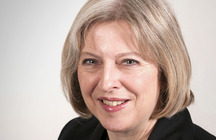
    The speech made by Theresa May, the former Prime Minister and current Conservative MP for Maidenhead, in the House of Commons on 12 April 2021.

    I join with the Prime Minister and everyone across this House in sending my heartfelt condolences to Her Majesty the Queen on the death of His Royal Highness the Prince Philip. Our thoughts and prayers are with Her Majesty and the whole royal family.

    In recent days, there have been many tributes to Prince Philip: some from those who knew him well, some from those who had barely met him, and some from those who had never met him, but whose lives he had touched. I had the privilege of meeting him and having a number of conversations with him. He was a truly remarkable man; a man of so many talents. We have heard some of them referred to already today: a distinguished naval officer, an inventor, an innovator, a designer, a painter, a sportsman, and so much else.

    What always struck me when he spoke, when I was having those conversations with him, was not just the incredible breadth and wide range of interests that he had, but the depth of knowledge that he had about each of those interests. He did not just dip into a subject; he did not pick something up because it was fashionable. He was deeply interested, he cared, and he understood the importance of getting to know the issues that he was involved in. He was indeed a man ahead of his time, particularly in the areas of the environment and conservation, but that was not a passing whim. He deeply loved the natural world; he understood nature; and he was passionate about wanting future generations to be able to enjoy and benefit from the natural world, too.

    I remember, on my first visit to Balmoral as Prime Minister, Prince Philip driving myself and my husband around the estate and talking to us about it. It was if he knew every single inch of it. He talked about the ancient Caledonian forest, about the birds, many of which were protected, about the animals and plants on the estate, about the changes he had seen over the years, and about what was needed to ensure that the environment could be protected and enjoyed by future generations. He was indeed a man ahead of his time. He showed his deep knowledge, but he was also an immensely practical person.

    He was also a man of high standards. That did indeed come through in his attention to detail in the cooking of the meat at the Balmoral barbecues. But I also remember a black tie event, hosted by the then mayor of the royal borough of Windsor and Maidenhead, which Prince Philip was coming down from Windsor castle to attend, but probably for no more than half an hour. Now, some people might have said, “You’ll have to take me as you find me, so I’ll just turn up and that will be it,” but he dressed immaculately in black tie. He took the time and trouble because he had high standards, but also because he respected the event and the people attending, and he wanted them to be at their ease.

    I remember my last day at Balmoral. My husband and I, as everybody knows, enjoy walking. Prince Philip had very kindly suggested a particular walk, so we were grateful for the suggestion and set off. When we got back to the castle, several hours later, we were told that Prince Philip did indeed enjoy this walk, but normally he drove around it in a car. I am not sure whether it was a test—and, if it was, whether we passed it. On that last visit, when we went to say our farewells, initially we could not find Prince Philip. When I eventually caught up with him, he was watching the cricket. How I would have loved to have stayed and watched the cricket with him.

    I am a Berkshire MP, and in Berkshire we feel a particular connection with the royal family. Prince Philip set up the Prince Philip Trust Fund, which provides grants to individuals and causes in the royal borough of Windsor and Maidenhead, and many of my constituents will have benefited from that trust fund. Among the causes it focuses on are young people, and this is reflected, as others have said, in the Duke of Edinburgh’s Award scheme. It is one of his particular legacies that he had this passion for enabling young people to find themselves, challenge themselves, broaden their horizons and develop what are, for some, life-changing skills.

    Millions across the world have much to be grateful to him for, but perhaps the most important aspect of his life was his absolute commitment to supporting Her Majesty the Queen. It is in no way comparable, but I do know how important it is to have a husband—a partner—who is a source of strength and a rock in times of trouble. As a hugely talented person, Prince Philip could have been enormously successful in his own right, but he put his life to ensuring the success of his wife. It was that willingness to put himself second and to serve, to understand the importance of duty and to exercise it day in, day out, that will be his true lasting legacy, and that should be an inspiration to us all.

    All of us here in the UK and across the Commonwealth have so much to be grateful to him for, and we say thank you. He understood the requirements of responsibility, the demands of duty and the sacrifices of service. We will never see his like again. May he rest in peace and rise in glory.
  • Ian Blackford – 2021 Speech on HRH The Duke of Edinburgh

    Ian Blackford – 2021 Speech on HRH The Duke of Edinburgh

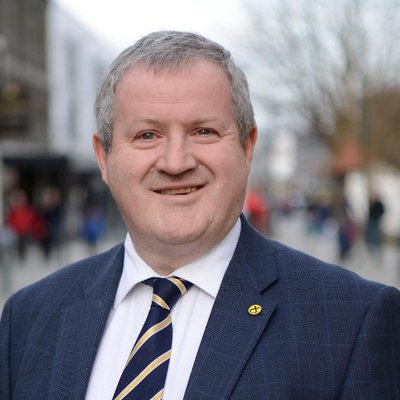
    The speech made by Ian Blackford, the SNP Leader in the Commons, in the House of Commons on 12 April 2021.

    Let me begin by echoing the warm and thoughtful words of the Prime Minister, the Leader of the Opposition, and, indeed, the Father of the House, who have spoken before me.

    Since the news emerged last Friday of Prince Philip’s death, the time has been filled with genuine sorrow right across these islands. For myself and for the people throughout Scotland, my thoughts and prayers remain with the entire royal family, but most especially with Her Majesty the Queen. For most people, the response and the reaction have been very simple and purely human. We collectively grieve for a wife who has lost her husband, a mother who has lost her life partner and her constant companion after a remarkable 73 years of marriage.

    In the past few days, across our institutions and across the media, there has been a very public marking and mourning of the passing of the Duke of Edinburgh. These tributes have come from every corner of the world. I am very conscious, though, that the scale of public commemoration does not diminish the depth of private grief. At the very heart of this is a family grieving the loss of a beloved husband, a father, a grandfather and a great-grandfather—a man who was at the very centre of their family life. As with every death, following the funeral, that loss and absence will be felt all the more. It is right that we seek to remember and respect that loss and the need for private mourning in the days, weeks and months ahead.

    When it comes to reflecting on the life of Prince Philip, there is no shortage of material. His was a remarkable life packed full of experience and involvement spanning across diverse communities and continents. That life and those experiences were made possible by probably his most defining trait—a devotion to duty.

    Already today in this Chamber and across the airwaves for the past few days, there have been great insights into that long life and the period of history in which he had a presence or a part. From military service to the promotion of environmental causes or his patronage of more than 800 organisations, there is a long and lasting legacy on which to reflect. It would be impossible to encapsulate all of it in any remarks, so instead, I will focus my remarks on the Duke’s deep connection to Scotland. That connection came before and went way beyond a royal title that contained our capital city of Edinburgh. It was a connection that stretched right across his entire life from childhood to old age. As a child, he attended school at Gordonstoun. It was there that he established many of his interests and hobbies that would stay with him. In those early years, he made his mark as an athlete in cricket and in hockey, captaining the school teams and becoming head boy of the school.

    The Duke’s love of the sea first found its spark in Scotland, where he frequently went on school trips, sailing around the coast of Scotland. His affection for his time at Gordonstoun is obviously demonstrated by the fact that he sent all his sons there in later years. He also remained a regular visitor—most recently in 2014 to mark Gordonstoun’s 80th anniversary. That link with Scotland and the highlands only grew and deepened after his marriage to Queen Elizabeth. The love they have for Balmoral castle has been evident for years and their presence there is now part of the fabric of that local community. Whether it was his attendance at the Braemar Gathering, a highland tradition that has been ongoing for the best part of 900 years, or his presence at Crathie kirk, Balmoral became an enduring part of their life together. Despite his ailing health, it is very telling that he still made the effort to make his final journey to Balmoral as recently as last August.

    For many people, I suspect that the most memorable and impactful legacy that Prince Philip leaves is the scheme that he lent his title to—the Duke of Edinburgh Award. Once again, the Scottish connection with the scheme could not be clearer. It was inspired by the Moray badge, created by Dr Kurt Hahn, the founder of Gordonstoun, with the intention of giving a sense of responsibility. The tasks in the scheme, from volunteering to outdoor expeditions and personal development, have helped community and educational organisations for generations. Since its inception in 1956, it is truly incredible to reflect that more than 6 million people have undertaken the Duke of Edinburgh Award in the UK. However, its reach did not stop there, with more than 130 countries participating in the international award across the globe.

    The Duke was a very hands-on patron, and he personally attended the scheme’s award ceremonies, presenting his 500th gold award in 2013 at St James’s Palace. That emphasis and commitment that Prince Philip placed on the value of education was a mainstay of his life. The Duke was appointed chancellor of the University of Edinburgh in 1953, and served in that role for almost 60 years. During that long period, he took a particularly keen interest in scientific development, and was a regular at graduation ceremonies. He only retired in 2010, and I know that the staff and students at the university also valued the role and the time he willingly gave.

    It has also been noted in recent days that Prince Philip took a keen interest in Scottish architecture. There are memorable photographs circulating of when the Prince joined the Queen to open the Forth road bridge in 1964. They were the first people to cross the link between the kingdom of Fife and that great city of Edinburgh, and that enduring interest in the Forth crossing was replicated some 50 years later, when he made a private visit to see the construction of the Queensferry crossing. Once again, alongside the Queen, they became the first people to cross the new bridge after it officially opened in 2017. I know that political campaigning remains suspended, but I am sure that Members opposite will forgive me for saying that I am pretty sure Prince Philip would have appreciated that the bridge was delivered on time and under budget.

    Perhaps people’s most lasting memories of the Duke were of the informality he often brought to very formal occasions. Throughout the years, I think it is fair to say that he was not a man for drizzling honey on his words. That trait equally applied to the advice he gave, and there is one memorable piece of advice he gave on the length of speeches, which I dare say some Members might even think applies to myself. He advised:

    “The mind cannot absorb what the backside cannot endure.”

    With that timeless piece of advice from the Duke of Edinburgh, I shall bring my remarks to a close. In doing so, though, I again convey the condolences of myself, my party, and people right across Scotland to the Queen and to the entire royal family. By any standard—by any measure—Prince Philip lived a long, energetic and full life. May he now rest in peace.

  • Peter Bottomley – 2021 Speech on HRH The Duke of Edinburgh

    Peter Bottomley – 2021 Speech on HRH The Duke of Edinburgh

    The speech made by Peter Bottomley, the Father of the House, in the House of Commons on 12 April 2021.

    Prince Philip would have laughed at the Leader of the Opposition’s jest about finding a compass and comparing that with politics. The Leader of the Opposition, following the Prime Minister’s excellent speech, also spoke about the titles that the Duke of Edinburgh held. One was “the Maharaja of Not Very Much”. That is a translation of a title given to him by Sir Reggie Bennett MP when, at the Thursday Club, Prince Philip volunteered to join the Imperial Poona Yacht Club, to which I will return later.

    There have been fair and full tributes in many of our papers. I pay tribute to the journalists, who, from a standing start have managed to go on providing interesting reading. I mention, not as the best but as some of the most recent examples, articles by Alice Thomson and Libby Purves in The Times today.

    For those who think that only the House of Commons is having such a sitting, I point out that the House of Lords has had some really good speeches including those by, to mention just a few, Lord Boyce, Lord Alderdice, Lord Janvrin and Lord Dholakia. I hope that what we say here will be of interest to those who pay attention to proceedings in Parliament.

    In your House, Mr Speaker, Prince Charles observed to George Thomas, later Lord Tonypandy, that if the Duke of Edinburgh or he never said anything interesting, they were accused of being dull, and if they were not dull, they were accused of being controversial. Each was willing to lead on issues that were not already fashionable or dominant among popular concerns. In 1952, on the death of his father-in-law, Prince Philip became patron of the Industrial Society, which followed on from the Duke of York camps. That then developed No. 3 Carlton House Terrace, for a time called Peter Ranch House, which is now known as Prince Philip House and is the headquarters of the Royal Academy of Engineering. In developing the fellowship of engineers and later the Royal Academy, Prince Philip gave attention and paid tribute to the successful endeavours of many people who should be considered as important as those who studied economics, politics or the classics.

    Prince Philip was guest of honour at the Taxi Charity’s 1979 visit to Worthing, and, with Her Majesty the Queen, at Durrington High School in 1999, he met all kinds of members of the community. It is the sort of engagement that matters a lot in each of our constituencies. We remember that they did that in all constituencies, all over the country.

    I referred to Reggie Bennett. He is quoted as saying that the Imperial Poona Yacht Club had 25 really excellent sailing members and that Prince Philip was an honorary member, which was a back-handed compliment to one of the best sailors around. In the foreword to the book of the club’s history—I will conclude with this, as it is quite a long quotation—Prince Philip wrote that

    “it is true that all the members are serious yachtsmen in the sense that they are rather good at it, but what is equally important is that they all share a keen appreciation of the value of anti-seriousness. If you can bring yourself to read this book from cover to cover, you will be in a position to judge for yourself whether or not life can be significantly improved by not taking it too seriously all the time.”

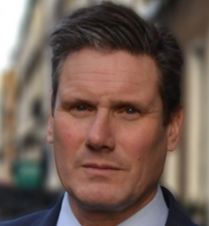
  • Keir Starmer – 2021 Speech on HRH The Duke of Edinburgh

    Keir Starmer – 2021 Speech on HRH The Duke of Edinburgh

    The speech made by Keir Starmer, the Leader of the Opposition, in the House of Commons on 12 April 2021.

    In supporting the Humble Address, I would like to echo the remarks made by the Prime Minister and, on behalf of my party, to come together today in appreciation of a life well lived, a life of service and of duty, and a life that shaped modern Britain and provided much needed stability to our national story.

    My thoughts, first and foremost, are with Her Majesty the Queen and the royal family. Prince Philip was a man of many titles—Duke of Edinburgh, Lord High Admiral, a royal Commander, Baron of Greenwich—but above all he was a much loved father, grandfather and great grandfather. To Her Majesty the Queen he was not only her beloved husband, but, in her words, her “strength and stay” for seven decades, so it is right that, today, this House and the country come together to pay tribute not just to a man, but to the virtues he personified, and to his ceaseless optimism about the country Britain can be and what the British people can achieve.

    The life of Prince Philip was extraordinary, lived in a century on fast-forward and a time that saw world war, a cold war, the fall of empire, 20 Prime Ministers, and the invention of the television, the internet, artificial intelligence and technology so extraordinary it might have seemed to a lesser person as if from another world. Throughout that time, the monarchy has been the one institution in which the faith of the British people has never faltered. As we have seen once again in recent days, the royal family has a connection with the British people that runs as deep today as it did when Philip Mountbatten married the then Princess Elizabeth in 1947. That is not by chance; it reflects the quiet virtues, the discipline and the sacrifices we commemorate today.

    My own connection to the Duke of Edinburgh began long before I entered this place. Like millions of other children, I—aged 14—started the Duke of Edinburgh Award scheme, or the DofE, as we called it. My first activity was to volunteer at a local mental health hospital where, unbeknown to me at the time, my late grand-dad would later be admitted. My final activity was wandering around Dartmoor in a small team, with a compass and a map in the pouring rain, frantically trying to find our way. Mr Speaker, if that doesn’t prepare you for coming into politics, nothing will.

    In recent days, I have been struck by the countless stories of lives turned around by the DofE Award—young people who found their confidence and found their way. This was summed up by a 14-year-old girl who said, on passing her bronze award, that she felt:

    “I can do anything now.”

    The DofE Award now covers 130 countries and has helped millions of people around the world. It is perhaps the best symbol of the Duke’s global legacy. He was also patron to more than 800 charities and organisations. He was the first president of the World Wildlife Fund. He was the patron of the British Heart Foundation. He was president of the British Academy of Film and Television Arts, and he was chancellor of the Universities of Cambridge, Edinburgh, Salford and Wales. He carried out, as has been said, a staggering total of more than 22,000 solo engagements, and countless others alongside Her Majesty the Queen.

    The Duke will also be remembered for his unstinting support of our armed forces. It was in Dartmouth in 1940 that he graduated as a naval cadet. As the Prime Minister has described, he went on to a distinguished naval career. Today, the British armed forces mourn one of their greatest champions.

    The Duke was a funny, engaging, warm and loving man. He loved to paint. His work has been described, characteristically, as

    “totally direct, no hanging about. Strong colours, vigorous brushstrokes.”

    He was also a great lover of political cartoons—not something the Prime Minister and I can say often. Although I saw a cartoon this weekend that I think captured this moment of national and personal loss perfectly. It depicted Her Majesty dressed in black, looking back at her shadow and seeing the Duke standing there, as ever at her side, attentive and holding her hand.

    Britain will not be the same in the Duke’s absence. For most of us, there has never been a time when the Duke of Edinburgh was not present. At every stage of our national story for the last seven decades, he has been there, a symbol of the nation we hope to be at our best, a source of stability, a rock.

    Her Majesty once said:

    “Grief is the price we pay for love.”

    The Duke loved this country and Britain loved him in return. That is why we grieve today. But we must also celebrate him: a life lived in vigorous brushstrokes, like his painting, and we offer up this tribute, “To the Duke of Edinburgh, for a lifetime of public service, the gold award.”

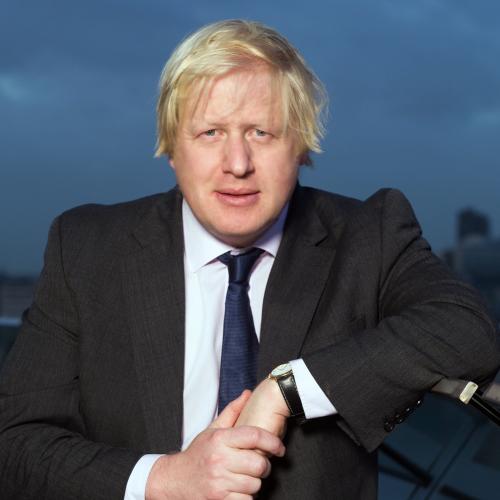
  • Boris Johnson – 2021 Speech on HRH The Duke of Edinburgh

    Boris Johnson – 2021 Speech on HRH The Duke of Edinburgh

    The speech made by Boris Johnson, the Prime Minister, in the House of Commons on 12 April 2021.

    I beg to move,

    That an Humble Address be presented to Her Majesty expressing the deepest sympathies of this House on the death of His Royal Highness The Prince Philip, Duke of Edinburgh, and the heartfelt thanks of this House and this nation for his unfailing dedication to this Country and the Commonwealth exemplified in his distinguished service in the Royal Navy in the Second World War; his commitment to young people in setting up the Duke of Edinburgh’s Award, a scheme which has touched the lives of millions across the globe; his early, passionate commitment to the environment; and his unstinting support to Your Majesty throughout his life.

    It is fitting that on Saturday, His Royal Highness the Duke of Edinburgh will be conveyed to his final resting place in a Land Rover which Prince Philip designed himself, with a long wheelbase and capacious rear cabin, because that vehicle’s unique and idiosyncratic silhouette reminds the world that he was above all a practical man, who could take something very traditional, whether a machine or, indeed, a great national institution, and find a way, by his own ingenuity, to improve it, to adapt it for the 20th and 21st centuries.

    That gift for innovation was apparent from his earliest career in the Navy. When he served in the second world war, he was mentioned in dispatches for his

    “alertness and appreciation of the situation”

    during the battle of Cape Matapan, and he played a crucial role in helping to sink two enemy cruisers. But it was later, during the invasion of Sicily, that he was especially remembered by his crewmates for what he did to save their own ship. In a moment of high danger, at night, when HMS Wallace was vulnerable to being blown up by enemy planes, he improvised a floating decoy, complete with fires to make it look like a stricken British vessel, so that the Wallace was able to slip away and the enemy took out the decoy.

    He was there at Tokyo bay in 1945, barely 200 yards from the Japanese surrender on the deck of USS Missouri, but he was not content just to watch history through his binoculars. It seemed that he used the lull to get on with repainting the hull of HMS Whelp, and throughout his life—a life that was of necessity wrapped from such a young age in symbol and ceremony—one can see that same instinct to look for what was most useful and most practical and what would take things forward.

    He was one of the first people in this country to use a mobile phone. In the 1970s, he was driving an electric taxi on the streets of London—the forerunner of the modern low-carbon fleet—again, a vehicle of his own specifications. He was not content just to be a carriage driver. He played a large part in pioneering and codifying the sport of competitive carriage driving. If it is true that carriage driving is not a mass-participation sport—not yet—he had other novel ideas that touched the lives of millions, and developed their character and confidence, their teamwork and self-reliance.

    It was amazing and instructive to listen on Friday to the Cabinet’s tributes to the Duke and to hear how many Ministers were proud to say that they or their children had benefited from taking part in his Duke of Edinburgh Award schemes. I will leave it to the House to speculate on who claimed to have got a gold award, and who a bronze, but I believe that those Ministers spoke for millions around the world and across this country who felt that the Duke had in some way touched their lives—people whose work he supported in the course of an astonishing 22,219 public engagements; people he encouraged and people, yes, whom he amused. It is true that he occasionally drove a coach and horses through the finer points of diplomatic protocol, and he coined a new word—dontopedalogy—for the experience of putting your foot in your mouth. It is also true that, among his more parliamentary expressions, he commented adversely on the French concept of breakfast; he told a British student in Papua New Guinea that he was lucky not to be eaten and the people of the Cayman Islands that they were descended from pirates; and he said that he would like to go to Russia except that, as he put it,

    “the bastards murdered half my family.”

    But the world did not hold it against him. On the contrary, they overwhelmingly understood that he was trying to break the ice, to get things moving and to get people laughing and forget their nerves. To this day, there is a community in the Pacific Islands that venerates Prince Philip as a god, or a volcano spirit—a conviction that was actually strengthened when a group came to London to have tea with him in person. When he spoke so feelingly about the problems of overpopulation, humanity’s relentless incursion on the natural world and the consequent destruction of habitat and species, he contrived to be at once politically incorrect and also ahead of his time.

    In a quite unparalleled career of advice, encouragement and support, he provided one particular service that I believe we in the House know in our hearts was the very greatest of all. In the constant love he gave to Her Majesty the Queen as her

    “liege man of life and limb”,

    in the words he spoke at the coronation, he sustained her throughout this extraordinary second Elizabethan age—now the longest reign of any monarch in our history. It was typical of him that, in wooing Her Majesty —famously not short of a jewel or two—he offered jewellery of his own design. He dispensed with the footmen in powdered wigs. He introduced television cameras, and at family picnics in Balmoral, he would barbecue the sausages on a large metal contraption that all Prime Ministers must have goggled at for decades, complete with rotisserie and compartments for the sauces, and that was, once again, a product of his own invention and creation.

    Indeed, as an advocate of skills, craft, science and technology, this country has had no royal champion to match him since Prince Albert, and I know that in due course, the House and the country will want to consider a suitable memorial to Prince Philip. It is with that same spirit of innovation that, as co-gerent of the royal family, he shaped and protected the monarchy through all the vicissitudes of the last seven decades and helped to modernise and continually to adapt an institution that is above politics, that incarnates our history and that is indisputably vital to the balance and happiness of our national life.

    By his tireless, unstinting service to the Queen, the Commonwealth, the armed forces, the environment, millions of young people and not so young people around the world and countless other causes, he gave us and gives us all a model of selflessness and of putting others before ourselves. Though I suspect that he might be embarrassed or even faintly exasperated to receive these tributes, he made this country a better place, and for that he will be remembered with gratitude and with fondness for generations to come.

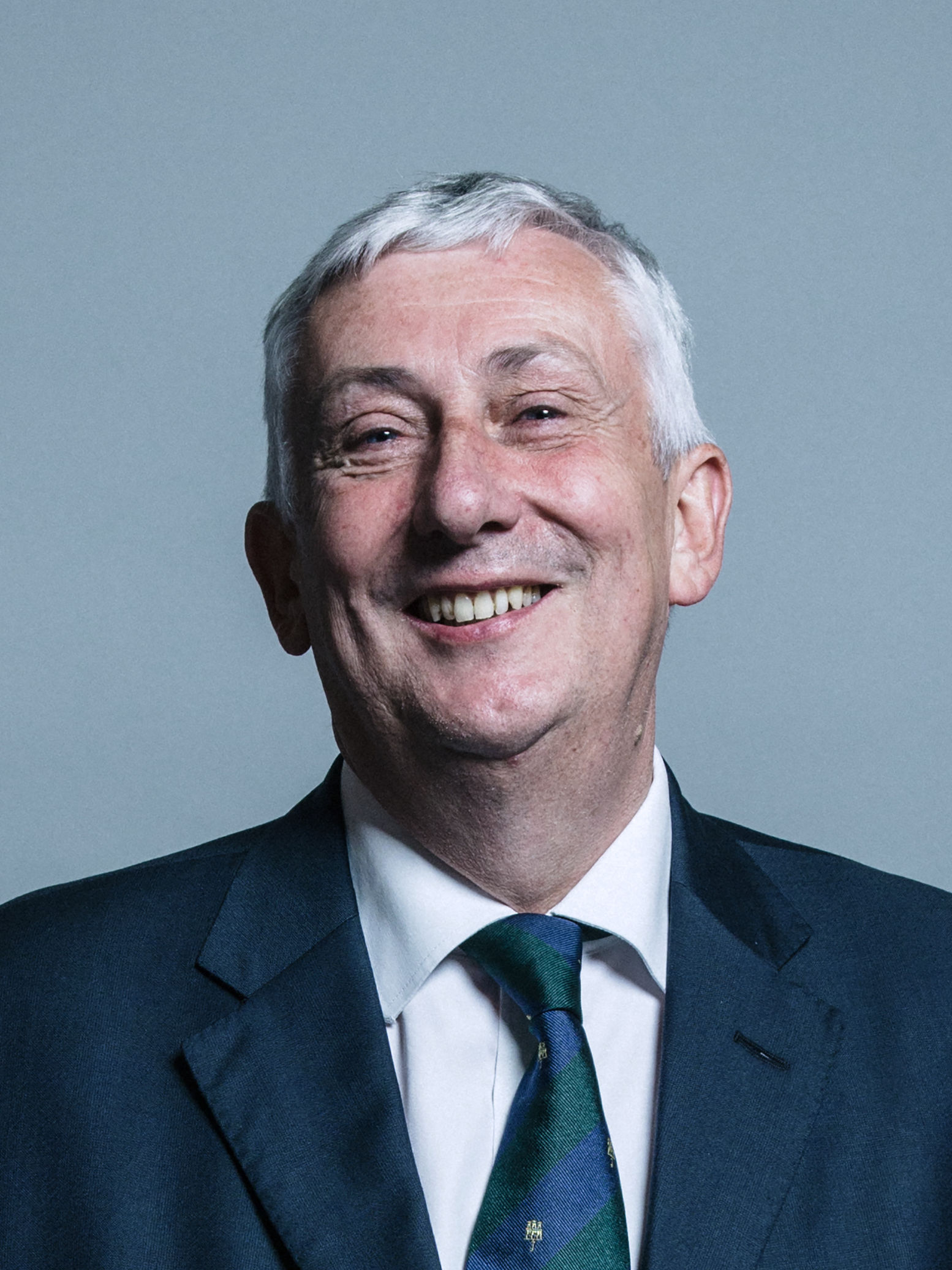
  • Lindsay Hoyle – 2021 Speech on HRH The Duke of Edinburgh

    Lindsay Hoyle – 2021 Speech on HRH The Duke of Edinburgh

    The speech made by Lindsay Hoyle, the Speaker of the House of Commons, on 12 April 2021.

    We meet today to pay tribute to the Duke of Edinburgh, who has been at the side of Her Majesty the Queen for more than seven decades, giving his unwavering support both as a husband and as a consort.

    Described by Her Majesty as “my strength and stay”, for most of us Prince Philip, the Duke of Edinburgh, has always been there, providing this nation with a reassuring presence. Whether he was attending with such dignity the formal occasions when the Queen attended Parliament for the state opening, or visiting different places within the UK or in an overseas country, his support and loyalty were always clearly displayed. He was the longest serving consort in history and the oldest partner of a serving monarch. He never let the Queen down.

    His passing also marks the end of an era. He was one of the last surviving heroes of the second world war, serving as an officer in the Royal Navy with distinction, and was heavily decorated for his bravery and long service. A qualified pilot, he gained his helicopter wings, became admiral of the fleet for over 50 years and helped to design the royal yacht Britannia. He visited troops in Iraq, travelled with the Queen throughout the Commonwealth and overseas territories, and stepped down from official royal duties only at the age of 96.

    Outspoken, with a great sense of humour, he was not afraid of talking openly about issues that were close to him. He will be remembered for his loyal devotion to service and his leadership of hundreds of causes close to his heart. Perhaps his finest achievement was the Duke of Edinburgh’s Award, which has helped millions of young people around the world to achieve their full potential as team members and future leaders in their chosen fields. As a moderniser and public reformer, he promoted the latest in engineering and design. As a pioneer in the World Wildlife Fund, he travelled widely to secure public interest in nature and its protection.

    His sporting interests were wide-ranging. As a sailor, he regularly attended Cowes week for the regatta. He was a cricket enthusiast and player. He also took part in horse riding and performed as a top polo player. He was a winner for Britain, too, at carriage driving, which he took up later in life.

    In March 2011, the Duke accompanied the Queen to Parliament for the diamond jubilee celebrations. I had the pleasure of introducing him to groups of Members waiting to greet him. I remember his interest in ties that Members were wearing, particularly if they showed a connection with the armed forces. He also had a special ability to put people at ease.

    As we reflect on a life well lived, we should not forget the wide-ranging achievements of Prince Philip: the ambassador, serviceman, scientist, artist, naturalist, committee chairman, traveller and loyal supporter of the United Kingdom, the overseas territories and the Commonwealth. But we should always remember him as a family man: a devoted husband, a father, a grandfather and a great-grandfather. He was, without doubt, the father of the nation. He will surely be missed and impossible to replace.

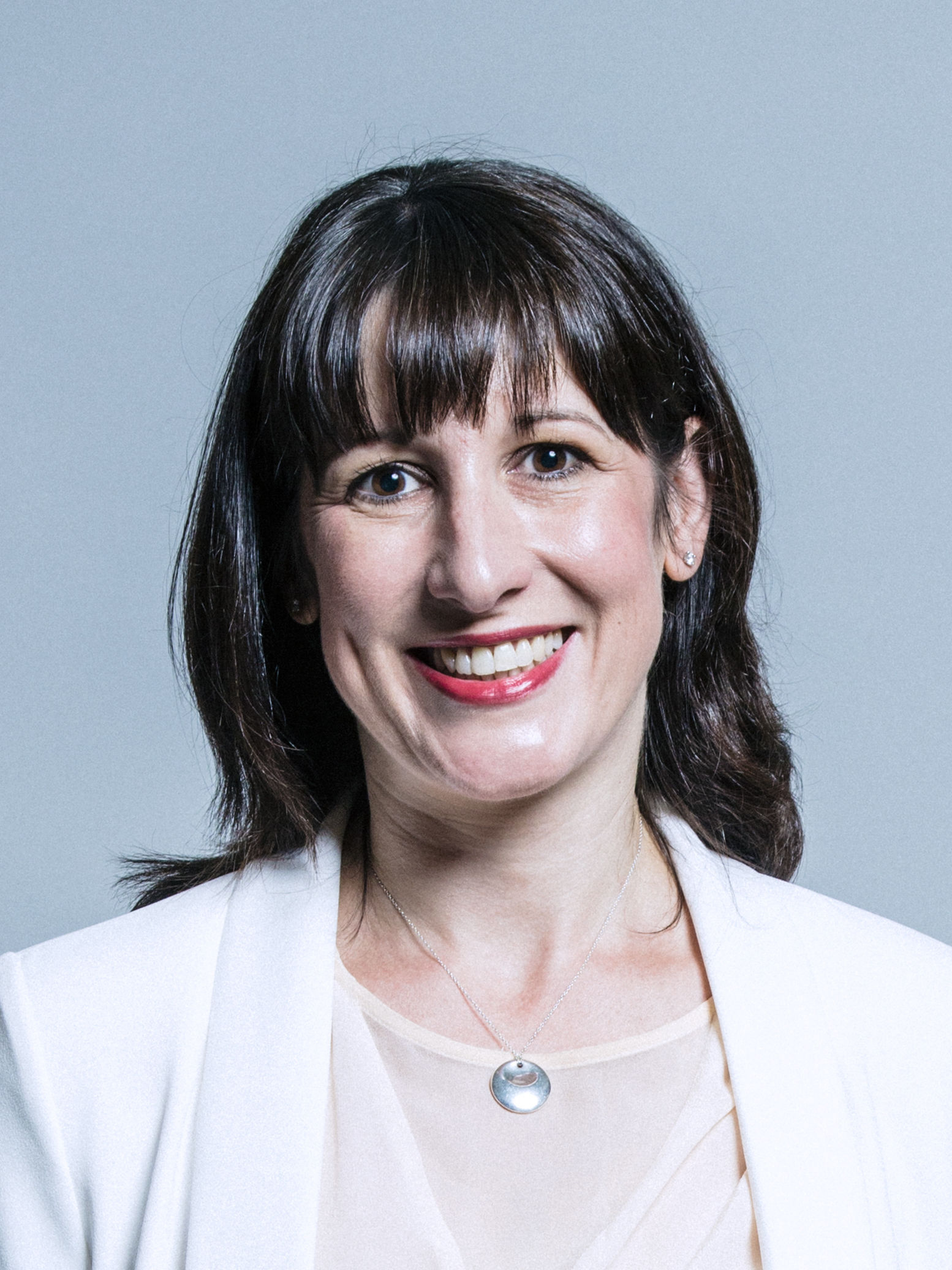
  • Rachel Reeves – 2021 Comments on Government Investigation into Greensill

    Rachel Reeves – 2021 Comments on Government Investigation into Greensill

    The comments made by Rachel Reeves, the Shadow Chancellor of the Duchy of Lancaster, on 12 April 2021.

    This has all the hallmarks of another cover-up by the Conservatives.

    Just as with the inquiry into Priti Patel’s alleged bullying, this is another Conservative Government attempt to push bad behaviour into the long grass and hope the British public forgets. The Conservatives can’t be trusted to yet again mark their own homework.

    We need answers on Greensill now – that means key players in this cronyism scandal like David Cameron, Rishi Sunak and Matt Hancock appearing openly in front of Parliament as soon as possible to answer questions.

  • Andrea Leadsom – 2014 Comments on Credit Unions

    Andrea Leadsom – 2014 Comments on Credit Unions

    The comments made by Andrea Leadsom, the Economic Secretary to the Treasury, on 12 August 2014.

    Credit unions play a vital role in their communities, providing access to affordable credit for those who need it most. This government is determined to help credit unions provide these services to even more people. That is why I am today urging private sector employers and wider society to consider what more they can do to promote the use of credit unions among their employees and communities.

  • Andrea Leadsom – 2014 Comments on Government Selling Holding of Tier 1 Notes to Virgin Money

    Andrea Leadsom – 2014 Comments on Government Selling Holding of Tier 1 Notes to Virgin Money

    The comments made by Andrea Leadsom, the then Economic Secretary to the Treasury, on 25 July 2014.

    I can confirm today that we have sold our holding of Tier 1 notes, issued by Virgin Money for £154.5 million. This represents good value for the taxpayer and the money will be used to reduce the national debt.

    This is another step in the government’s long term economic plan to deliver a more secure and resilient economy. It is another step in repairing the banks, in reducing our national debt and in getting the taxpayer’s money back.

  • Andrea Leadsom – 2014 Speech on Financial Technology

    Andrea Leadsom – 2014 Speech on Financial Technology

    The speech made by Andrea Leadsom, the then Economic Secretary to the Treasury, on 2 July 2014.

    I’m very glad to be here this morning.

    And I’d like to start off with three quotes.

    One:

    Technology is a word that describes something that doesn’t work yet.

    That was Douglas Adams.

    Two:

    Technological progress has merely provided us with more efficient means for going backwards.

    Aldous Huxley.

    And three:

    Computers are useless, they can only give you answers.

    Pablo Picasso.

    So if you were to listen to some of the greatest wits and writers and artists of the last 100 years…

    You might be tempted to believe that technology is a terrible phenomenon, driving us into some dark and depressing future.

    But then you might read some of the headlines from last week.

    One.

    New technology helps brain signals move paralysed hand.

    Time Magazine.

    Two.

    How technology is being used to foil cheats.

    The Telegraph.

    And three.

    Technology firm creating 31 jobs in Belfast.

    The BBC.

    And I think that those three headlines…

    Capture three of the real opportunities that – when developed with the right intentions – new technology can present.

    First. As with the paralysed hand, technology can help people.

    Second. As with stopping cheats, technology can make life fairer.

    And third. As in Belfast, technology can create jobs.

    And it’s exactly those three things that I want to talk about today.

    I want to talk about how the work you’re doing can help people.

    I want to talk about how we can use technology to make competition fairer.

    And I want to talk about how we can use new technology to create and support jobs.

    And within that, I want to talk about the work we in government are doing to help.

    So first, how can financial technology help people?

    Put simply, we need you to keep using the latest technology…

    To ensure that our financial sector works for the people who use it.

    And I think that’s an area where we’ve really seen progress over the last few years…

    With new systems and ideas continually making life easier for your customers.

    We’ve seen the introduction of:

    GoCardless, which makes it easy and cheap for small businesses to take debit payments
    TransferWise, which provides people and businesses with a lower cost alternative for sending money overseas
    Funding Circle, where people can directly lend to small businesses in their community online
    And I’m sure there are hundreds more inventive products that are making a real difference to businesses

    I think it’s crucial that you keep developing products like that…

    That keep making it easier for people to carry out the transactions they want.

    We’ll keep doing our bit to help.

    Soon we’ll be legislating for cheque imaging,

    Which will see customers able to pay in their cheques using their smart phones.

    And we’re also doing our bit to support the new Financial Conduct Authority (FCA) project – Project Innovate.

    For those of you that don’t know, Project Innovate is a clear signal from the FCA…

    That they want to make sure UK financial technology companies – many of which will be run by people here today – are supported by our regulatory environment.

    And as part of the project the FCA has said it will open its doors to any firm who are developing new approaches…

    Which either aren’t explicitly addressed by current regulation – or where the current guidance may be ambivalent.

    They’re also supporting innovation…

    First, by providing help to firms who are developing new models or products, so they can navigate the regulatory system.

    And second, by looking for areas where the system itself needs to adapt to new technology or broader change – rather than the other way round.

    These are all really positive developments that the government strongly welcomes…

    And they should go a long way towards creating an environment in which firms – like yours…

    Can compete, grow and – most importantly – keep innovating for your customers.

    So, second, what can we do with FinTech to make things fairer?

    For me, the number one priority of my time in this role is to improve competition between companies that provide banking services.

    Because while there has always been competition…

    That competition hasn’t always been fair.

    And one of the big changes we’ve made here – to help you – has been in legislating for a new Payments Systems Regulator.

    Now – as you’ll all know – every time someone:

    gets paid directly into a bank account
    takes money out of a cash machine that isn’t owned by their own bank
    moves money around by some other method
    They are relying on payment systems to get their money to the right place, safely, reliably and efficiently.

    But the system that’s currently in place, works in favour of the big banks…

    Because those are the banks that have always owned the payments systems…

    Which has always meant that FinTechs had no alternative but to accept the terms they’ve been offered.

    Often those terms have been unfavourable, which has given those big banks a big advantage over both new entrants…

    And companies that want to offer people a different customer experience.

    But the new regulator will have strong powers…

    And they will be able to ensure that smaller banks and alternative providers of finance – including FinTechs – can access these systems in a fair and transparent way.

    This piece of work is very nearly there.

    The government has switched on the Market Investigation Reference powers of the Regulator a year ahead of schedule…

    And this will give them the power to take competition action over payments systems…

    When they come into their full set of powers next April.

    All of which should result in a fairer – more even – landscape for your companies to operate.

    Thirdly, how can we use new technology to create jobs?

    Vitally – and as a mum myself, I’m particularly interested for my own son, who is desperate to get into this sector…

    There are a growing number of jobs in financial technology itself.

    The alternative finance market is expected to be worth over £1.5bn this year, with the potential to grow even further.

    And one of the ways I think we can help that growth, is by making it an even stronger export industry.

    According to current estimates, over the next 10 to 15 years…

    90% of global demand for goods and services will be generated outside of Europe.

    So we in government think that you in FinTech have a real opportunity to tap into this growth, and take advantage of new international business.

    Again, we’ll be doing our bit to help.

    That’s why – for example – we’ve created the Financial Services Trade and Investment Board…

    Which is a strategic body that brings together government and industry…

    And has been tasked with:

    attracting inward investment
    promoting external trade
    removing restrictions for the UK’s financial services sector
    And that board has – you’ll be pleased to hear – identified financial technology as one of its big priorities.

    It recognises that the UK is fast becoming a destination of choice for companies that want to establish a global presence in the FinTech sector…

    And working with UKTI, they have developed a marketing strategy to attract more overseas investment to support the work you do.

    But the growth and the employment opportunities here aren’t only in your sector.

    You all have a key role to play in supporting both growth and jobs in other sectors too…

    Especially by supporting small and medium businesses.

    We really want to open up the field of SME finance to Fintechs.

    And this goes back to the importance of competition, because – at present – the largest four banks account for over 80% of UK SMEs’ main banking relationships.

    Such high concentration levels are – quite frankly – bad for business.

    So we are fully committed to fostering a stronger, more diverse and more competitive SME banking sector, in which FinTech firms play a key role.

    And our work is well underway on this:

    we’re legislating to improve access to SME credit data, which will enhance the ability of new providers to conduct accurate risk assessments
    we’re looking at proposals that will match those SMEs that want to secure loans with new market players that want to provide them
    we’ve taken action to speed up the process for waivers or deeds of priority, which have made it easier for FinTechs to offer finance to SMEs
    Finally, we want the British Business Bank to keep working with you to unlock further funding for small businesses.

    Both the Business Finance Partnership, and its successor – the Investment Programme – have an explicit objective to support lending to smaller businesses through smaller and more innovative finance providers.

    They’ve already supported a whole host of providers like

    peer-to-peer lenders
    supply chain lenders
    debt and mezzanine finance funds
    And their funding has been matched with at least an equal amount – and usually much more – from private sector investors.

    We want companies like yours to keep taking advantage of the opportunities they offer…

    And to keep offering new and interesting ways of lending to small businesses.

    Because in very simple terms, the more small businesses we can support…

    The more jobs we can create…

    The more growth we can create…

    And ultimately, the more prosperity we can create for millions of families across the UK.

    And that’s why I’d like to end this morning by dismissing Douglas Adams!

    Dismissing Aldous Huxley!

    And dismissing Pablo Picasso!

    Because I really do believe that new financial technology:

    will work
    will move us forward
    will provide answers to some of the issues that have held back our sector
    So if I have one ask of you, it’s to keep doing what you’re doing.

    Keep looking for new and inventive ways to help individuals and businesses.

    Keep looking for new and inventive ways to shake up the system, and make competition stronger.

    Because the outcome of all of that will be a system that works better for people.

    That is fairer.

    And that supports jobs.

    And that’s something that will be great for your sector, and our country.

    Thanks for listening.