Blog

  • Nicola Sturgeon – 2020 Statement on the Coronavirus

    Nicola Sturgeon – 2020 Statement on the Coronavirus

    Below is the text of the statement made by Nicola Sturgeon, the Scottish First Minister, in Edinburgh on 28 May 2020.

    Good afternoon. Thank you very much for joining us.

    Today, as you are probably anticipating, I will confirm some careful and cautious changes to the current lockdown regulations.

    I will set out what those changes are in a moment – but I want to begin with a simple but really important point.

    The only reason we can make any changes today is that we have made progress in suppressing this virus. And that is entirely down to the sacrifices that all of you have made.

    So more than ever today, I want to say thank you to each and every single one of you.

    I’ll come to the changes themselves in a moment – and because there’s a lot to cover today, my update will be a bit longer than normal – but first of course I will provide the usual statistical update.

    As at 9 o’clock this morning, there have been 15,288 positive cases confirmed – that is an increase of 48 since yesterday.

    A total of 1,238 patients are in hospital with confirmed or suspected COVID-19. That represents a decrease of nine overall from yesterday, including a decrease of 13 in the number of confirmed cases.

    A total of 37 people last night were in intensive care with confirmed or suspected COVID-19. That is a decrease of 1 since yesterday.

    I am also able to confirm today that since 5 March, a total of 3,635 patients who had tested positive for the virus have now been able to leave hospital.

    Unfortunately though, in the last 24 hours, 12 deaths have been registered of patients who had been confirmed through a test as having the virus, and that takes the total number of deaths in Scotland, under that measurement, to 2,316.

    Now I feel very strongly, as I’m sure you do, particularly today as we start to take the first steps out of lockdown, that we must never become inured to these statistics – and we must never ever forget that behind every single one is a person who was loved and is now deeply missed.

    In future, we will want – collectively as a nation – to remember and mourn that loss.

    But for now let me send my condolences to every family who has lost a loved one to this virus.

    Let me also express my deep gratitude to our health and care workers for the incredible work you have done and continue to do, in such extraordinarily difficult circumstances.

    The figures I have just given remind us that the progress we have made so far is real. But these figures also remind us of the toll this virus has taken – and that our progress remains fragile.

    The virus is still proving fatal for too many. Hundreds of people are still in hospital. And new infections are still being identified in most health board areas.

    As I have said before, that means we must proceed with the utmost care and caution.

    Nevertheless, a downward trend in COVID-19 cases is now sustained and unmistakeable.

    As you know, the law requires us to formally review the lockdown regulations at least every three weeks and to keep them in place only for as long as is necessary. And the latest review period ends today.

    I can confirm that we have considered the latest evidence of the spread of the virus and I can report as follows.

    The R number – the transmission rate of the virus – remains in a range of 0.7 to 1.

    We can’t be certain how far below 1 it is – and that confirms, and underlines, that we must continue to exercise caution.

    However, we have now reasonable confidence that the R number has been below 1 for a period of more than three weeks.

    Our modelling also shows that the prevalence of the virus is reducing.

    Last week you might recall that I reported an estimated 25,000 infectious cases across the country. Our latest estimate is that as of last Friday 22 May, there were 19,000 infectious cases in Scotland.

    In addition, the number of patients in intensive care has fallen by 80% since the peak.

    And the number of new hospital admissions has fallen by more than 80%.

    Also, as we saw yesterday in the National Records of Scotland report, deaths associated with COVID-19 – both overall and in care homes – have now declined for four consecutive weeks.

    This evidence has allowed the Scottish Government therefore to conclude that we can now move into Phase 1 of our four phase route map out of lockdown.

    My confidence in that conclusion is bolstered by the launch today of Test and Protect – a system of test, trace, isolate.

    We are now asking any person who has symptoms of COVID-19 – that is a cough, a temperature or loss of taste or smell – to take immediate steps to book a test.

    If this applies to you, please go straight to nhsinform.scot to get a test or, if you can’t go online, call NHS 24 on 0800 028 2816. Don’t wait to see if you feel better before booking a test. And apart from going for the test, you – and all people in your household – should self-isolate.

    If you are contacted by Test and Protect to say you have been in contact with someone who has tested positive, please follow the advice to self-isolate for 14 days.

    But remember – and this is a really important point – that you can minimise the chances of that happening by taking care not to be a close contact of someone outside your own household – and that means staying at least two metres distant from anyone who is not part of your household.

    Test and Protect will be a crucial part of our efforts to control the virus in the weeks ahead. But it will not do it – cannot do it – on its own.

    The decisions that all of us make – about staying two metres apart, washing our hands, wearing face coverings in enclosed spaces – these matter just as much.

    In many ways, in fact, they will matter even more as we start to slowly relax these lockdown rules.

    If we don’t pay close attention, and follow physical distancing and hygiene rules, those 19,000 estimated cases I mentioned earlier will quickly rise again.

    However, all of that said, we are now in a position to make careful changes. And I want to set out now what those changes will be.

    Many of these changes will come into effect tomorrow.

    We are publishing on the Scottish Government website specific guidance to help you understand the changes and also the rules that we are still asking you to follow. So please take the time to read that.

    The focus of our Phase 1 changes is on outdoor activity.

    And the reason for that is this – as long as people from different households remain two metres apart, do not touch the same surfaces and wash hands and surfaces regularly, the risk of the virus spreading is lower in an outdoor environment than it is indoors.

    Even so, in making changes at this stage, we have limited room for manoeuvre. So we need to get the balance right.

    Of course we want to restart the economy as quickly as possible, but we have also kept very firmly in mind the things that matter most to our quality of life – family, friendship, love.

    I will therefore spend most of my time today talking about what these changes will mean for your ability to interact with friends and family.

    But first let me cover what they mean for business and public services.

    From tomorrow, most outdoor work that has been put on hold can resume, and the construction industry will be able to restart site preparation – that’s the first phase of its restart plan. It will require to consult further with government before moving on to the second stage of that plan.

    From tomorrow, garden centres and plant nurseries can reopen some of their services, and we will no longer be discouraging drive-through food outlets from re-opening as well.

    However, non-essential shops, and pubs, restaurants and cafes – except for takeaway – must remain closed at this stage.

    Household waste recycling centres can re-open from Monday – and guidance on this was issued yesterday.

    We continue to ask other business premises to remain closed at this stage, unless providing essential goods and services, and we ask all businesses to let staff work from home wherever possible.

    From Monday onwards, 1 June, teachers and other staff will be able to enter schools for the purpose of preparing for a re-opening of all schools on 11 August, for a blended in school / at home model of learning.

    And from next Wednesday onwards – that’s 3 June – childcare will be available to a larger number of children who most need it, for example vulnerable children and children of essential workers.

    Childminding services and fully outdoor nursery provision will start to reopen from next Wednesday too. However, there will continue to be limits on the number of children that can be cared for, and guidance for childminders will issue on Monday.

    During Phase 1, some key public services – for example some respite care, children’s hearings and some key health programmes – will also begin to restart their work, and further announcements on timing will be made in due course.

    In terms of sport and recreation, some non-contact outdoor leisure activities will be allowed to restart – again from tomorrow.

    This applies to activities where you can safely keep a two metre distance from others at all times and follow strict hygiene practices – for example golf, tennis, bowls and fishing.

    You will also be able, from tomorrow, to sit or sunbathe in parks and open areas. I am sure that will welcomed by many, particularly in this weather – but it will be welcomed especially by those who do not have gardens.

    And you will be able to travel – preferably by walking or cycling – to a location near your local community for recreation. However we are asking you, for now, to please stay within, or close to, your own local area. And don’t use public transport unless it is absolutely necessary.

    Now we are not setting a fixed distance limit in law – but our strong advice is not to travel further than around five miles for leisure or recreation.

    And it is still the case that you should not go to our island communities, except for essential reasons.

    We simply don’t want, in this phase, to see large numbers of people at tourist hot spots or local beauty spots. Crowds of people – even if they’re trying to socially distance – bring more risk than we judge is acceptable and safe at this point.

    So if you do go somewhere and find it is crowded, please use your judgment, change your plans and go somewhere else.

    Now the final area I want to talk about is social interaction.

    But before I do that I want to say something specifically and directly to people who are shielding – the people who are most vulnerable to the virus.

    You are now well into your third month of being advised not to leave home at all. And I know that listening to today’s changes – which don’t yet bring a change to your own circumstances – will be particularly hard for you.

    So I want to assure you that we will be providing you with more information and guidance in the next couple of weeks. And we will be trying, as far as possible, as far as safe, to move to less of a blanket approach – one which requires all of you to stay at home all of the time – to one that more reflects your individual circumstances.

    We know the impact that our advice is having on you, and on your loved ones, is significant – and we are doing everything we can to get that advice right so that you can safely, albeit gradually, start to lead a less restricted life. I want you to know today that you have not been forgotten – and you are a central part of our thinking, as we consider how we move forward.

    More generally, though, we can today confirm changes to the rules on meeting socially. And this, I know, is something everyone has been eagerly anticipating.

    From tomorrow the regulations on meeting other people will change.

    You and your household will be able to meet with another household out of doors – for example in a park or in a private garden.

    We said last week this should be in small groups – and to give you greater guidance on that, we are asking that the total number of people between the two households meeting up should be a maximum of eight. Please keep it to less than that if you can.

    Now, we are not saying that you must pick one household and only meet the same one during Phase 1. But we are saying that you should not meet with more than one other household at a time.

    And while this will not be the law, we also strongly recommend that you don’t meet with more than one other household per day.

    This change will obviously allow you to meet with more people that we can right now – but please remember that we should still be meeting far fewer people outside our own household than we would in normal times.

    Now, I know how much all of you will be looking forward – all of us will be looking forward to seeing family and friends for the first time in a while. But how we do this is going to be really vital.

    Before you meet up with people from another household you should stop, think, read the guidance and make sure you are protecting yourself and others.

    In particular, you must stay outdoors and stay at least two metres away from people from the other household. That is crucial.

    You should also avoid touching the same hard surfaces as they do.

    Let me give an example of that. I suspect many of you will be planning a picnic or a barbecue this weekend. If you are, not only should you stay two metres apart from those in the other household, but each household should also bring its own food, cutlery, plates or cups. Don’t share these things.

    And please – don’t go indoors. Being in someone else’s house should still be avoided, unless of course you are providing support to someone who is vulnerable.

    And that means thinking in very practical terms. We are not putting a legal limit on how far you can travel to meet another household, but please use your good judgment. If the distance is so far that you would have to use someone else’s bathroom, then perhaps you shouldn’t be doing it.

    And the reason for all of this is simple, but it is worth repeating, because I am not putting all of these restrictions – or asking you to put these restriction on your activity for no reason.

    And the reason is this – if you go inside a house or if you share items, if you touch the same surfaces as another household, or come within two metres of each other, that is when you are creating an opportunity – a bridge, if you like – for the virus to spread from one household to another.

    And that is what all of us must still do everything we can to avoid.

    Now, I know the information I give at these briefings sometimes must be hard to absorb.

    But today’s information is really vital. So please watch this back later to make sure you caught all of it. And please read the guidance that you will find at www.gov.scot

    What I have announced today are important first steps back to some kind of normality I hope. But they are by necessity cautious.

    I’ve said before that no changes are risk free – and there are no certainties in any of this – but I have also said that I wanted to ensure that with every step we do take, the ground beneath our feet is as solid as possible. And that is what we are taking care to ensure.

    But I don’t mind admitting to you that as we take these first steps, I do feel a bit nervous.

    I worry that the limited changes we are making to these rules, the very careful changes, might lead to much greater change in reality. And so I really need your help to make sure that is not the case.

    I am sure there are going to be lots of emotional reunions this weekend. You will be planning to see family and friends that you haven’t seen for weeks. And based on the current forecasts, the sun will be shining too. We’ve all waited a long time for this, so I hope you all really enjoy it.

    But please, please – respect the parameters we are setting out.

    Be respectful of each other’s space, and make sure things still feel different to normal, because they should still feel different to normal.

    Above all, remember that each individual decision we will take, will affect the safety and the wellbeing of everyone. Make sure that love, kindness and solidarity continue to be our guiding principles.

    So to recap.

    Still stay at home as much as possible – the virus has not gone away. Lockdown is being modified slightly – it is not over.

    Make sure you are still seeing far fewer people than you might normally do.

    Don’t meet up with more than one other household at a time, don’t meet more than one a day and keep to a maximum of eight people in a group.

    Stay two metres apart when you do meet. And that, I know will be really difficult – perhaps the most difficult part of all. The instinct to hug somebody you love is a really strong one – especially when you haven’t seen that person for quite some time. And I know that for some – couples who live apart for example – for them, this is even more difficult. And I want to assure you that we are considering that point very carefully.

    But for now – whether it’s parents, grandparents, aunties, uncles, siblings, partners from other households – don’t put your loved ones or yourself at risk.

    Also wash your hands regularly and thoroughly.

    Avoid hard surfaces – and clean any that you are touching.

    And if you have symptoms, get tested and follow the advice on self-isolation.

    To end where I started, we are only able to take these careful steps towards a less restricted lifestyle for all of us now because all of you have, overwhelmingly, stuck to the rules so far.

    And the truth is that we will be able to take more steps more quickly in the future, if we all continue to do the right thing, stick to the rules, and most importantly of all now, exercise good judgment at all times.

    I want to thank you again for all you’ve done so far, but thank you in advance for continuing – as I know you will – to do the right thing and remember that this is all about protecting not just ourselves – it is about protecting each other.

    And though these changes are small at this stage, I really hope they do make a positive difference and leave all of us with a real sense of hope that we are on the right track, the track towards greater normality while we continue to beat this virus along the way.

    Thank you very much indeed for listening.

  • Nicola Sturgeon – 2020 Statement on the Coronavirus

    Nicola Sturgeon – 2020 Statement on the Coronavirus

    Below is the text of the statement made by Nicola Sturgeon, the Scottish First Minister, in Edinburgh on 29 May 2020.

    Good afternoon – and welcome to today’s briefing. I am joined today by the Cabinet Secretary for the Economy, Fair Work and Culture, Fiona Hyslop; and our National Clinical Director, Jason Leitch.

    I want to start – as I always do – by updating you on some of the key statistics in relation to Covid-19 in Scotland.

    As at 9 o’clock this morning, there have been 15,327 positive cases confirmed – an increase of 39 from yesterday.

    A total of 1,216 patients are in hospital with confirmed or suspected Covid-19. That represents a total decrease of 22 from yesterday, including a decrease of 28 in the number of confirmed cases.

    A total of 40 people last night were in intensive care with confirmed or suspected Covid 19. That is an increase of 3 since yesterday.

    We shouldn’t read anything into that increase – these figures will fluctuate day to day. But nevertheless it is a reminder that the virus has not gone away.

    I am also able to confirm today that since 5 March, a total of 3,640 patients who had tested positive for the virus and required hospitalisation have been able to leave hospital. I wish all of them well.

    And unfortunately, I also have to report that in the last 24 hours, 15 deaths have been registered of patients who had been confirmed through a test as having Covid-19 – that takes the total number of deaths in Scotland, under that measurement, to 2,331.

    We must never lose sight of the fact that these numbers are not simply statistics. They represent individuals whose deaths are being mourned by friends, family and loved ones. I want to send my condolences to everyone who has lost a loved one to this virus.

    I also want to thank – as I always do – our health and care workers. For the tenth Thursday in a row last night, people across the country joined together to applaud your efforts and show our gratitude.

    There are two items I want to cover today.

    Firstly, I want to recap on the changes to the lockdown restrictions on social interaction and leisure that have taken effect today.

    I’m very conscious that this weekend will be the first – in quite a while – that people will be able to meet up. And so I want to take the time to outline, once again, what the changes are…and the rules you must follow to stay safe and avoid a resurgence of the virus.

    From today, you and your household can meet with another household out of doors – for example in a park or in a private garden.

    However, you should limit the total number of people meeting up, to a maximum of 8. Ideally it should be less than that.

    You should not meet with more than one household at a time. And don’t meet with more than one other household per day.

    If you do meet up, you need to be outside – and you need to stay at least 2 metres away from people in the other household. You should also avoid touching the same hard surfaces.

    For example, if you are having a picnic or barbecue this weekend – not only should you stay 2 metres apart from members of the other household, but each household should also bring its own food, cutlery, plates and cups.

    And please – don’t go indoors. Being in someone else’s house should still be avoided, unless you are providing support to someone who is vulnerable.

    We are not putting a legal limit on how far you can travel to meet another household. But if the distance is so far that you would have to use someone else’s bathroom, please don’t go.

    Again, to be clear, these rules are for a reason. If you go inside a house, or come within 2 metres of each other, or if you touch the same surfaces as another household, that creates an opportunity for the virus to spread.

    And we must do everything we can to avoid that.

    From today, you are also able to sit or sunbathe in parks and open areas.

    You will be able to travel – preferably by walking or cycling – for recreation. However, please stay within, or close to, your own local area. Don’t travel more than around 5 miles from your home.

    We do not want to see large numbers of people at tourist hot spots or local beauty spots. So if you do go somewhere and find it is crowded, please change your plans and go somewhere else.

    If you haven’t done so already, please go to the Scottish Government’s website and read the guidance we are asking you to follow.

    I hope that these changes will bring some improvement to the quality of our lives.

    But they are deliberately and by necessity cautious – and they have been carefully assessed.

    I said yesterday I was nervous ahead of these changes and that’s still the case.

    If too many of us change our behaviour a bit more than these changes are designed to allow, we could see the virus spread quickly again and we will be back to square one.

    And the consequences of that will be measured, not just in more time spent in lockdown – it will be measured in lost lives too.

    So I’m not trying to cramp anyone’s fun this weekend. I want everyone to enjoy these changes – you have more than earned it.

    But I am asking you to please do so responsibly. I am appealing to your judgment and your sense of solidarity to each other.

    Please stay within the rules.

    Apply judgment. We can’t give bespoke guidance for every individual circumstance – but remember that the purpose of the rules is to deny the virus bridges to jump across.

    So continue to limit the people from other households you see.

    Stay distant.

    Be rigorous in your hand hygiene.

    And don’t allow the virus to spread from you to someone else via a hard surface.

    And generally, if you’re wondering whether or not it’s ok to do something this weekend, consider whether you might be providing that bridge.

    And if you are in doubt about whether your plans are within the rules or not, err on the side of caution.

    Because however harsh these rules might feel right now, abiding by them will never be as harsh as grieving the loss of a loved one.

    So please, before you make any plans, stop and think to protect you and your families.

    The second item I want to cover today relates to the economy. This morning, as I do every Friday morning, I chaired the Cabinet sub-committee on the economy.

    Among the items we discussed was our support for business – and particularly for those industries which are not yet able to reopen.

    One of those is – of course – our manufacturing sector. And that’s what I want to focus on today.

    We know that manufacturing is vital to Scotland. And that fact has been underlined over the past couple of months.

    In that time, manufacturers across country have stepped forward, to help Scotland’s response to the crisis. Many have repurposed or scaled up their operations, to meet the demand for things like hand sanitizer and PPE. In doing so, they’ve helped us to provide our frontline services, with the supplies that they need.

    So I want to thank everyone who has contributed to that effort. I also want to thank the many manufacturing businesses – not involved in that essential work – who have remained closed. I know how tough things are at the moment – and I appreciate the sacrifices you are making.

    Unfortunately, most of Scotland’s manufacturing businesses will not be able to reopen until phase 2 of our route map. However, during this first phase, they will be able to start preparations, for a safe return to work.

    Earlier this week, the Scottish Government published guidance for the sector, on the measures that will need to be put in place.

    We are determined to support our manufacturing industry, as it prepares for that restart. We also want to do everything we can to ensure its future success. That was already a priority for the Scottish Government. But it becomes even more important, as the industry recovers from this crisis.

    That’s why I am announcing today that we will provide an additional £20 million of funding for Scotland’s new National Manufacturing Institute. That brings our total investment to £75 million.

    I can also confirm today that the contract to build the new Institute has been awarded, though work will only commence when it is safe to do so.

    The National Manufacturing Institute will be operated by the University of Strathclyde – and it will bring together expertise from academia and industry.

    It will allow businesses – of all sizes – to access research and development. And it will ensure that Scotland remains at the very forefront of advanced manufacturing.

    Of course, we also want to improve the support available to manufacturers – at a local level – right across Scotland. So today, we’re also announcing investment in 12 new projects, as part of our Advancing Manufacturing Challenge Fund.

    Each of the projects is designed to help small and medium sized businesses. And the Cabinet Secretary will set out more detail on them, shortly.

    We know that a strong manufacturing sector is vital to our economic success. So by investing now, we are preparing our economy, for the challenges – and the opportunities – of the post-Covid world.

    Of course, for now, the Scottish Government’s primary focus is on dealing with this crisis.

    Our country has made significant progress over recent weeks. But make no mistake, this virus has not gone away.

    So before I hand over to the Cabinet Secretary, I want to set out for you – once again – what the new rules are.

    Let me be very clear – you should still stay home as much as you can. Lockdown has been modified slightly – but it is not over.

    You should still be seeing far fewer people than you might normally do.

    Don’t meet with more than one other household at a time, don’t meet more than one a day and keep to a maximum of 8 people in a group.

    Stay 2 metres apart when you do meet. That will be difficult, I know. We all want to hug our loved ones. But please, don’t put them or yourself at risk.

    Wash your hands often. Take hand sanitiser if you are out and about.

    Avoid hard surfaces – and clean any you do touch.

    And if you have symptoms, get tested and follow the advice on self isolation.

    Above all, remember that each individual decision we take, will affect the safety and wellbeing of everyone.

    Recent weeks have been tough – and tough times still lie ahead – but I have never been prouder of this country than I am right now.

    So let’s continue to stick together and do right by each other.

    And remember, at all stages – stop, think and protect.

    So I want to thank all of you in advance for doing that – and wish you all, within the rules of course, a happier and certainly a sunnier weekend than we’ve had in a while.

  • Keir Starmer – 2020 Statement on Equal Pay

    Keir Starmer – 2020 Statement on Equal Pay

    Below is the text of the statement made by Keir Starmer, the Leader of the Opposition, on 29 May 2020.

    The Equal Pay Act was a historic achievement that showed the impact Labour can make in power.

    But half a century later, progress is stalling. Coronavirus threatens to set us back years in the fight for pay equality.

    We must come out of this pandemic with the commitment to build a better future. That means strengthening the Equal Pay Act and monitoring how this crisis is impacting on women.

  • Anneliese Dodds – 2020 Statement on the Self-Employment Support Scheme

    Anneliese Dodds – 2020 Statement on the Self-Employment Support Scheme

    Below is the text of the statement made by Anneliese Dodds, the Shadow Chancellor of the Exchequer, on 29 May 2020.

    It is welcome that the government has heeded Labour’s calls for a more gradual introduction of the employer contribution to furlough, the introduction of flexibility within furlough to allow part-time working, and the extension of the self-employed scheme.

    However, it is concerning that there is no commitment within these plans for support to only be scaled back in step with the removal of lockdown. Nor is there any analysis of the impact on unemployment of a ‘one size fits all’ approach being adopted across all sectors.

    The Chancellor must publish the evidence behind these decisions to provide reassurance that his proposals won’t cause an additional spike in unemployment, and an even more difficult economic recovery from this crisis.

  • Oliver Dowden – 2020 Statement on the Coronavirus

    Oliver Dowden – 2020 Statement on the Coronavirus

    Below is the text of the statement made by Oliver Dowden, the Secretary of State for Digital, Culture, Media and Sport, in the House of Commons on 30 May 2020.

    Let me begin with the latest figures:

    4,171,408 tests for coronavirus have now been carried out in the UK, including 127,722 tests carried out yesterday;

    272,826 people have tested positive, that’s an increase of 2,445 cases since yesterday;

    And sadly, of those tested positive for coronavirus, across all settings, 38,376 have now died. That’s an increase of 215 fatalities since yesterday. This new figure includes deaths in all settings not just in hospitals.

    Of course, every one of those deaths is a tragedy, for the family involved and our thoughts are with all of them.

    As the Chancellor outlined yesterday, those numbers show we are now past the peak and as we continue to flatten the curve, we are able to start reopening parts of the economy. We are also looking at how to begin relaxing other measures so that we can reestablish some normality in other parts of our lives.

    Which brings me to something which many people have been eagerly awaiting news about – that’s the return of live sport.

    More than two months after sport stopped, and after weeks of round-the-clock discussions with medical experts and professional sports bodies, I’m delighted to announce today that the government has published guidance which allows competitive sport to resume behind closed doors from Monday at the earliest, and crucially, only when it is safe to do so.

    It’s up to each individual sport to decide exactly when to resume competition. They know their sports best.

    But football, tennis, horse racing, Formula One, cricket, golf, rugby, snooker and others – all are set to return to our screens shortly, with horse racing first out of the gate in the North East next week.

    It’s been a huge challenge to get to this point. We’ve taken a forensic, clinician-led approach, working with Public Health England and the Department of Health every step along the way.

    We’ve had dozens of meetings, and published pages of detailed guidance outlining first how to get elite athletes back into socially-distanced training, and then back into close-contact training.

    Throughout all of this, we’ve put the safety of the athletes, coaches and support staff first and foremost. And by working so closely with the sports themselves, we have made sure this has been a collaborative, consensual effort to create the safest possible environments for everyone involved.

    The guidance outlines various measures that need to be in place for an event to go ahead, and to keep everyone involved safe. That includes a screening process for coronavirus symptoms at the venue, a one-way system for people and vehicles, minimising the use of dressing rooms, and of course, maintaining social distancing wherever that is possible.

    And as all sports fully recognise, ensuring the mental health of their athletes and staff is as important as their physical health, particularly in these very difficult times. Our guidance today reinforces that.

    It’s taken a lot of hard work to get us here today, so thank you to everyone those involved. It will be welcome news for many.

    Much of the media attention has focused on football, because it has a special place in our national life. Recognising its significance, I set two challenges for football’s return: first that a reasonable number of remaining Premier League games would be broadcast free-to-air, and second that the financial benefits of returning would be shared throughout the entire football family.

    I’m glad to confirm today that a third of the matches to finish the season will now be free to view, including the Liverpool v Everton derby. Live Premier League football will be on the BBC for the first time in its history. This is an open invitation to all fans to be part of this significant moment in our sporting history. It also of course has the really serious public health benefit of encouraging people to watch at home, which will be essential.

    Getting the top leagues back up and running will also release much needed funding to support clubs lower down, many of whom are cornerstones of their local communities.

    With both of these benefits, I can now make it official: Football is coming back.

    Of course, these headline sporting events are only one part of the story.

    I’m keenly aware that even as we reopen some domestic competitive fixtures, not all events will be back on.

    And given the deserved momentum that had built up behind women’s sport after the football, cricket and netball world cups, I will be working hard with the Sports Minister to make sure we don’t lose any of that progress. Visibility matters. Our daughters deserve to see female athletes on the main stage.

    Now our focus is also on how we can get grassroots sport back up and running safely, so that people can reunite with their local teammates.

    While those teams can’t compete together yet, today I’m glad to confirm that we are also relaxing the rules on exercise further, so that from Monday people will be able to exercise with up to five others from different households, crucially so long as they remain 2 metres apart.

    That means people who play team sports can train together and do things like conditioning and fitness sessions that don’t involve physical contact.

    It’s another vital and important step in the right direction.

    We’ve all become a nation of early morning walkers, Wicks workout-ers and evening park runners. Many of us have discovered how valuable and therapeutic physical activity can be and, I hope, we will continue to make more time for it even as life gradually returns to normal.

    We still have a way to go. But for a sport-loving nation, today really is a significant milestone. We won’t be sitting in the stands for a while, and things will be very different to what we’re used to. But live sport will be back on our screens next week. The British sports recovery has begun.

  • Ben Wallace – 2020 Statement on the Rebalancing of Covid Support Force

    Ben Wallace – 2020 Statement on the Rebalancing of Covid Support Force

    Below is the text of the statement made by Ben Wallace, the Secretary of State for Defence, in the House of Commons on 20 May 2020.

    In late March, as the Government stepped up their response to the global pandemic, the Ministry of Defence (MOD) established the covid support force (CSF), in anticipation of a sharp increase in requests for military assistance to the civilian authorities (MACA).

    Approximately 20,000 personnel, with appropriate planning, logistical, and medical expertise, were grouped within the CSF and held at higher readiness, alongside forward-based aviation assets, to ensure Defence could respond wherever and whenever needed across the United Kingdom.

    Since then the CSF has played a key role throughout the national response. On any given day approximately 4,000 are “deployed” supporting other Departments and organisations. Many thousands more service personnel and civil servants are contributing to the response through their routine employment within defence medical services, defence science and technology laboratories, defence equipment and support, and various military headquarters. Together they have answered 162 MACA requests, from patient recovery in the Orkney Islands to logistical support in the Channel Islands.

    Some of this has been highly visible, such as helping to build Nightingale hospitals, delivering PPE to hospitals and local resilience forums, and operating ​mobile testing units. However, much of it has been out of sight from the public: whether supporting national-level strategy formation in DHSC and MHCLG; countering disinformation with the Cabinet Office, procuring PPE and medical equipment; or mentoring and liaising within local resilience forums, and their devolved equivalents, as they react to the complex and varied situations in their local communities.

    Those situations are currently improving, due to the public’s adherence to lockdown measures and the ability of other Government Departments to maintain essential services. As a result, the demand for CSF support has stabilised and it has not been necessary to deploy most of those personnel currently held at higher readiness.

    It is appropriate that the MOD’S contribution and force posture are tailored to the evolving situation, so it can both respond to covid-19 and continue fulfilling other critical defence outputs.

    This rebalancing is conditions-based and conducted in consultation with other Government Departments; assessing how many personnel are required to fulfil current CSF tasks and respond to all future requests, including those requiring uplifts in personnel.

    That total is currently determined to be 7,500 personnel and it is now prudent to release the remainder of the CSF—otherwise held indefinitely at higher readiness—so they can return to other tasks and preparations for future operations.

    Additionally, 2,000 of the reservists who volunteered for mobilisation but are no longer required to fulfil MACA tasks, are now being engaged about the processes for demobilisation with a view to mitigating the impact both to them and their employers. They are testament to the nation’s resolve in this crisis and we are grateful for their enduring commitment.

    The crisis is not over, so the CSF will continue assisting civilian authorities wherever required and no personnel—regular or reserve—will be withdrawn from tasks while the demand remains. Likewise, Defence’s wider contributions to the covid-19 response, to the routine functioning of Government, and to the prosperity and wellbeing of society, all remain unaltered.

    Defence is much more than its equipment and uniformed personnel. It is a community of public servants committing brains, brawn, and heart to ensure the nation’s defence and resilience. That community will continue to support our colleagues in health and social care, providing however many people are required, for as long it takes, to help them defeat this virus.

  • Theo Clarke – 2020 Speech on the Trade Bill

    Theo Clarke – 2020 Speech on the Trade Bill

    Below is the text of the speech made by Theo Clarke, the Conservative MP for Stafford, in the House of Commons on 20 May 2020.

    Free trade is vital for Britain to have a robust economy, so I welcome the fact that this new Trade Bill gives Britain the opportunity ​to write a new chapter in our trading history. Free trade provides an environment that encourages fair competition, leading to greater specialisation and increased innovation.

    Over 250,000 UK businesses have tradeable goods and services but do not currently trade internationally. This represents millions of pounds and thousands of jobs that the British economy is missing out on. I have been speaking to Staffordshire County Council and the Department for International Trade to encourage more Stafford-based businesses, both big and small, to explore further exporting opportunities. I welcome this Bill because it sets out a framework for a truly global Britain.

    We are all aware of the devastating impact that coronavirus is having across our communities, from the tragic loss of life to the long-term impact that it is having on our economy and my constituents’ quality of life. I fully support the wide range of measures that the Government have introduced to tackle coronavirus and the unprecedented lengths that the Chancellor has gone to in protecting the economy and supporting people’s jobs.

    In my roundtable with members of the Staffordshire chamber of commerce last week, I was therefore disappointed to hear that jobs across Staffordshire may be at risk. Trade provides a beacon of hope for the future of our economy, and it is imperative that every link in the supply chain is encouraged to grow. Just as coronavirus has demonstrated in such a devastating way how closely we are all connected, it is global co-operation that will be vital to defeating this deadly virus, so we must use the lessons learned from this pandemic to foster more collaboration between nations.

    I welcome the fact that the Government have been working with the World Trade Organisation and the Commonwealth to champion a liberal free trading agenda across the world and to support developing countries in maintaining the benefits of trade for their economies and populations, which is all the more important now that the Commonwealth Heads of Government summit in Kigali, which was scheduled for June—I had planned to attend—has now been postponed.

    If I may focus for a moment on Africa, our two-way trade has enormous value—a total of £35.1 billion of goods and services in 2018, according to the Office for National Statistics—creating sustainable jobs both at home and abroad. I was pleased that our Prime Minister seized this opportunity by hosting the inaugural Africa investment summit in London earlier this year, where he promised to renew our economic partnership with Africa, which contains some of the fastest growing economies in the world.

    Let me explain how trade with Africa directly affects my constituency in the west midlands. Last summer, I visited a Fairtrade co-operative cocoa farm in central Ghana. I saw for myself the jobs that the farm provides, especially for women and the families they support. Not only is it a great Fairtrade initiative, but the beans are used to produce chocolate that is transported throughout the world, including chocolate found in my supermarkets here in Stafford and across the UK. It was concerning to hear that Ghana’s cocoa industry is now facing a $1 billion shortfall in revenue, with devastating consequences for the farmers I met last summer.

    African countries are facing a dual crisis with the impact of coronavirus on their populations and the global economic slowdown, which threatens to undo ​the hard-fought economic gains of the past 25 years. It is vital that Britain has the opportunity to create its own trade policy that strikes the right balance between encouraging imports of goods that we need and incentivising manufacturing and production on home soil to sell in Britain and export around the world.

    I welcome the fact that the Trade Bill will work hand in hand with a number of other measures, such as the UK global tariff, to usher in a new era of trade. The UK is removing tariffs from goods that it does not produce and that come from developing countries—cotton yarn, for example, is going from 4% to 0%—and at the same time backing British agriculture by applying tariffs on other goods. The Prime Minister has pledged that the UK will be the foremost champion of free trade in the world. I hope that the Trade Bill will boost British goods and ensure that we can encourage others to trade out of poverty.

  • Jo Gideon – 2020 Speech on the Trade Bill

    Jo Gideon – 2020 Speech on the Trade Bill

    Below is the text of the speech made by Jo Gideon, the Conservative MP for Stoke-on-Trent Central, in the House of Commons on 20 May 2020.

    This is an important Bill for global Britain, and important too for our local manufacturers, not least in Stoke-on-Trent. As a passionate supporter of free trade, I am grateful ​for the opportunity to speak in this debate, not only as the Member of Parliament for Stoke-on-Trent Central—an urban constituency with many excellent exporting businesses—but as a former small business owner who traded with many nations and sold products internationally for UK markets.

    Covid-19 is having a profound effect on world trade. We will not know the full impact for some time, but we do know that free and fair trade—the global movement of goods and materials—has been key to fighting this terrible virus. We all expect a vaccine, regardless of where it is first successfully developed, to be shared with the global community. Crucially, flexibility, wherever possible, is being demonstrated in the most extraordinarily creative ways by our domestic producers. After the pandemic, we will be able to embrace in full the exciting opportunity of free and fair trade.

    Fair trade means rules-based trade. I welcome and am encouraged by the willingness of the Department to retain trade remedies against the outrageous practice of dumping, particularly of ceramic wares and especially by China. It is precisely because our manufacturers are not competing on a level, rules-based playing field that we need to keep tariffs on many ceramic goods. Our producers do not expect special favours, but they do expect safeguards against special favours being granted elsewhere.

    Free trade can lead to fierce competition, but this should not necessarily be regarded as negative. Under normal circumstances, world-class firms like Portmeirion, Wade Ceramics and Emma Bridgewater in my constituency are more than up to the challenge of producing the very best products in the global market, leading consumer trends, creating sales opportunities, and attracting investment. Indeed, in much of the quality ceramics markets globally, we are the fierce competition. The prospect of a trade deal with America that feeds the huge US demand for British ceramics is a real and positive one. I know that both my right hon. Friend the Secretary of State and the US ambassador are particularly keen to seize the opportunity of feeding the US appetite for British ceramics.

    But we are not currently in normal circumstances. The return to work is slow, and the new practices will take time to adjust to. The Trade Remedies Authority needs to be alert to the problems of rule-breaking and watch rogue actors, as we will be in Stoke-on-Trent. We hope that the Government take the lead by ensuring that “Made in Stoke-on-Trent” is emblazoned as a back-stamp on every piece of tableware they procure and that Potteries pottery is in use in our embassies and high commissions across the globe. Indeed, I hope that the Department will seriously look at housing a trade adviser in Stoke-on-Trent, hopefully at a purpose-built ceramics park and centre for international research into advanced ceramics manufacture. We are determined to keep Stoke-on-Trent as the world capital of ceramics, at the cutting edge of advanced manufacturing and traditional table and ornamental ware.

    I welcome the clarity on the global tariff and support this Bill as a key step in realising the opportunities for global Britain.

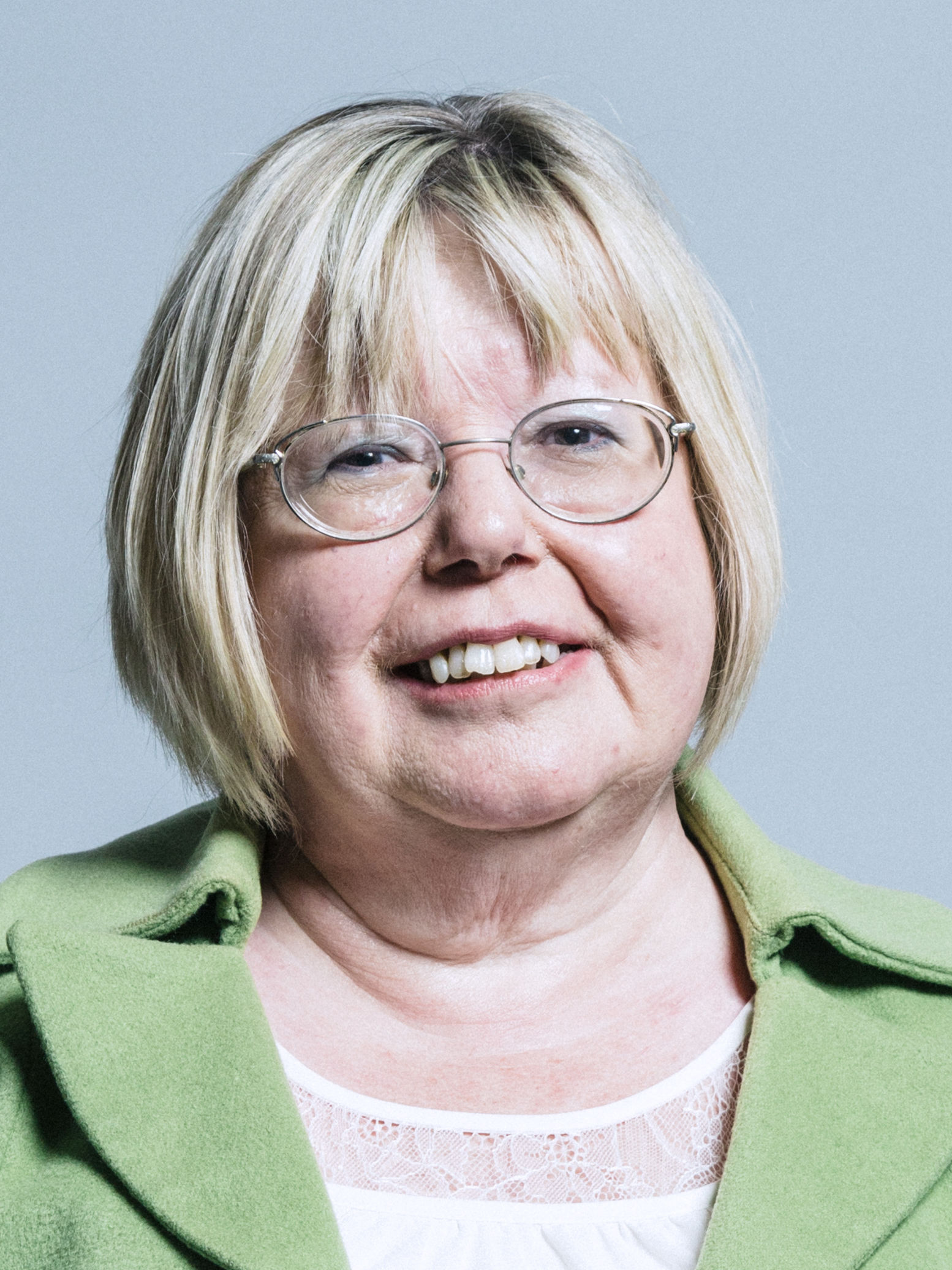
  • Margaret Greenwood – 2020 Speech on the Trade Bill

    Margaret Greenwood – 2020 Speech on the Trade Bill

    Below is the text of the speech made by Margaret Greenwood, the Labour MP for Wirral West, in the House of Commons on 20 May 2020.

    There is a great deal of public concern about the Bill before us today, because it fails to provide for effective parliamentary scrutiny in future trade agreements. In effect, the Government will have free rein to do what they like in signing trade agreements with countries around the world, including countries that do not have the same level of environmental protections, food safety and animal welfare regulations that we currently have. Free trade agreements can have an impact on our labour standards, and on the ability of our public services to operate in the public sector. That has profound implications for the quality of all our lives, and for our democracy.

    Before the current covid-19 crisis, large sections of the public had become aware of the privatisation of the national health service which has been going on under this and previous Conservative Governments. The Bill fails to protect the future of the NHS, since it does nothing to prevent trade deals from being done behind closed doors without proper parliamentary scrutiny.

    The Health and Social Care Act 2012, introduced by the Conservative and Liberal Democrat Government, brought in complex changes, undermining our national health service as a public service delivered by public sector employees. The abolition of the student nurse bursary seemed designed to erode further the public sector ethos of our NHS. Yet, despite this onslaught from the Government, today we see doctors, nurses and other NHS workers putting their all into serving all of us as our country goes through the most terrible of public health emergencies. It is humbling and we owe them an immense debt of gratitude for their outstanding dedication. In this context, it is all the more important that those of us in Parliament and in this place stand up for the NHS and fight to protect it. I believe that the Bill fails to protect the future of our national health service.

    The British Medical Association has been quite clear that the Bill should stipulate that the health and social care sectors are excluded from the scope of all future ​trade agreements to ensure that the NHS can be publicly funded, publicly provided and publicly accountable. It is also quite clear that the Bill should rule out investor protection and dispute resolution mechanisms, to ensure that foreign private companies cannot sue the UK Government for legitimate public procurement and regulatory decisions, and that protections should be included in the Bill to ensure that NHS price control mechanisms are maintained so that patients have access to essential and life-changing medicines.

    I am very concerned that, while our fantastic NHS workers are doing everything they can to tackle covid-19 and provide care and support to anyone who needs it, the Government are seeking to pass a Bill that does nothing to enable elected representatives meaningfully to scrutinise trade deals to protect the NHS. The Trade Justice Movement has said:

    “The current processes are fundamentally undemocratic: Parliament has no guaranteed say on trade deals, and the government is not required to be transparent before or during trade negotiations.”

    At the last general election, the Conservative party manifesto promised:

    “In all of our trade negotiations, we will not compromise on our high environmental protection, animal welfare and food standards.”

    Yet, the National Farmers Union has highlighted the absence of any provisions to safeguard the high farming production standards in the context of the international trade negotiations. Compassion in World Farming has quite rightly said that any new trade agreements must not undermine UK standards for animal welfare, food safety or environmental protections, and that they must protect UK farmers from imports produced to standards lower than those in the UK.

    During the transition period following the UK’s exit from the European Union, trade remedies are dealt with by the EU. At the end of the transition period, we need our own trade remedies authority to investigate alleged unfair practices. However, the new trade remedies authority provided for in the Bill lacks the independence, parliamentary oversight and accountability needed to ensure that it will operate transparently and fairly when investigating and challenging practices that distort competition against UK producers in breach of international trade rules. There is no provision for ensuring a voice on the trade remedies authority for industry bodies or trade unions, and there is no proposed mechanism for their ongoing consultation on trade practices affecting the competitiveness of UK industries or the employment of workers therein.

    To conclude, the Bill fails to make provision for meaningful and effective parliamentary scrutiny of trade deals and gives the Government immense powers to turn back the clock on safety standards in the food we eat, the products we buy, our employment rights and the way in which public services are delivered. It threatens the future of the NHS by leaving it exposed to greatly increased privatisation—

    Madam Deputy Speaker (Dame Eleanor Laing)

    Order. The hon. Lady has exceeded her five-minute limit.

  • Lee Rowley – 2020 Speech on the Trade Bill

    Lee Rowley – 2020 Speech on the Trade Bill

    Below is the text of the speech made by Lee Rowley, the Conservative MP for North East Derbyshire, in the House of Commons on 20 May 2020.

    I am grateful for the opportunity to contribute to this debate. Over the past three months, our primary focus has been coronavirus and the challenge we face on a national and local level. It is right that we have spent a huge amount of time, effort and focus on coronavirus. At the same time, if we do not prepare as parliamentarians for the future beyond coronavirus, whenever that terrible disease eventually moves on, and if we do not spend time thinking through how we reshape the world and take advantage of the opportunities that will come, we are not doing our jobs adequately.

    One of the big jobs is ensuring that we have the right foreign policy, trade policy and international trade policy. That is why I welcome the opportunity to debate this Bill. I do not share the criticisms from Members that we are not giving the Bill adequate scrutiny or that now is not the time to make these decisions. I do not claim to be an expert in international trade, but in some ways, we do not need to be experts in international trade to welcome a Bill that, at its heart, perpetuates the principle that I hope most people in this place stand for: free trade.

    Free trade is one of those principles and ideologies that is not much talked about other than as a negative, but actually, it has significantly improved our lot domestically over many centuries. Vitally, it has also improved the lot of so many people across the world, ensuring that so many people are lifted out of poverty and giving us so many opportunities. Yet Members on the Opposition Benches focus on the challenges or disadvantages of it.

    We as parliamentarians suffer the quagmire—the fog—of special interest groups, who are perpetually rent-seeking when it comes to these Bills. We suffer the white noise of groups such as 38 Degrees who seek to spam us in ways that misinterpret and offer misinformation about the reality of what we are trying to do.

    It is free trade that has partly been responsible for the reduction in absolute poverty by more than half since 1990. It is free trade that contributed to the magnificent growth of economies around the world, such as those in South Korea and Germany, out of the ruins of war 50 or 60 years ago. We should stand up for the opportunities that free trade offers.

    This is not a paean to free trade on just a principled or conceptual basis. Free trade presents demonstrable opportunities for people in my constituency and constituencies across the country. It supports jobs in places like Clay Cross, where people go to work every day in highly skilled factories to export goods across the world. It supports entrepreneurs who see new opportunities and new markets around the world for their ideas, so that they can grow their businesses in places like Dronfield and Eckington. Bluntly, it supports us all in our old age, because we put money into pensions that grow by ​investing in companies that use free trade to satisfy demand, move goods around the world and ensure that, ultimately, people get the things they need. I do not just support free trade from a principled perspective; I support it because it helps North East Derbyshire and every single other constituency in this country.

    We also need to support free trade and Bills such as this because of the opportunities that will come in the next few decades. We will have to get over the challenges caused by coronavirus in the next few years. Opening up markets, seeking to obtain deals across the world and seeking to roll over, as the Bill does, existing deals and enhance them where possible are exactly the kind of opportunities we need to take as we rebuild our country after the grave difficulties that were so unexpected in the last three months or so.

    Free trade does not mean a free-for-all. It means the opportunity to build fair and equitable trade for all of us. Ultimately, free trade and the legislative framework that supports it give us and our constituents the opportunity to build better lives and to offer that to people across the world. It is something I celebrate, and I hope that the majority of people in this House do the same.