Blog

  • Tony Blair – 2001 Speech at Lord Mayor’s Banquet

    Tony Blair – 2001 Speech at Lord Mayor’s Banquet

    The speech made by Tony Blair, the then Prime Minister, on 12 November 2001.

    First let us offer our deep condolences and sympathy yet again to the people of New York and to the families of the victims of the latest air tragedy. Our hearts go out to the brave people there who have been through so much and with such dignity and courage.

    Meanwhile, following the outrage of 11 September, we pursue those responsible for it in Afghanistan. It is clear the Taliban are unravelling. But they are not beaten yet or Al Qaida yet hunted down. We must continue until they are. We must use the territory gained in and around Mazar-e-Sharif to get supplies and food to refugees and the starving inside Afghanistan. Let us show we are as committed to alleviating human suffering as the Taliban are to creating it.

    After the conflict, we must make good our promise to help bring in a broad-based Afghan government, representative of all peoples, including the Pushtoon and enable the reconstruction of that sorry land to take place.

    This mission is important in all its aspects, military, humanitarian and diplomatic.

    The terrible events of 11 September have made the case for engagement not isolationism as the only serious foreign policy on offer.

    The atrocities in New York and Washington were the work of evil men. Men who distorted and dishonoured the message of one of the world’s great religions and civilisations. Their aim was to stimulate militant fundamentalism; to separate the United States from its allies; and to bring our way of life and our economies to their knees.

    In those objectives they have already failed.

    But one illusion has been shattered on 11 September: that we can have the good life of the West irrespective of the state of the rest of the world.

    Once chaos and strife have got a grip on a region or a country trouble will soon be exported.

    Out of such regions and countries come humanitarian tragedies; centres for trafficking in weapons, drugs and people; havens for criminal organisations; and sanctuaries for terrorists.

    After all it was a dismal camp in the foothills of Afghanistan that gave birth to the murderous assault on the sparkling heart of New York’s financial centre.

    The war against terrorism is not just a police action to root out the networks and those who protect them, although it is certainly that. It needs to be a series of political actions designed to remove the conditions under which such acts of evil can flourish and be tolerated. The dragon’s teeth are planted in the fertile soil of wrongs unrighted, of disputes left to fester for years or even decades, of failed states, of poverty and deprivation.

    In April 1999, at the height of the Kosovo crisis, I spoke in Chicago about a doctrine or idea of international community, where we took a more active and interventionist role in solving the world’s problems.

    I elaborated on this idea in my Leader’s speech this year in Brighton.

    Some say it’s Utopian; others that it is dangerous to think that we can resolve all these problems by ourselves.

    But the point I was making was simply that self-interest for a nation and the interests of the broader community are no longer in conflict. There are few problems from which we remain immune. In the war against terrorism the moralists and the realists are partners, not antagonists. The fact we can’t solve everything doesn’t mean we try to solve nothing.

    What is clear is that 11 September has not just given impetus and urgency to such solutions, it has opened the world up. Countries are revising their relations with others, pondering the opportunities for re-alignment. New alliances or deeper alliances are being fashioned, new world views formed. And it is all happening fast. There is a shortcut through normal diplomacy. So we should grasp the moment and move, not let our world slip back into rigidity. We need boldness, grip and follow through.

    The starting point is to make a leap of imagination from this grand hall and splendid banquet to the streets of the Arab world where bright, angry, disaffected young men – by no means always from poor families, but still with neither work nor prospects – seek outlets for their feelings of betrayal and frustration. They fall for dogmas that tell them to blame their troubles on a distant Satan, and gives their lives meaning by committing themselves to relentless struggle.

    We can add to that an extremist and perverted version of Islam which seeks to shoulder aside or overthrow moderate counsels; a failed state in Afghanistan pulled down by poverty and desperation, whose rulers have made common cause with mass murderers; accusations from the Arab world of double standards in the Middle East peace process; in Africa, grinding poverty, pandemic disease, a rash of failed states, where problems seldom leave their stain on one nation but spread to whole regions.

    More broadly we should work to develop inter-faith understanding. Already much is being done to bring the faiths together, like George Carey’s initiative on the World Faiths Development Dialogue. And who can forget the poignant scenes of reconciliation when the Pope went to pray at the Grand Omayyad Mosque in Damascus? Soon George and I hope to convene a seminar of scholars on furthering Christian/Muslim dialogue.

    Systematically in each case we should seek redress.

    The Middle East Peace Process must be re-started. We should contrive the first steps in mutual confidence and security on both sides, one of which would be action by the Palestinian Authority against suspected terrorists and Israel withdrawing fully from Area A. Then after those critical steps, we should reconvene proper negotiations based on two fixed principles: a viable Palestinian state; and the state of Israel accepted fully by its Arab neighbours. If Israel is to recognise that the Palestinians will have their own state, it is only right that the Arab world explicitly and clearly recognises Israel’s right to exist secure within its own borders. Everything else is negotiation and the sooner it starts, the better.

    On Iraq, the time has come for a new UN resolution to provide for the arms inspectors to return and for the Saddam-induced suffering of the Iraqi people to be ended.

    We should offer Syria, Iran and other nations in the same position a new relationship if they will work with us to end violence and promote a solution that is just for both Palestinians and Israelis and if they will join the international consensus on weapons of mass destruction. There can be a new beginning to their relations with the West. The opening is there now; I hope they will take it.

    These countries all have an interest, too, in fighting religious extremism. It is quite extraordinary that Usama Bin Laden should claim over the weekend that Afghanistan is the only Islamic nation in the world. His aim is clear: to Talibanize all Islamic countries around the world. The time has come for the voices of mainstream Islam to take on the extremists. This is not a battle we in the West can fight. We cannot impose our own models on very different societies. But we can help and we can offer support for the vast majority of decent Muslims in that battle. It needs to be made clear again and again that our quarrel is not with Islam but with extremism and fanaticism, whether it be Christian, Jewish, Hindu or Islam.

    In respect of Russia, we should mark the fact that in Afghanistan we have worked together; in the war against international terrorism, we stand together; and that both Russia and the US and EU have much to gain from us being partners. Central to that new relationship should be a change in Russia/NATO relations.

    In Africa, I hope that in the New Year we can put forward a new initiative to tackle emerging conflicts before they develop, and offer the help needed to develop their economies and allow them to provide good governance and democracy for their people; and that a plan for Africa will be agreed at the G7/8 Summit in Canada.

    Success in the talks to launch a new WTO round in Doha is vital. Seattle was a lost opportunity. The negotiations will be tough and with the Conference ending tomorrow, time is now running short. But at this time of economic uncertainty it is essential we agree on the agenda for a new trade round. Success means increased trade flows and rising living standards around the world. Failure would mean a retreat into protectionism and isolationism. All parties should show the necessary flexibility to achieve this.

    Closing down the terrorist network in Afghanistan will not be the end of terrorism. We need to find a way of dealing with weapons of mass destruction to prevent their proliferation both to states and to terrorist organisations. We, in the EU, should offer advice, training and equipment to the countries of central Asia to help them introduce the strongest possible controls on sensitive exports and we should consider increasing our present programmes of support for safe storage and secure destruction of sensitive nuclear and chemical materials.

    We are working hard to find a global solution to the problem of climate change and the agreement in Marrakesh shows that we can come together to tackle one of the most significant environmental challenges of today. We need to continue to improve international co-operation on poverty and the environment in the run up to the World Summit on Sustainable Development in Johannesburg next year.

    And if we are going to have a doctrine of international community we need to strengthen the UN as the body that helps put it into practice.

    In the UN we are lucky to have the leadership of a highly talented and reforming Secretary-General on the threshold of a new term of office. We need to back him in his reforms and give him the practical support he needs. For example, bringing to a close the long drawn out negotiations on UN Security Council reform so that it becomes truly representative and truly effective in its operation.

    In the aftermath of the disasters of the 1930s and the Second World War our predecessors took a number of fundamental courageous and far-reaching decisions. Above all they decided to find collective responses to the scourges of war and economic slump which individual national actions had done more to foment than to resolve. And they established a number of international structures and organisations to provide these collective responses – the UN, NATO, the IMF and the World Bank – that have lasted to this day.

    After the Cold War, despite the talk of a new world order, we failed to renew these institutions or create new ones. Perhaps the euphoria that accompanied the crumbling of the Soviet bloc reduced the incentive to take a hard and radical look at the conduct of international affairs. Now it is time to do so.

    As for Britain, we have much to offer and much to gain, in the changing world taking shape around us. Once again the vital role in foreign policy that our Armed Forces play has been demonstrated. They give us a standing which few can match and we should be very proud of them.

    I hope, too, we have buried the myth that Britain has to choose between being strong in Europe or strong with the United States. Afghanistan has shown vividly how the relationships reinforce each other; and that both the United States and our European partners value our role with the other. So let us play our full part in Europe not retreat to its margins; and let us proclaim our closeness to the United States and use it to bring Europe closer to America.

    The solidarity of our European partners in this present crisis has been total. It will remain so; and that is a real cause for hope.

    Let us in Britain use the strengths of our history – our place in Europe, our alliance with the United States, our traditional ties with the Arab world, India, China or the Commonwealth – to build a solid future of influence for our nation. As I found in South America earlier this year, people respect Britain and want us engaged. We should not disappoint them.

    Above all, I know the British people recognise the link between what happens in the outside world and what happens on our own streets in Britain. The 11 September was an attack on us all. Defeating those responsible is essential to our security; to economic confidence, so badly hit by terrorism; to the stability of our society, from the reduction of external threats down to the drugs trade – 90 per cent of the heroin in Britain originating in Afghanistan.

    Our jobs and living standards depend on confidence in our way of life. Today world events can lift or shatter that confidence. We have much to do at home. But now, more than ever before what we do abroad can affect our homeland. For years, you in the City know the impact of global markets. Now we see the impact of global politics. So let us seize the chance in this time, to make a difference. Future generations will thank us if we do; and not forgive us if we fail.
  • Tony Blair – 2001 Speech on Afghanistan

    Tony Blair – 2001 Speech on Afghanistan

    The speech made by Tony Blair, the then Prime Minister, on 13 November 2001.

    Good afternoon everyone. The military strategy aimed at defeating the Taliban is clearly succeeding. They are in disarray and retreat. However our job is not yet done by any means. We need urgently to put in place the next political and humanitarian moves that the changing military situation now permits. The speed of the Taliban retreat is a tribute to the skill and the professionalism of the coalition forces who have been engaged both in bombing from the air and in supporting and guiding the Northern Alliance on the ground. This has been a US-led operation and I would like to pay tribute to the leadership that President Bush has given. I would also, if I may, offer personal thanks to the British forces who have been engaged in this action.

    But whilst the military strategy is vindicated, and whilst we join of course in the celebrations of the people of Kabul and the other towns and villages from which the Taliban have fled, our forces know, and I know, that this is only setting the conditions in place for our objectives to be achieved. Osama bin Laden remains at large, so do his closest associates. The Taliban regime are not yet fully dislodged from oppressing the people of Afghanistan and shielding Al-Qu’eda. However that task will now be eased by the scale of defections taking place, the ground being gained, and the intelligence being gathered.

    In addition, however, two crucial things. First we need to step up now the humanitarian effort. The World Food Programme objective of 1,700 tons a day is being met. In fact at the present time it is being exceeded, but we need urgently to ensure that with Mazar-e-Sharif secured, we can get the food and aid to those that really need it. I have just spoken to Kofi Annan, the UN Secretary-General, on this issue. I told him that he would have Britain’s full support, practical and logistical, in ensuring that the humanitarian effort succeeds, but we both agreed of the urgent need to make sure that that food aid is actually delivered in with the shelter that people need.

    Secondly, of course, I have spoken to him about the requirement to push on with Mr Brahimi’s efforts to establish a broad-based government and successor to the Taliban regime, and that of course must include all the various elements in Afghanistan, including the Pushtun. That process is well advanced. It is only now, with the military direction so clear, that I think that we are in the right position to be able to bring together the various ethnic and other factions likely to be involved in the formation of any successor government. I believe that we can, therefore, make real progress towards the filling of the current power vacuum in Kabul, but we need a UN presence there as soon as possible, and we need obviously to make sure that we are making as quick progress as we possibly can on assembling all the different elements that need to go to make up that broad-based successor regime.

    And finally, I would simply say to the people of Afghanistan today, that this time we will not walk away from you. We have given commitments. We will honour those commitments, both on the humanitarian side and in terms of rebuilding Afghanistan. We are with you for the long term. You, the people, must agree your own government, and your own future, but we the coalition must give you the help and support that you need as you seek to rebuild your troubled country, and that support will be forthcoming.

    QUESTION

    Do you now believe that the Taliban are beaten, or do you believe that there is a regrouping going on in the South and that there is a lot more to be done on the ground before you can say that.

    PRIME MINISTER

    Well, they are clearly in retreat, and indeed in some places in a state of collapse, but it is too early to say that the objectives have been met. And that is why we need to press on, we need to make sure that we are engaging with any resistance that we find and at the present time, because it is changing literally on an hour by hour basis, the short answer is that we simply can’t be sure, but there is no doubt at all that there has been a fundamental change in the position of the Taliban regime, and you can see by the attitude and rejoicing, frankly, of the Afghan people, that this has been welcomed widely in many parts of Afghanistan.

    QUESTION

    Prime Minister, you and President Bush made it quite clear that you did not want the Northern Alliance to take Kabul. They appear to have ignored that. How confident are you that they will be prepared to play a minority role in a new broad-based government in Afghanistan.

    PRIME MINISTER

    Well, it is not that they ignored that. The situation in Kabul obviously changed when the Taliban left and there was no authority there in Kabul at all, but we have always made it clear, and we make it clear again, that the successor regime to the Taliban regime, led by Mullah Omar, has to be a broad-based regime. It has to include all the various ethnic groupings in Afghanistan, and that obviously must include the Pushtun element, so I think that is very clear and that indeed I believe is accepted by the Northern Alliance. Now of course it is the United Nations that has the authority to take this process forward and I think you will find from the next steps which are taken by Mr Brahimi, who is the UN envoy given the task of assembling people in order to discuss the post-Taliban government of Afghanistan, I think you will find that that is clearly understood.

    QUESTION

    Mr Blair, what more can you tell us about the involvement of British troops? What sort of scale that involvement was, perhaps. And also do you anticipate that British forces will be involved in any interim policing presence which may be necessary, or will that be Moslem nations such as Turkey.

    PRIME MINISTER

    We obviously have been intimately involved with the contact of the coalition campaign, and we certainly stand ready to help in any way that we can in the future. But I face the difficulty, I always do, in discussing what troops we might deploy and where. There are reasons of security, and there are also reasons of diplomacy why these things should be discussed with others first. But I can certainly tell you that the British forces, as you would expect, have acquitted themselves brilliantly in this, and in any other capacity that they may be used, I am sure they will do the same. But I simply can’t speculate on the details of that at the present time.

    QUESTION

    The reports from Kabul, apparently, that 2,000 people from the Northern Alliance have moved in to Kabul and that they say that they don’t want any interference from outside, and there are also reports from other sources of people within Kabul being massacred. Doesn’t this suggest that the military is now out of step with the diplomatic.

    PRIME MINISTER

    No, and I think you need to treat all these reports, frankly at the moment, with some caution. Of course it is a very difficult situation there, and it is changing, as I was saying a moment or two ago, literally hour by hour. But I think the broad outlines of the point the coalition has been making throughout are very, very clear, that we need to make sure that any successor government to the Taliban regime is broad-based. The UN obviously are going to be closely involved, and the other thing that I would say to you is that for us, and for the coalition, our objectives of course were to close down the entire terrorist network in Afghanistan. And those objectives, although they have been partially successful so far, although we have succeeded in them partially, we have not yet completed that task, and we need to make sure that we can. So there will be all sorts of reports coming out of Afghanistan at the moment, and I would wait until they are confirmed to see exactly what the situation.

    QUESTION

    What sanctions do we have over the Northern Alliance?

    PRIME MINISTER

    None.

    QUESTION

    Are you sure that if the Northern Alliance does indeed partake in this broad-based coalition allow you to have a say when they are clearly in Kabul, and there are people evidently saying that we won’t take orders from foreigners.

    PRIME MINISTER

    Well I think that throughout, the Northern Alliance have realised that their success, because after all this is a military situation that hasn’t started with the 11th of September, it was going on for many, many months, even years before then. It has changed dramatically in the last two months or so. Now that is because there has been a combination of the Northern Alliance forces, supported both by people on the ground from the coalition, and by bombing from the air. The basis on which that support was given was very clear, and that remains the case. And I think you will find as the situation progresses over these next few days, that everybody understands that the successor regime in Afghanistan has to be broad-based to be successful because there are large numbers of Pushtun people, particularly in the South of the country who have to be involved in any successor regime. And it is necessary also to make sure that any successor regime is a stable partner for the surrounding countries in the region. Now I believe that that is very clearly understood.

    QUESTION

    Prime Minister, are you still convinced that Osama bin Laden is in Afghanistan. And also, in light of the speed and surprising progress you have made, that you have a greater chance of either catching him or killing him.

    PRIME MINISTER

    We believe that he is still in Afghanistan, yes. And as for our ability to catch up with him, that has obviously increased as the power and authority of the Taliban regime that was shielding him is destroyed, but I can’t really say any more than that at this stage. Obviously, one of the reasons why as we said ? if you go back to the objectives we set right at the beginning. We set as our objectives, closing down the Al-Qu’eda terrorist network, indeed the entire terrorist network in Afghanistan, and bringing bin Laden and his associates to justice. We gave the Taliban a choice: you either help us in that, which the entire world community wants you to do, or you are treated as an enemy. They refused to yield up bin Laden, or the al-Qu’eda network ? Indeed they came closer together with them ? and that Taliban regime has now disintegrated. Obviously, therefore, we have a better chance with a different regime in place, of pursuing that primary objective, but it still remains to be achieved, and that is why I say to you that there is a new dimension now, and a new urgency given to the political and humanitarian moves. But the military campaign is not yet over until the objectives are fully secured.

  • Gavin Williamson – 2020 Comments on Triple Lock on Student Results

    Gavin Williamson – 2020 Comments on Triple Lock on Student Results

    The comments made by Gavin Williamson, the Secretary of State for Education, on 12 August 2020.

    Every young person waiting for their results wants to know they have been treated fairly. By ensuring students have the safety net of their mock results, as well as the chance of sitting autumn exams, we are creating a triple lock process to ensure confidence and fairness in the system.

    No one wanted to cancel exams – they are the best form of assessment, but the disruption caused by Covid-19 meant they were not possible.

    This triple lock system will help provide reassurance to students and ensure they are able to progress with the next stage of their lives.

  • Layla Moran – 2020 Comments on UK Entering Recession

    Layla Moran – 2020 Comments on UK Entering Recession

    The comments made on Twitter by Layla Moran, the Liberal Democrat MP for Oxford West and Abingdon, on 12 August 2020.

    Even during a recession, everyone should have the security to live life as they choose. We need a Universal Basic Income, decent investment in public services and a greater focus on wellbeing – for a sustainable, fair recovery that leaves no-one behind.

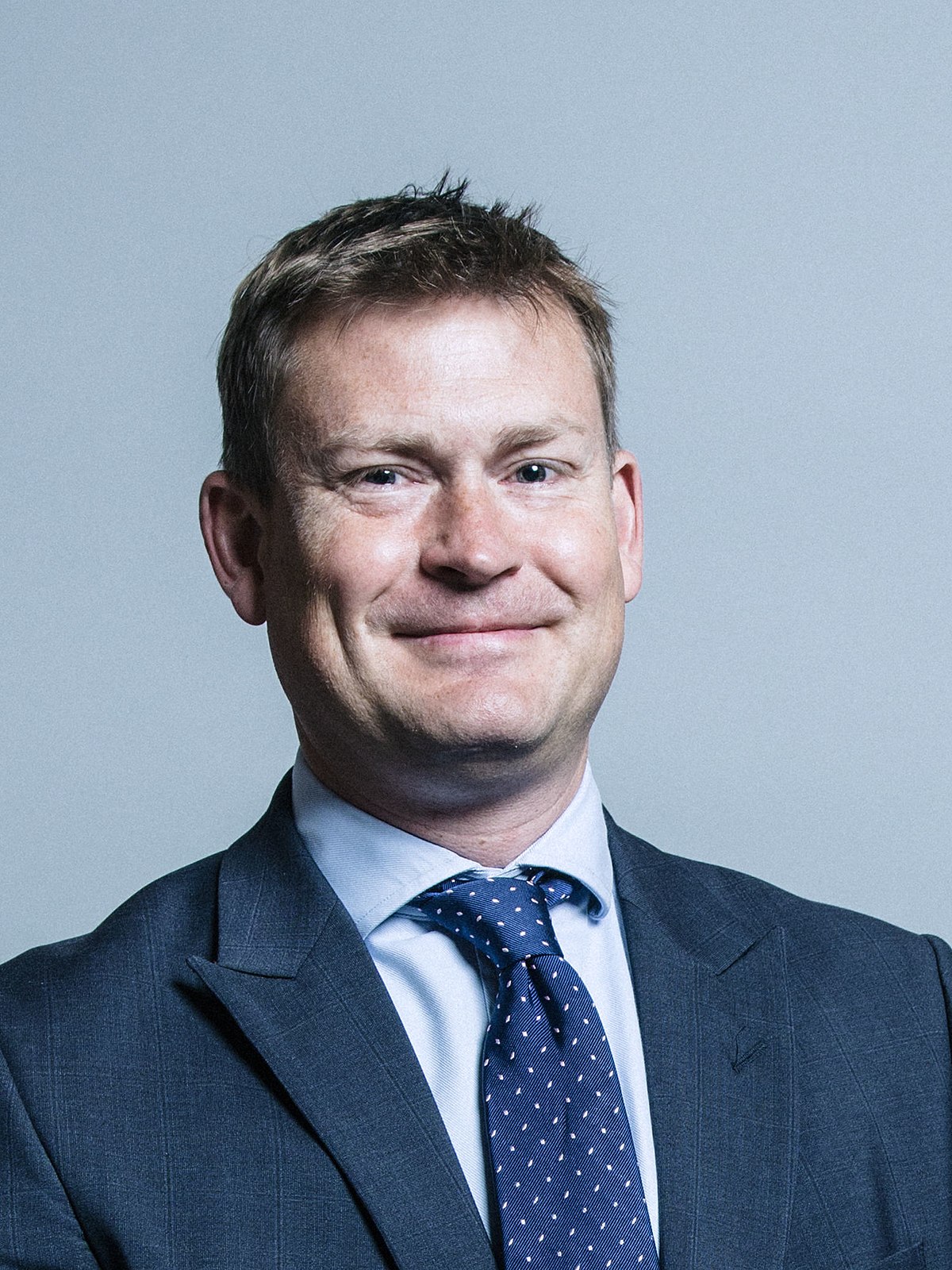
  • Justin Madders – 2020 Comments on More People Studying Nursing

    Justin Madders – 2020 Comments on More People Studying Nursing

    The comments made by Justin Madders, the Shadow Health Minister, on 12 August 2020.

    Nurses have been at the heart of the fight against Coronavirus, working day and night to protect the NHS and save lives. It is a positive that the great work they have done has received greater recognition and more applications, but with over 40,000 nurse vacancies we are still nowhere near the scale required to end the staffing crisis.

    Too often we hear of nurses leaving in their droves because they are overworked, underpaid and underappreciated. If this government is serious about attracting people to work as nurses then they need to show that it values those who already do, give them the equipment they need and give them the pay talks they deserve.

  • Anneliese Dodds – 2020 Comments on Worst Recession in Europe

    Anneliese Dodds – 2020 Comments on Worst Recession in Europe

    The comments made by Anneliese Dodds, the Shadow Chancellor of the Exchequer, on 12 August 2020.

    We’ve already got the worst excess death rate in Europe – now we’re on course for the worst recession too. That’s a tragedy for the British people and it’s happened on Boris Johnson’s watch.

    The Prime Minister will say there’s only so much he could do during a global pandemic, but that doesn’t explain why our economy is tanking so badly compared to other countries.

    It was his government that snatched away wage support for businesses that hadn’t even reopened yet. And his government that failed to get test, trace and isolate working despite claiming it’s a ‘world-beating’ system.

    A downturn was inevitable after lockdown – but Johnson’s jobs crisis wasn’t. Now he must take responsibility, scrap the one-size-fits-all withdrawal of wage support and bring the health crisis properly under control.

  • Jonathan Reynolds – 2020 Comments on Universal Credit Numbers

    Jonathan Reynolds – 2020 Comments on Universal Credit Numbers

    The comments made by Jonathan Reynolds, the Shadow Work and Pensions Secretary, on 11 August 2020.

    Britain is in the midst of a jobs crisis. As Universal Credit hits 5.5 million the Government must reconsider its position on sanctions and conditionality, which risk plunging millions into hardship and do nothing to help people back to work.

    In particular, it is extremely worrying that this increase in unemployment has hit older workers, the self-employed and part-time workers hardest.

    Every job lost is a tragedy and we must do all we can to safeguard people’s livelihoods. The Government must wake up to the scale of this crisis and adopt a more flexible approach targeted at the sectors who need it most.

    Labour believes Universal Credit should be replaced with a system which offers a proper social security safety net and decent support to all.

  • Chi Onwurah – 2020 Comments on Business Loan Scheme Statistics

    Chi Onwurah – 2020 Comments on Business Loan Scheme Statistics

    The comments made by Chi Onwurah, the Shadow Science, Research and Digital Minister, on 11 August 2020.

    It cannot be right that hundreds of thousands of businesses have been shut out of the support promised to them in this time of crisis. Ministers need to sort their system out and urgently accelerate access to support. Failure to do so risks the future of all these businesses, the bread and butter of Britain’s economy, as well as scores of livelihoods across the country.

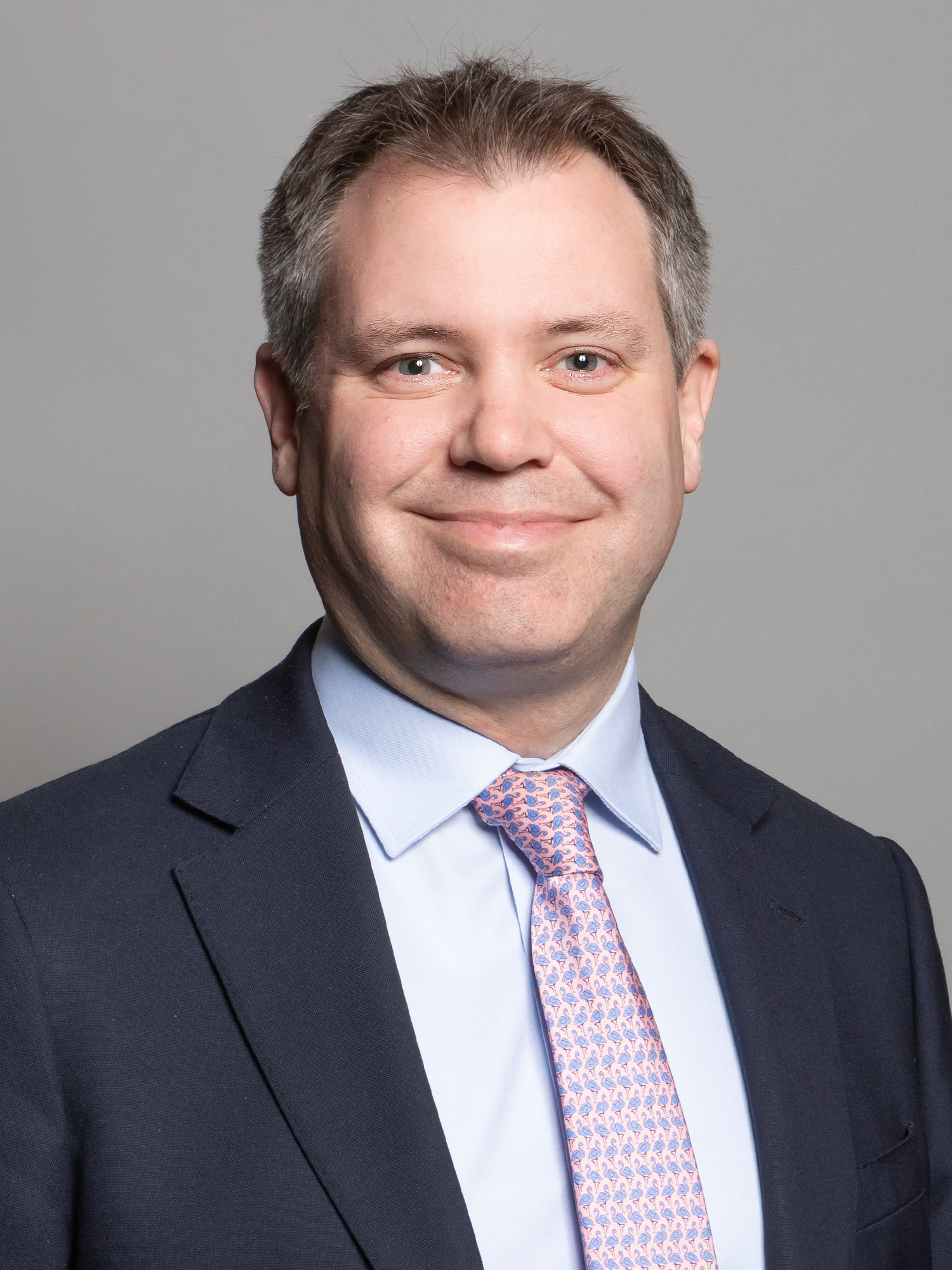
  • Edward Argar – 2020 Comments on NHS Funding

    Edward Argar – 2020 Comments on NHS Funding

    Comments made by Edward Argar, the Health Minister, on 11 August 2020.

    Our NHS did an amazing job to ensure emergency care continued to be available for everyone who needed it during the peak of this pandemic.

    Today, we are announcing the details of the Trusts across the country who will receive a share of £300 million to upgrade their A&Es and support emergency care to help them to continue to deliver safe and accessible services throughout the normally busy winter period.

    This funding is part of our record investment in NHS infrastructure to ensure our health services continue to meet the needs of the present and to be fit for future demands placed upon it.

  • Boris Johnson – 2020 Comments on NHS Funding

    Boris Johnson – 2020 Comments on NHS Funding

    Comments made by Boris Johnson, the Prime Minister, on 11 August 2020.

    We continue to deliver on our promise to build back better and faster, with £300 million allocated today for NHS trusts to upgrade their facilities and improve A&E capacity.

    These upgrades will help our fantastic NHS prepare for the winter months, helping them to deliver essential services and reduce the risk of coronavirus infections.

    Thanks to the hard work and tireless efforts of NHS staff throughout the pandemic, our A&Es have remained open for the public.

    It’s vital that those who need emergency treatment this winter access it, and for those who remain concerned about visiting hospitals, let me assure you that the NHS has measures in place to keep people safe.