Blog

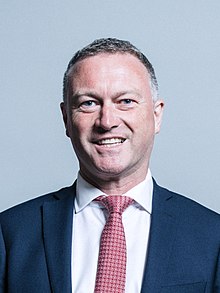
  • Steve Reed – 2020 Comments on Robert Jenrick

    Steve Reed – 2020 Comments on Robert Jenrick

    The comments made by Steve Reed, the Shadow Communities Secretary, on 11 October 2020.

    Robert Jenrick must answer serious allegations that he used the Towns Fund to channel public money to help Conservative Party candidates ahead of the General Election. His admission that Jake Berry selected his constituency to receive funds, and that he in turn selected Jake Berry’s throws up further questions about what went on.

    If Robert Jenrick has nothing to hide, he should submit himself to a full investigation to clear up this murky affair. People deserve to know that taxpayers’ cash isn’t being misused by the Conservatives for their own gain.

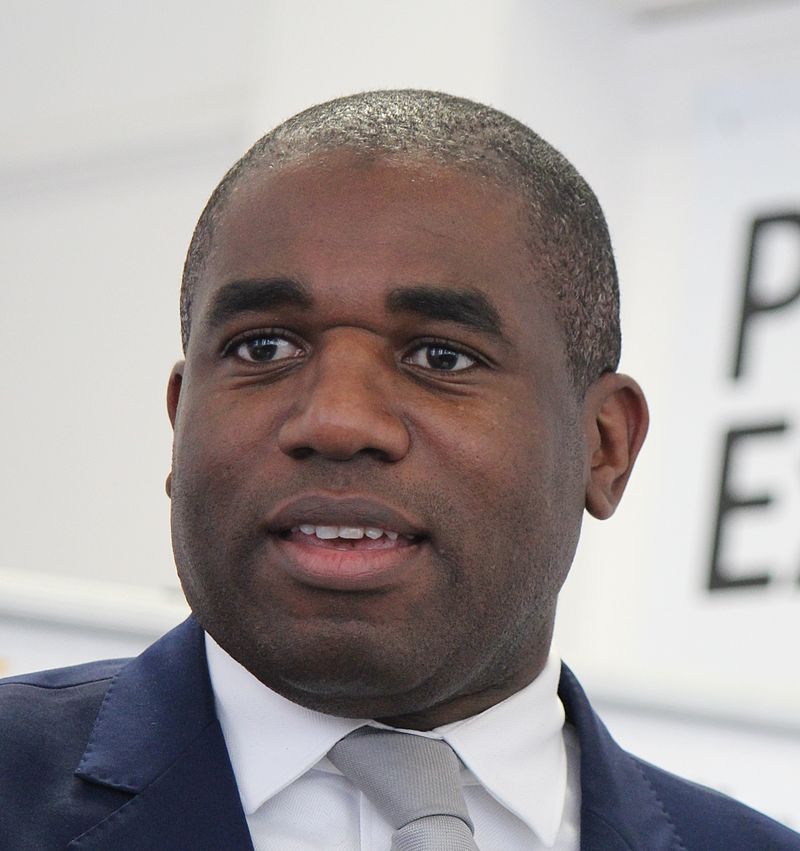
  • David Lammy – 2020 Comments on Virus on Prisons

    David Lammy – 2020 Comments on Virus on Prisons

    The comments made by David Lammy, the Shadow Secretary of State for Justice, on 9 October 2020.

    The sudden jump in coronavirus cases in prisons is very concerning and should act as a warning against complacency in the Ministry of Justice.

    We know from explosions of coronavirus cases among prison populations in other countries that prisons can be ticking time bombs in this pandemic. Major outbreaks in prisons will not only cause unnecessary deaths of prisoners and staff, they can overwhelm local hospitals and spread the virus outside of their walls.

    To prevent the virus from getting out of control in prisons, Ministers need to do more to meet their target headroom across the prison estate of 5,500, as outlined by Public Health England and HMPPS. Alongside this, the government needs to urgently fix coronavirus testing and tracing across the population as a whole.

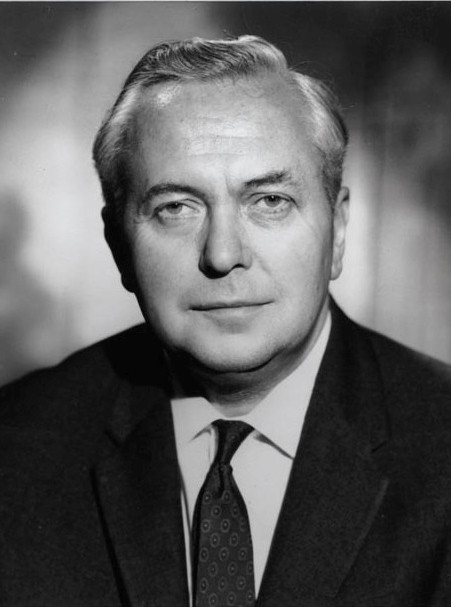
  • Harold Wilson – Comments on Establishing the Welsh Office

    Harold Wilson – Comments on Establishing the Welsh Office

    The comments made by Harold Wilson in his autobiography.

    Of great importance to over two and a half million people was the creation of a Welsh Department under the Secretary of State for Wales, with a seat in the Cabinet. Based to a considerable extent on the Scottish Office, which had existed since 1885, it was given full responsibility for local government, housing and planning, economic planning, roads, forestry and derelict land clearance and later for tourism and health, together with shared responsibility for agriculture with the ministry.

  • Matt Hancock – 2020 Speech to NHS Providers

    Matt Hancock – 2020 Speech to NHS Providers

    The speech made by Matt Hancock, the Secretary of State for Health and Social Care, on 8 October 2020.

    Good afternoon.

    I’m very glad to have the chance to talk to you today. Because we are at a perilous moment in the course of this pandemic.

    I am very worried about the growth in the number of cases, especially in the North West and North East of England, and parts of Wales, Scotland, Northern Ireland, and parts of Yorkshire.

    You have all had the most extraordinary 9 months, and in my view you have risen to the challenge.

    But in parts of the country, the situation is again becoming very serious.

    Hospitalisations in the North West are doubling approximately every fortnight.

    And have risen by 57% in just the just last week alone.

    Unfortunately, we are seeing hospitalisations of the over 60s rising sharply, and the number of deaths from coronavirus also rising.

    And we know from bitter experience that the more coronavirus spreads, the harder it is to do all the other vital work of the NHS.

    Yesterday, we heard from the Academy of Royal Colleges.

    Helen Stokes-Lampard said: “If we don’t act fast we risk the NHS being overwhelmed and risk all the good work done to restore services.”

    And then this morning, we heard from the Royal College of Emergency Medicine.

    When Katherine Henderson said: “If we do not come together and take effective precautions, COVID will continue its explosion across the country, the consequences of which could be the implosion of the NHS this winter.”

    The message to the public must be that we all have a part to play, to control this virus.

    Our strategy is simple: suppress the virus, supporting the economy, education and the NHS, until a vaccine can make us safe.

    My message to you, and to everyone who works in the NHS, is that we can, and we will, get through this.

    Sadly, there will be more difficult times ahead.

    But we will get through it together.

    And one of the good things that has happened this year, and there have been some good things, is that the whole public, has shown just how much it appreciates the NHS.

    There’s only one organisation that can inspire people to applaud from their doorsteps and balconies, come rain or shine.

    That can inspire colourful support in windows across the land.

    There’s only one organisation that can inspire a heroic centenarian to walk laps of his garden and inspire millions of people to sponsor him.

    The NHS. The best gift a nation ever gave itself.

    And this year, when all nations faced peril and adversity, the NHS was there for us, as it always is, and always must be.

    The spontaneous outpouring of admiration that we have seen from all corners of this country, I think that is testament to how much people cherish this amazing institution.

    We all pulled together to protect the NHS.

    But crucially, it’s the NHS that protects us all.

    Not just the doctors and nurses, and I want to say this very directly, but the cleaners, porters, mental health teams, ambulances, and all the diverse and varied parts of this incredible system.

    During the greatest public health crisis in a generation, you have been the linchpin of our national effort.

    And we must work together for the population who we serve, through this pandemic and beyond.

    Today I want to say a few words about how.

    People

    First of all, of course, the NHS is only as good as its people.

    And if the last few months have shown us anything it is that the NHS is blessed with exceptional people.

    And we are doing everything in our power to support them, and boost their number.

    During the crisis, we put out a call for former health and care professionals to return to the front line – and 47,000 volunteered to play their part.

    I think this is an incredible testament. To them, and to every single one of our 1.4 million strong team – and the over 2 million in social care – I want to say, on behalf of the nation, thank you. Thank you for your service.

    Our returnees were supported by people from all walks of life who stepped up.

    Furloughed cabin crew redeployed into call handling roles.

    Clinically trained firefighters provided surge capacity for our ambulance services.

    Volunteers delivered hot food to the vulnerable, and to NHS staff.

    This was a phenomenal effort from so many, new recruits and established colleagues.

    And we all learned just how flexibly we can work when needs must. This sort of flexibility helped the NHS really deliver, and it is something we should hold onto for the future.

    And, of course, we are looking to expand the workforce for the long term, through our plans to recruit 50,000 more nurses, and more clinical staff.

    This work is bearing fruit.

    This year we have seen doctors numbers at their highest ever.

    And over the last year, we’ve seen the number of nurses increase by over 14,000.

    And we owe it to them, and all our NHS colleagues, to take forward some of the positive changes that we’ve seen during this pandemic.

    From my point of view I’ve seen that the white heat of the crisis showed us a lot about our health service.

    And for me, what was most illuminating was to see how some of the things that I know frustrate you all.

    Like some of the bureaucracy and the hierarchy that too often gets in the way of caring for patients.

    How a lot of this melted away.

    Of course, it is important that we have the guide rails so we can measure performance and hold ourselves to the highest standards.

    But in a health and social care system like ours, that has evolved over the course of over 70 years.

    It is easy for layers of overlapping and disproportionate bureaucracy to build up over time.

    I hear from providers what this can mean on the ground – multiple requests for information that don’t add value.

    Multiple layers of instruction when we need to devolve trust.

    Not enough support for the frontline staff who are doing a really stressful job.

    So, we must learn from this illumination.

    We must look at every rule and process afresh, and ask whether it makes sense after what we’ve learnt from the pandemic.

    And we must increase our support to the frontline.

    A few months ago, I launched our Red Tape Challenge within the NHS and social care, inviting views from colleagues on how we could bust bureaucracy.

    How we could free up our colleagues’ time to focus on what matters – giving care.

    And our team has been interviewing people from across the system.

    And we have received hundreds of submissions directly from staff, with over 1,000 suggestions of where things could be improved.

    The responses themselves have been illuminating.

    As one frontline member of staff told us: “All of a sudden we could do everything we needed to do quickly and efficiently because of COVID.”

    And that: “We have coped fine without endless meetings and forms.”

    Hallelujah.

    I can hear lots of you relating back to seeing the same experience.

    We also heard from providers that they welcome the ability to act with more flexibility – for example, greater freedom around redeploying staff and contracting.

    And I heard, too, of the multiple reports that have proposed reduced bureaucracy in the past, but haven’t been acted on.

    Many times I was told that this question has been asked and then nothing has been done about it.

    So we will act on the suggestions we’ve heard.

    We will act on the recommendations of the reports that have already charted the way, but been left to one side over the past decade.

    I want to keep this momentum going, working with you with the goal of making it easier for you to do your jobs.

    So that we build a better health service, ultimately for our patients and for our colleagues on the front line to deliver care.

    Now, I know how difficult these past few months have been for so many.

    And the survey published by NHS Providers this week showed that many colleagues are feeling tired and burnt out.

    Believe me, I get it. I want to do everything I can.

    The People Plan has already set out our commitment to investing in health and wellbeing in the future.

    Through increased flexible working.

    Through creating an inclusive and diverse workplace. That’s a culture change that we know we need to see.

    And through boosting opportunities for education and training.

    And today I can announce a new research project to understand and address the impact of this pandemic on our NHS staff.

    Researchers will work across England to identify those most in risk, and most in need of tailored support.

    And we will place a particular focus on colleagues from black, Asian and minority ethnic backgrounds, who we know, tragically, have been particularly affected by this virus.

    There is more to do.

    And I pledge, every day, that I will do whatever it takes to protect the people who do so much every day to protect us.

    Systems

    The next thing I want to turn to, is how we make sure the systems work as well as possible. Even if people are healthy and happy, they can’t perform at their best if the system isn’t set up to support them.

    No one designing the NHS would set it up in the way it is set up now.

    A system where primary care, community care, pharmacies, mental health trusts, and many, many, other parts, exist – at least in law – as atomised and isolated institutions.

    No. A collaborative approach is essential for us to have better, less fragmented decision-making.

    To treat complex conditions better.

    And to provide the best care for everyone who needs it, in the setting that is best for them.

    And to provide preventative care to keep people healthy in the first place.

    Now, I don’t believe in reorganisations designed in Whitehall offices, based on management consultants’ spreadsheets.

    I am allergic to all that. It is my job to improve the system we’ve got so it works better for everyone. It is the hard yards of incremental reform.

    In fact, it’s every single person’s job to improve their part of the system, so that it works better for everyone.

    All 1.4 million of us ought to be working together to improve the system that we’ve got.

    I know there is a strong and growing consensus behind the systems-led approach.

    Streamlining work by bringing together commissioners, providers and local authorities, to plan services for the populations we serve.

    And we will move to the system by default. We will remove barriers that prevent collaboration, and follow the approach set out in the Long-Term Plan.

    We will improve, rework, join up and tie systems together so we can all focus on the people that matter: the populations we serve.

    When battling coronavirus, we have been able to solve problems together at a systems level that previously would have been impossible to crack.

    We will deliver ICSs in all geographies by April, and take them further still.

    We will strengthen how systems operate, across all parts of the NHS, and tie in tightly with local authority colleagues who share our mission to the populations we serve.

    So bringing to bear the whole wealth and diversity of experience that exists in a local area.

    All with the shared goal of helping people to live healthier lives for longer.

    Recovery

    We must make these improvements, even while we battle coronavirus, because they will help us to battle coronavirus.

    And we must learn from how we have battled coronavirus.

    And we’ve got to recognise the Herculean efforts, both to keep services going, and to get us ready for winter.

    And I want to touch on what I think is a seldom-discussed success during this pandemic, which was just how much urgent non-COVID work we were able to keep going at the peak.

    As well as treating COVID , cancer treatments continued at 82% of usual levels between March and July.

    Our A&Es stayed open.

    Primary care and outpatients switched to telemedicine faster than I could ever possibly have imagined.

    It has been a phenomenal team effort and I would like to thank and pay tribute to everyone who has been involved.

    Not just to those who maintained and delivered the services, but everyone who created the infrastructure – including that digital infrastructure – that made it possible.

    We will keep doing everything we can to keep non-COVID treatments and diagnostics going over the next few months.

    And the more coronavirus is under control, the more we can continue the recovery and keep essential services open.

    As we prepare for the tough months ahead, I have no doubt that we will see the same dedication and care that we have seen all the way through 2020 – the NHS’s most challenged year.

    Conclusion

    And I pledge you this:

    This year has proved beyond measure the importance of our nation’s most cherished institution.

    At our best moments in our lives, and at some of our worst.

    The NHS is always there for all of us.

    And at a time when it is being tested like never before, for this pandemic and into the future, it will be always at your side.

  • Keir Starmer – 2020 Comments on the Prime Minister’s Handling of the Crisis

    Keir Starmer – 2020 Comments on the Prime Minister’s Handling of the Crisis

    The comments made by Keir Starmer, the Leader of the Opposition, on 9 October 2020.

    We are at a crossroads in our national effort to defeat the coronavirus. Infection rates are rising, hospital admissions are climbing and families across Britain are increasingly anxious about the looming threat of a second national lockdown.

    At this moment of national crisis, people want hope that there is light at the end of the tunnel. Families want to know that they will be able to send their children to school, grandparents want to know that they will be able to see their grandchildren at Christmas and businesses want to know that they have a future.

    This is the moment when we needed maximum confidence in the Government’s approach. People aren’t asking for miracles – they just want to know that the Prime Minister has a plan and a strategy in place. However, what we have seen in recent weeks is a Government that has lost control: lost control of its message; lost control of testing; and – crucially – lost control of the virus.

    I understand the need for local restrictions. We have long argued that the only way we can curb the spread of the virus and keep the economy going is by having a targeted response that can tackle local outbreaks and reduce the infection rates. However, something is going seriously wrong with the Government’s approach at the moment. Out of the 20 areas of the country that have been in restrictions for at least two months, 19 have seen the infection rate go up. That is a sign of significant failure.

    We are a great country. We should not have one of the highest death rates in the world or one of the worst recessions. Nor should it be inevitable that we have to impose further restrictions. But, because of the Government’s serial incompetence, further restrictions are becoming increasingly likely and, sadly, necessary.

    The Government has got to get a grip of this situation urgently before it spirals out of control.

    First, we need to guarantee local leaders are in the room and involved in decisions about restrictions in their area. At the moment the Government is operating under the misguided, arrogant and counterproductive view that ‘Whitehall knows best’, that decisions can be made behind closed doors, without any real consultation or by even picking up the phone to those on the frontline.

    The party that was elected on a promise to level up is instead talking down to huge swathes of the country. This is fuelling public frustration and resentment in the system.

    Second, we have got to fix testing. We can only control the virus if we know where the virus is. That is why I said a few months ago that the Government needed to spend the summer, when cases were much lower, building a testing system that works. They failed to do so, distracted by a series of fiascos of their own making. Now we hear stories of families struggling to get a test and, when they do, having to wait days for a result.

    We don’t need a world beating testing system, we just need one that works. That is why I have said repeatedly to the Government that it needs to invest in NHS and university labs to expand capacity, and to put local public-health teams in charge of contact-tracing. We also need to ensure routine, regular testing for high-risk workplaces and high-transmission areas, with results within 24 hours to improve infection control, including for NHS staff, teachers and carers.

    Finally, we need to give people confidence that there is a strategy in place. It was an act of gross irresponsibility for anonymous Number 10 sources to tell a few newspapers on Thursday about plans to impose further restrictions on millions of people, without any detail, without any consultation and without any statement from the Prime Minister. This has significantly added to the sense of confusion, chaos and unfairness in the approach that is being taken.

    Families who have already sacrificed so much during lockdown will now spend the next few days anxious and worried about whether they will be able to see each other.

    Businesses, which have stepped up to help our country and economy through this pandemic, will face a weekend of uncertainty about whether or not they will be able to stay open.

    People will be confused about whether or not they can go to pubs and restaurants. The government has not lived up to its side of the bargain.

    When I was elected Leader of the Labour Party, I said that we would be a constructive opposition, with the courage to support the Government where that’s the right thing to do, and the courage to challenge the Government where mistakes are being made. I stand by that commitment.

    However, that approach only works if the Government, for its part, is constructive and competent, able to learn from its mistakes and willing to take the decisions that are necessary in the best interests of the British people. For too long, the Government has failed to acknowledge obvious problems, treated challenge with contempt, ploughed on with disastrous consequences and then sought to blame others for its own mistakes. If we are to find a constructive way through this pandemic, that has to change.

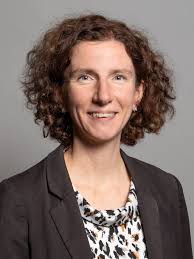
  • Anneliese Dodds – 2020 Comments on GDP Figures

    Anneliese Dodds – 2020 Comments on GDP Figures

    The comments made by Anneliese Dodds, the Shadow Chancellor of the Exchequer, on 9 October 2020.

    It is deeply worrying that growth was weak in August despite the easing of restrictions, especially as we now face Covid-19 cases rising and more areas coming under local restrictions.

    The Government must get a grip on test, trace and isolate, reform the sink or swim Job Support Scheme and urgently put in place consistent economic support for areas of localised restrictions.

    If the Chancellor doesn’t act, we risk a devastating spike in unemployment that will choke off the recovery as we head into winter.

  • Anneliese Dodds – 2020 Comments on the Job Support Scheme

    Anneliese Dodds – 2020 Comments on the Job Support Scheme

    The comments made by Anneliese Dodds, the Shadow Chancellor of the Exchequer, on 9 October 2020.

    The Chancellor should have introduced a Job Recovery Scheme that incentivised employers to keep more staff on. Instead, his Job Support Scheme makes it more expensive to bring staff back than many other international schemes.

    Viable businesses just need support to cope with the restrictions the Government has imposed on them. They pinned their hopes on the Chancellor to deliver, but he’s forcing them to flip a coin over who stays and who goes.

    This wasn’t by accident – it was by design. The Chancellor’s sink or swim Job Support Scheme is a throwback to the worst days of Thatcher, and just like in the 1980s people on the lowest incomes will pay the highest price.

  • Papa John’s – 2020 Statement on Allegations of Defrauding Taxpayers

    Papa John’s – 2020 Statement on Allegations of Defrauding Taxpayers

    The statement issued by Papa John’s pizza company following allegations made by the Daily Mail on 9 October 2020 about the Eat Out to Help Out Scheme.

    We will be extremely concerned and disappointed if they [the allegations made by the Daily Mail] prove to be true. All of Papa John’s UK stores are run by franchisees and we made it very clear to all franchisees that we felt it unlikely that they would be eligible to participate in Eat Out To Help Out (EOTHO).

    It is important that our investigation is completed fully before drawing any conclusions, but if any franchisee participated improperly in EOTHO, they will have been in breach of their franchise agreement with us, and we will require them to make things right.

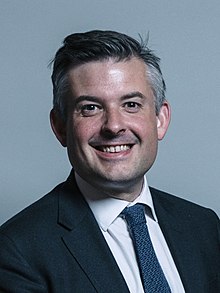
  • Jonathan Ashworth – 2020 Comments on NHS Performance Statistics

    Jonathan Ashworth – 2020 Comments on NHS Performance Statistics

    The comments made by Jonathan Ashworth, the Shadow Secretary of State for Health and Social Care, on 8 October 2020.

    This is a staggering increase in people waiting beyond 12 months for treatment. It means people suffering longer in pain and distress and is simply unacceptable. Everyone understands the pressures facing the NHS but ministers have a responsibility to bring forward plans to ensure people receive the treatment they need on time.

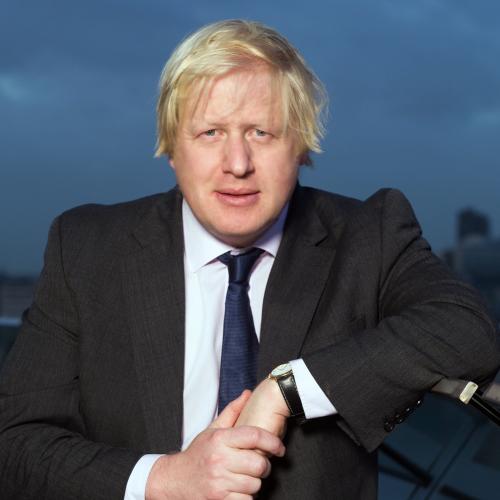
  • Boris Johnson – 2020 Speech at Conservative Party Conference

    Boris Johnson – 2020 Speech at Conservative Party Conference

    The speech made by Boris Johnson, the Prime Minister, on 6 October 2020.

    Good morning conference, I want to begin by thanking you for everything you did at the election, pounding the streets in the middle of winter, prodding leaflets through the letterbox and into the jaws of dogs, to save this country from socialism and to win this party the biggest election victory in a generation.

    I was going to say how great it is to be here in Birmingham but the fact is that we are not in Birmingham. This is not a conference hall, and alas I can’t see any of you in front of me.

    There is no one to clap or heckle, and I don’t know about you but I have had more than enough of this disease that attacks not only human beings but so many of the greatest things about our country: our pubs, our clubs, our football, our theatre and all the gossipy gregariousness and love of human contact that drives the creativity of our economy.

    So I want to thank you all for zooming in, and I can tell you that your government is working night and day to repel this virus, and we will succeed, just as this country has seen off every alien invader for the last thousand years and we will succeed by collective effort, by following the guidance and with the help of weekly and almost daily improvements in the medicine and the science, we will ensure that next time we meet it will be face to face and cheek by jowl, and we are working for the day when life will be back to normal, flying in a plane will be back to normal, and hairdressers will no longer look as though they are handling radioactive isotopes, and when we can go and see our loved ones in care homes, and when we no longer have to greet each other by touching elbows as in some giant national version of the Birdie dance.

    I know the people of this country are going to defeat this virus because I have seen how the country has responded before, with the energy and self-sacrifice of the NHS, the care workers, the armed forces – the spirit that was incarnated in the bounding, boundless devotion of captain Tom Moore.

    But after all we have been through it isn’t enough just to go back to normal. We have lost too much. We have mourned too many.

    We have been through too much frustration and hardship just to settle for the status quo ante – to think that life can go on as it was before the plague; and it will not. Because history teaches us that events of this magnitude – wars, famines, plagues; events that affect the vast bulk of humanity, as this virus has – they do not just come and go.

    They are more often than not the trigger for an acceleration of social and economic change, because we human beings will not simply content ourselves with a repair job.

    We see these moments as the time to learn and to improve on the world that went before.

    That is why this government will build back better.

    And to explain what I mean by build back better, I will use a medical metaphor.

    I have read a lot of nonsense recently, about how my own bout of Covid has somehow robbed me of my mojo. And of course this is self-evident drivel, the kind of seditious propaganda that you would expect from people who don’t want this government to succeed, who wanted to stop us delivering Brexit and all our other manifesto pledges – and I can tell you that no power on earth was and is going to do that – and I could refute these critics of my athletic abilities in any way they want: arm-wrestle, leg-wrestle, Cumberland wrestle, sprint-off, you name it.

    And yet I have to admit the reason I had such a nasty experience with the disease is that although I was superficially in the peak of health when I caught it I had a very common underlying condition.

    My friends I was too fat. And I have since lost 26 lbs, and you can imagine that in bags of sugar and I am going to continue that diet, because you’ve got to search for the hero inside yourself in the hope that that individual is considerably slimmer, and when you look at the general economic condition of this country when we went into lockdown there was a similarity because we were on the face of it in pretty good shape.

    We had a record number of people in jobs. We had record low unemployment. We were seeing growing exports; and the only reason as Rishi Sunak pointed out in the last few months that we have been able to cope with the cost of the pandemic – to look after jobs and livelihoods in the way that we have – is that in the previous years we had sensible conservative management of the public finances.

    And yet if you looked more carefully you could see – and indeed many of us said so at the time – that the UK economy had some chronic underlying problems: long-term failure to tackle the deficit in skills, inadequate transport infrastructure, not enough homes people could afford to buy, especially young people – and far too many people, across the whole country, who felt ignored and left out, that the government was not on their side; and so we cannot now define the mission of this country as merely to restore normality.

    That isn’t good enough.

    In the depths of the second world war, in 1942 when just about everything had gone wrong, the government sketched out a vision of the post war new Jerusalem that they wanted to build. And that is what we are doing now – in the teeth of this pandemic.

    We are resolving not to go back to 2019, but to do better: to reform our system of government, to renew our infrastructure; to spread opportunity more widely and fairly and to create the conditions for a dynamic recovery that is led not by the state but by free enterprise.

    We need to move fast, not just to deal with the immediate economic fall out, but because after 12 years of relative anaemia we need to lift the trend rate of growth. We need to lift people’s incomes, not just go back to where we were.

    And it is clear from Covid that we need the economic robustness to deal with whatever the next cosmic spanner may be hurtling towards us in the dark; and the only way to ensure true resilience and long term prosperity is to raise the overall productivity of the country – and the bedrock of national productivity is of course something that we are responsible for, having great public services on which everyone – families, business, investors – can rely.

    That means first a great health service; and so it is right that this government is pressing on with its plan for 48 hospitals. Count them. That’s the eight already underway, and then 40 more between now and 2030.

    We need to get on with recruiting the 50,000 more nurses – and I am proud that we have 14,000 more since this government came into office; 14,000 more nurses now, under this Conservative government in the last year – and yet that isn’t enough.

    We have seen the frantic global scrabble for vaccines, for therapies – and so now we are doubling our funding for all types of revolutionary scientific breakthroughs, with a national Advanced Research and Projects Agency; and while we are at it we will do what all governments have shirked for decades.

    We will fix the injustice of care home funding, bringing the magic of averages to the rescue of millions.

    Covid has shone a spotlight on the difficulties of that sector in all parts of the UK – and to build back better we must respond, care for the carers as they care for us.

    And if we are to raise productivity and encourage investment in the UK, then there is one thing we must do as a matter of basic hygiene; and that is to fight crime.

    And so yes, we are fulfilling our manifesto commitment to put another 20,000 officers out on the street – and I am proud that we have already recruited almost 5000. But fan though I am of the police, we need to see results, not just spending; and so we are also backing those police, and protecting the public, by changing the law to stop the early release of serious sexual and violent offenders, and stopping the whole criminal justice system from being hamstrung by what the Home Secretary would doubtless and rightly call the lefty human rights lawyers and other do-gooders.

    And in spite of the pandemic the Home Secretary and I are having regular CompStat style sessions with the chief constables, when we look at the crime data across the country, and compare performance, and work out what we can do to help.

    Town by town we are rooting out the county lines drugs gangs that are causing so much misery – and in that sense our agenda is basic social justice.

    When I talk about levelling up, I mean making the streets safer for everyone; and when I talk about levelling up, I mean not just investing massively in our schools, delivering on our promise to raise per pupil funding to £4000 per head in primary school and £5000 per head in secondary school, as well as a £30k starting salary for teachers.

    I am thinking not just about the inputs, but about the outputs – the changes in the lives of young people. And so I want to take further an idea that we have tried in the pandemic, and explore the value of one-to-one teaching, both for pupils who are in danger of falling behind, and for those who are of exceptional abilities.

    We can all see the difficulties, but I believe such intensive teaching could be transformational, and of massive reassurance to parents.

    It is in a crisis like this that new approaches are born, and last week grasped a nettle that has intimidated governments for the last century – we effectively broke down the senseless barrier between Further Education and Higher Education, so that it is just as easy to get the funding you need for a training course in engineering or IT as for a degree in politics or economics; because we are offering every adult four years of funded post-18 education – a lifetime skills guarantee. A lifetime skills guarantee.

    From internet shopping to working from home, it looks as though Covid has massively accelerated changes in the world of work; and as old jobs are lost and as new jobs are created we are offering free training for adults without A-levels in vital skills from adult care to wind turbine maintenance.

    The Covid crisis is a catalyst for change, and we need to give people the chance to train for the new jobs that are being created every day.

    And there is one area where we are progressing with gale force speed; and that is the green economy, the green industrial revolution that in the next ten years will create hundreds of thousands if not millions of jobs.

    I can today announce that the UK government has decided to become the world leader in low cost clean power generation – cheaper than coal, cheaper than gas; and we believe that in ten years time offshore wind will be powering every home in the country, with our target rising from 30 gigawatts to 40 gigawatts.

    You heard me right. Your kettle, your washing machine, your cooker, your heating, your plug-in electric vehicle – the whole lot of them will get their juice cleanly and without guilt from the breezes that blow around these islands.

    We will invest £160m in ports and factories across the country, to manufacture the next generation of turbines.

    And we will not only build fixed arrays in the sea; we will build windmills that float on the sea – enough to deliver one gigawatt of energy by 2030, 15 times floating windmills, fifteen times as much as the rest of the world put together.

    Far out in the deepest waters we will harvest the gusts, and by upgrading infrastructure in such places as Teesside and Humber and Scotland and Wales we will increase an offshore wind capacity that is already the biggest in the world.

    As Saudi Arabia is to oil, the UK is to wind – a place of almost limitless resource, but in the case of wind without the carbon emissions, without the damage to the environment.

    I remember how some people used to sneer at wind power, twenty years ago, and say that it wouldn’t pull the skin off a rice pudding.

    They forgot the history of this country. It was offshore wind that puffed the sails of Drake and Raleigh and Nelson, and propelled this country to commercial greatness.

    This investment in offshore wind alone will help to create 60,000 jobs in this country – and help us to get to net zero carbon emissions by 2050.

    Imagine that future – with high-skilled, green-collar jobs in wind, in solar, in nuclear, in hydrogen and in carbon capture and storage. Retrofitting homes, ground source heat pumps.

    Mother nature has savaged us with Covid, but with the help of basic natural phenomena we will build back and bounce back greener; and this government will lead that green industrial revolution.

    We will create the conditions for individuals and for companies to flourish, with a high-skilled low-crime economy, and if there was a physical audience in front of me now I would solicit cheers by shouting out the details of our revolution in transport infrastructure – the A roads we are going to upgrade, the rail lines we are building or electrifying, the simple ways in which we will improve your lives, your daily commute.

    But we must be clear that there comes a moment when the state must stand back and let the private sector get on with it.

    I have a simple message for those on the left, who think everything can be funded by uncle sugar the taxpayer.

    It isn’t the state that produces the new drugs and therapies we are using. It isn’t the state that will hold the intellectual property of the vaccine, if and when we get one. It wasn’t the state that made the gloves and masks and ventilators that we needed at such speed.

    It was the private sector, with its rational interest in innovation and competition and market share and, yes, sales.

    We must not draw the wrong economic conclusion from this crisis.

    Rishi Sunak the Chancellor has come up with some brilliant expedients to help business to protect jobs and livelihoods; but let’s face it, he has done things that no Conservative chancellor would have wanted to do except in times of war or disaster.

    This government has been forced by the pandemic into erosions of liberty that we deeply regret, and to an expansion of the role of the state – from lockdown enforcement to the many bail-outs and subsidies – that go against our instincts, but we accept them because there is simply no reasonable alternative.

    And yet on the left, in the Labour party, there are many who regard this state expansion as progress, who want to keep the state supporting furlough forever, keep people in suspended animation, and who want to keep the state pre-empting and spending almost half our national income.

    We Conservatives believe that way lies disaster, and that we must build back better by becoming more competitive, both in tax and regulation.

    We need to make this the best place to start a business, the best place to invest, and we need to unleash the urge not just to build but to own.

    We need to fix our broken housing market.

    When Covid struck there were millions of people, often young people, who found themselves locked down in rented accommodation, without private space, without a garden, forced to use ironing boards for desks and bedrooms for offices.

    I know that many people are of course happy with renting and the flexibility that it offers. But for most people it is still true that the overwhelming instinct is to buy.

    Many of them simply can’t – not because they can’t afford the mortgage, but because they can’t afford the deposit, and the disgraceful truth is that levels of owner occupation for the under forties have plummeted in this country, and millions of people are forced to pay through the nose to rent a home they cannot truly love or make their own, because they cannot add a knob or a knocker to the front door or in some cases even hang a picture – let alone pass it on to their children.

    Yes, we will transform the sclerotic planning system. We will make it faster and easier to build beautiful new homes without destroying the green belt or desecrating the countryside.

    But these reforms will take time, and they are not enough on their own.

    We need now to take forward one of the key proposals of our manifesto of 2019 – giving young first time buyers the chance to take out a long-term fixed rate mortgage of up to 95 per cent of the value of the home, vastly reducing the size of the deposit, and giving the chance of home ownership – and all the joy and pride that goes with it – to millions that feel excluded.

    We believe that this policy could create two million more owner occupiers, the biggest expansion of home ownership since the 1980s.

    We will help turn generation rent into generation buy. We will fix the long-term problems of this country not by endlessly expanding the state, but by giving power back to people – the fundamental life-affirming power of home ownership, the power to decide what colour to paint your own front door.

    With our long-term fixed rate mortgages we want to spread that opportunity to every part of the country; and that is the difference between us Conservatives and the Labour opposition.

    They may have million pound homes in North London, but they deeply dislike home ownership for anyone else.

    We want to level up – they want to level down.

    We are proud of this country’s culture and history and traditions; they literally want to pull statues down, to re-write the history of our country, to edit our national CV to make it look more politically correct.

    We aren’t embarrassed to sing old songs about how Britannia rules the waves – in fact, we are even making sense of it with a concerted national ship-building strategy that will bring jobs to every part of the UK, especially in Scotland, and we believe passionately in our wonderful Union, our United Kingdom – while the Labour opposition who have done frankly nothing to defend the Union, and continue to flirt with those who would tear our country apart.

    And I say frankly to those separatist Scottish nationalists who would like this country to be distracted and divided by yet more constitutional wrangling, now is the time to pull together and build back better in every part of the United Kingdom.

    We believe in Global Britain as a proud independent and outward-looking country, and next year we will lead the world in the G7, and at the cop 26 summit in Glasgow, with three great campaigns to bring the world together – to heal the world, tackling the virus, tackling climate change, and global free trade.

    We have the confidence in our values and diplomacy – and be in no doubt that they are secretly scheming to overturn brexit and take us back into the EU.

    We believe in our fantastic armed services as one of the greatest exports this country has.

    They, the Labour Party, can’t even vote for measures to protect veterans from vexatious prosecutions, fifty years later, when no new evidence is supplied.

    And throughout this pandemic it is this government that has taken the tough decisions, because we believe that there are no easy answers, while they have simply sniped from the side-lines.

    Well, my friends, we have no time now to focus on Captain Hindsight and his regiment of pot-shot, snipeshot fusiliers.

    I want to raise your eyes, and I want you to imagine that you are arriving in Britain in 2030, when I hope that much of the programme I have outlined will be delivered, and you arrive in your zero carbon jet made in the UK and you flash your Brexit blue passport or your digital ID, you get an ev digital taxi; and as you travel around you see a country that has been and is being transformed for the better – where young people in their 20s and 30s have the joy of home ownership, and where they can bring up their children in the neighbourhoods where they grew up themselves, in the confidence that the schools are excellent and that crime is down; and instead of being dragged on big commutes to the city, they can start a business in their home town, a place that has not only superb transport connections and green buses, but gigabit broadband, and where the workforce is abundantly equipped not just with university degrees but with the technical skills that the new economy demands.

    And among other new landmarks you will see 48 new hospitals, and a population that is healthier and happier and quite a bit thinner from better diet, and taking so much exercise in the new cycle lanes, and walking among the millions of trees that have been planted, and going for picnics in the new wild belts that now mark the landscape.

    You will notice that the air is cleaner because most people are now driving EVs, while some of the trucks are actually running on hydrogen, and even some of the trains.

    And I believe you will see a Britain that is more united than for decades in its constitutional settlement, where Brexit has delivered a new excitement and verve – not just free trade and free ports, but control over our fisheries, and the ability to do things differently and better, from innovation in tech and data and finance to improving our standards of our animal welfare.

    Yes, you will see a country that scrupulously controls its own borders, but which is in some ways more cosmopolitan than ever before, welcoming scientists and artists and people of talent from around the world, a Britain that is proud of our culture and history and unashamed of our heritage, but also unblinkered about the present – embracing every person with love and respect whatever their race or creed or gender or orientation.

    That is the Britain we can build – in its way, and with all due respect to everywhere else, the greatest place on earth; indeed that is the country and the society we are in the process of building.

    And I know that it seems tough now, when we are tackling the indignities and cruelty and absurdity of the disease, but I believe it is a measure of the greatness of this country that we are simply not going to let it hold us back or slow us down, and we are certainly not going to let it get us down, not for a moment, because even in the darkest moments we can see the bright future ahead, and we can see how to build it, and we are going to build it together.