

Blog

  • Caroline Dinenage – 2021 Speech on the Climate Crisis

    Caroline Dinenage – 2021 Speech on the Climate Crisis

    The speech made by Caroline Dinenage, the Minister for Digital and Culture, on 30 July 2021.

    Thank you. It is a pleasure to be here with you all today, in the splendid baroque setting of the Palazzo Barberini. During my stay I have been fortunate enough to visit some of Rome’s finest architectural gems, from the Vatican Library to the Colosseum. These iconic buildings are testament to human ingenuity, creativity and imagination, all of which contribute to Italy’s rich cultural heritage.

    And it’s our shared need for ingenuity, creativity and imagination that I’m going to speak about today. The global climate crisis is one of the greatest challenges we currently face. Across the world, people, places and objects are being displaced, damaged and destroyed due to the catastrophic effects of climate change. Unless we act swiftly, the losses to our global community will be unimaginable and irreplaceable.

    If we want to halt this trajectory, we need to work together to implement our most innovative ideas and approaches to address these climate challenges;

    We recognise the role that we, as G20 members collectively, and individually as Ministers, have, to use our voices and our influence, to champion the role of culture in driving forward climate actions.

    I congratulate the G20 presidency for the tireless efforts to shape such a strong and compelling Ministerial Culture Declaration, emphasising how intertwined the culture and climate agendas are. And, for effectively reinforcing these messages at the highest level, so consistently, across all G20 tracks.

    Addressing challenges relating to climate change is at the heart of the UK government’s agenda. Climate and culture are inextricably linked and the UK is working to safeguard cultural heritage at risk, while advancing innovative, culture-based solutions to the climate crisis, in the UK, and in our international programmes.

    We firmly believe that culture-based solutions can help us adapt to current climate challenges, and mitigate future crises. We feel that any solutions or approaches must also be based on inclusivity: culture-based climate action must be sustainable and push us all to take concrete steps to embed climate change in the culture sector, and to embed culture in climate policy.

    But despite our fruitful discussions throughout this G20 track, we feel that the role of culture as a means through which to address these challenges can oftentimes be sidelined outside our own sectors.

    We, along with you all, I am sure, are eager to ensure that this does not happen, and maintain the remarkable momentum generated here at the G20 Culture Ministerial to ensure that the role of culture in addressing climate challenges achieves the recognition that it deserves.

    And the UK has committed to this in our Adaptation Communication, which was presented by our Prime Minister at the Paris Climate Summit last December. We unequivocally championed the role that cultural heritage has to play in addressing the climate crisis and I strongly encourage you all to use your adaptation communications to do the same.

    For me, the key part of what was included, and forgive me for a direct quote, was that:

    protecting cultural heritage has an irreplaceable role in preserving the long-standing spirit and individual identities of communities. In the face of our changing climate, it is imperative to build resilience of historic settlements, cities and villages and intangible culture, to enhance wellbeing, stability, security and prosperity.

    We will harness the recognised global consensus on the importance of this issue that has crystallised here, at the G20 Culture track, where cultural heritage, indigenous knowledge, adaptation and resilience are recognised as key tools through which to address the grand challenges associated with climate change.

    And we will use our platform at COP26 to focus this ambition. As Co-Presidents of COP26 with Italy, we want to underscore the commitment of our respective Governments to the role of cultural heritage within adaptation and resilience strategies and encourage the widening out of the gains made as a result of the G20 into our collective COP26 ambition and leadership.

    I firmly believe culture has a key role to play in our efforts to address the climate crisis. Cultural heritage is fundamental to what makes us all human; a threat to heritage is a threat to our shared humanity.

    l look forward to continuing to work with you as fellow G20 members, on addressing this great challenge of our time, and as we collectively work towards the opportunity of COP26. Thank you.
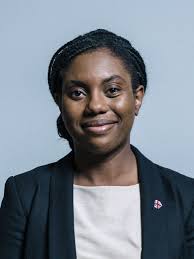

  • Kemi Badenoch – 2021 Comments on Net Zero

    Kemi Badenoch – 2021 Comments on Net Zero

    The comments made by Kemi Badenoch, the Treasury Minister, on 4 August 2021.

    I was delighted to visit Severn Trent and see the innovation to stop pollution and deliver Net Zero is already taking place.

    They are also leading the way out of the pandemic by delivering their Green Recovery programme which supports their ambitious net zero plan by 2030 and creates new jobs and world-class training via the government’s Kickstart scheme.

  • Matt Western – 2021 Comments on Turing Scheme

    Matt Western – 2021 Comments on Turing Scheme

    The comments made by Matt Western, the Shadow Universities Minister, on 4 August 2021.

    The Conservatives’ rhetoric on the Turing Scheme does not match the reality. Ministers are claiming to be targeting disadvantaged students, but their scheme provides no support to cover tuition fees which will make accessing this incredible opportunity impossible for many students.

    Boris Johnson has yet again created confusion for students and chaos for providers, by breaking his promise to keep the UK in the Erasmus+ programme. Subjecting the Turing Scheme to future spending decisions will create financial uncertainty for organisations and young people. It’s being reduced to the status of Erasmus minus.

    Ministers must ensure the Turing Scheme maintains the UK’s status as an attractive study destination for international students, protecting and promoting our global standing.

  • CONSTITUENCY RESULT : York Outer

    Candidate name Party Gender Number of votes Share (%) Change vs. 2017 for party (percentage points)
    Julian Sturdy Conservative Male 27,324 49.4% -1.8
    Anna Perrett Labour Female 17,339 31.3% -5.4
    Keith Aspden Liberal Democrat Male 9,992 18.1% +7.8
    Scott Marmion Independent Male 692 1.3% 0.0


    Election statistics
    Majority
    Votes 9,985
    Percent 18.0%
    Rank (1 = highest %) 390
    Turnout
    Constituency 74.1%
    Region 64.3%
    UK 67.3%
    Constituency in 2017 75.7%
    Size of electorate 74,673
    Valid votes cast 55,347
  • CONSTITUENCY RESULT : York Central

    Candidate name Party Gender Number of votes Share (%) Change vs. 2017 for party (percentage points)
    Rachael Maskell Labour and Co-operative Female 27,312 55.2% -10.0
    Fabia Tate Conservative Female 13,767 27.8% -2.4
    James Blanchard Liberal Democrat Male 4,149 8.4% +3.7
    Tom Franklin Green Male 2,107 4.3% 0.0
    Nicholas Szkiler Brexit Party Male 1,479 3.0% 0.0
    Andrew Snedden The Yorkshire Party Male 557 1.1% 0.0
    Andrew Dunn Social Democratic Party Male 134 0.3% 0.0


    Election statistics
    Majority
    Votes 13,545
    Percent 27.4%
    Rank (1 = highest %) 278
    Turnout
    Constituency 66.1%
    Region 64.3%
    UK 67.3%
    Constituency in 2017 68.7%
    Size of electorate 74,899
    Valid votes cast 49,505
  • CONSTITUENCY RESULT : Yeovil

    Candidate name Party Gender Number of votes Share (%) Change vs. 2017 for party (percentage points)
    Marcus Fysh Conservative Male 34,588 58.4% +3.9
    Mick Clark Liberal Democrat Male 18,407 31.1% +1.4
    Terry Ledlie Labour Male 3,761 6.3% -6.1
    Diane Wood Green Female 1,629 2.7% +1.0
    Tony Capozzoli Independent Male 689 1.2% 0.0
    Tom Fox The Constitution and Reform Party Male 186 0.3% 0.0


    Election statistics
    Majority
    Votes 16,181
    Percent 27.3%
    Rank (1 = highest %) 279
    Turnout
    Constituency 71.9%
    Region 72.0%
    UK 67.3%
    Constituency in 2017 71.6%
    Size of electorate 82,468
    Valid votes cast 59,260
  • CONSTITUENCY RESULT : Nuneaton

    Candidate name Party Gender Number of votes Share (%) Change vs. 2017 for party (percentage points)
    Marcus Jones Conservative Male 27,390 60.6% +9.0
    Zoe Mayou Labour Female 14,246 31.5% -9.8
    Richard Brighton-Knight Liberal Democrat Male 1,862 4.1% +2.1
    Keith Kondakor Green Male 1,692 3.7% +2.1


    Election statistics
    Majority
    Votes 13,144
    Percent 29.1%
    Rank (1 = highest %) 261
    Turnout
    Constituency 64.3%
    Region 64.7%
    UK 67.3%
    Constituency in 2017 66.6%
    Size of electorate 70,226
    Valid votes cast 45,190
  • CONSTITUENCY RESULT : Nottingham South

    Candidate name Party Gender Number of votes Share (%) Change vs. 2017 for party (percentage points)
    Lilian Greenwood Labour Female 26,586 55.2% -7.1
    Marc Nykolyszyn Conservative Male 14,018 29.1% -1.7
    Barry Holliday Liberal Democrat Male 3,935 8.2% +4.9
    John Lawson Brexit Party Male 2,012 4.2% 0.0
    Cath Sutherland Green Female 1,583 3.3% +2.0


    Election statistics
    Majority
    Votes 12,568
    Percent 26.1%
    Rank (1 = highest %) 295
    Turnout
    Constituency 60.6%
    Region 67.2%
    UK 67.3%
    Constituency in 2017 67.6%
    Size of electorate 79,485
    Valid votes cast 48,134
  • CONSTITUENCY RESULT : Nottingham North

    Candidate name Party Gender Number of votes Share (%) Change vs. 2017 for party (percentage points)
    Alex Norris Labour and Co-operative Male 17,337 49.1% -11.1
    Stuart Bestwick Conservative Male 12,847 36.4% +5.3
    Julian Carter Brexit Party Male 2,686 7.6% 0.0
    Christina Morgan-Danvers Liberal Democrat Female 1,582 4.5% +2.7
    Andrew Jones Green Male 868 2.5% +1.1


    Election statistics
    Majority
    Votes 4,490
    Percent 12.7%
    Rank (1 = highest %) 462
    Turnout
    Constituency 53.1%
    Region 67.2%
    UK 67.3%
    Constituency in 2017 57.3%
    Size of electorate 66,495
    Valid votes cast 35,320
  • CONSTITUENCY RESULT : Nottingham East

    Candidate name Party Gender Number of votes Share (%) Change vs. 2017 for party (percentage points)
    Nadia Whittome Labour Female 25,735 64.3% -7.1
    Victoria Stapleton Conservative Female 8,342 20.9% -0.8
    Robert Swift Liberal Democrat Male 1,954 4.9% +2.3
    Chris Leslie The Independent Group for Change Male 1,447 3.6% 0.0
    Damian Smith Brexit Party Male 1,343 3.4% 0.0
    Michelle Vacciana Green Female 1,183 3.0% +1.2


    Election statistics
    Majority
    Votes 17,393
    Percent 43.5%
    Rank (1 = highest %) 81
    Turnout
    Constituency 60.4%
    Region 67.2%
    UK 67.3%
    Constituency in 2017 63.7%
    Size of electorate 66,262
    Valid votes cast 40,004