Blog

  • Anneliese Dodds – 2020 Comments on the Comprehensive Spending Review

    Anneliese Dodds – 2020 Comments on the Comprehensive Spending Review

    The comments made by Anneliese Dodds, the Shadow Chancellor of the Exchequer, on 25 November 2020.

    Thank you, Mr Speaker. This spending review was a moment for the Chancellor to take the responsible choices that our country needs. It was an opportunity to protect key workers, secure the economy and recover jobs in every part of our country.

    During this crisis, we have seen who has taken responsibility: community health workers working round the clock to keep us all safe; the teachers who kept working so that key workers could too; the delivery drivers and shop staff who made sure that we had critical food supplies. Earlier this year, the Chancellor stood on his doorstep and clapped for key workers. Today, his Government institute a pay freeze for many of them. This takes a sledgehammer to consumer confidence. Firefighters, police officers and teachers will know that their spending power is going down, so they will spend less in our small businesses and on our high streets; they will spend less in our private sector. Many key workers, who willingly took on so much responsibility during this crisis, are now being forced to tighten their belts now; not in the medium term to which the Chancellor refers, but now.

    In contrast, there has been a bonanza for those who have won contracts from this Government. Companies with political connections have been 10 times more likely to win Government contracts. So many businesses have worked tirelessly through the pandemic to support local communities, to keep critical supplies going and to produce drugs and vaccines—at cost price in AstraZeneca’s case—working with some of our country’s best scientists. But in their response to this pandemic, the Conservative Government have wasted and mismanaged public finances on an industrial scale: £130 million to a Conservative donor for testing kits that were unsafe; £150 million for face masks and £700 million on coveralls that could not be used; a £12 billion hit to our economy because the more effective, shorter, circuit breaker was blocked and a lengthier, more expensive lockdown put in place instead; £12 billion so far spent on a test and trace system that is still not working; and, today, news of £10 billion in additional costs for personal protective equipment, which was at least partly down to the Conservatives’ lack of pre-pandemic planning.

    This waste and mismanagement is part of a longer-term pattern, showing that claims today around levelling up simply do not match the evidence: hospitals in Liverpool and Sandwell left unbuilt, over deadline by years and over budget by hundreds of millions of pounds; not a single starter home built, despite almost £200 million being spent; Northern Powerhouse Rail still not even approved six years after being announced; the courts modernisation programme three years behind schedule, letting victims down up and down the country; and people in the north more likely to have been made redundant during this crisis holding everything else equal.

    Photo calls are not enough. We need delivery like the promotion of green manufacturing in the west midlands by my right hon. Friend the Member for Birmingham, Hodge Hill (Liam Byrne) and the work of Labour Mayors and councils across the country. We need a Government in Westminster who take their responsibility towards all four nations seriously. That means informing the Finance Minister of Northern Ireland about the shorter timescale for this spending review ahead of time and fulfilling the “New Decade, New Approach” commitments. It means doing the right thing by the people of Wales to repair flood damage and make safe legacy coal tips. It means ending the barney between Westminster and Holyrood and instead working together in partnership to protect jobs and livelihoods.

    It means a shared prosperity fund that is effective because it is delivered not on the whim of Conservative Ministers but from our devolved Governments and our regions. The levelling-up fund that the Chancellor just announced—his rabbit out of the hat—yet again, just as with the Beeching reopening programme, involves MPs going to Ministers and begging for support for their areas, rather than that change being driven from local communities. So much for taking back control! This is about the centre handing over support in a very top-down manner.

    Labour has been clear about the responsible choices that we wanted the Chancellor to make today to recover jobs, retrain workers and rebuild businesses. To recover jobs, Labour called for £30 billion of capital spending accelerated over the next 18 months, focused on green initiatives, supporting 400,000 jobs and bringing us in line with countries such as France and Germany. This Government’s ambition is for half that number of new jobs. To retrain workers, we needed an emergency programme to support people back into work, but kickstart has been slow to get started, and the skills offer for those over 25 will not start until April. The Chancellor said at the beginning of his speech that our economic emergency “has only just begun”—try telling that to people who have been out of work since March.

    Restart, announced today, must meet three key tests to be effective. It should help people who need it most, not cherry-pick. It should be up and running as soon as possible, yet it appears that only a fraction of Restart funding will be available next year. And it must involve local actors who know their communities, not be imposed from Whitehall. Of course, job search support ultimately only works if sufficient new jobs actually exist. That is why we needed ambitious action to boost our economy and to support our businesses.

    To rebuild business, we called for a national investment bank. I welcome the announcement of a new UK infrastructure bank, given that valuable years have been lost since the Green Investment Bank was sold off. Now the Chancellor must boost its firepower, and he must deliver on his Department’s responsibility for the drive to net zero. We have known since the Stern report that the climate crisis is the biggest long-term threat to our economy, yet far too often, this spending review locks us into a path that will make the transition to net zero harder, not easier, locking our economy out of the green jobs of the future.

    To rebuild business, the Chancellor also needs to listen to business. We are less than a week from the end of the lockdown, yet we have heard nothing about whether extra support will be provided through the additional restrictions support grant for areas subject once again to tough restrictions. The Chancellor is still threatening employers with an increased contribution to furlough in January, at the worst possible time for increasing and building confidence.

    In fewer than 40 days, we are due to leave the transition period, yet the Chancellor did not even mention that in his speech. There is still no trade deal, so does the Chancellor truly believe that his Government are prepared and that he has done enough to help those businesses that will be heavily affected? Will he take responsible action to help those excluded from Government support? Why is he still refusing to make the speedy fixes to universal credit that Labour has advocated, which would aid the self-employed, and why will he not provide families with certainty by ensuring that the increase in universal credit continues beyond April?

    The IMF has made it clear time and again that now would be the worst time to slam on the brakes and put the car into reverse. It has called for a “meaningful additional push” from our Government to maintain fiscal support until the recovery is on a sound footing. The UK’s GDP is 10% smaller now than it was at the end of last year. We have seen the worst downturn in the G7. We needed ambitious action today to stimulate growth and maintain demand, and we needed the Government to take responsibility for the real reasons why people and communities up and down our country are being held back.

    Over the past 10 years, child poverty has risen by 600,000. We have had the worst decade for pay growth in eight generations. The cost of childcare has risen twice as fast as wages. The number of young apprentices has plummeted. Last quarter, we saw the highest level of redundancies on record. Social care is in increasing crisis and, despite the Conservative party’s manifesto having promised a long-term solution, we are still waiting.

    It was trailed in the press that the Chancellor would be moving 20,000 jobs out of London, yet cuts to local authorities over the past 10 years have seen 240,000 jobs lost—12 times that figure of 20,000—with the hardest-hit communities often those in the north, midlands and south-west. Today, the Chancellor could have matched his Government’s promise to do whatever is necessary to support local authorities through this crisis; he did not. And yet again he showed his Government’s lack of confidence in their own measures by failing to provide an equality impact assessment.

    The measure of this Government will not be the number of press releases issued during this crisis or the number of pictures it published on Instagram; it will be the responsible action that they took, or did not take, for the sake of our country.

    Next year, the eyes of the world will be on the UK as we assume the presidencies of the G7 and the UN Security Council and host the COP26 summit, yet now is the time that the Chancellor has turned his back on the world’s poorest by cutting international aid. It is in Britain’s national interest to lay the foundations for economic growth around the world—no wonder many British businesses have condemned his move.

    Businesses have been more and more vocal about the problems with this Government’s last-minute approach, always one step behind when we need to plan responsibly for the future. We must learn the lessons from previous failures and ensure that the next challenge—the roll-out of the vaccine—is dealt with as efficiently, effectively and speedily as possible.

    Next time, we need a comprehensive spending review that takes responsible choices—to build a future for our country as the best place in the world to grow up in and the best place to grow old in. People should have opportunities on their doorstep, not at the other end of the country. Everywhere in the UK should feel like a good place to set up home. That is what the Chancellor must deliver.


  • Jim McMahon – 2020 Comments on Support for the Aviation Sector

    Jim McMahon – 2020 Comments on Support for the Aviation Sector

    The comments made by Jim McMahon, the Shadow Transport Secretary, on 24 November 2020.

    The Government promised support for the aviation sector in March, this is not it. The Government has again been incompetently slow to react. They’ve had months to set up airport testing and months to sort out the flaws of their quarantine proposals.

    It will take a long time to recover from the impact of the virus. The Government must come up with the sector-specific plan it promised for the aviation sector and its supply chain that supports almost a quarter of a million jobs and protects the environment.

  • Laura Pidcock – 2020 Comments on Labour Left Walkout

    Laura Pidcock – 2020 Comments on Labour Left Walkout

    The comments made by Laura Pidcock, the former Labour MP for North West Durham, on 24 November 2020.

    The left grouping were just forced to walk out of NEC meeting. The disrespect for the left is something we will not put up with. The leadership undermine governance of the NEC, censor debate and ignore our processes by doubling down on the removal of the whip from Jeremy Corbyn.

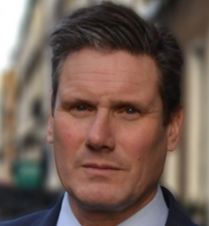
  • Keir Starmer – 2020 Speech on Covid-19 and the Winter Plan

    Keir Starmer – 2020 Speech on Covid-19 and the Winter Plan

    The speech made by Keir Starmer, the Leader of the Opposition, in the House of Commons on 23 November 2020.

    I thank the Prime Minister for advance sight of his statement and for his telephone call earlier today, when he set out a summary of the proposal.

    Let me start with the good news: the tremendous progress on vaccines. Last week, the shadow Chancellor and I went to the Oxford vaccine group at Oxford University. It was inspiring. It was remarkable to see the work that they are doing. Our thanks, and I think those of the whole nation, go to all those who have taken part in the vaccine trials and research. We wish them Godspeed. I also want to make an open offer to the Prime Minister: Labour will provide any support we can in the national effort to deliver the vaccine safely across the country. That is an open offer.

    I welcome the fact that the Prime Minister is seeking a four-nation approach on the arrangements over the Christmas period. We will obviously await details on that, and the evidence that supports the steps being taken, but the four-nation approach is the right approach.

    Now for the more difficult bit. The vaccine is the light at the end of the tunnel; the question today is how we get there and protect lives and livelihoods along the way. The Prime Minister proposes a return to the three-tier system. That is risky, because the previous three-tier system did not work. Tier 1 areas drifted to tier 2, almost all tier 2 areas ended up in tier 3 and those in tier 3 could not see a way out, and we ended up in national lockdown. That was the sad reality of the tiered system before. Nobody wants a repeat of that.

    I accept that the new tiers are different from the old tiers, but many of the questions are the same. They are not trick questions. I acknowledge that none of this is easy, but if the Prime Minister is going to carry Parliament and the country on this, they need answering.

    First, on the tier system—the Prime Minister touched on this—which local areas will be in each tier? This is the red-hot question. This is the question everybody is going to be asking over their kitchen table tonight. I had a roundtable with business leaders this morning, and it was the first question they asked me. The Prime Minister says it will be decided later this week, possibly Thursday. I cannot emphasise enough how important it is that these decisions are taken very quickly and very clearly so that everybody can plan. That is obviously particularly important for the millions who were in restrictions before the national lockdown, because the message to them today seems to be, “You will almost certainly be back where you were before the national lockdown, probably in even stricter restrictions.” People need to know that so that they can plan for that. I really emphasise how important that is for the Prime Minister.

    Secondly—the Prime Minister said he wanted uniform rules—will the tiers simply be imposed region by region, come what may, from 3 December, or will there be an element of local consultation and negotiation? I understand the uniform rules, but simply to impose them runs the risk of not getting buy-in from local leaders and local communities, which is incredibly important to people complying with the rules.

    Thirdly, how long does the Prime Minister anticipate each local area will remain in each tier? For those that are going to come out of lockdown and almost certainly go back to more restrictions than they left, that is going to be a very pressing question.

    Fourthly, will there be a new economic package to accompany these new tiers? There is huge concern among many businesses about their viability in tier 3, particularly a strengthened tier 3, so what new support can they expect? May I touch again on those who are self-employed who are outside the self-employed scheme—the so-called excluded? They will be hearing a message about the next three months in relation to schemes that they are not currently in, and that needs urgently to be addressed.

    I turn to the public health impact of this approach, because one of the major reasons that we ended up in a national lockdown was that, in the words of the Government’s scientific advisers—the Scientific Advisory Group for Emergencies—test, trace and isolate was only having

    “a marginal impact on transmission”.

    It is one of the reasons that they suggested a national lockdown.

    I know that the Prime Minister will talk about increased testing, mass testing. That is welcome but it is only part of the story, because the other two parts—trace and isolate—are not fit for purpose. SAGE advised, and continues to advise, that for trace and isolate to be effective, the percentage of contacts traced needs to be about 80%. It is currently nowhere near that level. It has never been near that level, and the figures are not getting any better. The latest figures actually show that every week, about 120,000 close contacts—that is, people who should be self-isolating—are not being traced by the system. The likelihood of getting the virus under control when 120,000 people who should be self-isolating are moving around their communities is very low.

    Only a fraction of people able to self-isolate are doing so when asked to. We said to the Prime Minister that this needed to be fixed in the period of the national lockdown, and it has not been. It was barely mentioned in the Prime Minister’s statement today, and many people will be forgiven for thinking that the Prime Minister has given up on trace and isolate and is about to abandon that scheme altogether to reach out for a different scheme—mass testing. It is very important that we understand that if we are going into a tiered system, abandoning trace and isolate, or not getting trace and isolate where it should be, we are running a major risk.

    This is not about knocking those on the frontline or knocking those working on track and trace; it is about being grown up about risk. If we are reintroducing a three-tier system without having fixed trace and isolate, that is a major risk and we all need to acknowledge it, because it raises the million-dollar question: how confident is the Prime Minister that the approach he is proposing today will keep the R rate below 1? If it does not, the infections will go up. They will go back out of control and we could well be back in a national lockdown. That is the million-dollar question.

    Labour has backed the Prime Minister on all the big decisions that the Government have had to take to protect public health, including the two national lockdowns. We have done so because we want there to be a national consensus on such difficult issues and because we will always put public health first. Ideally, I would like to be in a position to do so again, but there are huge gaps in this plan, huge uncertainties and huge risks. We will await the detail. We want the Prime Minister to get this right. He has got a week to do so. Will he start by answering these straightforward questions?

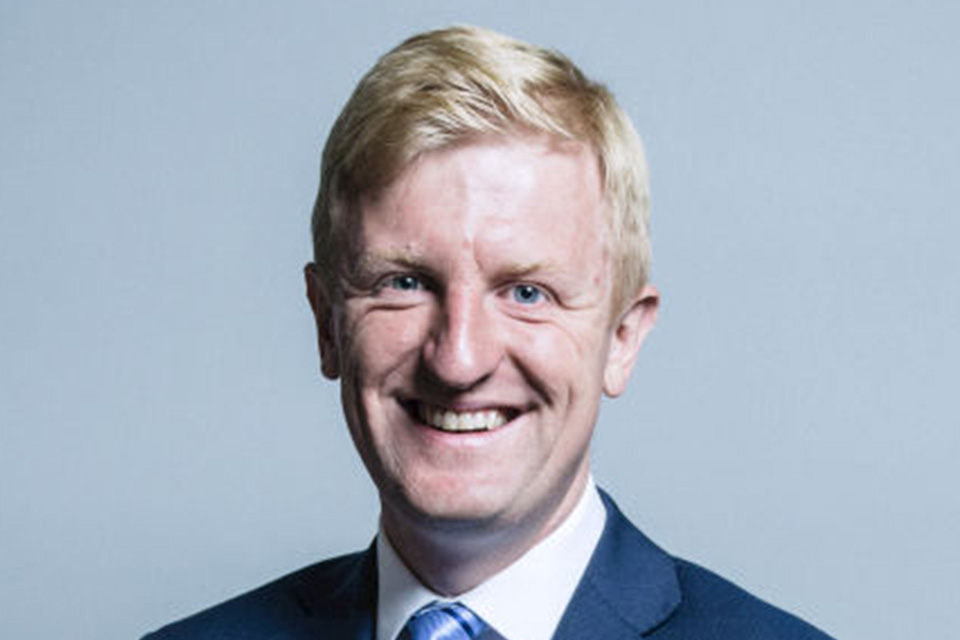
  • Oliver Dowden – 2020 Comments on Return of Grassroots Sport

    Oliver Dowden – 2020 Comments on Return of Grassroots Sport

    The comments made by Oliver Dowden, the Secretary of State for Digital, Culture, Media and Sport on 23 November 2020.

    This is a big step forward for sport. Bringing grassroots sport back was my number one priority so I’m pleased we are reopening sports and gyms in every tier, in recognition of the significant health benefits.

    I’m also delighted we are able to get the turnstiles turning sooner than expected, taking a cautious approach and starting with the lowest risk areas first. I’m confident that sports will take every step to ensure their fans are safe, and fans will play their part and look out for each other until we can safely get everyone back in.

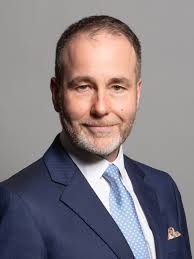
  • Christopher Pincher – 2020 Speech at Savills Annual Housing Seminar

    Christopher Pincher – 2020 Speech at Savills Annual Housing Seminar

    The speech made by Christopher Pincher, the Minister of State for Housing, on 23 November 2020.

    Thank you for that warm introduction, Mark. It’s a great pleasure for me to join you today, all be it virtually, given that Savills brought together such a diverse mix of key players such as housing associations, councils, developers and groups from right across the housing industry.

    Can I first of all begin by saying how grateful I am to everyone in the sector for the tremendous support that you have given and the forbearance that you have undertaken during what has been some of the most difficult years in our lifetime.

    I know it’s been very challenging for you all professionally. I expect it will have been very challenging for some of you personally. So I just want to say firstly thank you for all that you have been doing, will be doing and will continue to do for the sector, for the industry, and for your clients and customers.

    I know the imposition of this second national lockdown has been especially challenging with many businesses, once again, seeing jobs and people’s wellbeing on the line and certainly for many smaller businesses it is a very challenging time.

    But with the arrival of the new vaccines onto the scene and into the pipeline and given the resilience the housing market has shown in the last few months since it reopened in the middle of May, I think that there are glimmers of light for the recovery to come – to begin to reclaim our way of life.

    The pandemic has, undoubtedly, made us think about the way we live our lives at every level. You, in the housing sector are at the forefront of these profound changes as we attempt to build back the economy, build back our lives, and build both back better.

    Keeping the housing market open

    Throughout the pandemic, since it began in February and we began our first lockdown in March, we have done everything that we can, not just to protect people’s lives, but also to protect their livelihoods. That includes the package of measures that we have launched, and refined, and continued to roll out to support jobs and businesses across the country.

    The Prime Minister and the Chancellor have both said that we will do whatever it takes to keep businesses and their employees afloat – through tax cuts, tax deferrals, direct grants and the Furlough Scheme – we will do whatever it takes to protect our economy.

    The tough national measures that we have taken are part of that approach, but they are also, I think we’ll all agree, distinctly different from those we took in the Spring.

    I think we all recognise that the housing sector is a bellwether of confidence in our wider economy – what General Motors is in the United States, what Birmingham Yardley constituency used to be in terms of bellwethers in politics. The housing sector is a bellwether in the United Kingdom for our economy. And that is why – more than with any sector – we have done all we can to keep the industry open. Working closely with the CLC, the HPF, the Federation of Master Builders, to allow flexible working hours, to allow planning permissions are extended to ensure that safe working practices are baked into work onsite to keep the economy working and to keep workers safe.

    That really is exemplified in the Safe Working Charter which the HBF developed way back in March, and which was a signal to the reopening of the housing economy.

    Mark said we haven’t been furloughed in MHCLG – that’s absolutely right. We’ve been doing our bit to provide both financial support and stimulus to the economy.

    We have the £450m Home Building Fund which we announced before the summer, supporting the delivery of 7,200 new homes, right through to our Private Rented Sector Guarantee Scheme which has green-lighted £415m in loans to help the industry bounce back from this pandemic stronger and more resilient than before.

    With so many of us spending so much more time in our homes right now, the pandemic reinforced the need to double our efforts to build more quality homes with strong and sustainable communities, which we need now more urgently than ever.

    That means keeping up the pace on supply. We need to make up for ground lost – the emergency and the challenges to the economy notwithstanding we must meet our target of building 300,000 new homes of all types and tenures each year by the middle of this decade so that people can afford to buy or afford to rent the sorts of homes that they want to be able to provide them with the security and the opportunity that they want and need.

    Building Safety

    To that end, we are delivering the biggest improvements to the building safety regime that we have seen for a generation and pressing ahead with remediation work, which is absolutely critical to safety. I am absolutely clear that remediation must continue through these lockdowns where it is safe to do so. We’ve set aside £600 million for the remediation of ACM-clad high-rise buildings to make those homes safe. I want to thank everybody involved in the sector for their work on that.

    The Chancellor made available £1 billion at the budget for the remediation of non-ACM type cladding in tall buildings to make those safe as well, and work is advancing to make sure that that money is distributed and dispersed effectively.

    We are also introducing some of the biggest improvements in regulation ever seen through our Building Safety Bill which was published in draft in July and which will be introduced shortly to Parliament. That Bill complements very significant work that has been done over the last three or four years – the Fire Safety Act for example, building on the Fire Safety Order Act 2002 – to make sure that everybody, irrespective of who they are, where they are from, where they live, feels safe and secure in their home.

    I know that you will be hearing from Dame Judith Hackitt later on and I would like to take this opportunity to thank her for her tireless efforts to support out work, and we want to support her work as well. The good news is that now almost 80% of buildings with ACM cladding have either been fully remediated or are close to completion – and that rises to above 95% of those buildings in the social housing sector. It’s good news that progress has been made, but clearly there is much more to do. We are determined that we must do it and also the building owners, developers and warrantee holders much play their part as well.

    Building Greener

    So many people have spent so much time living at home for the past several months, and for many people the pandemic has been made tolerable at least by a good home and a garden shared with the people that they care about.

    But for too many people – people in tiny accommodation, substandard accommodation, people unable to walk to shops or green spaces or services – their homes are less like castles and are more like prisons. We have learned that spacious, well-equipped homes which offer green spaces in plentiful supply, with access to vital amenities and vibrant neighbourhoods that surround those amenities and those services – must be the standard if we are to recover from the social effects and the economic effects of Covid-19.

    That’s just what our planning reforms are aimed at delivering – greener, cleaner, more beautiful homes and neighbourhoods that we can be proud to live in, but also, more importantly, we can be proud to call a legacy for future generations.

    The reforms we’ve set in train mandate for more parks, more playing fields and greener spaces in new developments.

    They encourage developers, with the Environment Bill currently going through parliament, to think much more creatively about biodiversity. About the way bee bricks, green roofs and even community orchards can be used.
    They ensure that all new streets will be tree-lined, contributing not just to a neighbourhood’s aesthetic but also to its air quality.

    There are some really good examples of this sort of design around the world: Marina One in Singapore; Bosco Verticale in Milan which boasts, I’m told, a vertical forest which removes something like 44,000 pounds of carbon from the atmosphere each year.

    If they can be bold, we can be bold and daring the new developments that we envisage. And through our Home of 2030 Competition we launched earlier this year – in fact I think it was the first thing that I did when I became Housing Minister back in the middle of February – the Government is incentivising designers, architects and developers to do exactly that. Think like Milan, think like Singapore.

    We have six very impressive finalists who have developed their cutting-edge designs for the Homes of 2030 competition.

    I would like to thank particularly Nick Walkley, the CEO of Homes England, and I think he’s going to join us today. He has provided ready-to-go sites in which the winners can make their visions a reality. The Prime Minister has made very clear that he wants more technologically sophisticated, sustainable housing to be developed, and that is what we are going to do. We’re going to meet Net Zero targets and we are, through the Future Homes Standard, going to reduce the emissions of carbon dioxide from buildings by the middle of this decade by at least 75% compared with today.

    Building Beautiful

    As much as we want to build greener and more sustainably, we also want to build more beautifully. In championing innovation and encouraging the industry to respond to the changing needs of residents, it is also right that we celebrate beautiful design and provide trailblazing design that others can follow.

    I was lucky enough at the end of last week to go on a virtual tour of the Barking Riverside development on the site of the former power station, which is delivering something like 10,000 new homes of mixed tenures, it also offers fantastic views of the River Thames, there is a clipper service as well as a rail station going in, and making best use of an innovative new waste disposing technology called ‘Envac’, and all of this is encapsulated within a well-designed, beautiful and sustainable housing district which is in-keeping with the history, the identity of the community in which it is built.

    We have other great examples of that too – Marmalade Lane in Cambridge; Goldsmith Street in Norwich, which thank to lockdown restrictions I’ve had to cancel two visits to, but I’m rather hoping that 2021 will be a better time to visit that 2020.

    But still we know some developers pay too little attention to the character of the houses they are creating and the character of the environment in which they are creating those houses.

    Only six per cent of new homes in our country are designed by architects. Cutting back on the time and attention spent on architectural design may be a good way to save some money… But I also think that it is definitely short-sighted and, ultimately, more costly… Because building better, building more beautifully, in-keeping with an area and its aesthetic, builds in and buys in local communities’ support for those buildings.

    And that can save expensive delays, save on legal challenges and feed that developers have to pay out, and then they can focus on what really matters – building homes that community needs, building them really well, not building the sort of identikit ‘Anywheresville’ housing that perhaps we have seen too often. And that’s why we want to introduce the National Model Design Code, which will advise councils on how they can set clear expectations for the design of new development and give residents a genuine say in the future of their area.

    At their heart, these reforms are about letting communities have greater say and have more power over what is built for them and around them.

    The Planning White Paper which launched in August, with 84 pages of proposals – we’ve had 44,000 consultation responses as a result which we are working through and which we will share the results of as soon as we can and then kick off more work to refine our proposals on the back of that consultation feedback – fundamentally those reforms are designed to make our 73 year old planning system more speedy so that decisions and results can be made much more quickly.

    So that it is less opaque so that more people can navigate it more effectively which is good for local communities as well as good for SMEs.

    And we want it to be much more engaging by having strategic, upfront planning using map-based systems which zone areas, allowing people to see what is proposed for their communities and have a say on what goes where, how it’s going to look, the sorts of infrastructure that should be provided for the community. It’s much more strategic and far less tactical. It’s much more up front and far less reactive. Therefore, I think it’s much more empowering and much more democratic, and I believe that communities will see that and that they will appreciate the power that we are placing in their hands.

    ‘Build, Build, Build’

    Because fundamentally we need to build more homes. More homes around the country in places that they are needed because demand is high, in places that they are needed because the level of stock is poor, in places that they are needed because we need to reimagine our town centres and our city centres as we emerge through the Covid epidemic.

    We have travelled quite some way in the last 10 years. We have built hundreds of thousands of new homes – 241,000 in the last year alone before Covid struck.

    But there is much more to do. Whether it be building new homes for people to buy or get a stake in through shared ownership, whether it be building more affordable homes for rent or socially rented homes – and our £12.2bn affordable homes programme, the biggest cash injection to affordable homes since the 2006-2011 cycle is aimed to do just that.

    Conclusion

    I hope it demonstrates that the government is absolutely steadfast in our determination to help communities pull through what remains an extremely challenging time, but to emerge into a post-Covid world where we can look forward with optimism and determination and confidence.

    We want to overhaul a planning system which is 70 years old and which needs to change, to become steadier and more transparent and more democratic.

    We want to build more homes in the places that they are needed. We want those homes to be built sustainably. We want them to be built beautifully. We want the infrastructure around them to be provided quickly and to be right, and we want to make sure that the build environment around those communities is attractive for people today and for the future.

    We are going to work in close collaboration with councils, planners, designers, and the construction industry to make sure that the reforms we proposed are right and to make sure that they work. We are prepared to investment time and money to make sure that all these things happen.

    Because if we do that, we can build a built environment, we can build communities which people are proud to call their homes, build communities and environments that developers can be proud to say ‘we designed and built out’, which planners can be proud to say ‘we planned’, and which the future will be able to say thank you to us for doing what we did to give them the legacy that they deserve.

    I am very grateful for the time that you have given me to speak to you today. I trust that you have a great conference. That you’re able to meet up, albeit virtually, with old friends. Pick up new ideas. Be reminded of important concepts.

    And before too long we’ll all be able to do this all over again in a much more physical and friendly format. I’m sure whatever changes in that future, there will be the next Savills conference and I look very much to seeing everyone else then again.

    Thank you.

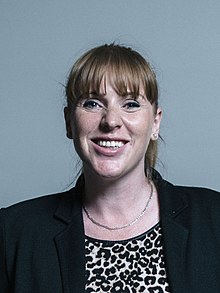
  • Angela Rayner – 2020 Comments on the Living Wage

    Angela Rayner – 2020 Comments on the Living Wage

    The comments made by Angela Rayner, the Deputy Leader of the Labour Party, on 23 November 2020.

    This crisis has shown who we can’t survive without and who is the real backbone of our economy and our society – our key workers.

    It is just plain wrong that three quarters of our care workers do not even earn a living wage, and so many key workers are being paid poverty wages that they can barely survive on.

    When the Tories voted against free school meals they said they wanted to focus on the structural causes of child poverty.

    Poverty pay causes child poverty, so if the government actually cares about tackling child poverty then they would act to increase the minimum wage to a level that people can actually live on and support a family on.

    Nobody should be working for poverty wages. Every worker should be paid a wage that they can actually live on, and that means a real living wage of at least £10 an hour now.

  • Boris Johnson – 2020 Press Conference on Covid-19 Winter Plan

    Boris Johnson – 2020 Press Conference on Covid-19 Winter Plan

    The press conference statement made by Boris Johnson, the Prime Minister, on 23 November 2020.

    [NB, the statement from Downing Street is reproduced below with the punctuation errors uncorrected]

    It seems that almost every week we learn of some new scientific breakthrough to help us beat Covid

    last week it was good news about the vaccine from Pfizer BioNTech

    and then Moderna

    This morning we heard the fantastic news that the Oxford Astra Zeneca vaccine has been highly effective in clinical trials

    there are more tests to be done, but the signs are that this vaccine

    financed partly by British taxpayers, working in partnership with a great British company –

    This vaccine could be both affordable and easy to use and highly effective

    We have ordered 100m doses

    and thanks to the work of the Vaccines Task Force we have secured more than 350m doses of potential vaccines of all kinds

    but we are not out of the woods yet

    we can hear the drumming hooves of the cavalry coming over the brow of the hill

    but they are not here yet

    Even if all three vaccines are approved, even if the production timetables are met and vaccines notoriously fall behind in their production timetables

    it will be months before we can be sure that we have inoculated everyone that needs a vaccine

    and those months will be hard

    they will be cold

    they include January and February when the NHS is under its greatest pressure

    and that is why when we come out of lockdown next week we must not just throw away the gains we have all made

    So today we have published out Covid Winter Plan which sets out a clear strategy to take the country through to the end of March

    We will continue to bear down hard on this virus

    we will use tough tiering – in some ways tougher than the pre-lockdown measures and details of those tiers are on the gov.uk website later this week when we have the most up to data and we will be sharing details of which tier your area is going to be in

    I should warn you now that many more places will be in higher tiers than alas was previously the case

    and we will simultaneously be using the new and exciting possibilities of community testing – as they have done in Liverpool

    and there will be a clear incentive for everyone in areas where the virus prevalence is high to get a test, to get one of these rapid turnaround lateral flow tests and do your best for the community

    get a test to help to squeeze the disease and reduce the restrictions that your town or city or area has endured

    and that way – through tough tiering and mass community testing

    we hope to let people see a little more of their family and friends over Christmas

    Now I know that many of us want and need Christmas with our families

    we feel after this year we deserve it

    but this is not the moment to let the virus rip for the sake of Christmas parties

    tis the season to be jolly but tis also the season to be jolly careful

    especially with elderly relatives

    and working with the Devolved Administrations we will set out shortly how we want to get the balance right for Christmas and we will be setting this out later this week

    Christmas this year will be different and we want to remain prudent through Christmas and beyond into the new year

    but we will use the three tools that I have described to squeeze the virus in the weeks and months ahead

    tiering, testing and the roll-out of vaccines

    employing all three techniques together so as to drive down R and drive down the infection rate

    and I really am now assured things really will look and feel very different indeed after Easter

    and that idea of and end goal or date is important because at last – if the promise of the vaccines is fulfilled – we do have something to work for

    a timescale, a goal around which businesses can begin tentatively to plan

    and with luck and with hard work we will be seeing improvements before then

    but for now the problem is not a shortage of hope

    or a lack of optimism

    not with the amazing news that we are getting from the laboratories in this country

    the challenge now as we face this difficult winter ahead

    is to fight down any over-optimism

    to master any tendency to premature celebration of success

    that success will come all the faster if we work together to follow the guidance

    maintain the basic disciplines as people have done so heroically over the last few months

    hands, face, space and get a test if you have symptoms

    because that is the way we will beat it together.

  • Sayeeda Warsi – 2020 Comments on Priti Patel Bullying Allegations

    Sayeeda Warsi – 2020 Comments on Priti Patel Bullying Allegations

    The comments made by Sayeeda Warsi, the former Chair of the Conservative Party, on 20 November 2020.

    This slow march towards unaccountable power and the undermining of a codes and rules based system is deeply dangerous. We cannot have one standard for those that govern and another for those that are governed
    British politics must not become a cesspit of Trump style politics. ? #PritiPatel

  • Boris Johnson – 2020 Statement on Covid-19 Winter Plan

    Boris Johnson – 2020 Statement on Covid-19 Winter Plan

    The statement made by Boris Johnson, the Prime Minister, in the House of Commons on 23 November 2020.

    Mr Speaker, thank you very much and with your permission, I will make a statement on the Government’s COVID-19 Winter Plan.

    For the first time since this wretched virus took hold, we can see a route out of the pandemic.

    The breakthroughs in treatment, in testing and vaccines mean that the scientific cavalry is now in sight

    and we know in our hearts that next year we will succeed.

    By the Spring, these advances should reduce the need for the restrictions we have endured in 2020

    and make the whole concept of a Covid lockdown redundant.

    When that moment comes, it will have been made possible by the sacrifices of millions of people across the United Kingdom.

    I am acutely conscious that no other peacetime Prime Minister has asked so much of the British people

    and just as our country has risen to every previous trial,

    so it has responded this time, and I am deeply grateful.

    But the hard truth, Mr Speaker, is that we are not there yet.

    First we must get through Winter without the virus spreading out of control and squandering our hard-won gains,

    at exactly the time when the burden on the NHS is always greatest.

    Our Winter Plan is designed to carry us safely to Spring.

    In recent weeks, families and businesses in England have, once again, steadfastly observed nationwide restrictions

    and they have managed to slow the growth of new cases and ease the worst pressures on our NHS.

    I can therefore confirm that national restrictions in England will end on 2nd December, and they will not be renewed.

    From next Wednesday people will be able to leave their home for any purpose,

    and meet others in outdoor public spaces, subject to the Rule of Six.

    Collective worship, weddings and outdoor sports can resume,

    and shops, personal care, gyms and the wider leisure sector can reopen.

    But without sensible precautions, we would risk the virus escalating into a Winter or New Year surge.

    The incidence of the disease is, alas, still widespread in many areas,

    so we are not going to replace national measures with a free for all, the status quo ante Covid.

    We are going to go back instead to a regional tiered approach,

    applying the toughest measures where Covid is most prevalent.

    And while the previous local tiers did cut the R number, they were not quite enough to reduce it below 1,

    so the scientific advice, I am afraid, is that as we come out is that our tiers need to be made tougher.

    In particular, in tier 1 people should work from home wherever possible.

    In tier 2, alcohol may only be served in hospitality settings as part of a substantial meal.

    In tier 3, indoor entertainment, hotels and other accommodation will have to close, along with all forms of hospitality, except for delivery and takeaways.

    And I am very sorry obviously for the unavoidable hardship that this will cause to business owners who have already endured so much disruption this year.

    Mr Speaker, unlike the previous arrangements, tiers will now be a uniform set of rules,

    That’s to say we won’t have negotiations on additional measures with each region, it’s a uniform set of rules

    We have learnt from experience that there are some things we can do differently

    So from the 10pm closing time for hospitality we’re going to change that to so that it is last orders at 10 with closing at 11.

    In tiers 1 and 2, spectator sports and business events will be free to resume inside and outside – with capacity limits and social distancing –

    providing more consistency with indoor performances in theatres and concert halls.

    We will also strengthen the enforcement ability of Local Authorities,

    including specially trained officers and new powers to close down premises that pose a risk to public health.

    Later this week we will announce which areas will fall into which tier, I hope on Thursday,

    based on analysis of cases in all age groups, especially the over 60s,

    also looking at the rate by which cases are rising or falling,

    the percentage of those tested in a local population who have Covid,

    and the current and projected pressures on the NHS. I am sorry to say we expect that more regions will fall – at least temporarily – into higher levels than before,

    but by using these tougher tiers

    and by using rapid turnaround tests on an ever greater scale

    to drive R below 1 and keep it there, it should be possible for areas to move down the tiering scale to lower levels of restrictions.

    By maintaining the pressure on the virus, we can also enable people to see more of their family and friends over Christmas.

    Mr Speaker, I can’t say that Christmas will be normal this year,

    but in a period of adversity, time spent with loved ones is even more precious for people of all faiths and none.

    We all want some kind of Christmas,

    we need it,

    we certainly feel we deserve it.

    But what we don’t want is to throw caution to the winds and allow the virus to flare up again, forcing us all back into lockdown in January.

    So to allow families to come together, while minimising the risk,

    we are working with the Devolved Administrations on a special, time-limited Christmas dispensation,

    embracing the whole of the United Kingdom, and reflecting the ties of kinship across our islands.

    But this virus is obviously not going to grant us a Christmas truce, it doesn’t know it’s Christmas Mr Speaker and families will need to make a careful judgement about the risk of visiting elderly relatives.

    We will be publishing guidance for those who are clinically extremely vulnerable on how to manage the risks in each tier, as well as over Christmas.

    As we work to suppress the virus with these local tiers,

    two scientific breakthroughs will ultimately make these restrictions obsolete.

    As soon as a vaccine is approved, we will dispense it as quickly as possible.

    But given that this cannot be done immediately, we will simultaneously use rapid turnaround testing, the lateral flow testing that gives results within 30 minutes,

    to identify those without symptoms so they can isolate and avoid transmission.

    We are beginning to deploy these tests in our NHS

    and in care homes in England,

    so people will once again be able to hug and hold hands with loved ones, instead of waving at them through a window.

    By the end of the year, this will allow every care home resident to have two visitors, who can be tested twice a week.

    Care workers looking after people in their own homes will be offered weekly tests from today.

    And from next month, weekly tests will also be available to staff in prisons, food manufacturing, and those delivering and administering Covid vaccines.

    We are also using testing as the House knows to help schools and universities stay open,

    and testing will enable students to know they can go home safely for Christmas and indeed back from home to university.

    But there is another way of using these rapid tests,

    and that is to follow the example of Liverpool,

    where in the last two and a half weeks over 200,000 people have taken part in community testing, contributing to a very substantial fall in infections.

    So together with NHS Test and Trace and our fantastic Armed Forces,

    we will now launch a major community testing programme,

    offering all local authorities in tier 3 areas in England a six week surge of testing.

    The system is untried and there are of course many unknowns,

    but if it works, we should be able to offer those who test negative the prospect of fewer restrictions,

    for example, meeting up in certain places with others who have also tested negative.

    And those towns and regions which engage in community testing will have a much greater chance of easing the rules, the tiering, that they currently endure.

    Mr Speaker, we will also use daily testing to ease another restriction that has impinged on many lives.

    We will seek to end automatic isolation for close contacts of those found positive.

    Beginning in Liverpool later this week,

    contacts who are tested every day for a week will only need to isolate if they themselves test positive.

    If successful, this approach will be extended across the health system next month,

    and to the whole of England from January.

    And, of course, we are working with the Devolved Administrations to ensure that Wales, Scotland, Northern Ireland also benefit as they should and will from these advances in rapid testing.

    But clearly the most hopeful advance of all is how vaccines are now edging ever closer to liberating us from the virus,

    demonstrating emphatically that this is not a pandemic without end.

    We can take heart from today’s news, which has the makings of a wonderful British scientific achievement.

    The vaccine developed with astonishing speed by Oxford University and AstraZeneca is now one of three capable of delivering a period of immunity. We don’t yet know when any will be ready and licensed, but we have ordered 100 million doses of the Oxford vaccine, and over 350 million in total, more than enough for everyone in the UK, the Crown Dependencies and the Overseas Territories.

    And the NHS is preparing a nationwide immunisation programme, ready next month,

    the like of which we have never witnessed.

    Mr Speaker, 2020 has been in many ways a tragic year when so many have lost loved ones and faced financial ruin.

    This will be still a hard Winter,

    Christmas cannot be normal,

    and there is a long road to Spring.

    But we have turned a corner: and the escape route is in sight.

    We must hold out against the virus until testing and vaccines come to our rescue and reduce the need for restrictions.

    Everyone can help speed up the arrival of that moment

    by continuing to follow the rules,

    getting tested and self-isolating when instructed,

    remembering hands, face and space,

    and pulling together for one final push to the Spring,

    when we have every reason to hope and believe that the achievements of our scientists will finally lift the shadow of the virus.

    Mr Speaker, I commend this Statement to the House.